Upstart plummets: It’s not a bug, it’s a feature?
Nov 09, 2022
Show notes
A year ago, Upstart Holdings, which develops artificial intelligence to approve personal loans, was on such a roll that its CEO and co-founder, David Girouard, proudly compared his company to a great athlete:Since Upstart's IPO a year ago, we've more than tripled our revenue, tripled our profits, tripled the number of banks and credit unions on our platform, and tripled the number of auto dealerships we serve. With that many threes, Upstart is becoming the Steph Curry of the FinTech industry.I don’t know enough about sports to know just who would be the anti-Stephen Curry, but that’s rather what Upstartlooks like these days.Upstart Tuesday reported its second quarter in a row in which revenue and profit fell short of expectations, after a prior six-quarter streak of upside surprises. For the third quarter in a row, its forecast was also less than expected. Shares plunged by twenty-four percent in late trading this evening, the third quarterly sell-off on disappointment. The stock, at an after-hours price of $14.47, is now down ninety percent this year, and down fifty-one percent from its closing price on its first day of trading following its initial public offering in December of 2020.Upstart’s premise, expressed in its IPO pitch, was to dramatically expand the writing of loans to many more Americans by producing a more realistic, less-biased risk model of borrowers. As the company said at the time, too many people were being denied funds. “Four in five Americans have never defaulted on a loan, yet less than half have a credit score that would qualify them for the low rates that banks offer,” the company observed. The mission was to get many more people a loan by using AI.What has happened this year, however, is that a rising rate environment has torpedoed the writing of loans. In the accompanying chart you can see the company’s two key metrics, reported every quarter: how many loans were issued by the company’s lending partners, and what percentage of loan inquiries actually ended up turning into a loan, the conversion rate. Those two metrics were rising from 2020 through last year, and have since been in decline. The amount of loan volume has plunged as rates rise and credit sources become more reticent, and conversion rate from inquiries to actual loans has declined as well. Here’s the table as well: Things started to come apart with Upstart’s business in May as the revenue upside slowed. I wrote back then that the worst was probably yet to come, and things have indeed gotten worse.The September quarter results that Upstart offered Tuesday night included the first time since the IPO that revenue declinedinstead of rising, dropping thirty-one percent from the year-earlier period.On this evening’s conference call, Girouard told analysts, “Our results in Q3 were certainly not what we wanted them to be, but I also believe they reflect the Upstart team making the right decisions in a very challenging economic environment for the long term success of the company.”The sharp decline in loan volume, said Girouard, is a combo of the company approving forty percent fewer borrowers who apply, and interest rates being eight percentage points higher than a year ago. Higher rates make loans less attractive to borrowers, on average. UPST Chart by TradingView Consumers are strapped, and their financial profile is becoming worse and worse. The consumer personal savings rate in September was down to 3.3%, according to Upstart’s CFO, Sanjay Datta, which, he noted, was “a level not seen since the great financial crisis” of 2008 to 2009. At the same time, credit card balances, said Datta, have swelled to record highs as people pay for goods at inflated prices without the benefit of higher incomes.The result, said Datta, is that defaults for consumers are surging to a level twice what it was prior to COVID-19’s arrival, and twenty percent higher than it was just three months earlier.The weak outlook in Upstart’s own forecast for revenue is a reflection, said Datta, that the company expects things will get worse for the loan business in the near future. In fact, Girouard tonight used my phrase from May: “We assume the worst is in front of us.”Now, all of this macroeconomic woe is, of course, what everyone is observing, and there’s nothing really surprising in any of it. What is interesting is what it says about Upstart as a business, and what the company itself thinks it says about its business. I have been skeptical about Upstart since before its IPO. My skepticism was rooted in the fact the company tossed around the term “AI” without really disclosing what it was doing. Rather than amazing technology, I said, what seemed most important in the company’s strategy was that the company had put together a system of loan originators and credit financiers who both were chasing yield at a time of super-low yields. As I wrote back then, “there’s precious little of substance about AI in this pitch, and a lot that’s very interesting about credit and about the lending business.”Tonight, on the call with analysts, Girouard not only stuck to the script that his company’s technology is revolutionizing lending, he leaned in to that premise — hard.In one of the most amazing instances of putting a brave face on things, Girouard told analysts that “contraction in lending volume in a time of rising rates and elevated consumer risk is a feature of our platform, not a bug,” emphasis my own.The phrase Girouard used to is an old joke in computer circles about how a programmer will dismiss the complaints of computer users by arguing that what seems broken to the user is actually brilliant but misunderstood design. In Girouard’s version of the old saw, his technology is getting better and better during this downturn even if it looks like the business is struggling.Which leads one to ask, In what way would plummeting revenue and deep losses — free cash flow was negative four hundred million last quarter versus positive a hundred and eighty million a year earlier — be deemed a “feature” rather than a “bug”?Somehow, and it’s not immediately clear how, the AI that has never really been explained by Upstart is getting better during this bleak period for the business. “Our AI models have never been more accurate relative to a traditional FICO-based model,” said Girouard. The word “model” here is data science parlance for when you construct an expectation of how things function, like a guess about the nature of things. That guess, said Girouard, is getting richer and richer as things go south. “Our pace of model development has increased significantly,” he said. “To be more specific, the increase in Upstart's model accuracy in the last four months is as much as we saw in the prior two years.”Now, all of this sounds like hyperbole similar to the IPO prospectus, in the sense that there is nothing specific offered as to what “accuracy" means. The company has developed, said Girouard, an index, called the “upstart macro index,” or “UMI.” The UMI, said Girouard, is “a monthly indication of the state of the economy, specifically with regard to consumer financial health and credit performance.” He and CFO Datta frequently came back to the UMI during the evening’s call, referring to it as being a way to plot what’s going to happen in the economy going forward. The UMI, in other words, is kind of the weather prediction version of AI for finance, a tool that would forecast incoming storms.And yet, when asked by somewhat nervous-sounding analysts to, in fact, predict where things are going for lending, Girouard and Datta sounded about as sage as the average weather forecaster, which is to say, not very.When, for example, analyst Arvind Ramnani with Piper Sandler, asked Girouard and Datta, “What are some of the downside scenarios, like, I mean, if macro gets a lot worse, would you expect, like, kind-of, further deterioration in your business just given, sort-of, the strong exposure you'll have to the macro?” — a perfectly reasonable question — the answer from Girouard was oddly not very prophetic.“Look, any business looking to the future of the economy, there are downside scenarios,” he replied. Well, I don’t think anyone needs AI to tell them that! A little later, Datta was asked by analyst David Chiaverini of Wedbush about what the UMI can predict. He cited a slide in the company’s investor deck of slides that showed defaults expected to keep rising. I’ve copied it here: Chiaverini’s question for Datta was, If the UMI index is showing seventy percent more defaults than normal right now, which it is, should that be taken as a prediction of future defaults? “Should we expect this line on page 11 to go up towards 70%, just could you talk through that a little bit?” asked Chiaverini.The response from Datta, to me, suggested that the UMI and all the AI stuff is not actually predicting anything at all. In fact, what is going on is that Upstart is drawing a continuation of points in space and assuming for the sake of argument that things get worse and worse for some unspecified period of time:So today we're pricing loans at a 2.0 sort of equivalent macro index. So to put another way, if that macro index stays at 1.7 and we're pricing new loans at a 2.0, they should in fact over perform that they should come under losses by, you know, to the tune of, you know, at 17% or 17%, 20%. So because we rapidly adjust the model to recalibrate to where the – sort of UMI is trending — we are, sort-of, able to, in a sense, price these trends into the loans. In other words, there is nothing in the AI model that is predicting the future. Instead, the company is raising what it demands of borrower profiles to fit an assumption that rates of default keep going up. I hope that even those with no more than a little data science background can see that simply drawing a line that continues present trend is not “predicting” anything in any meaningful way. It’s really just the old practice of fitting equations to data. You have a bunch of data points, you try to discern what line they are telling you to draw.In fact, what is actually going on with the amazing AI models is that the collapse of lending and borrowing is now being used by Upstart as a test tube in which to see what happens in a negative scenario.“While we dislike the weakening economy as much as you do,” said Girouard, “the increasing default rates that accompany this weakness serve to train our AI models faster while other platforms continue to retreat to serving super-prime consumer.” Translation: We can’t actually predict anything, but as things collapse, we’re updating our models with the expectation that we’ll be smarter at the end of it all.Now, in a sense, that’s true: you can’t statistically model things without the negative scenario. But that also means that it remains to be seen whether the AI here, or whatever it is, is going to at some point demonstrate an amazing ability to predict things that it cannot currently predict. For the time being, the model is just ratcheting back on lending as consumers get riskier.Which brings us to what is perhaps the real “feature” of Upstart’s business: cash, lots of it. Upstart had only a modest IPO in 2020, with proceeds of less than two hundred million dollars. But the balance sheet has since amassed a healthy cash balance of over eight hundred million dollars.Said Girouard, “As you know, we've got about $800 million in total cash on the balance sheet, so, that can take us for quite some time.” Indeed, the burn rate, the amount by which expenses exceed revenue, was just fifty-five million dollars last quarter, a mere pittance compared to that cash pile.What is a feature, then, is the ability to keep losing money for a while, and not have to go back to capital markets, which Girouard assured analysts tonight the company does not need to do anytime soon.Whether this is an amazing AI business is, to my mind, an item still unproven. But it appears to have the money to be a business that doesn’t default anytime soon. The one thing I still wonder about after tonight’s call is the enormous pile of loans on the company’s balance sheet, which I’ve laid out in another chart, the actual numbers being in the table above: The amount of Upstart’s loans held on its books has swelled this year to $700 million. Upstart’s business is to be a technology provider and let others do the lending. However, in the past year, the dollar value of loans on the balance sheet has swelled from two hundred and fifty million dollars’ worth, at fair value, to seven hundred million dollars’ worth. One wonders, where does that go? And if default rates were to keep rising, according to the UMI index, does it become a problem for the company to have so much paper on its books?Others are wondering that as well. Ramsey el-Assal with Barclays asked Datta, “I’m just curious, in terms of going forward, what are your plans there? Do you intend to stabilize that number here?”Good question. Datta’s response, again, was not a prediction of the future, but, more or less, keeping all options open. “I don't think we've necessarily guided a specific guideline or a number with respect to a balance sheet,” he said. “You know, whether we draw it up or draw it down over the next quarter or so, will continue to be an operating decision.” That doesn’t sound to me like AI, or any kind of model, it just sounds like, “We’ll see.”
DigitalOcean says small businesses are ‘resilient’
Nov 08, 2022
Show notes
The initial read on small businesses in tonight’s report from DigitalOcean is encouraging if not decisive.
DigitalOcean, you may recall, is a competitor to Amazon AWS and the other cloud providers. It is focused on being a more economical version of cloud computing. And it is specifically targeting small and medium-sized businesses, who make up the bulk of the company’s six hundred thousand or so customers.
The report Monday evening of third-quarter results was better than expected for revenue and profit, which was an improvement from the last report, in August, but the forecast repeated the pattern of the prior two quarters with revenue missing expectations.
CEO Yancey Spruill on tonight’s conference call with analysts said the company continues to see the impact on its customers base from a combination of factors, including “a global economic slowdown, high inflation, US dollar strength, the Russia, Ukraine war and the decline in blockchain.”
All those things are leading to slower growth than expected among his customers. DigitalOcean’s service is able to be used on a “consumption” basis, which means customers can dial up or down how much of the service they use within a quarter, and thereby pay more or less. Right now, some are paying less than traditionally was the case.
But Spruill was also vigorous in his defense of small businesses.
“The SMB [small and medium-sized business] economy is roughly fifty percent of global GDP,” he said, “it's not going anywhere, and although it is not immune from the broader trends impacting our economy, smaller businesses are demonstrating how nimble and resilient they are during this period.”
Spruill sought to dispel misconceptions:
There is a perception that SMB is subject to a more significant impact than enterprise from weak macroeconomic conditions. Facts suggest otherwise as the Hyperscale cloud providers [Amazon etc.] and other software companies, who are principally focused on enterprise customers, have reported similar levels of declines to their growth rates as us during this year. We believe having an SMB-focused business with geographic industry and business model diversity in a consumption-based model is a key strength of our company.
Indeed, to Spruill’s point, when Amazon and Microsoft and Alphabet all reported results last week, they all indicated that their cloud customers were slowing spending in order to tighten their belts.
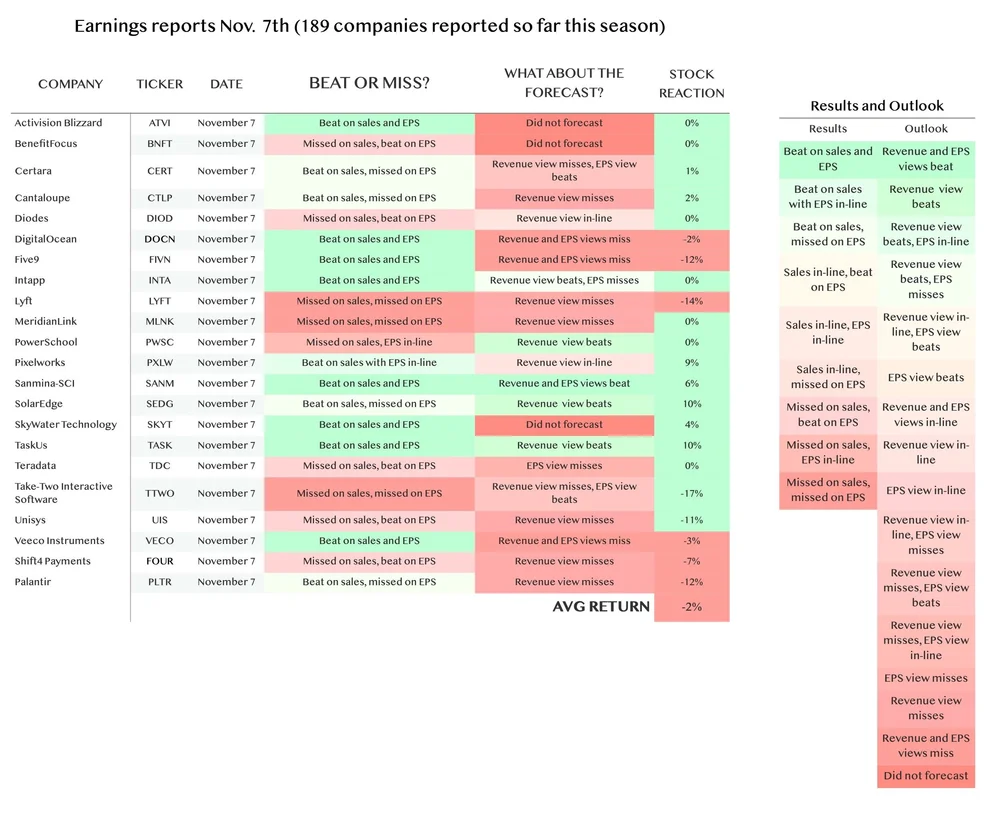
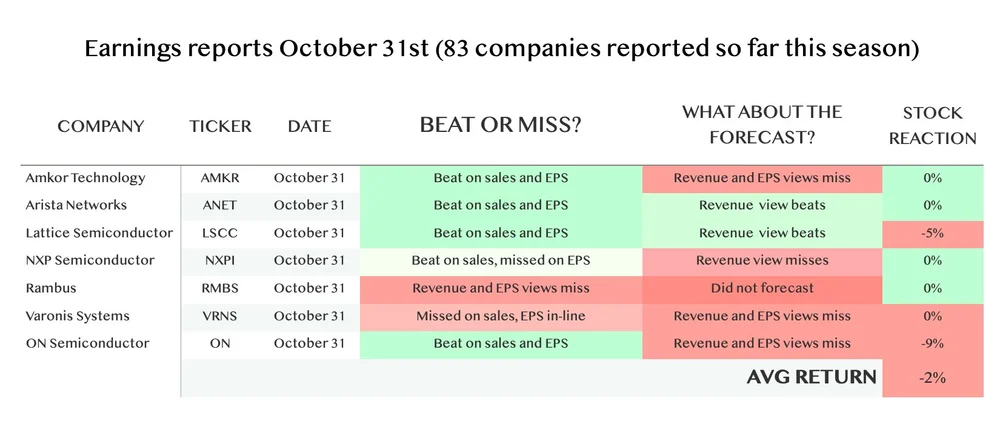
Earnings to date.
See the full list at the bottom of the post.
On the call, CFO Bill Sorenson offered some data about what’s going on with customers. He said DigitalOcean had done some surveys of customers who’ve cut their spend. “More than half of those surveyed cited needing fewer resources as the main driver of their decreased spend, suggesting that our customers' demand environment has reduced, which is not surprising given the global backdrop.”
An interesting wrinkle is that DigitalOcean raised prices during the quarter. Spruill told analysts that it’s had a beneficial impact that “exceeded our expectations.”
Spruill said the price increase added over a point of growth to the company’s revenue, which rose by thirty-seven percent last quarter, meaning, an additional thirteen million dollars in the quarter. Along with the price change, the company introduced a new lower-priced option for some services. Despite the economic turmoil, noted Spruill, the company’s churn last quarter came in lower than expected, and the number of customers that traded down to the cheaper plan were fewer than expected.
The economic “headwinds,” said Spruill, will ultimately “dissipate,” and as they do, “our new pricing framework is going to endure as we continue to lead in the SMB cloud with a differentiated platform.”
The main pitch for the Street on the call is that DigitalOcean is continuing to focus on two things: revenue growth above thirty percent, and a target to get to a free cash flow margin of twenty percent or better by 2024.
On the first score, Spruill said that “we expect to grow at least 30% next year from the midpoint of the 2022 guidance we're issuing today.” On the second score, he assured analysts, “We're going to get to 20% or better in 2024, which is only fourteen months away.” He repeated a short while later, “We will be hitting 20% or better free cash flow when the calendar flips to 2024.”
Spruill is exploring different avenues to make sure the company maintains those goals. Revenue, in particular, is an area where the company is looking to find additional avenues of growth. “When you get over five hundred million bucks [in annual revenue],” said Spruill, “you’ve got to start looking at other ways to drive revenue growth if you want a three handle on it,” meaning thirty percent or better annual revenue growth, “and that’s what we’re doing.”
One really interesting opportunity is selling more data storage along with the compute services it offers. Spruill contends that Amazon and the other cloud majors are gouging customers on the cost of storage, and that the category is ripe for taking share.
“Our storage revenue currently is high-single digits as a percentage of our total revenue,” said Spruill, “and we believe based upon benchmark and customer surveys that we can double the revenue mix percentage from storage-related capabilities over the next few years.”
Added Spruill, when storage is added to customer plans, it currently increases the revenue per user, on average, by more than twenty-five times the rate without storage.
And the second interesting avenue of exploration is that DigitalOcean bought a privately held startup during the quarter, Cloudways, a ten-year-old firm headquartered in Malta for which DigitalOcean paid $350 million.
Cloudways operates as a “managed service,” which means that it runs cloud computing with much more hand-holding than DigitalOcean, taking care of the management of the services on behalf of the customer rather than just selling raw capacity.
A managed service can reduce some lost business, said Spruill, by keeping those customers who find they’re not getting enough help. “Often we see that the customers that churn in the first few months in our platform cite that they were looking for a managed experience, something that we have not offered until now,” he noted.
And the Cloudways customers can be more lucrative, he said. “As a good indicator of the value of this customer intimacy, Cloudways generates two-X the pricing for a similar-sized customer footprint.”
As for what happens with the economy, it’s really hard to say, CFO Sorenson indicated when analyst Pinjalim Bora of JPMorgan asked what to expect.
“Going forward, the headwind calculation, Pinjalim, is anyone's guess at this point,” said Sorenson. “I don't think we're necessarily out of the woods.”
He noted that customers spending more money seem to be fairly “resilient. “What we're seeing there is our greater-than-$50, and even our greater-than-$250 [a month] customers, are still showing resilience.
“But it's hard to basically estimate what we think the impact would be going forward.”
I’ll have more on DigitalOcean when I talk with Spruill later this week. Stay tuned.
Shares of DigitalOcean declined fractionally in late trading. At a recent price of $29.40, the stock is down seventeen percent since I picked it for the TL20group of stocks to consider in July.
The TL20: DigitalOcean on tap
Nov 07, 2022
Show notes
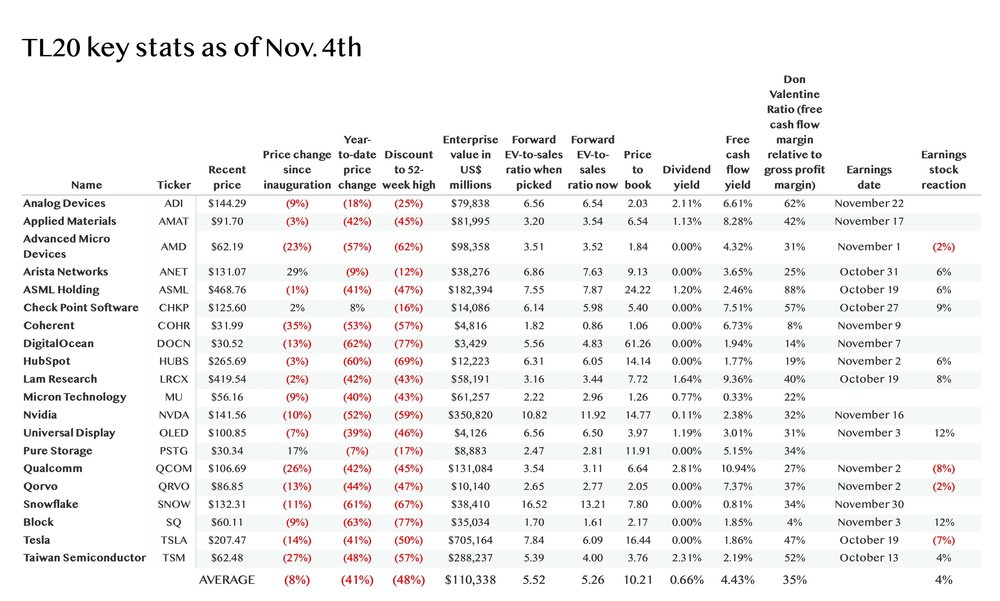
The TL20group of stocks to consider is having a better November so far than the broader market. The group declined two percent last week, better than the nearly six percent sell-off of the Nasdaq Composite Index. With the group now halfway through earnings reports, the results have been pretty good.
With eleven of ten having reported, the majority of the reports have been better than expected, and the forecasts, for those that forecasted, have been better than expected. And the average stock “pop” following the report has been a decent four percent.
Arista Networks has been the big start of the season, reporting better-than-expected results this past Monday, and a stunning forecast for the year ahead when it held its analyst day on Thursday.
I’ll be especially interested Monday to see how Digital Ocean holds up. The company is singularly dedicated to the small and medium business crowd. Last quarter, when I talked with CFO Bill Sorenson, he expressed confidence the company will continue to maintain profitability by controlling costs even in a “tough environment” in terms of the broader economy.
Results in August were more or less in line with consensus, after five quarters of outperformance. The question Monday will be whether we see a breakdown in the company’s ability to hold onto those small business customers.
The TL20 is down thirteen percent since inception on July 15th.
The TL podcast for Nov 6th: Recession-resistant stocks and silicon carbide futures
Nov 06, 2022
Show notes
Very mixed week for earnings, with Arista Networks the star, Wolfspeed’s controversial plan for silicon carbide, and some thoughts on stocks in The Great Recession.
Arista stuns the Street with a big revenue view for 2023
Nov 04, 2022
Show notes
While this earnings season has seen a lot of wrecks as a result of worsening macroeconomic trends, the area of computer networking so far appears surprisingly resilient.
In particular, Arista Networks, which sells equipment to hook up computers inside data centers, seems to see no end in sight for its wares.
After beating expectations on Monday evening, and offering a forecast higher as well for the current quarter, the company on Thursday stunned the Street with its analyst day meeting. CEO Jayshree Ullal offered a prediction that Arista’s sales will be ten percent higher next year than anyone’s been expecting, $5.5 billion dollars versus the current consensus for just under five billion.
There was quite a bit of gushing by analysts writing home this evening. Wells Fargo’s Aaron Rakers calls the event “what we think should be considered a much stronger-than-expected update” (emphasis Rakers’s.) He notes the buy-side has been looking for mid-teens revenue growth on a percentage basis in 2023, but this bumps it up to twenty-five percent growth.
Amit Daryanani with Evercore ISI this evening writes that the event “was more bullish vs. high expectations into the event,” adding that the company “is positioned as not just a 12-month but a multi year story as they disrupt the networking industry.”
There was a lot else that was talked about during the proceedings, much of it having to do with software, both offering more software to customers, and also updating the nature of software in networking for a modern age. Fairly fascinating stuff I hope to reflect on some more in the coming days.
But for the moment, it’s the revenue outlook that is taking everyone’s attention. Arista shares rose by five percent in late trading. The stock is now up twenty-seven percent from when I selected it in mid-July for inclusion in the TL20group of stocks to consider, making it the best-performing name of the group.
Block, Microchip defy the economy, Twilio succumbs
Nov 04, 2022
Show notes
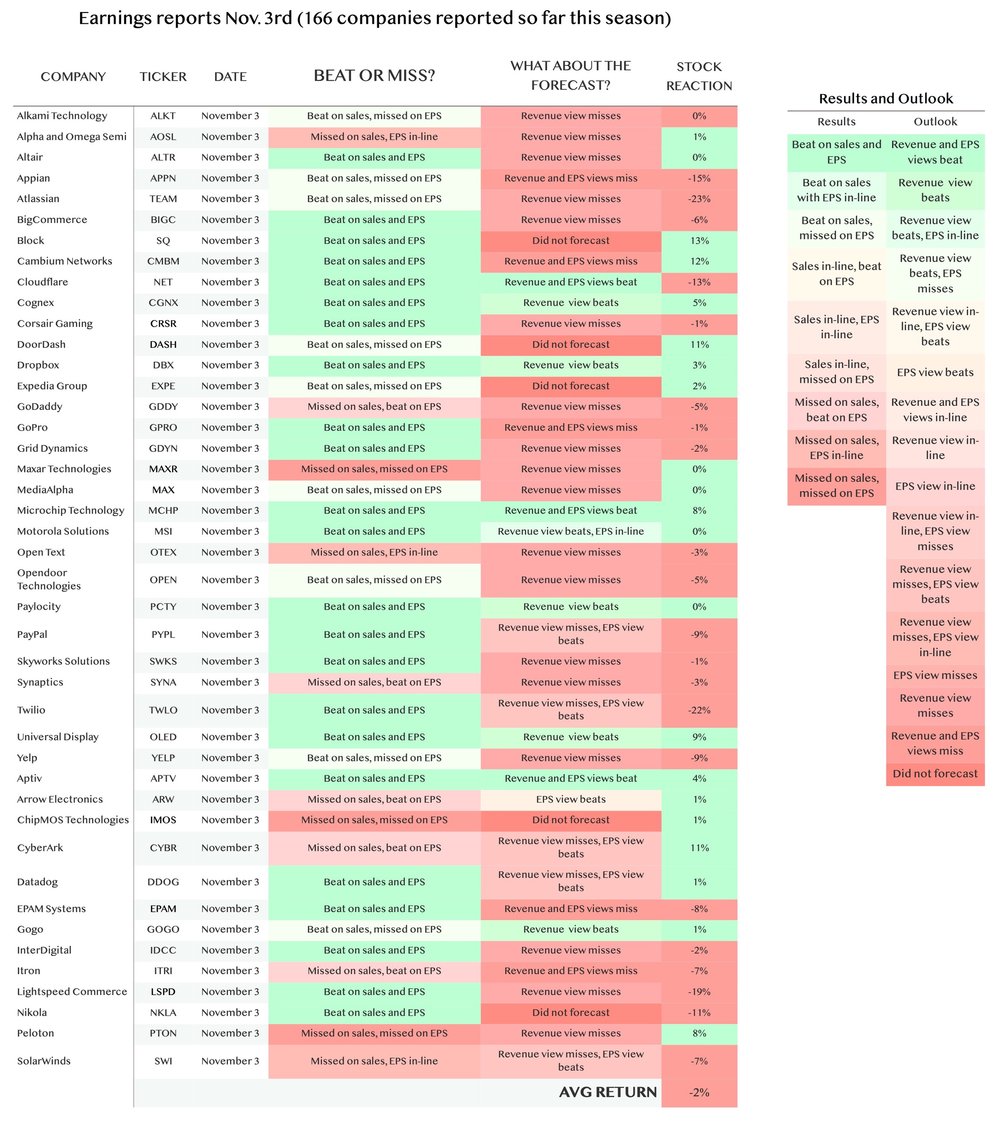
It was another eventful earnings day, Thursday, with stark disparities in the winners and losers. Among the winners, two of the TL20stocks to consider, Block and Universal Display, surged in late trading, as did a favorite of this blog Cambium Networks, as it moves past supply-chain issues.
Among the losers, Twilio, the communications infrastructure cloud company, plunged twenty-two percent, and even worse was IT software maker Atlassian, down twenty-three percent. Both missed expectations.
And a most curious star of the evening was Microchip, maker of microcontrollers, relatively simple kinds of processors that are used in embedded applications of all kinds. The company can’t keep up with demand and results and outlook keep beating, making the Street wonder why this company’s doing so much better than most chip makers.
In each of these cases you see an interesting divide: the winners seem to be relatively immune so far from macroeconomic turmoil, while the losers are being hit by it more and more. I can’t entirely explain the disparity, I’m merely observing it.
First, the winners. Block, formerly known as Square, is Jack Dorsey’s other company, known for the little swipe-reader for credit cards to take payments. The company was rechristened Block as Dorsey last year became enamored of all things blockchain. It also owns TIDAL, the high-def music venture.
Results topped expectations and the stock soared thirteen percent. Block doesn’t forecast, but a lot of the discussion on the conference call was about the company being a little tighter with spending next year.
Asked analyst Tien-Tsin Huang of JPMorgan, “can we get back to operating leverage in 2023?” CFO Amrita Ahuja answered in the affirmative, noting the company has been spending heavily to build new products the past few years but “Our preliminary 2023 plans really significantly moderate those expenses.” That includes “moderating” new hiring, and cutting is spend on advertising that didn’t produce the biggest return-on-investment.
Interesting to me was that the call didn’t involve much discussion of the economy, which is surprising given that Block serves numerous small businesses. Ahuja noted that so far, in the U.S., the company is seeing “stability” in its customer base across different industries.
Cambium is a fascinating wireless networking provider. Its showcase technology at the moment are wireless access points and switches that enterprises and small service providers can use with the rather new WiFi 6 standard to provide hundreds of megabits per second of wireless networking either inside an office or over several kilometers of a campus or city environment.
Shares surged seven percent in late trading as revenue came in nine percent above expectations, very healthy upside. The company had a really rough second half of 2021 and beginning of 2022, as it struggled to get enough parts to assemble its equipment. That is behind the company now, as the supply situation has gotten better and better.
In a Zoom meeting following the report, CEO Atul Bhatnagar told me, “We are well positioned for solid growth in 2023,” meaning revenue growth. The Street is modeling twenty percent revenue growth in 2023. Bhatnagar reiterated a point he made when I spoke with him in August, which is that 2023 is just the start of several years of growth for Cambium, the “knee in the curve” of an “S-curve” of growth, he claims.
Another winner was Universal Display, which makes the basic ingredients of the organic light-emitting diode, or OLED, display technology that is included in smartphone and TV screens. The Street breathed a sigh of relief because the company didn’t have to cut its revenue outlook after having done so the prior quarter. The OLED market has been tough this year with the collapse in the smartphone market, which has lead to only six percent revenue growth for Universal this year, down from twenty-nine percent last year.
On the call, Universal’s CEO, Steven Abramson, was upbeat about what he said will be a huge expansion of OLED use in 2024, as the panel makers who make the OLED screens using Universal’s technology move to larger-size panels.
He cited some data from research firm UBI saying that the uses of OLED for laptops and tablets is going to soar by four hundred percent in the next four years, with almost fifty million units a year produced using OLED in 2027. Oh, and Abramson also said some other market research shows the total OLED market will double in value by 2030 to a hundred billion dollars annually.
That’s rather remarkable given that the OLED market is now twenty years old, by my reckoning. Universal stock rose by nine percent in late trading.
As I said, Microchip, the maker of those embedded microcontrollers, is keeping analysts scratching their heads. The company hasn’t missed expectations in three years. And it hasn’t missed with its revenue forecast in two years. Demand keeps rising for the company’s chips, and CEO GaneshMoorthy told analysts this evening that the company has a growing backlog of chips ordered that it has not been able to supply given supply-chain issues.
And we exited the September quarter with our highest unsupported backlog ever, with unsupported backlog well above the actual net sales we achieved. We are working hard to reduce our unsupported backlog to more manageable levels and expect to do so in the coming quarters, but also expect to remain supply constrained through the rest of 2022 and well into 2023.
Now, that’s a good problem to have, as they say, but analysts are finding it hard to believe business is so good. One analyst, Ambrish Srivastava of BMO Capital, said, "I just can't help asking this question because weakness is rampant, it’s everywhere” among chip companies, “how are you managing the soft landing” that the company seems to be promising.
Moorthy replied that the company is in markets whose products don’t go up and down in terms of demand. “Most of these customers in these end markets are not in volatile markets,” he said. “They’re looking at the long term.” Microchip sells microcontrollers, as I said, things that can go into industrial systems, medical devices, street lamps, etc. It’s so diverse, you could surmise that it’s the kind of stuff that just keeps getting built in good times and bad.
Oh, and another thing: Within Microchips’s backlog, which is at an all-time high right now, half of those orders are “non-cancelable,” said Moorthy. That helps.
It’s interesting Microchip has been so resilient this year because it’s stock has not escaped unscathed: shares are down thirty-two percent this year.
The losers this evening included Atlassian, which is best known in IT circles for JIRA, a software program that manages the trouble tickets when an employee contacts the help desk to say they need a replacement laptop, and those kinds of things.
In the company’s rather engaging shareholder letter, co-CEOs Scott Farquhar and Mike Cannon-Brookes offered, “in the spirit of our ‘open company, no bullshit’ values, let’s start with the topic that’s top of mind for shareholders: macroeconomic impacts.”
Well, the economy is catching up with Atlassian. “Last quarter, we shared that we saw a decrease in the rate of Free instances converting to paid plans. That trend became more pronounced in Q1,” they write. “This quarter, we started to see a slowing in the rate of paid user growth from existing customers.” Not good either.
This story is now familiar among most software companies. Companies of all sizes are seeing these effects of slowing sales, deals taking longer to close. In Atlassian’s case, though, the Street is showing extremely little patience for the matter. I think that’s probably because Atlassian has beaten expectations with its forecast in seven quarters in a row until this one. It’s a shocker to see the sudden downside.
Last but not least, Twilio is a, sort-of, similar story of a breakdown in performance that is surprising. The company has had a flawless record of beating revenue expectations with its reported results every quarter, including this one. However, its ability to forecast revenue has suddenly broken down this year. Thursday was the third quarterly revenue forecast in a row that missed expectations.
The company held its annual analyst day meeting today, so there was hours and hours of presentations by CEO Jeff Lawson about the technology vision and the product, but there were also questions about why the company has been seeing a breakdown in demand for its product.
Lawson replied that the company has been dealing with a “slowdown” in some industries as a result of macroeconomic pressure, such as crypto-currency trading and social media. He said that has recently been spreading to other industries.
Lawson did have one consolation prize: He made the case that because Twilio software is purchased on a “consumption” model, where it can be dialed up or down by the customer as needed, his company’s revenue can be more volatile in either direction.
“As the economy declines, we feel those slow- downs a lot faster,” he said. “And I think, equally, when the economy improves, we would expect to see a faster overall recovery than what some of the subscription folks would field.”
Well, here’s hoping!
Eye of the Storm: Amplitude, Confluent rising, Roku, Qualcomm tumble
Nov 03, 2022
Show notes
It’s getting rough out there this earnings season, with even fair performance being punished.
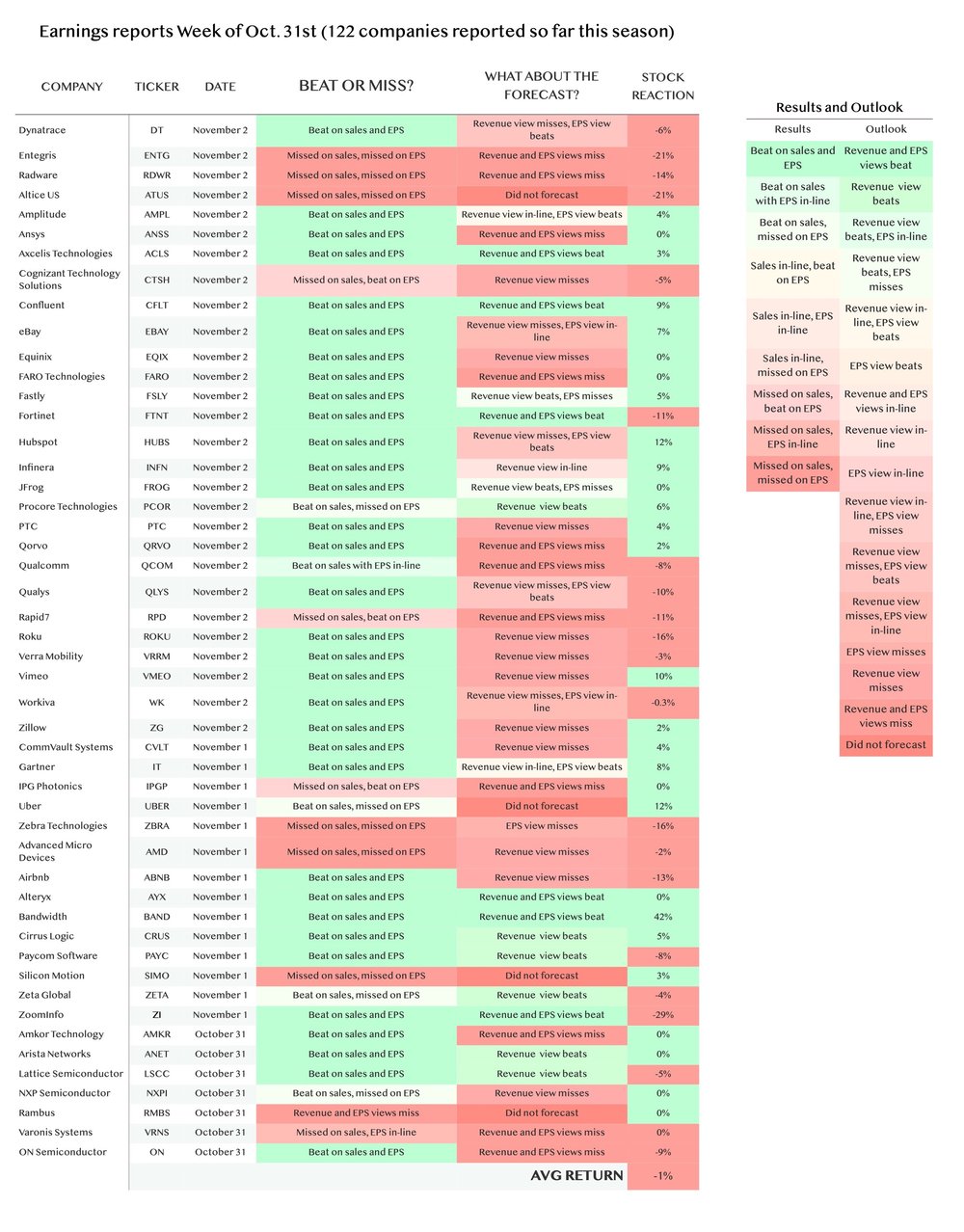
ZoomInfo, a software maker that acts as a kind of rolodex in the cloud to aid sales and marketing for prospecting, saw its shares sell off by twenty-nine percent Wednesday, even thought the company beat expectations with its quarterly report Tuesday evening, and with its outlook.
Problem was, ZoomInfo has, on average, offered a revenue forecast that’s five percent higher than expected the preceding five quarterly reports. This time around, it offered a forecast that was just a fraction of one percent higher, $300 million versus the consensus $298 million. Not good enough.
People are slicing things very thin at this point. The upside-down result of that is that some companies that miss expectations are seeing their shares respond favorably, if the miss wasn’t bad enough, while others are selling off whole-hog if their upside isn’t good enough, like ZoomInfo. Not entirely surprising in a market that is extremely skittish, the Nasdaq Composite Index dropping over three percent on Wednesday.
Wednesday evening, it was cybersecurity vendor Fortinet’s turn to be punished despite solid results. The company beat expectations for profit and revenue and also forecast this quarter higher.
But “billings,” which is one of The Metrics, those non-GAAP measures the Street uses as an extra hint about how things are going — money that has been collected but not yet recognized as revenue — was only a fraction of one percent higher than expected. That’s the smallest upside in billings in years. Hence, the stock sold off eleven percent in after-hours.
This is what I mean: the Street is terribly anxious and is punishing the slightest slip-up.
The relative bright spots Wednesday were Amplitude, the maker of analytics software to tell programmers if their programs are being used successfully; and Confluent, the maker of middleware known in open-source circles as Kafka, for real-time, streaming enterprise data.
Amplitude shares rose four percent after-hours, while confluent jumped by nine percent. Mind you, both stocks had sold off sharply during the regular session amidst the general carnage Wednesday.
Amplitude makes tools for software developers that help them understand how their apps are being used, and how the apps could be better if a developer made adjustments.
I had a chance to talk with Spenser Skates, co-founder and CEO of Amplitude, right after the release came out. He was upbeat about his company’s performance, but also indicated that things are going to be tough all around going forward in software land.
“Macro is hitting everyone,” Skates says. “First, it was companies’ sales cycles elongating,” he says, meaning, customers were taking longer to sign a purchase. “Now, it’s customers re-prioritizing their spend.”
“For sure, the next few quarters are going to be tough for every single company out there.”
Skates was encouraged that Amplitude’s own software programs are still the kinds of programs companies will buy even in tough times.
“It was a record quarter for us in terms of new business signing up for Amplitude, the most new businesses ever, and we did an eight-figure deal,” says Skates, the first time the company has gotten eight figures for a deal. He wouldn’t disclose the company’s name but noted it is a major technology company but not the kind that is immediately associated with aggressive technology use in its own operations.
The pace of signing up new business tells Skates that “In spite of the macro [economic conditions], we are still a must-buy for a lot of teams.”
“Product and data investments tend still to be at the top of the list for companies, unlike a lot of marketing-tech or sales software.”
However, Skates notes that his customers are asking him to work with them on time frames, that they may want to trim some spend in a given period, he said, to put off a portion of their purchase to a later date.
“One thing we have seen from our customers is that there is a segment of customers that had expected some growth this year that’s not materializing for them, and so they’d like to right-size their contract with us — we’re trying to help them solve that in a number of ways.”
He said Amplitude is trying to be extra transparent in showing the customer what they are paying for. “The good thing is, we haven’t seen anyone switch out to a competitor,” he said. “Every customer I’ve talked to, they plan to triple their revenue growth the next seven our eight years, and they see growing with us, but this quarter, they need some help.”
In other developments, Skates boasted of Amplitude’s having added thirty new product features in the quarter to its software, “to keep up the pace of innovation, which is something that’s really hard for companies as they scale.”
A measure of product health, he noted was that the company’s total “ARR,” or annualized recurring revenue, for its two newer products, this quarter totaled ten million dollars. That is a small amount when set against annual revenue of perhaps two hundred and thirty million. Still, Skates tells me it is a “milestone” because it shows the company can add additional programs and is “not a one-trick pony.”
“For sure, the next few quarters are going to be tough for every single company out there,” says Amplitude’s co-founder and CEO Spenser Skates of the landscape for selling software. Despite his customers’ belt-tightening, he is reassured by the fact that “we are still a must-buy for a lot of teams.”
Confluent was also talking about The Macro this evening. During its conference call, the company got ahead of the 2023 speculation by offering a preliminary forecast for revenue next year in a range of $760 million to $770 million, which is ahead of the current consensus for $763 million. The company’s CFO, Steffan Tomlinson, told analysts on the call “we're assuming that the overall macro dynamic that we see today will continue to persist throughout next year.”
An interesting case this evening was Hubspot, a vendor of sales and market software, and a member of the TL20list of stocks to consider. Hubspot had a kind-of inverse of the Fortinet Effect: it beat expectations but its forecast for revenue came in below consensus, and the stock still surged by twelve percent in late trading.
The reason is the stock didn’t sell of is that Hubspot is being given a pass because its revenue forecast is hampered by the rising U.S. dollar. Investors have gotten used to the dollar’s deleterious effect and so they look aside at it. The prior two forecasts Hubspot offered were also lower-than-expected for that reason. Given that management Wednesday evening told analysts the same sad story of software sales taking longer to close, Hubspot gets a pass for dealing with adversity with, you could say, fortitude.
Companies that did not do as well Wednesday were Qualcomm, another TL20 name, and Roku, the purveyor of media programming software and advertising services for interactive TV.
While Qualcomm beat expectations, its forecast for revenue was lower than expected, the second quarter in a row of disappointing forecasting. On the call this evening, CEO Cristiano Amon talked about what he characterized as “short-term challenges,” remarking that “as we look to fiscal 2023, further deterioration of the macroeconomic environment and extended China COVID restrictions have resulted in demand weakness and temporary elevated channel inventory across the industry.”
In particular, the company’s smartphone customers are selling even fewer units of phones than already diminished expectations, and they’re scrambling to reduce their inventory of chips as a result. This is what we’ve heard from companies such as Advanced Micro Devices and others in the semiconductor industry, the great inventory challenge.
Qualcomm is instituting a hiring freeze, CFO Akash Palkhiwala told analysts. Qualcomm stock dropped almost eight percent after-hours.
Roku, of course, has been dealing with the breakdown of the advertising market this year, as well as supply-chain problems that hit sales of television sets, which hampers Roku’s ability to sign up subscribers.
The company beat the revenue number tonight, but the revenue outlook missed and the stock dropped eighteen percent. Founder and CEO Anthony Wood told the Street that macroeconomic pressure on advertising and consumer spending is going to get worse this quarter, and Roku is doing even more now to curtail expense growth.
And Roku’s CFO of eight years, Steve Louden, plans to step down next year after finding his replacement. That’s too bad, I have enjoyed on many occasions interviewing Louden. Wood pointed out that Louden had been planning to move on three years ago but delayed that during the pandemic.
Wolfspeed makes its case for a ton of financing
Nov 02, 2022
Show notes
It was standing room only Monday morning in a ballroom upstairs at the New York Stock Exchange. I crowded in with about a hundred people to hear management of Wolfspeed make the case for raising a lot of money to advance the semiconductor technology known as silicon carbide. Silicon carbide, which I covered in a longish piece in February, is a semiconductor that is key to electric vehicles. Tesla started the use of SiC, as it’s called, and all the other carmakers are following suit. Wolfspeed is one of the few chip makers on the planet that can make the stuff, which is more complex than plain-old silicon, more of an art. And Wolfspeed is definitely in the pole position in SiC at this point. The highlight of the morning was an appearance on video hook-up by Thierry Bolloré, CEO of Jaguar Land Rover. Jaguar has struck a partnership with Wolfspeed to secure supply of SiC for years into the future in order to go all-electric with its vehicles. The morning was fascinating, both because it offered lots of great detail about how Wolfspeed’s business will progress, but also because there was some controversy. Investors and analysts are a tad unnerved at the moment because the reality is coming home to them that it is going to take a lot of capital to make all the SiC that Wolfspeed can sell. That’s not a bad thing: real technology that advances whole industries costs real money. But Wolfspeed stock has spent most of the last few years simply being rewarded because of high demand for SiC. Now, suddenly, it’s as if the waiter has come with the bill.Specifically, Wolfspeed’s CEO, Gregg Lowe, and the company’s CFO, Neill Reynolds, told the audience that they need to be able to cover six and a half billion dollars worth of capital expenses over the next several yearsto expand their factories. Silicon carbide “may be the largest single growth of any technology in the history of semiconductors,” says Gregg Lowe, Wolfspeed’s CEO. It’s also going to take a balancing act of financing and factory building that investors are having to get their heads around. The two had previously mentioned the need for capital, most recently last Thursday when Wolfspeed reported earnings. But Monday was the first time they disclosed a dollar amount. As Reynolds explained it, the company has expectations for how many products its SiC will be designed into, a total “pipeline” worth eighteen billion dollars through 2027. That gives the company a pretty good line of sight to four billion dollars in annual revenue in 2027, up from one billion this fiscal year. And to go after all that requires almost seven billion in capital investment between now and then.As Reynolds explained:Now, right now, what we see is, as you look at that demand and that design-in curve, a lot of opportunity for a while. So, we'll need that supply. So, the plan is to continue to tool those factories out as fast as possible. But we’re going to have a fixed-cost investment in facilities, and then we'll also see tooling out those facilities over time as we drive up to $4 billion of revenue by 2027. So, what do you get for that? So, overall, I've said it many times, it's 2:1 CapEx to revenue ratio, and what does that mean? That equates to roughly a $6.5 billion investment over the next five years, four to five years, but what do you get for it? You're getting the largest and the top state-of-the-art automated 200-millimeter silicon carbide footprint in the world. And that footprint is here to serve the industry's top customers. What that means for investors is that the company’s ability to get to positive free cash flow won’t come for another three to four years. Wolfspeed had negative free cash flow of six hundred million dollars in the past twelve months, and has been bleeding cash like this for three years, ever since the push to be a SiC powerhouse. Investors are now waking up to the fact they’ll have to live with that cash drain a few more years.Reynolds and Lowe emphasized that come 2026, all that investment will start to turn into a gusher of positive cash:Over time, as we build out these facilities with this great operating cash flow capability, you'll start to see the operating cash flow pick up over time, getting to over $1.3 billion by 2027. And if you look at the right-hand side of the chart, as we make investments, we'll see a decrease in the free cash flow and sort of making that transition to free cash flow positive out in 2026 and 2027 as we really start to see the benefit of these large automated facilities taking hold. Here’s the gist of it all in a single slide: It was clear the disclosure of big funding needs really weighed on the audience. Lowe and Reynolds, after spending hours discussing the business Monday morning with the help of team members who gave excellent technical presentations, spent a good deal of the Q&A portion fielding questions about the money. You could feel there was a certain tense quality to it. I think some investors were frankly shocked that Wolfspeed now looks to be a more capital-intensive kind of business for longer than investors have been expecting.Part of the shock is that Lowe and Reynolds have not yet decided which means of financing they will choose, though they talked about their options. Those options include funding from the government, which is a very real prospect given that there is a push to “on-shore” production, the CHIPS Act, etc. Wolfspeed got several hundred million dollars from New York State to build their new factory in the Mohawk Valley in upstate New York, for example.Other financing options include having customers fund some of the expense years before product is ready; having private sources lend money or take a share of specific projects; and last, tapping public markets for debt or equity. The last of these, levering up or doing dilutive equity raises, is the least desirable, and Lowe and Reynolds were careful to emphasize multiple times that they will only seek dilutive deals as a last resort. Still, I think a lot of investors can’t help feeling shaken at the mere mention of dilutive financing.Analyst Harsh Kumar of Piper Jaffray told Lowe and Reynolds that the question of how the company will get financing was “the only question that I'm getting in the last four days on your company.” Does Wolfspeed even have access to that much financing? he demanded to know.Reynolds told Kumar, ”There is access to capital in these areas,” and offered a bunch of thoughts about different ways the company can go. It still was rather open-ended, not definitive.Bottom line, Lowe and Reynolds don’t yet have specifics on how they’ll do that financing. And that uncertainty is not welcome at this point. Wolfspeed shares declined by seven percent Monday, worse than the broad market even on a rough day for stocks. WOLF Chart by TradingView The uncertainty Monday, moreover, follows uncertainty last week that compounded things. Wolfspeed’s Thursday earnings report included a forecast for this quarter that missed expectations, the first miss in a year. The stock plunged eighteen percent the next day. The proximate cause of the shortfall is a delay in availability of some spare parts for Wolfspeed’s factory in Durham, North Carolina. It’s a small thing, in the scheme of things, but investors are in no mood for any slip-ups. It’s part of a risk-off attitude toward SiC at the moment, after the technology has been a darling for the past year. Notice that Wolfspeed’s top competitor in SiC, On Semiconductor, reported healthy quarterly results Monday, but saw its shares sell off by nine percent. As recently as August, these two companies were a bright spot in a rough semi market, now they can seem to do no right. There is another point of view, however, a more positive view, and it’s worth considering. I had an interesting chat following the presentation with Jed Dorsheimer of William Blair, who was also at the meeting. Dorsheimer, who was my main source for my article on SiC in February, has the most comprehensive view on the bullish prospects for SiC and for Wolfspeed and On Semiconductor. Dorsheimer is a contrarian: rather than worrying about the six-and-a-half billion dollar bill, Dorsheimer asked Lowe why the company is proceeding slowly and not more aggressively with financing.As Dorsheimer remarked to me, “I am just not sure the capital plans capture the value of being at 200-millimeter versus 150-millimeter, as well as the vertical integration.” Dorsheimer was referring to Wolfspeed’s transition to making chips from eight-inch diameter, or two hundred millimeter, wafers of SiC, a bigger wafer than the industry standard of six inches, or one hundred fifty millimeters. The reason that is important is because the transition to a bigger wafer is going to bring tremendous economies of scale, says Dorsheimer. As I explained in February, that will lead to great benefits for Wolfspeed’s customers. And Wolfspeed will be the only company in the industry with that larger wafer capability. That transition is “a game changer,” Dorsheimer maintains.To Dorsheimer — and he made this point in the Q&A session Monday — the move to larger wafers is a bit like chip manufacturing giant Taiwan Semiconductor making chips below ten nanometers in dimension: it’s a breakthrough of epic proportions. Neill Reynolds, Wolfspeed’s CFO was mobbed after the presentation. For many investors, the big new financing plan is the only thing they can think about. When Dorsheimer made that point in the meeting, and asked Lowe why the company is pursuing a “crawl, walk, run” approach to financing, Lowe demurred. He obviously understood Dorsheimer’s positive take, but he is not inclined to over-play his hand just yet. “We're a relatively small company compared to some of the big juggernauts,” observed Lowe. It’s easy for Intel, he noted, to start up multiple factories. Wolfspeed takes a little longer to build things out.When I asked Dorsheimer what it will take for investors to get comfortable with the big financing ramp, he told me it’s just going to take time for them to see the proof in the pudding, if you will.“I think it’s all relative,” Dorsheimer says. “Some of these same investors are fine with a twenty-billion-dollar budget for three-nanometer” factories being built by TSM. See also:Wolfspeed soars, joining On Semiconductor in the silicon carbide winners circle, August 18th;Wolfspeed CEO: We are a knight in shining armor, May 3rd;Silicon carbide and the age of electrification, Feb. 19th. "That is because Taiwan Semi has demonstrated operational excellence,” Dorsheimer notes. “Wolfspeed has to demonstrate and build confidence here.”What will happen, Dorsheimer predicts, is that confidence in Wolfspeed will build as investors see more and more of those investments pay off. What matters, he says, is “the fact that your capital efficiency is as good as it is,” meaning, the kind of cash flow that Reynolds is predicting starting in 2026. That “cash-on-cash return” matches Dorsheimer’s own back-of-the-envelope that he had come up with prior to Monday. It’s a very good return on investment, in his view. Time is on Wolfspeed’s side, says Dorsheimer. The production of SiC is not just important for Tesla and Jaguar and others, it is a breakthrough material on which much of the planet’s green ambition will depend. “The data suggests there should not be a dollar of capital put in the ground for silicon power electronics vs. silicon carbide,” says Dorsheimer, meaning, plain-old vanilla silicon chips, the kind that have dominated chip-making until now.Silicon carbide is the future, and for the foreseeable future, Wolfspeed is its greatest apostle.So what does the stock look like? Wolfspeed is one of the most expensive semiconductor stocks around. Its shares trade for about eight times the next twelve months’ expected revenue. Mind you, that’s less than it traded for six months ago, and less than half the multiple it had a year ago. The question is whether it is a multiple the stock can support now that investors have to reassess what profit looks like for the next several years given the investment curve.Wolfspeed is still way cheaper than the most expensive chip name, Nvidia, which fetches almost twelve times future revenue. It may be that after investors have had a chance to digest this week’s unsettling news about financing, they will return to focusing on the positives. As Dorsheimer suggests, the financing is going toward a technology that has already proven to be revolutionary. Wolfspeed is among a handful of companies that can master this technology. Demand is unquestionably very large. And supply is tight all around. “It may be the largest single growth of any technology in the history of semiconductors,” Lowe said on Monday. “I think the supply is going to be chasing demand probably through the end of this decade,” he added, meaning not just Wolfspeed’s supply, but also what On and anyone else can produce.And everything about SiC is hard to do, somewhere at the intersection of science and industry. “It takes time,” Wolfspeed’s head of R&D, Elif Balkas, told the audience regarding SiC production. . “The material itself is very difficult to grow, difficult to process,” said Balkas. “One of our leading scientists said that you have to rush slowly.”“Silicon carbide, it's a tough thing,” added Lowe. “These things are not for the faint of heart.”Nor, perhaps, is Wolfspeed stock at this moment in time for the investor who is faint of heart.
Arista delivers stellar results: Customers are ‘desperate’
Nov 01, 2022
Show notes
Arista Networks, which makes the bulk of its money selling networking equipment to the large data centers of giants Microsoft, Meta, and others, turned in a stellar performance Monday evening, which is interesting considering that both Microsoft and Alphabethad warned last week of slowing use of cloud services by their customers.
The revenue number, $1.18 billion, was eleven percent higher than the consensus $1.06 billion, which is the highest upside in years. Profit also beat handily, by nineteen percent.
The outlook for this quarter looks strong as well, a projected level of revenue about six percent higher than consensus.
These are, mind you, within the context of very strong growth. Sales last quarter were fifty-seven percent higher than a year earlier. The forecast revenue this quarter would be more than forty percent higher.
CFO Ita Brennan noted that a year ago, during the company’s November 2nd analyst day meeting, she had outlined an expectation for thirty percent revenue growth for 2022. With tonight’s higher-than-expected forecast, the total should come in well above that, more than forty-five percent growth, about $4.29 billion.
CEO and co-founder Jayshree Ullal told analysts during the evening’s conference call that the results had a disproportionate amount of what she refers to as the “Cloud Titans,” the very largest cloud companies including Meta and Microsoft.
Arista’s chief operating officer, Anshul Sadana, called out in particular how Meta and Microsoft had been deploying switches from Arista to make use of the highest available optical transmission speeds, four-hundred gigabits per second, which has been a wave that has been coming for several years now and seems finally to be crashing upon the shore, as it were.
Ullal said this is one of the strongest years for the cloud companies as a customer since Arista’s 2014 IPO. They will make up more than forty-five percent of this year’s sales, she said.
Ullal is a straight shooter, I find. When Needham & Co. analyst Alex Henderson asked her if the company can possibly maintain such high rates of growth, she said probably things have to cool at some point.
“It's going to be difficult to sustain 45% growth every year,” she said. “I'd love to have it, but as you know, Arista is a volatile business and you have to think of us across a three to five-year CAGR [compounded annual growth rate], not just on an annual basis.”
Another analyst, George Notter, with Jefferies & Co., wanted to know how the company could be sure that Meta and Microsoft are not stockpiling inventory, which could conceivably hurt Arista’s sales at some point.
Said COO Sadana, “I would say the best sign is the number of phone calls I get or Jayshree gets or others in the company get, when are you shipping? So, these customers are still roughly hand to mouth… customers are desperate.”
Wow, I guess desperate customers is the way you’d like them.
Ullal was asked the macroeconomic question, and confined her remarks to saying that “data center spend has been very strong” and that she expects that to continue. Ullal did note that Europe is one place were there was some weakness sensed among the customer base.
As in prior quarters, Arista continues to use its balance sheet to secure huge purchases of parts well into the future. The supply constraints, said Ullal and Brennan, continue, Arista is not entirely able to meet demand. So, each quarter, the company keeps purchasing years into the future.
Interestingly, Ullal said the company "fully expect to grow double digits next year,” and that even if the supply chain remains constrained, she said, revenue growth will still probably be double digits.
One analyst, Simon Leopold, with Raymond James, said it seems such giant purchases should be pointing to either much bigger sales next year than expected, or a lot of inventory that Arista has to warehouse.
CFO Brennan pushed back on that. “We are thinking about this, kind-of, longer term than just the year that's ahead,” said Brennan. That might mean that some of the parts on order won’t even show up until some time down the road.
It’s a tad obscure, and Brennan advised Leopold to wait till later this week, as Arista will again hold its analyst day meeting on Thursday, and she intimated there will be some further discussion about the whole ordering forward thing.
The only blemish in all of this is that the company’s gross profit margin is lower than some would like. At 61.2% last quarter, it is a few points lower than it had been the last few years.
Ullal, when pressed on the matter, pointed out that Arista has more business now from the cloud giants than it has ever had in its history. Those cloud customers tend to make lower-margin purchases, so they depress Arista’s overall corporate gross profit margin.
And that is, at the end of the day, what I think many investors focused on, that gigantic influence of cloud companies, and two in particular, Meta and Microsoft. Arista’s stock declined fractionally in late trading, which tells me that people were not as thrilled with these stellar results as it seems they should be.
My guess is the balance of opinion thinks that Meta and Microsoft have to stop buying so much gear at some point, and that it will torpedo Arista’s results. That’s despite the fact that Ullal remarked on the call that Arista has better “visibility” than ever, meaning, the company’s ability to calculate when it will get orders from its customers.
So, good report, nervous environment. I will point out that when I interviewed Ullal back in May, she told me the company’s now enjoying a period of growth akin to a prior growth spurt, in 2018. However, sales this year of better than forty-five percent would be quite a bit higher than the thirty-one percent rate of growth in 2018. So far, she’s doing exactly what she told me she would.
What may be eluding investors, and giving them anxiety about having so much depend on Microsoft and Meta, is that investors see those customers’ demand as transitory, but Ullal contends it is strategic, meaning, it extends over many years because those giant companies have to invest, they can’t stop.
When Mark Zuckerberglast week talked about a staggering $101 billion in operating expenses he expects in 2023 for Meta, he also noted that Meta is plowing capital spending into its data center infrastructure. Meta is building the Metaverse, after all.
So, either investors are right, and Microsoft and Meta are a house of cards that will come apart next year for Arista, or Ullal is right that these companies are desperate for equipment for years into the future … or the truth is somewhere in between.
Arista stock is down sixteen percent this year, and the stock is up nineteen percent since I picked it for the TL20 in July, making it the second-best performing stock of the group following Pure Storage.
The TL podcast for October 30th: A good week for stocks, bad week for earnings
Oct 30, 2022
Show notes
Apple was the saving grace, why can’t Alphabet or Microsoft say anything about the economy, and looking ahead to a big day for silicon carbide on Monday.

 Our TOPPODCAST Picks
  Stay Connected