Qualcomm CFO Palkhiwala: We are becoming a different company
Dec 05, 2022
Show notes
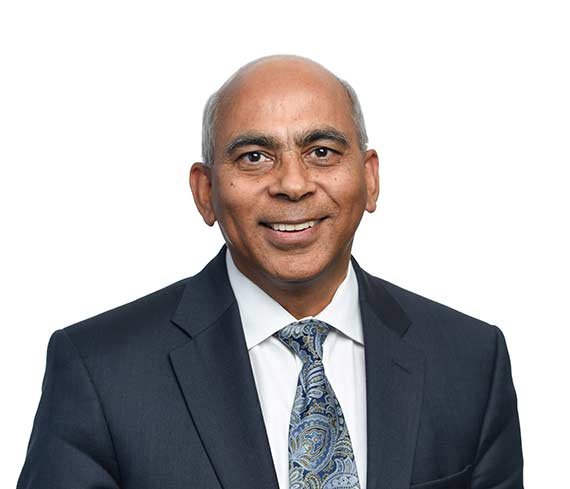
Some technology companies have gone through “transformations” where you had to really squint to see what, if anything, had changed. When Microsoft and Oracle, for example, were early in their respective transitions to being cloud companies from being plain-old software vendors, you had to have a kind of monastic devotion to the scholarship of their quarterly filings to figure out what the heck was going on. In contrast, chip giant Qualcomm has been going through a transformation for several years that is written in neon lights. The company has expanded its sources of revenue dramatically, especially in chips for automobiles; and it has expanded its chip operating profit margin by a stunning seventeen percentage points in just two years. At a gathering in September for analysts in New York City, the company’s CFO, Akash Palkhiwala, told analysts the company is well ahead of plan on signing up tens of billions of dollars worth of future revenue from car makers, lifting Qualcomm’s multi-year goals.Qualcomm’s stock, however, doesn’t seem to reflect much if anything of that success. The shares, down about twenty-nine percent this year at a recent $125.66, track slightly below the benchmark Philadelphia Semiconductor Index, the SOX, in the past twelve months. The valuation, moreover, as a multiple of enterprise value divided by projected next twelve months’ sales, at 3.7 times, hovers just slightly above where the stock was five years ago, when Qualcomm was a much less diverse company. It is also toward the low end of valuations of the SOX companies, and well below the SOX average of 5.8 times. Qualcomm’s stock is one of the inaugural picks of the TL20 group of stock to consider. Given that I think its shares are a good buy, I was in the mood for a good chat about why the market might not be fully valuing Qualcomm.And so, when Palkhiwala sat down to chat with me via Zoom this past week, one of my main questions for him was, At what point will investors get the message that the company has changed?“Yeah, that’s obviously a very fair question, and top of mind for investors,” says Palkhiwala. Since the company’s analyst day meeting a year ago, he says, when the new approach at Qualcomm was formally laid out, “the amount of progress we’ve made within the year is very significant.” In truth, the past year has been the culmination of a multi-year journey for Qualcomm to move away from its historical reliance on selling smartphone CPUs and modems for the vast majority of its revenue. Under former CEO Steve Mollenkopf, the company set an agenda to expand into the realm of wireless chips it didn’t control, the “radio frequency” filters that navigate the airwaves. That product line is now over four billion dollars a year, bigger than the two “pure plays,” Qorvo and Skyworks Solutions.A plan was nascent under Mollenkopf to spread the Qualcomm chip expertise more deeply into the automotive market, to equip cars with wireless and media processing; and into the Internet of Things, a grab-bag made up of all kinds of things including chips for Windows PCs and chips for Meta’s Oculus gaming gear. Both of those markets received a greater emphasis as Cristiano Amon, formerly president, took the reins from Mollenkopf last year as CEO. For the first time, Qualcomm regularly broke out the revenue from both autos and IoT on a quarterly basis. Autos and IoT have grown from six billon dollars in revenue two years ago to over eight billion in the fiscal year that ended in September, thirty-eight percent growth. More important, autos and IoT now make up twenty-two percent of chip sales that were once almost entirely smartphone-chip sales.“When you step back and look at the long term strategy, it's playing out exactly as we had hoped for,” says Palkhiwala. “Cristiano became CEO a year and a half ago, and we came up with this new approach on how we're going to lookgoingforward as a company, effectively transitioning from a connected smartphone company to a processor company that powers the connected, intelligent edge.“It becomes a different company with that, right?” he says. “It's about diversification. It's about expanding the technology portfolio that we have, and bringing it to auto and IoT. And, as you saw from our numbers and our guidance, we're very much on track in those areas.”SKATING TO THE GOALThe financial goals as articulated by Palkhiwala have been fairly straightforward. As he laid out a year ago at the company’s analyst day in New York, over a three-year period, fiscal 2022 through 2024, the company would increase its revenue from chip sales, its division called Qualcomm CDMA Technologies, QCT, by “mid-teens” on a percentage basis, compounded annually. It would keep its patent licensing business, Qualcomm Technology Licensing, QTL, which makes up the other fifteen percent or so of revenue, at the same size and margin going forward. And non-GAAP expenses would be kept in a tight range of twenty-one percent of revenue to twenty-three percent while operating profit margin for the chipset business would be maintained at thirty percent or better.The company is already off to a good start. Its revenue outlook for its automobile business for the next several years is now higher than originally forecast. And operating expenses this fiscal year were just under twenty percent, while operating profit in QCT, known as earnings before taxation, “EBT,” was thirty-four percent for the year. But the Street is not entirely buying it. Not only does the valuation multiple appear low, the Street consensus for revenue in the fiscal year ending in 2024, the end of that three-year range, is for $40.39 billion. That implies a compounded growth rate of fourteen percent, which is a little lower than would be suggested by “mid-teens.”Hence, as I suggest to Palkhiwala, investors are still grappling with something in the story. QCOM Chart by TradingView TALENTED MESSENGERIt is not that Palkhiwala isn’t an excellent messenger for the Qualcomm story, because he most certainly brings unique talent and experience essential to the task. Since he took the role of CFO in August of 2019, he has cultivated an excellent reputation on the Street as a reliable forecaster of Qualcomm’s financials, and a straight-shooter. He knows the company inside and out. The rhetoric about transformation is backed up by his own career reflections, having started at Qualcomm twenty-one years ago.“The talent in the company, I think, has expanded a lot” in that time, he tells me. “We used to be very much focused on one set of technologies, and now, as we've grown up as a company, and we’re going into different markets, it really is in some ways a very different company than we used to be.”The continuity, he says, is in the fact that “we’ve, kind-of, retained the soul of the company and the technology that we created,” that portfolio of chips now being moved into automative and IoT uses.An affable manner probably helps ingratiate Palkhiwala with the Street. His self-effacing humor can be disarming. When we met for the first time in September, at the auto event, and I asked him for an interview for The Technology Letter, I told Palkhiwala I’d interviewed Amon many times in past, and Mollenkopf before him. “So, now you’re ready for the consolation prize,” quipped Palkhiwala. No runner-up, actually, Palkhiwala, an engineer by training, often frames his financial talks by tying them back smoothly to the technology vision laid out by Amon.ON THE EDGE OF SOMETHING BIGInvestors, says Palkhiwala, understand the company’s position as a chip supplier to the “connected edge.” In a nutshell, as more and more of computing has been sucked into centralized data centers of cloud computing services such as Amazon’s AWS, a second wave is happening where those servers have to connect to devices of all sorts at the far corners of public and private networks. The devices might be smartphones, yes, but increasingly they are other kinds of things: point-of-sale smart terminals hooked up to networks; your Internet-equipped car; heavy equipment with wireless capabilities to send status information back to monitoring dashboards.“We have the ability to be the other side of the cloud, right?” says Palkhiwala. “So, we would be the device on the edge that is connecting to the cloud and we're doing an activity of processing artificial intelligence at the edge.“That message and that understanding of the opportunity in front of us resonates with investors.”The technology trends that matter, he argues, are propelled by economic tribulation. “We see this digital transformation driving this tremendous change in these end-markets that is very much in our favor, and that brings those end-markets closer to the technology that we already have,” he says.“Those trends,” he says, “are, if anything, accelerating as we hit some of these economic challenges,” meaning, the use of automation or other resource-saving technology measures. "Because if you are a retail company, if you are a manufacturing company, the use of technology becomes even more important,” and “digital transformation becomes a tailwind in a challenging macroeconomic environment, and that's something that we expect to benefit from as we look out the next several years.”Included in that opportunity is the prospect of re-using decades of Qualcomm’s amassed intellectual property in new markets. “The key assets that we have as a company is maybe the broadest technology portfolio of any semiconductor company out there,” says Palkhiwala. “We created this portfolio for our handsets, now we can leverage it into automotive and IoT,” the newer areas, “and there'll be more opportunities in the future because it's a portfolio of technologies that is extremely relevant to every end-market in the semiconductor industry.”With investors, Palkhiwala has emphasized that the leveraging of that portfolio has produced financial leverage, too, most immediately in the surge in QCT’s profit margin from seventeen percent of revenue two years ago to thirty-four percent most recently. “Since we are reusing the technology we created for mobile, it allows us to grow revenue in a very profitable manner,” he says. “That's where the operating leverage of the business comes into play: if you look at our actuals for the last couple of years, as we've grown revenues, we've been able to expand our operating margins — and that's a framework that I think sits well with our investor base.”If the big picture is promising, and the financial goals are clear, and the messenger is an exceptionally talented one, what, pray tell, is holding back the Street’s fully valuing this stock? SHORT-TERM ANXIETIESThere are at least a few things at the moment that are affecting investors’ ability to get their arms around “the New Qualcomm,” if you will. Our wide-ranging talk covered pretty much all of them.Most immediate is that, as always, Qualcomm’s business still is very much impacted by what happens in smartphones, and smartphones have been a dog this year. That has lead to last month’s downward revision in Qualcomm’s estimate of the market, and a disappointing revenue outlook for this quarter. “In the shorter term, the semiconductor industry is going through some significant challenges,” Palkhiwala observes when I ask what is top of mind in the company’s fourth-quarter earnings report last month. “One, the inventory build that has happened in the channel,” he says, meaning, chips that now have to be first used up by phone makers to clear their stocks as sales come in lower than expected. “And, second, is just, kind-of, the market weakness we're seeing because of macro-economic conditions.”The macro-economic picture for Qualcomm is construed by investors very specifically: Since China became a huge market for Qualcomm smartphone chips some years ago, China has featured heavily in results as boon or bane. It is certainly a bane at the moment. Handset sales among China vendors using Qualcomm chips, companies such as Xiaomi, Oppo, Vivo, are down by over twenty percent this year in unit terms, according to some market data.Palkhiwala is inclined to play down China’s uniqueness, however. “Clearly, the restrictions that are in place has an impact on total handset sales,” he says, referring to the country’s strict COVID-19 measures. “But there are cyclical things that are impacting the entire industry,” he adds. “You're definitely seeing a post-COVID shift of spend from goods to services for the consumer” globally, says Palkhiwala. “Rather than buy a phone, someone is going on a vacation, sitting in a hotel, having a meeting in a restaurant.”“That is obviously a temporary thing that'll happen.” When will China return to something more like normal? “I’ll stay away from speculating on it, there are so many factors that play into it that are beyond my understanding,” says Palkhiwala. “I will say, when that happens, we’ll be ready to take advantage of it.”If he won’t predict the China market rebound, investors would love for Palkhiwala to discuss how the rest of the handset market may offset China’s slump. While China handset sales are down by twenty percent or more, Palkhiwala’s comment to the Street last month was that the total global smartphone market is declining by “low double digits,” implying there are bright spots elsewhere. “Generally, the U.S. has obviously continued to be very strong,” says Palkhiwala in response to the question of what markets offset China. “Emerging markets are going to have their own trend of transitioning from 4G to 5G” wireless networks, the latest speed bump in connectivity, he adds. “India is a great example where they're at the front end of a rapid shift from 4G to 5G, and so that’s going to be a positive development for us in the next year or so.”He is inclined, though, to view smartphones “on a macro, global basis, rather than each individual market.” That global handset market is not always well understood by investors. It may be more robust than they think, suggests Palkhiwala. Many investors believe it is a “cash cow” business, very little growth but healthy profit margin. “From a market perspective, it’s definitely an accurate portrayal,” says Palkhiwala. However, even in a maturing market there are trends that favorable, he says. One is the shift to more premium phones needing more brawny chips at a higher price. “A great example is emerging-market TV,” he says. “There used to be there used to be one TV where fifteen people were watching, and now you have fifteen phones, each person watching the content of their choice.”As a result, “The next time that person buys a phone, they're going to buy a phone that is more capable on audio and video experiences and movie experiences and which makes for a more expensive chip and revenue growth for us.”Consequently, there may be more growth than the cash-cow theory implies. “We’ve said that consistently,” says Palkhiwala, “that these are factors that help us in a mature market to grow revenue.“The proof is in the pudding,” says Palkhiwala. “If you look back over the last couple of years, there has been a significant increase in our weighted average selling price [for phones] as people would calculate it, outside of the share gains that we had.”Temporary though the handset slump may be, the forecast offered last month spooked the Street, which has been used to the steady hand of Palkhiwala’s forecasting. The revenue outlook was twenty percent below consensus at the time, sending the shares down sharply.I ask if the current market decline has forced Palkhiwala to change how he talks to the Street about the outlook. “You know, the philosophical approach to guidance is something that you keep forever, you don't change based on the environment, and that approach is really focused on transparency and reflecting the best-available…
Nutanix CEO: Given all that’s going on around us, we’re happy with how we’ve done
Dec 01, 2022
Show notes
Among this evening’s positive earnings results, one deserving mention is Nutanix, whose CEO, Rajiv Ramaswami, was kind enough to talk with me following the report via Zoom, as he has in past.
Tonight’s results are consistent with what he and I talked about then, namely that the company’s able to continue to deliver better-than-expected revenue growth despite the broad-based weakness we keep seeing in the software world.
“Our quarter performed even better than our guidance on all the metrics; we kept our revenue guidance for the rest of the year; [and] we raised our operating income and free cash flow guidance for the rest of the year,” is how Ramaswami sums it up.
“Given everything else going on around us, we are very happy with how we’ve done.”
The stock rose initially in late trading, and then slumped a bit. Nutanix has been a great performer this year, down just eleven percent.
The surprise this evening in the company’s fiscal first quarter report was a positive non-GAAP operating profit for the first time, which was a big surprise because Ramaswami had told the Street back in August to expect a negative operating profit margin of about six percent.
Revenue beat expectations, and on top of that, Ramaswami has been keeping a rein on expenses, which is leading to that positive surprise on the bottom line.
“It’s continued discipline in terms of how we manage our expenses, and we will keep that going forward,” Ramaswami tells me.
Indeed, the outlook for this quarter is for that operating profit margin to expand to five percent to ten percent. For the full year, Ramaswami expects the margin to be positive two percent to four percent.
“We know what we can control” in terms of operating expenses, Ramaswami tells me, “and we have a history of controlling that in the time that I’ve been here, so we’re very confident about the ability to be able to manage that.”
The revenue outlook for this quarter is slightly higher than consensus, $460 million to $470 million versus the average $458 million, but the company kept its outlook for the full year the same, which is just in line with consensus.
The reason Ramaswami is not increasing the outlook is because of the unknown pace of signing new customers. He’s said for the past couple quarters that signing new “logos,” as it’s known, has an element of uncertainty given the macroeconomic situation.
Getting new customers is the most expensive, the hardest, and the most uncertain part of the business in a shaky economic climate.
Despite keeping a tight rein on expenses, “We are not short-changing our R&D at all,” says Ramaswami. “I will keep us on the high side” of R&D as a percentage of revenue, he says, "because, for me, one of the key things here is continuing to invest in innovation.”
Results last quarter were consistent with that cautious view, but the company still added customers, the total customer count rising by twelve percent last quarter, to 23,130 total customers, the same rate of growth as the prior quarter.
That’s actually a little bit better than is typical for Nutanix at this point in the fiscal year, says Ramaswami. Overall, he says, “We’re fine with where new customers are tracking from a global perspective, and also the quality of the logos that we get, and the initial size of the deal,” says Ramaswami.
“I’d love to get more of those VMware customers coming to us,” says Ramaswami, referring to what he has told me before is an opportunity to poach given VMware is being bought by Broadcom. “But it takes time,” he notes, to pursue those prospects and to woo them.
Renewals, on the other hand, continue to be “strong,” he says, with the overall “retention rate” in the vicinity of ninety percent.
When it comes to the improved profit outlook, I offered to play devil’s advocate. I asked Ramaswami, if the company sees lower operating expenses going forward even as its revenue outlook stays constant, is he potentially under-investing?
“That’s a great question,” says Ramaswami. “I can tell you that — we do a lot of benchmarking in terms of what our R&D is as a percentage of revenue relative to other companies — we are on the high side, and I will keep us on the high side because, for me, one of the key things here is continuing to invest in innovation.”
“We are not short-changing our R&D at all.”
I asked Ramaswami if any of the analysts asked him this evening about the take-out rumors in The Wall Street Journalin October.
“There was not a single question about that,” he says. “Again, my answer is, it’s not for me to comment on rumors and speculation, but we are very much focused on running our business.” (The day brought another speculative article, this one from Bloomberg’s Liana Baker, Katie Roof, and Scott Deveau), saying that Hewlett Packard Enterprise is interested in Nutanix and has had talks with the company in recent months, citing multiple unnamed sources. We did not discuss that article.)
Before parting, Ramaswami gave me a tip on his current reading interest: Behavioral economist Richard Thaler’s Misbehaving: the making of behavioral economics, published by W.W. Norton in 2015. Ramaswami recommends the book.
“He talks about how economists generally assume people are very rational, but that’s not the case: people do a lot of things based on emotion.
“You have to factor that in, otherwise your economic models are all off.”
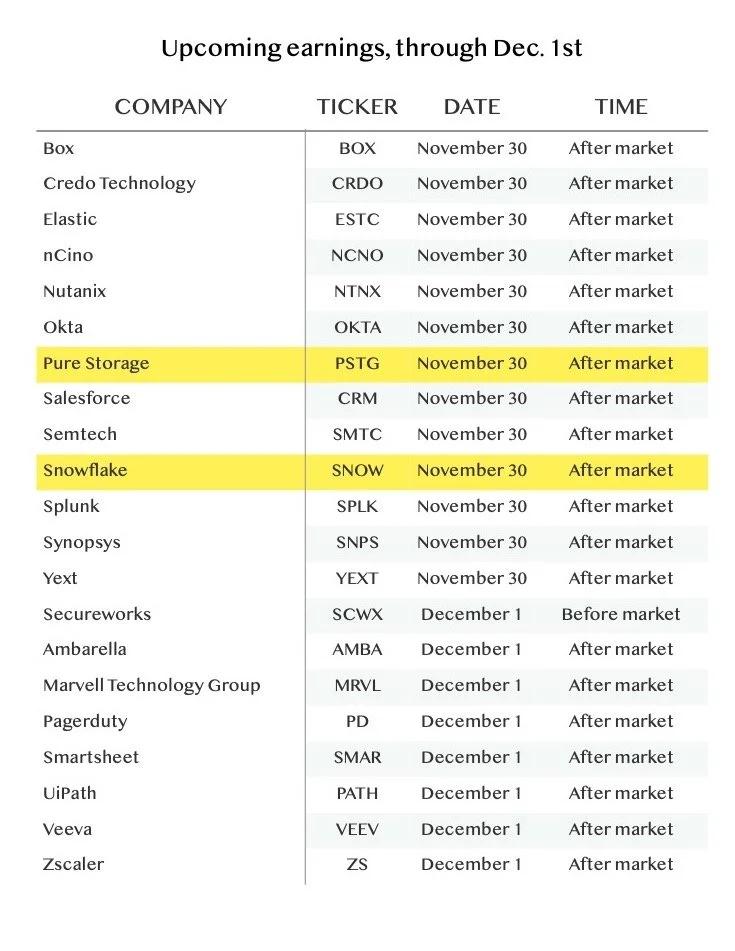
Pure Storage delivers while Snowflake’s cautious outlook disappoints
Dec 01, 2022
Show notes
This continues to be a quarter of uneven performance in the face of slumping corporate technology buying.
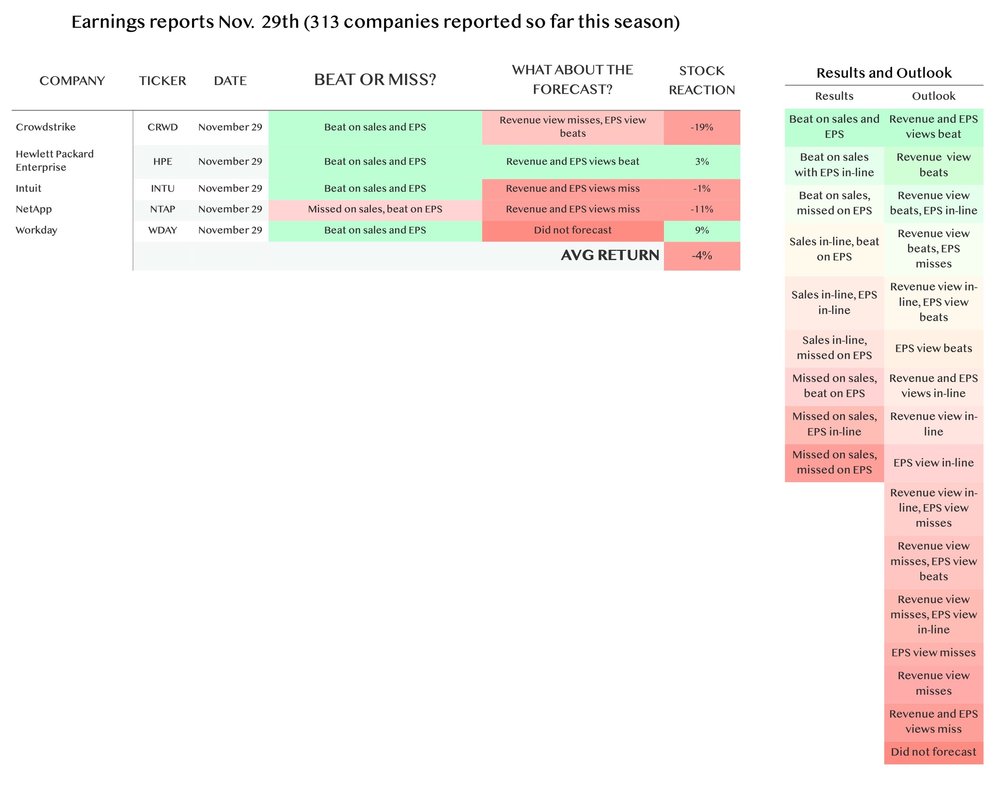
Following the painful example of cybersecurity vendor CrowdStrikeon Tuesday evening, which missed expectations with its forecast for revenue for the first time ever, and saw its shares plunge nineteen percent, Wednesday evening brought a very mixed bag of quarterly results from vendors selling to enterprise.
On the bright side, Pure Storage, vendor of flash-based storage equipment and accompanying software, one of the TL20stocks to consider, beat expectations but missed slightly with its revenue outlook. No one seemed to mind, as the overall report and comments tonight were much better than last week’s depressing outlook from competitor Dell Technologies.
Security software vendor Okta is up fifteen percent on a clean beat and raise quarter and outlook.
But Snowflake, another TL20 pick, while beating expectations, said it is taking a cautious approach to its outlook. And so, its forecast for this quarter’s product revenue was the biggest miss relative to consensus since the company came public in September of 2020.
First let’s talk about Pure. Its revenue outlook this evening of $810 million for the January-ending quarter is just slightly below the average estimate for $813 million. That’s the first miss on outlook in two and half years, back to the “COVID” quarter of April 2020.
However, the call was upbeat, and the sense from the analysts’ posture during Q&A is that everyone is happy the wheels have not come off at Pure like the way they did last week for Dell.
Pure CEO Charlie Giancarlo highlighted positives such as the company’s “annualized recurring revenue,” a measure of the contracted value of deals stretching out twelve months in time. Specifically for the category of subscriptions, ARR surpassed one billion dollars for the first time ever. Pure prices in different ways, but there’s an emphasis on selling more and more on a subscription basis, so this is an important milestone.
One, the company sees the declining price of NAND flash chips generally, industry-wide, as helping the company sell more gear to replace traditional disk-based storage for bulk data storage known as “near-line.”
Said Giancarlo, “We expect that the currently anticipated improvements in Pure's NAND economics this coming year will enable Pure to deliver our TLC-based products at prices competitive with most near-line disk arrays on a total cost of ownership basis,” he said. “We believe strongly that the days of the hard disk in the data center are over.” Bully for that.
Second, Giancarlo intimated that, as he told me, he foresees more of the large sorts of deals the company did last year with Meta Properties for that company’s gigantic Research Super Cluster for artificial intelligence processing.
Said Giancarlo, “In terms of other hyper-scalers, our conversations continue where we're optimistic that we will see realizable opportunities there,” though he added, “But, again, too early to be able to put any real guidance on that.”
Regarding the broader outlook, Giancarlo told analysts he thinks IT spending will hold up in 2023 despite possible recession. “The way we're looking at it, is, a roughly flat US economy next year and perhaps a slightly recessionary international economy, obviously varying a lot country-by-country,” said Giancarlo.
“And as we go into that, we're seeing IT spending holding steady, maybe slightly up relative to the overall GDP growth.”
Now, that was a lot better than Dell CFO Thomas Sweet last week telling analysts “these dynamics are creating a broader range of financial outcomes for our upcoming fiscal year.”
In fact, I would say Giancarlo’s outlook is so calming, relatively speaking, his remarks sounded like the kind of upbeat stuff John Chambers, former Cisco Systems chief, used to dole out during conference calls.
I should note that Giancarlo told analysts that despite the “challenges and uncertainties of the current business environment, we remain confident in our ability to take share and outpace the market.”
Asked by analyst Amit Daryanani of Evercore why Pure’s outlook was so “impressive relative to peers,” especially Dell, Giancarlo remarked that it has to do with having a better lineup of product:
It’s based on a much broader portfolio we believe, you know, going from our roots, our initial product, which was you know, block-oriented, to now having file- and object-based systems. And now starting to pursue replacements for secondary tier disk alternatives. So, this allows us to expand into a lot of market adjacencies and allows a lot of elasticity in our market as flash prices decline.
Pure Storage shares, with tonight’s slight gain to $29.83, are down nine percent this year, and up fifteen percent since picked for the TL20.
Over at Snowflake, things were not as thrilling or confident, though not bad by any means.
Snowflake continues to have astounding revenue growth at scale. The company’s revenue for the fiscal fourth quarter of $557 million rose by a whopping sixty-seven percent, year over year.
And the company saw a big surge in customers, especially those spending a million dollars a year or more. The “retention” rate, the measure of how much customers spend versus what they spent a year earlier, was one hundred and sixty-five percent, extraordinarily high relative to most software companies.
So, Snowflake continues to find more takers for its software and it continues to squeeze a lot out of existing customers. Pretty great. And, Snowflake raised its outlook for the full year’s free cash flow, on an adjusted basis, to twenty-one percent of revenue, up from the seventeen percent it had offered back in August.
However, one number in the outlook is awful, relatively speaking: Product revenue. Snowflake doesn’t forecast total revenue. Instead, it forecasts just the portion it makes from use of the product, as opposed to professional services. Product revenue tends to be about ninety-five percent of total revenue most quarters, so it’s a pretty good proxy.
The company forecast this quarter’s product revenue to be $535 million to $540 million. That is three percent lower than consensus for $553 million, according to FactSet. Most quarters, Snowflake’s outlook tops consensus. But even the few times the company’s product revenue forecast has missed, it’s been perhaps one percent at most. Ergo, this is the worst miss for product revenue forecast since the company came public.
Like CrowdStrike the night before, the current economic climate is producing a period of “firsts” for some software vendors, and not in a good way!
In explaining the outlook on tonight’s call, Snowflake’s CFO Michael Scarpelli related to analysts how “over the past six weeks, we have seen weaker consumption in Asia-Pacific (excluding Japan], and SMB [small and medium business] segment.”
The term “consumption” refers to Snowflake’s method of invoicing customers. Snowflake, you’ll recall, bills customers not at a pre-ordained time, like the beginning of each quarter, but only as they use the software, as they “consume” it. That means revenue has an unpredictable element.
On the one hand, Scarpelli said that, “Recent consumption patterns give us confidence that our largest and most strategic customers will continue to grow.”
On the other hand, he said, “With the holidays approaching and uncertainty with how customers will operate, we believe taking a more conservative approach is responsible as we resource plan for Q4 and fiscal 2024.”
Basically, Scarpelli is saying that the company just got a lot more cautious about how unpredictable the consumption pattern will be.
On top of the forecast miss, the preliminary outlook Scarpelli offered for next fiscal year is also lower. The company’s assuming product revenue growth rises forty-seven percent for the full year, but the Street has been at fifty-one percent.
One analyst, Sanjit Singh, calling in for Keith Weiss of Morgan Stanley, asked Scarpelli if he could be sure growth wouldn’t actually be even lower next year. Scarpelli replied that the company “have a number of significant customers that we have signed up, that we see them ramping up next year on Snowflake.”
So, hopefully, all that good stuff about growth in customers is going to at least support the outlook.
One positive comes with slowing growth: Scarpelli said the company is going to slow hiring next year, even as it adds another thousand employees. The result will be a higher free cash flow margin of twenty-three percent, he said.
Among the notes out this evening, Sterling Auty with MoffettNathanson writes that although Scarpelli has a good track record of forecasts as a CFO, “investors are likely to debate the preliminary product revenue outlook for fiscal 2024 in terms of how reasonable it might look.”
Auty notes the stock has “the highest valuation in our coverage,” so it’s bound to “take a hit” on this lowered outlook.
Still, he argues, Snowflake is “a unique asset and it is unlikely to trade at a cheap valuation.”
Snowflake stock, with the decline to the after-hours price of $135.39, is down sixty percent this year, and down eight percent since being picked for the TL20.
CrowdStrike plunges nineteen percent on first-ever quarterly forecast miss
Nov 30, 2022
Show notes
CrowdStrike, the cybersecurity technology maker, had not missed a forecast in three years since it came public, until tonight.
The shares are down nineteen percent in late trading after the company’s forecast for this quarter’s revenue came in two percent below consensus estimates for the fiscal fourth quarter ending in January. The company also gave an early indication that its revenue for next year will come in lower than expected.
CrowdStrike is most famous as being the firm working for the Democratic National Committee in 2016 that asserted that Russian operatives had hacked a server of the DNC.
The story this evening is a familiar one now in software circles: slowing deal activity in software land, and sales getting “pushed out.”
In prepared remarks, co-founder and CEO George Kurtz said that the company’s “net new ARR,” a total for contracts in the forward twelve-month period, “was below our expectations as increased macroeconomic headwinds elongated sales cycles with smaller customers and caused some larger customers to pursue multi-phase subscription start dates, which delays ARR recognition until future quarters.”
On tonight’s call with analysts, Kurtz gave more detail. He noted a particular weakness among smaller companies, the non-enterprise types. Some smaller firms were asking for extra time to sign a purchase. That both reduced the amount of ARR signed in the quarter, and also reduced the number of “new logos,” meaning, new customers, that CrowdStrike gained.
A total of fifteen million dollars worth of deals were “pushed out” of the quarter, said CFO Bert Podbere. Most of the company’s new business tends to comes from those smaller companies. “When you think about fifteen million in that space, and what it means in terms of logos, well, you can do the math,” said Podbere.
The ARR for the quarter was “weighted more heavily,” toward the companies spending a million dollars or more a year with CrowdStrike. Kurtz said those larger companies, the enterprises, continue to prioritize his company’s software, “but some also had to manage timing issues related to OpEx [operating expense] budgets and cash flow amidst the rapidly evolving macro,” which meant that they "signed contracts that have multiphase subscription start dates,” which delayed, again, the ARR the company was able to get.
Kurtz added that the traditional “budget flush” that happens in the fourth quarter of the year won’t be happening this year among his customers, he expects.
Despite all that, Kurtz noted “strong inherent demand for our products” and reviewed many positives in the quarter.
When it came time for CFO Podbere to offer an outlook on things ahead, he told analysts the first half of the fiscal year starting in February will see more of that ARR “headwind,” and that as a result, “This would imply a low 30s [percentage] ending ARR growth rate, and a subscription revenue growth rate in the low to mid-30s for FY ’24.” That is below Street consensus for the company to have revenue growth for the year of thirty-seven percent.
On the plus side, Kurtz made the case that in his chats with large customers, “budgets are not in the enterprise getting cut […] we just haven’t seen it.” Moreover, he said that customers are looking to consolidate spending, and “they’d rather spend it with fewer vendors,” adding, “and I think that’s where CrowdStrike shines.”
Podbere was asked if any of the gloomy outlook will hurt the company’s cash flow. No, he said, “from a cash-flow standpoint, we see a path to 30% free cash flow margin next year,” adding, “I think that just goes back to the strength of the model, and the fact that we've got this business that is really durable.”
Podbere was also asked if he thought the company might have a leg up because it’s bigger than some competitors, to which his reply was a resounding “yes.”
“We actually see this as a great opportunity for CrowdStrike as we go forward,” he said, “as smaller competitors fall by the wayside, as private companies look for exits, we think it's a very attractive opportunity for us with our balance sheet, almost $2.5 billion in cash.”
“And at the end of the day, as these macro trends evolve, we see a great opportunity for us now into the future to continue to consolidate customers as well as other technologies that might fit within our platform.”
Shares of CrowdStrike, at tonight’s after-hours price of $111.82, are down forty-five percent this year.
The TL Podcast for November 27th, 2022: Analog Devices is a star, Dell is a downer, stay tuned for Qualcomm
Nov 28, 2022
Show notes
TL20 name Analog Devices (ADI) is a different kind of chip company, much to its benefit; Dell Technologies (DELL) gives us a glimpse into a creepy 2023; and I’m about to interview TL20 name Qualcomm’s (QCOM) CFO Akash Palkhiwala.
Cambium CEO: 5G progresses, and the software story emerges
Nov 28, 2022
Show notes
This month was yet another milestone in the turnaround of Cambium Networks, the wireless equipment provider that has been on a comeback trail after being severely hampered by the supply chain mess.
Cambium was a star in 2020 and the beginning of 2021, before being hit hard by a lack of parts. As I wrote in August, Cambium’s situation has been improving as it came to grips with the supply chain mess.
On November 2nd, Cambium's third-quarter report cemented the turnaround, with sales beating expectations by nine percent. CEO Atul Bhatnagar was kind enough to speak with me via Zoom. I offered some preliminary notes on that day, but I wanted to revisit our conversation because it has lots of gems about what’s going on in broadband infrastructure around the world.
As Bhatnagar told me back in August, the company appears to be at the beginning of a multi-year growth phase. That is because products that took years to develop are just now coming to market with multiple opportunities over multiple years to come.
“I think the most important thing to take away is that we are well-positioned for solid growth in 2023,” was Bhatnagar’s main point when I asked him November 2nd how he would characterize the earnings report.
Cambium makes a variety of wireless networking equipment used by both enterprises and by smaller service providers to to provide hundreds of megabits per second of wireless networking either inside an office or over several kilometers of a campus or city environment.
Last quarter, products that already had great momentum got even stronger. In particular, the centerpiece of the company’s results for several quarters now have been the sales of equipment for enterprise networks, including WiFi 6, the latest version of the WiFi networking technology standard. Sales in the quarter nearly quadrupled, year over year, and the company increased its outlook for the full year for enterprise products to rise by fifty percent versus its prior expectation for sales to rise by forty percent.
One of the reasons the products are taking off is they’ve become a hit with service providers that are extending broadband to multiple dwelling unit [MDU] residential buildings, and in hospitality environments, such as hotels, to extend WiFi out to the pool, say.
“They value the simplicity,” Bhatnagar says of service providers in both markets.
“If you look at a typical hotel or MDU, people want high-quality broadband, they want high-quality WiFi, they want high performance, and they also want ease of deployment, because if you're building a campus, if you’re building apartment buildings now, there's so many WiFi devices, it's not just Wi-Fi access points, you also have to manage a large number of devices in the building.”
The Cambium software on the equipment makes it easier to manage all those devices that become part of the mix, says Bhatnagar.
“For example, if you go to hospitality, and they have digital locks on the rooms, we have APIs [application programming interfaces] that make it easy for them to handle the digital lock management via WiFi,” essentially, locking or unlocking rooms remotely from the front-desk.
“We are also getting traction in healthcare for senior living types of places,” says Bhatnagar. “Those verticals are emerging as very strong for us.”
An interesting insight into the market for 5G is that while mobile use of 5G on handsets is a global story, the “fixed” use of 5G, meaning, a tower set up to deliver last-mile service, is happening all over the globe except for in North America.
“5G adoption is happening in a lot of cases internationally faster because the spectrum availability internationally is greater,” says Bhatnagar.
For example, the company last quarter had one of its largest contracts ever for what’s called “point-to-multi-point” radio systems, in the Caribbean. These are radio systems that a service provider can attach to a utility pole, for example, to give people local Internet access over a kilometer or more from a switch. Service providers in Latin America, says Bhatnagar, are using those radios to provide hundreds of megabits of local access for the first time in those markets.
“It was in one of the islands in the Caribbean, and the islands are pretty interesting places,” says Bhatnagar, "because usually they are rocky or they have the terrain where wires don't work as well, so wireless is the right technology.” In those markets, just as in the U.S., “broadband everywhere has become a lifeline for health care, for students studying at home, or for working from home, and customers are demanding hundreds of megabits [per second of bandwidth].”
“We are not catering to very high-end service providers where the sales cycle itself is two years,” observes Bhatnagar of the 5G build-out internationally. Instead, he says, “We are going to mid-range service providers, and they are innovative, they move a little faster, they adopt new technologies a little bit more expeditiously.”
This kind of large deal in Latin America is the validation of 28-gigahertz point-to-point radio systems that Cambium has been working on for years. “Those proof of concepts are turning into production networks, and the deployments will happen for the next three, four years,” says Bhatnagar. “Every year, they'll buy multiple millions [of dollars worth] in products in terms of what they'll spend with us — over time, these are substantial deals.”
The same trend to build out broadband for the first time is happening in other international markets, such as in North Africa. What helps Cambium is that smaller service providers in these markets are moving much faster to roll out last-mile fixed wireless service than the incumbent telcos typically do.
“We are not catering to very high-end service providers where the sales cycle itself is two years,” observes Bhatnagar. "We are going to mid-range service providers, and they are innovative, they move a little faster, they adopt new technologies a little bit more expeditiously.”
In the U.S., the hot market at the moment is point-to-multipoint systems using spectrum at 6 gigahertz, commonly referred to as “C-band” spectrum. Cambium has new radio systems that are coming out this quarter to serve that market.
“The U.S. has released 800 megahertz of spectrum in that 6-gigahertz band,” he explains. “The 5-gigahertz band has a lot of usage, and a lot of noise, so this is additional spectrum to relieve the overcrowding.”
“That’s the product we are releasing this quarter, there are ten trials going on, and we are seeing excellent, excellent performance,” he says, including an ability to transmit almost two gigabits per second of bandwidth at a distance of over two miles.
“We are excited that for many wireless internet service providers in the U.S. who are used to the 5-gigahertz band, this will be similar to what they are used to, the U.S. will lead, and many other countries will follow, and 6-gigahertz will relieve the pressure on 5 gigahertz.”
“It will be a mainstream broadband access connectivity” technology, he predicts.
Might I, I asked Bhatnagar, be able to dump my local cable provider in New York City and use this instead? “Absolutely, I think you will see this broadly adopted across the board,” says Bhatnagar. “It’s like bringing a four-lane highway to your neighborhood.”
Emerging from all of these wireless equipment markets is a fascinating software story. Cambium sells software that it provides as a cloud service to manage all the equipment it sells, including other vendors’ equipment. It doesn’t disclose the exact dollar amount of software sales per quarter, but it does tease investors with high growth rates.
The most feature-rich version of the Cambium software, called “cnMaestro X,” saw sales more than triple last quarter, the company said. That growth is a product of some very large deals. In Asia-Pacific, Cambium signed a deal with a service provider to put 20,000 fixed broadband “seats” under management by the cnMaestro X software. Cambium’s total number of devices under management with cnMaestro across the board was 866,000 at quarter’s end. This is starting to become a substantial fleet for the company.
I asked Bhatnagar when he will disclose dollar figures for software sales. “We've been working on software for about eighteen months or more, and we are beginning to report growth numbers,” he says, “and I think as it becomes a sizable contribution [to revenue], you'll see us get the dollars on it,” meaning, reporting revenue.
In the meantime, “Our gross margin is improving because software is beginning to contribute,” observes Bhatnagar.
The new elements of software have been new features. One is called “cnHeat,” which provides a “heat map” that tells a carrier how to orient radio systems to transmit the strongest signal to the customer. Another new feature is telling the service provider which applications are consuming the customer’s home broadband.
“If a customer calls them, the service provider can say, ‘The reason you're seeing very low performance right now in your broadband connection is because there's gaming going on in your house, and that's sucking up this type of data’.”
“So, we are beginning to add the sophistication of application visibility, and our key message is, We can give you a solution so you can deliver an exceptional digital experience.” Or at least deal with irate calls, I suppose.
One topic that is intriguing but that we didn’t have time to dig into is the growing military business of Cambium. This quarter was the highest quarter in the company’s history as far as new orders from defense outfits, which includes governments around the world that are interested in stepping up communications on the battlefield.
“The national security in every country, every region, has been ratcheted significantly in the last year,” says Bhatnagar. “Every war theater is realizing that effective communications technologies are very key in this modern era.” The Cambium equipment is “blast-proof,” he notes, and certified in multiple respects for security and other military concerns.
Especially in demand now are so-called point-to-point systems that send a wireless signal upward of fifty kilometers.
“We anticipate very good business next year in defense, and a strong second half this year,” says Bhatnagar.
Cambium stock is down twenty-one percent this year at a recent price of $20.60, and up eight percent since the report.
Confluent’s CEO sees a vast, expanding world of streaming
Nov 27, 2022
Show notes
Every time software maker Confluent has to report quarterly results, its co-founder and CEO, Jay Kreps, has to play a bit of the storyteller. His prepared remarks on the earnings conference call often lead with a tale about the trends in technology, like a miniature seminar for Street analysts. “I do that first part myself, and I put a lot of effort into it because we are a genuinely new category,” Kreps told me this past week in a meeting via Zoom, regarding how he scripts his prepared remarks. Earlier this month, for the third-quarter earnings call, Kreps told a tale about how the Confluent technology is emerging as a “Fourth Estate” of data, a concept that was pretty deep as financial conference calls go.“If we were the hundred-and-first database [program], maybe it wouldn’t be necessary,” Kreps tells me. “But this is genuinely a paradigm shift, and you know, What even is it?”Indeed, what this stuff even is, is a question I’d wager most investors can’t answer, even those who own Confluent. In the year and a half since Confluent came public, Kreps has been eloquent and authoritative in his seminars, but the abstruse nature of the software means that the What, and even more, the Why, probably still elude people. In brief, Confluent sells its own version of an open-source software program whimsically named Kafka for the Czech author Franz Kafka. The software was invented by Kreps and colleagues when he was at LinkedIn a decade ago. As I explained in my first interview with Kreps, in September of last year, the Kafka program is a form of “middleware” software — basically, plumbing for data. Kafka moves data to where it is needed by a given application. Kreps calls it “data in motion,” and you can think of it as a way to “stream” corporate data from one app to another — kind-of like how a person streams Netflix shows from a server to their PC or phone.A better definition of Kafka is that it is a diary of all the things that happen in a computer system. Imagine you’re on The Technology Letter home page and you click the button labeled “Subscribe to updates.” The form asks you to type in your email address and push the “Sign Me Up!” button. Typing your email address and pressing the button constitute an “event” in the parlance of Kafka. A new entry is made in the Kafka software diary. Bing! So-and-so signed up. The Kafka software then notifies other programs in the computer system that need to know about that event. For example, the mailing list program needs to add your address to the list. And the email program needs to send a welcome email to you as a new subscriber. I’m imagining this because I have no actual knowledge of how Squarespace, the host of this newsletter, runs their site or if they use Kafka. But it would make sense. Notifying programs of a new event is a useful function because, surprising as it may seem, programs in a computer system don’t automatically know that events happen; someone or something has to make that connection for them. Confluent is in the business of spreading the use of Kafka as a kind of universal diary that underlies all applications. Every single program would be tied to Kafka as a hub that ferries notices of events in and among and between those apps — dozens, millions, even billions of digital events every second, be they events on a Web page such as in the example above, or the change in status of a piece of heavy equipment somewhere in the world that is connected to the Internet for monitoring. CFLT Chart by TradingView The reason that Kreps keeps having to educate investors is that Confluent’s financial results continue to defy reason, so that investors struggle to understand the business. Usually, recently public companies have a sophomore slump, when the streak of good news runs out. Even at the seeming precipice of recession, that hasn’t happened to Confluent — yet.The November 2nd report was the sixth quarter in a row since Confluent’s IPO in which revenue and net loss per share beat Street expectations. And it was the fourth time in a row Confluent raised its revenue outlook for this year. That doesn’t jibe with investors’ sense that budgets are getting tighter and software deals are getting “pushed out,” something many vendors have commented on. That leaves Kreps where he was in August, when last we spoke, explaining why his company hasn’t stumbled. “Investors are trying to figure out: there's a lot of exciting trends in tech, and which of those are, kind-of, durable things where there's real value, and aren’t going away,” says Kreps.“The reality is, we've seen continued growth and strong performance, and strong net retention with customers,” says Kreps. “I think that's probably due to a number of things, not the least of which is, right now everybody's focused on efficiency, and for a lot of organizations, these cloud services are an easy way of just doing things with fewer people.”Confluent sells its version of the Kafka software as both a right to use “on premise,” in a company’s own facilities, and also as a managed service inside public cloud computing facilities. The latter was thirty-eight percent of revenue in the most recent quarter. Cloud revenue is rising even faster than Confluent’s high overall growth, a hundred and twelve percent last quarter, year over year, versus just forty-eight percent growth for total revenue. It turns out that Kafka software is challenging for companies to implement on their own, which may be driving companies to hand over the work to Confluent as a managed service in the cloud. During Confluent’s user conference in October, Current, a customer representative, Andrew Hartnett, the head of engineering for software maker New Relic, told the audience his company switched from running Kafka internally to using Confluent’s cloud because doing it themselves was getting prohibitively complex. “Unless you are prepared to spend a massive amount of money on large teams that support Kafka 24/7, it's very, very difficult,” said Hartnett.“There is a ton of open-source software, and a lot of companies are asking should I build versus buy,” observes Kreps. “There are a lot of great open-sourced managed services now,” he says, “and times are just tighter, and companies are looking at all the projects they have to get done, and they're realizing, we're not going to have as many new engineers to go do it as we thought.”More broadly, the Confluent software is the kind of stuff that is mission-critical, he insists. “There's two things that matter in tighter times,” he says. “One is what are the projects that really let us make more money, and the other is what are the projects that improve our operations and help us save? To some extent, every investment is lined up to one of those in any time.”“But,” says Kreps, “the connection has to be pretty tight, not three steps away,” meaning, the connection of what the software can do to those two goals has to be obvious and immediate. “Maybe it’s the nature of the real-time streaming area, it tends to be associated with the actual activity of the business,” he says, “like, interaction with customers, how you make money, how the business operates, because it’s things happening right there versus the twenty-seventh report you get at the end of the week, which, maybe helps the business somewhere, but it’s three steps out.” Kreps is poking fun at a lot of business software that does stuff like generate reports, which has always been of dubious value. “We tend to be attached to these projects that are operational, and that’s why they don’t get the axe,” he contends.All of which is fine, but, I ask, what about a prospective customer who has not yet written a check for the software? What’s going to convince them not to hold off on implanting Kafka given it seems a big commitment? What will prevent new business from crashing in a recession?When I present this concern to Kreps, he replies that the canny strategy at Confluent to lure new business is not to present the intimidating vision statement of a vast, universal diary, but to start small. “It’s important to have a big picture view of your role in the organization, but the way that you get there is not by selling customers some big picture of a central nervous system across everything,” Kreps tells me. “Projects where it’s like, ‘We’re going to put everything in the data lake, and figure out some way to get value out of that afterwards,’ the reality is it tends to be pretty hard to get that last bit of value.” Instead, “It's really use case by use case, that’s a much more robust way to get to the same goal.”His pitch to customers, he says, is to start simple, asking, “What's one application [of Kafka] in, for example, personalization, or operational efficiency — it’s different in any industry — that will save you money and make you more effective and make more people buy?” Once that is established, one can move on to “then the second use case, and the third,” and so on, he says.In service of that goal, Confluent in October announced two new capabilities on top of Kafka, which have the dual purpose of bringing abroad new users and also differentiating Confluent’s version of Kafka from the freely available, plain-vanilla open source version. One is “Stream Designer,” a tool that lets people more easily assemble Kafka connections without deep knowledge of Kafka. “The downside of a new category is you’ve got to spend a lot of time explaining it to investors and everybody else,” says Kreps of the vagaries of Kafka. “But the upside is, there's a lot of white space around what we do, and we see that as an opportunity for us as well as for partners and others to help grow into.” “There's companies where streaming is right on the edge of what they can do,” observes Kreps. “And so, step one is make those people more productive.” “We're starting with the software engineers” inside companies, he says, “because that's our existing customer base, but, you know, the goal is really to democratize this whole idea of streaming and make it easy enough that anybody with basic technology skills can do it.” What gets built with Stream Designer, he says, “is light and easy,” simpler kinds of Kafka functions. “There’s already people building deep code against Confluent,” he says, custom code, things such as stock exchanges, and, “big payment systems all built on Confluent, that are super-important, the beating heart of some businesses.” By contrast, Stream Designer is “all the other stuff around the edges that hooks that stuff up.”The second program that Confluent rolled out is “Stream Governance Advanced.” It is like a Google Maps, says Kreps, to tell those working with Kafka, and those with whom they work, which systems and data Kafka is touching — the “data flow.”“If we say ‘Hey, we want to open up use of data across the organization, we have all this infrastructure to make that great,’ that’s only half the problem, right?” explains Kreps.“You want companies to use data in a way that's smart, that makes them more effective, but they need to do it in a way that's safe and secure and in compliance with the law,” is the spirit of the tool, he says. Stream Governance Advanced had been “one of the most requested feature sets” among customers, he says. “This is just a gigantic headache for every company in the world,” meaning, to regulate access.Are there other things like Stream Designer that he has in mind? “Yeah, absolutely,” says Kreps. Kafka is the basic infrastructure, and on top of that, “when we look at our customers, there's dozens of these use cases that are quite general” that can be helped along, he says. “When we talk with customers, we’re always taking notes, thinking, Hey, you know, is there something more general that we could do to make these people’s lives easier?”Those conversations result in “a long list of what we call up-the-stack use cases that are just one click from data streaming,” he says. “We look at that as an opportunity for us to come in and add a little bit more value.” Because Kafka is so new, there are in fact acres of such opportunity. “The downside of a new category is you’ve got to spend a lot of time explaining it to investors and everybody else,” says Kreps of the vagaries of Kafka. “But the upside is, there's a lot of white space around what we do, and we see that as an opportunity for us as well as for partners and others to help grow into.”As to what, specifically, those new opportunities are “up the stack,” Kreps demurs. “Obviously, I can’t pre-announce our roadmap,” he says with a chuckle.What he will say is that, in general, “there is this emerging category of new technologies, not just Kafka and Confluent, but a whole set of things around streaming that plug into that in different ways; there’s a ton of enthusiasm for it.”I can imagine there are a lot of young businesses out there, even with venture funding having dried up, that are already building such things, some of whom could be acquisition targets for Kreps. Those include programs built on top of Kafka, such as Apache Pinot, an indexing program that has been commercialized by the startup StarTree that I profiled last year. Kreps authored a short book published in 2014 by O’Reilly that describes Kafka as an example of a “log,” a technology for computer systems that serves as a sort of diary of events. It is an eminently readable introduction to the whole streaming idea. Talking about future product is particularly interesting because Kreps is one of those CEOs who is “close to the metal,” as they say. Not only did he co-invent Kafka, and a bunch of other technologies; not only did he literally write the book on Kafka, a slim volume published in 2014 by O’Reilly that is a gentle introduction to the topic; in addition to all that, his current credentials include serving as interim chief product officer since last quarter, when Ganesh Srinivasan stepped down after four years.“We’re actively looking for my successor” as product lead, says Kreps. Although it is “a little bit busy when I have two jobs,” he says, on the bright side, “whenever there’s a vacancy, that’s actually the one chance to really kind of get in there and, you know, get your hands dirty.” Since I have his ear as the product lead, I decide to drill down into that new category of streaming things. Streaming is the technical term for when programs receive and act upon that diary of events that’s constantly coming out of Kafka. If there is a new category of acting on such streams, does it, in some sense, replace other stuff, such as databases?That is the automatic presumption of the Street, but Kreps has a somewhat more nuanced view. Yes, and no, Kafka and streaming are both accompanying and a bit displacing older data technologies.“From the point of view of investors, there’s not that many new dollars” available for IT spending, Kreps concedes, “and so any dollar spent on this,” meaning, Kafka and Confluent, “is taken from that,” meaning, older stuff.His lecture on the conference call earlier this month concerned the three main “estates” of data, those being bespoke, in-house apps, like the kinds big banks build for themselves; software-as-a-service apps, or SaaS, such as Salesforce; and data analytics programs, things such as Alteryx that let people perform analysis. “All of those are incredibly important,” says Kreps. Kafka is a Fourth Estate that is placed beside them, he says; the old stuff doesn’t go away. However, in the next breath, Kreps says that “there are a lot of things [in enterprises] that ought to be happening off the flow [of the business] that are instead some kind of batch process that happens at the end of the day.” Much of the world of software has been developed as a bunch of stuff that gets dumped in a repository, such as an Oracle database, and only later worked on. That is what you call “ba…
The secret to Analog Devices’s success
Nov 23, 2022
Show notes
For chip companies, much of earnings season has been a let-down because of weakening markets such as personal computers. But one chip company is sailing through it.
Analog Devices on Tuesday morning reported its tenth quarter in a row of topping revenue expectations, and its thirteenth quarter in a row of topping consensus with its revenue outlook.
CEO Vincent Roche told analysts during the morning conference call that it had been a “record quarter” to top off “a banner year.”
The stock rose six percent on Tuesday, and was up again on Wednesday. Price targets are rising at numerous shops to over $200, which would be a gain of sixteen percent or more from a recent $172.97.
I was happy to see all that given that Analog Devices is one of the TL20list of stocks to consider owning. The shares, with this bounce, are now up nine percent since I inaugurated the TL20 in July.
Analysts, though, struggled Tuesday to understand just how this could be such a great time for Analog given what’s going on in the rest of the chip market.
Said Roche, “ADI, like the rest of the industry, is not immune to a softer macro environment and thus, we remain cautious, yet optimistic.”
That was not enough for the Street. “Are you surprised why your orders and bookings are holding up better, even though all the headlines we see from a macro perspective seem to be getting tougher?” asked Merrill Lynch’s Vivek Arya.
Analyst Ambrish Srivastava seconded the inquiry. “I think Vivek asked the right question,” he said. “Were you surprised? Is there a seasonality to it? I mean nobody doubts your positioning and how strong you are in your chosen markets.”
The response from both Roche, and from CFO Prashanth Mahendra-Rajah, was that Analog Devices is not exposed to the same markets and product categories as all those other companies.
Said Roche, "never have we been more diverse in terms of geographies, customer coverage, depth of coverage, depth of engagement,” adding that Analog has “product life cycles that stretch into the decades with very, very stable pricing.”
He was, in other words, making a case that Analog’s profile as a chip supplier is rather different. And that very much holds up if you look at what the company sells and to whom.
Unlike Intel and AMD and most other chip makers that focus on manipulating digital ones and zeros, Analog, as its name would suggest, has a very large portion of its product portfolio in what are call analog chips. These are chips that manipulate some kind of real-world signal, such as heat or sound or light, or electrical voltage. They either convert that signal to ones and zeros, for processing, or they directly manipulate the signal in real time, as a continuous variable.
This is why Analog Devices is rather unique, and why its current fortunes don’t align with the trouble everyone else is seeing.
As I wrote in a longish piece in 2021, it is the manipulation of those real-world signals that gives Analog Devices a tremendous breadth and depth and variety in the products and markets it supports. Over half the company’s revenue comes from what is called the “industrial” market, which is an amazing cornucopia of devices, things such as sensor chips that monitor factory equipment to detect levels of vibration (for faults or problem hints), or medical devices, where its chips are boosting the resolution of CT scans.
During Tuesday morning’s call, it was all those strange, unique markets that were, according to Roche, still surging even as markets such as smartphones and PCs cause problems for other chip makers.
Roche described a variety of “design wins,” when the company has been selected to have its chips built into a certain product. A piece of diagnostic equipment to “monitor machine health” at a “global supplier for energy exploration.” Chips for “high-voltage testers” of electric vehicles and renewable energy systems. Wireless transceiver chips going into 5G wireless network infrastructure. So-called “gigabit” communications chips that make for high-resolution displays in the cockpit of new cars.
Moreover, said Roche, the company has contracts that allow it to see years down the road for many product categories because they are not things like phones: they don’t change with the fashion every year. These are industrial products that are designed and assembled over many, many years.
For example, said Roche, “digital healthcare has been growing at the company in double digits for the last seven years or thereabouts,” in terms of revenue from health equipment like CT scans. “We expect to see that continue.”
And aerospace and defense markets, he said, are “likely to be a very brisk business,” said Roche. They’ve been “performing well for ADI now, and I believe, at least for the next five years, we will see stellar growth in that area.” The company’s chips for "energy and sustainability businesses are also beginning to really go on the uptick.”
EVs, said Roche, are a particular area of focus that’s paying off. “We're getting a very strong tailwind from the electrification of the vehicle, in fact, we're gaining a lot of share in general, I think, with in-cabin and the electric vehicle,” he said.
At the same time, Analog Devices is defined by what it is not. It sells chips into consumer electronics markets, which make up thirteen percent of the company’s revenue. However, said CFO Mahendra-Rajah, a third of that revenue "is derived from long- life-cycle prosumer applications, including next-gen conferencing systems, professional AV and home theater,” things not necessarily as volatile as smartphones, in other words. The rest of the consumer revenue, he said, the other two thirds, “relates to the faster-growing wearables and hearables as well as premium smartphones.”
That latter two-thirds is “cyclical,” meaning, it also succumbs to economic trends, said Roche. But while he didn’t quantify the impact to such consumer chips, Roche pointed out that “our Consumer business continued to grow despite industry-wide weakness.”
The bottom line, then, for Analog Devices is having a better profile to its choice of products and markets, things that are part of building complex systems, such as factories and wireless infrastructure, and electric vehicles, and which don’t suddenly stop when economic times get rough.
I would note, too, one other thing that can easily be missed. Analog Devices’s revenue for the year ended last month was twelve billion dollars. The entire semiconductor market in 2021 was worth over half a trillion dollars, accord to the industry consortium, The World Semiconductor Trade Statistics.
What that means is that Analog Devices is equivalent to about two percent of the market’s total sales value in any given year. And so, the company simply isn’t exposed to the market to the same degree as, say Intel, with $64 billion in annual sales, or Qualcomm, with $40 billion in annual sales.
Dell shocker: Estimates are going way down for 2023
Nov 22, 2022
Show notes
You can’t see body language on a conference call, but I’d imagine the body language was squirmy on Dell Technologies’s call with analysts Monday evening to discuss the company’s fiscal third quarter and its outlook.
The reported results topped expectations, but just narrowly on the top line. The company’s forecast for this current quarter’s revenue was off by a billion and a half dollars relative to the Street, the second forecast miss in a row.
But the squirmy part came when the outlook for next year was discussed, like something bad sitting at the back of the fridge that no one really wants to look into.
The backdrop is that sales of personal computers continue to fall apart, especially consumer PCs, as has been the case all year long. Sales of server computers and the attendant corporate infrastructure — networking and storage — are the bright spot, but even there, growth turned out weaker last quarter than the company had expected going into the quarter.
Server sales are, obviously, starting to be a victim of corporate customers starting to rein in purchasing. IT is tightening its belt.
When CFO Thomas Sweet got to talking about 2023, or what Dell considers fiscal 2024, ending in January of 2024, he said all the same problem issues will be there, including “ongoing global macroeconomic factors, including slowing economic growth, inflation, rising interest rates and currency pressure.”
And he added, “these dynamics are creating a broader range of financial outcomes for our upcoming fiscal year, particularly as we think about the second half of the year,” emphasis my own.
Now, a “broader range” is Street code for uncertainty, and Sweet tried to help by adding, “With what we know today, it's likely next year's revenue is below historical sequential, using our Q4 guidance as a starting point.”
That was not enough for analysts, and so Sweet was challenged by David Vogt of UBS, who asked, “Can you, kind-of, elaborate on your earlier remarks about the framework for 2024?”
Sweet replied, “I don't want to get into exactly what next year looks like because we're still working our way through it.” But then, he offered a formula:
If you took sort of the midpoint of our guide and then ran normal historical sequentials, say, over a couple of – two-year historicals and maybe haircut those a bit, I think you're going to be in the ballpark of what our current thinking is, recognizing that it's going to continue to evolve and change over the coming months.
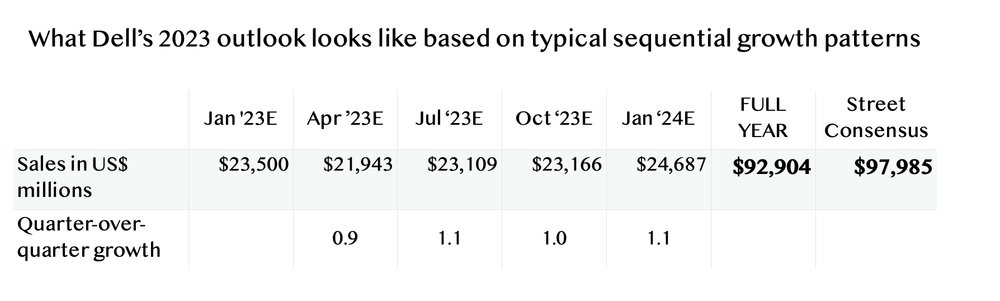
Well, if one does a back-of-the-envelope, using historical quarterly growth for Dell, what you come up with is a forecast for next year of about $93 billion dollars, which is five billion dollars below the current consensus of $98 billion.
Here, I’ve put it in a table. The table uses the average ratio of one quarter to the next over the past five years, so, what Sweet calls the “normal historical sequentials,” and extrapolates from the January quarter forecast given this evening.
Some analysts are going to be cutting numbers even more deeply — giving a really big haircut. Aaron Rakers with Wells Fargo, noting that “Dell's F4Q23 guide and directional F2024 comments will be considered negative,” cuts his revenue forecast to $88.7 billion, almost ten billion dollars below consensus, a drop in revenue next year of eleven and a half percent.
I know it sounds contradictory, but this warning from Dell tonight seems to me one of the first concrete reads on uncertainty. The uncertainty is palpable for many companies, and Dell has just given a shape to it, for what it’s worth.
Dell shares declined in late trading by about two percent to $40.21. The stock is down twenty-eight percent this year.
The TL Podcast for November 20th: The chips have it and what comes after cloud?
Nov 21, 2022
Show notes
A rebound in chip stocks that’s quite interesting, including TL20 names such as Taiwan Semi (TSM), some software makers such as Alteryx argue they’re recession-resistant, and it may be time to think about what could happen to cloud computingafter a recession.

 Our TOPPODCAST Picks
  Stay Connected