Common roasting machine problems
Sep 16, 2018
Show notes
I’ve worked with several hundred roasting machines over my consulting career and have experienced a troubling problem: manufacturers often deliver roasting machines with what I would consider defects, and then refuse to acknowledge the problems or fix them for customers. I won’t name companies in this post, but would like to discuss a few of these recurring problems here in the hopes that roasting-machine manufacturers address these issues soon.
DRUM RPM
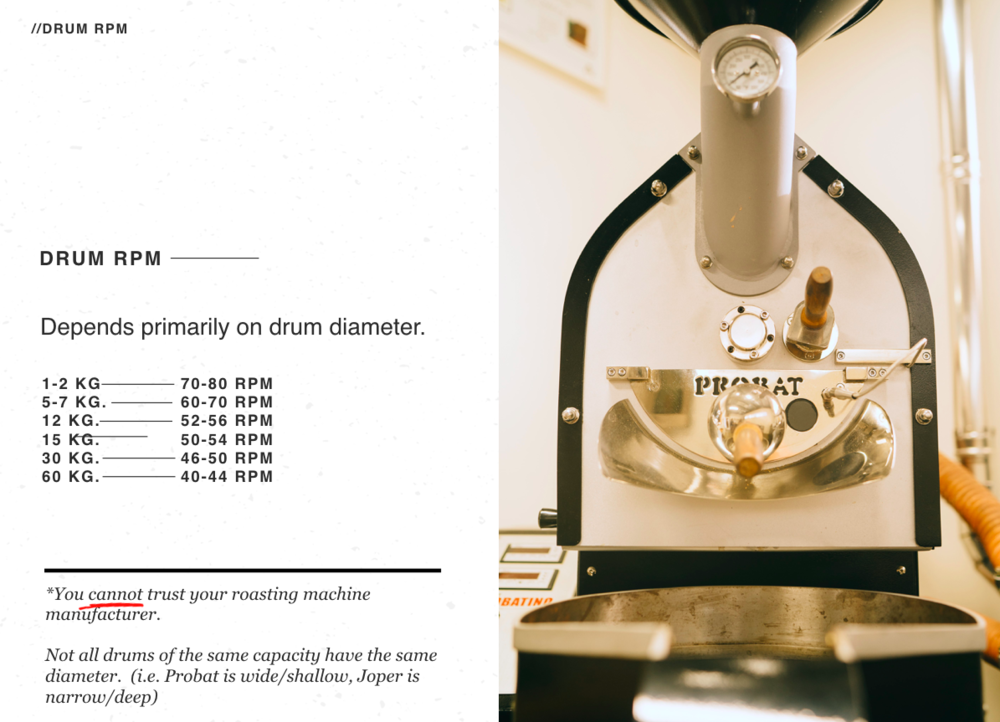
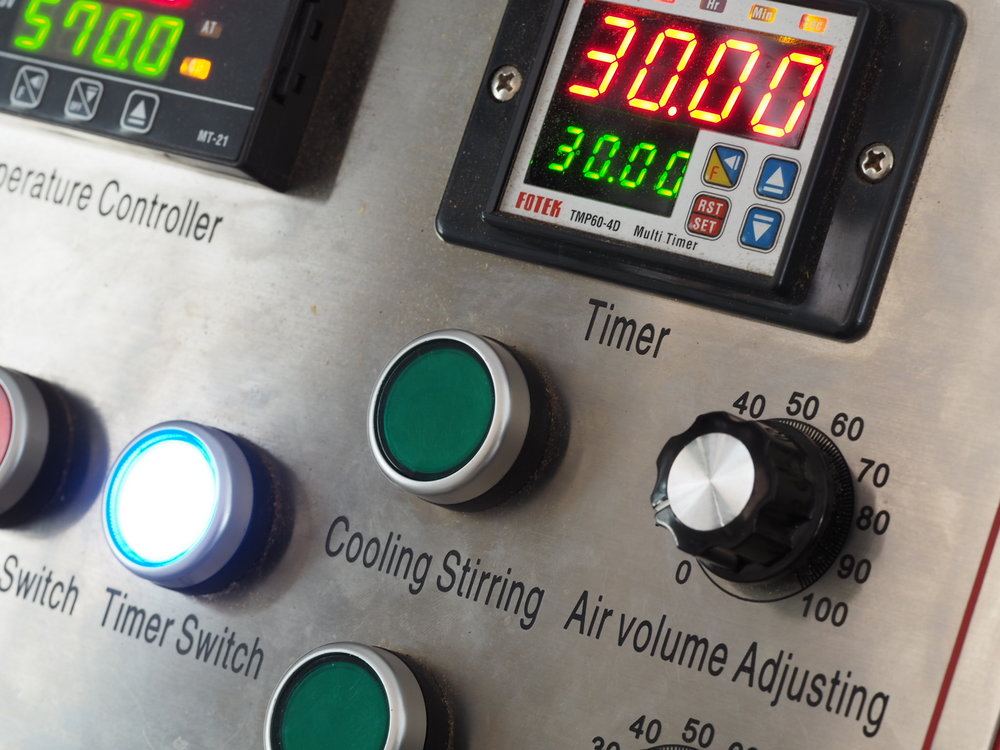
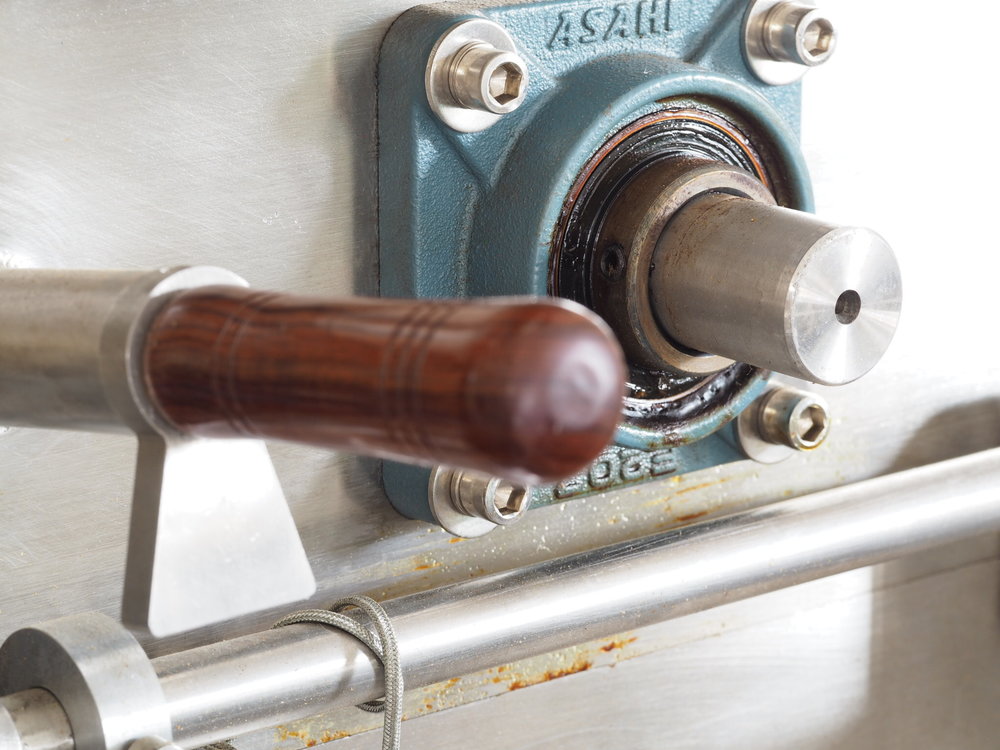
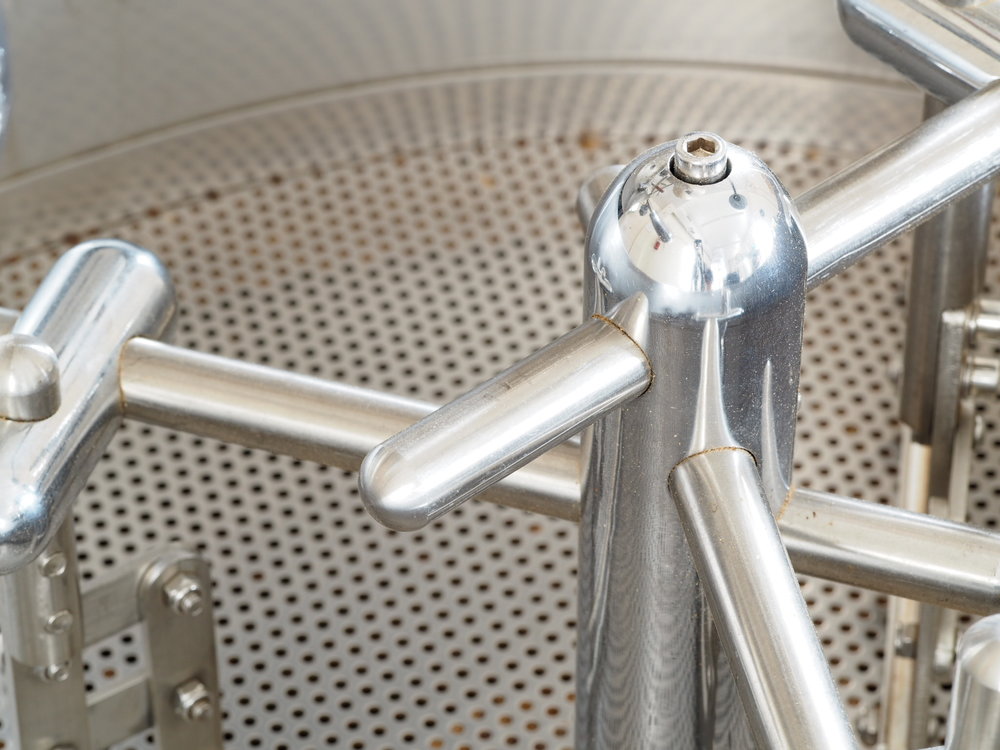
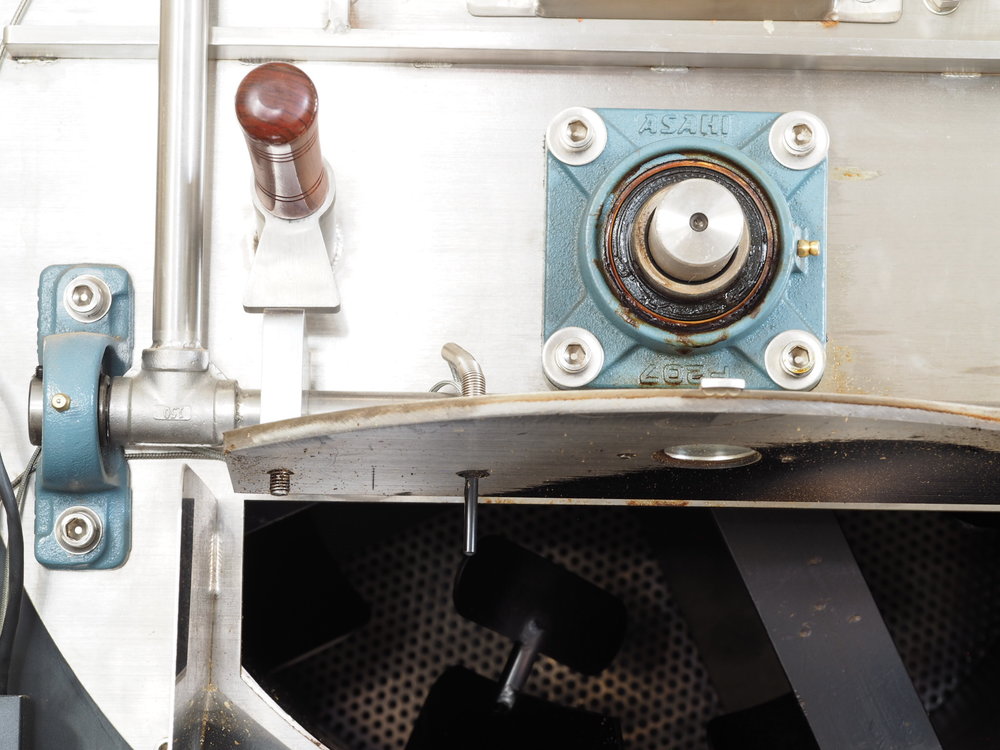
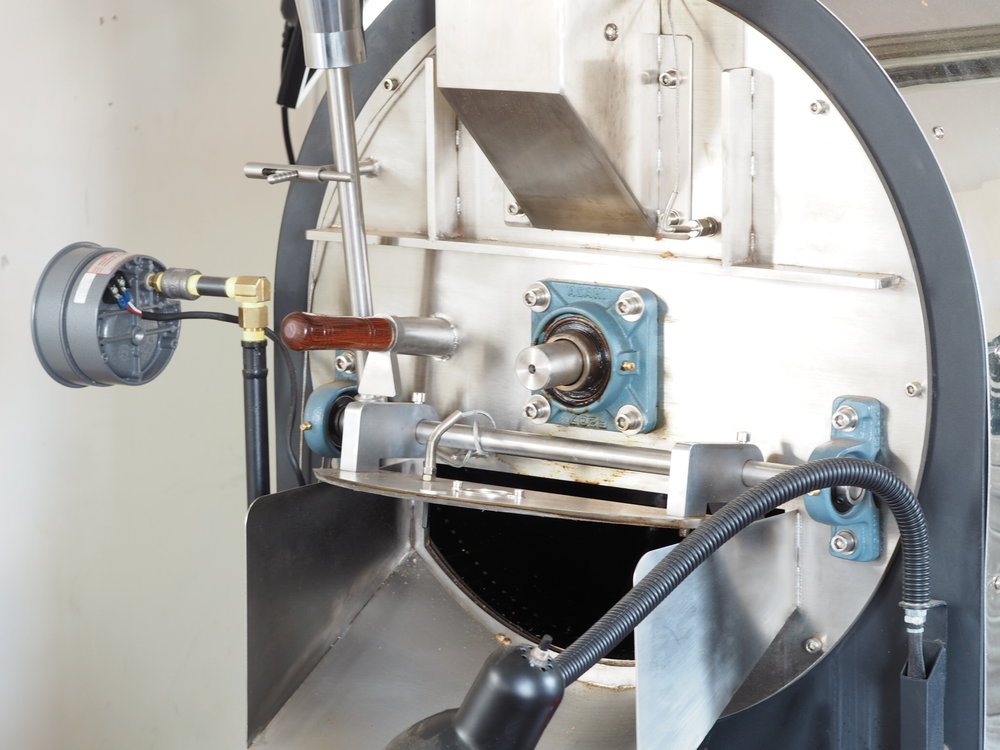
The most common inconsistency I have noticed in delivered machines has been drum-RPM count. There are two issues around drum RPMs and new machines: delivered machines having consistently suboptimal RPM levels, and delivered machines of a particular model from a given company having wildly different RPMs. I understand that manufacturers may disagree with me about appropriate RPM levels; that’s fine. But when I see a 1kg machine delivered with 50 RPM or a 12kg machine delivered with 35 RPM, or a 15kg machine delivered with 70 RPM, we’ve crossed the line from debatable to unreasonable.
In my seminars I often share this table of RPM recommendations. The numbers are merely estimates. Please don’t think that if I recommend 50—54 and your machine clocks in at 55 that you have a problem; you don’t. Please note that I cannot recommend a precise RPM level for all machines of a particular size because the proper RPM level depends on drum diameter, and two different models of 15kg machines, for instance, may have quite different drum diameters. For example, a 15kg Joper has an unusually long, small-diameter drum, while a Probat UG15 has an unusually shallow drum with a large diameter. All else being equal, the Joper’s drum RPM should be higher.
INCONSISTENT RPMs
It’s tempting to assume that machine manufacturers are all experts at roasting, but few are. For instance, one US manufacturer repeatedly tells customers that ROR crashes don’t matter, they confound baking with roasty-ness, and they seem to think that ROR flicks at the end of roasts are “normal” and not a problem. I, and every competent roaster I’ve ever worked with, couldn’t disagree more. The same company offers costly roasting classes, which should give readers pause. One decades-old machine manufacturer routinely delivers 12kg machines with drum RPM ranging from 35—55. Beyond the fact that 35 RPM is unreasonably low for a 12kg machine, this company must (I hope) have some RPM target, so why in the world are they willing to ship machines with such disparate RPM levels? That company has yet to agree to fix any of those 35-RPM machines and claims that 35 RPM on the 12kg machine is “normal” while also shipping some machines at 55 RPM. Contrast that with an experience I had this month with Reyes Tellez at Probat USA: I had just begun working with a new client on his Probat P12. I asked the client to fill out a consultation intake form, which included measuring the machine’s RPMs. It turns out the machine’s RPM was 67 instead of the 55 that both Reyes and I agreed was optimal. I emailed Reyes a video of the drum turning for one minute. A day later, Reyes acknowledged the problem, said he suspected there was a fault in the generator, and overnighted new generator to the client. That fixed the problem immediately. Every company makes mistakes or delivers machines with faults; that doesn’t bother me. It bothers me, and should concern everyone thinking of purchasing a roaster, when companies refuse to acknowledge or fix those faults.
OTHER FEATURES
Inconsistencies often exist with other roasting-machine features. For example, one major brand often delivers machines with excessively high airflow, several offer burners that are woefully underpowered for their intended batch sizes, and many manufacturers still provide temperature probes too slow to produce the quality of data necessary for expert-level roasting.
SOME COMPANIES ARE LISTENING
Whenever I get a new client with a poorly tuned machine, I ask him or her to tell the manufacturer. For years, the manufacturers would almost always respond by asserting their expertise and then dismiss the customers’ concerns. I’ve had the complete opposite experience with Mill City Roasters. Steve and his crew have not only added new features every year to their machines, but they have considered and tested every recommendation I have made, and they have implemented almost all of them. Although I have no financial relationship with Mill City (other than them selling my book and my buying a machine from them— at retail), I’ve enjoyed sharing my experience with them because it’s a joy to work with a company willing to listen, test, and improve continually.
I see it as part of my job as a consultant to ensure manufacturers get feedback from both myself and from clients, and to advise clients to buy from companies that are open to feedback and determined to improve. Through that process it has become easier to know which companies take responsibility for their products and for their customers’ satisfaction.
***
Thanks for reading. I respectfully request that comments not directly criticize any particular brands; let’s please focus on features and experiences, and not on brands or models.
POST-PUBLICATION NOTE: Some readers have expressed confusion about whether the RPM recommendations refer to batch sizes or machine capacity. For instance, they are wondering if a 7-kg batch in a 15-kg machine calls for the same RPM as that recommended for a 7-kg machine. The answer is no. To be clear, the RPM recommendations are based on machine size and drum diameter, not batch size. Whether it is beneficial to adjust up or down a few RPM when doing half batches is a separate discussion.
Advanced Mode on the DE1+: The Best Quality Espresso Extraction I've Ever Had
Jul 19, 2018
Show notes
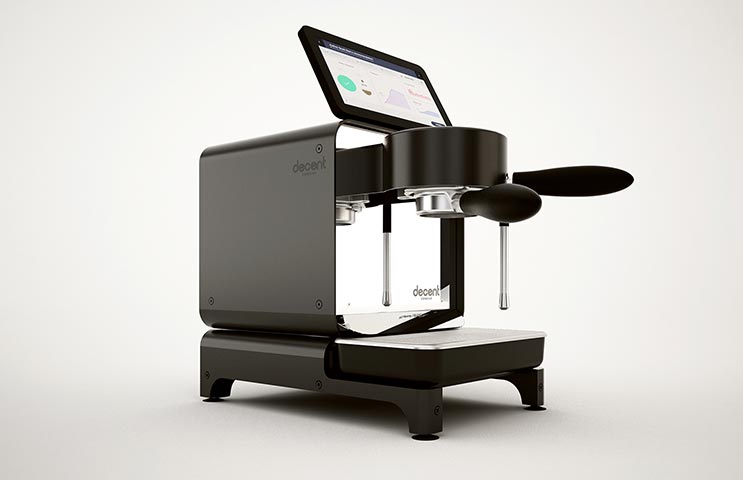
Decent Espresso DE1+ Machine
Advanced Mode on the DE1+ is perhaps the deepest rabbit hole into which any barista can climb. I generally recommend baristas master the machine in the more familiar Pressure Mode first, and then get comfortable with Flow Mode before using Advanced Mode. Once I dove into Advanced Mode, no other mode or espresso machine could ever satisfy. The possibilities are endless.
Advanced Mode on the DE1+ allows the barista to customize a recipe in any way he or she desires. Would you like to preinfuse with a set flow rate, switch to controlling the shot based on pressure, and then switch back to flow mode? No problem. If you want to then use a different brewing temperature for each stage, that’s easy. You can set “triggers” that tell the machine to move from one phase to the next based on pressure, water volume, or time. Advanced Mode is incredibly versatile, and it’s much easier to use than I had expected when John first told me about it. Recipes can be as simple or as complex as you would like.
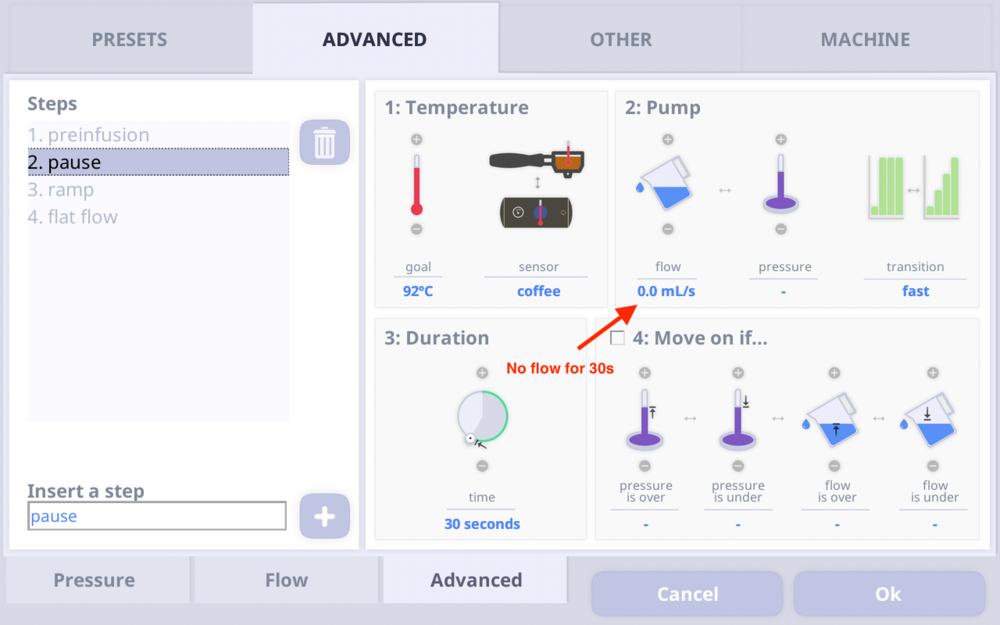
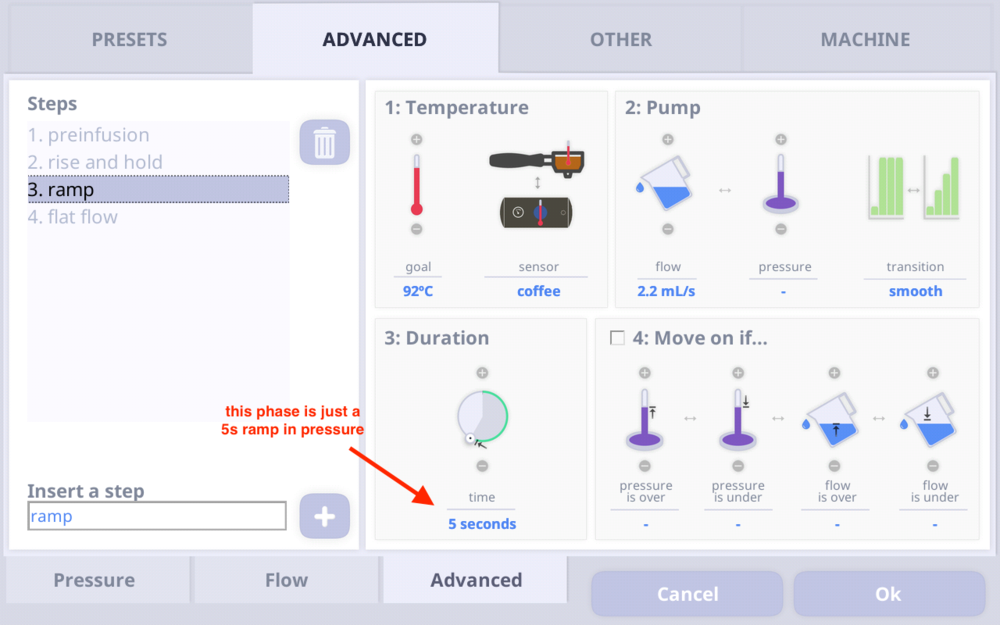
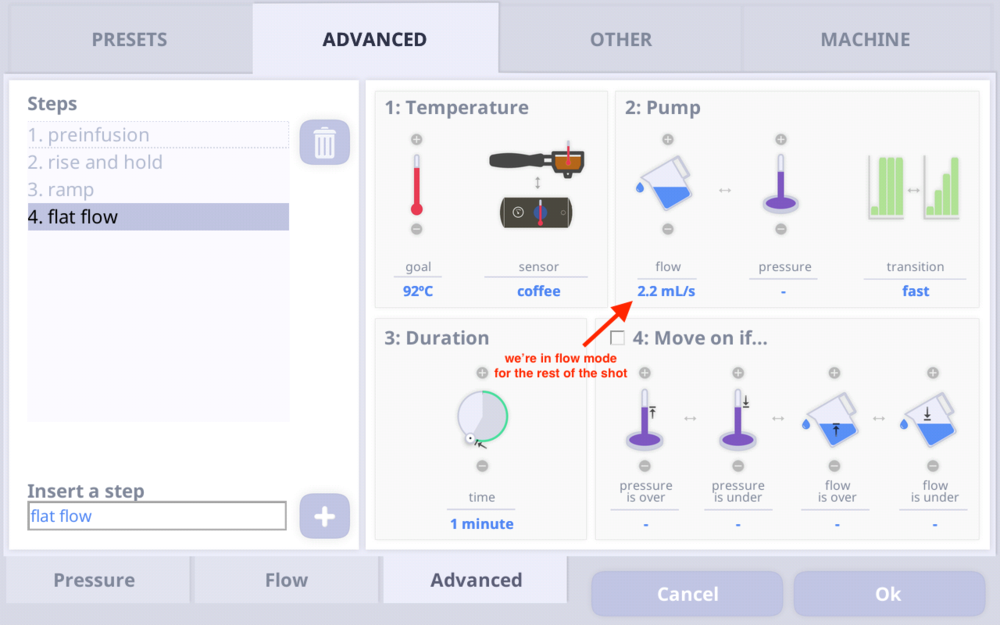
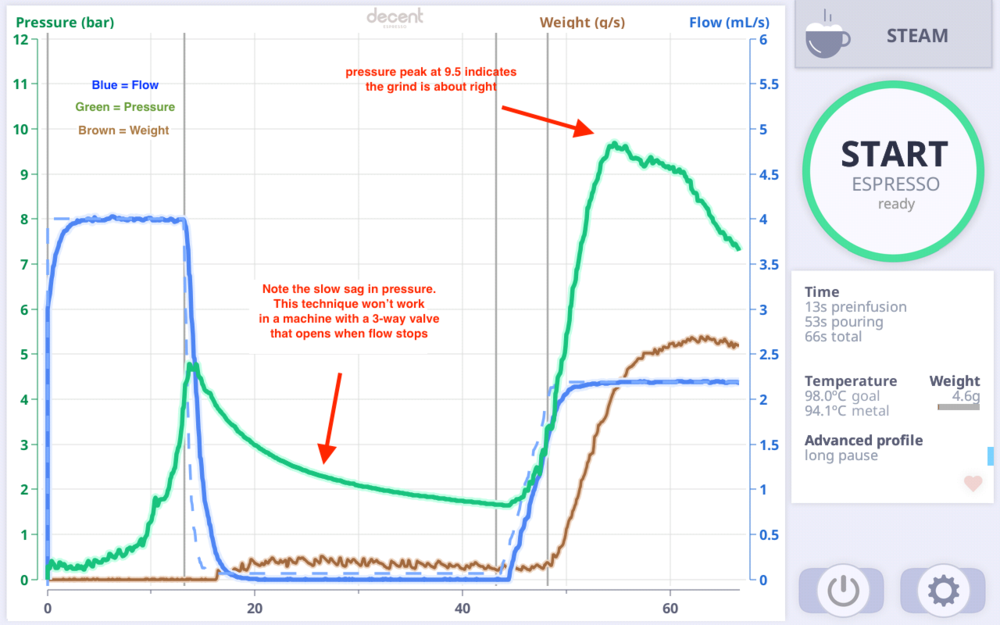
My favorite type of espresso shot to pull in Advanced Mode mimics filter brewing: after pre infusion I program a pause, or “bloom”, to allow water to saturate the entire puck before turning the flow back on. This type of recipe increases extraction by 1%—1.5% and greatly improves evenness of extraction because preinfusion alone does not fully saturate the grounds. Pausing after preinfusion increases extraction while reducing astringency and bitterness, which is the biggest win-win I can imagine in espresso extraction. Blooming also does more than any other method to bring the quality of espresso extraction closer to that of filter. (Yes, filter extraction quality is higher than that of espresso.)
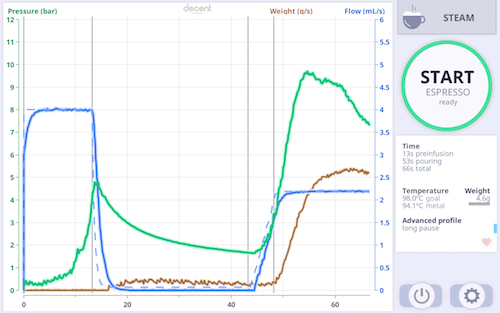
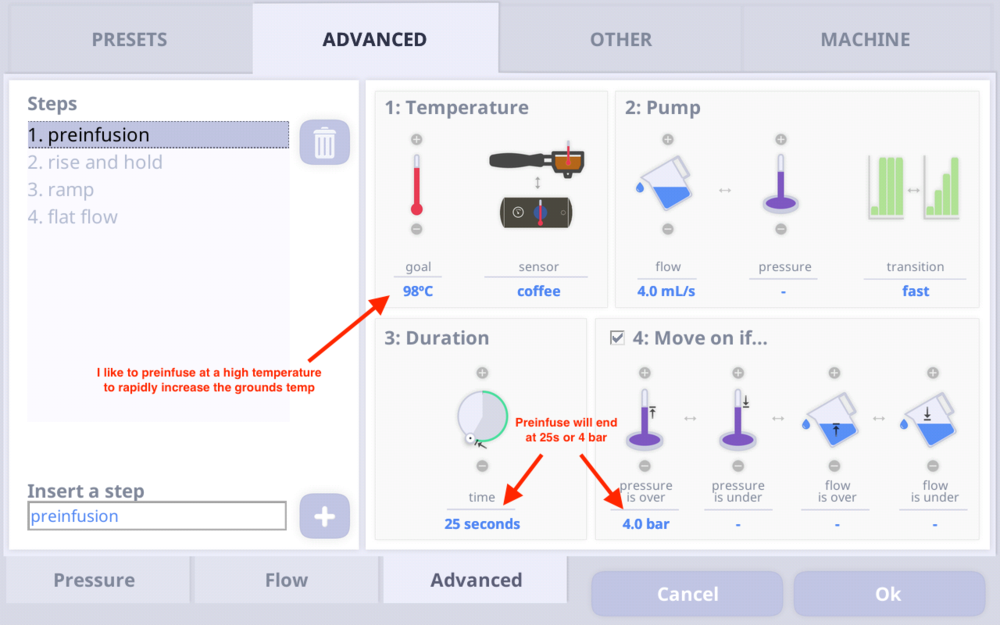
Below are the recipe screens from a recent shot I made at home, ground in a Baratza Forté. Extraction (with 0 for VST presets--as always--for those keeping score at home) was 24% (the default presets likely would have brought that up to 24.5%), and TDS was 8.5%. The beans were four weeks old, which boosted extraction a bit. The final screen is the resulting curve. Take it in slowly. It's not complicated, but having so many new data points to look at can be daunting for a moment.
WELCOME TO NEW YORK'S NEWEST SHARED ROASTING SPACE
Jul 12, 2018
Show notes
Last year I had plans to open a cooperative roastery in LA but various problems with the landlord and the building forced me to cancel that project, I'm sorry to say. However, I've been quietly involved in a similar project in NYC and it is now open for business.
I'd like to introduce Regalia Company, a boutique roastery and shared roasting space. I've teamed up with my friend Paolo Maliksi to open Regalia and to fill a need in NYC. Sure, there are other places where you can rent time on a roaster, but Regalia offers a few unique features you won't find anywhere else. Regalia is just one subway stop from Manhattan and straddles the border of Queens and Brooklyn. At Regalia we offer discounted rates to roast on our 15kg Mill City roaster, perhaps the most customized, feature-laden roaster on the market.
At Regalia you're welcome to store your own green coffee or buy some green from us (we have ample storage). If you're new to roasting and want some coaching, Paolo is available to help at no charge. Once clients are up and running at Regalia, I'm available as a resource, offering free coaching and consulting to our partners.
Among other features at Regalia, we offer a fully-stocked lab with an EK grinder, cupping supplies, vacuum-sealing machine, DE1PRO espresso machine, and Fetco batch brewer. As well, I'll be at Regalia a couple of times per year to offer classes, tastings, and coaching for clients.
Whether you have a café in NYC and would like to save some money and support your own brand, or whether you just want to roast coffee for clients, we'll work with you and support you in any way we can.
Flow Profiling on the De1+
Jun 29, 2018
Show notes
Probably the most exciting feature of the DE1+ is its ability to manage shots by flow rate. That may not sound like a big deal, but read on to have your mind blown.
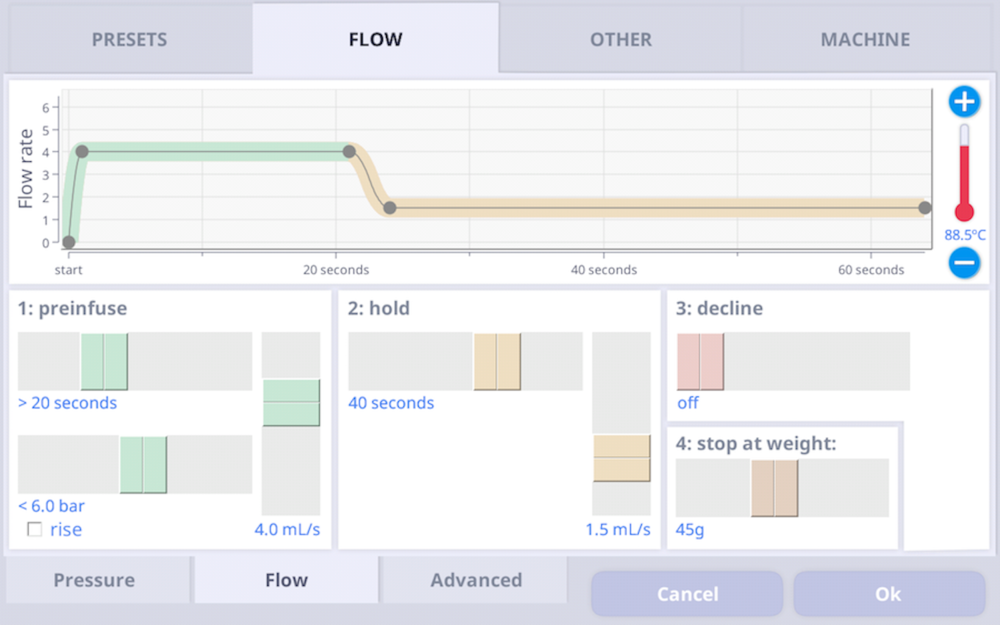
The flow mode recipe screen. It's simple and intuitive.
Most espresso machines apply a steady amount of force to the coffee puck, the puck provides resistance, and the resulting flow rate rises as the puck erodes due to extraction. In my experience, this dynamic leads to erratic flow paths late in a shot, regardless of the quality of the barista’s puck prep. Uneven flow through a puck is akin to lots of mini channels, and, like larger, more obvious channels, it decreases extraction and increases bitterness and astringency.
Pressure profiling machines allow the barista to vary the pump’s applied pressure. The classic, competent pressure profile I had written about in my ebook Espresso Extraction: Measurement and Mastery was inspired by the profile of a lever machine, and includes preinfusion and a pressure ramp followed by a pressure decline. The pressure decline in the latter half of a shot can prevent the flow rate from rising as the puck erodes. With such a pressure profile, if the grind setting and puck prep are skillfully executed, the result will be a relatively constant flow rate and minimal channeling.
In flow mode on the DE1+, the machine manages the output (flow), not the input (pressure), which is a big step forward for repeatability. It does this by varying the pressure up 6,000 times per second (not a misprint) to trace a programmed flow curve. Flow mode takes the pressure (sorry) off the barista to provide the perfect puck prep and grind setting. Don’t get me wrong: skilled puck prep and setting the proper grind are still important. But pulling shots in flow mode compensates somewhat for imperfect puck prep and grind setting.
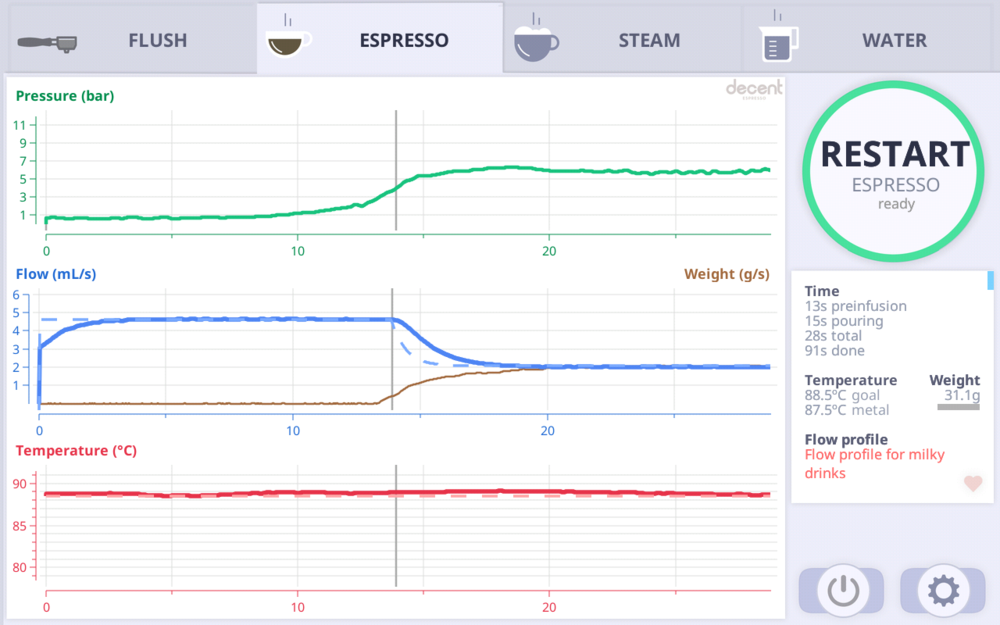
DE1+ screen view showing the pressure, flow, and temperature curves of a flow-profiled shot.
How is that possible? In flow mode the DE1+ “fixes” channels. That may seem too good to be true, so let me explain. When a typical espresso machine’s pump delivers constant pressure and a channel forms, the puck’s resistance decreases. A channel allows higher flow as lots of water bypasses the more densely packed areas of the puck. The extra flow through the channel causes it to enlarge, setting off a vicious cycle of lower resistance causing higher flow and a larger channel, leading to even less resistance. When a channel forms in flow mode on the DE1+, the pump slows in order to maintain the desired flow rate, and therefore doesn’t exploit the channel as aggressively. We have found that as the pump pressure decreases in flow mode, the grounds rearrange themselves, decreasing the size of the channel. As grounds shift into the channel, it shrinks, the puck’s resistance rises, and the pump pressure increases again to maintain flow.
Flow mode may not improve a great barista’s best shots (though it probably will), but it improves the majority of shots, even by good baristas, and can dramatically improve the quality of shots pulled by average and poor baristas. I see flow mode as an incredible tool for restaurants and chain coffee shops where baristas may not be as skilled as those at the better third-wave shops.
A flow shot with the grind too coarse in a mediocre home espresso grinder. Note how the pressure curve (the green line) peaked at only 3.5 bar. That implies the grind was too coarse, but the DE1+ prevented the shot from gushing and running too fast.
Although I think flow mode is an incredible advance, it can be a crutch, and like any crutch, it will be up to the barista to not rely on it excessively. For example, if a barista creates a flow profile, aims for a 20g in/ 40g out/ 30-second shot, and sets the grind five notches too coarse on a Robur, the shot will take approximately 30 seconds and the extraction will be low. However, the result will be superior to the 10-second “gusher” that such a grind would create in pressure mode or on a standard “dumb” espresso machine. The gusher will also extract too low but will have far more channeling, bitterness, and astringency than the shot pulled in flow mode. To distill the difference down to one critical point, the flow shot will extract much more evenly than the pressure shot.
Mind blown.
Pressure Profiling on the Decent Espresso Machine
Jun 07, 2018
Show notes
I've had a DE1+ at my house for the past few weeks and I've already learned a ton. In this post, I'd like to introduce readers to the "pressure" and "flow" modes of the Decent. In the next installment we'll discuss the "Advanced" mode and I'll introduce some new ideas about espresso extraction that I've learned from the machine.
The DE1+ comes with a tablet computer and quite a few sensors. There are so many sensors that the sensors are literally monitoring each other to ensure they are as precise as possible. Instead of a boiler the DE1+ has a "thermocoil", or continuous water heater (the De1+'s temperature profiling would be impossible with a traditional boiler), the machine measures temperature just above the shower screen (not at the boiler, a major improvement), and it mixes hot and cold water continually to maintain precise water temperature at the screen. The steam runs extra hot in order to squeeze the most juice possible out of standard home electricity. On the tablet you can program the hot water tap to dispense water at any chosen volume and temperature. Within five minutes of turning it on in the morning, the machine is ready to make coffee at a precise temperature -- no sink shots required. When using a bluetooth scale, the DE1+ can stop shots gravimetrically.
Any one of those features would probably cause the professional coffee community to get excited about the machine. But none of those innovations are what makes the Decent the best espresso machine in the world. What's amazing is that it can brew espresso using pressure profiling, flow profiling, or a combination, and the barista can see the pressure, flow, and temperature curves in real time during a shot. The feedback provided by those curves is invaluable. It's like Cropster for espresso, and once you see it, you'll never want to pull a shot without it. After pulling hundreds of thousands of shots over more than two decades and learning quite a bit along the way, I've probably learned more about espresso extraction in the past few weeks than I had learned in the past ten years.
The pressure mode is somewhat like that of other machines that offer pressure profiling, but the DE1+ allows the barista to see the results of his or her efforts and adjust accordingly. Given that we can taste only so many espressos per day, one can progress only so quickly by pulling shots, tasting, adjusting, and repeating. With the Decent, it's obvious which shots are worth tasting, which need a finer or coarser grind, and how much each shot channeled. That means I can dial in a shot nearly perfectly before bothering to taste it. My palate is grateful for the assist.
Programming in pressure mode is simple and Intuitive. You can program preinfusion to end based on a particular time or pressure target. Contrary to popular belief and what other machines' pressure gauges indicate, one does not preinfuse at a particular pressure. This is because no matter how hard the pump works, the puck must provide back pressure before the system is pressurized. Preinfusion works at atmospheric pressure until the headspace above the grounds is full of water, then pressure ramps up as the grounds absorb water, swell, and provide increasing amounts of back pressure.
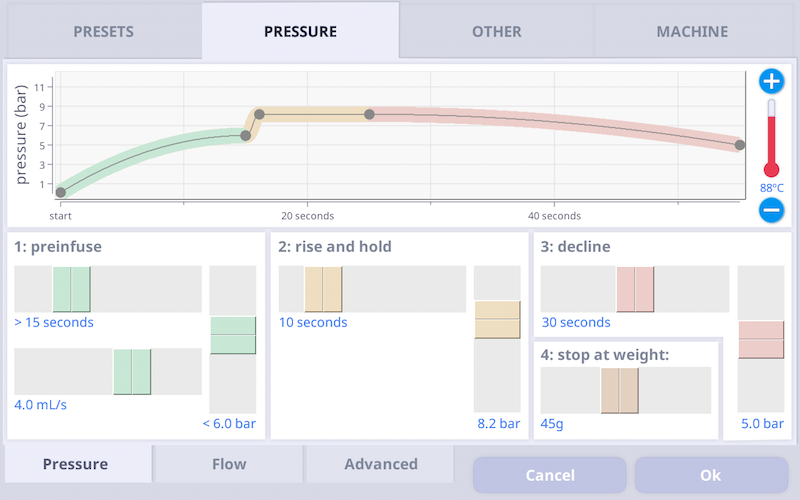
In the example below, I have asked the machine to preinfuse at a flow rate of 4 ml/s until 15 seconds has elapsed or the pressure reaches 6 bar. As soon as one of those goals is met, the machine moves on to the "rise and hold" phase, in which I've asked it to rise to 8.2 bar and hold that pressure for 10 seconds. Next the machine will lower down the pressure to 5 bar over 30 seconds.
Pressure mode recipe screen
Below is the resulting shot.
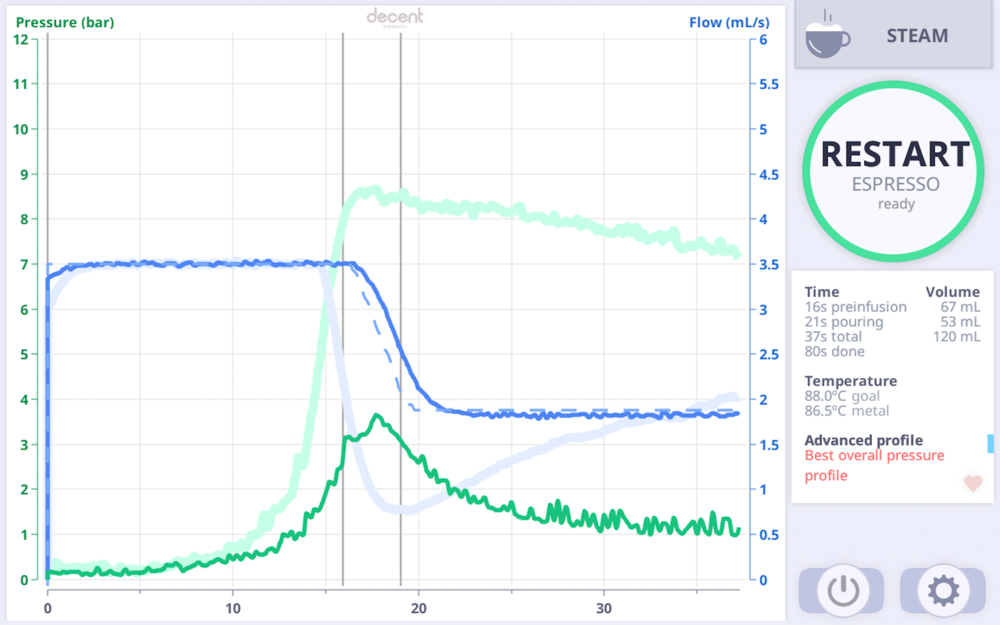
The green line is the pressure curve and the blue line is the flow curve. The curves offer a treasure trove of insights:
The volatility in the green curve indicates channeling (note the channel near the top/right of the red circle.) The volatility of the pressure curves on the DE1+ come from two main sources, as far as I can tell: clumped grounds and poor puck prep. In this case, I'm using a grinder that is producing an incredible amount of clumps. The grinder hasn't been aligned or fully seasoned and I'm hoping that I can improve the grind quality soon and the volatility will decrease. Bigger, better, sharper burrs generally produce smoother curves-- that's obvious when I pull shots from two different grinders. As a side note, one remarkable thing about the Decent is that in flow mode it "fixes" channels. More on that in the next post.
The blue curve shows that the flow rate dipped after preinfusion and took a long time to level off. This is what John refers to as a "slow-to-develop shot." We think this happens due a combination of possible reasons: the grind is too fine, the puck is too compressed (more on this in a later post), or the puck is still absorbing water during the 15--20 seconds after preinfusion ended because preinfusion didn't fully saturate the puck. We have generally preferred espressos that didn't have such a dip in flow rate, and we're still working on the significance of this. Speculations are welcome. (For the record, we have preferred shots where the flow is steady almost immediately after preinfusion.)
June 23 Roasting Masterclass, Amsterdam
Jun 03, 2018
Show notes
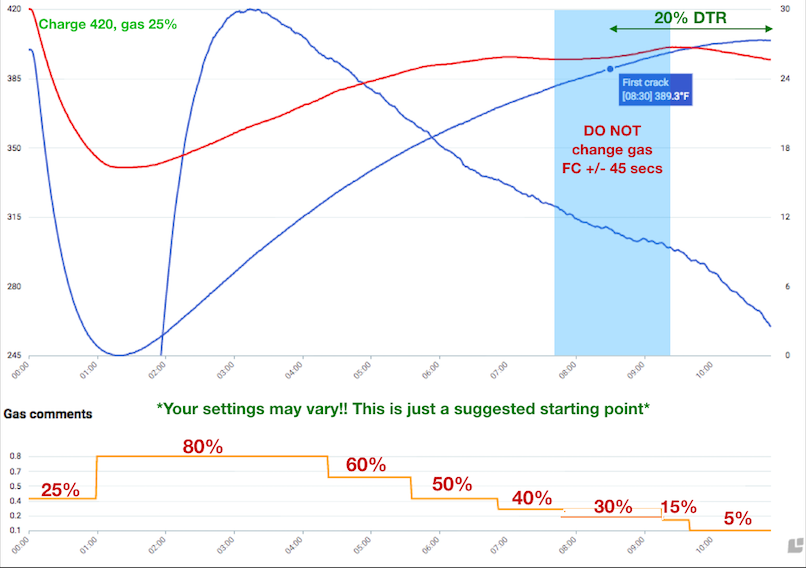
Sample slide from class of a suggested, generic starting point for settings when approaching an unfamiliar machine and coffee.
It's a bit last minute, but I hope if you're in Amsterdam for World of Coffee that you'll join my Roasting Masterclass on June 23, 8:30am--11:30am. The class will be located conveniently between the city center and RAI Amsterdam, where WOC will be held.
If you're a roaster, I strongly recommend you consider attending. Many roasters are skeptical before coming to one of my masterclasses, but almost always leave feeling excited to have many new ideas with which o experiment in their roasting. This class will challenge you, and I guarantee you will be satisfied. I'm always thrilled with how many attendees return to repeat the class in later years to see what new ideas they can pick up.
There will be plenty of time to ask questions, so bring your toughest and most pressing questions. The Q&A is always vibrant, the roast samples at class will be just like those of the "Roast Defect Kit" I've released today, and I promise to leave you with a lot to think about.
Please see the Eventbrite link HERE for more details and to purchase tickets (€225)
See you in Amsterdam.
Photo Credit: Liz Clayton
Roast Defect Kit #2
Jun 03, 2018
Show notes
I'm pleased to announce that I've just released the second ROAST DEFECT KIT today, in conjunction with Regalia Company. We were waiting for Regalia to receive some lovely new-crop Kenya AA from the Karumandi Factory in Kirinyaga. Paolo gave it a few practice batches and then nailed the "good," "baked," and "underdeveloped" roasts. I tasted them blindly this morning and am proud to offer these to readers.
I developed the idea of the RDK while writing The Coffee Roaster's Companion, as a means to help coffee enthusiasts identify baked and underdeveloped roasts, as well as to offer an example of an excellent roast. Being you able to identify underdevelopment and baking is a skill even most coffee pros lack. Some coffee drinkers may be so accustomed to baking or underdevelopment that they have come to enjoy it. To each his or her own, of course. But whatever your preference, I think there is still value in establishing what the terms mean and how to recognize them in the cup.
My hope is that you'll blindly taste the samples in the kit with friends and colleagues, discuss what you taste, and the compare the cup results with the roast curves. There should be enough coffee in each sample to repeat the tasting session several times.
In the RDK we've included:
3x 100g frozen and vacuum-sealed roasts: an under-developed roast, a baked roast, and an excellent roast. When we fulfill your order, we'll send you the roast curves and their respective settings.
2x small packets of mineral salts (CaCl, MgCl, KHCO3). Each packet willconvert four liters of distilled (demineralized) water into perfect brewing water. We've included these to help everyone who tries the RDK to have a more similar taste experience.
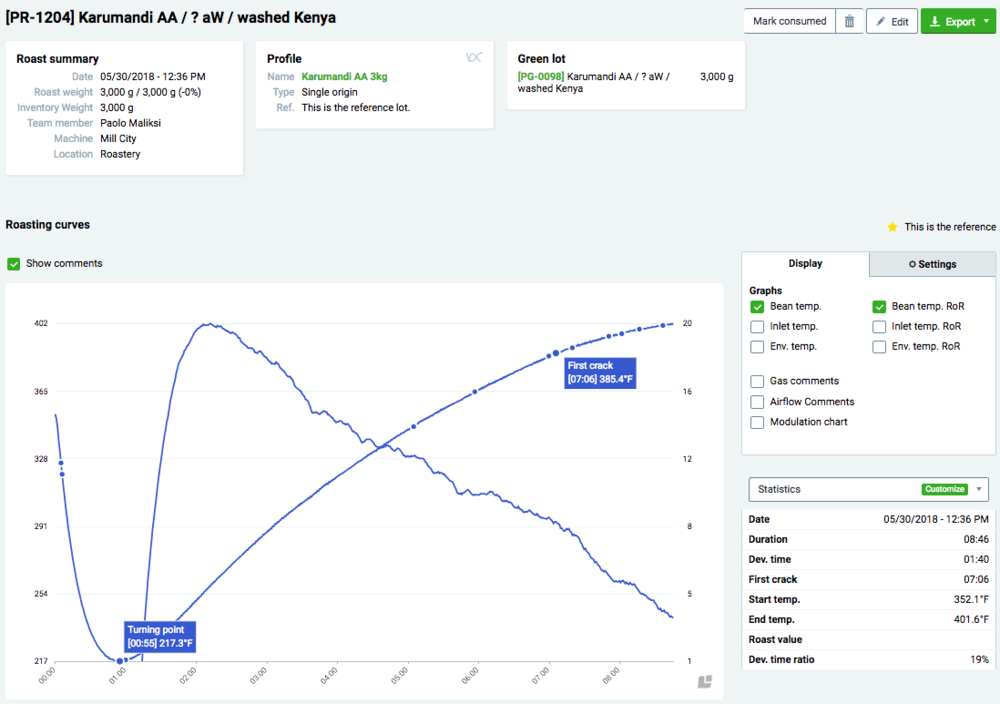
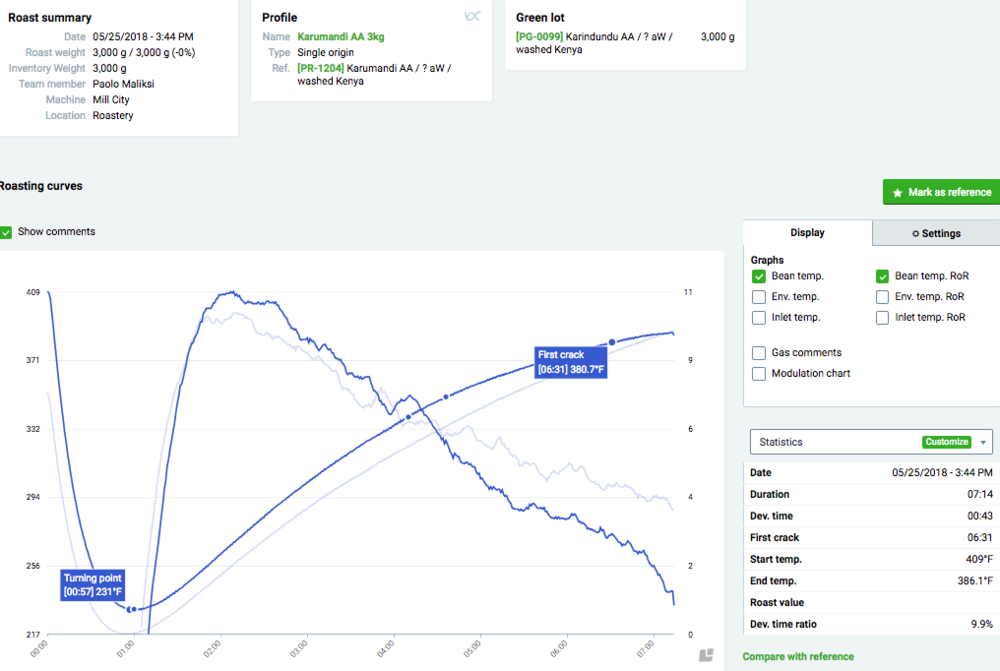
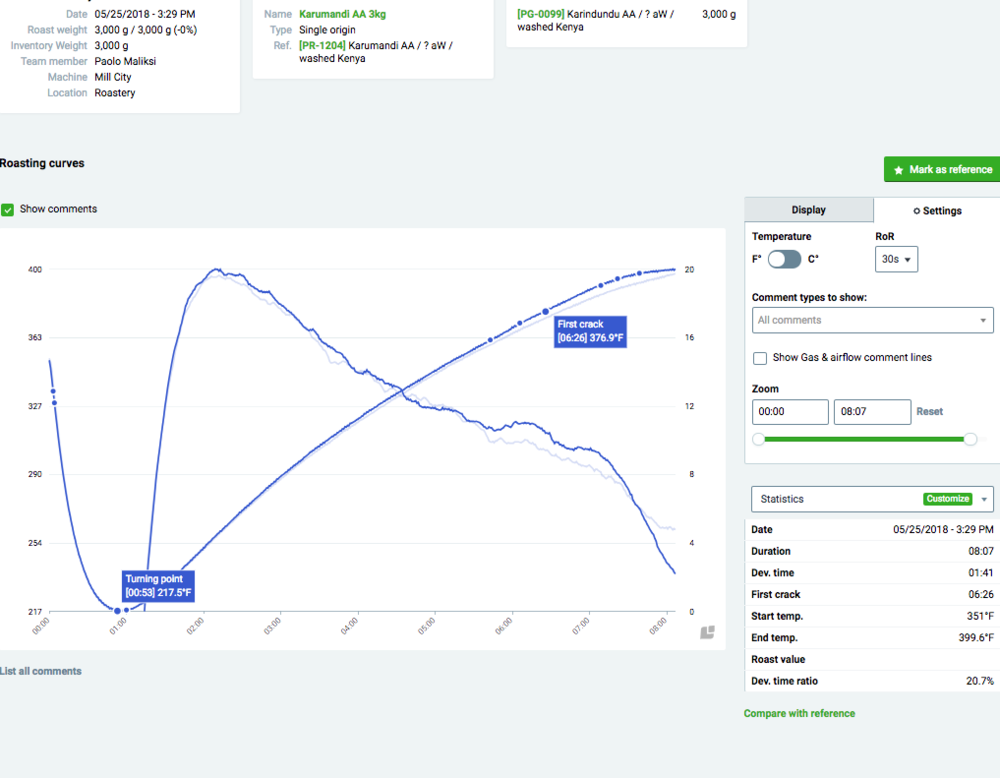
Below are the roast curves; please note that although one can objectively identify a baked roast by looking at its curve (if derived from valid data), it is impossible to identify underdevelopment merely by looking at a roast curve. That is because curve data are derived from surface bean-temperature readings, but underdevelopment refers to undercooked bean centers. At this time we have no way to accurately measure or infer the temperature of the bean centers during roasting.
Please click HERE to purchase the RDK. We have only twenty kits available on a first-come, first-serve basis.
UPDATE: ALL OF THE RDKs HAVE ALREADY SOLD OUT IN JUST THE FIRST DAY. WE'RE A LITTLE SURPRISED, AND WE'LL WORK ON THE NEXT ON TOUT DE SUITE. IF YOU'D LIKE TO BE ON THE WAITING LIST FOR RDK #3, PLEASE SEND AN EMAIL TO hello@regaliacompany.com AND WE'LL LET YOU KNOW WHEN THE NEXT ONE IS READY. THANKS FOR THE SUPPORT!!
The "good" batch
Underdeveloped
Baked
How a Strong Offering Philosophy Beats “Purchasing Power”
May 24, 2018
Show notes
A sentiment I hear often from buyers representing smaller roasteries is, “How can I compete with bigger buyers for the best green coffee? They have all the purchasing power!”
I’ve been at both the small (Ritual, Tonx) and the big (Stumptown, Blue Bottle, Peet’s) and I ask: How can they compete with you, small buyer? I have never encountered a more thoughtful buyer than the one who can purchase only a handful of coffees a year. A big buyer has to deal with a persistently huge appetite, and if you recall the times you’ve been famished, your discernment for quality tends to dip. It’s when you can’t eat too much that you become very, very picky.
Besides, “best” is a fairly useless term when considering what guides your green coffee purchases. As I discuss in Dear Coffee Buyer: A Guide to Sourcing Green Coffee: “Coffee buying is not a skill with linear, inevitable results, where two hypothetically “equal” buyers choose to buy the same coffee. Scores may be objective, but preference is not. A world with more proficient buyers is a world with greater availability of excellent, varied, coffee options.”
The most important thing that a buyer of any size can do is to establish an offering philosophy, something I cover in greater detail in the book:
When I began in specialty coffee there were two implicit but well-followed rules:
• You must offer representative coffees from the three major growing regions: Latin America, East Africa, and the Pacific Islands.
• You must offer a fistful of proprietary blends.
To this day, you can still see many of these rules followed in older establishments such as Peet’s and Starbucks. It seems wild now, but the third-wave pioneers mostly accepted these rules, with the slight tweak of replacing “representative” with “most pleasing” or something like that. A menu of thirty-one flavors was predictable and honestly represented the world’s spectrum of coffees. A roasting company distinguished itself almost entirely by the way it talked about coffee’s flavors, as expressed by some combination of national terroir and roast degree. By today’s standards, almost all roasters had a heavy foot on the gas pedal of the roaster. Those dark roasts and discussions of flavors, plus each company’s coffee-shop aesthetics, comprised the heart of the “brand.” It’s not that roasters felt they had no choice in this matter; it’s more that the idea of choice was precluded by these implicit rules.
A few optional origins produced exceptional quality at entirely reasonable prices. Some of the origins that were overpriced from a cup-quality:cost perspective, such as Hawaii and Jamaica, were nearly ubiquitous at the specialty cafés of the second wave. As late as 2010–2011, Kevin Knox, ex-buyer at Allegro and coffee-buying luminary, complained about roasters that weren’t offering the full lineup, nearly implying that it was a cheat (whether to customer expectations or to implicit rules, I am not sure) to exclude naturals or wet-hulled coffees from your menu.
Because I learned to buy coffee with no mentor and few understood expectations, I modeled the early menu at Ritual in 2007 in the same way that I saw Stumptown and Intelligentsia doing it, which is to say that I bought at least one coffee from every region and offered it nearly year round. Those two companies were pioneers of the third wave, and it seemed reasonable for me to first copy what they did, as their practices were the closest things to “instructions” I could find.
I broke the rules by accident initially, but as soon as I did, it was an epiphany. I had been traveling for weeks and miscalculated our consumption of Sumatra against our inventory, causing our roastery to run out. Sumatra was a staple of every third- wave menu at the time. I began going through the motions of replacing it. I contacted several brokers—traders who buy and sell coffee of various qualities—and asked for Sumatra spot samples (samples representing lots that are in domestic warehouses and available for immediate shipment to a roastery), roasted and cupped the samples, hemmed and hawed over the results, and finally made a decision: Ritual would no longer buy Sumatra.
By 2008, Ritual was building a reputation for clean, acidic coffees. I loved exotic flavors, but I wanted them to be true to the bean, not the result of zealous roasting or overwrought processing. At the time, if you had given a cup of Sumatra—a region that produces predominantly wet-hulled coffee—to a coffee taster and told her it was from Latin America, she’d have told you it lacked clarity of cup if she was diplomatic, or that it was dirty or defective if she was honest. If you then said, “Oops! I’m mistaken, it’s from Sumatra,” the coffee taster would recant and suddenly begin extolling the cup’s earthy, woody, dry characteristics. To me, the idea that different origins should be judged differently is foolish. How could I ever look at a Latin American producer again and tell him his coffee wasn’t up to snuff because it was earthy, woody or dry, while I was buying earthy, woody, dry coffee from Sumatra?
I couldn’t.
Instead of arranging for purchase of Sumatra, I talked with Ritual’s owner, Eileen, and convinced her that it was OK for us to not offer Sumatra. She asked me a few due diligence–type questions and then smiled and, with her ever-persistent entrepreneurial spirit, championed the decision. I afterwards heard her bragging about our decision to not offer Sumatra because it wasn’t up to the quality standards we had established. I was relieved that she was in agreement with me, thrilled that she was now using our decision to promote our green coffee narrative, and over the moon that I could—for a time—stop tasting wet-hulled coffee samples.
Now, the point of this story is not to tell you what your offering philosophy should be, though I’d selfishly be pleased if you stopped roasting wet-hulled and most naturally processed coffees. I want to make clear that you should have an offering philosophy, and you’ll be best off if it reflects your own taste preferences. The decision to stop offering wet-hulled coffees was a revelation for us at Ritual, and it felt like a huge weight was removed from our shoulders. I imagine that at this point not offering wet- hulled coffee is so deeply imbued in the ethos of Ritual that there would have to be a true revolution in wet-hulling for them to reverse course and begin offering it again.
The real revelation was not that we no longer had to offer Sumatra; it was that we didn’t have to follow any of the unwritten rules. Furthermore, your personal tastes do not have to be as simple as what flavors you favor in brewed coffee; they can also reflect more abstract preferences.
If you’re inclined to note that the grass is always greener on the other side, gaze on. It’s true! Bigger buyers absolutely have advantages, but so do you. Yes, they have purchasing power, and for many suppliers, it’s easier to work with fewer, bigger buyers. Bigger buyers also tend to have more satisfactory outlets for the few lots that don’t show up as expected. But step outside of your coffee head for a moment and ask yourself if your most memorable experiences, culinary or otherwise, come from the bigger or smaller brands.
Pick up a copy of Dear Coffee Buyer for more of Ryan's perspective and advice on green-coffee buying.
Dear Coffee Buyer
May 06, 2018
Show notes
About five years ago, I began pestering my friend Ryan Brown to write a book about green-coffee buying. I thought Ryan was the perfect person to write such a book, as he was the most competent coffee buyer I'd ever encountered. It took those five years, but last year Ryan finally gave in and wrote the book. I'm pleased to say it's a masterpiece.
My first memory of cupping with Ryan took place in the basement of Ritual Coffee in the mid-2000s. Ryan had about ten coffees set up blindly on the table, brought his nose no closer than six inches (15cm) to each cup, and correctly declared which coffee was in each cup (mind you, many of the coffees were quite similar.) I was amazed; Ryan could probably out-sniff my sister’s beagle, and his green evaluation seemed borderline psychic compared to my ordinary abilities. My first thought upon witnessing that trick was that I was going to keep this guy around for a long time and learn what I could from him.
Happily, the rest of the world can now also learn from Ryan. Dear Coffee Buyer is like Ryan’s doctorate-level thesis on green coffee buying. The book is part masterclass in green evaluation, part clever advice for professional green buyers and those thinking about getting into the business, part travel narrative, and part editorial of what terms like “direct trade” really mean. I hope every barista, roaster, and green buyer reads this book. If they do, the industry will be much better for it.
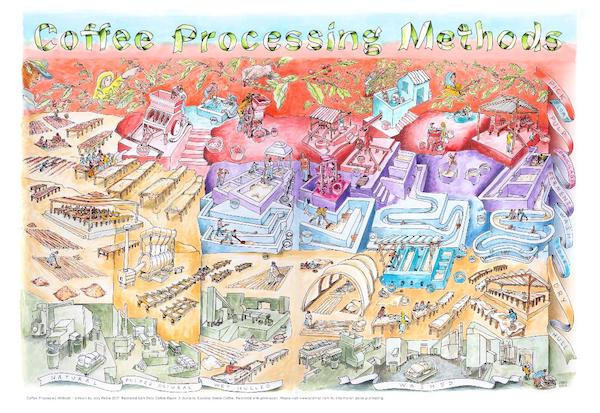
We're also offering a poster derived from one of the book's gorgeous illustrations by Jory Felice. The poster depicts the various stages of the major coffee-processing methods. Please see below for the poster and sample pages from the book.
Ryan and I are jointly selling the book and poster here
We're offering a $10 discount if you buy the poster and book together as a bundle. If you are interested in placing a wholesale order for 10 or more books or posters, please contact me directly at scott@scottrao.com
Coffee-processing poster. Great educational wall art for any café or roastery.
The Virtual, Advanced Roasting Class, Available Until MAY 21
Apr 24, 2018
Show notes
UPDATE APRIL 21: The Seattle classes have passed, but the virtual class will be available until May 21. If you purchase the virtual class you'll be able to view it as many times as you'd like until May 21. Virtual attendees will receive an email linking to the class slides and will be welcome to participate in a Facebook group to discuss matters related to the class. I'll participate in that group daily.

 Our TOPPODCAST Picks
 Stay Connected