Just in time for the holidays, I thought I’d share a few book and gift recommendations for you to get for the coffee nerd in your life. Or just gift them to yourself if that appeals. :)
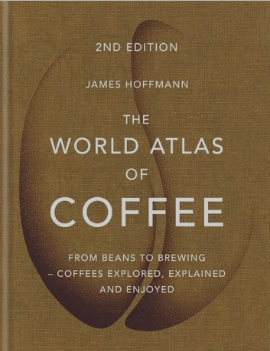
If you’re serious about coffee and were to only ever read one book about it, make it this one. James Hoffmann is rightfully famous and popular in the coffee industry for his prose, his perceptiveness, and his uncanny ability to see the big picture clearly. The World Atlas of Coffee has tremendous breadth, covering everything from coffee origins and varieties to roasting and brewing methodology. Somehow James dives deep enough into each topic that the reader learns much of practical value and no topic is glossed over. Even seasoned coffee professionals will learn a lot from The World Atlas of Coffee. It’s a gem.
Zingerman’s Guide to Giving Great Service by Ari Weinzweig
Zingerman’s Deli is a decades-old institution in Ann Arbor, Michigan. It’s so impressively busy and efficient that it has inspired countless other entrepreneurs to copy its approach to food and service. If Zingerman’s had been established in New York or San Francisco, it would doubtlessly be one of the world’s most famous casual food businesses. While the food at Zingerman’s is pretty good (I will warn readers that the coffee is marginal), what sets the business apart is its service. Zingerman’s is the kind of place where you could interrupt any staff member at any time, ask any question, no matter how obscure or annoying, and receive a friendly, well-informed answer. Sometimes I wonder if the staff all microdose some kind of happy drug. Zingerman's Guide to Giving Great Service is a how-to guide to creating a complex, bulletproof service system. Their system manages to tackle every service-related concern imaginable, and once I read the book I understood how their businesses ran so flawlessly. In fact, in a fit of cheekiness, I tested the system at Zingerman’s Roadhouse. I went there alone for dinner (had I brought a friend I think they would have run away mid-meal by what I was about to do.) I was most difficult-but-polite customer I could be. I asked countless difficult, detailed questions about the food, I changed my order multiple times, I complained about the wine, I made special requests, and I generally pushed up against the precise boundaries of Zingerman’s service system in an attempt to get my server to go off script or show some frustration. My server never cracked or showed impatience. At the end of the meal, I left her a massive tip and confessed that I was testing the durability of the Zingerman’s service system. She laughed and said that by the end of the meal she had begun to suspect that was what I had been up to.
The bottom line: the system worked and my service was extraordinary. If you’re in service, this book is a must-read.
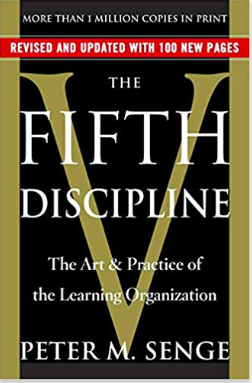
When I owned my first cafe and roastery in the 1990s, I read every decent book I could find about running a business. The one book that stood out from that era was The Fifth Discipline. It introduced me to the concepts of the “learning organization” and systems thinking. Prior to reading the book, I had been feeling a little burnt out from working long hours and had fallen into several ruts. For months after reading The Fifth Discipline I went to work with tremendous energy, inspired to apply what I had learned from the book.
The Fifth Discipline reminded me to make business decisions that resonated with my personal values, it inspired me to focus on continual learning, and it helped me focus a little less on finances and the daily routine, and a little more on operating the business in a more thoughtful, fulfilling way. I can’t recommend this book enough to business owners and managers.
Dear Coffee Buyer: A Guide to Sourcing Green Coffee by Ryan Brown
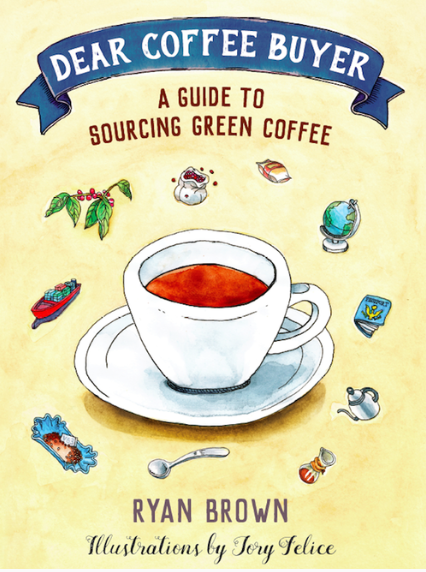
If one thing separates third-wave coffee from the rest of the industry, it’s the focus on procuring fresh, high-quality green coffee. The early 2000s brought a revolution in standards for green quality and in modern green-buying practices. In my 25-year coffee career, I’ve never met a more competent green buyer than Ryan Brown. Ryan’s palate is, of course, extraordinary, and every cupping session I’ve had with him has been an education for me. But Ryan’s brilliance as a buyer was as much about the strategies and systems he brought to green buying as it was about his cupping prowess. In Dear Coffee Buyer, Ryan teaches the reader invaluable lessons about risk management (e.g. it’s better to buy too little than too much of a coffee), communication (and why it is more important than a world-class palate for procuring great coffee), and strategies to help get green to arrive in good condition, when you want it. He’s also a gifted writer whose skillful prose and stories about traveling to origin keep the reader entertained and engaged.
Even if you never plan to be a green buyer, if you work in any capacity in the coffee industry, Dear Coffee Buyer is essential reading. It should be required reading for anyone who buys, roasts, brews, or teaches about coffee.
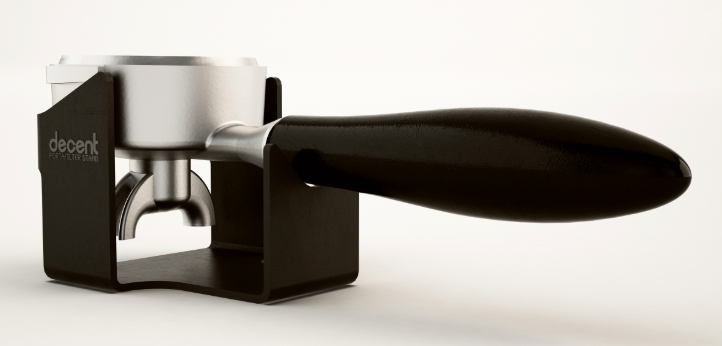
If, like me, you prefer to use a bottomless portafilter to help detect channeling in shots, you need a way to prop the portafilter so the basket is level while weighing and tamping doses. The Decent Portafilter Stand is the perfect solution. To dose precisely with minimal clumping, I recommend dosing into an intermediate container, shaking or banging the container to break up clumps (or if you’re not in a hurry, use the Weiss Distribution Technique) and pouring the de-clumped grounds into the portafilter basket. It’s difficult to pour grounds into the basket without some spillage, but the Decent Funnel solves this problem elegantly. Unlike the unwieldy, ill-fitting jam funnels many baristas use, the Decent Funnel is compact, ridged to lay securely on the rim of a portafilter basket, and weighted for stability. This is my personal favorite Decent product other than the espresso machines.
*Note: if you buy three or more products at a time from Decent, shipping is free to anywhere in the world. Decent also sells Dear Coffee Buyer and The World Atlas of Coffee here.
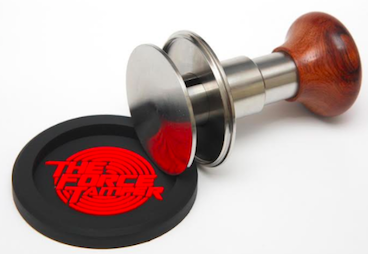
A few months ago Mr. Zubing Sun contacted me on Instagram, offering to send me a tamper. I’m usually skeptical of such offers, as I rarely find coffee accessories all that impressive. The Force Tamper is an exception. It allows the barista to achieve adequate tamping pressure while using precious little force. The Force Tamper works like an acupuncture needle in that once the barista applies just enough force, the mechanism takes over and jabs at the coffee bed with precise, repeatable pressure. The Force Tamper even makes the a satisfying “zing’ noise reminiscent of an acupuncture needle (or, perhaps the world’s scariest noise if you’ve been traumatized by an acupuncturist.)
My only gripe about the Force Tamper is that grounds frequently build up between the tamping face and the metal disc above it. That makes the Force Tamper less appealing for use in a high-volume cafe, but it’s still great for use at home.
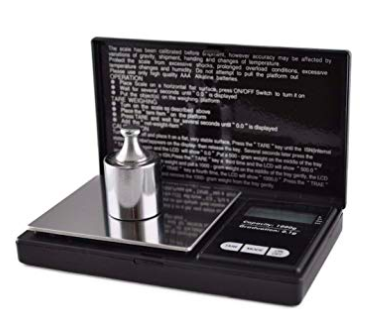
I’ve been using this scale for over ten years both at home and for travel. It’s tiny, light, cheap ($11 USD), and durable. It’s frankly a more reliable scale than most of the semi-disposable $40—$80 scales baristas use in cafes. The AWS is not waterproof, but I’ve poured plenty of espresso and water on it over the years and somehow it keeps on ticking. Best of all, if you break the scale by dropping it or drowning it in liquid one too many times, you can replace it for a mere $11.
Happy Holidays, and don’t forget to sneak your own coffee into those family gatherings :0
Roasting Masterclass | NYC (12/22)
Dec 06, 2018
Show notes
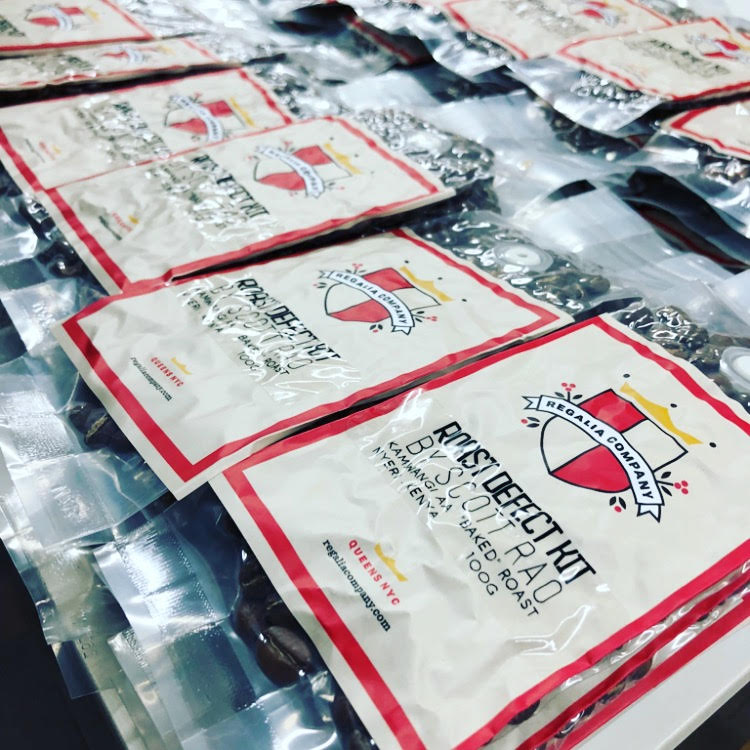
Roast Defect Kit available via the Regalia Company.
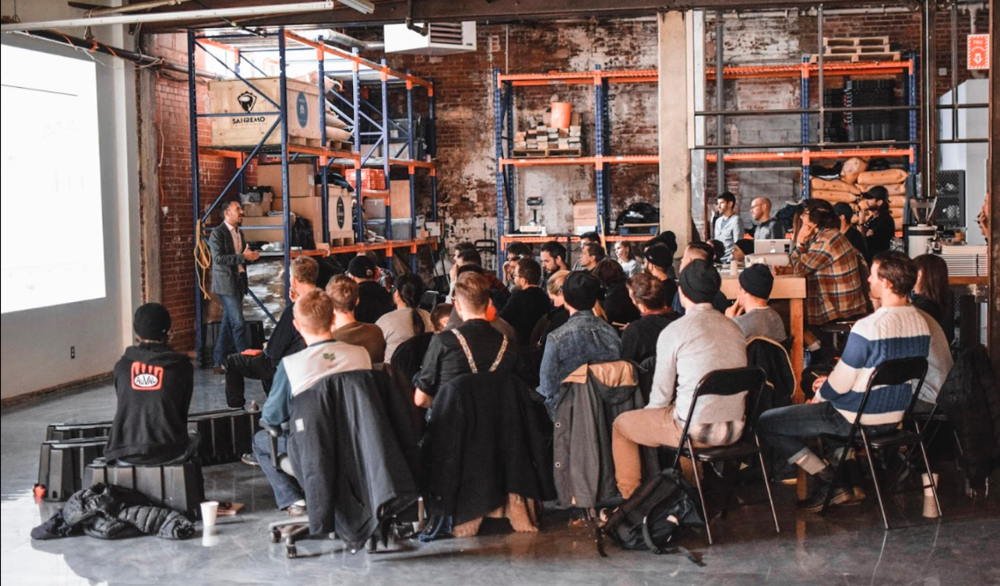
I'm pleased to announce the last Roasting Masterclass of 2018, to be held at the Regalia Company in NYC. This masterclass is unlike any other offered in the world. This will also be an unusually small class due to space constraints, so I promise to give lots of individual attention to all of your questions and concerns.
Whether you are a novice roaster or a veteran with decades of experience, you will leave with plenty of useful new ideas and methods to implement at your roastery.
The class will include:
Three hours of lecture and Q&A
Cupping and curve analysis of the "Roast Defect Kit" to demonstrate good, baked, and underdeveloped roasts.
Methods to manage ROR curves
Advanced methods to prevent ROR crashes and flicks
How to modify roasting machines for better performance.
Pro tips to get the most out of Cropster and other roasting software.
How to adapt various strategies to different types of machines.
Bring all of your curiosity and most pressing questions. I guarantee your satisfaction or your ticket is free!
Click HERE for tickets and info, and I hope to see you in New York!
How to Use Cropster To (Almost Always) Know Exactly When First Crack Began
Dec 06, 2018
Show notes
One challenge to precision roasting is knowing when first crack began. Some roasting machines make hearing the cracks nearly impossible, but even when hearing the cracks is easy, knowing exactly when to mark the beginning of first crack can be debatable or subjective.
The importance of precisely marking first crack
First crack (FC) is perhaps the most significant event during a roast:
At FC beans release a tremendous amount of moisture and gas in a short period of time
The ROR is most likely to crash at FC (due to that same release of water vapor and gases)
Much smoke develops
The bean surfaces are delicate, and (in a classic-drum roaster) the drum is simultaneously very hot, a risky combination.
If the ROR is to crash, it will most likely crash just as FC begins (there are many exceptions to this, notably including some of this year’s Ethiopian coffees.)
Gas settings before and after FC
The timing and magnitude of gas adjustments around FC are critical…when roasting a coffee that tends to crash early in FC, I often advise clients to avoid lowering the gas in the window of time from 45 seconds before to 45 seconds after the beginning of FC. (The specific advice to clients is more nuanced than that, as the timing of adjustments depend on the timing of the crash and the rate of roasting. However, FC +/- 45 seconds suffices for this post.) Lowering the gas within that time window will exacerbate any potential ROR crash. Simply raising the gas at FC (presumably just before a crash begins) to mitigate the crash is a terrible choice— I won’t go into that here, but if you currently use that strategy, find a way to avoid a crash without raising the gas; if you match the curves well (ie. roast two nearly identical curves, one created by raising the gas at FC and the other without raising the gas) you’ll taste the difference. If you can’t taste the difference, cup the roasts blindly with someone with a more experienced and sensitive palate, something worth doing anyway. There’s more to roasting than creating an aesthetically pleasing ROR curve — how you create that curve matters tremendously. I consider raising the gas at FC “cheating,” in the sense that it may produce a great-looking curve, but harms coffee flavor. While a nice curve may be a prerequisite for an optimal roast (note: “optimal”, not “I think it tastes good”), it is not a guarantee of an optimal roast.
To time the gas settings perfectly throughout a roast, it’s critical to know precisely when FC occurred, or will occur. Having experience with a given coffee may help a roaster predict the bean temperature of FC. However, the curve leading up to FC and the ROR and ET readings at FC may alter the bean-probe reading at FC for a given coffee. I’d like to propose a system that is better than simply listening for FC or assuming FC will always arrive at a given bean-probe reading.
How to use Cropster data to precisely mark first crack
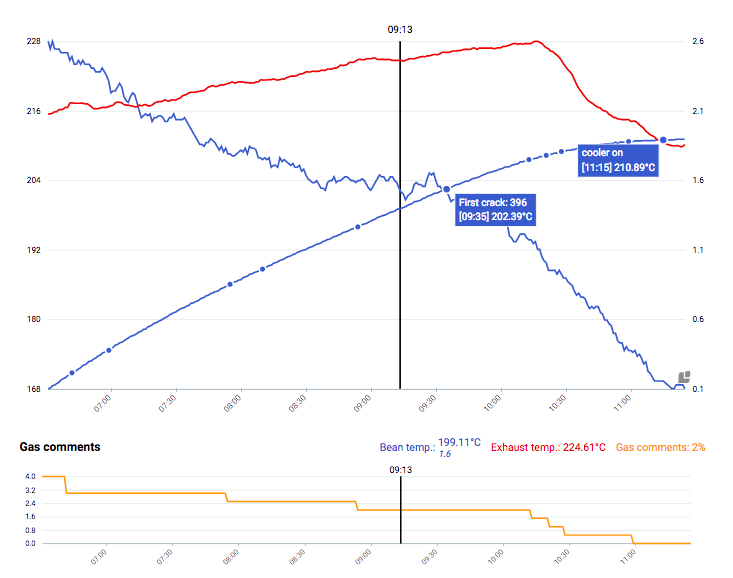
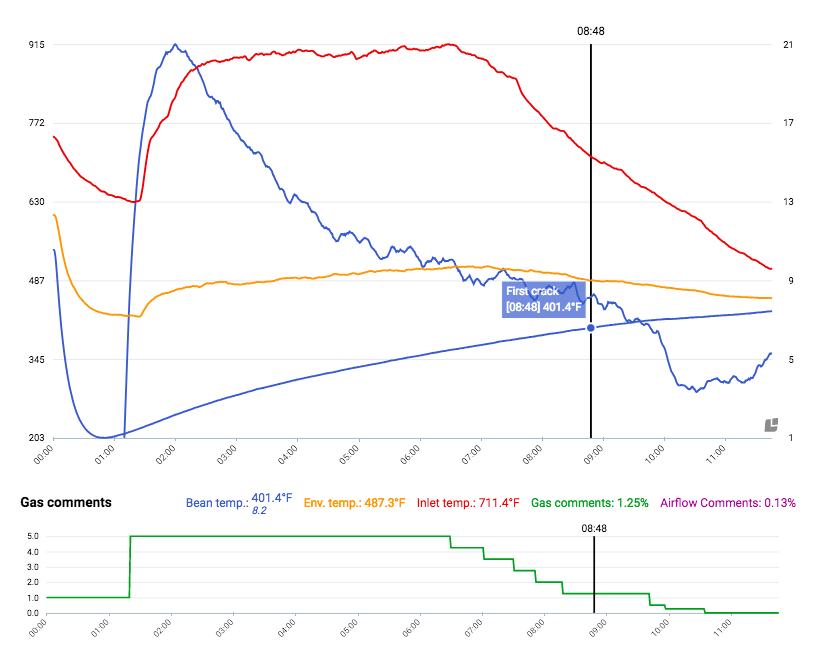
Several roasters have remarked on the behavior of the ET curve at FC; depending on the location and sensitivity of the ET probe, the ET curve may arc up during FC. (If you have an inlet-temperature curve, that may arc up even more.) You can see a version of that phenomenon in the curve below.
Close up of roast with proper FC marked.
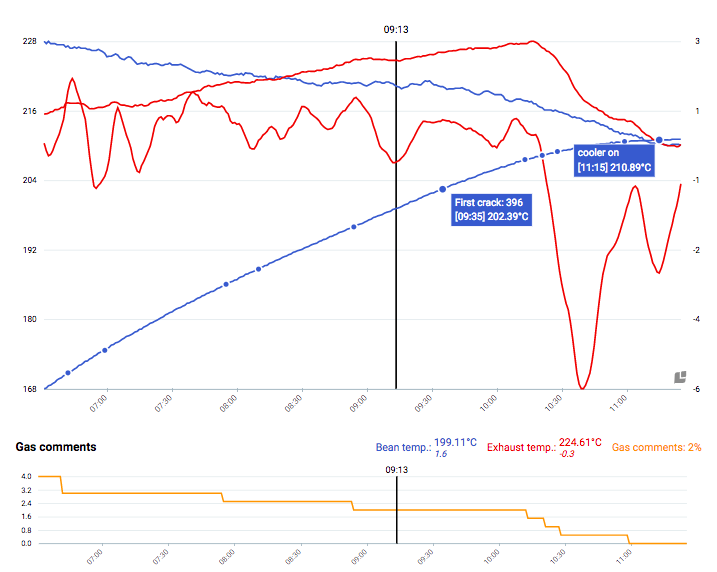
Unfortunately, the timing of arc in the ET curve is not obvious enough to help one mark FC with precision. However, the ET ROR curve is usually sensitive enough to alert the operator of the imminent hump in the ET curve. Here is the same late-batch curve with the ET ROR curve shown (turning on the ET ROR in Cropster compressed the BT.ROR curve, so please ignore that.)
Close up of end of roast with ET ROR on
Note that the operator marked FC at 9:35, but I have placed a vertical line at 9:13 at the trough of the ET ROR curve. I believe that the ET ROR trough is usually the best indicator of the “real” beginning of FC. Some exceptions to this would be if the operator had decreased the gas shortly before the ET ROR troughed, FC began in a prolonged, erratic manner (as may happen with some coffees), or some decafs and naturals that crack gently or erratically.
I believe the ET ROR jumps for several reasons, but I don’t claim to completely understand the dynamic (there isn’t enough scientific evidence for anyone to understand it completely.) Part of the explanation seems to be that the release of moisture and gas from beans as they fracture increases the flow of hot air passing the ET probe. I’ve often wondered why the BT ROR crashes at the same time the ET curve jumps up. This may not be the complete reason, but I will speculate that the moisture escaping the beans cools their surfaces and, more importantly, deflects some of the hot air attempting to penetrate the beans. The combination of cooler moisture and deflected hot air causes the BT ROR to crash, while the greater amount of hot air passing the ET probe causes the ET curve to jump.
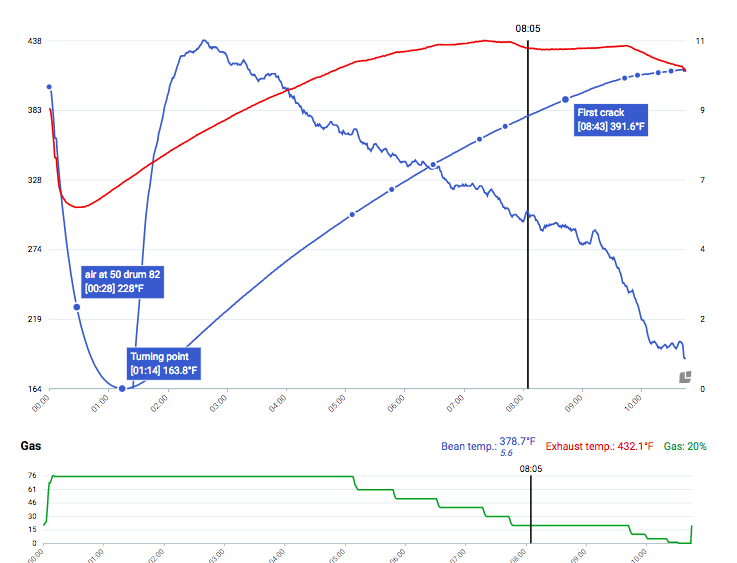
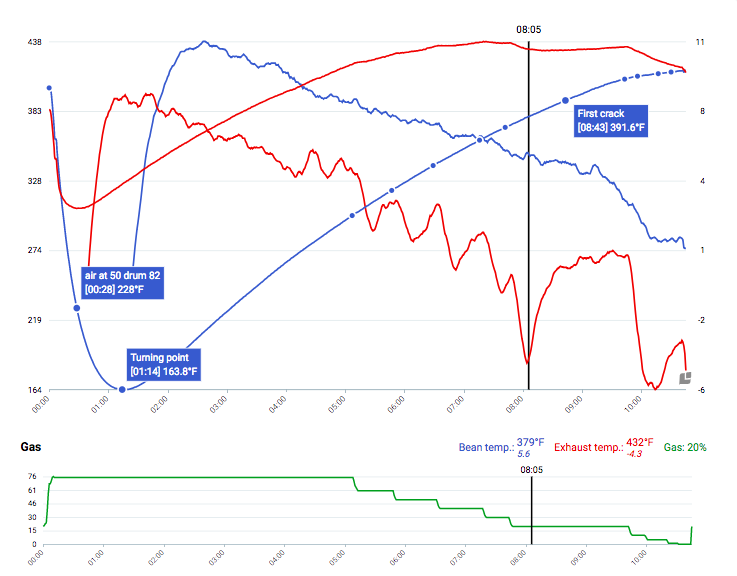
Here’s another example of a Cropster curve with and without the ET ROR shown:
Rwanda FC marked too late
I believe FC really began at 8:05… this coffee is a fresh-crop Rwanda that crashes unusually late in FC.
What if I mark FC at the wrong time?
If you mark FC too early or too late, simply add a new “First Crack” comment in Cropster… the software will assume the new FC timing is the proper one and will adjust FC and the live DTR counter accordingly. You may clean up your redundant comments by making a new “dummy” comment at the exact time of the incorrect FC comment. For example, in the roast above, if I want to eliminate the FC comment at 8:43, I may choose to make a new comment at 8:43, type “x” and then press “Text Comment”. That will add the comment “x” at 8:43 and delete the old FC comment.
**Breaking news: if that process sounds clunky it's about to get smoother. The Cropster team just informed me that the next update to RI4 (due within two weeks) will allow comment editing on the fly.**
Coda
Since I have begun teaching clients to mark FC using the trough in the ET ROR, they have been better able to keep their ROR’s smooth, avoid crashes, and even roast a little darker without an ROR crash or flick. Mind you, this strategy doesn’t always work, particularly if one lowers the gas shortly before the crack. In such cases, some experience with this method will help.
Many thanks to Jerome of Structure Roasters for his tutelage in some of the scientific dynamics at play during first crack.
Roasting Masterclass | Vancouver (10/9)
Nov 28, 2018
Show notes
Somehow despite the cold. Canada is calling to me for the second time in a month. Perhaps it’s the polite people, or perhaps it’s just nice to spend time in a country with a reasonable leader. :0
I’ll be offering a Roasting Masterclass in Vancouver on Sunday, December 9. Given the late notice, this will surely be an intimate affair, so whether you’re in BC or just want to escape America for a bit, come to class and bring your most urgent and challenging questions about roasting.
I’m grateful to George and the team at Revolver for hosting the class. If you’ve never been to Revolver, it’s a treat: the rare third-wave shop that puts humans first and also makes wonderful coffee.
See this link here for tickets, and I hope to see you in Vancouver
Roasting Masterclass | Montreal (11/7)
Nov 04, 2018
Show notes
I’m pleased to announce that I’ll be offering a three-hour roasting masterclass in Montreal on November 17. The masterclass will include two hours of lecture, a cupping of the Roast Defect Kit, and thirty minutes of Q&A. I personally guarantee that any roaster who attends will take home many new and useful roasting ideas to implement.
Tickets and information about the class are available here.
As many of you know, I founded Café Myriade in Montreal back in 2008. At the time, Myriade was incredibly innovative, and many of the systems I brought to Myriade became standard practice in cafes around the world. Some unfortunate incidents transpired a few years later, and I sold my share of the business. Montreal is a wonderful city, and I’ve missed it ever since.
On November 17, I’m not only offering the masterclass, but returning to the Montreal coffee scene as a partner with Andy Kyres (of Tunnel Espresso) in The Canadian Roasting Society, a new co-roasting facility. I believe CRS will impact roasting in Montreal the way Myriade once revolutionized the city’s café scene. We will offer roaster training, white-label roasting, and rental time on our fleet of Probat roasters.
After the masterclass, we’re holding several public events:
A cupping of Tunnel’s future roasting brand (name TBD)
An espresso lesson based on a demo of the Decent Espresso Machine
An espresso extraction contest using the Decent
A grand-opening celebration with music and drinks.
If you’re anywhere near Montreal on the 17th, we’d love to see you there.
Litmus Coffee Labs' First Product: The UFO Spray Head
Nov 02, 2018
Show notes
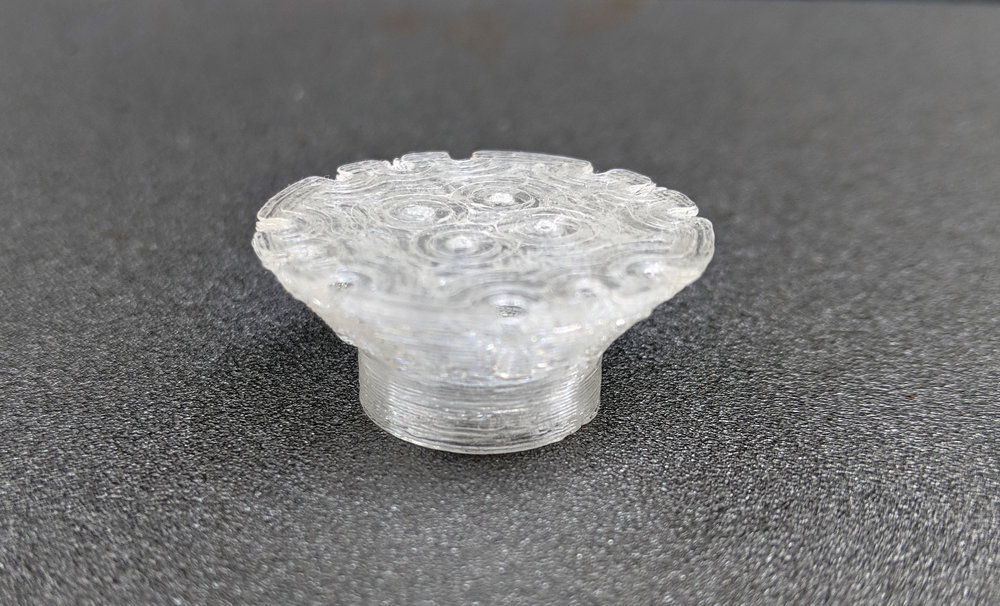
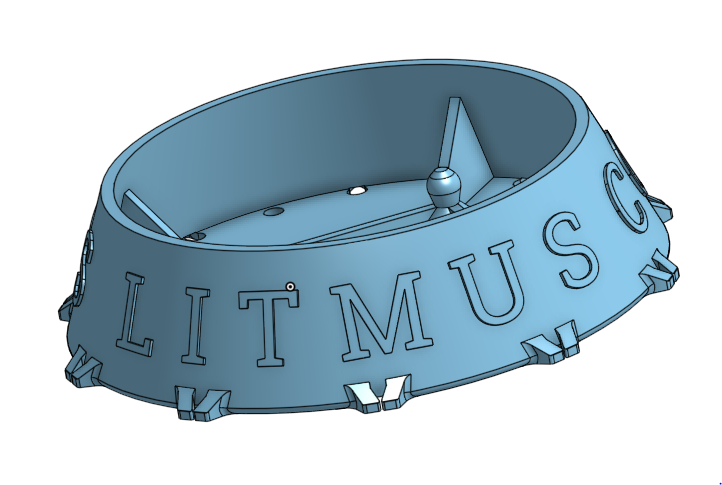
For our first product, we’ve chosen to offer an upgraded spray head for the Curtis G3 and G4 batch brewers. Why did we choose the Curtis? The Curtis G4 Thermapro is the most capable batch brewer on the market, but its spray head is its proverbial Achilles heel, and we wanted to fix that.
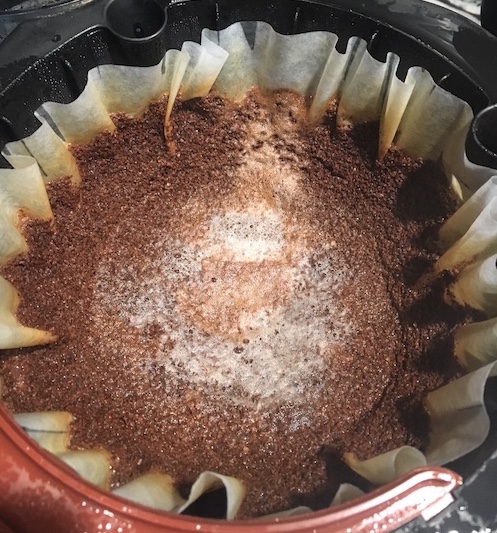
Note the way the original Curtis spray head favors the grounds in the center of the bed. It may be difficult to tell from the photo, but the spent bed is much lower in the center and raised on the edges.
The G4 has the industry’s most versatile programming and user-friendly interface, and it performs more consistently than most batch brewers do. However, the spray head greatly favors the grounds near the center of the coffee bed (evidenced by the large, depressed area in the center of the spent coffee bed). The result is exceptionally uneven extraction, which yields more bitterness and astringency and lower overall extraction levels.
Our goal was to help the machine reach its full potential by improving the evenness of its extractions. Our device produces better and higher extractions by distributing water more evenly across the entire coffee bed.
Discover & share this Animated GIF with everyone you know. GIPHY is how you search, share, discover, and create GIFs.
Dozens of beta testers over the past few months have found our spray head yields a more uniform extraction as well as a higher extraction. That means your coffee will taste sweeter, less bitter, and less astringent. As a bonus, you'll be able to use a bit less coffee grounds to produce the same brew volume and brew strength. Our mighty little spray head will pay for itself many times over, in both quality and cost savings.
Thanks for reading. You can buy the UFO and Litmus Coffee Lab's other products here.
Introducing: Litmus Coffee Labs
Nov 02, 2018
Show notes
Last year, I met Dan Eils, an engineer, through my blog. We found we had a shared philosophy on how to go about improving coffee equipment, so we decided to set to work on a new coffee-machine project (which will take us approximately forever to complete). While working on the machine, I suggested we take on some bite-sized projects to fix some problems in coffee making, and hopefully those projects would make enough money to fund our R&D along the way. Thus was Litmus Coffee Labs born.
At Litmus we've got a few products in the pipeline, all designed to be affordable and to significantly improve your coffee. We’ve had dozens of beta testers using our products happily for several months, so we’ve decided we’re finally ready to launch our company. We will announce products on this blog, you can buy them HERE and we guarantee your satisfaction with all of our products. Feedback is always welcome.
If there are any common coffee-machine parts you think could use an upgrade, drop us a line here or at litmuscoffeelabs@gmail.com.
Foreign Language Coffee Books
Oct 31, 2018
Show notes
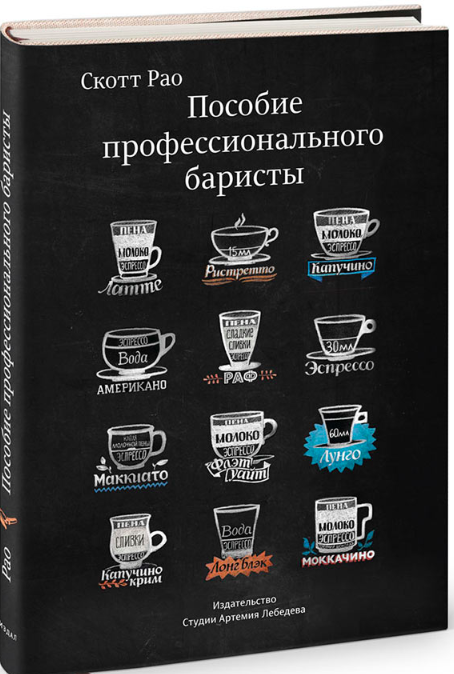
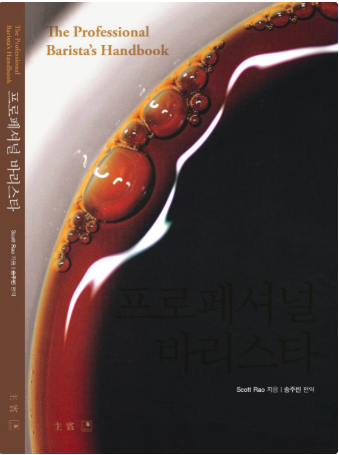
I’m rather overdue in noting that my books are available around the world in various languages. Whether you would like to read one of my books in French, Spanish, Russian, Czech, Hungarian, or Korean, please visit these links below to buy the translated editions. To resell my these translated editions, please use the same links to make wholesale inquiries. The books make great holiday gifts. Just saying. :0
One thing notably absent from most marketing and discussion of grinders is mention of extraction level. Manufacturers routinely reveal burr size, lbs or kg per hour, motor RPM, etc, but rarely mention extraction data. It would be a great service if the SCA or some other hypothetically impartial body would test and rate grinders and other coffee gear using objective metrics. In the case of grinders, the most important metric would be extraction level. (I know that grinders don’t do the extracting.)
Given that roast development affects extraction data, there probably cannot be a standardized, objective number (eg this grinder extracts a certain recipe at 20%). But it wouldn’t be impossible to use extraction data to compare grinders. For example, one could test the relative extraction levels numerous grinders yield using beans from the same roast batch.
A few facts about grinders, extraction, and coffee flavor:
Higher extractions are almost always better. For a given brew recipe and grinder, the highest extraction is not necessarily the best. For example, many of us have had the experience of setting the grind one small notch finer and having flavor deteriorate despite a marginally higher extraction level than that produced by the coarser setting. However, if you measure and taste hundreds of batches of a particular brewing method, the best brews would likely cluster around the highest extraction levels.
A technique that produces higher extractions for a particular brewing method will usually yield better results than will lower-yielding techniques. For instance, if you improve your puck prep to decrease channeling during espresso extraction, flavor improves and extractions increase.
If two grinders yield different average extraction levels for a given set of brewing parameters, the grinder that yields the higher extractions will almost always produce the tastier coffee.
As a grinder’s burrs dull with use, extraction levels will decrease.
Improving burr alignment will increase average extraction yield.**
**A top-notch grinder with poor alignment may produce higher extractions but inferior flavor compared to a mediocre grinder with excellent alignment. Many of us have had this experience with high-extraction, gushing, channeled espresso shots from an EK. A perfectly aligned EK can yield magical espresso, but few of us have had that experience.
You may not personally be a big fan of measuring extractions, but measurement offers many benefits, not the least of which is offering some objective data on which to base discussions and comparisons. Measurement led us out of the dark age of ristretto madness, measurement helped me to discover the value of the EK grinder (something about which even Mahlkonig was unaware), and measurement can help to evaluate puck-prep methods, burr sharpness, burr alignment, and of course, repeatability of results. Extraction measurement is a tool, not a dogma. Measurements offer valuable data, which you can use as you wish.
There are two important reasons to consider extraction levels when choosing a grinder:
A grinder that produces higher extraction levels will generally yield better-tasting coffee.
Higher extraction levels allow you to use less ground coffee to achieve the same brew strength and weight.
For example, let’s say you use an espresso grinder that typically yields 19% extractions and 9.5% TDS using 20g of grounds to pull 40g shots. If you then switch to a grinder that produces 22% extractions, you can then produce 40g shots with 9.5% TDS by using only 17.3g of grounds. (Please note these numbers are a little imprecise, but I’d rather not address here.) Decreasing the dose by 2.7 g per shot would add up to an annual savings of over 400 lbs (190 kg) per year for a café that pulls 200 shots per day. That means spending, say, an additional $1000 USD for a higher-yielding grinder may yield an annual return of $4000, assuming you are paying $10 per lb ($22 per kg) for beans.
The bottom line: better grind quality produces higher extractions, which result in tastier coffee and cost savings.
Please leave a comment below. I’d like to hear from you.
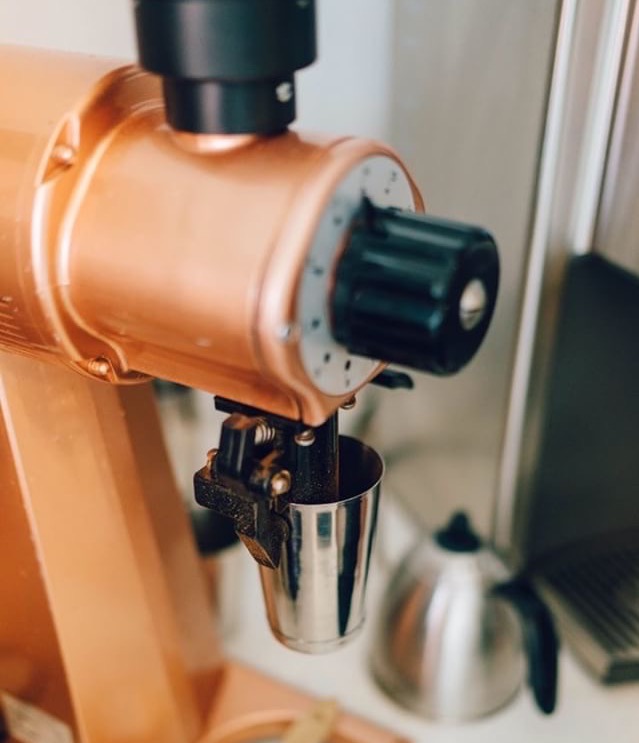
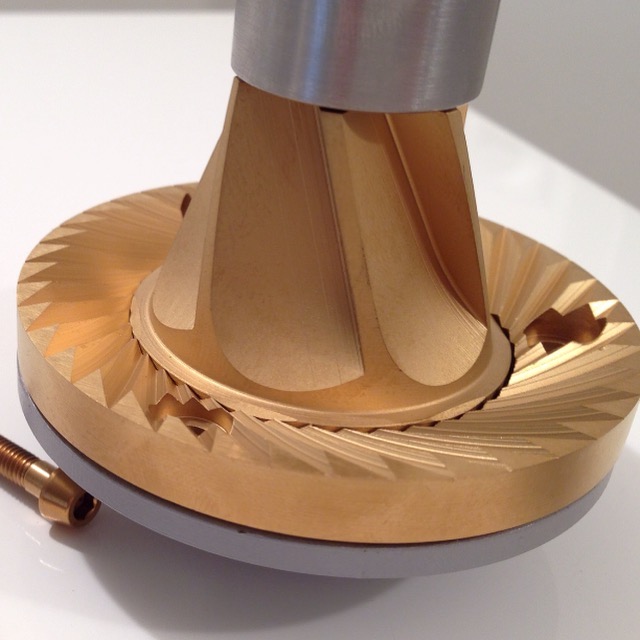
Custom Grinder | Photo Courtesy of Frank Durra @titusgrinding
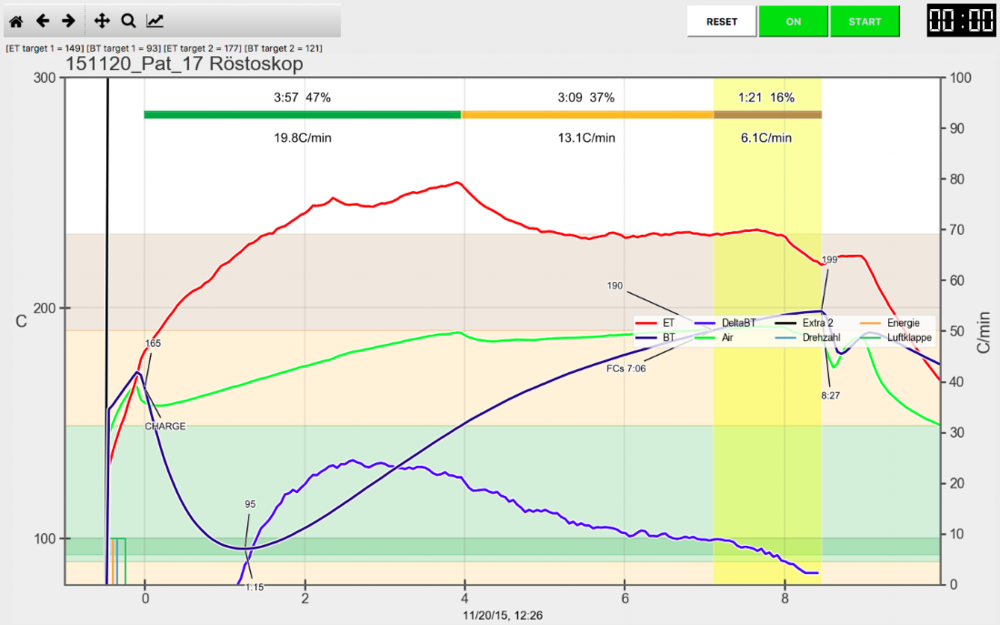
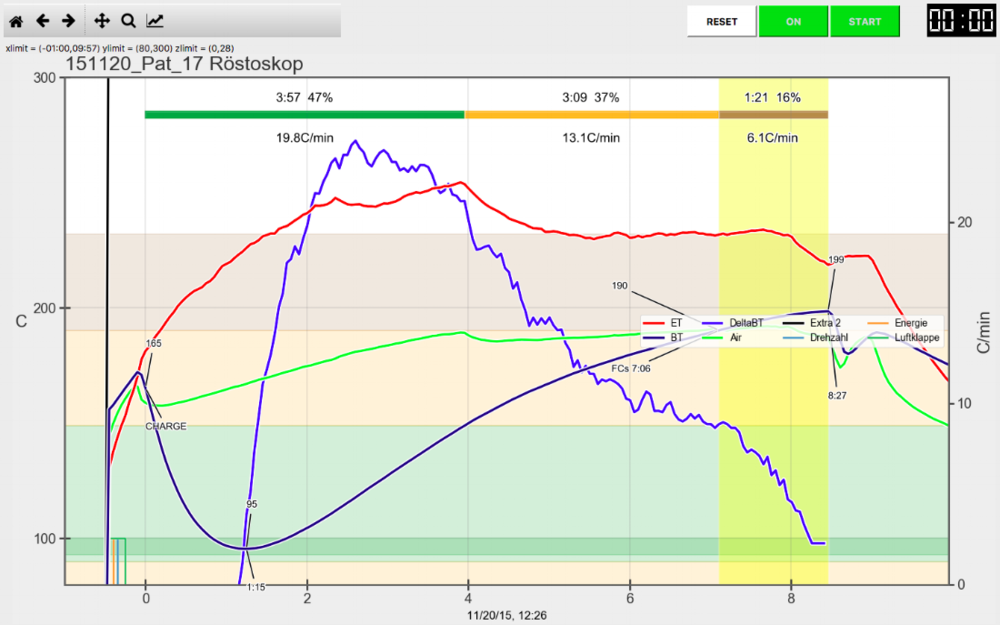
I recently posted a roast curve on my IG to illustrate how the way one sets the axes (the ranges for time, temperature, and ROR) affects a curve’s appearance.
For instance, if one sets the ranges too high, a curve may look like this:
Note how the ROR curve is compressed into a tiny vertical space. Curve views like this one are quite common (and useless).
Minimizing the ranges of the axes expands the curves and provides a better view:
Red = Inlet Temp… Blue = Bean Temp ROR…Green = Environmental Temp
While this may seem obvious to many readers, I see a tremendous number of roasters, both in person and on Instagram, setting their graph axes more like the former than the latter. Such curve views will make a roaster overly confident in his or her results. Quality Control and progress will suffer.
A while back, I badgered the fine folks at Cropster to automatically adjust the axis ranges. While Cropster can’t do that during a roast, as it has no way of knowing what the necessary ranges will be, they listened and made the range-minimization automatic when viewing past roasts.
The same principle of optimizing the curve view applies to adjusting ROR smoothing (via the ROR interval in Cropster or the delta span in Artisan) and using appropriately responsive and well-located probes. These are fundamental — not advanced — concepts. Simply put, if you don’t practice all of them, you’re handicapping your roast-curve analysis for no good reason.
Going back to the Instagram post, many commenters volunteered opinions about how the coffee and the curve. I was surprised by many of the assumptions people made about what the operator had done or how aspects of the curve would affect the coffee’s flavor. (Hint: the timing of the turn is meaningless and if someone else’s turn is higher or lower than yours, it says nothing about flavor.)
Typing with one’s thumbs on Instagram is not an efficient way to have long conversations, so I thought I’d turn the discussion into a blog post. Some readers may not want to risk making mistakes publicly, but the only way to learn is to put yourself out there and have this discussion. If this conversation is productive and involves a diversity of commenters, perhaps this “game” will become a series. If that appeals to you, please participate.
So, what can (and can’t!) you glean from the curve below? Please, no questions about the coffee, machine, or curve; only answers. I’m intentionally not providing any more information than what you see below. There are no “tricks” involved — the machine, probe, coffee, batch size, between-batch protocol, etc, all fall within the realm of reasonable “best practices.” Thank you.
Red = Inlet Temp… Yellow = Environmental Temp… Blue = Bean Temp ROR

 Our TOPPODCAST Picks
 Stay Connected