TopPodcast.com
Menu
  • Home
  • Top Charts
  • Top Networks
  • Top Apps
  • Top Independents
  • Top Podfluencers
  • Top Picks
    • Top Business Podcasts
    • Top True Crime Podcasts
    • Top Finance Podcasts
    • Top Comedy Podcasts
    • Top Music Podcasts
    • Top Womens Podcasts
    • Top Kids Podcasts
    • Top Sports Podcasts
    • Top News Podcasts
    • Top Tech Podcasts
    • Top Crypto Podcasts
    • Top Entrepreneurial Podcasts
    • Top Fantasy Sports Podcasts
    • Top Political Podcasts
    • Top Science Podcasts
    • Top Self Help Podcasts
    • Top Sports Betting Podcasts
    • Top Stocks Podcasts
  • Podcast News
  • About Us
  • Podcast Advertising
  • Contact
Not in our directory?
Add Show Here
Podcast Equipment
Center

toppodcastlogoOur TOPPODCAST Picks

  • Comedy
  • Crypto
  • Sports
  • News
  • Politics
  • True Crime
  • Business
  • Finance

Follow Us

toppodcastlogoStay Connected

    View Top 200 Chart
    Back to Rankings Page
    Business

    Insureblocks

    blockchain & smart contracts in industries across the world

    Advertise
    • Apple Podcasts
    • Google Play
    • Spotify

    Latest Episodes:
    Ep. 89 – Blockchain from an Aviva perspective & lessons learnt Dec 22, 2019
    Show notes

    Turlough O’Brien is Head of IT at Aviva Commercial and Aviva UK Blockchain advocate. In this podcast we discuss Aviva’s perspective and lessons learnt with blockchain technology. Aviva is the largest insurer in the UK. It’s a composite that spans right away from car insurance through to equity release products.

    What is blockchain?

    Turlough defines blockchain as a mechanism for creating trust between peers in a distributed manner as opposed to today’s existing centralized trust models. From a technical perspective blockchain is a ledger of blocks. A block is comparable to a digital fingerprint or a unique representation of a piece of data, often a transaction. Once a new block is validated, it is then added to the ledger and cryptographically linked to the previous block. This creates the chain, which is then propagated across the network. This ensures that everyone on the network has confidence in the integrity of the chain.

    Aviva and blockchain

    sAviva Ventures do a lot in terms of investing in start-ups having come through Founders Factory such as the recent investment in Acre which aims to streamline the UK mortgage, insurance and conveyancing process using blockchain.

    Throughout 2017 and 2018 Aviva completed three pilots within the broader company:

    • a pilot to automate large parts of the supplier invoicing process within supply chains
    • an Insurance Claims Fraud Detection pilot and
    • an automatic property lease renewal pilot using smart contracts.

    Moving beyond the pilots, Aviva continue to remain vigilant of the emerging opportunities with DLT. Aviva has an active working committee led by their group Chief Data architect to assess and triage opportunities coming through.

    However, the focus has shifted onto consortia, whereby throughout 2019 Aviva has been actively involved in the consortia space and joined B3i.

    Joining a consortium

    One of the things that Aviva learned from its pilots was the value of the network and having the participants on the network.

    The decision to join B3i was predicated on the network effect, meaning that the value of a blockchain-powered solutions increases as the number of participants using the solution increases and so it was a realisation of the value of the network and not the technology.

    The rational being that the technology is not as much a challenge as participation on the blockchain, to quote John Carolin “Blockchain should be viewed as a team sport”. Consequently there is a lot of value in the consortia versus the technology and having all participants in the insurance value chain on the blockchain is key.

    We only have to look at the numerous attempts to modernise the insurance industry which failed to gain traction owing to the lack of adoption. From a commercial insurance perspective B3i probably has the broadest coverage of participation across the insurance value chain on the network. They spent a lot of time on engagement and building the network. It’s also a way of avoiding the “technology looking for a problem” scenario as the participants are required to realise the emerging business use cases.

    When will blockchain be widely adopted in the insurance industry?

    For Turlough that’s the million dollar question. He believes that it is hard to gauge and that from a technical perspective, it’s very tricky. Bearing in mind that technology that has been around for a long time such as EDI and XML messaging, API’s and mainframes are still active in insurance so it’s hard to gauge exactly when blockchain will become prevalent in insurance.

    Turlough reminds us of Bill Gates’s quote: “We always overestimate the change that will occur in the next two years and underestimate the change that will occur in the next ten.”

    For Turlough, re/insurance is a fertile ground for the decentralised nature of blockchain and distributed ledgers to prove themselves, noting the potential for significant savings around transaction costs, reduction of duplicative effort, faster speed of processing transactions, enhanced underwriting and pricing, as well as reducing fraud and so we’re likely to see applications in reinsurance such as B3i’s recent launch of CATXoL product.

    Stumbling blocks to blockchain in the insurance industry

    The lack of a standout growth use case. There are several operational efficiencies use cases, but not so many growth use cases significant enough to move the needle. We also need recognize that insurance is typically evolution and not revolution and that existing capability such as micro service API ecosystems will be here for a while longer.

    In terms of what constitutes a standout growth use case, it’s important to recognize that it isn’t one size fits all for insurance. In general, blockchain applications will help create operational efficiency and help improve wafer thin insurance margins.

    What keeps Aviva in the blockchain world?

    The potential of blockchain is there. And Turlough points out that disruptive capability historically can move quickly. He points out to Blockbuster and Netflix even Polaroids and digital cameras. In addition the barriers to entry will also increase. When that happens, it’s beneficial to be inside the camp rather than outside the camp playing catch up.

    Blockchain and IoT use cases

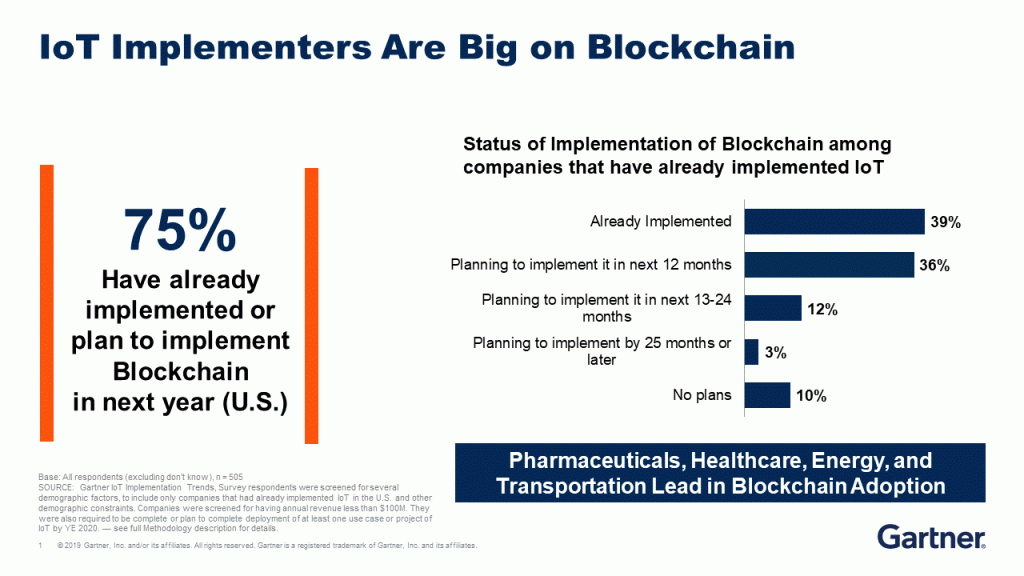
    A recent survey by Gartner of over 500 U.S. companies found that 75% of IoT adopters had already implemented blockchain or were planning to by the end of 2020. Only 10% of the respondents said they had no plans for blockchain adoption.

    For Turlough there are a number of interesting use cases that are emerging that are using blockchain with IoT.

    IoT devices often suffer with security vulnerabilities and scalability challenges. And as the number of connected devices grows, the current centralised systems to authenticate, authorise and connect different nodes in a network will turn into a bottleneck, whereas blockchain offers a secure decentralised solution.

    The quality of data and insurance is really important and plays a big part in pricing data science and the application of machine learning and AI. Blockchain can be an enabler in improving the integrity of the data. Good data is always better than more data. So Turlough believes that blockchain and IoT is probably one of the more prevalent use cases.

    The role of blockchain with APIs

    Turlough believes that blockchain based platforms will replace messaging and API’s as a means of data exchange in the future but acknowledging the insurance industry still has a lot of legacy technology. As insurance is more about evolution than revolution. Turlough believes that it will be more likely that there will be incremental scenarios with a range of capabilities co-existing.

    He is interested in what role blockchain may play in enabling the evolution of API’s.

    For example most people know Blockchain as a digital ledger system or its use in Bitcoin or another cryptocurrency and blockchain API’s are also well established for retrieving transaction data but could blockchain’s identity and uses start to change whereby it is applied in other capacities for example could blockchain be used as a security mechanism for API integrations.

    Can Blockchain help secure API integrations? Adopting Blockchain technology as an API security measure is a new way of thinking and something not yet widely explored. Often technology and it’s uses pivot as it matures.

    __________________________________________________________________________________________________

    This episode is brought to you by our friends and sponsors at R3.

    Today’s insurance industry faces a number of challenges. Data sources are disparate, the claims process is complicated, billing systems are archaic, and inefficient processes lead to high reconciliations costs, ambiguity in loss conditions and settlement delays. Let’s be honest, it’s not great!

    Here on the Insureblocks podcast, you’ve heard about numerous use cases from insurance providers and InsurTech companies implementing blockchain technology to streamline operations and lower expense ratios from back-office operations.

    R3’s enterprise blockchain platform, Corda, has been adopted as the platform of choice by many of these innovative insurance and technology companies around the world and is already helping to solve real industry issues.

    If you want to find out more, why not register for R3’s Executive Round table in London on 13 Feb – Check out r3.com/event for details.


    Ep.88 – Reforming contracts with self-executing contracts Dec 15, 2019
    Show notes

    In this podcast we look at the amazing opportunity reforming contracts with self-executing contracts can have on insurance, distributed ledgers and beyond. To take us through this journey we are joined by Rory Unsworth, who until recently was Swiss Re’s Director at Smart Contracts Counsel.

    Rory has a background as a UK lawyer with a focus on insurance litigation civil law. In recent years he pivoted towards legal engineering as it is more fun than traditional legal practice because it is about solving new challenges, working in teams and delivering projects.

    A legal engineer is someone who helps to change legal processes by leveraging and creating adoption. Both of those things, leveraging and creating adoption are tools, based on all types of technology, from text mining to blockchain, AI, semantic, whose purpose is to support lawyers and experts.

    During his stay at Swiss Re, Rory had the chance to re-engineer the way Swiss Re works around its contracts and manages contract risk. He has now recently left Swiss Re and is moving into the consultancy space.

    What is blockchain?

    Blockchain is a type of distributed ledger. A ledger is a type of record keeping system. It allows you to note the state of your asset or of your transactions with those assets.

    A distributed ledger, it’s a new concept because it’s shared across a network

    What are self-executing contracts?

    Smart contracts are bits of code that order the code to take action when a contractual condition is satisfied. They’re not actually contracts. It’s a misnomer. They are “if, then” conditions that execute individual actions, usually with a view to automating or driving contractual conditions. And those actions could be payments or value transfers.

    Now a self-executing contract are like traditional contracts but executed by means of smart contracts. To compare it to the internet, it’s a bit like text with hyperlinks, you got the surface text, but there’s another dimension underneath it which leads to an execution piece.

    Example of iTunes

    When you used to sign up to iTunes you were presented with a massive click to accept contract which apparently was longer than Hamlet by Shakespeare in terms of word count. This was the traditional contract that came with clauses and so forth which limited the number of devices onto which you could share the music you had bought a license for. You could share the music with five devices but in the old style of contract enforcement if you had shared the music with more than five devices you would receive a nasty lawyer letter asking you to cease and desist or they would ask you to pay a fine for breaching that contract.

    This of course would have been impossible for Apple to impose and would have never succeeded as a business model. Apple removed that friction by using a smart contract to do two things:

    • Contractual permission: to enable the customer to listen on several devices
    • Contractual prohibition: to block the listening of music on more devices than were allowed.

    In that sense contractual enforcement was automated and there was no need for lawyers. The code simply didn’t permit you to breach the contract.

    Smart contracts potential to change the legacy landscape

    Rory likes to use the metaphor of how self-driving cars are going to change the way our roads will look like and how driving will look like, as an experience, to describe the impact smart contracts will have on legacy approaches.

    Contracting and driving are both complex acts which has the potential to be fully or partially automated with lots of benefits to users.

    In a future vision, contracts will more or less talk to each other. In a world of autonomous cars, there will be no stop signs and no traffic jams. In the world of smart contracts, the code itself will be programmed to pick up external data points, like in the world of cars, if a speed limit is automatically communicated to the car’s operating system, then the operating system limits the speed accordingly.

    Smart contracts will communicate with each other, pick up external stimuli and adjust their behavior one to another and interact with each other. B3i has a similar model built around this kind of interaction but one between insurance and reinsurance companies. So, in the end it won’t just be smart contracts that support the distributed ledger. They’ll have access to other technology like text mining, semantic computing, IoT (Internet of Things) and other data sources. These will all feed the smart contract with digital information for it to act upon.

    In the in the end state, smart contracts will clearly reduce the role of humans in terms of contract execution and accounting, and give businesses the opportunity to invest in further innovation. So, in the nirvana state, the car drives itself and the contract executes itself.

    Reforming commercial contracts

    Commercial contracts have grown out of control according to Rory. The complexity of the language and the length of the documents have crept upwards as contracts try to be ever more explicit. And now it’s true to say that the garden is overgrown, and we just don’t know where we are with them anymore.

    The European Corporate Governance Institute published in Nov 2016 a paper entitled “Why Have M&A Contracts Grown? Evidence from Twenty Years of Deals”

    That study clearly showed that M&A contracts have become much worse in the last 20 years. In the 1990s, contract complexity was at a post graduate grade level 20. Now, it’s at a post-doctoral grade 30. So, you need to have a post-doctoral degree to read them. In other words, understanding of those contracts has been intermediated and can only be done by elites no longer by ordinary business people. In addition, they’ve grown in length by about three times in that same period.

    A similar thing has happened in insurance and reinsurance. In the London market a move was made to move to so called contract certainty, which essentially means reducing the contextual nature of the contract by increasing the textual nature of the contract. Unfortunately, the outcome was that individual contracts got longer and more complex.

    When you look at non-standard contracts or when you look at a book that subdivides into sections or lines of business that all have slightly different governance rules and meaning, then contract complexity is compounded.

    What Rory believes we need is a paradigm shift, if not, two things will happen:

    1. Increased confusion by our contracts
    2. Our ability to reorganize contracts with smart contracts and to decode them becomes more remote

    However, the main challenge for reforming the current style of contracts is the complacency that exists between insurance, reinsurance, their clients, and regulators. They will all have to be removed from the fallacy that the remedy for unclear contracting is to add words.

    Transforming existing book of contracts vs creating a new book for smarter contracts

    A new line of contract is quite easy to introduce with smart contracts because you’re drafting it from scratch. The parties can just come to an agreement upfront to create contracts with a smart contract where there’s no path dependency.

    Path dependencies is a very interesting topic in contracting. A recent study by an academic, called Julian Nyarko, at Stanford has proved with research what practitioners have known all along, which is that for existing contract, there’s a significant path dependency, and it’s hard to break away from it.

    The study found that 40% of contract submissions to the SEC were missing clauses, which the lawyers who drafted them said were essential. So, the lawyers who drafted them said here is the list of topics that I would expect to see in there, and in 40% of the cases, the contracts that they dealt with, did not contain some of those elements.

    Digital contract optimization

    It is a process to try and re-understand books of contracts together with your counterparty. It’s a process that Rory has created to completely reboot the way we view the terms and conditions across a portfolio of contracts. It’s based on two observations:

    1. the first being that it’s very difficult in the short term to change the contracts themselves, that’s the path dependency piece.
    2. The second is that there’s a dynamic in a company between the need for consistency of treatment on the one hand and the contextual nature of contracting, on the other hand

    Consequently, it is assumed that the contracts can’t be radically changed but instead there’s a method called, digital contract optimization, for decrypting those existing portfolios and using that fresh understanding of them to improve the process of setting up a contract, and then managing risk across the book.

    The first steps in a digital contract optimization is to digitalize the entity and then ask what clauses does the company have? And what does it think of them? And in what context? So, it’s not so much what is the view of one expert, but what in fact, is the view of the company represented by its most pertinent expert? This creates the playbook.

    Companies who have a standard data language to describe their various types of clauses can use it as the backbone to start implementing things like automating or enhancing the contract review and creation system. Creating radars and alarm systems. And after that, you can leverage that knowledge to automate your policy analysis in a consistent manner, using text mining or other analysis techniques.

    The next step, is to start allying that new knowledge about contract content with the value dimension. For example, some contract clauses may shift the value of that contract one way or another. Knowing which contract clauses and categories have value means that a machine can start weighting them to test for importance. Future contracts reviews can thus be limited to looking through machine generated summaries instead of having to review the whole contract again.

    Key risks in undertaking a process of digital contract optimization

    A key risk is around transparency. Whilst transparency allows conscious decision making and improvement in risk management. It also comes with a price tag. The expert finds out that they may have been inconsistent with themselves. The company itself finds its declared positions on some risks or the assumptions it was making about how it was exposed to some risk, don’t match out.

    The other risk is the human risk around change management. Any kind of digitalization process raises the question around whether or not employees will lose their job or not.

    Future impact of self-executing contracts?

    Once firms have gone through the process of digital contract optimization and we see an increase in legal engineers, Rory believes that firms like B3i will see a massive acceleration in their ability to get scale. At the moment the number of contracts you can put on B3i’s platform is one at a time. The digital optimization process will allow it to be done in bulk to create greater adoption and to start creating exactly the type of ecosystem they’re looking to build.


    Ep.87 – Plastic Bank – Blockchain for social good Dec 08, 2019
    Show notes

    David Katz, is the CEO and founder of the Plastic Bank, a unique organisation that is using blockchain technology for social good. They make plastic waste a currency to fight ocean plastic and poverty. Listen to David as he explains to us how he transforms plastic waste into a unit of positive value that large brands are willing to pay for. Leading not just to the removal of plastic from entering the oceans but also providing a path to financial inclusion for some of the poorest communities around the world.

    What is blockchain?

    For David, blockchain is really a database that allows him to understand who has been contributing or changing data. Blockchain is a technology that enables true authenticity. It enables for value (money or good quality recycled plastic) to be transformed between corporates and into the hands of the poor in emerging countries without the need of intermediaries such as government or the risk of it being hijacked by malicious parties such as the mafia. Plastic Bank corporate customers want to make sure that when they buy good quality recycled plastic from them that the value is truly transferred to the people who are collecting the plastic.

    David looks at authenticity in a binary manner. He looks at good quality reliable data as having an authenticity value of one. Data that he can’t rely on has a value of zero. The Plastic Bank needs to ensure that the material has as much authentic value as possible to really make it an incentive for the world to collect it and purchase it. For the Plastic Bank that’s what blockchain is and what it enables without the need for audit. Audit’s take time and the ocean cannot wait around.

    Your journey to the Plastic Bank

    David has a very philosophical view on the journey that has taken him to founding the Plastic Bank. He recognizes that every single experience and decision is what led him to this very moment. It is a mixture of all his journeys from the good to the tragic ones. There may have been some things that may have been more relevant than others like 35 years ago walking the beach on his way to school every day and observing all of the marine debris and being aware of them. Or as a 15-year-old calling out a mayday in the middle of the ocean whilst sailing with his father who was having a heart attack. Or was it the images of decomposing birds, whose bellies were filled with plastic, whilst walking the beach on holiday. Or was it his journey as an entrepreneur?

    In May of 2013, David attended a course at Singularity University, in the seminar on 3D printing, he was able to witness a solid strand of plastic be manipulated with a heated nozzle to be turned in to a belt. He was told that the sale price of the belt was $80 whilst the cost of the material was $10.

    At this moment he realized that the only thing that was giving that plastic a $70 value was its shape. It was the perception and view the customer was giving to that plastic that gave it a value of $80 and not $10.

    So the same way we look at packaging, bottling and other disposable plastic goods where our perception of those plastic items is worthless. So it came to David that we just had to change the perception of the material and not the material itself.

    David challenges every individual to think how their perception of every plastic, packaging and bottling they encountered was worth $5. Would we see any of that plastic in the garbage, street, environment or ocean? David believes that would be none. It’s not the plastic, it has nothing to do with the plastic but it has all to do with the way we perceive it.

    Tackling plastic waste

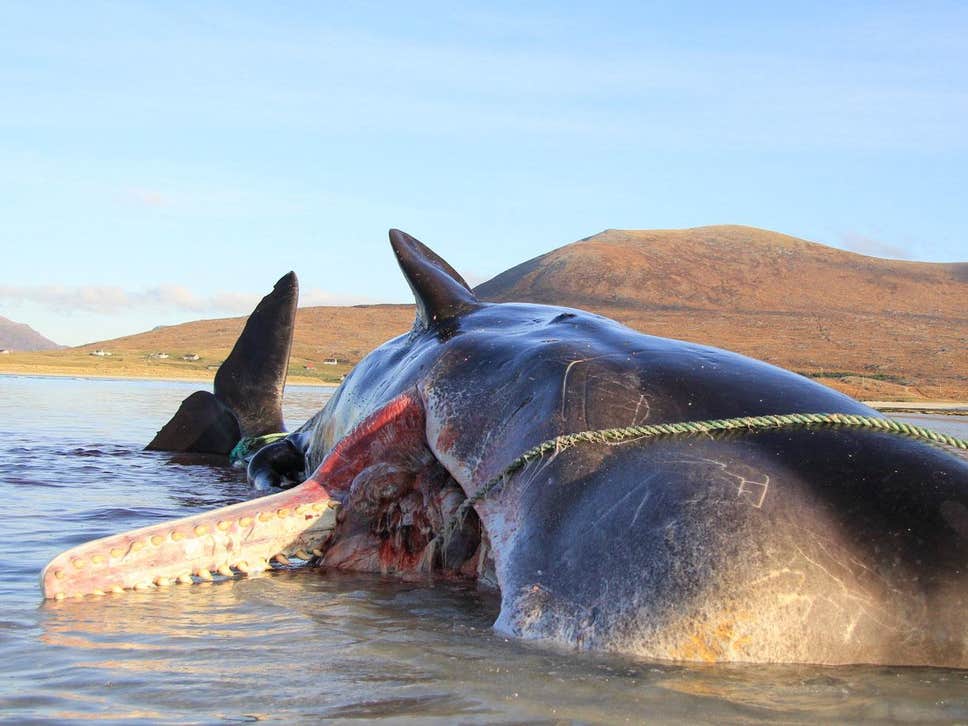
    This week a third whale in just two months was found dead in the River Thames in the UK. Scientists found in the stomach’s whale was 100kg of litter from fishing nets, ropes, plastic bags, plastic cups and gloves.

    Every minute there is the equivalent of one garbage truck of plastic waste that is dumped into the ocean. That comes out to a total of 8 million metric tons of plastic waste a year.

    The reason we are where we are with regards to climate change and the plastic waste issue is shareholder return. It’s a capitalist structure which leads CEOs to act on behalf of shareholders first. For Plastic Bank to succeed it has to meet that capitalistic / shareholder return view point by transforming plastic waste into an economy opportunity. It is by presenting plastic as a means to have a profound social story. For them to connect with a new consumer and to invite them into a regenerative economy.

    What Plastic Bank has created is a for profit business model with the goal of transforming plastic waste that is dangerous for the environment into social plastic, which brings value to communities in developing countries and to consumer packaged goods manufacturers and retailers. It has established a model that incentivises communities along waterways, to change their behaviours into becoming recycling entrepreneurs.

    Most of the world’s population still lives within the confines of basic human needs. They don’t have the ability to think of tomorrow, thinking that they may not have food for their last meal of the day. They may not know where to get it. They may not have clean water. They may not have pharmaceuticals or pain relief for their children.

    The communities in which these people live in are full of plastic litter. David brings the analogy of walking over a field of diamonds. They’re easy to pick up but there are no stores where they could spend their diamonds or no bank to accept those diamonds. If that was the case then diamonds would stay in the ground.

    For David, the mere presence of all that plastic reveals the inherent value in that petroleum resource. It is having plastic alchemists which take what was waste and making it worth something. It is giving those communities the ability to earn their way to a new skill, to earn their way to an education to entrepreneurship to a way into financial inclusion. Earn a way into a credit rating based on the volume of plastic that is collected.

    Connecting with brands

    Plastic Bank has built a supply chain. They are a consumer to business supply chain model that returns materials from household back into manufacturing.

    Millennials and especially Gen Z will not work in an organisation that’s killing the earth. David believes that this is what’s leading change today, especially as organisations are having trouble hiring staff. The Gen Z, typically aged between the age of 16 and 20 in 2019 would have lived their childhood during the financial crisis and are being hit by climate change, ocean acidification, global warming, environmental degradation and thus have this great sense of instability. They are demanding change and they’re going to become 40% of the consumers. David believes that if brands continue to communicate that their business is sustainable that they’re doomed to fail. It’s inauthentic and shallow. Gen Z can see through it. What they’re looking for is someone to take the pain away. organisations that will stand for the repair of the earth, regeneration of the environment and regeneration of societies.

    Brands and companies out there are trying to demonstrate their green credentials to attract certain types of shoppers. The problem comes back to authenticity, which is can they demonstrate with 100% clarity and truthfulness that they do what they claim to be doing?

    Using the blockchain means there is authenticity in the system, you can’t greenwash credentials. It’s all decentralized, every customer has live access to all the data that is required.

    Plastic Bank works with brands like Marks & Spencer and Henkel amongst many others. It gives them the recycling plastic credentials because it can demonstrate to them that their plastic came from a source that happens to be in a developing country and it was collected by local recycling entrepreneurs.

    In 2019, Adidas is expected to produce 11 million pair of shoes with recycled ocean plastic. Firms like Adidas can turn to initiatives like the Plastic Bank for accessing good quality recycled plastic. But there’s more to this. The purchase of that recycled plastic by brands goes to fund utility tokens which the recycle entrepreneurs earn for collecting and recycling plastic waste. That utility token in turn, can be used for paying their families education, utility bills and much more. Providing the brands with that transparency of how their cash is being used by those recycling entrepreneurs is critical.

    The utility token can be immediately transferred into cash. Recycling entrepreneurs are provided with a bank account where the utility token lives and it can be immediately transferred into cash. That bank account provides these entrepreneurs a path to financial inclusion. By having a regularity to the frequency of high quality plastic they collect, they are provided with a credit rating and they can receive a low interest loan.

    Did you need a blockchain?

    David believes that traditional technologies could have been used but it would have required Plastic Bank to be regularly audited. A centralized database could have been built that distributes value but it would have to be open to scrutiny and it would have required to be audited by a third party globally which would have slowed down the process. Plastic Bank wants to ensure that most of the money is transferred into the hands of the developing world instead of the hands of auditors.

    Taking those points into account and that authenticity would not have been as easily achieved, David believes that a blockchain was required.

    The Plastic Bank is built on Hyperledger Fabric. IBM blockchain created the architecture and the Cognition Foundry supported the Plastic Bank initiative very early on and suggested they adopt a blockchain based solution.

    Engaging local retailers and service providers

    Anyone has the ability to accept social plastic as a form of payment. All that is required is a scale, a smartphone and a means to identify yourself as a redemption location for recycling entrepreneurs. For example, a local retailer could be selling cell phone minutes and accept plastic as a form of payment.

    Others could offer cash for the plastic as a form of roaming ATM. They make a few percentage points on the transaction and it is all officiated on the blockchain.

    Global expansion

    The Plastic Bank started off in Haiti, Indonesia, the Philippines, Brazil, and they’re just opening up in Colombia and Egypt and this year in Thailand and Vietnam.

    David shared an interested statistic that 50% of the plastic that is found in the Mediterranean originated from the Nile River. According to the United Nations around 15,000 bottles a minute is entering the Mediterranean via the Nile River.

    How can you support the Plastic Bank?

    We at Insureblocks would like to invite all our listeners to become plastic neutral by going to PlasticBank.com and offset your annual plastic footprint at an individual level and a business level.


    Ep.86 – Real estate on the blockchain – insights from Coadjute Nov 30, 2019
    Show notes

    John Reynolds is the CEO and founder of Coadjute. John has a background in enterprise technology and helping organisations optimize internally. In this podcast he talks to us about the exciting blockchain opportunity they’ve unlocked in the real estate and construction industry which is worth $10 trillion globally!

    What is blockchain?

    John perspective on blockchain is from a workflow and synchronization angel. Blockchain enables different companies to work together by keeping their different databases to stay synchronized, thus enabling everyone to have the same version of the truth. Coadjute looks at blockchain as an inter-organizational workflow that allows organisations to stay in sync.

    Property marketplaces around the world are broken

    In April 2019, John wrote an article entitled “Transforming the Real Estate Value Chain: Collaborative Innovation and Co-Operative Delivery”. In the article he states “Property marketplaces around the world are broken. It is slow, complex, confusing and costly to buy and sell both residential and commercial property.”

    Anybody who has bought a house would recognize that it is a complex process because the consumer has to engage multiple businesses:

    • Visit an estate agent to view a house
    • Visit a bank to see how much you can afford
    • Visit a mortgage broker
    • Visit a conveyancing lawyer
    • Visit a surveyor

    Whilst each of those verticals have digitized and perform their job correctly the process itself is broken because the entire value chain is fragmented and it is down to the consumer to knit it all together. This can take four to five months and could cost 4% of the property value. It is an expensive, frustrating and time-consuming experience for most consumers. At Coadjute they believe that distributed ledgers and decentralized workflows can fix this problem.

    Do you really need a decentralized solution?

    There has been attempts to build a centralized platform fo the marketplace. In April 2007 the Land Registry invested £4.6m to the “Chain Matrix” a e-conveyancing type platform. It didn’t get the necessary adoption and was ultimately closed down in 2009.

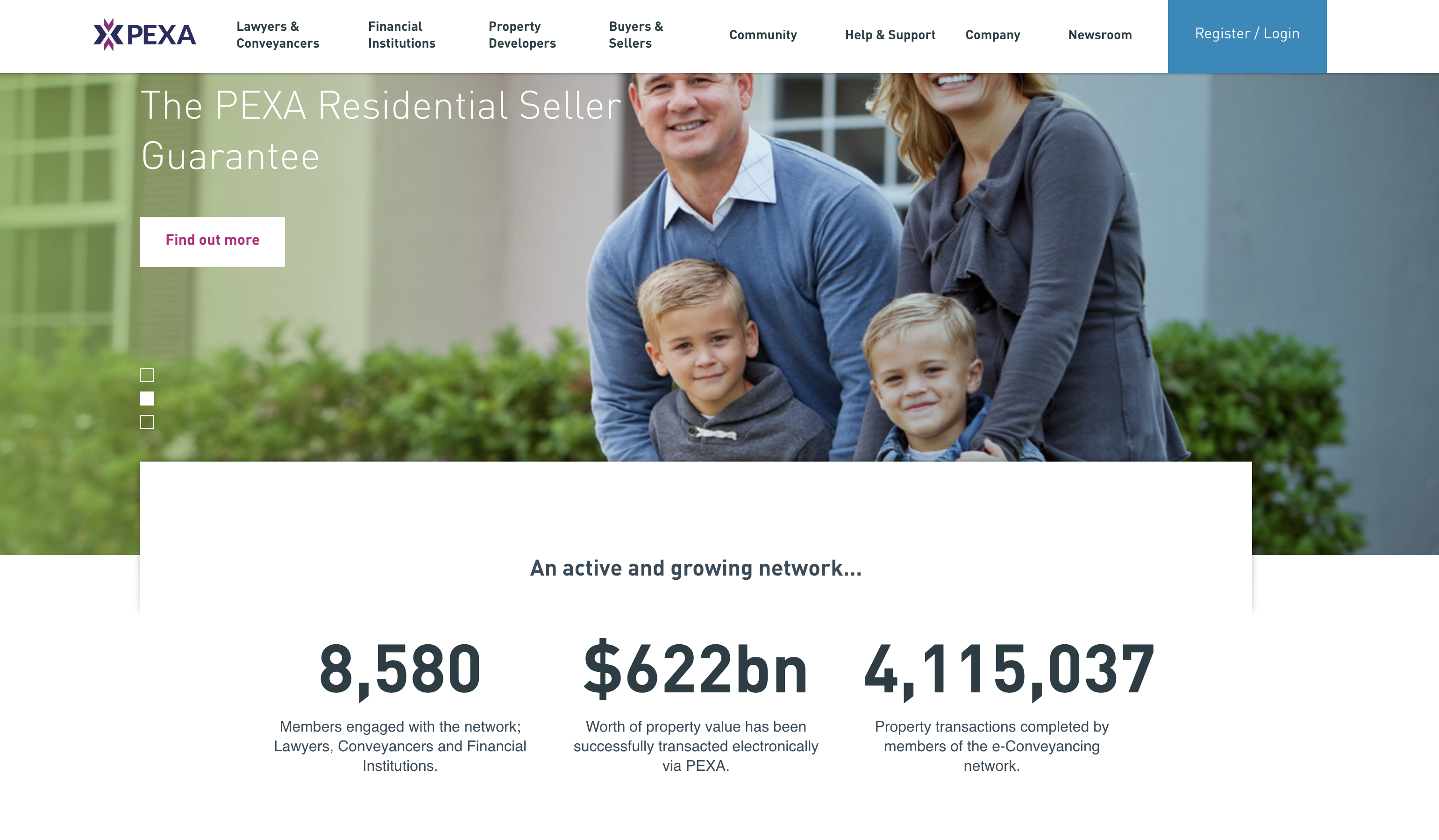
    Whilst in Australia the government mandated a e-conveyancing platform called PLEXA which was successfully launched in 2010 and has had over 4m property transactions of a combined value of $622bn go through it.

    In the UK and other jurisdictions estate agents have invested heavily in their workflow tool and their internal business processes. Surveyors and conveyancers have their own tools that they have built up over 10 years. Banks have their internal systems. Taking a centralized platform approach would cost significant amounts of money, require heavy regulation which in turn could lead to a number of businesses shutting down. Because of these reasons a centralized approach probably wouldn’t work in the UK.

    The API approach is an interesting one but one that still has challenges. How do you synchronize those APIs? How do you set the standards and processes to facilitate the synchronization of those APIs within a group of companies wishing to collaborate?

    DLT and smart contracts allows those companies to orchestrate workflow across organisations and then use APIs to connect into their core systems. Essentially the APIs open up the data from the company’s internal systems, DLT keeps the data in synch and enables the automated execution of workflows.

    What is Coadjute?

    Coadjute initially started off as a research project trading cryptocurrency in an amateur way to understand the underlying technology. John has spent a considerable amount of time in helping businesses and the UK government digitally transform itself. He and the Coadjute team had a hypothesis which was, could they create a distributed ledger that kept government in sync and kept their databases in sync? To answer that hypothesis they started a research project in 2017, spoke at Parliament, presented at the Lords, spoke to many government departments. At the beginning of 2018, the UK Land Registry ran a public procurement to which Coadjute in partnership with R3 and a UK public sector digital consultancy called Methods, placed a bid along with 22 other companies. The challenge the Land Registry had was how can blockchain and DLT technology and smart contracts make the home buying process simpler, smarter and cheaper.

    The approach Coadjute took wasn’t to put the Land Registry onto the blockchain but instead to put the workflow between all the parties involved in the home buying process onto the blockchain. Coadjute, R3 and Methods won the bid for this procurement, built a number of PoCs and were delivery partners for the UK Land Registry Digital Street project.

    A Global Trial – Instant Property Network

    In Q1 2019, Coadjute ran the Instant Property Network trial with 40 organisations in 23 countries across five continents. Organisations such as Ashurst, Baker McKenzie, Barclays, Clifford Chance, AXA XL, Even, Royal Bank of Scotland, Raiffeisen Bank International, Commerz Real, SBI Nihon SSI, SBI Holdings, BBVA, Search Acumen, Shieldpay, Squire Patton Boggs, Davivienda, Swiss Re and SiriVentures participated in this trial.

    For the purpose of this trial a PoC test was done to see if there is value in a shared ledger for the whole home buying process. Coadjute built nodes for an estate agent, mortgage lender, legal firm, Land Registry, Tax office, and a node right along the value chain. Dummy properties were created and transacted across the value chain. The learnings from this trial were prepared into a full report.

    This trial was financed through a joint effort. Coadjute invested their own resources into the trial, R3 invested development resources and Microsoft Azure provided them with a free license to all the participants who all also chipped in to the overall cost of the trial.

    Moving from a trial to live production

    John explains how the gap from trial to live production is massive because it is all about adoption. One of the participants in the trial, who is one of the largest global estate agents in the world, shared that they had just recently refreshed an internal software platform, thus making it hard for them to move to another platform.

    John visited that estate agency software and realized that they had a workflow tool which involved a lot of telephone usage and chasing around of the participants in the whole value chain for buying a property. That’s the moment that John had the idea of becoming a network of platform, of leading platform providers in estate agency, in conveyancing, in mortgage lending and brokering.

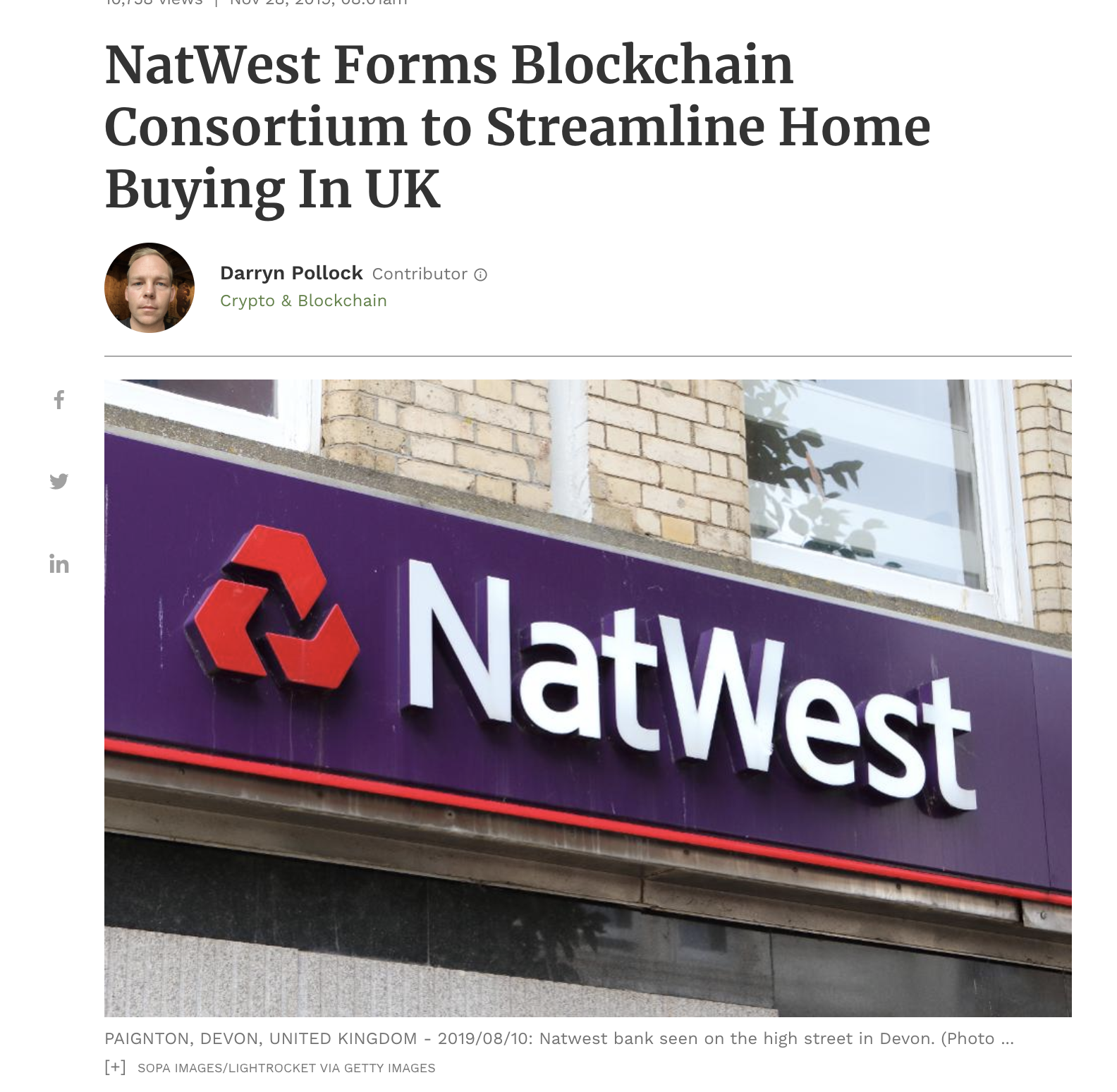
    In September this year Coadjute built a consortium together of the leading platform providers in the industry with Natwest being the lender to build a non-production MVP.

    The Instant Property Consortium has been formed with leading software providers from each stage of the home buying process – Dezrez Estate Agency Software, used by 3000 estate agents, Redbrick Solutions Conveyancing Software, has 1000 conveyancers, eTech Surveyor Software, Search Acumen Property Data, has 80% of the market using it, Conveyancing Data Services Property Data, LMS Panel Management Software and Natwest Bank which has 12% of the mortgage market.

    All this will be available as a mobile banking app with the promise that you can get a mortgage and move home in one simple online journey.

    The Instant Property Consortium is going to do a big industry showcase in February 2020. John states that through the power of consortium you can really drive adoption as he is under no illusion that they could not have brought 3000 estate agents on their own.

    In January 2020 they will go back to the consumer to test out their newly designed digital experience with a view to run a pilot with the members of the consortium. The pilot will run shadow transactions. They will run shadow transactions of a consumer going through the home moving experience on a real market infrastructure. This will take about 6 months of building and testing with a view to go live by the end of 2020.

    Quality chain

    During the original trail in Q1 2019, one of the participants was a housing association who liked the concept of having a digital identity of the property. Coadjute has a smart property record which gets sent to the estate agent, the conveyancer and the rest of the ecosystem.

    After the Grenfell Tower disaster and the Hackitt report, a regulator is being set up in the UK for monitoring building safety. The housing association stated that they will need a facility to monitor the gold thread of quality through the construction process. John states that the process for building a home is very similar to the one of buying a home where you have multiple organisations interacting between each other without there being a one stop shop.

    John realized that the Instant Property workflow engine and smart property record could be tweaked to address the need of the construction industry. This new product became known as the “Quality Chain” which they prototyped with the housing association and formed a working group called the UK Housing Association Working Group with five housing associations.

    Quality Chain is a decentralised workflow tool for the build ecosystem, enabling businesses across the construction industry to collaborate and manage development projects by tracking obligations and delivery along the project lifecycle from inception to occupation. This shared immutable data record provides a single source of the truth as a foundation for trust. The immutable provenance of construction documentation, records and certificates serves to evidence regulatory compliance and facilitate smooth handover to the Owner and Occupier.

    Vision for the future

    Data is lost, archived or left in siloed databases which means it isn’t being fed into AIs or machine learning algorithms. Liberating that data onto a share ledger enables AIs and machine learning algorithms to develop valuable insights and automation for all participants in the value chain. This data will not only be available in one vertical but along the lifecycle of the property as an asset from building it, buying it and occupying it can be really transformative. The global construction industry is a $10 trillion industry which in the UK alone employs 1.3m people. Yet as an industry it is far behind in its digitization effort. This represents a very large opportunity for Coadjute and PropTech startups.


    Ep.85 – Are insurance cells an opportunity for blockchain Insurtechs? Nov 24, 2019
    Show notes

    Atlas Insurance is the first European insurer to convert to a protected cell company. In this podcast, Ian-Edward Stafrace, Chief Strategy Officer at Atlas Insurance in Malta, talked to us about the advantages an insurance cell can provide to Insurtechs to rapidly innovate within the insurance industry by effectively becoming an insurance carrier themselves without all of the overheads and capital requirements. Etherisc, the blockchain insurtech company, used Atlas’s platform to rapidly prototype their flight delay insurance product.

    About Ian-Edward Stafrace & Atlas

    Ian joined Atlas back in 2000 as a commercial underwriter. He rapidly got enamored by insurance by its logical approach since Ian has a technology background. Atlas is one of the leading insurance players in Malta and is structured as a protective cell company. Ian’s role evolved becoming a business intelligence analyst, a risk manager, a compliance officer, a data protection officer, to now as the Chief Strategy Officer. In 2006 Atlas converted from being an insurance company into a protected cell company, becoming the first European insurer to do that.

    We first met Ian at the D1Conf on the 5th of November 2019:

    What is blockchain?

    Ian defines blockchain from the set of benefits that are derived from it. There are three aspects:

    1. Distributed database
    2. Smart contracts
    3. Potential for P2P activities

    Distributed database gives multiple organisations, one immutable version of the truth, one database, eliminating all reconciliation processes that today tend to happen manually between those parties. This brings efficiency and transparency. The insurance industry has a very long value chain from insureds, brokers, insurers, reinsurers brokers, reinsurers and data providers such as telematics for cars and health care providers for health. Having a common distributed database brings numerous efficiencies and having a smart contract on top of it we have the potential for automated self-executing processes.

    Smart contracts enable automated self-execution of claims, pricing determination, limits setting and transactions themselves which can happen away from the organization’s core systems in a way that is decentralised and trusted because the rules would have been set in advance of the events happenings. This is ideal for parametric insurance as there is a trigger, which can create a deterministic action upon a set of agreed rules.

    The P2P side is more theoretical of bringing the insureds and the capital providers closer to each other. Automated matching of customers, carriers and investors depending on risk appetite.

    What is a Protected Cell Company (PCC)?

    Protected cell legislation is found around the world in various jurisdictions sometimes called, segregated accounts companies or incorporated cell companies. Malta is the only full EU member state that has protected cell legislation applicable for insurance. The UK has insurance linked securities.

    PCC as a structure has a single legal entity but its shareholding is structured in a way where cells can have their own separate set of shareholders which are completely protected from the liabilities of any other cell or the core. This means that the PCC can act as a hub or a platform with a single insurance license. Third parties can invest in their own cells effectively meaning they can own a piece of Atlas. Their investment will only be used for their business. When transacting with customers it is always made very clear which cell they are dealing with. From a tax perspective the cells are considered as though they are separate companies.

    In a way it means that each cell is a mini insurance company that is built in a low cost manner riding on the insurance license of the PCC and on its platform. The PCC platform provides to the cell the hosting, risk management, compliance, internal audit, actuarial and regularly reporting. Each cell can thus focus on their specific business model. There are clearly cost benefits from having a standalone company but also there are capital benefits.

    From a capital perspective the cell only needs to focus on the capital needed for its business model. The core PCC provides the absolute minimum floor capital requirements that is required at a EU level. Each cell contributes what additional capital it requires. This is similar to the model provided by the “rent-a-captive” model which has the same mechanisms and protections that is done via a contract. The difference is that in a PCC those protections are enshrined in the law of the country therefore protecting the investments of the cells.

    Cells opportunity for Insurtechs

    Some insurtechs use the cell as a vehicle for starting to write insurance and potentially scaling up within the cell. Others would have scaled up within a cell and then departed the cell to create a standalone insurance company.

    A cell can act as an incubator or because of its cost efficiencies some prefer to stay within the cell environment.

    In Maltese Law there isn’t a minimum capital requirement for a cell. However, the cell needs to meet its solvency capital requirements which depends on the size of the business. If you have a €1m worth of premiums you could end having a capital requirement of €200k to €300k. In comparison an insurance stand alone company in Europe, according to Solvency 2 would require €3.7m capital if it was writing liability business and €2.7m if it wasn’t writing liability business. This capital requirement represents a massive barrier entry to Insurtechs.

    Having an insurance cell enables the Insurtechs to access the reinsurance market. For the last few years reinsurers have shown a lot of interest in Insurtechs. Insurtechs have had difficulty finding friendly carriers to carry the risks that they wish to experiment with and grow.

    Once a cell finds a support reinsurance they can move away from being an intermediary, because very often Insurtechs become intermediaries for another insurer. By creating their own cell, an Insurtech effectively becomes their own carrier having access to the reinsurance market without having to share their intellectual property with a large insurance incumbent.

    Finally, being able to rapidly become an insurance carrier at a very low cost, accessing the reinsurance market to launch the insurtech’s product enables the insurtechs to bring in venture capital and other capital sources having demonstrated usage of their product. Of course this also helps access more reinsurance support.

    Maltese cell jurisdictions

    A cell registered in Malta can passport its services across Europe as Malta is a full EU member state. Nevertheless the PCC, with which the cell is hosted by, has to notify the EU country in which it wishes to passport to and it needs to ensure that it adheres to the country’s own flavor of consumer regulation. For example insurance premium taxes may differ from country to country within the EU. When the PCC has successfully passported to one EU country for a cell, all other cells can benefit from that.

    Blockchain Insurtech cell case study: Etherisc

    Etherisc (Etherisc podcast on Insureblocks) was one of the first blockchain insurtech companies to engage with Atlas. Atlas provided Etherisc with the insurance license for them to test out their concept in a small limited way. When Etherisc approached Atlas to test out their flight delay insurance, Atlas was already doing travel insurance locally, it was easy for Atlas to do a pilot from its core within its existing insurance license and operation. Instead of creating cell straight away they used their existing core business to do a live test with their consumers.

    For both parties this exercise was a learning curve. From Atlas it was about understanding blockchain whilst for Etherisc it was from the insurance side. The first challenged they faced was in designing this parametric flight delay insurance with GDPR in mind because GDPR wasn’t quite designed with blockchain in mind. The second challenge was with regards accepting cryptocurrency. Ian believes that they were the first insurance company to accept cryptocurrency as a means for payment for the premium and for claims payment in Ether if premiums were paid in Ether.

    Ether presented a number of challenges including the volatility of the currency. Steps were undertaken to ensure there was enough mitigation around collateralization. Shortly after prompted by EU warnings coincidentally at the time, the regulator expressed concerns and actually prohibited insurers from using cryptocurrencies.

    “Innovation through regulation”

    Malta, also known as blockchain island has a focus on Fintech, on AI and on blockchain with a concerted effort across the various regulatory bodies. The Malta Digital Innovation Authority, has established at a law a joint committee which is here to facilitate the adoption of blockchain and openness to blockchain across various authorities. At the moment the Malta Financial Services Authority is going through a consultation process on the establishment of a sandbox.

    One of the mottos the Maltese regulators have is “innovation through regulation”.


    Ep.84 – Bosch’s Economy of Things Nov 17, 2019
    Show notes

    Raghavendra Kulkarni, is responsible for developing new Innovation Strategies and Business Ecosystems at Bosch. In this podcast we discuss not just internet of things (IoT) but also the concept of Economy of Things and how blockchain is an enabler for combining IoT devices to business models.

    What is blockchain?

    How we perceive Blockchain within Bosch. Three aspects to blockchain:

    • Decentralisation
    • Immutability
    • Exchange of consensus – collaboration

    Web 2.0 has created centralised platform monopolies. Internet of things (IoT) coupled with a decentralised ledger operates well within a decentralised ecosystem. The second aspect is immutability where you can have an immutable trail of an identity or of data. The third aspect is where you have consensus which is driven by collaboration. In principle what Bosch believes in is blockchain as a technology which will enable decentralised algorithmic consensus in the context of things.

    What is Internet of Things (IoT)?

    Raghavendra looks at Maslow’s Hierarchy of Needs for things and has identified three levels:

    IoT can be looked from there levels:

    1. First level is you look at a physical device. When the device is connected you look at what are the attributes of that device when it is connected to the web.
    2. The second level is making the connected device smart where you enable it to have automation attributes.
    3. The third level is making the device autonomous.

    Raghavendra believes the IoT is all about the connection of the physical into the digital world.

    IoT sits in all three aspects of the digital world:

    1. Edge – the connection between the physical object and the activities around that physical object are
    2. Middleware – is where IoT have to operate into systems of subsystems
    3. Infrastructure – the pure data

    Blockchain and IoT

    Bosch believes blockchain will play a very important role in enabling things from automation to autonomic.

    IoT has enabled the automation of a number of things. Where blockchain comes in, is in enabling those autonomous devices to make decisions on their own, by making these devices into economic ones. That is the game changer opportunity in combining blockchain with IoT.

    Bosch as a company predominantly operates as a company in sensor software and services.

    In the context of blockchain, Bosch’s entire pursuit has been to enable sensing devices to become economic agents. When talking about economic agents, it’s about deriving value from those sensing devices, settling a value when you settle a transaction. Bosch believes blockchain would help connected smart devices become economic devices.

    Bosch – Economy of Things

    On the 15th of May 2019 at the “ConnectedWorld Event” in Berlin, Bosch announced a tagline “from the Internet of Things to the Economy of Things”.

    Raghavendra explained that when we talk about IoT it is really a conversation that is restricted to the technology of devices being connected. Economy of things is the principle of taking a technology and combining it to a business model.

    An example Raghavendra uses is if you take a machine and create a tender for it that states that for this machine to do an activity today it would cost $10. The operator would have to create cycles and set it all up. In an economy of things scenario, the machine could consider its own resources and availability and broadcast to a network its own contracts and availability. Once agreement is made it can also settle its own transactions.

    Additionally, at Bosch they believe the acceleration of AI adoption will happen if it is on the blockchain. With blockchain AI gets the provenance of data, the provenance of the models and if the AI is self-learning or has unsupervised algorithms it resides on the ledger.

    Democratising the internet

    Over the last decade the internet as a technology has really commodities the hardware. Whether it is a car or a machine the value that these things have in the entire value chain the control point has moved from things to a central platform with Web 2.0. With the advent of blockchain or decentralised capability that this technology delivers, Bosch believe that the differentiation that the things can provide can be really taken back.

    Raghavendar doesn’t believe there is enough motivation for people who are working at the things level to just enable IoT to sense and provide data back to the platform monopolies. With blockchain you can create an incentivization model for all IoT devices on the value chain to contribute value and to make them accountable.

    When it comes to incentivization models, blockchain provides the opportunity for tokenization. Raghavendra uses the example of a logistic use case where in a Web 2.0 world a parcel that is moved from A to B is considered a transaction. In a blockchain world that transaction can be made of multiple tokens. Every participant in the transaction can incentivized via tokens to add further value.

    Bosch’s blockchain use case: food provenance – “Crypto Cow”

    This blockchain use case is about food provenance, with regards the provenance of milk. There are two dimensions to this use case:

    • Production of the milk – the farmer ecosystem and the cow, the “crypto cow”
    • Transportation of the milk from where it was produced to the retail store

    For the first dimension, the crypto cow, is where for the farmer the calf is a Bitcoin. In the entire life cycle of the cow the farmer would like to know what percentage of milk it generates and how he can be incentivized for that. On the other side he can use this data of his cow for various other purposes. For example, you have participants who sell to the farmer and participants who buy from the farmer. Bosch has created a data market place on a ledger for the farmer where he can put his data of his herd onto the blockchain.

    Participants who sell to the farmer can be veterinarian doctors, insurance companies, seed producers, financial institutions and so on. A veterinarian doctor for example can access the data on the herd and if he detects any changes to the milk production he can proactively call the farmer to investigate if there any kind of sickness to the cows or if there have been any changes to the feed.

    Additionally, financial institutions can also access the data regarding the health of the herd, forecast milk production and if necessary provide financial aid to the farmer whether it is for expansion or for maintaining the well-being of the cow. What is essentially happening is that the farmer provides data on this blockchain data marketplace and third-party providers can proactively provide services based on that data.

    For the second dimension, Bosch has many sensors that monitor the temperature of the milk where it is collected in the barn, to its transportation unit and ultimately to where it is processed. All that data is uploaded onto the blockchain with numerous various parameters regarding temperature, humidity and other criteria.

    A live implementation has been done in Norway with TINE AS the largest producer, distributor and exporter of dairy products.

    Bosch’s blockchain use case: pharmaceuticals – serialization drug tracking

    Bosch is working on a POC, proof of concept, on the serialize drug tracking which is essentially tracking drug provenance. There are two business drivers for this POC:

    • Recall management of medicines which need to be shipped back to the pharmaceutical company
    • When the dispenser of the medicine wants to access the entire trace of the medicine from when it was manufactured to the point of the condition monitoring

    Trusted IoT Alliance

    Bosch is part of the Trusted IoT Alliance which is a new open source software foundation born to support the creation of a secure, scalable, interoperable, and trusted IoT ecosystem.

    The Trusted IoT Alliance has launched two challenges a Smart eMobility Challenge in October 2018 and a Smart Construction challenge in February 2019.

    Smart eMobility Challenge

    When you look at blockchain and a vehicle there are two dimensions to it:

    1. In-vehicle which means the software in the vehicle, the parts in the vehicle, the maintenance of the vehicle and all other related activities of the vehicle
    2. Vehicle ecosystem

    Blockchain would become a business operating system for a vehicle along those two dimensions. The Smart eMobility Challenge was a hackathon related around the ledger for the vehicle. How is the ledger designed for various purposes: software provenance, vehicle wallets (in terms of electric vehicle charge) and how the vehicle would participate with various stakeholders such as energy providers, retailers, suppliers and OEMs like Daimler and BMW.

    Smart Construction Challenge

    The challenge looks at the complete property lifecycle, from the initial planning to the operation by a Facility Management Company (FMC). Contestants will provide solutions that address one of the three use cases: Construction Assurance, Track and Trace for Onsite Logistics, and Smart Worker Equipment.

    Future blockchain adoption

    Raghavendra’s personal opinion is that there isn’t going to be a complete public blockchain where all big industries are going to work and collaborate onto it. That potentially could happen in the long terms but what he expects to happen more likely in the short to medium terms are founder led blockchains.

    Which means to say that, as a founder, you are governing and sponsoring a ledger with an intention of automating the business processes.

    In the midterm, Raghavendra sees more of a consortium driven blockchain, whilst the long term is where we could see cross industry blockchain activity.

    In terms of industries, Raghavendra sees logistics as the most likely industry to grow the fastest in terms of blockchain adoption for fundamentally two reasons:

    • Shared business processes and shared data
    • Providing transparency and the provenance where there is a lot of opaqueness in the entire supply chain

    Healthcare and Life Sciences is another industry, Raghavendra sees becoming a leader in blockchain adoption as there is an abundance of data that can be used on a ledger for the benefit of drug discovery.

    The third industry is automotive as being a leader in blockchain adoption, especially due to the eMobility aspect and where the car becomes part of a business ecosystem.


    Ep. 83 – Addenda – a blockchain motor insurance subrogation ecosystem in the UAE Nov 11, 2019
    Show notes

    Addenda is the first insurance blockchain solution we have recently covered on Insureblocks from the Middle East.. For this podcast we were joined by Walid Daniel Dib CEO and co-founder of Addenda, the blockchain for insurance subrogation ecosystem in the UAE.

    In September 2018 Walid and his co-founders registered the company in the UAE and in the Dubai International Financial Centre (IFC). They set out to build a few prototype which didn’t quite work including a life insurance solution that was more of a solution looking for a problem. However as Walid puts it, they “struck gold” with the motor insurance subrogation solution that they’re currently working on.

    What is blockchain?

    Blockchain is essentially a decentralised network. Where information that’s shared between two participants is also shared across the board and everybody else in the room. Depending on whether it’s a private blockchain or a public blockchain, that data could be encrypted, and or shared with others without them knowing the content of that data. Within an “old school” blockchain the public blockchain rely on certain consensus mechanisms, such as proof of work, and proof of stake to operate but more enterprise friendly blockchains rely on different types of consensus such as Byzantine fault tolerance.

    The road to motor insurance subrogation

    The focus on subrogation came be seeing the issues that exist in the UAE and in the MENA region in general with regards to how manual certain insurance processes are. Walid and his team wanted to start with something that’s both high volume and low value in claims. Property insurance has very high value but low volume. Medical insurance has a lot of personally identifiable information which can be tricky in the UAE. Motor insurance ticked all the boxes.

    July 2018, Walid and his co-founders quit their jobs to focus building on their blockchain motor insurance which was ready by December 2018. They signed their first client in July 2019 and within the following month signed up seven more insurance companies.

    Lack of Insurtechs in the Middle East?

    There are four or five Insurtechs in the Middle East, but most are aggregators in the space. In Walid’s opinion, the Middle East is still a few years away from having some deep tech startups. There is more demand for technical talent than there is supply. However with the recent exit of large startups such as Careem sold to Uber in March 2019 for $3.1 billion and Souq sold to Amazon for $580m in July 2017. There’s now a bigger appetite for both investors, governmental entities and even clients to take Insurtechs, whether blockchain or otherwise more seriously.

    Insurance market in the UAE

    In spite of being a relatively small country the UAE has more than 60 insurance companies. The top 5 insurers control more than 50% of the overall gross written premium whilst the vast majority control single digit percentages if not less of the market. There is now increasing activity in terms of mergers and acquisitions with a lot of gossip regarding a larger merger between Takaful.

    The motor subrogation opportunity in the UAE

    If Car A hits Car B, and Car A is at fault and assuming both have comprehensive insurance policies. Both respective insurance companies will fix the cars, but as Car A was at fault, Car B’s insurance will chase Car A’s insurance for payment. A large number of documents will then need to be exchanged:

    • Three competitive quotations to show the cost of repairing the car
    • A policy report copy
    • Copy of the insurance policy
    • Copy of the discharged receipts to show the repair has happened

    On average over 20 documents need to be exchanged per claim. With over 2000 claims happening per day that’s 40,000 documents flying back and force via courier between the insurance companies. The more “technologically advanced” insurers are using fax.

    In the UAE the governmental side of things are pretty advanced, such as the Dubai police. If two parties who crashed together can agree on who is liable, they each take a couple of pictures, a police report is issued within half an hour via an URL and is sent along with the pictures to the insurance company.

    Staff in insurance subrogation departments lack resources and human error results in an inefficient process where a $1000 claim can take between 3 months and 2.5 years to reconcile on the back end.

    What blockchain does is provide transparency on how much each participant owes the other. Every single insurance company has access to a single point of truth where there is no need for reconciliation.

    Did you really need a blockchain?

    Around 2010 there was an attempt for a non for profit identity to launch a centralised solution to help insurance companies reconcile their motor insurance subrogation. However there wasn’t much appetite for this solution due to the concern insurance companies had over their data.

    Addenda provides insurance companies with the option to host their data on their own nodes. Addenda is the custodian of the network but insurance companies control their private and public keys. Any documents are encrypted and stored on a Microsoft Azure UAE cloud.

    Blockchain provides a decentralised point of truth where there is no need to trust a third party such as a non for profit entity. There is a lot of competition between the players. What blockchain provides them is the opportunity to collaborate.

    Signing up their first client

    Convincing the first insurance company to work with Addanda was difficult. However like in most innovation curve you’ve got the crazy early adopters who are willing to spend $40,000 on the first LCD TV, followed by the early adopters, the late adopters and the laggards. The first company that signed up with Addenda was called Watania. Their motor books aren’t the biggest but the desire to join Addenda was out of a desire to want to try this out and a need for innovation.

    Addenda’s intention was to show them an ROI at the beginning by not charging any licencing fees, set up fees, API integration fees, just a per transaction charge.

    API integration is a whole can of worms on its own. It’s incredibly complex to integrate with insurance companies existing legacy systems because they use Old School databases like Oracle databases.

    Calculating the ROI

    Similarly to Patrick Schmid, at RiskStream Collaborative, who built an ROI on blockchain, Walid and his team built a ROI calculator on Excel. They put the insurance companies into three different buckets, small, medium and large depending on the number of subrogation claims per month.

    The team then sat down with the IT teams, of those insurance companies and understood on a high level, what the average salaries are. The paper processing costs, the paper printing costs, archiving rooms, infrastructure for saving data on servers, and combined all of these costs to come up with an ROI calculator that showed some serious cost savings.

    The ROI calculator varies a lot depending on each company’s internal costs. Addenda provided the ROI calculator for them and they measured the costs

    Early results

    Since the 16th of October, Addenda has had 8 companies on their blockchain transacting on it. They’ve done $215,000 worth of transactions over 300 actual transactions. The 8 companies who have signed up to Addenda, of which the vast majority are based out of Abu Dhabi.

    Launching a blockchain solution in the UAE had its challenges. A crossing of minds was required, where Walid and his team educated insurers on the tech potential, whilst the insurers educated Walid and his team on the realities on the ground for motor subrogation.

    To manage the ‘user community” (consortium) of the Addenda ecosystem, they have the CEOs of all the companies on board who meet on a regular basis to decide what the next features should be.

    Plans for 2020

    Walid sees the opportunity to expand his product and geographical reach. Addenda can reskin their subrogation tool to make it a co-insurance tool, both for claims and premiums. Local insurance has the same issue that recoveries and subrogation have, who owes who, what and how much and when. Addenda can deploy it to the same clients they presently have on the platform.

    Gulf Cooperation Council (GCC), intercountry subrogation is a big challenge as you can have subrogation between Saudi Arabia and Kuwait or between Oman and the UAE. This is an opportunity Walid is looking forwad to sinking his teeth into.


    Ep. 82 – The GovChain Project Nov 03, 2019
    Show notes

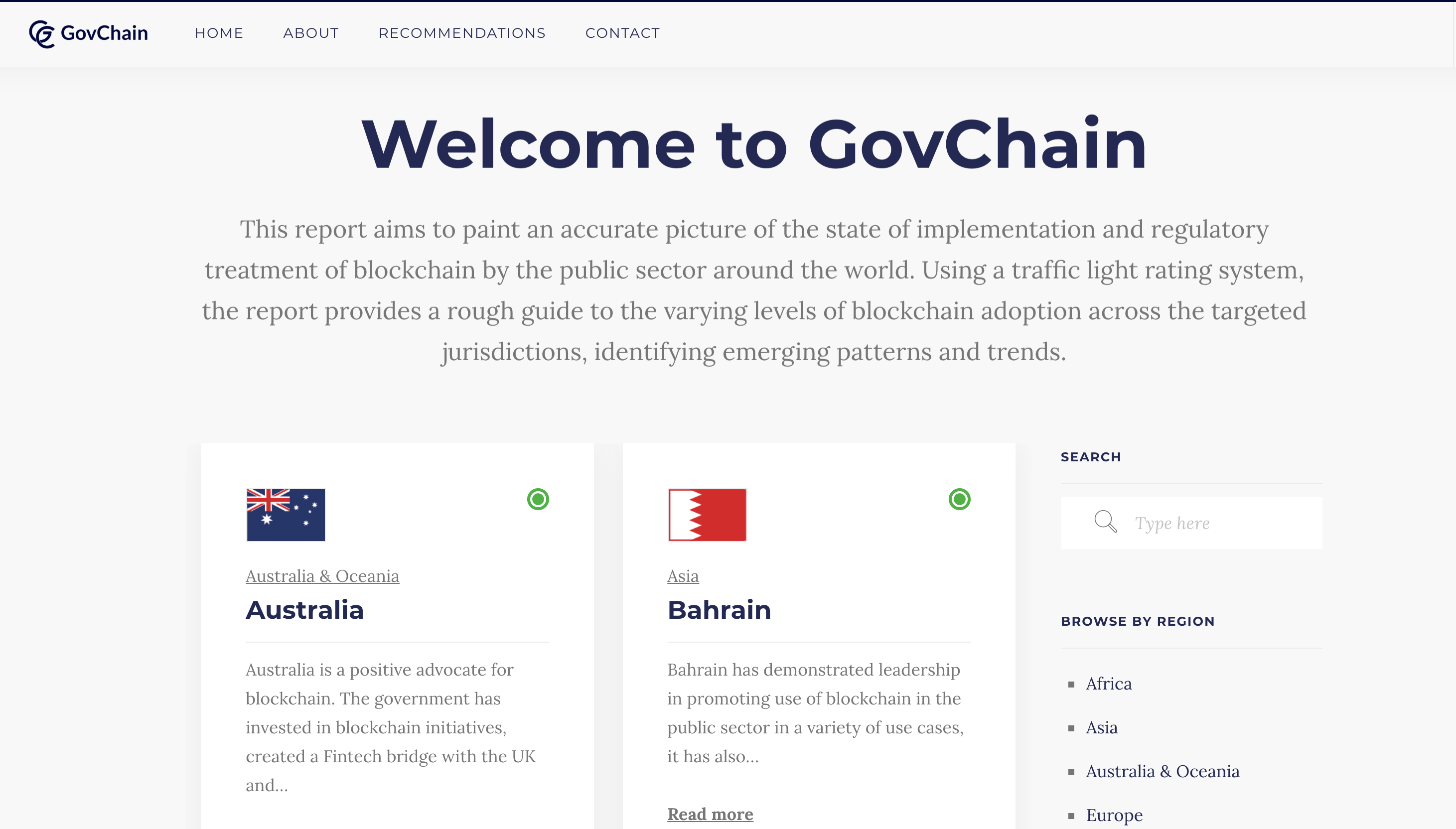
    The GovChain Project is a wonderful project that aims to paint an accurate picture of the state of implementation and regulatory treatment of blockchain by the public sector around the world. Using a traffic light rating system, the report provides a rough guide to the varying levels of blockchain adoption across the targeted jurisdictions, identifying emerging patterns and trends.

    We had the pleasure of interviewing two of the co-founders of this project:

    • Lucie Munier is the co-founder and lead project manager at the GovChain project. She has worked in the blockchain space for over two years now and was formerly working at Qadre, the main sponsors of this project. She is now manager of the Sharing Economy UK.
    • Lavan Thasarathakumar a former advisor at the European Parliament where Lavan specialised mainly on economic and military affairs and within that more specifically on emerging technology. Since August 2017, he set up Thasa Consulting which provides advisory services on emerging tech policy for government, supranational organisations and firms. As part of that he is a consultant at Hogan Lovells working within the Tech Hub. Lavan is a co-founder of the GovChain Project.

    What is blockchain?

    Blockchain isn’t particularly a new technology. It’s actually a combination of technologies we’ve had around for decades. It’s the combination of these technologies that is novel. Blockchain is a shared database, distributed among several devices, also known as nodes and uses cryptography to ensure immutability and accountability. Immutability is defined as once a piece of information is stored in the blockchain, it’s impossible or very difficult to change that piece of information. Accountability is defined as visibility across the whole network, so people can see what transactions have happened, and where the information is stored.

    What is the GovChain project?

    GovChain is a publication that aims to paint an accurate picture of the state of implementation and regulatory treatment of blockchain technology by the public sector around the world.

    GovChain team mapped out the regulatory and policy environment across over 20 jurisdictions to assess their degree of friendliness towards blockchain technology. They spoke directly to policymakers and entrepreneurs who have attempted to implement blockchain within their jurisdiction. They sought to find out what the key drivers were that allowed them to make this change, be at funding, political leadership, policy environment, cultural factors or something else to then draw up recommendations of best practices that other countries can learn from.

    In addition to Lavan and Lucie, Helen Disney is the other co-founder of this project. It was born out of a conversation at a conference where the three co-founders realised the lack of information that was available regarding public sector implementation of blockchain. Victor Chatenay was brought into the team to conduct interviews and analysis across all of the jurisdictions.

    Public and private sector symbiotic relationship to leverage blockchain

    The benefits of a technology like blockchain could be more impactful in the public sector space. But what you do also need is the private sector to come in and innovate within the public sector. The public sector may have the intention to be innovative and use new technologies, but they don’t always have the tools necessary and know how or there’s too much bureaucracy in place.

    Private sector is a lot faster and a lot leaner. They have the capacity to rapidly explore and experiment with new technology solutions and bring those learnings to bear to the public sector. This creates opportunities for a symbiotic relationship between the two.

    It’s important for both the public and private sector to have good communications for:

    • Private companies to understand what the regulatory environment is to ensure they have inbuilt solutions to remain compliant
    • Regulators to understand how these private companies are developing and being able to find out how the regulations will apply and if necessary how they’ll need to be repurposed

    It is so important, whatever it may be financial regulators or health regulators in any country are open to innovation, but you do have to understand their incentives as well. They need to protect the consumers and they need to protect the people in their jurisdiction. Regulators are very keen to learn more about the technology to enable them to form better more sustainable regulations as a result.

    Ranking of countries state of implementation and regulatory treatment of blockchain

    The GovChain team implement a traffic light system for ranking the countries’ state of implementation and regulatory treatment of blockchain:

    • Green light: implementor
    • Yellow light: investigator
    • Red light: sceptic

    This was established through research and through conversations with the policymakers in those countries. Each country can be clicked through to investigate what are they doing and what are the learnings they have for others to build on.

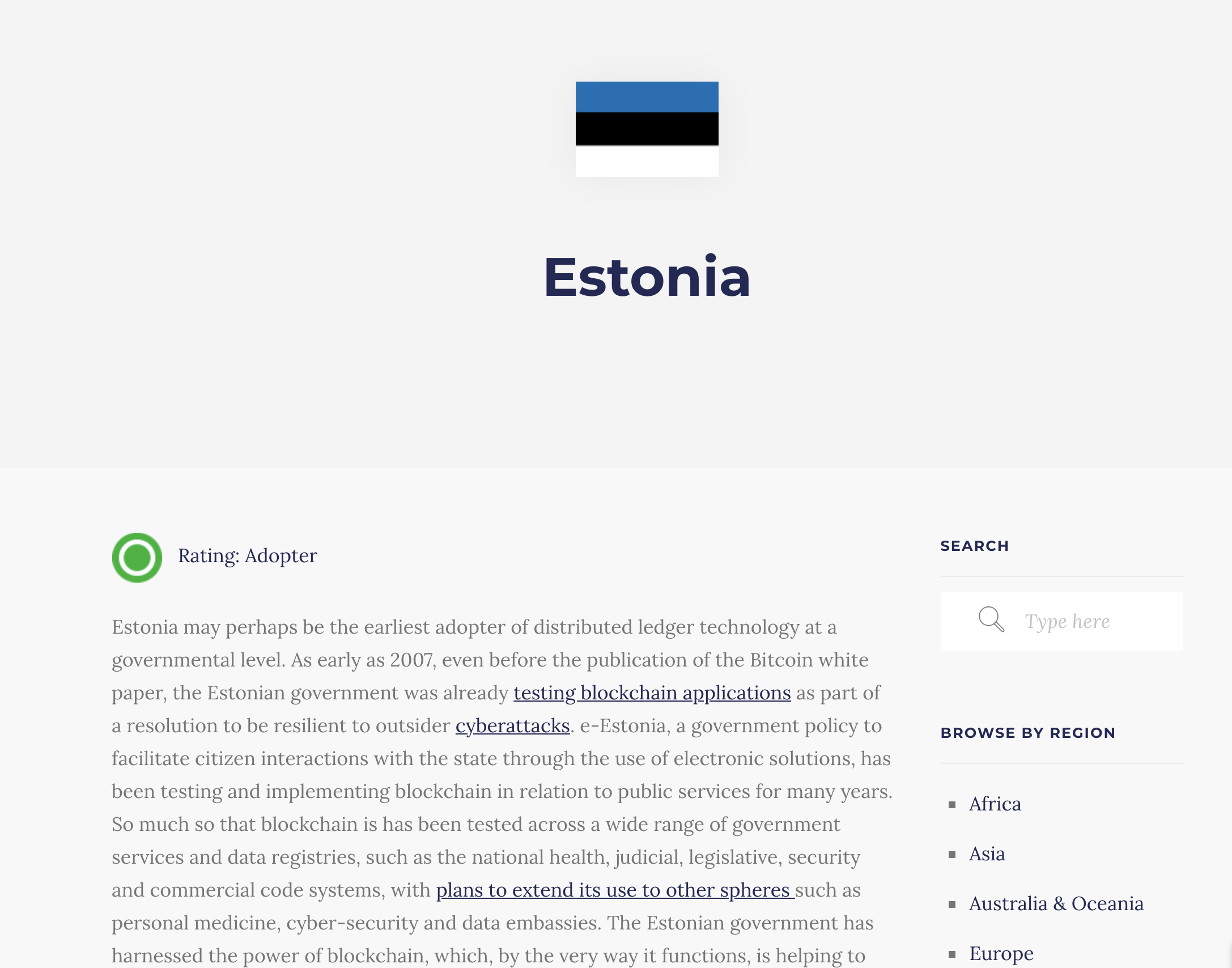
    Smaller jurisdictions, like Estonia, Gibraltra, Malta and Bermuda really saw blockchain as an opportunity to put themselves on the global stage and to be innovative. They were some of the first ones to put the necessary rules in place for the development of blockchain use cases. This did attract a lot of interesting projects to move to those jurisdictions.

    Key findings

    Some of the key findings that came out of the report was the importance of creating a political and economic environment that is conducive to harnessing blockchain technology.

    For example, Estonia is a great example of a country really assessing the economic rationale behind using the technology before implementing it. Gibraltar is another fantastic example of a jurisdiction in which they created certainty by creating a regulatory framework which invited companies to come and operate in Gibraltar.

    Alternatively, if you look at countries who weren’t clear on regulations this can create problems. For example, in 2017, the SEC in America came down very strictly on ICOs (initial coin offering) very early on by stating that not abiding with the securities law would be a violation. Other countries were not so certain at the get go resulting in consumers being taken advantage of and losing a lot of money.

    Key requirements for launching a blockchain project

    For Lucie, it mostly comes down to not using the technology for the sake of using the technology. Many of the individuals in different countries that they have interviewed take a very risk-based approach to blockchain. They understand that if it’s not worth the return on investment, then they don’t need to use this. Blockchain is a very good solution in very limited circumstances. And those circumstances are mostly that if you’ve got multiple parties who are acting on the same piece of information, they all need to be able to edit it and access it and they can’t necessarily trust another third party to do that. That’s when a blockchain is a really good use case.

    Cross country collaboration around blockchain initiatives

    One of the key findings of the report is the importance of international cross border cooperation. Ultimately, blockchain technology doesn’t see borders. Therefore, it is important to have international rules and standards put in place. For example, when conducting interviews with the authorities in Bahrain, one of the key things they mentioned is to ensure that blockchain doesn’t operate in just one country but allows businesses to easily transport across jurisdictions. They’re trying to standardise their efforts in the region and create standards through the Gulf Cooperation Council.

    In the UK the FCA (Financial Conduct Authority) is actively participating in the Global Financial Innovation Network (GFIN). GFIN is an international group of financial regulators and related organisations, including the FCA that seeks to provide a more efficient way for innovative firms to interact with regulators, helping them navigate between countries as they look to scale new ideas.

    Importance of a regulatory sandbox

    The FCA in the UK has developed a sandbox which has attracted numerous blockchain cohorts such as Etherisc. The FCA was the first regulator in the world to create such a sandbox environment. Lucie was in China recently where the regulators are starting to warm up to the idea of a sandbox and are in discussion with the FCA to leverage their learnings. The initial fear was that sandboxes were perceived as an opportunity for people to do anything they want, which of course isn’t true as they have to operate within a regulated environment.

    GFIN will enable cross country collaboration on a regulatory sandbox front which will help to speed up innovation and launch blockchain projects off the ground.

    Opportunities for emerging countries to leapfrog developed countries with blockchain

    Lavan & Lucie where asked if similarly, to the African continent embracing mobile phones instead of land lines, is there an opportunity for emerging countries to leapfrog developed ones with blockchain technology? Lavan makes the point that it is often difficult for larger economies to change due to deep rooted infrastructure in place. Whilst developing jurisdictions have the opportunity to leapfrog those larger economies.

    Estonia for example made a conscious decision, post-Soviet Union, to focus on a digital agenda. Estonia now has fantastic internet connectivity, very high digital literacy and have in effect leapfrogged a number of jurisdictions across the EU because of that decision they made.

    How has blockchain policy around blockchain been developed?

    Traditionally policy is driven out of government departments. What’s been really interesting with regards to blockchain technology and other emerging technologies is that we’re increasingly seeing regulators such as the FCA developing policy in some ways. Traditionally the FCA is there to regulate and ensure that the law is apply by firms. What the GovChain project is seeing through initiatives like sandboxes are regulators taking a closer look at the activity that’s taking place within them. They are seeing the suitability of existing legislation and regulation and thinking how should these be adopted for the markets. As Lavan states “we’re seeing a real development of also the regulatory and legislative process in jurisdictions too.”

    What’s next for GovChain Project?

    The GovChain team want to hear from more people who have implemented projects within the public sector, and to add to this, get more jurisdictions and get more use cases.

    They think that the more people and countries they can showcase with this work, the better it is for the advancement of the technology overall. You can get in touch with the team on https://govchain.world/contact/


    Ep.81 – Blockchain business design Oct 27, 2019
    Show notes

    In this fascinating episode we are joined by Andy Martin, Blockchain Business Design at IBM. For the last three years Andy has been working on how to create business case for blockchain networks. In this podcast he shares with us his deep wealth of experience in how to design effective blockchain business design. This is a must listen to anyone interested in establishing blockchain networks. What is blockchain? In defining what is blockchain, Andy focuses on private permissioned blockchain whose initial opportunity is in optimising shared business to business processes. Up to now the approached businesses took was in having a central intermediary to act as a central database to smooth out that shared process. The challenge is that both the quantity and the value of data has been growing very rapidly, leading to reluctance in businesses to share that data to a central intermediary. Blockchain gives us a super elegant approach to sharing this process across the members of an ecosystem in such a way that no one person is in charge of the data. All the members can have a say in how that data is governed and they each have a copy of the ledger. Smart contracts are running on top of it and that is where the shared processes have been codified – who needs to do what to move the status of an asset as it moves across that shared process as trades of ownership of that asset are made. When a trade of ownership transaction is proposed to update the ledger, a consensus mechanism is used, so that all the members of the network can come into agreement as to what is the status of this asset as it as it moves through this process. Blockchain has created a new asset which is trusted data at the level of the market. Privacy controls are put into place so that only the permissioned individuals are allowed to see the data. This new asset is effectively the foundation stone to truly innovate, to create new types of business and new types of marketplaces. This paradigm shift provides players within an ecosystem an interest to collaborate with their competitors in building that trusted data marketplace to then compete above it whilst combining your firm’s private data and capabilities and combine it with that trusted data. Building business cases for blockchain networks There are three big areas where building a business case for a blockchain network is different than any other technology: Incentive model Network effect Market level thinking For any blockchain network you also will need an effective governing body that plays the role of defining the marketplace rules. It needs to be fair and democratic to ensure that everybody gets a fair chance and cut of things and a desire to increase the volume of transactions within that market. Incentive model Three different types of business cases have to be built to create an incentive model. Each of these business cases have to interrelate and create reinforcing behaviour: A solid financial incentive for whatever entity who is going to be bring this network to market. A strong business case for each of the members of the network to join it. If members benefit greatly from the network you charge them a fee to join it. Some members may be so valuable to the network that they either have great gravitational pull that they can bring other members to the network or whose data is so valuable that you may choose to give them free access to the network. The final case is for those who provides useful data to the network but don’t benefit greatly from being in the network. An incentive model is required for them to join the network. Network effect The whole point of the incentive model is to ensure that as many of the trading partners of a market join a blockchain network. The incentives are here to identify and recruit the partners who can bring the most transactions and volumes to the network in order to seize a market. This will in turn enable to help all network participants to innovate on top of that new marketplace. Andy is quick to clarify that when he talks about network effects he isn’t talking about Facebook. With Facebook you have a single governing identity that is controlling the data. In a blockchain network there isn’t one party that is owning and driving the governance and monetisation of the data. Market level thinking The third point regarding blockchain network is to be thinking at the level of a market. These markets will be driven by zones of regulation, for example one in the EU, one in the US and one in Asia Pacific. Because these are networks for businesses they need to be compliant to the local regulation. Effective governance The governance is all about designing an incentive model to drive helpful behaviour from all of the various interest groups on the network to drive the volume of transactions up through the network. It’s critical for a governing entity to be fair, where every participant has a fair incentive to want to join and get a fair sharing in the benefits of being part of that network. If that is achieved we need to make it as simple and as easy as possible to move a business onto the blockchain network. That is why in Andy’s opinion we need to start with a very thin layer of blockchain that initially focuses on the shared processes. In automating the paper processes, the phone calls and Excel spreadsheets. Additionally, it has to be commercially attractive to join the network, it has to have an easy onboarding and immediate first benefits, making it easy to consume the service. Andy gave us an example on the important of having a good effective governance model through a case study of 31 banks in Australia who created a financial network together. The top three or four banks in the network probably have something like over 50% of the market share. The aspirations these banks had was to create a marketplace utility. They engaged with the local regulator who made it clear that the 31st bank that signs up to the network isn’t disadvantaged compared to bank number one. The governance structure used to regulate that network was made to ensure that all banks weren’t disadvantaged when joining the network compared to the original founding ones. Five laws of blockchain business model design These five “laws” or ideas came to Andy whilst having lunch in Nantwich and what they represent are the five core principles one needs to consider when building a blockchain business model: Rule 1: Network entities sell digital products and services created through ecosystem collaboration Rule 2: Sales increases with network effects within one market or by building new markets with new data combinations Rule 3: Governance of incentives creates helpful reinforcing behaviours Rule 4: Governance enables transition from a central start to a fully decentralised marketplace Rule 5: Governance enables the Token or Network Economy Rule 1: Network entities sell digital products and services created through ecosystem collaboration The first law is about creating new digital products and services. And we’re looking to expose these on a marketplace. Andy references a speech by Don Tapscott where he mentioned that we were seeing the birth of a new type of business that looks more like a network. There are numerous special purpose vehicles for creating a blockchain network. In the above case of the 31 banks a for profit company was created by the four or five founding members to take this network to market. Other markets may take a different approach such as using a non-for-profit consortium. An alternative approach is one where a technology solution provider who is building the capability and taking that to market to build an ecosystem around it. The fourth model is one where you have a dominant player within a market who chooses to launch a blockchain network. In this instance it is critical to have a governing board that will fairly represent the interest of the key players in the market. This is the easiest and fastest approach to launching a blockchain solution. According to the 2nd Global enterprise blockchain benchmarking study, 71% of live networks have been initiated by a single founder leading the initiative. Within the insurance industry we have seen RiskStream Collaborative take the not-for-profit consortium approach, B3i take the for-profit approach and Insurwave the more dominant player model. Rule 2: Sales increases with network effects within one market or by building new markets with new data combinations Network effects are created by either picking up existing trading and capturing that in a marketplace, or by creating new types of trading. Blockchain networks provides the opportunity for creating new trading relationships by bringing in new data and new member types into a network. This drives new types of transactions. It has a governance model that ensures that everyone can govern their data and that the marketplace works on democratic and fair principles. In creating a marketplace for peer to peer trading there are two models: “As is model”: These are existing peer to peer trading relationships that are added to a blockchain marketplace to put onto a share process to automate and reduce friction. This is about creating the foundations to reinvent the industry in new markets. “New market models”: creating new types of trading relationships with new types of data combinations. This can be done in two ways. One way is to start with a blank sheet of paper that brings member types that wouldn’t normally trade together to create a new value proposition. A second way is to take the “As is model” and inject it with some new data to drive new trading relationships to drive some new network effects. Rule 3: Governance of incentives creates helpful reinforcing behaviours The third law is about having a governance model that creates a fair incentive model for all the marketplace participants. Theses incentive models can take the form of cash or more elegant solutions to generate a helpful behaviour for all participants. There are a set of levers a governance function can pull to design the incentive model: Operational improvements participants get by being part of a blockchain network For a for-profit model you could have the rule of five, where the first five members who are starting to form the marketplace may have slightly higher privileges that the second and third set of five members in terms of equity ownership of the business for example For a not-for-profit model you could still follow the same sort of five by five but the first five who are putting some money in their pocket to help build out the marketplace will get access to some privileges. For example, if an innovative new service is going to be added the founding members will get exclusive access to that service for a period of three months before the other members. Or perhaps they will get a lower access to the cost of the basic services of this marketplace for a period of time until they get their money back. Rule 4: Governance enables transition from a central start to a fully decentralised marketplace In Andy’s opinion for a marketplace to grow it needs to get progressively more decentralised to do that, because there’s a power equation here. If the network remains too centralised within the hands of too few people, having access to the governing entity, then the incentive to collaborate starts to fall away. Finding the right level of decentralisation can be tricky and can be different depending on the marketplace. Andy quotes Joe Lubin who stated at Devcon 5: “But I think it is short-sighted when some people believe that all blockchain systems must be fully permissionless and maximally decentralized. When you are issuing valuable assets or anchoring into a base trust layer, that layer must be maximally decentralized and that requires it to be completely permissionless. But adding some decentralization to use cases that are enacted among a small set of counterparties is enormously valuable, and this is best done on a private permissioned system.” In a private permission network, the opportunity is to seize a market. For that to happen it is ideal to have the main players of that market join the network leading to an early centralised approach to that network. The key thing to determine here is how important is that long tail? If it is important, you will need to have a governance structure that is open and fair enough to incentivise new members from that long tail to join the network to seize that market. It is thus important from the get go to determine the level of decentralisation the network wants to aim for. Will it have a coopetition model that is open to competitors joining and to the launch of new competing value propositions. Rule 5: Governance enables the Token or Network Economy Tokens are part of the new set of tools and techniques that a governing function can take advantage of for driving trade and for driving collaboration. Tokens have three high level jobs on a blockchain: A means of payment whether it is in fiat or crypto Ownership whether it is for a digital asset or a physical asset that needs a digital twin Utility token Utility token In creating a marketplace that will have a whole range of service, you need to attract a number of participants in order for them to transact correctly onto that marketplace. What are the tools a governance function can have to create a really smooth marketplace to try to encourage behaviours right at the beginning? Outlier Ventures have helped Andy to inform his view on the function of utility tokens as an economic level for the governing entity to control marketplace behaviours. There are three levels that need to interact: Marketplace level – encourage participants to consume services on the marketplace Ledger level – encourage participants to build innovative new digital products and services Governance level – design the economic model behind the token. This is useful for controlling behaviour where mining tokens or staking tokens are commonly being used in todays networks. Example: Plastic Bank The Plastic Bank is Andy’s all-time favourite blockchain network. Plastic Bank was founding in March 2013 in Vancouver, Canada by David Katz and Shaun Frankson. David was alarmed by the amount of plastic he could see around him whilst scuba diving. After some research the duo came to realise that the majority of the plastic that ends up in the ocean comes from a relatively limited number of rivers in developing countries. The challenge they set themselves was how to design a business model to change the behaviour of folks living near beaches and near rivers to turn them into recycling entrepreneurs. The Plastic Bank is a for profit company that aims to monetise waste plastic and turn it into currency. The idea is that you have various collection points on beaches or near rivers. These collection centres are going to recruit recycling entrepreneurs, who will take the collection bags and collect plastic and bring them back to the centre to turn them into “Social Plastic”. Social Plastic is Plastic Bank Verified plastic that provided a premium for the collector. The premiums are called Plastic Bank Rewards. These rewards are distributed and authenticated through the Plastic Bank app which uses Blockchain technology to provide the safest and most trusted means to deliver a globally scalable social impact. Recycling entrepreneurs who bring their plastic bags to the collection point get paid in tokens which goes onto their phone’s Plastic Bank app. These tokens can be redeemed with local service providers. So the Plastic Bank has become basically the largest shop in the world for the poor. These tokens can be used to pay for school fees to pay for heating oil and for many other services. In turn leading consumer packaged goods and leading retailers who wish to enhance their brands can then sell their products using social plastic. What these firms needs is an…

    Full show notes at the publisher

    Ep. 80 – B3i’s new CEO & product launch Oct 20, 2019
    Show notes

    John Carolin is B3i‘s new CEO. In this new podcast we had a very honest and open discussion about John’s journey to B3i and his assessment of what the company got right, its business model and how they can better engage with brokers. We also discussed the very exciting announcement of the Cat XoL product deployed to customers’ production environments.

    John Carolin, B3i’s new CEO

    John is a chartered accountant and chartered financial analyst by training. He started off working at PWC in the insurance industry. However, John always had a desire to be a maker of things which is why he founded a number of businesses in South Africa including a small venture capital firm, a retail property asset management company and a B2B platform for traditional media and online broadcasters.

    John moved to Zurich with his young family to join Antony Elliott at Zurich whom he had worked with 15 years ago. Antony, at that time, was Zurich’s B3i representative and knew of John’s journey and invited him to join B3i to help Zurich further support its investment in B3i and offer him as a resource to the venture. For John working at B3i helped him reconcile his professional training, his industry experience, his business life stage experience and his deep passion for technology and building stuff.

    What is blockchain?

    John thinks of blockchain as a form of DLT mechanism that initially with Bitcoin gave us a way to trust digital data and digital outcomes.

    It provided a ledger list of transactions that couldn’t be altered without a huge amount of coordinated effort from a number of parties. This was transformational as traditional databases could have both the data and their audit log altered by a party. Blockchain provided the first mechanism to trust that the data hadn’t be altered.

    Blockchain technology matured beyond being just a ledger with the likes of Ethereum providing tamper proof business processes encoded in algorithms. With smart contracts we had mechanisms where we could share automated processes in an immutable manner.

    What has B3i gotten right and what can they improve on?

    For John it is a long list of things that B3i got right and many things they could have done better.

    He has looked at the many initiatives over the course of almost three decades within the insurance industry at automating aspects of the value chain, either through commercial entities or non-profit, standard setting bodies, and looked at what they have done well and what they haven’t done well or where they haven’t delivered on the promise that they brought.

    One of the things B3i got right is to address market level inefficiencies. Their ethos of “by the market, for the market” has been very important for them and one of the early things they got right.

    Structuring B3i itself is another. They had considered setting themselves up as a foundation that develops open source software. However, the decision to setting up as a for profit company helps create some sort of North Star that helps to clarify your decision making, keeps you honest, and execution focused when you have cooperative competitors that aren’t necessarily aligned.

    Moving away from Hyperledger Fabric was a business decision they got right. They felt that Corda answered questions around scalability, data, privacy and security better than Hyperledger Fabric. From a productivity perspective, it also had developer tools that enabled B3i to move quicker.

    In comparison to most start-ups in the consumer space that apply lean methodology, the minimum viable product is very different to one when you’re building a platform. When you build enterprise grade solutions your first customers are really important and you can’t afford to make big mistakes with them. As John says “we only get one bite at this cherry”.

    However, they do apply Agile ways of working by having bi-weekly sprints where they work with their customers, who are more like core contributors, to test out software releases and provide feedback. This approach helps manage expectations as technology is often perceived as under delivering in the short term whilst often underestimating its impact in the long term.

    John found an article from the 80s about EDI, and you could put in the word DLT into the article, and it felt like it was written yesterday. For him B3i stands on the shoulders of giants. What differentiates B3i to all previous modernisation and standardisation initiatives is the number of people and the urgency that exists amongst those people to fix what is a really broken business model before outside forces, fix it for the industry.

    John Carolin’s vision of B3i as its new CEO

    B3i needs to recognise that it is not a software development company first. It’s is a customer centric sales organisation that builds technology products. That’s a mind shift, that B3i needs to go through. It needs to delight customers with amazing customer experiences and solve the problems that they’re passionate about.

    B3i’s vision is to own a thin layer of intellectual property standards and protocols and create minimum standards that enable other people to leverage its network. B3i is a business network operator. Membership of that network and the toolkits it provides to accelerate and build what John hopes is a competitive, functionally rich ecosystem that ultimately benefits the customers. The customers being insurance companies and their customers.

    Announcement: Cat XoL product deployed to customers’ production environments

    Today, B3i announced that it has released the latest version of its Property Catastrophe Excess of Loss Reinsurance application and its successful deployment to production environments ahead of year end renewals. The product runs within the B3i Business Network, part of the global Corda Network.

    The product enables customers and their counterparties to easily and cost effectively negotiate terms, agree rates and complete contract placements. Historically this multiparty process has been facilitated by email with inherent risks and inefficiencies around version control, data integrity (transposition errors), document management and security.

    The immutability of contracts placed via this product, enabled by B3i’s DLT solution, significantly improves contract certainty, reduces operational risk and administrative costs.

    B3i reached this milestone by being very engaged with their customers in setting up infrastructure nodes that will be the B3i network. They have been providing training to all the necessary parties that are very clear about what they need to do when renewals come on the 1st of January 2020.

    To do that an insurance company will need to have a node in the B3i network to transact. That company doesn’t need to be a shareholder of B3i nor do they need to be a member of the community. Insurance companies who want to become B3i customers are welcome to approach them, developing an understanding of what they want to achieve will be reached and commercials will be negotiated.

    Convincing the naysayers

    B3i recently had the experience of one of their customers who invited them to a session where they were using B3i as the vehicle to discuss DLT in general for business. They wanted every stakeholder from legal to security to procurement to accounting and data privacy in the company to challenge DLT. The organiser of that session was a DLT sceptic who also took a position on smart contracts. He felt that not much of a reinsurance contract can be automated and specific wordings of a number of parties are proprietary and unique and standardisation is not something that they would benefit from. Whilst blockchain enthusiast would argue that parametric insurance with smart contract could have the insurance contract represent in code and be self-executed upon a deterministic event.

    For John B3i’s role is to give its customers the ability to choose the level of automation they want to achieve and that upwards. How much standardisation are customers prepared to accept? That’s a business decision their customers need to make.

    The insurance industry has lived with a very high level of market level inefficiency where it’s ok to have 100% compound rate because investment returns was where it made its money. However, that’s not happening anymore and whilst companies have addressed costs at an individual level there are costs which can’t be addressed alone that arise through structural inefficiencies. An average syndicated multi party transactions for example has 30 participants in a net cat reinsurance treaty with up to 60 quoting on that business. Another example is the Lloyd’s syndicate in a box whose qualifying criteria is at the end of two years not to have an admin cost ratio of more than 35%. For John that’s insane that an industry can afford to take 35% of your premiums and not pay claims.

    B3i is about reducing administration, it’s about improving the industry’s ability to perform its obligations that arise out of the business relationships it has. These market level inefficiencies can’t be resolved individually, B3i provides a market level approach to reducing them.

    B3i’s business model

    B3i is a platform play that wants to own a thin layer of intellectual property for others to leverage and give B3i access to the economics of what is built on its platform.

    Insurance is a huge and complex industry with many challenges and problems to solve with many opportunities for people to do that. B3i can’t solve them all. They want to enable other people to do that in an interoperable manner on their platform. B3i wants to have a thin layer of intellectual property where they curate a minimum standard for applications to run on its network.

    B3i’s revenue will come from allowing a depth and breadth of applications in the ecosystem that they could never build on their own. B3i wants to enable other people to build them on their platform and in return would ask for a fair return on the value created through that enablement.

    B3i’s business model is also built on partnership. They think of partners in four ways:

    • Product partners – who would build products for insurance, reinsurance companies
    • Service partners – third party service provides to the insurance industry like loss adjusters, claims handlers and data analysts who will benefit from leveraging the B3i applications
    • Delivery partners – who have the capability to build applications and build integrations within customers’ companies
    • Alliance partners – who can provide marketing and strategic, non-tech, relationships

    The B3i Fluidity Platform

    B3i fluidity is like their own insurance operating system.

    B3i’s CaT XoL product is their lighthouse product that demonstrate what’s possible on blockchain. The building blocks used to make that possible are offered via the B3i fluidity platform to all other people to build their own enterprise grade placement solutions.

    B3i has the ability to offer them customers from their network and accelerate partner journeys. As B3i grows the number of participants on its network, the utility partners will get from transaction with other parties and build application, will grow significantly simply due to network economics. John wants to ensure that B3i has a rich and healthy ecosystem for all participants.

    Facilitating good industry collaboration with B3i including the brokers

    John has a personal response to this which is people always need people. Relationships are important, and insurance, more specifically, is multi-dimensional and complex. The role of brokers is really important in helping navigating multi-dimensional risks.

    There is a perspective that capital is a commodity. Technology is agnostic. John sees a possible future where insurance gets rewritten where technology is being used to disintermediate insurance companies. With the increase of granular real time data and a single version of the truth, John can imagine a future where insurance linked securities are sold via capital markets to directly underwrite insurance products. The people best positioned to design insurance products are the ones that understand customers, and that’s brokers.

    In the past B3i has been characterised as having a certain view of brokers and that’s one that John and the recently constituted board of which Antony is the new chairman are working very hard to address to build those relationships with.

    For example, the first node that went live is a broker’s node. John wants to see brokers much more deeply committed to B3i, and that’s about B3i understanding and exploring the opportunities that exists for them.


    Previous 1 8 9 10 11 12 19 Next

    Related Podcasts

    How I Built This with Guy Raz

    1

    How I Built This with Guy Raz Business
    Planet Money

    2

    Planet Money Business
    Inside Strategic Coach: Connecting Entrepreneurs With What Really Matters

    3

    Inside Strategic Coach: Connecting Entrepreneurs With What Really Matters Business
    BiggerPockets Real Estate Podcast

    4

    BiggerPockets Real Estate Podcast Business
    The Smart Passive Income Online Business and Blogging Podcast

    5

    The Smart Passive Income Online Business and Blogging Podcast Business
    A Thousand Natural Shocks With Gabe S. Dunn

    6

    A Thousand Natural Shocks With Gabe S. Dunn Business
    footer-logo

    Contact Us

    Toll Free: 844-670-7747

    Links

    • Home
    • Top Charts
    • Networks
    • Apps
    • Independents Podcasts
    • Podcast Advertising
    • Podcast News
    • Contact Us
    • About Us
    • Analytics & Insights

    Stay Connected

      Privacy, Terms of Use & Our Code of Ethics Protecting Content Creators Copyrights