TopPodcast.com
Menu
  • Home
  • Top Charts
  • Top Networks
  • Top Apps
  • Top Independents
  • Top Podfluencers
  • Top Picks
    • Top Business Podcasts
    • Top True Crime Podcasts
    • Top Finance Podcasts
    • Top Comedy Podcasts
    • Top Music Podcasts
    • Top Womens Podcasts
    • Top Kids Podcasts
    • Top Sports Podcasts
    • Top News Podcasts
    • Top Tech Podcasts
    • Top Crypto Podcasts
    • Top Entrepreneurial Podcasts
    • Top Fantasy Sports Podcasts
    • Top Political Podcasts
    • Top Science Podcasts
    • Top Self Help Podcasts
    • Top Sports Betting Podcasts
    • Top Stocks Podcasts
  • Podcast News
  • About Us
  • Podcast Advertising
  • Contact
Not in our directory?
Add Show Here
Podcast Equipment
Center

toppodcastlogoOur TOPPODCAST Picks

  • Comedy
  • Crypto
  • Sports
  • News
  • Politics
  • True Crime
  • Business
  • Finance

Follow Us

toppodcastlogoStay Connected

    View Top 200 Chart
    Back to Rankings Page
    Business

    Insureblocks

    blockchain & smart contracts in industries across the world

    Advertise
    • Apple Podcasts
    • Google Play
    • Spotify

    Latest Episodes:
    Ep.8 – Building a Blockchain PoC / Pilot May 08, 2018
    Show notes

    Since 2016 we have seen a plethora of Proof of Concepts (PoC) in the insurance space. Some of these PoCs have moved up to the stage of becoming a Pilot. For this week’s episode I had the great pleasure of chatting to David Edwards, CEO at ChainThat and Ranvir Saggu, CEO at Blocksure to discuss building a blockchain PoC and/or pilot in the insurance industry. Both of their respective companies provide enterprise solutions using blockchain, DLT and smart contract to insurance companies.

    2 Minute Definition of Blockchain

    David – Blockchain in insurance is a group of technologies that enables us to transact between parties without having a centralised service provider. Promise of a shared process and what you see, I see.

    For Ranvir, it’s a scalable technology that allows insurance partners to build network ecosystems. That can remove up to 30 – 50%of back-office costs, speed up processes and drastically improve the customer experience.

    Why hasn’t blockchain happened yet?

    The insurance industry is slow to adopt new technologies. 2017 was the year of demonstrations and proof of concepts whilst 2018 is the year of large consortiums coming out including the big 4 being involved in blockchain insurance.

    Ranvir reminded us that it took at least 10 years for people to start realising the potential of the internet from the moment it started – “We have to remember that we are dealing with a nascent technology which we are trying to apply in a very regulated industry”.

    There are numerous hurdles that insurance companies have to overcome to be able to appreciate blockchain technology. Risk departments, compliance departments, claims and finance departments all have to learn how this technology can benefit them. This isn’t going to happen overnight but slowly and surely.

    For David insurance companies have to work with their counterparties, potentially their competitors. It requires ecosystem to get these solutions off the ground, and that’s a challenge particularly relevant to the insurance industry. We have seen it with the challenges the London Market had in taking it of the ground. All counter-parties need to invest and be as enthusiastic about the project as each other.

    Two years ago it made a lot of sense to go down the PoC phase as we weren’t quite sure what could be done with the technology and not many people had experimented with it. But now there has been so many completed PoCs, so many papers and studies that there isn’t any more real need to prove the technology.

    David – “So if you’re going to do something with Blockchain you should build a pilot, put some success criterias, with a mentality to get some value out of it instead of just getting a press release out.”

    For Ranvir it’s also about how you do the pilot. Understanding what is it we’re trying to do? It is recognising that there is a lot people with a vested interest, managing their P&L and their cost base. Lets try to do it in a low risk way. What is the lowest risk way for getting to a pilot. You got to have a commitment to take this out to market and when that happens and we see the technology working we will then see a snowball effect.

    How do I convince my peers to adopt blockchain?

    David – First we need to forget the terms DLT and blockchain and instead focus on the business value, the results it will bring to the business and what the savings will be.

    Ravir – There are two ways of doing it. First thing the person has to realise what are the strategic aims of that business and the second is what can they do with blockchain? It is recognising that blockchain allows you to start thinking about new products and how you build them. You can start imaging how you build your policies and change the way you deliver your products to customers. Fundamentally you have to excite those executives and deliver the full benefits this technology can deliver. This technology is transformational and it will deliver the 30 – 50% cost reduction in processing. Whilst on the front end it allows you to do some very exciting stuff on how you build products.

    Good and Bad Examples of blockchain implementation

    David – A bad project is one that didn’t go further than the PoC stage. A PoC was successfully completed, everyone was very excited by it but nothing was planned to what would happen afterwards. No next steps were determined, the project lost momentum and eventually stopped. ChainThat have walked away at numerous occasions from potential projects were they deemed that blockchain wouldn’t add sufficient value in comparison to other more traditional centralised models.

    Ranvir – Similarly Blocksure would be approached by companies wanting to do a blockchain project only to realise that a web front end and a database would do a better job than blockchain. Their desire to use blockchain was just for the case of using blockchain instead of understanding the business case and identifying the best technology to meet the requirements of the business case. The key is realising that blockchain isn’t the answer to all problems. The technology has been proven by numerous PoCs and by B3i. It is now a human and a cost of change issue more than anything else.

    Your Turn!

    Ranvir & David share many other interesting points in this podcast including the exciting opportunity of linking the blockchain work the finance industry is doing with the insurance one. If you liked the podcast please do review it on iTunes. If you have any comments, suggestions on how we could make it better please don’t hesitate to add a comment below. If you’d like to ask a question to either David or Ranvir feel free to add a comment below and will get him over to our site to answer your questions.

    ChainThat is an insurance blockchain solutions provider. They work with business leaders across the insurance industry who have a problem extracting business from technology. ChainThat, creates real world applications that deliver on the promise of innovation so that the global insurance market is empowered to move forward, which means they can finally start releasing the value trapped in the chain.
    http://www.chainthat.com/

    Blocksure is a new technology services company delivering blockchain powered solutions to the insurance industry. Their aim is to reduce operational expenditure across the industry and enable new products and distribution models. Blocksure has developed a proof of concept insurance operating system built on blockchain technology. It is a full cycle insurance sales, administration and claims platform.
    https://www.blocksure.com/


    Ep.7 – Blockchain vs. the Insurance Trust Deficit Apr 30, 2018
    Show notes

    It is widely recognised that there is a growing trust deficit in our societies’ institutions, particularly in insurance. This isn’t confined solely to the question of claims on whether or not an insurance company will pay out or whether the insured is trying to defraud the insurance company. To help guide us through those issues and explain how blockchain can help restore trust we were privileged to have Dante Disparte Founder and CEO of Risk Cooperative, live from Washington DC on our show.

    2 Minute Definition of Blockchain

    If the internet created a world of low friction communication, blockchain is creating a world of low friction transfer. How it works is by storing and decentralising information on anything from transactions to supply chain interactions. Blockchain is a way of scaling trust without having to have a centralised authority and providing transparency with high levels of confidence in those types of exchanges.

    The Blockchain Journey

    Through a friend and colleague, Dr. Tomicah Tillemann, who runs the Bretton Woods II initiative, Dante was invited to the first ever global blockchain business council event during the annual Berkshire Hathaway shareholders meeting in Omaha. That one meeting led him to become an early mover in the insurance and blockchain community. That evolved into going to Nectar Island for the Third Blockchain Summit, hosted by Sir Richard Branson and BitFury, and most recently to Davos where Dante saw that blockchain was moving out of beta. It is important to recognise the importance of bitcoin and other cryptocurrencies in pushing blockchain out of beta on the world stage, through international corporation between individuals without central institutions.

    Insurance, the very first blockchain sector?

    When you look back at the history of insurance you quickly realise that it hinges on the concept of upmost good faith and mutualisation. The Lloyd’s market works by syndicating risk and syndicating trust. That engine works right now but what blockchain provides us with, is the opportunity to enhance this engine of syndication and trust onto a massively scalable platform. In it you can code in the behaviours, the conduct, the trust and you can remove friction, opacity, asymmetry, and agency issues that weigh down our industry. Because of those reasons Insurance can be the winners of that digital transformation.

    Declining trust, a blockchain opportunity?

    What underpins a currency, an insurance policy, or democracy is the expectation, in a binary manner, that if I voted for you it is counted, if a have a dollar bill it has a value, and in the insurance example that if I have a, a million dollar life insurance interest for my beneficiaries it is paid out when I pass away. This is critical because the user isn’t around to use it and there is no way of enforcing that trust in an environment that isn’t transparent where there are huge asymmetries of information.

    The trust deficit is one of the biggest market drivers as to why blockchain is coming out of market beta. You see it everywhere, from where it is measured in the Edeleman Trust Barometer which shows a mark decline in trust in public and private institutions. You can see this in our streets and in our ballot boxes in some really profound ways. You can take Starbucks as an example in the US where it was ahead of the curve in its race together campaign and it only took one misstep in one Starbucks shop to shut down 8000 Starbucks across the country.

    In the Harvard Business Review, Dante discusses the $7.4 billion in unclaimed life insurance money as a good example of a break down in trust and as an example of an asymmetry issue on information. The buyer and the user of a life insurance policy are two different parties and unless you connect the dots you run the risk of such an outcome of unclaimed life insurance policies. Lloyd’s has an interesting statistic which states that for every 1% increase in insurance adoption you have a 22% decrease in the taxpayer burden of uninsured losses.

    Creating more efficient ways of addressing risk transfer, even in mature class such as life insurance, helps drive down that insurance gap. That is how you build a more equitable and resilient society. You got to have the economics in place when bad things happen.

    Whilst this makes sense from an insured perspective does it make sense for insurance companies to forfeit sitting on $7.4 billion of interest?

    For Dante this represents an opportunity for the first insurance company to be able to offer blockchain technology to its clients. With blockchain technology there will be transparency in connecting the dots to any beneficiary of those life insurance policies. Essentially you are leveraging the trust in the same way that private equity leverages capital or insurance companies leverages risk. Trust is leverageable. And if you have to defend it in a similar way that Mark Zukerberg had to at a congressional hearing or Equifax that comes at a huge drop in market cap ($5 billion drop). That is the cost of a trust deficit. With blockchain, that trust can be leveraged in the opposite direction thanks to its inherent transparency and trust. A good example of this is in 2017, you have a trillion-dollar asset, in the form of cryptocurrencies, that emerged without a central bank, regulator, or central institution.

    2017 – the Insurance Wakeup Call

    2017 was a wakeup call for the Insurance industry in economic losses close to $500 billion. From Hurricane Harvey in Houston to Hurricane Irma that destroyed parts of the Caribbean and Florida to Hurricane Maria in Puerto Rico, it really drives home the story board around resilience and finance in covering the last mile and last household.

    A good example of the asymmetry and transparency is in Puerto Rico where 60% of FEMA claims are being denied because most of the households cannot provide ownership of their asset being theirs. This was compounded by the fact that the building containing the island’s registry stored on a centralised database was declared a total loss. So even with the availability of capital and because the insurance industry doesn’t trust the customer during a claim process you have to go through a multitude of steps to having a loss adjuster on site, to getting multiple estimations of repairs. This isn’t exclusive to Puerto Rico as even in Houston you have households who 8 months since Harvey still haven’t seen their first dollar from insurance companies.

    Insurance is a great form of protection but it is a terrible form of liquidity and when your household and economy has been destroyed, insurers have a special obligation to speed up that claims process and blockchain can play a critical role in this process.

    Blockchains innate resilience by design could have protected Equifax from hackers by its decentralised nature by removing a single point of attack. Equally for Puerto Rico’s electric grid, being centralised, represents a single point of failure. What blockchain can now enable is this democratisation and decentralisation of the electric grid or of your personal information. With Blockchain you can remove those global models of centralisation.

    Your Turn!

    Dantes shares many other interesting points in this podcast including playing the part of being the CEO of one of the largest insurance companies in the world and how he’d enable a more trusting relationship with his insureds through blockchain and smart contracts. If you liked the podcast please do review it on iTunes. If you have any comments, suggestions on how we could make it better please don’t hesitate to add a comment below. If you’d like to ask a question to Dante, feel free to add a comment below and will get him over to our site to answer your questions.

    Meet Dante at the Blockchain for Insurance Summit

    On the 21stof May Dante will be in London at the Blockchain for Insurance Summit. You can attend this event with our 30% discount voucher: 9700INS30


    Ep.6 – R3 – the blockchain banking consortium Apr 23, 2018
    Show notes

    R3 – the blockchain banking consortium

    For this 6th episode we are going to move a little away from insurance by visiting R3 – the blockchain banking consortium, to hear about their blockchain journey. For this episode I was privileged to have Ryann Rugg, Head of North America at R3, chat to me straight from New York. Ryan is spearheading North American Business Development and Insurance for R3, focused on building and empowering blockchain solution for her clients.

    2 minute definition of blockchain

    For Ryan, there is no formal agreed definition which what makes it difficult to define in 2 minutes. In its most simplest form, blockchain is about getting to reach consensus on a replicated shared database across multiple sites / entities / institutions with no central institution. To be able to bring untrusted entities within a trusted environment.

    The difference between DLT (distributed digital ledger) and blockchain. Blockchain is a data structure which is a form of DLT and it is comprised of immutable digitally recorded data called blocks. A blockchain is a way of implementing a DLT. But not all DLT are blockchains.

    What is R3?

    September 2015, a group of nine banks got together with the founders of R3 as they were spending hundreds of millions of dollars on building PoCs (proof of concepts). They realised that it was an emerging technology and they wanted to mutualise the resources. One of the first projects they started working on was project Genesis who aim was to test out all the different blockchains out there such as Ethereum and Hyperledger Fabric to name a few, to see which one would fit for financial institutions.

    As none were fit for purpose from a scalability and security standpoint they decided to build their own blockchain, called Corda, from the ground up by their members for their members. Since those days R3 has rapidly grown from the original nine banks to now over 200 banks, financial institutions, regulations and trade associations.

    The R3’s secret sauce… being a start-up!

    Being to fail fast is key. They have run 100-150 use cases and PoCs. Several of them were just PoCs for their members to learn from. They use a lot of agile development, with most projects running for 6 – 12 weeks. At the end of the PoC it is determined if it goes into production and what resources are required to enable that. If it is not put into production then the learnings are mutualised, put into white papers and shared within the ecosystem as to the reason why this PoC wasn’t put into production.

    Close to 85% of the PoC’s code is open sourced to its members to help accelerate its members understanding and developments with blockchain.

    Additionally, R3 partners with numerous startups including ChainThat, to help accelerate R3’s growth by building apps on top of R3’s platform. For this year, R3 expect to have five apps onto their platform.

    Working with Acord

    A lot of the pain points that insurers are facing are very similar to the ones of banks in terms of identity, KYC (know your customer), AML (anti-money laundering), reference data issues, trade life cycle and codifying contracts. R3 quick realised that for them to work alongside the insurance industry on a blockchain they needed a set of standard. So R3 partnered with Acord to launch the insurance industry centre of excellence for DLT in April 2017. Acord was a way to accelerate working with insureds and optimise the messaging and reconciliation for insureds onto blockchain.

    In addition to insurance, R3 is interacting with other industries such as supply chain which is starting to build on the R3, Corda blockchain platform.

    Where to start with blockchain?

    In Insureblocks’ episode 2 – B3i, a question we had discussed with Greg Crow, Global Head of Architecture at XL Catlin, was should an insurance company join a consortium like B3i or try to build its own blockchain PoCs? Ryan agreed with Greg’s answer that you should do both.

    It is important to understand the technology first and foremost and appreciate how it can be impactful to your entities as well to your individual business lines. But the true power of blockchain is through the network. So a consortium is a great way to do that. Acting in a silo by deploying a blockchain internally into a company is possible and it will lead to some efficiencies and streamline. But the real cost benefit is through the company’s global interactions with its partners. Where you are individually reconciling data and having large expense ratios due to a lot of human interactions being able to streamline that is key. Being able to reach consensus before anything is recorded onto the ledger and having an immutable record knowing the provenance of assets cross jurisdiction is what blockchain can offer.

    Barriers to appreciating blockchain?

    In Ryan’s opinion the biggest barrier institutions have with blockchain isn’t over the technology but around regulation and compliance. Doing business in multiple jurisdictions. Who is going to be the governing entity in an event where there is a dispute. R3 has brought in numerous central banks, regulators and insurance entities to think through those issues. R3 has provided them with an observer node for regulators to be able to see all the transactions that happen on the network

    Your Turn!

    Ryan shares many other interesting points in this podcast including what we are to expect in 2018, so please have a listen and tell us what you think? If you liked the podcast please do review it on iTunes. If you have any comments, suggestions on how we could make it better please don’t hesitate to add a comment below. If you’d like to ask a question to Ryan, feel free to add a comment below and will get her over to our site to answer your questions.

    Meet Ryan at the Blockchain for Insurance Summit

    On the 21stof May Ryan will be in London at the Blockchain for Insurance Summit. You can attend this event with our 30% discount voucher: 9700INS30

    Thanks again Ryan!


    Ep.5 – Legal & Regulatory Framework of Blockchain & Smart Contracts Apr 16, 2018
    Show notes

    Legal & regulatory framework of blockchain & smart contracts

    Over the last few weeks I’ve often been asked questions regarding legal or regulatory issues regarding smart contracts and blockchain. To help me answer these questions I am priviledged to have had the participation of Nick Pester from Capital Law and Lee Bacon from Clyde&Co for this 5th episode on Insureblocks.

    2 minute definition of blockchain

    Lee – blockchain is a form of distributed ledger, built on encryption, which allows each person or entity to have access to the same information at the same time and allows the transfer of information and possible assets between the participants.

    Nick tackled this challenge by using an example to illustrate what is blockchain. For example, if you were to share an excel spreadsheet between ten different participants you often will end up with multiple copies of the same spreadsheet which may lead to errors in terms of reconciliation. With blockchain that spreadsheet is automatically updated, reconciled, append only, with each append validated by the participants of the system. This leads to all the parties agreeing to a single source of truth.

    Smart contracts – legal standpoint

    For Nick, smart contracts on a blockchain introduce efficiencies and are less time consuming for all parties in the contractual process. For example, in property purchases, smart contracts introduce a set of agreed parameters between the parties for payment or transfer of value to be made when certain triggers are activated.

    Lee sees smart contracts as nothing more than automating, by the way of code, either in part or in full the traditional written contract.

    With the immutability and irreversibility of the blockchain how do we address the issue of a wrong trigger that the parties want to reverse?

    1. Live with the fact that you can’t
    2. A few clients introduce in smart contracts a pause mechanism that allows the two parties to reflect before something is automated. That seems to defeat some of the purposes of smart contracts and automation
    3. Understand that smart contracts are an automation mechanism and if something goes wrong due to bad code for example that you have an agreed mechanism to who is responsible for that and how to make the necessary changes

    In last week’s episode, Smart Contracts 101, Olivier Rikken spoke also spoke about smart contracts having an auto destruct button when something goes wrong or ultimately having the option of going offline and take this matter to the courts.

    Nick mentioned a fascinating quote that up to £80 billions of premiums are locked up in contract settlement disputes due to reconciliation issues. Smart contracts on the blockchain can help reduce those disputes through auto pay out of commissions to multiple parties.

    Regulatory issues for smart contracts & blockchain

    FCA (Financial Conduct Authority), the UK’s regulator has adopted a technology neutral position and hasn’t adopted any special kind of rules applying to DLT (distributed ledger technology) technology whether for a public or private ledger. They are focused on the consequences on the usage of this technology to consumers and participants in the market. According to Nick, if you look at the FCA’s papers on DLT they are very clear in their view that the technology itself offers some real benefits to the consumers in terms of transparency and visibility.

    In Nick’s opinion the FCA has a very proactive standpoint with its sandbox and direct access schemes.

    GDPR and its implications to blockchain’s immutability

    As GDPR gives consumers the right to have their personal data removed, how does that work if one’s personal data sits on an immutable blockchain? There are two approaches to this:

    1. Removal of access rights through the removal of the private key is tantamount to erasure. There is a view that regulators will be fairly practical about this as it is impossible to remove data from the blockchain and they will understand that if the encryption is of a satisfactory standard and quality that it is impossible to access the data without the private key
    2. Hashing off chain. This involves having the personal data stored separately off the blockchain with just a hash reference to it. However there is some debate within law firms regarding this approach who think this is only pseudonymisation as some believe the personal data is still identifiable because it is linked.

    Your Turn!

    Lee & Nick share many other interesting points in this podcast including who do you sue if something goes wrong with your open source blockchain software, so please have a listen and tell us what you think? If you liked the podcast please do review it on iTunes. If you have any comments, suggestions on how we could make it better please don’t hesitate to add a comment below. If you’d like to ask a question to Steve, feel free to add a comment below and will get him over to our site to answer your questions.

    Thanks again Nick & Lee!

    Lee & Nick on Insureblocks

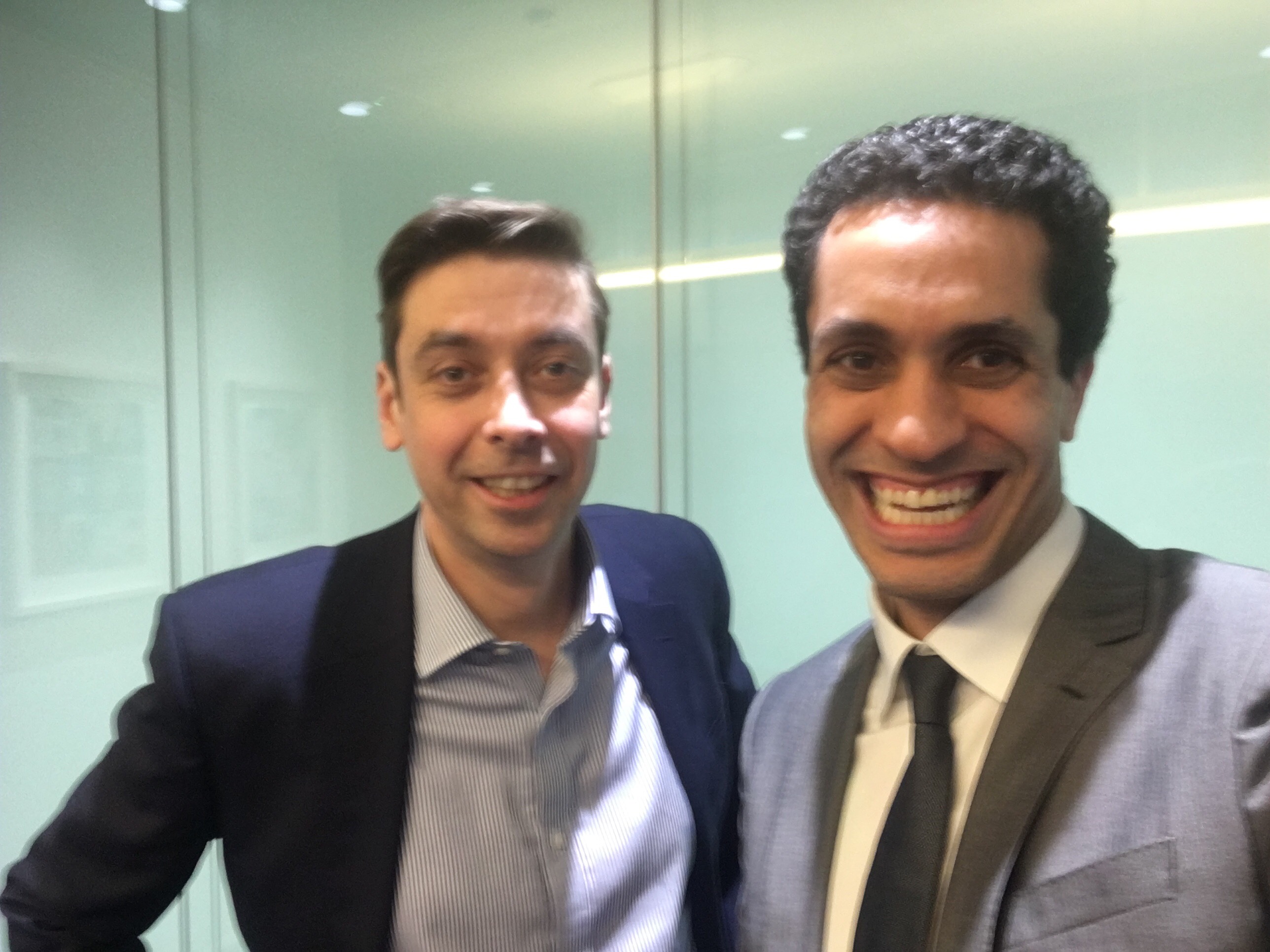
    Lee & Nick on Insureblocks


    Ep.4 -Smart Contracts 101 Apr 09, 2018
    Show notes

    Smart contracts 101

    In this exciting episode I was very pleased to conduct my first remote podcast with Olivier Rikken, Director of Blockchain and Smart Contracts at Axveco, in Holland. Olivier has been working in this space for the last few years and will give us an introduction to smart contracts.

    2 minute definition of blockchain

    Blockchain in its purest form is a shared database where everyone can read and write on it. Where the integrity of its content is always guarded through cryptography thus removing the need for trusted third parties.

    The blockchain journey

    Olivier’s journey to blockchain started a few years ago when he was working on a concept for a peer to peer insurance company. Through the course of that work he wrote a white paper that illustrated that you could build an insurance company based on blockchain and smart contracts. He presented that white paper to the Dutch National Bank and authority for the financial markets. What intrigued the regulators was his point that technically speaking that insurance company wouldn’t need to adhere to solvency 2 regulation as there was no financial risk of not paying out to the customers in the case of a valid claim. This is possible thanks to blockchain and smart contracts. The regulators were quite interested in this idea as they believed this could be quite disruptive.

    Around the same time Olivier was involved in the foundation of the predecessor of the Dutch Blockchain Collation a public / private partnership in the Netherlands set up to ensure that the Netherlands is the front runner in the field of blockchain in the world. However as there was a fair amount of confusion around what are smart contracts between its members who had either a technical or legal background, Olivier created a smart contract workgroup. Over the course of 18 months that workgroup composed of 20 organisations researched the legality of smart contracts and their future knowledge needs and presented that report in December 2017. You can download the report in English here: Smart Contracts – as a specific application of blockchain technology.

    2 minute definition of smart contracts

    Blockchain smart contracts in their most simplistic form are accounts that hold a piece of logic (a deterministic computer program) that we can deploy on a blockchain. That deterministic computer program, or code, sits on the blockchain waiting for a message to come in. When that message comes in, the code determines what output to produce. Smart contracts can have a legal meaning but doesn’t necessarily need to have one. They aren’t particularly smart as they are only reactive as they will only do what they are programmed to do. So the term “smart’ is poorly chosen.

    Can smart contracts be legally binding?

    Olivier described how he would often find himself in situations where you had lawyers on one side and developers on the other all using the words “smart contracts” but each with a completely different view on what they actually were. The mix-up really came down to language. Once a common language was agreed between the two parties it was recognised that most smart contracts weren’t legally binding but in some circumstances they could. So an analysis was done of the most common legal agreement forms in the Netherlands to determine whether or not can they be replaced by a blockchain smart contract. The answer was in most of the cases given the right circumstances the code can be the legally binding agreement.

    The reason that smart contracts can be legally binding in its forms itself is that the Dutch law doesn’t prescribed a form of a contract. It doesn’t say a contract has to be in paper, so it can be verbally or in code. In addition one very important element to making a smart contract legally binding is the fact that the parties signing the code understand what the code is saying and what it will do. Whilst this is fine if you’re a blockchain developer it is more challenging if you’re not. Consequently, an extract of that smart contract in formal language (Eg. English) is required to explain what the code is doing for all parties to be able to read and understand the contract for it to be legal binding.

    Your turn!

    Olivier shares many other interesting points in this podcast including examples of good and bad smart contracts, so please have a listen and tell us what you think? If you liked the podcast please do review it on iTunes. If you have any comments, suggestions on how we could make it better please don’t hesitate to add a comment below. If you’d like to ask a question to Steve, feel free to add a comment below and will get him over to our site to answer your questions.

    Thanks again Olivier!


    Ep.3 – Blockchain in the London Market Apr 05, 2018
    Show notes

    Blockchain in the London Market

    For this 3rd episode I had the pleasure of chatting to Steve Webb, Partner at PWC and UK Financial Services lead for blockchain. Steve has been leading PWC’s financial service practice around blockchain for over two and a half years now. In this episode we explore some of the work Steve has done with the London Market Target Operating Model (TOM) and some of the other blockchain work PWC has done in the insurance space.

    2 minute definition of blockchain

    Essentially at its heart blockchain is a mechanism for distributing data amongst multiple parties and where all parties have their own copy of the data and can see the same information. Updates to the data are managed through cryptographic computer driven consensus between computers on the network rather than through any individual parties acting as a central authority for managing and updating the data. In addition, it has elements of audit history, so you can see all of the updates that have happened on the chain. It works through peer-to-peer networking.

    The blockchain journey

    Having done had a career in financial services, an industry mired in inefficiency for information transfer, it is easy to see that any service applications whether in banking or in insurance has to contend with silos of information. They send each other messages either electronically or through some other imperfect form to achieve an update and reconcile each other at enormous costs due to their inefficiencies. (eg. paper base for the insurance industry). For Steve, blockchain provides an extremely elegant solution to a problem which he has had to contend throughout most of his career.

    PWC did a piece of work in 2017 that estimated the savings from administrative costs reduction for the global reinsurance industry alone to be to the tune of 5 billion US dollars per annum!

    The London Market Target Operating Model (LM TOM) blockchain proof of concept (POC)

    Steve worked with the LM TOM innovation team at the end of 2016 / early 2017 to help them understand what the possibilities were of blockchain. They ran a of proof of concept that looked at removing the inefficiencies in the claims managements. Along with a number of insurers, risk takers, brokers and third-party administrators they reviewed the existing claims management process and mapped out what an ideal process would look like. A set of requirements were identified over a period of a week to set up the POC and then over a period of six weeks and three sprints they built out the POC on an Ethereum private blockchain.

    The POC demonstrated a third-party administrator raising a claim, the claim grievance party looking at the claim, assessing it and agreeing it. The broker was given access to the blockchain to view the process so they could report back to the insured and a regulatory node was also added to the blockchain to be able to view the entire claims process.

    Smart contracts were included within the POC to enable business rules that stipulated that under certain conditions: (a) a claim will automatically be approved when these conditions are met and (b) a claim can automatically be approved even if the claim agreement party is not actually active at that moment on the chain. That second element demonstrated the chains resilience that if for whatever reason a party is offline, those smart contract rules are still in operation as the business rules of that smart contract would have been previously agreed.

    As the POC increasingly took shape the participants to the POC could see the benefits of automation and inefficiency reduction. Additional ideas were generated such as adding documents to support the claim (Eg. a damage report) on the chain. It was demonstrated that you could add a damage report to the chain, not by actually writing it into the blockchain itself but by writing a hash of that document into the chain that was tamper proof.

    More information on the POC can be found on PWC’s website and on the London TOM’s website.

    Your turn!

    Steve shares many other fascinating points in this podcast including a possible future that could put the insurance industry as price takers instead of price makers, so please have a listen and tell us what you think? If you liked the podcast please do review it on iTunes. If you have any comments, suggestions on how we could make it better please don’t hesitate to add a comment below. If you’d like to ask a question to Steve, feel free to add a comment below and will get him over to our site to answer your questions.

    Thanks again Steve!

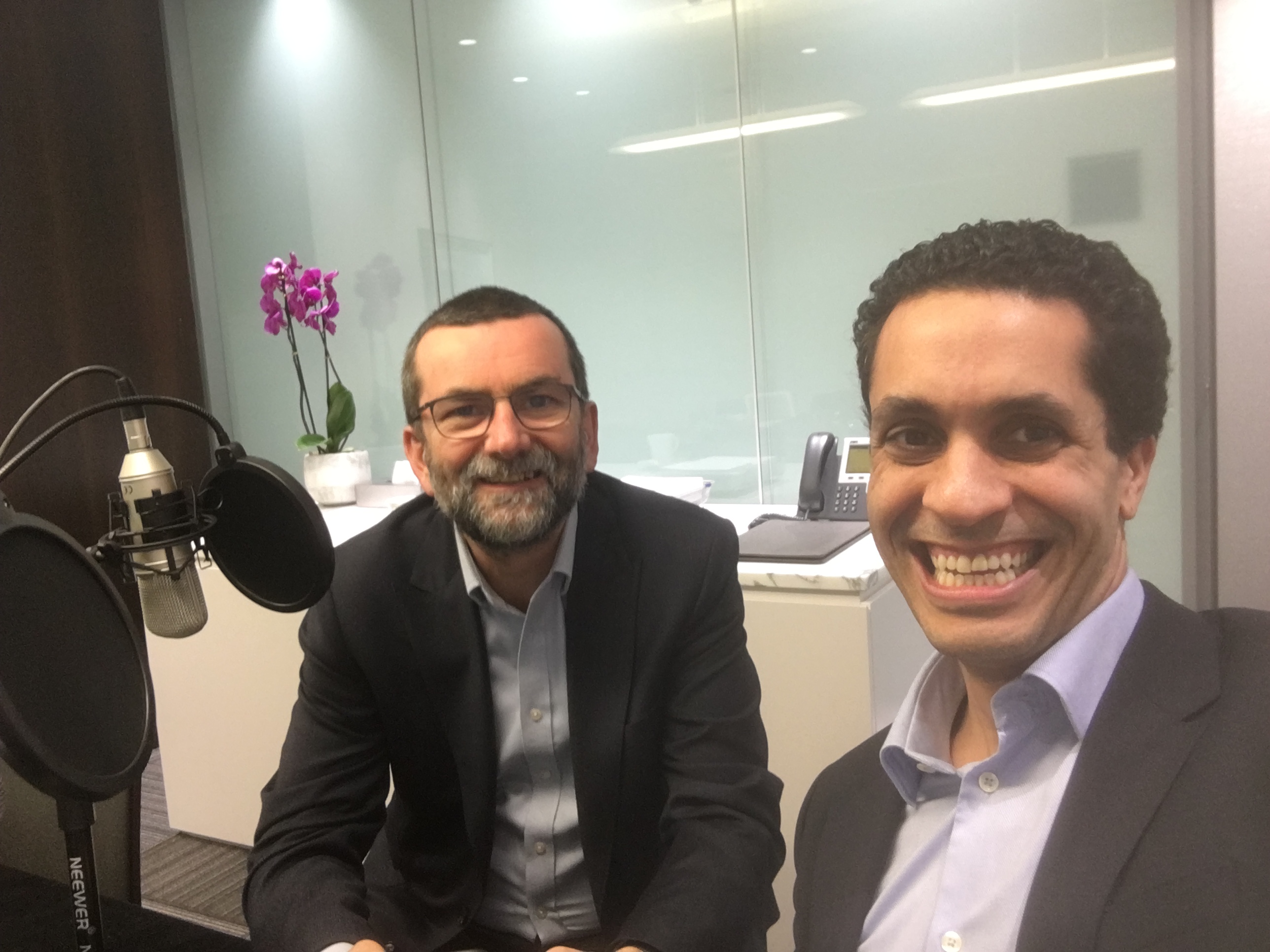
    Steve & Walid on Insureblocks

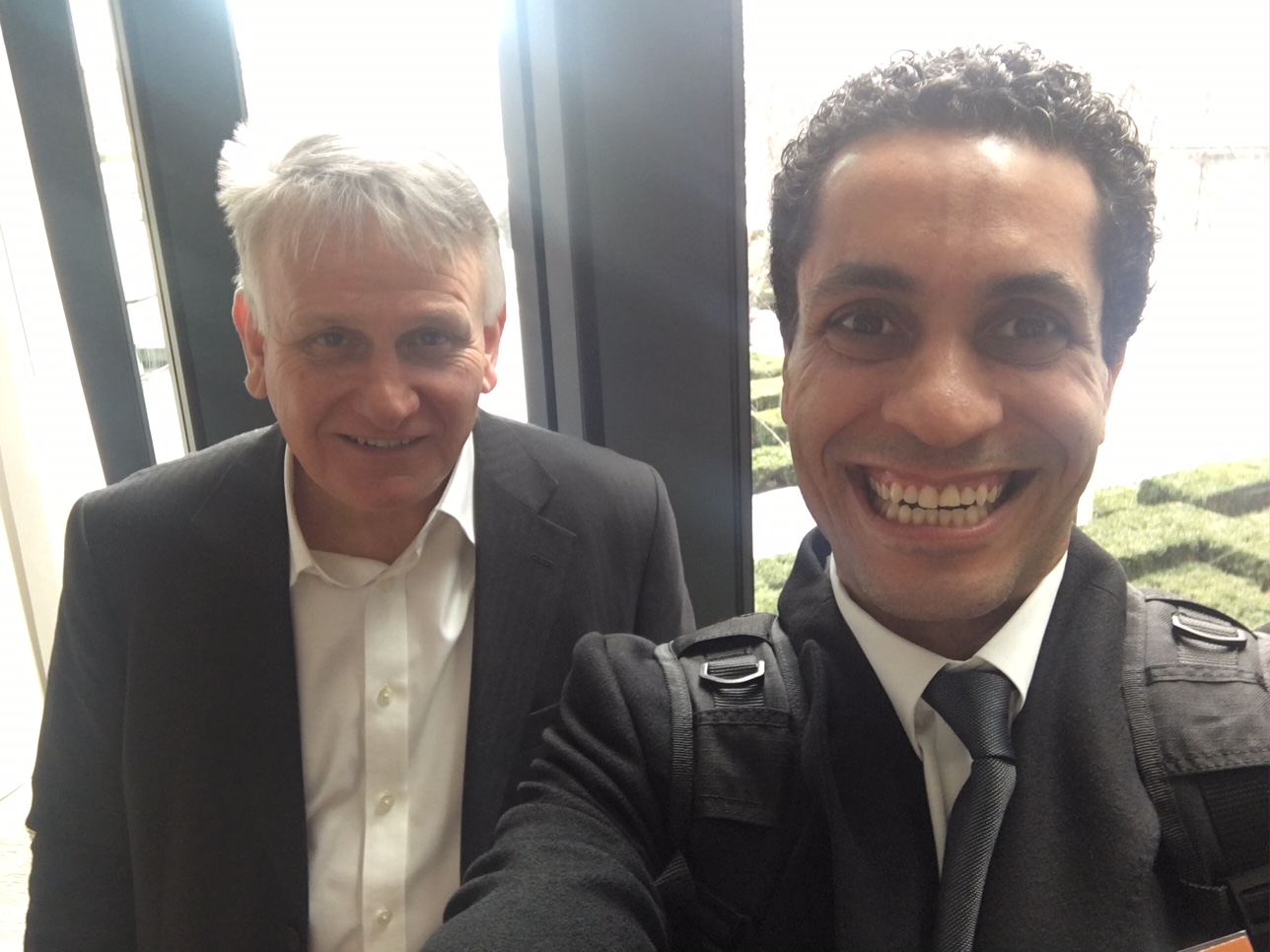
    Steve & Walid on Insureblocks


    Ep.2 – B3i (Blockchain Insurance Industry Initiative) Mar 26, 2018
    Show notes

    B3i the blockchain insurance industry initiative

    In our 2nd episode I had the pleasure of chatting to Greg Crow, Global Head of Architecture at XL Catlin. Greg, is XL Catlin’s representative at B3i which stands for Blockchain Insurance Industry Initiative. For this episode we explore what is B3i, its journey in discovering the potential of blockchain for the insurance industry and we also discussed the choices insurers who haven’t joined B3i can make.

    2 minute definition of blockchain

    The Greg Crow version of blockchain is all about the ability for everyone to see the same data and to have a copy of it in a certifiable and immutable way. Having a copy of that data is a real game changer as are smart contracts. For Greg, smart contracts are here to replace contractual paper documents into code. The code sits on the data on the blockchain and is triggered by a certain set of rules which can mean executing a claims payment or collecting a premium for example.

    The blockchain journey

    What prompted XL Catlin to explore blockchain in 2016 was the desire to make it easier to administer contracts, especially reinsurance contracts. In Q1/Q2 2016 they partnered with a blockchain start-up called ChainThat to build a PoC (proof of concept). ChainThat blew them away at the speed at which they worked at in helping XL Catlin demystify blockchain technology.

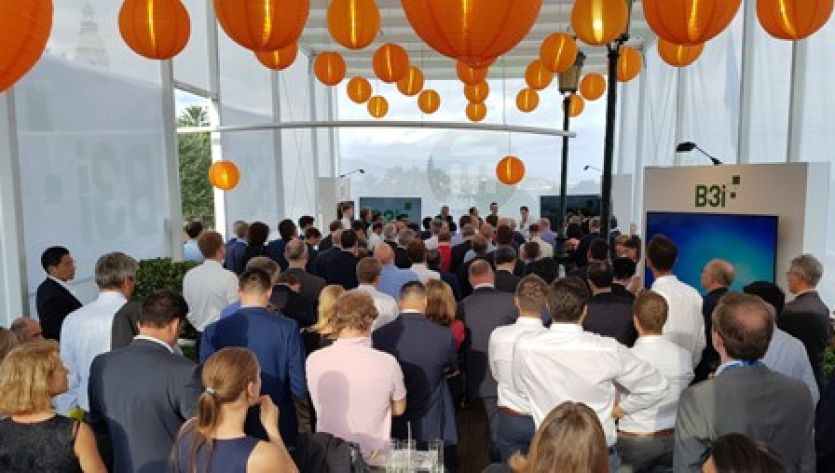
    In November 2016, XL Catlin joined B3i by becoming its sixth founder and worked on numerous other blockchain initiatives including one with Maersk. By January 2017, B3i now had 15 core members and in September 2017 another 23 members joined including three brokers at the Monte Carlo RVS conference celebrating the launch of its prototype market testing phase named Codex1. Codex1 is a platform that enables a distributed ledger smart contract management system for Property CAT XOL contracts. Market participants will be able to more easily cede, handle and trade risks.

    B3i Monte Carlo RVS Conference

    B3i Monte Carlo RVS Conference

    Why B3i?

    As Greg says, members who join B3i have a range of reasons. Some wanted to learn more about blockchain, others wanted to take costs out of the industry and some heard about blockchain and wanted to be involved in it without knowing exactly how or why.

    B3i is here to build a blockchain platform for the industry, not necessarily to give its members a competitive advantage, but a platform for all market participants. However as in any consortiums, especially one with 15 insurance companies around the table, making decisions can be challenging. It is for this reason that B3i is reinventing itself from a consortium into a start-up with a start-up feel and start-up speed in the hope it can now scale up to generate the kind of value needed for the industry.

    To the question on whether or not a large insurance company should join B3i or attempt to build their own blockchain system, Greg advised that they should do both. They should both join B3i and try building your blockchain platform to increase your learnings. It is evident that at this early stage that there isn’t going to be one blockchain to rule them all.

    What’s next?

    Greg’s view on the big opportunity for blockchain in the insurance industry is:

    1. Contract administration
    2. Creating dynamic insurance policies for assets that go through different states in the supply chain

    It is in this second big opportunity where we see the obvious combination of utilising IoT (Internet of Things). IoT applications, will assist insurance companies’ clients who deal with logistic supply chain to track assets, by recording data onto the blockchain about assets.

    Whether it is B3i or a PoC run by an insurance company, 2018 has to be the year when we see an example of a real life blockchain project going into production. Who do you think it will be?

    Your turn!

    Greg shares many other fascinating points in this podcast, so please have a listen and tell us what you think? If you liked the podcast please do review it on iTunes. If you have any comments, suggestions on how we could make it better please don’t hesitate to add a comment below. If you’d like to ask a question to Greg, feel free to add a comment below and will get him over to our site to answer your questions.

    Thanks again Greg!

    Walid & Greg Crow on Insureblocks

    Walid & Greg Crow on Insureblocks


    Ep.1 – Blockchain 101 in Insurance Mar 19, 2018
    Show notes

    Welcome to the first Insureblocks episode!

    In this “genesis” episode (a punt to the blockchain community, regarding the first block of a chain often referred to as the genesis block) we have a chat with Gary Nuttall, managing director of Distlytics., who explains to us the basics of blockchain. Have a listen to our podcast above or read some of the show notes below.

    2 minute definition of blockchain

    A good starting point is to try and define what is blockchain? Gary takes a very pragmatic approach which recognises that there isn’t a formally agreed definition on what is blockchain as there are many different types of blockchains. He tends to describe blockchain in two ways:

    1. A protocol – essentially an agreed way of doing business or transactions. So blockchain is a protocol as much as TCP/IP is a technology protocol for the World Wide Web
    2. The second and probably easier one to digest, is that blockchain is a write only database which is decentralised, distributed, time-stamped and cryptographically secured

    I hear you! What do you mean by “cryptographically secured”? All it is, is the application of computer generated algorithms (mathematical formulas) that transform the data in a manner that it can be securely shared between people.

    Smart Contracts

    I loved Gary’s quote regarding smart contracts as being “the most misnamed thing I’ve ever heard”.

    “smart contracts… the most misnamed thing I’ve ever heard”

    The fascinating thing about smart contracts is that they’re neither smart nor a contract. All they are is effectively a computer program that enables a blockchain to interact with external activities or triggers. So for example with a flight delay insurance policy a smart contract can be used on a blockchain to determine whether or not your flight is delayed. If it is delayed then an automatic payment is made to your bank account without the insured having to make a claim.

    Here is an example of such a flight delay policy by Axa insurance with Fizzy:

    Blockchain in the insurance space

    Having analysed the entire insurance value chain for commercial insurance, Gary has identified around 88 potential use cases for blockchain. Ultimately his view is that anywhere you’ve got data that is shared between multiple parties, with a need to prove the accuracy and completeness of it all in an efficient manner, is an opportunity for blockchain. Of course for the insurance world this means reducing the inefficiencies in the bordereau process, claims process, and even managing your KYC checking for on-boarding an organisation to name a few. By reducing those inefficiencies and costs you open up the opportunity for truly innovating product developments with other emerging technologies from Internet of Things (IoT) to artificial intelligence (AI). When combining these new technologies with blockchain you open yourself to some very exciting opportunities.

    One of the qualities of blockchain is that it helps to remove intermediaries. As we all know there are numerous intermediaries in the insurance ecosystem and everyone wants to make sure that they’re not the one who will be disintermediated. As Gary found out that depending on who you speak to, brokers will say there will be no need for underwriters in the future, underwriters say there will be no need for brokers in the future and when you get them both in the room they’ll say that it’s the likes of the bureau that won’t be needed in the future. So everyone’s just trying to protect their own turf in some way. What we can all agree is that it is unclear what will happen in the future but it will definitely be very different in a few years.

    Your turn!

    Gary shares many other fascinating points in this podcast, so please have a listen and tell us what you think? If you liked the podcast please do review it on iTunes or Google Play. If you have any comments, suggestions on how we could make it better please don’t hesitate to a add a comment below. If you’d like to ask a question to Gary, feel free to add a comment below and will get him over to our site to answer your questions.

    Thanks again Gary!

    Walid & Gary Nuttall


    Previous 1 17 18 19

    Related Podcasts

    How I Built This with Guy Raz

    1

    How I Built This with Guy Raz Business
    Planet Money

    2

    Planet Money Business
    Inside Strategic Coach: Connecting Entrepreneurs With What Really Matters

    3

    Inside Strategic Coach: Connecting Entrepreneurs With What Really Matters Business
    BiggerPockets Real Estate Podcast

    4

    BiggerPockets Real Estate Podcast Business
    The Smart Passive Income Online Business and Blogging Podcast

    5

    The Smart Passive Income Online Business and Blogging Podcast Business
    A Thousand Natural Shocks With Gabe S. Dunn

    6

    A Thousand Natural Shocks With Gabe S. Dunn Business
    footer-logo

    Contact Us

    Toll Free: 844-670-7747

    Links

    • Home
    • Top Charts
    • Networks
    • Apps
    • Independents Podcasts
    • Podcast Advertising
    • Podcast News
    • Contact Us
    • About Us
    • Analytics & Insights

    Stay Connected

      Privacy, Terms of Use & Our Code of Ethics Protecting Content Creators Copyrights