TopPodcast.com
Menu
  • Home
  • Top Charts
  • Top Networks
  • Top Apps
  • Top Independents
  • Top Podfluencers
  • Top Picks
    • Top Business Podcasts
    • Top True Crime Podcasts
    • Top Finance Podcasts
    • Top Comedy Podcasts
    • Top Music Podcasts
    • Top Womens Podcasts
    • Top Kids Podcasts
    • Top Sports Podcasts
    • Top News Podcasts
    • Top Tech Podcasts
    • Top Crypto Podcasts
    • Top Entrepreneurial Podcasts
    • Top Fantasy Sports Podcasts
    • Top Political Podcasts
    • Top Science Podcasts
    • Top Self Help Podcasts
    • Top Sports Betting Podcasts
    • Top Stocks Podcasts
  • Podcast News
  • About Us
  • Podcast Advertising
  • Contact
Not in our directory?
Add Show Here
Podcast Equipment
Center

toppodcastlogoOur TOPPODCAST Picks

  • Comedy
  • Crypto
  • Sports
  • News
  • Politics
  • True Crime
  • Business
  • Finance

Follow Us

toppodcastlogoStay Connected

    View Top 200 Chart
    Back to Rankings Page
    Business

    Insureblocks

    blockchain & smart contracts in industries across the world

    Advertise
    • Apple Podcasts
    • Google Play
    • Spotify

    Latest Episodes:
    Bonus episode – Diversity in blockchain Jul 05, 2018
    Show notes

    Bonus episode: diversity in blockchain

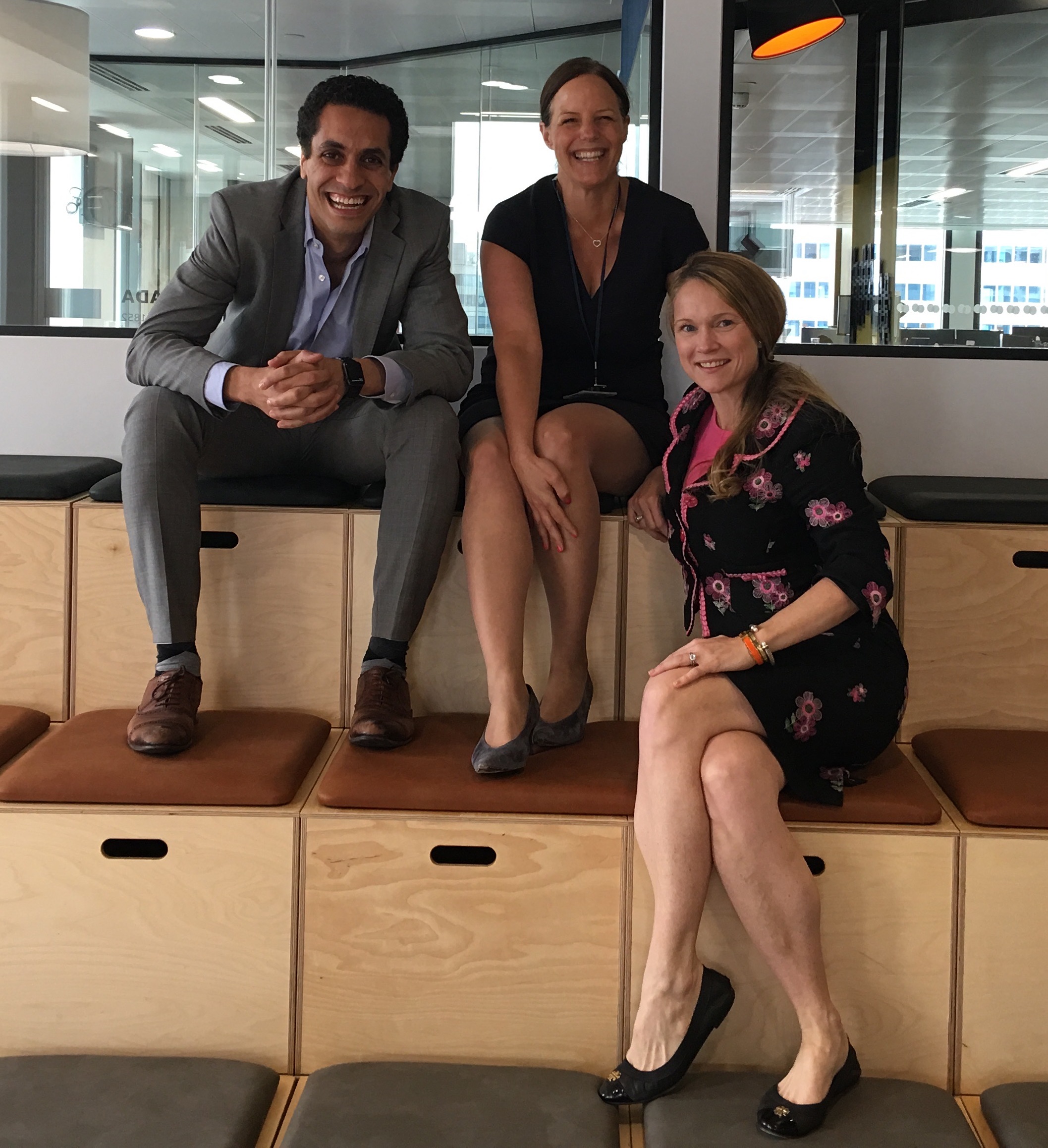
    Ryan Rugg & Madeline Bailey on Insureblocks

    Ryan Rugg & Madeline Bailey on Insureblocks

    As a man of mixed origins and as a father of two little daughters I am concerned by the lack of diversity that we find in blockchain and in the insurance space. To help me tackle this important issue I had the great pleasure to have Ryan Rugg (previously on Ep. 6 – R3 – the blockchain banking consortium), Head of North America for R3, and Madeline Bailey, Head of Strategic Initiatives at MS Amlin.

    At MS Amlin, Madeline is head of strategy and innovation, charged with leading the blockchain efforts on the Insurwave platform, whilst Ryan spearheads the insurance effort at R3, working alongside other B3i collaborators on the Corda platform.

    Is there a diversity problem in blockchain?

    Between Ryan and Madeline, both recognised that diversity is vital for collaboration amongst teams and across the industry within such radical innovations such as blockchain. By ensuring that all individuals are heard equally, all perspectives can be included making the sector stronger. The collaborative nature is at the heart of blockchain’s use in insurance, where its purposes are to break down the barriers associated with different individuals and allow effective communication across all groups, with Madeline expressing her pleasure in collaborating with all involved parties whilst working on Insurwave.

    Efforts to ensure diversity exist, with various internships targeting minorities and women in the financial sector, however Ryan also states her focus on mentoring start-ups helping to provide women with opportunities to succeed in InsureTech. Madeline joins her in these beliefs, aiming to provide more gateways for women into technology, whilst showcasing current female movers-and-shakers, such as Hélèn Stanway and Charlotte Halkett, in attempt to improve the female outreach for the industry.

    The gender pay gap

    Following on from a social experiment in Norway (where young boys and girls were asked to undertake an identical task and then given different size rewards), both Madeline and Ryan expressed the need for equal pay, with rates of pay based on skill sets rather than gender or race.

    Ryan supported this by mentioning the sales force CEO, who analysed the pay across his whole company, and then levelled off the gender pay differential, costing him 3 million dollars in the process. He was then shocked to discover merely a year later, that the differential had reopened, calling for increased awareness for equality in the process. Whilst Madeline and Ryan both agreed with this statement, they also recognised the need for women in senior management rolls and conference positions to ensure that the richness of views is captured at all levels of business.

    Equal opportunities

    Whilst increasing female presence in senior management positions is important, education and support are also crucial in providing equal opportunities for women in the InsureTech. Madeline outlined a great example where a ‘women-in-InsureTech’ network ensured that conference panel featured a female speaker thereby increasing female outreach. Alongside this, Magda Ramada Sarasola, of Willis Towers Watson (previously on Ep.9 – Blockchain’s disruptive potential) is looking to create a YouTube channel, providing blockchain education for boys and girls alike, and offering opportunities for young people to understand and appreciate technology, providing a gateway into the industry. Ryan also recognises the need for young girls to understand that it is possible to maintain a family and be a great parent whilst simultaneously reaching the top of their career.

    How are organisations promoting diversity?

    Both Madeline and Ryan outlined various strategies which companies used to promote diversity. Ryan identified mentoring within companies as a way of promoting discourse between groups, and providing outreach talks to students, specifically targeting women. Madeline was also impressed by MS Amlin appointing a new Chief People Officer, who is starting a ‘diversity matters’ initiative – bringing people together and opening discourse around diversity.

    Both Madeline and Ryan also singled out Inga Beale, being the first female CEO of Lloyds and paving the way for women, demonstrating the possibilities of women rising to the top of their industry and smashing through the glass ceiling. Additionally, she sponsors numerous innovative initiatives, broadening diversity in insurance and personifies a shift in the industry, with old issues being tackled.

    How can this momentum be maintained?

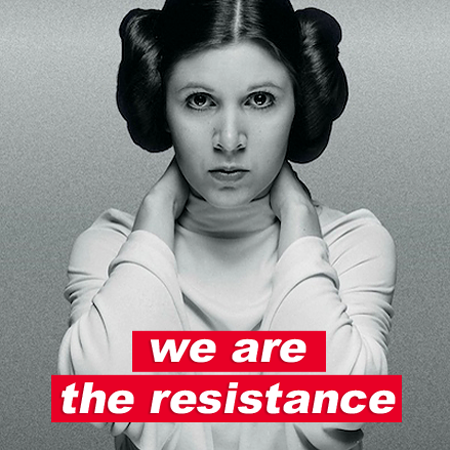
    Ryan expressed the need for further education, giving the new generation confidence to speak up and externalise their voice on these issues. Madeline agreed with this, pressing the need for equal pay and an equal voice for all parties on these issues. The education extends back to parents bringing up young families. By ensuring that children are brought up in an environment where equality is paramount, and the traditional stereotypes are questioned, the next generation will be more empowered to make these changes. This education could start simply by reading progressive bedtime stories, narrating tales of famous and influential people throughout history, to focusing on the roles of women in popular films. Princess Leia in Star Wars epitomizes this, empowering the next generation to have a voice for diversity and equality in the future – creating a new generation of rebel soldiers.

    Princess Leia on Insureblocks

    Princess Leia on Insureblocks


    Ep.16 – An Italian Commercial Insurance Blockchain Pilot Jul 02, 2018
    Show notes

    An Italian Commercial Insurance Blockchain Pilot

    Here at Insureblocks we love hearing about interesting real-life insurance blockchain pilots. So we were very excited to hear about the launch of Generali’s quotation process blockchain pilot. To learn more about this pilot we had the great pleasure of having Marco Boni, Group Head of Operational Excellence & Transformation at Generali, who is “genetically in love with technology”, join us for a chat on Insureblocks to take us through the journey they went through in building this Italian commercial insurance blockchain pilot.

    2 Minute Definition of Blockchain

    Instead of blockchain, Marco preferred to define what is DLT (distributed ledger technology). Small note to remember is that blockchain is a type of DLT. DLT is a technology that allows the storage of information in a distributed way. You can write on this distributed database, in an encrypted immutable way, after reaching a consensus amongst the participants. This technology enables you to increase the trust between all parties within an industry.

    As the data is visible, agreed and secure, you can leverage smart contracts, self-executing codes, to automate business rules.

    Challenges of the Italian commercial insurance ecosystem

    Marco refers to the Italian commercial insurance ecosystem as “Spaghetti Insurance” as it isn’t that evolved. Therefore, the steps for the placement of commercial risk is done through manual activities. Back and forth information flow between carriers and brokers is done by phone and unstructured emails which complicates the matter when you have to draw up a policy based on this kind of unstructured information. This requires you to chase all the relevant parties to try and rebuild the entire negotiation, for the structure of the policy, that is perfectly in line with the needs of the client.

    This is a very inefficient process which increases the risk of misalignment when structuring a policy.

    Market perspective solution

    Generali tackled those challenges by taking a market perspective and a market cooperation approach. They started from a business pain point that wasn’t connected to technology and realised that there existed problems that were shared at a market level.

    They started by taking a market perspective approach by identifying the business pain points that were shared at a market level. This type of initiative and desire to solve those common problems together is within itself the biggest innovation they carried out over the last 2.5 years in the Italian market.

    The initial founders of this initiative from the carrier side were Generali, AIG and UnipolSai with Zurich Italy recently joining the initiative. From the broker side the original founders were AON and Willis Tower Watson with Assiteca recently joining in.

    Why was DLT selected over other more traditional technologies and what are the challenges with it?

    Once the pain points had been identified in early 2016, the initial approach to resolving those problems was with traditional technologies such as centralised relational databases. However, with so many competitors sitting around the table it was quickly realised that such a solution wouldn’t be viable as it would require building a centralised infrastructure. Towards the end of 2016 they started investigating the power of DLT and its ability to offer competitors the opportunity to work together in a decentralised manner whilst providing the necessary security, confidentiality and privacy they all required.

    Marco does point out that whilst the features of DLT were superior to traditional technologies, for their requirements, there were challenges to its adoption. The main complexity with DLT wasn’t necessarily around technology but was related to coopetition (cooperation between competitors), a first in the Italian market. Defining the legal framework on how the participants of this prototype will be working in the future is the biggest challenge they are now facing.

    Linear journey to the launch of the DLT pilot

    1. Business pain point identified within the commercial risk placement.
    2. Agreement on the need to define a standard for the exchange of data between broker and carrier for a property risk.
    3. Discussion on the use of traditional technology for facilitating this exchange of information between the parties which failed leading them to start exploring the use of DLT. Due to the intrinsic qualities of DLT the participants agreed to use it and signed up CapGemini to help them translate into functionality the identified business requirements.
    4. A proof of concept was launched and completed in November 2017.
    5. At the present moment they are now working on defining the legal framework of the prototype with a view to launch the first property policy at the beginning of 2019.

    Features of the DLT pilot

    Two use cases were developed for the pilot. The first one is a generic placement of a property risk where the broker is collecting the risk information (e.g. client master data, location details, covers that should be activated, and possibility of exchanging the terms and conditions of the application). Broker is able to upload the minimum set of information onto the system and ask the carriers if there is appetite for this particular risk. Once a carrier, or carriers express interest in proceeding the broker will complete adding the remaining additional information in order for the negotiation to commence around key data points such as deductibles, limits, and activated cover. All back and forth communication on the DLT platform is recorded in a blockchain structure allowing the underwriter and account executive to keep track of all the changes that are done within the negotiation.

    A policy is thus built on a secure DLT platform on a commonly agreed set of structured data points.

    The second case use case is essentially the same but it is for a co-insurance negotiation where a broker and two or more insurers can negotiate the direct co-insurance of the commercial property.

    Interoperability, Corda, and B3i

    An interesting question that comes up is that as this DLT app is built on Corda, is there opportunities for it to be interoperable with B3i as it’s also built on Corda? Additionally, would it be possible for other insurance carriers and brokers to license out this DLT app and use it in their respective market? Marco believes this is a future that we could be heading towards to but it isn’t one that they have yet started to look at.

    Your Turn!

    Marco shares many other fascinating insights and some top tips for launching a blockchain / DLT solution. If you liked the podcast please do review it on iTunes. If you have any comments, suggestions on how we could make it better please don’t hesitate to add a comment below. If you’d like to ask a question to Marco feel free to add a comment below and will get him over to our site to answer your questions.

    Thanks again Marco!


    Ep.15 – B3i: building a blockchain digital network of trust Jun 25, 2018
    Show notes

    B3i: building a blockchain digital network of trust

    B3i, the blockchain insurance industry initiative, often comes up in episodes on Insureblocks. Greg Crow gave us an introduction to B3i in Episode 2 from an XL Catlin stand point. So we were very excited when we had the opportunity to talk to B3i’s CEO, Paul Meeusen. In this exciting episode we discuss not only how blockchain can help build a digital network of trust but also hear about why B3i chose to replace the IBM Hyperledger Fabric with R3’s Corda to become their new blockchain platform.

    2-minute definition of blockchain

    Paul describes blockchain as a Cloud + +. What are the “+ +”? Cloud computing is about sharing. Sharing reinsurance contract needs to be done in a safe manner. Safety whilst sharing on the blockchain is secured through cryptography to safe guard data so that only the parties who are part of the contract can see it.

    Another element of the “+ +” is the smart contract capability, which enable us to codify business rules for the sharing of value in an intelligent way.

    B3i and its journey

    B3i as a company, is only a few months old as it was recently incorporated in Switzerland. However, its journey started 2 years ago as a loosely held together joint venture. Initially as a group of 5, then 15 and then more insurance companies sharing their experience of blockchain. Early 2017 they built a blockchain prototype that became a minimum viable product (MVP) developed on IBM Hyperledger Fabric for a reinsurance application.

    In the fall of 2017 they had a total of 36 market participants to market test the reinsurance prototype by simulating a range of CAT events. The positive results from this test formed the basis of B3i’s business plan to incorporate and raise funding from 13 insurance companies who became their funding shareholders. B3i is now raising a second round.

    Paul Meeusen’s journey to blockchain

    During one of Paul’s last role at Swiss Re, he was setting up a finance service centre in India. Paul was stationed in India’s tech savy city, Bangalore. 3 years ago he tried to envisage the possibility of using blockchain for reinsurance processes by testing out its concept with his front line staff. They quickly realised that the technology could be used to reduce the inefficiencies around duplication and reconciliation.

    Such a blockchain technology could bring all the brokers, reinsurers and primaries on a platform for working together and sharing data to make their lives easier.

    Outside of the business environment Paul also noted that blockchain could be used for identity management and counter party management (eg. audit trail of provenance) in a country like India where proof of identity and of ownership is important where most information is stored on paper.

    Blockchain providing peace of mind

    In spite of having a laudable objective, insurance isn’t known for having a positive brand, or a positive customer experience as the likes of the ones of Silicon Valley. Paul makes the comment that “would you take your children to the broker on a Saturday morning or to the Apple store?

    There’s obviously a gap. Part of the problem lays with the two primary customer touch points. The first is the buying experience which is quite poor, most customers don’t fully understand it and it often feels to them as paying though they are paying for taxes when paying their premiums. The second touch point is when a claim happens. This isn’t a pleasant experience as the insured usually has to provide proof in a cumbersome way to be entitled to a reimbursement. Blockchain can help alleviate the challenges of those two touch points by making them more efficient. Contracts could be made to be more easily understood. The data we have on our policy holders and their assets can help us be more in touch with those customers and help them with loss prevention. Insurance companies can be more preventative in many different ways from black boxes in the car for analysing driving behaviour to health care to help identify patterns to avoid losses to happen.

    The insurance industry can use all this data and analyse it in a manner that can facilitate it to become a more customer centric industry with its customers at its heart.

    Conversely, with blockchain technology these customers will be able to take their insurance data from one company to another. They will be the custodians of that data and will be able to grant access to whomever they want and for the desired duration. This is very much in the same spirit as GDPR.

    B3i providing peace of mind

    B3i has a roadmap that aims to take them to a legal binding contract settling on their platfrom. Their first step is for a property Cat XOL contract for companies to accept risk, bind these contracts in digital form on B3i. In parallel they are developing other property, causalty and life insurance products. The B3i team very much believe in an approach similar to the one of apps on the App Store. The point being you need some a base network infrastructure to hold it together. B3i wants insurance companies to see them as the insurance and reinsurance operating system. To that they will add trusted sources of information via oracles. With that you have efficiency, security and reliability across the networks for an ecosystem to blossom in terms of apps and in terms of geographical location.

    Why did B3i move to R3’s Corda blockchain technology platform?

    Paul reminds us that working with new innovative technologies involves trying them out. B3i first started off by using Ethereum before moving over to Hyperledger. At the end of last year they did some due diligence on their blockchain requirements around 2 core factors: privacy and scalability. During that due diligence process they realised that to make something enterprise grade, for business to business use, they needed to ensure that information can be securely and privately handled so that only the permissioned parties can access it.

    Scalability to handle large volumes of data was also an important requirement. Finally a more technical assessment around development productivity with the type of smart contract language used and the development language used was made. Because of these factors, Corda was chosen as the new blockchain technology provider that B3i would be using.

    Which blockchain network?

    Who is the network? Is it Corda? Is it B3i? Is it a B3i flavoured Corda?

    B3i uses the Corda technology to build an insurance network. For example onboarding doesn’t come out of the box with Corda. When insurers, brokers, and reinsurers are in the B3i network, B3i ensures that there is proper KYC, onboarding, off boarding, member services, and support processes.

    Corda provides the technology, architecture and member management service modules. B3i’s responsibility is to correctly set up the corda technology for it to serve the needs of its insurance network and to ensure it works well, that it is well serviced with the right service level agreements.

    Your Turn!

    Paul shares many other interesting points regarding B3i, including their plans to interact with other start-ups. If you liked the podcast please do review it on iTunes. If you have any comments, suggestions on how we could make it better please don’t hesitate to add a comment below. If you’d like to ask a question to Paul feel free to add a comment below and will get him over to our site to answer your questions.

    Thanks again Paul!


    Ep.14 – Blockchain use cases outside of insurance Jun 18, 2018
    Show notes

    Ep.14 – Blockchain use cases outside of insurance

    For this week’s podcast we go out of the insurance world to explore some interesting blockchain use cases and pilots in other industries. In episode 6 we had Ryan Rugg introduce us to R3 the banking blockchain consortium. But for this one we wanted to go out a little bit further. As our guide for this journey we had the pleasure of having Lee Brenner, Chief Engagement Office at the Global Blockchain Business Council, live from Pennsylvania!

    2 Minute Definition of Blockchain

    Blockchain technology is a decentralised database that is connected together to create a permanent unchangeable record of data that is loaded onto blocks. Those individual blocks of data are connected to other blocks of data (ie. chained together) on this database. Blockchains act as global notary. Eliminates the middle man by creating a system of trust and a level of confidence between the actors on the system allowing for P2P transactions.

    The Global Blockchain Business Council

    The Global Blockchain Business Council (GBBC) came out of a meeting of thought leaders (blockchain, government and different industries) hosted by Richard Branson on Nectar Island to really think through how blockchain technology can affect civic society.

    The idea of a global institution that unites individuals from the business community and from the blockchain community. The GBBC tries to advocate on behalf of the broader ecosystem to regulators around the world that if they try to regulate blockchain that it is done from an educated point of view.

    Another aspect of the GBBC is engaging with government questions on who they should be talking to if either they want to get advice on blockchain or if they want to implement a blockchain solution such as on a land trust or a voting system for example. The GBBC can advice them on which companies can help government implement that whether it’s a startup or an enterprise. They can also share interesting case studies from the business world or from other countries.

    The GBBC thus tries to build a broad network from the blockchain industry, the business world, to governments and regulators and to NGOs and charities.

    Uses cases

    Business Processes & Payments – BitPesa

    A good example of how blockchain technology can be used in sectors outside of insurance is Bitpesa. Bitpesa tries to answer the question “how can we make financial transactions in Africa more efficient and secure?”. The current system is one were transactions are extremely slow, numerous intermediaries are involved, high costs and in general a very inefficient system.

    Bitpesa created a blockchain solution that has built in data privacy, minimal fees and is mobile based thus providing the unbanked in Africa with financial solutions. This provides their customers the ability to make P2P transactions and regulators with automatic real time auditing.

    Logistics & Supply Chain: Walmart

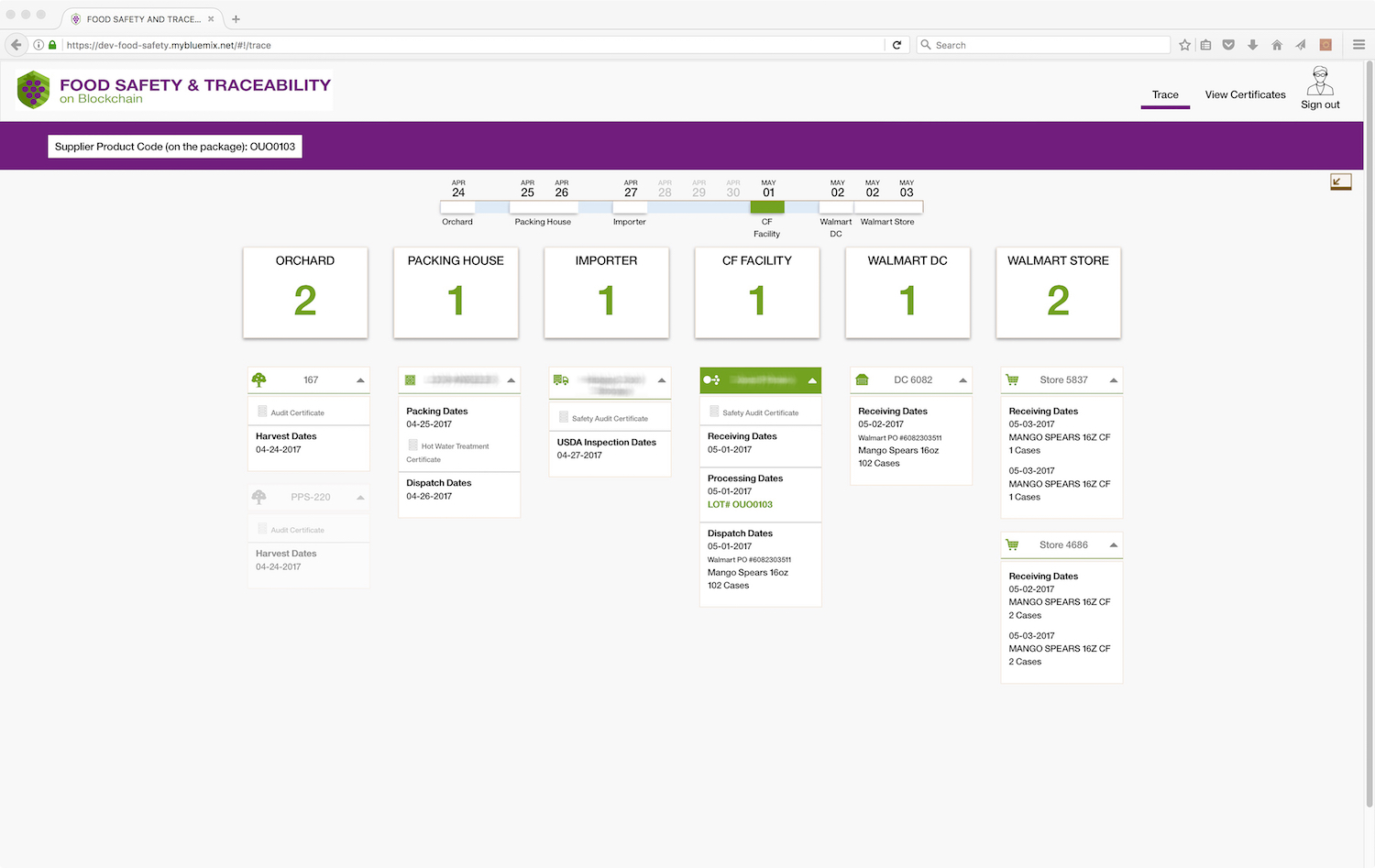
    Walmart has started to use blockchain technology in their supply chain. An example of this was used for tracking pork from Chinese producers to the store front. Walmart wanted to track the origins of the meat and its location in transit along the supply chain. This process would usually take days but with blockchain it could be achieved in minutes.

    Applying this technology to the Chinese market was an important move for Walmart as Chinese shoppers remain sceptical of the quality of domestic food products, after various food-related scandals, such as one involving baby milk formula tainted with industrial chemical melamine, dominated headlines for weeks in 2017.

    Now Chinese shoppers will be able to scan the food in Walmart shops to see the entire history of the food from farm to store:

    Healthcare – MediLedger

    How can patients’ medical records be stored, tracked and verified on the blockchain? How can we move from a paperless system to a very secure blockchain one?

    Giving the patients control over their data and being able to give permission to participants such as doctors, emergency workers, and members of their family to access their data.

    Mediledger for example has built an open network for the pharmaceutical supply chain to be able to trace the provenance and pharmaceutical products and their present location.

    This of course can nicely ties in with the insurance industry.

    Energy Sector – Powerledger

    Powerledger, uses blockchain technology to allow P2P solar power usage. Home owners with solar panels in Australia can effectively sell their excess electricity from their solar panels, to their neighbours via the electricity grid. Now Powerledger is looking to expand their solution to other parts around the world such as Puerto Rico which is still suffering from power outages due to the recent hurricanes.

    Your Turn!

    Lee shares many other fascinating examples of blockchain use cases. If you liked the podcast please do review it on iTunes. If you have any comments, suggestions on how we could make it better please don’t hesitate to add a comment below. If you’d like to ask a question to Lee feel free to add a comment below and will get him over to our site to answer your questions.

    Thanks again Lee!


    Ep.13 – Blockchain & Trade Finance Jun 11, 2018
    Show notes

    Blockchain & Trade Finance

    This week’s podcast is all about blockchain in trade finance. We were very lucky to have Marilyn Blattner-Hoyle, Head of Supply Chain and Trade Finance at AIG. In this episode she will share with us the pilot they ran with Standard Chartered and with TradeIX.

    2 Minute Definition of Blockchain

    Marilyn, approaches blockchain as a layman, so the way she looks at it, is blockchain is a form of distributed ledger technology, which simply put is a distributed database or ledger that can record and track transactions in a secure environment with optimal transparency. Cryptography underpins the way this is done.

    The way AIG, and particularly Marilyn’s trade finance team look at blockchain is how it can be used to providing solutions to their clients by creating simpler ecosystems for allowing trade finance to occur.

    What is trade finance?

    Simply put, trade finance is the facilitation by banks, financial institutions and other funders to support sellers selling goods and services and buyers buying them. There are many different ways to do trade finance whether with receivables, payables, loans or traditional trade finance with instruments like letters of credit. All areas of trade finance are ripe for blockchain/DLT solutions as we have seen with many pilots. So the issues with centralized databases, legacy systems, and fragmented paper driven solutions and even with fraud make blockchain a great potential solution for this industry.

    Hurdles with trade finance that blockchain can overcome

    The reason blockchain and trade finance are natural partners is because much of trade finance is paper driven, fragmented, with different systems even within corporates, and certainly centralised databases that have a single point of failure.

    For example, there is lots of paper-based invoice requirements. There are requirements for following different stages of an invoice life cycle and so there are lots of different data points that are super key for trade finance and so by being able to optimize all of those data points in a centralized place, where there’s essentially one source of the truth; that’s a game changer for the industry.

    That’s something that the trade finance industry doesn’t have right now and if it can be solved you can increase the trust between the parties. You can make it simpler to execute transactions at volume and then you can also add far more ecosystem participants such as corporates, banks and insurers.

    But at the moment, that’s all very difficult. So even within trade finance you have lots of corporates that use multiple banks to do lots of their different trade finance around the globe with lots of different systems for each jurisdiction and it’s very difficult to merge those. By using blockchain or in fact even other forms of technology, such as even API’s to be able to integrate legacy systems with something like a distributed ledger, that opens up opportunities that don’t mean that you have to make full scale adoption a requirement now.

    The first blockchain-enabled trade finance system

    In October 2017, AIG launched its first blockchain-enabled trade finance system alongside Standard Chartered and TradeIX. The proposition is essentially based around a receivables finance deal where a large multinational corporate logistics client wanted to sell its receivalbes to Standard Chartered to give its core customers more time to pay. The reason blockchain was used was because the corporate wanted the capability to have a multi-bank structure as well as multiple insurers supporting the same.

    The operational benefits – the use of the blockchain improves the transparency of the data in the invoice lifecycle which makes it easier to track eligibility of the invoices, insurance limits, premiums / margin and all the data driven aspects of an invoice being funded and insured. So those are huge changes from what’s currently the case where you know as an insurer we may not get this information, we may get it late and so now it’s really much more at the right time. We can make decisions. The bank can make decisions and there’s certainty in terms of what’s being insured.

    Blockchain was chosen as a technology because the idea was to set up something that could scale to a much larger ecosystem with other corporates, buyers and insurers.

    The core commercial benefits are that the corporate seller can now seamlessly offer a structure that gives its customers longer to pay.

    Building a blockchain trade finance ecosystem

    Marilyn believes that the new parties joining their prototype will be more insurers, more brokers, more banks and more corporates. It could also be B2B networks, logistics companies, customs documents providers, warehousing agencies, and a lot more. The wider the ecosystem grows, the more data that enters the system, enabling it to better target the issues that currently happen within the fragmented trade finance world. This will also enable it to better target fraud which currently is very hard to manage.

    Marilyn also mentioned that the project worked with IBM’s Hyperledger in the its first initial instance and now they are very closely engaged with R3’s Corda. They see themselves as DLT agnostic and are happy to work with anyone whilst hoping that there is a strong interoperability between all the DLT technologies.

    Your Turn!

    Marilyn shares many other insights points in this podcast on utilising blockchain in trade finance. If you liked the podcast please do review it on iTunes. If you have any comments, suggestions on how we could make it better please don’t hesitate to add a comment below. If you’d like to ask a question to Marilyn feel free to add a comment below and will get him over to our site to answer your questions.

    Marily Blattner-Hoyle on Insureblocks

    Marily Blattner-Hoyle on Insureblocks

    Thanks again Marilyn!


    Ep.12 – Insurwave – A Maersk pilot for marine blockchain insurance Jun 05, 2018
    Show notes

    Insurwave – A Maersk pilot for marine blockchain insurance

    Too often in the insurance industry we entertain in navel gazing by looking at what we do and what our competitors do, instead of really focusing on who keeps our lights on… our customers. So, for this week’s podcast we look at a customer’s perspective of marine insurance by talking to Lars Henneberg, Head of Risk Management at the logistic and transportation giant Maersk.

    Maersk is the pilot customer of a new marine blockchain insurance platform called Insurwave that was launched by EY, Guardtime, Microsoft, Willis Tower Watson, XL Catlin, MS Amlin and ACORD.

    As a special treat I was joined by Marilyn Blattner-Hoyle, Head of Supply Chain and Trade Finance at AIG as my co-host.

    2 minute definition of blockchain

    For Lars, blockchain is a technology to share real time data. It gives perfect visibility to the participants. It can conduct a number of transactions simultaneously across a multiparty value chain.

    What is marine insurance and how does it work?

    Shipping has always been in the business of taking risks. As Lars says, “in shipping we like risks we just don’t like the burden of them which is why we come to insurers”. There are four type of risks that require marine insurance:

    • hull and machinery of the vessel itself,
    • container boxes,
    • the cargo that is inside the container and
    • all the liabilities that you can incur as a ship owner (Eg. pollution, damage to the cargo, or injures to the crew)

    The marine insurance value chain and its challenges

    The way that risk is transferred to the insurance market is very long and cumbersome. The distance between risk and capital is simply too long. You’re left with a very long value chain with too many intermediaries, that is very manual:
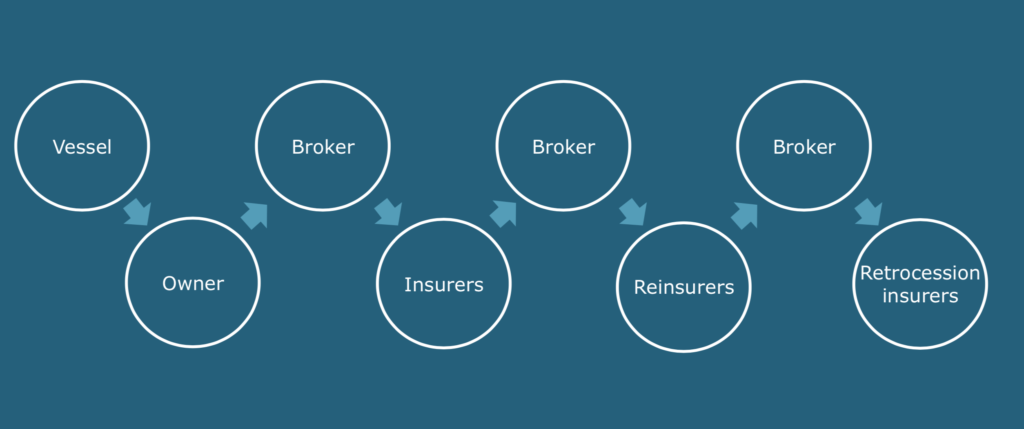
    • A ship owner goes to a broker
    • The broker goes to an insurer
    • The insurer takes the risk and goes to another broker
    • The broker finds a re-insurer who takes part of the risk
    • The re-insurer goes to another broker to find a retrocession insurer

    This value chain is very sequential and linear in how business operates with many frictional costs involved in it. As an example, for Maersk to insure one of its vessels it would typically take 100 document transactions and involve about 50 different stakeholders across the value chain.

    There is a lack of transparency in such a value chain because a lot of information gets lost. Significant value leaks because all the intermediaries in the value chain take a portion of the premium as it goes through the value chain. For example up to 40% of the premium is transactional costs. This creates a level of dissatisfaction amongst insurers’ customers as the system is antiquated, it is costly and inefficient.

    Challenges within the marine industry

    The lack of data is a big issue to the marine industry. No one has a holistic view of the risk because insurers have chopped up the risk in fragmented lines of business. Some insure the ports, some insure the vessels, some insure the finance but no one has a holistic view. At the same time there is no real time visibility to the participants in the value chain.

    Overall it is a very fragmented, reactive and slow industry which needs to be more forward looking.

    This present system ties up too many resources for the customers of marine insurance. It ties up to 75% of their time on insurance contract administration and 25% on risk management. It should be the other way around.

    Lars recognises that there has been some initiatives in the insurance industry to make the business model more efficient. Some of these initiatives have looked to get more shared real time visibility of the risk, which means that instead of using static demographic data you can follow the risk in real time such as where are the vessels, where do they trade and at what ports do they call. Additional initiatives have been towards automating underwriting through blockchain smart contracts. The administrative area can be automated by removing some of the manual processes from collection of information, policy distribution and invoicing some of the payments.

    Maersk joins the Insurwave initiative

    On the 25th of May, Maersk, alongside your partners: EY, Guardtime, Microsoft, Willis Towers Watson, XL Catlin, MS Amlin and ACORD, all announced the launch of Insurwave, the world’s first blockchain solution for marine insurance.

    You can watch a short video on Insurwave below:

    Maersk was approached by Ernst & Young (EY) who invited Maersk to become the pilot customer on a proof of concept (PoC) to use blockchain to remove the inefficiencies the industry has experienced. The intention of this PoC was to build an operational solution around the Maersk value chain around marine hull insurance. A PoC was launched to see if it was possible to automate and/or eliminate some of the manual processes. If blockchain was the right solution to do that? Whether it was possible to innovate the insurance industry and finally to dig into the concept of smart contracts if they would work in an insurance concept? The PoC was completed by July of last year with an affirmative conclusion to the above questions.

    Since then Maersk and their partners have been working hard in operationalising the solution to launch in April 2018.

    The production ready solution can be scaled up across marine insurance but also into other industries such as aviation, energy and others. This is about speciality insurance for clients who require speciality insurance.

    The Insurwave blockchain platform

    Insurwave is built on a Corda blockchain platform where data sharing is at its heart. It operates on distributed ledgers which are used to manage identify of the participants on the platform (their authority on the platforms and perform the necessary regulatory checks). Another distributed ledger is used to manage the exposure data where all the data points of the vessels are kept. In the past they used to store up to 7 data points per vessel now with Insurwave they can manage up to 27 data points which would allow more sophisticated underwriting. An additional distributed ledger is used for smart contracts which when combined with exposure data it will transform it into a price of the risk and generate the required endorsements.

    There will be a distributed ledger for declarations so when a vessel enters into a war zone there will be different premiums that will automatically apply.

    Finally the corda blockchain platform is permissioned giving the participants the right level of permission for accessing data.

    What opportunities is there for insurers?

    If you consider that a lot of the components that are in a premium are cost components, that come from transaction costs, up to 40% of the premium is transactional costs. Blockchain provides insurers with the opportunity to cut some of that transactional costs and to be able to use the capital more accurately as they will have more data on the risk. This means that insurers won’t have to err on the side of caution.

    It is a well known fact that in the insurance industry you always pay for uncertainty. However, the richer the data you can deliver, the more certainty you can give insurers about the risk and their ability to price the risk accurately. So, pricing isn’t based on standard models but on a real time picture of your particular risk.

    Your Turn!

    Lars shares many other interesting and fascinating points regarding the opportunity of blockchain in marine insurance. If you liked the podcast please do review it on iTunes. If you have any comments, suggestions on how we could make it better please don’t hesitate to add a comment below. If you’d like to ask a question to Lars feel free to add a comment below and will get him over to our site to answer your questions.

    Big thanks to Marilyn for being a great co-host.

    Lars Henneberg on Insureblocks

    Lars Henneberg on Insureblocks

    Thanks again Lars!


    Bonus episode – “Pulse” episode of blockchain in insurance Jun 04, 2018
    Show notes

    Bonus episode – “Pulse” episode of blockchain in insurance

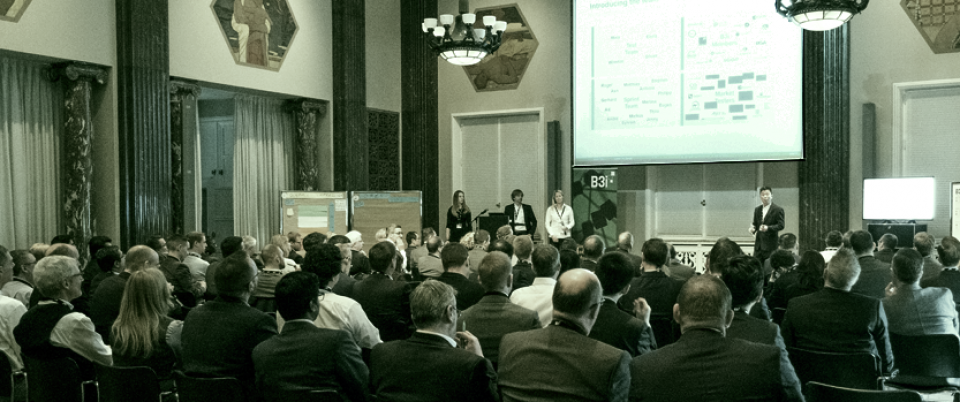
    This is an exciting “Pulse” episode where we get a sense of what the insurance industry feels about Blockchain. In this episode I interviewed 12 delegates who attended the Blockchain for Insurance summit here in London on the 22ndand 23rdof June.

    Each delegate was asked to answer two questions:

    • Is Blockchain all hype?
    • Is the insurance industry ready to embrace blockchain?

    We would like to thank the following participants for participating to this “Pulse” episode, in order of appearance:

    • Benoit Abeloos, Policy Officer, Blockchain, FinTech, Startups and Innovation at the European Commission
    • Susan Holiday, Principal Insurance Specialist at IFC – International Finance Corporation
    • Dante Disparte, Founder and CEO at Risk Cooperative / Co-Author Global Risk Agility and Decision Making
    • Martijn Minkenberg, Dutch Association of Insurers
    • Ruth Cameron-Errington, Deputy Global Claims Operations Manager at SCOR
    • Mark Cook, Global CIO at Marsh
    • Sylvain De Crom– Head of Research and Development at Aegon Blue Square Re
    • Mark Simpson– Head of Consultancy at Armour Risk Management Limited
    • Lee Brenner– Head of Partnerships & Marketing Strategy at the Global Blockchain Business Council
    • Mark Nance– VP, Chief Data Officer at American Fidelity
    • Michael Smith– Innovation consultant at American Family Insurance
    • Cecilia Persson– Manager Underwriting & Risk Control

    Have a listen to this episode and let us know what you think by writing your answers in the comments below:

    • Is Blockchain all hype?
    • Is the insurance industry ready to embrace blockchain?

    Ep.11 – Building a blockchain insurance ecosystem in Singapore May 29, 2018
    Show notes

    Building a blockchain insurance ecosystem in Singapore

    For this week’s Insureblock’s episode we headed to Singapore to meet an interesting startup, called Inmediate.io. which utilises blockchain and smart contracts. We had the pleasure of interviewing its CEO, Otbert de Jong and CTO, Nelius Strydom.

    Inmediate is the first Singapore digital broker. They operate a b2C platform for retail insurance and operate a b2b insurance technology distribution business. They have specialised in building a connectivity platform with insurance companies by creating an API network that enables them to offer real time processing of insurance. Now they are aiming to build a new age ecosystem by utilising blockchain and smart contract technology where insurance can be sold in a quicker and more efficient manner.

    2 Minute Definition of Blockchain

    Blockchain is a digital wallet that allows you to store information and validate that information in a decentralised way.

    The traditional model in cryptocurrencies is one that allows you to run digital wallets for customers to make payments. Inmediate takes that very model to the next level by enabling their digital wallets to enable insurance contract information and allowing them to run standard insurance contracts for customers. This removes the ambiguity around policies and contracts as everything is hard coded onto the blockchain. The smart contract then allows you to monitor triggers against the blockchain, which when any of them are affected they can have a predetermined outcome.

    Why Singapore?

    Otbert and his wife were living in Singapore and needed to purchase an insurance policy for their car. They found the traditional local experience in Singapore was very inefficient and along with Nelius they set out to modernise it.

    Whilst Singapore is renown for big very tech savvy with a high penetration in mobile devices. Its insurance digital penetration is significantly lower, compared to Europe, resulting in much lower sales conversion.

    For Nelius, this presents a large market opportunity that leverages that clear Asian big tech infrastructure and large market of mobile users into one that successfully purchases insurance policies online. The reason he believes this hasn’t yet happened is that the traditional online buying process isn’t where it should be, especially when you compare it to the one in Europe. Nelius and Otbert believe they can rectify that.

    The Inmediate Ecosystem

    Otbert believes that if they want to have a smart contract based blockchain insurance, they require to have 3 stake holders: insurance companies, distributors and customers. These stake holders need to be able to work together in a unified way. Otbert and Nelius set themselves out to build a network in a similar manner that Visa has set up a payment network around a common set of standards. By getting these stake holders to agree to those common standards the participants can work together in a more efficient and easy manner to offer customers “smart insurance” presented in a unified way.

    Why would insurance companies join the Inmediate Ecosystem?

    The main benefit for insurance companies is in the cost savings. A smart contract based blockchain can completely transform the existing policy and claims process resulting in significantly lower administrative costs that traditionally supported those inefficient processes.

    This new infrastructure openness up opportunities for insurance companies to develop new products for new markets in a more cost-effective manner.

    Benefits for consumers

    As insurance companies benefit from lower costs on the Inmediate Ecosystem they have the opportunity to offer their consumers more competitive pricing onto their insurance policies. Consumers will be able to get access to new insurance policies that presently do not exist. Policies themselves should become simpler and more straight forward.

    Otbert believes that the main benefit though will be with regards to claims. The claims process will be clearer. Policies will be clearer with the unbundling of coverage.

    Unbundling of coverage

    A smart contract based blockchain can offer consumers clearer policies. In traditional policies there can be numerous components that a consumer may not want or need or even be aware of.

    Otbert likes to use the analogy of a set price meal deal in a restaurant vs a, a la carte menu. His plan is work with insurance companies to strip existing insurance policies (set price meal deal) into its core components (a la carte menu). But they plan to go further and strip it all the way down to the meal’s key ingredients. Once all these core components are clearly identified an insured will have a much higher level of clarity in terms of what they are insured for, what are the triggers that trigger an action and what are the outcomes of that action.

    These core components are coded into a smart contract and insurance companies can re-bundle these components if they choose to in a manner that can better reach their customers’ needs. End users and distributors will also have the possibility to unbundle and re-bundle insurance policies in a manner that best suits them.

    Your Turn!

    Otbert and Nelius shares many other points in this podcast including their plans for the future and top tips for aspiring startups. If you liked the podcast please do review it on iTunes. If you have any comments, suggestions on how we could make it better please don’t hesitate to add a comment below. If you’d like to ask a question to Otbert and Nelius feel free to add a comment below and will get them over to our site to answer your questions.

    You can download their whitepaper on Inmediate.io.


    Ep.10 – An Introduction to The RiskBlock Alliance May 21, 2018
    Show notes

    RiskBlock Alliance

    This week’s Insureblock’s episode takes us to Pennsylvania, USA, where we had the chance to interview Christopher McDaniel, President of the RiskBlock Alliance; an industry-led consortium that collaborates to unlock the potential of blockchain across the insurance industry.

    2 Minute Definition of Blockchain

    For Chris, there are three fundamentals to blockchain:

    • Ubiquitous data – all data is synchronised between the participants behind the scenes.
    • Immutable – data cannot be erased. It is a perfect audit trail with a one source of truce for the participants using the blockchain.
    • Smart contracts – the capability of saying if a situation exists do something on the blockchain. It is a way of automating different processes that may exist on the blockchain.

    What is the RiskBlock Alliance

    The Institute is an organisation that has been around for a hundred years in the property and casualty space. It provides education and research in that space. 18 months ago, the board of the Institute tasked the RiskBlock Alliances with:

    • Proof of concept – could blockchain be used in the insurance space
    • Proof of collaboration – can we get competing firms to work together around a common goal

    By June 2017, four proof of concepts were set up with over 40 insurance entities collaborating together, leading to the formation of the RiskBlock Alliance.

    In Chris’ opinion, one of the smartest things that the RiskBlock Alliance did was instead of jumping into the deep end of the pool was taking 12 weeks to really define what the RiskBlock Alliance was going to be and what value it will bring to its members. They created a consortium of insurance carriers, reinsurance and brokers to build a blockchain framework with multiple use cases on top of it. The framework is really key, as it is the first truly enterprise friendly reusable blockchain framework.

    Why use blockchain?

    Prior to the RiskBlock Alliance one of the Institute’s members built a Proof of Concept for a compelling need in the insurance industry and tried to get the rest of their peers / competitors to join in. They received a lot of pushback from their competitors. RiskBlock being an independent trusted source was able to bring that exact same solution with the participation of all its members in the roll out of that particular use case. Blockchain is a “team sport”. If you are doing something that is individual to your organisation there are more likely better solutions out there than blockchain. However if you are looking to join together different entities and competitors and want to have them share information in an ubiquitous, secure and real time manner, then blockchain is the best solution for that.

    Getting competing entities to work together

    Everyone seems to think that they have the secret sauce. In one example of a use case need around subrogation – the process between 2 insurance firms who are involved in an auto accident (for example) with a need to negotiate a final financial settlement. Arbitration may be involved and it’s a very painful manual process. By creating a blockchain solution you can automate that process and create efficiencies for all parties. Effectively the way to getting competitors to work together is by ensuring that the value they get is greater than their competitive fears.

    Building a truly digital process

    80% of blockchain use case are in the efficiency area. 20% is in new products, new channels, new ways of doing things. Most of the low hanging fruits is around those efficiency gains. With efficiency gains comes process improvement needs. To maximise on the full efficiency gains of blockchain, insurance companies also need to ensure that not only do they input data onto the blockchain but that their back end systems are upgraded from a manual to automated ones.

    How does the RiskBlock Alliance compare to other consortiums like R3 and B3i?

    RiskBlock Alliance is a non-profit organisation, which really sets them apart. They have a no-science project edit. They don’t build proof of concepts or stand-alone projects. They build real production value use cases on a standardised blockchain framework. Their technology is a key differentiator, its reusable framework ensures that they don’t continuously reinvent the wheel. They have one policy blockchain, one clients claim blockchain, one underwriter blockchain for multiple use cases that can run on top of that blockchain framework. In Chris’ opinion that really sets them apart from all other parties in the insurance and financial industry. He believes they are the first ones to be using that reusable blockchain framework.

    Example of a blockchain project

    With Nationwide they did a proof of insurance project for personal auto. When two individuals get into a car accident, they can open up the mobile app which has a plugin that allows them to tap their phone together. When they do that it goes out to the blockchain in order to exchange insurance policy details between the participants on a real time basis. What is interesting is that, like other blockchain projects the RiskBlock Alliance works on, this use case of personal auto has become a category where they can use that same core technology for other projects.

    What’s next for the RiskBlock Alliance blockchain framework?

    Blockchain as a foundation is key, however as you move further into the future you can start enhancing the blockchain framework with hooks for their members to do analytics, integration to IoT (internet of things), and other future technologies. The framework is ultimately a foundation for all of these future set technologies.

    Your Turn!

    Chris shares many other insights points in this podcast on exciting opportunities blockchain can have with IoT and also he talks about what’s next for the RiskBlock Alliance. If you liked the podcast please do review it on iTunes. If you have any comments, suggestions on how we could make it better please don’t hesitate to add a comment below. If you’d like to ask a question to Chris feel free to add a comment below and will get him over to our site to answer your questions.

    Thanks again Chris!

    Meet Chris at the Blockchain for Insurance Summit

    On the 22nd of May, Chris will be in London at the Blockchain for Insurance Summit. You can attend this event with our 30% discount voucher: 9700INS30


    Ep.9 – Blockchain’s Disruptive Potential May 14, 2018
    Show notes

    Blockchain’s disruptive potential

    For this week’s Insureblock’s episode we were extremely lucky to catch up with Magda Ramada Sarasola, Senior Economist at Willis Towers Watson, to discuss the disruptive potential blockchain can have in the insurance industry both now and in the future.

    2 minute definition of blockchain

    Technically the definition is that it is a shared distributed ledger, whose core concepts are that it is a way for people that don’t know each other and don’t trust each other but need a way to transfer value between each other. A good example of that is Bitcoin – the first blockchain technology used for transferring value without anyone actually overseeing that market. For this to successfully happen you need three things:

    1. The value being transferred arrives to its intended recipient without it being intercepted or modified. This a role which has traditionally been occupied by clearing houses or trusted partners. In a blockchain world you don’t need them
    2. You have to make sure that whoever is sending that information or that value owns it and hasn’t spent it before to avoid double spending
    3. The transaction is considered valid between the two parties and is successfully recorded onto the blockchain

    So to resume blockchain is a means of actually transacting value in a way that you know doesn’t require anyone to be providing trust in that system (ie. no central intermediary).

    Your journey to blockchain

    4 years ago, Magda was working on a micro-insurance project for a client looking to expand in Africa. At that point she came across blockchain as a concept and spent a whole week on YouTube videos trying to understand what it was and then convinced her editor to run a piece on it. 45,000 visits were reached within a week of publishing her article and Magda’s life changed overnight as did her role. Ever since that day Magda’s journey became one of increasingly learning about the technology, thinking about the impact it would have to the insurance industry and actually developing solutions for her clients.

    Blockchain’s disruption potential – short to medium term

    In the short term it is about traditional insurers exploring blockchain in the content of how they interact as an industry to enabling shared databases in a semi trusted or trust less type of system. The use cases we are seeing are looking at interaction among peers, interaction among competitors, synchronisation or self-synchronisation of databases. At increasing efficiency and driving down costs around things like reconciliation in a semi trusted environment.

    However, the actual attributes that makes blockchain a sociological revolution aren’t being used in that context. The same thing with smart contracts and how they are being explored in policies like marine insurance, supply chain management, and cat bonds, what we are doing is taking parametric insurance and using a very simple type of policy that we can automate and use a smart contract to automate that policy. Technically automation is something that doesn’t need the blockchain.

    Magda sees the insurance industry using blockchain as an excuse to do automation that was long over due and that could have been done with other technologies. What a smart contract is automating is a relationship between two contracting parties that do not necessarily trust each other and have a conflict of interest and they agree on that contract and put it in a place where neither part can actually modify the terms. The first example of such an insurance policy was with the fight delay policy (eg. Etherisc & Fizzy). It wasn’t about it being automated, it was about customers willing to pay a premium for a policy being unstoppable and having an unbreakable escrow.

    Whilst this makes a lot of sense for the end user what is the business case for insurance companies to be offering this kind of automation. Magda gives examples of companies that offer micro insurance policies for life insurance to help them reach a certain type of customer that may not understand how the policy works and who may not trust the how the policy works, but also as a means for eliminating claims processing costs.

    These kind of policies, parametric or micro insurance policy that are dealing with a simple risk that can be put on a smart contract is the kind of short term activity we are seeing insurance companies taking on the blockchain. However, these are not using a lot of the attributes of the blockchain that actually may change the way we do insurance, the way we actually operate in a boarder risk ecosystem.

    Start-ups & an ambidextrous carrier

    Native blockchain start-ups realise that the power in the blockchain is actually about fully disintermediating certain activities and automating process in a trust less system. So technically what some of these start-ups want to do is underwriting without the underwriter. It’s about squeezing the insurance value chain and making the transition from risk to capital a lot quicker and more disintermediated for certain simple risks where the underwriting is straightforward.

    In Latin America there is an insurance carrier that has launched a startup called, WeSura that operates like a start-up and who sell policies in a similar way like Trov but harnesses the power of social media to deliver a P2P powered insurance product that mutualises the risk.

    Blockchain’s disruption potential – medium to long term

    What we will see in the medium term is the development of infrastructure for these very automated or autonomous and distributed platforms to work and evolve to develop new and interesting solutions. Solutions are identity and provenance (eg. Everledger). Provenance solutions track or generate traceability of certain assets in a distributed ledger. Identity solutions to empower people through self-sovereignty of data and portability of solutions. This is a very interesting development because up to now individuals were never trusted with custodianship of their validated data because they have every incentive to actually manipulate it (Eg. your credit worthiness). With blockchain we can envision identity solutions where all the bits and interactions of how we deal with providers and the different parts of our personality that are being validated by those providers flow into a solution that the individual can just keep and give access to the third parties they choose to.

    These third parties won’t necessarily be able to store individual’s details by monetising it but will have to generate the systems that have the ability to interrogate it with the individual’s permissions.

    Consequently insurance companies will need blockchains and smart contracts that are capable of interacting with those portable identity solutions, provenance solutions, and new sources of data like prediction markets. So in the long term individuals may have smart contracts that can actually put together a policy that accesses the user’s identity solutions, provenance solutions (to prove they own the asset) and accesses prediction market to generate a policy or generate risk pooling to automatically place into a disputed capital market. That long term future is a future of automated risk placement platforms and true peer-to-peer risk neutralization platforms.

    Your turn!

    Magda shares many other fascinating points in this podcast of what the disruptive potential blockchain can have in the future. If you liked the podcast please do review it on iTunes. If you have any comments, suggestions on how we could make it better please don’t hesitate to add a comment below. If you’d like to ask a question to Magda feel free to add a comment below and will get her over to our site to answer your questions.

    Magda at Insureblocks

    Magda at Insureblocks

    Meet Magda at the Blockchain for Insurance Summit

    On the 21stof May Magda will be in London at the Blockchain for Insurance Summit. You can attend this event with our 30% discount voucher: 9700INS30


    Previous 1 16 17 18 19 Next

    Related Podcasts

    How I Built This with Guy Raz

    1

    How I Built This with Guy Raz Business
    Planet Money

    2

    Planet Money Business
    Inside Strategic Coach: Connecting Entrepreneurs With What Really Matters

    3

    Inside Strategic Coach: Connecting Entrepreneurs With What Really Matters Business
    BiggerPockets Real Estate Podcast

    4

    BiggerPockets Real Estate Podcast Business
    The Smart Passive Income Online Business and Blogging Podcast

    5

    The Smart Passive Income Online Business and Blogging Podcast Business
    A Thousand Natural Shocks With Gabe S. Dunn

    6

    A Thousand Natural Shocks With Gabe S. Dunn Business
    footer-logo

    Contact Us

    Toll Free: 844-670-7747

    Links

    • Home
    • Top Charts
    • Networks
    • Apps
    • Independents Podcasts
    • Podcast Advertising
    • Podcast News
    • Contact Us
    • About Us
    • Analytics & Insights

    Stay Connected

      Privacy, Terms of Use & Our Code of Ethics Protecting Content Creators Copyrights