TopPodcast.com
Menu
  • Home
  • Top Charts
  • Top Networks
  • Top Apps
  • Top Independents
  • Top Podfluencers
  • Top Picks
    • Top Business Podcasts
    • Top True Crime Podcasts
    • Top Finance Podcasts
    • Top Comedy Podcasts
    • Top Music Podcasts
    • Top Womens Podcasts
    • Top Kids Podcasts
    • Top Sports Podcasts
    • Top News Podcasts
    • Top Tech Podcasts
    • Top Crypto Podcasts
    • Top Entrepreneurial Podcasts
    • Top Fantasy Sports Podcasts
    • Top Political Podcasts
    • Top Science Podcasts
    • Top Self Help Podcasts
    • Top Sports Betting Podcasts
    • Top Stocks Podcasts
  • Podcast News
  • About Us
  • Podcast Advertising
  • Contact
Not in our directory?
Add Show Here
Podcast Equipment
Center

toppodcastlogoOur TOPPODCAST Picks

  • Comedy
  • Crypto
  • Sports
  • News
  • Politics
  • True Crime
  • Business
  • Finance

Follow Us

toppodcastlogoStay Connected

    View Top 200 Chart
    Back to Rankings Page
    Business

    Insureblocks

    blockchain & smart contracts in industries across the world

    Advertise
    • Apple Podcasts
    • Google Play
    • Spotify

    Latest Episodes:
    Ep. 109 – World Economic Forum Blockchain Development Toolkit May 17, 2020
    Show notes

    Nadia Hewett is the project lead at the World Economic Forum (WEF), in blockchain and digital currency. In this exciting podcast she takes us through her very comprehensive report entitled the “World Economic Forum’s Blockchain Development Toolkit – Supply Chain Focus” that was recently published on the 28th of April 2020.

    WEF is the international organization for public and private sector cooperation with a mission to improve the state of the world. It is well known for its Davos event in Switzerland that happens every January.

    Nadia is based in the San Francisco at the World Economic Forum Centre for the Fourth Industrial Revolution where her colleagues and her work on the foundational technologies that will change the world from blockchain, artificial intelligence and internet of things to address governance gaps in those technologies.

    What is blockchain?

    To answer this question, Nadia takes a supply chain focus. A typical supply chain normally involves thousands of business transactions on a daily basis across a large number of parties. For example, a product moving from raw material, suppliers, manufacturers, factories, through to retailers, importers, and then to the end customer.

    As a product travels from its origin point to its final destination in the supply chain many organisations will have been involved with each of them having their version of the truth about that product’s journey with regards to its location on that journey and all relevant and necessary information. That version of the truth about a product’s journey will be recorded in a ledger. The problem occurs when those multiple ledgers, or those versions of the truth, don’t necessarily align across the supply chain.

    A supply chain will typically have 30 or more hand over points. These points have numerous blind spots that often leads to errors, fraud, and delays. Manual updates to a ledger will also often lead to errors.

    Blockchain, is a type of distributed ledger technology that can reduce these complex bilateral communications and information links by providing a single shared ledger across all the parties. What this means is that “what I see” is “what you see”.

    Blockchain also has a set of unique characteristics:

    • Immutable / tamper evident – increased trust and transparency in the data
    • Transactions in a blockchain are typically confirmed by all participants through a consensus mechanism
    • Security and increased resiliency from having a multi-node architecture instead of a centralised server

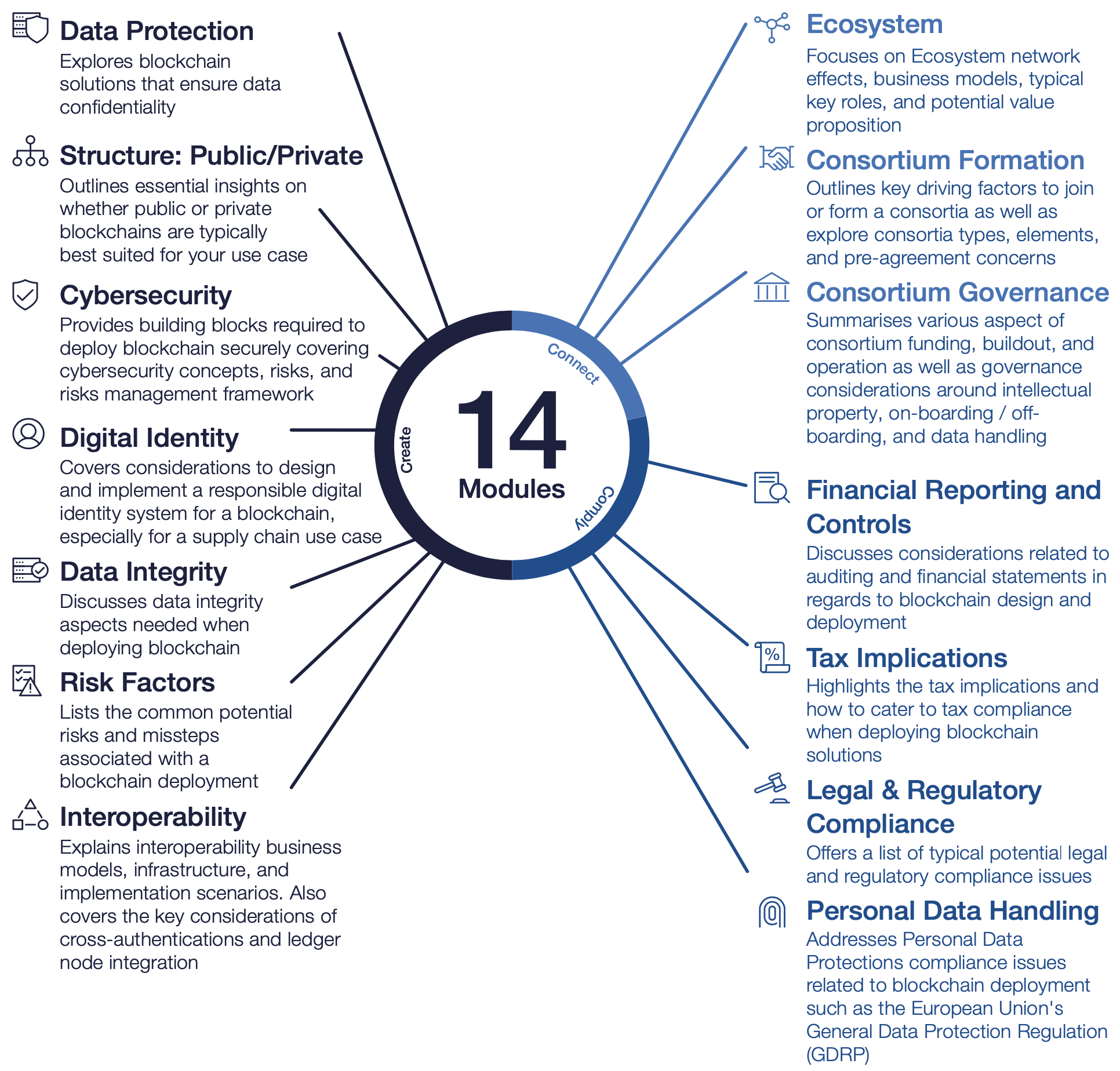
    The World Economic Forum Blockchain Development Toolkit

    The World Economic Forum accelerated the release of the toolkit after witnessing the need to improve both the pandemic and endemic responsiveness and readiness. But also, to address the weaknesses exposed in supply chains. The toolkit is freely available online for organisations to use when embarking on a journey to improve their supply chain systems.

    The toolkit is a gold standard in blockchain deployment. When an organisation has identified a use case applicable for blockchain there are a number of tasks they have to tackle such as bringing their ecosystem together, address compliance, optimization and interoperability issues. The toolkit provides the A to Z of both technical and non-technical factors for success for blockchain deployment.

    More than 200 organisations have participated in co-creating the toolkit by sharing the set of tools, insights and resources they use when implementing blockchain solutions. This enables new organisations looking to experiment with blockchain to avoid costly missteps in their blockchain deployments.

    Source: World Economic Forum

    Why a focus on supply chain?

    Prior to the pandemic $16 trillion of goods were shipped across international borders each year. International trade plays a critical role in the wider economy. Blockchain technology has the potential to reduce trade barriers, reduce trade costs and bring a greater level of transformation and digitization in supply chain, leading to an improvement in trade of almost 15%. This brings significant benefits to both the global economy and to developing countries.

    Whilst the toolkit has a supply chain focus a lot of its findings and resources can be applied to financial use cases, insurance, healthcare and many more. Nadia points out that when you look at enterprise systems and blockchain deployments the success factors are very similar independent of the industry.

    How can blockchain have helped with COVID-19?

    With the arrival of COVID-19 companies and governments around the world scrambled to import, masks, ventilators, PPE equipment and food supplies. Questions were asked on who are the trusted suppliers? Where are products in the pipeline? Who’s paying for the damage? Who is paying for all the costs? Where’s my goods? Can I trust this product?

    Immutability, resilience, security, trust in the data and transparency features of blockchain can help provide better resilience and transparency in supply chains. What is important to note is that blockchain isn’t the silver bullet, it’s just one tool in an overall digitization journey and one tool within a digitalization toolbox.

    Barriers in supply chain

    There are a number of barriers within supply chain:

    • Lack of visibility, system interoperability, end-to-end integration due siloed approach
    • Misaligned interests and lack of trust
    • Fragmented and stakeholder complexity
    • Cost prohibitive for SMEs

    Supply chain industry is very fragmented across many different parties with each holding on to their own version of the truth. Companies in supply chain hold on to data for themselves for a number of reasons:

    • They are worried about security
    • Privacy and confidentiality of data. Regulation such as GDPR makes companies very cautious about sharing personal data
    • Don’t want to share data in order to keep their competitive advantage

    Blockchain has some unique ways of dealing with data protection in a privacy preserving approach that is very much needed within supply chain.

    The blockchain deployment toolkit helps organisations through the process of how to deploy blockchain in a responsible way. It ensures that all players have the right discussion to have a responsible deployment of blockchain; it is interoperable and that it has integrity around data, cyber security and compliance.

    Source: World Economic Forum

    Interoperability

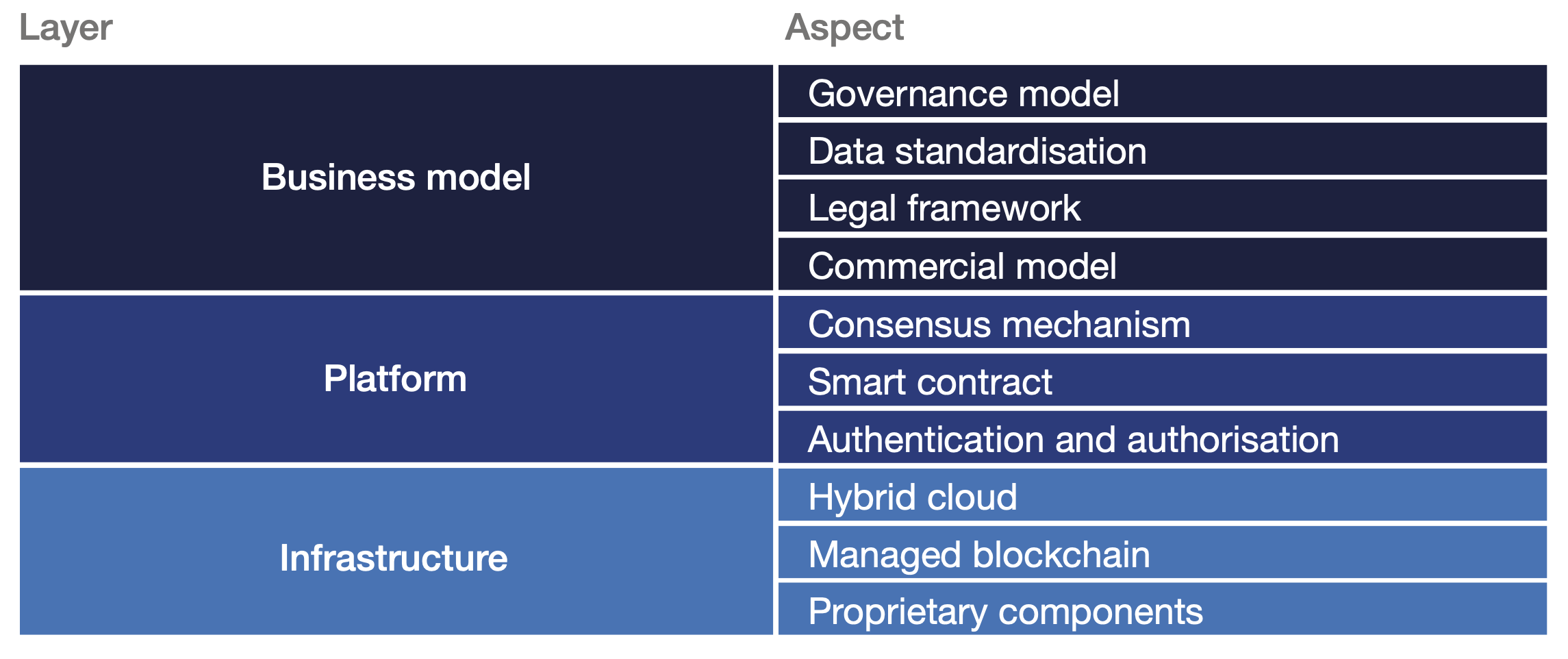
    Interoperability in supply chain is a key issue. They are numerous data silos and numerous breakdowns due to the lack of interoperability and the lack of into integration. The toolkit looks at interoperability from three main layers:

    • Business model interoperability
    • Platform interoperability
    • Infrastructure interoperability

    Source: World Economic Forum

    In the media we hear a lot about platform interoperability: consensus mechanism interoperability, authentication, authorization and blockchain to blockchain interoperability. However, what is key is business model interoperability. It’s not that the technology is the biggest issue, it’s whether or not organisations and countries want to share data with each other?

    Business model interoperability is fundamentally about governance and answering key questions around what are the rules of the road, what rules dictate who gets what, who pays for what, data standardization, commercial models and many more. Legal interoperability is another facet of business model interoperability. It’s about having the legal frameworks in place that allows organizations to design blockchain solutions that can be internationally applied.

    Consortium formation & governance

    Source: World Economic Forum

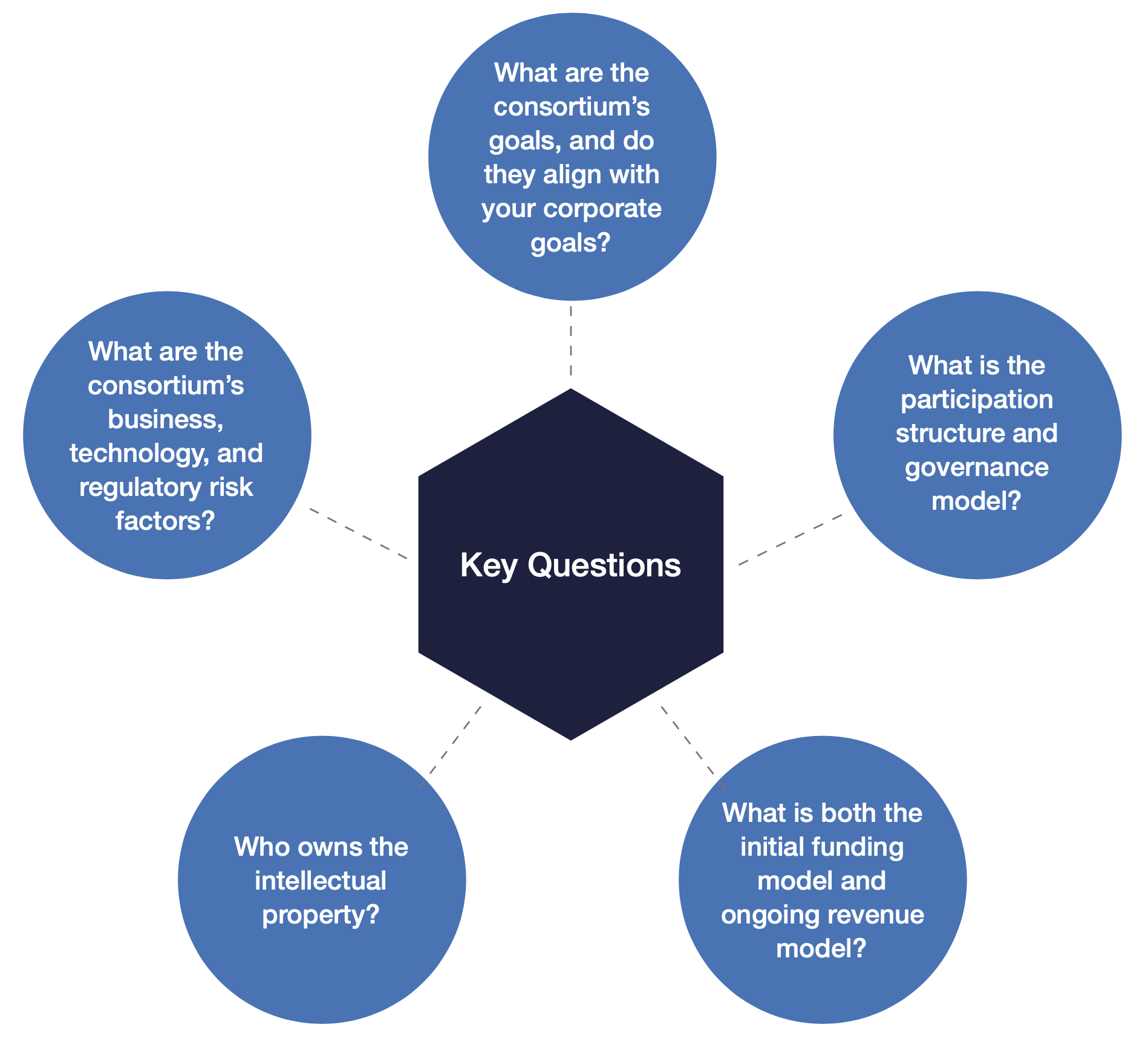
    Similar to Insureblocks, the World Economic Forum recognises that a number of blockchain projects fall over due to governance issues. Nadia states that

    “Working with your ecosystem, agreeing and aligning on key aspects of who gets power? Who gets to pay? Who gets value? That’s the tough part. That’s the human piece that’s really difficult.”

    The WEF interviewed more than 50 consortia to get their insights on why getting the governance is a key complex issue. Nadia resumes the challenges of governance to the following points:

    • Companies aren’t very good at having tough conversations with partners and competitors on governance in the early stages of building a consortium. Consequently, governance isn’t thoroughly addressed.
    • Blockchain brings a cultural paradigm shift. In a non-blockchain world each company has their own ledger with their own set of rules that the company controls. In a decentralised ledger everyone owns a piece of the ledger. Every participant has a node in this shared ledger. With blockchain technology you have competitors working together on building a system or investing in the same system for the first time. Tough questions around who pays what and how is the value allocated between the parties?
    • The way companies are still evaluating the benefits of a new system is that they’re looking at it from their own ROI perspective. You can’t evaluate the ROI of blockchain from looking at your own. You need to look at the extra value it brings to everybody. Having that wrong type of evaluation will hamper the consortium’s ability to tackle questions around governance

    Key lessons for a future consortia:

    • Role of an impartial party to help get competitors to collaborate – example a university or NGO that has no economic interest
    • Appoint an independent executive director who is either a respected industry or experienced consortium leader
    • Inclusion of regulators and academics
    • Vertical versus horizontal participation and inclusion
    • Technology and firm agnosticism
    • Non-binding MOU (memorandum of understanding doc) to help keep speed whilst clarifying important contractual terms
    • Develop strong antitrust and governance policies
    • Company representatives evangelise in-house
    • Establish a foundational use case

    Source: World Economic Forum

    Digital identity

    Digital identity is foundational. As an increasing amount of work is being done on a digital basis businesses need to know the identity of the corresponding party with whom they work with. They will need to know who they are? Is this supplier trustworthy? Organisations need system by which they can verify identities in an efficient, scalable and trustworthy way.

    Having a trustworthy digital identity verification system is foundational to any blockchain system.

    Autonomous software agents

    Nadia reminds us that blockchain technology in itself doesn’t guarantee that information in it is correct. What IoT (internet of things) devices and autonomous software agents enable us to do is capture data where the data was produced and add it to the blockchain.

    Numerous blockchain supply chain solutions have to ask themselves the questions on “how do I make sure that the data written to the blockchain is accurate, has integrity and can be trusted?” That’s where you need connected devices such as RFID scanners to ensure data integrity.

    Smart contracts enable to code conditions into the blockchain. When those conditions have been met it automatically triggers an event. For example, if a container is delivered to a port. The moment the container is offloaded from the vessel it triggers an event where the bank is notified of that event which automatically triggers a payment from the bank to the factory of origin. Today such a process that eventually triggers the payment to the factory is either done via a number of manual steps or with traditional siloed systems with brokers and intermediaries to advise that the container was delivered and then to trigger that payment.

    With smart contracts you can code that condition to say the moment this event hits it will automatically trigger a payment from the bank to the factory. So, the idea is that in the future with digital identities business will be conducted between autonomous software agents.

    Legal & regulatory compliance

    Source: World Economic Forum

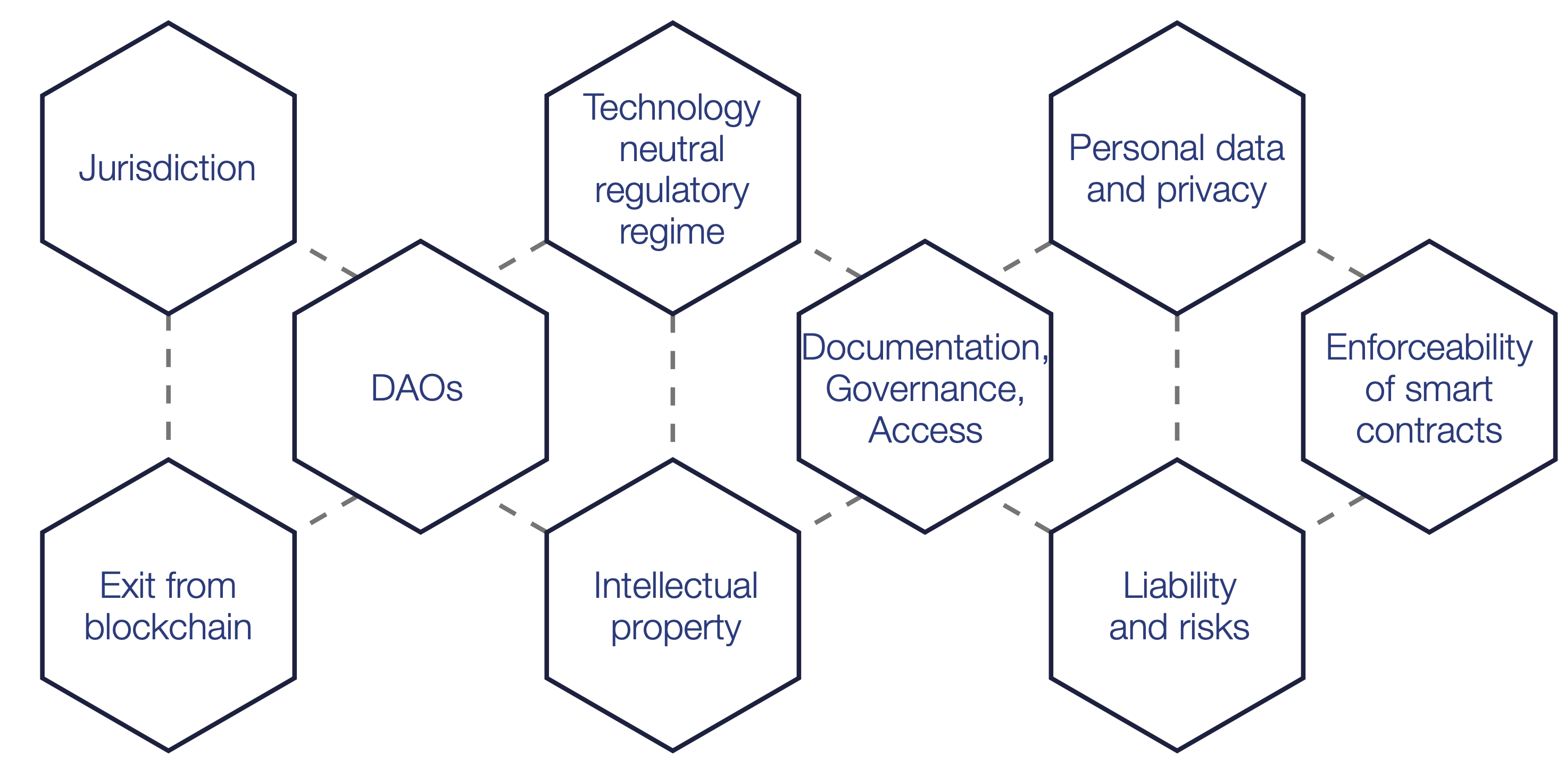
    Blockchain still has a number of barriers especially considering legal and regulatory issues. Laws and regulations were not written with decentralisation and distributed ledger technology in mind.

    Distributed ledgers imply that you can have nodes located in different parts of the world which can create a number of issues. There aren’t laws which are aligned across the world.

    GDPR is a good example where countries that aren’t located within the EU still have to adhere to GDPR regulation when working with EU countries. This is an example of the type of complexities that aspiring blockchain solutions within the supply chain industry have to be aware of.


    Ep.108 – End to end solutions against COVID-19 – insights from Blok BioScience May 10, 2020
    Show notes

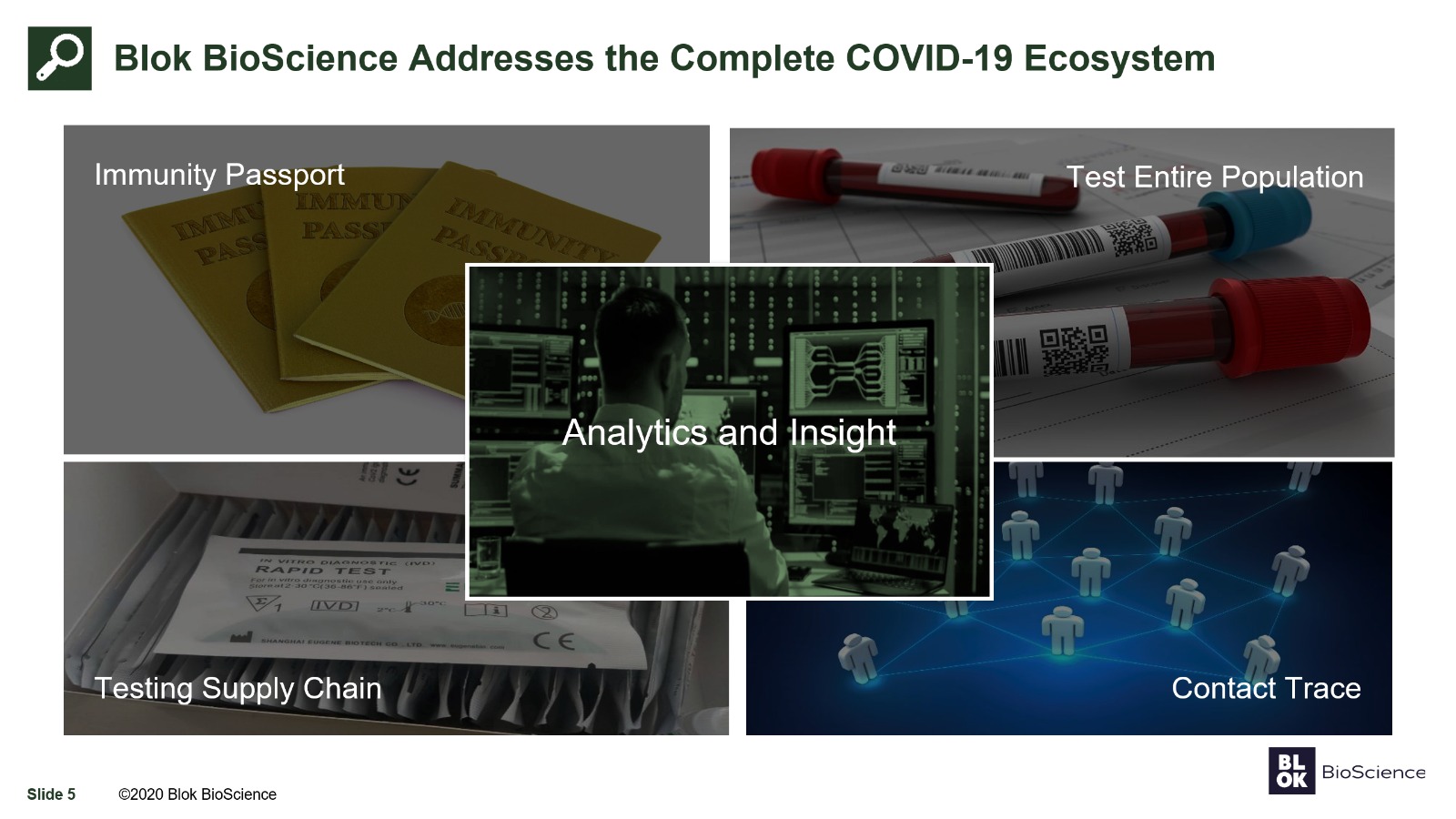
    Areiel Wolanow is the CTO of Blok BioScience and Managing Director of Finserv Experts. In this podcast we get to learn about the exciting work Areiel and his team are doing in developing end to end solutions against COVID-19. You’ll hear insights about how they developed a self-sovereign “immunity passport”, population testing protocols, supply chain capabilities, and a sophisticated analytical and insights dashboard for governments and enterprises to better appreciate and combat this pandemic. You’ll also hear about the conundrum on how to work with contact and trace applications in a manner that protects the principles of self-sovereignty.

    What is blockchain?

    Blockchain is a technology that allows multiple companies or people to share a single version of the truth without having to spend any time, effort or money on reconciliation, messaging and synchronization to name a few. The benefit from sharing allows the opportunity for completely new business models and new ways of solving problems to arise.

    Areiel, previously featured on Insureblocks to talk to us about “Unlocking investment in blockchain projects”. What has changed in his view regarding blockchain is a very welcome maturation of thought. It is a toolkit for solving problems and for accomplishing what previously what would have taken large numbers of people, or expensive software solutions can now be taken for granted.

    What is Blok BioScience?
    Blok BioScience is a team of thought leaders in the medical, technology and supply chain industry who’ve grouped together to develop rapid solutions that deliver the best possible medical diagnostic and supply chain capability to fight the unprecedented impact COVID-19 is having on the world. Areiel’s Finserv Experts have entered into a business partnership with Blok to provide technology delivery capability.

    Addressing the COVID-19 Ecosystem

    The scientific community does not use words like immunity or protection lightly or without a great deal of consideration. When somebody says this vaccine confers immunity to this disease, they are encapsulating and summarizing, in most cases years of scientific study before they’re willing to make that claim. When the WHO (World Health Organisation) recently came out and said we’re not sure that the IgG (Immunoglobulin G) antibody is a marker of immunity, all that they’re saying is that they have not subjected that claim to a level of scientific rigor that would allow them to say yes, the IgG antibody confers immunity.

    As the world’s economy has come to a standstill the world is demanding answers of the scientific community far faster than they are normally required to give those answers. And that results in a great deal of uncertainty.

    Providing an answer needs to address all of these questions in a holistic way and provide not only say a test capability or a set of scientific studies, or a technical platform, but a holistic end to end solution that encapsulates all of that. And that’s really the ambition that Blok was set up to tackle.
    Immunity passports

    The WHO issued a warning about immunity passports:

    “Some governments have suggested that the detection of antibodies to the SARS-CoV-2, the virus that causes COVID-19, could serve as the basis for an “immunity passport” or “risk-free certificate” that would enable individuals to travel or to return to work.”

    This warning is entirely correct. Just because you have an attested digital or even paper certification that says you have this antibody does not necessarily mean you’re immune to anything. It means you have the antibody via an attested record.

    For Areiel what is critical is that the data that is contained in an immunity passport belongs to the individual who had the test. It should not belong to the government, it should not belong to the person’s medical insurer, or their employer. Now, that creates a little bit of a conundrum because employers need to understand their employee’s medical status in order to determine whether it’s safe for them to return to work.

    But by current law, an employer can’t ask an employee detailed health questions. How do you square that circle? How do you provide employers a way to get people back to work without breaching data privacy, and the principle that people should own their data?

    The main purpose of the immunity passport is to provide the individual with an attested record of their antibody test and symptom status that employers, governments and transportation networks can use in a way that doesn’t compromise the self-sovereignty of that person’s data.

    Areiel recognises that there are a number of major efforts around self-sovereignty but none of them have emerged as a standard. Recognising that a solution needs to be delivered very rapidly, Areiel and his team had to build a solution that infers self-sovereignty in a rock solid manner. They achieved this by keeping all of an individual’s data on their mobile device.

    Areiel walked us through how his immunity passport app works:

    “If you were downloading the immunity passport app onto your phone. In the onboarding process, you would do several things. You would take a picture of an ID that was valid in the country that you lived in, you would take a selfie using the app, you could not choose a picture from your photo library, you had to take a selfie live using the app, and you would give us consent to store that data on your app.

    You then go through an attestation process where you would confer with or meet with a designated agent of the government or the enterprise that you have the immunity passport, or that was using it. And you would show an agent of that governmental enterprise, the selfie that you took on your phone, your physical ID that you took a picture of, and the picture on the phone, the agent would look at all four of those things, your selfie, your physical ID and the photo of your ID, and verify that all four of those things were the same. The agent would then indicate on their app that you are now attested.”

    At no point during this process or the share of information is the attested person’s name recorded or shared.

    The self-sovereignty is protected in the following way:

    1. The fact that the name is never recorded on any database.
    2. The physical evidence, that picture of the passport never leaves the phone, there’s no API that allows anybody to query it. There’s no database that stores it. And all of the test results are there.

    The install of the app on the phone allows Blok a way to communicate back and to give good guidance information that is specific to the individual’s antibody status and symptoms. The way this work is that all guidance information is sent to the phone and the app will determine based on the individual’s antibody status which portion of the guidance is relevant to them.

    If that individual needs to go back to work they just need to show their employer, or a government official or a security guard their QR code that will show their status without sharing any personal details.

    Likewise, the data about the individual’s medical test and their symptom status is absolutely vital to epidemiologists and for companies to plan when their workforce can come back to work, but they don’t need to know who the individual is to draw those inferences.

    Blockchain’s role?

    Blockchain is a key delivery accelerator and getting these capabilities live fast.

    Blockchain plays a key role in several areas. One is that it provides a level of validation of the test results and in keeping those records secure. Just a few days ago both the US and Britain issued a communique, saying that state sponsored hackers are actively working to penetrate labs, universities, pharmaceutical companies to steal, work that is being done on vaccinations and other COVID-19 fighting measured.

    Blockchain allows a way of authorizing the sharing of these results for scientific cooperation, for cooperation between enterprise, trade groups and for cooperation between governments. Doing that in a way that respects the sovereign data residency requirements of one country versus another is critical.

    These capabilities aren’t new to blockchain and numerous design patterns have already been implemented to do all of those things. So blockchain is a key delivery accelerator and getting these capabilities live fast.

    Testing capability

    It’s well understood that the rapid home test kits aren’t accurate enough to be useful for diagnostic purposes. If you’re going to base medical advice to somebody on a test, you need to know that the test is good because you’re taking someone’s life into your hands. So, the threshold for accuracy and specificity of a diagnostic test must be very high, or it’s not useful.

    Home tests essentially have three purposes:

    1. A test that is, say 90% accurate, is still not accurate enough to be of use for diagnostic purpose.
    2. A test of even 70% of accuracy is still good enough to be of use in epidemiology. For example, wanting to know where in a country or in a large workforce there is an outbreak, a 70% accuracy is quite informative.
    3. Home tests can identify people who could become serum donors as for now the best way to treat people who are critically ill is with blood serum of people who’ve been through the disease.

    The approach to defining a good testing protocol is having a multi-tier strategy. Testing a large segment of a population is useful for making decisions about who gets the more accurate lab tests. Designing good protocol means understanding the strengths and weaknesses and capabilities of each of the various kinds of tests and building a protocol that takes advantage of the best of each.

    Supply chain capability

    Most of the test capability, the ability to manufacture both the high accuracy lab tests and the scalable rapid tests comes from China. This is true for two reasons:

    • Much of the world’s manufacturing capability comes from China
    • China was the first country to tackle COVID-19

    The world at this point is largely dependent on China for capacity. Blok has a number of good working relationships with Chinese industry. Because of those relationships they are able to source tests from China but also to license the IP of those tests in order to locally source and manufacture the tests here in the UK or in any of the countries that Blok is currently talking with.

    That allows for a much more secure and reliable supply chain that is being manufactured and delivered in the country where it’s required. It allows for the logistics to be far simpler.

    Contact tracing capability

    Areiel points out to the conundrum that is associated with contact trace. On the one hand, it is exactly the sort of capability that many people do not want governments to have, which is to record the movements of its populace. On the other hand, there is incontrovertibly evidence that contact trace capability is of inestimable value in fighting infectious disease, these statements are both true.

    Because contract and trace violates Blok’s principles on self-sovereign data they have decided not to build the capability themselves but to provide an integration capability to any of the credible and accepted contract trace solution such as the Apple & Google one, or the ones from Australia and Singapore.

    Blok will provide integration capability to those solutions via an encrypted pipe that never touches Blok’s data so that they can retain the full self-sovereignty of their solution.

    Analytics & insights

    Analytics and insights are key parts of the overall solution. It comes in different versions:

    • Operational reporting to monitor the supply chain and the effectiveness of the testing strategy.
    • Analytical capability to determine whether or not a workforce is able to return to work by analysing geospatial mapping to identify hotspots.
    • Supply chain provenance to identify supply chain bottlenecks and where a batch of inaccurate test kits originated from in order to remove them from the supply.

    Once Blok gets sufficient data they can start doing some serious machine learning using a combination of supervised and unsupervised algorithms to actually get a step ahead and accelerate the growth of understanding to drive medical science to say such things such as: How long does the antibody take to confer immunity? How long does that immunity last? How accurate are the test kits in real life instead of in a lab?

    Webinar, opportunity to learn more

    On the 14th of May 2020 at 18:00 Areiel will run a webinar entitled “How Blockchain is Being Used to Fight Covid-19 and get People Back to Work”

    Areiel will walk through how DLT is playing a pivotal role in how enterprises and governments around the world are working to gain control over the Covid-19 pandemic.

    Areiel will share the current thinking on what technology can and can’t accomplish, and give valuable insight on how to provide the vital diagnostic and epidemiological data that is needed to effectively fight the virus, while at the same time not giving governments a back door into a national ID scheme or a general surveillance tool that is not part of their disease-fighting mandate.

    You can register a place at that webinar here!


    Ep.107 – Why enterprise blockchains fail? No economic incentives May 03, 2020
    Show notes

    Stephanie Hurder is the Founding Economist and Partner at Prysm Group. She’s also a CoinDesk columnist and an academic contributor to the World Economic Forum. In this podcast she joins us to discuss a recent article she published in CoinDesk entitled “Why Enterprise Blockchains Fail: No Economic Incentives”.

    What is blockchain?

    Blockchain is a type of distributed ledger. A ledger is a database, which is usually maintained by a single organisation like a bank to track the ins and outs of our bank account. The bank is responsible for maintaining and updating that ledger.

    A distributed ledger is a shared ledger where multiple different stakeholders, such as banks or insurance companies, collectively control and update the ledger. They have a process called the consensus process, where in order to make a change or an update to this shared database, there needs to be a certain level of agreement among the different stakeholders. This ensures that not a single organisation or entity controls this shared database.

    Blockchain is a particular type of shared ledger in which though the transactions or the updates to the shared ledger are processed in blocks. Smart contracts is a feature that often is associated with blockchain.

    Enterprise blockchain is in the doldrums

    On the 2nd of March 2020 Stephanie published an article on CoinDesk entitled “Why Enterprise Blockchains Fail: No Economic Incentives”. In the article she stated why “Enterprise blockchain is in the doldrums”.

    As an active participant working in many different blockchain projects Stephanie noticed a familiar patern where numerous enterprise blockchain initiatives, often established by consortia, would announce that they have a proof of concept or that they’re going to do a pilot for a specific use case. But then a year later many of those pilots would either fail to launch or wouldn’t work.

    Blockchain has the ability to deliver a lot of economic value to consortia and groups using it to solve business problems. However, it is very important for all the parties to be very clear about what is driving the value creation and who benefits from it and how that value is being distributed. Without a clear understanding of that, it becomes very difficult to set up the necessary infrastructure for a successful project.

    Blockchain platforms as economic systems

    Blockchain consortia are established to create economic value either to help companies save money, allow for synergies, or generate new revenue opportunities. There’s an economic rationale for almost every blockchain project. Members of the consortia have to agree on who are the different stakeholders, their incentives to join and how is value create and distributed.

    Stephanie notes that too many blockchain projects take a technology first approach instead of an economic one.

    Value creation in a blockchain project

    In a blockchain based consortium, value creation can be looked at in terms of three layers;

    1. Value from the features of DLT
    2. Role of network effects
    3. Synergies – value, cost and network

    Value from the features of DLT

    The first layer is what is the value that the features of distributed ledger or the blockchain is, that it bringing itself.

    The Prysm Group has a framework called the 3 C’s: coordination, commitment and control. The different features of a distributed ledger or blockchain create these levers of value depending on the different use cases.

    Stephanie gives the example of a use case with smart contracts. One of the big economic frictions is with regards contract certainty. How difficult it is to monitor and enforce contracts. One of the promises of enabling smart contracts is that whenever the conditions of the contract are met the contract automatically executes it. This creates value in the form of commitment.

    The second layer is the network effect. As the number of participants and type of participants grow the value to the network is going to increase.

    Finally, when a network is running different types of applications on the same chain you start to have synergies in terms of value, cost and network. For example, you can have the same source of contribution of data being used in many different places and applications.

    Network effects

    When looking at network effects what is really important to identify is, which ones are going to deliver more value when the network is young and new versus when it’s more mature.

    Blockchain consortiums are typically launched by an initial group of founding members who hope that the consortium will succeed and grow by attracting new members to it. In many use cases the belief is that they will generate most of their value when the network is big and robust but not necessarily as much at the beginning of the network.

    A key point to make is that having a large founding member at the onset doesn’t guarantee success of the consortium or the network effect. In some cases it can even stifle it.

    Bilateral and multilateral use cases and transactions

    The question is how do you organise and stage your network effects and products?

    To answer that question, Stephanie uses a hypothetical example of a consortium of medical providers and insurance companies that are forming a consortium for data sharing in the health space. Some potential use cases and application are bilateral transactions. For example, such a use case is where a doctor needs to check whether or not a patient is enrolled with a single insurance company. An example of a multilateral transaction is where one insurance company wants to share data with 10 other insurance companies.

    Typically, a new blockchain consortia will have bilateral use cases with bilateral transaction as they deliver more value early on. Multilateral transactions need more participants on board the network which takes more time to reach.

    Global vs local network effects

    Another dimension to analyse when looking at network effects is global vs local. A global network effect is one where the quantity of people or the fraction of a total industry is using the network. An example of this is eBay. If you’re looking to buy vintage teacups it doesn’t necessarily matter if the buyer knows the seller, all that matters is that they have access to a large number of reputable sellers on eBay.

    Social networks are the opposite where little use is derived from joining a large network if none of the people you’re connected to in real life aren’t on the social network. Social networks are local network effects.

    Consequently, when launching a blockchain consortium it is important to know who the initial users of the network will be to grow the network, will it be a global or a local one?

    Synergies – value, cost and network

    There are typically three types of synergies in a blockchain consortium;

    • Value creation synergy – being able to analyse data that’s been contributed to create new products.
    • Cost saving synergy – ability to reduce costs for using the same data multiple times instead of having to reconnect it.
    • Network synergy – being able to use the network for one product or use case and use it to launch another product or use case

    The holdup problem

    A number of consortia think about what parts of their systems are going to be open source? What parts can be proprietary and can be charged for use and how do you balance these elements?

    At the beginning of a business partnership one or both parties usually have to make a number of relationship specific investments such as purchasing software, implement it and adapt the necessary business processes. And this software and the business processes are not going to be usable anywhere else. The risk of course is if one party leaves the business partnership all of these tools and processes may become worthless. This is what the Prysm Group calls relationship specific investments.

    The holdup problem occurs when a party doesn’t wish to enter a profitable business partnership with another party due to the risk that if it goes badly they’re going to lose the relationship specific investment.

    The advantage blockchain can bring is that it reduces the risk of the holdup problem. In a data sharing use case or a data sharing consortium, nodes or validators have their own up to date copies of the ledgers.

    To reduce the risk of relationship specific investment it is advised to structure IP and interoperability in a manner that if a member of a consortium leaves it they can still access and read the data. One of the best ways to doing that is to open source the data formats.

    Monetisation

    With many blockchain founding members eager to demonstrate an ROI on their blockchain investment, how critical is it to distinguish between short-term and the long-term monetization?

    Stephanie notes that often after a new consortium has made its inaugural launch it wants to demonstrate short term revenues by sometimes charging a significant amount of money for these services. There is of course a short term / long term trade off. If the initial charge is too high at the beginning, a stage where the value of the network hasn’t necessarily been proven, it can impede adoption and thus long-term growth.

    Stephanie recommends finding the right amount to set up for early monetisation in a manner that doesn’t inhibit maximum long-term adoption and network effects.

    When thinking of monetisation models, especially early on, you have to be really thoughtful about who is getting value from the different products, that the consortium offers, and basing your monetisation model on that willingness to pay. An analysis also has to be made on, what are the costs and benefits that the different types of stakeholders are getting? And what is their outside option for not participating?


    Ep.106 – IBISA Network – Alliance of Space Technology & Blockchain Apr 26, 2020
    Show notes

    Maria Mateo Iborra is the co-founder of the IBISA Network. Maria has a background in telecommunication engineering and has been working for 15 years in satellite communications in the space industry. In parallel to that she has also co-founded several companies and start-ups and experienced both successes and failures. Since 2015 she discovered blockchain and was excited by its transformational capabilities. In 2019 she co-founded IBISA which stands for (Inclusive Blockchain Insurance using Space Assets), a platform that enables micro insurance for weather related risks in agriculture in developing countries.

    What is blockchain?

    For Maria the fundamental point of blockchain is that it solves the double spending dilemma for peer to peer transaction. In an internet world you can send data more than once but you can’t send money more than once in a blockchain world. With blockchain we can evolve from the internet of data to the internet of value. This enables two trust less parties to be able to perform a transaction of value without intermediaries.

    From space and satellite communication industry to blockchain

    Maria is very passionate about technology and the impact it can have in our society. During her 15 years in satellite communication she has done a lot of work in the field across the world and has seen first-hand the massive impact of bringing internet or television to non-connected population.

    For Maria blockchain is the next evolutionary step. She recognises that it will take a long time for mass adoption but it is similar to opening the world to the internet of value. The ability for people to transact around the world in a peer to peer manner is very powerful.

    Maria was interested by Bitcoin in its early days, but it was the launch of Ethereum in 2015 that peaked her interest in the actual blockchain technology.

    About the IBISA Network

    IBISA Network’s mission is to enable agriculture insurance, for agricultural entrepreneurs, everywhere and in an easy manner. To achieve, that IBISA leverages technology and data to build innovative and commercially viable protection products together with its local partners.

    IBISA is here to fill a gap, which is not touched by traditional insurers, for providing insurance to small scale agriculture. Whilst there has been a lot of innovative solutions developed for this market, no one has yet developed a commercially viable model.

    IBISA’s approach is to partner with local mutuals, insurers, and micro-finance institutions and provide them with a platform and tools to provide their customers with weather related risk protection.

    The IBISA platform is a full stack from underwriting to policy handling, customer administration, and loss assessments. IBISA’s partners can now have a platform to provide commercially viable and scalable protection.

    About the small-scale agriculture market

    Risk sharing, mutuality, is an ideal model for high frequency, low severity events. This is the case for small scale agriculture where you have every three or four years a drought and the insured amount is small as the premiums the farmers pay are also small – high frequency and low severity.

    According to the World Bank there are approximately 500 million smallholder farming households that produce between 70 – 80% of the world’s food. The insurance market potential to covering the basic needs, revenue stability and accessing credit, of those small farmers is €9 billion per annum.

    A small scale farmer has between half to one acre of land. This farmer will pay a premium of about €18 per year. In a normal insurance situation between the administrative overhead costs, claims handling and other costs this comes out to 20%. However, in micro insurance this overhead is sometimes higher than the premium because of all the costs associated to provide the farmer with information, onboarding the farmer who is in a remote location and of course the processing the claim. All of these costs will have used up the entire premium.

    How IBISA is addressing this market?

    Due to the economic challenges this market has it was clear that IBISA’s platform had to be very cost effective and scalable. Maria stresses how scale is key to making this commercially viable.

    Being based in Luxembourg, IBISA’ approach to market is to work with local partners that already have customers. With those partners they build products that are tailored to the needs of their farmers in providing protection. By working with partners, IBISA can leverage the trust the partners have built with their customers thus facilitating the farmer’s adoption of the product and keeping the customer acquisition costs at a marginal level.

    Building trust

    Trust is key. Whilst IBISA leverages the trust relationship its partners have with their customers it isn’t enough when it comes to insurance as it is something that is difficult to grasp. Insurance isn’t as tangible as a cash credit where you get the money straight away. Insurance is one where you only see the benefits when an event happens. It’s a different paradigm which requires trust to be built over time.

    As IBISA doesn’t interact directly with the farmers it had to build capabilities within its product that demonstrates to the farmers that the product works as soon as possible. IBISA runs a proactive loss assessment instead of claim handling which means that for their drought coverage if there is an indication of a drought the platform will automatically do a partial payment. This partial payment helps the farmer to a second sowing or to change the crop to a more drought resistant one or to provide revenue stability. This is important to demonstrate the product and build trust after the first season for the farmer to continue using IBISA in the future.

    Marriage of space related technology to blockchain

    The problem IBISA is trying to solve is to provide its protect services in a cost efficient and scalable manner. The service has to bring value to farmers in a viable manner. This can be achieved using technology such as the Earth observation data from satellites.

    IBISA uses the historical data from the Earth observation to define the coverage and then uses the actual data and anomalies to perform the loss assessments in a remote and automated manner. This removes the need to go into the fields to get a ground truth and thus reduces the cost.

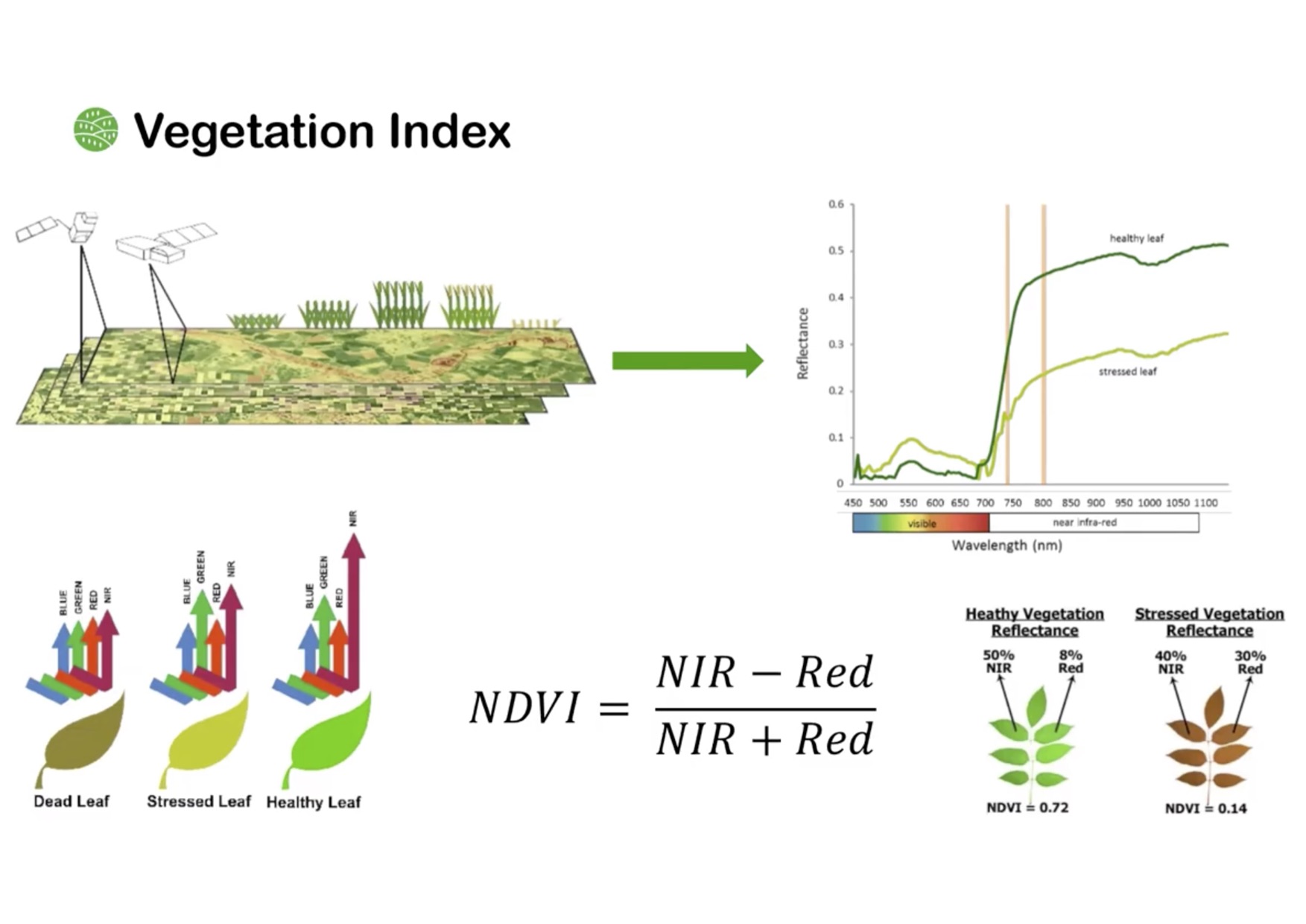
    IBISA’s first product is a drought protection one for the Indian market which is based on vegetation index anomaly. Their product is a parametric one which relies on satellite observation data and is thus not susceptible to moral hazard. The indemnities are based on an index that lies beyond the control of the insurer.

    Parametric insurance is a lot more transparent and it doesn’t have asymmetry of information as it relies on an index. Additionally, it can be run remotely without the need to go into the field to verify information of the remote farmers.

    Assessments aren’t done on an individual level as IBISA has an algorithm to group farmers. Additionally IBISA is crop agnostic. Being crop agnostic is a more inclusive approach which means that farmers can focus on all kinds of crops instead of ones preferred by insurers.

    Because of IBISA’s mission and tight integration with Earth observation data the European Space Agency and the Luxembourg Space Agency have been supporting IBISA financially and technically as part of their business application programme. IBISA uses satellite data from the European constellation of Copernicus and ESA’s Sentinel-2.

    Wisdom of crowd

    IBISA uses wisdom of the crowd as part of their loss assessment. They call it “Crowd Watching”. When a drought event has happened IBISA uses crowd watching to assess the severity in a decentralised and reliable way. To come to a reliable loss assessment, IBISA uses both the parametric data and the crowd watching data. Using both sets of data has a number of advantages. For example, if it’s monsoon time clouds will obscure the data making it difficult for the parametric side of the model. Human watchers can compensate for that. The second advantage is that both data sets provide a better assessment. The third point is that due to multiple watchers assessing the data you are able to get more accurate result than an expert. This can reduce basis risk of false positives or false negatives.

    After two seasons worth of data the correlation of the data with ground truth to validate the results are encouraging that crowd watching brings a more reliable and precise assessment.

    IBISA is now implementing a reputation-based incentive model to make crowd watching work more efficiently and to motivate the workers. Today it takes on average 10 minutes to assess the 300 plots that IBISA have in different groups. They do that once a month. With the incentive model IBISA wants to open the watcher platform to a wider audience of watchers.

    Real live scenario – India

    IBISA started working in India in April 2019 with DHAN People’s Mutual, an Indian organisation covering 2 million households in 14 states in India. They provide credit savings and health mutual insurance to their members. DHAN partnered with IBISA to provide weather related risks to farmers.

    Together they defined the product for their farmers and have successfully run two seasons and are now on their third one. Distribution of cash is done differently with DHAN as usually, IBISA hands cash through mobile money but because DAHN has the infrastructure for cash distribution in the field that is the mechanism being used. Every month IBISA assesses the situation in terms of who is entitled to a pay out and DAHN performs the cash payments.

    Plans for the next 12 months.

    IBISA is looking to scale in India with the objective to cover 5,000 farmers in 2020. They also have an interesting project in Niger with breeders. IBISA has developed a product for them together with the Association of Breeders of West Africa which has 650,000 members. IBISA ran a pilot in 2019 that ended in February 2020. Now they are building a big mutual for 10,000 of their members in Niger.

    IBISA has plan to expand in Vietnam and in Kenya.

    Co-operating opportunities with traditional insurers

    There are two main reasons why traditional insurers are interested in co-operating with IBISA:

    1. Loss assessment with crowd watching has attracted interest from traditional insurers. After two seasons of results IBISA is now working with a number of players.
    2. Insurers and reinsurers are also interested in working with IBISA because of its partnership model that it has developed with players such as DHAN and the Association of Breeders of West Africa which brings them customers.

    Diversity in blockchain and satellite

    As a child, Maria always knew she wanted to be an engineer because it was easy for her. She had the right skills and mindset and thus never questioned if that was a profession for girls or for boys.

    Both blockchain and satellite industries have very few women present in them. For example at the Consensys Tachyon Accelerator, Maria was the only girl.

    In Luxembourg an experiment was set up where a blockchain conference was organised around a normal title. Virtually no women attended. They then organised a conference on blockchain for women only. The room was packed! The point this made was that women are obviously interested in blockchain but as there isn’t enough women in this industry there is a lack of role model.

    Unfortunately, this can also affect the funding of start-ups as most VCs are men and they have a tendency of funding more start-ups founded by men.

    This is an important issue to address because it’s important to recognise that both men and women bring their own set of value to an industry.

    Maria would like to encourage young children to study and pursue the subjects they are fascinated about independently if it is an industry dominated by men or females.


    Ep.105 – GoDirect Trade, Honeywell’s blockchain airplane parts Apr 19, 2020
    Show notes

    Lisa Butters, is the General Manager at GoDirect Trade, a marketplace for used aerospace parts, part of Honeywell . Used aerospace parts is a $5 billion a year industry of which almost none of it is done online. Numerous emails and phone calls along with paper work is used to close a transaction. Blockchain was felt to be an applicable technology to manufacture digital trust between buyers and sellers in the used aerospace parts industry.

    What is blockchain?

    Honeywell uses blockchain technology in an enterprise manner. Lisa defines blockchain as a highly secure way to crowdsource a decentralised database. Traditional enterprises will have a centralised databased with a walled garden approach to data collection. With blockchain technology you’re using the technology so that you can get the data from various enterprises and parties in a secure manner.

    Who is Honeywell?

    Honeywell is a $40 billion company that operates in numerous industries. Lisa’s particular area is focused within aerospace. Within the aerospace industry Honeywell is an OEM, original equipment manufacturer, of components and piece parts all the way up to engines. Honeywell is the largest repair facility for aerospace parts across the world. Honeywell are also traders who trade used aerospace parts in the market.

    Challenges of the used aerospace parts industry

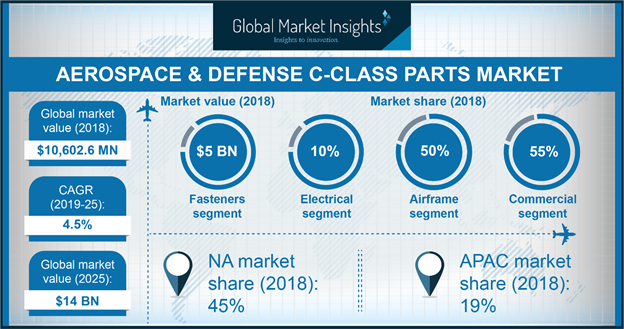
    According to Global Market Insights the global aerospace parts market will be worth $14 billion by 2025.

    Lisa notes that there are some interesting parallels with the used aerospace parts industry to the used car industry. When buying a used car, buyers are compelled to negotiate on price, or else they don’t feel they’re getting the best price. In the used aerospace parts industry people don’t feel responsible if they’re not negotiating the best price on the parts.

    There are fundamentally two reasons why that industry is so manual with emails and phone call:

    1. High dollar transactions – On GoDirect Trade transactions can go anywhere from nuts and bolts all the way to multimillion dollar engine, with the average transaction at around $10,000
    2. Safety – The parts being sold on GoDirect Trade have to be safe enough to reinstall back into an aircraft. This requires a very high bar of safety within the aircraft aerospace industry.

    The combination of high dollar transaction and safety of parts to be reinstalled back into an aircraft are the two reasons why it has been difficult for buyers and sellers to move their transactions online. That are the reasons why Honeywell found blockchain technology so interesting for this space because it helps to manufacture that trust for people to start checking out online.

    Guaranteeing the quality of use aerospace parts

    According to NTSB data compiled and analysed by the NVC Bar Area Investigative Unit, unapproved aviation parts played a role in nearly two dozen crashes that killed seven and injured 18 others since 2010.

    Lisa states that she has around 20 competitors in her space that list products for sale and facilitate some kind of online transaction. GoDirect Trade though is the only platform that requires price, product images, and quality documents for a product to be listed for sale. This ensures that the bar for quality standards is set very high and that all purchased products have their associated quality documents.

    GoDirect Trade’s blockchain enables the quality documents to be scanned and listed with their associated products so that they’re easily searchable and accessible.

    Lisa recognises that prior to blockchain technology there were attempts to launch marketplaces by ensuring the listings were transparent and that products had the right quality documents. However, she believes they’re failing was in not setting the “bar high on these kind of documentation standards and really keeping the bar high”. For example, they would enable their sellers to provide document to the buyers but it wasn’t required.

    Lisa believes that transparency is really hard for sellers that are used to legacy approaches to selling that involves scanning documents and emailing them back and forth. These sellers aren’t used to having an ecommerce presence and managing an online storefront.

    About GoDirect Trade

    GoDirect Trade differentiates itself from its competitors by providing a great customer experience and by being transparent with the consumer with regards to price, product images and the paperwork (quality document). The 3 Ps. For Lisa that is the foundation, the key is in providing trust which is what blockchain technology will provide.

    This however does require a multi-pronged approach to win over individuals who are stuck in the old ways of doing things;

    1. Introducing a technology that brings so much efficiency to the transaction that its users don’t want to go back to the old ways
    2. Win over sellers one by one in terms of bringing them onto a digital storefront and into the digital era and create that FOMO (fear of missing out) feeling within the seller community

    Lisa believes that by bringing in the lowest price and efficiency in the transaction that will shift the industry. Once you see an increase in millennials and Gen Zs entering into that industry they won’t spend 15 minutes on the phone to try and get the best price when they can do that online.

    To consortium or not?

    Lisa wouldn’t characterise GoDirect Trade as Honeywell’s solitary approach to blockchain technology. She argues that Honeywell is a big cheerleader for collaboration and is working with mom and pop businesses and big businesses to try to collaborate on blockchain trials.

    However, blockchain is still very much in its infantile stage within the aerospace industry and conversations of consortiums between OEMs is premature as the adoption rate is not big enough yet.

    What Honeywell is focusing its efforts on is for big and small name companies to collaborate by creating a node and linking together or spooling up their own network and Honeywell acting like a chain of chains to connect them together. It’s also about going out to small repair shops, channel partners, aircraft dismantlers and having them understand how to use the user interface and load records after they’re authenticated.

    Embracing data standards

    When it comes to an aircraft’s airworthiness documents, 8130 and EASA Tags are always the standard. GoDirect Trade uses 8130 and EASA tags by having them scanned and added onto the blockchain with their associated aircraft part.

    Honeywell is also a repair shop and it generates thousands of those documents every day which is recorded on chain so that customers who repair parts with Honeywell can reconstruct those documents.

    Equally GoDirect Trade is setting some of its own protocols for the industry as it builds a record of an aerospace spare part via its serialised number. All events related to that serial number will be logged and recorded on chain so that any prospective buyer will have access to all of those events.

    GoDirect Trade built on Hyperledger Fabric

    There are two reasons why GoDirect Trade chose Hyperledger Fabric:

    1. Hyperledger Fabric provided Honeywell with an enterprise grade solution. It allowed them to develop multiple channels. One channel is for GoDirect Trade and other business groups within Honeywell can buid blockchain trails on separate channels
    2. Being part of the org community that is well organised and supportive really helped Honeywell connect with the right people and get the right support

    GoDirect Trade and Honeywell Aerospace Trading

    Lisa explains GoDirect Trade in a similar manner to Etsy, the marketplace for artisans and craftsmen. GoDirect Trade facilitates the creation of specialised storefronts in less than five mintures for the aviation and aerospace industry.

    Honeywell Aerospace Trading (HAT) is just the trading arm of Honeywell. Similarly, to stock market traders who try to buy low and sell high, it’s the same thing but for aerospace parts. Before GoDirect Trade, HAT had no ecommerce and was like an old fashion trading desk.

    When GoDirect Trade went live, HAT launched an ecommerce storefront and became one of the most successful store fronts inside of GoDirect Trade.

    Moving beyond the trail

    Honeywell uses SAP as its ERP (enterprise resource planning) system for its 100 OEM and repair shops around the world. Its ERP system is fully integrated within its blockchain ledger. Every time Honeywell manufacturers a part, every time it repairs a part, every time it generates airworthiness tags, all of that information gets written on chain.

    That is Honeywell’s approach to doing an initial trial and then fully integrating it into what they do. Because now all of Honeywell’s manufacturing birth events will always be on chain with a provenance record attached to it.

    GoDirect Trade’s plan for 2020 is about increasing adoption across its user base from its buyers or sellers community. That will inform the product roadmap features to help make sellers more successful and transactions easier for buyers.


    Ep. 104 – AAIS’ OpenIDL update and developing a network data strategy Apr 13, 2020
    Show notes

    Joan Zerkovich, Senior Vice President, Operations at American Association of Insurance Services (AAIS) walks us through how AAIS have expanded their OpenIDL blockchain application beyond streamlining regulatory reporting for carriers. In this episode she explains to us how OpenIDL helps insurers develop a network data strategy that provides data standards and a secure, scalable and cost-effective platform for carriers.

    What is blockchain?

    Blockchain is a distributed ledger of which a copy of the ledger is available to all the participants of the network. Blockchain solves a key problem that other data technologies didn’t provide which was an immutable record. It provides a secure way to store data, transparency in how the data is being used and an immutable record that is so critical to trusting any activity that happens on the network.

    It enables to create systems networks for a wide variety of solutions such as transactional networks or in the case of OpenIDL as an analytics platform.

    What is the American Association of Insurance Services (AAIS)

    In the United States, the insurance industry is regulated at the state level. A National Advisory organisation exists to provide consistency between all the state regulations. AAIS is formed by regulation and is licensed in all 50 states to do the following:

    • Serve as a bridge between the carriers and the regulators in the way they exchange and share data
    • Through that exchange the AAIS uses some of that data to create products such as a homeowner’s policy with a rating plan or an auto plan. AAIS brings consistency across all the states in the way those products are delivered to the market. Carriers pick up the AAIS products to add value on top of them.

    AAIS has been doing this for over 80 years. They realise it isn’t as efficient as it should be and that it needed to be modernised due to the different data needs in the industry today.

    The Open Insurance Data Link (OpenIDL)

    https://youtu.be/4Z6SDGtKgtE

    In September 2018 we featured Joan Zerkovich on Insureblocks to tell us about the Insurance Regulatory Reporting using Blockchain – AAIS introduce openIDL.

    Joan reminds us that her team didn’t know they were going to create OpenIDL when they started off on that journey. They knew that they had a problem in the way they were collecting data and sending reports over to the regulators. There were a lot of pain points in the participants in that process. The old-style statistical data plans that had been used for the last decades didn’t contain enough information the AAIS as an advisory organisation needed. The regulators also found that the stat plans didn’t have the necessary data for them to answer the questions they were getting from their legislators.

    Consequently, the regulators would go around the advisory organisations by making data calls directly to the carriers to get the data they need. This caused a lot of pain points with the carriers who saw an increasing volume of data leaving the security of their data centres beings transferred to third parties without any oversight in how the data was being used.

    Through a number of design thinking sessions AAIS was able to identify those pain points and look into possible solutions. The available data technology platforms had a number of problems in terms of data security, transparency of how the data was being used and of course as a regulated industry the need for an auditable and immutable record was required.

    This lead Joan and her team to the use of blockchain technology. They started off with a prototype that solved the problems for both the carriers and the regulators. They went through one pivot in their architecture, changed what’s stored on chain and how to ensure the privacy of data.

    https://youtu.be/B3QUkUtjDiA

    Today the OpenIDL is an open blockchain network that streamlines regulatory reporting and provides new insights for insurers, while enhancing timeliness, accuracy, and value for regulators. OpenIDL is the first open blockchain platform that enables the efficient, secure, and permissioned-based collection and sharing of statistical data.

    Impact OpenIDL has had

    The impact has first been on how it has changed the relationship between the carriers and the regulators and how they think about using data for the benefits of the entire industry. In the past it was a kind of contentious relationship that lacked trust. The first thing OpenIDL brought into the community was that sense of trust.

    A win-win exchange of data was established with OpenIDL between the carriers and the regulators. Carriers provide regulators with data on for example cause of loss for fire or some sort of catastrophe for regulators to make good policies.

    AAIS would create reports on a state-wide or national basis that allows regulators to understand what a cause of loss for fire might be. The carriers can see the report at a state or national level and compare it against the data they have internally and make decisions at the same time.

    Regulators have received OpenIDL with such excitement that they’ve built a coalition of regulators to change the laws about how regulatory reporting occurs to make use of the OpenIDL blockchain platform as the new standard for the future.

    Carriers are also excited about OpenIDL as they’ve seen the value in regulatory reporting and in the new data stores that are available through the blockchain network and how that might be used for other purposes than just regulatory reporting.

    Carriers saw how the platform could be used to collaborate externally with catastrophe risk modelling companies and internally within their own organisation where there are numerous identities.

    Key learnings

    The first key learning was that technology was not a barrier. Having IBM as a partner for their Hyperledger Fabric implementation helped develop a solution to their problem. The second learning was how difficult it was in building the network. There were a number of factors to that:

    • They believed that if AAIS provided a solid solution it would be well understood and easily adopted by anybody who saw it. While there’s been a lot of interest, there was some scepticism about the technology, its long term feasibility and the total cost of ownership of that solution
    • Building a coalition of competitors who have to come together to use the platform, to invest in, to trust in, and to build over time

    The key to overcoming those problems was in building relationships with each of the companies, gaining their trust and allowing them to take the time they need to understand how this technology will transform their internal and external operations.

    OpenIDL’s governance structure

    OpenIDL’s governance structure is patterned after what they see as the most successful infrastructure activities ever which is the building of the internet and the open source software movement.

    AAIS understand that what they were building was a platform that needed to be adopted widely and used by the smallest insurance carriers as well as the largest. Joan and her team borrowed a page from the Linux Foundation by having a technical oversight to create open protocols and open standards to ensure that this network is running at a certain level, but it allows a lot of creativity and new applications to develop on top of that infrastructure.

    With the support of the Linux Foundation legal team, AAIS established OpenIDL as a not for profit 501(c)(6) and a governance structure that is patterned very closely after the Linux Foundation. They have a technical Governance Committee and under that a regulatory reporting committee for all the traditional applications such as regulatory reporting and stat reporting. An application governance group that is comprised of numerous workgroups in a similar manner to the IETF (Internet Engineering Task Force). Each of those working groups are here to solving a problem, they create code, documentation, standards and proof that it would work on the OpenIDL blockchain network. That is brought forward to the technical Governance Committee for it to become a production application.

    Data governance plays an important role in the overall governance of the AAIS.

    OpenIDl has a data governance committee that works not only with all of their application groups but with external bodies to bring their standards into their environment. To provide those connection points where policy and claims data can be joined with other data for example the auto community or IoT community.

    Flood modelling on top of OpenIDL

    Fundamental to OpenIDL’s architecture is the idea of a private data store which they call the harmonised data store. It has the ability to publish a “thumbprint” of what’s in that data store. The thumbprint is what is stored on chain.

    Once you know what data is available on the network you can build all sorts of reports and applications on top of the network.

    An example of such applications is a flood modelling application which was built by a catastrophe modelling company. Similar to AAIS own private data store around regulatory reporting, the company built a catastrophe modelling data store and linked it to the blockchain through OpenIDL’s data governance link.

    To further drive this initiative the company built its own working group and started defining open data standards.

    OpenIDL provides the key infrastructure for commercial entities to build all sorts of solutions that they can grow without charging them a fee for utilising the network.

    OpenIDL in a box

    OpenIDL in a box is a complete package that any member can start up quickly and begin using right away. The OpenIDL in a box technology is all open source and runs in any cloud provider. Any member can open up an OpenIDL node and load data into the harmonised data store and produce a report in about four hours. If a carrier isn’t ready to invest in a OpenIDL node there is a multi-tenant node for them to put their data into and participate in the network.

    Network data strategy

    Organisations have two types of data strategies. Internal and external. Internal data strategy has well understood data, it’s highly controlled and there are lots of applications in terms of understanding the business from a reporting standpoint.

    External data strategy involves working with numerous partners for acquiring external data sources. These are usually one off unique data connection strategies where the following is agreed: terms for working together, how the information will be exchanged, and how the exchange will be secured on the internet.

    With OpenIDL there is the opportunity for a network data strategy to sit on top of the network. OpenIDL has a network of numerous participants that operate with well defined harmonised data stores, data standards, access to available data for exchange within a very secure platform. Members can have a number of business relationships on top of that network and exchange data, use it, trust it and understand where the data has been used within an immutable record.

    OpenIDL’s data governance group facilitates the connection of other standards, bodies and producers of data that helps to evolve the network data strategy.

    Working groups – mini incubators

    OpenIDL’s secure platform for exchange data within a growing network of players is an ideal location for companies wishing to build new solutions. Working groups act in some way as mini incubators for new business solutions. That’s where new data standards and processes can be built on top of the network. The flood working group for example is building an analytic platform and a reporting platform that is taking data from regulatory reporting coupled with data from catastrophe risk models and other government sources of data.

    Once that analytics environment is established it will attract carriers and reinsurers to start developing new applications that will rely upon the analytics.

    Cross industry blockchain consortium collaborations

    AAIS is a member of the MOBI consortium. On the 8th of March 2020, Chris Ballinger, CEO of MOBI featured on Insureblocks – “Introduction to the Mobility Open Blockchain Initiative (MOBI)”.

    AAIS participates in the MOBI consortium because of their work within the auto industry with auto policies. They have similar work with the IoT community. Joan believes that each blockchain network will focus on a key set of data and expertise and the opportunities lies in connecting them together and allow the markets and interest of the participants to drive new solutions.

    Plans for the future

    OpenIDL’s plan for 2020 is to continue building out the network and testing scalability. New working groups will be building new applications on top of the network within a fully exercised governance model. Once there is a growing number of new applications developed onto the network there will be the need to address the operational aspects in terms of capacity of the network.

    They’re also working with the regulators to move forward with establishing the network as a trusted and acceptable reporting mechanism for the regulators.

    Due to how OpenIDL was architectured, there is an opportunity for international members to use the platform for their network data strategy outside of the United States.


    Ep. 103 – Blockchain Network Design Apr 05, 2020
    Show notes

    Krystal Webber is the Global Design & Strategy Leader at IBM Blockchain Services. She helps her clients understand how blockchain might solve their business problems in a way that maximises benefits in the shortest amount of time. In this podcast she shares her deep experience in blockchain network design from a governance, business value and technology design. A must listen for anyone looking to launch and scale a blockchain network.

    What is blockchain?

    Krystal calls answering that question her “blockchain party pitch”.

    In today’s world we do business with each other. Where two companies, who have a business relationship, will each keep a record of the work they do together. From time to time records don’t match up. This can create disputes which are both time consuming and frustrating.

    Blockchain is about having a shared set of records where both parties agree on the correctness of records before they get written onto that shared ledger. Once you have a trusted shared set of records you can start to automate business processes on top of it. With consensus you have records which are valid, true and trusted. Encryption ensures that the whole blockchain is super secure.

    What is design?

    Design means a lot of different things to different people, from graphic design, to fashion design or how things look. The Oxford English Dictionary definition of design is the “purpose, planning, or intention that exists behind an action, fact, or material object.” Said another way, design is the intent behind an outcome. Design is about being intentional.

    Krystal and her team when they think about design what they are thinking is “what is it that we’re trying to achieve? And how do we strategically and intentionally achieve that?”

    What is a blockchain network design?

    There are three elements to a blockchain network design:

    • Governance design – is the strategy and the operational model behind a business network.
    • Business value design – is the monetization strategy that is underpinned by an incentive strategy which allows the realisation of revenue, efficiencies or savings from the network. It’s also about stimulating collaboration between members to creating network effects.
    • Technology design – creating digital products that are human centered, easy to use, scalable and stable on the back end to reach the business objectives for that network.

    What is important to understand is that these three elements are very interrelated. So, decisions made in one work stream really impact decisions made in another work stream.

    Governance design

    At IBM they use an acronym called BOLT which stands for: Business, Operations, Legal and Technology. They believe that when looking at governance you need to look at it from those three areas.

    Business from a governance perspective

    This begins with the network of intent where the aspiring network have to answer the questions of “why are you here?”, “Why do you exist?”, “What are you trying to accomplish in the marketplace?” Then there are questions on the “network model”. “Are you trying to be differentiated in the market?”, “Are you creating some level of market utility?”, “Are you trying to create an entire new market?”.

    Answering these questions will provide the strategic direction when looking at governance design, business value design and technology design. It will also influence the branding of the platform, sales, recruitment, adopt and what’s going to get participants to join the platform. Metrics and measurements will have to be put in place to determine what is important to be measured.

    Operations from a governance perspective

    There are a number of questions around operations that need to be answered;

    • How are the members going to act together in good faith?
    • Will there be committees, an advisory council, a CEO, working groups?
    • How will each of those groups look like?
    • How will they all work together?
    • What type of members will populate those groups?
    • How will they make decisions? Will there be voting?

    One of Krystal’s favourite are the rules to change the rules.

    Legal from a governance perspective

    It means looking at how to manage anti-trust concerns and intellectual property. What will the legal structure of the consortium look like? As businesses operate within a regulatory environment compliance considerations need to be looked at.

    Technology from a governance perspective

    Technical governance looks at deployment processes, data standards and security standards. How will the network’s help desk look like and how will it be run once a significant number of transactions go through the network.

    Will the network enable third parties to build apps onto the network platform? If yes how will the quality be maintained?

    Blockchain consortiums and IP

    There are four types of intellectual properties (IP) to consider:

    • Founding member IP
    • Network IP
    • Platform IP
    • 3rd Party IP

    Intellectual property may be owned by the founding members, typically known as founding member IP. This is where different entities launch a network together by bringing in their own IP to the network.

    Network IP. Once a consortium is formed and it starts building new technology and or services that generates some IP that belongs to the new network.

    Platform IP is IP provided by one or more vendor that is building out the network.

    The final type of IP is the 3rd party IP where for example third party vendors build applications on top of the network.

    Each of those IPs need special consideration and understanding with the help of legal counsel.

    Business value design

    Business value design is thinking about how to be financially successful in the network and support the technology to be sustainable over time with a revenue model. What this entails is also ensuring that each member of the consortium is getting value out of it. For the founders it is financial in most cases. For others within the network that may be some more intangible benefits such as brand benefits and efficiency play.

    Non-monetary incentives to stimulate collaboration between members

    There are a number of non-monetary incentives that are here to stimulate collaboration between members. For some smaller players it is being able to seat at the table of a network. It’s being part of a governing board or part of an advisory group and having a say in decisions about the future of the network and the direction of the technology can be a strong driver.

    For others it could be brand reputation and being seen as a leader is a strong incentive. Having innovation as part of an initiative as a company is a strong driver to join a network. New markets and collaboration with cross industry players can open up new customers to members of a network.

    Technology design

    Technology design is about developing the next generation of human-centered experiences, driving adoption of new products and services with privacy, security, and most importantly, trust.

    Technology design is also the recognition that new products are being designed for a number of different types of users and entities. They may have different goals and different parts of the process that they’re interested in. Different metrics that they want to measure. All of these goals and metrics need to be brought together and at a macro level that data needs to be aggregated and presented in a user centered manner.

    This creates important considerations from a front-end perspective and ones of scalability and reliability of the back end as well.

    Design lead companies and design lead products are twice as fast to market. They are 75% faster in going through the development cycle when human centered experience are part of it. They are also much more successful in the market because they’re building services that people want to use. They provide an emotional connection with the service and an ease of use to drive interactions on the platform.

    Design lead companies also take a user centric approach by constantly putting the customer at the centre of all decisions and running workshops with an iterative approach to growing the product.

    Blockchain consortium & members’ digitisation journey

    Krystal recognises that they often have conversations with aspiring blockchain consortiums on the different levels of digitisation members of that consortium have. For example, some of them may be stuck in ancient legacy system or still have paper processes enabled.

    Krystal gives the case of market utilities where a number of competitors are coming together for the industry good that can drive acceleration of digitisation initiatives. However sometimes workarounds may need to be designed at the start of the consortium. That means parts of the process that are digitised and parts that are manual. That is part of the growth journey that members of a network have to go through.

    At IBM they have a metaphor: a cupcake, a birthday cake and a wedding cake. Where the wedding cake is full digitisation and the cupcake is parts of the process is manual and paper based.

    Variations in the design principles across consortiums

    Krystal points out that she often gets this question and the reality is that there is not a perfect way in designing a network. Whilst her team at IBM use the same underlying principles the execution looks really different.

    All networks need governance design, business value design and strong technology. The decisions they make within each one of those areas will look different to those of other consortiums. In addition, they may have varying levels of maturity within each of those areas.

    In some industries, it may be important that they have a working product to show to be able to recruit members, and so they may need to be further advanced on their technology than they are on their governance. The technology is going to drive some of their member recruitment activities.

    Other networks having agreement among a large set of players to do something may be critical to success and adoption. In those cases, governance is more important than technology because getting consensus and agreement in place is critical.

    In each circumstance there is a varying level of risk to doing that and being able to navigate the intersection of all these points is very important.


    Ep. 102 – Rise of the autonomous economic agents – insights from Fetch.ai Mar 29, 2020
    Show notes

    Humayun Sheikh is the CEO & co-Founder of Fetch.ai. Fetch.ai is an 18 months old company that develops solutions around multi agent systems that utilises the principles of the technology behind blockchain. In this podcast we discuss Fetch.ai and how autonomous economic agents can transact and settle transactions autonomously in an economic manner to facilitate the exchange of insights and inferences without the sharing of data sets.

    ***Image taken on the 27th of February prior to social distancing***

    What is blockchain?

    For Humayun, blockchain is just a record keeping mechanism that has the unique feature that enables people to interact with it in a decentralised manner without the need for a centralised entity to control it.

    Its other interesting feature is that you can exchange economic value on it which makes it a key differentiator from a centralised database.

    Challenges of today’s suboptimal digital world

    In today’s digital world we use a lot of technology. Unfortunately, it is done in different pockets of different things. The challenge is that as we try to connect them all we are faced with issues of interoperability.

    For example, how does an individual’s train timetable get connected to their personal assistance? How does their calendar become aware of the train timetables and its possible delays? These examples illustrate some of the very inefficient interconnectivity that people have to deal with in their lives.

    Attempts to connect all these services require an exchange of economic value to enable the settlement of these services. Because of these reasons, Humayun believes we are living in a suboptimal world because you can’t build a centralised system from top down which can account for all of these problems. These challenges has led to an increasing move towards software defined systems and autonomous systems.

    Whilst APIs are an attempt at trying to facilitate interconnectivity between disparate systems they still require software to be written to connect them up. Additional code is also required to extract the data and process it in a meaningful manner. Because of these reasons Humayun doesn’t believe we are solving the problem because organisations are still building solutions to connect different things together.

    The other side of the problem is how do you discover those APIs? How can an organisation rapidly identify an API and connect with it without writing any code in a near real time basis?

    What is Fetch.ai and its mission?

    Humayun describes Fetch as a connectivity and intelligent connectivity solution. He defines connectivity as having three components:

    • How do you find something to connect?
    • How do you actually connect? (the technical aspect of making a connection)
    • Once you have connected, how do you connect economically?

    These three components are effectively the different components of Fetch. Fetch is a layered solution that provides a substrate where the economic value exchange, the search and discovery and where the actual physical connectivity can take place.

    These three components are delivered via Fetch’s:

    • Distributed ledger
    • Open economy framework
    • Autonomous economic agents

    Fetch’s distributed ledger technology & smart contract

    With a multitude of existing distributed ledger technology (DLTs) which exist, Humayun explained why Fetch built their own ledger. In order to run autonomous software which is going to do search and discovery, which is also going to do a value exchange and do all of that in real time, you need a ledger system.

    The nodes within that system facilitate the search and discovery. The system needs to facilitate near real time economic exchange. It has to be very fast because all the economic agents on the system need to exchange small amounts of value in high frequency with a high throughput. In addition, the incentives have to be aligned to support this kind of economic exchange of value.

    Fetch’s DLT solution is unique as it takes the best of a Directed Acyclic Graph (DAG) system and combines it with a blockchain system to create a DLT solution that is 3 to 10 times faster than most DLTs on the market.

    Fetch’s smart contract have an edge in how they handle complex tasks. They have their own math libraries which are optimised to solve complex tasks.

    For a smart contract to make certain decisions it will have to solve complex mathematical problems. For example, if you need to run an insurance premium calculation which is dynamic you need to get a feed from an oracle, you need to run complex mathematics and all of that can be run on a Fetch smart contract.

    Open economic framework

    The open economic framework isn’t a platform but a framework where the definitions exists on how economic agents can find each other, transact with each other and do different tasks on top of the Fetch ledger. In a way the open economic framework is similar to the Amazon Marketplace for autonomous agents combined with a Google for agents.

    Autonomous economics agents

    Last year, Insureblocks hosted Raghavendra Kulkarni from Bosch where he explained to us the move from internet of things (IoT) devices to economy of things (EoT). Humayun agrees with that view as IoT devices are relatively dumb. They act like sensors that feed data to a centralised system. To make them more efficient you have to give them economy and autonomy, and that’s what the autonomous economic agent (AEA) concept is.

    Autonomy of an agent is where, if required, it can make decisions. Economics of an agent means having the potential ability or capability to actually transact economically, so it can exchange economic value. An agent is a software agent. When you give it the capability to make a transaction and settle a transaction autonomously that’s when you have an autonomous economic agent.

    As these AEA complete tasks they are generating some knowledge – prediction, little bit of data or actions completed for doing a transaction. Fetch’s system takes all these pieces of data and actions to generate some kind of collective learning. An example of this kind of collective learning is with autonomous cars. Autonomous cars are effectively AEAs who can co-ordinate between themselves, with a bit of an economic incentive, ways to improve the flow of traffic. Dynamic taxation and dynamic insurance could be implemented depending on the journeys autonomous cars take or don’t take. This can’t be done in a centralised system today.

    Another key feature of an AEA is their ability to acquire skills. Negotiations skills to enable AEAs to do a bid can be added. Agents can connect to skills such as machine learning, AI, algorithmic skills and many others. Fetch provides agents with a library of skills but developers can develop their own skill and add it to a marketplace of skills.

    Digital identity

    Fetch isn’t looking to design their own identity protocol themselves for agents and will be using a readily available solution from the market. They have been experimenting with Sovrin after a recent self-sovereign ID implementation.

    Data sets vs predictions and inferences

    Humayun is opposed to sharing data due to its high costs. The model that they’re building at Fetch is one where organisations won’t need to exchange actual data sets. The way this will work is that agents will take the data and, with their processing skill sets, transform the data into inferences or predictions that they can share. The actual data sets aren’t shared.

    The framework reduces the use of data sets and increases the use of predictions and inferences to complete a task as all you need the data for is to reach an outcome and a decision. A decision is made up of different predictions and inferences.

    Humayun provides an example that if he was to decide whether or not to go out with an umbrella he is going to make inferences that (1) it’s not raining and (2) it’s not expected to rain for the next four hours and as he is going out for only two hours he shouldn’t take an umbrella. His decision was made on predictions and not on actual data sets.

    Fetch’s objective is to get to those predictions rather than just data sets. Humayun clarifies that this approach works for decentralised systems and not for centralised ones.

    University of Warwick – Energy optimisation case study

    Multi-agent optimisation systems can be seen in two ways:

    • A central control system that runs multi-agents and they can optimise the whole situation
    • A central control system that runs multi-agents that can optimise both the whole situation and themselves.

    Fetch worked with Warwick University on a model that involved a central control system that runs multi-agents that can optimise both the whole situation and themselves.

    Warwick University has a whole energy deployment where they generate their own energy. They combine heat and power systems which run both heating and air conditioning. They were optimising both of these systems individually and also together.

    Fetch’s trail with Warwick University involved giving the different energy components autonomy and letting them interact with each other. Based on an economic value exchange they could learn and improve each other and the whole. The agents were also equipped with reinforcement learning so that they can learn from their past experiences.

    The MOBI case study

    MOBI is the mobility open blockchain initiative. It’s CEO, Chris Ballinger, was featured on Insureblocks on the 8th of March 2020: Introduction to the Mobility Open Blockchain Initiative (MOBI).

    Fetch was an early contributor to the MOBI initiative. Multi-agent based systems for example are perfectly suited for the complex supply chains that exists in the automotive sector. Each of the stakeholders within the consortium have different objectives and their incentives aren’t necessarily aligned. This generates a conundrum as the players wish to collaborate but they lack the desire to share data. With Fetch they don’t have to share date, they can share insights. At the moment the Fetch team is working on a prototype model for MOBI.


    Ep. 101 – Spunta – Blockchain for Italian interbank reconciliation Mar 22, 2020
    Show notes

    Silvia Attanasio, is the Head of Innovation at ABI (Italian Banking Association). Previously to that role she worked for 17 years at ABI Labs, the centre of research and innovation at ABI. Her present mission is to support the innovation amongst the banks within the Italian Banking Association. In this podcast she shares with us the exciting journey ABI has taken in launching a blockchain for Italian interbank reconciliation. We are also very grateful for her to be recording this podcast with us from her home in Milan during the Coronavirus Pandemic.

    What is blockchain?

    From Silvia’s point of view, blockchain is a way to organise a history of events and guarantee the integrity of the data in order to make it easy for a group of people or companies to agree on it.

    However, Silvia also wants to say that blockchain isn’t a cost cutting technology. She agrees that the technology has the potential to bring efficiency gains but from her point of view we have yet reached that point.

    What is Spunta?

    Spunta is the reconciliation of bilateral accounts, a sort of nostro and vostro account. It’s a process aimed to clear the mismatch in a double entry bookkeeping.

    Quick definition: (source: Investopedia)

    • A Nostro account is a reference used by Bank A to refer to “our” account held by Bank B. Nostro, is a shorthand way of talking about “our money that is on deposit at your bank.”
    • Vostro is the term used by Bank B, where Bank A’s money is on deposit. Vostro is a reference to “yours” and refers to “your money that is on deposit at our bank.” A Vostro account is like any other account held by a bank. The account is a record of money owed to or maintained by a third party, typically another bank, but it can be either a company or an individual.

    In Italy the way bilateral accounts are used is where you have a single account, co-owned by two counterparties that have an automatic matching process. After that the operators deal with the suspended movement – operations that need to be confirmed before being registered in the bilateral account. This interbank process, based on bilateral registers, can be quite complex because it is based on a single account that requires the point of view of Bank A and of Bank B to match on the same ledger.

    To complicate matters even further, there is a rule that states that the ownership of that single account has to switch every three years form one bank account to another. When a bank has ownership of the account they see all the information, movements, and balance. But when the ownership switches to the corresponding bank, they can’t see the information anymore and have to request it from the corresponding bank via phone calls, emails and fax. This is a very cumbersome process.

    Opportunities and challenges to updating Spunta

    In 2010 ABI attempted to reform this process. However, it was realised that there wasn’t the will to issue a new banking agreement. The Spunta process is ruled by an interbank agreement dating from 1978. It was only when ABI discovered blockchain technology that the necessary commitment was found by the banks to explore reforming this process for two different reasons:

    • Individuals closely linked with the Spunta process were eager to try new approaches to reform the process
    • Innovation departments within the banks were looking for opportunities to run experiments with new technologies

    The interesting thing was that no one from the Spunta world knew about blockchain and no one from the blockchain world knew about Spunta.

    ABI had studied the possibility to use traditional centralised technology. However, there were two main obstacles which led them to explore the usage of blockchain technology:

    • With a centralised technology, the banks would have provided the data to the centralised database but they would have continued using their traditional systems for Spunta. Thus, you have a verification solution and not a process solution
    • Assigning the management of this centralised solution would have been very difficult

    A private permissioned distributed ledger was the correct solution as it enabled bilateral channels, using Corda, in a manner that replicated the existing bilateral accounts.

    Armed with blockchain technology, ABI found the necessary commitment to update the banking agreement in May 2019. This new agreement facilitated a switch over from tapes to a distributed ledger!

    The proof of concept (PoC)

    In December 2017 ABI Lab and NTT Data Italia started working on a DLT PoC for straight-through processing of interbank reconciliation using R3’s Corda platform.

    The first objective of this PoC was to understand how the technology worked, and if it was really possible to use it within a traditional banking process. To validate that hypothesis 14 bank back offices were visited across Italy to analyse the traditional process, the flow of transactions and decision making process in order to replicate it onto the Spunta DLT.

    NTT Data Italia took all this information and developed the first PoC. In May 2018, the 14 bank operators were presented with a possible target solution. In parallel the team developed the core data and front end in order for operators to provide them with quick feedback on the application.

    At the end of the PoC, SIA, the provider of interbank private network was invited to join the PoC.

    Challenges

    There were 3 fundamental challenges:

    • Investment
    • Education
    • Data standardisation

    In order to run this project, all parties were requested to put a little bit of investment from NTT Data, SIA, ABI and the 14 banks.

    One of the main goals of the PoC was to fully understand the technology and how it could change traditional banking. At the beginning a learning session was organised by a team at R3 to teach was is DLT, what is blockchain and what is Corda.

    Data standardisation was a big challenge. In the original agreement of 1978 there was some defined standards for data. Some of these standards could simply be updates such as the bank code from a four-digit basis to a five digit one. A single code associated to a single transaction became mandatory. Whilst it existed in 1978, no one had enabled that.

    Key success factors

    The Spunta project had 3 key success factors:

    • Spunta is an internal process that doesn’t involve customers and is thus quite a small process
    • As ABI works as a self regulatory body for Spunta, there wasn’t any need to ask any government minister or central bank to change any regulation
    • A great group of goodwill people working together

    Governance structure

    ABI had a metaphor that guided the process from the very beginning which is related to the Hoplite – a group of soldiers, very organised, who stepped together and protected each other.

    In terms of governance model Abi used the proposed model made by R3.

    Silvia, recalled the first presentation that R3 made to ABI on governance which was titled “Network Confusion”. ABI tried to define the business network governor, the business network developer and the business network operator. However they added two other additional level of governance:

    • Business network governor
    • DLT network manager

    A business network needs to be able to make decision, so a distributed technology requires a distributed governance. A business network governor isn’t a real governor but more of a facilitator that is here to facilitate consensus between all of the participants.

    The second level in the governance was the DLT network manager. As you may have multiple applications running on a single DLT infrastructure. At the moment SIA is fulfilling both the role of the DLT network operator and the DLT network manager. However, it is possible to separate out those roles.

    Criteria for choosing Corda

    ABI applied three different criteria in deciding which DLT platform to choose:

    • Permission basis for accessing information – Corda enabled the sharing of information on a need to know basis
    • Ease of implementing bilateral channels that replicated the bilateral accounts
    • The Corda team were easily approachable and supportive of the ABI project

    Blockchain the new paradigm

    As mentioned in her definition of blockchain, Silvia doesn’t think blockchain is about efficiency in the short term. She reminds us that blockchain is introducing a new paradigm through software. Optimisation will come but it will take a few years.

    A new infrastructure needs to be set up. It is very difficult to find a use case that justifies a new infrastructure for an entire ecosystem. The hardest part of this project was to communicate to the banks and give them a good reason to come on board. Silvia is adamant that to reach the entire ecosystem it requires investment, energy and the involvement of all the banks.

    Top learnings from this project

    There were three top learnings that Silvia shared about this project:

    • Distributed technology implies distributed governance
    • Like a hoplite row of soldiers, all participants need to step at the same time. Standardisation was particularly difficult as each bank had to leave the way they worked to adopt a common process. The banks would sometimes request special personalisation but that was contrary to standardisation, so it wasn’t permitted. Standardisation helps in terms of reducing operational risk when the processes are all aligned.
    • Technical and business streams to the project must get to the finish lines at the same time. The project has two main streams: a technical one and a process one. Both needed to be kept aligned at all times.

    What to look out for in 2020

    The whole team is very focused in bringing Spunta into production at the end of the migration process. The project team is encouraging the banks to develop their own use cases by re-utilising the infrastructure used for Spunta.

    Once the crisis with the Coronavirus has subsided, the team would like to create a workgroup of European Banks to design together the functional requirements necessary to extend Spunta to the Nostro – Vostro account process with banks globally.

    Courage to Italians and all those fighting Coronavirus

    We at Insureblocks would like to give a special thank to Silvia for taking the time to record this podcast from her home in Milan, Italy. We wanted to honour and support all the Italians and people around the world fighting the Coronavirus. In honour of their struggle, perseverance and “joie de vivre” we want to dedicate this song to them as we understand it is regularly sang by Italians outside their balconies:

    ___________________________________________________________________________________________

    This episode is brought to you by our friends and sponsors at R3, one of the pioneers in the Spunta collaboration to provide a faster, more efficient and more transparent way of reconciling interbank transactions.

    Visit R3.com to find out how Corda, R3’s enterprise blockchain platform has been adopted as the platform of choice by Spunta and for other innovative blockchain projects across multiple industries including insurance, trade finance, supply chain and capital markets.


    Ep. 100 – Learnings from Libra and the Libra Association Mar 16, 2020
    Show notes

    Dante Disparte, is the Vice Chair and Head of Policy and Communications at the Libra Association. Dante returns to Insureblocks to share his experience of being at Libra and what the insurance industry can learn from that experience.

    It is worth nothing that Dante is the Chairman of the Risk Cooperative, a member of the FEMA National Advisory Council and a Forbes contributor. He has also participated in two podcasts on Insureblocks: Blockchain vs. the insurance trust deficit in April 2018 and A retrospective look on blockchain for 2018 in Feb 2019. We are absolutely delighted to have Dante back on our show in 2020.

    Insureblocks’s 100th episode!

    I’m Walid Al Saqqaf, your host. Since the 19th of March 2018 we’ve produced weekly podcasts on blockchain in the insurance, pharmaceutical, supply chain, banking and many other industries from case studies, PoCs, pilots and production grade roll outs.

    We’ve also covered topics around the convergence economy, how AI, IoT and blockchain converge. We’ve covered the subject of diversity, blockchain for social good, digital identity, tokenisation and much more. Today’s episode is our 100thone! We all can’t believe we’ve just reached this milestone. It feels like just yesterday when we recorded our first episode with Gary Nuttal.

    We want to thank all our speakers and all of you, our listeners, for making this show such a success!

    What is blockchain?

    In last year’s podcast, Dante had defined blockchain in a slightly philosophical way, using words like trust, decentralisation and self-sovereignty. Whilst he believes those ideals very much still matter he now sees a growing wave of enterprise blockchain efforts and investment and adoption that are starting to give the technology a real opportunity, not in its own, but together with other emerging technologies to drive real change in the market.

    What is Libra & the Libra Association

    The Libra Association is an independent, not-for-profit membership organization, headquartered in Geneva, Switzerland that was first announced on June 18th 2019.

    The goals of the Libra Association are threefold:

    1. Develop a blockchain based payment system that would support low friction high trust payment on a peer to peer basis. Today there are 1.7 billion people who are on the margins of the formal economy. Libra is developing a blockchain based system that can help support pulling more of them into the formal economy
    2. Building a payment system that supports competition and innovation.
    3. The third objective of the Libra Association is to reach the above objectives in a regulatory compliant manner.

    The fundamental promise of blockchain and cryptocurrency technology is with notion of financial empowerment. The Libra project is a consortium of member organisation who have a common cause, with a wide range of enterprises, public sector actors and stakeholders to effectively address the insidious issue in the global financial system. 1.7 billion people who are unbanked, 1.3 billion who are under banked who to send a cross border payment or remittance costs on average 7% worldwide.

    Roughly a billion people have access to a mobile phone. In a world where the mobile phone can become a payment endpoint, with Libra you could send a basic payment to someone as cheaply and as quickly as you can send an email message or other transaction.

    The Libra payment token is known as a stable coin. The concept behind the Libra payment token is to effectively borrow the intrinsic value and the economic stability of underlying assets and give those assets some unique properties.

    One of those unique properties is the ability to make micro payments. This is very important for two reasons:

    • Most of today’s payment networks are not digitally native
    • For very small transactions the cost is often superior to the transaction value

    Consequently, the payment network that Libra is building is an open and innovative one that will not only drive competition but will allow the ability to send payments to near no cost or very low cost.

    The digital identity opportunity

    Dante recognises that in the world today there are roughly a billion people who have no broadly accepted government issued identity. This predates the Libra Association.

    One of the requirements in pulling people into the formal economy is this concept of knowing your customer. Dante believes there is a lot of incentive in solving the identity challenge. When you start offering a platform that gives financial institutions the ability to serve billions of people in an economically viable manner that doesn’t rely on brick and mortar banking, that kind of network creates an incentive to accelerate the development and innovations for digital identity.

    Groups like the World Identity Network and ID 2020 amongst others are trying to crack the opportunity of digital identity. The Libra Association feels that the advent of a low friction global payment network that can support billions of users, creates the economic incentives to allow these types of digital identities to begin to exist.

    Opportunity for a Libra type association to tackle the insurance industry?

    In Dante’s view, insurers are now more than ever grappling with the digital transformation challenge. This is now more evident with mega mergers such as the recent one of AON and Willis Tower Watson.

    Throughout the insurance value chain, irrespective of technology, operation, trust and other sort of issues, this human, market and economic need that often doesn’t get addressed called the protection gap.

    Dante has always been a big advocate of not only what can technology do to amplify coverage and the risk appetite that insurers have and their capability to respond to crisis in a timely manner.

    Libra is a new organisation that isn’t encumbered by legacy and thus has the chance to build from the ground up and build it right the first time.

    With regards to managing risk, Dante makes an important point that by the time a complex risk shows up on the balance sheet of an insurance company it’s too late. He then makes the case that a large source of global risk is a world where so many people live on the margins of the financial system. Libra is well position to be part of the solution to address the root cause of that problem. Leaving it unattended means a continued amplification of political risk, social risk, lots of displacements and low levels of economy opportunity and mobility.

    Libra, if managed correctly and one in a multi stakeholder environment can help drive down some of the costs of serving people and pulling them into the formal economy.

    Insurance industry and blockchain

    Dante believes that the insurance industry is arguable the very first type of blockchain construct. The notion of mutualisation, the notion of syndication of risk, the common behaviours, the common sort of standards in terms of operation and market conduct is apparent in the insurance industry. In the end an insurance policy is literally nothing more than a contract of utmost good faith. The link between blockchain technology and the insurance industry is those core principles. Insurers are bringing a lot of this operating discipline to market and have been doing so in Lloyd’s case for the more than 300 years.

    The gap is relying perhaps a little too heavily on tradition alone. There is a need to drive down the expense ratio in the industry. Where for every dollar of risk that is taken on board there is an expense ratio of 30 and 50 cents to the dollar. There is a need for a consorted effort to use technology to bring this down. Dante refers to initiatives as those taken by B3i and RiskStream Collaborative.

    Dante’s admonition to insurers would be don’t think of technology transformation merely as a back office advantage. Figure out how to empower the consumer. Figure out how to enable households and consumers and small businesses and others to really close the time it takes to get the value chain moving. And then also figure out how to use these technologies to drive down the protection gap and and start to come up with newer classes of coverage that can liquidate instantaneously and provide better comfort and better protection in real time. These are opportunities for the insurers, not necessarily business threats.


    Previous 1 6 7 8 9 10 19 Next

    Related Podcasts

    How I Built This with Guy Raz

    1

    How I Built This with Guy Raz Business
    Planet Money

    2

    Planet Money Business
    Inside Strategic Coach: Connecting Entrepreneurs With What Really Matters

    3

    Inside Strategic Coach: Connecting Entrepreneurs With What Really Matters Business
    BiggerPockets Real Estate Podcast

    4

    BiggerPockets Real Estate Podcast Business
    The Smart Passive Income Online Business and Blogging Podcast

    5

    The Smart Passive Income Online Business and Blogging Podcast Business
    A Thousand Natural Shocks With Gabe S. Dunn

    6

    A Thousand Natural Shocks With Gabe S. Dunn Business
    footer-logo

    Contact Us

    Toll Free: 844-670-7747

    Links

    • Home
    • Top Charts
    • Networks
    • Apps
    • Independents Podcasts
    • Podcast Advertising
    • Podcast News
    • Contact Us
    • About Us
    • Analytics & Insights

    Stay Connected

      Privacy, Terms of Use & Our Code of Ethics Protecting Content Creators Copyrights