Why Elon Musk is a Polymath & How You Can Become One Too
Mar 06, 2025
Show notes
At age 12, Elon Musk coded a game in a weekend and sold it, all while navigating family chaos and international moves. Since this is just for starters from a man who has learned enough to found, co-found and outright purchase multiple companies, the answer to the question, is Elon Musk a polymath is absolutely yes. Although some people find Musk’s learning to be enigmatic, I believe that a combination of scientific analysis and historical study clarifies precisely how so much learning can take place in one person’s life. Just as Leonardo Da Vinci sketched flying machines while living in war torn Italy and Nikola Tesla imagined incredible inventions while facing a whole host of problems, Musk has proven he can learn substantially despite many challenges. Using strategies. Not luck. Not genetics. But the implementation of various procedures that lend themselves to learning. Of course, like most innovators, Musk is divisive. Loved by some and despised during certain political climates, his polymathic accomplishments can teach us a lot despite the latest headlines. In this post, we’re stripping away the noise to reveal lessons about learning from which anyone can benefit. So whether you’re friend or foe, let’s dive into the factors that will help you thrive as a learner, no matter what turbulence you face. I’m going to introduce some concepts and comparable figures you’ve likely never encountered before, so buckle up, dear reader. You’re about to learn what it really takes to develop mastery across multiple fields. https://youtu.be/UbgK7p8Q63I What is a Polymath & What Makes Elon Musk Part of the Club? Actually, there is no club. And although there are aspects to consider, such as a variety of polymath personality traits, nothing quite explains the ability to dream big and fulfil ambitious ideas that require learning the way we’re about to do. At its core, “polymath” simply means many + learning at the etymological level. In order to become a polymath, you need only do what other polymaths do. That way, you’ll easily fulfil the modern definition and be a “person of various learning.” To do this, you have to go beyond the cliche definitions found elsewhere on the Internet. Often you hear that polymaths need to be intellectually open. However, as Walter Isaascson’s biography of Musk shows, learning to being closed to a variety of options has been a massive driver of Musk’s success. This factor directly contradicts scientific findings regarding the benefits of openness to challenge. If anything, stripping away unnecessary challenge is one of the major things Musk has learned and applied to great success. Apart from that, Musk ticks just about every box that scientists have studied when it comes to polymathy. Cognitive flexibility Creativity, which scientists have demonstrated can be trained Divergent thinking and other forms of critical thinking High working memory capacity Analogical reasoning skills Strategies for handling ambiguity and uncertainty Intrinsic motivation Self-discipline and mental strength Consistency Mastery of accelerated learning techniques Breadth and depth of learning Creative problem-solving using what some scientists call stochastic behavior Genius or Chaos Agent? Let’s examine this point about stochastic behavior for clues. It reveals clues that will help you break out of learning ruts that you might find yourself in. Stochastic behavior refers to introducing randomness and uncertainty on purpose. Here’s a concrete example. Musk did reasonably well in school when it comes to mathematics. But he took an autodidactic approach to learning rocket science on his way to founding SpaceX. Rather than follow a linear and traditional path, he created his own self-education program. More than merely read books, he learned to fly to help himself visualize aerodynamics better. When it comes to the books he read, he didn’t rely on libraries alone. He picked up the phone and asked the best experts to lend him their old engine manuals. These primary documents introduced information to his learning that likely could not have been accessed any other way. The “Chaotic” Benefit of Holding a Personal Philosophy for Learning And because Musk’s philosophy involves the conviction that progress is not inevitable, taking these actions make his practice of “first order thinking” faster and more actionable. The breadth and depth of learning has made Musk’s various arguments and persuasion tactics more successful because he’s able to converse deeply with the best experts in a variety of fields. As a result, what seems to others as Musk making erratic bets really isn’t anything like that at all. Rather, Musk deliberately makes stochastic gambles in order to ensure new results lead to new learning. For example, Musk pressed through several Falcon 1 failures and studied them. Without allowing for these unpredictable setbacks to happen, Musk and SpaceX would not have been able to refine their knowledge or establish what ultimately became a pattern of success. Nor, as scientists have demonstrated, would his brain have been able to generate the best creative solutions to problems either. Elon Musk’s Diverse Skill Set: The Top Eight Supporting the mental resilience needed to deal with the near-collapse of Tesla and many other issues, Musk’s skill set has proven fundamental across his career. When it comes to our focus on polymathy and the learning needed to become polymathic, I believe these six skills are the most important for all of us to develop. One: First-Principles Thinking This form of problem-solving involves breaking complex issues down to their most basic elements. Musk’s experience with teaching himself BASIC and coding Blastar (which you can play using this HTML5 version) required stripped down logical thinking. Using a Commodore VIC-20 with no formal training apart from completing BASIC’s training and a conference his parents helped him attend, Musk simply asked a simple question. How can computer bits become a game? Later, he would ask similar questions about rockets, populating mars, electric cars, boring tunnels and the role of social media platforms. Clearly, not everyone agrees with or likes the answers Musk’s approach to first-principles thinking produces. But we would do well to remember that many people didn’t agree with the physicist Richard Feynman’s use of first-principles thinking either. Nor with Einstein’s. And to this day some people still disagree with their results, none of which changes the process by which these movers and shakers used their skills with first-principles thinking to shake things up and drive innovation. Two: Interdisciplinary Knowledge Generation & Integration The ability to fuse insights from multiple fields is priceless. Although much of Musk’s learning comes from autodidactic programs he created for himself, his dual-major in physics and economics at the University of Pennsylvania blended hard science with business. According to Isaacson’s biography, Musk wrote papers on solar power and ultracapacitors. He continued fusing fields while interning at places like Pinnacle Research Institute. Combined, these experiences helped fuel (if you’ll forgive the pun), the development of Tesla’s energy software. Three: Mastery of Memory Techniques As Musk has shared in a number of interviews, he uses a variety of memory techniques. I couldn’t find in my research when exactly Musk first discovered mnemonics. But it must have been when he was young. As his mother, Maye Musk, says in her book, A Woman Makes a Plan: “We called Elon ‘The Encyclopedia’ because he had read the Encyclopaedia Britannica and Collier’s Encyclopedia, and remembered everything. That’s also why we called him ‘Genius Boy’. We could ask him anything. Remember, this was before the internet. I guess now we would call him ‘The Internet.’” Musk describes the basics of the techniques he uses in this interview clip: https://www.youtube.com/shorts/Wa-Z5nUIXgM Technically, Musk is referring to techniques called: The Memory Palace Pegword method Elaborative encoding The chunking memory strategy Practically speaking, Musk’s memory is at the core of his ability to challenge engineers in a variety of fields. He genuinely knows his stuff. And that kind of knowledge, although perhaps possible without memory hacks, is quite unlikely. Four: Relentless Research & Reflection Memory technique are great. I use them all the time myself. But they’re not going to do nearly as much as they could for you without research and reflective thinking. Introspection is key, and everyone can take a huge lesson from this episode in Musk’s biography: After moving to Canada, Musk worked odd jobs. In one case, he cleaned boilers in what sounds like an extremely risky environment. Nonetheless, Musk used the opportunity to reflect on energy systems. But how often do we find ourselves thinking about the jobs we don’t really like? Instead of directing our thoughts at positive solutions to big problems? The lesson here is simple: No matter what situation you find yourself in, keep your mind focused on solutions. The ability to direct your thoughts away from problems and towards solutions is a skill, one that can be developed through deliberate practice. Five: Visualization & Mental Rotation As we know from studies in mental imagery, it’s difficult to assess how other people visualize. In fact, there’s still no consensus on exactly how to define visualization. Nonetheless, Musk, like Einstein, seems to go through a process of “mental rotation.” For example, he came up with The Boring Company after creating the mental image that cities are dominated by 2D streets. This led him to conceiving the notion of making city traffic three dimensional. What many people don’t add to the equation is that Musk’s visualization emerged from spending a lot of time in traffic. He was in the field where the problems existed. Similarly, his learning to fly helped him visualization the first principles needed to improve rocket development and deployment. You can tie this back to Einstein’s use of trains in his thought experiments to demonstrate principles related to his theory of relativity. The common use of trains during his era almost certainly shaped Einstein’s choice of mental image. Had he been stuck in traffic on contemporary roads or a frequent flyer, he might have used those forms of transport instead. When it comes to mental rotation, this can involve mentally inspecting an object from all angles. But we know that Musk is very hands-on. When stripping away unnecessary robots from Tesla’s factory, he literally sealed windows himself to determine that the task would be more efficiently performed by people. As he put it, “Humans are underrated.” Finally, Musk uses mental metaphors like “the algorithm.” It’s not really an algorithm, but a rotational list of rules and what Isaacson calls “corollaries.” One of the most important involves a prompt to imagine the proper role of placing conditions upon progress: “The only rules are the ones dictated by the laws of physics. Everything else is a recommendation.” Mentally rotating through all the laws of physics you’re aware of will be a brilliant strategy if you’re developing as a polymath in fields involving design, technology and… just about everything. The laws of physics may even be shown to apply to memory itself in the end. Although some people consider the idea fringe, Sir Roger Penrose has proposed something much like this with his Orchestrated Objective Reduction – a concept that will stretch your mental rotation and visualization abilities to the nth degree. Six: Teleological ‘Pataphysics Just as Musk believes that technological progress is not inevitable, he assumes that human consciousness is under constant threat of extinction. For this reason, he works hard on developing rockets that will helps us become an interplanetary species and AI tools like Grok to help ensure alignment and compliance. In other words, he’s making the effort to imagine the end game and imagine solutions that potentially prevent an end to human consciousness taking place at all. If you’ll allow me to mash together two terms that illustrate my own polymathic efforts, I believe Musk is a teleological ‘pataphysisist. Huh? Stick with me. I’ll explain. In a general way, teleological refers to thinking about the end of things, such as the end of a goal or the result of a process. By imagining the possibility of human consciousness flourishing – or at least existing – forever, Musk is engaged in teleological thinking. ‘Pataphysics is a big topic, but I mean it in the sense of “imaginary solutions in response to imaginary problems.” In this case, “imaginary” does not mean fake, or anything less than real. Your brain and its neurochemicals are real, which means that your ideas are material. So when people imagine problems and imagine solutions to them, they are engaged in ‘pataphysics. And many products we now use on a regular basis come from this kind of problem solving. When people imagined tablets and communicators for the Star Trek television series, they didn’t imagine them fusing to create the modern cellphone. But would we, as a species, have been inspired to bring them together without first imagining them in fiction? I don’t know for sure, but this philosophical question is worth asking, especially when we consider the following interesting example who I hope will make this polymathic skill more clear. Musk’s Most Interesting Contemporary Polymath Christian Bök is a polymathic poet with a vast scholarly background. Like Musk, he puts parts of his talents to use by working to help human consciousness survive the death of our sun. In Bök’s case, he has worked on getting human consciousness into space via The Xenotext project. As part of the project, Bök has literally placed poetry inside a deathless bacterium called Deinococcus radiodurans. If I understand the project correctly, eventually an annihilation-proof poem written by Bök will be sent into space. Possibly even one that can reproduce itself to create new poems. The idea of sending poetry into space might sound outlandish, but it’s not. It’s ‘pataphysical. Plus, it’s already happened. The satellite EIRSAT-1 carries a poem called All Ways Home. It was launched on December 2023. https://www.youtube.com/watch?v=l734H3Sp27E Projects like these come about when people: Allow themselves to dream wildly (even absurdly) Invest in integrating multiple disciplines Push through obstacles and barriers to implementation Musk’s ability to dream absurdly big, from the Hyperloop to establishing a colony on Mars is not whimsy. Exercising this kind of imagination is part of the open secret of genius and Musk is far from alone in thinking at massive scales like these. Including the ultimate scale, which is seeing consciousness witness eternity. Seven: Time Management Multiple sources describe Musk as being tough on employees and partners, even cruel in his quest for epic goal achievement. In fact, Isaacson lists multiple insults Musk has cast. Let’s put that behavior aside to focus on the strategies that have allowed Musk and others on his team to maximize their learning. First, Musk splits his days between companies. The scheduling itself must require a lot of cognitive shifting and cognitive flexibility to switch between disciplines. According to this study, the prefrontal cortex and parietal regions of the brain experience high levels of activity when handling task-based decisions. Although Musk’s habit of time blocking his life in granular increments and holding regular meetings in a disciplined manner might seem rigid, this kind of study tells a different story. His quick problem-solving and adaptability (in some cases) may stem from his strict time management habits.. Of course, Musk has admitted to making many mistakes nonetheless. But I mentioned time management because he…
Mnemonic Devices: Top 10 Tools For Boosting Your Memory Fast
Feb 19, 2025
Show notes
Instantly memorizing what you need to know is the ultimate dream, isn’t it? Mnemonic devices can get you quite close to that learning goal. But let’s face it. There’s no such thing as perfect memory. What we do have are the kinds of mnemonic tools we’re going to discuss today. Including examples of people who have absorbed astonishing amounts of information using them. How do I know so much about all of these memory boosting tools? In such depth? For the past fifteen years, I’ve been operating as the host of the Magnetic Memory Method podcast. I have interviewed dozes of memory experts and memory athletes. Not only do I interview people who use these techniques. I use them myself and have written many books about them. As a result, I’ve received dozens of questions every week since 2012 from people who read my books and this blog. I share my knowledge openly, especially since mnemonic devices to help me memorize a variety of things to complete my PhD during a time of intense struggle. Later, mnemonics helped me learn German so I could teach in Germany, which I did for several years. But for many people who don’t yet understand what mnemonic devices are and how to use them, their inability to remember anything presents the ultimate nightmare. One reason people struggle to master their memory is simple: There are so memory experts out there who use different terms for the core memory techniques you need to succeed. It can be confusing. Don’t fret. on this page, I’ll help you understand everything and help you find the memorization approach that will work best for you. Here’s what this post will cover: What Is A Mnemonic Device?Mnemonic Devices Examples– Personally Created Flashcards– Acronyms– The Memory Palace Technique– Associative Imagery, Linking, and Pegwords– Story Method– Major System and Dominic System– 00-99 PAO– Mind Maps https://youtu.be/OqmUKcu6Gog So if you’re ready to dive in, let’s get started with… What Are Mnemonic Devices? The best mnemonic device definition we can start with is this: Anything that helps you remember better is a mnemonic. Even the dictionary says that mnemonic devices are anything: “assisting or intended to assist the memory.” Many of them operate like mental snapshots. But that’s a modern metaphor. As you’re about to learn, the techniques are rooted in the ancient world. They’re perfectly validated by modern memory science too. Researchers have tested everything from Aboriginal memory techniques, to mnemonics that are science-backed for use in schools. Overall, “mnemonics” is a highly adaptable term. It’s ultimately an umbrella term that covers a wide range of tactics and strategies. As you’ll see, you can optimize in your personal practice. Mnemonic Device Types Keeping the ancient world in mind, here are the major types of mnemonic devices in use today: Personally created flashcards Acronyms Memory Palaces (sometimes called a Mind Palace, the Method of Loci, Journey Method, or Roman Room) Associative imagery, linking, and pegwords Story method Major System or Dominic System 00-99 PAO Mind Maps … and more But here’s something to notice that might be helpful. Flashcards really are “devices.” They are objects that you create and sort through using your hands. Memory techniques like the Memory Palaces, however, involve the use of mental imagery as a process. As memory expert David Berglas made clear in A Question of Memory, memory is not a unitary mechanism or a “thing.” It is a behavior. And that is how you use mnemonic devices. You understand them as processes and then you sprinkle mnemonics into your life strategically so that applying them becomes part of your learning behaviors. Of course, there’s more to it than that. Let’s have a look. How Mnemonic Devices Work In The Brain: The Neuroscience Of Memory As a technique, mnemonics leverage visual memory, auditory memory, spatial memory and other natural types of memory. At a basic level, research shows that mnemonics create stronger connections in the brain. Here’s what weak memories look like in your brain. When you use mnemonic devices to create stronger connections throughout your brain, the scans clearly paint a picture of much stronger memory: One of the most impressive mnemonic tools you can use is the Memory Palace. As this study from the brain science journal Neuron has shown, Memory Palaces helped people go from recalling an average of 30 words (from a list of 72) to remembering more than 60. In other words, using this specific mental tool helped people double the amount they could remember. A Personal Example Of How A Variety Of Mnemonic Devices Helped Me Let me make these research findings concrete for you: When I gave a TEDx presentation, I did more than merely memorize my talk. On the day I delivered the speech in Melbourne, Australia, I also became deeply familiar with the people I met using a specific technique for memorizing names. This means that I used a wide variety of techniques (see how to memorize a speech) and chose the specific mnemonic devices based on the circumstances. This is just one of many examples where I’ve used multiple mnemonic types to accomplish incredible results in my life. And all it takes is study and practice. With deliberate practice in particular, you’ll find that using mnemonic devices happens almost on autopilot! What Mnemonics Can Help You Learn I just mentioned how I used a variety of techniques to memorize my TEDx Talk. It’s possible to memorize just about anything you want when you have the core techniques under your belt. Including: Planets Poetry Scripture Phone numbers Names Nursing, pharmacology and medical terminology Product types (which can help you get a raise or promotion at work) Self-help tips that help you develop mental strength Dance moves There’s literally nothing I’ve seen yet that mnemonics can’t help you remember. In fact, when I was invited to moderate at the 2023 Pan-American Memory Competition, the top memory athletes used a combination of the techniques on this page to memorize cloud formations. In other words, it’s even possible to memorize abstract shapes when you use these techniques. Mnemonic Devices Examples & How to UseMnemonic Devices For A Variety of Learning Goals Let’s dig a little deeper using our list of mnemonic examples above. One: Personally Created Flashcards My friend and language learning expert Gabriel Wyner inspired me to give these a try after reading his book, Fluent Forever. Basically, instead of downloading software put together by a stranger, get some paper and colored pens. (Obviously, you also have all the information you want to memorize organized too.) Next, use the paper and colors to help you create images. These images should remind you of the target information you want to recall. Flashcards as mnemonic devices for Chinese characters Now, there’s a whole lot more going on in this example, so please keep it in mind. I’ll go deeper into it later in this post. For now, if you’re worried about having a bunch of cards flying all over the place, don’t be. You can wrap them up in a Memory Palace drawing just like this: I used simple and elegant combinations of mnemonic devices to pass level III in Mandarin last year Next, let’s look at how abbreviations can help. Two: Acronyms Have you ever asked… what is it called when you use letters to remember words? As usual, there’s no one answer, but the first method is called an acronym. For example, when I teach memory improvement in a live setting, I usually talk about how following the rules will set you F.R.E.E. “Free” is a word that helps me remember the meta-rules students need to make learning with memory techniques easy and fun: Frequent practice in a state of…Relaxation and a spirit of…Experimentation so that you can be…Entertained Just follow those rules as you use mnemonic devices and you will truly be free to memorize as much as you want. The best part? Because acronyms are a form of chunking, you can use this approach to lay out acronyms inside of a Memory Palace. Chunking is a memory strategy more than it is a device, but by breaking information down into smaller groups, you’re following Miller’s Law. George Miller was the psychologist who discovered chunking and noticed that our brains can hold 7±2 items in working memory at any given time. Memory athletes make use of this principle all the time, as do learners who use acronyms. Some example acronyms that people often use include: “My Very Excellent Mother Just Served Us Nachos” (for the planets) “Hibiscus vs. PacMan leads to victory for many, many reasons” (for remembering the vaccine schedule) “Onward, Onward, Onward Two Travelers And Foxes Very Greedily Verified Ascending Happily” (for memorizing the cranial nerves) Frankly, many of my students find acronyms to be the least effective mnemonic devices for learning semantic information. That said, one study has shown compelling evidence that acronyms are good for remembering the sequence of actions in a task (sometimes called procedural memory). That’s why I sometimes use the FREE acronym model when giving simple presentations. It’s proven to work for this kind of task. I just wouldn’t use acronyms for larger speeches or long term learning goals, like developing fluency in a language. My point is this: Use acronyms with caution, or at least combine them with the most powerful mnemonic device of them all, which is the one we’re going to cover next. Three: The Memory Palace Technique The Memory Palace is an ancient technique. It uses familiar spaces as a core mnemonic device. It used to be called the method of loci because people would assign specific locations within a home or along a journey. Then they would place associations along this journey that helped remind them of various types of information. You can start the process of using this technique now by thinking about a familiar location. Next, chart out a logical journey that does not take energy from your memory. If you have to memorize the journey, it is not a good Memory Palace, so pick another location. A Memory Palace must be based on your memory of the space. Do not memorize a location to use this technique – that would be called a Memorized Palace and simply takes too much work. And don’t worry if you can’t remember each and every detail of a location. For example, I once visited a bookstore in Zamalek. This is a part of Cairo, Egypt. I don’t remember every single part of the bookstore and that’s find. As you can see in the illustration below, I used only the parts of the bookstore I remembered. To help my brain reduce the cognitive load even further, I made a quick drawing of the space as part of the planning processed: A Memory Palace drawn on an index card to maximize its value as a mnemonic device Keep in mind that I’m using the word “drawing.” But this is more like a “chicken scratch.” It’s purely for planning purposes and not meant to be high art. Notice I’ve also drawn the Memory Palace on an index card (or flashcard). I do this because it makes it easy to store many of them for quick reference if I ever need them in the future. Next, I strongly recommend that you write down the number of your stations and name them. I find this step helps me “set and forget” the Memory Palace and ensure I’ve gotten it right the first time. It also helps me make sure that I don’t overload the Memory Palaces, an issue Peter of Ravenna identified with his memory students during the medieval period. Four: Associative Imagery, Linking, and Pegwords Inside of your first Memory Palace, place a list of mnemonics you create. These will be a kind of mnemonic that are multi-sensory. For example, think back to that first image I shared above with the flashcards for Chinese. Those colorful drawings help me remember the sound and the meaning of the Mandarin words. But those mental images aren’t just on the flashcards! They’re also mentally situated on stations in the Memory Palaces I use. (Some people call these stations “loci.” It’s basically the same thing, but “Magnetic Station” is my preferred term because recent advancements make them much more powerful than the ancient teachings suggest.) To make such imagery, you will want to complete a number of exercises. For example, go through the alphabet and think of an image for each letter. The pegword method is a great way to explore this technique further. If you’re really serious about mastering the Memory Palace technique, you can explore having an image on each and every station. For example, when I memorize cards, I always have images on the stations to help me “trigger” the row of cards I’ll be placing and later recalling on a Magnetic Station. Basically, what I’m talking about is multiple levels of linking all at once. Some people talk about the linking method in a weak way. Their suggestions amount to little more than “this links to that.” I don’t find that approach is strong enough and certainly don’t use linking as superficially as other teachers tend to describe the method. What most of us need is for our association imagery to combine: Sound and meaning links at the granular level of the alphabet Multi-sensory links that are concrete and specific, not vague and abstract Tied tightly to space so that we are working from the foundations of the strongest level of memory: spatial memory Furthermore, the real trick with these associative images is that they must: Actually associate in a way that triggers what you want to memorize (for example, the barber symbol I used on the card above triggers the ‘ba’ sound). Help you get back the meaning of the content (where relevant). Have a Memory Palace so you can mentally “find” the imagery. Some people don’t need the Memory Palace, but in my experience, they are few and far between. And when you think about what mnemonic devices mean more holistically, each card is a kind of station in a Memory Palace. Five: Story Method Using a story (with or without a Memory Palace) is not much different than using, links pegs or associations. The only difference is that with the story method you’re adding the extra step of creating a narrative. Why use it at all? As Wang and Ross have demonstrated, the human brain is wired for story. Stories also cause you to create strong cause-and-effect associations. They don’t have to be logical, but adding a certain rational element to them helps make recall effortless. Anthony Metivier memorizing and recalling names at a memory demonstration in Brisbane For example, let’s take the example of a time when I memorizes a list of names at an event in Brisbane that started with: Haley Allan Sharon Andrew Edward Angela Sam If you were using pegs, you would look at “h” when seeing Haley and associate her with something like Halley’s comet or a hat. Allan could be associated with an Allen key. You can also spontaneously produce associations or have stock characters. For example, every Sharon could be Sharon Osbourne. The story method, on the other hand, requires us to add a narrative to the association, such as: Halley’s comet is crashing into an Allan key in the hands of Sharon who finds it burning hot and hands it to Andrew. The story method can possibly be used without a Memory Palace. However, stories have parts. And those parts exist somewhere in your brain which means they are inherently spatially located. I think you’ll find it a lot less mentally taxing to lay out any narrative elements you use in a Memory Palace. Another way to approach the story method is to use a movie or novel plot you know well. For example, let’s say you have mentally reduced The Matrix series down to three scenes: the hotel, the desert of the real, and Neo’s cabin on Morpheus’ ship. For the first piece of information you want to remember, you would use the first room and perhaps Trinity doing her flying kick. Then you would move on to the next location for the next piece of information. This example shows how stori…
The 8 Step Bible Memorization Plan That Leads to Success
Feb 13, 2025
Show notes
You absolutely can memorize Scripture. You just need a Bible memorization plan. That’s what you’ll learn to establish on this page. No matter how many times you may have tried and given up before, this approach to memorizing scripture will work. How do I know? I’ve coached verbatim memorization for fifteen years. My students have publicly recited Scripture. And I’ve interviewed people who perform entire passages of the Bible. The only difference between those who succeed and those who don’t is one word: They had a plan. Soon, you will too. And thanks to the example plans I’ll share below, this tutorial will make everything incredibly easy for you. Ready? Let’s dive in! The Step-by-Step Process to Create Your Personalized Bible Memorization Plan “Just get started.” That’s often the advice we hear. But when it comes to developing a Scripture memorization plan that works, you can’t go about it randomly. That’s why this first step is so crucial. One: Choose Your Focus Different people are drawn to various aspects of the Bible. Even if your goal is to memorize the entirety of the Bible, it’s critical that you learn how to memorize based on a strong foundation of interest. Your focus might lead you to select a set of specific verses you’ve always wanted to commit to memory. Or you might choose to focus on the Psalms, as did my successful student Matt Barclay. Perhaps you prefer to focus on the Sermons of Jesus in the Gospels. Or you want to start with one of the key epistles, like Romans or Ephesians. Don’t worry if you decide to change your mind later. That’s okay. The key is to make note of the verses, passages or Books of the Bible that stand out to you. Select from the list you’ve created. Then, later when you expand the Scripture you’ve memorized, you can build upon this deeply personal foundation. If you’d like to see the list of Bible verses I’m memorizing, you’ll see an example of how a chosen focus can be not only useful, but stimulating in several ways. Two: Set Clear Short-Term Goals Whether you work on a verse a day, or even a single word a day, the key is base your journey on a schedule to which you can stick. Although some might scoff at the idea of memorizing just one word a day from Scripture, I’ve done this myself in order to keep consistent. Over time, it adds up. And by keeping consistent, I’ve memorized and even delivered memorized Scripture from a related tradition in a TEDx Talk. Although I normally work on entire verses on a daily basis, that’s my personal short-term goal: Between one word and an entire sentence per sessions. https://www.youtube.com/watch?v=s5HEffOd27Q My student Mike McKinley followed a similar pattern and quickly memorized over sixty Psalms in this consistently measured manner. Three: Write Out Your Schedule Once you’ve chosen the Scripture you’re going to focus on, make a pact in writing. Then work out when you’re going to show up to both: Encode the verses into memory Review the verses I also encourage you to schedule when you’re going to use the verses you’ve memorized. Although no one can see the future, just jot out a number of situations where you’ll have opportunities to recite Scripture. That way, when those opportunities arise, you’ll be more likely to take the chance to practice. This simple action is a form of priming that helps ready you for taking action. Four: Review Daily Start each day by reviewing the previous day’s memorization. You won’t need to do this forever with each verse. But some repetition is necessary. To reduce the needed amount of repetition, use the principles I discussed in this tutorial on spaced repetition. You can also follow the basic practice of Tom Meyer, who is often called the Bible Memory Man. His recommendation is to make sure that you review by: Reading the text aloud to help with learning and retention through hearing Writing the verses out by hand Paying attention to rhythm and structure as you recite These are good tips. However, I suggest that when writing out verses, you avoid copying the text. Memorize first, then bring the verses to mind before writing them. This process follows the findings of what scientists call active recall. It will help your memories form faster. Five: Keep a Progress Journal Each time you review, note it down in a journal. Why? As renowned memory champion Johannes Mallow shared with us in this episode of the Magnetic Memory Method Podcast, keeping a Memory Journal is the secret of his success. It enabled him to see areas where he was strong and identify areas where he needed to improve. Journaling also helps eliminate that helpless feeling unstructured people often suffer. “Where has all the time gone?” When you keep a journal of your efforts, you’ll never have that feeling. Instead, you’ll have a sense of accomplishment and an inspiring record of your consistent effort. One progress journal I love is call The Freedom Journal. It has helped me complete quite a few projects. I highly recommend using it at least once. Why not for memorizing the Bible? Six: Use Memorization Techniques Meyer claims he uses no memory techniques at all. Although this it not possible, his strategy is basically the same as rote learning. Many people will have neither time nor tolerance for such an approach. As an alternative, I suggest using the Memory Palace technique (as indicated on the infographic above). If you’d like to see a discussion with examples of how I memorized some of the Book of John in Latin, watch this video tutorial. In addition to the Memory Palace technique, I suggest that you learn how to use: The Major System The Pegword Method Mnemonic Chunking Although these techniques require a bit of additional learning, they will not only make your progress with committing Scripture to memory faster. It will also make it much more fun. Enjoying yourself makes keeping committed and consistent so much more likely. You’ll be more encouraged and more likely to stick to your plan. Seven: Accountability Although memorization itself happens alone, it’s great when you can share the journey with either a partner or a group. Chances are you already have a friend who would love to help keep you accountable. If not, look around and set a time to meet at least 2-3 times per month to share your progress. Or, seek out a group. If your local church doesn’t already have one, ask your pastor to create one. You can also create one yourself. The key is to make sure that you don’t isolate yourself. Not even the actor Ashley Strand did that when he memorized the Book of Mark. And his incredible accomplishment raises another tip you won’t want to miss. Eight: Analyze and Interpret As Strand told me in an interview about how he memorized the entire Book of Mark, thinking deeply about the Scripture helped him tremendously. Since you’ll be keeping a Memory Journal, you can use reflective thinking strategies as you chart your progress. Ask yourself and answer in writing what the passages you’re memorizing mean to you personally. Also ask what they mean for others. Think about the Scripture in its historical context as well. And for best results, learn about the original languages. Even just a smattering of Hebrew, Greek or one of the other original languages will add great depth to your understanding. As a result, you’ll remember more Scripture through contextual learning. Example Plan #1: Verses for Overcoming Anxiety Let’s say that you have decided to focus on memorizing verses in order to deal with a personal issue. Since anxiety is known to induce memory loss, for many people, this kind of focus will be very effective in both the short and long-term. Here’s what your plan might look like: Step One: Find Bible Verses That Address Anxiety These days, you can search easily online for a list of verses. Here are a bunch to get you started: Philippians 4:6-7 – “Do not be anxious about anything, but in every situation, by prayer and petition, with thanksgiving, present your requests to God. And the peace of God, which transcends all understanding, will guard your hearts and your minds in Christ Jesus.” Matthew 6:34 – “Therefore do not worry about tomorrow, for tomorrow will worry about itself. Each day has enough trouble of its own.” 1 Peter 5:7 – “Cast all your anxiety on him because he cares for you.” Psalm 55:22 – “Cast your cares on the LORD and he will sustain you; he will never let the righteous be shaken.” Isaiah 41:10 – “So do not fear, for I am with you; do not be dismayed, for I am your God. I will strengthen you and help you; I will uphold you with my righteous right hand.” John 14:27 – “Peace I leave with you; my peace I give you. I do not give to you as the world gives. Do not let your hearts be troubled and do not be afraid.” Psalm 34:4 – “I sought the LORD, and he answered me; he delivered me from all my fears.” Proverbs 12:25 – “Anxiety weighs down the heart, but a kind word cheers it up.” Matthew 11:28-30 – “Come to me, all you who are weary and burdened, and I will give you rest. Take my yoke upon you and learn from me, for I am gentle and humble in heart, and you will find rest for your souls. For my yoke is easy and my burden is light.” Psalm 23:4 – “Even though I walk through the darkest valley, I will fear no evil, for you are with me; your rod and your staff, they comfort me.” 2 Timothy 1:7 – “For God has not given us a spirit of fear, but of power and of love and of a sound mind.” Psalm 94:19 – “When anxiety was great within me, your consolation brought me joy.” Luke 12:25-26 – “Who of you by worrying can add a single hour to your life? Since you cannot do this very little thing, why do you worry about the rest?” Psalm 56:3 – “When I am afraid, I put my trust in you.” Romans 8:38-39 – “For I am convinced that neither death nor life, neither angels nor demons, neither the present nor the future, nor any powers, neither height nor depth, nor anything else in all creation, will be able to separate us from the love of God that is in Christ Jesus our Lord.” Hebrews 13:6 – “So we say with confidence, ‘The Lord is my helper; I will not be afraid. What can mere mortals do to me?'” Psalm 46:1 – “God is our refuge and strength, an ever-present help in trouble.” Deuteronomy 31:6 – “Be strong and courageous. Do not be afraid or terrified because of them, for the LORD your God goes with you; he will never leave you nor forsake you.” Psalm 27:1 – “The LORD is my light and my salvation—whom shall I fear? The LORD is the stronghold of my life—of whom shall I be afraid?” Isaiah 26:3 – “You will keep in perfect peace those whose minds are steadfast, because they trust in you.” Step Two: Narrow the List Down Next, pick the most meaningful verse to you right now. Although it can be tempting to go all in on a large number of these verses, remember that you’re following a plan. You want several verses gathered, but you’ll still work with them one by one. Once you’ve selected just one verse, write it down in your Memory Journal. Step Three: Develop a Memory Palace For best results, I strongly advise that you use the Memory Palace technique. Draw a simple representation of your home and use the method of loci to identify a number of stations where you will encode each word of the verse. Here’s an example from one of my Scripture Memory Palaces: This pre-numbered Memory Palace example shows you how I prepared to memorize the Atma Bodha in full. I know the text and the number of each verse in an ancient Sanskrit text thanks to my favorite memory technique. Step Four: Add the Verse to the Memory Palace Using memory techniques is simple. You simply pair images together with the individual words you want to memorize. For example, one thing that used to cause me a lot of anxiety was blurting out ideas during conversations. That’s where Proverbs 18:13 came in so handy for me. To memorize it, I used a Memory Palace and a number system for the verse numbers. As you can see in the illustration above, I combined a number of mnemonic images to help me recall the sound of each word in the verse. For a full explanation of how this works, please see my tutorial, How to Memorize Scripture. Step Four: Review the Memorized Verses Take time each morning to recall what you’ve memorized the day before. As a best practice, always: Speak the verses aloud Write them out by hand Check for accuracy by reading them from the source When you follow this specific pattern, you’ll help your brain enter the verse into long-term memory as quickly as possible. However, if you read the verse first, you’ll essentially be deskilling your memory. You need to challenge it in order for it to improve and to help yourself memorize the verses you’ve chosen to focus on. Step Five: Share with Your Partner or Group After a week or two, make sure to meet with others who share your goals. Share openly everything about the journey. Remember: There are no mistakes. Even if you miscall words, or drop entire clauses, these are really just opportunities to learn about memorization as a practice. Write down everything in your Memory Journal and ideas for improving will emerge. Example Plan #2: Memorizing Entire Books of the Bible When it comes to memorizing an entire book of the Bible, it is possible. And one aspect that makes it easy is that don’t have to spend time selecting the verses. You’ll simply go through it one verse at a time until you are done. In other words, using your Memory Palaces for the Bible, you’ll proceed in an order like this: Week one: John 1:1-4 Week two: John 1:5-9 Week three: John 2:1-6, etc. In this case, however, you’ll need many more Memory Palaces. You’ll also want to reserve more time for the recitation practice, both verbal and in written form. As you review, you’ll need to work out what specific strategy works for you. Due to the amount of verbatim text, you may need to repeat many of the verses more often than when working with theme-focused selections. This can tempt you to start thinking like some of my students, who have asked me about memorizing a book out of order. I have done this, but ultimately I found it creates more confusion than simply memorizing from the beginning of a book to then end. So I suggest you simply follow the book in order. Then repeat the review pattern you’ve noticed works best for you. Overall, the most challenging part of complete book memorization is that you will need to speak it aloud and write it out by hand. This requirement is not a deal-breaker. You just have to break the passages down to smaller units. And that’s where the Memory Palace technique is so powerful. If you’d like help developing multiple Memory Palaces that will help you retain Scripture en masse as fast as possible, consider completing this free course: It gives you 4 video tutorials and 3 worksheets that walk you through everything you need to know. These are the same lessons my most successful students have completed in order to achieve their Bible memory goals. And the lessons are based on the same ancient memory techniques that our ancestors used to hold Scripture in mind across the course of their lives. So what do you say? Are you ready to start following your plan and enjoying the spiritual richness available only to those who have Scripture deeply embedded in their minds?
How to Become an Autodidact
Feb 04, 2025
Show notes
If you want to know how to become an autodidact, I suggest you start by treating the adventure like a game. Not in terms of gamification. But in terms of game theory. By that, I mean set up your learning journey is such a way that you want to keep going. No matter what obstacles arise. Because, let’s face it. There will be obstacles. And that’s why the path of the self taught learner must include detailed studies in discipline, focus and determination. Anyone can pick up these skills, even though traditional educational institutions have sadly made them harder to pick up. I say it’s sad because you need to keep up with the rapid pace of change more than ever before. As a result, autodidactic learning has never been more important. As an autodidact myself who has started businesses, written multiple books, played in bands and taught thousands of people around the world, I’m happy to share the best practices I’ve found. So if you’d like to take charge of your education, settle in. You’re about to learn how to take charge of your education and master new skills all on your own. https://youtu.be/_sT0mUoD3Ag What Is An Autodidact? An autodidact is anyone who takes steps to acquire an independent education in a topic or skill. Often, people think autodidacts do this without the guidance of formal instructors. But this belief is not strictly true. The author David Morrell, for example, became well known for his deep research projects before writing various novels. For example, he learned to fly a plane before writing The Shimmer. He has also studied interrogation tactics, how to establish a false identity and defensive driving. This makes him a great example of a modern polymath. But the fact that he hired instructors to help him learn these skills doesn’t mean he taught himself. The distinguishing factor is that he took the initiative and arranged the learning journey on his own. There was no formal way to study for all those skills. So he informally crafted his own lifelong learning journey. To do that, people like Morrell cultivate as many of the following polymathic personality traits as possible. The Most Important Characteristics of Autodidacticism In addition to taking charge of the learning journey, an autodidact is: Flexible to the exact demands required to achieve their learning goals. Research-focused in order to find the best sources of knowledge. Capable of using critical thinking to assess the reliability of their instructors and information sources. Devoted to developing a personal empowerment mindset, sometimes called mental strength. Courageous and capable of withstanding isolation. These characteristics are so important because autodidacts have to take more responsibility for their learning outcomes than a strict polymath might. There’s no formal institution to blame, after all. As for Morrell’s most famous character, Rambo, it’s a jungle out there. As a self-directed learner, you are on your own. How to Become an Autodidact As you now know, autodidacts take responsibility for their own education and do not rely on formal instruction offered by institutions. At least not the way you would attend one university to complete a degree. When I was a student, that’s what I did for many years. I completed a B.A., M.A. and PhD without a shred of that learning journey involving any autodidacticism. When I learned how to write, publish and market bestselling books, on the other hand, these skills were self taught. Taking a cue from Morrell, to prepare for writing my first “Memory Detective” novel, Flyboy, I took two courses with a detective. One on gun handling and the other on the handling of crime scenes. I also completed a forensics course. In it, I learned about Cellebrite Pathfinder,and then took a course on how detectives use this software. My knowledge of this technology become good enough that a detective who read my novel was surprised I even know about it. He told me I described the technology and its use in digital forensics very well. This is where the research-focused aspect of teaching yourself comes in handy. You need to find the best information. That requires probing skills above and beyond just searching and analyzing the first page of a search engine. You also can’t just go with what an AI text generator tells you. So, how does one accomplish massive goals without cheating oneself by studying in shallow ways when you need to dig deep? Here are the exact steps I suggest you follow. One: Develop the Basic Self-Learning Skills As Barbara Oakley puts it, you need to learn how to learn. More than simply developing discipline, curiosity and a proactive attitude, your memory needs to be sharp. To get it as fit as possible, devote yourself to learning the best memory techniques out there. My preferred stack of techniques is: The Memory Palace technique Major System PAO System Pegword System Spaced repetition You can learn more mnemonic devices and mind mapping. But those five memory systems are the ones I personally use the most. https://www.youtube.com/watch?v=Y63eE3GjWyg Then there’s note-taking, for which I prefer a combination of the Zettelkasten technique and Leitner boxes. Two: Make Sure The Engagement Engine Is On I’ve worked with a lot of one-on-one coaching clients over the years. Most of them don’t have a learning problem. They have a passion problem. Rather than study something they love, they focus on studying things that will make them money. I’ve been there. I once almost entered a teaching certification program so I could provide a steady income to fulfil someone else’s dream. As much as I love education, entering a formal system to do that would have been miserable. I got myself out of that downward spiral by completing a “Perfect Present” journaling exercise. I wrote my “dream day” in a journal each morning. After eleven days, the scales dropped from my eyes. I saw that there was no way for me to achieve my learning goals by trying to use formal education to make someone else happy. That’s when I turned to learning self-publishing, podcasting, using YouTube, etc. I also used mind mapping for business to help. And the rest is history. To complete this step yourself, test the truth of what it is you want to learn. Write down five reasons it’s worth pursuing that topic. Given the challenges involved in learning everything, if you can’t find five reasons the topic will help you achieve your dreams, it’s probably not worth pursuing. Three: Set Clear Goals By Adding These Words When I work with clients, they often describe murky goals. They want to learn languages, master a particular dance program and fly planes. Although each goal has a kind of clarity, they are ultimately vague. Rather than focusing on the goals as such, add “so that” followed by a clause that highlights the outcome. In this way, learning a new language becomes “learning a new language so that I can speak with my partner’s family.” It seems like a small thing to add, but I’ve found time and again that adding “so that” makes the exact planning process more focused. And that makes it easier to execute the plan. Four: Research Other Methods And Find Their Flaws Above, I gave you a several methods I use to learn at epic speeds. However, outside of the contexts for which I use them, these methods can be deeply flawed. My bookish learning goals lend themselves to these techniques. But learning carpentry or plumbing? I have no idea how I would use Memory Palaces and optimized flashcards to learn those skills. They might not involve any reading techniques at all. To put it another way, if you’re going to take advice on how to learn, choose a learning guru who has actually achieved what you want to accomplish. That way, you’re modeling the research and learning methods used by successful people. On the flip side of the coin, also study some failures. Personally, I think a lot about running a Kickstarter campaign for my forthcoming Memory Detective Jr. series. Much of my research involves examining flops on the platform. It’s as important to research what not to do, especially when learning on your own. Five: Plan Your Study Path Coming up with a learning goal is one thing. Planning how you’ll execute is another. Since no one can see the future, planning is not without the risk that you’ll miss something important. And plans often need to change. That’s why I treat planning as a skill unto itself. I plan over and over again so that I’m skilled at rapidly drafting new plans. By simply accepting that plans will need redrawing, you can release yourself to simply do your best. And as you continually plan and replan, you will develop procedural memory around the process. As this study demonstrates, strong planning skills directly determine your ability to complete your goals. That means now is the best time to get started with planning as a deliberate practice. Six: Learn To Maintain Your Commitment & Focus “Stop stopping.” It’s one of my favorite personal mantras amongst others I use to maintain focus on what matters. I use memory techniques to memorize them so these handy inspirational phrases are easy to draw upon when times get tough. https://www.youtube.com/watch?v=xdEER_MLzNQ But how do you actually stop the habit of stopping or giving up on your goals? First, make sure you’re in control of your dopamine. You can literally reset it. Next, maintain a good diet and physical fitness routine. Also, take care of your sleep. There are memory friendly foods you can explore, and it doesn’t take much exercise to keep your body and mind energized. The key is to understand that the mind tends to throw up mental objects that weaken us when the body is out of shape. Attending a live Tony Robbins event, I witnessed firsthand both his tremendous self-directed learning skills and consistent abundance of energy. Craft a strong body and you will almost automatically enjoy a clear and focused mind. Tony Robbins talks about this all the time. I saw him live once and if that guy doesn’t provide proof of concept, I don’t know who does. He’s not only taught himself a ton. His energy is undeniable. And it just comes down to simple things like diet, fitness, sleep and various concentration meditation routines. Seven: Refine Your Autodidact Approach & Skillset Over Time Nothing is set in stone. What works to achieve one goal might not have the same power for the next. That’s why I talked about making planning and re-planning one of your skills. But you may also need to patch in additional skills. Let’s say you’ve mastered the Memory Palace for language learning as you develop your bilingualism. Next, you might beef up on your active learning skills. Or study spaced repetition more closely to improve how you use it. Reflecting and adjusting are incredibly important skills as a self-taught individual. To do it in the best possible way, seek feedback from others and generate your own feedback by keeping a journal. Some World-Famous Autodidacts You Should Know The theory needed to teach yourself is one thing. But let’s turn now to look at a few examples of people who have taught themselves various skills. Leonardo Da Vinci Although it’s true that Da Vinci studied under others, he also learned many things on his own. He taught himself through experimentation, observation and keeping detailed notebooks. His learning spanned multiple fields, from science and engineering to art and anatomy. The detail he brought to concepts like a flying machine influenced and inspired others to realize the airplanes we now all see over our heads on a daily basis. Lynne Kelly Although she has a scholarly background, Lynne Kelly took it upon herself to learn a completely new field. She presented her findings in The Knowledge gene. How did she learn so much about genetics so quickly? As the author of Memory Craft and The Memory Code, Kelly simply drew upon the memory techniques she taught herself to use. In addition to using her memory to write incredible books, Kelly has also performed impressively at memory competition. And like several other memory champs, she has also used her memory skills to teach herself several languages. For more intriguing self-taught people, check out these examples. Learn Like An Autodidact Starting Right Now I want to encourage you to make self-taught learning a massive part of your life. Keep asking those “why” questions as you take up new projects. Focus on one major topic and set proper goals and plans around it. This is how you’ll take the first step towards meaning and mastery. If you would like help with the memory component, register here for my free memory improvement course: It gives you four video tutorials and worksheets that walk you through everything. That way, you’ll remember what you take time to study. Nothing is more valuable than retaining the knowledge you encounter. And that’s because those who seek deeper understanding can only do so by sorting, sifting and screening information they’ve embedded deeply into their memory. Now you know how to do it too. On your own, the most empowering way to learn.
How to Memorize Important Dates & Names Quickly & Permanently
Jan 29, 2025
Show notes
It’s incredibly helpful to remember dates in history.
Not only that, but you want to also remember the names of the people involved.
For example, I’ve taught memory techniques for over ten years and live stream a lot. My credibility soars every time I accurately recite the dates certain memory masters and other historical figures lived.
In your case, you might need to remember names and dates in history to pass an exam.
Or perhaps you want this kind of knowledge for personal satisfaction, to remember your family tree or to help your clients better by remembering critical dates related to their situation.
No matter the reason, there’s a fun and relatively easy way to remember dates and names at the same time.
Ready?
Let’s dive in!
How to Memorize Important Dates & Names: The Most Effective Process
As we get into the ancient memory techniques people have been using for centuries, here’s a point that might seem obvious. But we need to cover it all the same:
Names and numbers are two different things. They require memory techniques that are definitely related, but the brain perceives names and numbers differently.
With that in mind, I’m going to show you how to use both techniques at the same time. Just understand that different mnemonic devices need to be use in combination.
But don’t worry – they’re not hard. In fact, they’re a lot of fun!
https://www.youtube.com/watch?v=y68uMCrY2n4
Step One: Learn to Remember Names First
Learning how to remember names is one of the simplest place to start.
Basically, start by looking for sound and spelling similarities you can use to forge associations. I memorize a lot of important philosophy, both its history and its ideas.
When I come across a name I want to remember like Diogenes, I start by figuring out how the name is pronounced. Then I make an association, which in this case involved Princess Diana, who was often called Lady Di.
For the second part of the name, I thought of Walter Ong. The sound of “Ong” is not nearly as close as Di, but it doesn’t have to be 100%. It just needs to serve as a trigger as the name is being learned.
Step Two: Picture the Person Behind the Name
If you’re anything like me, or have full-blown aphantasia, it’s not always easy to form a mental image of a historical figure.
But that’s no reason not to briefly look the person up. Usually there’s either a photograph, illustration or painting. Getting a sense for the look of a person just makes sense overall as you expand your historical knowledge because many others will have developed impressions based on those images.
Step Three: Simplify the Historical Information
A while ago, I was memorizing the names and dates of my favorite philosophers while sitting in my dentist’s waiting room.
I had a book about the history of philosophy on my lap and started placing the names and their dates into a Memory Palace. But before I started to use this special technique (which you’ll learn more about in a moment), I focused specifically on “chunking” down the dates associated with these historical philosophers.
Chunking is a science-backed learning technique where instead of focusing on 1596-1650 for Descartes, you start just by remembering 15.
Although this approach to memorizing dates might seem slow, it’s actually faster in the end for reasons you’re about to discover.
Step Four: Associate Bit By Bit
For now, let’s assume that you’ve already memorized the name Rene Descartes for the following example. You’ve checked out his Wikipedia page and now you’re ready to memorize the date he was born on and when he died.
The key to association is to chunking down to dealing with just 15. Then link this smaller digit to something you already know that reminds you of this number.
Now, immediately you might think… 15… that’s too abstract.
You would be right.
And that’s where memory techniques like the Major System or a PAO System come into play.
These simple and fun mnemonic techniques give you images for numbers almost instantly.
That way, you can use something called the story method to place images in the hands of your historical figure.
My associations for these numbers are a bassist named Tal (15) and the rock band, Bush (96).
My image for 16 is always Dashiell Hammett and 50 is Wonder Woman.
Please take a moment to learn these powerful number techniques. They provide the most effective and efficient means to rapidly memorizing historical dates. If you find that simpler number techniques would be a better start, you can explore number rhymes.
Although my mnemonic examples may not work for you, once you know the theory, scientific research has shown that personalizing your own mnemonic system simply works. Scientists call the process active recall.
Once you have all of these principles combined together, you’ll be able to remember anything.
Step Five: Add More Names & Dates
Whether you’re studying for a history exam, memorizing your family tree or just want to know more about history, you want to rapidly remember not just one name and date. You want to be able to recall historical facts by the dozens.
In the example above, you see Rene Descartes in a bar.
That’s because, although I was at the dentist, I was thinking about a bar in Toronto where my dissertation supervisor and I used to talk about philosophy for hours on end.
It’s a much better Memory Palace than the dentist’s office because the pub has a personal association with philosophy for me.
The exact choice of where I placed Descartes and his dates involves using the method of loci and the journey method. By using these additional principles, it’s easy to add new names and dates in historical order. Like you see in this illustration:
Step Six: Review Using Spaced Repetition
The penultimate step involves revisiting your associations to help develop long-term memory of the historical information.
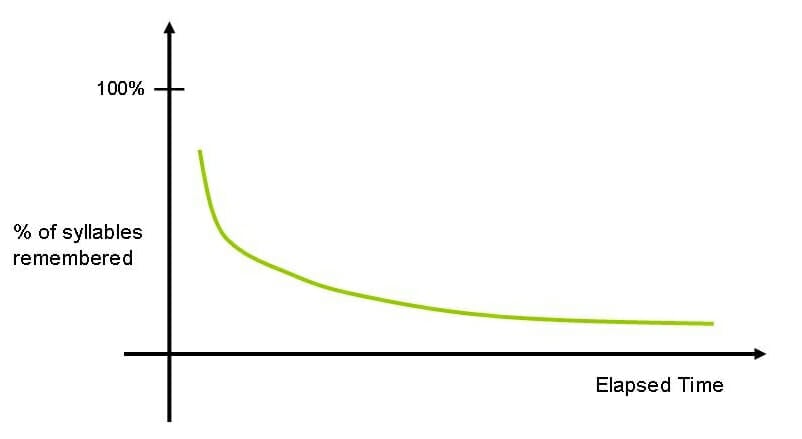
Basically, I use spaced-repetition according the well-established insights of Hermann Ebbinghaus. Ebbinghaus identified something called the forgetting curve and found ways to increase retention.
Learning to use spaced repetition to defeat the Forgetting Curve started in earnest with the research of Hermann Ebbinghaus.
To increase my retention of all kinds of historical facts, I tend to revisit information I’ve encoded using the techniques you’ve just learned:
5 times the first day
1 time for each day the following week
1 time a week for the following 5 weeks
This is a general pattern, one that can be reduced by following the next step.
Step Seven: Plant the Seeds Even Deeper In the Soil of Memory
Some people complain that using spaced repetition feels like rote learning. If you’re not using images like Wonder Woman for the number 50, I would agree that rote is boring.
But that’s why so many of us love accelerated learning techniques. By transforming dry and boring facts into dynamic images and ideas, we mnemonists (people who use memory techniques) start to feel more excited and alive than ever before.
That said, it’s still possible to forget information when using memory techniques.
So as a best practice to avoid unwanted forgetting, here’s what I suggest:
Keep a “Memory Journal” where you write out everything you’ve memorized by hand
Write essays or summaries in your own words to develop deeper knowledge, understanding and recall
Use reflective thinking best practices to generate more specific and broader insights that stimulate memory
Engage in plenty of discussions with a variety of people
Remain humble
Learn from mistakes
These final two points are so key. As we’ve learned from people with high IQs, it’s important to never take knowledge for granted.
Plus, every time you fumble a piece of information, you’ve just gotten an opportunity to learn more about memory techniques. Rest assured, I’m friends with the most impressive memory athletes in the world and they still make mistakes, both in competition and while learning.
If you’d like more lessons along these lines that will help you remember tons of historical information while keeping you humble, get my free course now right here:
It takes you through everything you need to know to beat the “forgetting curve” we just discussed.
And it will help you come up with all kinds of associations for names and historical dates at blazing fast speeds.
So what do you say?
Are you ready to get out there and conquer history?
Many treasure chests of knowledge await!
How to Improve Memory: 19 Proven Ways that Actually Work
Jan 23, 2025
Show notes
Tutorial by Dr. Anthony Metivier, PhD | Memory expert, TEDx speaker, founder of the Magnetic Memory Method Last updated: May 2026 C’mon, admit it. You think learning to improve your memory is going to be a drag. I thought that myself the first time I picked up a memory improvement book. I was so frustrated by its vague promises that I nearly tossed it across the room. The description was so illogical that even as PhD student with two MAs, I couldn’t make it work. Then I discovered mnemonic techniques like the Memory Palace, and everything changed. I went on to deliver one of the most-watched TEDx Talks on memory, earn Tony Buzan’s Warrior of the Mind award, and teach thousands of people to memorize languages, names, speeches, and entire decks of cards. For fun. Here’s what I’ve learned after more than a decade of teaching memory improvement: You really can sharpen your recall without becoming a memory athlete in noise-cancelling headphones. You just need the right combination of lifestyle habits and proven techniques. And on this page, I’ll walk you through both. Below you’ll find 19+ methods I personally use and teach, backed by peer-reviewed research. Several of them will surprise you. A few will work the first time you try them. Soon you will remember historical facts, names, birthdates, phone numbers and be able to recall details of previous conversations, recite scripture, or learn a new language. We’re going beyond simple memory hacks, so watch the video below, use the table of contents and let’s dive in. https://www.youtube.com/watch?v=gXI7gmOR5VI Here’s what this post will cover: Can You Really Improve Your Memory?18+ Proven Ways to Improve Your Memory1. Get Moving for Your Memory2. Do Strength or Resistance Training3. Maintain a Healthy Weight4. Get the Right Amount of Quality Sleep5. Avoid or Limit Alcohol Consumption6. Stop Smoking (and Vaping)7. Avoid Substance Abuse8. Balance Stress in Your Life9. Support Memory with the Right Foods10. Schedule a Check-Up11. Brain Exercises: Pump Some Gray Matter12. Have an Open Mind: Meditation and Yoga13. Simply Socialize14. Keep a Reflective Journal15. Memorize Numbers with the Major Method16. Do Some Mind Mapping17. Magnetic Memory Map18. Memory Palace (or Square)19. Watch Movies StrategicallyYour Next StepsHow to Improve Short-Term MemoryImproving Long-Term MemoryStrive to Be Your Best Self! Let’s begin with the question on everyone’s mind. Can You Really Improve Your Memory? So, what do we mean by memory improvement? Aside from individuals with cognitive diseases or memory disorders, you may be one of the many people who are curious about improving their ability to process and store information for easier recall at a later time. Scientific research has discovered several positive external effects on the different types of human memory. This means humans have several actionable ways to enhance their short-term and long-term memory retention. Not surprisingly, memory research has shown that improvements to physical health go hand-in-hand with brain function and memory improvement. Stronger psychological, emotional, and spiritual health boosts memory as well. By taking a comprehensive approach to your good physical and emotional health, you steer clear of the primary reasons for cognitive decline: Poor diet Lack of exercise Lack of neurobic activities Alcohol and drugs Inadequate sleep We’ll explore the long list of actionable steps you can take to improve your ability to remember. We’ll also look at some proven memory improvement tips and techniques that you can use to enhance your approach to learning, storing, and recalling information. (The good news is that you’re not completely at the mercy of your brain’s current state!) A caution here: There’s no single miracle elixir for improving memory. Currently, there’s no miracle pill or other single simplistic way to improve your memory. Your memory improvement depends on “checking as many boxes” as you can from the following list. Let’s dive in. 18+ Proven Memory Improvement Tips While you don’t have to do everything on this list, it’s helpful to incorporate as many of the following methods as you can. 1. Get Moving for Your Memory We all know that physical exercise is important to maintaining a healthy lifestyle, but did you know that even mild physical exercise benefits memory? A 2018 brain imaging study of healthy young adults showed hippocampal-dependent memory (memory processing) improvements immediately after 10 minutes of very light exercise, comparable to walking at a slow pace. Brain chemical researchers have learned that higher levels of BDNF (brain-derived neurotrophic factor) protein correlate with improved cognitive performance. This is due to the protein’s strong supporting role in encoding long-term memories in our brains. This animal study shows higher levels of BDNF in rodents that exercise in contrast to those that do not, leading clinicians to now include exercise in neurotherapy programs. I’m not a rat, but that’s why you see me performing deadlifts at my favorite gym in Berlin in the picture below: Deadlifting helps improve my focused attention and memory. Do you go to the gym? I also walk daily, run three times a week and try to get sun every morning, weather permitting. Ancillary benefits of aerobic exercise – to help with weight loss, promote better sleep, and elevate mood – provide multiple memory-boosting reasons to put on your tennis! 2. Do Strength or Resistance Training Findings from a Georgia Tech research study indicate that a short session of resistance training can enhance episodic memory, which is long-term memory for events in the past. Weightlifting has shown to increase levels of BDNF and subsequent improvement in memory. Like aerobic exercise, strength and resistance training improves your physical health and helps improve focus, manage stress, and promote better sleep. Think you’re too old for strength training? Among the list of 78 benefits of strength training for seniors are “improved mental health and cognitive functioning”, which entails memory improvement. Studies have shown that senior women realize cognitive improvements with long-term resistance training over other types of physical activity. 3. Maintain a Healthy Weight Did you know that your weight may have an impact on your memory? Being overweight is linked to concentration and memory challenges. Being underweight is linked to challenges with flexible thinking and decision-making on top of concentration issues. Body mass index, or BMI, is a classification of the relationship between body weight to height and provides a relative reference to determine if your body weight is healthy for your height. Overweight individuals have a high BMI. Conversely, underweight individuals have a low BMI. In the case of obesity, systemic inflammation is the suspected cause of cognitive decline. A 2017 University of Arizona study revealed a relationship between high body mass index, the presence of C-reactive protein (CRP) in the blood, and a more rapid rate of decline in brain function over time. Underweight individuals typically have a myriad of nutritional conditions, including anemia (low hemoglobin) which is linked to mild cognitive impairment (MCI). Additionally, a 15-year study suggested middle-aged or older patients with a low BMI have an increased risk of dementia. Refer to an adult BMI Calculator to get an idea of your weight status. If your BMI indicates it, consult your doctor for advice on steps you can take to get your body ratio into a healthier range. 4. Get the Right Amount of Quality Sleep Ahh… sleep! There’s nothing like a good night’s sleep to energize your body and mind! On the contrary, one sleepless 24-hour period is equivalent to a blood-alcohol level of 0.08 percent or more (over the legal driving limit), which understandably accounts for cognitive issues the next day with alertness, concentration, judgment, and complex or logical thinking. But how much sleep is the right amount? Experts say that adults (18+ years) need between 7.5 and 8.5 hours of sleep in a 24-hour period. But, sleep quality often deteriorates as we age. Researchers at UC Berkeley linked poor sleep quality with memory loss. They discovered that during deep sleep, brain waves transfer memories from the hippocampus to the prefrontal cortex, where they’re stored. But older adults’ ability to enter deep sleep is often interrupted, which impairs memory storage. If you’re prone to sleep-related problems like getting to sleep, staying asleep or daytime sleepiness, consult your doctor or a sleep specialist for possible causes so you can start getting the rest you need for better memory. 5. Avoid or Limit Alcohol Consumption It probably won’t surprise you that research shows heavy alcohol consumption impairs or damages memory. However, daily alcohol consumption limited to “moderate” ranges can cause memory issues as well. In order for memories to be formed and saved, our brain leverages a communication system between neurons in the hippocampus. Simply put, this communication system is slowed or derailed by alcohol. This reaction explains short-term memory losses after a night of partying. Long-term memory losses occur with heavy alcohol consumption by causing damage to nerve cells in the hippocampus. Additionally, thiamine deficiencies caused by heavy alcohol consumption can cause dementia, a progressive and permanent loss of memory. The U.S. Center for Disease Control’s recommendation calls for moderate alcohol consumption for those who drink, limited to 1 drink for women and 2 drinks for men. (Also note that the recommendation is not to be considered a daily average.) If you’re noticing memory loss and you consume alcohol, consider cutting back or avoiding alcohol. Be aware that our brains are more sensitive to the effects of alcohol as we age. 6. Stop Smoking (and Vaping) The most noted negative effect of smoking is its impact on the lungs and heart, but here’s another reason to quit: The reduced supply of oxygen due to damaged blood vessels and exposure to over 50 toxic chemicals contributes to cognitive issues, including memory loss. Nicotine, the primary component in cigarettes and e-cigarettes, is a highly addictive stimulant that affects concentration, learning, and memory. Even “social” smokers are at risk for memory loss. A 2012 British study concluded that both daily and social smokers’ poor performances on memory tests were similar, with no significant difference between the two groups. The good news is those who quit smoking will realize improvements in their overall health and memory performance. It’s well known that smoking is a difficult habit to break, so talk to your doctor and try some of these addiction breakers. 7. Avoid Substance Abuse Chronic drug abuse can lead to difficulty in concentration, which is essential to learning and remembering. Due to drugs’ ability to cause harm to several regions of the brain, long-term abuse can negatively impact a person’s ability to think and solve problems. In addition, studies of both long- and short-term Ecstasy and recreational drug users were shown to have some level of memory impairments, specifically with prospective memory, which is the ability to organize, plan, and multi-task. If you use drugs recreationally, consider recovering from addiction with the help and support of your friends and family. 8. Balance Stress in Your Life Memory and stress have an odd relationship. Highly stressful circumstances often form unforgettable memories in our brains, like being robbed at gunpoint. But, when we’re trying to learn, stress (i.e. adrenaline) battles against our attempts to remember things. Emotional disturbances like stress, anxiety, and depression can cause difficulty with focus (concentrating) and subsequent forgetfulness. According to a Berkeley study, chronic stress and anxiety cause changes in the brain that interrupt normal communication and memory processing. Fortunately, stress and other emotional disturbances can be managed, which can make your memory better. If you’re concerned about stress, depression, or anxiety as a cause for memory concerns, consult your doctor. When you’re feeling stressed, sensory experiences like these quick stress relievers will help you relax, realign, and improve your focus. 9. Support Memory with the Right Foods Want to know how to strengthen your memory? Stop poisoning it. Seriously: The foods you eat have a tremendous impact on your brain health and memory. Your brain function is impacted negatively by eating the worst foods for memory that cause inflammation or contain toxic chemicals. You can strengthen it by discontinuing foods that weaken it and adding ingredients to your diet that support it. Optimally, your diet should support the production of the brain chemical BDNF (the brain-derived neurotrophic factor protein that increases with exercise) and good blood flow to your brain. But how do you know what to eat? This list of 11 foods to boost your memory is a great place to start while investigating other brain-boosting food sources. Savor Some Flavonoid-Filled Fruits and Veggies There are over 6,000 types of flavonoids, which is a family of plant chemicals that are the reason (in part) for the colors of fruits and vegetables. When consumed, they provide a myriad of health benefits, specifically antioxidant properties with anti-inflammatory effects and an increase in blood flow to the brain. A 10-year study of seniors suggested that high dietary flavonoid consumption is possibly associated with better cognitive performance. Another study focused specifically on fruit flavonoids found that they seem to protect brain neurons from toxic or inflammatory-based injury — suggesting that eating flavonoid-rich fruits like apples, berries, and citrus can limit or reverse age-related memory deteriorations. Scientists are still working on zeroing in on recommended amounts of specific flavonoids to fight specific brain-related diseases and conditions. In the meantime, don’t overlook the healthful benefits of including colorful fruits and vegetables to your diet. Reduce Sugar Intake and Other Inflammatory Foods Although elevated glucose levels are harmful to the entire body, note that memory functions such as concentration and attention are negatively impacted by the inflammatory effect of excess sugar as well. A study of trained rats showed that they realized memory improvements by replacing a high-fat, high-sugar diet with a low-sugar, low-GI (low glycemic index) diet. While reducing sucrose and fructose found in sugar, minimize your intake of other foods with trans fats and refined carbohydrates. Vegetable oils and processed meats also promote inflammation, which can adversely affect your memory. Consider Choline Choline – an essential nutrient found in eggs, beef liver, soybeans, and potatoes – supports brain development. The recommended adequate intake (AI) of choline for healthy adults ranges from 425 mg (females) to 550 mg (males) per day. Check natural food sources of choline to add to your healthy balanced diet. For example, a hard-boiled egg has approximately 147 milligrams of choline, which is about one-quarter of the daily recommended intake. Lecithin, a common food additive in processed foods, is rich in phosphatidylcholine and accounts for about half the dietary choline consumed in the U.S. A Word About Vitamins and Supplements There’s a lot of buzz about vitamins and supplements designed to promote brain health and memory enhancement. Some of these claims are legitimate with respect to brain disorders such as Parkinson’s disease and Alzheimer’s disease, but may have trade-offs. If you want to improve memory and have considered adding vitamins or memory supplements to your protocol, do your research before selecting the right high-quality supplement that fits your needs. 10. Schedule a Check-Up Work with your doctor to man…
A Memory Palace Method for Mindfulness: The Missing Ingredient Revealed with Michael Taft
Jan 16, 2025
Show notes
Mindfulness expert Michael Taft had long know about the Memory Palace technique.
But something was missing.
An ingredient absolutely critical for success in memorizing mantras for meditation.
Join in as Michael Taft, host of the Deconstructing Yourself podcast and author of The Mindful Geek, discusses with me ways that ancient memory methods can enhance mindfulness and spiritual growth.
All the more so when you have the missing ingredient that evaded him for so long.
To that end, in this episode of the Magnetic Memory Method Podcast, you’ll learn a powerful spaced repetition strategy for mantra meditation that most people unfortunately miss.
And you’ll discover science-backed approaches to training your mind as we explore the challenging aspects of meditation practice rarely discussed by traditional teachers.
Michael shares insights from both contemplative traditions and modern scientific insights, offering a unique bridge between multiple worlds of knowledge.
Whether you’re a seasoned meditator looking to deepen your practice or a memory enthusiast curious about spiritual applications, our discussion takes you deep into practical techniques for combining memory palaces with meditation.
In this transformative episode, we explore:
How to use Memory Palaces for enhanced mantra meditation
Practical memory techniques for spiritual practice
Challenging aspects of meditation many teachers infrequently discuss
Advanced mind training methods combining multiple approaches
https://www.youtube.com/watch?v=KrgxBOCXEo8
Who is Michael Taft?
Michael Taft is a highly-regarded mindfulness teacher, author, autodidact and thought leader working at the intersection of contemplative practices and neuroscience.
With decades of experience, he is a voice many look to for deeper results from their meditation practice.
As Michael shares with us in this episode, his commitment to mindfulness goes back decades.
He’s studied and collaborated with some of the most accomplished professionals in the field, paying forward the absolute best techniques for establishing clarity, calm and more concentration in your life.
His groundbreaking book, The Mindful Geek struck a chord with me personally. As a mostly skeptical person, his demystification of various “woo-woo” ideas helped me be more open to exploring why they may have evolved. And why they might be useful to engage with even if I’m skeptical.
When you listen to the Deconstructing Yourself podcast, you’ll find Michael’s style is warm, but also characterized by a no-nonsense approach.
I hope to one day attend one of his mindfulness retreats and suggest you connect with him for news of upcoming opportunities.
And above all, I hope his experience encourages you to discover and implement the missing ingredient.
How to Memorize Flashcards Quickly and Permanently
Jan 01, 2025
Show notes
The best way to study flashcards is not to study them at all. Now, before you bounce away, hear me out. There’s a small set of techniques that make learning with flashcards so fast, you really won’t feel like you’re studying at all. Instead, you’ll feel like you’re creating the knowledge you want to learn. Isn’t that exciting? I’ve been using cards for decades and spent hundreds of hours experimenting to find out how to memorize flashcards effectively. I’ve used them to help me learn languages and get my Ph.d. at York University in Toronto. Later, I used optimized flashcards to help me lecture at the University of Saarland in German. And on this page, I’ll share with you the best tips I’ve discovered along the way. That way, you can also enjoy similar results. Ready? Let’s dive in. https://youtu.be/0GNnQGLfly8 How to Memorize Flashcards Effectively: 10 Proven Tips There are a small number of steps to follow. They’re easy to learn, but let’s not beat around the bush. What I’m going to share may feel counterintuitive at first. You probably won’t be used to thinking or learning in these ways. But please don’t stress it. To get comfortable with the approach, I’m about to teach. You just need to practice. Seeing me talk about how I link some of my own flashcards with a variety of mnemonic devices will also help. That’s why I’ve included videos for you on this page. https://www.youtube.com/watch?v=b6HrJCWygmg Now that you know this particular approach to flashcards involves some highly specific mnemonic strategies, here’s step-by-step information on how to set yourself up for success. Step One: Identify The Main Points And Subpoints Before you start making flashcards or committing them to memory, it’s important to have a strategy for identifying the main points. Often, your study material is loaded with clues. Knowing how to analyze your information sources is key, so be sure to learn how to memorize a textbook effectively. Step Two: Use The Right Sized Flashcards Typically, 3×5 is a good size. It helps you focus on recording just the key points. However, you may need to experiment first with a few different sizes. Use discernment and your own experiments to find out what sizes are best for you. And don’t hesitate to use different sized flashcards for different kinds of learning projects. Also, keep in mind that you can always photograph cards of any size and import them into a spaced-repetition software like Anki. Step Three: Use Multiple Colors Nothing limits your imagination like using just one color. I try to always use at least 3 colors in each of my cards, a tip I learned from memory expert Tony Buzan. Making sure your flash cards have multiple colors is a key strategy for engaging your brain and amplifying the learning process. Not only does using multiple colors make the card creation process more interesting. It also makes looking at your cards later much more engaging. Step Four: Integrate Words And Drawings When learning how to study with flashcards, it’s easy to get stuck on using words. By the same token, people with aphantasia cannot fully or partially visualize. That’s where this next tip comes in handy: Even with limited artistic skills, it’s important to incorporate images as much as you can. Even the simplest of sketches will help you with the next tip. I sometimes joke that my drawings look more like chicken scratches – and that’s probably too much praise. But here’s the important point, especially for people who do not easily see images in their mind: All that matters is that you can recognize your quick doodles on the cards. And as the next makes clear, even if you have to guess at your own drawings some of the time, that will actually help your brain start establishing the desired memories. Step Five: Create Puzzles For Your Brain To Solve The number one problem people face when using flashcards is rote repetition. This is when they use the cards to repeatedly expose themselves to the information. That is no fun! Instead, use keywords, images and even empty spaces to give your mind the opportunity to fill-in-the-blanks. Let’s talk about the empty space principle in a bit more detail. This simple flashcard creation strategy lets you harness the power of active recall. For example, on this card for the Mandarin word Měishù guǎn or art gallery, there’s a line instead of an image for the guǎn sound. Notice the three colors in this flashcard example and how the blank space stimulates the use of active recall for rapid memory formation. When looking at the card, I know it’s my job to press my imagination for a solution. Although it might seem uncomfortable, it’s the stretch that helped me pass my Chinese test with flying colors, including the Chinese characters. I was happy because I was able to reach almost as many words that are needed for basic fluency in this language. We’ll talk more in a minute about how we use our imagination, but for now, make use of this principle as often as you can. It’s powerful. Step Six: Leave The Opposite Sides Blank As Often As Possible Many people will be reluctant to leave out critical information when first creating flashcards in this manner. But it is a very strong learning strategy I recommend you experiment with as soon as you feel confident. So that you can develop confidence quickly, start with memorizing a simple list from a set of cards you create for practice. And understand why putting too much information on your cards is such a bad idea: Including the answers on the back of your flashcards is problematic because it leads to cheating. When you know you can just glance at the answers, you’re tempted to do so. Instead of trying to generate the answer from memory, which will strengthen your recall. Worse, cheating by peeking at the answers is a huge problem because it leads you into the memory-destroying boredom of rote learning. So as you build up to using flashcards as puzzles your mind has to solve to reinforce what you’re learning, use plenty of puzzles and blank spaces. For example, on this card for the word Kǎoshì or test/exam, multiple colors have been used (black, white and pink). The front side of the card uses images alone to help the mind solve the puzzle. On the backside of the card, notice how the blank space creates a puzzle to be solved, avoiding the horrible boredom of rote repetition: The backside of the flashcard uses active recall to stimulate faster absorption of the target information into long term memory. Rest assured, this tactic is scientifically valid. It’s called a Cloze test. Using this kind fill-in-the-blanks approach will massively boost your retention in a short period of time. Step Seven: Use Your Multisensory Imagination Although flashcards focus a lot on our hands and eyes, we don’t want to leave out our imagination. As you create your cards and the associations that will help you remember definitions and key terms, include at least these sensations: Kinesthetic Auditory Visual Emotional Conceptual Olfactory Gustatory Spatial Here’s an example of what I mean. The Měishù guǎn example pictured above and discussed in the video included with this post is not just a picture of Aunt May, some shoes, a blank space and some art in a gallery. In my mind, I am physically feeling Aunt May kick a boot at my image for guǎn, which is a musical group called Gwar. I can hear the sound of the boot hitting them and see them getting angry. I experience their anger and conceptualize their plans for revenge. They are going to burn all the art in the art gallery, which allows me to imagine the smell of fire and the taste of soot in my mouth. As you work with your flash cards, imagine each image larger than life. You can project them on the walls of a Memory Palace for even better and faster learning outcomes. I also take a second to imagine how big everything is and exaggerate the sizes. Combined, all of this multi-sensory association and visualization exercise makes the learning process so much faster. Step Eight: Use Questions As You Study Your Flashcards Rather than passively move through your cards, actively ask questions in order to study more effectively. If you don’t, it’s easy to get frustrated. My favorite question is, “What is this image trying to tell me?” Then I focus on the clues and work it out verbally. It’s important to get your mouth involved in order to help you harness the levels of processing effect. In addition to speaking and answering your cards out loud, you can also keep a memory journal. Doing so will deepen your brain’s processing of the learning material even further. Step Nine: Follow A Consistent Schedule To memorize flashcards effectively, you need to reduce repetition by following all of the steps outlined above. But none of us can reduce repetition entirely. For best results, go through your cards in small, reasonably sized sets. I prefer 10-20 sets at a time. Then, craft a schedule based on a pattern like: 5x daily for the first 5 days 1x daily for the first 5 weeks 1x monthly for the first 5 months But that time, you should have everything in long term memory that will in many cases last for life. If you want to speed up the process, consider also using a Memory Palace. Each card can be “cross-indexed” with a Memory Palace. I often number my flash cards to help keep track of where in a particular Memory Palace they have been encoded. For more scheduling tips, I share some of my best strategies in a post called How to Teach Yourself. Basically, once you have your memory skills amplified, really all that remains beside comprehending and implementing what you learn is time management. Step Ten: Experiment With Additional Techniques As powerful as flashcards can be, I don’t recommend using them in isolation. Instead, consider combining them with the Memory Palace technique and mind mapping. A powerful way to add your cards to a Memory Palace is to simply number them. Then, place a version of each association on your cards at a Magnetic Station in your Memory Palace for that number. In other words, the fifth card’s information goes on the fifth station of its Memory Palace. When it comes to mind mapping, I highly recommend reading Mind Map Mastery and checking out the work of Phil Chambers and Marek Kasperski. Memorize Flashcards Fast Today’s suggestions will serve you well, so please explore them systematically. But it’s also important to experiment. And also to improve your use of flashcards over time. For example, as you grow with using cards optimized in the ways we’ve discussed today, you can interconnect them. To do that, I suggest exploring Zettelkasten and Leitner Boxes. And let your own solutions arise. When ideas come to mind that you think might work, give them a try. Seriously. I’m aware of no “Flashcard Police” anywhere on the planet. Also, put aside your fears of wasting time or failure. Mistakes will be made, but experimenting with new learning techniques and your ideas cannot waste time. You will only learn new things that help speed your progress. The only waste that happens is when people let the fear of trying new things stand in their way. And if you like trying new things and learning to put fear aside, check out my FREE Memory Improvement Course: In it, you’ll learn to use even more memory techniques than we’ve discussed today. These memory hacks are fast, fun, effective and always like a game. So what do you say? Are you ready to take your flashcard game to the next level? Give it a go and enjoy the learning journey!
How to Teach Yourself: 9 Strategies for Mastering Any Skill or Topic
Dec 19, 2024
Show notes
Learning how to teach yourself can be fast, fun and incredibly effective. It can even be relatively inexpensive. But discovering how to learn on your own can also be psychologically and financially disastrous if you go about it the wrong way. Whether you’re looking to advance your career, enrich your personal life, or simply satisfy your curiosity, there definitely is a right way to go about educating yourself. And make no mistake: In today’s fast paced world, you can’t afford to make too many rookie mistakes. I know this all too well from my experiences getting a PhD, learning languages and figuring out how to reach millions of people through books, video courses and this blog. My journey has been filled with mistakes that you can avoid by reading this post. I’ve taught at three universities too and seen many learners make enter irrelevant learning mazes. But because I’m so passionate about helping my fellow lifelong learners, I’m delighted to at least try and help you avoid the dead-ends and save time as you harness the power of learning on your own. Ready for my best tips? Let’s dive in! https://www.youtube.com/watch?v=Sw32p0p7PEY How to Succeed Along Your Solo Learning Journey: 9 Powerful Tips Learning on your own starts with four core commitments: Creating and reviewing a vision statement that guides your journey Deep engagement with topics and skills beyond surface-level understanding Critical thinking about which accelerated learning techniques are worth pursuing A long-term investment in active learning strategies You need these commitments because it’s all too easy to feel like you’re involved in serious autodidactic efforts. But if you want to become a polymath and master several skills and topic areas, especially if you lack the most common polymathic personality traits, you can’t afford to rely on your feelings. As this peer-reviewed study demonstrates, many learners think they’ve learned much more than actually did because of how passive learning feels. Although it’s true that the passive consumption of information is comfortable and often fun, it’s usually a dead end for self-learners. We actually learn better through active engagement. And that means feeling challenged, which is a different sensation than understanding or even remembering something. The lack of alignment found in the University of California study I linked you to above is not new. St. Augustine addressed this problem long ago, as did a very important medieval mnemonist named Hugh of St. Victor. With the need for active learning in mind, here are my best tips for making sure all of your self-learning activities keep you challenged and deliver real results. Ignore them if you choose, but please understand that without most of them in action, you risk learning little or nothing. One: Spend An Epic Amount of Time Structuring Your Goals A lot of people claim that S.M.A.R.T. goals can help keep you focused (Specific, Measurable, Relevant, Time-bound). Really? I’ve always found SMART goals to pale in comparison to creating a vision statement by hand in a journal. I suggest focusing on a goal that is neither measurable nor time-bound in any traditional sense. Specific and relevant yes, but what the other two terms even mean makes little sense to me. Think about it: How can you measure a goal when you don’t know the main points or aspects of a topic you want to learn? When setting and planning my learning goals, I prefer to avoid reinventing the wheel. I use traditional educational structures instead – very old learning cycles that remove a lot of cognitive load. I’m talking about traditional semesters used at universities. See, even though you’re learning on your own doesn’t mean you can’t harness institutional methods for structuring time. Whether it’s three month or six month learning periods, I suggest you plan your self-study projects within the academic term framework. I don’t think I’m biased when I make this suggestion, even though my long history as both a student and professor have clearly placed this kind of learning pattern deep in my procedural memory. The Benefits of Planning Within the Semester Structure, a.k.a. T.E.R.M.S. Even if I am suffering from a memory bias, the benefits are clear. Planning your goals within a 12-15 week will help you: Pace yourself Having clearly designated recovery periods will prevent topic exhaustion Defined start and end dates make accountability efforts meaningful Easier to fit around your regular duties and obligations You can better track your progress You can batch a small set of subjects together and use chunking while benefitting from interleaving Practice using a “Not Now Folder” (more on that in a moment) Rather than thinking in terms of SMART goals, I’ve replaced this acronym with TERMS: Time bound sessions within a clear semester-like period (12-15 weeks) Evaluated using a Memory Journal on a daily basis Realistic limits based on the specific study load described in the vision statement Modular and broken down into specific topics Scheduled and fixed study sessions written by hand into a calendar To give you an example of how I’ve used this technique myself, during the past few years I have researched and drafted a book on Giordano Bruno. Because this self-learning project isn’t just about the man and his story, I created semesters for myself to cover the books he wrote, but also the topics he himself studied. For that, I needed to create my own semesters for math, geometry, astronomy, logic and persuasion. I also took deep dives into the books on memory techniques Bruno most admired, such as The Phoenix by Peter of Ravenna. Without leaning on the established educational structure of the semester, I do not think I would have made nearly as much progress as I have so far. Two: Reasonable Resource Hunting We’re all only human. Our brains love to chase shiny new objects. But when it comes to lifelong learning that will amount to something, you need to let go of the majority of books and courses that will almost certainly provide you with magnificent experiences. One to five topics max, but usually no more than three. That’s my personal threshold for making sure I’m not spreading myself too thin. Although pursuing less definitely feels tragic, if you spend all day browsing books, ebooks, free video tutorials and even paid offerings on online course platforms, nothing will get done. In other words, the fear of missing out is real. But worse is the reality of never getting anything done because you’re constantly spreading yourself too thin. To keep the amount of distractions to a bare minimum, I suggest that you work primarily with physical books. Find a study place with minimal distractions and use my textbook memorization strategy. I often read outside and take notes using flashcards that also serve nicely as bookmarks. When working with online video courses or audiobooks, it’s best to close all tabs and take notes by hand. To reduce the temptation to research every word or idea I don’t recognize while studying, I like to sit cross-legged on the floor at a distance from the computer. That way, it’s harder to start consuming another research resource without first completing the current one. Instead, I keep a running set of notes that later serve as a to-do list of all the things I want to look up later. The Not Now Folder Principle When I was at York University, I took a fourth year course on Romantic Poetry. Frankly, the course was bland and I didn’t much like the professor. He went out of his way to be mean to me because I was ill that year and asked for an alternative assignment instead of having to give a presentation. That drama aside, he shared one strategy that I’ve never forgotten and appreciate so much that he’s entirely forgiven. He called it the “Not Now Folder.” Throughout his career, he said he was always distracted by ideas he wanted to research. Eventually, he learned to write them down on slips of paper and then tuck them into a folder. He said that something curious happened. 99% of the time, items in the “Not Now Folder” because “Not Ever” items. Scientifically speaking, my professor was helping himself avoid the Zeigarnik Effect. This is the tendency to remember things on your bucket-list, often to the point of distraction. As a self-learner myself, I can tell you that it’s definitely better not to get yanked around by all kinds of fun and interesting ideas. That’s why I’ve been keeping a Not Now Folder ever since. This simple place to put all kinds of interesting ideas also helps eliminate the Ovsiankina Effect. This psychological term describes the urge to finish tasks that you’ve started. A lot of gamification relies on this effect, and it certainly has its positive aspects. But in order to guide yourself toward meaningful progress, you can avoid its negative aspects by only starting projects that fit your vision and follow your T.E.R.M.S. Three: Use the Best Possible Learning & Spaced Repetition Tools Whereas I prefer index cards, many people love spaced repetition software programs like Anki. Ultimately, you need to experiment with a variety of options, from mind mapping to the Leitner System. The key is being radically honest when exploring various objects and processes that can help you absorb information better. Memory champions are great people to learn from when it comes to developing total transparency. They love scoring themselves on how much they’ve learned and how fast. To adopt some of their best techniques for keeping your efforts clear and honest, I recommend learning Johannes Mallow’s journaling method. You’ll have to adapt it to your specific learning goals, but the principles are extremely valuable. Related to learning tools and processes, you should also consider different types of thinking as powerful assets. Four: Master Active Learning Active learning is defined by actively engaging information through: Proper note-taking Active recall, such as by using memory techniques to aid rehearsal The use of active reading strategies Analytical thinking and other forms of critical evaluation Questioning each and every detail Recreating information by mind mapping or writing summaries Discussing and debating with others Each of these activities provide you with the alternative to passive learning. In other words, you are not highlighting passages in books or downloading someone else’s Anki deck. Rather, you’re creating your own highly personalized flashcards. And you’re setting time aside for reflective thinking, one of the most important active learning activities of them all. The trick is to know your personal best time of day for studying so you can maximize the time spent when it comes time to reflect. Five: Use This Search Hack When it comes to teaching yourself, it’s easy to feel overwhelmed. Even with the best possible resources as we discussed above. But when you think about it, there are only so many kinds of resources. For example, we’re all limited almost entirely to: Books and Ebooks Online Courses YouTube Apps Forums Friends Mentors To select the best possible material from these content categories, I suggest using search engines a bit differently than you might have considered before. For example, when I started a self-taught project in the philosophy of metaphysics, I found a fantastic book by searching using this command: filetype:pdf syllabus metaphysics That’s all it took for me to find multiple reading lists from top-tier universities. The next step was simple: order the books assigned by the world’s best professors. Then, after reading those books, I looked for interviews with the authors of the books I found especially helpful to extend what I’d learned from my reading. Six: Imagine Challenges & Obstacles Before They Happen When learning on your own, it’s easy to get discouraged. I don’t care how much mental strength you have. Learning alone often feels lonely. It can also feel isolating too. That’s because the more people like you and I commit to memory while so many people in the world fritters their time away on social media, the more alienated we can feel. One way to balance your learning with well-being is to make sure you imagine all the things that can go wrong. Then, plan for what you’ll do if those things happen. This technique was popular amongst the Stoics, many of whom were very well-educated people. In addition to potentially feeling isolated or removed from society, plan for other problems like: Topic exhaustion Burnout Stress and anxiety-induced memory loss Personally, topic exhaustion has been one of my biggest foes. To tackle it, I practice a lot of interleaving. This learning strategy involves regularly switching between a small set of topics. It helps keep things fresh. I also find that in my memorization work, switching from committing one type of content from another helps me remember a lot more without burnout. Seven: Study Ethically & with Radical Honesty Self-learning can make it tempting to avoid some of the ethical activities used in traditional learning systems and information sharing. I’m talking about respecting intellectual property, especially by citing your resources. That means also making clear when you’ve derived some fact or idea from an AI chatbot. Why does this matter? The answer is simple: To be an intellectual worth your salt, you need to be able to share where your ideas come from so others can evaluate them. You also need that ability too because things can and do change. I can’t tell you the number of times I’ve needed to “fact check” myself when going from memory while writing new books and articles. Luckily, there are ways to memorize author names and historical dates related to when they released their books. Although you might think we live in an age of digital content where it’s okay to say, “I can just look it up later,” there are at least two problems with that attitude. Due to digital amnesia, people often forget the info that helps them look things up later Disruptive technologies have changed search, often to the point of corrupting it almost entirely Recently, for example, the Internet Archive went down. Its absence made fact-checking myself impossible, though fortunately I remembered enough to continue my personal learning goal. The point being that you owe it to yourself and others to use memory techniques as much as you can. And cite everything in writing even if you do remember the info so people can assess your references if they’re interested in your conclusions. Eight: Embrace Failure So many people email me when teaching themselves the Memory Palace technique with the wish that they “get it right the first time.” Although their hearts are in the right place, it’s a poor learning strategy. There are no mistakes when learning. Just results and opportunities to get better results through analysis and repeat attempts. The more ambitious your learning goals, and the more interdisciplinary they are, the more likely you’ll make what conventional learners call “mistakes.” But you’re not going to be a conventional learner. You’re going to succeed at this most critical aspect of self-improvement by analyzing what happens and adjusting according to your goals without labelling or judging the outcomes. How exactly do you embrace failure? As shown on the infographic above, you can: Redefine the idea of making “mistakes” Use reflective thinking to identify the specific action steps needed for your next attempt Stay resilient by continuing to take action and maintaining a positive attitude Celebrate effort and recognize the courage it takes to get started learning on your own in the first place Nine: Be Adaptable Being adaptable means learning things you’re not necessarily interested in so that your projects can reach completion. This point is so critical because year after year I see students flounder because they simply prefer to break, rather than bend. I c…
How to Find The Main Points in an Article or Book
Dec 11, 2024
Show notes
The number one reason students struggle to find the main points in their assigned reading is simple: You are being tested on your ability to figure out what they are and why they’re important. Teachers worth their salt won’t give you the answers because to do so violates your ability to learn this skill. Why is this true? Because all of human progress relies upon unique and innovative solutions to problems. And knowing how to find the key points in an article is something that is learned by doing. Plus, content is not king in this regard. Instead, context is god. So you not only need to practice identifying what the key points are. You need to justify in your own words why those points are so important. The best part? I have tips for you that will help you improve your skills in not only finding the main points, but also explaining why those points count. And I’ll teach you how I as a person with two MAs and a PhD earned my degrees by doing just that: finding, outlining and justifying each key point. Ready to see A+ written all over your report cards and university transcripts? Let’s get started! https://youtu.be/fMcVofEtn2U My Top 4 Tips For Finding the Main Point Quickly I’m going to give you a bunch of tips in this article from my years as a university student and professor. But let’s start with the most important of them all: Start at the end of most books and read the conclusion. Authors usually summarize the most important findings at the end. Memorize the key words and terms authors use as you go. Don’t wait. The sooner you understand them, the sooner your comprehension will grown. Don’t skip the charts, graphs and diagrams. Copy them out yourself to help aid understanding. Use index cards. It’s important not to lock your notes in linear notebooks. When you follow these four simple tips, you can skim and scan books quite effectively. You still want to read them thoroughly for best results, but by following these tips, you’ll get much more out of the process. I’ll expand on each of these points in greater detail below. But first, let’s spend a moment exploring the exact definition of “main point.” The meaning of this term might surprise you. What Counts As A Main Point? A main point has several aspects to it. For starters, we have: What the author meant What the author actually said Now, you might think that this is splitting hairs. But as Stanley Fish put it, “the world is one thing, words another.” Fish is the author of How to Write a Sentence: And How to Read One. A huge part of his point is that there’s a difference between what a person actually means and how words can be interpreted in many different ways. There’s a word for this problem: Polysemy. We face it when “a single word, phrase, or concept has more than one meaning or connotation.” Because many sentences have this issue, the main idea of a passage almost always requires interpretation in your own words. And if you want to interpret really well, you need to give evidence to demonstrate why your take on the meaning of the passage is valid. So we might as well face an uncomfortable truth: To a certain extent, a main point is what you say it is plus what you can validate through argumentation. Main Points In The Classroom The definition I’ve just given applies to all aspects of life, but might not be what a teacher in a classroom is looking for from you. It may be that you need to give a specific answer. This is why I say that “context is god.” In order to pass a test or get an A+ on a paper, the right answer might not be in your control no matter how much evidence you provide. I’ve personally suffered situations several times where in multiple choice exams, the wording of the question made it impossible to give the best possible answer. That’s why I’m glad that I used to follow a few simple steps: Read the textbooks thoroughly and answer any section or chapter quizzes Talk to my teachers to make sure I knew exactly what they were looking for Go through sample exams from previous years Attend study groups to discuss possible exam questions in advance Once in the exam setting, if I could not figure out what answer the person grading the exam considered correct, I took a detour. Many times, I have handwritten on the reverse side of my exams simple messages. In these notes addressed to the examiners, I explained that I could not give an answer in good faith. Then I would write a full explanation of why I thought the question was worded poorly. Finally, I gave the answer in prose that I felt was the best possible answer to what I felt was a better way of framing the question. Although I cannot advise you to do the same, this strategy saved my skin in several exams. I always passed and ultimately completed most of my degrees with honor, something that would have been impossible if I had followed the “rules.” In my case, my main idea paragraphs (or what I sometimes called “paragrowls”) saved my skin many times. And the strategy I’m sharing with you is not so outlandish. According to this study, almost 50% of students underestimate their own understanding. That means you’re well-within reason if you think an exam question is incorrectly or confusingly written. I didn’t know about this study at the time, but I’m glad I didn’t underestimate my own comprehension. And now you know that you don’t have to underestimate yours. The Best Way To Identify A Main Point At the end of the day, the best way to know the main point is to question everything. Ask yourself: What is the author trying to tell me? What are the words the author uses? How is the topic introduced and concluded? What are the causes and the effects outlined in the material? What solutions does the material propose? What do any diagrams or illustrations tell me about the main points? What references to other research does the author make? What do commentators on the author say about the main points made by the author? Can I find where in the book or article those commentators drew their conclusions? By asking and answering questions like these, in combination with the strategies I’ve shared for how I used to pass exams, you should feel confident that you can find the main points much easier now. And if you keep finding that you can’t remember what you read, make sure that you’re writing out the answers to the questions you’re asking. You probably need an additional layer of mental processing. I write a lot myself, precisely because writing helps get the information out of my mind and into my body. You might think that sounds strange, but recent research into how memory works shows that some of our memories are encoded in cells outside of the brain. Learning is literally a “whole body” experience, so make sure you get in as much writing as possible. What Are Subpoints? Subpoints are fairly easy to define. Remember how I said that we need to validate our opinion about what counts as a main point? Authors of books and articles need to do this too. By offering subpoints is how they do it. A subpoint typically involves: Giving an example Providing evidence in order to substantiate a claim Paraphrasing another source Quoting a source Analyzing a secondary text Providing a variation on a key point Performing historical or theoretical analysis on a main point For a quick example of a subpoint, just scroll up. When I mentioned that I’ve passed all my exams so well that I’ve earned the highest degrees you can get at a university, that was a subpoint. It is providing evidence to support the claim that my strategy is valid. I could actually make the claim even more valid by providing proof that I have a Ph.d., such as by giving you this link to the alumni page of York University’s graduate program in Humanities. Are subpoints more important than the main points? In many ways, yes. They are often the evidence that substantiates the main point. Or they provide the nuances or historical background that help explain what makes the main point important. How to Find the Key Points in an Article in 3 Steps Now that we have defined main ideas and subpoints, let’s talk about some powerful ways to find them. The following steps do not have to be followed in any particular order, though I do suggest always starting with the first one. Step One: Know Your Goal As I mentioned, a teacher or examiner may have a definition of what counts as the main point. I’ve given you some strategies for figuring that out. All you have to do after determining what counts as a main point in your particular context is to read the books with that definition in mind. Searching for information based on a goal is a key part of reading faster, so take a second to write out the specific goal every time you sit down to read. If you’re completing a doctoral dissertation or writing a book like I often do, the burden is a bit heavier. Your goal is to have a research question before you start reading. Answering this question, and any sub-questions you may have, is your goal. Step Two: Keep Detailed & Moveable Notes Because it’s not always possible to know the main idea of a story or scholarly book I’m reading, I take notes on cards. I shared a detailed tutorial on how I do this in How to Memorize a Textbook. As I discuss in that post, there are several benefits to taking notes on cards. The main one is studying faster. Another is how using physical cards helps you constantly reshape your “deck of notes.” The more you read, the more your idea of what counts as an important point might change, as will the subpoints you notice. Keep in mind that subpoints don’t always have to come from the same source. As a former university professor myself, I can tell you that one way to make sure you get an A+ on your essays is to cross-reference several articles. By doing this as much as possible in your writing and when answering exam questions, you’re demonstrating reflective thinking. This impresses your graders and will later impress hiring managers too. Step Three: Test For Validity One of the best things you can do is test your assumption that a point is as important as it seems. You can test the validity of what you’ve decided are the most important details in your reading by: Checking introductions and conclusions again for confirmation Looking through the index for the terms you’ve selected Follow-up reading online and in other books Asking your teacher or professor if you’ve understood the reading correctly Talking with others to see if they’ve reached similar conclusions Ultimately, having your test, submitted assignment or the things you write yourself graded or scored by others is the ultimate validation. You need either the feedback of your teacher or comments from the court of public opinion to know if you’ve hit paydirt. And that’s a very good thing. External validation is a huge part of how we grow. Yes, it takes some courage and sometimes you might get things wrong. What then? The answer is simple: Be willing to admit that a mistake was made. Then commit to improving in the future. So long as you commit to doing that, you cannot lose. A Final, Powerful Way To Find Main Points There’s an ancient technique for finding out what really matters in any given text. It involves using a Memory Palace. Basically, you memorize a few details, or entire quotes. Then, you analyze them from within memory. By doing this, you’re able to consider them in a way that is much deeper than if they are only partially absorbed in your mind. If you’d like to learn more about this technique, consider going through my Free Memory Improvement Course: This approach has helped me many times throughout the years, not only for academic goals, but also personal progress in other areas of life. I’m talking about health, mindfulness and professional matters. Give it a try, and let me know: What questions do you still have about identifying the main points in the texts that you’re reading? I love updating posts and answering questions in the comments. And that’s another strategy you might consider: Online discussion. It’s a great way to figure out what matters most to yourself and others.

 Our TOPPODCAST Picks
  Stay Connected