TopPodcast.com
Menu
  • Home
  • Top Charts
  • Top Networks
  • Top Apps
  • Top Independents
  • Top Podfluencers
  • Top Picks
    • Top Business Podcasts
    • Top True Crime Podcasts
    • Top Finance Podcasts
    • Top Comedy Podcasts
    • Top Music Podcasts
    • Top Womens Podcasts
    • Top Kids Podcasts
    • Top Sports Podcasts
    • Top News Podcasts
    • Top Tech Podcasts
    • Top Crypto Podcasts
    • Top Entrepreneurial Podcasts
    • Top Fantasy Sports Podcasts
    • Top Political Podcasts
    • Top Science Podcasts
    • Top Self Help Podcasts
    • Top Sports Betting Podcasts
    • Top Stocks Podcasts
  • Podcast News
  • About Us
  • Podcast Advertising
  • Contact
Not in our directory?
Add Show Here
Podcast Equipment
Center

toppodcastlogoOur TOPPODCAST Picks

  • Comedy
  • Crypto
  • Sports
  • News
  • Politics
  • True Crime
  • Business
  • Finance

Follow Us

toppodcastlogoStay Connected

    View Top 200 Chart
    Back to Rankings Page
    Education

    Anthony Metivier’s Magnetic Memory Method Podcast

    Learn, Memorize And Recall Anything Using Memory Techniques, Mnemonics And A Memory Palace Fast

    Advertise
    • Apple Podcasts
    • Google Play
    • Spotify

    Latest Episodes:
    How to Memorize Things Fast: 5 Science-Backed Techniques May 17, 2025
    Show notes

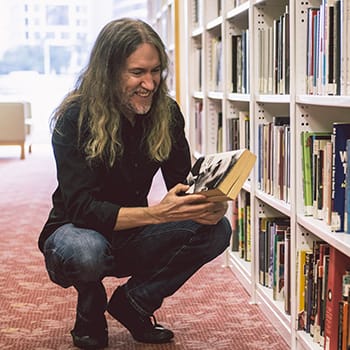
    Anthony Metivier with a book feature image for how to memorize things fastIf you want to memorize information fast, you need more than hope.

    You need the proven techniques you’ll find on this page, each of which has been tested in the real world.

    Who am I to say?

    As someone who’s trained memory competitors, taught university students, and explored the depths of ancient and modern memory science, I’ve answered thousands of questions about increasing memorization speed.

    And I’ve given hundreds of demonstrations of how fast I can memorize using the simple strategies you’re about to discover.

    Along with the reason and the proof behind why the strategies work so well to make long-term retention happen faster.

    Ready for the no fluff, no gimmicks answer to how to memorize anything fast?

    Let’s dive in.

    https://www.youtube.com/watch?v=a16B8EIBgZ0

    How to Memorize Anything Fast: 7 Proven Tips for Rapid Recall

    If you want to memorize fast, above all, you must learn the most powerful memory technique ever invented.

    That’s where we’ll start.

    One: Embrace the Memory Palace Technique

    Everything gets faster once you commit to using proper Memory Palaces.

    If you don’t know what they are, consult my complete guide to the Memory Palace technique. Or watch this video:

    https://www.youtube.com/watch?v=c4J5ZUzCxZY

    Although it’s an ancient memory technique, I can’t stress mastering the Memory Palace technique strongly enough if you want to memorize rapidly.

    That’s because scientists have shown that using routes to remember leads to superior memory.

    To get started with the technique immediately:

    • Select a familiar location, such as your home or workplace (or even a favorite cafe).
    • Identify distinct areas and craft a clear and logical mental journey through the location.
    • Assign what you want to remember along this route and link it with the appropriate mnemonic devices, making sure your associations are always vivid.

    What are mnemonic devices?

    For increasing your memorization speed, we’ll talk about those next.

    Two: Use the Best Mnemonic Tools Designed for Fast Memorization

    From crafting catchy tunes or using rhymes to remember, there are a lot of tools you can use in your Memory Palaces.

    • The Major System or The Dominic System for numbers
    • The Pegword System
    • The Story Method
    • Linking

    The reason these tools help you out is that you use them to help you install associations in your Memory Palaces without having to think for more than a second or two.

    No doubt about it. Learning these mnemonic skills takes a bit of setup.

    But once you have them working, you’ll be able to memorize anything much faster.

    Three: Use the Chunking Memory Strategy

    So many of my students have an “all or nothing” attitude when they first wind up in one of my workshops or courses.

    Although you certainly can memorize mountains of information, it’s important to take everything one unit at a time.

    We know this from many studies in what is called the chunking memory strategy. I’ve profiled it fully in this guide for you.

    Chunking helps you memorize faster because it strategically breaks large pieces of information down into smaller, more manageable units.

    I made my TEDx Talk easier to remember, and the Sanskrit phrases in it simple by sometimes focusing on just one syllable at a time.

    Some may worry that chunking will make them slower, but it’s the classic tortoise versus hare principle. The tortoise always wins.

    It also just makes sense.

    Instead of trying to memorize 15459878455, you break it down into 1-545-987-8455.

    This method harnesses your brain’s ability to recognize patterns. As a result, you harness greater efficiency and ultimately move faster.

    Four: Engage All Your Senses with KAVE COGS

    Now that you know about the main mnemonic tools and chunking, the next step is to engage all your senses.

    As scientists have demonstrated, the benefits of multisensory learning are profound when you set things up correctly.

    Correctly is the key term, and that’s why when I memorize names at demonstrations, I use a mnemonic elaboration system called KAVE COGS:

    • Kinesthetic (touch)
    • Auditory (hearing)
    • Visual (sight)
    • Emotional (feelings)
    • Conceptual (ideas)
    • Olfactory (smell)
    • Gustatory (taste)
    • Spatial (sizes)

    I apply the same set of elaborations to memorizing playing cards, numbers, speeches, poetry, historical dates or whatever it is I’m memorizing.

    When my students in the Magnetic Memory Method Masterclass make this memory strategy a discipline too, they memorize faster.

    It’s that simple, though you can find more intricate approaches to engaging all your senses in the mnemonic works of authors like Giordano Bruno and Tony Buzan.

    I’ve just found that KAVE COGS works best for me. It took me a while to come up with, but once I settled on the pattern, I was very pleased by the results.

    But due to how memory works, you should certainly consider creating your own multi-sensory model if KAVE COGS isn’t right for you.

    The point is to have one in the first place so you don’t waste time thinking about how you’re going to make the target information “stickier.” You just follow the system.

    Five: Use Spaced Repetition Properly

    Many people know about spaced repetition. But they don’t optimize how it works.

    That’s why I highly recommend you read my full guide to using spaced repetition properly.

    Briefly, you need to call information to mind first, then write it down by hand. Plenty of active recall studies show this exact process works well.

    Alternatively, you can perform active recall completely from within a Memory Palace. You can also explore my guides on improving your use of these popular spaced repetition devices:

    • Flashcards
    • Zettelkasten
    • Leitner boxes
    • Anki

    Once you understand your options for optimizing each of thse techniques, plan your review sessions with them deliberately.

    Make sure that you manually set the spaced intervals. Leaving it to software to decide is a tragic mistake because notifications are easy to dismiss.

    In this study, researchers also show the consequences of not getting enough cumulative reviews, which often happens when we relegate our review schedule to machines.

    To avoid such problems, I suggest keeping a memory journal to help stimulate reflective thinking as you test the memories you’re working to establish.

    Journaling is powerful because it builds metacognitive awareness around your practice. The process will give you clues on how to improve, and that’s ultimately how you wind up memorizing faster.

    For more information on how memory champions use journaling, check out my interview with the legendary Johannes Mallow.

    Rapid Recap: How to Memorize Anything Faster

    You now know to create Memory Palace, learn the main tools of mnemonic association and tactics like multi-sensory elaboration, chunking and spaced repetition.

    By combining these five simple approaches, you will rapidly enhance your ability to memorize information quickly and effectively.

    Beyond that, you just need to be consistent. My guide on deliberate practice will help you with that if you don’t know how to show up often enough to get results.

    And if you need more help with Memory Palaces and other mnemonic tools, sign up for my free course here:

    Free Memory Improvement Course

    It gives you four video tutorials and worksheets that will help you improve the speed of your memory.

    So what do you say?

    Are you ready to use what really works when it comes to permanently committing important information quickly?

    Let’s do this thing!


    How to Remember Where You Put Something in 5 Steps May 14, 2025
    Show notes

    Anthony Metivier reaching for missing books for the how to remember where you put something feature imageEven as a memory expert, I know how maddening it can be.

    You know you put it somewhere – but it’s just… gone.

    Whether it’s your wallet, a USB drive, your keys or something you’re sure you stashed in a safe place, losing things is disruptive.

    Fortunately, learning how to remember where you put something is simple.

    And in this guide, I’ll show you practical, science-based ways to recover the memory of where you put something.

    Even if it was weeks or months ago.

    These strategies have helped many of my Magnetic Memory Method students recover lost items and strengthen their spatial memory for betting recall in the future.

    Better:

    They’ve been able to train their minds to forget less, which is what you’ll be able to do too after reading this post.

    Ready?

    Let’s dive in!

    https://www.youtube.com/watch?v=FVOsG9CKCb8

    Lost Something? Here’s How to Remember Where You Put It

    When you can’t remember where you put something, your first instinct might be to search physically.

    You know how it goes. You race around:

    • Checking drawers
    • Retracing your steps
    • Overturning cushions and pillows

    However, there’s a better approach.

    Search the area you believe you may have left the item mentally first. Here’s how.

    One: Mental Time Travel

    Although the title of this technique might sound fantastic, it’s based on the science of episodic memory.

    When you consciously revisit the past, over forty years of research shows that you have more ability than you might think.

    The key is to stop and relax. Breathe deeply and move yourself away from emotions of irritation or panic.

    Next:

    • Close your eyes
    • Ask, “What was I doing the instant before I last held the item?”
    • Let your mind do its work

    Just letting your imagination operate without too much nudging from you can be hard at first. But with practice, you’ll find that it gets easier.

    As weird as it sounds, this technique works best when you stop trying to remember.

    Replace the mental pushing with experiencing your memory, almost like you’re watching a movie you’ve seen before.

    Two: Ask Reconstructive Questions

    I just gave you one simple question to ask. But if it doesn’t work, you can get more specific.

    Try these questions:

    • What was I wearing when I last saw the item?
    • What was I thinking about when I used it?
    • Was it part of a routine?
    • What there anything or anyone else near me?
    • Where have I lost the item before?

    According to Harvard professor Daniel Schacter, famous for his Seven Sins of Memory, asking these questions helps you rebuild the context around the missing item.

    Context dependent memory is powerful and these kinds of questions help your brain fill-in-the-blanks that you probably aren’t even aware of while hunting around.

    Three: Use Physical Cues

    If the previous two methods don’t work, it’s now time to revisit the environment where you most likely lost the item.

    But not for the purposes of rummaging through cabinets.

    First, return to the room where you think the item must be.

    Next, try to stand in the same spot where you last had it.

    Finally, start touching objects or furniture in the room.

    Often, calmly walking into the space can bring you back to the same mental state you were previously in.

    Like context-dependent memory, you’re activating what is sometimes called state-dependent memory. Although similar, it’s more physical.

    Alternatively, taking a walk or grabbing a hot shower can trigger completely different states. By getting out of context and out of state, you can sometimes trigger recall from a completely different angle.

    Four: Make A Checklist

    If all else fails, keep a checklist of where you’ve looked using pen and paper. This simple activity is helpful for one simple reason:

    Nothing wastes time and stacks on frustration faster than looking in the same place two or more times.

    When looking for the missing object, aim to be thorough. If you’re looking into boxes in storage, make sure to pick the boxes up and look under them so that shadows don’t obscure the object.

    This happened to me during a recent move when I was looking for a screwdriver I’d set down. I couldn’t see it in the garage until I picked up a box that had hidden the screwdriver in shadow.

    Had I been following a check list that covered both the areas I’d searched and reminded me to pick up boxes and other items that cast shadows, I probably would have found the missing item a lot sooner.

    Five: Prepare for a Future of Keeping Better Track of Your Items

    We’re all busy, but one of the best things you can do when you finally find your missing items is take steps to never lose it or anything else again.

    For that, you can read my full post on how to stop losing things.

    In brief, the technique involves two steps:

    Step One: Designate specific spots for things.

    Step Two: Always put things in those spots.

    Simple, I know, but I’ve found the technique incredibly powerful.

    And since knowledge is power, let’s consider why our brains make such annoying errors in the first place.

    Why We Forget Where We Put Things

    The list is long and possible reasons for forgetting include:

    • Clutter
    • Cognitive decline
    • Not knowing when something we set down will be needed at a certain time in the future (a prospective memory problem)
    • The specific intrinsic value we assign to the item
    • The kind of thing (receipts often get lost in ways that differ from car keys)
    • Disruptions that “knock” information out of our immediate awareness (we often forget things when moving from one room to another because temperature and other changes swarm our senses with new stimuli)

    Thinking through such possibilities can help us be kinder to ourselves when things get lost, which they inevitably will.

    A Problem Of Our Times?

    One interesting study to look at is called The significance of losing things for nursing home residents with dementia and their families. I suggest their research to you because the authors point out a simple fact that most of us will never think about:

    Never in history have people owned so many personal possessions.

    Not only do we tend to have more objects overall than any previous generation. We also have elaborate digital identities.

    It might seem like a small thing at first glance. But in reality, having multiple email accounts and social media profiles on several platforms takes up tons of mental space. Managing where we’ve placed our information on computers or in the cloud can and often does lead to digital amnesia.

    digital products

    I can think of another issue related to how people living in our times own more things coupled with storing endless personal data in computers.

    We have memory “meta-memories,” which is to say, memories about the memories that we’ve had.

    In other words, I often think of photos I used to have on hard drives that no longer work. It’s great that I’ve used memory techniques throughout my life, something that’s made remembering such highly personal memories easier.

    For some of us, however, this kind of meta-memory leads to levels of loss and longing our species never had to deal with before. Learning to let go is in some case the best option.

    But the bigger picture aside, when it comes to simple items that you’ve misplaced, there are fortunately very simple strategies. I use them often myself and each one is powerful.

    How to Find Lost Items: Additional Tips

    When it comes to finding lost items even faster, here are some additional tips and tricks I’ve found useful over the years.

    Keep Control Over Your Emotions

    Getting upset when you can’t find something you’ve lost track of is understandable.

    But it could be causing you to push the location even further out of your mind. Stress has been linked to memory loss, so we want to avoid it.

    In The Victorious Mind, I go further into breathing exercises, meditation and other mindfulness techniques that can keep you in good emotional stead.

    Harness Your Family & Community

    You don’t always have to search alone. Ask for help from others in order to speed up the search.

    If you’re particularly forgetful, getting into the habit of telling others where you’re placing a commonly misplaced object can be helpful.

    The trick here is to only involve positive people. Family members who take every opportunity to criticize you for your forgetfulness should be avoided when it comes to this particular issues.

    Say Locations Out Loud When Leaving Items

    One way to help your brain remember the location where you’re leaving something much better yourself is saying it out loud.

    For example, you can announce out loud, “I’m leaving the keys by the door.”

    Sure, this might feel silly, but it will help create a stronger memory because you’re using more of your brain while placing the item in a location.

    If you’re with someone else, you also give yourself an extra shot that someone else will remember it too because they will have heard you say the location of the item too.

    Play Lost & Found Games

    Okay, this suggestion is a bit quirky.

    But think about it:

    When you regularly exercise the “treasure hunt” capacities of your mind, you’ll develop mental muscles for locations.

    You don’t have to wait for Easter to play such games. And it’s fun to get the whole family involved.

    Also consider using a round of lost & found as a segue into other brain games for adults.

    The Ultimate Way to Train Your Brain to Remember Where You Put Something

    Earlier I mentioned starting at a particular part of your home when conducting a search.

    This approach is also used as part of an ancient memory strategy called the Memory Palace technique.

    It’s a way of rapidly finding our way back to ideas we don’t want to forget. It’s also useful in language learning, where the practice of memorizing vocabulary itself helps you find information better in your mind.

    Although this technique offers you an indirect path to finding items you’ve misplaced, it will exercise the location-sensibilities of your mind because it uses spatial memory in a way that can heighten your awareness of your surroundings.

    If you’d like to learn more about it, check out my FREE Memory Improvement Course:

    Free Memory Improvement Course

    Within a short period of practice, you should find yourself experiencing some memory boosts that help you learn faster across the board.

    But at the end of the day, nothing beats relaxing yourself, searching strategically and then committing to do better in the future.

    So what do you say?

    Are you ready to find things you’ve lost in a better way than ever before?


    5 Real Memory Palace Examples for Improving Your Recall May 12, 2025
    Show notes

    Have you been looking for real Memory Palace examples that will actually show you how this learning technique works in the modern world? You’re in the right place. I’ve used the Memory Palace technique to pass university exams, master foreign languages, and even lecture in German while teaching Film Studies at the University of Saarland. My TEDx Talk, delivered entirely from memory, has been viewed millions of times. I’ll show you exactly how I built it along with a graphic of the exact location. In fact, you’ll even get a Memory Palace walkthrough filmed inside my own home, so you can see how to structure your journeys for better focus, creativity and long-term recall. Everything you’re about to learn comes from personally testing more than 300 Memory Palaces for accomplishing many different learning goals. And many interviews I’ve conducted with the most accomplished memory experts in the world. Ready for the most empowering Memory Palace examples so you can achieve your learning goals? Let’s dive in. https://www.youtube.com/watch?v=STlYIiF9RzI Now that you’ve watched the walkthrough in the video above, let’s take a moment to more closely define the Memory Palace technique. Seeing this ancient technique in its fullest possible context will help you use this unique learning approach better. Understand This Before Copying Any Memory Palace Examples You Find Online The first thing to understand is that the Memory Palace technique was taught theoretically for a very long time. Ancient guides like Rhetorica ad Herennium had to illustrations. At best, Aristotle gave a visual example of the stations in a Memory Palace using the alphabet. I show this page in my video tutorial on Aristotle’s Nuclear Alphabet. Later, during the medieval period, Hugh of St. Victor was said to stand in front of an illustration of Noah’s Ark to help his students understand how to use it to remember aspects of theology. You can read about this history and see illustrations in The Mystic Ark by Conrad Rudolph. Also note that the Memory Palace technique is sometimes called the Method of Loci. Other people call it the Roman Room technique. Searching these terms can help you find even more examples. “Memory theater” too, which was one of Robert Fludd‘s preferred terms. Here’s what one of his illustrated Memory Palaces looked like: No matter what you call it, the technique is based on layering associations along a journey based on locations you remember. That’s the key. You’re not memorizing locations for use as Memory Palace. You’re harnessing memory spaces that are already in your memory. Please pay special attention to this point. Many people think they have to go out and memorize locations in order to use them. That’s just not true and in fact creates the cognitive load using Memory Palaces helps reduce. For more details on how to select and develop these learning tools optimally, please refer to my foundational Memory Palace tutorial which goes in-depth on its history and a number of important considerations for getting the most out of the technique. With these principles in mind, let’s look at our first example. https://www.youtube.com/watch?v=rWd1KaWFBm0 1. The Bird’s-Eye Memory Palace Using A Single Building This kind of Memory Palace involves looking down and through the roof on a building. You can use: Homes Churches Cafes Theatres Bookshops Schools Museums Just about any location will do. The basic idea of this approach is to experience the Memory Palace as if you’re looking down at a floor plan. To create your first Memory Palace in this style, I suggest you quickly sketch it out. As you can see, I’ve drawn this Memory Palace based on one of my Berlin apartments by hand: Drawing each Memory Palaces is important because it trains your brain to think about the journey through the building you’re assigning. A bit of preparation in the beginning will ensure that you can use the Memory Palace much faster once you’re ready to use it to memorize anything, including vocabulary, or an entire speech. I’m not the only one who draws Memory Palaces. As you saw above, Fludd illustrated one of the theatres he used. More recently, my friend and fellow memory expert Jonathan Levi shared his hand drawn Memory Palace mockup after I showed him some Memory Palace best practices. He even showed the Magnetic Memory Method-style Memory Palace he drew from the top-down perspective in his TEDx presentation: In sum, the process is simple: Select a location suited to creating a Memory Palace (usually a familiar building, but parks and other locations will do) Get out a sheet of paper, ideally in a Memory Journal devoted to Mind Palace creation. Draw the Memory Palace. Strategically structure your journey through the Memory Palace. Practice the journey mentally one or two times. Use it to memorize something by using mnemonic images (what I sometimes call Magnetic Imagery). If you’re stuck on what locations to use, I have created a giant list of Memory Palace ideas that will help get you started. If you need help with creating the mnemonic images, these elaborative encoding exercises should be useful to you. 2. The Campus Memory Palace
(Perfect for Exams) In this kind of Memory Palace, you use an entire university campus. I found this kind very useful when studying for my PhD at York in Toronto, Ontario, Canada. And that’s not just because the multiple buildings gave me lots of space with which to work. It’s also linked to something called context-dependent memory. It shows that you remember more when you closely associate what you need to remember with locations and other aspects of life. Since I still use York’s campus from time to time, I’ve used an old campus map I saved to craft this detailed video tutorial for you: https://www.youtube.com/watch?v=z1GwODwffCc If you want to use the example from my York Campus video tutorial but have never been there, it’s easiest to use the top-down view. Or you can imagine watching yourself walking from station to station as if seeing the journey through your own eyes and imaging that you’re there. Let’s explore that option further in our next example. 3. The 1st Person Memory Palace (For Immersive Encoding and Recall) When using a first person approach, here’s what happens: You imagine yourself in the Memory Palace, literally seeing the journey as if through your own eyes. Or, you can pretend to be a character in a video game or movie and see through the eyes of that character. For example, using an outdoor Memory Palace, I once imagined being this Giordano Bruno statue and navigated parts of Rome that I had previously developed into a small set of Memory Palaces: Personally, I find this approach draining. But assuming the viewpoint of a character definitely works. One reason why it works is that you’re using imagined experience as an additional hook. The best part is that you can switch in and out of this approach while using top-down Memory Palaces. You can also rotate between multiple roles. For example, when I memorized the hiragana and other aspects of Japanese, I switched from pretending I was Ezra Pound to Homer Simpson. This is based on a Magnetic Memory Method Principle I call the Bridging Figure. 4. The Virtual Memory Palace (For Imaginative Learning) Virtual or Imaginary Memory Palaces are usually fictional. This means that they are not based on real locations. In other words, they are purely imagined, either by yourself or based on novels, movies or video game locations created by someone else. This approach is not for everyone. I personally find invented Memory Palaces more difficult than they are worth for my learning projects. Since my goals with Latin and Sanskrit involve a lot of moving parts, I prefer standard Memory Palace for activities like language learning. But if you want to give imaginary Memory Palaces a try, I suggest listening to memory competitor Idriz Zogaj for some wisdom on using this kind of Memory Palace. You might find his comments useful. In the meantime, I’ve recorded all my best suggestions for the virtual Memory Palace approach in this detailed video tutorial: https://www.youtube.com/watch?v=myN7wCWDWCI 5. The Magnetic Memory Memory Method Palace
 (Advanced, Integrative Learning) This kind of Memory Palace combines a number of mnemonic systems. At its core, you still take a location you know well and mentally assign specific pieces of information. But unlike other approaches, you develop well-formed Memory Palaces that do not lead you into dead ends or waste time and mental energy by crossing your own path. An illustrator helped me visualize my TEDx Talk Memory Palace with this picture so you can see how direct and unfettered a Magnetic Memory Palace can be: What additionally sets the Magnetic Memory Palace apart are the additional tools I teach in the Magnetic Memory Method Masterclass. Such as: Sea shelling The Pillar Technique Ample use of Magnetic Bridging Figures Recall Rehearsal (a form of spaced repetition) The Big 5 of Learning (Also called the levels of processing) The Story Method The Pegword Method Number Rhymes With these additional techniques working in combination, using each and every style of Memory Palace feels like a game as you usher any information you want to know into long-term memory quickly. FAQS About Memory Palace Examples I’ve fielded many questions about this technique over the years. Here are some of the most frequent with quick answers. How do I get faster with using Memory Palaces? The key to memorizing things faster with this technique is to deliberately train for speed. Typically this is done by setting goals, benchmarks and using a timer. It’s also important to embrace all of your sensations while placing associations within your Memory Palaces. Who invented the Memory Palace technique? Although the technique is often attributed to Simonides of Ceos, we know from scholars like Lynne Kelly and Tyson Yunkaporta that it’s much older. Personally, I believe that our species collaborated on the technique and we continue to develop it together. For more on this view, I suggest reading The Knowledge Gene. You might also consider my conversation with Andrew Mayne about the Memory Palace technique in the age of AI. Do I need to have physical access to locations I want to use? Not at all. I use locations I haven’t seen since I was 9 years old perfectly well. That said, some people find it useful to touch the walls of the locations they will use, especially when starting out. This tactile tip is very old. You can find examples in medieval memory manuals of Peter of Ravenna and Thomas Aquinas. How many Memory Palaces should I create? At a bare minimum, I suggest 26, one for each letter of the alphabet. At more advanced levels, you can add a second Memory Palace Network to fill out your PAO System. You can go further still by explore Memory Wheels, an older example of the Memory Palace technique that you might enjoy exploring. Can I combine Memory Palaces with other mnemonic techniques? Yes, and a core feature of the Magnetic Memory Method is that I show you exactly how. By combining methods you can learn more at a faster rate and retain it much longer. What’s the benefit of drawing my Memory Palaces by hand? There are many benefits. For one thing, you get the process out of your head and onto paper. A lot of people underestimate how draining it can be to work out an optimal journey purely in the mind. But by sketching out your Memory Palaces, you’re able to chart the journey quickly, logically and in a way that saves you time later. You know exactly where you’re going as you use the technique. Additionally, you can store your journeys for review in notebooks or on index cards. I draw many of my Memory Palaces on cards so I can easily alphabetize them. Here’s one example of a Memory Palace sketch based on a bookshop in Cairo I use often: A Memory Palace drawn on an index card to maximize its value as a mnemonic device. This one is based on a bookstore in Zamalek, a part of Cairo. How do I choose the right locations to use? The key is that the location is in your memory and you can easily move from what I call the “terminal station” to an exit. If you watch the Memory Palace walkthrough video at the top of this page, I show you the logic of why this works so well. When following these principles, you’ll find that nearly any location that you remember will serve as a perfectly suitable learning tool. The only exception is that some locations may carry unpleasant personal memories. I’ve talked about this problem in The Victorious Mind and it is possible to cleanse these locations. But in general, it’s best to choose neutral locations or places you feel positive about. Bonus: How to Create Your Own Memory Palaces Based on These Examples I suggest that you avoid starting with just one location. Rather, use the alphabet to help assign a variety of locations you can link with information easily. I call this approach the “Memory Palace Network.” You literally develop one Memory Palace per letter of the alphabet. To give you a quick example, I have a few ‘A’ Memory Palaces. Two of them are based on the homes of friends I know named Adam (once from elementary school, another from university). Another is based on my favorite Apple Store in Brisbane. I often use my friend Brad’s house for words that start with the letter ‘B.’ I also use the local bakery as another B Memory Palace. And when memorizing a poem recently that starts with the letter ‘W,’ I used a Woolworths supermarket. This approach is an advanced form of linking, a technique well worth learning as you develop your mnemonic skills. And if you’d like more help, feel free to grab my free memory improvement course: It gives you four clear video lessons and three Memory Palace worksheets to fill out. For now, the five Memory Palace examples and the full Memory Palace walkthrough video above demonstrate that this technique isn’t some fantastic notion from the past. It’s a tried and true technique, a living skill that many people still use to this day. I’m talking about everyone from these memory athletes to the many students of mine who have sent in their testimonials. Adapt the Memory Palace technique for yourself, expand on the core principles through practice and you’ll not only improve your recall. You’ll change the way you think, learn and interact with information. An incredible journey awaits. Enjoy and please let me know how it goes. You next breakthrough is just one well-formed Memory Palace away!

    Full show notes at the publisher

    7 Lessons in Learning from Thomas Jefferson’s Polymath Lifestyle May 09, 2025
    Show notes

    The polymathic brilliance of Thomas Jefferson spanned continents and revolutionized society. The question is, how? And why was polymathy so key to Jefferson’s success? Part of the answer is because his thirst for knowledge knew no bounds. But more importantly, Jefferson had a strategy for retaining what he learned. From multiple fields. The way that Jefferson tracked his knowledge helped make him great in multiple fields. I’m talking about everything from agriculture to technological innovations in writing, language learning and politics. Everything about his ability to challenge conventions and relentlessly pursue that knowledge that helped him change the fabric of society boils down to four things: His personal knowledge management systems His polymathic mindset His community-focus His consistency Combined, Jefferson’s life of achievement offers us a blueprint for how we can become better polymaths ourselves. So if you’re interested in constant growth as you explore multiple disciplines, the lessons I’ve extracted for you from Jefferson’s life will ignite your potential. Let’s dive in. https://www.youtube.com/watch?v=zrmsVLJr-zc What is a Polymath? Why Thomas Jefferson Perfectly Fits the Definition In case you’re new to the term, any individual with deep knowledge and proficiency across multiple disciplines, counts as a polymath. It matters that this knowledge has already been established, distinguishing the polymath from the multipotentialite. When it comes to Jefferson as a polymath, here’s a rapid-fire overview of some of his skills and accomplishments in a variety of domains: Linguistics: Mastered Latin, Greek, Anglo-Saxon, and Italian. Jefferson created his own Anglo-Saxon dictionary by tracing thousands of words to their Old English roots. Science and Invention: Participated in testing early carbon paper and using a pantograph for simultaneous copying, along with a portable copying press. He also designed a “mould board plow of least resistance.” Agriculture: Kept a detailed “Garden Book” tracking meteorology and plant imports. Education and Mentorship: Founded the University of Virginia, planning its buildings and rules; mentored students with curated book lists and study plans. Law and Politics: Drafted the Declaration of Independence, researched and challenged primogeniture, advocated for free schools and a free press. Literature and Analysis: Produced the Jefferson Bible through textual analysis. Maintained a commonplace book for reflections, akin to a Zettelkasten system. Organizational Skills: Tracked data in pocket-sized memorandum books and erasable “ivory books.” Skillfully outsourced tasks, matching people to roles. Music: Played violin daily. Designed his 1776 lap desk, mirroring other polymaths like David Lynch who crafted his own furniture for films like Lost Highway. Persistence and Vision: Contributed to libraries and universities despite personal debt. Jefferson persistently pushed for educational and social reforms. Where do all these talents come from? Let’s look at the origins of his polymathic study habits next: Setting the Foundation: Jefferson’s Early Learning Experiences A polymath is also not necessarily an autodidact, though usually some form of self-education is involved. That was certainly the case in Jefferson’s life, including from a young age. For example, in his first known letter at just 17 years of age, Jefferson expressed concern about anything that would take his time away from studying Greek, Latin and mathematics. He was already committed to extracurricular learning. Thanks to his father’s library, he was able to read some of the greats at a young age, including Shakespeare, Swift, Bacon, Locke, Newton and Cervantes. One of his polymathic skills involved book curation and storing them. Despite losing his first library to a fire at his Shadwell home in 1770, he rebuilt his collection. By 1815, he had amassed 6,487 volumes, not counting many folios. “Folio” can mean different things, but in his time, the term typically referred to large-format volumes reserved for authoritative works. The fact that Jefferson collected such books demonstrates his scholarly ambitions. His collection with also multilingual and well-organized. https://www.youtube.com/watch?v=iuX9U2SVF6o As we’ll discuss later, Jefferson kept a variety of notebooks and special kinds of flashcards to assist in his style of structured learning. In particular, Jefferson’s habit of keeping a “commonplace book” has helped historians track his many polymath personality traits. As Jefferson once wrote: “I was in the habit of abridging and commonplacing what I read, meriting it, and sometimes mixing my own reflections on the subject.” This comment further underscores his disciplined approach to learning. Finally, we should note his modesty. He was skeptical of honorary degrees, viewing them as unearned accolades. This choice reflects the true polymath’s preference for authentic mastery over superficial recognition. Jefferson’s Major Contributions as a Polymath Spanning politics, agriculture, science, linguistics and more, Jefferson’s contributions are astonishing to behold. Let’s look at the highlights I’ve found most interesting in my research for how they underscore the key polymathic skills I believe anyone can develop. One: Politics and Governance Jefferson’s political legacy is what we hear of most often. And for good reason. He not only drafted the Declaration of Independence. He served as the third president of the United States. A huge part of his political success stemmed from his research skills, particularly in law. He lived during a time when legal books were scarce, yet he tirelessly pursued the resources he needed. His investments demonstrated his commitment. More impressively, he was devoted to legal education itself. As Silvio Bedini discusses in Thomas Jefferson: Statesman of Science, he created a book list for other would-be legal scholars and offered to visit one learner to help during the learning process. These efforts at empowering others show that his commitment to positive change was both local and nation with a special devotion to individuals. At the macro level, you can see this same conviction play out in Jefferson’s efforts to abolish primogeniture. This law gave the eldest son the right to inherit all of a family’s wealth and land, devastating younger siblings who could be left with nothing. It concentrated wealth and power in fewer hands, limiting opportunity and reinforcing inequality. Thanks to Jefferson’s reading habits and ability to understand Enlightenment thinkers, he succeeded. Two: Designer Jefferson loved adjustable bookshelves. He even designed a revolving bookstand that folded into a cube. It could also serve as a lectern. https://www.youtube.com/watch?v=nAIiy_if1V4 He participated in the invention of early carbon paper systems and a pantograph. Sometimes called a polygraph, this device had two pens, allowing a writer to create two copies of a composition at the same time. Although he didn’t invent the device himself, Jefferson’s feedback helped shape how it developed over time. In terms of landscaping, Jefferson prepared detailed plans for the Gardens of Monticello on his plantation in Virginia. He also designed his own portable writing desk and in a completely different field, what he called the “Moldboard Plow of Least Resistance.” That invention belongs to the next area in which Jefferson displayed polymathic mastery. Three: Agriculture We know a lot about Jefferson’s skills as an agriculturist because he documented his activities thoroughly. In his Garden book, he meticulously tracked what he planted, where and when. Harvests were also meticulously arranged into notated tables with dates. Jefferson called them “Kalendars.” What can we learn from Jefferson’s detailed record-keeping? The value of precision, for one thing. He was able to optimize for efficiency and from there helped inform other agriculturalists. Here we see an example of the power of learning from great minds. Jefferson’s devotion to documenting these activities set a precedent that would be valuable in the future too: As an importer of plants from Europe, tracking also helped note any issues that might have emerged. This kind of information remains important today and is used at customs checkpoints around the world. If you want to know how to think like Jefferson, always keep in mind the power of his commitment to documentation. Four: Linguistics Jefferson wrote that being able to read Latin and Greek texts in the original was a “supreme luxury.” He earned his status as a polyglot, however. In addition to putting plenty of time aside to learn languages, he took up some language learning for legal purposes. He partly intended his self-compiled Anglo-Saxon dictionary to help him study law better. But he had other outcomes in mind too. For example, Jefferson wrote about his approach to linguistic analysis in “Essay on the Anglo-Saxon Language,” material contemporary scholars still study. Likewise, he read Machiavelli’s The Prince in the original language, partly to learn more about languages, partly for political science. Five: Music Jefferson apparently played violin every day while he studied the law. Jefferson continued playing throughout his life, and as Helen Cripe remarks in Thomas Jefferson and Music, “he devoted a surprising amount of time to it, given the scope of his better-known interests and activities.” He needed to remember music too because anything on paper could be easily damaged. He once lost from precious minuets to both hungry rats and a strong period of rain. Luckily, much of the music he collected survives to this day. Give this recording a listen to hear the kinds of tunes he enjoyed: https://www.youtube.com/watch?v=GAOurpDRyPw Jefferson reportedly also sung clearly and was often heard at home. As a hummer, musical accompanied him outside the home as he walked around his properties. He invested in top-notch musical educators for his daughters and grand-daughters and ensured they had quality instruments. Although he did not expand his skills from the violin to the piano, he often wished that he did. Nonetheless, he learned to tune and maintain pianos, which is a skill unto itself. One point Cripe makes in her book that I notice as someone who wrote a dissertation on friendship for my PhD at York University is powerful: Music and his performance skills were essential to Jefferson’s relationships, both familial, with friends and with other polymaths. As his extensive correspondence with the lawyer, jurist, author and composer Francis Hopkinson shows, they delighted in optimizing their musical instruments. For example, they experimented on perfecting special parts essential to producing the best possible sounds from their harpsichords. Metronome drawing at the upper left and bass pedal board drawing at the lower right in a letter from Jefferson to fellow polymath Francis Hopkinson. In his letters to Hopkinson, Jefferson sometimes sketched his ideas for a better metronome and foot-bass pedals. The time spent in friendship like this provides evidence of collaboration, craftsmanship and a passion for what he called “the delightful recreation” music brings. In other words, music gave Jefferson a lot of fun. We should all invest in learning to play at least one instrument and helping others do the same. Six: Vision & Planning Jefferson’s involvement in the founding of the University of Virginian showcases his ability to bring a wide variety of skills together. He surveyed the grounds, helped develop the architectural plans and communicate his ideas in ways that led to practical designs. Despite dealing with personal debt, Jefferson balanced his risk tolerance against his commitment to education. He put significant resources toward founding the university based on his vision, valuing social progress over personal gain. What can we learn from his actions today? Jefferson’s vision was almost certainly stronger because he wrote so much in a variety of ways, from journaling to meticulously documenting what some might consider minutia. My belief is that he was able to take on so much additional risk precisely because his vision was only partially based on speculation. He knew that in order for his country to thrive, people would need to cultivate open minds. As he wrote, “No nation can afford ignorance.” To that end, he went above and beyond the call of duty by helping the new university craft innovative rules for admission, graduation and university governance. Seven: Reading & Research We might take it for granted that Jefferson was a reader. How could he write so much if he weren’t? But we know from how Jefferson took notes in a variety of ways that he read actively and strategically. Ivory pages are one of the most astonishing tools he used to take notes. These small ivory slates held together by a silver clasp allowed Jefferson to take pencil notes during the day. At night, he would transfer the most important ideas into permanent journals. Then, he could erase the slates and reuse them the next day. What did he write on them? Typically, he jotted out observations about the weather, meeting notes or his philosophical ideas. As a polymath, this learning system reflects a powerful means of capturing information, reviewing it and then committing it to an archive. The process itself stimulates retention through active recall, reflective thinking and spaced repetition. Commonplace Books Like many polymaths and mnemonists, Jefferson kept commonplace books. More than just serving as a journal, this kind of personal writing helps people curate personal reference libraries. Some of Jefferson’s commonplace books were for legal matters. In them he would focus on case law and legal principles. In others, he would collect poems, philosophical ideas and notes related to textual analysis. This activity lead to the creation of his Jefferson Bible. The first version was produced after Jefferson cut and pasted from several versions of the Gospel. He left out the miracles and supernatural events to highlight the life and morals of Jesus. In addition to highlighting his skills in textual analysis, the Jefferson Bible demonstrates his commitment to efficient learning based on the core principles of the law and science he admired so much. Strategically, we can learn from Jefferson the importance of: Keeping our notes physical, but also portable. The memory benefits of transfering our notes. Evolving our knowledge over time by keeping multiple kinds of journals and notebooks. For more on Jefferson’s notebooks, I highly recommend suing the search function on the Monticello website. Want to Learn Like Thomas Jefferson? When people hear about the accomplishments of someone like Jefferson, they can feel out of reach. It all sounds like hard work, a feeling Peter Burke stimulates in his book, The Polymath. As he summarizes: “A life of Thomas Jefferson describes ‘amazing readiness’ to work long hours, sometimes from five in the morning until midnight, and his advice to a student to work for eleven hours a day.” There’s no doubt about it. That kind of advice can be deflating. And it sounds quite a bit like the kind of “grind culture” we hear from tech bros like Elon Musk. The good news is you don’t have to play games of comparison with Jefferson in order to use his example to supercharge your learning life. A hidden secret to what Jefferson was doing is called interleaving. He rotated between multiple study projects, something anyone can do in order to boost retention and comprehension. He took multiple kinds of notes and made sure to practice music across his lifespan, activities well within reach of nearly ever lifelong learner. If you like tips like these and want to supercharge your mind and memory further, feel free to continue your journey by claiming my free memory improvement kit: It giv…

    Full show notes at the publisher

    Memory Palace Ideas from Lifelong Learners and World Class Pros Apr 20, 2025
    Show notes

    When I started using memory techniques back in grad school, I worried that I was going to quickly run out of Memory Palace ideas. I had tons of textbooks to cover, after all! The same worry occurred to me later when I needed to learn German. In retrospect, it was a silly worry that I can laugh at now. But even though I’d heard that many memory champions and professional mnemonists typically developed hundreds of these mnemonic tools in short order, I still doubted myself. After all, back when I was in grad school I had barely traveled. I also still barely knew about the technique and how it really works. I needn’t have worried, however. And nor should you. That’s because today I’m giving you concrete examples from a wide variety of people. Some come courtesy of students who have completed my Magnetic Memory Method Masterclass. Others are from my friends in the worlds of either memory competition or memory training. Yet others have been handed down to us from the ancient history of mnemonic methods. I’ll even share with you a few of my own Memory Palace examples. So, are you ready to dive in and discover where to find Memory Palaces? Good. Let’s begin our search with a powerful tool for assessing what precisely makes the following possible locations worthy of your time and effort. https://www.youtube.com/watch?v=PU3UjILxlJE L.O.C.I: A Mental Tool For TestingThe Worth Of These Memory Palace Ideas Before I dive into a list of examples, it’s useful to have a means of deciding whether or not one of today’s ideas will work for you. Since the Memory Palace technique is based on the method of loci, I came up with a handy acronym for you: Location Does the memory space you choose support linear or logical navigation? Ownership Is the location lodged deeply enough in your memory that you feel like you “own” it? This guideline doesn’t mean that you remember every single detail. Just that it resonates with you in a personal way. Clarity Will you be able to clearly and distinctly navigate the space? Cluttered spaces with no clear journey can create obstacles that drain you of mental energy. Indexable Can you name the place or give it a number? Although not always necessary, it’s often important for mnemonic linking to be able to refer to the Memory Palace some kind of word-based or number-based label. Keep this “L.O.C.I.” acronym in mind as you sort through the Memory Palaces ideas that follow. Memory Palaces Based On Buildings The Memory Palace technique usually involves buildings you’ve visited. These can include: Your home The homes of relatives, friends, babysitters, real estate you’ve considered Churches Museums Art galleries Government buildings Schools and university campuses Swimming pools Pool halls Bookshops Grocery stores Arenas Concert stages Airports Libraries Clubs Cafes Workplaces (offices, warehouses, factories) To give you a simple example of how I’ve used one of these locations, check out this quick drawing I made of my mnemonic image for the German word for “area” inside Berlin’s Tegel Airport: Mnemonic Example for the German Word Bereich I know, I know. I’m not a great artist. But that’s not the point. The drawing involves Bender and the drummer Steve Reich in an area I was familiar with in the airport. I chose them because the sounds of their names combined reminds me of “Bereich” in Germany. Why did I stick this strange image in the airport? In this case, it’s because airport starts with the letter ‘A.’ And although you can’t see it in the drawing, they are situated in the “area” of the airport where you can buy pretzels. In German, pretzel is “das Bretzel” and Bender is trying to buy them from Steve Reich. But he’s getting drum sticks instead in that area of the airport. If you’re new to combining mnemonic images with Memory Palaces, I know this can sound like there’s a lot going on. But once you have a bunch of Memory Palaces, it will become very simple. Even intuitive. So to begin the journey towards the ease I’ve experienced now for decades, start writing down possible locations from you life based on the list above. And let me know in the comments: What additional possible Memory Palace examples come to your mind? I used this Brisbane skateboard park as a Memory Palace while preparing for a Mandarin exam in 2018. Memory Palaces Based on Outdoor Locations My personal preference used to be buildings and the only time I would stray was when I used vehicles to memorize playing cards. These days, I’ve expanded my collection of Memory Palaces and use: Streets Parks Skateboard parks Parking lots Rivers Mountain ranges Amusement parks Zoos Farms Bus routes Some outdoor locations are too difficult because they don’t have enough landmarks. So when I mention rivers, please understand that I’m using the Brisbane CityCat ferry stops. They’re still all outdoors locations, but their plan lends a specific structure to the mnemonic journey. https://www.youtube.com/watch?v=Wn05eskjIFg How to Find Memory Palaces Ideas from the Indoor & Outdoor Categories I’ve heard from a lot of people over the years who can’t travel or go outside. That was once me too. Long before I was able to travel the world, I spent most of my life indoors during the long Canadian winters. For me, the initial key to getting together a number of Memory Palaces was to break my schools down to individual classrooms. For example, in the Memory Palace drawing above, I indexed each room of the high school with the name of the teacher. In other words, Mr. Ralston’s class was the R Memory Palace. Mr. Schmidt’s class was the S Memory Palace, and so on. Although small, it was possible to use this one high school in a variety of ways. Frankly, I believe schools are one of the best places to use as a Memory Palace because most of us spend hundreds, if not thousands of hours in them. They also provide tactical benefits, including: Logical flow Distinct landmarks (like baseball diamonds and parking lots) Rooms that can be mentally revisited with ease Helpful features to use like desks and chalkboards Usually aren’t cluttered or abstract Body Memory Palaces Although limited in size, it’s possible to use any human or animal body as a Memory Palace. Ron White and I discussed his approach in depth in this episode of the Magnetic Memory Method podcast. As with all Memory Palaces, it’s important to keep the rules of L.O.C.I. I mentioned above in mind. This approach is very difficult to tap out provided you develop a proper pegword system. In brief, the pegword system I use gives me at least one person for each letter of the alphabet (Adam West for A, Brad Pitt for B, etc.) Each figure has 10 Magnetic Stations. This means that if you have one figure for each letter of the alphabet, you’ll have 260 stations per pegword list you develop. You can prepare lists based on the kinds of categories used by many of our ancestors through ars combinatoria (the art of combination). In other words, I just mentioned a couple of actors, but you can go far beyond that by having Body Memory Palace Networks based on: Actors Friends Relatives Teachers Politicians Lawyers Authors Librarians Musicians Artists Philosophers Miscellaneous historical figures Inventors Explorers Scientists Police Doctors Dentists Manicurists YouTubers Copywriters Your favorite mnemonists (hint hint!) I’m sure you can think of more categories. The key is to keep developing more over time. And in case it isn’t obvious, you can double the strength of any Memory Palace by populating them with Body Memory Palaces. This suggestion was inspired by a strategy outlined by Giordano Bruno in his book, Thirty Statues. In his work, he suggests 30 Magnetic Stations per body. Personally, I find that too much so use Ron White’s suggestion of 10. Memory Palaces Based on Shapes & Objects Let’s say you really like Body Memory Palaces. You can also break the body down into sections. When I use my fingers, for example, I think of them like objects. Likewise my wrist when I memorized the carpal bones. Essentially, your hand and other parts of your anatomy comprise geometrical shapes. To help you better break things down, give this tutorial on using geometrical shapes for your Memory Palaces a watch: https://www.youtube.com/watch?v=HAPwOf31N7o If you’d like to work with the cards you see in the video, they’re a wonderful product created by my fellow mnemonist John Michael Greer. Other objects you can use include rings, keys, coins, even the buttons on your own shirt. The key consideration when selecting objects is again found in the L.O.C.I. set of guidelines. Although you can use a grain of sand as a Memory Palace… is it really going to help you achieve much? Always keep the goal in mind as you develop your Memory Palace Networks. Memory Palaces Based On Imagination Now, you might be wondering: Is it possible to create Memory Palaces out of thin air? Yes and no. When thinking about virtual Memory Palaces, keep in mind that they are always referential. Here’s what I mean: Whether you choose a game that has a fortress in it, or develop one on your own, that imaginary fortress is based on your more practical concept of what similar buildings look like in reality. Some people do just fine with such Memory Palaces and that’s great. But for many of us it adds a level of cognitive load because we have to memorize the location or object to which we have no practical connection. https://www.youtube.com/watch?v=myN7wCWDWCI Here’s what matters most: Experiment. If you run into issues, no problem. You’ll have learned something. Don’t run away too soon, however. What you might struggle with in the beginning can soon become easy after a bit (or a lot) of deliberate practice. Real-World Examples from Magnetic Memory Method Students During over a decade-and-a-half of teaching the Memory Palace technique, I’ve received countless examples from lifelong learners around the world. Here are some of my favorite examples they’ve sent me. Kevin Richardson As Kevin told me on the Magnetic Memory Method podcast, he originally learned about Memory Palaces and then dropped them for two years. Eventually, he came back and used my teaching to help himself finally understand how to use the Memory Palace approach for language learning. Next thing Kevin knew, he was able to understand tons of Japanese. Keko When Keko heard me talk about combining Memory Palaces with mind maps, she determined to give the technique a try. As you can see above, she used my “sea shelling” principle to create a “path on paper” she could mentally navigate for spaced repetition of my lessons. Although some minds might find this approach challenging, it’s worth experimenting with at least a few times. Lee Escobar I’ll never forget Lee Escobar reaching out for one-on-one coaching for a very specific goal. As a speaker, he wanted to remember the names of all his attendees… and their seat number. Having this knowledge committed to memory enabled him to write a highly personalized presentation that blew his audience away. Don’t take my word for how amazing his results were after I showed him how to accomplish this goal. Lee himself sent me the results to share with you via this video: https://www.youtube.com/watch?v=dWgx5W5p0VM I’ve got dozens of success stories like this on my testimonial page. But let’s turn now to some examples from memory champions and memory experts I’ve known over the years. Example Memory Palaces from the Pros As far as I can tell, the only difference between people who become highly skilled with Memory Palaces and those who don’t is a willingness to study and practice this special mnemonic device. Here are some of my favorite success stories. Jonathan Levi When Jonathan Levi visited me in Berlin, the first thing he wanted was a personal lesson in creating the perfect Memory Palace for his upcoming TEDx Talk. The image you see above is the result. It’s very similar to the kind of Memory Palace I used to memorize my own TEDx Talk several years later. As a successful entrepreneur, Levi nailed that talk and even shared it in the presentation. Although he’s now a retired mnemonist, he taught memory techniques to thousands of people during his run. We tested each other more than once during our many hang outs and he really knows his stuff. Alex Mullen Alex Mullen won the World Memory Championship three times. As he has discussed and shared, he uses his own home as a main Memory Palace. Want to know what it looks like inside? Give this video a view: https://www.youtube.com/watch?v=bNAXY53uKWk Don Michael Vickers Although I don’t have a picture of any of his Memory Palaces, I’ll never forget Don Michael Vickers telling us about how he uses locations like Tim Hortons during this episode of the Magnetic Memory Method Podcast. He’s so fast with his Memory Palaces, he memorized 50 words in just under 38 seconds? You can watch him do it under official conditions on MemorysportsTV. There are other examples from other pros, but these are my favorite that come to mind. Personal Practice: My Top 4 Favorite Memory Palaces I’ve been using Memory Palaces for decades now. 2003 feels like a lifetime ago, but that’s when I first got into them. I first learned about the technique via my interest in card magic and memdeck applications. Then I deepened my understanding by reading extensively about the ancient memory tradition. Most of my Memory Palaces are simple, but some are a bit more complex. Here are my three favorites. Mandarin Chinese Class Memory Palace I still don’t know what I was thinking. Jonathan Levi and I were developing a non-memory business together and the Magnetic Memory Method project was hopping. But I’d so enjoyed visiting China and learning about the mnemonist Matteo Ricci‘s adventures there, I just knew I had to learn more about the language. And so I did. Without too much time on my hands, I used the Chinese classroom itself for much of the task. You see my sketch of it above. I also combined a few mind maps with Memory Palaces, like this: Finally, I used my optimized flashcard method quite a bit. Although technically flashcards aren’t Memory Palaces, my colleague and Zettelkasten expert Sascha Fast recently told me he thinks they’re close enough. I agree. Flashcards as mnemonic devices for Chinese characters Zamalek in Cairo When I visited Olly Richards in Cairo, I had big plans to learn as much Egyptian Arabic as possible while there. A few days in, however, I fell off a camel. I got hurt so bad, I wound up not doing much language learning at all. I did visit a bookstore in Zamalek, however. It impressed me so much that I immediately sketched it out. I still use it to this day. A Memory Palace drawn on an index card to maximize its value as a mnemonic device. This one is based on a bookstore in Zamalek, a part of Cairo. My TEDx/Sanskrit Memory Palace People ask me often about reusing Memory Palaces. Although you certainly can do it, I normally prefer to avoid this practice. There are lots of issues that can arise, as discussed in this video tutorial about what mnemonists often call “ghosting”: https://www.youtube.com/watch?v=Umt-innA-u8 Call me crazy, but when I was asked to give a TEDx, I thought I’d risk it. I’ve used this same Memory Palace three separate times. Not only that, I used it in three separate ways. A Memory Palace Example based on a Brisbane neighborhood I used to live in In addition to the TEDx Talk, there are two long-form mantras in it based around dozens of Sanskrit phrases. I go into detail about how I managed to pull all of this off without making mistakes in the Magnetic Memory Method Masterclass. But to be frank with you: I won’t take that risk again. It was worth it for the experiment, to be sure. But I ultimately feel that my performance of the talk would have been better in a completely unused Memory Palace. The “Sand Talk” Memory Palace In Sand Talk, Tyson Yunkaporta teaches a very simple Hand Memory Palace. Ba…

    Full show notes at the publisher

    Multipotentialite vs. Polymath: The Difference and Why It Matters Apr 17, 2025
    Show notes

    If you’ve heard the terms multipotentialite and polymath thrown around, but can’t tell what sets them apart, you’re not alone. These labels have different histories, for one thing. And although they both describe people who display diverse talents and interests, there’s a massive difference between them. Why does the difference matter? Because you’re not just interested in a few things — you’re fascinated by everything. In fact, your browser tabs are a hall of mirrors. Your bookshelves look like an interdisciplinary battleground. You’ve filled notebooks, journal apps, and your brain with treasure troves of knowledge… But then someone casually asks: “So… what do you actually study? What did you learn?” And just like that — your mind goes blank. You’re not alone. In fact, this problem has haunted some of the most brilliant, curious, and driven minds I’ve ever met — and I was once one of them. That’s why we need to dig deeper when it comes to terms like “polymath” and “multipotentialite.” As soon as you do, you’ll find that there’s no clear consensus on their meaning for good reason. And few are brave enough to criticize the cultural narratives behind these terms, including whether or not they are truly empowering. Or just being used in the modern world as part of marketing products you don’t need. That’s why today, I’m inviting you to dive deep with me to explore how these labels and concepts can inspire your own journey. All while avoiding the dead-ends and traps of empty promises offered by what are sometimes nothing more than self-aggrandizing labels. https://www.youtube.com/watch?v=YbsTUz2SsHw What is a Multipotentialite? The short answer is that a multipotentialite displays key characteristics like: Broad interests and high curiosity in a variety of fields, from coding to painting and entrepreneurship, often mixing them together in unique ways. Adaptability for learning quickly and picking up skills in ways that rapidly solve problems before moving on to the next challenge. Flexibility, which may involve a lot of gig-style jobs or hybrid roles that allow for a lot of variety. But where does the term first come from? In my research, the idea of having potential for multiple skills comes from a 1972 book called Recognizing and Assisting Multipotential Youth. In this book, authors Ronald H. Fredrickson and John Rothney explain that a multipotential person is: Any individual who, when provided with an appropriate environment, can select and develop any number of competencies to a high level. The book is a passionate appeal for both the educators, local governments and the state to identify and nurture students through what they call “enrichment.” They list several recommended procedures, many of which include encouraging young people to engage in autodidact efforts outside of the traditional classroom setting. These include: Participating in fairs, agricultural activities and contests Taking additional courses so they graduate early Working personally with teachers on enriched reading program Visiting professionals working in a variety of impressions Multiplicity in the Mind Next in history, we should also include Howard Gardner’s 1983 book, Frames of Mind: The Theory of Multiple Intelligences. If nothing else, the concept of being a multipotentialite owes Gardner a conceptual debt. I feel this way because anyone who truly puts in the deliberate practice needed to learn new skills will need to exercise the different kinds of intelligence Gardner discussed. These include: Spatial Linguistic Logical Mathematical Kinesthetic Musical Intrapersonal and interpersonal Existential (in other words, the ability to ask certain kinds of ontological, philosophical questions) Overall, Gardner suggests that if someone is going to fulfil their potential, they need to leverage multiple intelligences. That way, they can blend strengths like verbal fluency and multiple kinds of creativity to navigate a variety of pursuits. Mainstream Attention for the Multipotentialite In a 2015 TED Talk titled “Why Some of Us Don’t Have One True Calling,” Emilie Wapnick shifted the term to include people who thrive on diverse passions, resist specialization and weave their skills into a multifaceted career. https://www.youtube.com/watch?v=4sZdcB6bjI8 Wapnick has also addressed those who criticize the talk’s specialized use of the term in writing. In essence, Wapnick argues that people should feel free to call themselves what they please. Plus, they should pay more attention to the meaning of the TEDx Talk, not the word “multipotentialite” itself. I agree, but that doesn’t free the use of the term from some much-needed critical thinking. But before we get into a deeper analysis of what might be driving this most recent use of multi-potentiality, let’s look at polymathy next. What is a Polymath? A polymath is someone who displays expertise across multiple fields. Often, they are unrelated and we commonly discuss polymaths as if they are driven by insatiable curiosity. Although curiosity is one of many polymathic personality traits, Peter Burke provides one of the most nuanced studies of exactly what this term has meant throughout history. For example, in his book The Polymath: A cultural History from Leonardo da Vinci to Susan Sontag, he identifies: Passive polymaths Limited polymaths Clustered polymaths Serial polymaths His suggestion is especially interesting because we sometimes automatically consider polymaths lifelong learners. But as the limited polymath category shows, there have been many cases where people only needed to be polymathic for a certain period of time. During the early days of metallurgy, for example, a person experimenting in this area might need to know a lot about mining and smelting. But as civilization developed, there came a day when individuals could focus almost entirely on casting. In other words, some types of polymathy have to do with historical evolution and the development of particular fields. It’s not necessarily the case that the individuals involved had any special, inborn characteristics. They are simply responding to the need to develop their multiple-potentialities until that need passes. The Two Main Categories of Polymath If you wanted to boil the more general understanding of polymathy into two broad categories, Burke suggests using: Centripetal polymathy Centrifugal polymathy Whereas a centrifugal polymath simply stacks one interest onto another without any special connection between them, the centripetal polymath has a unifying vision. For example, someone like Elon Musk talks about populating space as a central unifying concept, but his activities appear more centrifugal to many critics. He tells a great story, but a lot of what has developed appears to be ad hoc, made up as things go along. Walter Isaacson gives plenty of examples of this, such as the sudden appearance of the Boring Company on the menu. The polymath Giordano Bruno, on the other hand, had a unifying vision based on around learning, memory and a view of the oneness of infinity. Nearly everything he did was connected to this unifying theme. Multipotentialite vs Polymath: A Critical Perspective Please don’t get me wrong in what I’m about to say. I’m just practicing the analytical skills I learned while studying for my PhD and throughout my career. And I’m mostly going to point the finger at myself. But when I heard Wapnick talk about choosing the term “multipotentialite” because labels like polymath and Renaissance person failed to resonate, etymological narcissism was the first thing that popped to mind. Now, I just made up the term etymological narcissism (or at least, I can’t remember seeing it anywhere else). But Wapnick is very specific about pronouns, all while running a blog that intentionally markets a book called How to Be Everything. The Real Problem with Multipotentialite as a Category As an author myself, my narcissism is high. It has been ever since I was a kid, along with my cynicism and a high tendency to contradict just about everything I encounter. According to a study called The Dark Cube: Dark Character Profiles and OCEAN, some people have high narcissism and low-agreeableness. I’m not diagnosing anyone, but I am reflecting on my personal experience as someone who underwent psychoanalysis nearly twenty years ago in order to help me become more open. As a result, I’ve become a better researcher and that’s why I went looking for the history of the term multipotentialite. That’s when I found Fredrickson and Rothney’s book about multipotential youth. No, Wapnick isn’t at all presenting the term multipotentialite as an original creation. But the whole issue of assigning new terms and arguing for the right to own them without facing criticism makes me think of when Tony Buzan reportedly established trademarks for the term mind map. As of the time I’m writing this, I cannot find a trademark number for mind map in the UK related to any person or organization. Don’t get me wrong. I loved Buzan, but as I wrote years ago about mind mapping, no one owns this term. Buzan did amazing work in popularizing a particular means of using round structures on paper to help with thinking and memory. But if anyone gets credit for inventing that, it’s Ramon Llull with his memory wheels. And even then, the basic idea is much older. My feeling is that there’s a fallacy of false attribution at play that lends itself to the problem of narcissism. So although I agree with Wapnick that focusing on the terms themselves is futile, by insisting on a special definition for multipotentialite, it’s almost as if there’s a rush deeper into the problem of categorizing things. Not a way out. That’s why I find the book title How to Be Everything confronting. Even Buzan said that the rules will set you free. But when there are no rules and you can call yourself anything and be anything, meaning crumbles. A Devastating Blow for the Meaning of “Polymath”? Although the term “polymath” has a ton of historical weight, it’s not immune to critique. For one thing, the ideals of the Renaissance Man not only feel unattainable. They don’t really exist, and you’d be right if you felt the urge to dismiss the idea completely. Time and again, Burke shows how the idea of the polymath is historically determined. And when it comes to the medieval and Renaissance eras, he describes a paradox. People like Robert Fludd could claim to know everything. But that’s only because there weren’t that many books you needed to cover. By the same token, it was harder to travel in order to cover all of the extent books. So even though we can talk about our contemporary ideas about human psychology in terms of openness, a person also had to want to travel. They also needed to have the financial means to do and often the social network needed to meet people who owned various knowledge resources. Indeed, you could be the most curious person in the world. But if you didn’t have a letter of introduction from a powerful person, you didn’t just waltz into the library of Saint-Victor of Paris. You had to know someone, and that’s exactly how Giordano Bruno managed to access it during his lifetime. Key Differences Between Multipotenialite and Polymath as Learning Types Putting my critical thinking aside, let’s assume that these terms are both equally valid. The main differences between the two learning styles boil down to the following. Learning Style According to Wapnick, multipotentialites learn quickly and rapidly become functional in the skills they need to complete projects. Although the examples Wapnick gives strike me as surface learning, that doesn’t mean there isn’t understanding. It’s just that polymaths typically go far beyond learning just enough to implement. There’s usually mastery involved a depth of learning that is refined over decades. In my experience, for example, I studied and taught for years before earning a Mercator guest professor grant. I played in multiple bands before being good enough to go on tour with The Outside. And I wrote multiple full-length books, a dissertation and several journal articles before a single one of my titles stood a chance on the market. Then there’s the countless hours I’ve poured into learning how to run a website. That skill is related to my success on YouTube, but video is its own realm of speciality and I’ve spent years on everything related to crafting presentations and delivering specifically for the screen. In other words, polymathic learning is iterative and expertise compounds based on foundations that are established in multiple foundations and built thoroughly. So although a multipotenialite might code a website on the same day they produce a some graphics, a polymath might have the depth of knowledge needed to innovate a completely new programming paradigm – and the entrepreneurial skills enough to start a completely new business around it. For example, the poet Christian Bök learned programming while learning biology and other aspects of science to create living poetry. The skills needed to successfully create The Xenotext not only create a new paradigm, but also change how we think about writing and memory entirely. Interests Wapnick argues that multipotentialites shift their multiple interests around based on opportunities as they arise. For this reason, I wonder why Wapnick hasn’t been drawn to the term autodidact as an alternative to polymath. After all, Wapnick is talking about how lots of people operate in the current gig-economy. Side-hustles and short-term projects aren’t necessarily interests, though I suppose it helps if a person can make themselves interested enough to get something done to a reasonable standard. Mastery drives the polymath, however. There’s typically long-term strategy involved, particularly aimed at solving specific problems. Benjamin Franklin’s polymathic work in science, politics and publishing all focused on solving specific problems. He put in the depth of study needed to address the complexities involved in each. Dealing with Obstacles Multipotentialites may struggle with challenges like indecision. As Fredrickson and Rothney point out in their 1972 book, a problem for students with multiple potentials is that society pressures them to pick one thing. Nothing has changed in our world, and it was definitely that way in the past. Many medieval schools required students to focus specifically on the Trivium and Quadrivium, eliminating decision-anxiety altogether. If we take Fredrickson and Rothney’s description as our foundation, a main problem for people of potential is that they don’t like to feel isolated. Polymaths, on the other hand, often embrace isolation. If anything, a common theme amongst the most inspiring polymaths is how challenging it is for them to work with others. A polymath might find it extraordinarily difficult to learn something just to complete a quick job for someone. Anything that takes time from their passions might frustrate them – including their own projects. That sounds funny, but many people have noted how easily da Vinci dropped various projects he was working on throughout his career. It’s not that he failed at some of them. He deliberately set them aside. The Mastery Fallacy Many people mistakenly believe that polymaths do everything perfectly. This is absolutely incorrect. Most of them only manage to reach higher levels of mastery because they embrace mistakes and analyze them. Doing so is one of the key steps to follow if you want to become a polymath yourself. Multipotentialites have the advantage here because they priortize competence and a spirit of exploration over depth. If you’re happy with dabbling without developing synthesis, them assuming the multipotentialite label could serve you well. But will acting that way provide you with with the true versatility Wapnick suggests? I’d like to say that it’s completely up to you. But if we’re going to have…

    Full show notes at the publisher

    Do Memory Palaces Work? Here’s What The Evidence Says Mar 29, 2025
    Show notes

    The quick answer is yes, Memory Palaces absolutely do work. Scientific studies consistently show us that using this ancient memory technique enhances memory recall. Students in specialized fields love them because this technique works especially well for ordered lists, complex information and any learning goal where you need to establish long-term retention. The catch? Using this technique requires a bit of setup. How much depends on where you currently find yourself in life. For some people, mastery takes an incredibly short time. In other cases, I’ve seen students try to learn the technique in bits and pieces. As a result, it’s taken longer than necessary. Either way, the evidence stands in favor of the technique. So does the thousands of years of tradition and the decades of memory competitions. But it really wasn’t until 1885 that the first scientist truly put memory to the test. Starting with that groundbreaking study, let’s look at what researchers have found since. https://www.youtube.com/watch?v=HJgiPBDWCEI Do Memory Palaces Work? The Essential Evidence Noting that the use of Memory Palaces goes back thousands of years, earlier even than the method of loci discussed in Greek and Latin training manuals like Rhetorica ad Herennium, it was Hermann Ebbinghaus who helped us first understand why this technique works. Thanks to his research on memory in the 1885 book, Memory: A Contribution to Experimental Psychology, we now have incredibly useful terms. These include the primacy effect, recently effect and a memory strategy called spaced repetition. This term describes a specific review pattern you can use to overcome what Ebbinghaus called “the forgetting curve.” As his n=1 experiments showed, we lose 50-80% of information at a steady rate unless we review it. Learning to use spaced repetition to defeat the Forgetting Curve started in earnest with the research of Hermann Ebbinghaus. One of the best ways to defeat the forgetting curve? The Memory Palace technique for studying. You can literally use the technique for studying just about anything. Even shapes. Gordon H. Bower’s Analysis of a Mnemonic Device Between Ebbinghaus and the late 1960s, I’ve been able to find very little research that touches upon the classic Memory Palace technique. Partly, that’s because the proof was already abundant in how people practice the technique. But scientists of the mind were also pouring a lot of their attention towards topics like subliminals for memory and other types of subconscious influence. In 1970, Gordon H. Bower published “Analysis of a Mnemonic Device,” returning attention to this ancient memory technique. He asked a lot of interesting questions about the technique and included fascinating illustrations in this American Scientist article. For example, he showed how this mnemonic device works by showing tomatoes splattered on the door of a home. A person would image such a scene to help themselves remember tomatoes on their shopping list, for example. To make it work, the user would simply ask, “What was happening to the door?” and the scene would bring back the target information. As Bower puts it, the technique works because: “The loci on the list are well learned and are easily called to mind. Recall of the scene constructed at each locus enables him to recognize and name the other object in it.” Bower is exactly right and that’s why I always tell people taking the Magnetic Memory Method Masterclass to use locations familiar to them. You certainly can use imaginary and virtual Memory Palaces. But you risk adding additional cognitive load that isn’t technically necessary. Although neurological evidence was slim when Bower produced this scientific article, he used the memory science on hand to hypothesize that part of this techniques success boils down to left hemisphere brain activity and verbal ability. Routes to Remembering by Eleanor Maguire The Memory Palace technique is all about assigning memory spaces for whatever it is you want to learn. Along with her team, Eleanor Maguire cut to the chase on that point when they named their Nature article, Routes to Remembering: The Brain Behind Superior Memory. To conduct the study, the researchers enlisted eight memory champions. Using brain imaging, they were able to determine that people who had developed superior memory skills showed specific differences. The test examined the mental athletes on numbers, faces, and even snowflakes. With all three information types, the reason for the benefits was clear: The memory champions had well-practiced spatial memories thanks to using the Memory Palace technique. Building a Memory Palace Within Minutes by Eric Legge A lot of people worry that it takes too long to develop Memory Palaces. Scientists have wondered about the time investment issue too. In Building a Memory Palace Within Minutes, Eric Legge and his team created a virtual environment and tested it against traditional Memory Palaces. The researchers found that, although their artificial Memory Palaces worked without taking up much time for the participants, these provided Memory Palaces did not improve anyone’s results. As I interpret their research, you’re better off sketching your own Memory Palaces based on locations you’re familiar with. Like the one you see in this illustration: A Memory Palace drawn on an index card to maximize its value as a mnemonic device. This one is based on a bookstore in Zamalek, a part of Cairo. This difference is important because a true Memory Palace is not something you’ve memorized. As the Maguire research suggests, a true Memory Palace works so well for a simple reason. It harnesses the power of spatial memory and locations you’ve already automatically learned. It’s by basing your use of this technique on how memory works that makes the biggest difference outside the laboratory. Studies of Medical Students Using Memory Palaces A few years ago, researchers at Monash University tested Memory Palaces on medical students. Both head researchers appeared on my podcast to discuss the study and you can still listen to both David Reser and Tyson Yunkaporta share their interpretations of the results. The study itself is well worth reading. And when it comes to research showing how well these techniques work for medical students, there’s plenty to pick from. For example: Pharmacology Retention and Evolving Memory Palaces Facilitating learning in endocrinology Studying dermatology And there are many more. A VR Memory Palace used in research from Journal of the Academy of Dermatology One point about this dermatology research is interesting. It’s something you also find in the Monash University research: Researchers supplied the participants in these studies with not only Memory Palaces but also mnemonic images. This feature of their research raises an interesting question: Has anyone studied the difference between Memory Palace locations that researchers give you versus the ones you develop on your own? The answer is yes. Accuracy in a Virtual Memory Palace by Jan-Paul Huttner Jan-Paul Huttner and his research term put out Imaginary Versus Virtual Loci: Evaluating the Memorization Accuracy in a Virtual Memory Palace. We’re getting a bit into the weeds of mnemonic technique here, but these researchers report that participants using a pre-designed Memory Palace showed better results. Frankly, I find the results problematic. For one thing, this study and a similar study called Virtual Memory Palaces: Immersion Aids Recall both involved participants memorizing information of limited importance. Have a look at the following virtual Memory Palace: Do you recognize Oprah, Napoleon, Shrek, Martin Luther King and Stephen Hawking in this Memory Palace? I sure do. Give how famous these faces are, I’m not convinced the Memory Palace is adding much in this experiment. At least the Monash University research used challenging information related to anatomy. Ultimately, I’m glad researchers have tested virtual Memory Palaces and shown an effect. But I await further tests using much more robust information before accepting that they work “better” than traditional Memory Palaces. One reason I predict they won’t beat traditional Memory Palaces is cognitive load. Another reason is that studies in active recall have shown the importance of personalization in learning. I’ve Used Memory Palaces to Learn Languages, Deliver Speeches, Ace Exams … And So Have Countless Others We often hear about memory competitions and the people who win them. Sometimes these memory athletes go on to inspire us, like Joshua Foer with his book, Moonwalking with Einstein. Others contribute new variations on old techniques, like Dominic O’Brien did with the Dominic System. Or, Memory Palace experts expand their teaching to include other techniques like Tony Buzan did with Mind Map Mastery (one of my favorite books on learning). Some of my favorite testimonials have come from students who successfully passed critical exams. For example, Robert Spraggs shared his exam results from a difficult set of neuroanatomy exams: Robert Spraggs Neuroanatomy score after the MMM Masterclass compared to class average As you can see, he wound up far ahead of the class average thanks to using Memory Palaces. Myself, I’ve used the Memory Palace for language learning many times. A while back, I completed Level III in Mandarin. I was especially pleased by the results because I’m not all that young anymore. The classes started at 6 p.m., and that’s when the final test took place. Nonetheless, I aced it, all thanks to using this technique. How to Get Started with Memory Palaces From my perspective as someone who has been using these techniques personally for decades and teaching them now for fifteen years, you’re best of learning to make your own Memory Palaces. True, some of the studies show that you can use Memory Palaces created by others. That’s totally fine if that’s the way you want to go. The only book I’ve seen that reasonably shows you how to use someone else’s imaginary location is Kevin Vost’s Memorize the Stoics. Here’s what one of his Memory Palaces looks like so you know what you’re getting into if you go that route: Personally, I’m glad I developed my skills the old fashioned way and learned how to come up with endless Memory Palace ideas. I learned a lot about how to do that and use various aspects of the technique from ancient memory masters like Robert Fludd and Giordano Bruno. Call me old fashioned, but I find that the creators of newer books and courses are so in a rush to make a buck that they dumb everything down. Even Harry Lorayne told me to never talk about memory science if I wanted to make a career out of teaching these techniques. Ignoring Lorayne’s advice is one of the best decisions I’ve ever made, especially when we take the results of the Flynn Effect into consideration. Studying the scientific reasons why Memory Palaces worked in the ancient world (and still work today) has helped me better explain them to modern students. All ships have risen as a result of not walking away from the facts provided by research. As a result, a lot of people have gotten better results than the books and courses designed for mass consumption. So that’s my first suggestion: Find the real deal books on Memory Palaces. Read them thoroughly and spend at least 90-days exploring their specific instructions. Then, apply your well-formed Memory Palaces to specific goals. For most of us, we will be applying them to some kind of studying. That’s why I make detailed video tutorials like this for you: https://www.youtube.com/watch?v=c4J5ZUzCxZY Once you’re done creating a few well-formed Memory Palaces, your next task is to learn the various systems for association: Number rhymes Pegword lists The Major System The PAO System There’s a bit of overlap between those mnemonic systems, but they’re all worth studying. If you’d like help, feel free to get my free memory improvement course: It gives you a massive head start with four detailed video tutorials and three worksheets. And now that you know Memory Palace work, it’s just a matter of starting small. You’ll exercise your spatial memory as you go. Not mention your reasoning skills and more. As the research demonstrates, when you do this, you can easily reach memory champion levels of absorption and retention. The only challenge I find some people have is in making the images they place inside of Memory Palaces bizarre enough to trigger recall. But that’s where my free course comes in. And rest assured, at more subtle levels of skill, you don’t have to keep making things so strange. The Memory Palace I used for my TEDx Talk was actually very calm. Again, the key is just getting started. Is there any other way to start on the path to mastering this ancient art and unlocking your brain’s potential?

    Full show notes at the publisher

    Top 22 Books On Learning for 2026: Master Skills, Memory & More Mar 24, 2025
    Show notes

    Sure, some books on learning are good. But good isn’t enough in our era. At least not if you want real results. In a time when AI, remote education and cognitive breakthroughs are reshaping how we grow, you need exceptional learning guides. I’m talking about books that go beyond theory and actually rewire how you think, remember and master new skills. That’s exactly why I put together this list. But why should you care about my suggestions? As an author of multiple educational guides, I’ve spent decades refining the strategies that helped me get my Phd and later help thousands of learners. I must be doing something right because thousands of people have sought the lessons I’ve learned through my podcast, videos, courses and one-on-one coaching. And during the fifteen years I’ve been teaching accelerated learning skills, I’ve seen firsthand what works, what doesn’t and how different approaches resonate depending on what you’re at with your learning journey now. That’s why I’m not going to dump a generic list on you. I’ve carefully categorized these books based on specific learning goals. But I’m only human, and obviously not every book I list is going to resonate with everyone. So before we get into the various suggestions, let me give you a quick quiz that will help you determine where to start. It should also give you a solid framework for thinking about the kinds of books most likely to serve you. Which Learning Book Is Right For You? (A Learning Professor’s Quiz) I’m excited to give you my suggestions, but please first use your current reflective thinking skills to answer the following questions. Grab a notebook to jot down your thoughts in writing to these simple questions. There’s no pressure to come up with the “right” answer. All you have to do is be honest. When you tell it like it is, your answers will help point you to the perfect book for where you are right now as a lifelong learner. What’s your biggest frustration with learning something new? Here are some example answers to help prompt your reflections. I start strong but quickly lose motivation. I forget everything I study. I don’t know where to begin. I struggle to find the main points when I read. Answer this question will help pinpoint the exact issue you’re facing. Is it memory? Discipline? Overwhelm? These are all interrelated, but distinct issues. It’s worth figuring out which of them takes top priority as you look through the books below. How much do you know about how learning actually works? Your answers might look like: Barely anything. I just throw mud at the wall and see what sticks. I’ve heard a bit about spaced repetition and active recall. I’ve read a lot about memory science. Assessing your foundational knowledge will help point you toward introductory overviews if you need them. Or, you can take a deeper dive into something more advanced. It pays to when you’re on the hunt for the best books on learning. How much time do you realistically have to learn each week? Here are some sample answers I’ve received from my private coaching clients to whom I’ve given this quiz: 10 minutes a day. A few hours on the weekend. I feel so swamped, it’s as if I have no time at all. When you get more clarity on your scheduling constraints, you’ll find itself easier to match yourself to books that offer quick tips or long-term strategies. What’s one thing you’ve learned successfully in the past and how did you do it? Here are some possible answers to get you started: I learned to stretch properly by watching YouTube. I memorized medical terminology using flashcards. I winged a big exam and just got lucky… I guess. Really take your time on these questions. By uncovering your existing strength and previous wins, you can select books that will help you build on what’s already working. How confident are you in your current approach to learning? For this question, you can give yourself a numbered rating, i.e.: 1/10 because I’m just winging it. 6/10 because I’ve got a system, but it’s still hit or miss. 9/10 and I’m ready to level up. Gauging your self-awareness and current state of readiness using hard numbers is helpful because it will direct you to either beginner, intermediate or advanced learning books. What’s your endgame? Why do you want to get better at learning? Although all of the previous questions matter, this one is the most important. For example, you might answer: To switch careers. To help my kids. To enjoy a hobby better. To feel more mentally sharp. To master a new language. To pass an exam. Everyone’s priorities are unique, so make sure you clarify your personal motivations. It’s okay to have more than one. In fact, it’s ideal. That was you can interleave between more than one book about learning tactics without confusing matters. Now that you’ve spent some time answering these questions, let’s get into my recommendations. https://youtu.be/oFsF0EgI4BU Books By Learning Goal There are many books that address different goals. That’s why this list is split up in categories. I hope you find this particular arrangement useful. I’m also giving each book a 1-10 rating. They’re all on this list because they deserve to be, but the numbered rating specifically indicates how many gems I think you can expect to find. However, when it comes to expectations, keep this important point in mind: I am expecting you to complete all of the reflection questions before looking at any of these suggested books. Please make sure that you’ve maximized your clarity by completing the initial exercises above. That will boost up the value of not only my book list, but every other book list you encounter going forward. Books for Studying & Learning Faster When it comes to learning faster, there’s one thing to keep in mind: Efficiency comes from having the most effective foundations possible. When your foundations are in place, that will make greater learning speed happen almost on its own. One: How to Take Smart Notes: One Simple Technique to Boost Writing Learning and Thinking by Sönke Ahrens Rating: 7/10 Learning goal: note taking Short summary: As the title promises, you’ll learn a simple technique that improves how your learn Standout quote: “If you encounter resistance or an opposing force, you should not push against it, but redirect it towards another important goal.” There are quite a few books about the Zettelkasten technique available. But what makes Ahrens’ book unique is that he walks you through multiple aspects of Niklas Luhmann‘s learning and writing routine. https://www.youtube.com/watch?v=OrN0kaE6DkY Although I personally use Zettelkasten in a much more fluid way than Luhmann, Ahrens does well to stress the need for flexibility. So if you find yourself wallowing though books with a slow and ineffective study method, this book will give you not just any old protocol. You’re getting a glimpse into how one of the fastest and most productive learners organized the knowledge he was studying, remembered it and used it to create unique insights. Two: How to Study by George Fillmore Swain Rating: 8/10 Learning goal: Study habits Short summary: As an engineering professor, Swain presents a systematic approach to studying. Standout quote: “Learn where to go to find out what you do not know.” Although it’s from way back in 1917, Swain’s How to Study is packed with practical advice. He’s not just lecturing at you, either. He forwards the wisdom of giants of learning like Pascal and Berkeley. One way I ensure I do not fall asleep while reading is to build what I call a “Magnetic Index.” For me, the most powerful tip in his book is the idea of creating your own index. Although he doesn’t quite say how, I interpreted this in a few ways. One is the Zettelkasten technique. The other is a tactic you can see above. It basically involves writing the page number of an idea and then my key reflections at the beginning of the book. Much of Swain’s advice is repeated by other books on learning, so if you want a short read that gives you the foundations, please don’t miss this book. Three: Learning How to Learn by Barbara Oakley and Terrence Seynowski Rating: 10/10 Learning goal: Scholastic success Short summary: Although directed at kids, this science-backed book is also fantastic for adult learners. Standout quote: “Doing the ‘hard start’ technique allows you to use your brain as a sort of double processor. Your diffuse mode can take over the hard problem as soon as you drop your focus on it.” As is well known, Barbara Oakley in particular is legendary for making learning fun. https://www.youtube.com/watch?v=vAg7eN2SatI What I love about Learning How to Learn above all is how it doesn’t shy away from teaching you why the learning techniques you’ll discover within work so reliably. You can see that excellent feature these authors bring in the standout quote above. In my view, the direct use of scientific terms is incredibly valuable because they never advise you to do something that admittedly feels counterintuitive without a clear and proven reason for implementing that action. Four: Ultralearning by Scott Young Rating: 8/10 Learning goal: Mindfully directing yourself towards skills mastery. Short summary: Young shares the background behind Scott Young‘s many learning feats, from drawing to completing degrees. Standout quote: “When you see yourself as lacking the potential to be good at something or believe that you’ll always be behind everyone else no matter how hard you work, it robs you of the motivation to work hard.” As with Barbara Oakley, Young is good at making sure you know why the techniques he’s sharing work. Personally, I found that the number of stories used to illustrate various tactics dragged the book down. But Young definitely serves as proof of concept. In his follow-up, Get Better at Anything, you can instantly see how Young has improved at integrating stories with the lessons and their takeaways. That said, I think Ultralearning is definitely the book from Young to start with if your goal is strictly to study and learn faster. Five: Didascalicon by Hugh of St. Victor Rating: 8/10 Learning goal: Developing a structured framework for learning in ways that lead to wisdom. Short summary: Aimed at students, this book stresses the importance of going beyond merely accumulating facts. It’s about using what you learn to help order your mind. Standout quote: “I know there are certain fellows who want to play the philosopher right away. They say that stories should be left to pseudo apostles. The knowledge of these fellows is like that of an ass. Don’t imitate persons of this kind.” This book is not just any blast from the past. Hugh of St. Victor was a major innovator in helping students read well during a time of transition. Although writing during the medieval era, his students were nearly as distracted then as they are today. And they were just as starved for meaning in their lives. Hugh also helps you develop persistence, humility and the kind of mindset that pushes through obstacles. Speaking of mindset, that’s the category of learning books we’re examining next. Books on Developing a Learning Mindset Dealing with doubt is one of the biggest struggles learners face. I’ve felt it myself many times. And every extraordinary learner I know has had to learn how to keep showing up when the going gets tough. Not just show up, though. They need to keep coming at it with lessons learned from thinking reflectively about why their brains were tempted by doubt and other objections. The books we’re about to look at will give you the mental strength needed to show up armed with self-analysis. That way, you avoid repeating the same mistakes. Six: Striking Thoughts: Wisdom for Daily Living by Bruce Lee Rating: 9/10 Learning goal: Learning in ways that lead you to the highest possible levels of success. Short summary: This book combines short passages with various definitions, such as how exactly to think about analysis and abstract thinking in Lee’s view. In addition to mindsets for learning, you will learn a lot about the role of the teacher as part of your journey. Standout quote: “If you learn concepts, if you work for information, then you don’t understand. You can only explain.” One of Lee’s main concerns is that you learn to divide how your mind categorizes everything from how reality actually works. His various thoughts point constantly to seeing the big picture, or as much “totality” as your brain can possibly perceive. Although there are no exercises as such, having this book on your shelf will let you dip into Lee’s philosophy when you need a mindset shift. I consult it often myself. Even though I don’t agree with everything Lee says, Striking Thoughts always helps me return my focus to what really matters: Understanding that leads to accomplishment, not just the ability to repeat what authors and experts have said. There’s a major difference. Seven: The Real Work: On the Mystery of Mastery by Adam Gopnik Rating: 10/10 Learning goal: Understanding the truth about mastery and achieving it. Short summary: Gopnik immerses you in various learning goals he gives himself. You’ll meet a variety of mentors and discover what the real work is all about as he learns a variety of new skills. Standout quote: “Almost all of our useful knowledge is potential knowledge.” We often throw around the word “mastery.” But what does it really mean? Gopnik takes us deep into the mystery and provides many ways of looking at the question as you learn along with him. One of the key points is that even if you don’t use certain skills and topics you study, their potential is empowering. Throughout the book is a theme of learning’s hiddenness and a kind of vicious circle. We often can’t understand how to learn things because we never get started. And because we never get started, we never understand the process. Added to this is the fact that so many skills lead to situations where we can’t even experience the skills we learn. It’s an abstract point, but I think you’ll know what I mean when you come across it in the book. Eight: Mindshift by Barbara Oakley Rating: 9/10 Learning goal: Break through your obstacles. Short summary: Drawing on her understanding of the science of learning, Oakley helps you experience a mindshift through stories, research and exercises. Standout quote: “Practice and repeat little chunks of learning over the course of several days. This will create the neural patterns that underlie your gradually growing expertise. The more difficult the little chunks are to learn, and the more deeply you learn them, the more rapidly your expertise will grow.” You know that you have to explore alternatives to the way things are going in your learning life. But what if you can’t change your mind and move yourself in a new direction? In this book, Oakley explains the reasons why you get stuck. And as the quote above shows, a chunking memory strategy is a big part of what will help you start to transform. As with her Learning How to Learn book and course, Oakley explains the science behind why it’s possible for you to rewire even the most stubborn brain. This book helped me understand why so many people resist some of the simplest learning steps involved with memory techniques. I’ve improved as a teacher thanks to this book, and understood my own resistances better. Nine: Changing Minds: The Art and Science of Changing Our Own and Other People’s Minds by Howard Gardner Rating: 7/10 Learning goal: Develop deeper and more intellectually rich standards for yourself. Short summary: Gardner analyzes various examples of how people used analysis to create personal and group change. Standout quote: “Avoid egocentrism – becoming ensnared in one’s own construal of events.” Whereas Oakley’s Mindshift focuses on science, Gardner is more concerned with research and implementation. For example, he suggests the following basic model for learning how you can change yourself or o…

    Full show notes at the publisher

    How to Study Effectively: Retain Everything and Ace Every Exam Mar 19, 2025
    Show notes

    You want to study effectively, but you’ve read the chapter three times and still can’t remember what it said. On top of frustrating you, you’re feeling stressed because exams are getting closer and more reading assignments keep piling up. As a result, the deadlines are on your mind more than the material itself. It doesn’t have to be this way. As a PhD with two MAs, a former Mercator guest professor, and now as an adult law student at James Cook University, I learned how to retain what I read decades ago. And not just retain it, but make sure I do so the first time I read the information based on effective study strategies so I rarely have to revisit a textbook or video lesson. The secret is a set of memory techniques combined with daily habits that help you lock information in place. On this page, you’ll learn the exact system I use to retain the key details from any textbook or course lecture so that you always walk into your exams fully prepared. You’ll be calm, focused and actually look forward to sitting down and acing them. To that end, here’s what this post covers: 9 Strategies for How to Remember What You StudyHow to Study and Remember: 5 Mindset TechniquesEnvironmental Factors that Support Effective Study TechniquesFrequently Asked QuestionsMy exam is in one week. What should I do?Should I use AI tools like ChatGPT to help me study?What if memory techniques aren’t working? What do I do?Can I memorize using Memory Palaces during lectures?Why do some people say that memorizing what I study is not understanding?How can I study for long hours without getting bored?How many hours a day can I study?How long should you study in a single sitting?How can I study for long hours at night?How can I study consistently using these techniques?How do I avoid getting distracted?How to Study Effectively, Right Now Ready to study effectively? Let’s get started. 9 Strategies to Retain What Matters Most When Studying As a long-term student and former professor, I’ve observed that the biggest mistake students make is trying to memorize everything. Effective studying is almost never about about broad coverage. It’s about identifying what’s going to be on the exams and making sure you remember the key details. The following 9 strategies will show you how. https://www.youtube.com/playlist?list=PLkZ2FGJhR5R8OR3Qofo3XLX3iVeqPZdO2 1. Schedule Everything The first strategy is simple: schedule your study hours. The technique I recommend is to make a spreadsheet, something I’m doing now to prepare for my first trimester in law school. Just create a schedule using your favorite spreadsheet software. Include the date, topic, the names of the book or article you’re studying, and the memory palace you plan to use. It might sound like an unusual way to spend your time. But in reality, keeping track of your time helps your brain start forming memories. Even better, you’ll have a dated and searchable record to look back on within a few clicks, one that gives you a mini-review of your study schedule and the history you’ve developed at a glance. Here’s an example taken from my YouTube livestream on how to study effectively for long hours demonstrating how you can build out your schedule spreadsheet: Another thing I find incredibly powerful when using a schedule like this is to write down my start and end times. For example, I use this technique to record not just when, but for how long I study each of my subjects. Instead of wondering where my time went at the end of the day, I have a written record of everything. That not only feels good, but it keeps the motivation going over time. There’s not only an ongoing accounting for time spent, but an ongoing feeling of accomplishment as the searchable study schedule is updated. Yes, this approach does take time and effort, but the results will speak for themselves. To build this time tracking skill into a habit, combine your digital file with a written record. Invest in a nice physical journal so you can track time in your spreadsheet and on paper. Before you know it, you’ll build a positive habit and have a searchable record of exactly how you spend your time. 2. Take Better Notes What do you do when you read? Do you just zip through a book or textbook and then have a hard time remembering what you just read? Instead of stumbling through your reading with nothing to show for it, use a note-taking strategy. To help you figure out what strategy will work best for you, watch this video: https://www.youtube.com/watch?v=U64awMHJkAU Will this help you find the absolute perfect note-taking strategy for you? Perhaps. What I do know is that the video will be very useful to you. It’s up to you to pick a strategy, test it out, and see what works for you. For this step, watch the YouTube video above and decide on a note-taking strategy to implement. 3. Use Memory Palaces Here at the Magnetic Memory Method Headquarters, I’m partial to the Memory Palace technique — not because I’m deranged, but because it’s the most effective and exciting learning tool in the world. You don’t have to take my word for it, either. This study from the journal Neuron is just one of hundreds that show why and how this technique succeeds for learners. Once you learn what a memory palace is, take the time to create your own, and fully use your memory palace(s) from top to bottom, they become a key part of your effective study techniques. In brief, this technique involves simply crafting a journey throughout a familiar location. You then place the information your want to remember on spots like your desk, bed, kitchen counter, etc. https://www.youtube.com/watch?v=c4J5ZUzCxZY You can literally master this technique overnight. But a lot of people miss out on the benefits of using a Memory Palace for one tragic reason: They don’t schedule in when they’re going to learn and then use it. That circles us back to the the scheduling strategy I shared above. It will help you carve out time in your schedule. Make time to learn about the Memory Palace technique, create your first Memory Palace, and start to apply it to your studies. The ultimate reason this technique saves you time while establishing long term memories? The Memory Palace technique lets you perform an advanced version of spaced repetition. In combination with everything else you’ll learn on this page, it is perhaps the most powerful memory strategy that exists. Memory Palace Examples Applied to Multiple Study Topics I’ve memorized many pieces of information over the years. Let me share with you a few case studies. Example One: Law Studies Although I’ve only just studied my first trimester of law school, I’ve already memorized terms in Latin like “ab initio” (from the beginning). Yesterday, I committed the name of the Competition and Consumer Act 2010 along with Chapter 2, Section 18 to memory so I can easily find it again and name it on my exams. I’ve also memorized the names of a few cases, such as Derry vs. Peek 1889. I placed all of this information in its own Memory Palace using mnemonic associations. For “ab initio,” I placed Abraham Lincoln flexing his abs near the door of my dad’s friend Albert’s home. This tactic uses the pegword method to link similar sounding words to famous figures and abstract content. I used the same pegword strategy for the Competition and Consumer Act and Derry vs. Peek. But because these examples involve numbers, I additionally used a PAO System. Although a bit more advanced, please spend a weekend learning it. Combined with the Memory Palace technique, pegwords and the PAO System will help you save a lot of time as you retain more and walk into your exams with greater confidence. Example Two: Anatomical Information So many medical students have reached out to me that I started learning human anatomy. It turns out that it’s a lot of fun. Often, I use my own body or the bodies of others as a kind of modified Memory Palace. In this tutorial on how to memorize the carpal bones, for example, I used my own wrist in combination with the pegword method. I’ve gone on to memorize information about muscles and eventually plan to take up more formal study of the human body after law school. 4. Incorporate Priming for Every Textbook You Read Priming is one of the biggest and most powerful ways to study effectively. All you do is read your textbook in a particular way: Take a moment to read the back cover Study the index and look at any topics that catch your interest Read the table of contents and lightly read the most compelling sections or chapters Memorize the name of the title and the author Look at the course syllabus and start reading the required chapters Apply my version of the Zettelkasten technique as you read so you’re capturing the best possible notes To help you learn more about priming and how to apply it to study effectively, watch this video on how to memorize a textbook: https://www.youtube.com/watch?v=eIQRiqQFKQY If you want to learn how to study effectively for long hours, priming is a key component. 5. Apply the “Big 5” of Learning A robust study strategy includes the Big Five language skills. What’s the Big Five? Reading, Writing, Speaking, Listening, and Memory. This means you study information so it goes into memory and out of memory. While a lot of my focus on the Big 5 has been around language learning, you can also use these for studying any subject. Let’s look in more depth at 3 techniques involved in the “writing” component of the Big 5. Write Summaries One of the things you can do to make sure you’re studying effectively is to write summaries of what you’ve studied in your own words. Each might be as short as 100 or 200 words, or just enough to get the information out of your head. This approach is beneficial because it helps you test that you actually understand what you’re reading. Writing out a summary helps you engage with the information on a different level (see the 1972 Craik & Lockhart levels of processing model). Self-Testing Through Active Recall In order to ensure that you retain the information you need for your studies, it’s important to understand the principle of active recall. It’s very simple, and simply involves bringing information to mind and then writing it down in that exact order. In other words, you’re not cheating by taking a peek to look at the answer. You’re definitely not using rote learning or flash cards. You’re training your brain to retrieve information by bringing it to mind. Every time you do this successfully, the neural pathway you’ve established while studying strengthens. So, as you’re reading, close the book every five to ten minutes and train yourself to recall what you were just reading. Then write it down in your own words. The more you practice reproducing what you’ve learned, the stronger your retention will be and the more your knowledge will grow. Feynman Technique The Feynman Technique is a teaching method that can also be applied to learning and studying. The four steps involve: Write down everything you know about a topic, Teach it as you would to a child — as simply as possible, Identify any gaps in your knowledge, and Review the material again to simplify your understanding. Any time you run into a concept or information you don’t fully understand, you can apply the Feynman Technique. Write out your ideas about where the gaps are and how you might solve the problem. 6. Adjust Your Approach to the Type of Material You’re Studying Not everything you study is going to be the same. This means that the exact technique you use depends on the exact knowledge you need to build. For example, if you need to: Memorize names? Use mnemonics for names. Recall facts like historical dates? Use a mnemonic number system. Understand concepts? Use the Feynman technique discussed below. Learn how to follow procedures such as in math? Put in extra practice. Another tactic we don’t talk about enough is drawing diagrams and illustrations in your own hand. Let’s dig deep into this particular strategy now because it will help a lot of people who struggle to think visually. Diagrammatic Thinking To be honest, I used look at charts and graphs and think, “I can’t really follow this!” But instead of rejecting the information, I now redraw them using colored markers to figure out what the charts are trying to tell me. I learned to recreate diagrams and charts from memory expert Tony Buzan. Here’s an example chart I drew to help my brain understand and retain information about how memory works. This strategy works due to the levels of processing effect. You’re recreating information using shapes and colors, and getting more of your brain involved as a result. Because I integrated and assembled with these graphs and charts that used to confuse me, I now understand them better. Instead of immediately dismissing them and thinking I can’t understand, drawing them using my own hands make understanding and retention happen in a matter of minutes. Create Your Own Illustrations When I can’t understand something, I now make my own illustrations. And when not in the mood to craft mnemonic associations purely in my mind, I make quick sketches. Even when I was depressed or hungover due to the poor lifestyle habits I corrected using the tips I’ll share below, I combined mnemonics with self-drawn illustrations to help study German for my exams at the Hartnackschule in Berlin (which I passed). Here’s an example: And this mnemonic strategy doesn’t just apply to language learning. It can be for anything you don’t understand or facts you want to commit to memory. I’ve even used it during lectures to get information to stick. It’s not about artistry — I’m certainly not an artist. It’s just about illustrating things to help get information into your brain so you can move forward. Mind Mapping Mind mapping is a bit different than using illustrations. Although it can include making illustrations, it’s more about placing things in space and teasing them out. It’s about either testing your memory of what you’ve learned or generating new ideas. So if you plan to use your mind map for memory, use Phil Chambers’ tip to use Roman numerals in the corner to track how many times you’ve reviewed it. Basically, you just add a mark to each mind map after you’ve reviewed it and then leave a Roman numeral to track each review. Chambers suggests that you make a minimum of at least ten reviews. See his 101 Top Tips for Better Mind Maps for more information. I’ve reviewed it in this YouTube video. 7. Give Your Brain Plenty of Breaks Although I am a fan of engaging in study marathons, I still take lots of breaks. It’s very important for both the health of your brain and your ability to focus. Because I find it hard to get myself to take breaks, I have developed a protocol that I’ve found very useful. The first part of the protocol is to take a walk. Walking is great, because while you’re walking you can reflect on what you just finished studying. Your mind can keep going while your body gets the movement and stretch break. Walking also helps your brain engage in what learning experts like Barbara Oakley call “diffuse thinking. Alex Pang’s book Rest also has great ideas about using walking to recharge your brain. To make sure you fit your walks in, schedule them. Rather than relying on an app, alarm, or timer you might just ignore, you’re more likely to obey things that are deep in your procedural memory. (That’s the type of memory where you just do things.) There’s this crazy internal desire to, for example, go to the gym simply because this is the time of day I usually go to the gym. Ideally, you will get this way with taking breaks so your body almost forces you to take a break when it’s time. The second part of the protocol is to alternate skills. This is one of my favorite things to do, and it’s scientifically confirmed in Rest. The basic idea is this: if you’re nonstop studying and reading, one of the things you can do to…

    Full show notes at the publisher

    The Flynn Effect: Why Rising IQ Scores Have Started To Decline Mar 13, 2025
    Show notes

    Flynn Effect feature image of a tree growing up from a man's head while lightbulbs fall down to illustrate the reverse Flynn EffectIt’s almost like something out of a Sci-fi movie. IQ scores across the globe started skyrocketing, an upward trend called the Flynn Effect.

    The scholar who first brought attention to the phenomenon was the IQ researcher James Robert Flynn.

    His work on the Flynn Effect reveals incredible insights about human intelligence and how it is truly possible for societies around the world to progress.

    However, the upward trajectory has slowed.

    Worse, in some regions, the trend has reversed.

    Now, shockingly, we’re faced with a new phenomenon. Not surprisingly, people are calling it “The Reverse Flynn Effect.”

    They’re fiercely debating both the rise and fall of IQs around the world too.

    The question is:

    What does the decline in IQ around the world mean for you?

    To help make sure you escape this downward trend (and your kids too), let’s explore the scientific research, causes and exactly what you need to do.

    What Is The Flynn Effect?

    By definition, the Flynn Effect refers to James Flynn’s observations that IQ scores rose over a short period of time.

    As you can see in this graph, IQ scores grew by approximately 3 points per decade from 1940 to 2010:Graph showing the Flynn Effect from 1940 to 2010

    More specifically, the Flynn Effect suggested that many people living in industrialized nations enjoyed higher IQ than their parents.

    Originally, Flynn argued that genetics did not cause IQ scores to rise over generations. He thought it mostly reflected environmental pressures and factors related to the measurement of IQ.

    However, as this meta-analysis shows, other researchers did believe genetics played a role.

    For example, this researcher argued that more randomness in people from around the world mating with each other. Ultimately, this thesis was rejected.

    At the end of the day, it’s important to understand exactly what Flynn observed. Not all areas of intelligence improved equally.

    The most dramatic improvements were seen in fluid intelligence, which is often confused with crystal intelligence.

    Fluid intelligence infographic by Anthony Metivier

    What Causes The Flynn Effect?

    If it’s not genetics, and researchers still don’t agree on why people like these have such high IQs, what else might have caused this upward swing.

    Although researchers continue to debate the exact causes and how more knowledge could be used to help people, some of the possible causes include:

    Causes of the Flynn Effect infographic by Anthony Metivier

    One: Improvements in Education

    Without a doubt, access to education has increased over the last 100 years.

    People have improved their critical thinking and developed more problem-solving models than ever before as a result.

    As this study shows, IQ gains in Korea have been especially high in ways that tie to education improvements.

    Two: Better Nutrition

    Access to memory boosting foods, especially during childhood, have helped many people develop healthier brains.

    Access to better food not only leads to stronger cognitive development. It means fewer incidents of malnutrition. As these researchers have found, malnutrition leads to lower intelligence.

    Three: Technological Advances

    Many people fear new technologies. But as AI expert Andrew Mayne has shown, things are getting better thanks to software programs like Chat-GPT.

    Long before the artificial intelligence revolution started ramping up, people speculated that video games were boosting intelligence. Researchers later validated the hunch in studies like this one.

    Four: Smaller Families Living in Cities

    Although many are concerned by plummeting fertility rates, studies like this one show that your emotional intelligence will be higher if you come from a smaller family.

    This effect likely happens because parents can pour more resources into the development of their children when they have more to go around.

    Although you might think that living in a city raises IQ because you have greater access to libraries and museums, it’s not that simple.

    Cities are more complex to navigate. This leads to many more cognitive demands which leads to stronger spatial intelligence and problem solving.

    What To Make Of The New “Reverse Flynn Effect”

    As time has passed and more researchers study the Flynn Effect, decline has been observed.

    In places like the USA, these researchers have found a shocking drop. Compare this graph the one showing a dramatic rise I shared with you above:

    Graph showing Reverse Flynn Effect

    The key factors behind the decline?

    Again, researchers are divided, but some reasons probably include:

    • Stagnation as advancements in both education and technology slow or become harder for many people to access
    • Growing income disparity as “the rich get richer and the poor get poorer”
    • Disruptive policy changes in a large number of governments around the world
    • Increased screen time causing digital amnesia and less engagement with meaningful reading materials
    • Poor diet as people have started eating foods that are very bad for memory
    • Rising anti-intellectual sentiments
    • The various learning and memory trends I shared in my predictions for 2025

    In addition, how IQ tests are conducted has been challenged for bias over the years.

    Some researchers have argued that intelligence assessments have historically not been fair. As changes to how IQ is measured change, the results change.Avoiding the Reverse Flynn Effect Infographic by Anthony Metivier

    What This Means For You And How To Buck The Trend

    Although the downward trend certainly appears shocking when you see it on a graph, keep hope.

    There are a number of things you can do.

    One: Prioritize Learning

    One of the best ways to keep your mind sharp is to commit to being a lifelong learner.

    By engaging your mind in continue education by taking classes, reading daily and continually building new skills, you will protect your brain.

    You can shield it even further by learning a new language. There are too many cognitive improvement studies to share about this. But if I had to pick just one, this one about the advantages of bilingualism would be it.

    Two: Maintain a Healthy Lifestyle

    We all know that eating a healthy diet is key.

    Focus on omega-3s, antioxidants and vitamins known to help with memory.

    In addition, get proper sleep. I’ve been a bit of an insomniac from time to time, but I always enjoy better fluid intelligence when I get memory-friendly rest in ample doses.

    Three: Limit Screen Time and Boost Mental Engagement

    It’s critical to balance the time you spend in passive consumption with active engagement.

    As I discuss in my post on how to teach yourself, researchers have found that we learn best when we actively take on challenges.

    A large number of these challenges should involve handwriting. As this study shows, getting your hands involved in the learning process produces several benefits for your brain.

    Four: Exercise Your Memory

    One reason people forget information and wind up feeling like they have a low IQ is simply that they don’t do any kind of memory training.

    My go-to exercises include:

    • Memorizing poetry
    • Committing scripture to memory
    • Finding the main points in books and articles and using reflective thinking for memory exercise

    You can also learn ancient memory techniques like the Memory Palace.

    If you’d like more help with this particular skill, grab my free memory improvement course here:

    Free Memory Improvement Course

    In four detailed tutorial videos, you’ll learn how to use one of the most powerful mental training techniques in history.

    You’ll get engaging worksheets too that will help you on your question to avoid the Reverse Flynn Effect.

    This is important because as we’ve seen, intelligence is not fixed. We humans do have a capacity for growth and adaptation.

    But we now know that constant growth is not guaranteed. Far from it.

    Take proactive steps that grow both memory and intelligence and you’ll be able to contribute to the next chapter of human development.

    So what do you say?

    Are you ready to prioritize lifelong learning and engage with the world around you with greater curiosity?

    The potential of your mind is waiting to grow!


    Previous 1 4 5 6 7 8 45 Next

    Related Podcasts

    Making Sense with Sam Harris

    1

    Making Sense with Sam Harris Education
    Grammar Girl

    2

    Grammar Girl Education
    Good Life Project

    3

    Good Life Project Education
    Explain It to Me

    4

    Explain It to Me Education
    Team Never Quit

    5

    Team Never Quit Comedy
    Optimal Living Daily – Personal Development and Self-Improvement

    6

    Optimal Living Daily – Personal Development and Self-Improvement Alternative Health
    footer-logo

    Contact Us

    Toll Free: 844-670-7747

    Links

    • Home
    • Top Charts
    • Networks
    • Apps
    • Independents Podcasts
    • Podcast Advertising
    • Podcast News
    • Contact Us
    • About Us
    • Analytics & Insights

    Stay Connected

      Privacy, Terms of Use & Our Code of Ethics Protecting Content Creators Copyrights