TopPodcast.com
Menu
  • Home
  • Top Charts
  • Top Networks
  • Top Apps
  • Top Independents
  • Top Podfluencers
  • Top Picks
    • Top Business Podcasts
    • Top True Crime Podcasts
    • Top Finance Podcasts
    • Top Comedy Podcasts
    • Top Music Podcasts
    • Top Womens Podcasts
    • Top Kids Podcasts
    • Top Sports Podcasts
    • Top News Podcasts
    • Top Tech Podcasts
    • Top Crypto Podcasts
    • Top Entrepreneurial Podcasts
    • Top Fantasy Sports Podcasts
    • Top Political Podcasts
    • Top Science Podcasts
    • Top Self Help Podcasts
    • Top Sports Betting Podcasts
    • Top Stocks Podcasts
  • Podcast News
  • About Us
  • Podcast Advertising
  • Contact
Not in our directory?
Add Show Here
Podcast Equipment
Center

toppodcastlogoOur TOPPODCAST Picks

  • Comedy
  • Crypto
  • Sports
  • News
  • Politics
  • True Crime
  • Business
  • Finance

Follow Us

toppodcastlogoStay Connected

    View Top 200 Chart
    Back to Rankings Page
    Education

    Anthony Metivier’s Magnetic Memory Method Podcast

    Learn, Memorize And Recall Anything Using Memory Techniques, Mnemonics And A Memory Palace Fast

    Advertise
    • Apple Podcasts
    • Google Play
    • Spotify

    Latest Episodes:
    The Memory Master Who Trained Geniuses: Jacobus Publicius Jul 11, 2025
    Show notes

    Jacobus Publicius is one of the forgotten forefathers of systematized mental training. Until now. And we sure need him in today’s world. Whereas many people today reach for brain exercise apps, I recommend you train with his memory wheel technique. Why? For one thing, his influence on mnemonic theory was so strong, his book was copied thousands of times. Other memory experts borrowed his visual alphabet and built upon his memory improvement program. But there’s nothing quite like the original. Especially when the focus is on exercises that make both your thinking speed and your memory sharper. That’s why in this post I’ll explain everything you need to know about this incredible scholar, physician and rhetorician. This article includes how to get started using his incredible memory and brain training program. It’s the kind of training that helped people during the Renaissance build beautiful buildings, research the cosmos and usher in many of the innovations we still enjoy today. https://youtu.be/m6t41VxTPsk Who Was Jacobus Publicius?And Why Should Memory Students Still Read Him? Unfortunately, not much is known about Jacobus Publicius other than he was a physician, poet and professor of rhetoric who taught at a variety of universities in the fifteenth century. You won’t find much more about him than that in The Medieval Craft of Memory, one of the few anthologies where you can read his Ars oratoria, Ars epistolandi, Ars memorativa in English. Sometimes called Oratoriae Artis Epitoma, this book also shows that he designed a chessboard, including an Alfil piece. Beyond that, little is known about him. But his influence was huge. And the reason we should study him is simple: It helps us better understand the better known memory improvement books of Robert Fludd and Giordano Bruno. There’s no question that Fludd’s number-shape images and mnemonic alphabet were heavily influenced by Publicius. And although we often take Ramon Lull’s memory wheels as the source of influence on Bruno, there’s reason to believe that Bruno copied a great deal of his On the Composition of Images from Publicius. Influence on Universities Because Publicius traveled so much to teach at various schools, his book and his teaching instituted memory training in schools. Although many would have had Rhetorica ad Herennium to draw upon, that famous book is not nearly as high-powered as what Publicius offered those seeking mental training routines. Plus, we have to take into account the fact that the printing press was relatively new in Europe. As Lynne Kelly puts it in Memory Craft, his was the first of many printed memory guides. If Publicius really did print the first memory guide in Europe, it would have been a very novel learning resource indeed. Any other memory books at the time would have been by people like Aristotle, Aquinas and Augustine, important texts that copyists would have hand-copied and kept in circulation. The Publicius Memory Wheel Explained If you want to know how to use this particular memory wheel, it’s important to begin with what Publicius is not offering. This matters for one very important reason: Unfortunately, many people believe that our ancestors used memory wheels as a kind of Memory Palace. That’s not the case at all. If you want to use Memory Palaces, please go through my full guide on using the Memory Palace technique properly. You can use memory wheels in a few different ways, ranging from critical thinking and asking questions in a particular order to generating mnemonic images. It’s for the purposes of training your brain to rapidly come up with mnemonic associations that Publicius offers his memory wheel. As Clément Poupard has shown in Learning the Art of Memory by Doing, Publicius wanted you to use the memory wheel to train your brain. In the image above, you can see one kind of memory wheel that Publicius included in his book. Notice the snake in the center. It was actually meant to be spun by the person reading the book. That makes this form of the memory wheel a kind of volvelle. The Uniqueness of Volvelles in Memory Training Volvelles are charts that operate like analog computers, compressing information into smaller spaces. In this case, the information helps you play a game. For example, in the image above, the snake’s head faces C and the tail points at F. You get memory exercise in coming up with mnemonic images by placing vowels between the consonants C and F to create words. Playing it myself now, I can think of: Caffeine CEFR (a European language learning framework) Cipher Coffee Cuff Now, you’ll notice that I haven’t strictly placed the F consonant at the end of each word. That’s fine. The point is to get in some mental exercise and stretch the mind to play the game as closely as possible to the rules. For more brain exercises like this that involve words, images and even your body, check out my complete guide to brain exercise. Although this is just one kind of memory wheel explained, I hope you find it useful. You certainly can use it as a kind of Memory Palace, but that’s not at all the point in the case of Publicius’ book. What’s Inside Publicius’ Art of Memory? Publicius left us a few texts. One is all about rhetoric, focusing on how to persuade people by writing and delivering speeches from memory. The next part teaches you how to write letters elegantly. Finally, his Ars Memoritiva (art of memory) takes you through how to use what he considered the best memory techniques. Although there’s overlap with other memory trainers, such as Peter of Ravenna, the uniqueness of his book on memory boils down to: The memory wheel with the movable snake His visual mnemonic alphabet Descriptions of how to use a chessboard as a Memory Palace Another unique aspect of Publicius’ work is the woodcut illustrations. Some people believe these were created for him by Erhard Ratdolt, but I haven’t been able to confirm this as a fact. Whoever created them, each illustration is evocative and helpful for understanding Publicius’ program. Publicius vs. Bruno, Ricci & Other Memory Masters Many people ask me who is the best memory expert to read from the world of ancient memory techniques. Although it’s natural to want to optimize your learning journey, I believe it’s best to keep your learning goal in mind. For example, if you want to learn Chinese, you can take inspiration from Matteo Ricci. He was the Jesuit memory master who travelled to China, so without question his goals will align with your own. Or, if you’re interested in philosophy, Bruno’s use of the memory wheel for ars combinatoria (the art of combination) puts you in the right ballpark. But when it comes to a book that combines memory training with mental fitness exercises, Publicius is fantastic. I just wouldn’t suggest reading any of these older Memory Palace books as stand-alone textbooks. They all have their strengths and complement one another. Even the strangest entries are worth looking at, such as the Ars Notoria. In fact, if you want a good historical overview, the Matthias Castle translation of Ars Notoria is much better than what Yates wrote in The Art of Memory. Exploring Publicius: Key Questions About His Memory System and Legacy If what you’ve discovered so far interests you, the following question might be on your mind. Or, there might be some angles to consider that you haven’t yet considered. Let me answer them for you now. Why don’t more people know about Publicius today? In addition to the fact that people like Carruthers commented on and translated Publicius without working as mnemonists themselves, a much bigger problem emerged in the 20th century. Harry Lorayne, who was unquestionably influential, hid his references. Rather than name his sources, he would just say that he learned memory techniques from “dusty old books in the library.” Tony Buzan was a bit more oriented towards sharing his sources. But not that much more. In The Memory Book, he presents SEM3 as if the mnemonic system is utterly unique to himself. That’s a shame because Publicius was not like this. He talks about many other figures in his writing and their influence on him. And my work on the Magnetic Memory Method blog, YouTube channel and podcast has always shared as many other memory books, courses and other resources as I can possibly study. What makes Publicius’ memory wheel different from other ancient memory tools? Unlike other memory wheels, this one specifically trains your mind to get good at coming up with mnemonic associations at speed. You could potentially use it as a Memory Palace, but that’s not its express purpose. Publicius actually teaches the Memory Palace technique separately. There’s nothing particularly new in that section, so I suggest you dive deep into his exercises. Not all of them involve the wheel, but most benefit from referring to it. Are these techniques still effective in the age of apps and AI? In a word, yes. Even if people eventually adopt brain implants, I believe some of them will still want to switch off, unplug and train using their “native” brains. As things stand now, so many are talking about how AI is leading to brain rot. Sabine Hossenfelder recently predicted in this video that brain exercise and memory training would rise in importance. And Andrew Mayne, host of the Open AI Podcast recently wrote in support of my work: “Anthony is a brilliant teacher and scholar of ancient memory methods. I think people like him are going to be even more important as we become dependent on AI.” Although it’s possible that one day we won’t need memory training techniques, I think that’s unlikely. Even if we only use them for fun in the future, we’ll still want to know about and use a wide range of memory training routines. Including those offered by Publicius. Can I combine the memory wheel with the Memory Palace technique? Yes, and by completing the exercises offered by Publicius, you’ll increase the likelihood of success. I’m actually working on that now with an experiment that I share in the Rules Reborn video supplements. So far the approach is working great and I’ll share more in the future. What kind of learner will benefit most from Publicius’ approach to memory improvement? Although I believe everyone will find his training useful, I think specifically this book is helpful for people who: Need help sharpening their mental processing speed Want an alternative approach to the modern pegword method Would like to give speeches from memory Are studying medicine and need help with better mnemonics for anatomy Want to know more about the history of memory improvement Why did you adapt his book, and how is Rules Reborn different from the original? I first started adapting ancient memory books years ago with Aristotle’s De Memoria and have always wanted to continue this work. My passion for engaging in this work stems from the low quality of so many memory books. On top of that, many of the books created by memory competitors are about short-term retention. My best results have come from the ancient books and their focus on memory techniques that lead to long-term recall abilities. Plus, it’s fun to learn more Latin by translating it and hear the voices of other memory teachers in my mind. I am, as Tyson Yunkaporta put it, a “custodian of memory.” Yunkaporta also said I might become the first person to identify a “unified theory of memory.” As kind as that is as a complement, I believe that theory has long been with us. I prefer the custodian part, and believe it’s my duty to combine my many years of using memory techniques with providing versions of older books with commentaries from this perspective. I want to help you better understand what Publicius was talking about. And help you put his techniques and training tips into action. Should I start with Publicius if I’m totally new to memory training? The liberal part of my brain says that you should start with whatever appeals to you. But if you are already struggling with modern memory improvement books, the answer is probably not. Although I’ve done my best to modernize his ideas and fill in the gaps left by his “shorthand” style, there’s still an assumption that you already know at least something about memory techniques. It could also be the case that memory training books aren’t the right medium at all. If that’s the case, you will likely benefit from going through my list of memory training courses instead. Or, memory coaching might be the best option, something I offer myself to very serious clientele. Ultimately, there are too many places to start. So my best advice is to find someone you know, like and trust. But instead of just asking them what to read or study, tell them your learning goals. That will enable your memory mentor to guide you with much greater specificity. In sum, Publicius offers challenging mental activities that take people who already know a little something about memory techniques to the next level. I’ve done my best to make his work approachable for anyone who can read at a high school level, so it’s definitely worth having in your collection. Even if only for future use. Where Can I Read Publicius Today? You can find versions of Publicius’ work in Latin across the web. The only English version I’m aware of is in Carruthers’ Medieval Craft of Memory. However, she doesn’t seem to be a mnemonist, which is why I created my own version. Not only is the translation in that compilation loaded with long walls of text, it misses the meaning of the suggestions, steps and explicit memory training instructions. If you’d like to read my adaptation, it’s called Rules Reborn. In addition to completely rewriting the book based on an in-depth analysis of numerous versions, I wrote a full commentary. Plus, I recorded the audiobook myself and included a full set of detailed videos to walk you through the various illustrations. If you’d like a copy, you can find it on the Magnetic Memory Method product page. Final Thoughts: Restoring Lost Memory Wisdom For Contemporary Use Memory training isn’t just about passing exams or learning languages. As Publicius makes clear, you can use the techniques to think faster, and even enjoy a more aesthetic mind. He talks about health, sleep and diet too, reminding us that memory is a holistic discipline. This point is so important in a world that often treats memory techniques as “tricks.” Medieval memory training and other cognitive memory systems of the Renaissance are about so much more. They help you learn like a polymath, expanding how much information you can process and retain. Just looking at people from previous periods and all they accomplished offers us more than enough proof that such mental training activities work. Their success wasn’t produced by magic. It was created through deliberate practice and consistent mental training. Jacobus Publicius gave us one of the earliest and most elegant systems for sharpening the mind. Not only is it still usable today. It’s fascinating, inspiring and a means of connecting with intellectual history. If you’re ready to experience how this forgotten memory master trained Renaissance minds to brilliance, Rules Reborn is your invitation to step inside his world. You’ll not only bring the techniques back to life. You’ll also enjoy the rebirth of your mind, memory and speed of thought.

    Full show notes at the publisher

    Memory, Mentats & Mental Mastery with John Michael Greer Jul 03, 2025
    Show notes

    John Michael Greer feature image for Magnetic Memory Method Podcast

    If you’re looking to unlock the ancient memory techniques used by philosophers, mystics, and mental elites throughout history, this is the conversation for you.

    In this episode of the Magnetic Memory Method Podcast, John Michael Greer returns to reveal how memory systems from thinkers like Giordano Bruno and Ramon Llull can help us reclaim our cognitive power in the AI age.

    Why do these long-dead figures matter more than ever in today’s world?

    For one thing, a lot of people are scrambling to work out how to survive in a world in which remembering how to think is quickly becoming as scarce as human memory.

    But Greer offers hope.

    As a renowned author, translator of Giordano Bruno’s On the Shadows of the Ideas, and long-time student of multiple esoteric traditions, Greer joined me again to discuss the growing importance of memory training.

    But what makes this episode special is that we’re not talking about just any old kind of training.

    And we’re definitely not talking about your everday, average memory tricks.

    You’re about to hear about real mental training, the kind that once produced polymaths, philosophers and masters of the mind who inspired the Mentat you’ve read about in Dune.

    But don’t let the fictional reference distract from the value at hand. Everything we discuss accords perfectly with memory science, particularly the science of mental imagery.

    As part of this discussion, Greer and I also explore his upcoming book project on medieval and Renaissance mental disciplines, a work I’m looking forward to reading very much.

    We also cover the overlap between historical mnemonic systems and why reviving these ancient practices is absolutely essential in an age increasingly dominated by machine thinking.

    https://youtu.be/hTv4R3e-WWs

    From the combinatorial wheels of Llull and Giordano Bruno to the forgotten discipline of syllogistic logic, we discuss:

    How memory palaces can function as practical tools and metaphysical metaphors

    • Bruno’s integration of memory with logic and ontology
    • Why the “art of combination” might be the ultimate question-asking system
    • The lost connection between Freemasonry and mnemonic training
    • What a modern Mentat curriculum might look like (and why we need it sooner than later)
    • Practical tips from historical and contemporary memory masters
    • The real philosophical difference between tools we use and tools that use us
    • Reasons for reading older memory improvement books like Rhetorica ad Herennium
    • Why you should explore the Trivium and Quadrivium as tools for modern mental clarity

    Greer also shares insights into his current Latin translation work, John Dee research, and what the Twilight of Pluto means for our cultural moment.

    No matter what happens, Greer believes memory techniques can thrive again.

    But likely not in Silicon Valley.

    They will rise again in the ruins of the cultures that resist.

    Why not start resisting now?

    Whether you’re a memory athlete, aspiring Mentat, or simply tired of outsourcing your intelligence to devices, this episode will give you both intellectual fuel and practical direction.

    Bonus: John Michael Greer on Bruno’s
    On The Shadows of the Ideas

    During my first discussion with Greer, we focus on Bruno’s memory systems and the nature of knowledge from what Greer calls “the rubbish heap of history.”

    We also dig into Greer’s translation of On the Shadows of the Ideas by Giordano Bruno.

    Finally, we discuss an old and mysterious book called The Picatrix. Like the Ars Notoria, it kind of freaks me out a bit, but Greer puts my mind at ease.

    Press play and listen in as we discuss:

    • The value of “intellectual dumpster diving” to preserve ancient ideas
    • Why adding more to a text than a literal translation allows can be self-serving, yet somehow can’t be avoided
    • The limits of historical clarity in the age of photocopies (which are often of other photocopies)
    • Why Bruno’s memory theory remains of great importance to the art of memory
    • The reason subject/abject memorization is the most sophisticated method to memorize text
    • The deep mystery behind why alphabet-based mnemonics fell out of favor in modern times
    • And why overwhelm can occur, even when using a sequence as simple as the alphabet
    • Why memory, secrecy and initiation were inseparable in Bruno’s world
    • The reason Frances Yates’ ideas about Bruno should be viewed with discernment
    • The delusion of treating history as a straight line, and why this idea is wildly inaccurate, given the way the universe operates

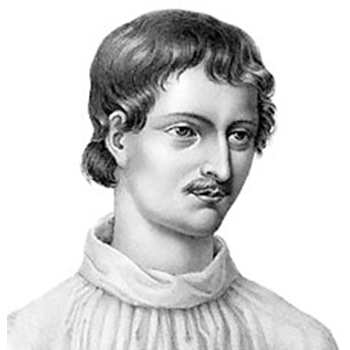
      Giordano Bruno
      Giordano Bruno

    Further Resources on the web, the Magnetic Memory Method Podcast and blog:

    John Michael Greer’s Ecosophia Blog (Toward an Ecological Spirituality)

    John’s Dreamwidth Blog

    John Michael Greer’s Amazon author page

    John Michael Greer Presents: Masonry and the Secret Societies

    Frances Yates’s Giordano Bruno and the Hermetic Tradition

    The Illustrated Picatrix: The Complete Occult Classic of Astrological Magic

    My How to Think and Remember Like the Mentat video on YouTube:

    https://youtu.be/ijm66YXxWfQ


    Cognitive Training Myths Busted: 5 Authentic Brain Boosters To Try Jun 19, 2025
    Show notes

    Are you wondering if brain training actually works? You’re not alone. Many people try memory apps or puzzle games only to wind up disappointed. The truth is that real cognitive training doesn’t come from playing games on flashy apps. As the founder of the Magnetic Memory Method, author of The Victorious Mind, and a memory coach with over a decade of hands-on experience, I’ve helped thousands of people get real results. The results come from proven mental techniques used by memory champions, language learners, and even brain injury survivors. In this post, you’ll discover what cognitive training really is. I’ll also expose why most apps fail. And you’ll discover 5 research-backed ways that actually improve your memory, focus, and learning speed. The best part? The improvements you seek can start to emerge faster than you might think. Ready to dive in? Great, but before we get to any specific routines you should follow, let’s address the elephant in the room. Can Cognitive Training Really Improve Memory? The answer is absolutely yes. But you actually have to train. You can’t be passive about it. And you also have to actually need cognitive training. See, sometimes people who struggle with brain fog actually have dietary issues. Brain training alone won’t help them. Instead, they need to take a permanent break from foods that harm the brain. Or it could be that they’re dealing with a variety of stresses or anxieties that lead to thought blocking. If you have any concerns about these issues, please see a doctor. Although my blog contains information about recovering memory after a stroke, it’s far better for you to avoid having such medical issues in the first place. And that’s not to mention an entire range of problems only a trained medical professional can help you sort out. But if you’ve been told by a doctor that you need to look up some examples of cognitive training to give your brain a boost, then cool. Let’s carry on. Cognitive Training Explained:How It Works & Why It Matters As I explained in my post on spaced repetition, cognitive skill training was first studied by scientists in the late 19th century. In brief, Hermann Ebbinghaus trained himself to memorize over 2000 nonsense syllables. Then, in his quest to understand the nature of memory as a cognitive ability, he tracked how long he was able to remember them. Learning to use spaced repetition to defeat the Forgetting Curve started in earnest with the research of Hermann Ebbinghaus. His experiments led to great interest in what scientists call learning potential. There are entire books on how to assess it and even attractive university scholarships for people interested in studying it. In a phrase, the definition of cognitive training boils down to brain plasticity. It’s the idea that certain activities can make your brain better. These activities can involve everything from neurobics to brain games and memory games. One of my favorite neurobic activities is juggling while reciting the alphabet backwards: https://www.youtube.com/watch?v=lGEuP-ls5hA Or you can perform concentration meditations or even just read more to improve your mind and memory. The key thing is to avoid brain training apps. Scientists now agree that the evidence just isn’t there to support using them. If Apps Don’t Help, What Does? For the “training” part to be meaningful, it’s important that you’re consistent. Sadly, consistency to their chosen source of mental stimulation is a step many people miss. As Dr. Christine Till discovered while researching the cognitive training software called Cogmed, people only received substantial results when they paired the software experience with personal coaching sessions. Please consider this point before spending even a minute with any of the brain training games out there. Online games might be entertaining, but without the proper features cognitive activities need to have in order to serve you, they’re also potentially empty. I also covered this issue in detail during my Reddit AMA on memory and learning, where you’ll find dozens of questions about getting real brain boosts in the context of various people’s lives. Cognitive Training Benefits Now, provided that the activities you choose actually provide cognitive improvement, you stand to enjoy all kinds of benefits. These include: Improved memory, both short-term and long-term Improved attention and focus Better brainstorming and critical thinking abilities Improved ability to memorize vocabulary using a variety of memory techniques Faster results when learning new skills A shot at developing what Harry Kahne called multiple mentality Cognitive Training Downsides Technically, there are no downsides. Using your mind is a wonderful thing to do. However, self-deception is a problem. People wind up spending a lot of time on activities that don’t actually do much for them. For example, a lot of the brain training apps create what is called context dependent or state dependent benefits. These terms mean that although you might become more skilled in the environment of an online brain training game, the skills won’t transfer to real life. Unlike using memory techniques discovered by people like myself and memory expert Lynne Kelly who wrote Memory Craft, most cognitive training apps do little or nothing to combat Alzheimer’s or dementia. That said, there are some legit activities you can pursue. Let’s take a look. 5 Science-Based Mental Exercises That Boost Brain Power As we go through this list, start thinking about how you can incorporate one or two of these activities into your daily life. Remember: It’s consistency that matters. It just simply isn’t “training” without at least 3-4 sessions per week. One: Play Challenging Games No, I’m not talking about crossword puzzles. Why? Because they let you cheat. It’s way too easy to look up the answers. You need games that push you a little, such as these memory exercises you can play with on your own. Other challenging games include live-action role-playing games. Sometimes I host Memory Detective, for example. To make sure this game involves lots of memory exercise, I wrote a novel tie-in called Flyboy. Knowing the story not only allows you to “play along” as a detective uses memory techniques to help him save the day and solve a crime. You also get a lot of passive memory exercise because you’re tapping into a story you’ve read. Also consider playing games where you need to make decisions, games with dice, card games or even some of the games memory competitors play. Memorizing a deck of cards and trying to beat your own record is a powerful cognitive training exercise, for example, and studies have shown it improves your brain. Two: Take Courses Getting out and meeting people is a benefit unto itself. But taking courses and meeting people is even better. My wife and I took a painting course a few years ago and it was fantastic. Not only did we exercise different aspects of our minds, but we got exercise and met interesting people we never would have encountered otherwise. You can also take courses online, especially memory improvement courses. Just make sure that they are offered by authentic teachers who know that your brain needs a challenge, not just a bunch of meaningless activities. You can also make your own courses, such as diving deep into neurobics. I did that myself and here are some of my favorite routines: https://www.youtube.com/watch?v=2MlDePoXWuY Although creating your own courses might seem challenging, that’s just the point. Setting learning goals is itself a cognitive activity that sharpens multiple aspects of your brain. Three: Study A New Language Did you know that bilingualism can protect your brain? It’s a particularly well-proven means of keeping your brain sharp as you age. Even better, learning new languages involves multiple levels of challenge because you need to read, write, speak and listen while exercising your working memory. If you can’t pick a language, go for either Latin or something like Sanskrit phrases. The reason is that you can memorize a lot of useful wisdom in those languages. You get both the benefit of some language learning and powerful ideas that can guide you in life at the same time. Talk about an incredible mental fitness routine! Four: Learn Music Did you know that you don’t have to play an instrument to benefit from learning music? Even just studying some music theory can give you cognitive training benefits. Or you can sing. As one study found, people who sing have the same or even better benefits than people who know about other ways to train their brains. Singing also reduces stress, which is great because reduced stress helps you pay attention better. And that means you can learn and remember more. Personally, I’ve toured as a musician and although I’m retired from gigging, still keep expanding my musical knowledge. The benefits are clear. Each new song or theoretical principle I learn stretches my mind. The key is to lean into new challenges, but never to the point of frustration. Whenever you get frustrated by a challenge, scale back to where you feel challenged just a touch outside your comfort zone. That way, you’ll have a healthy relationship to how musical cognitive training can improve your brain. Five: Become A Memory Master Memory techniques have been around for a very long time. And for good reason. For example, techniques like the Memory Palace can be used to help you learn a language faster. They can also help you remember numbers, names and even long passages of scripture. How? To get started developing your memory tools, complete this simple exercise: List a number of locations from A-Z on paper Then list a number of people you know, also from A-Z Later, you can use these as Memory Places and mnemonic associations. But it’s this initial exercise that oils your brain. No matter how rusty you might feel, this one simple exercise will get you started with the ancient art of memory. Don’t think you can do it? I’ve had everyone from ten year olds to retirees master these techniques after going through the Magnetic Memory Method Masterclass. I’m confident you can too. And to help you lean into the challenge, I’ve created this powerful free training. Give it a try to start building a brain that remembers everything you learn. Once you start using these techniques to combat your cognitive decline, you’ll discover what I believe is the ultimate cognitive skills training. Not only does mastering memory techniques give your mind a powerful workout and great brain exercise. It helps you reflect on the nature of what it means to have a mind. And that leads to metacognitive cognition: the ability to think about how you think. It just doesn’t get any better than that, especially since better memory makes it easy to learn and remember cool terms like “metacognition.” FAQ: Cognitive Training & Mental Exercise Over the past decade, I’ve worked with thousands of people using memory techniques to improve their cognitive abilities. These people include students, professionals, even stroke survivors. As the creator of the Magnetic Memory Method and author of The Victorious Mind, I’ve seen what works and what doesn’t when it comes to brain training. These are the most common questions I hear about cognitive training—along with answers rooted in both science and experience. Q: Do cognitive training apps really work? Most apps provide short-term gains in the specific tasks they train. But research shows these benefits from pattern recognition or matching games often don’t transfer to how you use memory and focus for learning in everyday life. For lasting results, hands-on methods like memory techniques, language learning, or problem-solving games are far more effective. Q: What are examples of real cognitive training? True cognitive training includes memory techniques like the Memory Palace, learning new languages, playing musical instruments, solving logic puzzles, and engaging in complex reading or writing tasks. These activities challenge multiple areas of the brain and build transferable cognitive strength. Q: How often should I do cognitive training exercises? Aim for at least 3–4 sessions per week, around 15–30 minutes each. As with physical fitness, consistency matters more than duration. Real improvements come from steady, repeated engagement with mentally demanding tasks. Q: Can cognitive training help with memory loss or brain fog? It can, but only when paired with lifestyle changes. Poor memory is often linked to sleep deprivation, stress, diet, or underlying health issues. If you’re experiencing brain fog, talk to a doctor. And ask them about cognitive training as a powerful supplement to a healthier lifestyle. Q: Is there a best cognitive training method? No single method fits everyone. But memory techniques (like the Memory Palace) consistently deliver strong, research-backed results. The key is to choose something challenging that you will enjoy learning and stick with it. Language learning is one of the best activities for helping your brain develop cognitive reserve, as evidenced by this research paper, among many others. Q: What about using AI-based tools for cognitive training? This question is tricky because search engines like Google were the most powerful AI humanity had ever seen until Chat-GPT. But the Flynn Effect and how it shows IQ scores declining should give us pause. Using AI is amazing and I do it frequently. But I still get offline as much as possible for learning and other aspects of life. AI is an assistant and a supplement to human cognition, not necessarily a trainer or a solution to our thinking problems. Your brain still needs deliberate, challenging training, just like it did in Ebbinhaus’ time. So if you’re going to ask it questions about how to train, make sure to include offline suggestions. In fact, I’ve been doing that myself when it comes to dealing with some career burnout I’ve been experiencing. It has been helpful and I’ve been happy to see that it supports the suggestions you’ve encountered today. In sum, cognitive training does really improve your brain, your memory and your ability to focus. You just need to make sure you rule out other issues, pick the activities that suit your desired goals and engage in those activities consistently. So what do you say? Are you ready to start enjoying true cognitive training? Make it happen!

    Full show notes at the publisher

    Learn a New Language Fast: 5 Steps & 14 Best Practices Jun 17, 2025
    Show notes

    The best way to learn any new language is to establish a five‑part loop: Set a micro‑goal (e.g. “hold a 3‑minute café chat in 30 days”). Develop familiarity with the sounds & script before any of the other steps Build a core vocabulary by memorizing your first 50 mission‑critical words using the Memory Palace technique. Practice the “Big 5” skills of language learning daily: Memorize new words and phrases Speak Read Write Listen Get feedback and reiterate weekly to test your progress and get corrections from at least one native speaker. Stick to this loop for 15 minutes × 3 sessions a day and you can hit A2 in approximately 90 days. That’s exactly what I did to pass A2 when I lived in Germany. I did it again to pass level III in Mandarin in an even shorter period of time. Of course, there’s a bit more nuance to each of these steps. And that’s what I’m going to share with you on this page We’ll go through each step in detail and you’ll learn fourteen additional best practices used by the world’s most accomplished language learners. Ready? Let’s dive in! https://www.youtube.com/watch?v=dgUsv2TZlKs How To Learn A Language in 5 Steps Step One: Set a Micro Goal Having taught people how to improve their memory so they can learn languages faster, I’ve noted one major trend. Many people make language learning hard on themselves by having an “all or nothing” attitude. In reality, languages are learned with much greater ease by using what scientists call chunking. This term means that you break a learning task down into the smallest possible unit. Many people start by learning how to say hello, please and thank you in their target language. Once you complete that simple goal, you set another goal. Or as I sometimes prefer to think of them, “missions.” How to Set Language Learning Goals You’ll Love Completing When I first started learning German seriously, my classes at the Hartnackschule in Berlin provided these small missions. Later, I had to provide my own language learning missions. To do this, I asked one simple question: “What do I want to be able to speak about next?” My choices will differ from yours. But to give you some examples, I played in a band at the time. So I chose music-related topics to help fashion my goals. I also taught Film Studies at the University of Saarland, so regularly memorized words and phrases related to this industry. Finally, I love asking philosophical questions, so I learned how to ask them in German. A2 was passed quite easily. That’s because the courses I took told me what I needed to learn. But it was crafting my own missions that got me fluent. Because I spent time working out what I wanted to talk about. And now you know how to create your own goals and missions too. Step Two: Develop Familiarity with the Sounds and Script of the Language Before diving into memorizing words or grammar rules, it’s helpful to get comfortable with how the language looks and sounds. For example, I took a phonology course for that when I first started learning German. Likewise with Mandarin further down the road. It’s also useful to learn the International Phonetic Alphabet. This set of symbols will help you with pronunciation, which is essential to being understood. It’s also important to immerse yourself in the rhythms of the language. You can easily do this by: Watching YouTube videos Enjoying popular movies in the language Listening to audiobooks Even if you don’t understand much yet, this passive exposure will help your brain attune to the phonic features of the language. Learning Writing Systems Depending on the language, you may need to learn an entirely new writing system. I had to do that with Mandarin by learning the hanzi. For Japanese, I also had to spend time using memory techniques for the hiragana, amongst other character sets. Each alphabet will propose different levels of challenge depending on your experience. If you have any concerns, especially if you have limited time, it’s worth considering my article on the easiest languages to learn. You don’t want to rush, and some languages simply require more from your brain’s ability to associate sight and sound. The point is that you will want to develop this kind of sensory familiarity between sound and sight to reduce mental friction later. Your brain will stop having to ask, “What is the sound of this symbol?” As a result, you’ll be free to focus on memorizing more vocabulary and phrases without interruption while studying. Step Three: Build a Core Vocabulary Once you’re familiar with the sounds and script of your language, it’s time to start building your vocabulary. You’ll want to start small based on the goal-setting process and chunking we discussed above. There’s lots of advice people give about organizing vocabulary by category and using word frequency lists, but I stick personally to the missions to work out what words I need to focus on. That’s because taking classes and learning with native speakers does a lot of the organizing. Using Memory Techniques for Language Learning Given that you know how to create goals, let’s talk about getting your first round of vocabulary into your long-term memory. Learning to use memory techniques for language learning well is one of the best ways to rapidly accelerate your practice. Mnemonics help because: The Memory Palace technique allows you to rapidly scale the number of words and phrases you can remember Effective association through multi-sensory visualization makes words and meanings incredibly “sticky” Using the method of loci mentally replicates spaced repetition software without sacrificing the benefits of active recall In fact, the memory techniques optimize how you practice recalling information in a way that strengthens your memory overall. Step Four: Practice the Big Five of Language Learning In order to create momentum and progress, it’s important to balance multiple levels of processing everything involved in learning and using your chosen language. To do that, you’ll want to learn the major “meta learning” skills that make achieving fluency possible. These activities can be broken down into what I like to call The Big 5 Of Language Learning. I’ve illustrated them for you with this diagram: These five elements are based on a scientific principle called the “levels of processing” How do I know they are valid? Because researchers continually confirm their value in research papers like this one about Stephen Krashen’s input theory. How the “Big Five” of Language Learning Works And as the illustration above shows, giving yourself enough exposure to achieve the levels of processing effect requires you to combine: Memory Reading Writing Listening Speaking It’s not a question of which one of these learning activities is most important. It’s the holistic combination of all them that matters in the end. When I start a new language, I put each and every one of these activities into a learning cycle and interleave between them. So far, only Hebrew, Sanskrit and Chinese have put speed bumps in my path. That’s because I had to learn their character systems first. But thanks to memory techniques, that didn’t take long. Once you can read the language of the alphabet you’re dealing with, there are effective ways to combine listening and reading. You can do that by combining certain tools, like setting up subtitles on Netflix or the story narration program. I feature both of these options on my best language learning software post. You can also get great writing practice at the same time you speak, by repeating what you put on the page verbally either before or after putting it down on paper. These days, you can also explore language learning with chatGPT, which I’ve found helpful in small doses. Both writing and speaking are very important for learning a language. By reading aloud what you’ve written, you double-down on the benefits and learn faster. Any decent language learning class will make you go through these steps, but if you don’t also get yourself to do it on your own, you’ll struggle to learn your language. Step Five: Get Feedback by Learning with Native Speakers Learning in isolation is possible. For example, I’ve achieved a lot in Latin purely by studying on my own. But for most of us, it only gets us so far. Why? Because language learners need feedback. And when you meet regularly with native speakers, you get instant feedback. Please don’t wait to get started. Speaking before you’re “ready” is a key strategy and provides you with one of the fastest ways to improve. You can watch me put this into practice in this video with me and my Ukrainian teacher during our very first lesson: https://www.youtube.com/watch?v=f_dNtRuBRno What’s the best way to find native speakers? Join a language exchange forum or website Schedule a call with a professional teacher and use Zoom (like you see in my Ukrainian learning documentary video above) Find a local tutor through a school or by placing an ad Even just 10-15 minutes of interaction a few times a week can reveal gaps you’re not aware you have. I suggest recording every session and then applying memory techniques later. When you combine speaking with each of the other Big Five language learning activities, you’ll lock vocabulary, phrases and grammar principles into long-term memory effectively. And you’ll build confidence as you go, which leads to competence in the language. The Best Practices That Get Languages Learned Faster Now that you have my five best steps under your belt, let’s talk about some best practices. These suggestions are based on my years of experience interviewing and being friends with some of the world’s leading polyglots. Their advice has helped me so much and I’m confident these considerations will help you achieve fluency too. Best Practice One: Develop A Positive Mindset So many people ask, How hard is it to learn a new language? But what if this is the wrong question? What if a better question is: what are the mental strength resources I need to keep consistent over the long term? When it comes to language learning, you’ll want to develop skills with: Setting realistic goals For example, if your language has a character set or new alphabet you need to learn, this might be your first goal. If you already know the alphabet, then your first goal might be how to introduce yourself, plus fifty new words related to some of your interests. Creating a practical schedule. Showing up consistently. Managing your expectations. Understanding the different types of motivation when learning languages. Accept that mistakes will be made and be willing to learn from them. Exploring and acquiring the best language learning materials. Developing the courage to speak the language. Use a journal to set your goals. It will help you gain clarity on what really matters because you can see your intentions more objectively. Some people will need to spend more time learning these skills than others. But they can all be learned and improved as you go. Best Practice Two: Choose The Best Possible Language Learning Materials This step is tricky, but also very doable. First, just accept that some risk is involved. You might end up buying a book or course that just doesn’t suit you. This circles back to mindset, particularly managing your expectations. Personally, I treat it all as research and don’t get emotionally involved. In fact, I allow myself to be open to revisiting any resource I’ve purchased again in the future, because we as humans can be tremendously fickle. It might not be that the book or course is bad. It’s entirely possible that we were either not ready for it yet, or just having a bad day, week, month or year. A subset of choosing the best materials for learning a language is to limit the amount of sources. When learning a language, we do want tons of input – but that doesn’t mean you want it from dozens of sources. There is an overwhelming amount of language learning material to choose from. Set limits and focus on completing just one book at a time. Instead, I suggest you take a tip I’ve benefited from. It comes from my friend and language learning expert Olly Richards, who advises that we pick at maximum: One book One video or audio program One teacher By sticking to limits like these, we give ourselves ample opportunity to experience the levels of processing effect while not overwhelming ourselves with materials. Embracing limits helps us maximize our investment in the materials and enjoy the benefits of thoroughness. Plus, if you’re going to use rote learning instead of memory techniques, the limits will help ensure the rote is concentrated and not spread across too many different sources. When it comes to avoiding rote, Olly shares some fantastic advice in this podcast: Again, whether you use rote or mnemonics, you might find you acquire materials that simply don’t work. It happens, but at least you’ll have learned something about language learning materials that don’t suit your needs. But overall, you can limit this problem in the first place my limiting how many language learning guides you bring into your learning life in the first place. And making sure that you always maximize your thoroughness with the ones you do choose. Anthony Metivier with his Mandarin teacher. That way, time will erase any mistakes and the materials you learn from will pay off soon. My personal rule of thumb is to stick with a book, course or audio program for at least 90 days. When I was learning Chinese, for example, I followed my own advice. By working with just one audio program, one book and one teacher, this limited focus helped me achieve much faster progress. But had I been by constantly throwing new “shiny new textbooks” in my path, I would have been constantly distracted. Need a source for good language learning teachers online? These days I suggest you give Languatalk a try. Best Practice Three: Immerse Yourself With Sensible Input And Strategic Challenges In the beginning, you might not understand anything. But as you learn, your pattern recognition will go up. There are a number of ways to keep increasing your sensible input. These include: Meet regularly with a native speaker Be sure to bring a picture-based magazine. Learn to ask, “What is that?” and keep pointing at pictures. Record the sessions with your smart phone and listen back, trying to guess what you were looking at in the magazine. Watch movies with subtitles When you find vocabulary and phrases you want to learn, write them down and memorize them. I recommend you create your own flashcards by hand using drawings and colors, like this: It’s fun and easy to create your own mnemonic devices on flash cards. It’s also generally much more effective than using language learning apps. Complete courses and textbooks thoroughly These will help increase the amount of patterns you’ll recognize as you continue your exposure to the language you’re learning. Read short stories and news articles You can do this by just reading or by creating your own translations as you go. My friend Luca Lampariello shares a number of tips on how to use translation to increase your fluency. Take a course Strictly speaking, taking a course isn’t necessary. I’ve done it both as a beginner and as a more established student and find saving it for later much more useful. If you take a course, make sure the teacher uses the target language primarily. You’re not there to improve your mother tongue or teach it to them. Speak with natives online There are many great websites for finding people to speak with during dedicated sessions or in small doses by sending and receiving audio texts. As a rule of thumb, I like to give new speaking partners 2-3 sessions before deciding if they are a fit or not. Follow Instagram and other social media accounts in your target language. Learn songs in your target language. I know that it can seem strange that learning songs will help, but it helps get more vocab…

    Full show notes at the publisher

    Best Note-Taking Methods for Memory & Focus at Work or School Jun 10, 2025
    Show notes

    Struggling to retain what you read or hear in a lecture? No matter how many note-taking techniques you try? I get it. As a lifelong learner with a neurodiverse background, I found most note-taking methods either too rigid or outright ineffective. I encountered this problem during university. And many of the most highly-recommended note-taking tactics became even more unhelpful when I started teaching as a professor at Rutgers. As technologies have evolved, I have found that the landscape for learners has gotten even more confusing. Sure, many people love using apps to aid their learning. And they even get results from them. But over the years that I’ve been working as a researcher, writer and host of the Magnetic Memory Method Podcast and my YouTube channel, I’ve tested and developed multiple strategies. I’ve also refined the note-taking strategies I used to use in grad school. And in this guide, I’ll walk you through my favorite unconventional note-taking methods that consistently help me improve my focus, boost memory, and best of all, actually enjoy the learning process. Whether you’re trying to keep up with a fast-paced lecture, sitting in a meeting or reading dense books, these flexible strategies will help you take better notes. Even better, you’ll get more out of the notes you take when using these processes. Let’s dive in. https://youtu.be/bG-v3Yo1btA My Best Note-Taking Recommendations To Make InformationMore Engaging and Memorable A quick note before we dive into the techniques I recommend: There’s no “perfect” method that works for everyone, every time. The approaches I’m about to share apply to different kinds of information. And that’s a huge point about having methods overall: You need multiple techniques that you can switch between depending on the situation. That’s why I recommend practicing all of them. This approach will leave you with a flexible framework for taking notes in multiple contexts. One: Visual Note-Taking Visual note-taking is exactly what it sounds like, and it has been essential to my goal of learning faster and remembering more. Instead of scribbling out long, lifeless sentences during lectures, I realized that quick visual representation could be used to represent many concepts and skills I needed to learn. For example, when studying the International Phonetic Alphabet to improve my language learning skills and understand my linguistics textbooks better, I drew a simple coffee cup next to the “i” symbol. Here’s the drawing: Here’s what this quick sketch achieved: I was rapidly able to remind myself that this “i” makes the vowel sound in beans. Just one image anchored the concept instantly in my memory. You Don’t Need to Be an Artist As you can see from my example above, visual notes don’t need to be artistic or detailed. In fact, the simpler, the better. Usually, I limit the visual notes I take to some simple rules: Arrows and flow lines show cause and effect or represent connections Symbols represent core concepts Simple stick figures or icons to bring ideas to life Spatial arrangements (like clusters or grids) group related topics Question marks prompt reflective thinking This visual note-taking method works across the board, but especially well for: Fast recall of symbols, terms, or processes Condensing complex material into visual shorthand Keeping your brain engaged during dry or fast-paced sessions You don’t need to take your visual notes on cards like you see in my examples. You can integrate visuals into the margins of your books or reserve one or more pages in your notebook for collecting visual summaries of key ideas. Copying Charts and Graphs By Hand for Better Understanding Some people can look at a chart and instantly understand what it’s meant to convey. Not me. I often find even simple graphs visually overwhelming. But as I learned from Tony Buzan, you can simply copy them from your textbooks in your own hand to process their meaning. I followed his advice and did that to understand how memory works. By using multiple colors and engaging more parts of my brain, I’ve never forgotten the forgetting curve and the serial positioning effect I drew out visually by copying it from a textbook: The History of Visual Note Taking for Instant Engagement Ultimately, I never would have believed visual note-taking would help me so much. But it has, and later I found out that this style of note-taking is actually ancient. As Jamie Kreiner reveals in The Wandering Mind: What Medieval Monks Tell Us About Distraction, copyists would leave doodles for their readers to remind them to keep engaged. These included funny faces or pictures of monks with alert expressions. So if you use visual note taking, you’re in good company. For more reading recommendations like Kreiner’s to help broaden your knowledge about study techniques, check out my full list of books on learning. Two: Outline Note-Taking for Streamlining Ideas Outline note-taking is widely used. You could almost call it a classic approach, though you’re about to discover a few ways I’ve found to make it even better. I use it frequently when attending lectures or listening to instructional videos by just making a dash beside each point based on keywords. I also use outline note taking when recording my own thoughts. For sub-points, I will indent slightly to the right. It basically winds up looking like this example, which involves simple dashes to outline the larger topic: The catch with this kind of note taking is you can sometimes puzzle yourself. Because this kind of note-taking compresses the main point into a single keyword or phrase, you can’t always remember exactly what you meant during the note-taking process. Fortunately, I have a fix for that. Combine Outline Note Taking with a Review Process To avoid being puzzled by notes later when using outline note taking at lectures, I ask the speaker permission to press record on my phone. Then, listening back, you can expand your basic outline notes later. While getting a complete review of the points you thought were good enough to track during the lecture. When I was in university, not all professors allowed me to record their talks. Fortunately, these days it’s very common for just about every lecture to be recorded and even uploaded publicly for the world to view. But if for any reason, recording is not possible, leave space to one side of the page so you can expand your notes immediately after the session. Don’t wait. Write your summaries while the ideas are still fresh, even if your working memory is strong. Also, if you can, go over your notes with classmates or co-workers within an hour or two. This simple activity is one of the most empowering study habits I practiced across my university years. Should You Type Your Outline Notes? People ask me by email or in comments if it’s okay for them to type their notes. According to studies like this one from 2024, you won’t get nearly the same memory benefits from using a computer for note taking. Why is handwriting better? We actually have to address two angles: focus and memory. First, this Scientific American article summarizes studies that show a major difference in brain activity. You remember and learn more when using your hand due to processing that occurs because real-time note taking by hand is slower. I know that sounds counterintuitive, but if you think about it, writing requires more focus. And what we focus on, the brain engages with much more deeply, leading to better memory and comprehension. Outline Notes for Creative Output I’ve long noticed that I remember more and understand better when writing my study and research notes by hand. But this form of note taking has also helped me edit my books better. For example, it’s totally possible to revise books on the computer. To get better and faster results, however, I print out my drafts, read them with a red pen and take outline notes on sheets of paper. It’s so much easier to improve an entire book draft this way. Both to better remember the many moving parts, and to increase focus. Editing on a computer is not only challenging because your brain activity slumps. You’re also fighting against multiple open tabs and the knowledge that there are infinite entertainments that await you online. So whether you’re editing an essay for a school assignment or an article for work, get it printed so you can make notes on the draft in ways that will better serve your goal of creating a masterpiece. Three: SQ3R Note Taking Driven by a Powerful Questioning Formula SQ3R was developed by the educational psychologist Francis Robinson in the 1940s to help military personnel read better. The SQ3R acronym stands for: Survey Question Read Recite Review Unlike passive reading or taking notes without thinking, SQ3R gets you engaging deeply with the materials through this easy-to-follow model. I find it useful for reducing information overwhelm when used in this exact manner: Survey the book from back to front before reading to get a sense of its structure Question what I want to learn and determine how many flashcards I might need Use active reading strategies while going through the book Recite the ideas while taking notes from the textbook, verbally and in writing Review the ideas from my notes and mentally by continuing to ask questions about what I’ve read Why Asking Questions Improves Learning and Memory In my experience, constantly asking questions strengthens memory because you’re processing the ideas in a deeper way. And scientists have found that you’re engaging in what’s known as elaborative rehearsal. You strengthen your memory and understanding because questions help you look at the information in more than one way. Sometimes my questions are simple. If you scroll back up and look at my card with “Really?” on it and the visual arrow to connect two ideas together, I’m expressing both skepticism and surprise. Here are some other questions I frequently use while reading and note taking: What does this point connect to? Where else have I encountered an idea like this? What is the author’s objective in raising this point? Why is the content organized in this way? What evidence supports this claim? Is the evidence dated or likely to require an update? What image, analogy or metaphor could represent this concept? What’s the simplest way to explain this to someone who has never heard about it before? What’s the biggest and most important takeaway? Can I explain the key points in my own words? What questions is this book not asking but should be? There are many more questions you can ask. If you’d like to train your brain and become a question-asking machine, check out my ultimate list of philosophical questions. It’ll help turn you into an SQ3R machine. Combining SQ3R with Other Learning Methods As you’ve seen, I combine the question-asking process with my note taking process. But you can also make quick doodles or sketches that embed questions. Or make sketches of question marks that prompt you to ask the sample questions I’ve shared above. If you use the method of loci, you can embed questions marks along your mental journeys to trigger your recall. In fact, one of the earliest memory training books by Peter of Ravenna encouraged its readers to ask lots of questions. This point that questioning frequently forms memories was raised again by the Renaissance memory instructor Giordano Bruno. He taught people a means of placing questions on memory wheels. These “computational” mental tools have a long history, and are worth studying because of how question-focused they were during an era packed with polymaths and autodidacts. The point is that top learners rarely use any technique in isolation. So to get the most out of SQ3R, pop it into your outline note taking efforts as well. Four: Flow-Based Note Taking for Capturing Ideas Faster Flow-based note taking is all about getting your thoughts down without the kinds of filters other methods involve. Sometimes I think of this approach as “brain dumping.” For example, here’s a real instance of getting into flow and just letting ideas flow in real time: In the same section I visually worked out a story idea and even listed the playing cards I had memorized earlier that day. Although these pages from my private notebook might look chaotic to some, it’s a powerful snapshot of my thinking at that moment. Handwriting for Speed and Focus I carry the kind of notebook you see above at all times. The 90x140mm format fits perfectly in the back pocket of my jeans. The only rule I follow when using this form of note taking is to not interrupt the flow. There is one precaution, however: Try to write cleanly enough that you’ll be able to recognize your own handwriting. I recently had to buy a magnifying glass so I could decode some of the notes I took a bit too quickly. Since then, I’ve started taking more care that I write legibly. Not for perfection, but for the benefit of my future self. You Don’t Have to Optimize Every Flow-Based Note Even though I’ve started taking greater care, this approach is not the SQ3R, nor does it involve creating a specific outline. It’s about momentum and staying in the zone. In my experience, this method works best for: Early-stage project planning Creative writing Working through a series of scattered ideas Journaling for self-improvement outcomes Remembering your dreams Summarizing ideas from books you’ve read Can you get the same effect from taking notes in flow on a computer? Possibly, and sometimes I send myself notes via email, especially when ideas for books I’m writing come up while I’m working on other tasks, like editing videos. These rapid notes wind up filled with a lot of typos that can be hard to decode later, however. And we have studies like this showing that cursive handwriting gets much better results for anything involving memory, learning, focus and concentration. In sum, I stick to handwriting these “brain dump” notes as much as I possibly can. Five: Doodling While Taking Notes This might be my most controversial suggestion, but please hear me out. Doodling while taking notes isn’t about zoning out or expressing frustration with boring topics. Although some people discourage doodling, my personal experience says otherwise. As someone with two MAs and a PhD, sketching simple shapes while listening to slow lectures based on dense topics or challenging skills has helped me many times. For example, when studying music theory and waiting for the teacher to move through ideas I didn’t want to miss, I doodled on the right-hand side of this notebook: In a way, doodling while paying attention to information is like mind mapping, but without having to create a dedicated mind map. I find it useful because it helps me focus on the information as it flows in real time without giving in to the need for a dopamine spike. Doodling also brings powerful memory benefits. As this study found, a group of doodlers who listened to a telephone call remembered 29% more than those who did not. When it comes to doodles for language learning, the founder of the Fluent Forever app and author of a book with the same title, has talked extensively about making your own index cards. You can hear my conversation about this with Gabriel Wyner on this episode of the Magnetic Memory Method Podcast. I took his advice to heart and started drawing frequently to help me learn both German and Mandarin. For example, this simple doodle in one of my language learning notebooks helped me remember a very important German word in no longer than the time it took to create the simple image: Mnemonic Example for the German Word Bereich I highly recommend giving doodling as a form of note taking for a variety of learning goals. That way, you can stick with what you’re studying without feeling the need to seek a dopamine spike quite so often. So next time, rather than constantly flipping through your computer tabs or getting irritat…

    Full show notes at the publisher

    How to Deal with Information Overload by Boosting Your Memory Jun 06, 2025
    Show notes

    As a polymathic professional who has walked multiple career paths, I’ve learned exactly how to deal with information overload. The real fix for when you feel overwhelmed? In my experience as everything from a touring musician to university lecturer and the owner of multiple businesses, here’s the ultimate answer: Improve your memory. Not in a vague way. And definitely not “someday.” But by following a clear, proven path designed to held you reduce mental clutter. On this page, you’ll discover a system that will sharpen your focus and help you relieve cognitive overwhelm. Pretty much on demand. No, I’m not offering any magic bullets or hype. Just proven strategies for preventing cognitive overwhelm in the first place, along with the self-education strategies that have made my successes possible. If that sounds good to you, let’s get started. https://www.youtube.com/watch?v=37oyQ4_kN2Y Understanding the Modern Brain Under Siege:A Definition of “Information Overwhelm” It’s supposed to be a dream come true, right? I’d finished my first major guest professor grant and my first memory improvement books were taking off. So I went on tour with a band I’d played with in Berlin near the end of my PhD studies. Never had I experienced so much freedom. Yet, I had also never felt so overwhelmed as my phone buzzed with non-stop updates, alerts and notices of things to do. As the authors of this scientific overview of information overload have found, it’s not actually the amount of information that drives us crazy. It’s how that the speed and volume impacts our ability to make decisions. Stress and memory loss are well-studied, as is memory and anxiety. But once you know that the biggest problem of all involves a reduction in your ability to think critically, workable solutions emerge. What follows are the best I’ve found. They’ve increased my “cognitive budget,” so to speak. Meaning that I have more mental power to spend on the activities that have allowed me to continue playing music while writing novels, learning languages and running multiple businesses. Of course, there are other aspects of overwhelm to consider. So before we get into the tips, let’s examine what else might be going on in your life. The Four Levels of Information Overwhelm Each of the levels we’re about to discuss make critical thinking more difficult, especially analytical thinking. They are: Sensory overload Cognitive overload Emotional overload Decision fatigue Let’s look at examples of each. Sensory Overload When I was a musician, a huge part of the overload came from the noise of traveling all day in a vehicle with my band. We listened to loud music on top of the traffic sounds. Driving is visually stimulating even if you’re not at the wheel. And then we would get on stage and have the sensory input of lights, audience cheers and our own extra-loud instruments pounding at us. One simple hack that helped me was to wear my earplugs while traveling, not just while performing on stage. As a result, I was able to read on the road and better manage my growing publishing business, which included writing this blog (and still does). To this day, I wear noise-cancelling headphones just to keep myself focused while writing. As these scientists have found, one of the biggest barriers people face is that they need to experiment with their own ways of reducing sensory stimulation. Fortunately, Queensland Health has some suggestions that mirror the processes that have helped me, including: Identifying places you can go to enjoy reduced stimulation Developing routines that involve more time spent in quiet Creating a sensory tool kit (sunglasses, noise cancelling headphones, anything that helps you feel calm) Cognitive Overload I recently finished the eighth draft of my second “Memory Detective” novel. The story is so complicated and my notes were all over the place… There were too many inputs and not nearly enough integration. The answer was to take a break and then order a print copy of the seventh draft. I didn’t feel it was ready yet, but by reading the draft in book form, I was able to make marks on the page and consolidate my many notes. When studying at university, and for my non-fiction books, I rarely have this problem. That’s because I used the Zettelkasten technique to easily organize and integrate my notes. More on this strategy in a moment, but the point here is that part of my cognitive overwhelm came from working outside my circle of competence as a scholar. As a result, I shifted how I dealt with the many inputs involved in writing a different kind of book. Chaos ensued until I took a break and approached the task more strategically. Why did it take so long to arrive at a better solution? As we now know, overwhelm reduces decision-making skills and other cognitive abilities. Breaking the patterned loop I was in was ultimately the fix, and doing that should help you too with cognitive overload. Emotional Overload I have an ongoing debate with a friend who disagrees that emotions have any logic to them whatsoever. For better or worse, I can’t agree because I’ve read books like The Upheaval of Thought: The Intelligence of Emotions. But often we don’t listen to what the intelligence of our emotions is trying to tell us. And that leads us into even more emotional chaos. Some tips that have helped me deal with emotional overwhelm are all science-backed, such as progressive muscle-relaxation and paced breathing. Cognitive training has helped as well, including some of the memory-based meditation routines I shared in my TEDx Talk. https://www.youtube.com/watch?v=kvtYjdriSpM Decision Fatigue Making decisions taxes the brain. As this study discusses, not only do you have to make the decisions in front of you. You also have to either execute after the decision is made, or hold information about the processes you’ll need to follow in your memory. One of the best ways to I’ve found to help make sure I don’t get overwhelmed is to keep studying working memory and practice expanding it. We’ll talk more about ways to do that to beat down info overwhelm. And not just beat it down, but manage it without anxiety. Memory Techniques that Expand How Much Information You Can Handle I’ve been teaching memory improvement professionally for over fifteen years. What you’re about to explore are the best ways to sharpen your memory so that your overall mind enjoys mental resilience and stamina. Although the science is mixed, usually that’s because they experiments they run involve granular activities. For example, in this study, they tested N-back tasks and saw negligible results. But most of us aren’t overwhelmed by those kinds of activities. We’re overwhelmed by to-do lists, massive textbooks we need to read and the digital amnesia created by life online. Rest assured, there’s lots of good evidence for taking memory training courses, including focusing specifically on working memory training. You just need to keep your specific goals in mind. For example, if you’re overwhelmed with language learning activities, then you’ll want to take the memory advice of a world renowned polyglot like Luca Lampariello. You can listen to him on my podcast share a powerful mental metaphor he’s used to reduce his own overwhelm. Or, if you’re dealing with books as part of your studies, take advice from someone like myself. I take notes from textbooks in a specific way that will help your memory for that specific type of learning goal. With these points in mind, here are the major memory techniques that will help you deal with all kinds of overwhelm. One: The Memory Palace Technique When you’re drowning in information, it’s easy to feel paralyzed. Especially when the clock is ticking. The reason you feel overwhelmed? The brain isn’t designed to hold disorganized data. That’s why I use Memory Palaces to help internalize information along highly familiar routes that are already in my memory. I’ve taught thousands of students to use this technique as well, and my testimonial page is quite long with their stories of success. What is it? In brief, it’s the king of all the ancient memory techniques. Sometimes called the method of loci, scientists believe it works because of how our natural spatial memory abilities allow for highly efficient neural coding. For a full training, please read my guide to the Memory Palace technique. It goes into great depth about how to get started and even reach advanced levels of use quickly. Two: Personally Created Flashcards I pull a lot of notes from tons of sources. That’s why I use the Zettelkasten technique. Zettel means slips of paper or cards in German. And kasten refers to boxes. This means that you don’t just take notes on flashcards. You take them in a way designed to work combination with Memory Palaces and the Leitner Box approach. Now, there’s a potentially overwhelming amount of things to say about managing these cards, but take a look at the photo above. In it, you’ll see that I have very little information on the flashcard I’m holding. That’s on purpose. Scientifically, I’m practicing what’s often called the chunking memory strategy. It’s based on the fact that our mental processing power isn’t that large. Even if you engage in a ton of cognitive activities, you’ll still benefit from breaking things down to smaller components. It’s more than reducing overwhelm. This “less is more” tactic actually helps your brain remember more. Three: Rapid Fire Alphabetical Associations Have you ever met someone and said, “Oh, your name will be easy to remember. I have a friend with the exact same name.” That’s the principle behind making alphabetical associations to expand how much you can remember without overwhelm. My friends in the memory competition world use this kind of approach to memorize hundreds of data points. For example, 3x USA Memory Champion John Graham has astonished people by memorizing dozens of names and numbers associated with those names in high pressure situations. How? Mnemonic images. Specifically approached using one of four pegword methods. You don’t have to learn them all to benefit. But please set some time aside to pick up at least one or two of these techniques. You won’t regret how they help you rapidly absorb much more info than ever before. For more powerful methods like these, check out my full list of memory techniques you can start mastering today. I’ve also got a list of books on learning that often refer to them, amongst other learning strategies that help reduce overload quickly. Organizing Your Learning For Stress Free Clarity & Retention If you want to learn how to organize your learning, it matters a great deal what you’re trying to learn. My strength is study tips for overwhelmed learners based on having completed so many degrees and certificates. Even in my forties, I still take exams, such as when I passed Level III in Mandarin a few years ago. Here’s a list of the tactics that have worked the best for me to create mental clarity and focus as a lifelong learner. One: Balancing Input with Output Too many students cram, consuming as many of the main points as they can. Let me be blunt: For most of us, this is a horrible learning strategy. You need to integrate what you’re learning by using what scientists call active recall. Put simply, instead of just studying, you need to regularly test yourself. That’s why I suggest that you use Memory Palaces and the flashcard method we discussed above. These techniques require you to process what you’re learning through writing and speaking the material. As a result Two: Interleaving One reason I rarely burn out on topics I study stems from my use of interleaving. It’s a simple process where you switch between topics you’re studying frequently to avoid topic exhaustion. The way I use it involves switching between books approximately every 15-20 minutes. And I basically never read for long when feeling frustrated or bored with a topic. Interleaving lets you switch without guilt and come back later when your brain is ready for another round. This process helped me get through many books that didn’t feel like reading during university. And it still helps me educate myself when I have to go through articles and books for my research. Give this approach a try. You’ll likely find it beneficial. Three: Daily Routines A huge part of my success comes from purposefully acting a bit robotic. Almost every day I complete: A morning concentration meditation A journaling exercise Daily reading and writing Selective viewing or listening of educational content online Evening wind-down routines I shot this video about my habits three years ago and little has changed: https://www.youtube.com/watch?v=NyUsLTPHbTk Four: Environmental Control Often we struggle to overcome information overload because we put ourselves in locations that do not serve. True, we sometimes have no choice. But it is possible to seek out the best places for learning. You have my guide to the best study places I used during university. Even if you can’t change locations to reduce overwhelm, getting out for a daily walk or sitting in a different room to hear some music can work wonders. How to Reduce Digital Info Overwhelm Like everyone, I struggle with the tsunamis of information online. There are more books than I’ll ever be able to read in a lifetime. New bands release albums at a pace I can’t keep up with and YouTube is constantly filling up with fascinating new videos. One simple tactic that helps me is to journal what I spend my time on. In 59 Seconds, Richard Wiseman shares research showing that people who journal experience time quite differently. In my experience, it feels like I have more of it. And when I look back through my journals, it’s amazing how much I’ve read and still managed to consume online. But the act of writing it all down also serves as a kind of mindful reminder. Writing things down constantly raises the question: Is this digital media I want to consume really worth the time? If you keep asking yourself that question, written or not, you’ll likely waste less time. You can also use digital filters. But I tend to think it’s better to train the mind to stand up to these temptations without external devices. Train Yourself to Become an Intentional Learner As a polymath and autodidact, I learned long ago that there’s a difference between passive consumption and active learning. You can learn a lot about making the switch in ways that will reduce your overwhelm by studying how to be a polymath and develop your autodidactic skills. You’ll also want to study how other top performers managed to learn so much, such as Thomas Jefferson. Although it’s temping to think that you might not be able to reach those levels, you actually can develop the personality traits they use to learn such incredible amounts without burnout. The key is to get rid of so many of the cliches floating around out there. For example, many people say you have to be “curious.” I disagree. A lot of top learners set an intention and then work out what needs to be done in order to accomplish a goal. Then they do it. And an open secret is that freedom is in the doing. So much overwhelm comes from letting lists pile up and never attending to the accomplishment of your dreams. But that doesn’t have to be you. You really can master your memory and from there master how your mind responds to overwhelm. If you’d like help, my free memory course has helped over one hundred thousand people. You can get started with it here: Remember: The goal isn’t always to consume less. It’s to process better. As someone who’s balanced the demands of academia, creativity and entrepreneurship, I know firsthand what overwhelm feels like. But I also know that intentionally applying the various tactics I’ve shared today work. And they scale with your goals too as you tackle increasingly ambitious projects. So what do you say? Are you ready to stop drowning i…

    Full show notes at the publisher

    Learn a Language Like a Polyglot: Luca Lampariello’s “Net” Method Jun 01, 2025
    Show notes

    Luca Lampariello with Anthony Metivier in RomeWant to learn any language faster? And actually enjoy the process?

    Meet Luca Lampariello, one of the world’s most respected polyglots.

    But he’s famous for more than just mastering many multiple languages.

    He’s known for learning even the hardest languages with joy, and speaking them with remarkable precision.

    Although this interview was recorded for the Magnetic Memory Method Podcast over a decade ago, it’s still high-value and highly relevant.

    Especially if you want a methodical process that makes language learning fun.

    And not only fun, much easier than ever before because you finally understand more about how people who live and breathe multiple languages tick.

    Ready to learn from a master, outstanding teacher and all around great guy?

    Note: This episode was originally recorded in January of 2024 and released in February 2014. The podcast notes on this page and a few links were updated for relevance and accuracy in 2025.

    The audio, which was originally filled with a lot of echo, has now been cleaned up for your listening convenience.

    https://www.youtube.com/watch?v=2RKkPjx963E

    Here’s What You’ll Learn From Luca Lampariello in This Episode

    • Why fluency is really nothing more than the capacity to assemble the pieces of a language together.
    • How to think of language as a net (so that you can go fishing for phrases).
    • The epiphany the point where the language is engrained in your brain.
    • Why just a couple of books is more than enough when studying a new language.
    • Why languages are like a group of friends.
    • How the simple act of smiling can deepen your language learning efforts.
    • What to do if you find yourself practicing your language with unpleasant people.
    • Why learning a language is like courting a lover.
    • How to balance quality and quantity when it comes to learning vocabulary.
    • Solid tips on using Teams, Zoom or your favorite online meeting service for meeting with native speakers and tutors.
    • Why establishing a “time line” is essential to language learning.
    • How you can learn up to 40 sentences in just one hour.
    • How involving your emotions enhances your learning capacity.
    • Why you need to avoid criticism and negative feedback when learning a language.
    • How to used spaced-time repetition the right way.
    • Luca’s personal experiences with the journey method and the method of loci.
    • What Luca learned about mnemonics while studying to be an interpreter.
    • How to develop your natural capacity for associating new vocabulary with places and feelings.
    • How to vary your activities using the best language learning hacks to maximize your learning curve.
    • Why you should think in terms of structures and phrases instead of words.
    • The difference between a beginner and an intermediate language learner.
    • The number one principle behind all language learning.
    • … and much, much more.
    Luca Lampariello and Anthony Metivier in Rome
    Luca Lampariello and Anthony Metivier in Rome

    As you’ve just heard, Luca’s language learning methods are groundbreaking, riveting and fun. Every day you’re not putting his wisdom to work and studying a foreign language, you’re leaving part of life’s pleasure behind.

    For more incredible tips from Luca, please listen to our follow-up conversation next, and this discussion we recorded about working memory. And visit his website where you’ll find courses and books.

    Want More Language Learning Wisdom?

    Check out my detailed tutorial on how to become a polyglot.

    And if you like books that help you learn languages, you’ll probably enjoy my “Learn and Memorize” series. It includes guides for memorizing the vocabulary of Spanish, French, German and more.

    If you prefer video courses, you can find my bestselling How to Learn and Memorize the Vocabulary of Any Language in the Magnetic Memory Method Masterclass.

    I cover many of the core memory processes on my blog. Go ahead and read How to use the Memory Palace Technique for Language Learning to get started.


    Philosophy Books: 21 Must-Reads (and How to Remember Them) May 31, 2025
    Show notes

    If you’re looking for the ultimate list of must-read philosophy books, you’re in the right place. I’ve been reading diverse works of philosophy since I was very young, starting with Albert Camus. In fact, reading Camus at age fourteen is perhaps too young! It started with stumbling on The Stranger at the local library while skipping school. It’s a quick and easy novel, but also tremendously profound. At the back of the novel, the author bio talked about Camus’ work in existentialism, so I went on to read The Myth of Sisyphus and his other novels. Although I didn’t understand much of his philosophy at the time, it introduced me to an entire world of writing about thinking. I was hooked. And now I want to share with you my top philosophy books, why they matter and some of the key points that have stuck with me. Not only that, as a memory expert, I’ll share with you how to remember their titles and key points as well. Ready? Let’s get started! 21 Must-Read Philosophy Books That Will Stick With You Before we dive in, a quick reality check: Can anyone really rank the “greatest” philosophy books of all time? Probably not. Why? Because in philosophy, as in science, it doesn’t really matter who identifies the truth. As many of the philosophers you’ll discover today point out, it’s the process that matters. This is one reason why philosophy is quite different than what we find in religious books. True, many books from religious traditions contain philosophy. But when defining philosophy to the best of our abilities, philosophy always boils down to something we do. It’s not about final pronouncements or producing good feelings psychologically. Philosophy is about creating concepts with an attuned awareness of how our reading influences the concepts we develop. Why This List Isn’t Just About Famous Philosophy Titles When it comes to philosophy as a process of creating concepts, I am influenced by Gilles Deleuze. I believe he’s right and find that various philosophies are most important when the philosopher at hand is working on new concept creation. Plus, as you’ll see, I’m also influenced by ancient thinkers and people like Nietzsche that at some level, we don’t even do that. Rather, philosophy does us. I’ll explain more of what I mean as we go through this list. One: Plato’s Dialogues Getting to attend university was an extraordinary opportunity. But it wasn’t until my second year that I chose a major, which at that time was Political Science. The first reading I was assigned was Plato’s The Republic. It’s an extraordinary read that takes you into deep ideas by questioning just about everything. As you follow its various debates, The Republic demonstrates how to become an effective debater yourself. It’s difficult for me to underscore the influence this book had on me during my early years as a university student. I went to the professor as soon as I was done reading it and asked for more. She told me that Plato had written a ton of dialogues and suggested the Edith Hamilton and Huntington Cairns edition of Plato: The Collected Dialogues. All of the dialogs are worth reading, but my favorites are The Republic, Sophist, Ion and Lysis. Lysis was particularly important for me many years later. It has a lot to do with friendship, which is the topic I ultimately wrote my dissertation on. In terms of core ideas, there’s so much to highlight, and that’s one reason I make this my top recommendation. A major benefit of reading Plato beyond just a few dialogues is that you get to see just how old certain unresolved problems are. It’s not that there’s “nothing new under the sun.” Rather, you experience just how nimble the ancient mind was and how little our capabilities have changed. Although you would think our current concerns about technology would be very different, the core anxieties are right there back circa 427-348 BCE. Pro-tip: To help make Plato’s ideas more memorable, take some time to read about the Pre-Socratics. A lot of what you find in Plato is a reaction to what philosophers like Thales, Anaximander, Heracleitus and others had to say about nature. Two: What Is Philosophy? Let’s skip ahead a few thousand years. What is Philosophy? is a fantastic companion to Plato for a few reasons. First, it helps you see how Plato created many important ideas as concepts linked to personae. These points are important because we often think about truth as something objective. In other words, the truth is true regardless of our opinions about it. But as Deleuze and Guattari argue, it is science that tries to “freeze” observations in time in order to make truth claims about the world. This approach resembles the Pre-Socratic processes and why Plato reacted to them as he did. For their part, Deleuze and Guattari see philosophy as something intensive and coming into being as one does philosophy in time. They distinguish their preferred kind of philosophy as immanence rather than the transcendence of Platonic thought. Rather than respond to the world as if there were some other essential truth or God behind it (transcendence), they respond to being itself (immanence). In this approach, they are heavily influenced by Nietzsche. Three: The Gay Science Friedrich Nietzsche wrote many books. They’re all important because, as Martin Heidegger shows in his commentary on Nietzsche, he was incredibly consistent across his career. It’s almost as if he knew what he would write in his last book in some of his earliest youthful writings. I chose The Gay Science for this list because this is the book in which Nietzsche warns us against the harms created by thinking that the universe is someone “alive.” Rather, we need to accept that things are just here and happening. We don’t necessarily get to know why. This book also gives one of the most important references to the notion that “God is dead.” However, as Fred Ulfers pointed out when I studied Nietzsche with him at the European Graduate School, this crude idea is not really what Nietzsche meant to convey. Rather, Nietzsche was critiquing how we all behave religiously. And if we are going to go around acting ritualistically to our gods or even the universe itself (as if it were alive), then our gods may as well be dead. This is a very different pronouncement and if you read The Gay Science carefully, you’ll pick up this nuance. You’ll become a much better thinker too. Pro-tip: The Bernard Williams edition of The Gay Science is especially good. Four: The Analects Of course, Nietzsche isn’t the only person who thought that our capacity for ritual was out of alignment. Confucius focused on this long before he was born. The Analects often isn’t on lists of top philosophy books because some people think it is merely commentary. And it was also compiled long after Confucius’ death, so doesn’t have an author in the strict sense. However, as Bryan W. Van Norden points out in Taking Back Philosophy, you find all the important concerns covered by this text. He compares Confucius to Plato for the importance of how the nature of being is discussed as a formal procedure. Conventions are described, interrogated and revised in order to help us live better at the personal and societal level. Other key points include: The role of the individual relative to the state Learning and being a good student Developing and maintaining personal integrity Continual self-evaluation through reflective thinking Long story short: Don’t miss The Analects. Pro-tip: The Arthur Waley version looks better on the page than some versions I’ve seen. It also comes with excellent discussions of key terms and useful annotations. Five: Taking Back Philosophy Although I think parts of Taking Back Philosophy: A Multicultural Manifesto are argued strenuously to the point of excess, at least Van Norden acknowledges this aspect of his style. He’s clearly passionate about this main thesis: We need to be aware of philosophy from a wide number of traditions, cultures and historical periods. This includes philosophical works from: Asia South America India Africa Aboriginal philosophy Native American And many more. He makes a compelling case that many traditions have been not only neglected by European thinkers, but also actively dismissed. However, a weakness of this book is its lack of acknowledgment of European thinkers who have embraced other traditions. Schopenhauer, Nietzsche, possibly Hume, Deleuze and many others not only owe a debt to philosophers from around the world. They embrace them. Another issue with this book is how the notion of “West” and “Western” is portrayed. Is there anything particularly “western” about some of the most important Greek philosophers? Hardly, given the fact that many of them were from what is now called Turkey. Nonetheless, I feel that Taking Back Philosophy belongs on your shelf and I’m glad it’s on mine. I refer to it often and it helps me think better about bringing together philosophers from around the globe and throughout history. Six: The Nichomachean Ethics Aristotle is not one of the Greek philosophers who originated from Turkey, even though apparently in 2016, the country tried to claim him. Most people think that Aristotle was born in Macedonia, but where exactly he is from is not what makes The Nichomachean Ethics so important. This book is important because it discussed many concepts that are important to us today: The nature and role of happiness in our lives Examples of the golden mean, such as its role in courage Honesty Friendship I used this text in particular for my own dissertation on friendship. It was essential reading and Aristotle remains a key philosopher for ideas on how to educate yourself and form solid habits for the good of one and all. Seven: Atma Bodha Normally, you’d expect a text like the Bhagavad Gita to appear in a list like this. And make no mistake, I think it’s well-worth reading. However, there are many texts that have cut out the story and compressed the philosophical knowledge into a much shorter space. Atma Bodha is one such text. Some people have also set the text to music, which is useful for memorizing the material if you wish. My favorite translation of the Atma Bodha is by James Swartz. It comes with his excellent commentary in The Fire of Self Knowledge. I talk about how I’m memorizing it in the original Sanskrit here: https://www.youtube.com/watch?v=ViRwsssg6gg For more on memorizing philosophy in this language, check out my Sanskrit phrases tutorial. Why do I think it’s so important?’ I feel that it’s one of the best condensations of the Advaita Vedanta philosophy at the core of Bhagavad Gita. Pro-tip: Ramana Maharshi also produced a compression of this knowledge in his Upadesa Saram. Comparing both texts is useful. I’ve also shared my experience memorizing texts from this tradition in my TEDx Talk. Eight: Sand Talk In Sand Talk: How Indigenous Thinking Can Save the World, Tyson Yunkaporta shares key points from Aboriginal philosophy you’ll struggle to find anywhere else. For one thing, he also shares more than just his own cultural knowledge. He digs deep into the ideas of lesser-known philosophers around the world. Even better, he shares some of the Aboriginal and Indigenous memory techniques anyone can use to remember the philosophical ideas he presents. For the full set of mnemonic strategies I recommend, read this list of the 20 most powerful memory techniques. Beyond the hand-based Memory Palace Yunkaporta shares, the core philosophy in Sand Talk involves a particular style of dialogue Yunkaporta calls “yarning.” It’s an upgrade of the Platonic dialectal style of discussion, yet also predates it. You’ll definitely want to read this book to widen your understanding of global philosophy and how Yunkaporta argues it needs to evolve. Nine: The Evolution of Modern Metaphysics A. W. Moore has to be one of the most underrated philosophers ever. He’s one of the few analytical philosophers out there who really understands and underscores the value of continental philosophy. In The Evolution of Modern Metaphysics, his powers of clearly explaining core ideas are in full force. He takes you through the key thinkers starting in the Modern era with Descartes up to people who are often dismissed, like Jacques Derrida. Since I myself have worked to balance ideas from both analytic and continental philosophy, I especially appreciate the depth of thinking and generosity of intellectual inquiry Moore brings. Pro-tip: His book Points of View is more complicated, but also astonishing. I think he demonstrates his core thesis that it’s possible to think from no particular point of view very well. Ten: Modes of Thought Alfred North Whitehead might not be correct in the end, but in Modes of Thought, you’ll enjoy some of his best ideas and thought processes. For example, he helps us think about thinking. What’s important and how do we know? What is the nature of understanding? What exactly takes place when we’re expressing an idea? Philosophical questions like these are tremendously important. Even better: Whitehead tackles science and asks us to rethink matter. He sees science as isolating things in time, a point Deleuze and Guattari raise in What is Philosophy? Rather, if change is truly the only constant, then our philosophy must take it into account in a much more integral manner. By the same token, Whitehead points out the limitations of language and the dangers of relying on it too much. Whitehead sees how we use language as one of the main sources of our problems and a key issue with the materialistic worldview overall. Language, like science, causes us to try and “freeze” things in time rather than acknowledging the consistency of constant change. The best part is that Whitehead often uses stories and anecdotes with references to animals that help make his points clear. Eleven: Gödel Escher Bach Although some people won’t recognize Douglas Hofstadter’s epic Gödel Escher Bach as a work of philosophy, I feel that it is one of the best. It’s about the nature of consciousness with a heavy focus on examples of recursion in computer programming. But along the way, Hofstadter takes care to relate the nature of programming to art, music and our conscious experience of life overall. Ultimately, Hofstadter sees consciousness as a “strange loop.” And the book is filled with such strange loops, including his excellent meditations on the nature of Zen. Paradoxically, he later said in an interview, “I hated Zen.” Given how wonderfully he explains the workings of Zen in the mind of the practitioner, I have to believe he meant this in jest. Twelve: Principles Some readers will mistakenly dismiss books about business philosophy as “true” philosophy. However, I feel that would be a mistake. Certainly, as a business owner, I’m biased. But it’s clear to me that a business, like every individual and the universe itself, has some kind of being. Businesses exist and we need to philosophize about them. I chose Principles for this list for a few reasons: Dalio’s tremendous business success The structure of the book, which is reminiscent of Spinoza’s Ethics The multiple layers of philosophy For example, Dalio divides his suggestions between the nature of the individual entrepreneur, the entrepreneurial team and the business itself as a kind of “machine” operating in the world. One of his core philosophical ideas is that all business machines are built from multiple moving parts. When conceived of correctly, these parts can be “fine tuned.” Dalio really is a lot like Spinoza the more I think about it! Thirteen: Aramis, or the Love of Technology Bruno Latour took a risk with his wonderful analysis of technology and society by recording his observations in the form of a novel. Latour introduces Actor-Network theory in Aramis, of the Love of Technology. Although it might seem unusual to deliver a philosophy about how everything is shifting at all times, Plato’s dialogues are essentiall…

    Full show notes at the publisher

    7 Surprising Autodidact Personality Traits You Can Easily Develop May 30, 2025
    Show notes

    Anyone who takes full responsibility for their learning journey already has one of the biggest autodidact personality traits: Accountability. Whether we’re talking about Margaret Cavendish, Benjamin Franklin or Giordano Bruno, an autodidact is anyone who actively designs their own learning cycles. That doesn’t mean the autodidact never takes courses or listens to teachers. It means you choose your teachers rather than settling for the ones the system assigns. Some part of your personality provides you with the motivation and wherewithal needed to arrange your own semesters. How do I know? I’ve memorized multiple Sanskrit chants, published dozens of books, earned a PhD, studied multiple languages and built more than one business. All by following the autodidactic path for decades. But here’s the real question: Why do personality traits matter? And how do they connect with neuroplasticity, motivation and memory? More importantly: Can you develop these personality traits if you don’t already have them? Yes, you can. And on this page, I’ll show you the most important traits and how to train each one into your system with surprising ease Ready? Let’s dive in. https://youtu.be/8Pce6HGXdBc The 7 Most Important Autodidact Personality Traits The list you’re about to read contains some personality traits you’ll have heard before, such as curiosity. But I’m not listing them just to check off boxes on a list. I’ll also challenge common assumptions and dig into the nuances that often get overlooked. Why? Because when we gloss over the details, we miss the real keys to developing ourselves as lifelong learners. One: The “Cognitive Engine” of Curiosity A lot of people have heard about Benjamin Franklin’s kite experiment. It’s a classic case of curiosity driving an autodidact to run tests in order to produce evidence that solved a mystery. But Franklin was also trying to avoid getting hurt. He realized that using conductive rods in the experiment would likely cause some serious damage, if not kill him. So part of Franklin’s success that you can model is that he turned the question of electricity into a project. Then he used analytical thinking to guide his curiosity and help him create measurable experiments. Like Thomas Jefferson, Franklin journaled frequently, an activity you can start to do yourself in a studied manner. Even if you don’t initially feel curious about boring topics you need to cover, simply starting to write has helped a lot of people. I know it sounds counterintuitive, but journaling has helped me become a much more curious person. For example, I created a feedback loop around language learning using The Freedom Journal. It helped me keep curious enough to keep moving forward when I started to find a Mandarin I needed to complete starting to get tedious. I’ve also used journaling to explore why things I’m passionate about sometimes grow less interesting over time. This curiosity led me to discover the concept of “topic exhaustion” and develop strategies around overcoming it. How to Use Tools of Inquiry for Driving Your Curiosity In order to create a little engine of curiosity for yourself, I suggest getting into the habit of questioning everything. As I discuss in this tutorial, it’s one of the smartest things you can do. David Hume is a philosopher who inspired me to question things strategically. For example, he famously inquired into human nature, partly driven by his need to heal a depression he struggled with while younger. I go deep into his strategy for doing this in this video: https://www.youtube.com/watch?v=dSrTyVpZRtc Human questioned his own subjective experience relentlessly. As a result, he not only enjoyed a full career as a philosopher and historian. He was also better able to concentrate while studying. Hume’s method of inquiry can take a while to develop. If you want to move faster, you can learn the memory wheel technique and ars combinatoria. In brief, rather than feeling bored by a topic, you drive your curiosity by mentally access mental wheels where you’ve placed abbreviated questions. Some are simple questions like who, what, when, where, why and how. On other wheels, you can use the alphabet to place the names of various thinkers and then systematically ask how each figure would approach a certain topic. Starting with A, for example, I would use my memory wheel to ask, “How would Arisotle think about this topic?” Then I would proceed to B and keep going until I either felt I had my answer or completed the alphabet with Zizek for Z. Although it takes a bit of time to develop memory wheels, they truly do help drive curiosity just as if you have a little engine in your mind. Two: High Openness to Experience People with high openness tend to be mentally adventurous. According to this study, people with high openness also excel at abstract thinking, artistic expression and intellectual curiosity. Margaret Cavendish, which was the Duchess of Newcastle-upon-Tyne, is one of my favorite examples of this personality trait. That’s partly because she was also blessed with a number of polymathic personality traits too. But I also really just like her philosophical works precisely because they were so open during a time when her world was so closed. Although Cavendish was excluded from academic circles (and was even mocked for trying to enter them), she still became one of the first women to publish under her own name in both philosophy and science. The process she used is easy to follow, and easier than ever before in our times. Cavendish: Read across disciplines like natural philosophy, poetry, politics and theology Imagined alternative political and social structures Self-published her controversial ideas even though she knew they would be rejected Innovated by writing fiction to express scientific and political ideas This final strategy is what you could think of as a cross-modal learning strategy. If you want to learn more about how to bring multiple learning modes together, here’s my guide to becoming a polymath. At the end of the day, openness isn’t really intellectual. It’s about emotional courage. And the way you develop that so you don’t remain stuck within a limited range of interests? In my experience with releasing deeply personal books like The Victorious Mind, I found that you really just have to get started. I had very low openness before I published it and now am quite the opposite. And I’ve learned a lot more as a result. Three: Tolerance for Ambiguity & Uncertainty I don’t blame you if not having all the answers up front makes it hard to take action. But you can develop the personality traits needed to feel utterly confused and still make progress. Giordano Bruno is one of my favorite examples when it comes to epic achievements in the face of historical, intellectual, theological and existential complexity. In case you don’t know his story, Bruno literally lived in a world where you could be burned alive for asking the wrong questions – and that’s exactly what happened to him. He proposed an infinite universe filled with endless worlds and argued that no central authority could grasp the entire picture. Not Aristotle, not the church, not even Bruno. Bruno also questioned whether Jesus had free will during his Inquisition and dared to imagine that human memory could be exercised so well that it came to model infinity. How can you face so much uncertainty in your lifelong learning? And is it worth taking inspiration from rebels like Bruno? Well, we’ve known since at least 1962 through scientific studies like this one that an tolerance and intolerance for ambiguity shape the careers we pursue. So I think the answer is yes. And as someone currently developing a unique bookshop, I know that I’ve had to increase my tolerance substantially. Here’s how lessons from Bruno’s life have helped me: Reading across opposing viewpoints that don’t easily reconcile has helped me proceed without needing contradictions to resolve Regularly watch videos by people I don’t agree with and practice summarizing their arguments Encountering paradoxes and embracing them has helped me become more creative Bruno has inspired me to study symbolic logic at a deeper level and practice dealing with what some philosophers call “true contradictions” No longer make achieving certainty a goal Instead, I seek depth and breadth of experience and learning. And Bruno teaches us that we call can, because in some sense, the tolerance for ambiguity is a muscle. I hope you will explore the processes I’ve followed and enjoy dealing with complexity with greater ease. Even under pressure. Four: Belief in the Ability to Learn Anything “Belief” sounds wishy washy. But it’s a real thing and when scientists measure it, they tend to use the term “self-efficacy.” In this study, for example, the researchers found that higher levels of self-belief predicted strong grades. If you’ve seen my list of books on learning, you might remember how I discussed the predictive processing outlined in Andy Clark’s The Experience Machine. Basically, people tend to fulfil their destiny based on what they believe about themselves. This is true of both autodidacts and polymaths. This fact is probably one reason why the Nobel Prize-winning physicist Richard Feynman came up with his own notation to help himself learn advanced mathematical skills. His habit of simplifying things for himself has come to be known as “The Feynman Technique.” To use it yourself, start by: Explain things to yourself as simply as possible Identify the gaps in what you don’t understand Relearn confusing parts of the topic and do further research Overall, the lesson from Feynman is that you really can take charge of your own understanding. Now you have his process and can make it your own. And if you still feel any doubts lingering, please remember that “anything” is not an exaggeration. The fact that you know there is something out there to learn means that someone has absorbed the knowledge before. If others can do it, so can you. You just need to develop the curiosity engine we discussed before to help drive you through any boring parts. That way, you don’t have to rely on motivation because you have a system to rely upon. Five: Resilience & Grit Imagine being deaf and blind. Yet still having the inner resources needed to learn how to read Braille and go on to earn a college degree. And that’s not to mention writing fourteen books. Helen Keller did exactly that, proving that physical conditions don’t have to hold us back. Determination can help us push through all kinds of obstacles. Then there’s Stephen Hawking. Despite his ALS, he lived to age 76 and taught theoretical physics across his career. According to Scientific American, maintained a positive outlook. It’s a weird article though. The neurology professor they interview says he doesn’t believe that one of the most potent success strategies added to Hawking’s longevity. We’ve just seen through self-efficacy that our believes can shape our outcomes, so I suggest at least experimenting with the following process: Redefine your limits without ignoring or denying them Be flexible and change your modus operandi as needed, but keep your autodidactic mission at the front of your mind Build positive belief systems around your constraints Read biographies of people who persisted and extract more clues from their success stories Six: Metacognitive Awareness Thinking about your thinking is a powerful trait to have. I remember one of the first times I noticed it happening to me. During high school, I was sitting on the porch with my friend Dave and pondering how we actually know that the sky is blue. He said that I was thinking a bit too much, but I persisted. Over time, I watched myself ask questions like these countless times to the point of even questioning the nature of philosophical questions themselves and how they play out in my mind. Barbara Oakley provides another example I love. As the author of A Mind for Numbers, she talked about how she flunked math. Badly. She ultimately had to overcome a number of cognitive blocks around math by thinking about how she was thinking. Once she cleared them out by analyzing her thought patterns, she went on to become an engineering professor. Now, she inspires millions of people to think differently about their own thinking. Mindshift is one of her best books on the topic. But until you get a chance to read it, here are some steps you can follow immediately: Reflect on your past failures and how you thought about them at the time Ask questions about the assumptions you were making Identify better ways to keep moving forward In Oakley’s case, part of how she improved her math skills involved embracing spaced repetition. I’ve done that too by using the Memory Palace technique. The results have been truly profound. And as Peter of Ravenna makes clear in one of the greatest memory improvement books of all time, a lot of his skills with memory techniques came from thinking about how he was using them. All kinds of so-called “Renaissance Men” had the trait of thinking, and you can pick up more tips from them in this fuller profile of their habits. Seven: Accountability James Clear was pretty much just another blogger when I interviewed him on the Magnetic Memory Method Podcast. I don’t mean that in a bad way. It’s just that people with blogs were a dime a dozen even back then. But Clear’s commitment to publishing weekly, no matter what? It’s a prime example of personal accountability. And you see this autodidact personality trait throughout the lives of all kinds of autodidacts. Except, it isn’t always true. For example, Leonardo Da Vinci gave himself all kinds of learning projects in his notebooks. He would give himself little assignments, from interviewing experts in a variety of fields to learning how birds fly. But he also left a lot of projects unfinished. Others? He returned to years later, and either dabbled with them or brought them to completion. As someone who has worked on a lot of projects and recently struggled to make progress on one of my “Memory Detective” novels, I feel like I have a sense for why this happens. As I’ve shared with my audience a few times, I nearly gave up on Vitamin X. But being able to share the struggle is part of what helped me reach the final draft in the end. To give you a set of steps to follow that will lead to greater accountability, give these a try: Write a list of topics you want to master over a one year period Use a visible tracking system, like a print calendar or mind map Set non-negotiable learning rituals, like always studying in the same place Give yourself deadlines and deliberately work towards them Stop consuming and do more producing When I needed to push through the final draft of Vitamin X? I put aside watching videos and mindless scrolling. I made a daily editing ritual and showed up without pause until it was done. And to make it impossible to forget my goal, I kept a printed copy of the draft on my desk at all times. The Tricky Thing about Autodidact Personality Traits (and How to Develop Them) What many people miss is that autodidactic personality traits aren’t necessarily qualities that you’re born with. For many people, they’re shaped over time. Or developed in order to solve a problem. This is a point made by Peter Burke in The Polymath. And you really can develop in each of these areas. But the tricky part is that you can’t develop them merely by reading stories of the great autodidacts. You develop them by designing your own personal operating systems and consistently showing up. That’s what Benjamin Franklin did. It’s what Bruno did and it’s what I do in order to help students around the world learn faster using the tools taught in the Magnetic Memory Method Masterclass. If you’re serious about becoming a more curious, resilient and self-directed learner, here are two final suggestions. First, enrol…

    Full show notes at the publisher

    How Many Words You Need to Be Fluent (And How to Learn Them) May 20, 2025
    Show notes

    How many words do you need to know to be fluent in a language? The honest answer? It depends on your goals. But most people are surprised by how low the number can be to start holding conversations with confidence. For example, if you want to understand around 75% of everyday conversations, you only need to know about 1,000–1,200 words. That’s roughly what it takes to pass the A2 level on the CEFR scale. I know this personally as someone who has passed exams in German at this level and found that estimate spot on. As someone who’s also learned and taught languages including Mandarin, Biblical Hebrew, Latin, German, and Sanskrit, I can tell you this: It’s not the number of words you know. It’s which words (and how you learn and retain them) that make all the difference. In this post, you’ll learn: Exactly how many words are required at each fluency level How to figure out your current vocabulary size Memory techniques that help you learn more, faster—and keep it all in long-term memory Let’s break it down so you can stop guessing and start making meaningful progress in any language you’re learning. How Many Words Do You Need to Know to Be Fluent in a Language? The Answer If you want to understand approximately 75% of what native speakers are talking about in everyday life, you’ll need between 1000-1200 words. This is according to A2 on the CEFR test. For that accomplishment, you’ll need knowledge of approximately 1000 words. I’ve done it myself in German and that number sounds right to me. What 1000 Words Really Gets You For some people, 1000 words is going to sound like a lot to cover. But the problem is not the amount of words. What really matters is this question: How exactly are these words counted? Take the word “run” in English, for example. Is it really just one word? Not really. It’s also: To run To have run Ran Running There are other examples, such as dog becoming dogs, or cat becoming cats. A lot depends on the morphology, because in some languages, grammar will determine whether a new word needs to be used or not. In sum, the number of words you need to learn to become fluent depends on two things: Your personal definition of fluency (a.k.a. your goal) The way you speak in your mother tongue in order to accomplish everyday goals An external testing structure like the CEFR Why Word Count Alone Can Be Misleading If you take the CEFR as your standard, which is not a bad idea, then C2 requires familiarity with 16,000 words. But this is generally based on what you will need to understand scholarly and academic writing, a class of information that may have little or nothing to do with your daily life. Again, keep in mind that how those words in the different levels involves matters of grammar. You can often boost your word count just by knowing how one word changes across different tenses. For more on memorizing grammatical matters quickly, check out this tutorial. But you can also think about the exact number of words you need by thinking about the goals you need to achieve. If you don’t read scholarly papers, then you might not need anything close to 16,000 words. How to Figure Out How Many Words You Truly Know Think about your mother tongue. How many words in the language can you recall right now? Chances are that you would struggle to list all the words you’ve learned over the course of your lifetime. The same thing will be true when working towards fluency. This is because active vocabulary consists of the words we use most often, even in the easiest language you can choose to learn. The Truth About “Active vs “Passive Vocabulary” (And Why It Matters) Passive vocabulary, on the other hand, involves words that have gone into reserve. We have to stretch to remember them because we use them less often. That, or we might undergo linguistic deskilling for a variety of reasons. For example, this happened to my English when I spoke primarily German for a few years. Likewise, in Mandarin, if I don’t use the new words I learn frequently, I can wind up struggling to get them back from memory or confuse them with other words. All of these facts about language learning beg the question: How do you know how many words are active in your vocabulary? Here are a few things you can do. One: Anki Anki is a spaced repetition app that will help you track your recall rate. It’s easy to misuse this software, however. To avoid failing to use it properly, be sure to check out my article on how to optimize Anki for language learning and other goals. Two: Flashcards If you use physical flashcards as part of your language learning efforts, you can simply count how many you answer correctly. Three: Listening Tests Throw on a podcast or movie in the language you’re learning. Using a notebook, keep track of how many words you recognize. There might be a catch with this kind of testing, however. If the movie or podcast is in a dialect you’re not familiar with, your accuracy count might not be accurate. This can happen in your mother tongue too. For example, when watching Deadwood or The Witch, both of which use older forms of English, I sometimes didn’t recognize words or expressions, even though they are technically in my mother tongue. Four: Reading Tests As you read, keep a tally of how many words you understand. If you read at an especially high level, you can probably just count the amount of words on one line and multiply that by the number of lines on the page. Also, test with a variety of books in the language you’re learning. These can be graded readers designed for language learners, fiction or non-fiction. Recently, I got a famous German book and was delighted by how I can cruise through many pages and recognize almost every word. But when I pick up a Thomas Mann novel, I get the inverse effect. Four: Writing Tests Every once in a while, sit down and compose an email to someone on a topic in the language you’re learning. If you don’t have a friend or speaking partner in the target language, you can still complete the exercise without sending it to anyone. But I highly recommend ample regular written communication with a variety of people who speak your target language. This simple daily activity will help you harness the levels of processing effect. In 5-10 minutes per day, you can easily test the amount of words you know in any language. Pop it into a software that gives you word counts and you’ll instantly know how many words you wrote in that message. You have to make an allowance for repetition, however. Definite and indefinite articles should be excluded from the count, for example. Six: Record a Conversation If you’re meeting with a language learning teacher regularly, you can record the sessions. Then, when you review the recording, count the words you know. If you need tools for doing this, check out the part of my language learning software post where I talk about how I record my sessions and review them. Seven: Review Your Memory Palace Networks In the language learning parts of the Magnetic Memory Method Masterclass, you learn to use a special memory device called a Memory Palace. Once it’s populated with vocabulary, it’s easy to know how many words you know. This is because you’ll have one word on each station. At more advanced levels, you can start to memorize entire sentences on each station of your Memory Palace. This simple strategy will help you scale your vocabulary much faster than continuing to memorize just one word at a time. Seven: Sit for an Exam If you really want to know where your level of fluency is at, arrange to take an exam. The CEFR makes it very easy to see how many words you’re capable of dealing with. There are other exams you can pursue, depending on the language. When I sat for the level III Chinese exam, for example, it was based on the HSK system. How to Become Fluent in Any Language Fast The truth about fluency is that you simply want to be able to accomplish the goals that are important to you in the language. For most people, you’ll want to shoot for B1, which is achievable within 6 months to a year. This CEFR level will equip you with at least 2000 words. Chances are that you’ll have a much bigger vocabulary than that, however, especially if you’re reading regularly in the language. After all, books are the ultimate spaced-repetition app. But beyond reading, here are the steps you need to follow: Lean Into Multiple Media I’ve just mentioned the importance of reading. You also need ample doses of: Speaking Listening Writing Memorizing For the listening and reading component, check out my tutorial on using Netflix to learn a language. It will help you combine listening and reading at the same time. Setting limits with how many language learning books you use at a time is critical to your success as a language learner. Be Disciplined with Your Language Learning Material Many people overwhelm themselves with too many options. They’re constantly hunting the Internet for the “magic bullet” that will finally help them learn the language they’re interested in. It won’t happen. Instead, you need to milk the materials you already have for all they’re worth. To make progress much faster, limit yourself to: One video course One audio program One textbook One teacher Stick with them until you’ve reached a milestone before moving on to the next. Learn How to Associate The fastest way to commit anything to memory is association. This means that you take something unfamiliar and associate it with something you already know. When you learn how to do so, you’ll be able to benefit from active recall. For help with this, you can learn association techniques like the story method or the pegword method. For a quick example of association, think of a word like “vocabulary.” Just pretend for the sake of this example that you don’t know it. To use association to learn it, you would look at the first letter of the word. It’s a V so I’m going to think of a Vulcan named Spock. I would then have him tap his vocal chords while jumping into a cab. What associations can you think up for the rest of the word? Hint: It’s not always easy, but Ferris Bueller’s Day Off might help you. How Memory Techniques Make It All Possible The only problem with association is that it can be confusing and murky to figure out what association goes with what word. That’s where the Memory Palace technique comes in. Let’s say you have a Vulcan getting into a cab while tapping his vocal chords. He’s on his way to see Ferris Bueller’s Day Off at a theater next to a library. Using the Memory Palace technique specifically for language learning, you would place this association in a familiar location, such as on your living room couch. Or you could use an outdoor journey, like the one pictured above that I’ve used for memorizing Sanskrit phrases. With a smart and strategic approach to creating your Memory Palaces, you can memorize thousands of words and phrases with ease. Embrace Mistakes The fastest way to reach fluency is to make as many mistakes as you can. Sadly, some would-be learners just can’t get past the embarrassment. That, or their egos are too strong. But the reality is that making mistakes develops pattern recognition through comparison. And of course, we need to realize that even as experts in our mother tongues, we still sometimes misspeak. Everyone slips up and needs to make corrections from time to time. To develop greater tolerance for making mistakes, it’s important to be relaxed during your learning sessions. I recommend meditation and simple stretching exercises a few times a day. These activities are also good for your memory overall. Fluency On Demand Anyone can develop fluency. And everyone should. The benefits of bilingualism are too good to ignore. The trick is to let the numbers help you, not frustrate you. The CEFR levels are probably the best indicator out there, and the best part is that you can practice for the texts without worrying too much about exactly how many words you know. For many of us, numbers will serve as milestones that we use to chart our progress. Personally, I’ve never stressed about it. Although I once counted that I know 1700 words in Sanskrit, this knowledge hasn’t added a shred to the ways that I use the language to create fulfillment in my life. The same thing goes with using the Memory Palace technique you can learn with this FREE course: I have created several hundred Memory Palaces. But the actual number isn’t nearly as important as the outcome of using them. And that outcome has been tremendously useful. It’s helped me earn degrees, travel the world, and speak with the locals in their language while visiting many different countries. I’ve learned 1200 words for A2, reached B1 and probably now have 16,000 words for German by now. But as I’ve tried to show in this post, what matters is not your word count. It’s how consistently you study and practice. And the more you base the words and phrases you learn on what you regularly say on a daily basis, the faster you’ll reach functional fluency. Chances are, what you say in your daily life in your native language is exactly what you’ll need in your target language too. So what do you say? Are you ready to dive in and start learning more words in the language you dream of speaking fluently? Make it happen!

    Full show notes at the publisher

    Previous 1 3 4 5 6 7 45 Next

    Related Podcasts

    Making Sense with Sam Harris

    1

    Making Sense with Sam Harris Education
    Grammar Girl

    2

    Grammar Girl Education
    Good Life Project

    3

    Good Life Project Education
    Explain It to Me

    4

    Explain It to Me Education
    Team Never Quit

    5

    Team Never Quit Comedy
    Optimal Living Daily – Personal Development and Self-Improvement

    6

    Optimal Living Daily – Personal Development and Self-Improvement Alternative Health
    footer-logo

    Contact Us

    Toll Free: 844-670-7747

    Links

    • Home
    • Top Charts
    • Networks
    • Apps
    • Independents Podcasts
    • Podcast Advertising
    • Podcast News
    • Contact Us
    • About Us
    • Analytics & Insights

    Stay Connected

      Privacy, Terms of Use & Our Code of Ethics Protecting Content Creators Copyrights