TopPodcast.com
Menu
  • Home
  • Top Charts
  • Top Networks
  • Top Apps
  • Top Independents
  • Top Podfluencers
  • Top Picks
    • Top Business Podcasts
    • Top True Crime Podcasts
    • Top Finance Podcasts
    • Top Comedy Podcasts
    • Top Music Podcasts
    • Top Womens Podcasts
    • Top Kids Podcasts
    • Top Sports Podcasts
    • Top News Podcasts
    • Top Tech Podcasts
    • Top Crypto Podcasts
    • Top Entrepreneurial Podcasts
    • Top Fantasy Sports Podcasts
    • Top Political Podcasts
    • Top Science Podcasts
    • Top Self Help Podcasts
    • Top Sports Betting Podcasts
    • Top Stocks Podcasts
  • Podcast News
  • About Us
  • Podcast Advertising
  • Contact
Not in our directory?
Add Show Here
Podcast Equipment
Center

toppodcastlogoOur TOPPODCAST Picks

  • Comedy
  • Crypto
  • Sports
  • News
  • Politics
  • True Crime
  • Business
  • Finance

Follow Us

toppodcastlogoStay Connected

    View Top 200 Chart
    Back to Rankings Page
    Education

    Anthony Metivier’s Magnetic Memory Method Podcast

    Learn, Memorize And Recall Anything Using Memory Techniques, Mnemonics And A Memory Palace Fast

    Advertise
    • Apple Podcasts
    • Google Play
    • Spotify

    Latest Episodes:
    How to Read Hard Books and Actually Remember Them Feb 05, 2026
    Show notes

    It’s actually a good thing that some books push you to the edge of your ability to understand. But there’s no doubting the fact that dense, abstract and jargon-filled works can push you so far into the fog of frustration that you cannot blame yourself for giving up. But here’s the truth: You don’t have to walk away frustrated and confused. I’m going to share with you a number of practical strategies that will help you fill in the gaps of your reading process. Because that’s usually the real problem: It’s not your intelligence. Nor is it that the world is filled with books “above your level.” I ultimately don’t believe in “levels” as such. But as someone who taught reading courses at Rutgers and Saarland University, I know from experience that many learners need to pick up a few simple steps that will strengthen how they approach reading difficult books. And in this guide, you’ll learn how to read challenging books and remember what they say. I’m going to go beyond generic advice too. That way, you can readily diagnose: Why certain books feel so hard Use pre-reading tactics that prime your brain to deal with difficulties effectively Apply active reading techniques to lock in understanding faster Leverage accelerated learning tools that are quick to learn Use Artificial Intelligence to help convert tough convent into lasting knowledge without worrying about getting duped by AI hallucinations Whether you’re tacking philosophy, science, dense fiction or anything based primarily in words, the reading system you’ll learn today will help you turn confusion into clarity. By the end, even the most intimidating texts will surrender their treasures to your mind. Ready? Let’s break it all down together. https://www.youtube.com/watch?v=y9HLbY4jsFg Why Some Books Feel “Too Hard” (And What That Really Means) You know exactly how it feels and so do I. You sit down with a book that people claim is a classic or super-important. But within a few pages, your brain fogs over and you’re completely lost. More often than not, through glazed eyes, you start to wonder… did this author go out of his or her way to make this difficult? Are they trying to show off with all these literary pyrotechnics? Or is there a deliberate conspiracy to confuse readers like me? Rest assured. These questions are normal and well worth asking. The difficulty you might feel is never arbitrary in my experience. But there’s also no “single origin” explanation for why some books feel easier than others. It’s almost always a combination of factors, from cognitive readiness, lived experience, emotions and your physical condition throughout the day. This means that understanding why individual texts resist your understanding needs to be conducted on a case-by-case basis so you can move towards mastering anything you want to read. Cognitive Load: The Brain’s Processing “Stop Sign” “Cognitive load” probably needs no definition. The words are quite intuitive. You start reading something and it feels like someone is piling heavy bricks directly on top of your brain, squishing everything inside. More specifically, these researchers explain that what’s getting squished is specifically your working memory, which is sometimes called short-term memory. In practical terms, this means that when a book suddenly throws a bunch of unfamiliar terms at you, your working memory has to suddenly deal with abstract concepts, completely new words or non-linear forms of logic. All of this increases your cognitive load, but it’s important to note that there’s no conspiracy. In Just Being Difficult: Academic Writing in the Public Arena, a variety of contributors admit that they often write for other specialists. Although it would be nice to always compose books and articles for general readers, it’s not laziness. They’re following the codes of their discipline, which involves shorthand to save everyone time. Yes, it can also signal group membership and feel like an intellectual wall if you’re new to this style, but it’s simply a “stop sign” for your brain. And wherever there are stop signs, there are also alternative routes. Planning Your Detour “Roadmap” Into Difficult Books Let me share a personal example by way of sharing a powerful technique for making hard books easier to read. A few years ago I decided I was finally going to read Kant. I had the gist of certain aspects of his philosophy, but a few pages in, I encountered so many unfamiliar terms, I knew I had to obey the Cognitive Load Stop Sign and take a step back. To build a roadmap into Kant, I searched Google in a particular way. Rather than a search term like, “Intro to Kant,” I entered this tightened command instead: Filetype:PDF syllabus Kant These days, you can ask an LLM in more open language to simply give you links to the syllabi of the most authoritative professors who teach Kant. I’d still suggest that you cross-reference what you get on Google, however. If you’re hesitant about using either Google or AI, it’s also a great idea to visit a librarian in person to help you. Or, you can read my post about using AI for learning with harming your memory to see if it’s time to update your approach. Narrowing Down Your Options One way or another, the reason to consult the world’s leading professors is that their syllabi will provide you with: Foundational texts Core secondary literature Commentaries from qualified sources Essential historical references Once you’ve looked over a few syllabi, look through the table of contents of a few books on Amazon or Google Books. Then choose: 1-2 foundational texts to read before the challenging target book you want to master 1-2 articles or companion texts to read alongside In this way, you’ve turned difficulty into a path, not an obstacle. Pre-Reading Strategies That Warm Up Your Reading Muscles A lot of the time, the difficulty people feel when reading has nothing to do with the book. It’s just that you’re diving into unfamiliar territory without testing the waters first. Here are some simple ways to make unfamiliar books much easier to get into. Prime Like a Pro To make books easier to read, you can perform what is often called “priming” in the accelerated learning community. It is also sometimes called “pre-reading” and as this research article discusses, its success has been well-demonstrated. The way I typically perform priming is simple. Although some books require a slight change to the pattern, I typically approach each new book by reading: The back cover The index The colophon page The conclusion or afterword The most interesting or relevant chapter The introduction The rest of the book Activate Prior Knowledge Sometimes I will use a skimming and scanning strategy after reading the index to quickly familiarize myself with how an author approaches a topic with which I’m already familiar. This can help raise interest, excitement and tap into the power of context-dependent memory. For example, I recently started reading Doubt: A History by Jennifer Michael Hecht. Since the Renaissance memory master Giordano Bruno comes up multiple times, I was able to draw up a kind of context map of the books themes by quickly going through those passages. Take a Picture Walk Barbara Oakley and Terence Sejnjowski share a fantastic strategy in Learning How to Learn. Before reading, simply go through a book and look at all the illustrations, tables, charts and diagrams. It seems like a small thing. But it gives your brain a “heads up” about upcoming visual information that you may need to process than prose. I used to find visual information like this difficult, but after I started taking picture walks, I’m now excited to read “towards” these elements. If still find them challenging to understand, I apply a tip I learned from Tony Buzan that you might like to try: Rather than struggle to interpret a chart or illustration, reproduce it in your own hand. Here’s an example of how I did this when studying spaced repetition: As a result, I learned the graph and its concepts quickly and have never forgotten it. Build a Pre-Reading Ritual That Fits You There’s no one-sized-fits-all strategy, so you need to experiment with various options. The key is to reduce cognitive load by giving your mind all kinds of ways of understanding what a book contains. If it helps, you can create yourself a checklist that you slip into the challenging books on your list. That way, you’ll have both a bookmark and a protocol as you develop your own pre-reading style. Active Reading Techniques That Boost Comprehension Active reading involves deliberately applying mental activities while reading. These can include writing in the margins of your books, questioning, preparing summaries and even taking well-time breaks between books. Here’s a list of my favorite active reading strategies with ideas on how you can implement them. Using Mnemonics While Reading On the whole, I take notes while reading and then apply a variety of memory techniques after. But to stretch my skills, especially when reading harder books, I start the encoding process earlier. Instead of just taking notes, I’ll start applying mnemonic images. I start early because difficult terms often require a bit more spaced repetition. To do this yourself, the key is to equip yourself with a variety of mnemonic methods, especially: The Memory Palace technique The Pegword Method The Major System The PAO System And in some cases, you may want to develop a symbol system, such as if you’re studying physics or programming. Once you have these mnemonic systems developed, you can apply them in real time. For example, if you come across names and dates, committing them to memory as you read can help you keep track of a book’s historical arc. This approach can be especially helpful when reading difficult books because authors often dump a lot of names and dates. By memorizing them as you go, you reduce the mental load of having to track it all. For even more strategies you can apply while reading, check out my complete Mnemonics Dictionary. Strategic Questioning Whether you take notes or memorize in real-time, asking questions as you go makes a huge difference. Even if you don’t come up with answers, continually interrogating the book will open up your brain. The main kinds of questions are: Evaluative questions (checking that the author uses valid reasoning and address counterarguments) Analytical questions (assessing exactly how the arguments unfold and questioning basic assumptions) Synthetic questions (accessing your previous knowledge and looking for connections with other books and concepts) Intention questions (interrogating the author’s agenda and revealing any manipulative rhetoric) One medieval tool for questioning you can adopt is the memory wheel. Although it’s definitely old-fashioned, you’ll find that it helps you rotate between multiple questions. Even if they are as simple as who, what, where, when, how and why questions, you’ll have a mental mnemonic device that helps ensure you don’t miss any of them. Re-reading Strategies Although these researchers seem to think that re-reading is not an effective strategy, I could not live without it. There are three key kinds of re-reading I recommend. Verbalize Complexity to Tame It The first is to simply go back and read something difficult to understand out loud. You’d be surprised how often it’s not your fault. The author has just worded something in a clunky manner and speaking the phrasing clarifies everything. Verbatim Memorization for Comprehension The second strategy is to memorize the sentence or even an entire passage verbatim. That might seem like a lot of work, but this tutorial on memorizing entire passages will make it easy for you. Even if verbatim memorization takes more work, it allows you to analyze the meaning within your mind. You’re no longer puzzling over it on paper, continuing to stretch your working memory. No, you’ve effectively expanded at least a part of your working memory by bypassing it altogether. You’ve ushered the information into long-term memory. I’m not too shy to admit that I have to do this sometimes to understand everything from the philosophy in Sanskrit phrases to relatively simple passages from Shakespeare. As I shared in my recent discussion of actor Anthony Hopkins’ memory, I couldn’t work out what “them” referred to in a particular Shakespeare play. But after analyzing the passage in memory, it was suddenly quite obvious. Rhythmical Re-reading The third re-reading strategy is something I shared years ago in my post detailing 11 reasons you should re-read at least one book per month. I find this approach incredibly helpful because no matter how good you get at reading and memory methods, even simple books can be vast ecosystems. By revisiting difficult books at regular intervals, you not only get more out of them. You experience them from different perspectives and with the benefit of new contexts you’ve built in your life over time. In other words, treat your reading as an infinite game and never assume that you’ve comprehended everything. There’s always more to be gleaned. Other Benefits of Re-reading You’ll also improve your pattern recognition by re-treading old territory, leading to more rapid recognition of those patterns in new books. Seeing the structures, tropes and other tactics in difficult books opens them up. But without regularly re-reading books, it can be difficult to perceive what these forms are and how authors use them. To give you a simple example of a structure that appears in both fiction and non-fiction, consider in media res, or starting in the middle. When you spot an author using this strategy, it can immediately help you read more patiently. And it places the text in the larger tradition of other authors who use that particular technique. For even more ideas that will keep your mind engaged while tackling tough books, feel free to go through my fuller article on 7 Active Reading Strategies. Category Coloring & Developing Your Own Naming System For Complex Material I don’t know about you, but I do not like opening a book only to find it covered in highlighter marks. I also don’t like highlighting books myself. However, after practicing mind mapping for a few years, I realized that there is a way to combine some of its coloring principles with the general study principles of using Zettelkasten and flashcards. Rather than passively highlighting passages that seem interesting at random, here’s an alternative approach you can take to your next tour through a complicated book. Category Coloring It’s often helpful to read with a goal. For myself, I decided to tackle a hard book called Gödel Escher Bach through the lens of seven categories. I gave each a color: Red = Concept Green = Process Orange = Fact Blue = Historical Context Yellow = Person Purple = School of Thought or Ideology Brown = Specialized Terminology Example Master Card to the Categorial Color Coding Method To emulate this method, create a “key card” or “master card” with your categories on it alongside the chosen color. Use this as a bookmark as you read. Then, before writing down any information from the book, think about the category to which it belongs. Make your card and then apply the relevant color. Obviously, you should come up with your own categories and preferred colors. The point is that you bring the definitions and then apply them consistently as you read and extract notes. This will help bring structure to your mind because you’re creating your own nomenclature or taxonomy of information. You are also using chunking, a specific mnemonic strategy I’ve written about at length in this post on chunking as a memory tool. Once you’re finished a book, you can extract all the concepts and memorize them independently if you like. And if you emulate the strategy seen on the pictured example above, I’ve included the page number on each card. That way, I can place the ca…

    Full show notes at the publisher

    How to Memorize Vocabulary: A Step-By-Step Guide Jan 23, 2026
    Show notes

    Want to know how to memorize vocabulary in 30 seconds flat? The process is as simple as transforming words and their meanings into dynamic associations. Once that step is done, you “park” those associations in a Memory Palace. Then, you stroll back along this simple mental journey on a set schedule to establish long-term retention. That’s the entire method in a single breath that I’ve been teaching students for over fifteen years. Of course, the magic to the method lies in the details, which I’ll unfold for you below. All based on my experiences not only teaching memory techniques for vocabulary, but also using mnemonics to help me learn and lecture in German. I’ve also memorized over 1700 words in Sanskrit, lots of interesting phrases in Latin and some of the most complex poetry in English I’ve ever read. Below, you’ll find the exact, step-by-step system that has been tested in multiple languages, proven by science and refined by thousands of my students. Ready? Let’s dive in by having a look at this video featuring the habits of a Renaissance word fanatic who travelled the globe to share how he memorized vocabulary using an effective self-study approach that makes words stick in memory quickly: https://www.youtube.com/watch?v=v6e2PUA1t8M How to Memorize Vocabulary Fast and Effectively (Backed by Science) Now that you’ve seen the habits of the word-master Matteo Ricci, let’s dig into the details of how to absorb vocabulary with precision. As we get started, please keep in mind that the exact language you’re tackling does not matter. This fact is true because memory techniques predate the English language. So whether you’re improving your mother tongue or learning a new language, the following approaches will help, especially when combined. 1. Mnemonic Devices for Memorizing Vocabulary (Starting with the Memory Palace Technique) The Memory Palace technique is the most important mnemonic device for memorizing words. It is specifically useful for language learning, and has helped learners throughout history absorb vocabulary. What is the Memory Palace technique and how does it work? Memory Palaces help you learn by turning familiar locations into mental storage units. In each spot in a home, office or other familiar place, you imagine vivid mental associations that help you recall the sound and meaning of words. For example, to memorize the German word Bereich (area), I imagined Bender from Futurama with the composer Steve Reich inside Berlin’s Tegel airport. This kind of association promotes rapid recall because Bender + Reich sound like Bereich. As I formulated this association, I imagined these two familiar figures interacting in a location familiar to me and even drew a quick doodle to help lock it into the apartment I used as the Memory Palace. The illustration below shows you where in the apartment I imagined this mnemonic scene unfolding: A memory strategy can involve importing one location into a Memory Palace based on another space. If this process sounds a bit abstract, please don’t worry. Just try to follow along. Or, if you’re skeptical, check out this scientific study showing how using this technique helps support better memory. A Detailed Mnemonic Example for a Useful Word to Know The image above shows me at my desk, which is a station in this Berlin apartment Memory Palace. Using the method of loci in combination with the pegword method to structure the choice of Bender and Steve Reich, I had not only the bed in this apartment on which to “place” associations. I also had an alphabetic “toolbox” from which to draw multiple associations. That’s what using the pegword method gives you. Some people divide mnemonic pegs from Memory Palaces, but in reality they need to work together. Ideally, you’ll put them into practice with the other vocabulary memorization techniques we’re about to discuss. Although these techniques aren’t magic, you’ll be surprised by how fast new words start to stick once you’re up and running. 2. Engage All Your Senses With Multisensory Learning Techniques for Vocabulary Recall To get the most out of the Memory Palace approach, you need to treat the skills as much more than a visual memory technique. You need to practice multisensory visualization. Here’s how I approach this simple and fun learning approach: When I memorize new words, I don’t just see the mnemonic association in my Memory Palaces. I also imagine: Sounds Physical sensations Tastes Smells Concepts Emotions. I even draw upon the sense of spatial location. For example, when I memorized “expetendorum” in Latin, I imagined what it felt like to stand in front of a Pet Barn to recall the “pet” part of this phrase. I felt the sun on my skin and imagined smelling the pet food. If you don’t feel equipped yet for such mental experiences, these multi-sensory visualization exercises will strengthen multiple aspects of your imagination. With so many of my students, the trick is to get them to move beyond trying to memorize vocabulary based solely on their “mind’s eye.” 3. Tap Into Context Using the Story Method for Vocabulary Memorization Although I don’t always memorize vocabulary in phrases, it’s generally useful to do so. Another way to add context to words that you’re learning is to add stories to them. There’s actually a mnemonic strategy called the story method. For example, to memorize the word “expetendorum,” I not only used the Pet Barn as a Memory Palace. I had a story in which an X-Man (Wolverine) with a ten of spades on his claws pounded the door while drinking rum. That little story gave the word a larger context and made it easier to memorize the entire phrase I found it in. The “rum” part was a bit weak so I later improved it by thinking about The Shining, a movie which involves a character named Danny saying the iconic phrase, “Redrum.” This additional mnemonic hook drew upon additional context and story that settled the word into long-term memory. For you, don’t worry about little errors here and there. Just use what you’ve already developed through association to compound. 4. Use Spaced Repetition Properly to Achieve Long-Term Vocabulary Retention When learning vocabulary from a foreign language, it’s important to repeat the words frequently. But not randomly. When you use a process scientists call this process spaced repetition you can easily cut down on the amount of repetition you need. As this study found, without using memory techniques, especially Memory Palaces to help rehearse the vocabulary you’re learning, you basically wind up with rote repetition. Learning using memory techniques, however, always involves creative repetition. And there’s always a layer of challenge or what scientists call “desirable difficulty.” In this study, for example, the researchers found that some level of challenge or difficulty increases conceptual understanding. Since the definitions of many words can be quite abstract, that’s an additional win across the board. 5. Use Songs and Chants to Learn New Words Faster I’ve memorized over 1700 Sanskrit words, a goal I’ve been able to push through largely thanks to chanting them to a bit of a tune. https://www.youtube.com/watch?v=1zGDLE98GxY It might sound silly, but it’s worked for thousands of years. In fact, recent research further validates the notion that the singing and chanting element also play a role in memory formation. Anecdotally, my friend Luke Ranieri also used singing to help him memorize the first 100 lines of the Iliad in record time. Just to drive the point home, you can also watch this video where I sang a Mandarin song I later performed at my wedding: https://www.youtube.com/watch?v=dCyPV6qfKkI This song endeared me to my new family and my wife. But it also helped me learn a lot of vocabulary in Mandarin very quickly. So, pick a song in any language, memorize it using a Memory Palace and before you know it, you’ll have an expanded vocabulary. The more song lyrics you memorize, the more vocabulary you’ll be able to access from memory and recognize while reading, speaking, listening and writing. 6. Use Active Recall and Self-Testing for Language Learning In addition to spaced repetition, it’s important to challenge yourself using tests. Scientists call this process active recall. Let’s pretend we’re learning English and take the word “account” as an example. The first step is to select a Memory Palace. Then assign a mnemonic image. I grew up with Big Bird, Oscar the Grouch, and a host of other characters on the children’s show Sesame Street. So when I think of the word “account,” Count von Count immediately comes to mind. But we have an additional “AC” to add to that word. So I think of an air conditioner falling out of a window onto the Count. Just like you see in the feature image at the top of this post. To get the meaning into the image, this air conditioner also looks a fair amount like a calculator (the tool used by an accountant while engaged in the act of accounting). This action and object-based visualization with a meaningful character from pop culture almost guarantees you’ll not forget that word. To add self-testing, the process is easy. Get out a pen and some paper. Bring the Memory Palace to mind first, then the mnemonic image. Finally, write down what you’ve memorized. The Freedom Journal used for language learning will help because I’ve shown you how to combine it with a Memory Palace technique. Gradually you will notice improvement, if not very quickly. This specific process has been proven in studies like this one to help form memories faster and I used it a lot, especially for my Mandarin exam, where I also needed to know Chinese characters on top of sounds and meanings. Cloze tests are another form of self-testing you can explore. I used the test you see above to help me remember Chinese vocabulary for my level III test in Mandarin. Basically, cloze tests simply leave out a piece of information. Whenever you self test using flashcards in the way we’re about to discuss, don’t include all of the answer on the back. Always leave an element out so that it’s like a puzzle you have to solve. This simple omission creates a “desirable difficulty” that will help you memorize the sound and meaning of words much faster. Not only that, but you’ll get more handwriting into the testing process. As this recent study shows, there is really no debate that including handwriting is key to memory formation, especially in our increasingly digital world. 7. Use these Tactics to Optimize Your Vocabulary Flashcards A lot of people like to use Anki for learning vocabulary. I’ve never found it that helpful, largely because it’s boring to me and feels like rote learning. As an alternative, I like to create my own flashcards in ways that use the active recall process we just discussed. Take the owl in the shoe above, for example. I created it by hand to learn some cool slang in French. Instead of repeating the same phrase over and over again, simply by creating the card and then looking at the card 3-4 times, the sound and meaning entered long-term memory much more effectively. I know that it can seem like a lot of time spent on drawing using this approach. But as this study found, combining flashcards with the other methods discussed on this page, strengthens both memory and academic performance. Personally, I wish I could have added self-created flashcards to my language learning process much sooner. 8. Stimulate Vocabulary Reinforcement Through this Kind of Reading When I started learning German, I waited far too long to start reading books and articles. This is a problem because reading is one of the best forms of spaced repetition for learning vocabulary that you can get. To give you a concrete example of a strategy that helped me a ton, check this approach out: I’m very interested in music. So when learning German, I found interviews with one of my favorite bands in this language. Not only did this choice help me find interesting material to read about people and topics I actually care about. It also gave me examples of the kinds of vocabulary used by people in everyday speech who also care about similar things. This makes interviews a somewhat better source of vocabulary than novels and books for kids. That’s because it leads you to directly being able to talk with your fellow adults using words and terms they’ll appreciate. Using vocabulary from books for children is unlikely to create rapport by contrast. That said, language learning expert Olly Richards has recognized the dearth of good material for language learners to read. His story books for language learners are excellent and the vocabulary selections are geared to giving you words you actually need to progress in a language. And they repeat in just the right doses. Other ways to read include using your Netflix settings while watching foreign language movies. I often re-watch my favorite movies with subtitles on in languages I want to learn, giving me lots of repeated exposure to core vocabulary. It’s not exactly learning by osmosis, but close. And here’s another study showing the empirical research that optimizing memory happens a lot more reliably when you use multiple strategies and techniques in combination. Troubleshooting Vocabulary Overwhelm The first way to handle overwhelm is to face the facts: Feeling overwhelmed is normal. There are thousands upon thousands of words to learn and it’s easy to feel daunted to the point of not even knowing where to start. After all, there are well over a million words in the English language alone. How could you even make a dent in this number, never mind if you are learning a second or third language? Well, let me break the process down in simple terms. 1. Your goal is to memorize the sound and the meaning of one word at a time, typically just one definition at a time. 2. You can speed up the process by using a Memory Palace Network. 3. When you know how to navigate the Memory Palace Network well, you “encode” each word using Magnetic Mnemonic Imagery. 4. You use Recall Rehearsal to get the words into long-term memory. 5. You use the Big 5 of Learning to speed up the process and ensure longevity. Ideally, you do all of the above in a variety of languages. That’s because bilingualism makes for a healthier brain. Personally, I memorize vocabulary in Latin, Sanskrit, German and Chinese each and every week. I rotate between these languages partly because it’s fun, partly because I’m harnessing the power of interleaving as a memory technique. Finally, it’s useful to spend some time learning about memory science. When you understand even just a little about the difference between short-term and long-term memory, it makes it easier to grasp why and how the memory techniques you’re about to discover work. That way, you’ll be primed to embrace them more fully. Frequently Asked Questions About How to Memorize Vocabulary Words Fast Below are answers to some of the most common questions I’ve received over the years, both in response to my vocabulary learning books, my main language learning course and posts like this on the Magnetic Memory Method blog. These insights will help you apply the methods you learned above. Let’s dig in. What is the fastest way to memorize vocabulary? To reach the highest possible speed, you need to combine multiple systems. You can read my free mnemonics dictionary for a full list, and from there, start developing the approach that works best for you. Ultimately, you need a combination of memory techniques, testing and ongoing use of the words you commit to memory so they remain fresh. Go for longevity and ongoing use and you’ll have momentum and consistency, which is even more valuable than speed in my view. How does the Memory Palace technique help with vocabulary learning? The main benefits are: You can use associations and have a point of reference that helps you find them, rather than just tossing them into the “void” of you…

    Full show notes at the publisher

    What Anthony Hopkins’ Ritual for Memorizing Lines Reveals About Learning Jan 15, 2026
    Show notes

    What does it take for an actor to memorize a script so deeply that it survives stress, pressure from everyday life, and even intoxication? Sir Anthony Hopkins has an answer so tempting, I had to try it. And it has less to do with “talent” than you might think. According to his epic autobiography, We Did Ok, Kid, not even Anthony Hopkins thinks his ability to remember so many lines has to do with DNA or some special genetic trait. Having memorized a lot of content myself, I completely agree. And in this guide, you’ll learn how Hopkins turns scripts into mental landscapes, why most performers fail because they chase speed, and how you can adopt Hopkins’ obsessive learning rituals for yourself. If they’re not for you, you’ll also discover how to adapt them using the Magnetic Memory Method. This unique learning approach will help you install lines from a script or poetry so deeply the process will soon feel like second nature. Whether you’re preparing for a stage performance, a TEDx talk, or a high-stakes presentation, this exploration of Anthony Hopkins’ approach to learning is the memory training guide you’ve been looking for. https://www.youtube.com/watch?v=nhjIkGu32CA Anthony Hopkins’ Memory Ritual: A Healthy “Obsession” Hopkins’ brilliant ability to memorize thousands of lines and perform them under pressure isn’t magic. It’s the result of a particular ritual that has made him polymathic in number of areas and skills. In case you weren’t aware, Hopkins is not just an award-winning actor. His skills include directing, painting, performing music and now writing. And it has to be said that the writing in We Did Ok, Kid is outstanding. Now, although Hopkins has had teachers and mentors along the way, much of what he’s learned has been autodidactic. For example, as a kid he regularly read Arthur Mee’s Children’s Encyclopedia. Without anyone telling him to do so, he committed lists of facts from its pages to memory. His approach is a bit different than the method I teach in this list memorization tutorial, but related in terms of a kind of spaced repetition Hopkins worked out for himself. Rote Repetition vs. Creative Repetition When it comes to learning the lines of a movie script or play, Hopkins does use a lot of repetition. But it is absolutely not rote learning. That’s because he doesn’t just read a script or a set of instructions while learning. No, Hopkins attacks the material with a pen and adds special marks that turn each page into a kind of private code. And that’s exactly what I tried to do as you can see on this page I worked on from Shakespeare’s Titus Andronicus: Some people will protest that not only is Hopkins using rote when it comes to memorizing lines from a script, but that his rote reaches obsessive levels. That’s because he goes through the process of reading and marking up his scripts multiple times, sometimes 250 times or more. Having gone through the process myself, even at an admittedly small scale, I can tell you it is absolutely not rote learning. Looking at a page once it has been marked up automatically moves you from rote repetition to active recall. Active recall is present any time you place information on a page where you have to stretch your mind. And that’s what Hopkins’ marks achieve. His process literally transforms each page from a bland field of words into a highly mnemonic landscape. So when the time to perform arrives, he doesn’t try to recall. He simply walks the landscape he has laid in his mind. Or as he puts it: “Becoming familiar with a script was like picking up stones from a cobblestone street one at a time, studying them, then replacing each in its proper spot. Only then could I look out over the road and know every inch of it spread out before me.” Why So Many People Fail at Memorizing Scripts Having worked with countless actors over the years, or even just people who have seen my TEDx Talk and want to memorize a speech, I feel confident when I tell you this: The main reason people fail is not because they are trying to copy the memory tips given by other actors. It’s because they have mistaken activity for accomplishment. And they are trying to move too fast. On the one hand, this desire to create momentum is understandable. Speed not only feels like progress. Moving quickly through rote learning can give you doses of what scientists call phasic dopamine (something you can develop a much healthier relationship with through my dopamine-resetting guide for learners). But when it comes to serious learning and performance, speed is vanity. And as I learned from my podcast interview with actor Ashley Strand who memorized the entire Book of Mark, vanity kills depth. There’s another problem too that many people who want to memorize large amounts of content face. The Emptiness of the Long Distance Learner As a child, Hopkins was haunted by self-doubt and failure. His solution? He not only built a mental container he calls his “Tin Brain Box”. He also imitated other great polymaths like Thomas Jefferson and Benjamin Franklin. Like many other people with polymathic personality traits, Hopkins keeps a commonplace book and uses it to copy poems by hand. He also carried notebooks when young, and developed a personal note-taking method. More importantly, he learned to switch off his thoughts, a skill I share the science around in my book, The Victorious Mind. I mention my book because when Hopkins advises actors and people learning skills like painting, I know exactly what he means when he said, “Remain empty. Don’t think.” Although this suggestion sounds mystical, it’s pure performance psychology. The Neuroscience of Learning Without Obstacles You’ve probably had this kind of experience while learning something new. Maybe you’re studying a language or trying to memorize a sales script. Instead of focusing, your mind keeps intervening and asking questions like, “Am I doing this right?” When that happens, you’re stuck in the Default Mode Network (DMN), the brain’s internal chatter loop. Hopkins’ learning technique? It helps silence the Default Mode Network and then activate the Task Positive Network (TPN). You can think of the Task Positive Network as being in what some scientists call a state of “flow.” As Nature puts it in this study, the Default Mode Network is a constant antagonist to that state of flow. But as I know very well, you can switch off the inner narrator with its endless “blah blah blah.” Once done, that leaves you free to become the doer. However, that doesn’t mean you’ll be able to perfectly install new skills or imitate the learning processes of others. My Experiment: Hopkins vs. Magnetic Memory Method I learned this the hard way when I tried Hopkins’ method. I spent hours marking up pages. Without an example of what one of his scripts looks like, I had to imagine exactly how he draws circles all over his scripts. But even with the drawings I’ve otherwise had success with on my Zettelkasten and flashcards, I quickly hit a wall. Not because I’m lazy. It’s just because my brain needs a different engine. So I turned back to the same techniques I teach you in the Magnetic Memory Method Masterclass. This is my go-to system for structure, proper mnemonic images, and well-formed Memory Palaces. Once I gave each line a home using the techniques, the lines from Titus Andronicus I wanted to memorize clicked into place. And you can watch me recite those lines during the recent Vitamin X live launch celebration training. Not only did I recite the passage forwards. I demonstrated full Recall Rehearsal and recited them: Forwards Backwards From the middle to the end From the middle to the beginning The even numbered lines The odd numbered lines Memory Palaces: The Shortest Path to Reliable Recall Memory Palaces aren’t theoretical. They’re ancient. And they remain one of the most effective tools for embedding information into long-term, actionable memory. If you’re unfamiliar with the method, here’s the short version: You take a familiar physical location, such as your apartment, a childhood school, or a route you know well. Then you assign information to specific points along a path you assign throughout the location. By mentally walking the path, you access the information in order. It’s not rote memory. It’s spatial, visual, contextual memory. And when used properly, it’s incredibly fast. Here’s a walkthrough video of me using it to memorize some poetry: https://www.youtube.com/watch?v=STlYIiF9RzI If you would like to learn how to build and use your own Memory Palaces for acting, speeches, or studies, you can explore the Memory Palace technique through my complete guide here. What I Really Learned When Imitating Hopkins’ Memory Ritual After realizing that Hopkins’ memory routine was just not for me, I took a completely different angle. I put the camera on and attempted to document my memorization process for public consumption. But soon, something broke inside me. I couldn’t focus on using the memory techniques I love so much and have covered so extensively in my online mnemonics dictionary. By putting a camera on and starting the clock, something I’ve done before with success when I competed with Dave Farrow, I found myself locked in the Default Mode Network. In other words, I started worrying about how I looked instead of focusing on using the Magnetic Memory Method. For me, real memorization is quiet. Private. And for many of us, it resists observation. When I returned to internal work on my own, no stopwatch, no camera, I shifted back to the ancient art of memory and simply learned the lines. What You Can Learn from Hopkins (Without Imitating Him) Hopkins’ genius isn’t something to mimic line by line. His method fits his mind and that’s a beautiful thing. But the real lesson is that your mind might need something different. And that’s exactly what he says. Go out and explore and find your own method. What I learned is that memory is not for display. For me, it’s a private practice that leads to increased focus, presence and command over the things I want to say. Once you understand your learning goals, you can adapt any system to your own cognitive strengths. For me, that system is the Magnetic Memory Method, and if you’d like to learn to use Memory Palaces for free, grab this course now: It not only gives you four video lessons and worksheets to help you develop your memory skills. It also helps you enter the state of flow that makes learning so much easier and more fun. So what do you say? I found it refreshing to learn that Hopkins wasn’t a particularly gifted child. He felt behind for much of his life. But instead of accepting failure, he built a learning system that ultimately helped him master multiple skills. His memory became the foundation for multiple experiences of development, growth and personal transformation. If you’ve struggled with memorization, or felt pressure to perform before you’re ready, this is your call to take a step back. Build your memory. Explore the many techniques available to you and find the ones that fit your mind. Install them so deeply that learning never feels like work again. Because when you get it right, it’s not work. It’s not play either. It’s simply you. 100% present. Enjoying flow.

    Full show notes at the publisher

    5 Memento Mori Exercises for a Stronger Memory and a Better Life Jan 03, 2026
    Show notes

    Memento mori sounds morbid. It may even conjure up images of people contemplating skulls. But the ancient practice of “remembering that you will die” will not depress you when used as a memory exercise. Far from it. When done using the exercises you’re about to discover, a variety of memento mori practices can help wake you up to the present moment. And this awareness will help ensure that today (and every day) matters to your life. That’s just one reason to practice the memento mori exercises you’re about to discover today. They are powerful and have been throughout history. Why? For one thing, when you hold the fact that you are going to pass away in your mind for even a minute, mental junk that obscures the miracle of existence can start to lose its grip. Petty worries shrink. Procrastination fades. And you start choosing the conversation, the walk, the work and take more risks. And that’s important because those are things you’ll actually be glad you did. As opposed to doom scrolling on your phone, which is usually an utter waste of time. The Truth of Memento Mori Exercises Hidden in Plain Sight Here’s the link between memento mori and memory training you might have missed: I’ve taught memory training techniques for years, and the engine behind developing great recall isn’t “talent.” It’s cultivating your attention in ways that you associate with meaning that is worth remembering. Well-constructed memento mori exercises force meaning to the surface, which makes attention sharper automatically. And as memory expert Harry Lorayne often pointed out, when attention sharpens, better memory follows. That’s one reason why I keep an Amor Fati medallion from The Daily Stoic on my desk. In fact, I keep it right beside a “Mr. Death” pin that says “Catch you later.” I wore that pin on tour when I played bass with The Outside as a private reminder: Do not sleepwalk through this rehearsal, and definitely not during this concert. You’re only going to get to do this one. Finally, these two memento mori are kept with the Warrior of the Mind Emblem Tony Buzan awarded me for Outstanding Contributions to Global Mental Literacy. As you can imagine, it took on even more significance for me after he unexpectedly passed away. It sounds ridiculously simple, but having visual reminders like this constantly in your environment makes a big difference to your quality of life. And in the next few minutes, I’ll show you three more simple memento mori exercises you can do today to live a more memorable life. As a side effect, these will train the exact mental skill that makes your memory stronger overall. One: Imagine Your Funeral The exercise I’m about to share sounds grim, I know. But it’s actually quite positive. I adapted it from psychologist Richard Wiseman’s 59 Seconds, where he discusses brief, evidence-informed writing prompts that can shift perspective and behavior. As Wiseman explains based on a study he cites, the imaginative act of seeing and hearing your friends, family and colleagues acknowledge your passing creates perspective and insight that can improve your happiness. I’ve upped the ante and turned it into a brain game by not just imagining the scenario mentally, but by involving pen and paper. Make a list of two friends, two family members and two colleagues (or fellow students if you’re still in school). Next, write down one positive memory each person will share about you at your funeral. It could be a story or just a description of a personal attribute. Pretend that you can hear their voices as you complete the exercise. This point is important: Focus on the positive. Don’t invite haters to your funeral. Really feel the upbeat sentiments people share about you and enjoy the warmth they create. Then follow-up by imagining what you could do starting today to increase the praise you’ll receive. This simple additional step will help ensure you live a much more interesting life. Two: The Monty Hall Memento Mori Exercise If you’ve heard about The Monty Hall Problem, you likely have only heard it talked about as a quirky mathematical riddle. But for our purposes today, it’s really about why we humans cling to our first decision when changing our minds is the smarter move. Here’s the Monty Hall Problem in simple terms, followed by an exercise: Imagine that you’re on a game show. There are three doors and behind one of them is a prize. Behind the other two, either absolutely nothing or undesirable objects. The host, who knows the location of the prize, opens one of the two doors you didn’t pick and reveals either nothing. Or a dud prize, like a goat. Then he gives you a choice: Do you want to stick with the door you originally selected? Or switch to the remaining unopened door? https://youtu.be/mhlc7peGlGg Here’s what makes The Monty Hall problem interesting: Although you’ve already decided on a door, many analysts of the problem believe that switching at this critical moment gives you better odds of winning the prize. This means that changing your mind is the better and more rational choice. But many people do not perceive the benefits and wind up sticking with their original choice. What Makes This Problem A Great Memento Mori Exercise The reasons behind why people don’t switch makes this fodder for a memento mori exercise you can run entirely in your mind. But before I give it to you, let’s explore the relationship between the problem and the memory exercise of remembering the impermanence of life. Most explanations suggest that people won’t change their minds due to psychological biases. Myself, I think it comes down to a combination of memory biases and unconscious fears. Memory biases, for example, can lock the first decision in place. The mind may even start editing the past or resort to mystical explanations to justify sticking with original choice. You might think: I must have made this choice for a reason. I had a good feeling (which may or may not be true). I’ll look foolish if I change my mind and lose. Then there’s psychoanalytic theory: Switching can feel like a small symbolic death: death of the self-image that “gets it right,” death of certainty, death of the plan, death of other people’s approval. And when death anxiety is in the background, people prefer a familiar loss to an unfamiliar risk. This is one of the insights I took from my experiences with Dr. Robert Langs. As I shared in The Victorious Mind based on my time in his office, he thought that death anxiety isn’t something that waits to show up when you’re dying. He thought that it shows up in ordinary life as “reasonable” stories and invisible defenses that keep you inside a frame that feels safe. In Langs’ view, a decision is a frame. And inside that frame, staying put often masquerades as virtue when it’s really functioning as a form of protection. The only problem is that the protection is potentially weakening your mental strength or preventing you from seizing opportunities. The Exercise Think back to a time when you made a decision, had the opportunity to change your mind, but didn’t take it. It doesn’t really matter if you later regretted your decision or not, though that kind of scenario is ideal for this memory exercise. Once you have found an example, use a journal to explore in writing the following questions: What stories did you tell yourself? What would you have had to symbolically “kill” about yourself in order to take action? An image you held about yourself? Risks to your reputation? Potential losses? There are many ways you can go with this exercise. Just knowing about The Monty Hall Problem has helped me countless times in life. Three: Premeditatio Malorum It’s been over a year since I acquired a unit I’ve been slowly turning into a Physical Memory Palace. https://www.youtube.com/watch?v=utcJfeQZC2c Because I’m hugely risk averse, I had to use an exercise called premeditatio malorum which means “pre-rehearsing the bad things.” The modern version is called “prepare to fail” in the WRAP technique discussed by Dan and Chip Heath in their book, Decisive. Basically, you spend a bit of time imagining what it will be like if everything goes wrong. And it’s a memory exercise because you draw upon knowledge of other examples, images, emotions and concepts related to failure. Now, the point of playing this memento mori game is not to feed your inner pessimist. No, when done correctly, this exercise operates like a mental fire drill. You don’t run such drills because you actually want a fire. You run the exercise so that if one ever happens, you don’t freeze, fumble or wind up burned. Here’s a quick protocol you can use to run this exercise yourself: Step One: Set a timer for five minutes Keep it short and sharp. This isn’t an exercise in wallowing. Step Two: Pick one decision you’re worried about or work with something from your past It’s really important you pick just one thing. This exercise is not about engaging in fantasies about the apocalypse. Step Three: Run a “real world scenario” in writing On a piece of paper, answer these questions: What specifically could go wrong? What will the consequences be? What messes will problems create for my loved ones? What strategies will I be able to pursue to fix these problems? What would the future version of myself facing these problems urge me to fix now? Step Four: End with gratitude The beauty of running this simulation is that the problem you’ve just worked with actually hasn’t happened. You can then write a few statements that express your gratitude that you’ve had this conversation with yourself. Just remember that this exercise is supposed to be a scalpel, not a wrecking ball. If you find yourself ruminating over the potential for doom, return to the exercise and focus on ending it with a positive outcome. When everything is working as it should, you’ll start noticing that you’re living like your time matters more than ever before. At least, that’s been my experience. Four: The Book Cover Test (Memento Mori for Finishers) Wayne Dyer shared a strategy in one of his talks I immediately adopted. When working on one of his books, he had a mock book cover printed up and kept it on his desk until the manuscript was done. Not as a manifestation. But as a quiet, daily confrontation with the only question that matters: Will this project be realized…? Or will it die as little more than an idea? Not only did I keep an image of my very challenging Vitamin X Memory Detective book in my view during the years I worked on it. I’ve kept the mind map that guides my business since I created it years ago with Tony Buzan’s guidance. These aren’t decorations. They’re reminders of both the live-giving properties of completing projects. And the death-related anxieties we create by giving up. Even better, they help prevent life’s many problems from thought blocking, which is one of the scientific terms for losing your train of thought. How to Complete this Exercise If your project is a book, create a mock cover. Otherwise, create a mind map that visually depicts the steps involved in completing the project. Place it on your desk. Not tucked away. Always in your line of sight. Every day, ask this question: If I died before this project is done, what would this image mean to the people who I leave behind? And to the people who never got to benefit from the completed work? This kind of exercise is not melodramatic. Rather, you’re testing the truth of your conviction by continually exercising the memory of your commitment. If you want to supplement this memento mori part with some journaling, which I highly recommend, experiment with statements like: Because I’m here today, I will: Draft the next chapter Revise part one Outline the ending Send out queries to agents, etc. Journaling in this way creates daily decisions that tip completion in your favor. This is exactly what helped me finally finish Vitamin X despite many challenges. It’s the same activity behind most of the videos I put out on my YouTube channel, articles on this site and the audio podcast. Five: The Black Dog of Memento Mori Meditation Although I don’t personally follow any particular belief system, I’ve studied various teachers and methods as intensively as possible. Twenty years ago, I found the abundance of meditations offered by Michael Roach quite impressive, if only in terms of volume. Although I’ve seem some people warning that he’s running some kind of cult, he certainly does seem to have quite a memory for maintaining and sharing dozens of meditations. In this video he says he knows over 100, which is not at all impractical in my view. Indeed, I have memorized approximately 2000 words of Sanskrit, and would argue that each Sanskrit phrase is its own meditation. It’s just more fun for me to group a bunch together, rather than repeat the same one and wind up suffering the deleterious boredom of rote repetition. In any case, of all the Roach meditations I followed, my favorite involved him describing various scenarios playing out in a Buddhist temple. It was essentially an example of the method of loci combined with the story method. I won’t go through all the parts, even though they all involved images and situations of threat. The third part struck me the most because it involved imagining yourself at the third station of the temple and suddenly becoming aware of a little black dog nipping at your heels. The purpose of the meditation? To remind yourself that death is always behind you. And its potential as an event is continually as close as the faithful companion pet dogs symbolize. You can easily practice it by picking a location you’re familiar with and imagining yourself walking when you suddenly notice this presence with you. Then submit the sensations that arise to inquiry. You can use reflective thinking to post questions like: Why does this meditation use a small puppy as a symbol for death? In what ways does death influence my life? What happens if I embrace the reality of death rather than fear it? What exactly is it that we fear when we fear death? Although these questions might sound strange, they will potentially create what the psychotherapist Monica Khosla calls “memory reconsolidation” in her book, The First and Last Belief: Liberation and the Sense of Self in the Age of Neuroscience. The idea is that we can now identify what she calls “neuropatterns of belief.” By questioning them and using other mental practices, we can change those patterns. Or at least change the ways the brain prioritizes attention to various ideas implicit memory has helped usher into our brains. Our thoughts and ideas about death are perhaps the most pernicious when it comes to creating anxiety-induced memory loss. I’m sure glad I found practices like these to ease up my own anxiety. My mind has been much more open and my memory stronger ever since. And many people who use the Magnetic Memory Method or have read The Victorious Mind report similar results. A Better Life Is Rarely Built By “Motivation” If you take nothing else from my adaptation of the memento mori concept in offering these exercises, please realize that the mental skill you desire is built by training. That’s what memento mori does when you realize the role of our symbolic fears of death and use them as reminders to take action now. While you have a chance. Over my years of experience, I’ve realized that Lorayne is perhaps more right than he ever imagined. If you cannot train your attention, it will be very difficult to train your memory. That’s why the exercises I shared with you today aren’t just philosophical. They provide mental reps that keep you focused on what really matters. And if you loved discovering these exercises, you’re really going to appreciate what I’m about to give you next. I’ve put together a free course that teaches the most important foundation of memory. All without fluff, gimmicks, or needing photographic memory. Grab this free memory improvemen…

    Full show notes at the publisher

    A Thriller That Teaches Memory: The Science Behind Vitamin X Dec 28, 2025
    Show notes

    Imagine for a second that Eckhart Tolle wasn’t a spiritual teacher, but a deep cover operative with a gun to his head. And just for a second, pretend that Tolle’s Power of Now wasn’t a way to find peace, but a survival mechanism used to slow down time when your reality is collapsing. And your memory has been utterly destroyed by forces beyond your control. Until a good friend helps you rebuild it from the ground up. These are the exact feelings and sense of positive transformation I tried to capture in a project I believe is critical for future autodidacts, polymaths and traditional learners: Vitamin X, a novel in which the world’s only blind memory champion helps a detective use memory techniques and eventually achieve enlightenment. It’s also a story about accomplishing big goals, even in a fast-paced and incredibly challenging world. In the Magnetic Memory Method community at large, we talk a lot about the habits of geniuses like Benjamin Franklin and Thomas Jefferson. We obsess over their reading lists and their daily routines because we want that same level of clarity and intellectual power. But there’s a trap in studying genius that too many people fall into: Passivity. And helping people escape passive learning is one of several reasons I’ve studied the science behind a variety of fictional learning projects where stories have been tested as agents of change. Ready to learn more about Vitamin X and the various scientific findings I’ve uncovered in order to better help you learn? Let’s dive in! Defeating the Many Traps of Passive Learning We can read about how Lincoln sharpened his axe for hours before trying to cut down a single tree. And that’s great. But something’s still not quite right. To this day, tons of people nod their heads at that famous old story about Lincoln. Yet, they still never sharpen their own axes, let alone swing them. Likewise, people email me every day regarding something I’ve taught about focus, concentration or a particular mnemonic device. They know the techniques work, including under extreme pressure. But their minds still fracture the instant they’re faced with distraction. As a result, they never wind up getting the memory improvement results I know they can achieve. So, as happy as I am with all the help my books like The Victorious Mind and SMARTER have helped create in this world, I’m fairly confident that those titles will be my final memory improvement textbooks. Instead, I am now focused on creating what you might call learning simulations. Enter Vitamin X, the Memory Detective Series & Teaching Through Immersion Because here’s the thing: If I really want to teach you how to become a polymath, I can’t just carry on producing yet another list of tips. I have to drop you into scenarios where you actually feel what it’s like to use memory techniques. That’s why I started the Memory Detective initiative. It began with a novel called Flyboy. It’s been well-received and now part two is out. And it’s as close to Eckhart Tolle meeting a Spy Thriller on LSD as I could possibly make it. Why? To teach through immersion. Except, it’s not really about LSD. No, the second Memory Detective novel centers around a substance called Vitamin X. On the surface, it’s a thriller about a detective named David Williams going deep undercover. In actuality, it’s a cognitive training protocol disguised as a novel. But one built on a body of research that shows stories can change what people remember, believe, and do. And that’s both the opportunity and the danger. To give you the memory science and learning research in one sentence: Stories are a delivery system. We see this delivery system at work in the massive success of Olly Richards’ StoryLearning books for language learners. Richards built his empire on the same mechanism Pimsleur utilized to great effect long before their famous audio recordings became the industry standard: using narrative to make raw data stick. However, a quick distinction is necessary. In the memory world, we often talk about the Story Method. This approach involves linking disparate pieces of information together in a chain using a simple narrative vignette (e.g., a giant cat eating a toaster to remember a grocery list). That is a powerful mnemonic tool, and you will see Detective Williams use short vignettes in the Memory Detective series. But Vitamin X is what I call ‘Magnetic Fiction.’ It’s not a vignette. It’s a macro-narrative designed to carry the weight of many memory techniques itself. It simulates the pressure required to forge the skill, showing you how and why to use the story method within a larger, immersive context. So with that in mind, let’s unpack the topic of fiction and teaching a bit further. That way, you’ll know more of what I have in mind for my readers. And perhaps you’ll become interested in some memory science experiments I plan to run in the near future. Illustration of “Cafe Mnemonic,” a fun memory training location the Memory Detective David Williams wants to establish once he has enough funds. Fiction as a Teaching Technology: What the Research Says This intersection of story and memory isn’t new territory for me. Long before I gave my popular TEDx Talk on memory or helped thousands of people through the Magnetic Memory Method Masterclass, live workshops and my books, I served as a Mercator award-winning Film Studies professor. In this role, I often analyzed and published material regarding how narratives shape our cognition. Actually, my research into the persuasion of memory goes back to my scholarly contribution to the anthology The Theme of Cultural Adaptation in American History, Literature and Film. In my chapter, “Cryptomnesia or Cryptomancy? Subconscious Adaptations of 9/11,” I examined specifically how cultural narratives influence memory formation, forgetting, and the subconscious acceptance of information. That academic background drives the thinking and the learning protocols baked into Vitamin X. As does the work of researchers who have studied narrative influence for decades. Throughout their scientific findings, one idea keeps reappearing in different forms: When a story pulls you in, you experience some kind of “transportation.” It can be that you find yourself deeply immersed in the life of a character. Or you find your palms sweating as your brain tricks you into believing you’re undergoing some kind of existential threat. When such experiences happen, you stop processing information like you would an argument through critical thinking. Instead, you start processing the information in the story almost as if they were really happening. As a result, these kinds of transportation can change beliefs and intentions, sometimes without the reader noticing the change happening. That’s why fiction has been used for: teaching therapy religion civic formation advertising propaganda Even many national anthems contain stories that create change, something I experienced recently when I became an Australian citizen. As I was telling John Michael Greer during our latest podcast recording, I impulsively took both the atheist and the religious oath and sang the anthem at the ceremony. All of these pieces contain stories and those stories changed how I think, feel and process the world. Another way of looking at story is summed up in this simple statement: All stories have the same basic mechanism. But many stories have wildly different ethics. My ethics: Teach memory improvement methods robustly. Protect the tradition. And help people think for themselves using the best available critical thinking tools. And story is one of them. 6 Key Research Insights on Educational Fiction Now, when it comes to the research that shows just how powerful story is, we can break it down into buckets. Some of the main categories of research on fiction for pedagogy include: 1) Narrative transportation and persuasion As these researchers explain in The Role of Transportation in the Persuasiveness of Public Narratives, transportation describes how absorbed a reader becomes in a story. Psychologists use transportation models to show how story immersion drives belief change. It works because vivid imagery paired with emotion and focused attention make story-consistent ideas easier to accept. This study of how narratives were used in helping people improve their health support the basic point: Narratives produce average shifts in attitudes, beliefs, intentions, and sometimes behavior. Of course, the exact effects vary by topic and the design of the scientific study in question. But the point remains that fiction doesn’t merely entertain. It can also train and persuade. 2) Entertainment-Education (EE) EE involves deliberately embedding education into popular media, often with pro-social aims. In another health-based study, researchers found that EE can influence knowledge, attitudes, intentions, behavior, and self-efficacy. Researchers in Brazil have also used large-scale observational work on soap operas and social outcomes (like fertility). As this study demonstrates, mass narrative exposure can shape real-world behavior at scale within a population. Stories can alter norms, not just transfer facts from one mind to another. You’ll encounter this theme throughout Vitamin X, especially when Detective Williams tangles with protestors who hold beliefs he does not share, but seem to be taking over the world. 3) Narrative vs expository learning (a key warning) Here’s the part most “educational fiction” ignores: Informative narratives often increase interest, but they don’t automatically improve comprehension. As this study found, entertainment can actually cause readers to overestimate how well they understood the material. This is why “edutainment” often produces big problems: You can wind up feeling smarter because you enjoyed an experience. But just because you feel that way doesn’t mean you gain a skill you can reliably use. That’s why I have some suggestions for you below about how to make sure Vitamin X actually helps you learn to use memory techniques better. 4) Seductive details (another warning) There’s also the problem of effects created by what scientists call seductive details. Unlike the “luminous details” I discussed with Brad Kelly on his Madness and Method podcast, seductive details are interesting but irrelevant material. They typically distract attention and reduce learning of what actually matters. As a result, these details divert attention through interference and by adding working memory demands. The research I’ve read suggests that when story authors don’t engineer their work with learning targets in mind, their efforts backfire. What was intended to help learners actually becomes a sabotage device. I’ve done my best to avoid sabotaging my own pedagogical efforts in the Memory Detective stories so far. That’s why they include study guides and simulations of using the Memory Palace technique, linking and number mnemonics like the Major System. In the series finale, which is just entering the third draft now, the 00-99 PAO and Giordano Bruno’s Statue technique are the learning targets I’ve set up for you. They are much harder, and that’s why even though there are inevitable seductive details throughout the Memory Detective series, the focus on memory techniques gets increasingly more advanced. My hope is that your focus and attention will be sharpened as a result. 5) Learning misinformation from fiction (the dark side) People don’t just learn from fiction. They learn false facts from fiction too. In this study, researchers found that participants often treated story-embedded misinformation as if it were true knowledge. This is one reason using narrative as a teaching tool is so ethically loaded. It can bypass the mental posture we use for skepticism. 6) Narrative “correctives” (using story against misinformation) The good news is that narratives can also reduce misbelief. This study on “narrative correctives” found that stories can sometimes decrease false beliefs and misinformed intentions, though results are mixed. The key point is that story itself is neither “good” or “bad.” It’s a tool for leverage, and this is one of the major themes I built into Vitamin X. My key concern is that people would confuse me with any of my characters. Rather, I was trying to create a portrait of our perilous world where many conflicts unfold every day. Some people use tools for bad, others for good, and even that binary can be difficult for people to agree upon. Pros & Cons of Teaching with Fiction Let’s start with the pros. Attention and completion: A good story can keep people engaged, which is a prerequisite for any learning to occur. The transportation model I cited above helps explain why. The Positive Side of Escapism Entering a simulation also creates escapism that is actually valuable. This is because fiction gives you “experience” without real-world consequences when it comes to facing judgment, ethics, identity, and pressure-handling. This is one reason why story has always been used for moral education, not just entertainment. However, I’ve also used story in my Memory Detective games, such as “The Velo Gang Murders.” Just because story was involved did not mean people did not face judgement. But it was lower than my experiments with “Magnetic Variety,” a non-narrative game I’ll be releasing in the future. Lower Reactance Stories can reduce counterarguing compared with overt persuasion, which can be useful for resistant audiences. In other words, you’re on your own in the narrative world. Worst case scenario, you’ll have a bone to pick with the author. This happened to me the other day when someone emailed to “complain” about how I sometimes discuss Sherlock Holmes. Fortunately, the exchange turned into a good-hearted debate, something I attribute to having story as the core foundation of our exchange. Compare this to Reddit discussions like this one, where discussing aspects of the techniques in a mostly abstract way leads to ad hominem attacks. Now for the cons: Propaganda Risk The same reduction in counterarguing and squabbling with groups that you experience when reading stories is exactly what makes narratives useful for manipulation. When you’re not discussing what you’re reading with others, you can wind up ruminating on certain ideas. This can lead to negative outcomes where people not only believe incorrect things. They sometimes act out negatively in the world. The Illusion of Understanding Informative narratives can produce high interest but weaker comprehension and inflated metacomprehension. I’ve certainly had this myself, thinking I understand various points in logic after reading Alice in Wonderland. In reality, I still needed to do a lot more study. And still need more. In fact, “understanding” is not a destination so much as it is a process. Misinformation Uptake People sometimes acquire false beliefs from stories and struggle to discount fiction as a source. We see this often in religion due to implicit memory. Darrel Ray has shown how this happens extensively in his book, The God Virus: How Religion Infects Our Lives and Culture. His book helped explain something that happened to me after I first started memorizing Sanskrit phrases and feeling the benefits of long-form meditation. For a brief period, implicit memory and the primacy effect made me start to consider that the religion I’d grown up with was in fact true and real. Luckily, I shook that temporary effect. But many others aren’t quite so lucky. And in case it isn’t obvious, I’ll point out that the Bible is not only packed with stories. Some of those stories contain mnemonic properties, something Eran Katz pointed out in his excellent book, Where Did Noah Park the Ark? https://www.youtube.com/watch?v=zhQlcMHhF3w The “Reefer Madness” Problem While working on Vitamin X, I thought often about Reefer Madness. In case you haven’t seen it, Reefer Madness…

    Full show notes at the publisher

    Why an AI Expert Uses “Analog” Memory (And You Should Too) Dec 16, 2025
    Show notes

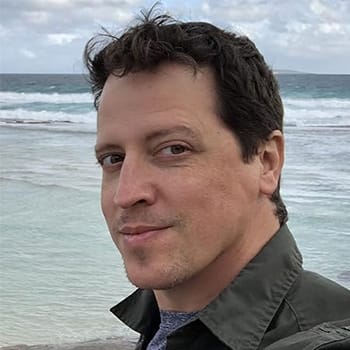
    Andrew Mayne headshot

    You might expect an expert from OpenAI to rely entirely on digital tools to learn faster. Andrew Mayne does the exact opposite.

    Andrew is a true modern polymath:

    And in this hope-inspiring set of conversations, this AI expert, innovator, magician, novelist and host of the OpenAI podcast shares his passion for memory techniques.

    In addition to unfolding why practicing with older memory techniques still matters, he’s navigating the best of all possible worlds.

    And he’s got me convinced that this combinatory approach is the best choice.

    But never at the expense of preserving our age-old memorization techniques and learning tools.

    Andrew’s exploration of AI and Memory Palace creation is nothing short of extraordinary, and just as thrilling as his novels given what he’s concluded so far.

    So join in as we discuss the science behind why “easy” learning often fails.

    And exactly how to build a bit of friction into your routine.

    So that you retain more and enjoy new technologies without throwing the baby out with the bathwater.

    https://www.youtube.com/watch?v=JlzD_6Olaqw

    Why AI Expert Andrew Mayne Uses “Analog” Memory (New Conversation)

    Since our last discussion on the intersection of AI and Memory Palaces (see below), Andrew has continued to push the boundaries of how we learn in a digital age.

    But in this new episode, we take a surprising turn.

    We aren’t just talking about the future. We are talking about the tactics of the autodidact and polymath in the here and now.

    Andrew reveals why, despite working at the cutting edge of OpenAI, he often chooses “analog” tools to train his brain.

    I’m talking about tools like:

    • Playing cards
    • Physical journals
    • Reading physical books
    • Having lots of conversations

    We dig deep into role of friction in developing new memories and the science behind why “easy” learning often fails, and how you can use tools like ChatGPT and other AI tools to test your memory without becoming dependent on them.

    You’ll also discover why an app-based Cloze test did not work for Andrew.

    Missed our first conversation?

    In this original interview, we established the foundation as AI was unfolding in real time.

    Part One: The Intersection of AI & The Ancient Art of Memory

    Ready to explore how AI and Memory Palaces can work together to unlock sharper and longer-lasting memory?

    Listen in as we explore:

    • The essence of why the Memory Palace technique has stood the test of time.
    • AI’s role in human memory: How artificial intelligence can possible enhance, refine, and possibly revolutionize how we use Memory Palaces today.
    • Future Insights: Andrew’s positive vision for where modern tech might take us and his enthusiasm for preserving the ancient art of memory. And many other “old” artefacts of the human experience.

    Whether you’re a student looking to ace your exams, a professional aiming to remember more in less time, or just someone fascinated by the intersection of technology, memory science and human potential, this discussion will be a point of inspiration as you continue to develop enhanced memory capabilities.

    Here’s the video version of the discussion:

    https://youtu.be/iS_BgFuUohA

    For More Andrew Mayne

    If you’d like to learn more about Andrew and his incredible output, here is a link library for you to explore:

    • Andrew’s homepage
    • Andrew on X
    • Andrew on Wikipedia
    • Andrew’s incredible books on Amazon
    • Andrew’s Penguin Live magic lecture
    • Watch Andrew on the Youtube version of the OpenAI Podcast, where he interviews the world’s top minds shaping the future of artificial intelligence.

    For a related podcast on ancient technologies and memory, check out my discussion with Lynne Kelly about The Knowledge Gene.

    And to continue the theme of magic, see what you think when I try to use a magic trick by way of testing Nelson Dellis’ theory of remote viewing.

    You might appreciate my thoughts on How to Approach Learning in the Age of AI as well as tutorials on becoming polymathic and autodidact.

    Thanks for listening or watching and hope to hang out with you again soon on the Magnetic Memory Method Podcast!


    The Polymathic Poet Who Taught Himself “Impossible” Skills Dec 11, 2025
    Show notes

    If you want to understand the future of learning and equip yourself with the best possible tools for operating at the top of your game, I believe becoming polymathic is your best bet. And to succeed in mastering multiple skills and tying together multiple domains of knowledge, it’s helpful to have contemporary examples. Especially from people operating way out on the margins of the possible. That’s why today we’re looking at what happens when a poet decides to stop writing on easily destroyed paper. Ebooks and the computers that store information have a shelf life too. No, we’re talking about what happens when a poet starts “writing” into the potentially infinite cellular matter of a seemingly unkillable bacterium. This is the story of The Xenotext. How it came to be, how it relates to memory and the lessons you can learn from the years Christian Bök spent teaching himself the skills needed to potentially save humanity’s most important art from the death of our sun. Poetry. But more importantly, this post is a blueprint for you. The story of The Xenotext is a masterclass in why the era of the specialist is over, and why the future belongs to the polymaths who dare to learn the “impossible” by bringing together multiple fields. What on earth could be impossible, you ask? And what does any of this have to do with memory? Simple: Writing in a way that is highly likely to survive the death of the sun changes the definition of what memory is right now. And it should change what we predict memory will be like in both the near and distant future. https://www.youtube.com/watch?v=HwQiW1XDAvI Encoding Literature Into Life: The Xenotext Christian Bök, often described as a conceptual poet, has run experiments with words for decades. For example, Eunoia is a univocal lipogram. That means, in each chapter, Bök used only words containing one of the vowels. This is a constraint, and it leads to lines like, “Awkward grammar appals a craftsman.” And “Writing is inhibiting.” There are other “programs” or constraints Bök used to construct the poem. As a result, you hear and feel the textures of your own mother tongue in a completely new way as you read the poem. But for The Xenotext project, Bök wondered if it would be possible to discover the rules and constraints that would enable himself, and conceivably other poets and writers, to encode poetry into a living organism. That leads to a fascinating question about memory that many mnemonists have tackled, even if they’re not fully aware of it. Can a poem outlive the civilization that produced it? If so, and humans are no longer around, how would that work? The Science of How Biology Becomes Poetry As far as I can understand, one of the first steps involved imagining the project itself, followed by learning how it could be possible for a poem to live inside of a cell. And which kind of cell would do the job of protecting the poetry? It turns out that there’s an “extremophile” called Deinococcus radiodurans. It was listed in the Guinness Book of World Records as the most radiation resistant bacterium on planet Earth. As a life form, its DNA was sequenced and published in 1999. According to the Wikipedia page on The Xenotext, Bök started conceiving of encoding poetry into DNA and then inserting it into the bacterium circa 2002. But the project is about more than having poetry persist within a cell so it can transmit the work without errors later. It’s a kind of combinatory puzzle in which the bacterium acts as a kind of co-author. In order to pull this project off, Bök needed to enlist the help of scientists while mastering multiple skills many people would not normally consider “writing.” But as we head into the future, we definitely should. Radical Autodidacticism:Reaching New Heights Through Deep Discipline To this day, many educators talk about the importance of being a specialist. But The Xenotext project and the work Bök put into it forces us to redefine what it means to be a self-directed learner in the 21st century. When Bök decided to encode a poem into the DNA of an extremophile bacterium, he didn’t just “dabble” in science or explore various interests as a multipotentialite. Nor did he read a few pop-sci books and expect an organism to write a poem in return. No, he spent many years studying genomic and proteomic engineering. He coded his own computer program to help him “unearth” the poetry, all while writing grants and collaborating with multiple experts. The Skill Stack If you’re a lifelong learner with big dreams, it’s useful to examine how people with autodidactic and polymathic personality traits operate. One of the first skills is to allow yourself to dream big. Giving oneself permission like this might not seem like a skill. But since we can model any polymath or other person who inspires us, you probably won’t be surprised that many of the most inspiring polymaths regularly daydream. Picking a dream and pursuing it despite any obstacles is also a skill. And once you’ve got a project, the next step is to take a cue from a polymath like Elon Musk and break your goal down into the most basic principles. No matter how unusual or unlikely your dream, it’s a useful exercise. When it comes to analytical thinking and breaking a goal down so you can start pursuing it, it’s often useful to look at your existing competence. In Bök’s case, I believe he wrote Eunoia by culling words manually from dictionaries over many years. But he couldn’t brute force The Xenotext in that way due to all the biological chemistry involved, so he had to become what you might think of as a computational linguist. My point is not to diminish the originality of this project in any way. But I think it’s helpful to recognize that The Xenotext is not wildly divorced from the skills Bök already had. It’s an evolution that draws from them. There’s also the skill of what Waqas Ahmed calls synesthetic thinking in his book, The Polymath. Not to be mistaken with synesthesia, synesthetic thinking involves imagining an outcome through at least one other sense. In Bök’s case, The Xenotext involves imagining the use of living beings other than human as being part of art. And he has described the possibility that his work could reach “a sufficiently intelligent civilization that has fast computers and smart cryptographers.” This is the skill of sensing beyond our own species and taking the risk of trying to reach them. Even if we’re long gone. We Need Deathless Memory Now, I have a confession to make. One of the many reasons I’m so fascinated by The Xenotext is that my memory is incredibly weak. That’s why I use mnemonics with such passion, including for memorizing poetry. Recently, I had the chance to interview Christian Bök, who you can probably tell by now, I consider to be one of the most rigorous intellects alive. And right in the middle of the interview, I started reciting one of his books from Book I of The Xenotext. For all the mnemonics in the world, I choked. Now, sometimes, this happens just because I have mouth problems and things get a bit sticky. Other times, it’s exhaustion and yet other times, I manage to recite poems with no problem at all. I’m mentioning this human moment in my career as a mnemonist not because I have a deep need to confess. No, this fragile, ephemeral human moment while talking about encoding and retrieving information perfectly from its placement within a living cell suggests the possibility that life really can be the most durable storage device in the universe. And to see this project come to fruition after all the years Bök pushed through multiple struggles inspires me in countless ways. For one thing, Bök’s project strikes me as the ultimate memory strategy. Was Poetry the Original Hard Drive? As Bök reminded me during our discussion, poetry was a memory technology long before writing existed. Rhythm, rhyme, and meter were engineering tools used to ensure information survived the “game of telephone” across generations. In Bök’s words: “We certainly owe every great epic story of the sort like the Epic of Gilgamesh or the Iliad… stories that were intended, of course, to transmit important cultural information over long periods of time. We need poets to be able to create that work and make it memorable enough… to persist over time.” And it is in this context that Christian Bök realized something terrifying: “There’s nothing that we’ve built so far on the planet Earth that would probably last more than a few tens of billions of years at most.” Until his work on The Xenotext succeeded, we have had nothing to rely on apart from our brains assisted by techniques like the Memory Palace, or silicon prostheses. But the computers and servers we now use to store our collective memory are just as subject to rot as paper. Even our homes would be ground into “an almost undetectable layer of geological dust” in just a few million years. So Bök’s selection of a deathless bacterium isn’t just a petri dish stunt. By choosing a specific bacterium that is “widely regarded as one of the most unkillable things ever to have evolved on the planet Earth,” Bök has created a memory inside a “message in a bottle thrown into an enormous ocean” that might actually survive the death of our sun. How to Develop Your Own Polymathic Persistence Reading this, you might be thinking, “I’m just a student,” or “I’m just a writer.” Bök could have thought that too. As he told me: “My assumption was that I’ve got training in English literature… Obviously, in order to embark upon such a project, I had to acquire a whole set of new skills, familiarize myself with a lot of very difficult discourses.” And so he made the decision to step outside of his lane, joining other innovators who have done the same. But how do you engage in a project that takes decades without burning out? Bök gave me three specific clues you can apply to your own learning journey. One: Embrace the Unknown Bök told me that if he had known how hard the project would be, he might not have started. He called this his “saving grace,” yet how many times do we turn away from our dreams because we don’t know the size of the mountain. Nelson Dellis told me something similar once about memory training. He’s a memory champion, but also a climber who has summited Everest. He said you don’t have to worry about whether the top of the mountain is there or not. Just focus on where you’re going to place your hands next. Two: Focus on Incremental Achievement Even as Bök’s project threw new obstacles at him, he told me: “I gave myself accomplishments or achievements that were incremental, that I knew I could probably fulfill, and would embark upon those doable tasks in an effort to acquire the required skill set in order to accomplish the remainder of these tasks.” In other words, he stacked small, doable wins on top of each other. And kept stacking until he had built a ladder to the impossible. Three: Tunnel Through the Noise Bök was candid about some of the loneliness on the path of the polymath. Sadly, he noted: This project, especially, has been beleaguered with all kinds of obstruction and difficulty that were added to the already difficult task at hand and the improbable kinds of risks that I had to adopt in order to be able to accomplish it. His advice having pushed through and made it to the other side? “If you’re going through hell, keep going. Don’t stop, because otherwise, you’re in hell… Just keep going, try to tunnel through.” Bök’s work definitely makes a big statement when it comes to 21st century poetry. But for me, it’s also a statement about memory and human potential. The Xenotext challenges us to stop thinking of computers as something that has eclipsed the human brain as the ultimate storage and retrieval device. It places our attention squarely back on the relationship between poetry and life, and the aspects of language that were in so many ways already a technology “infecting” our cells. If you want to become a polymath and enjoy a legacy that lasts, you must be willing to endure what Bök described as “36 different side quests” of complex projects, you must be willing to look at subjects and skills that seem “impossible” and learn them anyway. Ready to start your own “impossible” learning project? I have a guide that will help you develop your own curriculum: This Self-Education Blueprint will help you transform scattered curiosity into tightly interwoven levels of expertise. That way, the knowledge you accumulate gets put to use, and above all, helps others too.

    Full show notes at the publisher

    How to Turn Any Painting Into A Mental Hard Drive Dec 01, 2025
    Show notes

    Although basing your Memory Palaces on buildings you’ve seen with your own eyes will always be a best practice, it’s not your only option. Sure, buildings are generally best. That’s because remembered locations let us easily “offload” what we want to learn onto walls, corners and furniture as if they were hard drives. But you can also develop thousands of Memory Palace options simply by utilizing art. And there are countless works waiting to be discovered using the phone in your pocket. Using art is in fact one of the most elegant and pleasing ways to expand your memory practice. From paintings and photographs to album covers and book jackets, I’ve long expanded my Memory Palace collection by using art. There is a trap, however. If you use art in the wrong way, you’ll double your cognitive load and confuse yourself faster than you can say “Giordano Bruno.” (In case you don’t catch the reference, Bruno was the Renaissance memory master who used many statues in his Memory Palaces to expand them.) In this tutorial, I’m sharing with you how to use any piece of art as a Memory Palace effectively, including the one “golden rule” you definitely don’t want to break. Believe me, I’ve tried and it’s not worth the hassle. Ready to massively expand your use of mnemonics by drawing upon art you’re already familiar with? Let’s dive in! https://www.youtube.com/watch?v=z7bkrmYJOmE Paintings as Memory Palaces: Architecture Within Architecture Let’s start with the basic concept first. When you use a painting as a Memory Palace, you are opening up a number of options. The simplest involves either using a painting that is already in a building that you are using. Or you place a painting inside of a Memory Palace you’ve used before to expand it. As a third option, you can refer to a painting and use it as a Memory Palace unto itself without reference to where it exists in space. Finally, as I discuss in my post about visiting art galleries to help improve your memory, you can turn galleries and museums into Memory Palaces. By using the various artworks that stood out to you, it’s possible to wind up having an exceptionally strong Memory Palace. One of the Memory Palaces I used to memorize a Sanskrit mantra used Brisbane’s Gallery of Modern Art, for example. Many pieces from one particular exhibition formed part of the encoding process, assisted by an effect memory scientists call context dependent memory. Either way, as I discuss in my main tutorial on how to use the Memory Palace technique, the key is to avoid increasing cognitive load. There’s always the risk of putting pressure on your brain instead of reducing it unless you use the painting variation of the Memory Palace technique carefully. To that end, let’s go through some best practices, starting with the most important. Metivier’s Golden Rule: Do Not “Memorize” Any Memory Palace Some people will hear that I use paintings in my Memory Palaces and start looking at art and memorizing it. Although you can certainly do so, this is not what I mean. Rather, I mean to suggest that if you use any of the possible options I listed above, you make sure that the painting or artwork is already in your memory. This point seemed to be very important to Giordano Bruno, whom I mentioned above. In his book, Thirty Statues, Bruno places his mnemonic associations on mythological figures he already knows. He’s following a principle crucial to all ancient memory techniques that distinguish them from the processes of some memory competitors that have led to a lot of confusion. Whereas memory competitors may learn a lot of associations assisted by techniques like the Major System and the PAO System, that’s for accomplishing short-term retention. For this reason, I wince whenever someone tells me that they’re going to memorize a bunch of locations to use as Memory Palaces. Even after looking at my massive collection of Memory Palace ideas and Memory Palace examples, some people still charge forward and memorize despite learning that the most accomplished mnemonists did not do this. So the point is that if you’re going to use the Mona Lisa as a Memory Palace, make sure you already have a basic mental image of this artwork in your mind. The Mona Lisa Test I’m mentioning the Mona Lisa because it’s both relatively simple and very famous. It’s almost certainly in your long-term memory. But a great way to start using a variety of paintings is to create an inventory. The following activity is a powerful memory exercise unto itself. Step One: Write A-Z on a piece of paper For each letter name an artwork or artist that comes to mind When you’re just starting, I recommend sticking with portrait paintings or photographs You might not be able to complete the whole alphabet. So if Agostina Segatori Sitting in the Cafe du Tambourin by Van Gogh doesn’t leap to mind, move on to B and the other letters until you have at least a few artworks listed. The key to this exercise is to work with what you’ve got. Do not look up any of the artworks using a search engine. Just list what you can come up with on your own by name, or the name of the artist if that’s all you remember. If you can’t remember the name of either, just list down where you remember seeing the artwork. Or jot down anything else about it that will help you recall the image you mean at a glance. Step Two: Pick one of the paintings and sketch it out from memory. You don’t have to be an artist to complete this step. Just look at how basic my example is for Francis Bacon’s Study for Portrait I is: Keep going with this exercise until you have 5-6 of these sketches based on your list. Don’t stress it if you can’t come up with that many. Likewise, feel free to produce many more. The key is to produce examples and test that you remember enough of each image so that it can function as a Memory Palace. This is why I suggest you start with portraits. They’re generally simple figures in space and not overloaded with all kinds of elements that probably never entered your memory. Step Three: Divide your sketch using the rule of threes. Just like you see in this example: If you can do this, then the artwork has passed the Mona Lisa Test. And it has at least three stations using the method of loci: Top of the portrait Middle Bottom Placing the Artwork in a Memory Palace Once you’ve tested that you remember the artwork will enough, place it in any room you’re using. By following the basic principles of the journey method, you’ve given yourself at minimum three new stations. Each painting you place can also serve as an alternative to the fifth station golden hand talked about in many of the older memory instruction manuals. These include books by Peter of Ravenna, Jacobus Publicius and even modern guides like Memory Craft. In terms of exactly how to “place” the chosen artwork in a Memory Palace, this is done purely by the imagination. You can imagine yourself hammering a nail into the wall and hanging the portrait, have aliens glue it in place, or just imagine it flickering into position. Myself, I skip all of that and just mentally place it without any special fuss. Personally, I find those steps create cognitive drag because I wind up remembering what I did. But the goal is to increase the size of the Memory Palace, not remember how it got that way. Now let’s talk about other ways to use the artwork. Using the Corners of the Frame In addition to using the interior of the painting, which ranges from dividing it into threes to using multiple characters and buildings, you also have the option of ignoring the art. This might sound strange, but I regularly use only the four corners of the frame, or the corners and the edges. This clean application of stations to the frame using the method of loci creates a clean, numerically progressive journey. You literally just encode your first piece of information on station one, then move to the second corner for the second piece of information, etc. In the example above, which is 1:00 p.m. from Christian Bök’s Moons of Darwin project, I have also used the moon as a fifth station for one simple learning project. If you don’t know how to form associations now that you’ve understood the use of frames, check out this tutorial on the best list memorization methods. Utilizing Elements in the Art In the video above, I discuss an image of a creature on the painted album cover of Crowded House’s Dreamers are Waiting. Some people will look at art and think, “That’s just a rabbit.” But to the mnemonist, or person who excels in memory techniques that I hope you’ll become, it’s a “magnetic trigger.” For example, if you want to memorize a quote from Alice in Wonderland, and you know any piece of rabbit art, you can place the text on the art (or the frame). You don’t need the trappings of a surrounding Memory Palace at all. Expanding the Art on Book Covers Into Memory Palaces Another approach I love that you can try yourself involves taking the art on book covers and expanding them based on the story. For example, one of my ‘M’ Memory Palaces is the cover I read when I was young of Stephen King’s Misery. It evokes the room inhabited by the characters throughout most of the story. Having that image to refer to makes the room easy to develop into a Memory Palace. And you can use it in addition to the room and other areas portrayed in the film adaptation. As part of my ongoing efforts to make unique memory training experiences for people who follow the Magnetic Memory Method project, I’ve deliberately had the covers of books like Flyboy designed for use as Memory Palaces. In the image above, you can see the feather imposed over the building. Both can be used in interesting ways. The feather refers to Peter Pan, who serves as 92 in many PAO Systems. And each window on the home can be used as a Magnetic Station. If you already have the book, more details are coming soon about how to use the story as you practice the memory arts. But for now, keep in mind that many books in your collection have art that you can use in a variety of ways to expand your mind as you improve your use of mnemonics. Start Simple & Avoid Artistic Overkill As you’ve seen in the examples I’ve discussed, the art I choose is generally quite simple. I don’t use Bosch paintings overloaded with weird figures. Nor do I use chaotic scenes from Mad Magazine or Where’s Waldo books. You certainly can, but those examples are filled with visual noise that is anathema to memory work. Even if you have studied such maximalist artworks intently, that time could wind up wasted the same way a lot of people fritter hours of their learning life away fiddling with virtual Memory Palaces. You can also work with every single album cover or book jacket in your home library. But I don’t recommend it. Instead, I suggest that you not overcomplicate this practice. Choose paintings and artworks you already know. And if newly encountered artworks strike your fancy after you visit a gallery, let them arise naturally. There’s little to be gained by forcing yourself to memorize an entire exhibition. If you want more nuances and some thoughts on using conceptual art in your memory work, scroll up and watch the video above. Or, if you’d like more Memory Palace training tips immediately, register for my free memory improvement course by clicking the image below: It gives you four detailed video tutorials, worksheets and exercises. Above all, by taking action, you will join a long-standing tradition of memory practitioners who see more than just objects in space when looking at art. They see opportunities to store more information, making the world part of a large “supercomputer” that lets them retain more information. Tools you can use to expand your learning capacity are all around you, just waiting for you to unlock them.

    Full show notes at the publisher

    How to Remember a Story Using a Memory Palace Nov 19, 2025
    Show notes

    If you want to remember a story, the process is actually pretty simple. You can be as detailed as you like, or just recite the general gist of a tale. And by the end of this lesson, you’ll be able to entertain people at parties or include stories in your speeches and presentations. Or maybe you want to better convince your friends to read stories and watch the movies you love. That will be much easier for you to do as well. If you want to become a better writer, nothing will help you more than knowing stories inside and out. Even better than that, on this page, I’m also going to show you how to memorize the ins-and-outs of plot. Who am I to teach you about remembering stories? Well, in addition to having told a story at a TEDx event that now has nearly 2.5 million views, I spent nearly a decade as a Film Studies professor. I also spent a few years working as a story consultant on movies that actually got made. And I’ve written two well-received books about screenwriting. Indeed, I got my story consulting gigs partly because of the books I’ve written on screenwriting. I even have a writing credit on my IMDB profile. Anthony Metivier on the set of Bailout with Eddie Furlong, Dominic Purcell and Uwe Boll Although I certainly don’t know everything under the sun, I’ve proven that I can write and help craft successful stories. I’ve memorized detailed stories and delivered them before the masses. And if you’re ready to remember any story, I’m confident my tips will help you out So let’s get started! https://www.youtube.com/watch?v=DM4TxD6ez1Y Two Different Ways to Remember a Story When it comes to reciting a story from memory, there are two main ways to proceed. Both approaches are powerful. Which one you pick depends on your goal. You’ll also want to consider your existing skills with memory methods overall. You can check my guide to the main memory techniques to get a sense of where you currently stand. With that in mind, let’s look at the two main strategies for remembering stories. Story Strategy #1: Verbatim Memorizing a story verbatim is powerful when you care about the exact language. There are many circumstances where word-for-word recall matters. Take my TEDx Talk, for example. This platform requires you to deliver your message within a particular timeframe. You simply cannot afford to go off on tangents, and verbatim memorization helps make sure you follow the script and finish on time. People who memorize scripture tend to want to memorize a particular translation verbatim for theological or poetic reasons. Then there are actors like my fellow mnemonist, Ashley Strand. On this episode of the Magnetic Memory Method Podcast, he shared how he memorized the entire Book of Matthew: https://www.youtube.com/watch?v=0op9LSE3_yQ Ashley’s example involved acting, but fits more exactly under the banner of monologue memorization. In addition to his recitation of the Book of Mark, the most impressive recitation I’ve seen was Ralph Fiennes in Faith Healer. I caught the play while living in Manhattan, but had read it many years earlier as an undergrad in an English course. As a stage production, Faith Healer is remarkable because the Frank Hardy role involves two long narrative monologues. The first one is at least 30 minutes long and I was blown away by watching Fiennes deliver it. Even more remarkably, the play is itself about how memory shifts and changes. As Fiennes shared in this Irish Times article, he spent a very long time with the text. But during the last two weeks he focused specifically on “feelings, emotions, and nuances.” Like Ashley Strand, Fiennes needed to deliver the exact words. Unlike Strand’s experience, however, Fiennes did not have to work on interpreting the text. As Fiennes told his interviewer, Faith Healer is “extraordinary because when you’ve got it inside you, in the memory, it’s a support. With writing that is less masterful, you would have to compensate or find things in the interpretation to keep it buoyant.” If you choose to memorize a story verbatim, keep these points in mind. Some stories will have features built into them that help you remember them better. Others, like various stories in the Books of the Bible, may require more interpretation and even additional research or personal study. Story Strategy #2: Generative Memorization Based on “Story DNA” Many people know that ancient cultures passed their stories on verbally. But that doesn’t mean they recited them verbatim. As Alfred Lord reports in Singer of Tales, many story tellers actually memorized a variety of formulas. In this video, I talk about how this technique likely worked, one that I’ve used myself as a Film Studies professor many times: https://www.youtube.com/watch?v=20En1Nm8VOY There are quite a few ways you can memorize formulas to generate new versions of stories on the spot. Or, you can learn formulas in ways that help you recite and explain particular sequences in movies. You can see an example of me doing this in my case study of Minority Report or the one on Training Day. Each of these video lessons is based on one of the Film Studies lectures I delivered while teaching at the University of Saarland in Germany. To talk about story architecture in this way, it’s not that I memorized the stories verbatim. No, I literally memorized the “Story DNA” based on an understanding of Vladimir Propp‘s Morphology of the Folktale amongst other narratological tools found in the field of literary criticism. Should you take such a deep dive into story mechanics in order to remember stories better? Personally, I believe so. Here’s why: Why Remembering Stories is an Underrated Career Skill Reciting stories is not a trick. It’s a skill that can give you an unfair advantage, especially in high-stakes careers. These career areas include: The legal industry Bartending Being a musician addressing an audience between sets Therapeutic careers (medicine and psychology) Leadership and management Sales and marketing There are more use cases in my Guide to Using Mnemonics in Your Everyday Life. I’m especially fond of the mixologist David Curtis who shared on this episode of the Magnetic Memory Method Podcast how memory techniques have boosted his bartending career. And although we’ve already discussed acting above, we should not forget becoming a magician. As discussed in an episode of my podcast with the inventive magician, novelist and AI innovator Andrew Mayne, there are many benefits for magicians who use memdecks in their performances. Story deck routines fall under this rubric and Bill Malone’s performance of Sam the Bellhop is one of the most famous examples of a story helping making a magician’s career: https://www.youtube.com/watch?v=PLaz4-c3B2A Now that you know how lucrative being able to tell stories better can be, let’s look deeper at one of the easiest ways to get started remembering them. The best point of entry I’m aware of is to spend a bit of time examining the nature of stories before you even apply a single mnemonic technique. What is a Story Anyway? One of the most interesting aspects involved in memorizing stories, is that you soon discover every narrative is composed of many different kinds of information. Just about every story will involve: Names, places, locations Descriptions Special terms (sometimes foreign vocabulary) Quotes and epigraphs Actions Dialogue Numbers Themes Plot Characterization Details about the author, publishing history, audience reception The more you divide these types of information in your mind, the more you’ll be able to approach the story as a whole with dexterity. With these different types of story information in mind, let’s look at the process step-by-step. How to Remember A Story in 7 Easy Steps As you go through these steps, keep in mind that you don’t have to master each and every one the first time you commit a story to memory. The more you allow yourself to grow with the story memorizing process, the more success you’ll have. That said, it’s important to focus on these fundamentals. Why? Because we don’t want to put the cart ahead of the horse and wind up frustrated. That’s why I’ve done my best to arrange the steps you’re about to discover in order of priority, keeping beginners with no prior experience with remembering stories in mind. Step One: Decide on the Exact Goal Before you start committing any of the story to memory, think about your exact goal. Are you: Delivering the story as part of a memorized speech? Committing scripture to memory? Memorizing stories to prepare for any type of exam? Required to recite the story verbatim? Or are you allowed to work from bullet points? I ask these questions because when I gave my TEDx Talk, I memorized the entire story word for word. https://www.youtube.com/watch?v=kvtYjdriSpM But when I was a film professor and summarized stories as part of my lectures, I usually memorized just the bullet point version of those stories. Because I know all of the plot points by memory, I often didn’t even need to do that. (We’ll talk more about the plot points method in a moment.) When I memorize scripture, I sometimes include the verse number, which involves knowing a technique called the Major System or 00-99 PAO. Step Two: Get Intimately Familiar with the Story This probably goes without saying, but you’ll want to read the story in its entirety first, or watch the movie in full. And I would suggest you go a few steps further. In addition to going through the material thoroughly, read about the story. One thing I used to do as a Film Studies professor was to read the screenplay before watching a movie. Then I’d watch the movie and read as many reviews and critical interpretations as I could find. If I had time, I’d watch the movie at least one more time before writing my lecture. In the case of short stories or novels, there is no screenplay. However, you can follow-up by reading articles, interviews with the author and reviews on bookseller pages and book reviews. All of these efforts will help build a larger web of associations in your mind that make the actual memorization a lot easier. It also makes everything a lot more fun because you’re making yourself an expert about the story itself. Do this enough times, and you’ll come to think about the place of the stories you remember in the context of history, philosophy and the culture at large, all of which is very rewarding. Step Three: Create a Primary and Secondary Memory Palace When you really want to know a story well, I suggest you have at least two Memory Palaces instead of just one. What’s a Memory Palace? It’s a simple mnemonic device that allows you to create mental versions of locations. Typically, you would base them on homes, offices, schools and any location you’re familiar with and can easily organize into a simple journey. Why two Memory Palaces? I’ve found it very helpful to have all the names of the characters and location names in one Memory Palace, and the major plot points in another. This approach is useful even if you’re memorizing the story verbatim. It helps you get some of the harder elements out of the way first. And knowing character names also serves as a kind of time signature. It’s easier to remember parts of the plot because you’ll remember the names of the characters and place names with knowledge of the order in which they come up. If you like, you can extract the character names while you’re reading by using the technique I teach in how to memorize a textbook. Step Four: Memorize Word for Word To memorize verbatim is a simple affair. You just need to assign associative, mnemonic images for the words and lay those associations out along your Memory Palace journey. Now, if you’re new to the practice, you might need more images than a more experienced memorizer. For example, there are tons of operator words, like “to,” “it,” “he,” etc. For these words, it’s no more or less difficult to come up with images than it is for more complex words. Basically, everything comes down to your level of skill with the techniques and completing the exercises in the Magnetic Memory Method Masterclass. Often, you can get away without having an image for such words. When I memorized the story I told in my TEDx Talk, I managed to relate it word-for-word by just encoding the keywords. Because I know English, most of the smaller words fell logically into place. And if they were slightly different here and there, it did not change the theme or message of the story I told. The final part of this step is to segment the memorization. Rather than expect to memorize the entire thing in one go, break it down. I like to memorize for 5-10 minutes, then take a break. This might seem slow to you, but in the end, it’s actually faster. You’ll make fewer encoding errors and spend a lot more time with your full mental powers charged. If you plow on while drained, you’ll wind up spending too much time correcting issues that didn’t need to be there in the first place. Step Five: Robust Rehearsal Once you have any amount of material memorized, it’s important to start reviewing it. For this, I use a process called Recall Rehearsal. It taps into the memory science of active recall. To make the process as effective and efficient as possible, I follow these steps: Find a quiet place where I won’t be disturbed Have pen and paper ready Write out the memorized narrative material in forward order Check the accuracy Use the memory techniques to correct any unacceptable errors But when I really want to present at my best and feel “bulletproof” on the stage, I go further. I write out the speech in reverse order and out of order. For example, the odd numbered sentences are typically on the odd-numbered stations in the Memory Palace I use. That means I can write the entire speech forwards with only the odd numbered sentences forward. Then I write the even numbered sentences on the second pass, but this time in reverse order. Why do this? The answer is simple: It gives each sentence extra doses of primacy effect and recency effect. Not everyone has to go to this extent. But I always do it when I want to speed up the memorization process and feel extra-familiar with each and every word I’m delivering on the stage. Step Six: Practice Your Delivery Although writing out the story from memory is a form of practice, it’s important to practice verbally delivering your story as often as you can. Thomas Kraft suggested that I walk while reciting the talk. Since I could take my walks in the Memory Palace I used for my TEDx Talk, I did exactly that. Here’s an illustration of that Memory Palace, located in Kelvin Grove, Australia, where I was living at the time: A Memory Palace Example based on a Brisbane neighborhood I used to live in Now, why might Thomas have given that advice? And why is it worth paying attention to scientifically? The answer is context-dependent memory. Any time you can contextually relate the content you’re memorizing with the actual Memory Palace location you’re using, you will get a recall boost. Since I walk relatively quickly, I kept context-dependence in mind. But also another aspect about memory psychologists have found called state dependent memory. Because I didn’t want to recite the story in my TEDx Talk too quickly, slowing down created a calmer state that improved the speed of my delivery. To expand my practice of delivery across multiple contexts and psychological states, I practiced both mentally, by writing the speech by hand from memory and recording myself. As a result, I wound up with a much more robust understanding of the story-based talk in all of its parts and delivered it with confidence I would not have achieved otherwise. I know because as a university professor, I’ve delivered a lot of talks in different ways and the process I’m sharing today is by far the most reliable when it comes to results for your audience. Step Seven: Memorize and Recite More Stories Mastery won’t…

    Full show notes at the publisher

    How to Approach Learning in the Age of AI (Without Harming Your Memory) Nov 14, 2025
    Show notes

    Everywhere you turn, someone’s either hyping up AI or panicking about it. But if you’re a lifelong learner, you can’t afford to miss one simple fact: The real danger isn’t the technology itself. No, the major problem we all face is how other people’s thoughts about AI quietly and constantly reshape our thinking. Pretty much on a daily basis, we undergo a whiplash of influence as one person plays prophet of doom and another froths with unhinged praise. If you don’t study memory and its relationship to thinking as much as I do, you might not notice this shift happening. But I do, and am concerned that many people can’t see why the disconnected dialog about artificial intelligence is so corrosive. Perhaps most alarmingly of all is how many people adopt new tools unthinkingly and try to move faster, consume more and mistake speed for substance. Little by little, they come to rely on the dopamine hits created by endless summaries instead of doing the critical thinking work that leads to synthesis and understanding. The solution for you so that you don’t burn out and wind up forgetting everything you try to learn? Slow down. Continue using notebooks, sketches, mind maps and time with physical books. As I’ll show you in a moment, the best AI innovators are doing just that. And it’s smart because these simple activities will help build your memory, preserve your thinking and ensure you get the most out the new tools. While continuing to enjoy the benefits of ancient memory techniques. To help you find the balance, in the video below and various resources I’ve shared on this page, I’ll help you explore AI technologies while creating a brain that no technology can imitate. Let’s get started. https://www.youtube.com/watch?v=3XOiutq-Af4 How to Use AI as a Lifelong Learner (Without Harming Your Memory) The first strategy is to keep using physical notebooks. You might think that sounds old fashioned, but it’s not. For example, David Perell recently had Sam Altman on his podcast to discuss his method for clear thinking. It’s very similar to the journaling method I’ve been teaching myself for years. It involves pen, paper and the mind. Nothing more. If the CEO of OpenAI operates this way, why wouldn’t you? I think this example, amongst the journaling habits of other top performers is great. It helps us completely sidestep yet another paranoid conspiracy that suggests the moment you stop writing by hand, you start letting machines dictate how you think. It’s the other way around: The humans shaping the way artificial intelligence platforms operate regularly journal. Why Analog Tools and Slow Reading Matter More Than Ever Their example is also useful because it highlights the relationship between the medium you use to assist your thinking, what you think about, and how you think. And I believe it’s beyond obvious that many people mistake how fast they consume information as an accomplishment, when far too often it’s really just busy work. Little more than activity. This confusion of activity as accomplishment isn’t a new problem. Speed reading gurus have duped people for years with the fantasy that speed is a kind of substance. And the few good ideas you might find in speed reading books and courses? They tend to be borrowed from somewhere else. Skimming and scanning books, for example? Many, much better tactics existed decades before mass market speed reading books started teaching such tactics. Many ultimately wound up watering the strategy down. These days, the entire speed reading industry is obsolete. And the reading approaches I’ve advocated since my university teaching days has never been more important. I’m talking about my realistic approaches to reading faster, finding the main points and memorizing what matters in textbooks. It’s more important than ever before because now, the real skill is knowing when to use shortcuts and when to apply reflective thinking so that books have time to settle in. Sometimes it makes sense to take a second pass through courses and books. This is one reason I developed a personal re-reading strategy. Even though I use zettelkasten and the Memory Palace technique, reviewing both your notes and the source material often gives you additional insight that you cannot get any other way. Yet, we live in an “efficiency” focused culture where the speed of AI summaries create an illusion of depth, when in fact they are actually prompts to get back to traditional reading tactics and techniques. The Real Meaning of Artificial Intelligence As you can tell by now, I’m not at all saying to avoid using AI. Rather, I believe that the best way to protect your lifelong learning goals must involve learning to use it through experimentation. But not without acknowledging the strange paradox we all face. Various AIs can now summarize any book you feed them. In all kinds of flavors depending on their training. In other words, if you want to know how a celebrity would criticize a book, there’s an AI that can approximate their response for you. Yet, despite this wealth of textual production, very few people can remember what they read last week. Some people can’t even remember what they read an hour ago. Adding to the confusion is the fact that many people are using chatbots and calling them artificial intelligence, when they are anything but. Unless we actively approach the learning process differently, we will continue living in a world where increased volumes of content decrease retention. So how do we reverse the trend? One of the best critical thinking exercises you can conduct is to think much more deeply about what this term “artificial intelligence” means. In my view, many people use “artificial intelligence” far too loosely, almost the way we use terms like “automobile” or “vehicle.” Rather than do that, try and stop yourself and drill down into specifics. To that end, let’s look at some interesting authors and creative people who can help you form better definitions for the various aspects of what AI is (and is not). Four Books That Show What Real Thinking About Artificial Intelligence Looks Like If you want to see what real thinking about AI and its relation to learning looks like in practice, you won’t find it summaries. You’ll find it in the work of people who engage the physical world, wrestle with complexity, and use tools, both analog and digital. The following authors show, each in their own way, what disciplined perception and deep understanding actually produce. https://www.youtube.com/watch?v=iS_BgFuUohA Andrew Mayne Andrew Mayne is a polymathic inventor, author, magician and multi-media talent. I recently heard him talking on a podcast he co-hosts called Weird Things about how important memory training and using physical notebooks is to him. The episode is called Robots, AI, and the Future of Work: A Deep Dive. In this dynamic discussion, Andrew also talks about various angles on robotics and how important human connections still remain to him… even though he is deep into multiple areas of artificial intelligence and generative chatbots. He’s also the host of the Open AI podcast, a role that started not long after he appeared on this episode of the Magnetic Memory Method Podcast. One thing you might notice in that episode is that Mayne is surrounded by interesting physical objects. He loves new technologies and the world they can potentially help us create, but not at the expense of the immediate, physical world. He’s a huge fan of memory techniques too, but at this moment, I’d like to highlight one of his most interesting novels: The Naturalist. On top of being excellent genre fiction, it’s also a very interesting meditation on the nature of the physical world, new technologies and the role of expertise. The tactile world is everywhere in the novel and Mayne expertly conveys the raw sensory foundation true expertise requires. Although technology is involved, the role of observation as a mental discipline shines through. Essentially, you’re reading about the human training of perception itself based on the mind’s ability to track multiple data points in both the physical and technological worlds. In order to think about them and solve problems in both the immediate world and the digital, Mayne’s hero needs to rely on critical thinking muscles AI can never replace. That’s why it’s ultimately a book about the kinds of computational thinking humans have done for a long time in collaboration with our technologies. Here’s a key example, probably my favorite part of the book: “Our war on cancer has been filled with countless maybes. Billions of dollars and millions of human hours have been spent chasing after a pattern we can’t even begin to guess at. Even still, we’ve made some progress. Many of these maybe have panned out. People live longer than before because not all that effort was wasted. And for every maybe that turns out to be a no, we still move forward.” Don’t mistake this for romanticism. It’s more like cognitive realism. Our brains evolved to think through contact with the world. Digital tools can extend that process, but when we allow our fears about technology to replace our common sense, comprehension collapses. Michael Connelly The second book I suggest you check out is The Proving Ground by Michael Connelly. In this legal thrillers Connelly delivers a courtroom narrative where truth itself is on trial. Following the death of a young student prompted by a young man’s exchange with an inappropriately trained chatbot, you as the reader explore how quickly a legal team has to learn to use multiple technologies. In the story, data gets forged, evidence gets erased, and reality itself gets imitated, messing with the procedural mechanics that both the legal thriller and crime novel rely upon. It’s like the nature of proof becomes entirely psychological as the characters feel the need to train themselves faster than the latest LLM. But another reason I think of Connelly is interesting for those of us interested in learning memory is that he’s built an entire paracosm around a character named after Hieronymous Bosch. This is an allusion to the painter of astonishing works like The Garden of Earthly Delights and The Last Judgment. These are fairly highbrow references in so-called popular fiction, but my point is that Connelly’s productivity is hardly the antithesis of algorithmic creativity. It’s referential. Plus, Connelly was a crime reporter before succeeding with fiction. And it was observing real life detectives while reading other writers in the crime genre that led him to finding the missing ingredient that brought his own stories to life. It was literally seeing a detective put the arm of his glasses into his mouth while crouching over a victim’s body that he found what he needed to make his fiction seem real. How is that not training in a way that reflects how AIs work to produce their outputs? How I Trained On Connelly to Produce My Memory Detective Series One reason I’m excited by some of the generative text AIs is that I’ve written many books. Some of them are memory training guides in the style of Tony Buzan’s The Memory Book. Others are more personal, like The Victorious Mind. I was influenced (or trained and prompted) by the stories shared in Moonwalking with Einstein and Ultralearning. Yet other works are translations from the ancient memory tradition by people like Peter of Ravenna and Jacobus Publicius. But Connelly holds a special place in my personal writing within the memory improvement niche because his books helped spawn my Memory Detective series. There’s a long story behind how exactly Connelly arrived in my one, one I shared with Guru Viking on this episode of his podcast. But the key point is this: When Connelly originally inspired me to produce “Magnetic Fiction” that uses the detective genre to teach memory techniques, I originally considered reworking Sherlock Holmes stories that were in the public domain. Early Training Meets New Goals in a Brave New World But that didn’t seem quite right, especially since I had written many novels before and worked in the film industry. As I shared in How to Remember a Story, I spent years as a Film Studies professor and wound up working on a few movies as a story consultant. I even have a screen credit as a writer. So although I could have used ChatGPT to write Flyboy, the first novel in the series, I decided to study Connelly novels even further and write the book on my own. But it was also my memory of how stories work that I drew upon to produce the text, almost like an AI draws upon training. In fact, I would go so far as to say that everything I produced could only come from the training of what I’d previously read. The point I’m trying to make might sound abstract, but what I’m trying to suggest is that my works are compressions of what I’ve studied. As are Connelly’s. Speaking of “compression,” the next book I’d like to recommend takes the idea of learning and memory through training to an astonishing level. The Radical Compression of Poetry Into Living Matter:Christian Bök & The Xenotext Project Christian Bök’s Xenotext project is the most literal act of intellectual preservation imaginable. It is a decades-long attempt to encode a poem into the DNA of a radiation-resistant bacterium called Deinococcus radiodurans so that two poems can endure for thousands, even millions of years. As another genuinely polymathic thinker, Bök spent years shaping The Xenotext through a combination of computational tools and deeply human expertise. His work exemplifies the point I’m trying to make about learning and memory because Bök successfully managed to: Commemorate meaning in our brave new world of big data and new interactions between biology and technology Encode human thought in a way that resists much of the ephemeral thinking of our times Counterbalance computational art with the AI-generated noise and “slop” we are now regularly navigating online Approach learning through research, endurance, patience and the materialization of conceptual ideas that anyone can enjoy To accomplish all of this, Bök studied molecular biology, worked alongside geneticists, and carved a poem out of thousands of biochemical possibilities until it could survive as both literature and living organism. It is a fusion of the ancient ambition to become immortal with the rigor of modern science. So when people claim that creativity ends the moment machines can mimic art, I point them to The Xenotext as an image of what books will be like in the future and in some ways have already become thanks to AI. As quoted in a Stanford University article, we are facing the possibility of working regularly with books that “no longer take on the form of codices, scrolls, or tablets, but instead [….] become integrated into the very life of their readers.” When you can carry not only entire libraries in your smartphone, but actually talk to them and get a response, it’s my view that we’re already living in this world. But equally interesting to me is how Bök’s project reveals what true interdisciplinarity looks like. It’s not chasing new tools for their novelty, but extending a lineage that runs from Homer to the present on a quest to create beautiful works that endure. Bök’s success isn’t a story of speed. It’s a story of patience, constraint, and the willingness to make thought incarnate even at a microscopic scale. The smaller the medium, the more pressure it places on the idea. Which is why the central vision of The Xenotext feels cosmically large. The Ancient Connection Between Compressing Ideas Into Matter and Human Memory Fans of memory techniques will recognize the name instantly, but they might not have heard some of the lesser known tales of Simonides of Ceos. I’m referring to the ancient poet credited with inventing the Memory Palace technique, or method of loci as it’s also known. Simonides was also known to carve epitaphs in stone.…

    Full show notes at the publisher

    Previous 1 2 3 4 5 45 Next

    Related Podcasts

    Making Sense with Sam Harris

    1

    Making Sense with Sam Harris Education
    Grammar Girl

    2

    Grammar Girl Education
    Good Life Project

    3

    Good Life Project Education
    Explain It to Me

    4

    Explain It to Me Education
    Team Never Quit

    5

    Team Never Quit Comedy
    Optimal Living Daily – Personal Development and Self-Improvement

    6

    Optimal Living Daily – Personal Development and Self-Improvement Alternative Health
    footer-logo

    Contact Us

    Toll Free: 844-670-7747

    Links

    • Home
    • Top Charts
    • Networks
    • Apps
    • Independents Podcasts
    • Podcast Advertising
    • Podcast News
    • Contact Us
    • About Us
    • Analytics & Insights

    Stay Connected

      Privacy, Terms of Use & Our Code of Ethics Protecting Content Creators Copyrights