TopPodcast.com
Menu
  • Home
  • Top Charts
  • Top Networks
  • Top Apps
  • Top Independents
  • Top Podfluencers
  • Top Picks
    • Top Business Podcasts
    • Top True Crime Podcasts
    • Top Finance Podcasts
    • Top Comedy Podcasts
    • Top Music Podcasts
    • Top Womens Podcasts
    • Top Kids Podcasts
    • Top Sports Podcasts
    • Top News Podcasts
    • Top Tech Podcasts
    • Top Crypto Podcasts
    • Top Entrepreneurial Podcasts
    • Top Fantasy Sports Podcasts
    • Top Political Podcasts
    • Top Science Podcasts
    • Top Self Help Podcasts
    • Top Sports Betting Podcasts
    • Top Stocks Podcasts
  • Podcast News
  • About Us
  • Podcast Advertising
  • Contact
Not in our directory?
Add Show Here
Podcast Equipment
Center

toppodcastlogoOur TOPPODCAST Picks

  • Comedy
  • Crypto
  • Sports
  • News
  • Politics
  • True Crime
  • Business
  • Finance

Follow Us

toppodcastlogoStay Connected

    View Top 200 Chart
    Back to Rankings Page
    Education

    Anthony Metivier’s Magnetic Memory Method Podcast

    Learn, Memorize And Recall Anything Using Memory Techniques, Mnemonics And A Memory Palace Fast

    Advertise
    • Apple Podcasts
    • Google Play
    • Spotify

    Latest Episodes:
    Why a 3x USA Memory Champion Stopped Using His Mind May 21, 2026
    Show notes

    John Graham USA Memory Champion feature image for May 2026 interviewWhen a three-time USA Memory Champion tells you that the exact strategy that made him a world-class competitor is the very thing that nearly broke him in half, you listen.

    Especially since John Graham’s solutions to getting his focus and concentration back in order are so practical.

    They might seem counterintuitive, however, especially for people who love using memory techniques.

    That’s because we’re constantly burrowing around in our minds for associations.

    It’s normal and exactly what we need to do. But spending so much time purely focused on the activities of the mind can also become a trap.

    That’s why I’m excited to bring you this episode of the Magnetic Memory Method Podcast. John Graham returns to share a radical paradigm shift.

    It involves moving away from absolute mental dominance and dropping into what he calls embodied, living intelligence.

    If you’ve hit a wall where traditional mindfulness techniques don’t click, you feel blocked, or your mind simply refuses to stop running the show, this conversation is going to provide a path for change.

    https://www.youtube.com/watch?v=3HD14NaHPyY

    What You’ll Discover in This Episode:

    • Why traditional meditation and visualization fails when you let your mind run the show.
    • How John used pushups and loud podcasts to handle competitive stress, and why he eventually abandoned these strategies for something deeper.
    • How dropping into raw physical sensations instantly dissolves negative programming, brain fog, and panic.

    Want to go deeper with John?

    He is launching a 10-week live Embodiment Cohort to help you build a world-class capacity for handling life’s storms. Secure your spot on his webpage for the program.

    For more with John, I’ve compiled our previous discussions on this Memory Training Secrets page. Since he almost never talks about memory techniques anymore, you’ll definitely want to check it out.

    Anthony’s Concluding Notes: The Paradox of “No Mind”

    I know it sounds entirely backwards to say that you can make your memory sharper by letting go of thoughts.

    But this is one of the ultimate secrets that the best memory athletes regularly report.

    I believe it works because when you can clear out the mental noise and stop over-intellectualizing everything, you’re able to drop into your body.

    As a result, your mind naturally clears, making space in working memory for the information at hand while drawing upon information in long-term memory to forge your mnemonic associations.

    So, if you’d like to stop your mind from running in circles so you can get more from memory techniques, hit play on the recording above. You’ll learn how to unlock the “living intelligence” already inside you.

    That way, you’ll stay grounded while memorizing. And, as I always love to say, be able to “keep yourself Magnetic.”


    Can a Memory Expert Conquer Law School? I’m About to Find Out. May 16, 2026
    Show notes

    What happens when someone who has spent decades teaching memory techniques enrols in law school to find out if everything he teaches actually holds up? That’s exactly what I’m doing. Mind you, I’m not the first person to try a learning feat like this. Nor am I the first to document the journey of applying mnemonic methods to the law. In 1491, Peter of Ravenna published The Phoenix, a manual designed to teach his approach to the “Art of Memory.” It’s a short, but detailed memory improvement book that explains Ravenna’s techniques and how they enabled him to possess a massive amount of civil law code in his mind. His legal knowledge isn’t the only thing that made Ravenna legendary. As I explain in my previous writing about him, he could also recite mountains of scripture and speak multiple languages. Myself, I’ve memorized more than enough scripture to demonstrate the teaching I’ve offered in my own memory improvement manuals. Likewise, I’ve absorbed enough skills with enough languages to prove the concept. I hold a PhD in Humanities from York University and two MAs. But what I haven’t done is attend law school. Now, later in life, I have finally enroled after decades of thinking about it. This isn’t a career pivot, mind you. Having co-authored a well-received book with a lawyer years ago on memorizing legal terminology, I am already more than personally interested in law. But since I never went to law school myself, I’ve always wanted to pressure-test every memory technique I teach against what has to be one of the most volume-intensive, high-stakes disciplines on the planet. This page is the hub for that experiment. Whether you are a law student drowning in “legalese” and tired of the “bad memory” excuse, or a memory enthusiast looking for a high-stakes demonstration of the ancient memory arts in action, you are in the right place. I’m going to share with you all the learning tools I’ll be using throughout the experience. And you can follow my real-time study log below to see exactly how the man Tony Buzan called a “Warrior of the Mind” intends to conquer the law, one Memory Palace at a time. Why Legal Material Presents Special Problems for Memorization In my version of Ravenna’s original book, called Phoenix Reborn, the famous jurist is far from modest. He writes: When I was young, I prepared 10,000 places because I wanted to surpass all the men of Italy with an abundance of remembered facts and holy scriptures, including both Canon law and Civil law. I also wanted to be an authority on many other things. By “places,” Ravenna is referring to the method of loci. It is the basis of the Memory Palace technique, something many law students have used across history. I’m only a week into my first trimester readings, and I have a feeling Ravenna might not be so boastful in our times. Medieval law was in no way simple. But it’s unlikely Ravenna dealt with nearly as much study material as contemporary law students. For one thing, nearly everyone knew Latin back then. This means he wouldn’t have needed to memorize the Latin needed when he studied to become a Doctor of canon and civil law. The topic of international law would have been much smaller during his time. And laws relating to media, Internet and Artificial Intelligence? All of these vast fields of legal material would not appear for hundreds of years. Nonetheless, many of his techniques still apply and will help contemporary law students avoid cramming. Here’s how I’ll be using them based on my own version of the techniques Ravenna describes. What Happens When a Memory Expert Enrols in Law School:The Magnetic Memory Method for Law A lot of study advice treats complicated topics like the law like any other memorization task. Gareth Evans says in a YouTube video called How I Memorised Everything in Law School that he essentially used a combination of spaced repetition and the Leitner box technique. There is nothing wrong with these approaches. I’ll be incorporating them too. However, not everyone is going to get the same results from just those two fundamentals from the world of accelerated learning techniques. The Memory Palace Technique for Law Since you don’t get partial credit for vaguely remembering that a case exists and need the name, the year, the principle, and how it applies, I’m pulling out the same technique Ravenna describes in depth as my core learning strategy: the Memory Palace. In case you’re new to it, the Memory Palace technique for studying uses familiar locations subdivided into various sub-locations. It’s almost like a living, breathing mental filing system. https://www.youtube.com/watch?v=c4J5ZUzCxZY By placing information on those sub-locations, or what I prefer to call “Magnetic Stations,” you provide yourself with a canvas for layering vivid mental associations. For example, I’ve already memorized the name and date of Derry v Peek (1889) and the basic three-part test it established for fraudulent misrepresentation. If you’d like more information on this technique, check out my full guide to the Memory Palace technique. The PAO System For Law When it comes to section numbers and dates like 1889 in Derry v Peek, I’ll be using a 00-99 PAO System. Now, this kind of mnemonic system is something I’ve developed over many years. And for most of us, it’s not something you can develop overnight. Indeed, most of us base our PAO System on the Major System. Or, more rarely these days, some people still use the Dominic System. The key is that when you have to memorize a section number, you can instantly place an association in a Memory Palace. PAO System Example Applied to Law For example, last week I memorized the name of the Competition and Consumer Act 2010 and a chapter and section I’m interested in (Chapter Two, Section 18). I used a combination of my aunt Cassie’s computer station in a former home with associations drawn from my PAO System to rapidly commit this information to memory. Later, I can add more relevant details. But for the time being, I have what I call a “Magnetic Bookmark” that helps me cite the act and find the relevant section quickly. Think about what that means if you’re in an exam or a tutorial and someone references the Competition and Consumer Act. Or even just working as a lawyer who cares about your clients. Instead of that sinking feeling where you know you’ve read it but can’t place where, the section number leaps to mind. You cite exactly what the situation requires and move on while everyone else is still flipping through their notes. Active Recall Combined with Physical Notebooks I have been teaching active recall principles since long before I knew there was a scientific name for them. In brief, the core process involves calling information to mind and then writing it down, ideally in a notebook reserved for testing. You do not use rote repetition or cheat by looking at the answers during the process. You only make corrections later and use the data produced by your mistakes to work out how to fix issues in your recall. Training yourself to write down answers from memory is mission critical for passing exams, as is analyzing your answers so you can make any corrections before handing your work in. I’ll be doubling down on this practice substantially. Optimized Flashcards and Zettelkasten Whether it’s for language learning, philosophy or general learning, I’ve used a particular process for taking notes that I’m already employing as I read as much as I can before my first class starts. These processes have been covered before in detail in my posts and podcasts on: Flashcards The Zettelkasten technique I don’t know what, if anything, will change about my approach as I enter law school at my age. But I will keep you posted if anything does. Mind Mapping Essay Assignments Although I sometimes do use mind mapping as a memory technique, I anticipate that I’ll be reserving it in law school for planning any essay assignments I have to submit. That’s because mind mapping is a far greater tool for brainstorming in my practice than it is a memory aid. But you never know. I might find ways to deepen the ways that I’ve combined mind maps with Memory Palaces for language learning that apply to the law. For my existing teaching on mind mapping, check out this playlist of videos on YouTube: https://www.youtube.com/playlist?list=PLkZ2FGJhR5R8eS3kyuOwCTb47O72iyc-j Keeping a Study Log Although creating to-do lists has its place, I’ve found throughout my BA, two MAs and PhD that using course syllabi and a simple calendar is more than enough to keep various deadlines sharp in memory. What’s more useful for me is to diligently track what I’ve read and when. I use a simple spreadsheet for this purpose, along with tabs for keeping various links. Since I’ll need to read a lot of online resources for my first trimester, this habit is especially key and will keep all the links in one central location for easy access. Other Law Memorization Tactics & Strategies Beyond these learning tactics for law memorization, I’m not yet sure what else I’ll need apart from solid places to study and a decent group of fellow students. So far, I’ve been studying at home and am already signed up for a group dedicated to discussing one of the first courses I’ve enroled in. It’s called “LA1101 – Legal Institutions and Processes.” I’ve also signed up as a student member of the Queensland Law Society to receive regular updates. The Benefits of Context & Immersion Although this membership might seem like a distraction, I’m actually tapping into what scientists call context-dependent memory. Although far from bulletproof, this principle shows that we tend to remember more when we regularly dive deep into related topic areas. In other words, if you study history regularly without interrupting yourself with biology, you’ll tend to remember more history with greater ease. As my research on polymathy and autodidacticism shows, some people think that masters of multiple fields are scattered. In fact, most polymaths go deep into just a limited set of fields at a time. And because they spend a lot of time in each lane, they benefit from more context as they learn. More on Why This Mnemonist is Studying Law At Nearly 50 Years Old I mentioned above that I co-authored How to Learn and Memorize Legal Terminology years ago. One reason that happened is simple: Following the success of my first book on memorizing German vocabulary, tons of people reached out to me. Many of them were either law students or had used memory techniques during law school. One of them asked if he could help me produce a book and so I took some of his examples and credited his contributions even though they weren’t that intense. A Very Personal Background Interest But the real reason I was interested in the law actually started many years prior. My nose had been broken and I was required to provide a victim impact statement when the case went to court. Long story short, the defendant’s lawyer told her client that he should plead guilty right away rather than have me testify on the stand. Her client took the advice and after the Crown lawyer representing the Canadian government asked me if I’d ever considered going to law school. When I asked him why, he said that my victim impact statement showed promise in how I’d written it. “Clinical,” was the word he used to describe it. And he said he thought the field could use more people with that kind of descriptive skill. But as someone who prefers to finish what I start, I kept going with my MA in English. And although law school regularly came to mind, I also finished the PhD in Humanities I had my eyes on, along with a second MA in Media & Communications. The Real Estate Detour A few years ago, I decided I was going to develop a physical Memory Palace. Part of this project relates to my ongoing research into Simonides of Ceos. Another part relates to my polymathy research. But above all, I realized that I needed to not only learn a lot about real estate to pull off the project. I also needed to learn about how real estate agents use and abuse the law to avoid traps. So, I completed a real estate license course and encountered a lot of law during that course. It has helped me proceed in many ways, and that’s part of what has kept my mind on the law leading up to starting this new study venture. Enter Peter of Ravenna I’d first heard of Peter of Ravenna when concentration and focus issues from depression drove me towards memory techniques during my PhD. After I started the Magnetic Memory Method project, I would consult his memory training book, The Phoenix from time to time, always thinking that I should do my own edition. But it was only when AI and various internet disruptions started challenging the idea that I’d be able to easily access Ravenna’s book that my “Reborn” series came to mind. I finally did produce my own edition of his book, and it’s been one of my most popular memory training offerings. Undoubtedly, that’s because we have independent confirmation of Ravenna’s memory skill. And although he was famed for his language learning prowess and ability to memorize scripture, it’s his command of the law upon which most of his legend rests. As I continue my studies of ancient memory techniques, I expect I’ll keep revisiting and expanding based on how I’m applying some of Ravenna’s law-specific mnemonics. In fact, there’s one part of his book that I think will apply to remembering sections in law that I’m excited to try very soon. I’m not sure it will change the Magnetic Memory Method approach that I’ll be using, but that’s the most exciting part of being a memory expert who applies these techniques frequently to course work. I’m in the trenches and always taking you with me to learn more about memory techniques together. Frequently Asked Questions About Memorizing the Law I’ve received dozens of questions about memorizing law over the years. I believe all my answers still stand, but also expect I’ll be coming back to this page to update a few things as I get deeper into my own “legal immersion.” For now, here are some direct answers taken directly from my inbox as I’ve helped people over the years. What is the best way to memorize law? There is no one single best way. Rather, a combination of techniques is likely to work best. The reason the Memory Palace technique is universally admired has to do with the power of spatial memory. Locations have long been considered a powerful resource going back thousands of years. Combining the Memory Palace technique with spaced repetition and other active recall-based strategies leads to deeper encoding and recall than using any single technique on its own. How many Memory Palaces do you need for law school? The core Memory Palace system I’ve used involves 26 Memory Palaces, one for each letter of the alphabet. This choice is based around ideas in Aristotle’s On Memory, Ramon Llull’s Memory Wheels and innovations offered by the Renaissance memory master, Giordano Bruno. When you have one Memory Palace per letter of the alphabet, you can run the art of combination, or ars combinatoria. This means that if you have a Latin phrase like Res ipsa loquitur in tort law to memorize, you never have to wonder what Memory Palace to use. In my case, R is my friend Rick’s home because that’s the first letter of his name. I choose it and use him as a core mnemonic association due to the sound and spelling of the Latin term. Since the term means, “the thing speaks for itself,” I imagine Rick engaged in actions that remind me of the sound and meaning of the term. For memorizing section numbers, it’s possible to build a second Memory Palace Network based on a 00-99 PAO System. I’m not yet sure if I will do that, but they are relatively easy to develop if you have developed skills with this kind of mnemonic system. If you have both systems for law, you will have 126 Memory Palaces. That is almost certai…

    Full show notes at the publisher

    Declarative Memory: Why It Matters for Memory Training May 04, 2026
    Show notes

    Declarative memory is used when consciously recalling information, big or small, usually in a sustained way. It’s also the type of memory you use every time you use memory techniques like the Memory Palace or basic mnemonics. That’s why these mental learning tools can sometimes feel effortful, especially when you’re new to using them. But that’s also why the effort fades with practice. So to give you a small sense of what declarative memory feels like, give this exercise a try: What’s the name of your first friend in school? Can you think about a specific event from the time you spent together? When I do this, my friend Ryan comes to mind. He was the first person to show me an American dollar, something that was unusual to see way up north where we lived in Canada. These facts about what took place, where we were and my personal familiarity with the memory: It all belongs to declarative memory. This is quite different from nondeclarative memory for reasons we’ll discuss on this page, updated for you on May 4, 2026 with more information and an audio podcast. So if you’re ready to take a deep dive into the nature of declarative memory, the role it plays in human experience and how you can enjoy greater success when using memory techniques, I consider knowing terms like this part of the “owner’s manual of the mind and memory.” Let’s get started! What Is Declarative Memory? Declarative memory is another term for explicit memory. It’s also sometimes called conscious memory. Knowing this definition matters a great deal for your memory training because this kind of memory is responsible for every act of encoding, from assigning Memory Palaces to placing vivid associations that make reviewing what you’ve studied using a Memory Palace much easier. William James first defined this type of memory back in 1890 when he wrote: The knowledge of a former state of mind after it has already once dropped from consciousness; or rather it is the knowledge of an event, or fact, of which we have not been thinking, with the additional consciousness that we have thought or experienced it before. Note the nuance here: Declarative memory isn’t necessarily true. Sometimes we confabulate certain facts, which means that memories can get distorted. Dr. Gary Small has discussed our memory as a kind of neighborhood in which parts of our memories travel from house to house, getting changed each and every time they travel. Nonetheless, declarative memory is the conscious awareness of knowledge that something in the past happened to you. And more often than not, our declarative memories are accurate enough. The Science of Declarative Memory Scientists use the term encoding to describe how memories form in the first place. A declarative memory is better when the encoding is elaborate and deep. But all too often, our encoding is limited and superficial, which is why I have shared these elaborative encoding exercises with you. In the absence of such exercises, a lot of the depth of encoding comes down to focused attention. If you’re not interested in something, you’re more likely to encode in a shallow way. But when we’re interested in topics and having fun, encoding at a deep level tends to happen very quickly. The Role of Declarative Memory Over Time Once encoding has been accomplished, declarative memories must be stored for future access in long-term memory. Once the encoding and storage stages are complete, scientists call the result an engram. This term literally refers to the sum total of all the changes in the brain from the moment of perception to the ushering of the information into storage. Engrams are distributed across the brain. Different brain regions seem to be specialized for particular kinds of storage to help with particular kinds of information retrieval. Take chess openings, for example. William Chase and Herbert Simon asked chess players of varying levels of skill to analyze a chessboard featuring between 26-32 chess pieces arranged in actual configurations you might see in a game. They found that Grandmasters vastly outperformed the analytical tasks they were given when looking at actual games. However, when the scientists repeated the experiment with the pieces distributed randomly on the board, Grandmasters did no better than anyone else at recalling details of the chessboard. This is because the trained regions of their brains could not help them in this new context. For this reason, when you wish to improve your working memory, it’s important to note that playing games might build you skills within the game environments. But those skills might not transfer much, and possibly not at all. Declarative Memory Examples Remember how I gave a declarative memory definition above by saying that it’s the conscious recall of memories in a sustained way? This means that accessing the memory takes place over time, often substantial amounts of time. Here are some examples: One: Where You Were When Something Happened I was in a cafeteria at York University when a friend called. He said, “Find a TV!” “What’s going on?” I asked, but all he could do was repeat himself. That was the morning of September 11, 2001. And when I finally found a television, I was just in time to see the second tower struck during the September 11 attacks. In this sustained example of flashbulb memory, I’m drawing upon semantic facts and episodic memory. It’s an autobiographical memory too, and the common denominator amongst all of them is that I am consciously aware that all of the material is memory. This way of looking at declarative memory matters for your memory training because flashbulb memories show you what deep encoding looks like when you experience it naturally. That’s why mnemonist David Berglas refers to it in his excellent book, A Question of Memory, when he discusses “the Kennedy Effect.” His suggestion is that whenever you memorize something, you try to make the associations you use as striking as what happened to JFK. But you’re generating this kind of association between what you want to memorize and episodes of such historical impact not for entertainment. You’re doing it with a depth of purpose tailored towards creating recall. Using that level of emotional intensity is tremendously helpful for ensuring the precious information you want to remember sticks. Two: Trivia Who doesn’t love to play from home during an episode of Jeopardy? As the answers appear on the screen, you get a great brain workout trying to arrive at the answer in the form of question. This is all declarative memory due to your conscious engagement in the process. You’re not just passively trying to arrive at the answer. You’re actively searching your memory and trying to do so fast enough to beat the clock. Now, this is not necessarily the same thing as sharing details about your favorite author, composer or artist during a conversation. Usually, there’s no pressure in such contexts. How they do relate is that we usually don’t memorize such facts deliberately. Such facts enter your memory implicitly, a kind of memory we’ll talk about a little bit further on. If you do want to deliberately memorize information for trivia night at the pub, however, here’s a tutorial on how to do it. Three: Locations And Directions Locations are related to trivia in some contexts. But more broadly, if someone asks you for directions, you’ll be drawing on your declarative memory to explain how a person can find the desire target. This process will take place even if you have aphantasia, which is the lack of a mind’s eye. People with this condition can both give and follow directions. That said, as science journalist Christopher Kemp has shown in Dark & Magical Places, not everyone has the same navigation abilities. It’s not entirely clear if the issues he outlines come down to declarative memory, but something called place cells are involved in navigational accuracy. Assuming you don’t have navigation issues like Kemp has reported, locations you know give your declarative memory rich and reliable options to work with for memorizing information. Four: Critical Thinking Anytime you turn on your thinking engines, you’ll be drawing upon declarative memory. General reasoning draws upon facts, as does specific, objective reasoning. And whenever you’ve got your inner Sherlock running to deduce or induce conclusions, you’ll probably also be drawing upon facts you already know. This is why memory training does far more than help you pass exams or recall names. The quality of your thinking depends on the quality of what you can retrieve, how accurately and how quickly. In other words, you can only reason using accessible facts. If your encoding is shallow when trying to memorize information, those facts won’t be there when you need them. To help you better understand this, think about the last time you tried to form an opinion during a discussion about something complicated. Your brain needed to pull together things you’d read, heard and experienced, all while weighing one piece of evidence against the other. All of this activity drew upon your declarative memory and the quality of how it fed your reasoning was based on how much material your brain could access. This is why I often say, “the more you learn the more you can learn.” You’re able to use the element of thinking and reasoning while using memory techniques, as described by the great memory teachers Peter of Ravenna, Jacobus Publicius and Giordano Bruno. What’s the Difference Between Declarative and Nondeclarative Memory? In brief, it comes down to your conscious intention to recall information. Whereas with implicit memory (also known as nondeclarative memory you’re not conscious of either learning or recalling, declarative memory involves awareness. Larry R. Squire highlights another key difference in the Journal of Neuroscience. Your declarative memory can dictate how you describe your behavior in response to stimuli. As he explains it: An aversive childhood event such as being knocked down by a large dog might lead to a stable declarative memory for the event itself as well as a long-lasting fear of dogs (a nondeclarative memory) that is experienced as a personality trait rather than as a memory. In other words, our self-perception of early experiences guides how we describe their influence on their lives. But the influence itself comes from an early, nondeclarative memory experience. Procedural memory can also play a role, such as constantly acting out a learned helplessness around dogs. Why This Distinction Matters for Your Memory Training Since most people read the Magnetic Memory Method blog or listen to my podcast to improve their memory, it will be helpful for you to understand how declarative memory is involved in using most of the techniques I share in my mnemonics dictionary and Magnetic Memory Method Masterclass. Think about the last time you used a Memory Palace. (Or if the technique is new to you, check out my complete guide to using the Memory Palace technique). When you select a station in a Memory Palace, you consciously choose it. Then, when placing a mnemonic association, you use mnemonic techniques to generate and elaborate it. Every step requires your complete attention. And that’s an example of declarative memory doing the heavy lifting. If it feels slow or awkward, that’s not because memory techniques don’t work. It’s just a lack of training and practice in using them. Why Practice Will Always Remain Essential When you use memory techniques frequently enough, you will eventually need to spend less conscious effort bringing Memory Palace stations to mind. And the more familiarity you have with mnemonic tools like Memory Wheels, the Major System and a PAO System, your use of the techniques will happen faster. Later, when you practice retrieval through spaced repetition, your memory will serve you the target information at a faster rate. It might never feel completely effortless. But as procedural memory grows, using memory techniques will feel like riding a bike. You do have to rotate the pedals, but you don’t have to think about all the various operations that go into operating the bike and navigating it to reach a destination. The more you use Memory Palaces while generating and placing associations, the more it will be just like riding a bike with a feeling of automaticity. Mnemonic Encoding is Always Declarative Every time I create a new association, whether for memorizing something in Latin, my new law school project, Sanskrit, Chinese or the poetry I memorize, I have to consciously draw upon parts of the mind that involve declarative memory. And if you’re a medical student memorizing the cranial nerves, you can certainly use rote repetition. But that requires a lot of effort compared to using a Memory Palace paired with vivid associations. That’s because when you revise the information you’ve placed, you’ll be drawing upon those associations, many of which will involve episodic and autobiographical memories. You’re exercising multiple levels, strengthening the memory from a number of angles. Then, when you sit for an exam and face a question about the facial nerve, retrieval will have become procedural. And that will free up your mind to think about clinical applications rather than burning up cognitive resources just trying to remember basic anatomical names and facts. So the next time your encoding feels clunky and taking too much deliberate effort, don’t worry. Part of what’s happening is just an effect of how memory works. You’re actually drawing upon your declarative memory and it is doing its job relative to your study and practice of memory techniques. Chances are, you’ve just come across information that you’ve never tried to encode before and need a bit more time to think it through. Keep studying memory techniques and you’ll get better and faster overall. And when the gears grind to a halt, you’ll know that you just have to keep moving. That’s what I’ve always done and it has helped me memorize far more than I ever thought possible. How To Avoid The Corruption Of Your Declarative Memory As you’ve discovered, this aspect of your memory is not bullet proof. You can consciously feel that a memory is 100% accurate, but wind up recalling things that are either exaggerated or simply not true. Fortunately, there are ways to fend this off from happening. For one thing, you can see a lot of improvement simply by focusing on improving your sleep. You can also use memory techniques. There are countless studies showing just how strong these methods are for improving your ability to recall information accurately. Mnemonology is one particularly good and scholarly book that makes these studies accessible to anyone. Other options involve studying music, learning languages or learning to give speeches. You can also focus on preserving your non-declarative memory as an indirect approach. If you’d like help in any of these areas, I suggest you start with my FREE Memory Improvement Kit: It will help you commit anything you wish to memory. And give your declarative memory a great workout too. So what do you say? Do you now understand this critical aspect of your memory? Get out there and “declare” that you are a master of memory and put it to good use. It’s a powerful asset!

    Full show notes at the publisher

    Simonides’ Memory Palace: The Origin of the Method of Loci Apr 29, 2026
    Show notes

    Simonides of CeosMemory aids and training techniques like the Memory Palace or Method of Loci don’t materialize out of thin air.

    But were they really the brainchild (pun intended) of Simonides of Ceos?

    And was Simonides really the father of the Art of Memory and the mnemonic strategies people still use today?

    Let’s dive deep into who Simonides of Ceos was and the secret lessons about the Memory Palace no one else seems to have explored… not even Frances Yates, in her famed book, The Art of Memory.

    On this page, we’ll clean up the misperceptions and improve how you use memory techniques to retain anything you want to learn.

    That includes your studies, your performance at work and your everyday satisfaction with life.

    And when you get it right, the story of Simonides will also help you improve the lives of others.

    What Is Simonides’ Memory Palace?

    Simonides’ Memory Palace refers to the legendary origin story of the method of loci.

    After a banquet hall collapsed, Simonides helped identify the victims by remembering where each guest had been sitting.

    This story shows how observation, order, location and the use of mnemonic associations support recall.

    But that’s only scratching the surface of the story.

    Simonides was a very interesting figure and we can learn a lot more about how to use the technique by digging deeper into who he was and how the technique came into existence.

    Who Was Simonides of Ceos?

    The poet and famous lyricist Simonides of Ceos was a prominent member of the Greek society in the 5th century. He was often called ‘honey-tongued’ by his many admirers, especially after reciting his famous lyrics and poems.

    And in many ways, he was an epic learner with a “mercenary” quality about him. I use that word because he was the first poet to charge money for his writing and recitation.

    But he was also quite self-directed in how he learned things, as I discuss in this video:

    https://www.youtube.com/watch?v=f3-OMYLmm6E

    One of the best books I’ve read about Simonides is called Economy of the Unlost by Anne Carson.

    According to Carson, Simonides was interested in more than just memorizing his own poetry and songs.

    She claims that he was the first to suggest that artists sign their works, ostensibly so we could remember who created them.

    That said, he was apparently greedy and more than a little vain. As Carson writes:

    “As to memory, I say nobody can equal Simonides!” said Simonides at the age of eighty.

    The poet does not just use memory, he embodies it… His memory construct, unlike later mnemotechnic methods, is not artificial:

    Simonides had sat in the room that becomes his theater of memory, he ate dinner amidst the data.

    This poet is someone caught between two worlds, remembering both. His flame in every grain. For him, memory is both commodity and gift, both wage and grace.

    How the First Memory Palace Was Born

    During the 6th century BCE, Simonides of Ceos was hired by a wealthy man named Scopas to give a speech and recite poetry at a banquet before a group of distinguished guests in a large and impressive building.

    After concluding his presentation, Simonides thanked Castor and Pollux, two mythical boxers who represented heroism.

    This is not a throwaway reference. Because both Castor and Pollux were given immortality by Zeus, they appear in the story as symbols of the enduring power of memory.

    When Simonides asked Scopas to pay him his fee, the host expressed annoyance that Simonides thanked gods instead of him.

    “Go ask Castor and Pollux to pay you,” Scopas replied.

    At that moment, a servant arrived to tell Simonides that two men were outside and asking for him.

    “I’ll get back to this matter of the fee in a moment,” Simonides assured Scopas before exiting the building. After a short walk, he spotted two men on horses. They beckoned Simonides over.

    “Closer please,” they said.

    As Simonides approached them, he recognized the two men as none other than Castor and Pollux themselves.

    Next, without warning, the building Simonides had just left collapses and everyone inside dies.

    Later, as the dust from this shocking event settles, Simonides used his memory to help the authorities identify all the bodies so they could be properly buried by the mourning families, survivors who would never have experienced closure otherwise.

    Exactly How Simonides Remembered the Names of the Victims

    Simonides recalled where each person was sitting by drawing upon his memory of the seating arrangement in the banquet hall.

    The process of following a journey in your mind came to be called the method of loci because loci is plural for location.

    Later, probably due to the influence of St. Augustine, the term Memory Palace came into use.

    Centuries later still, Sherlock Holmes fans popularized the term “Mind Palace.”

    I personally prefer the term Memory Palace because it puts the focus on memory. If you’d like to learn how to use them for memorizing much more than names, check out my complete guide to the Memory Palace technique.

    For now, there’s more we can learn from the story of Simonides.

    Let’s go further.

    The Art of Preparation

    Even before recalling the locations of the guests before the collapse, Simonides was prepared.

    He’d already primed his memory to observe, place and then recall each person.

    In other words, as Yates points out, the first step Simonides took was to imprint the location itself in his mind before attempting to memorize anything.

    And that’s what all the most successful memory students do:

    Creation your Memory Palaces before you need them. Even if that means doing it within seconds after entering a room where you’re going to give a presentation.

    I do this every time I go to events and demonstrate the techniques I use to to remember names.

    This simple step is so important because without visually noting where the guests were seated at the banquet, Simonides would not have been able to recall their exact locations or identify the bodies.

    Likewise, if I don’t have a point of reference before memorizing names, I won’t do nearly as well. It pays to take a second to note the shape of the room before memorizing a single name.

    Exaggeration is Key

    One reason the story of Simonides has stood the test of time is that it contains exaggerated and dramatic action. Each of the Magnetic Modes are accounted for when you feel the building crumbling to the ground.

    What are the Magnetic Modes?

    They are a form of mnemonic imagery that you can learn how to rapidly apply to anything you want to memorize by reading my free mnemonics dictionary.

    You can practice right now by thinking about the story of Simonides itself:

    Imagine hearing the rumble in your ears as the banquet hall crashes down. Even if you don’t see pictures in your mind, you probably have an idea of what a collapsing building looks like.

    Add Emotions

    Next, feel an emotion related to the event. Even if you have never lost a loved one in an event like this, you probably have a flashbulb memory of when a famous building like the World Trade Center was destroyed.

    As the mnemonist David Berglas pointed out in A Question of Memory, you want to create what he called the “Kennedy Effect.”

    That’s because emotions easily lodge information in memory very deeply when something majestic is lost. And the tale of Simonides contains not just the lost of a building. It also speaks about people squabbling over fees.

    There’s even an element of poetic justice when Simonides not only walks away unscathed. He also lives on to be the hero who established the Memory Palace technique.

    Build in Tastes & Smells

    When you let your imagination do its work, you can almost taste and smell the food and wine at the banquet hall.

    Likewise, you can imagine smelling and tasting the dust coming up from the rubble after the building’s collapse.

    Use Your Mental Ears

    Even without seeing a picture of where the attendees were sitting, you can imagine the sounds of plates clinking and people chattering as they sat around Simonides at their tables.

    You can also imagine hearing Simonides’ voice and how his footwear scuffed the floor as he moved from the interior of the building to the outside.

    For more on how these suggestions work, check out this full tutorial based around lessons drawn from Simonides:

    https://www.youtube.com/watch?v=nSn2qjuYjxs

    The Most Important Lesson I’ve Learned from Simonides

    Although Anne Carson has outlined many less than friendly aspects of Simonides’ character, it’s important to recognize that when the situation required it, Simonides did not use his memory to impress people or win a competition.

    He used his memory to reduce the suffering of his fellow human beings.

    Without the help of his extraordinary memory, the families of the victims would never have identified their loved ones.

    That means no proper burials, something that was as important in Ancient Greek culture as it is now. If not more so.

    I believe that this story changes the true value of the Memory Palace technique.

    Yes, you can use it to pass exams, learn languages, give a speech from memory, or remember names at events.

    But at its core, this practice makes you more useful to the people in your community, your family and your friends.

    The sharper your memory, the more present you’ll be at dinner parties too. Or in any conversation. And being more present is really the ultimate gift you can give the world.

    And that means being more reliable in your personal and professional life. You’ll almost automatically serve others at a higher level simply because better memory makes it impossible not to be more useful.

    If you’d like to start building your first Memory Palace using the Magnetic Memory Method I’ve been teaching for over fifteen years, I have a free course that walks you through it step by step.

    Just click the image below to register:

    Free Memory Improvement Course

    It’s the same foundational training thousands of students have used to go from “I understand the basic concept” to actually practicing this important memory technique daily.

    So what do you say?

    If I’ve done nothing else, I hope you’re convinced by Simonides’ story that you can train your memory well enough to help both yourself and others.

    And when you do, you’ll also become the stuff of legend.


    How to Memorize Grammar Rules: 5 Powerful Strategies Apr 18, 2026
    Show notes

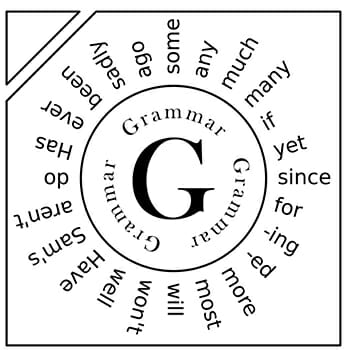
    grammar wheelI’ve received tons of questions by email about how to memorize grammar, including:

    • When to start studying grammar
    • How to use Memory Palaces for grammar rules
    • What about all the complexities of gender, tense and number?

    These are good questions and present one of the most challenging aspects of learning another language.

    That said…

    There’s a time and place for memorizing grammar amongst other activities that will provide many of us much faster gains along the road to fluency.

    On this page, I’ll share some of my best tips as someone who studied languages as part of earning my PhD at York University. Later, I gave lectures in German as part of my work at the University of Saarland.

    Sometimes I used memory techniques to help me understand various grammatical principles. Other times, I used different strategies.

    Sometimes I used no strategies at all.

    This statement might surprise you. So as we go through today’s tips, please keep this point in mind:

    When you can memorize individual words, you can memorize phrases. When you can memorize phrases, you can observe how grammar works within your mind.

    I mention this point because when you start memorizing how the language is used rather than what rules govern its use, grammar can stop being such a huge barrier.

    And language learning overall can become a lot more fun.

    So, if you’re ready to learn how to memorize grammar, let’s dive in!

    https://www.youtube.com/watch?v=zPM-gNX4AAM

    How to Memorize Grammar: 7 Powerful Strategies

    The following strategies have no particular order of importance. Think of them as a grab-bag of possible approaches.

    It’s worth considering each and every one. But you don’t have to use them all.

    Frankly, I found some of them tedious when studying various languages. Nonetheless, I’ve included them because different people have different needs and learning styles.

    Not only that, but it’s hard to track certain outcomes. Sometimes you get more benefits out of techniques you don’t like than you might realize.

    That’s why it’s important to experiment widely and let variety expand your horizons, especially when tackling a tough learning goal like mastering grammar.

    One: Limit Yourself To Grammar Basics As Much As Possible

    Unless you want to become a grammarian, you don’t have to know much grammar at all to learn a new language.

    Prepare yourself, especially if you’re someone who is convinced that you have to master grammar rules to achieve fluency.

    In this study, scientists found that young children were better at learning nouns and verbs before they learned to read.

    As the researchers speculate, one reason for this effect is that children simply don’t overthink it. But thinking is precisely what looking at grammar in books causes us to do.

    This is the reason behind why so many polyglots recommend that you simply limit how much grammar you study. It’s largely a distraction from the activities much more likely to help you become bilingual.

    Now, of course, you came here to learn grammar better. And I won’t disappoint. I just want to make sure that you understand that in certain circumstances, it’s actually not all that recommendable.

    Two: Apply Mnemonic Devices To Grammar Rules

    When I started accelerating my path to learning Latin again after a long break, I was instantly reminded that you have to know grammar with this particular language if you’re going to learn it alone.

    That’s because there are a lot of cases, declensions and conjugations, amongst other features.

    Unless you are able to read, write, speak and listen to a language frequently, you will need to not only memorize the names of these rules. You’ll have to learn how to apply them.

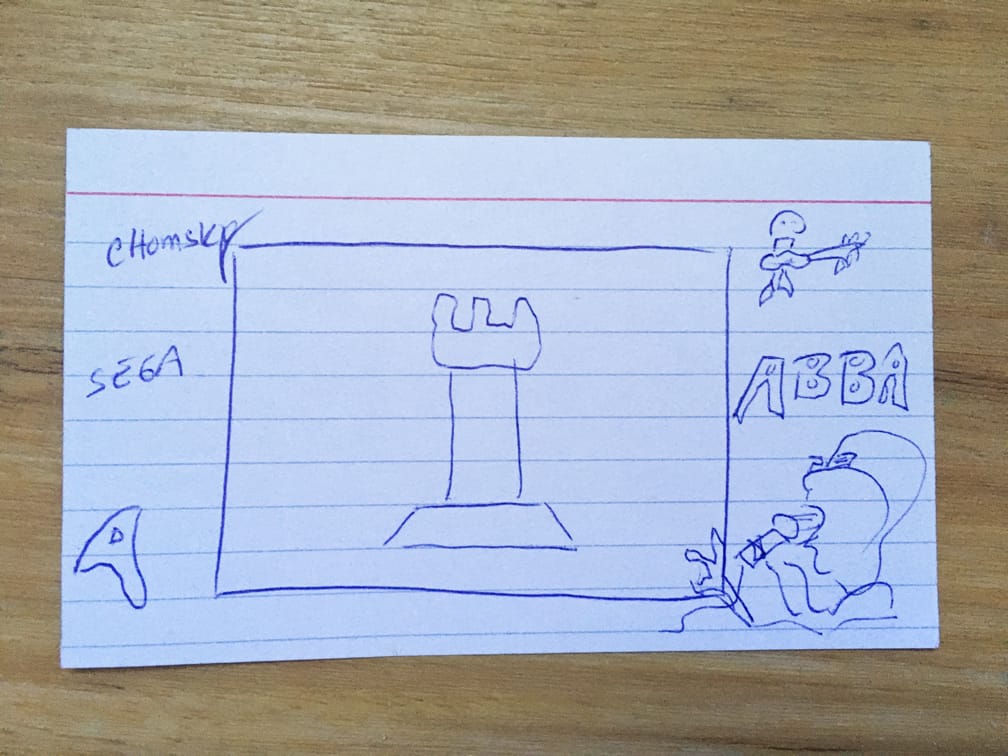
    For this goal, I recommend learning to use a Memory Palace for language learning. Here’s an example of how I always start this process with a simple drawing:

    I know that it can be hard to make out what’s going on here, so let me explain.

    The square represents a Memory Palace based on my friend Mike’s home.

    Along the left side you have the cases nominative, genitive and dative. On the right wall, accusative, ablative and vocative.

    Each of the sketches helps me remember those rules. The man with the guitar for accusative is the guitarist in AC/DC, for example. That reminds me of the name of this case. Sega is shorthand for Sega Genesis to remind me of the genitive case.

    There’s a chess piece in the middle for the Latin word “magnus” (large). Using the walls of Mike’s house, I learned the declension for this word by following a journey using the method of loci.

    There are many other memory techniques you can learn about. The process you’ve just discovered is my favorite way to memorize grammar rules.

    Three: Use Spaced Repetition

    As much as I wish the Memory Palace technique was a one-time strategy, the real reason to use it involves optimizing spaced repetition.

    Basically, this term describes a finding from memory science that helps you determine how many repetitions you need to learn something. When combined with mnemonics, spaced repetition can help you skip rote learning.

    Other ways to use spaced repetition without Memory Palaces exist. These include:

    • Flashcards
    • Anki
    • Zettelkasten
    • Leitner Boxes

    I’ve used each of these approaches. They’re all powerful.

    Four: Diagram Sentences

    Although visualizing sentences using diagrams has fallen out of favor, and at least one dissertation failed to find that it helped seventh graders, some teachers are not happy that the technique has disappeared.

    Dawn Burnette acknowledges, for example, that diagramming sentences is not for every learner.

    But as the board-certified teacher behind English Writing Teacher has argued, its removal largely comes from the introduction of computers into the classroom.

    Personally, I learn a lot by drawing out things that I don’t understand. It’s one of my go-to reading comprehension strategies.

    To try it for yourself:

    • Write out a sentence you’re learning.
    • Identify each part of speech by labeling it using arrows or lines (kind of like mind mapping).
    • Study the relationships between subjects, predicates and modifiers, etc.
    • Practice recognizing patterns as you work with more sentences over time.
    • Visualize your diagram later while you’re resting, literally reconstructing it in your mind.

    When it comes to prefixes and suffixes, you can also diagram these in a different sense by understanding their general meaning.

    This video gets deeper into how you can do that combined with the Memory Palace technique:

    https://www.youtube.com/watch?v=mWz80vWvMU4

    Five: Complete Grammar Games & Puzzles

    Here’s one of the activities that I don’t like very much.

    However, this study found that students who experienced games as part of language acquisition performed better.

    More generally, in this study puzzles were found to help dental students learn as well.

    I completed a lot of crossword puzzles when learning German in a Berlin school. Even though I didn’t enjoy this particular learning activity, I’m sure the research is right and that it helped me.

    If nothing else, the variety on its own helps expand exposure to the core information from a different angle.

    Six: Memorize Passages & Write Them From Memory

    In every language I’ve tackled, I have taken time to learn at least a few songs by heart.

    This simple activity teaches you a great deal about how sentences work, while giving you an opportunity to memorize new vocabulary.

    After memorizing the lyrics, I always combine writing them out with singing them from memory.

    This combination of engagement with the song gives me multiple levels of exercise by engaging the levels of processing effect.

    Want an example? Here’s me practicing the Mandarin song I performed at my wedding:

    https://www.youtube.com/watch?v=dCyPV6qfKkI

    Although memorizing passages may not give you the names of various grammar principles, you’ll start using them.

    And as you reflect on what you now know about the language, this meta-level thinking teaches you the grammar through observation.

    In the case of the song in the video above, I learned a lot about possession purely through the observation enabled by memorization.

    Seven: Immerse Yourself In The Language

    At the end of the day, there is no substitute for combining what I call “the Big Five of Language Learning.”

    https://www.youtube.com/watch?v=bR15aAXv-F0

    As we know from studies in interleaving, simply by rotating through a small set of activities, you will remember more.

    In this case, the Big Five involves:

    • Reading
    • Writing
    • Speaking
    • Listening
    • Memorizing

    All you need to do is get ample doses of each. And as many memory champs who learn languages have shared, it really helps to study in short blasts.

    I’ve done this personally to learn German phrases, master enough Mandarin to enjoy small talk at my wedding and gain skills in Sanskrit.

    You can too, and making strides in any language won’t take you nearly as long as you might think.

    You Can Memorize Grammar Rules Quickly

    As daunting as grammar can be, you now have options that will make learning it much easier.

    The best part is that every activity and approach we’ve discussed today is also fun.

    If you’d like more help with the Memory Palace part of the puzzle, feel free to get my free course:

    Free Memory Improvement Course

    It gives you four video lessons and three worksheets.

    Complete them, apply the techniques to grammar and before you know it, you’ll know grammar better.

    And that way, you’ll avoid common grammar mistakes when writing and speaking.

    You might even be able to identify a few of them when reading and listening too.

    Native speakers make grammar mistakes too, after all. One more reason to go easy on yourself as you’re learning to master this area of human knowledge.

    In many cases, it’s much closer to art than science.


    The Scientist Exposing What Your Brain Does With “Fuzzy” Memories Apr 10, 2026
    Show notes

    Paul Garrett profile image for Magnetic Memory Method podcast episode on fuzzy memory and related topicsHave you ever parked your car, walked away, and completely blanked on where you left it?

    And yet… somehow you walked straight to it anyway?

    When that happens, it might not be luck.

    Rather, it could be your brain using what scientists now call “fuzzy memory.”

    And this might be the most important discovery about short-term memory in the last 20 years.

    To learn more, I sat down with Dr. Paul M. Garrett, currently doing postdoctoral work at the University of Melbourne.

    In addition to studying how your brain makes decisions when it’s uncertain, his recent article on The Conversation raised old and new questions related to how I think about forgetting, remembering, and every decision I make in between.

    Here’s one aspect of Paul’s research that blew my mind:

    The old theory said your brain has a fixed number of memory “slots.”

    If something made it into a slot, you remembered it.

    If it didn’t, it was gone.

    But that theory is apparently wrong.

    Rather, Paul’s research demonstrates that even memories you’d swear are completely gone still leave a faint signal in your brain, precise enough to push you toward the right answer without you even knowing why.

    That “gut feeling” you get sometimes? That might literally be a fuzzy memory talking.

    In this conversation we go deep on why your brain caps out at 3 to 4 items in working memory and what that actually means.

    https://www.youtube.com/watch?v=wm6C08m3WUI

    We also discuss why you remember better from a physical book than a screen (and the possible spatial memory scientific explanations behind it).

    Next, we discuss:

    • How trained motor skills get so deep into procedural memory that even ten years away can’t break their strength
    • How marketers and salespeople exploit your decision boundaries using time pressure
    • Why a tiny dose of Bayesian reasoning would make almost everyone a sharper thinker
    • What new EEG research on voluntary decisions reveals about whether or not free will is real
    • How to make memory science more accessible by finding good science popularizers

    Paul and I had such a deep conversation that we kept going well past the formal interview.

    That bonus discussion covers experimental design for mnemonic research, Giordano Bruno‘s 16th century memory seals, the neuroscience of pitch detection and white matter volume, music therapy for Alzheimer’s patients, and a lot more on the topic of how memory works.

    You can access the full bonus conversation in the Magnetic Memory Method Masterclass. You’ll find it on the Bonus page.

    More About Paul Garrett & His Research

    To follow more from Paul, check out his:

    • LinkedIn Profile
    • Google Scholar page
    • Profile on The Conversation

    If Fuzzy Memory Fascinated You, Go Deeper With These Science-Related Episodes

    Ready for more?

    Check out my conversations with:

    • Dr. David Reser and Tyson Yunkaporta about Aboriginal Memory Techniques
    • Dr. Gary Small on science-backed ways to keep memory strong
    • Dr. Christine Till on research into brain training with apps

    Final Thought

    Here’s the final thing (for now) that comes to mind about fuzzy memory:

    If your brain is already doing this much work behind the scenes with zero memory improvement training, just imagine what it can do when you actually give it the right tools.

    That’s what the Magnetic Memory Method is built for, and that’s why it’s based around the Memory Palace technique.

    After all, many of us have been using locations we barely remember to memorize tons of information.

    So if you’re not familiar with this approach, or you’re worried that you can’t remember places you remember enough to use the method of loci, complete this Complete Guide to the Memory Palace technique.

    You might just be pleasantly surprised by just how much your fuzzy memories help you remember more than you ever imagined possible!


    How to Think on Your Feet: The Complete Training System for Mental Agility Under Pressure Mar 24, 2026
    Show notes

    If you want to know how to think on your feet, you need to understand something most advice on this topic gets wrong: Thinking on your feet is not a talent. It’s a trained response. And the training required goes far deeper than memorizing a few “power phrases” or practicing small talk at networking events. Real mental agility, by which I mean the kind that serves you in a boardroom, on a stage, in a heated conversation, and even in physical danger, is something you earn. And to earn it requires systematic preparation across multiple domains. I know this because I’ve spent decades training for exactly these moments. As a university professor, I’ve lectured in multiple languages to rooms of students who didn’t always want to be there. And to get my PhD, I had to sit for a dissertation defense in a room where some of the examiners delighted in throwing hardball questions. As a performing musician, I’ve improvised solos on stages where the set list changed mid-show. While performing card magic, I’ve recovered from botched tricks in front of audiences who were actively trying to catch me out. And as a martial arts practitioner, I’ve used my training to escape three real-world physical confrontations without throwing a single punch. Then there was my TEDx Talk where I had to make real time adjustments when the audience failed to even smile at my scripted laugh lines, but chuckled substantially during parts I had not planned to be funny. https://www.youtube.com/watch?v=bqtDy68-gkY How to Think on Your Feet: The Complete Training System for Mental Agility Under Pressure What I’ve learned across all of these experiences is that every domain of “thinking on your feet” shares one foundational requirement. It’s not intelligence. It’s not quick wit. It’s often not even confidence. Rather, the biggest lesson I’ve learned is that thinking quickly and responding in the best possible way comes down to the systematic reduction of ego. That might sound philosophical, but it’s intensely practical. And it will become the thread that connects everything in this guide. From how to recall information instantly in a conversation to how to physically escape a threatening situation without freezing. Here’s what we’ll cover today: Part 1: Why “Thinking on Your Feet” Is a Trained Skill, Not a Personality TraitPart 2: The Ego Problem (Why Your Self-Image Is Your Biggest Obstacle)Part 3: Mental Recall Under Pressure (How to Access What You Know When It Matters)Part 4: Verbal Agility (How to Sound Smart, Pivot, and Recover in Conversation)Part 5: Performance Under Pressure (Lessons from Music, Magic, and the Stage)Part 6: Physical Composure (How to React When Your Safety Is at Stake)Part 7: Daily Training Exercises for Mental AgilityPart 8: Loading Your Mind (Why What You Memorize Determines How Well You Think)Part 9: The Paradox of Mental Silence Let’s dive in with why most people struggle with the skill of spontaneously responding in optimal ways in the first place. Why “Thinking On Your Feet” Is a Trained Skill, Not a Personality Trait As Freud pointed out, civilization is not our natural state. In Das Unbehagen in der Kultur, which is usually translated as Civilization and Its Discontents, he argues that much of our inner tension comes from how our social training represses our instincts. “Discontents” is not really a great translation for the title of this book. “Unbehagen” means something more like “unease” or “discomfort.” And since languages and skills are something we learn, we literally have to undergo a process of discomfort to learn most things. That’s not a political statement. It’s a neurological one. Your brain’s implicit memory system, the part that handles automatic behaviors, gut reactions, and how you repeat social patterns on autopilot, was shaped by millennia of environments that looked nothing like a conference room or a dinner party. It was shaped by physical survival, tribal dynamics, and the need to read danger before it arrives. This means that when you’re put on the spot in a modern context, your brain defaults to patterns it learned through observation, not through deliberate training. And those patterns were modelled on the people around you growing up. Especially in contexts like: Being asked a question you weren’t expecting Getting challenged during a meeting Having someone force you to improvise a presentation at school or work In such situations, you might find yourself freezing under pressure and not realizing that you’re actually repeating how you saw a parent go cold when you were young. Or you might find yourself getting defensive in arguments the way a sibling did, or going blank during presentations based on someone else’s blip you observed. When you repeat this behavior yourself, it’s not a character flaw. That’s implicit memory doing exactly what it was designed to do: replicate observed behavior. And if you’re reading this and don’t have problems thinking on your feet, chances are that you were a lucky observer of someone who could when you were young. Combatting Implicit Memory’s Hold with Reconsolidation The problem is that your default patterns are not optimized for the situations modern life throws at you. They’re survival patterns, not performance patterns. Since you’ve learned to react like those you’ve observed instead of how you’d prefer to act as a fully realized being in this world, what can you do? Fortunately, quite a bit. Neuroscientists call the mechanism behind how you can shift the hold of implicit memory on your behavior memory reconsolidation. Here’s how memory reconsolidation works in brief: Every time you recall a memory, it temporarily destabilizes. Researchers call this destabilization a “labile state.” And while the memory is transitioning, the memory can be modified before your brain stores it again. This includes modifying behavioral patterns, not just facts. So when you clam up after being put on the spot and then reflect on what happened, that freezing response is briefly open to revision. This process was first demonstrated in landmark research by Karim Nader and Joseph LeDoux at NYU, which you can read about in Memory Reconsolidation. As part of their investigation, Nader and LeDoux demonstrated that even deeply encoded fear memories could be altered during reconsolidation. Unlocking Transformation Bruce Ecker and colleagues later applied this principle therapeutically. I recommend their discussion in Unlocking the Emotional Brain: Memory Reconsolidation and the Psychotherapy of Transformational Change. As you’ll read, they discovered how long-held emotional patterns can be rewritten. Not through willpower, but through a specific process of activating the old pattern, introducing a contradictory experience, and allowing the brain to re-encode. Monica Khosla explores a parallel idea in The First and Last Belief. This fascinating book is written by someone who experiences non-dual states similar to those I shared in The Victorious Mind: How to Master Memory, Meditation and Mental Well-Being. Khosla discusses how our earliest family-formed beliefs become the templates for how we respond under pressure as adults. Her work in family therapy suggests that these templates aren’t permanent fixtures. Rather, they’re “reconsolidatable,” provided you understand how they were formed and deliberately create new experiences that contradict them. This is precisely what the training in the guide you’re reading now is designed to do. Every exercise, every practice, every discipline I’ll share works by activating your default pattern (the freeze, the defensive reaction, the blank stare) and replacing it with a trained alternative in the moment it’s most labile. The Catch But there’s a catch. There’s always a catch, isn’t there? The pattern that most resists reconsolidation is your self-image. It’s also your self-image that most aggressively defends itself against change. People literally argue for hours with therapists that they cannot change. I know because I made this argument myself for years in front of my own therapists. This is precisely why thinking on your feet requires training. You cannot simply decide to be quicker, calmer, or more articulate under pressure. You have to deliberately replace your default patterns with trained responses. And use deliberate practice to ensure those responses become the new default. The training looks different depending on the context: In conversation and debate, it means learning frameworks for organizing thoughts rapidly and practicing with real people. In professional settings, it means memorizing key information so thoroughly that recall becomes effortless, freeing your mind to think rather than search. On stage or in front of an audience, it means thousands of hours of performance practice that builds a reservoir of recoveries and pivots you can draw on automatically. In physical danger, it means martial arts or self-defense training that bypasses conscious thought entirely and produces trained physical reactions. Each of these contexts has its own training methods. But they all share the same underlying principle: the trained response must be so deeply encoded that it fires before your conscious mind has time to interfere. The single biggest source of that interference? Your ego. But never fear. As big of a problem as the ego can be, you’re going to learn how to solve and resolve it. Part 2: The Ego Problem (Why Your Self-Image Is Your Biggest Obstacle) Here’s the uncomfortable truth that almost no “how to think on your feet” article will tell you: The reason most people freeze, fumble, or fail under pressure is not that they lack information or intelligence. It’s that they’re managing their self-image at the same time as they’re trying to perform. They experience serious cognitive drain as a result. Why? Well, when you’re in a meeting and someone asks you a question you don’t know the answer to, your mind doesn’t just process the question. If your ego is not well-managed, your mind simultaneously processes: “What will they think of me if I don’t know? Will I look incompetent? How do I maintain my status?” That parallel processing consumes the very cognitive resources you need for actual thinking. The Additional Cognitive Drain of Fantasizing Your Own Wit The psychoanalyst Jacques Lacan made an observation that I’ve found profoundly useful in this context. He once pointed out that our fantasies are almost always better than the reality. For example, when we fantasize about being the quick-witted person everyone admires, we’re constructing an idealized self-image that the real moment can never live up to. At least not all the time. You’ve probably heard the phrase “the gods have clay feet.” Well, spend enough time with accomplished performers, and you’ll start to see why. No one always has: the perfect response the devastating comeback the elegant pivot But we fantasize that some people do. And then when we don’t perform like our fantasy, we experience not just the failure of the moment, but also a painful collapse of our self-image. That’s why a stumble in a presentation can feel catastrophic even when the audience barely notices. The ego is experiencing a much larger injury than the situation warrants. How to Reduce Ego Before It Costs You There’s no quick fix for the ego. And ego reduction exercises so you can respond with greater self-satisfaction in the moment require: Practice in advance Consistent application in a variety of situations And in a variety of ways until responding off the top of your head from a clear mind becomes your default orientation. Then you maintain the practices that get you the spontaneous mastery you want over time. Here is a powerful place to start. Practice Stoic Premeditation The Stoics called it premeditatio malorum or negative visualization. Basically, you deliberately imagine everything that could go wrong related to the situations that regularly require your response. If you regularly visualize yourself going blank in a meeting, stumbling through a presentation, or being publicly corrected, the actual event loses its power to destabilize you. You’ve already experienced the worst in your imagination. The real version is almost always milder. It’s the flipside of the point from Lacan we discussed above. You’ve now made the reality much better than the fantasy. Modify the Classic Stoic Exercise You can modify premeditatio malorum in two key ways. I suggest you experiment with both techniques I’m about to describe. One: Transform Old Memories of a Disastrous Performance First, you can excavate through your memory to find situations you recall where things have already been bad for you. Then, you can “cleanse” those memories by placing them in a “Happy Memory Palace.” The scientific basis for this process comes from research showing promise in therapy for trauma, such as this study of memory reconsolidation specific to declarative memory. And there is the now classic Tim Dalgleish-headed research on using Memory Palaces or the method of loci for successfully reducing depression. For more on this kind of research, the following livestream replay gives you an exact exercise and more about the memory science behind the positive outcomes: https://www.youtube.com/watch?v=vs9UHz4pVuM In terms of how I’ve used this approach personally, I sometimes wince at one particular memory from when I sang a song during show-and-tell one morning when I was in grade two. I don’t know why I used to feel embarrassed when the memory would arise as an adult, but I could feel the sting in my cheeks. And later when I first started sharing the Sanskrit phrases I’ve memorized, that little flush of shame would arise again. So to forgive that kid whatever my memory was holding against him for his squeaky little voice, I turned the classroom into a Memory Palace and used it to memorize a delightful poem. From the point that I finished learning the poem (you can learn the process from this poetry memorization guide), I can think of that episode without that old embarrassment reviving any of its sting. And I’ve used this approach to transform other lingering memories I don’t like as well, something I’ll share more in-depth in a forthcoming book. Releasing old negative memories that involve shame makes me feel more spontaneous. And I’m confident you’ll enjoy a similar benefit too. Two: Memorize Stoic Quotes Memorizing poetry is one thing, but it takes time. You can commit quotes to memory a lot faster. I share one of my favorite quotes from Seneca in this YouTube short, one that took only a few minutes to memorize, even though it’s in Latin: https://www.youtube.com/watch?v=ISvX0-CfRkk I found this quote in Kevin Vost’s Memorize the Stoics! Although it’s not on my list of best Memory Palace Books, it provides a great look at memory training through a Stoic lens. And Vost is right: The value of having ancient wisdom on tap cannot be exaggerated. Not just for correcting your ego. You’ll also find that you have more things to say when pressed to speak on the spot. Things that have stood the test of time. Meditate Specifically for Ego Reduction Eckhart Tolle, author of The Power of Now, often says in his talks that if you are empty of thought, you don’t have to worry about what to say next during a conversation. You’ll spontaneously produce the best possible reply. I often wondered how it was possible to empty my mind of thoughts until I encountered Gary Weber’s Happiness Beyond Thought and Evolving Beyond Thought amongst other works. Although Weber’s full program requires a fair amount of time, it’s worth it for the mental space and spontaneity you’ll enjoy. Two Other Tactics for Detaching From Your Ego for Greater Spontaneity While you’re experimenting with Stoicism, here are two other tactics to explore. They’re both counterintuitive, but powerful. Embrace ignorance as a position of strength Saying “I don’t know, but I’ll find…

    Full show notes at the publisher

    Everyday Genius by Nelson Dellis: Review, Interview & Analysis Mar 18, 2026
    Show notes

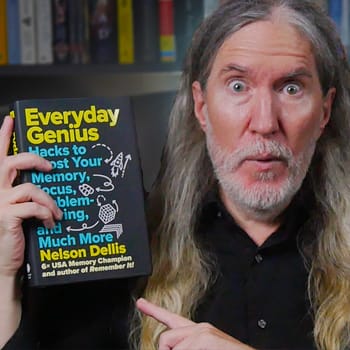
    Anthony Metivier holding a copy of Everyday Genius by Nelson DellisNelson Dellis delivers yet another epic memory improvement book with Everyday Genius: Hacks to Boost Your Memory, Focus, Problem-Solving and Much More.

    In my view, this book is also a corrective to the increasing mountains of bad memory training advice online.

    I mean, spend ten minutes browsing memory improvement forums and you’ll start to see the rot.

    Same recycled advice.

    Same flat explanations lacking nuance.

    Same people “teaching” techniques they’ve:

    • Never stress-tested in public
    • Never pushed to the limits
    • Never offered anything more than mostly copied explanations of standard mnemonic methods

    The toxicity for the serious student of the memory arts and mental skills is only getting worse as people ramp up their use of AI to produce even more untested “teaching” of these techniques.

    So the fact that Nelson actually demonstrates and performs a kind of “immersion journalism” when it comes to the techniques he teaches provides just one of many reasons why Nelson Dellis’s Everyday Genius matters so much.

    https://www.youtube.com/watch?v=PJoc5gLIx2c

    How Everyday Genius Takes Memory Training Into New Terrain

    It’s not that Nelson has invented any new memory techniques in this book, which you can learn more about on Abrams Books.

    He hasn’t. And it’s unlikely that anyone ever will.

    Nelson told me as much at the opening of our interview:

    https://www.youtube.com/watch?v=NcTJuCiDVqE

    Anyhow, “new” doesn’t come into the picture for people serious about memory and accelerated learning.

    As someone who has received and read Amazon reviews on memory improvement books for decades, I always find it odd when someone writes, “nothing new here.”

    Since even Giordano Bruno essentially announced that nothing new would be coming to the field of mnemonics back in the 1600s, the real task is to:

    Stop Confusing Activity with Accomplishment

    Nelson’s book matters first and foremost because it comes from a mnemonist of actual accomplishment.

    A real practitioner, not just a reader of memory improvement books who then comments on them.

    He’s someone who has put his mind on the line under pressure, in competition, with nowhere to hide.

    In other words, Nelson’s history of accomplishment adds weight to every page.

    And you can feel it almost immediately.

    Everyday Genius is written by someone who has actually lived inside the machinery of memory and various mental tactics and then extended these into real life situations:

    • Giving a speech
    • Making new business contacts
    • Solving real-world problems
    • Exploring the nature of the mind

    At the risk of repetition, this distinction matters more than ever, because the internet is drowning the memory arts with all kinds of secondhand certainty written by people lurking behind anonymous user accounts.

    What Kinds of Real-World Problems Will This Book Help You Solve?

    As most memory improvement books worth their salt do, Nelson covers the Memory Palace technique, a.k.a. the method of loci.

    But he doesn’t just recite the classic approach to this technique. He describes it from lived experience.

    And his approach to mnemonic images and pegword systems likewise comes from accomplishment.

    Then, when you go through his explanations of how to apply these mnemonic systems to remembering names or speeches, you’ll have a deeper understanding of how to implement them.

    Likewise when it comes to critical thinking.

    Nelson takes you through actual real-world scenarios and shows you how various critical thinking examples can make life a lot smoother and more successful.

    Making Memory & Learning Both Relevant & Fun

    Another major thing Nelson gets right in Everyday Genius is that he doesn’t shy away from blending the use of memory and thinking tactics for fun with more serious learning outcomes.

    I know that I’m guilty of not finding that balance in my own writing, even if personally I perform card magic with a memdeck and play music, etc.

    The cost, however, is that using memory techniques for activities like card counting can be learned a lot more readily when you have at least some of the foundational mnemonic strategies working for you.

    In reality, learning them doesn’t have to be a grind. And the stories and profiles of polymathic geniuses Nelson shares throughout the book will help you see the multiple layers of fun in store for you.

    The key is to find ways to make these techniques integrate into your everyday life. Figuring out how to do that can be a challenge, but that’s all the more reason to pay attention to the examples distributed throughout Everyday Genius.

    The Potentially Controversial Aspect of Everyday Genius

    Now, you might be wondering…

    Is Everyday Genius perfect and free from critique?

    No. And unlike his previous books like Remember It! and Memory Superpowers, Nelson takes risks that I partly admire and partly question.

    And one of my criticisms goes back to at least two years prior to its publication when Nelson first told us about his “remote viewing” experiments on this episode of the Magnetic Memory Method Podcast.

    https://www.youtube.com/watch?v=j240eFZNq04

    Now, I worry about being hypocritical if I lean too heavily against Nelson when he enters such contested territory. I’ve run similar experiments myself at various times, and perhaps entered just as questionable territory with The Victorious Mind.

    I’m talking about:

    Intuition. Remote viewing. Out-of-body experiences. Lucid dreaming.

    To take just one example, learning to remember your dreams is easy enough to do. But Nelson talks about practicing memorizing a deck of cards while lucid dreaming, and it’s just not clear how you could test the accuracy or measure the contribution of such untestable practice to your skills.

    At least in the case of remote viewing, Nelson has practiced a kind of immersion journalism.

    He’s gone to various labs and institutions where people conduct tests in remote viewing and out-of-body experiences.

    Whether those tests are “scientific” or not is itself a critical thinking exercise, but I admire that Nelson:

    • Goes into the field to report back from lived experience
    • Is willing to face tough questions about the claims people make about such phenomena
    • And unlike the lucid dream claim, various aspects of the claims about remote viewing and out-of-body experiences can be tested

    In any case, Dellis doesn’t build the book on the foundation of these more experimental activities. And it is of great importance that you are invited to experiment using the protocol Nelson provides.

    I tried the provided remote viewing protocol myself.

    And frankly, I would rather explore strange terrain from Nelson Dellis who has proven all kinds of astonishing accomplishments than from yet another forum philosopher who has yet to demonstrate… anything they make claims about.

    The Future of Memory Training

    And the whole realm of claims that people make is the larger issue here for me.

    In our growing culture of cognitive indifference, people forget names, forget what they read, forget what they meant to say halfway through saying it, then shrug and call it normal “because internet”.

    But digital amnesia is not normal.

    And you don’t have to outsource your memory or your attention.

    Your standards can go up.

    And your self-respect along with it when you join the ranks of those who have actually done the work.

    That is why I think you should read Everyday Genius.

    Not because it is safe.

    Not because it is perfect.

    But because it is something that few books ever are:

    It is alive.

    Alive with real accomplishment.

    Alive with a pulse that pushes ancient tactics into modern use and combines them with other disciplines.

    Alive with the real signs of genius that anyone can achieve.

    And it treats memory as something you train, not something you talk about.

    But don’t stop with reading and implementing this book.

    Do your part to help fix the culture.

    Stop letting the swamp of bad information on the internet define what memory training is.

    Memorize the most challenging information you can find and demonstrate that you can do it.

    Take on hard skills and prove that you’ve got them.

    That is your duty now if you want to distinguish yourself from the swamp and the robots.

    Raise the standard.

    That would be truly genius.


    How to Memorize Poetry Quickly & Maintain It For Life Feb 18, 2026
    Show notes

    I have an uncle who used to sing the craziest (and often off-color songs). He was a WWII vet and looked like the Canadian actor Lorne Greene. He would rip out the kinds of songs that sailors sang and I would rush to write down the lyrics so I could learn them. And learn them I did. The hard way. It was irritating and frustrating. Even though they say the hand builds the mind and it wasn’t the end of the world that I spent so much time writing them down and rewriting them, I was still relying on rote learning. If only I knew then what I know today about memory techniques! You see, I now memorize and regularly demonstrate poems I’ve committed to memory almost every month during my live memory training bootcamps. I’ve memorized everything from ancient Sanskrit poems to some of the most inventive contemporary poetry. And today I’m going to share a few case studies and key tips I know you’re going to love. https://www.youtube.com/watch?v=IUQYVUEBJVc How to Memorize Poetry Fast The fastest way I know to memorize poetry involves a combination of ancient memory techniques. These are: The Memory Palace Technique Alphabetical association Numerical association (where relevant) Spaced repetition based on solid active recall principles Now, I know that weaving together so many memory techniques to memorize poetry or even song lyrics, sounds like a lot. But if you want to memorize poems fast, stick with me. Bringing all of these strategies together is much easier than it might seem at first glance. But first, let me further demonstrate that I actually do successfully memorize poetry to bolster the demonstrations given in the video tutorial above. I believe proof is important because there are a lot of people out there who talk about skills they cannot do. In the case of mnemonics, there are even entire forums filled with people giving advice about memory techniques when they clearly haven’t lifted a finger to memorize a poem. That, or they’ve used rote memorization and are only pretending they used mnemonics. So with those issues in mind, here are a few more videos with demonstrations from a variety of verses in various states of retention. Please be sure to watch each example because I will refer back to these recitations to help you rapidly memorize poems of your own. Example One: A Univocalic Poem In this video, you’ll see me at the Memory Palace Bookshop I’m developing practicing the recitation of a univocalic poem by Christian Bök: https://youtube.com/shorts/b6oFIOnAwng?feature=share That’s from a fantastic book of poetry called Eunoia. Example Two: Shakespeare This video not only shows me reciting lines from Titus Andronicus. It includes a very important teaching point. That’s because I also demonstrate reciting the lines forward and backward to help teach you how to more easily commit even the most difficult poem to memory using a process I call Recall Rehearsal: https://youtu.be/nhjIkGu32CA?si=s6gIJz6Poq9Zpo6C&t=1380 Now, I regularly memorize Shakespeare. But in the case of the example shared in the video above, I had a special purpose in mind. I was doing it to reproduce the memory technique Anthony Hopkins describes in his autobiography. Here’s the full case study. Example Three: Song Lyrics In this video, you’ll see and hear me singing a famous song called The Moon Represents My Heart in Chinese: https://youtu.be/dCyPV6qfKkI The entire song took just over forty minutes to commit to long-term memory. Even though it’s been a few years since I sang the whole song, I still remember most of the lyrics to this day. Every once and awhile, I whip it out and it always brings a smile to my wife’s face. The reason this Chinese poem set to music took a bit longer to memorize other poems I’ve memorized is because it’s in a foreign language that I was only just beginning to study at the time. Example Four: Poetry Quoted in a Speech When I wrote my TEDx Talk, I incorporated lines from a Sanskrit piece called the Ribhu Gita. This was an interesting challenge because it called me to recall the speech and the poetry that had already been memorized. https://www.youtube.com/watch?v=kvtYjdriSpM This particular performance was a lot of fun, but also challenging due to the combination of a live audience, cameras and the fact that the world was starting to go into lockdown at the beginning of Covid. I had a lot on my mind, but thanks to the memory techniques you’re about to discover, I still think the talk came off fairly well. It’s been seen over four million times now, so I must have done something right. Example Five: Real-Time Poetry Memorization If you want to see me memorize in real time, check out this discussion with Guru Viking. Steve, the host, throws Shakespeare at me and I memorize a few lines and discuss how I did it in real time: https://www.youtube.com/watch?v=J62IN_ngYH0 Now let’s get into the steps, many of which come directly from my premium course on memorizing poetry. Step one: Use the Memory Palace Technique A Memory Palace is essential for memorizing poetry, or anything verbatim. What is this technique? A Memory Palace is a mental recreation of a familiar location. For example, in the first video example above from the poem Eunoia, I used my mom’s home from where she lived years ago. I moved from the master bedroom to the kitchen and living room, to a few other bedrooms and finally out the door and down the driveway in front of the house. How to Memorize a Poem in an Hour (or Less) Using This Technique Using the method of loci, you place mnemonic images along a mental journey. As I just mentioned, I started in one room, then moved to the kitchen, the living room, and so forth. On each corner and wall, I placed an association. For example, for the line, “Awkward grammar appals a craftsman,” I placed an image of Apollinaire in a state of awe changing into being appalled. Now, what exactly it means to “place” an association along a journey in an imaginary version of a building can feel a bit abstract in the beginning. But basically, you’re taking a corner, a wall or a piece of furniture and elaborating it with strange, exaggerated ideas and feelings that remind you of each word of the poem or song lyric. You can do it in any language and if you look at the Guru Viking video above, you’ll see me demonstrate exactly how and why it works in any language. In that particular example, I use the wall behind me for Shakespeare in the same way I memorize Sanskrit phrases when memorizing ancient mantras. To Speed Up The Process When You’re Just Starting Out, Do This Learning to use the Memory Palace technique can feel challenging in the beginning. To reduce the cognitive load, I suggest making a quick sketch of a familiar location that you will turn into a Memory Palace. You don’t have to be artistic. I don’t try to make fine art of it at all. To wit, here’s a quick sketch of a bookstore in the Zamalek area of Cairo I have used many times to memorize poetry and other types of information: A Memory Palace drawn on an index card to maximize its value as a mnemonic device. This one is based on a bookstore in Zamalek, a part of Cairo. The reason for drawing out the journey is to get it clear in your mind. That way, you can spend more time on the next step. But failing to simply draw a Memory Palace in advance can lead to a lot of unnecessary frustration. That’s because you will ultimately wind up trying to encode the poem while developing the Memory Palace at the same time. To memorize any poem as quickly as possible, you need to separate the two activities. Step Two: Lay Down Your Associations One Word At A Time (Most Of The Time) Shakespeare opens King Henry the Fifth like this: O for a Muse of fire, that would ascendThe brightest heaven of invention,A kingdom for a stage, princes to actAnd monarchs to behold our swelling scene! When I memorized these lines, I started at station one with an image of the constellation Orion over the Statue of Liberty. Using the pegword method, I associated Orion with O. Then, using the general concept of a woman that inspires people, I placed the Statue of Liberty in the Memory Palace. In this case, the Memory Palace was a workplace where I was writing curriculum in Vancouver, B.C., Canada. You might choose a completely different image for the words “muse of fire.” But the technical point is that you want to find a direct sound and spelling correspondence that is: Based on ideas and images already in your memory Makes sense to you Making sure that the associations you choose are personal is part of what scientists call active recall. For me personally, Lady Liberty is an especially apt choice not only because she represents inspiration, as the muses. She’s also holding a torch, which helps me encode the word “fire.” But I also lived in both Manhattan and Brooklyn for awhile and often crossed the Manhattan Bridge. This makes the memory of the Statue of Liberty even stronger for me, and another reason why you need to think about the images that make most sense for you. How to Associate “Little Words” for Rapid Memorization What about a word like “that”? Tricky and abstract, right? Not really. You just need to pick an association that makes sense to you while sounding or seeming as close as possible to the target information as you can get it. In the case of the Henry the Fifth line, I just took “th” and linked it with Thor and then used rhyming to have him put on a hat in a dramatic way. Thor + hat = that. When it comes to the Bök poem, there’s a part of the sequence (full poem here) where I used Thor with his hat again: Awkward grammar appals a craftsman. A Dada bardas daft as Tzara damns stagnant art and scrawls analpha (a slapdash arc and a backward zag) that marsall stanzas and jams all ballads (what a scandal). For a small word like “all,” I used the Punk Rock band All, but only in part. Drawing upon the mnemonic teaching of people like Peter of Ravenna, Jacobus Publicius and Giordano Bruno, I used the principle of reduction. Rather than imagine the entire band, or even an entire mascot, I just imagined the eyes of the mascot. To memorize at speed, I suggest you practice this principle of reduction. Also develop what I call the Magnetic SRS in my full poetry course in the Magnetic Memory Method Masterclass. By taking an hour or so to assign association to all the pronouns and other “operator” words like “that,” you won’t have to stop and come up with associations ever again. The Magnetic SRS training in my full program goes into further detail. It will help you develop dozens of images for words that seem like they’ll be tricky or repetitive. Done well, they can be used repeatedly, but never cause confusion. Step Three: Memorize Multiple Words When You Can Memorizing more than one word in a poem at a time is called mnemonic compression. This term can mean more than one thing. But in this case, I’ve technically just given you a description of how compression works with the Statue of Liberty example. After Orion for O, she represents five words: “for a Muse of fire.” In this case, it works because I’m familiar with the workings of English grammar. But you can’t always get away with this kind of compression, especially when memorizing poetry in another language. It’s just best to keep an eye out for compression opportunities as much you can. When I memorized my TEDx talk using these techniques for speech memorization, thanks to compression, I loaded one station in my Memory Palace with up to 17 words using just 3-5 images (depending on how you count them). Keep in mind that you don’t have to start with poems with long passages like the ones I included in my TEDx Talk. A lot of people like to start with short Bible verses. I’ve put together a list of Bible verses to memorize that address the theme of memory if you’d like to select a few for practice. Step Four: Use Intelligent, Creative Repetition As I mentioned above, rote learning is a real problem. What you want instead is something called spaced repetition. It provides a simple means of reviewing memorized material on a schedule that keeps it in memory. Different poems and lyrics will require different amounts of repetition, and it’s not easy to predict in advance how much content will require how much repetition. However, there’s something called context-dependent memory. Basically, it gives you a boost when you use a lot of content frequently. Or read continually within particular categories of information. So if you read literature and quote it often, you’ll probably need less repetition than someone who doesn’t. And if you memorize the sonnet form more than free verse, you’ll likely develop a stronger and faster reliability because you’ve internalized its rules. Creative Repetition for Long-Term Maintenance For most of us, poems will fade over time no matter what we do. Fortunately, there are creative repetition strategies that can help make sure you maintain them. One is to follow in the footsteps of geniuses. For example, Anthony Hopkins keep common place books where they store and regularly revisit favorite poems. People like Thomas Jefferson used this strategy too. Another strategy is to use reflective thinking to compare various poems you’ve memorized. You can do this from poem to poem or between poems and your favorite philosophy books, historical events, etc. Finally, look for opportunities to recite the poems. Even if you just quote isolated lines, this smaller recitation will help keep the full poem within your mental reach. 3 Alternative Ways To Memorize Poetry You might be wondering if it’s possible to memorize poetry without using the Memory Palace technique. Indeed, there are. Here are some options. Rote Repetition Although I personally don’t like how rote learning feels, it is an option you can explore. It’s a slower option for most of us. But one simple way to get more mileage out of sheer repetition is to choose the time of day and location where you practice it strategically. You’ll need a lot of focus and concentration on top of sheer will power to keep repeating the same lines without the fun of mnemonics, so make sure you aren’t interrupted. I’d also suggest focusing on shorter poems for use with rote. That way you can memorize more poems in their entirety and enjoy substantial accomplishments more often. Cloze Methods A cloze test involves showing yourself parts of a poem. As you read through the poem, you try and fill in the blanks. This activity can trigger some of the positive benefits of active recall. Here’s an example of how you would apply the cloze test methodology to help yourself remember The Tyger by William Blake: Tyger Tyger, burning _____, In the _____ of the night; What immortal ____ or ____, Could _____ thy ______ ______? Visual Flashcards Finally, if you’re willing to make simple drawings, you can draw on flashcards. This approach is kind of like a visual cloze test. Instead of hiding the word “bright” in the phrase “burning bright,” you would sketch an image that helps trigger the phrase. I’ve done this a fair amount with memorizing the books of the Bible. It’s a fast and easy way to help the mind make connections without having to use a Memory Palace. That said, drawing can take a lot of time. I would save this approach for when you feel like an experimental learning experience. How to Practice Reciting Poetry from Memory There are three key ways that I practice reciting poetry, not only to ensure that they’re locked in long-term memory. The point is also to get the lines as fluid as possible and bring out various parts you want to emphasize. After all, it’s not fun to sound robotic. The point of poetry is to convey meaning and beauty, humor or to stimulate some kind of emotion. One: Write the Poetry from Memory Another aspect of proper active recall practice is to call the information to mind by revisiting your associations in your Memory Palace, then write the words down. When…

    Full show notes at the publisher

    Method of Loci: Memory Improvement Tactics with Case Studies Feb 14, 2026
    Show notes

    Imagine being able to recall names, speeches or the key points from complex books with ease. That’s the power you’ll enjoy after you use today’s tips to master the method of loci. Also known as the Memory Palace technique or Mind Palace, this approach to learning leverages your spatial memory to help you transform even the most abstract ideas into unforgettable mental associations. You’ll be able to recall both the mnemonic association and the target information because of how this technique helps you anchor them in familiar locations. However, there are a few aspects to the technique that a lot of people miss, a key one being that the method of loci is actually part of a larger equation. Your loci are meant to be used in combination with mnemonic associations and a rehearsal process people now call spaced repetition. One of the earliest descriptions of loci being used with associations and review patterns was given by Aristotle, and his approach is very powerful. On this page, I’ll give you the complete, no-nonsense guide to how this system works, drawn from history, my personal experience as the founder of the Magnetic Memory Method and acknowledged demonstrator of these techniques. I used them to help me pass university, learn languages, deliver a very popular TEDx Talk and more. Fortunately, I learned from the best, including Tony Buzan while he was still alive. And I’ve also learned a lot from the thousands of people I’ve taught. So whether you’re just starting or refining your practice, this guide gives you the historical foundations, practical tactics and real-world examples you need to make the method of loci your own. Ready? Let’s dive in. https://www.youtube.com/watch?v=iOVr7K7x6Bo What Is The Method of Loci? Loci is the plural of locus, meaning a place, location, or as I prefer to call it a “Magnetic Station.” For example, have a look at this image of one of my Memory Palaces: Each of the tritons is an individual locus. The red string shows the journey between the loci. And that’s ultimately what the method of loci is: a strategy for stringing together a number of places along a journey used to help us recall information. Because this method helps you move across a series of locations, the technique is synonymous with a technique called the “Journey Method” as well as “Memory Palace” and “Mind Palace.” To help you see exactly how it works, check out my Memory Palace Guide and watch the Memory Palace walkthrough video below: https://www.youtube.com/watch?v=STlYIiF9RzI Core Uses for The Method of Loci Although many people think the technique is restricted to memorizing lists, that’s just not true… lists are involved, but with a twist. That’s because all of the uses below essentially involve committing lists to memory. You can use this technique to: Memorize speeches (a list of sentences) Learn monologues as an actor Commit numbers to memory (including up to 100,000 digits) Learn languages Remember names Pass exams Win memory competitions Set records Read and understand more thoroughly Enjoy a greater quality of mind Origins of the Term and Other Uses:From Simonides to Songlines The terms “loci method” or “method of loci” mean at their core that we’re turning space itself into a mnemonic device. In other words, you can think of this memory tool as a “location-based mnemonic.” No one knows exactly where the term comes from. But memory expert Frances Yates details how the Greek tradition of memory entered into the medieval world through Rome in her book The Art of Memory. The Greeks attributed the loci technique to Simonides of Ceos, but as Lynne Kelly demonstrates in The Memory Code, it’s actually much older. In fact, Aboriginals and other cultures around the world have been using the sky and landscapes to help them remember information since prehistoric times. Using the sky as part of the method of loci is sometimes called a “Songline,” just one of several ancient memory techniques. It was probably the Romans who influenced the development of the term Roman Room, which is yet another variation of the term method of loci. But in my view, the earliest and most thorough description is found in Aristotle. Yates discusses it, but does not fully understand why Aristotle labels each locus with an alphabetical letter as I share in this video: https://www.youtube.com/watch?v=_3N2i73LKt0 The reason Aristotle does this is because he’s teaching you his version of spaced repetition. Noting that the exact text has been corrupted, here’s an extract of what Aristotle says. I am taking this from my version of Aristotle’s On Memory, where I also provided ample commentary of this work: It often happens that you cannot recall at the moment, but can search for what you want and find it… But you must seize hold of the starting point. For this reason, some use places (or loci)… Then, when discussing the act of recollecting from loci, Aristotle says: Generally speaking, the middle point seems to be a good point to start from: for one will recollect when one comes to this point, if not before, or else one will not recollect from any other. For instance, suppose one were thinking of a series, which may be represented by ABCDEFGH: if one does not recall what is wanted at E, yet one does at H. From that point it is possible to travel in either direction, that is either to D or towards F. Suppose one is seeking for either G or F, one will recollect on arriving at C, if one wants to G or F. Yates finds this confusing, and admits that she never actually tried the techniques. Richard Sorabji also admits his confusion in Aristotle on Memory, one of my favorite books of all time. But it’s not clear to me whether or not he ever tried the techniques. How the Method of Loci Works to Assist Spaced Repetition In my interpretation, Aristotle is describing a process of revisiting your loci in different orders. By using this specific version, you can increase your retention, because you have revisited the information forward, but also from the middle to the end and by applying a few other patterns. I might be seeing what I want to see in this passage, but as a long-time professional mnemonist with decades of personal practice and professional teaching, I believe that if we were to ever find an uncorrupted text of Aristotle’s work on memory, we would find that he’s describing principles similar to those described by Hermann Ebbinghaus thousands of years later. These patterns create the primacy effect, recency effect and serial-positioning effect. You can spend a lifetime studying the memory science. In brief, these patterns provide essentially the same kind of science-backed review that is built into spaced repetition software like Anki, which I have covered in detail in this guide. The important point is that our species has been using the core principles of the method of loci for a very long time. And they have all been well-demonstrated by the scientists of our time. For more on how spaced repetition worked in the ancient world and our time, please see: https://www.youtube.com/watch?v=2CthE_Napjg Why the Method of Loci Works Our ancestors noticed that we naturally tend to remember where things happened. We now call this spatial memory and training specifically to pair information more tightly with locations has been shown in scientific studies to produce superior memory. You can test how the method works quite easily by simply thinking back to a location from your childhood or youth. For example, think about where you went to elementary school or high school. Mentally walk around. Most of us will be able to reconstruct a fair amount of these buildings. As an additional exercise, see how many teachers and friends you can name by thinking specifically of the classrooms where you spent time with them. Or, if you find reaching that far back is too foggy, think about the rooms and hallways of your workplace or even your home. The Method of Loci in Action: Two Quick Examples To give you a quick example from my life when I needed to quickly use the technique to memorize the name of a philosopher named Rawls and a few of his ideas, I went through my memory and recalled that I had a grade nine science teacher named Mr. Ralston. I instantly used the method of loci to chart out a journey in Mr. Ralston’s classroom. In other words, I linked one name starting with R to another. This additional strategy is called mnemonic linking and you can use it not only create a journey, but have that journey remind you of where you placed the information. Likewise, the other day I started memorizing a poem. The first word starts with the letter P so I chose my Parkcrest Elementary School Memory Palace. I sketched it out quickly, numbered the loci and started memorizing the poem. Because of the link between P in the first word of the poem and the P in the first name of where the loci are laid out, the method of loci is much stronger in practice. The numbered loci in my Parkcrest Elementary Memory Palace How To Get Started:Simple to Advanced with More Than One Method of Loci Example Success begins with the decision to get started and learn the methodology. But sometimes people feel like they’re not familiar with enough locations, or their past is too foggy. Rest assured, you’re not alone. Personally, whenever I get stuck on how to best use the technique, I mind map out as many method of loci examples as I can. Or, I draw out the alphabet and name as many locations as I can, one per letter. For example: A = Apple Store B = Bakery C = Cafe D = Dentist office Etc. Once this list has been compiled, draw out each area and label it with your loci. Here’s an example Memory Palace drawing from one of my students in the Magnetic Memory Method Masterclass: As you can see, my student has numbered each locus. He also has linked his goal alphabetically to the location. He’s memorizing Morse Code, so has chosen Mitchell’s home. This is one of the parts Yates misses in her analysis of this technique in The Art of Memory. It’s also not as well-covered in the more recent Moonwalking with Einstein either. But let’s move from the basics problems introduced by many Memory Palace books (other than these fantastic texts you should read). Instead, let’s take things a step further right there and now. I want to help you learn the loci method well and in a way that is completely stress-free. That’s why I’ve put together these nine practical tips that will help you practice the technique once you’ve learned it. https://www.youtube.com/watch?v=7tNZZEt83Jw #1: Learn To Use The Method of Loci Simply This means exactly what you think. Just keep it simple when you’re first starting out. Don’t overcomplicate or overthink the loci technique. It’s easy to overthink and analyze, of course. It’s in our nature, right? Well, we can still scrub overthinking out. To make learning this memory technique simple, start with just 5-10 loci. Yes, you can build up to hundreds, if not thousands of loci, but what use will they be if you don’t know how to reliably use just a handful? Keep it simple and then build up to more advanced mental journeys by following the next step. #2: Add Complexity To Your Method of Loci Strategy As Your Skills Grow Just because we want to keep things simple, doesn’t mean we’re going to remain simple forever. Adding complexity as your skills grow is important. For example, your first simple Memory Palace of your childhood bedroom can grow to include: Your entire home Your block The walk to school The drive to work Churches, cafes, art galleries Other Memory Palace examples where the method of loci has been used But before you expand, you’ve got to get good with just one execution of the method of loci, ideally by drawing out the journey from station to station by hand. That means starting with your existing competence. Don’t overcomplicate things. With practice, you will see that there are some places where simplicity will always rule and complexity is not desirable. Ever heard of the phrase, “Just because you can, doesn’t mean you should?” That’s a great rule of thumb to keep in mind when using this memory method. An Example of a Complex Use of the Loci Method One of the longest pieces I’ve attempted to memorize is the Atma Bodha. To accommodate all of the verses, I sketched out all the loci based on a neighborhood I grew up in: This pre-numbered Memory Palace example shows you how I prepared to memorize the Atma Bodha in full. I know the text and the number of each verse in an ancient Sanskrit text thanks to my favorite memory technique. All of the loci are numbered and the journey is logical. It’s also all based on my memory of those locations. This means that I haven’t memorized anything in order to assign the journey. I’ve only selected those areas that I remember. In your practice with the technique, that may mean missing out a number of houses or entire streets. This is perfectly fine. You’re better off using the technique based on what is in your memory. #3: Use Different Sized Journeys Once you have grown your practice to where you have built several palaces, you’ll want to start using them. But not all information is created equally, and this is where developing a variety of variously sized locations comes in handy. Simonides of Ceos The matter of size when using the method of loci goes at least as far back as Simonides of Ceos, who is thought to have discovered the technique after recalling the names of people at a banquet after they died in a tragic earthquake. His use of the technique was obviously not that big, since banquet halls in the ancient world probably weren’t as big as our contemporary shopping malls. Nonetheless, writers like Thomas Aquinas, Giordano Bruno and Matteo Ricci all recommended small distances between the stations. Some of the ancient texts are very specific and say you should have five feet between stations. Others recommend much more space. Consider this, however: These ancient memory experts lived in a different era. They did not have the compact buildings and roadways that we enjoy now. They definitely didn’t have this great method of loci book list from which to learn the ideas we have in our time. If they had, I believe our ancestors would have made very different choices when using the kinds of memory techniques Boris Konrad used to establish Guinness World Records and Anastasia Woolmer used to combine memorization techniques with dance. You can use very big journeys, or small ones. You can use entire buildings or your body. The point is to know the purpose of why you’re using the method of loci. You can have shorter and longer journeys and more complex and simpler journeys. You can have a variety and have each serve you differently, so long as you’re clear about what you want these spatial memory tools to help you remember better. Have I tried using Mega Mind Palaces myself? You bet, but always with mixed results. https://www.youtube.com/watch?v=DfAbOvR0zfE #4: Use White Space “Less is more.” While it can be useful to have very condensed Memory Palaces, and those can be filled and overloaded with tons of stations, it can also be very beneficial to see what happens when you have less. Try working in a manner that’s spaced out, instead of overloaded. You can apply this idea to not only your use of the method of loci, but what you encode when using it. Memorize less, encode less, and see if you’re able to have more recall from focusing on fewer pieces of information. The goal is to avoid the “Dr. Faust effect.” The legend of Faust warns us against a downfall caused by a greed for all knowledge. He was unsatisfied with a mastery of law, logic, science and theology, and turned to the dark arts, where he eventually was damned after he sold his soul to Mephistopheles for more knowledge. Instead of just collecting information, and never feeling satiated, why not be satisfied with the big ideas, and having an appreciation of the “white…

    Full show notes at the publisher

    Previous 1 2 3 4 45 Next

    Related Podcasts

    Making Sense with Sam Harris

    1

    Making Sense with Sam Harris Education
    Grammar Girl

    2

    Grammar Girl Education
    Good Life Project

    3

    Good Life Project Education
    Explain It to Me

    4

    Explain It to Me Education
    Team Never Quit

    5

    Team Never Quit Comedy
    Optimal Living Daily – Personal Development and Self-Improvement

    6

    Optimal Living Daily – Personal Development and Self-Improvement Alternative Health
    footer-logo

    Contact Us

    Toll Free: 844-670-7747

    Links

    • Home
    • Top Charts
    • Networks
    • Apps
    • Independents Podcasts
    • Podcast Advertising
    • Podcast News
    • Contact Us
    • About Us
    • Analytics & Insights

    Stay Connected

      Privacy, Terms of Use & Our Code of Ethics Protecting Content Creators Copyrights