
TopPodcast.com
Menu
  • Home
  • Top Charts
  • Top Networks
  • Top Apps
  • Top Independents
  • Top Podfluencers
  • Top Picks
    • Top Business Podcasts
    • Top True Crime Podcasts
    • Top Finance Podcasts
    • Top Comedy Podcasts
    • Top Music Podcasts
    • Top Womens Podcasts
    • Top Kids Podcasts
    • Top Sports Podcasts
    • Top News Podcasts
    • Top Tech Podcasts
    • Top Crypto Podcasts
    • Top Entrepreneurial Podcasts
    • Top Fantasy Sports Podcasts
    • Top Political Podcasts
    • Top Science Podcasts
    • Top Self Help Podcasts
    • Top Sports Betting Podcasts
    • Top Stocks Podcasts
  • Podcast News
  • About Us
  • Podcast Advertising
  • Contact
Not in our directory?
Add Show Here
Podcast Equipment
Center

toppodcastlogoOur TOPPODCAST Picks

  • Comedy
  • Crypto
  • Sports
  • News
  • Politics
  • True Crime
  • Business
  • Finance

Follow Us

toppodcastlogoStay Connected

    View Top 200 Chart
    Back to Rankings Page
    Education

    Anthony Metivier’s Magnetic Memory Method Podcast

    Learn, Memorize And Recall Anything Using Memory Techniques, Mnemonics And A Memory Palace Fast

    Advertise
    • Apple Podcasts
    • Google Play
    • Spotify

    Latest Episodes:
    15 Reasons Why Learning A Foreign Language Is Good For Your Brain Mar 17, 2016
    Show notes

    You’ve dreamed about learning a foreign language for years. You imagine opening your mouth and fluently speaking a foreign language. Not only can you imagine it. You absolutely know in advance just how deeply that ability will fill the wide open gap in your soul. I’ve been there. I longed to learn another language for years before I started developing my German to the point that I could lecture in it while working at the University of Saarland. Before that, my monolingualism hurts so bad, it practically kept me up at night. But since cracking the code, I’ve learned several languages, if only in some cases to engage in small talk. Whether you go for full fluency or just master the basics of another tongue, in this post you’ll discover 15 reasons to learn a new language starting today. That way, you’ll stop missing the personal fulfilment and multiple career opportunities about to come your way. Let’s explore each of these and see how each can inspire you to get started learning a language today. There’ll be some powerful tips and action steps for you at the end so you can get started today. 15 Reasons To Learn A New Language As we go through all of these incredible reasons, keep in mind that there’s no particular order of importance. Each reason matters, and each one should give you more than enough reason to get started today. One: Language Learning Exercises & Extends The Life Of Your Brain Do you ever feel like your mind has gone a bit soft? Chances are it does feel a little doughy. The good news is that learning a language is one of the best long-term workouts you can get. Working with new words and grammar rules gets multiple areas of the brain working together. https://www.youtube.com/watch?v=zPM-gNX4AAM And because you get to think familiar thoughts from a completely new angle, your perspective stretches more profoundly than looking at an M.C Escher painting ever will. The science about language learning and protecting the brain makes it very clear. The principle is called cognitive reserve and this study calls bilingualism the “pathway” to protecting your brain against figure disorders. One of the reasons I took up Latin again recently has to do with giving myself the greater challenge of grammar precisely for the brain benefits. Learning Latin in particular also helped me fend off the linguistic deskilling I noticed after years of living in Germany and barely speaking any English. Moving to Australia and speaking English again helped. But I still wanted the extra challenge for the brain benefits and wrangling with Latin Grammar gives my brain a tangible and noticeable workout. Two: Language Learning Develops Your Personal Discipline Languages are fun, but also require consistency of exposure and effort. Luckily, access to languages has never been easier thanks to the Internet. However, you do have to click over to the right websites and invest your time optimally. Sites like Duolingo and Memrise offer some help, but you’ll also want to find resources that capture all of the “Big Five Musts” of language learning: Memorizing Reading Listening Speaking Writing https://youtu.be/bR15aAXv-F0 The good news is that you can get each of these done in the first half hour of your day with an additional one hour or less in speaking practice with a tutor per week. Covering The Big Five Of Language Learning is especially easy if you develop the discipline of consistently getting your language learning in before you even switch on the computer. There’s more information about making sure you get all of these done within the first 15-30 minutes of your day in my case study Mandarin Chinese Mnemonics And Morning Memory Secrets. After you’ve covered your daily language learning activities first thing in the morning, you’ll never never suffer the dreaded Zeigarnik Effect which creates intrusive thoughts when we’re not focusing on things we need to get done. For the rest of your day, you can check in on your language periodically by stocking up on podcasts, watching some Youtube videos in your target language and by using the technique taught at the end of this article. Finally, work on understanding motivation in the context of language learning. Master your motivation and you’ll make steady strides toward fluency in no time. Three: Language Study Deepens Your Appreciation & Understanding Of Your Mother Tongue You rarely ponder it and yet it’s in front of your eyes and on your mind all day long. It even dominates your dreams. Yes, your mother tongue is that prevalent. But just imagine understanding the ins and outs of your mother tongue at a higher level. The benefits are wide reaching and knowledge of how and why we speak as we do will enrich many aspects of your life. Your mother tongue is also downright amusing when you realize how many weird things we say. And as I suggest in this video… https://youtu.be/hyIHcBLHYxE You won’t get this level of silent education and amusement while walking down the street in any other way, so pay attention to the odd nature and quality of the phrases we speak. Ezra Pound called this element the logopoeia of language and it is profound. Four: New Languages Exercise The Muscles Of Your Mouth & Ears There are spots on your tongue that you didn’t know you have. Lots of them. And that’s not to mention the backs of your teeth and the terrain of your palette. When learning a new language, these places suddenly become a vast world ready for exploration. Your ears develop exciting new abilities too. You’ll automatically start picking up on variations in sound and your attentiveness to detail will improve. All languages are musical and syncing your ears with your mouth makes you both the player and the instrument. Prepare to bloom. Five: Your Cultural Knowledge And Understanding Expands Want to know why some people tick as they do? Learn about their culture from the inside looking out instead of trying to peer in. Whether it’s history, politics, cinema, literature, theater or music, the ability to study and experience these aspects of a culture from within its language is inspiring. Even sculpture and painting take on new dimensions when you can read the plaques in your target language. The best part is that your interest in the culture will expand. When you start learning the language of a new culture you’re interested in, prepare for your curiosity to increase twelve-fold (or more). Six: Numbers And Math Concepts Will Grow Your Logical & Conceptual Abilities Learning to count and perform basic math operations in another language can feel a bit like learning to tie your shoelaces all over again. Different languages express numbers and the time of day in unique ways that can be puzzling to the point of frustration. But push through and you’ll be delighted by your ability to think backward, sideways, upside down and in some cases completely opposite to your norms. Win in this department and you’ll enjoy one of the highest forms of mental triumph you can experience. To help you with the extra effort that learning numbers in a new language requires, check out this tutorial about using Memory Palaces for math. I found it especially helpful when learning the counting systems in German, French and Mandarin. Seven: Learning Languages Boosts Self-Esteem And Confidence [clickToTweet tweet=”The great thing about the long game of learning languages is that there are countless victories along the way.” quote=”The great thing about the long game of learning languages is that there are countless victories along the way.” theme=”style6″] Small achievements build up you can feel proud of yourself again and again with greater intensity as your accomplishments grow. And it’s not just about your self-esteem as an adult. Here’s how to teach your kids memory techniques. As I have always hoped to make clear throughout my career as a memory expert, everyone benefits from language learning, no matter what their age. Eight: Adding New Languages Retrain Your Eyes You’ve seen the word “baker” thousands of times. But how about “Bäcker”? You recognize it in principle, but it looks weird with that extra letter and the umlaut, right? It sure does, though no more or less than “baker” looks to a German-speaker who can also probably figure out what the word means in English thanks to the similarity in spelling. It’s a beautiful thing when you’re able to see connections between languages, but it takes training. And you’ll often do a Homer Simpson-forehead smack when you figure out similarities that should have been more obvious. That’s just part of growing, especially when it comes to mastering pattern recognition like this. Then there’s the matter of completely new character sets. Few languages will challenge your ability to recognize patterns and associate sounds with symbols than Japanese or Chinese. Yet, once you’ve got your foot in the door, you’ll grow by leaps and bounds and get to explore yet another dimension of logical arrangements you previously could not understand. To help myself get started and continue studying with momentum in languages with character sets, I use the flashcard method you see above. It was partly inspired by Gabriel Wyner, the genius behind the Fluent Forever app. Nine: One Or More Extra Languages Widens Your Job Prospects Even if that job you’re dreaming of doesn’t require proficiency in another language, what boss or hiring committee won’t recognize your discipline and enhanced thinking abilities as an advantage? You can position yourself better and even open a company up to new opportunities that were previously closed to them when they hire you. If you’re a freelancer, your pool of possibilities is also broader, as is your potential for networking. Ten: New Languages = New Friends Lots Of Them It’s not that people who speak only your mother tongue bore you. But you are a curious person with multiple interests and you don’t want to get tapped out or caught in the hamster wheel of friendships that cannot grow. That’s why meeting new people you can speak to from within their culture can be so profound. You get the benefit of learning about their world and expressing details about yours. You can then bring new things back to your old friendship circles. This sharing breathes new life into everything and creates a perfect circle between the old and new. And when you meet people in different cultures who also want to benefit from what you’ve achieved, use my post on how to learn a new language to help them join you on the adventure to greater fluency. Eleven: Location. Location. Location. What better way to enjoy what you’ll learn from your new friends than to visit their homeland? As a successful language learner, you’ll be able to hold conversations with the locals, order in restaurants with confidence and even complain in hotels about the water temperature if you wish. I’ve met so many people this way, leading to trips to Rome, Paris, Athens and Beijing to name just a few destinations. Anthony Metivier with polyglot Luca Lampariello in Rome Twelve: Language Learning Slows You Down This feature of learning language might sound like a minus, but hear me out. In our sped-up world, nothing could be healthier than taking the time to learn deeply at a slower pace. And that’s important because scientists know exactly why bilingualism makes for a healthier brain. Just like you don’t want to abandon the training wheels on a bike too soon, learning a language requires you to master a number of fundamentals. Gain traction with these and you can tackle the next level (and the level after that) with consistency, clarity and the certainty that you’re getting it right. Thirteen: Learning A Language Teaches You A Ton About How To Learn Learning languages requires strategies that apply to learning anything. You can bring outside tactics to help you as you explore a new language, but more importantly, you’ll take a lot of new approaches away for other kinds of learning. For example, you’ll learn how to assess what you don’t yet know how to say and find resources to fill in the gaps. You can transfer this ability to any communication-based activity. You’ll spot missing words and note the need for clarity when writing or editing. Conference interpreters in particular need these skills. Fourteen: Learning Vocabulary And Phrases Exercises Your Memory [clickToTweet tweet=”When learning a language, you are playing an extended game of memory.” quote=”When learning a language, you are playing an extended game of memory.” theme=”style6″] Retention and recall advance you through the levels, and even in your mother tongue, it’s impossible to plateau. There are always more words to learn and memorize. Fifteen: Memorizing Vocabulary In Any Language Speeds Up The great thing about consciously using your memory while learning vocabulary and phrases is that you don’t have to rely on painful rote learning. Although index cards and spaced-repetition software certainly have their place, the ancient art of memory, or mnemonics, offers powerful techniques for boosting your vocabulary in record time. The Memory Palace is one of the most effective memory techniques for language learning because you can group related words together. For example, a Memory Palace is an imaginary replica of a place you know, ideally a building like your home, school or workplace. If you can imagine the journey from your bedroom to the kitchen, then you’re already well on your way to creating your first Memory Palace. If you need more help, you can follow the Magnetic Memory Method Masterplan. To do it right, draw out a floor plan of your chosen building. It doesn’t have to be perfect, just recognizable enough for you to recognize a distinct route. Try to move from the inside out and avoid crossing your path. Sure, this technique takes a bit of practice, but that’s why I’ve given you this suggested Memory Palace training routine. How To Use The Magnetic Memory Method ForLearning Your Foreign Language Once you’ve decided upon a location for your first Memory Palace, choose a number of “Magnetic Stations” along the route you’ve created. Attempt to have at least ten in your first Memory Palace, using spots like the corner of each room, tables, chairs and doorways. Next, gather the vocabulary you want to memorize. It can be random words or a list based on themes like travel. You can also memorize lists of verbs, nouns, adjectives or all of the prepositions. Finally, you create a “Magnetic Bridging Figure.” Base your Magnetic Bridging Figure on a real person or an actor for best results. Cartoon characters also work well. The easier it is for you to see this character interacting with different objects the better. And if you can associate the figure with the sounds of the words, you will be memorizing at the highest possible level. For example, let’s say you’ve got a short list of German adjectives: Bockig Dunkel Weich To get started with memorizing German vocabulary, you could imagine James Bond in your bedroom. “Bockig” means “stubborn,” so you could see Bond stubbornly whipping a block of ice with licorice. If you take a few seconds to exaggerate this weird image, you’ll find that it’s hard to shake from your mind. Plus, when you revisit the image in your bedroom later, it will remind you that the word you’re looking for starts with “bo” thanks to James Bond. The “ck” sound in “block” will help you recall the “ck” sound in the target word and the liquorice in the image will help you recall the final “ish” sound. The more “stubborn” Bond looks in your image and the more exaggerated you make the action and colors, the better you’ll be able you recall the sound and meaning of the word. The description you’ve just read may sound complicated, but that’s because you’re reading a mnemonic create by someone else. Once you start using this technique on your own, it will soon become second nature to you. And if you need more help, you can…

    Full show notes at the publisher

    How To Teach Your Kids Memory Techniques Mar 09, 2016
    Show notes

    You want your children to remember what they learn, right? You’ve probably even hoped that they’d learn enough to succeed in life. Maybe even change the world. It’s a great aspiration. And an important one. There’s also a reason I’m talking about it as an author of many books about memory improvement. It connects with my years of study, concluding with my PhD in Humanities at York. Something that almost never happened because I was not encouraged as much as I could have been while younger. It’s on this basis that I want to share with you today what I think are the most important ways to talk about memory with young people that I know. How To Teach Your Kids Memory Techniques As far as I can tell, one of the biggest reasons young people struggle in school comes down to one word: Memory. I mean, think about it. Every test your child will ever take relies on memory. Every gatekeeper your child will ever pass on the way to fulfilling their dreams on the job market hinges on the ability to recall details. Thoroughly and accurately. That includes entrepreneurship too, where strong working memory is a huge asset. And since we know that the ability to succeed has everything to do with what you know (and who you remember that you know), the question is … How do you get your children started towards a superior memory so that they can succeed? I’m glad you asked because you’re about to find out. A Simple Way To Help Your Kids Recall Anything The best memory techniques I’m aware of center on the Memory Palace technique. It’s a fun way to use a location you know to place associations that help you remember facts and all kinds of information. Why use fixed locations? Because the human mind has the unusual ability to remember the layout out buildings. For this reason, location-based mnemonics has lasted thousands of years. Go ahead and try it. Have everyone in your family draw a map of your home. You’ll be amazed by the accuracy each of you brings to the game. Here’s an image of a simple drawing from a young person who did precisely this activity to give you ideas and inspire you. She took the layout of her home from the drawing stage to rebuilding this floor plan in her mind so she could memorize a poem. How To Use The Memory Palace to Learn, MemorizeAnd Recall Anything Anyone of any age can build one and use this technique to memorize anything. But please don’t use Memory Palaces to memorize random stuff, unless you’re preparing for a memory competition. The trick is to use these wonderful mental structures for memorizing important information. I’m talking about the kind of information that makes a direct impact on the quality of your child’s life. In the present and the future. So location is the first power of memory. The second power of memory is association. The third is applying the techniques to important information like language learning, math, facts, historical dates and the like. Once these fundamentals are in place, the steps are easy: Associate valuable information with a location Make sure the mnemonic images are vivid and multisensory Use the location for spaced repetition Here’s a quick walkthrough of what I mean, based on the number rhyme technique combined with a Memory Palace. Case Study Of The Memory Palace Technique In Action Imagine that your house has five rooms. Kitchen, bathroom, living room, bedroom and playroom. You’ve already drawn them out and can walk in your imagination from room to room. And your child can do this too. Next, use the following rhymes to place an imaginary object in each room. 1 is a bun2 is a shoe3 is a bee4 is a door5 is a hive You don’t have to use these rhymes. It’s great fun to come up with your own as a family activity. But these are standard and you can find a full list of these mnemonic examples and a full explanation of this mnemonic peg system here. But keep in mind that we’re going to take things one step further than rhyming. We’re going to combine this technique with a familiar building like your home. Now pretend that your son or daughter needs to learn the names of the first five vertical entries on the Periodic Table of Elements. The following suggestions are examples only. The method will work best when young people come up with the images on their own. Hydrogen goes in the first room. They see a bun saying “Hi” to a drone reading Genesis. In the second room, they see a shoe with a huge L on it. It’s drinking tea and saying “um.” Lithium, The third room has a bee. He’s also saying “um” while drinking soda. Sodium. The fourth room has an enormous potato with a door from which donkeys are entering the room with small potatoes in their mouths. Potassium. In the fifth room, we have rubidium. Dorothy’s ruby slippers from The Wizard of Oz is knocking on the hive. You can help everyone in your family use this location and rhyme-based memory technique to learn and memorize anything. From facts and mathematical figures to foreign language vocabulary and artifacts from Ancient Egypt. Being able to recall these in a snap make a huge difference for kids in school. And bilingualism is very health for young brains. The Minimalist Guide To MakingMemory Improvement A Family Event If your young person is struggling to learn, retain and reproduce information, here’s how you can help. If you’ve already used your home as a Memory Palace, visit a relative or friend. Make a Memory Palace based on their home. You can literally walk the journey between the actual rooms with them, encouraging them to come up with the memorable images on their own. You can also use a walk through a simple park, a movie theater, a church or a library. But please do start with simple structures before introducing anything more complex. Mastering simple buildings makes mastering multi-detailed environments much easier. Teach Your Kids How To Paint LikePicasso In Their Minds If your child struggles with creating images to associate information with, help them to become more visual by looking at art together. If you can visit art galleries, all the better. These buildings can become Memory Palaces too. You can also help your children become more visual by encouraging drawing more than just Memory Palaces. Characters from movies they’ve enjoyed and especially representations of people from books they’ve read about but never seen work well. They will get the visual imagination flowing. It’s also useful to look at an image and then have your child “remake” the image in their imagination. Seeing in the mind is a skill you can develop over time and you don’t have to reinvent the wheel. Mentally “copying” the great masters is perfectly fine. Great and original artists do it all the time. Use World Class Examples To Inspire Your Child To Memorize One way to make these memory skills more interesting to young people is to tell them the story of their origin in Ancient Greece. Simonides of Ceos was giving a speech at a banquet when the building collapsed. Because he had memorized where everyone was using the location principle, he could help families identify their loved ones. The Simonides story also perfectly demonstrates the principles of exaggerated imagery along with location. The vibrant image of a building collapsing is just of the reasons the story has lasted the centuries. The image is as hard to forget as is the promise of near-miraculous memory ability. Your kids will also find Matteo Ricci‘s life as an international mnemonist inspiring. He sailed from Italy to China and could memorize books forwards and backward. His life included a great deal of drama and even tragedy. You can also share with them the stories of how ordinary people have learned memory techniques and used them to accomplish extraordinary feats. Read Joshua Foer’s Moonwalking with Einstein for a particularly compelling story to pass on. You can also listen to the Magnetic Memory Method interviews with Dave Farrow, Mark Channon and Alex Mullen for many inspiring stories of ordinary people learning memory techniques and accomplishing great things for themselves and others. Nelson Dellis, for example, has done a lot for Alzheimer’s research and you can contribute to it by taking his Extreme Memory Challenge. He’s also written a memory training manual specifically for kids called Memory Superpowers. Show All Children The True Path To Memory MasteryWith One Simple Tool We double what we’ve learned every time we teach. Teaching is the simplest tool for learning something better ever invented. All you need to do is learn something and then share what you’ve learned. Merely by doing this you will have learned it better yourself. It’s also great memory exercise. Encourage your child to share what they’ve learned with others so that they absorb the skills with greater depth. Teaching others also follows the principle of contribution. Your child feels like she or he has given something great and also made the world a better place. Reciprocity will be a natural result. You can also ask your child to teach you what they’ve learned directly from their memory. Ask them to “decode” the images they’ve created without revealing them. Focus on the core information first and then share the weird images if you wish. At the end of the day, these images are nothing more than training wheels on a bike. They prompt or trigger the target information. But it’s the memorized information they should reproduce first. Having your child repeat what they’ve memorized at home also gives them practice in a low-stress environment. (Your home is low-stress, isn’t it?) That way, when the time to take a test arrives, they can access those comfortable feelings about memory created at home. This certainty will help them cope with the pressure of performance at school. Imagination and memory abilities soar much higher when we’re relaxed. Are Memory Techniques The Ultimate Learning Solution? Yes and no. Memory techniques are a supplement to how schools teach, not a replacement. Some kids take to it more than others and for some, taking pleasure in the technique is necessary. But if the images are sufficiently funny and fascinating, it’s hard to imagine the Magnetic Memory Method as boring. I’m not the only one who thinks so. Memory expert Brad Zupp has written Memory Palace books for middle school age readers. As a final tip, avoid perfection. Just have fun with the art of memory and let go of the outcome. At its core, all we’re doing is looking at information that needs to be learned and retained in a new and likely more interesting way. But it’s important not to associate this technique with the same pain and frustration given to rote learning. Your child will always be learning the information, but if something truly won’t stick, move on and come back to it. You increase the pleasure and chances of success by not forcing it. And if you as a parent would like more information about using Memory Palaces to learn and memorize information that can make a positive difference in your life, I’ve got a Free Memory Improvement kit for you. It comes with four free videos, Memory Palace examples, and it will teach you everything you need to know about improving the memory of everyone in your family. So what do you say? Are you ready to start changing the world? All it takes is teaching memory skills to one young mind at a time. Further Resources Tap The Mind Of A Ten Year Old Memory Palace Master Memory Improvement Techniques For Kids

    Full show notes at the publisher

    Harry Lorayne Memory Improvement And The Magic Of Mnemonics Mar 02, 2016
    Show notes

    Was Harry Lorayne The GODFATHER Of Memory Techniques For The 20th & 21st Century? (He must have been. The dude had memory courses on vinyl, after all.) Although memory training has been around for millennia, it’s largely thanks to Lorayne that it has seen a huge resurgence in modern times. Largely thanks to his influence, there are now countless books and materials about memory improvement, not to mention video courses, audio programs and, yes, resources like the Magnetic Memory Method Podcast. Why does the name Harry Lorayne stand out so much? A few reasons. First, Lorayne wrote voluminously and gave countless presentations, often on hugely popular TV shows. Plus, he worked with world class advertisers. As a result, Lorayne spawned and popularized the modern industry of memory training. Some of Lorayne’s success came down to how he kept his memory improvement books direct and simple. But not too simple. Tony Buzan, for example, told me that when he got into mnemonics, Lorayne was the first person he sought out for consulting on what to do and how to do it. So correct me if I’m wrong, but in terms of sheer visibility and quality, I think it’s safe to say that the answer to my opening question is a resounding, “yes.” Harry Lorayne was the Mnemonic Godfather of modern memory training. Having passed away in 2023, thanks to his mastery of the written word and giving dynamic presentations, we have every reason to believe his influence will live on. How Lorayne Survived A Terrible Childhood And Create A Memorable Career The future didn’t always look so promising for Lorayne. Judging from his childhood conditions during the depression-era, it seemed that the odds were firmly stacked against him. https://youtu.be/kaPMuWHZ1lU “I had an awful childhood. I’m a depression kid.” Lorayne shares in his 2012 interview with Michael Senoff. “I remember having a potato for dinner.” He was also affected with dyslexia, which he only identified as such years later. This learning disability caused him to struggle and fail while in grade school. But Harry Lorayne’s life took a different course when he discovered books on memory improvement. As he told me in the exclusive interview he gave for Masterclass members, Lorayne discovered memory techniques in a dramatic way. We’ll talk about that in a moment. For now, let’s be grateful that Lorayne did a lot more than just learn these memory methods so he could drastically improve his grades at school. He started teaching his classmates on how they too could become memory masters and massively improve their grades too. And once he started teaching, he never stopped. https://youtu.be/Xo3RDIVWs08 From there, Harry Lorayne progressively became more and more successful. Lorayne has managed to emerge as one of the most famous and published magicians and memory experts of the century. Even into his 80s and 90s, Lorayne continued publishing books and teaching the world about memory, success and perseverance. The Secret Ingredient That Made Harry Lorayne And His Memory Techniques Go “Viral” Harry Lorayne was born of Jewish parents in 1926 in Manhattan’s Lower East Side, right near the East River. Having come to the world only 3 short years before the Great Depression, Lorayne’s childhood was spent in impoverished and difficult circumstances. Most everyone was poor, and Lorayne was amongst the poorest of the poor. Poverty colored all aspects of Harry Lorayne’s childhood, including his play. He recalls how with his childhood friends he would play in a garbage dump near where he lived. Lorayne recounts: “The garbage became a petrified hill. They were long, petrified mountains of garbage, and that was our playgrounds. That’s what my friends and I played on when I was a little boy.” School also proved to be difficult Lorayne. Due to his undiagnosed dyslexia, Lorayne received failing grades as a young boy. To make matters worse, his father had a heavy-handed way of dealing with his son’s school performance. “I got the paper [test] home to my father to sign, and he would look at the failing grade, and he would punch me,” remembers Lorayne “I was scared. Not of getting failing grades, but of getting hit by my father.” How Fear Created A Memory Solution That Would Help Millions Of People Improve Their Memory Pushed to find a solution, a stroke of insight struck Lorayne one day on his walk to school. “I just realized that at that point in my life, all you had to do was remember the darn answers to the questions, and then you’ll get a passing grade. And then, more importantly, your father won’t punch you.” In other words, Lorayne understood that school was more about a test of how well you could memorize than a test of ‘intelligence’. As he says repeatedly in many of his interviews “There is no learning without memory.” Lorayne soon headed to the library where he asked the librarian to show him where the books on “how to memorize” were kept. There, he immersed himself for hours in how-to books on memorization. These included books from the 17th and 18th century, and works from modern memory trainers, such as David Roth. Much of the material was not comprehensible for him at his young age. However, he understood enough to teach himself how to memorize things quickly and effectively using mnemonics techniques. From that point on, he aced his tests at school, surprising his teachers and sparing him from his aggressive father. His classmates took notice, and started to ask Lorayne how he managed to have improved his memorization so drastically. That marked the start of his career teaching others on how to memorize effectively. Later, Lorayne would even have other people teaching his techniques for him. For example, the magician Darwin Ortiz talks about teaching for Lorayne in his Penguin Magic Live Lecture. But long before being a teacher and helping others become teachers of memory techniques, Lorayne became a dropout during his first year of high school. To make an income, Lorayne started performing memory tricks for small to medium sized audiences. He would impress crowds by memorizing magazine pages, decks of cards or large lists of names. His original intention in doing these shows was to attract students to hire him for memory training. He found little success in doing so, but his shows led him to be noticed by an agent. The agent started Lorayne on a path of presenting to larger and larger audiences. By 1958, Lorayne was presenting on national television, including shows such as The Ed Sullivan Show, The Merv Griffin Show and Good Morning America. Lorayne performed on the The Tonight Show Starring Johnny Carson no less than 24 times. As if that wasn’t enough, Lorayne also entertained as a magician and wrote many books about sleight of hand. He also published other magicians in a regular publication called Apocalypse. https://youtu.be/DuER_efoMe4 One of his most famous memory feats include memorizing each of the names of crowds of up to 1500 people. As much as 20 minutes later, he would be able to name each of the audience’s names when prompted. He is also known for having memorized an entire phone book. But Lorayne didn’t make his name off of entertaining others with memory tricks alone. Instead, he became famous by teaching others how to use these techniques and improve their own memories. This Memory Improvement Solution Could End Your Memory Troubles Forever Harry Lorayne has sold millions of copies of his many books teach people around the world on how to replicate his memorization ability. Many actors and other public figures have publicly acknowledged using Lorayne’s methods. These include New York city mayor Michael Bloomberg, Secretary of State Colin Powell and actor Alan Alda. Harry Lorayne’s method is based on image associations. This is where the memorizer associates an image with the piece of information that they’d like to remember. Lorayne’s methods are based on the idea that all memory can be broken down into associations of two entities. As Lorayne puts it: “That’s what I teach, how to make one thing remind you of another.” This is similar to how fellow memory expert Nelson Dellis explains it, but with a multi-sensory twist. These are the same association techniques Magnetic Memory Method student Marno Hermann used to memorize 1200 digits of Pi. Lorayne’s method also extends the technique to non-physical and non-visual concepts, such as numbers. His teachings guide students on how to visualize numbers physically so as to remember them. He does this by teaching students to associate numbers 1 through 9 with specific letters (a technique known widely as either the Major Method or Major System). With this technique, any number can be connected with at least one word. By associating numbers with a physical word, numbers are given a physical quality. As compared to the abstract concepts that are numbers, physical qualities can more easily be used as mnemonics. Lorayne also underlines the importance of paying attention. His method includes teachings on how to concentrate and focus on the information students are trying to memorize. “We are all born with the same capacity for memory,” he says. “It’s a question of having a trained memory, or an untrained memory” One thing that many note about Lorayne’s work, however, is that his teaching seems not to cover the Memory Palace Method technique. No one is quite sure why, but my feeling is that in some integral manner, memorizing the names of each person in a large crowd must use location in one way or another. Unless the individuals change location, a mnemonist performing a feat like this most certainly taps into the power of a repeated location, if only unconsciously. There is a link between the where the information was memorized and where the mnemonist goes to recall it. What Will Harry Lorayne’s Contribution To Helping You Create Instant Memories Will Bring To Your Future? The answer is: Success. In addition to his immense contribution to memorization training, Harry Lorayne has made significant contributions to the field of magic. As I mentioned, he’s written over 30 books on card tricks. As a world recognized magician, Lorayne has invented and refined techniques which are now widely used by current-day amateur and professional magicians. And many magicians have consulted his memory books for help with their memdeck work, like memorizign the Tamariz stack. Lorayne’s life and career shows us how even barriers which many would consider insurmountable can be overcome. His landmark contributions to memory training is an essential tome in the library of memorization techniques. Even now that Harry Lorayne has passed away, I’m sure his legacy will live on. He was a living legend of memory mastery, proving what Winston Churchill said: “Success is not final, failure is not fatal: it is the courage to continue that counts” Is there Anything Missing From Lorayne’s Memory Training? Yes, as a matter of fact. Much to the puzzlement of many memory training students, Lorayne does not like the Memory Palace technique. His suggestions for mnemonic images are often vague and generic too, though they are better in his final book, Ageless Memory. I think it’s his best book, but what’s really missing is not some intellectual noodling over Memory Palaces. What’s missing for so many people is what Lorayne was good at: getting you to pay attention to the teaching and apply mnemonics to your everyday life. He’s inspired me to do that too, so if you’d like to learn more about how I’ve evolved some of the techniques I learned directly from Harry, you’re very welcome to get my free course here: I hope you enjoyed this profile of Harry Lorayne and will take the time to enjoy his many wonderful contributions to the art of memory. Because Harry was right. Memory is ageless. And only you can make it that way. Further Resources The Memory Book Ageless Memory Super Memory – Super Student: How To Raise Your Grades In 30 Days Jonathan Levi On ADD, Education & His TEDTalk Memory Palace Idriz Zogaj On the Truth About Memory Training Apps

    Full show notes at the publisher

    Alex Mullen On Mnemonic Speed, Mandarin And Medical Terminology Feb 19, 2016
    Show notes

    Have you ever wondered how the world’s top performers manage to pull off their tremendous feats? I’ll bet you have. I’ll bet you’ve even felt jealous, and all the more so when it comes to memory champions. But as Alex Mullen reveals in this exclusive Magnetic Memory Method interview, you can build your memory skills to epic levels with a shockingly small budget of time. For an hour a day or less, Alex demonstrates that you can learn to memorize a deck of cards in 17 seconds. You can win a Guinness World Record for memorizing the most digits in under an hour – Alex clocks in at 3029! And the best part is that you use the powers of memory you develop to sail through your studies. As a John Hopkins University grad with degrees in Biomedical Engineering and Applied Mathematics and Statistics, Alex is living proof that you really can squeeze it all in and have an excellent memory too. Currently a medical student at the University of Mississippi School of Medicine, Alex is not only a two-times World Memory Champion. He currently holds the record for scoring the most points since the competitions began 24 years ago. So what are you waiting for? Tune into this episode of the Magnetic Memory Method Podcast. Download the audio and transcript to your desktop and follow through on the suggestions in this action-packed session with one of the world’s greatest living mnemonists. https://youtu.be/IxGPEmiUoG8 Episode Transcript Anthony: Alex, it is really great to have you on the Magnetic Memory Method Podcast, and actually a real honor because you have achieved so much and really at a young age. Maybe tell people what age you are here in 2016 and a little bit about your first memory of being interested in memory. Alex: Sure, well let me say first of all, I am happy to be here. It’s nice to be talking you. I got interested in memory back in March 2013. That was sort of the first time, at least that I can think of, that I was introduced to the techniques. At that point, I think I was either a sophomore or junior in college. Up to that point, I had done things like using acronyms and some basic mnemonic stuff, but I really didn’t know about Memory Palaces. I didn’t know about any visual mnemonic strategies, anything more advanced than that. How To Get Your Foot In The Door With Mnemonics My first exposure was this TED talk by Joshua Foer called Feats of Memory Anyone Can Do. It was a short TED talk but that just really got me hooked. I was blown away about what he talked about in that talk. I ended up reading his book. He had this TED talk and then he wrote this book, a pretty famous one called Moonwalking with Einstein where he goes into his journey as memory athlete, learning the techniques, competing at the USA Memory Championship. That was really what got me interested. https://youtu.be/U6PoUg7jXsA I tell you, in terms of what was going on in my own life, like I mentioned, I was a student at the time and I probably, and it’s hard to remember ironically, but I’m pretty sure I probably felt like I was struggling with my own memory in school. Not really feeling like I was learning in the most efficient way, forgetting things all the time. Seeing these techniques, obviously as many people do, it struck me as something that I could use to improve my academic life. That was really the original motivator for me using memory techniques. I didn’t really think about competitions. I didn’t really think about memorizing numbers and cards. I really just wanted to use it for school, and that was my initial sort of entry into the world. Then, once I read his book I got interested, and I figured why not make a system for numbers, make a system for cards, and then at least even if I don’t compete, I can use those to practice memory techniques and get comfortable with them. That’s what I did. I ended up reading a few more books: Dominic O’Brien‘s Quantum Memory Power, Ron White‘s Memory in a Month. I got through those and just made my systems. I started making a PAO system for numbers, a PAO system for cards. Then I just kind of started practicing and doing the events at the competitions and then trained for about a year. My first competition was the 2014 USA Memory Championship. The Minimalist Guide To the PAO (Person Action Object)System And Beyond Anthony: There is so much to talk about with what you just said but maybe if we just jump into the bolts and the mechanics and so forth. When you’re talking about systems and PAO, what are you referring to? I think one thing that is supper important in what you’re saying is you’re talking about creating systems. A lot of people look for a system in someone else’s mnemonic strategy, but you’re talking about creating your own. Why is that important? What do you mean by system? What does it mean to create your own? Alex: Right, well, when I say I created a PAO system, I was just looking to, as most memory athletes do, create a system that translates numbers or cards into a predetermined image. PAO stands for “person, action, object,” and that means, for instance, for numbers you take every 2-digit number and associate it with a person, an action and an object. When you memorize numbers, you take like say 6 digits at a time, you look at the first 2 digits and you would say who is the person associated with those 2 digits. You move to the second 2 digits and you would say what is the action associated with those 2 digits. Then finally the object for the last 2 digits and then you would string them into this story of this person doing this action or an object. Then that would represent a 6-digit string. That’s not something I invented. That’s a technique that was around since something like the 2000s or something like that of people the using in competitions. When I say I created my own system, I didn’t invent the system. What I did do is choose which people, which actions, which objects I was going to use in my systems. That’s something every memory athlete or person who wants to use systems to memorize numbers or cards or whatever has to make themselves, because they need those associations to be personal and strong for them. Like I said, I didn’t I didn’t invent the system but I had to make these images, and I had to choose things that will be personally strong for me. Just talking about systems in general I think is a pretty interesting thing. One thing I do think that I’ve sort of learned, through memory sports, competitions, etc., is that systems can be somewhat complicated to begin with. Then, once you put enough work into them, they really sort of pay off in the end. I’ve since moved on from the PAO system. Now I use a 3-digit system to memorize numbers where every 3 digits becomes some sort of image. If you think about that, having to think of an image for every single 3-digit combination, that’s a thousand images, you know that sounds really complicated. I would not advise that many people to do that unless they want to compete, but it’s something that, with enough practice, works really, really well for me. I think it’s an interesting lesson that if you put in enough work up front, it can really sort of payoff down the line even if it seems complicated up front. Anthony: Yes, I think that’s an important distinction that there is a lot of self-creation even if you’re adopting preexisting models or whatnot. What I wonder is, I mean this is certainly the case for me, I have certain characters that are relatively fixed for cards, for example, but there are times when actually I need to switch between two symbols that I have for the same card. So I use major method for cards. In other words, the queen of clubs can be either a chain or it can be like the queen of clubs literally with a chain, or it can be Fat Bastard from the Austin Powers movies because of all his double chins, or it can be, you know there’s a couple other variations. Are you really fixed, or do you have some wiggle room in case it just doesn’t work a particular thing that you’ve created for three digits or cards or whatever the case may be? How To Reduce Luke Skywalker To The Basics And Remember Anything Alex: That’s a good question. I’d say it’s relatively fixed. I don’t think I personally really do anything that similar to what you said where you have kind of two separate actual things. I mean the furthest I would go I think is, let me think of an example, for me 570 is Luke Skywalker from Star Wars obviously. Like for him for instance, that pops up you know sometimes I might picture Luke Skywalker using his blue lightsaber and you know doing something with it. If it works better, occasionally I’ll just use the lightsaber itself, and he won’t even be part of it. https://youtu.be/au5cv96Rrjc I do make sort of adjustments in the moment like that just depending on how it fits into the story, but it’s not quite what you’re talking about I think. That said though, when I am using memory techniques/Memory Palaces for learning things in school, I’m a medical student right now, and I will sort of have sometimes occasionally, I try not to do this too much, but I have two different images for certain things. Like sometimes, I am trying to think of an example, sometimes I’ll represent like a white blood cell, this is kind of a weird example, but a white blood cell could be Luke Skywalker actually, and then sometimes depending on just, I guess it’s sort of hard to explain, but sometimes if it’s a little better I’ll use Stephen Colbert, and he also would represent a white blood cell, but I do kind of use one or the other sometimes just depending on what which fits better to the story. ?Anthony: What interests you in medicine and what brought you to that particular field as opposed to any other course of study? Alex: I’ve been interested in medicine for a long time since high school really. Part of the reason was pretty simple. I just like science. I was kind of a science nerd. I like the kind of problem solving aspect of it. I didn’t like the fact that it was sort of more practical and you could sort of directly influence people rather than being like an inventor. How do people use what you invent but not really having that personal connection. I mean, yeah, those main things were sort of what got me interested, and then when I was in college, you know I did some shadowing. I followed some doctors around. I did some other things too. I tried to do research, things like that and medicine was just sort of, you know, being a physician was sort of just what struck me as most interesting. Why Memory Techniques Are Something Everyone Should Learn Anthony: Intuitively we know there’s so many ways that memory techniques can help physicians. I wonder if in the future you think that there may be a possibility at some point that in a program like medicine, or any program in law school or whatever the case may be, there might be a place for mnemonics as a course of study or an elective that people could take while there while they’re studying a big subject like that? Alex: Yes, I mean I think, obviously I’m a little biased here, but maybe we both are. You know I think that memory techniques is something that everybody should learn. You know medicine, medicine or not, but medicine especially just because there really is just so much information that you know you have to memorize. I mean obviously the best way I think most people would argue to learn information is to really understand what’s going on. If you have a really deep understanding, you will remember it. Unfortunately, that’s just not the case in medicine. There’s so much information that you can’t possibly try to find some sort of root understanding in everything. There’s just not enough time in a day. You have to memorize things, if that makes sense. I think memory techniques are something that really can make students learn more efficiently to be able to retain the information longer. Do You Make The Mistake Of Cramming? You know just like cramming and forgetting is such a huge thing for the average med student’s life. They cram for tests. They forget it in two weeks, that kind of sucks you know. It’s not a very good model. I think that memory techniques can definitely help with that. I’m certainly trying my best to use them in my own career to do that, to learn, to keep things more long term. Yeah, I do think that medical students should learn about memory techniques. Actually, there are already programs out there. There are web sites or courses for instance that incorporate mnemonics that a lot of medical students use that are actually already very popular. For instance, there’s this program called SketchyMicro [now called Sketchy Medical] that uses sketches. So like drawings of places and then they will images, you know medical mnemonic images into things to teach you about different bugs in microbiology. It is visual learning and it does incorporate pieces of Memory Palace ideas even though you aren’t really using your own personal Memory Palaces per se. Those have already become quite popular in just a few years for learning medical terminology. You know I think it is starting to take a little bit of a foothold already. It’ll be very interesting to see where that goes. Anthony: Cool. I wasn’t aware of that program but I’m always kind of amazed at the requests that people have for ready-made mnemonics as such. You know images that are created by someone else. I wonder what your genuine take on that is. Is that a is that a winning long-term strategy? Alex: That’s a good question. The Question That Plagues All Teachers Of Mnemonics (Solved) Anthony: Is it a point of entry that is legitimate someone could take so long as they develop the ability to create their own images or are you better off, you know, from your own pedagogical opinion, are you just better off just learning the nuts and bolts of making images right from the get go? Alex: You know that’s a question that I really struggle with a lot. I’m not sure what the answer is. There have been many people that I’ve you know tried to teach memory techniques to for learning specifically, and you know it’s just sort of a fact that a lot of people will try it, probably hit a few road blocks and then just sort of give up. I mean, obviously, myself I’m a “memory athlete” and so it was a little easier for me to just be able to do it, and then also to kind of kick myself in the rear enough to keep trying it to make sure it works. How To Memorize Medical Terminology Fast In that sense, my point is that maybe it is better to give people these pre-made mnemonics. That’s what SketchyMicro [Sketchy Medical] does. That’s what these other programs like Picmonic do. People really seem to respond to those because they are very low barrier to entry type things. You can still get a lot of benefits of mnemonics, maybe not all of them, but a lot of them without really doing much upfront work yourself. It doesn’t have to be a very active process. You just watch these videos and they sort of come to you. That said, like you said, obviously there are benefits to making your own palaces. There are benefits to making your own images. The personal connections are stronger. You can use memories from your own life which make things more memorable. Even myself, I sort of do a combination of both actually. I personally use SketchyMicro to learn microbiology. Then I use my own images and palaces for the other courses that I’m taking right now like pathology or pharmacology. Then I also do certain things to still take what is happening in the SketchyMicro world and incorporate into my own personal palaces. SketchyMicro has videos for all these different say bacteria or a video for this type of bacteria or this type of virus or whatever. Then I use my own Memory Palaces. I take the images from those videos and put them in like sort of an organizational palace. I use my own palace and say okay here are all the gram-positive rod bacteria. Here are al…

    Full show notes at the publisher

    Olly Richards On Crazy Language Learning Goals And Mastering Motivation Feb 11, 2016
    Show notes

    Optimized-olly-pyramidsAmazing Language Learner Olly Richards Pulls Back The Curtain On Exactly How He Learned 8 Languages In Record Time – With More Than A Full-Time Job Crowding His To Do List … Tune In To Learn How You Can Do It Too!

    In this episode of the Magnetic Memory Method Podcast, Olly makes a second appearance on the show to follow up on the episode called Olly Richards Talks About Language Tech And Real Communication.

    But before you listen to this episode, make sure to join us on Olly’s free training series, “3 Proven Secrets To Becoming Conversational In Spanish”.

    This call is pre-recorded, so you can register anytime. I’m on the call as both moderator and student advocate, so you won’t want to miss a moment of this call. We go deep into what it takes to learn a language and you’ll take away a lot of actionable tips.

    After registering for the call, come back and listen to each and every word of this special podcast and you’ll learn:

    * How to find words and phrases that you ACTUALLY want to speak when learning a language.

    * The power of setting a “crazy goal” for motivating yourself to take action and make targeted strides, even if the language you’ve chosen is difficult.

    * How to elevate your thinking about the art of language learning so you get maximum results in minimum time.

    * The best ways to “wrangle” your speaking partners and tutors into shape so they help you study what you need to study instead of wasting time on willy-nilly activities that won’t get you anywhere.

    * The essential questions you should prepare yourself to answer when studying your dream language.

    * How to develop a list of topics that you’re likely to talk about so that you’re not chained to the next page of your textbook.

    * The new – and BETTER – way to think about rote learning for getting traction when learning a language.

    * Why memorizing is just one part of language learning and how to identify and isolate the other parts to boost your success.

    * The one thing that keeps Olly up at night when learning a language. Solve this one worry for yourself and you will never run out of steam.

    * The scheduling secret Olly uses to “oblige” himself to attend lessons. You can uses this approach too – even if you’ve got a zillion things to do. Heck, the dude even shipped himself to Thailand when he wanted to learn to speak Thai.

    * The absolute best time of day to study your target language so that you always feel like you’ve made progress and build your sense of accomplishment.

    * How to avoid letting the great get in the way of the good so that you can start from a place where speaking practice is always good not matter how unprepared you might be. Use this approach and you can literally get prepared on the fly.

    * The ultimate motivation secret for getting yourself through multiple lessons and find language teachers you will genuinely love learning from.

    * The untapped power of hypothetical questions and role play in your language learning practice that you’re not using – but should be!

    * Olly’s take on using mnemonics for individual words and when you should be focusing on them instead of entire phrases. In fact, you should be encountering them inside entire stories. Here’s an example from Olly from his Spanish Short Story collection:

    https://youtu.be/DYOUX6XYMtU

    * Textbook tactics for shopping and getting the most out of every resource you buy.

    * How to avoid tourist-speak so that you aren’t limited to ordering food and asking directions to the hospital for your cat (yes, you will be led into these dead ends if you don’t take Olly’s advice).

    * Exactly how to deal with introversion so that no matter how shy you might be, you can eliminate random social unknowns and learn in a safe and practical environment.

    * … and much, much more.

    This is the kind of episode you’re going to want to save and keep returning to again and again. And if you interested in memorizing the key points, How To Memorize A Textbook will help you master this simple skill and put you in a position to memorize vocabulary and phrases at a higher level thanks to your practice of the art of memory.

    Further Resources

    Olly’s I Will Teach You A Language Podcast

    Olly’s Language Learning Foundations Course (highly recommended)

    Olly’s Amazon Author Page

    Spanish Short Stories For Beginners Volume Two

    Russian Short Stories For Beginners

    Photo Essay
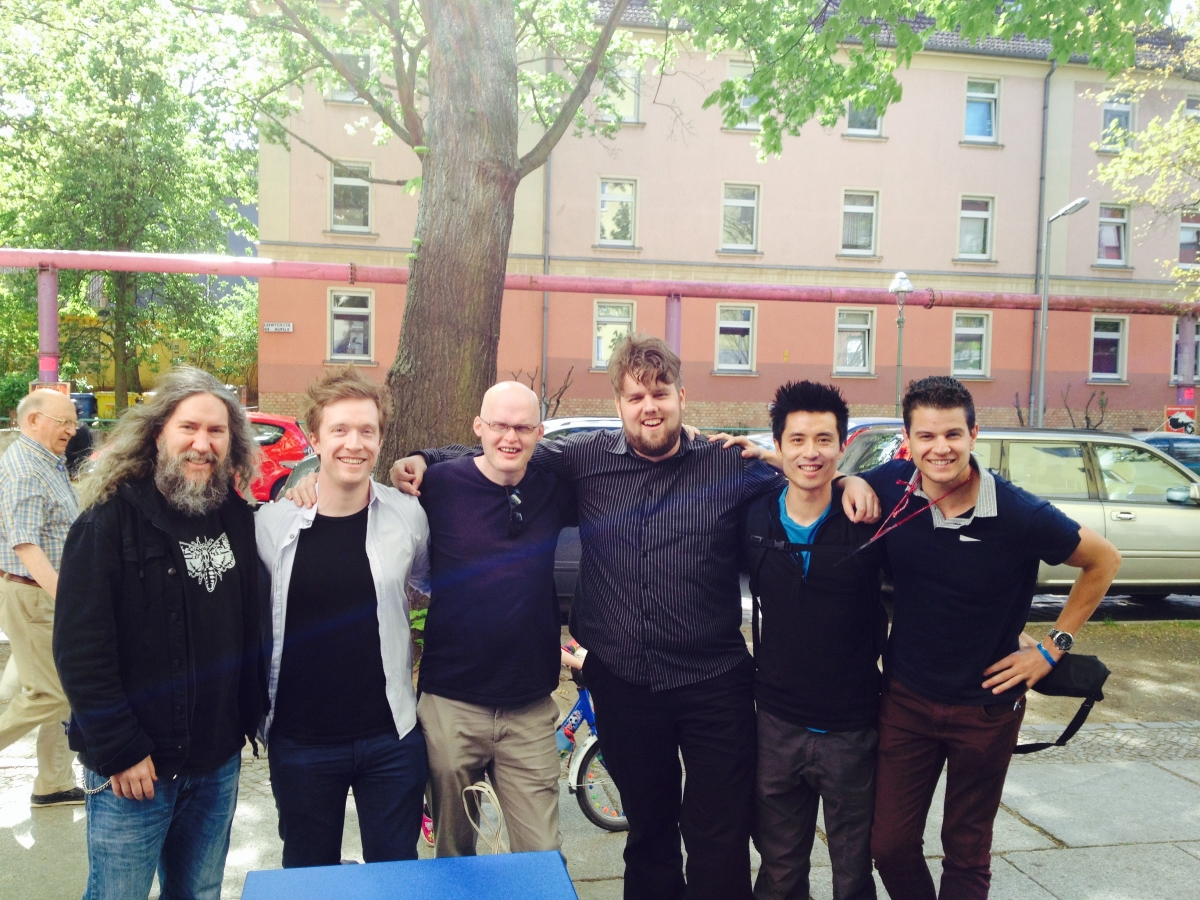
    The picture above is from the May 2015 Polyglot Gathering in Berlin. From left to right you see myself, Olly, Richard Simcott, Kris Broholm, Brian Kwon and Jan van der Aa.
    Optimized-11038252_10102104049230455_6773058890842241752_n
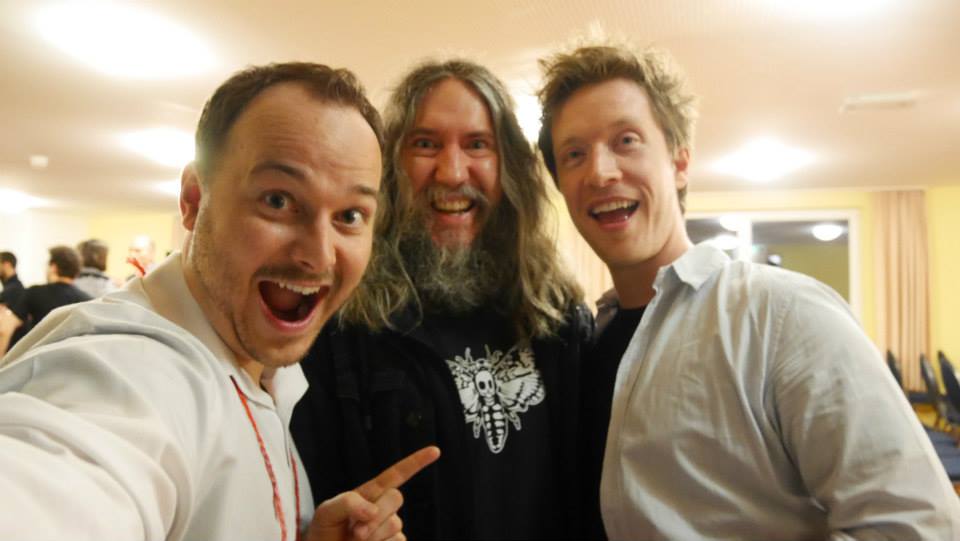
    From the same event, Benny Lewis, myself and Olly. Somehow they manage to just look crazy. I took first prize for psychotic.
    Optimized-IMG_3631

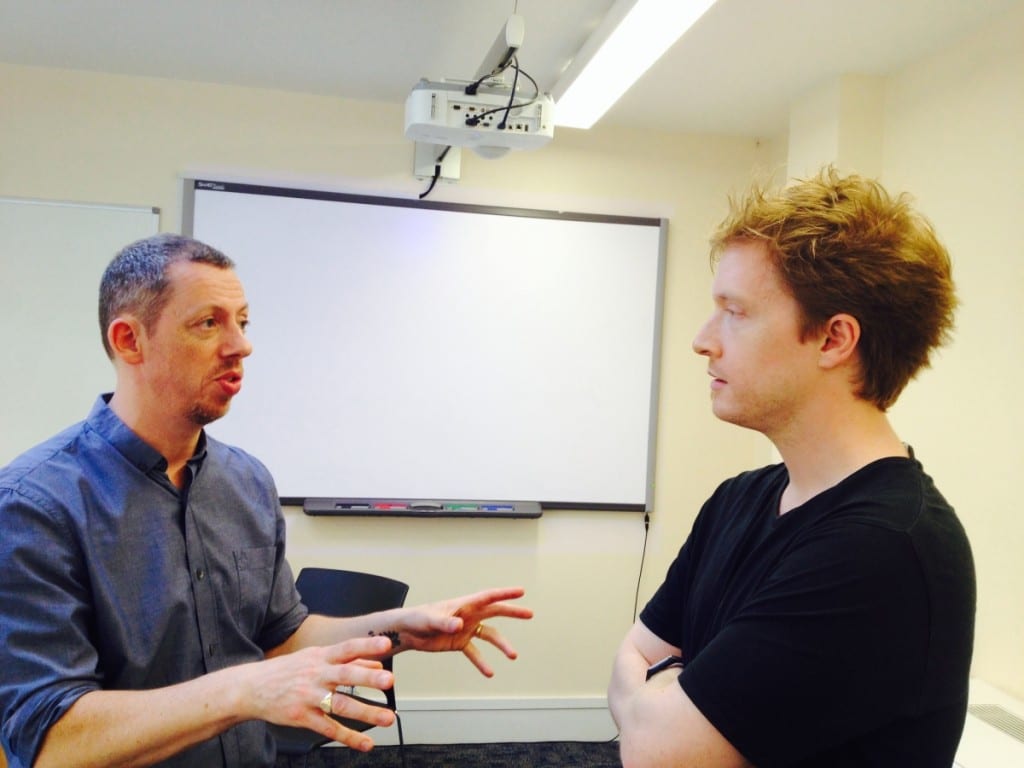
    Mark Channon discusses memory techniques and the good habits needed to make massive strides with them at Magnetic Memory Live in London 2015.
    Optimized-20150213_185755-1

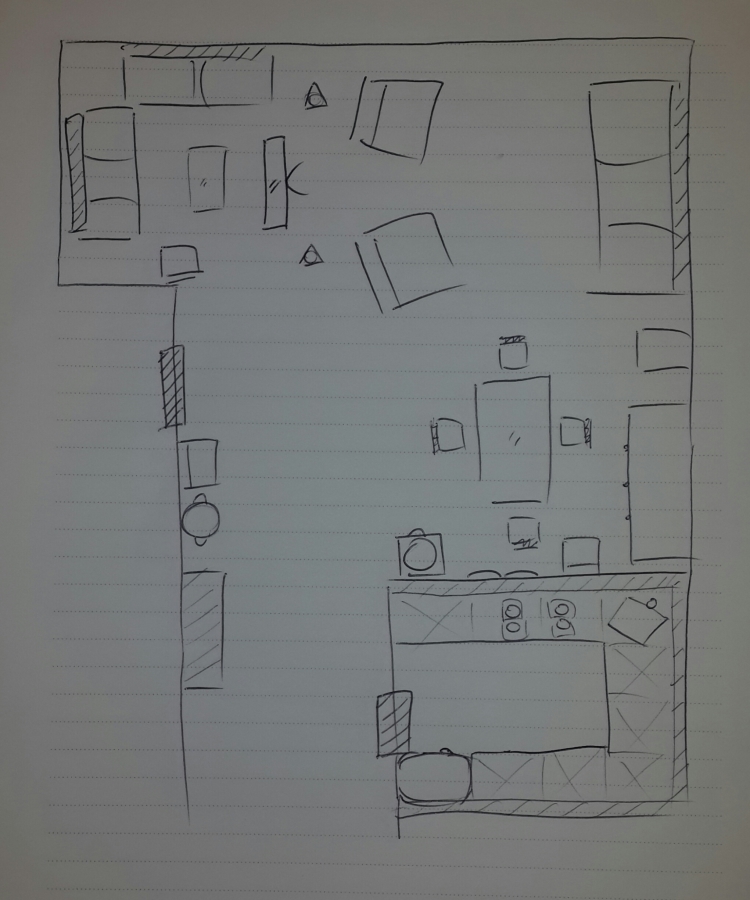
    Olly’s Memory Palace based on his apartment in Cairo. Top notch work and it was very cool that I could see the place with my own eyes more than a year after he sent me this drawing.

    Optimized-20150215_182533

    The list of words in Egyptian Arabic Olly used the Memory Palace to memorize.

    Optimized-IMG_4238

    In Egypt, Olly introduced me to the Nile in style. A sushi bar.

    Optimized-IMG_4308

    My last day in Cairo, we played with hiragana and katakana and Olly drew a diagram of exactly how languages get learned at the highest possible level. I won’t mentioned the memory-unfriendly Guinness we were swilling – because we truly weren’t. 😉

    Quick Summary Of Things Olly Taught Me

    At the 2015 Polyglot Gathering in Berlin, Olly noticed the benefits, but more importantly, the deficits of my flirting around with multiple languages. Talking about this issues, we were talking along a street in Prenzlauerberg when he gave me the excellent idea of directing the Magnetic Memory Method back at just one language.

    But this time, instead of starting from scratch with a new language, he suggested I focus on using mnemonics to dramatically improve my relatively advanced German skills.

    And so that’s exactly what I did. Here’s how:

    First, I immediately hopped on italki and found a German speaking partner. I’ve had a few since then, and each has been a blessing. Olly’s guidelines for getting the most out of a speaking partner are golden, and he talks about them in detail in the episode of the podcast you can download at the top of this page.

    To maximize the value of the sessions, I always ask my speaking partners to use a Google spreadsheet for each lesson. This lets me isolate the new vocabulary, arrange it and even drop in a scan of the Memory Palaces I use to rapidly learn and memorize the sound and meaning of each word I’m encountering, often for the first time.

    Then, I write sentences around the words after pulling them from my memory – away from the source of the spreadsheet. Only later, do I check them against the record and troubleshoot when necessary.

    A second trick I learned from Olly is to record all my sessions. That way I can go back and hear exactly how the speaker pronounced the words. I can also hear my own pronunciations. This process is super-painful, but it helps immensely.

    Third, I follow Olly’s advice to forbid (as much as possible) the speaking partner from using any English. This practice can be frustrating, but stick to it and you’ll be amazed by how quickly you outpace yourself.

    Caution, however. This is advice Olly gives for when you’re at an intermediate level with a language. At the beginning stages, it can be very useful to have your instructor explain certain features of a language to you in your mother tongue. Just don’t let that be an excuse for not diving in to the language. You also shouldn’t get in the habit of using it as a crutch. Learn how to say, “I don’t understand” and “please say that in other words” a.s.a.p.

    Fourth, I begin each new speaking session with a review of everything I memorized from the last one. But I don’t cheat. The original spreadsheet is on another tab and I honestly work from memory. This allows me to benefit from any mistakes I make. And again, this is recorded so that I’ll be reviewing the process again later.

    You might be thinking that hearing mistakes made grounded on false moves with the Memory Palaces would just lead to confusion, but it’s quite the opposite. The entire process only gets stronger.

    Finally,here’s a fun – but rigorous – technique I added on my own:

    As part of my reading practice, I choose three new words from each page. Never more and only less when I don’t find a max of three new words on a page. Then I memorize them using the room I’m in as the Memory Palace and follow up by writing sentences around them. A book with an average of 300 pages read over the period of 6 – 8 weeks = 900 new words inside of two months. With an 80% retention rate, the results are impressive.

    The only problem I’ve found in the past is that I wind up learning a ton of words that no one uses. However, that’s an interesting problem to have, fun for my philological yearnings and thanks to the practice I’ve found an interesting solution that puts a bit more bang behind this unusual outcome:

    I read books written only in first person and in one of the Berliner dialects. This choice increases the chances that I’ll learn words that people use around me and teaches me a lot more about one of my favorite cities in the world and the people who call it home.

    Thanks again to Olly for the solid lessons and for being on the show – see you soon!


    How Sleep Affects Memory Improvement Feb 04, 2016
    Show notes

    If you’re wondering how sleep affects memory, here’s a curious thing: Human beings, and most other animal species, are driven to regular periods of inactivity and unconsciousness. And it’s during those periods of sleep that our brains place a lot of information into long-term memory. What could be less evolutionarily beneficial than a stretch of eight hours during which you can’t hunt, defend yourself, or reproduce? Not to mention working on your memory improvement. All jokes aside, the fact that we are driven to sleep is an indication that sleep has an important purpose in our biology. And yet, the precise mechanisms of sleep remain largely mysterious. The exact reasons why we require sleep, and what happens during sleep, are areas of current research. I researched sleep and memory myself while I was in graduate school because I was struggling to remember critical information. As you can tell by the fact that I’ve written this article, I managed to graduate and later became a professor with a Mercator Grant, amongst many other accomplishments. If there’s one thing I learned for certain, it is this: lack of sleep leads to an array of social, financial, and health-related costs. Indeed, the fatality rate of sleepiness-related car crashes is similar to that of driving under the influence (Goel et al 2009). What’s more is that prolonged sleep deprivation leads to death for many studied species (and presumably humans) (Cirelli et al. 2008). Despite these realities, a full 20% of adults are not getting enough sleep (Goel et al 2009). It’s a common practice in our culture to praise those who can work the most and sleep the least. However, research indicates that this attitude is probably misguided. Lack of sleep has important negative implications for cognition. After this article, you may be convinced that a nap is in order. What Exactly Is Sleep? Over 85 years, an average person will sleep 250,000 hours, which is equal to 10,000 full days (Scullin et al 2015). But what is sleep, really? It is commonly believed that sleep is a continuous period of a complete loss of awareness. But in actuality, sleeping is not one continuous state and a sleeping person does not lose total awareness. Instead, they alternate between reduced awareness of the external world and a complete loss of consciousness (Gudberg et al 2015). From here, sleep is typically classified into two categories. The first is non-rapid-eye-movement (NREM) sleep and the second is rapid-eye-movement (REM) sleep (Bryant et al 2004). NREM sleep happens during the early moments of falling asleep. As the name suggests, there is little to no eye movement during NREM sleep. Dreams are rare during this stage, your body is not paralyzed as in REM sleep, and mental activity is still “thought-like” (Bryant et al 2004). This is the stage during which some people will sleep-walk. The role of NREM sleep is to conserve energy, cool the body and brain, and promote immune function. Following NREM sleep, a person will fall into REM sleep, where rapid eye movements can be observed. This is where the majority and the most vivid dreams occur. Your body is paralyzed, which is an adaptation to prevent you from acting out your dreams. You will periodically wake up – which some researchers feel serves as a way to survey the environment (Bryant et al 2004). These mini-awakenings are typically not remembered. The Devastating Consequences Of Sleep DeprivationOn Memory Revealed As you sleep, you will cycle between NREM and REM sleep four to five times during the night. By understanding our sleep patterns, it becomes evident that there is much more that happens during sleep than simply being unconscious. The broad overview given here just scratches the surface of the complex world of sleep. For all of its complexity, sleep serves essential functions. For example, a sleep-deprived person suffers from many ailments, including: A weakened immune system (Bryant et al 2004). Reduced wakefulness – microsleeps during wakeful hours after sleep deprivation (Cirelli et al. 2008). Compromised cognition. The compromised cognition experienced during sleep is all too familiar for many of us. We all know that after a poor night’s sleep, we are groggy and we tend to think more slowly. When it comes to memory, the essential role that sleep plays is more pervasive than most realize. Sleep Plays a Key Role When it Comes to Your Memory According to Robert Stickgold of Harvard Medical School in a recent interview with Robinson Erhardt, “I don’t know of any memory type of memory that isn’t enhanced by sleep.” There are three basic memory stages. The first is called acquisition or encoding. This is the process of collecting the information or processes that you’d like to memorize. An example could be re-reading the dates and prominent figures in a history book. This is called “declarative” memory, and is the memory of facts and information. Another example of memory is procedural memory. This is memory of how to do something. This could be anything from learning how to ride a bike or learning how to play the piano. The second step is consolidation, where the information you’ve absorbed become stable in your mind. It is at this stage that memories are formed in your mind. Finally, you must be able to recall memories for them to be useful. Thus, the final stage in memory is remembering something during your waking hours. Numerous studies have indicated the importance of sleep for the second stage, memory consolidation. A good night’s sleep can help you recall facts and information, as well as solidify skills that you’re trying to learn. Under the current scientific understanding, sleep is absolutely essential to memory. We require sleep to file information collected during our waking moments, in our minds. In doing so, we are able to recall newly acquired information (Ellenbogen et al. 2006). For example, learning the guitar requires that you memorize hand movements as well as notes. This is called procedural memory. Long term sleep has been specifically found to help with procedural memory formation (Diekelmann and Born, 2010). Sleep Shifts Info Around In Your Brain Sleep also serves to reorganize new memories. During sleep, the brain will access new information and make links with previously absorbed information. This helps segment and associate relevant parts of a complex memory to previous memories. While solidifying new information in your mind, this aids in the creativity process. This is because the brain will sometimes associate new information with old information in unexpected ways, thereby leading to novel insights (Diekelmann and Born, 2010). Scientists also believe that we “replay” our previously learned information and skills during our sleep. Experiments have been conducted on animals and humans after they have been trained on a particular task. During sleep, the same parts of the brain that were active during the training exercises, were active while sleeping as well. This is because the brain will repeat the actions during your sleep (Diekelmann 2014). Sleep is essential to memory. One study not only found poor memory recall in sleep deprived individuals, but also found that they recalled false memories. That’s right, you are more likely to remember untrue information following sleep deprivation (Diekelmann 2008). In other studies, those that slept, recalled more and performed better on cognitive tests than those who stayed up. Looks like those all-nighters weren’t the best idea after all. Here are more tips on studying for tests in addition to getting a good rest. This is what happens when you don’t get enough quality sleep before your exams. How to Use Sleep For Memory Enhancement Getting a good eight hour sleep has been shown to benefit memory (Diekelmann and Born, 2010). But what about sleep that occurs outside of your regular nightly routine, such as power naps? Good news for nappers: Research has also pointed to memory improvement even for shorter naps. In a study of 29 undergraduate students, one hour naps were found to benefit factual recall. However, the memory of procedures, that is, memory of how to perform actions, was not improved. The study concluded that more complete periods of rest were necessary for the proper learning of memory (Tucker et al 2006). It’s also important that your sleep periods coordinate well with the times you choose to study. That’s because even very short naps seem to have a positive effect on memory of facts and information. A study compared different nap durations, as well as staying awake. They found that even a micro-nap of six minutes enhanced memory recall. The study concluded that although longer naps improved recall more than very short naps, very short naps still have significant benefits (Lahl et al 2008). Ultimately, it seems that if you’re looking to improve your memory of facts and information, naps are in fact helpful. However, if you are trying to learn the keyboard, a longer sleep time is what you really need. In terms of the optimal or minimum amount of sleep that you’d need, that is still unclear. More research is needed. However, if for whatever reason you can’t afford a full-night’s rest, a nap might help to keep you going. How to Get a Good’s Night Sleep Now that we know the importance of sleep, you may be wondering how you can get the absolute best sleep possible. After all, most of us do not have the benefit of being able to sleep and take naps whenever we’d like. That’s why it’s important to learn how to get the highest quality sleep during the time you have available. Here are some tips to improve your sleep and help you get to sleep faster: Only use your bed for sleeping and sex. Try to avoid using electronics, watching TV or eating in bed. This might associate these activities with being in a bed and prevent you from being able to fall asleep. Avoid long naps during the day. Although I’ve mentioned that naps can enhance memory, it’s important to restrict napping because they can also prevent sleep. Take no more than a 25 minute nap during the day, or avoid them altogether. Remove all lights and sounds from your bedroom. Buy light-blocking curtains if necessary. Use a regular alarm clock instead of your cell phone. Do not drink or consume caffeine for at least six hours before bed. Be careful, coffee isn’t the only substance that contains caffeine. Tea, soda, and even chocolate contain caffeine that you should avoid before trying to fall asleep. Consider removing any foods or memory supplements that might cause issues such as digestive distress at night. Experiment with adding foods that improve memory as they are generally all good for aiding sleep. Memory enhancement is a tricky business and there are a myriad of ways you can do it. Whether it be food, meditation, or drugs, everyone has a preferred method. Regardless, everyone needs to sleep. Since sleep plays such a key role in memory retention and recall, you might as well make the best of it. Make sleep a priority in your daily life. Contrary to popular belief, sleep isn’t for the weak. Sleep is for those with great memory improvement goals. So too is the Memory Palace technique. If you’d like to learn it, grab my free course here: It will help make sure that what you’re learning during the day gets consolidated even more firmly as you sleep. The course accomplishes that for you by providing four free video lessons and three powerful worksheets. As I mentioned, I’m a PhD who did some research at York University around remembering dreams, I’ve been to a sleep lab. I’ve seen first hand how sleep deprivation puts pressure on your entire cognitive apparatus, and negatively affects your memory. Because I don’t want anyone to have the same struggles I had around sleep and memory, I’m giving the course away for free. All you have to do is complete it. That way, you can rest easy knowing that your memory is working for you, not against you. Further Resources Bryant, Penelope A., John Trinder, and Nigel Curtis. “Sick and Tired: Does Sleep Have a Vital Role in the Immune System?” Nature Reviews Immunology (2004): 457-67. Web. 18 Jan. 2016. Cirelli, Chiara, and Giulio Tononi. “Is Sleep Essential?” PLoS Biology (2008). Web. 18 Jan. 2016. Diekelmann, Susanne. “Sleep for Cognitive Enhancement.” Frontiers in Systems Neuroscience 8 (2014): 46. PMC. Web. 18 Jan. 2016. Diekelmann, Susanne et al. “Sleep Loss Produces False Memories.” Ed. Jan Lauwereyns. PLoS ONE 3.10 (2008): e3512. PMC. Web. 18 Jan. 2016. Ellenbogen, Jeffrey M, Jessica D Payne, and Robert Stickgold. “The Role of Sleep in Declarative Memory Consolidation: Passive, Permissive, Active or None?” Current Opinion in Neurobiology (2006): 716-22. Web. 19 Jan. 2016. Goel, Namni et al. “Neurocognitive Consequences of Sleep Deprivation.” Seminars in Neurology 29.4 (2009): 320–339. PMC. Web. 18 Jan. 2016. Gudberg, Christel, and Heidi Johansen-Berg. “Sleep and Motor Learning: Implications for Physical Rehabilitation After Stroke.” Frontiers in Neurology 6 (2015): 241. PMC. Web. 18 Jan. 2016. Lahl, Olaf, Christiane Wispel, Bernadette Willigens, and Reinhard Pietrowsky. “An Ultra Short Episode of Sleep Is Sufficient to Promote Declarative Memory Performance.” Journal of Sleep Research J Sleep Res (2008): 3-10. Web. 19 Jan. 2016. Scullin, Michael K., and Donald L. Bliwise. “Sleep, Cognition, and Normal Aging: Integrating a Half-Century of Multidisciplinary Research.” Perspectives on psychological science : a journal of the Association for Psychological Science 10.1 (2015): 97–137. PMC. Web. 18 Jan. 2016.Nature Reviews Neuroscience 11, 114-126 (February 2010) Tucker, M., Y. Hirota, E. Wamsley, H. Lau, A. Chaklader, and W. Fishbein. “A Daytime Nap Containing Solely Non-REM Sleep Enhances Declarative but Not Procedural Memory.” Neurobiology of Learning and Memory (2006): 241-47. Web. 19 Jan. 2016.

    Full show notes at the publisher

    Do Memory Supplements Work? The Surprising Answer Jan 26, 2016
    Show notes

    Do memory supplements work? Well, in my research into memory, we know this for sure: Supplements, both legal and illegal, have been used for centuries to enhance cognitive performance. For example, Sigmund Freud used cocaine to prevent fatigue. In fact, he is reputed to have written some of his most popular psychoanalytic works while under the influence. Entrepreneur and author Tim Ferriss is also known for his experiments into so-called “smart drugs”. Today, caffeine is a popular choice, used as a cognitive stimulant and is often consumed in very high doses. The widely consumed regular size Starbucks coffee contains five times the amount of caffeine of a normal coffee (Mehlman 2004). Yet another common cognitive enhancer is nicotine, most commonly ingested through inhalation. It’s been found that nicotine has the ability to improve cognition in areas such as attention, memory and motor skills (Heishman et al 2010). The reality is that most of us are not open to experimenting with unhealthy or illegal drugs to enhance our cognition. But with the aging population and increase in age-related memory deterioration, many are turning to out-of-the-box solutions (Mehlman 2004). Discovering a quick-fix pill that protects and even enhances memory would be both beneficial and exciting. Do Memory Supplements Work? The Most Honest Answer In a phrase, it depends. I’ll share the exact research both for and against memory supplementation below. What we know for sure is that there’s a big market looking for an easy memory improvement solution. As a result, suppliers have quickly filled that need with an astonishing number of drugs claiming to have amazing brain-boosting potential. Known as Nootropic supplements, these cognition-enhancing drugs make bold claims about their ability to increase their user’s memory. In comes science to cut through the marketing hype and give us real answers about whether these pills really work. Before we continue, here’s an important disclaimer: By offering this information in written form and by including videos of various people explaining or supporting the uses of supplements for memory, I in no way intend to validate, support or recommend the use of memory supplements. Please see your doctor before taking any substance and always, always use mnemonics. 😉 That said, if you’re ready to learn more about the world memory supplements, let’s get started. 1. Huperzine A As people start to live longer, the potential for memory loss grows higher. In fact, 11% of people over the age of 65 live with Alzheimer’s. As current treatments have limited effectiveness and come with severe side-effects, scientists are scrambling to find better treatments (Guoyan 2013). In their quest, a supplement called Huperzine A has been tested for potential benefits. https://youtu.be/kfAGDFSWlAc Huperzine A is a dietary supplement. This supplement is made from an extract of a plant called “toothed firmoss”, also known as Huperzia serrata. Toothed firmoss is native to India and Southeast Asia. In traditional eastern medical practices, it has been used to treat bruises, muscle strains, colds and to improve blood circulation. As with most cognition-enhancing supplements, firm conclusions about whether Huperzine A can enhance memory cannot be made. There are not many studies completed on the supplement, and those that have been conducted only included a small sample size (Yang et al. 2013). Nonetheless, the findings thus far seem promising. A recent 2013 research paper reviewed all available evidence on the efficacy of Huperzine A to improve or correct memory deterioration. The paper found that Huperzine A demonstrated positive effects on memory recall for those with memory issues. In some studies, Huperzine A even out-performed traditional treatments for Alzheimer’s (Yang et al. 2013). But what are the effects for younger people without formal memory impairment? A study looked at treating self-reported memory problems in otherwise healthy adolescent students. In total, 68 students were given either a placebo or Huperzine A. After four weeks, the student who took Huperzine A showed signs of significant memory improvement, with no side effects reported (Sun et al 1999). As data on Huperzine A is still too scant, you won’t find a doctor commonly prescribing this drug just yet. What’s more, the evidence is pointing primarily to Huperzine A’s usefulness for short-term memory improvements (Yang et al. 2013). But don’t go running to the drugstore to pick up these supplements quite yet. As with any drug, it’s best to consult with your pharmacist or doctor before taking the supplement. Although Huperzine A appears to be well-tolerated in short durations, side-effects such as nauseous, epilepsy and slow heart rate have been reported. You might also find your sleep gets disrupted, and poor sleep means bad results for your memory. Currently, no studies have been conducted on the long-term side effects of Huperzine A. 2. Acetyl-L-carnitine Acetyl-L-carnitine (ALC) is naturally produced in the body. Unlike many supplements and compounds, it is able to cross the brain-blood and directly affect the brain. It’s function in the body includes improving neuron cell health and preventing excessive brain cell death. For this reason, scientists have considered its potential for improving cognition and memory. However, marketers have skipped a step and have gone directly to selling the supplement as a cognitive enhancer. But does the evidence support the marketing? Not so much. https://youtu.be/TYIjxbtk-sw A major review of the use of ALC on improving cognition in Alzheimer’s patients was performed by Cochrane Journal in 2003. It reviewed all of the studies which had investigated the effects of ALC on declining memory. The results were sobering. Many measures of cognition were tested and the review only found a slight improvement on a single measure of cognition. This measure was not directly related to memory. What’s more, the review cautioned that even this small positive effect may be due to chance (Hudson, Sheila and Naji 2003). This review casts serious doubt on ALC’s ability to improve memory, despite marketing claims. Since 2003, more studies have explored the effects of ALC on memory and cognition improvement. For example, a 2011 study analyzed ALC’s effects on those with severe hepatic encephalopathy, a disease that impacts brain function. For those assessed, the study did show some improvements in cognition including memory (Malaguarnera 2011). However, this evidence is preliminary and did not directly mirror the effect of ALC on memory. Overall, the evidence for ALC is weak. More information is needed before the cognitive benefits claimed by ALC manufacturers can actually be proven. You might want to learn about these natural memory enhancers first. 3. Phosphatidylserine Phosphatidylserine (PS) is a naturally-occurring compound that is consumed as part of a normal diet. It can be purchased as an over-the-counter supplement in many grocery stores and pharmacies. PS is a supplement with a long history. Initially, there was great interest and many scientific studies were conducted on PS derived from cow brains. After fears of mad cow disease became more prevalent, this supplement fell out of favor (Zchut et al. 2013). https://youtu.be/ZcPFpx-WrPQ In the mid-1990s, soybean-derived PS became available. This safer alternative once again garnered attention from the scientific community (Zchut et al. 2013). So far, findings from both the cow-derived and soybean-derived PS have shown promise for improving memory. For example, in a study of over 388 cognitively-impaired older adults, PS was effective in improving word-list recall. What’s more is that positive effects have been observed for normally-aging adults. In a study of 149 normally aging adults, PS was compared against a placebo in a variety of memory tests. This study found that the PS-taking adults were better able to coordinate face recognition tests as compared to the placebo group. However, their results were comparable to the placebo-taking participants for various memory recall tests (Villardita et al 1987). Despite the appearance of a few well-designed studies demonstrating positive results, the overall picture seems less exciting. A review produced in 2003 found that the effects of PS on memory were inconsistent and modest, at best (McDaniel, Maier and Einstein 2003). In the same review however, scientists did underline that the results were positive enough to warrant further research. As a result, since 2003 more studies have been conducted. Most recently, a study published in 2014 investigated the efficacy of a omega 3/PS combo supplement on memory enhancement. They recruited 122 healthy seniors who voiced complaints about their memory (but not memory deterioration, such as dementia). After 15 weeks on the drug, the study found a significant improvement in the memory of its members. This memory improvement was identified by participants and was measured objectively through a memory test (Vakhapova 2014). A definite bonus for PS is that it seems to be a safe supplement. In the same 2003 review cited earlier, no adverse effects were reported (McDaniel, Maier and Einstein 2003). As always however, it’s best to consult with a pharmacist or physician, especially if you consume other medications or substances. 4. Bacopa Bacopa is also known as Brahmi and is a natural herb in India. It is a small plant with oblong leaves and light purple flowers. It has a long history of use in Indian medicine. Traditionally, it has been used in the treatment of disorders including anxiety, intellect and poor memory. Bacopa is currently marketed in Western countries as a memory enhancing supplement. Until recently, the only published studies on the effects of Bacopa had been tested on animals. Since the early 2000s, more studies on humans have been conducted. https://youtu.be/8m-FO7_92N0 One of the earlier human studies included 84 volunteers, who took either a placebo or Bacopa. These volunteers were healthy and between the ages of 40 to 65 (Roodenrys et al. 2002). The participants were given three months worth of Bacopa supplements (or placebo, depending on their group). They were tested on multiple occasions during these months for various tests of memory (Roodenrys et al. 2002). It was found that Bacopa-taking volunteers did not show any improvement over their placebo-taking partners on most memory tests. However, those who took Bacopa did experience a significant improvement in their ability to retain new information (Roodenrys et al. 2002). This study has been followed up by more research exhibiting positive results. For instance, a study conducted in 2008 compared the effects of Bacopa versus a placebo over 90 days. Included were 62 healthy volunteers between the ages of 18 to 60. When compared to the placebo group, takers of the Bacopa supplement saw significant improvements in their working memory performance. Much like PS, the drug was also well tolerated without many real side effects (Stough et al. 2008) With positive evidence mounting, a systematic review of Bacopa studies was published in 2012. The review pursued all randomized controlled trials on the cognitive effects of Bacopa. This meant that they only included trials with a placebo, which neither the researchers nor the patient knew about (Pase et al 2012). The results showed that Bacopa was beneficial for improving cognitive function related to attention, and especially, speed of attention. The paper suggests that Bacopa can reduce the time needed to complete a task by around 18 ms (Pase et al 2012). The researchers were hesitant to say that the evidence strongly favored Bacopa for memory improvement. Although individually, studies do show improvements in different aspects of memory, the overall significance of those effects were unclear. However, since Bacopa seems to lack any severe side-effects, it might be worth a try – with your doctor’s approval of course. Then again, you might want to look into vitamins for memory improvement to see if they create an advantage first. 5. Vinpocetine Ever see a periwinkle flower? It’s that cute flower with that dazzling blue hue. You might be surprised to hear it’s also the plant from which another commonly marketed brain-booster is derived. Vinpocetine was developed in Hungary, and is currently used in mainstream medicine. However, it’s use in medicine is not directly related to memory. Instead, it has been scientifically proven to increase blood flow to the brain (McDaniel, Maier and Einstein 2003). But can it increase the memory juice flowing through your mind? https://youtu.be/TIuPgY_Hkkk What seems to be certain is that the improved blood flow to the brain does have positive effects on overall cognition. For example, in a study conducted on dementia patients, 87% of vinpocetine patients improved – as compared to only 11% of placebo patients (Manconi et al. 1987) You also want to consider brain exercise apps for memory improvement. The truth may shock you. Overall, experiments on the effects of vinpocetine directly on memory are lacking. In one of the only studies looking at the effects vinpocetine on Alzheimer’s, no benefit was observed (Thal et al. 1989). Therefore, the jury is still out inasmuch as the benefits of vinpocetine are concerned. However, vinpocetine seems to have minimal risks associated with it as well. You Always Have Memory Enhancement Alternatives As you can see, definitive research into the link between supplements and memory enhancements is still in its infancy. Despite bold claims made by these supplement marketers, this article demonstrates that overall evidence is far from complete and decisive. The number one thing that people can do to enhance and protect memory is to follow a healthy diet and exercise regularly. Most memory vitamins can be found by making sure you’re eating good food. However, for those looking for an edge, above and beyond diet, exercise and meditation for better memory and concentration, some of these supplements may be worth considering. And if you’re a student, don’t miss these 21 tips for studying better and my extensive list of memory improvement resources. As amply repeated in this article, it is very important to seek medical guidance when trying new supplements. Although most of these supplements have not shown severe side-effects, they may react with other medications. What’s more, none of these supplements have been studied for their long term effects. For all we know, these may actually lead to memory degradation with years of use. Any use of these supplements should be restricted to no more than three months at a time. At the very least, these supplements offer a fruitful field of research. There is at least enough evidence to show that these brain-boosting supplements deserve more research. As does the question of whether or not you can really improve memory like Sherlock Holmes. It’s up to you to decide if you’d like to take part in the experiment. Further Resources on Memory Supplements https://youtu.be/aNSHZG9blQQ Chan A, Remington R, Kotyla E, Lepore A, Zemianek J, Shea T “A vitamin/nutriceutical Formulation Improves Memory and Cognitive Performance in Community-Dwelling Adults without Dementia.” The journal of nutrition, health & aging 14.3 (2010): 224-30. Web. 4 Jan. 2016 Hudson, Sheila A, and Naji Tabet. “Acetyl-l-carnitine for Dementia.” Cochrane Database of Systematic Reviews Reviews (2003). Web. 4 Jan. 2016. Heishman, Stephen J., Bethea A. Kleykamp, and Edward G. Singleton. “Meta-Analysis of the Acute Effects of Nicotine and Smoking on Human Performance.” Psychopharmacology 210.4 (2010): 453–469. PMC. Web. 1 Jan. 2016. J.K. Blusztajn, U.I. Richardson, M. Liscovitch, C. Mauron, R.J. Wurtman. “Phospholipids in cellular survival and growth” I. Hanin, G.B. Ansel (Eds.), Lecithin: technological, biological,…

    Full show notes at the publisher

    3 Things To Remember About Alzheimer’s And Memory Jan 21, 2016
    Show notes

    Auguste Deter was only in her late 40s when she started showing signs of dementia. Her husband Karl, cared for her as long as he possibly could. Eventually, he could not cope with her hallucinations and forgetfulness that often kept him up all night. When Auguste was 51, Karl placed his wife into a psychiatric institute. There, Auguste spent the rest of her short life, eventually dying at the age of 55. Auguste Deter is now acknowledged to be one of the most well known patients in medical history (Muller et al. 2012). The doctor who examined her, Dr. Aloysius Alzheimer, named the disease for which she is acknowledged as the first identified patient. At that time, he called it “presenile dementia,” but later his colleague Emil Kraepelin gave the condition the name by which we know it now. It’s been over 100 years since Alzheimer’s disease was first described, and yet, no cure has, as of yet, been found. However, with an increasingly aging population, it has become more pressing than ever to find effective treatments (Giacobini and Becker, 2007). In the absence of a definitive cure, this post and podcast will provide important information about Alzheimer’s. The disease can be all-consuming for those afflicted, as well as their caregivers. Understanding how it works and how to care for that person may help to relieve stress for those trying to cope. Who Does Alzheimer’s Affect? Alzheimer’s is a disease of old age, and generally, affects those over the age of 65. However, a rare variation of the disease, early-onset Alzheimer’s, will affect those as young as 35. The prevalence is higher in females than males, although females do tend to live longer, which may explain this trend (Keene, Montine and Kuller 2015). It’s important to realize that although Alzheimer’s affects older adults, it is not part of normal aging. Right now, the overall prevalence of Alzheimer’s is between five to seven percent throughout the population (Keene, Montine and Kuller 2015). As we age, the likelihood that we will be affected by Alzheimer’s nearly doubles every decade. That is, by the ages of 95-99, your chances of having developed Alzheimer’s increases by 50%. What Causes Alzheimer’s? The cause of Alzheimer’s is, as of yet, not completely understood (Ginter et al. 2015). We do know that genetics plays a role in early-onset Alzheimer’s. This form of the disease is rare, and affects people under the age of 65. What genetics fails to fully explain is the prevalence of Alzheimer’s in aging adults (Keene, Montine and Kuller 2015). The links between risk factors and Alzheimer’s have not fully been proven. However, in studies the following has show to possibly increase our risk of Alzheimer’s: Hypertension (high blood pressure) during midlife Having Type 2 diabetes Poor diet or otherwise not eating foods that improve memory Obesity Living an inactive lifestyle Having had a brain trauma Having had exposure to secondhand smoke If you have a family history of dementia and Alzheimer’s, the chances of developing it yourself is much higher. People with a first-degree relative (parents or siblings) who developed dementia after 65, but before 85, have a higher risk factor. In fact, they are 10 to 30 times more likely to develop dementia themselves (Keene, Montine and Kuller 2015). Alzheimer’s and Memory Alzheimer’s is the most common cause of dementia, which is a degeneration of cognitive function (thinks like fluid and crystal intelligence. One of the earliest and most distinctive aspects of Alzheimer’s is its affect on memory, specifically long-term memory loss. The first warning signs a doctor and other caregivers will look for is memory impairment (Wolk and Dickerson 2015). The patient will typically go through selective losses in short-term memory. For example, a person suffering from the early stages of Alzheimer’s may find themselves getting lost on familiar paths. They may forget recent events and repeatedly ask for the same information. It’s important to keep in mind that normal aging does accompany some memory deterioration. However, unlike normal aging, the cognitive decline associated with Alzheimer’s comes in the way of normal daily activities. The table below compares normal memory loss associated with aging to memory loss associated with Alzheimer’s (Leifer 2006). Family members may notice these types of memory declines and others, such as repeatedly asking for the same piece of information. As the disease progresses, memory becomes severely affected. Memories of the person’s life are impacted. A patient will forget important life events, occurring at a particular time and place early on in their disease (Wolk and Dickerson 2015). Moreover, factual memory, such as the words used for objects and concepts, deteriorates as time goes on. A doctor may test memory by asking patients to learn and recall a series of words or objects. Recall is asked for both immediately and at a delay of five to ten minutes. They may also ask them about important historical events or artifacts in popular culture (Wolk and Dickerson 2015). The brain of a normally aging person will compensate for the memory loss due to normal aging, especially if they meditate for memory and concentration. The cognitive decline of a normally aging brain will not be severe enough to affect their ability to complete everyday tasks. Nor will the cognitive decline affect a person’s ability to live independently (Wolk and Dickerson 2015). However, a brain with Alzheimer’s will decline quickly. This can vary, but the average survival rate after diagnosis is between eight and ten years. Some survive for as long as 20 years after the diagnosis (Wolk and Dickerson 2015). What Alzheimer’s Looks Like As Alzheimer’s progresses, the afflicted person will become more and more disoriented. Alzheimer’s patients will increasingly be unable to: Speak or write coherently. They will have trouble finding the right words for the right situation. Understand what is said or written. Recognize familiar places. Plan how to take multi-step actions. Carry out multi-step actions, such as cooking. Concentrate. Weed out distractions. Make logical choices or decisions. For example, dressing in a outfit with oddly matched colors and patterns. As the disease progresses into later stages, the person will start to exhibit more personality and emotional changes. These can be particularly stressful. They may include: Increased hostility or increased passivity. Hallucinations or delusions. Disorientation. Incontinence. These changes might be due to chemical imbalances in the brain. They may also be due to the individual’s increasing fear and confusion because they do not understand their own surroundings. Eventually, an Alzheimer’s patient will literally forget the more fundamental tasks, such as how to move. They will become immobilized and require assistance for bathing, eating and dressing. Treatment options There is no cure for Alzheimer’s. Current drug treatments only slow the disease in the short-term, for no longer than a year. However, for patients with early stages of the disease, medications can improve their cognitive function. These benefits may need to be weighed against the medication’s side-effects as the disease progresses. In addition to medication, there are behavioral treatments available. For example, speech therapy can be combined with medication to help patients with troubles in this domain. Caring for an Alzheimer’s Patient Caring for people afflicted with Alzheimer’s is a very cumbersome task, and difficulties range from financial to emotional stress. In a study carried out in the UK, nearly two-thirds of people caring for Alzheimer’s patients were family members (Beinart et al. 2012). Sadly, the stress of this work can give caregivers memory disorders of their own. That’s why, when dealing with Alzeheimer’s, it’s important to seek support from extended family members, friends and your community. Ask your doctor to refer you to a local chapter of the Alzheimer’s Association. Many changes will need to occur in an afflicted person’s home and life due Alzheimer’s. They will likely be unable to drive, and will need monitoring and help with basic tasks. These include things such as cooking and taking medications (Alexander and Larson, 2015). Other tips for helping people with Alzheimer’s include: Simplifying choices, such as wardrobe choices, to reduce their indecisiveness and confusion. Having familiar objects or photos may help with a patient’s disorientation with time and space. Keep distractions and noise to a minimal so as not to agitate the patient. Speak clearly, with short and concise sentences to increases your chances of being understood. Encourage daily exercise, such as daily walk, to maintain physical health and tire the patient out. This will help prevent them from wandering and getting lost. This study has shown how vitamin deficiency issues can exacerbate Alzheimer’s. Explore any memory vitamins that might need to be taken. Avoid major changes in their environment. Try to be patient when waiting for responses and actions to be performed. Employ safety measures in the home, such as locking medicine cabinets, removing electrical appliances from the bathroom, installing grab bars in the bathroom, and setting the water heater below 120ºF Install locks on the outside of the doors, so the patient cannot unlock and leave the house. To prevent the person from getting lost, employ the use of a “safe return program” provided by the Alzheimer’s Association. They offer 24-hr assistance. Try to implement a daily routine, but remain flexible. These 11 memory strategies might help too: https://www.youtube.com/watch?v=488Wgun5Qk4 You can also explore a variety of cognitive activities and games geared towards helping people with dementia. However, in the mid-to-late stages of the disease, it may become impossible to care for the person at home, let along play games. They may require skilled health care attention and placing the patient in a nursing home may be the best option. Most importantly, remember that as a caregiver, you require care as well. Using respite services, such as adult day care and hiring home aides when possible is a great way to recharge. Caring for a person with Alzheimer’s is a marathon, not a sprint. You need to ensure that your mental and physical health is tended to. Emotionally and mentally, it’s important to try to focus on the positive. Try to enjoy the remaining qualities and activities with your relative instead of only remembering what you’ve lost. Remind yourself that you are doing your best in moments when you feel overwhelming guilt or fatigue. Future Hope for Alzheimer’s Disease Alzheimer’s disease is a tragic sickness, and poses an enormous financial burden on society at large. Paying to care for patients with dementia and Alzheimer’s is predicted to cost 1.2 trillion dollars by 2050. The good news is that there is increasing evidence that Alzheimer’s may be more of a lifestyle disease than previously acknowledged. Except for rare cases of early-onset Alzheimer’s, which have a strong genetic component, lifestyle may determine your likelihood of developing it. That is, maintaining a healthy diet and doing regular exercise can decrease your chances of developing Alzheimer’s. Due to the strong link between blood-sugar levels, some scientists have even started calling Alzheimer’s “Type 3 Diabetes” (De la Monte and Wands, 2008). Not everything in life is within our control. However, living a healthy and balanced life are ways to counteract the effects on cognitive function, especially as we age. For our purposes, the question is … Can Mnemonics And Memory Palaces Help? It’s too soon to tell, but I highly recommend watching this TEDTalk with Kasper Bormans for an introduction to what might be possible using Memory Palace science to solve the issue: https://youtu.be/BMcduh1HEHA Further Resources and Reading Nelson Dellis spoke on the Magnetic Memory Method Podcast about his experiences with Alzheimer’s and his efforts to combat the condition. Check out Extreme Memory Improvement to learn more. These memory tips from Dr. Gary Small may not be the ultimate prevention against Alzheimer’s, but they are going to serve you well. Give it a listen. I recommend subscribing to Preserving Your Memory Magazine, put out by the Fisher Center For Alzheimer’s Research. And for more information, follow-up on the following articles: Alexander, M., Larson, E. B., Patient information: Dementia (including Alzheimer disease) (Beyond the Basics) Up To Date (2015). Online. Beinart, N. Weinman, J., Wade, D., & Brady, R. “Caregiver Burden and Psychoeducational Interventions in Alzheimer’s Disease: A Review.” Dementia and Geriatric Cognitive Disorders EXTRA 2.1 (2012): 638–648. PMC. Web. 15 Jan. 2016. De la Monte, Suzanne M., and Jack R. Wands. “Alzheimer’s Disease Is Type 3 Diabetes–Evidence Reviewed.” Journal of diabetes science and technology (Online) 2.6 (2008): 1101–1113. Print. Keene, C. D., Montine, T. J., Kuller, L., H. “Epidemiology, pathology, and pathogenesis of Alzheimer disease” Up To Date (2015). Online. Müller, Ulrich, Pia Winter, and Manuel B Graeber. “A Presenilin 1 Mutation in the First Case of Alzheimer’s Disease.” The Lancet Neurology (2012): 129-30. The Lancet. The Lancet. Web. 13 Jan. 2016. Leifer, B. P. “Alzheimer’s disease: Seeing the signs early.” Journal of the American Academy of Nurse Practitioners(2009) 21: 588–595 Web. 13 Jan 2016 Ginter, E., V. Simko, D. Weinrebova, and Z. Ladecka. “Novel Potential for the Management of Alzheimer Disease.” Bratislava Medical Journal BLL (2015): 580-81. Online. Giacobini, E and Becker, RE. One hundred years after the discovery of Alzheimer’s disease. A turning point for therapy? J Alzheimers Dis (2015): 12, 37-52 Wolk, D. A., Dickerson, B. C. “Clinical features and diagnosis of Alzheimer disease” Up To Date (2015). Online.

    Full show notes at the publisher

    How To Live An Interesting Life Jan 14, 2016
    Show notes

    If you want to know how to live an interesting life, stop missing the big and important details. You might well develop the ability to quit your job and do whatever you like for the rest of your career. But that’s not necessarily going to make your life more fulfilling. No, not because some researchers have concluded that money can’t make you happier. It most certainly can. The point is that being happy isn’t necessarily interesting. And to be more interesting means feeling excited and alive. I’ve been on this quest myself. I temporarily dropped out of high school when I was younger precisely because it wasn’t interesting to me. Later, I went to York University where I completed my PhD. Then I won a Mercator grant and taught in Germany for several years. The difference was making sure I knew how to make my life interesting, even when certain aspects of it were a slog – such as making myself return to highschool. On the basis of all these experiences, here are my best tips as someone who has thought a lot about life and its relationship to keeping mind and memory sharp and interesting. How To Live An Interesting Life In 6 Steps As we begin, I suggest taking some notes and answering in writing one simple question: What is my impossible dream? If it’s learning a language, write that down. Or if it’s traveling the world, starting a business or something personal like memorizing lots of poetry, write that down. No matter how impossible your dream might seem, you’ll make your life much more interesting simply by capturing it on paper. Do that first, and then let’s begin. 1. Be The Driver Of Your Education The problem I faced in high schoool is that someone else was in control of my education. That’s why I dropped out. I wanted to direct my own interests so that I could feel excited about the things I was so curious about. So, without dropping out of high school, I suggest that you explore ways to take the reins of your own education. But what does that even mean? To keep things simple, let’s consider two main forms of education: External Driven Self Driven The first is the kind of education where you show up when you’re told and sit where you’re told. You even eat when you’re told during recesses built into a schedule that repeats daily. Sounds kind of like prison, doesn’t it? Prison? It Might Even Be Worse! Not only do you have all kinds of pressures on your time when the education you undergo is externally driven. You’ve got people telling you what to learn. Think about that: What. To. Learn. Oh no, no, no. No and a thousand times no. That’s not the path to an interesting life. Worse, there are two kinds of externally driven education: Minimal guidance Maximum guidance Minimal guidance is actually not too bad. It gives you more space for deliberate practice, a key part of thinking for yourself and developing a wide variety of skills. Maximum guidance, on the other hand, involves constant attention, checking in and a lot of “do as I do,” instead of getting the benefit of working out a lot of what needs to be learned on your own. For some people that approach will surely work. But for must of us, probably you want instead is to be the manager of your own intelligence. With that point in mind, let me tell you the more complete story of how and why I dropped out of high school in Grade 12. There’s a lot of detail surrounding this decision and some of it ain’t pretty. But sticking to the facts (and just the facts), I thought school was such a drag that I decided to stay home and read Collier’s Encyclopedia. Each morning I would leave home. But instead of getting the battered yellow school bus into town, I would hike up into the mountains. For months I experienced the Fall transform into Winter and then Spring from up above the highway where I would wait for my mom’s car to pass by. It sounds like something out of Hitchcock’s Psycho, I know, but as I was watching the highway waiting for mom to go to work, I was listening and learning. No, not listening to Heavy Metal. Not pop. Not even soft rock. Instead, I was listening to the CBC on my fat yellow Walkman. At that time, Peter Gzowski, a.k.a. Mr. Canada, was the host of Morningside. Over the course of the year, I got virtually a Ph.D. in Canadian culture, history, politics, literature and the arts. I also heard interviews with important people from around the world. Without a doubt, all of that listening also helped me hone the focus skills so necessary to success across the many stages of life I had yet to encounter. https://youtu.be/luzMAz4F7mw True, a bear might have mauled me while I was up wandering around in the mountains. I did have a few close encounters with moose and deer and even saw a bobcat that put the fear of God into me. But the danger of exploring nature on my own while learning through the magic of radio was worth it. And after a few hours of Morningside, I would head down the mountain and make myself some hot chocolate. With a steaming cup beside me on the coffee table, I would then sit in the same rocking chair I was nursed in and read the Encyclopaedia. It was like being nursed all over again, this time by the knowledge my parents had invested in when they ordered the Encyclopaedia for our family, one volume at a time. These days we have Wikipedia. But back then, if you wanted to know about the world, it cost a lot of money. I remember my mom talking about saving for the Encyclopaedia year after year. She cut dozens of coupons from the newspaper so she could save more and complete the set. It took about three years and after that, she kept up with the yearly updates for at least another three. And this was all before I was old enough to read anything more complicated than Roald Dahl’s Charlie and the Chocolate Factory. (Come to think of it, that story is rather complex …) It was a lot of fun reading through Collier’s Encyclopedia. And educational. When I finally did return to complete high school, I knew so much about the world that … School Was EVEN MORE Boring! But that was fine. Because I knew about all kinds of books I wanted to read. So whenever I could, I would still skip school and take out a notebook I’d kept and look for all the books I’d learned about in Collier’s. I would go to the Kamloops Public Library and check them out. While everyone else was spending weeks struggling through A Separate Peace by John Knowles, I was reading: * The Stranger by Albert Camus * 1984 and Animal Farm by George Orwell * Demian by Herman Hesse * The Metamorphosis by Franz Kafka * Crime and Punishment by Fyodor Dostoyevski … and much, much more. The point of all this is that I was practicing, without even realizing it, the art of self-driven education. Of course, I’m not suggesting that anyone quit school, skip school or do anything like that … But I am suggesting that you won’t get nearly as intelligent as you deserve to be if you learn only what you’re told. So What Can You Do? If you’re told to read a Shakespeare play, read the play and follow it up by reading another. Or look up a book about Shakespeare and read a play by one of his contemporaries (I recommend the zany John Webster). You can also use some of the tips for combining textual analysis with mnemonics shared by Ashley Strand on this episode of the Magnetic Memory Method Podcast. Of course, not all learning goals revolve around words. If you find math difficult and boring, find a book on mathematics that combines words with straight-up formulas. And see if you can tackle the idea of math from another angle, such as reading biographies of mathematicians. Khan Academy has math courses you can take, or you can follow inspiring math teachers like Robert Adhoot of Yaymath. And when you find an author or an online teacher you like, stick with them. You can learn a lot by seeing how people develop over time. You’ll also learn a lot about how successful people tick when you follow them over longer periods of time. This point brings us to my second suggestion. 2. Reverse-Engineer People You Admire(Just So Long As They Aren’t Creepy Weirdos) The world is filled with people who have either lived or are living exciting lives. That doesn’t mean they led easy lives. There’s no such thing and living without challenges would probably be even more tedious than high school. What you want to look for when studying the biographies of other lives are: * How they explained their desires, goals and wishes * What actions they took to do great things * How they coped with suffering * What they did to keep themselves expanding * How they dealt with their historical circumstances * Who they knew and what they did with their friendships and relationships There’s so much more to pay attention to, but these are a good start. Why Do This? Because life starts to get serious when you act and think about who you are and what you want to do. And to truly develop a unique profile and create the space needed in your mind to become whoever it is you’re going to become, here’s what I suggest: Develop the ability to think and feel as others have done so you can better imagine your preferred version of the world. That way, you’ll stand a greater chance of realizing your personal vision. When you study others, you’ll experience a diversity of ideas that will train you to pay attention to what everyone around you is doing. It will also help you get past the negative habit so many have of rejecting differences. Remember, there are no differences as such. Everything is part of the world. And as long as that is true, everything in the world is part of you. And that means everything and everyone applies to you and your life. If you don’t like reading or care to develop a re-reading strategy, you can also watch biographies. For a super-interesting learning exercise, you can pick a single actor and watch as many films starring that person as possible in chronological order. You can choose actors who are good at portraying different characteristics and actors who just seem to be playing themselves over and over. Either way, you’ll notice patterns of consistency and difference. And like a wine expert, you’ll start experiencing all kinds of different shades of flavor you never noticed before. Next, move from hanging out with books and movies to taking a memory course that helps you remember everything you discover at a deeper level. Here are some online memory courses that I think are worth your consideration. 3. Toss Social Inertia From Your Life Forever Whether you’re an introvert or extrovert, it’s easy to fall into the trap of seeing the same people all the time. That’s no way to revolutionize your life and keep it revolutionizing. So as you’re finding interesting biographies and adapting ideas to your life, hunt for advanced people with whom you can share an environment. (But not in a creepy way …) Find the people who have the characteristics you want and enter their circles. Don’t be creepy about it. Just identify someone and ask if you can have 20 minutes of their time to ask some questions. Then ask them who else you should talk to continue your education. Do this and you’ll have an unending stream of new contacts and interesting people around you. As a result, you’ll experience so much more in your life. And you’ll always have interesting things to say to the new people you continue to meet. Plus, if you visit these people in their homes, you instantly have more Memory Palaces. You can also meet them in cafes or restaurants you’ve never visited to increase your awareness of your city and its offerings. All this will help you develop … 4. The Most Important Skill In The World In a world, the most important skill is communication. There’s no point in being more interesting if you’re no good at speaking. Or at least writing. But even writing is best when it starts in written form. Either way, at some point, you’ve got to learn to control how words come out of your mouth. You get that practice by … (gasp!) speaking with people. You can also attend Toastmasters meetings to get good at giving presentations, start a podcast, speak your mind on YouTube and develop yourself further as a writer. In my experience, there’s a perfect circle you can experience. The more you write, the better you’ll get at speaking which in turn makes you a better writer. To get good at writing, start with the high school newspaper, writing letters to the editor, regularly updating a blog or just by posting on Facebook to explore your ideas. I’ll never forget when I saw my name in print as a teenager. Writing a letter to the editor of our local newspaper was all it took, and even in our online era, it’s still possible to practice writing and presenting your ideas in this way. By studying all those successful people and learning to communicate with them, you’ll also be orienting on success. This will help ensure that your life isn’t controlled by external circumstances. You won’t fall prey to the strange idea that certain times are good and particular periods of history are bad. Here’s the only thing about time you need to now: Times Change … Your job is to adjust. To be flexible. To be adaptive. To be agile, and if necessary, defensive. Above all, you want to develop awareness of everything around you that you possibly can. Because at the end of the day … The way you succeed has little to do with the ways of the world. It has to do with how you react to the way the world changes. And you always want to ask … What advantage can I take of the present state of change? It’s a compelling question and the best way to prepare for the times when you’ll need to ask it is to … 5. Live Like A Scientist Scientific living means being measurable, a point made by my friend and fellow memory expert, Jonathan Levi. You can measure everything down to what you do to be productive and make good use of your time, to measuring your testosterone levels. You can even measure and optimize the two different kinds of dopamine that are useful to have in balance for learning and remembering more. Measuring your activities will help you see where you’re strong and where you need to improve. The best part is that, because you’re studying so many other people, you’ll see how you can do more of what works, and how you can do things differently. Track everything in a journal, diary, Google Spreadsheet, in Evernote or whatever you prefer. Use whatever tool makes it easy for you to see where you are, where you’ve been and where you’re going. For more on journaling for better memory, you’ll love what memory athlete Johannes Mallow does. By living more scientifically, you can develop processes and systems that enhance your life, across your life. For example, I have systems that tick along no matter what happens on CNN: * Writing every day * Putting out a weekly podcast * Replying to Magnetic Memory Method members 1-2 hours a day * Theatre group once a week (when in season) * Other regular courses * Monday and Friday mornings at the gym And the best part of all this activity and tracking is that … It’s Easy To See The Holes In The System For example, my activities are all fine and dandy, but looking them over, it’s clear to me that I’m missing out on music. Now I know that I’ve got to schedule more time for my memorize Bach on bass habit. Popping Bach into my memory used to be a huge part of my week, and now it’s faded almost to nil. The important point here is that you want to develop “sticktoitiveness.” The ability to stick to it is pure gold. So many of us (including me) get so distracted by the next bright shiny object that we need systems to keep ourselves on track. Sticking with the program is important because without consistency, we never wind up doing anything long enough to see results. And at the end of the day … It’s All About The Results That’s why it’s so important to stop and check in with yourself and your stats. And stop searching for the easy path. That’s one of the qui…

    Full show notes at the publisher

    How to Meditate for Concentration and Focus: A Simple Guide Jan 07, 2016
    Show notes

    If you’re looking for how to meditate for concentration and memory, this may be the most important blog post you ever read. Why? Because there are few things more frustrating than not knowing how to improve concentration! Well, okay, there’s also the frustration of forgetting important details. Especially when you’re in the middle of something as important as recalling a person’s name, an important fact, or even a hilarious joke. Or worse: When you’ve prepared the perfect anecdote, yet, you can’t retrieve the single most important part from your memory. Here’s where the real frustration sets in: You can remember the newspaper where you read the information. You can even remember the look of the page where the information was found, including images and other small details. And yet, in your mind’s eye … That One Piece Of Information Is Painfully Out Of Reach! Don’t worry. You’re not losing your memory. Your inability to remember is likely related to the level of concentration you used at the time you read the passage. This is because concentration is key to memory recall. (In case you want to look it up on Wikipedia, concentration is also known by the slightly less sexy term, “attentional control.”) And how to meditate for focus is exactly what you’ll learn in this post. But first, a demonstration of just how easy it is to sit and meditate: https://youtu.be/mBRZZEbX4w8 And now, an important question: What Exactly Is Concentration? Good question, especially when it comes to memory. Why? Because concentration is necessary for creating complete memories. Lack of attention to detail leads to difficulty remembering crucial and important pieces of information. Although having excellent concentration may not necessarily lead to better memory, concentration is essential to well-formed and useful recall of information. But in a time with so much valuable information at our fingertips, there are more barriers for our concentration than ever. The notification-saturated world of the the internet constantly attacks our focus. (Good news, though: There is a way to become Indistractable.) This reality has led some teachers to worry that students are growing up with decreased attention spans. Thankfully, there is a powerful and scientifically proven method to improving concentration using meditation for concentration and memory. What’s more, this method has been practiced for thousands of years. Best of all, it’s a simple practice anyone can take up, at no cost, with no fancy equipment, and no extensive training. This 3,500 Year Concentration Meditation Technique Will Improve Your Concentration And Memory The mind is a powerful thing. Perhaps no other group of minds demonstrates this more strongly than experienced Buddhist monks. These monks dedicate their lives to following the Buddhist 8-fold path to enlightenment. The path involves doing good, serving others, and extensive meditation. Enlightenment is the ultimate state of mind. When enlightened, a meditator finally achieves a complete stillness of the mind and inner peace. A Short History Of The Research Into How To Improve Concentration And Memory With Meditation Although meditation has existed for over 3,500 years, the scientific community has only been studying meditation for over 50 years (Thomas and Cohen, 2013). Everyday people have studied meditation too and discovered a lot about how it helps memory: For both scientists and lay people, meditation has demonstrated impressive memory improvement and even helped stunning feats of long term retention and recall. In one mind-defying example, Buddhist monks have been recorded controlling their body temperatures through a meditative practice called “g-tummo”. In controlled scientific tests, experienced monks were able to dry cold and moist sheets (Kozhevnikov et al. 2013). These sheets were placed around each monk’s body, and were dried within an hour. This meditation process was made possible through body heat produced by the monks while in their meditative state of “g-tummo”. Some witnesses of similar experiments report seeing steam emerge from the sheets while they dried (Kozhevnikov et al. 2013). Researchers also measured the monks’ body temperatures, which rose by as much as 17 degrees Celsius. How Is This possible? No one quite understands the biological mechanisms behind meditation just yet. But study after study demonstrates that meditation has far-reaching benefits – including for concentration and memory. Indeed, meditation is perhaps the only mental exercise with so much evidence of its ability to improve cognition and focus. And you don’t even have to be a monk to start using this tool to better your own mind, body, and soul. The Long way To Better Concentration As with everything, there’s an easy way and a hard way. Science doesn’t skip over the hard way and investigates everything (crazy right?). Looking for links between meditation and cognition, researchers from the University of California, Davis, recruited 60 people for a study. Half were assigned to a meditation retreat to practice mindfulness meditation for an average of five hours a day for three months. These participants were committed. Not only did they volunteer three months of their time. They also paid $5,300 to attend the retreat. The other 30 were used as a control group and placed on a waiting list. This was to rule out that the passage of time alone was not to blame for any differences between the groups. Both groups were asked to watch a series of lines flash on a screen. Participants were to click a mouse when they saw a line that was shorter than the others. This detail-oriented test forced participants to focus intently. Researchers found that those who meditated were significantly more likely to see increasingly small differences in the lines (Maclean et al. 2010). In other words, the meditation group were better able to focus in on small details through their improved concentration (Maclean et al. 2010). But not everyone has the time to undergo a three month meditation retreat. So, where’s the shortcut for the majority of us who want the benefits without the commitment? Science has a solution. The Easy Way To Better Concentration As benefits to cognition had been observed for longer-term meditation, researchers were curious to see whether less effort could be effective (Zeidan et al. 2010). In a study conducted at the University of North Carolina, a group of 49 students volunteered for a meditation study. None of them had prior experience meditating. 24 participants were randomly assigned to meditation, while 25 were assigned to listening to an audiobook. Each group performed their activity for 20 minutes, four times a week, for one week under laboratory supervision. At the end of the one week experiment, the meditation group experienced significant improvements in concentration compared to their audiobook counterparts (Zeidan et al. 2010). Are There Any Limits To Meditation And Improvement To Concentration And Memory? It’s important to note that this research has a few limitations. These results were seen in college students and may not extend to older adults. Also, there is no indication that this is as effective as longer-term and longer-duration mediation (Zeidan et al. 2010). However, it is encouraging that immediate benefits to practicing short-term meditation were observed. This means that you don’t have to wait a few months before you can start benefiting from your practice. Within a week of consistent meditation, you can start to experience improved concentration. But Will Concentration Meditation Really Improve Your Memory? If the meditation-to-concentration-to-memory link seems shaky to you, don’t abandon meditation just yet. The link is more direct: meditation has also been shown to improve memory power and concentration. A randomized controlled test studied the effects of meditation on the working memory capacity in adolescents. Around 200 teenagers were recruited and assigned to either a mindfulness meditation practice, yoga, or were waitlisted as a control group. The groups meditated or practiced yoga once a day for 15-30 minutes. These were accompanied by two formal teaching sessions twice a week. By the end of the study, teenagers participating in the meditation group had significantly better outcomes than their yoga counterparts. Particularly in terms of their working memory capacity (Quach et al 2015). But Meditation Doesn’t Just Improve Memory And Focus For The Young! Another study looked at the effects of mindfulness training in adult-aged college students studying for their GRE tests. Sure enough, the meditating participants experienced less mind-wandering and increase working memory capacity. This result was achieved with only two weeks of meditating ten minutes per day (Mrazek et al 2013). By now, you must be getting excited about meditation’s potential to super-charge your cognition. Calm your mind for now and read on about how to get started on your practice. How To Meditate For Concentration And Focus There are as many ways to meditate as there are Buddhist monks. By stripping away the religious practices, a secular, simple, and one-size-fits-all solution to meditation is available. To start meditating, just follow these steps: Find a quiet spot, empty of distractions. Set a timer for the amount of time you want to meditate. Start with five minutes and move up from there. Sit on a chair or on the floor, whichever is more comfortable. Close your eyes and focus on your breath; on where it feels the strongest. When thoughts enter your mind, don’t reject them. Simply acknowledge them and gently return your attention to your breath. If meditating in silence is too difficult, you can try a large variety of guided meditations. These include phone apps, such as Headspace and Breathe. No research has been done showing any benefit to meditation less than four times a week. To get the most out of it, aim to meditate as consistently as you can, at least a few times per week. And if you’d like a more advanced approach to meditation (the one I use most often), check out The Five Fold Path To Memory Improvement. Advanced Meditation Techniques For Concentration And Memory If you’re already well-skilled with meditation, you probably want a few more rigorous techniques you can try. That’s great, and I’m happy to supply some. Kirtan Kriya This simple meditation has been show to increase memory, concentration and reduce stress. I learned about it from Dr. Gary Weber: https://www.youtube.com/watch?v=ehvokeZnXMM Getting started with Kirtan Kriya is simple. Learn four syllables. I think any will do. You could even just count 1-4. With each count, press one finger against one thumb. If you want to memorize the syllables Weber discusses, or the Chinese version, which sounds like ah, may, toe, fo-ah, you can use mnemonics, which is great memory and brain exercise. I suggest doing this exercise at least 4x a week, but daily is best for maximizing your results. Number-skipping As I was learning Kirtan Kriya, I read Gary Weber’s excellent, Happiness Beyond Thought. In it, he talks about counting from 1-10 while focusing on your breath. This is a standard meditation technique. But what happens when you try to suppress the even numbers? Your focus and concentration goes up! To get started, find a place to sit and breath in. Count one. Then, breath out and as you breath in, work on preventing yourself from representing the number two. This is very challenging. Happiness Beyond Thought by Gary Weber But what ends of happening is that the stress-release nature of the exercises teaches you a lot about how the brain symbolizes thoughts. You grow in mental strength as you work with this technique and start to experience more knowledge and insight into the nature of concentration and memory. You can also “skip” the syllables of Kirtan Kriya, and this is an easier way to get started with this technique, especially if you struggle to count your breath from 1-10. (Many people will, and there’s not shame in it. Just practice.) Memorize Mantras As I continued working with Dr. Weber’s books and videos, I learned how to memorize and chant some Sanskrit mantras. At first, I didn’t think it was going to be worth it, but it has made my memory and concentration so much sharper. Here is a discussion and demonstration: https://www.youtube.com/watch?v=CgNQ9bU-nEg The mantras I’ve memorized so far include: Selections from the Bhagavad Gita (found in Dancing Beyond Thought) Upadesa Saram Nirvana Shatakam Selections from the Ribhu Gita (found in Evolving Beyond Thought) If process is simple: Create a Memory Palace Network. Encode each word line by line using the classical rules of mnemonics and association. If you need help making associations, try these sensory memory exercises and visualization exercises. Use Recall Rehearsal, or something like Dominic O’Brien’s The Rule of Five to get the mantras into long term memory quickly. Practice daily if you can. 4x a week is the bare minimum. Make sure to use the hand “mudras” from Kirtan Kriya to assist your concentration. One of the beautiful outcomes of this practice, especially when you learn the meaning of the suggested mantras, is that you’ll develop your crystal and fluid intelligence in addition to your memory and focus. https://www.youtube.com/watch?v=61ZVu9dSb18 I have also found that this practice has helped serve as a reading comprehension booster. And if you want to know how to improve memory power naturally, there is nothing more organic than these three advanced techniques I’ve shared. Ultimately, these are really challenging. But don’t give up. Treat these exercises to improve memory and concentration like a game and they will serve you faster and better than any brain exercise app on the market. Enough Reflection, It’s Time For Action Improving your concentration is a step towards improving your memory. Meditation is a powerful tool for improving concentration and bettering your cognition. The best part is that meditation can help you use a Memory Palace. Especially in an age of endless distractions and heightened stress, incorporating practices to re-focus your mind is important. For some, daily meditation might seem like an impractical use of time. However, think about the time you waste, lost in thought, unfocused, and scatter-brained. Don’t you owe it to yourself to improve? With that in mind, it’s easy to understand how meditation yields impressive dividends for a relatively small investment in time. Results are not instantaneous, but they do come quickly and you can be sure that they’re scientifically backed. Personally, I’m glad that I learned how to focus my mind using these techniques. At first, I was reluctant to memorize Sanskrit, but eventually I learned that it too is scientific and completely secular. It’s just that strange people have sometimes made it more than the actual text says. Give the benefits of better concentration and the ability to remember even more information, I’m glad I buckled down and learned how to memorize scripture so it could be part of my meditation practice. You don’t have to go that far if you don’t wish, but here’s what I suggest: Carve out ten minutes today for your first meditation session. No matter which technique you start with, your mind and memory will thank you. Further Resources On Meditation For Concentration and Focus 3 Ridiculously Boring Ways To Add Focus And Excitement To Your Life. Kozhevnikov, Maria, James Elliott, Jennifer Shephard, and Klaus Gramann. “Neurocognitive and Somatic Components of Temperature Increases during G-Tummo Meditation: Legend and Reality.” PLoS ONE (2013). Pubmed. Web. 28 Dec. 2015. <pubmed.com>. Maclean, K. A., E. Ferrer, S. R. Aichele, D. A. Bridwell, A. P. Zanesco, T. L. Jacobs, B. G. King, E. L. Rosenberg, B. K. Sahdra, P. R. Shaver, B. A. Wallace, G. R. Mangun, and C. D. Saron. “Intensive Medita…

    Full show notes at the publisher

    Previous 1 37 38 39 40 41 45 Next

    Related Podcasts

    Making Sense with Sam Harris

    1

    Making Sense with Sam Harris Education
    Grammar Girl

    2

    Grammar Girl Education
    Good Life Project

    3

    Good Life Project Education
    Explain It to Me

    4

    Explain It to Me Education
    Team Never Quit

    5

    Team Never Quit Comedy
    Optimal Living Daily – Personal Development and Self-Improvement

    6

    Optimal Living Daily – Personal Development and Self-Improvement Alternative Health
    footer-logo

    Contact Us

    Toll Free: 844-670-7747

    Links

    • Home
    • Top Charts
    • Networks
    • Apps
    • Independents Podcasts
    • Podcast Advertising
    • Podcast News
    • Contact Us
    • About Us
    • Analytics & Insights

    Stay Connected

      Privacy, Terms of Use & Our Code of Ethics Protecting Content Creators Copyrights





