TopPodcast.com
Menu
  • Home
  • Top Charts
  • Top Networks
  • Top Apps
  • Top Independents
  • Top Podfluencers
  • Top Picks
    • Top Business Podcasts
    • Top True Crime Podcasts
    • Top Finance Podcasts
    • Top Comedy Podcasts
    • Top Music Podcasts
    • Top Womens Podcasts
    • Top Kids Podcasts
    • Top Sports Podcasts
    • Top News Podcasts
    • Top Tech Podcasts
    • Top Crypto Podcasts
    • Top Entrepreneurial Podcasts
    • Top Fantasy Sports Podcasts
    • Top Political Podcasts
    • Top Science Podcasts
    • Top Self Help Podcasts
    • Top Sports Betting Podcasts
    • Top Stocks Podcasts
  • Podcast News
  • About Us
  • Podcast Advertising
  • Contact
Not in our directory?
Add Show Here
Podcast Equipment
Center

toppodcastlogoOur TOPPODCAST Picks

  • Comedy
  • Crypto
  • Sports
  • News
  • Politics
  • True Crime
  • Business
  • Finance

Follow Us

toppodcastlogoStay Connected

    View Top 200 Chart
    Back to Rankings Page
    Education

    Anthony Metivier’s Magnetic Memory Method Podcast

    Learn, Memorize And Recall Anything Using Memory Techniques, Mnemonics And A Memory Palace Fast

    Advertise
    • Apple Podcasts
    • Google Play
    • Spotify

    Latest Episodes:
    The Real Meaning Of Names And Your Memory: Why You Find It Hard To Remember Proper Names Jan 26, 2017
    Show notes

    Annoying, isn’t it?

    You’re an attentive person and you care about people.

    But no matter what, the names you encounter completely slip your mind.

    And it happens in a flash. In one ear and out the other. Zap!

    It’s not just the names of people either.

    We’re talking about the names of:

    • Pets
    • People
    • Places
    • Months
    • Days
    • Holidays
    • Historical periods
    • Wars
    • Books
    • Vehicles
    • Events
    • Institutions

    … and even adjectives derived from proper names.

    The List Goes On And On!

    The question is …

    Why is information like this so darned difficult to remember?

    Well, you’re in luck. Although some of the reasons may shock you, today you’re going to learn everything you need to know about exactly why proper names of all kinds of thing challenge your memory.

    And as we go along, we’ll solve the problem so that names become much easier for you to remember.

    Why The Meaning Of Names Fuels The Fire In Your Brain

    At the most basic level, some names are easier to remember simply because they mean something as opposed to meaning nothing.

    For example, The Great Wall of China and the Berlin Wall are less challenging to remember than Ostkreuz and Shun Yi for most people because the names themselves come soaked in meaning.

    But if you hit a name cold with no base line of familiarity … It slides out of your grip like sand.

    Certain names also enter your memory at a younger age than others. Bugs Bunny, Marvin the Martian and Donald Duck all hold special favor in my memory because I’ve been encountering them for years.

    But in the John Grisham novel I’m reading right now, I needed to deliberately go out of my way to remember the names of the characters. Names like Troy and Nate are so bland, there’s little for the mind to grab onto. Mnemonics to the rescue.

    Speaking of guys named John, I was blown away by John Graham’s incredible skills with memorizing names. Listen to him talk about his skills and see if you can’t up your game based on his inspiration.

    How Authors Trick Your Brain
    Into Remembering Characters

    Other novelists are good at making remember character names easy, however. I’m also reading Blank at the moment.

    Author Matt Eaton uses names like Luckman. This naming strategy deliberately attaches meaning to the hero by reducing abstraction to a concrete signal that says this man has a relationship to luck. It tells your brain to look out for signs that confirm or disprove this, making the name instantly more memorable.

    On the other hand, the meaning of names spikes in value when Maxine is subtly shifted to Max. This technique asks the reader to think about her name as an object and wonder if she abbreviates it because she’s fun and funky or to give her a masculine edge.

    The Name-Letter Effect And Your
    Brain’s Endless Name Meaning Search

    The truth is that names usually have no meaning. And in the real world, there is no author in the sky using literary tricks to help you remember names or find meaning in them.

    But that doesn’t stop your brain from seeking the meaning of names when you encounter them.

    For example, Jozef Nuttin has demonstrated your brain finds the alphabet letters in your name more attractive than others. Now called the Name-Letter Effect, Nuttin’s discovery sheds light on why some people do better in school, gravitate towards certain cities and remember some names better than others.

    In the main study, Nuttin presented students ranging from elementary school to university with letter pairs. Some were given random letters. Other subjects were given lists that more closely matched the letters in their names.

    In either case, when asked to select the letters they preferred, all subjects showed a preference for letters that were in their own names. Although memory studies don’t all agree, it is possible that the Name-Letter Effect also explains why we remember some names better than others.

    And It Seems To Appear In Just About Any Language!

    Note that this effect does not appear to be language-specific. It has been tested in Dutch, English, Finnish, French, German, Greek, Hungarian, Polish, Portuguese and Spanish. Other experimenters have tried it with other alphabets like cyrillic and done experiments to see if the effect persists into adulthood when people learn a foreign language that uses a different alphabet or character-set.

    Also note that the Name Letter Effect might apply to numbers as well. Although I use the Major Method, I tend to find 2 and 7 easier than other numbers, and that advantage may reflect the fact that my birthday is overloaded with both of them.

    Sound Has Its Own Sex And Success Appeal

    There’s no doubt about it. Some names sound nicer than others.

    And that appears to have a psychological effect. For example, if your name “sounds” like it belongs to a successful person, you may be motivated to fulfill the prophecy.

    So one cool trick for remembering names a lot better you can explore is to always associate new information with successful people. This is why the Magnetic Memory Method teaches you to create lists of celebrities.

    When you do this, you’re not just equipped with a “crib” of associations ready to go. You also have the success effect working in your favor.

    How To Cut Through The Noise
    And Remember Names Properly

    One huge barrier to remembering names is noise. Sound can be crippling when it comes to remembering names. If you can’t hear it, you can’t guess how it’s spelled or properly pronounce it. And that means your brain can’t create proper pathways in the brain for remembering it.

    In order to hear names better, you need to practice listening. You also need to monitor yourself for laziness and shyness.

    For example, I have often made the fatal mistake of remembering names I didn’t hear correctly and then using memory techniques.

    In combination with the Recency Effect, the Magnetic Memory Method is so powerful that the mistake can be impossible to shake. You wind up calling that person by the wrong name for the rest of the night.

    The solution?

    Ask people if you’ve got the pronunciation right. And then use your correct pronunciation to remember the name.

    There’s no shame in asking and it buys you time to overcome some of the other things that make remembering names difficult.

    But the ultimate barrier we all face is the lack of inherent meaning in most names.

    Why Your Brain Always Drops The Ball Like A Bad Juggler

    When you meet a new person, you’re not just meeting a name. You have the room around you, a face and all kinds body language and unconscious communication.

    Plus, names rarely tell you what a person does. Someone being named “Baker,” for example, does not mean that they work as a baker. And if someone says they are named “Glirkzifal Mershkevork” and work as an architect, your brain is going to seize upon what it understands and skip over the information it has never encountered before.

    Plus, your brain needs to store the name in a different area than it does the information about the Glirkzifal being an architect. The filtering happens due to something called “plausible phonology.” Even though you likely have never heard the name Mershkevork, your brain accomodates the idea that such a name exists.

    (On the other hand, if someone says that they’re a mershkeverker, your brain will do a backflip trying to figure out if such an occupation exists.)

    Given the split-processes and the fact that most names have no meaning, you’re in trouble. Unless you’re using memory techniques, you’re bound to drop the ball on the harder to remember information.

    3 Language Features That Make
    Names Easier To Remember

    Luckily, there are some features and conventions of names and naming that make the meaning of names irrelevant. Understanding these will make a huge difference for your success.

    1. Names are both acoustic and physiological.

    In almost all cases, you have the opportunity to experience names both in your ears and using the muscles of your mouth. You can also see many names represented in writing on paper.

    By simply taking time to notice the different perceptions you go through when encountering names, you’ll improve how you remember them.

    2. Some names have “logogens.”

    For example, I might say the name Jon.

    As a listener of the Magnetic Memory Method Podcast, you might immediately think that I’m talking about Jonathan Levi. (His SuperLearner Academy free trial is still running, if you’re interested.)

    The reason his name would come to mind is because Jon is a logogen within a context you understand.

    But I could have said “John” and meant “John Wayne.”

    The point is that most names have some kind of logogen in them. To take our friend “Glirkzifal Mershkevork” again, “ifal” and “kevork” are deliberately implanted logogens for real names like Percival and Kevorkian.

    No matter what names you encounter, and no matter how difficult they may seem, you can always look for the logogens within them to help you make memorable associations.

    3. Phonetic Symbolism.

    The meaning of names is often found in sound. For example, approximately half of words that begin with “gl” words are visual in nature: glance, glitter, gleam, glow, glower, glimpse.

    Likewise, many “fl” words are associated with light, such as flash, flare and flicker.

    In fact, a 1929 study by Edward Sapir showed that there is some relationship between vowels and the meaning of words related to size, speed, brightness, pleasantness and disgust.

    For example, listen to how the vowel /u/ helps convey meaning in these words: dull, blunder, clumsy, mucky, muddled, bunged up and bungled.

    Many authors have noted the relationship between meaning and sound in naming characters, particularly Charles Dickens and the marketing departments of many companies.

    And, of course, any time you meet a person, you can use memory techniques to inject your own meaning into any sound. You just need to pay attention to how names sound in the first place.

    And keep in mind that all phonetics can be represented visually. That means iconic memory plays a role in how you remember not only the sounds of names, but how they look when printed.

    Never Be Satisfied With Your Memory

    The takeaways from all this doom and gloom about your memory?

    You have options, even if the meaning of names is never apparent to you.

    One of the biggest option is to simply start paying more attention to language, both sound and physiology. Take time to expose yourself to interesting names and words. You might also want to think about physical movement, not only in your mouth, but your entire body.

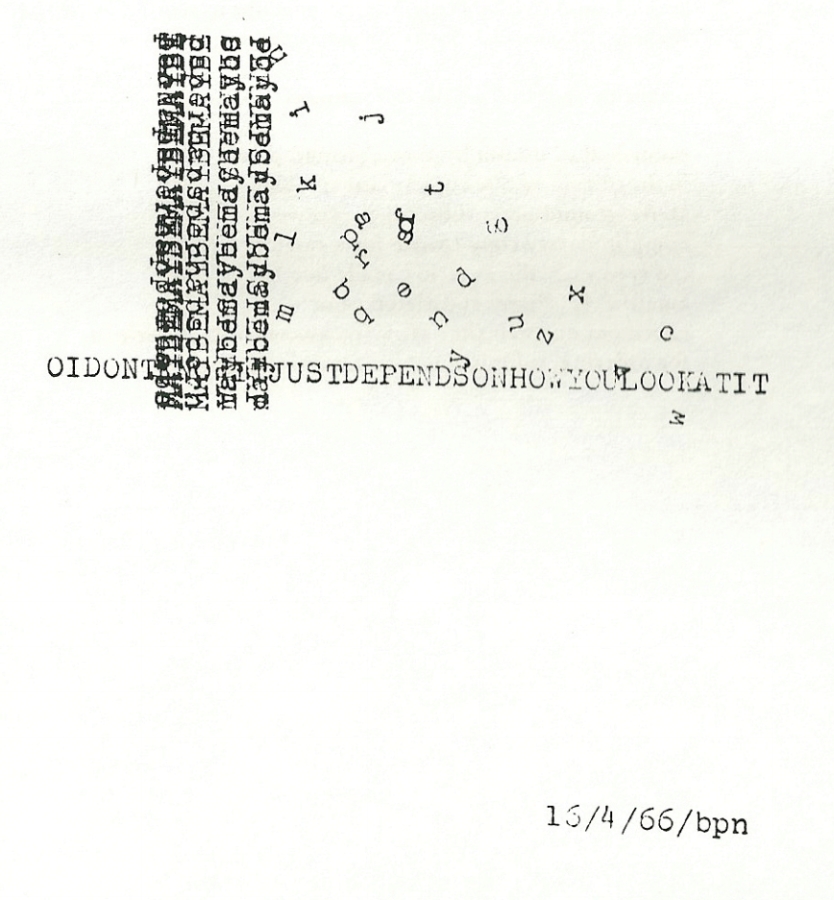
    Be disciplined about this practice and extend it to looking at visual representations of names. There are entire branches of art devoted to representing words. For example, check out the Visual Poetry section at Ubu. You’ll find amazing pieces like this by b.p. nichol:

    But It’s Always Okay To Make Mistakes

    Even though we should never be satisfied with our memory, it’s important to understand that you never make errors with your memory. You only learn lessons about how it works and how to make it better.

    But you need to take risks. And when you forget things, simply explain to people that you’re working on your memory. And tell them that’s it’s not just about your memory.

    It’s about the health of your brain.

    And that means it’s also about the quality of your life.

    You do want a good life, don’t you?


    The 5 Biggest Reasons Entrepreneurs Need Memory Techniques Jan 12, 2017
    Show notes

    Entrepreneurs need a ton of skills to achieve their goals.

    And let’s face it:

    The amount of material entrepreneurs need to learn can be downright discouraging. Just to stand a chance of “making it” requires so much know-how that a lot of people give up.

    Here’s the good news:

    You don’t have to give up on your entrepreneurial dreams.

    You can learn and remember everything you need to know.

    And you can recall it all with ease.

    But as they say in the entrepreneurial world, a lot of success comes from first knowing your “why.” That’s why in this post I’m going to talk about the 5 biggest reasons entrepreneurs need memory techniques.

    Don’t Discount Any Of These!

    Each is important, and you’ll find that the Magnetic Memory Method covers each.

    https://youtu.be/AG0h6OI50Ig

    If you haven’t already taken the free course I’ve got for you, grab the memory kit by subscribing above and get ready for an amazing memory boost that will impressive the pants off you and everyone you know.

    1. Not Being Able To Remember Numbers
    May Be Causing More Lost Revenue
    Than You Can Imagine

    Numbers overload the average life lived in business:

    Conversion rates

    Tax percentages

    Statistical formulas

    Phone numbers

    Identification codes

    Dates and times

    … and many, many more.

    A huge part of the success of any entrepreneurial enterprise links directly with how well you can manage numbers like these. You can’t wring more profit out of numbers you haven’t remembered, after all. And you can’t even begin to understand math concepts you haven’t committed to memory.

    To get better at memorizing numbers, it’s important that you learn the Major Method (sometimes called The Major System).

    What Is The Major Method?

    It’s a way of quickly memorizing numbers by turning them into images.

    There are different ways of using the Major Method, but to get started, associate each number from 0-9 with a sound. Here’s what I use based on a standard approach popular around the world:

    0 = soft c, s, z
    1 = d or t
    2 = n
    3 = m
    4 = r
    5 = l
    6 = ch, j, sh
    7 = g, k
    8 = f, v
    9 = b, p

    But right now, you’re probably wondering …

    How On Earth Am I Supposed
    To Remember All Of That?!?

    It’s pretty easy – if you’re willing to experiment. I won’t give you an example for each number, but to get you started:

    For zero, you could see a giant snake hissing as it eats its own tail. The shape of a snake in a circle resembles the digit 0. The sound of hissing reminds you of the ’s’ and soft ‘c’ sound options.

    For nine, look closely: From one perspective, it’s like a ‘b’ standing on its head. From another perspective, it’s a golf club facing the wrong direction and driven down into the ground.

    Check out five. If you hold out your left hand and stick out your thumb, you’ll notice that you have five digits. The pointer finger and thumb make an L-shape.

    Easy Peasy Lemon Squeezy!

    Let’s put it all together.

    If you wanted to remember a number like 905, the Major Method gives you several options with these letter-sounds. You’d just need to pop in a few vowels so you can make a word.

    For example, 905 could be:

    Basel (the herb) or Brazil (the country on a map or the Terry Gilliam movie).

    509 could be an image of yourself speaking with a lisp.

    590 could be Jennifer Lopez. Make her leaping to compound the 5 and 9 and it’ll be even easier to remember.

    This Is Just The Beginning Of Remembering Numbers With Ease

    Give this memory technique a try. You’ll find that it does wonders for your memory improvement.

    And it’s fun to give your friends challenges, like Jonathan Levi and I have done. Even just a short run of numbers like the serial numbers on a dollar bill makes for great memory exercise in a restaurant.

    Just make sure that you’re not totally exhausted – and even then the techniques can still work wonders. Here’s the full story:

    https://youtu.be/SY_b168fWTM

    I can’t stress how important the ability to remember numbers is for an entrepreneur so please get busy and let me know how you fare.

    2. A Simple Way To Remember Names That Works
    Even In The Noisiest Convention Halls And Business Meetings

    As an entrepreneur, you meet a lot of people.

    And there’s nothing worse than forgetting someone’s name.

    It’s embarrassing. It’s crude. It’s unnecessary.

    To learn how to remember names, check out this Magnetic Memory Method Podcast and the accompanying illustrations. You’ll find it useful.

    In brief, all you need for getting started with remembering names is the ability to make associations. You can create your Magnetic associations in advance or on the fly.

    Let’s look at both options. I will ultimately suggest that you learn both … you’ll need them!

    The Magnetic Memory Method Name Crib

    Some people who use memory techniques create databanks of celebrities in their minds. That way, whenever they meet someone new, they can make instant associations.

    For example, I have Tom Cruise as my instant go-to name when I meet a new person named Tom. When I meet someone named Lars, I whip out Lars Ulrich, the drummer from Metallica. New people I meet named Sarah are instantly paired with Linda Hamilton, who played Sarah Connor in The Terminator and Terminator 2: Judgment Day.

    The great thing about having predetermined celebrities and fictional characters is that the associations require zero thought. You meet the new person and then – BAM! – you can instantly see your new pal Tom in a fistfight with Tom Cruise.

    The Martial Art Of Remembering Names Method

    But what happens when you meet someone with a name from another culture? It’s not that the name “Gangador Dianand” is unusual – it’s just not one you’d expect to come across every day.

    Yet, it is a real name and if you’re serious about memory techniques, you’re going to want the ability to memorize it as quickly as you can memorize a name like Tom.

    In this case, you need to be able to chop the name into pieces and use Magnetic Memory Method Word Division. This mnemonic tool helps with associating images to just the “gang” part of “Gangador” and another image with the “ador” part.

    Also super-easy. All you need is to see something like a gang bursting through a door. If the gang “adores” the door they’re banging through, all the better. Just think about how you can make that “adoration” visual in your mind’s eye.

    What about “Dianand”?

    Also not a problem.

    Remember Princess Diana? I sure do. And I also know what an ampersand is.
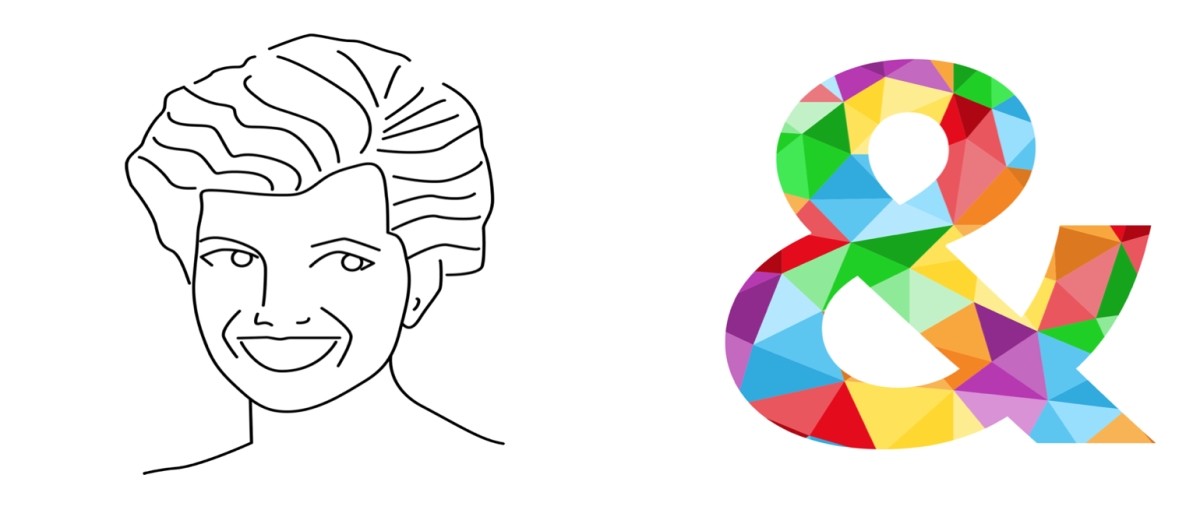
    All that’s needed after that is a way of getting Diana and the ampersand interacting in a strange way.

    And when you put it all together, you can make a little story:

    A gang who adores a door bust through and catch Princess Diana smooching with an ampersand.

    But Wait! I’m Not That Creative!

    I hear this excuse often.

    Here’s the thing:

    You don’t have to be creative to get started.

    As Benny Lewis points out in Fluent in 3 Months, using these techniques makes you more creative. And the more you practice creating associations, the easier and faster it gets.

    Just give it a try. I think you’ll be pleasantly surprised by how practicing memory techniques rewires your mind and memory for entrepreneurial success at many levels.

    3. Join The Elite Crew Of Entrepreneurs
    Who Can Quote The Facts Right Every Time

    There’s nothing more impressive than an entrepreneur who has a handle on the facts.

    Let’s face it. Consumers are more skeptical than ever. If you haven’t got your details in order and wind up stumbling all over the place to communicate your business knowledge, you have no reason to expect anyone will take you seriously.

    The only question is … how do you remember facts?

    You’ve got options, but the number one technique to learn is how to create and use a Memory Palace.

    What’s A Memory Palace?

    A Memory Palace is a mental construct based on a real building. It can also be an imaginary, “Virtual Memory Palace,” but for beginners, taking something simple like your childhood home works the best.

    Remember how we were just talking about Jennifer Lopez and 590?

    Well, the way a Memory Palace works is that you would place an image of her leaping all over the place on the desk in your study. Or you would have her leaping in the clothes washer.

    You can place images like Jennifer Lopez anywhere you like, but it’s best to have a strategic way of creating your Memory Palace so that you’re not just placing her any old place and hoping and praying you’ll find your way back to her. Make sure you’ve taken my free course to ensure that you know the best ways to create a Memory Palace and avoid all problems.

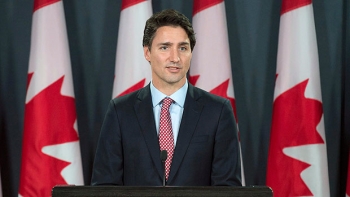
    Then, when you have some facts you want to memorize, create images that help trigger those facts back to you. For example, a few weeks back, I memorized some information about Canada’s second-ever Prime Minister.

    You can model this approach for any facts that you’d like to memorize. It’s easy, fun and will rapidly increase your expertise.

    4. The Ability To Remember Quotes That
    Will Get Everyone Talking About You

    If there’s one thing that binds entrepreneurs together, it’s the love of quotes.

    You’ve probably heard this famous line from Zig Ziglar, to take one example:

    “People often say that motivation doesn’t last. Well, neither does bathing – that’s why we recommend it daily.”

    As cool as Ziglar’s quote is, it really means nothing if you can’t remember and pull it out at the right time. Entrepreneurs equipped with memory techniques have no problems, however. They can simply use the tools of the Magnetic Memory Method and zip any motivational quote they want into memory and recall it with ease.

    The Memory Palace is also the go-to technique in this case. Once you know how to use it, you just need to prepare and organize the quotes you want to memorize. When you hear a good one, you can also memorize it on the fly with ease so long as you have a solid understanding of how to use the ground beneath your feet as a Memory Palace.

    Wisdom Is Just One Vertical (Or Horizontal) Pillar Away

    When memorizing poetry using a Memory Palace, the temptation is to work horizontally.

    Nothing wrong with that. It works gangbusters.

    But for shorter pieces of information, like quotes, the entrepreneur can also try memorizing the words in vertical pillars.

    I recommend starting from the top corner of a room and then working your way down.

    For example, if you want to memorize the Ziglar quote, you can try seeing Pippi Longstocking in the ceiling corner attacking a jury with a vicious motive. “Pippi” basically sounds like “people” and her having a motive for the attack will help recall the notion of “motivation.”

    Beneath that, you can see her bathing in a huge bathtub full of calendars. That will help you remember the core idea of bathing and the calendars will help you remembering that bathing, like motivation, is something entrepreneurs require daily.

    Heck, everybody could use a dose of both daily hygiene and continually renewing impetus … don’t you think?

    5. The Ability To Conceive Of And
    See Large Systems Full Of Moving Parts

    At the meta-level, perhaps the most powerful reason entrepreneurs would do well to use memory techniques is how they get you working with macroscopic and microscopic pieces of information at the same time.

    Think about it:

    If you’re going to be an entrepreneur, you’ve got to have a handle on multiple processes all at the same time. And you’ve got to be able to see them in your mind at a glance.

    What better way to prepare the mind for this need than working with a system of Memory Palaces and information that will make you a better entrepreneur?

    Memory techniques not only help you with the skill of seeing the big picture and the granular details at the same time. Having a strong memory distinguishes you as a professional.

    If you aren’t already using memory techniques, I strongly encourage you to get on board with them. They will not only change your life, but help you do much bigger things for the people you serve in your business.

    That’s the desire that drives you every day and the next level is right around the corner. All you need to get started is a bit of training. Subscribe for my free Magnetic Memory Method training using the “Start Here” registration form above.


    How To Combine Mind Mapping And Memory Palaces With Phil Chambers Dec 08, 2016
    Show notes

    phil-chambers-on-mind-mapping-and-memory-palaces-magnetic-memory-method-podcastYou’ve heard about Mind Mapping and Memory Palaces, right?
    Well, if you’re anything like the hundreds of people who have emailed me about it, you’ve probably wondered …

    “Can I bring Mind Mapping and the Memory Palace together?”

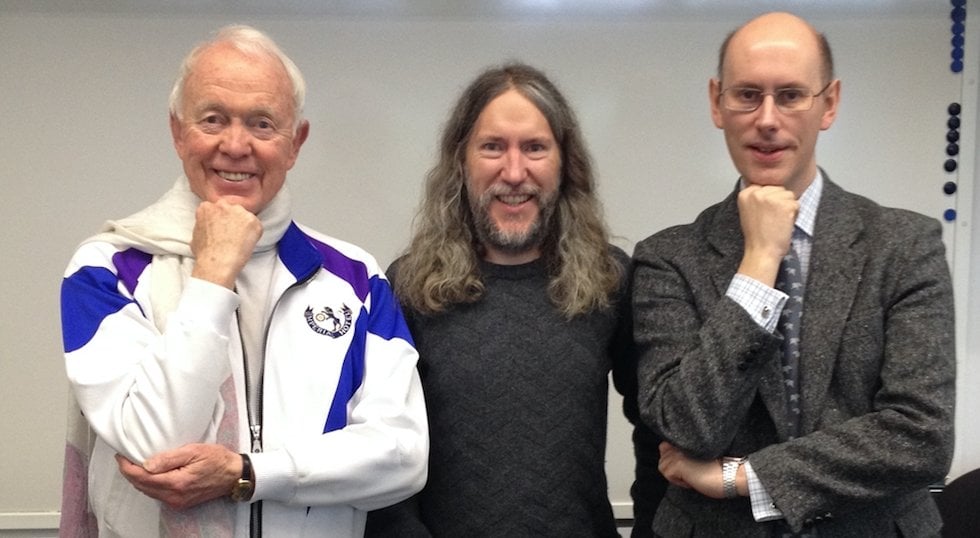
    To help me answer the question, I asked the reigning World Mind Mapping champion Phil Chambers to talk about Mind Mapping and how to bring this creativity, memory and learning tool together with a Memory Palace.

    Turns out that we had a lot more than just that to talk about. Tune in to this episode of the Magnetic Memory Method Podcast and learn all about.

    How To Combine Mind Mapping And
    Memory Palaces With Phil Chambers

    ⊕ The techniques Phil uses in his personal daily memory practice.

    ⊕ How to capture and store ideas using memory techniques – even when you’re driving.

    ⊕ The number-rhyme technique to take action on to-do list items. (Not to be mistaken for the Major Method/Major System.)

    ⊕ The perfect Mind Mapping definition and where to learn more about mind mapping techniques

    ⊕ Why there are always new things to explore in the world of memory techniques. Once you start using them, you will never cap out on new angles to explore and increase your skills.

    ⊕ The difference between semantic memory and episode memory and how using the journey method capitalizes on the power of both. This is the most “natural” way to use your memory.

    phil-chambers-anthony-metivier-and-tony-buzan-mind-mapping-and-memory-palace-magnetic-memory-method-podcast

    Hanging out with Phil Chambers and Tony Buzan

    ⊕ The reasons why memory competition skills translate directly into every day memory needs we all face.

    ⊕ Why the principles behind Mind Mapping never changes, but Mind Mapping software continues bring new enhancements to the art and craft of this thinking, learning and planning tool.

    ⊕ Details on how to bring Mind Mapping together with the Memory Palace technique.

    ⊕ Why and how Mind Mapping uses all of the classic memory techniques.

    ⊕ The major criticism about memory techniques as regurgitation of knowledge and not learning – and why it’s misguided.

    ⊕ Why Phil’s title as a World Mind Mapping champion is up for grabs and exactly how to take his title.

    ⊕ The exact criteria by which world class Mind Mapping is judged.

    ⊕ Why you should never worry about your artistic ability when creating Mind Maps.

    ⊕ Phil’s Mind Mapping examples of how to schedule your week and get more done.

    ⊕ How Mind Mapping your daily schedule gives you many more details than a to-do list. Not only that, but you’ll often be able to double your efforts in ways you wouldn’t have otherwise seen on a page with linear notes.

    Further Resources

    https://youtu.be/VW6O2okqmO4

    Phil Chamber’s website (where you can subscribe to his newsletter!)

    Phil Chambers on Twitter

    Phil Chambers on YouTube

    Phil Chambers Talks About The Outer Limits Of Memory Skills

    https://youtu.be/LOKi8pe7C8M


    Joanna Jast On How To Hack Your Habits Nov 30, 2016
    Show notes

    Remember Joanna Jast and all those tips she gave you on how to improve focus and concentration while you work on memory improvement? Good news. Joanna’s back with a new book called Hack Your Habits and in this episode of the Magnetic Memory Method Podcast, we’ve got her here to talk about it. As always, I’ve got the interview transcript for you below and would love to hear your comments and questions in the discussion area below. Enjoy! Why You Don’t Have To Have It All Mapped OutTo Get A Handle On Your Habits Anthony: You go into your personal story in the introduction. Why do you think you faced so many challenges and what was the turning point? Joanna Jast: It’s interesting you’re asking me this question. I actually thought about it the other day on my way to work. And – I don’t really have the answer. I suppose it’s the combination of many factors: my temperament – which is like emotional and behavioural building blocks for personality and to large extend is hardwired, inborn, so my temperament, my upbringing, the environment I grew up in, the challenges I faced in life and the solutions to those challenges I chose to follow etc. I haven’t got it all ‘mapped out’, but I think the key reasons why I’ve faced so many difficulties is my low threshold for boredom, poor ability to delay gratification, my self-compassion, which drives many of my willpower failures with: ‘But you deserve it, Joanna… you’ve had such a bad day’. The turning points? There have been quite a few. But if I was to choose the key turning points that led me to create my own system for building better habits, it would be the following three: The first one the day when my study routine was born. It was actually accidental – I wrote about it in my book Laser-Sharp Focus. It was the moment when I decided to stop trying to study in the evening, sitting on the sofa or on the bed and start doing it in the morning, at my desk. To cut a long story short, I suddenly realised not only how much more productive and effective my study sessions became, but also how much happier I became – with better grades, more energy and time to do other things in life. Now, 20 years later, looking back at what happened, I realise that back then I created a study routine, which over the years became my productivity and now writing routine that has transformed my life. My study routine happened to be one on those keystone habits – habits that create a ripple effect throughout our life, creating space and energy for more healthy habits to emerge and grow stronger, ultimately transforming our lives. How The Secrets Of Behavioral EconomicsCan Improve Your Life The second turning point was the day when I heard about Behavioural Economics for the first time. It was during a lecture on marketing. I went home, did more research, read books, articles, did a course and… fall in love with the approach. I thought this could be something that would work for me. So I started experimenting with various behavioural economics strategies. Initially, I applied them to sort out my finances – so paid off my debts and started saving money. Then, I started experimenting with my exercise routine and eating habits. And the third pivotal point was, when I refined my exercise routine, my running routine to incorporate all the lessons I’d learnt about human nature and my own difficulties in forming habits, and particularly – my previous failures in establishing a reliable exercise routine. I used many of the behavioural economics strategies I’d learn about when doing it. And now I’ve got a running routine, where I run 3 times per week, whether I feel motivated or not (and at least once a week I don’t feel motivated at all), whether is raining, or 100% humidity, or my foot is sore. I just do it. The Truth About Your Age And Your Habits Anthony: Is the problem of habits age specific? Does it apply to all ages equally? Joanna Jast: I don’t know, really. I think this is a problem of our times though – so this modern age. We become more aware of the role and the impact of habits, good and bad, on our health, happiness, success, on our lives, and also we realise that motivation and willpower have limits. And that’s why we think about our habits more, we become interested in strategies for improving them. You can say that ‘habits are in fashion these days’. And it’s nothing negative – on the contrary. I’m very happy to see that many people are turning away from relying on unreliable motivational strategies towards using more practical approaches to transforming their lives. So it’s not only scientists, or health and fitness fanatics who are exploring habits. Many people, of all ages, are seeking better understanding of habits, and their own habits in particular, to improve their health, happiness, wealth, relationships and many other aspects of their personal and professional lives. Anthony: Talk about putting systems on autopilot. It sounds too good to be true. What does “autopilot” mean and how can a person get started? Joanna Jast: Putting a system on autopilot is about creating a system that makes you perform certain behaviour, or a sequence of behaviours without thinking much about it, without putting much energy into it. It’s like getting up in the morning and washing your face or brushing your teeth. Most of us do it automatically, without thinking: Oh, geeesh, first, I need to wash my face, then, I need to brush my teeth, and then – I comb my hair. These are things that most healthy adults would do automatically every morning. These are habitual behaviours – well engrained in our brains, within the neural pathways. For me putting a system, say an exercise routine, on autopilot is about creating a system that kicks in as if with a push of a button, and makes you go out and run three times per week, rain or shine, whatever your motivation level, or the mood of the day. How To Harvest The PowerOf Your Desired Outcome Anthony: How can you get started? Joanna Jast: I suggest you start with the end result in mind. Start with what you want to achieve. You need to understand what problem you are trying to solve, but more importantly, what you are trying to achieve. I like the concept of Desired Outcome, which I’ve borrowed from user experience design field. Desired Outcome is what we really want. Not what we think we want. Not what other people are telling us we should want. But what we’re really really want. In my new book, Hack Your Habits, I write about my own struggle to cut down on my carbohydrate intake. I’ve got a sweet tooth and sadly, also use sweets as a reward and a way to boost my ‘motivation’ or willpower to carry on with tasks I don’t really want to do, tasks that are too difficult, too complex, etc. There was a time I was eating a lot of sweets. I was going through a stressful time personally and professionally, and this was my way of dealing with stress. So I wanted to cut down on my carbs. So initially, I thought about this task as a cutting on my carbs task, a diet-changing task. I was all motivated to do that, and all. But it didn’t work. So I looked at the whole issue again and really wanted to zoom in on what I cared about. And don’t get me wrong, I do care about my health, but the instant gratification monkey that lives in my brain always tells me that I can start again tomorrow, and now – I can have that biscuit. So I had to start with the Desired Outcome. Yes, I wanted to eat less carbs, but what I really wanted out of it was to be able to resist sweets and toast with jam. So I reframed my goal, taking into consideration my personality, my temperament, my weaknesses and strengths. I’ve got a competitive streak, I’m an achievement junkie, and I get excited with new ideas and testing them. So this ended up as an exercise in self-control and I did really well. 2 Of The Most Powerful Questions You’ll Ever Ask Yourself So the Desired Outcome is where you need to start. What do you want out of it? Do you really care about it? And it has to be something you really care about, you care about. If you don’t care about it truly and deeply, it won’t really happen. Anthony: You talk about getting the diagnosis right when tackling a problem. What does this mean and how does one get started? Joanna Jast: I really like this quote from Albert Einstein: ’If I were given one hour to save the planet, I would spend 59 minutes defining the problem and one minute solving it’. And I would do the same. If you’re trying and trying and trying to solve a problem, say of your unhealthy diet, or an unproductive study routine, and you’re constantly failing, it may be that you’re using an ineffective strategy, but it may also be that you’re trying to solve the wrong problem. In medicine, getting the diagnosis right is crucial to an effective treatment plan. And getting it wrong can really result in people dying. This is not as serious as that with habits, but in the end, if you don’t understand, if you don’t define your problem correctly, you can waste a lot of time, energy, and even money on trying to fix something that is not the reason for your struggles. Let me reiterate it: the better you understand what’s wrong, what’s not working, the more targeted your solutions, your treatment will be. How to go about diagnosing your problem? Unfortunately, it’s not as simple as doing an X-ray or a blood test, but it is doable. Start with self-reflection, and be honest with yourself. For me there are two major components to understand any problem you have: you – how you operate, your personality, motivation, strengths and weaknesses and your context. The context is the external environment, your internal environment and your social environment. And they all come with their own limitations – what’s possible and constraints – what’s appropriate. Why It’s Never Mind Over Matter And it’s important to include that context -your physical environment, and your social environment as well. The power of those external systems that force us into behaving in certain ways is really undermined by many people. We think it’s all mind over matter – but if your physical environment or social context, is not conducing to exercising, or a healthier diet – it makes the change much, much more difficult. So don’t underestimate that. And once you’ve got a good understanding how you and your problem or your habits goals sit within you and your context, you are in a good position to start tackling it. So self-reflection if used with a healthy dose of honesty, is a great tool for discovering, diagnosing your problem. You can ask other people for their opinion what they think is not working for you. But then, they will be biased and what’s more important – they may not have access to some of your hidden motivations, or aspects of your personality or life you don’t share with others. How To Get Started Fixing Persistent Problems To get a really good grip on what’s wrong when fixing persisting problems, I ask myself two questions: The first question is: What is this for? What is this doing for me? What purpose does it serve? What need does it meet? And this works really well with habits, because every habit serves a purpose. And most bad habits, such as overeating, procrastination, or shouting at your kids usually either helps either deal with boredom or with stress. And the other questions I ask myself is: why have I failed at addressing it so far? And once you’ve got it figured out, it will fall into those categories I’ve just talked about – you and your context. It should give you a better understanding of what it is and why you’re struggling to address it. And from this point, finding the best solution is quite straightforward really. Exactly When You Should Run FromS.M.A.R.T. Goals Kicking And Screaming Anthony: Talk about SMART goals. What’s your major concern with this popular approach to goal setting? Joanna Jast: The SMART goal setting framework is very popular, and it does work for most things, but in my opinion it does not work for habit goals, and for a number of reasons. First of all, let’s look at the last letter of this acronym: T – time-bound. Setting a habit-based goal with a deadline for achieving it is not a good strategy. Why? Because habits take as much time as they take to develop. Some of it is in your control, but let’s not forget we’re talking about creating or rearranging neural pathways in your brain. That takes time to shift. Studies shows that habit formation depends on many factors, and most importantly on the person working on it – their motivation, personality, their context, as well as on the complexity of the habit itself. A simple habit can take a few days to develop, a more complex one, such as exercise – up to several months. So if you give yourself a deadline for your habit goal, you may be bitterly disappointed if you don’t achieve it before it. That’s just setting yourself up to fail. So when setting habit based goals, don’t give yourself a deadline, but rather create a schedule for your new routine. Then, there is the matter of measurability , so the letter M- how do you measure your success in a achieving your habit. In my opinion, it’s important to look at it carefully and measure what you want to achieve. And my advice is to link it with your desired outcome. So if you, like me, testing your ability to resist marshmallows, you measure your ability to resist marshmallows, not the side effect, the healthy eating side effect of it, or weight loss. When I’m building a new habit, I’m not interested in performance measures – I don’t care how far or how fast I run (I try not to at least), but I’m focused on getting it done every time I’m supposed to do it. So practice is more important than performance when working on developing a new habit, and we should measure accordingly. Why You Need To Be Realistic With Your Habits And there are two more aspects of the SMART framework I have an issue with it’s the A and R – achievable and realistic. Call me cynical, call me a party pooper but I am not a big fan of being aspirational when setting your habit goals. It’s great to feel inspired and motivated to achieve greater things in life, but in the end the reality of my life is what It is, and no matter how hard I try to refrain from eating sweets by the sheer power of my willpower and my desire to be slim and beautiful, it’s going to collapse on day 3 or 4. That’s what the 30 years of my experience in doing it tells me. So being realistic and setting habit goals that are achievable again refer to you and your context – your personality, your motivation, your inner world, your physical environment, your social environment and all these things that affect us with all their limitations and constraints. Anthony: You mentioned two kinds of environment, internal and external. What are these and why is understanding the difference important? Joanna Jast: The difference isn’t really that important. I just like having things organised in my head. I also like to make that distinction because it makes it easier to you look for solutions later on. And that’s how I look at difficulties in addressing habit problems. It’s again the same thing: the better you understand where your challenges come from, the easier it will be to find a solution to your problem. So we’re back to the importance of correctly diagnosing the problem. Your external environment is what surrounds you – your physical environment, your house, workplace, the gym you go to, the supermarket where you shop; your financial situation, even the weather. Your internal environment is the environment you create for yourself – your thoughts, your emotions, your motivation, your values, what happens with your body. How To Use Cues To Hack Your Habits Anthony: What are some of the “cues” you talk about? Which is the most important in your opinion? Joanna Jast: Cues are very important. Cues remind us that we need to do something. They prompt us, trigger us to…

    Full show notes at the publisher

    Prime Ministers Of Canada: How To Memorize Them All Nov 13, 2016
    Show notes

    prime-ministers-of-canada-magnetic-memory-method2020 Update: If you’re American, here’s How to Memorize the Presidents.

    Life is good, isn’t it? You bet it is.

    But for some reason, when times get tough, without knowing a thing about the Prime Ministers of Canada, people around the world throw up their hands and say, “It’s time to head to the Great White North.”

    Here’s the thing:

    You’ll find some beautiful terrain and plenty of peace-loving citizens. But as a nation, we do not lack our own host of colorful characters.

    So if you’re coming over for a permanent BBQ in response to US election results or some dictator who’s been giving you the squeeze, it’s time to learn how to memorize the Prime Ministers of Canada. It’s important to know what you’re getting into, after all. 😉

    Beginner’s Guide To Memorizing Any List

    The first thing to understand when memorizing the names of the Canadian Prime Ministers is that you’re dealing with a list. We’re talking about discrete units of information. Like, Sir John A. Macdonald (1815-1891).

    The best way to rapidly memorize any list is to create a Memory Palace.

    All Memory Palace creation takes is a simple drawing and a list of your Magnetic Stations charted out in a strategic way. Creating an effective Memory Palace reduces your cognitive load to a bare minimum. That reduction forms a huge part of the secret behind how memory techniques like a Memory Palace work:

    You use a location you already know to place information you’ll Magnetically encode with imagery you already know onto a station so you can retrieve and decode what you want to know later.

    Curious about correct Memory Palace creation? Here’s a Memory Palace walkthrough based on a Memory Palace submitted by a Magnetic Memory Method student:

    https://youtu.be/jjV8CMiWCms

    If you need more guidance, here are an additional 5 Memory Palace Examples.

    A Small Set Of Super Important Information

    In this case, we have just 23 names for the Prime Ministers of Canada. When it comes to memorizing them, you have options.

    1. You can create one Memory Palace with 23 Magnetic Stations exclusively for remembering them.

    2. You can create two Memory Palaces with 12 Magnetic Stations each.

    In either case, you ‘ll ideally use Memory Palaces with more Magnetic Stations than you need so that you can use more than one station per name if needed.

    Or, if you’re already experienced with memory techniques, you can experiment with the Magnetic Memory Method “passing the baton” technique, which allows you to memorize more than one name per station. That’s for advanced memorizers, however, and even then, it’s good once in awhile to stick with the basics.

    And that’s ultimately what I recommend so that you can add the dates of the Prime Ministers later using the Magnetic Chaining memory technique.

    The Art Of Embarrassing Politicians

    Let’s assume you’ve got a Memory Palace with a bit more than 23 Magnetic Stations to give you wiggle room.

    Next, you need your list of information. The Wikipedia Prime Ministers of Canada page is as good as any. Whip that little darling open and look at the first name.

    The trick to memorizing anything is association, also called encoding. It’s easy, fun and with a bit of practice using special exercises I’ve created for you, unbelievably fast.

    John A. Macdonald, for example, brings to mind a picture of my friend and fellow mnemonist, John McPhedrine to mind. You’ve heard him on the show talking about memorizing German and music before.

    I see John at the first station of the Memory Palace I’ve created with a giant letter ‘A’ in his hands. He’s using this to smash my MACbook Pro, which is playing a video of Donald Trump singing “Old Macdonald Had A Farm.”

    Plus, as an advanced memorizer, I’ve got Trump’s hair as the tail of a dog swatting at a bat.

    Why?

    Because that additional imagery helps me remember the dates of this Canadian Prime Minister.

    How does that work? It sounds complex, but it’s actually simple:

    Using a special memory technique for memorizing numbers, 15 is “tail” and 91 is “bat.” I’ve got an entire course in the Magnetic Memory Method Masterclass about all the ways you can remember numbers, or you can just check out this post on the Major Method. It’s a great way to instantly memorize any number, and not just short ones like historical dates.

    The Prime Minister Who Built Walls
    You Can Be Proud Of

    Wikipedia tells this story about Alexander Mackenzie:

    Once, while touring Fort Henry as prime minister, he asked the soldier accompanying him if he knew the thickness of the wall beside them. The embarrassed escort confessed that he didn’t and Mackenzie replied, “I do. It is five feet, ten inches. I know, because I built it myself!”

    Little anecdotes like this can be fun to remember when memorizing a name. Plus, it’s interesting that Mackenzie was three times offered knighthood, but refused each time.

    To encode all of this into memory, it’s a simple matter of seeing Alex from A Clockwork Orange taking … certain liberties with a former high school girlfriend of mine by the last name of Mackenzie against a section of the Berlin Wall now fixed on station two of my Prime Ministers of Canada Memory Palace. (Phew … that was a mouthful.)

    But the Mackenzie I used to kiss so gently in high school fights back by trying to knight him with a giant camera that he beats away with a pamphlet printout of Plato’s Allegory of the Cave.

    Why a camera and this bizarre retaliation with an ancient allegory? You’ve probably already guessed it by now. It’s our old friend the Major Method, which tells me that “cam” decodes to 73 and “cave” to 78, the same years Alexander Mackenzie served as one of the Prime Ministers of Canada.

    Isn’t That Just Too Simple?

    It really is, and that fun simplicity explains why so many people who get into memory techniques email and ask me …

    Isn’t this … cheating?

    Absolutely not. And here’s why:

    It’s one thing to create the Memory Palaces and have fun dreaming up weird images and vignettes.

    Long Term Memory Requires Recall Rehearsal

    But you’ve also got to replay these stories and decode them in your mind over time. Skip this step and the information might still get into long term memory, but I wouldn’t bet on it.

    Luckily, setting up a Magnetic Memory Method Recall Rehearsal routine is easy. Just go over the information you’ve memorized about 5 times before the day is through. Make one of those times right before bed to help consolidation.

    But here’s a warning:

    Some recent research evidence suggests that older people don’t get the same memory consolidation benefits as younger people do. It’s good to keep that evidence in mind, but also be your own scientist. As you can see in this video on making boring information more interesting, I got away with a high recall rate after far fewer Recall Rehearsal sessions. But I would have done better if I’d repeated the poem more often.

    The Rule Of Five

    That’s what World Memory Champion Dominic O’Brien calls it and The Rule Of Five holds great power.

    If you’re feeling overwhelmed or wondering where you’re going to find the time, don’t stress it. The important thing is just to get started. Memory techniques are a skill you’ll want to use for life and the Prime Ministers of Canada is just the beginning. Later, they’ll help you focus on your work in some very impressive and powerful ways. That’s why we want to use them after all, right?

    I hope you’ve seen how you can not only memorize a long list of names, but also add historical dates and facts. When I look at station two of my Memory Palace of Canadian Prime Ministers, it’s easy to see a movie character and person from my past interacting with a few select symbols that help recall an interesting scenario and numbers.

    Wrapping It All Up With
    A Magnetic Little Bow

    Here’s a summary of all you have to do to experience great success:

    1. Create a Memory Palace for the Prime Ministers of Canada.

    Remember to pad out your Memory Palace so that you have a few extra stations in case you need them.

    2. Have the names prepared.

    You can do it directly from a Wikipedia page, but you’re better off printing the list out and encoding the names to your Magnetic Stations somewhere you won’t be bothered by notifications.

    Being tempted to skip around on your browser isn’t helpful either. Like I said last time about boring information … Instead of taking it in small doses, make it exciting for yourself. It’s not that hard!

    3. Practice Recall Rehearsal diligently.

    The Rule of Five is great, but take it on principle, not as dogma. Always test and never hope that five repetitions is enough. It might become more than necessary once you get good with mnemonics, but it will never be too much. Every time you enter a Memory Palace and practice the beautiful art of memory, you get better and better with the best asset you’ve got:

    The ability to learn, remember and recall anything.

    Now then … How about that Canadian anthem? 😉


    5 Ways To Get More Interested In Boring Topics You Have To Study Nov 09, 2016
    Show notes

    boring-topicsStudying about boring topics you don’t give a hoot about sucks, right?
    Especially when you’re in a rush.

    And especially when all you want is the grade, the certification, the knowledge.

    Well, I can’t make any promises, but there might be a way to help make any topic much more interesting to you. At the very least, we can remove the sting of boredom. At best, we can make any topic we want 100% Magnetic.

    1. Warning Signs That Your Mindset Is Off

    I know, I know. You’re tired of hearing about mindset.

    But let’s face it. We have minds. Every day we wake up with more or less the same world outside the window. Just like we have to make our beds so that the sheets won’t be sprawled all over the place, we have to set up our minds for success.

    But that’s the problem, isn’t it?

    Lots of people are happy to leave their beds messy all day long and then crawl into the unkempt mess at night. It’s cold because the mattress has been exposed and probably a bunch of insects have settled into the dune-like patterns. Sure, you might fall asleep okay, but there’s nothing like slipping into a made bed.

    You know it’s true.

    It’s The Same Thing With Your Mind!

    Sure thing, you can get through life without setting up your mind for success, but it will be cold and exposed to the elements. The bugs will crawl in and lay their eggs, and you’ll never get the warmth you deserve.

    But take just a few moments to tidy up and you’ll reduce the suffering that comes from studying things you don’t like.

    Because that’s just the thing: A lack of mindset is probably the thing that got you into a position where you’re studying things you’re not passionate about in the first place. You’re probably studying material that produces no great excitement because you’re chasing after hopes and beliefs and dreams and wishes – not what you really want.

    How To Set A Powerful Mindset For Learning

    Whether you’re trapped or not, the process works the same. The best way to get your mindset in order is to set it each and every morning. As I talked about in the Mandarin Chinese Mnemonics And Morning Memory Secrets episode of the Magnetic Memory Method Podcast, having morning rituals is a killer way to conquer the day.

    When it comes to creating a mindset for making the material you’re studying vibrant and exciting, all you have to do is write down in a journal how exciting it is to be studying and how grateful you are to have the opportunity.

    And it’s true: Not everyone has the learning opportunities you do. A massive percentage of people in the world don’t have access to the Internet, schools, books or anything even remotely related to helping them develop their knowledge.

    But you …

    You’ve Got Everything You Need

    So take a moment every day to recognize what an amazing opportunity you have. If that isn’t a recipe for injecting excitement into a boring topic … I don’t know what is.

    If all else fails, here’s what to do if you or someone you love is considering not completing their high school diploma. They may have already left school, but it’s not too late to go back. I dropped out of high school myself for awhile, but I’m so glad I returned.

    Best decision of my life.

    2. Be An Info-Completionist

    Okay, so now that you’re plump with self-hypnosis induced excitement for the privilege of study, you still have to sit down and learn the stuff.

    The question is … How?

    A lot of people ask me how I manage to read so much, and the answer is simple:

    Get a book. Find a place to sit. Read the book. Repeat until you’re done.

    I don’t say that to be flippant, but it’s the truth. If you’re trying to read in a place filled with distractions or on a device that encourages you to skip from tab to tab and answer notifications …

    Stop Trying To Read Like That!

    Seriously. It’s not a recipe for success.

    Plus, you want to read in a way that helps you isolate the information you want to memorize. I have two posts with podcasts and videos that show you how to realistically memorize a textbook. Just check out the video for now:

    https://youtu.be/h0nRcFFn680

    If you want more information, listen to How to Memorize A Textbook and study the infographic.

    True, my approach to realistically memorizing textbooks involves a bit of setup, but people who give it a try usually find that the process makes reading and remembering the key points of even the most difficult books much easier.

    The best part:

    By having a dedicated strategy for reading books, you make it a lot more fun. Like having a mindset, having a process you can follow without having to think about it makes everything more fun and interesting. Having operating principles and guidelines reduces cognitive load, and like Tony Buzan said when I studied with him, the rules set you free.

    3. Look For The Parts That Do Interest You

    One thing that you’ll learn from my training on (reasonable) textbook memorization is how to skip the parts that don’t interest you.

    No, you can’t always do this. There are times when you have to slog through boring stuff you don’t care about. Yes, even learning in the age of artificial intelligence requires some exposure to difficult material. Often more so.

    But here’s the thing: by knowing what you do care about, you get more interested in things that connect with it. It happens automatically.

    And when interest doesn’t spontaneously erupt, you at least get a clearer picture of why those other elements are necessary. The more you know about a topic changes the nature of what you don’t know. It makes it more attractive, more Magnetic.

    And that which becomes more Magnetic is easier to attach to memory because you’re simply more interested in it.

    4. Invite Information Into Your Memory

    In other words, use memory techniques.

    You knew this was coming, didn’t you?

    Let’s face it:

    The best way to make dry and boring information more interesting is to make it part of your memory improvement lifestyle. That means organizing the information so that you can rapidly absorb it into a Memory Palace.

    To do that, you get to invite the information into a place you’ve created in your mind. I don’t want to sound woo-woo, but there’s something ritualistic about this. It’s like anointing information, blessing it or touching its shoulder with the edge of your sword as if you were knighting it.

    Once anointed, you start looking at the information through mnemonic eyes. You’re looking for how you can attach it to associative-imagery and place these images on your Memory Palace stations. You’re already getting excited about revisiting your Magnetic Stations and decoding the imagery to ease it into long-term memory.

    And before you know it … The information isn’t boring any more.

    Far from it! That information has become …

    The Most Interesting Information In The World!

    This is without a doubt the finest thing you can do for the life of your memory and overall intelligence. When you privilege information and stop demonizing it by framing it in negative ways, it will want to enter your mind.

    Even better: If you’ve invited the information in just the right way, it will want to stay.

    5. Bore Others To Death With Your Boring Topic

    Just kidding.

    By the time you’ve made the information interesting to yourself, you’ll be excited to talk about it and to do that, you should have something already in place:

    Community.

    Remember how I told you should be grateful for having the opportunity to learn in the first place? And how you can use your gratitude as a tool for generating excitement in even the most boring topic?

    Well, you also have the Internet and thousands of groups people have created for discussing topics that they either find really exciting, challenging or want to kvetch about.

    You can find these groups meeting on forums, on Facebook, or just by shooting the breeze in YouTube comments. Maybe there will be some interesting discussion on this video I put together to accompany this post, for example:

    https://youtu.be/_cOQLRloZpU

    Let’s say you’re studying cognitive therapy, something I’ve recently gotten interested in studying.

    The first thing is to show some gratitude for having the time and opportunity even to do so. Write that down in your daily gratitude journal.

    Then, hop on to Facebook and search for groups that are already discussing this topic. Ask to join. For example, you can ask to join my Learn German Memory Hacks group, or even the Magnetic Memory Method Private Facebook Group. Have fun once you’re inside!

    But Proceed With Caution!

    Don’t overwhelm yourself with this. Just pick one or two that looks like it has enough members for finding a decent amount of discussion in process.

    Introduce yourself once you’ve been admitted. Tell them a bit about who you are and why you’re interested in the topic.

    Make friends with the group admins and shoot them a note to thank them for taking time to put the group together. Probably no one else is doing that so you’ll be on their radar and recognize your name later.

    Why would that matter?

    Easy. Because when you get bored or stuck somewhere in your reading, you have a place to go and post where at least a few people are going to know your name.

    Knowing that you have a place to go and share ideas in advance is a great way of making sure a topic never becomes boring to you.

    Of course, the dark side of this technique is that you’ll get swept away doing a thousand other things online, but we all need to learn how to balance these things. I’m writing this post now in a library where getting online is too much of a pain – deliberately so that I have no distractions.

    Because here’s the core of the matter:

    If You Really Want To Get Ahead, You Will Find A Way

    And with that monster of a headline, we’ve circled back to mindset, something you can get started crafting or refining right now.

    Exciting, isn’t it?

    Now get out there and tackle some uninteresting information you using these tools. I dare you to be bored!

    Oh, and if you’re still skeptical, check out these 3 Reasons Why Skeptics Succeed With Memory Techniques Better Than Anyone Else.


    17 Reasons Going To Art Galleries Will Improve Your Memory Nov 03, 2016
    Show notes

    Want to improve your ability to use memory techniques almost overnight? I promise it’s super-easy. All you need is the willingness to support your nearest art gallery and your awareness of the following 17 reasons going to an art gallery is good for your memory. 1. Art Inspires Your Visual Imagination When you’re using memory techniques, you draw upon visual imagination. Even if you’re only using words in your mind when developing mnemonics, you’re using visual words. The more visual iconography you’ve seen in your life, the more potency the visual words you use will hold. Exposure equals experience. Experience leads to substance. When you use the words “run,” “hit” or any other verb, the more art you’ve seen, the great depth of meaning these words will have. 2. Art Depicts Words Used In Visual Ways If you’ve been to an art gallery lately, you’ve undoubtedly seen how modern artists use words. Pop artists use comic strips. Futurists made a big deal out of typefaces. You don’t even have to enter an art gallery to see words used in graffiti on nearly every street in your city. Looking at art and paying attention to how artists use words is especially great for inspiring how you can use your visual imagination to memorize foreign language vocabulary and phrases. Next time you’re in an art gallery, pay particular attention to how words appear in the exhibits. 3. Art Helps You Make Mental ConnectionsBetween Space And Material Objects Looking at art is never just about “looking.” As your eyes meet the graphic displays, ideas emerge. In fact, “art” happens the moment that you start thinking about what you’re looking at or noticing your emotional responses. You can become conscious of what you’re thinking and feeling and use your awareness to become more visual. Reflect on how the visual experience has triggered your thoughts and responses. Also, journal what you’ve thought while at the gallery. By writing down your responses, you access your memory. Accessing your memory exercises your mind, which helps keep it fit. 4. Visiting Art Galleries MakesYou Aware Of World Geography It’s not just that art often depicts different parts of the world. Art galleries also exhibit art by international artists. Pay attention to the international names and locations of where the art originates. This will exercise your geographical imagination and give you more facts to remember. It’s also great memory exercise to remember the names of the artists you see and include their home countries. For bonus points, you can also use the Major Method to add the dates of their lives and when they created the pieces you’re admiring. The more experienced you become with memory techniques, the more information you can memorize at a single go. Plus, the location of the art itself within the gallery amounts to a Memory Palace station. Using the location gives you great practice at using your spatial memory in addition to all the other tools mnemonics draw upon, such as association, semantic memory, episodic memory and the like. 5. Art Galleries Are Depositories Of History Yes, you can memorize the raw data of dates when going to an art gallery. But you also expose your memory to information about historical periods. Artists love to reference other eras and historical events. Some artists have even made careers out of referencing history. Fluency in art equals fluency in history, which is always good for your memory. 6. Art Galleries Exercise Your Ability To Create Meaning Let’s face it: A lot of art doesn’t make much sense. At least, that’s until you give it some thought and learn about how to interpret art. Believe me. Interpretation matters. After all, a huge part of art interpretation is creating meaning. To have created meaning, you have to remember the meaning you created. Ergo, going to art galleries and interpreting what you see is good for your memory. And if you’re practicing memory techniques, handling abstract ideas your mind is perfect for practicing the art of remembering challenging and abstract ideas. Art history is loaded with them. 7. Art Galleries Give You The Experience Of Puzzlement Being puzzled by something is different than having to create meaning. To be puzzled, after all, you must have already understood something. Two (or more) things are separated and you know they go together … You just have to figure out how. Visiting art galleries gives you that experience and to fit the pieces together, you need to hold them in memory. The benefits of being puzzled are massive because it always exercises your memory as you work things out. Even if you give up before you’re satisfied, your memory abilities will have grown. 8. Art Galleries Create EnigmasThat Carry On Throughout Life Looking at art not only forces you to create meaning and solve puzzles. It also creates unsolvable mysteries that you will carry throughout your life. Take “The Persistence of Meaning” by Salvador Dali. What exactly does it mean? No matter how many times you see this painting, it still mystifies. The enigma of surrealism persists precisely because it resists meaning. And yet, we can continuously connect to the enigma and try puzzling out new meanings even if we know we’ll never come to a conclusion. In Critical Theory, this is called “indeterminacy” and it is a powerful tool in art, cinema, theatre and literature. Try This Simple Memory Exercise For a cool memory exercise, take a painting like “The Persistence of Meaning” and try to remember the first time you saw it. Even if you’re wrong, right down your earliest memory. For me, my earliest memory is in Collier’s Encyclopedia. I believe it was in black and white. My next memory is seeing it in a book in high school. After that, I remember buying an art book, cutting it out and hanging it on my wall. Although I surely saw it countless times after that, my next memory is seeing the painting itself in Manhattan. My most recent memory is in seeing watch sculptures in Zürich-based on the melting timepiece in the painting. And that triggers my memory of hearing Alejandro Jodorowsky tell me about the time he met Dali as a boy and the story of finding a watch in the desert. You don’t have to use “The Persistence of Time” when you do the exercise, but give it a try. List as many exposures to the artwork as you can and then free associate. You’ll find that your memory expands the more you use it, and all the more so as you engage in memory games of this sort. 9. Looking At Art In GalleriesCreates Conflicting Opinions Even if you go to art galleries alone, you’ll often find yourself in disagreement. Many artists go out of the way to polarize audiences, and using tools like “indeterminacy,” they often pull your heartstrings in opposing directions. Conflicts like these are perfect for memory because you’ll remember how you felt looking at the painting at a deeper level. You’ll have more interesting inner dialogs which also encodes longer term memories. If you want to help yourself remember more, keep a journal of the conflicting opinions you experience while looking at art just before you sleep after visiting a gallery. The reason to do this before you go to sleep is that memories consolidate during the night. Some studies have shown that the closer to sleep that you review information, the more likely your brain is to consolidate it into long term memory. 10. Art Gallery Gift Shops Have Memory-Inducing Books After you’ve looked at the art in the gallery, you wind up seeing a lot of it over again in the bookstore. Don’t get annoyed at the upselling. It’s good for your memory. Plus, there are often cool books you can buy and read to learn more about the art you’ve encountered. Interview books with the artists themselves appeal because you find out more about their personal stories, theories and opinions at the same time. It’s a very cool way to make sometimes difficult information more concrete. One of the reasons interviews with artists makes the ideas easier to remember is because you get stories and examples, but also the questions of the interviewers. Interviewers bring particular perspectives. If you pay attention to them and absorb their character, their attitudes instantly make the ideas under discussion more memorable. 11. Art Galleries Make You Look AtThe Outside World Differently Often artists use everyday objects within the art gallery to change our perspective of the outside world. But when you deliberately remember more of what you’ve seen inside the gallery, you will find that you also see the outside world differently. For example, I just saw “Michael Jackson and Bubbles” by Jeff Koons for the first time in Oslo. You often read about the effect that it has in art criticism, but it’s not until you’ve seen it with your own eyes that the kitschy art in stories takes on the intended effect. 12. Visiting Art Galleries Inspires New Ideas Art galleries are idea-generating machines. After all, every piece of art started with an idea – even if it was just the idea to throw paint at the wall. The more ideas you encounter and the more you play with those ideas in your mind, the more likely you are to come up with ideas of your own. Kind of like one of my favorite students does when creating brain games like these. Plus, you might walk away with the idea of actually creating some art. If you do follow through, that might be the best idea of all. No matter what happens to the art you create, you learn so much just by taking action. 13. Visiting Art Galleries Gives You More To Talk About Be honest: You wish you were a more interesting person. I know I do, and the secret is in always feeding yourself new and exciting things to discuss. “Hey, did you see the new exhibit at our local gallery?” is a powerful conversation starter, for example. Plus, you’ll be supporting art in your community by inspiring others to see art and helping them experience a better memory in the process. 14. You Can Make A Memory PalaceFrom Each Art Gallery You Visit Art galleries don’t always make the best Memory Palaces, but you can still use them for the exercise. Plus, as I mentioned, each piece of art automatically provides its own station. As with historical sites you encounter while on vacation, I recommend that you make your art gallery Memory Palaces as simple as possible. Use the entrance, one or two simple rooms and the exit only. You don’t want to overwhelm yourself with multiple floors, stairways and those weird nooks and crannies. Unless they’re crucial to your success, skip the complicated parts of art galleries and focus on the parts that are dead simple to remember. 15. You Can Take A Guided TourAnd Develop Your Concentration All of us struggle with not having enough FOCUS. So if the art gallery you visit offers a guided tour – take it. One of the best ways to extend your concentration is to focus on lectures filled with data. I like to repeat the information I’m hearing in my own voice to help extend my focus. It’s perfectly fine if your attention wanders. Just gently bring it back and enjoy how with practice you can extend the amount of time you hold focus during the tours you take. For another kind of memory exercise, you can record the audio presentation and later use the How To Memorize A Textbook training to get the key points rapidly into long-term memory. You might even want to give tours or your own by taking friends to see the art gallery later. You can practice your memory in a substantial way by telling others what you’ve learned and sharing your conflicting opinions. Listening to their responses is another great way of practicing focus and developing your memory. You cannot lose by taking and giving art gallery tours. 16. You Might Even Meet Artists During a recent art gallery visit in Helsinki, I met an interesting landscape artist. She gave me a personal tour of her works in the gallery, explaining her thoughts about color and telling me where exactly she was when creating the art. Not only did this make the visit to the gallery more memorable to me, but I had the chance to ask her about her own memory. She said that she can paint from memory, but prefers to compose in the environment so that she can respond to the present moment. Fascinating ideas like these make living a life devoted to memory even more interesting. 17. You Can Experience FearIn Art Galleries And Still Be Safe At the Astrup Fearnley Museum in Oslo, I almost crapped my pants when I saw Zhou Tao’s “”Chicken speak to duck, pig speak to dog.” It’s a video installation with a weird dude yelling and squealing while up in a tree. https://youtu.be/MeT3MpCjnI4 I had a hard time figuring out what it was all about until I read the title and description, but the combination of emotion, enigma and solving the riddle by reading the information consolidated the experience in memory. Even better, I’m practicing what I preach right now by writing about the experience as my last job before going to bed, all of which will help consolidate the memory of this experience. For Memory’s Sake, Visit An Art Gallery Soon There are loads more reasons why going to art galleries can improve your memory. You see so much art in so many different mediums that it gives you an incredible amount of exposure to vibrant information that you’ll want to remember. Are some of the pieces you’ll see meaningless fluff? Perhaps. But it’s all part of experiencing the world of art and expanding as a visual person. And the more visual you become, the easier it is to use memory techniques. Give yourself the gift of visual exposure and plan to visit an art gallery today. Seriously. In most cities, it doesn’t have to cost a dime. Usually, art galleries open their doors once a week for free. Plus, your city might have local galleries featuring independent artists. Restaurants often feature works by local artists. You can even arrange viewings of private collections in the homes of collectors with a simple Google search. Trust me. It’s worth it and will make your life more memorable.

    Full show notes at the publisher

    How to Create An Impromptu Memory Palace With Ease Oct 13, 2016
    Show notes

    Portrait of Anthony Metivier in an Impromptu Memory PalaceWouldn’t it be awesome if you could create a Memory Palace on the go?


    This goal is quite different from traditional Memory Palace development – the kind where you build Memory Palaces for learning languages, passing exams or beefing up on your historical knowledge.

    When it comes to spontaneously developing this ancient mnemonic tool…

    I’m talking about rapidly developing a responsive mnemonic tool that lets you hear a word or phrase and instantly learn, remember and then recall it forever just by thinking of that place.

    Here’s the good news:

    Making a Memory Palace “on the go” is fun and easy to do.

    You just need to know the principles of the Magnetic Memory Method.

    If that sounds good to you, let me take you on the road with me. On this page, I’ll show you exactly how I create impromptu Memory Palaces on the go in a variety of locations and situations.

    How to Create An Impromptu Memory Palace In A Restaurant
    Or At An Event (A Case Study)

    You can build a Memory Palace in a restaurant, just as I discussed in this video shot in Berlin:

    https://youtu.be/LVdurlibnhs

    Step One: Quickly Assess The Plan Of The Location

    When creating a Memory Palace on the fly, you can’t afford to make the kind of Memory Palace drawing I normally advise. These Memory Palace examples show you what I mean in detail, in case you’ve never used the Memory Palace drawing approach before.

    Instead of making a quick sketch, or trying to find a Memory Palace by drawing on both your autobiographical memory and semantic memory, sometimes you need to develop Memory Palaces wherever you happen to be.

    To do this, I suggest you simple glance quickly around the location. Then, formulate a plan for how you’re going to use the space based on linear logic.

    In locations like restaurants, I suggest you pay close attention to the walls and corners only. Establish these as you loci and design a linear journey that you will follow strictly.

    When I was in this particular restaurant, as my wife threw out new words at me to memorize, I simply placed associations in the simplest and clearest possible stations in the spontaneously created Memory Palace.

    Step Two: Lay Out Associations On A Station-By-Station Basis

    There’s no time to be creative. You also can’t spend time on making complicated decisions in an impromptu Memory Palace.

    For example, I used to frequently give memory demonstrations in office meeting rooms like this:

    Anthony Metivier using a Memory Palace to remember names at a live event

    Having never seen the room until I stepped into it to demonstrate how easy it is to remember names, the stations I assigned simply follow where the people at the meeting were sitting.

    For example:

    • Haley is station one
    • Allen is station two
    • Sharon is station three
    • Edward is staton four
    • Nick is station five
    • Etc.

    In this case, where the people were sitting aligned perfectly with the walls. So it was easy to assign mnemonic images to each person based on their location in the room.

    For Haley, the associative image was Halley’s comet. For Allen, I thought of an Allen Key, and so on.

    In this particular case, I also used the linking method at the same time as the Memory Palace technique. It’s not just that Halley’s comet helps me remember the name of the person at the first station of the Memory Palace. I have this idea interact with the Allen Key.

    To a certain extent, the story method is involved here as well. The difference between using stories and linking is kind of splitting hairs in my view, but here’s the important point:

    Whether you call it linking or the story method, you’re using the techniques inside of a Memory Palace. And any location can serve as a Memory Palace within seconds. Just follow the linear nature of the location for best results.

    Step Three: Be Flexible When Challenges Arise

    Sometimes you need to create a spontaneous Memory Palace when there are no buildings in sight.

    Using forests or parks as Memory Palaces is definitely more challenging than using a restaurant or meeting room. This is because the space is not as clearly defined.

    However, I’ve used outdoor options often enough to learn a few tricks, so here are some basic tactics for your consideration.

    I use 秋天 qiūtiān (Mandarin Chinese for “autumn”) in the following video tutorial as an example.

    https://youtu.be/XpZHPG3KrhM

    Although I struggled with the pronunciation at the beginning of this video (and even experienced a few rare seconds of frustration), the core memory technique set the stage for success. I still remember all of the seasons in Mandarin to this day.

    Step Four: Look For Solid Loci Even In Unstable Locations

    As you’ve seen, walking through a Berlin park with April, 秋天 came up. My eyes instantly searched for a place to create and secure a mnemonic image.

    But not just any place. The most solid places possible within the park.

    If you’re familiar with the method of loci, then you know just how essential this principle is for the serious memorizer.

    That means you also know that not all Memory Palace stations are created equal. For example, stations in obscure and hard to measure places really don’t serve as well as stations with fixed features.

    For this reason, if you’re in a park, look for corners and edges that create boundaries on a location. They often serve as bulletproof stations even in less distinct locations because they’re fixed. You can instantly zoom to them in your mind.

    For this reason, avoid “loosey-goosey” stations. Don’t eyeball locations like, “halfway between those clumps of trees.” That will increase your cognitive load when you’re trying to find your way back to the target information.

    Step Five: Relax And Let Your Mnemonic Images Arise

    In the video example above, I initially had no idea what image I would create for 秋天. But I let a sense of relaxation overcome me and trusted the process to do its work. It’s all part of knowing how to memorize vocabulary.

    And, of course, the Magnetic Memory Method delivered (as it always does).

    Step Six: Finish Developing The Impromptu Memory Palace Later

    The cool thing about a small impromptu Memory Palace like the one I created for 秋天 qiūtiān is that there are 3 more terms needed to complete my knowledge of the words for the seasons in Chinese.

    冬天 dōngtiān for Winter

    春天 chūntiān for Spring

    夏天 xiàtiān for Summer

    To memorize these addition words, I used four trees in the park. To each tree, I attached an association by using the standard Memory Palace technique after the fact. I thought back to the trees in the park and transformed them into standard stations, one of each season of the year.

    • 冬天 dōngtiān. I won’t tell you what was going on with this image, but let’s just say I was not using a ding dong in combination with a snowy tree.
    • 春天 chūntiān. For this I imagined Chewbacca chewing on a twenty dollar bill before spitting it out as rusty springs into the tea cup with burning yen.
    • 夏天 xiàtiān. The t-sh-ya sound made it harder to get a clear image in play, but I imagined the band Twisted Sister playing Yahtzee with miniature, yet blazing hot suns.

    In each case, the goal is to use the mnemonic imagery to bring back the sound and meaning of the words in the same stroke.

    So although you can definitely accomplish a lot “on the go,” it’s best to combine spontaneous Memory Palace creation with follow up later.

    When it comes to the names I memorize at events, I often follow up with spaced repetition after the demonstration. That way, when I run into the attendees on the street (which often happened while living in Brisbane), their names were in long-term memory.

    Believe me: It feels great to be able to remember the names of people you have only met once and not seen for months on end. I tell the story of how this happened with my speaking coach Thomas Krafft on the Magnetic Memory Method Podcast.

    Impromptu Memory Palaces Are Not For Everything

    At the end of the day, you need to pick your battles. Impromptu Memory Palaces serve small sets of information like the seasons or days of the week well. But for anything larger than ten pieces of information, you might struggle.

    Why?

    Because the problem with Impromptu Memory Palaces is that you have to recreate them in your mind at the same time you’re recreating the images. That’s a lot of unnecessary pressure on your brain!

    But if you use Memory Palaces based on real locations, you reduce the mental load. If you’re really good with Memory Palaces, you eliminate the load altogether.

    If you don’t already know how to create the perfect Memory Palace, please consider completing this free Memory Kit. It will help you get the most out of the process.

    Free Memory Improvement Course

    But here’s the most important aspect to consider:

    Success cannot take place for you without taking action. Please be sure to give this technique a try so you can feel for yourself just how well it works.

    Post any questions you have below, and understand that the best questions come from experience and struggling a little bit with the process.

    But this point is important:

    Please do not overthink mnemonics. The answers come from taking action and using the techniques.

    Overall, most of us need standard Memory Palaces, especially when it comes to learning tough subject where exactly how to practice memory techniques is of the utmost importance.

    But anytime you need to memorize something on the fly, you now know exactly how to do it.


    Learning How To Learn: On Altruism and Memory With Barbara Oakley Oct 04, 2016
    Show notes

    Are you interested in learning how to learn at a higher level? I’m talking about mastering math, sailing through high-pressure exams and making the most of your study time. Every time you sit down to learn. If knowing how to do that sparks your interest, in this special interview, bestselling author and world famous video professor Barbara Oakley shares her best study and memory tips. Plus, as the author of some interesting works on human nature, you’ll discover some of Barbara’s most powerful insights about altruism and memory that you won’t soon forget. You can read the transcript in full below. Plus, please be sure register for the next free session of Barbara’s popular course, Learning How To Learn and make sure to follow her on Amazon for the latest news about her incredible books. https://www.youtube.com/watch?v=vAg7eN2SatI How A Former Math Flunky Changed Her Brain And Created A Mind For Numbers Anthony: Barbara, thank you so much for being on the Magnetic Memory Method Podcast. One of the things that I wanted to begin with was your first memory of being interested in learning as a topic, as a subject, even at a meta level where you’re aware of this as being a concern, an issue, and something that you can optimize. Barbara: Oh, it’s funny because I think there are two kinds of people who are teachers. There are people who are teachers because they really love teaching. There are people who are teachers who really hate teaching. They’re very shy about getting in front of a bunch of people, and they only do it because they feel it’s so important to communicate what they’re trying to communicate. I fall more or less into the latter category. I never envisioned myself becoming a teacher or learning about learning or anything of that nature at all. It wasn’t until I was probably, well, about five years ago, four years ago, something like that, one of my students asked me. He found out that I had been a formal math flunky. I had flunked my way through elementary, middle and high school math and science. Which is really kind of ironic since I’m now a professor of engineering. He asked me, “How did you do it? How did you change your brain?” I wrote him a little a page of information about how I had been a linguist in the Army. I’ve always loved languages and that’s all I thought I could ever do. How did I gradually shift? Well, not so gradually but with a lot of work, to being able to assimilate and master math and science. I wrote him this email, and then I thought well, you know, how did I really do that? That’s a very good question. I started looking more deeply into it. A Mind for Numbers grew out of that. I thought, oh you know that’s a very straightforward thing, I’ll just kind of put together some of the good insightful research and talk a little bit about that. Of course, it was far more intensive than I ever might have dreamed. The Biggest And Best PermissionYou Can Give Yourself As A Learner I think it was just such an interesting experience to realize that I’d never really thought about learning even though I remember when I was growing up. I was like man, you know, isn’t there an easier way to learn these things because I do these stupid things like reread a page over and over and over again. Then finally I would flip the page and there the answer would be. If I had just turned the page earlier, I would have kind of figured it out. https://youtu.be/O96fE1E-rf8 Anyway, I backed into it I think. But, I do notice that when I’m in front of my classes. I think because I’m very empathetic, I’m always looking at them and going you know they didn’t get that. I know they didn’t get that even though I explained it very clearly. A lot of learning is just growing out of wondering about how other people learn. Anthony: That’s very interesting. I think so many people they wind up getting into teaching as an art itself by having that experience of being asked how did you learn that and coming from a space where they weren’t masters of something first, or that not even close to mastery, but actually flunking in that area. I wonder what lessons you might give to someone in sort of number one thing you have to realize if you’re failing right now in something like math, that someone struggling with could see that turn around perhaps in the future. Barbara: Probably the biggest thing that if I had known back in the day when I was trying to retool my brain and actually learn math and science, and even before when I was just plain flunking it, the biggest thing that I could have done was to realize that it is quite all right to not understand something the first time you see it. I always thought I must be an idiot because these other people are all understanding what’s going on and clearly I’m not. I’m just really slow. [clickToTweet tweet=”It is quite all right to not understand something the first time you see it.” quote=”It is quite all right to not understand something the first time you see it.” theme=”style6″] If anything, the only reason I persevered was I would just kind of say well I don’t care even if I’m really slow and it takes me more time than everybody else, I’ll just try to hide that and I’ll still learn it anyway. Of course, to other people it just looked like I was really doing well. But behind it was a lot of work because I’m not one of those naturally gifted, really bright learners. But in the same sense I think because of the that, when I learn something I really learn it at a very deep level. I think it’s that way for many people. They think they are not very bright, but actually the way they have to learn it because their brains may not be like swift moving, that they can actually learn it much more deeply. The Magic Of Concentrated Effort For Creating Impetus Anthony: I read somewhere someone made a mathematical proposition that something like 98 percent of people just give up after the first resistance that they come across. I wonder how did you develop in yourself this stamina or what would you call it this ability to give yourself that permission to have it okay that you didn’t get it the first time. Barbara: I think what worked for me is to be successful in something that did require some learning, some concentrated effort in other words. Whether that something is learning how to play a musical instrument, or learning to sing, or learning to play soccer, or learning any number of different kinds of things, if you learn one thing so you are successful at it, then that gives you the impetus to think you know maybe if I just stick with this next thing I can be more successful. I think that’s probably the thing. For me, I joined the Army and learned Russian. I just learned step by step how do you practice and really learn a language well. In doing that it sort of taught me meta skills about learning and that has served me in good stead in math and science. The Special Meta Skill That Links Math And Language Anthony: As a linguist, do you see a relationship between math and language? Barbara: Oh, very much so. There’s a sort of an expert on experts. His name is Anders Ericsson, who works out of Florida and just wrote a great book called Peak on becoming an expert in virtually any topic. Often what you’re doing when you’re learning a language is you’re not just memorizing a bunch of vocabulary words although that actually is an important part of learning a language. You are learning to think in a different way and to be able to process that information in a very different way so you cannot just spew out a bunch of vocabulary words, but you can bring out the grammatical structure and do it quickly. That is a big part of what’s going on in math and science. You’re bringing out a new numerical structure, and you have to be able to do it fluently. If you haven’t practiced enough, you have nothing, no patterns to pull into your working memory to make things easier. You’re just doing everything de novo in your working memory and it’s too hard to do. I think there are great similarities and I think part of the reason may be, in this country, many engineers are from other countries besides the U.S. Part of that is that there is a big need for engineers and there’s not enough engineers in this country. I think part of it too is that those coming from outside the U.S. they know how do we learn because they’ve often had to learn English. That has, I think, been a meta skill that has transferred to their ability to also do well in math and science and engineering sorts of topics. Anthony: That’s a fascinating point. I think one thing that I observed when I was studying German is that the Russian learners, particularly the Russian learners, seemed to get German articles a lot easier. That seemed to have something to do with the fact, this is just my conjecture, but it seemed to have something to do with the fact that they didn’t have to deal with articles. When they came across articles, they got them the first time because it was just the sort of new sort of thing. For an English speaker, where we do have articles just not of the gendered kind, the brain wants to get lazy and sort of ignore that. We’re not really thinking of it in quite the same way as people who don’t have articles. If that if that makes sense as a kind of observation of how learning another language can then give you a skill that can transfer over to it to something else like math. How To Learn A Language – Even IfYou Have Limited Working Memory(Hint: Almost All Of Us Do) Barbara: I think that’s a very interesting point. Well, let’s say you learn –I’m studying Spanish now. I am a slow learner, but I’m going to be using your techniques to help speed things up. When you’re learning those kinds of things, you’re working away at it and cognitively I have a very limited working memory. What that means is that things fall out of my working memory very easily. But because some things fall out, other things come in and that is correlated with perhaps why I might be considered more creative. When people say, “Oh man, I have to work so hard to keep these things in mind. What’s going on?” They often think, “Oh I must be so kind of dumb because I don’t have a steel trap mind like some people.” They are often more creative people and so it’s actually a talent that they have. I try to remind myself of that when I’m when I don’t have a steel trap mind in memorizing vocabulary and so forth. Barbara’s Take On The Ancient Art Of Memory Anthony: What you say is your number one technique that you go to when you really need to remember something? Barbara: Trying to equate something with something extremely off color. If something happens to come to mind that is either just really wacky or else something that’s not repeatable in the public forum, it will stick. I mean whether I like it or not it’ll probably stick very well. Indeed, the old memory experts from ancient Greece often said the same thing that if you use unrepeatable sorts of things to help you remember things that can be helpful. But just wacky images sometimes. My challenge, and if I can turn the question around to you, my challenge is I’m really slow. Let’s say I’m trying to remember a Spanish phrase. How can I put that in my mind other than repeat it a whole bunch of times and hear it? It is hard for me to come up with some kind of wacky sort of mnemonic that would help me more easily place it in my memory. Anthony: Well there’s a lot of ways to skin that cat. Phrases are an interesting thing because I always try to work from a word and then add a phrase to a word. If you had a key there like token, for example, and you had a Memory Palace location where that token was, and then you already knew conjunctions for nosotros,then you could encode an entire phrase around that mnemonic for token. You could think of a number of ones and use that Memory Palace where you had that word to make a number of phrases with the word token for example or we and token. There’s that option. I like to bulk things up so it’s never just about like one phrase but multiple phrases for a single word. If that makes sense. The Energizing Way To Learn PronunciationUsing Memory Techniques That’s kind of related to the theory of substitution in language learning. Right now, I’m learning Chinese and my biggest problem with Chinese is not memorizing vocabulary but actually reciting the tones. I learned, let’s see if i can get this right, and people will listen to this and correct me I’m sure if i didn’t. Winter, and now i feel on the spot so I am going to try and get this, but I member it is, oh how did this go. There’s a tree with a number nine and a yoyo that is smashing a teacup with yen that’s burning inside of it. That’s not winter that’s fall. Sorry, winter is a different, that’s autumn right but I’m getting that mixed up because right beside that is another tree that represents winter. Then I have spring and summer. They all end with 天 tiān. Now, I have to remember that almost all of these are words that have the first tone. One of them has the fourth tone and the first tone. Now, I have a frog there because I’m using the major method to remember the tones. I have the number nine because number nine is 九 jiǔ or something pronounced like that. It’s like a lot of confusing stuff. This is my challenge as a teacher which is one reason why it’s very interesting to speak with you because I’m always trying to think of how can I teach this stuff better. Because mnemonics are insane. You are saying well there’s a frog and then there’s a teacup with yen burning inside of it to remind me of 天 tiān. I don’t know the best way to teach these crazy images to people in a way that really makes sense, when it makes sense to me. I have a basis now to recall that again and again without any flashcards. I just have to remember that it’s something like 天 tiān. Then, when it comes to substitution, I would say to my speaking partner 我喜欢秋天 which means, “I like autumn.” Then I want to be able to say, tomorrow I will also like autumn, or next week it will be winter and I will like winter. Start changing the phrase so that it is today I like autumn. Tomorrow I will like autumn. Next week I will still like autumn, or I will like winter, or it will be autumn after winter. This is sort of like the substitution thing. If you just have that one word, then you can play with the phrases around it. I have a park that has the four seasons. It’s just a matter of practicing those pronunciations. I go in my mind. I see the tree. I see the images. I know some basics of phrases, and I just start drilling different phrases around that. How To Deal With Learning In Little Snippets Barbara: That makes a lot of sense. I’m going to incorporate that into my Spanish practice. It also relates in a way to the concept of interleaving. This is something that is frequently spoken of in the context of math and science learning. I teach statistics and probability. I have my textbook and it goes through chapters one by one of the various aspects and it kind of builds up. Often what is in chapter four is rather unrelated to chapter six and unrelated to chapter eight. You learn everything in these little snippets. You learn chapter four and you can do the techniques of chapter four. Then chapter eight and you learn those techniques and so forth. But the only time you ever see them all at one time is during the final examination. People sometimes say ‘oh I just don’t know how to do this stuff’ because they haven’t learned how to pick out one thing as a one technique as opposed to a different technique because they’re taught in different chapters. What you’re doing is you are using a commonality, a word or a concept, but then you’re saying oh but you can use it this way. Then there’s another way to use it. You are kind of interleaving at the same time that you’re bringing everything together with a single word. I think that’s really cool. It’s a great approach to l…

    Full show notes at the publisher

    9 Signs You Need Memory Training And Which Techniques Work Sep 07, 2016
    Show notes

    A lack of memory training plagues every nation. It’s true. And as far as I know, only Tibet has ever included dedicated memory training in its educational programming. The consequence of this lack of attention to providing young people with memory techniques that will improve their lives? We all experience unnecessary pain and frustration thanks to forgetting precious information. But That’s Not The Biggest Problem For Seekers Of Real Memory Training! The biggest problem is that we don’t always recognize the signs related to our memory problems. Without that critical insight, we can’t make proper decisions about undertaking memory training. (Worse, you might wind up wasting time on memory training software that you really don’t need if you have a solid understanding of mnemonics and other memory techniques.) Here’s the good news: I know the signs that you need memory training. And I have the solutions, none of which involve wasting time on tedious memory training games or the fraud of photographic memory training. Interested? Let’s go through each of the 9 signs you need memory training in detail so you have a better grip and know exactly what to do. You’ll find a tip included with each sign that will help ease each problem. Work on improving just one issue per month and well within a year, you will be the owner of a superior memory you’re proud to call home. Sign You Need Memory Training #1:You Can’t Remember Names You know the scene: Two seconds after hearing someone’s name and shaking hands, you’re looking into the eyes of a stranger. And now instead of paying attention to the conversation, you’re paddling around the pond of your mind … “Was his name Ross … or Roger … or Tom?” The feeling is tiring and exasperating. Most of us have grown so accustomed to it that we laugh off our forgetfulness instead of getting memory training to take care of the problem. A simple mnemonic image – or “Magnetic Image” – I used to memorize the name Lars at a business event. You can do something like this with every piece of information you encounter. The fix is simple: Learn and practice the simple art of association using mnemonic images. When you meet someone named Lars, instantly see Lars Ulrich from Metallica drumming on the top of their head with drumsticks made of “lar”d. If you meet a Betty, see Betty Crocker pouring flour into her ear while midgets “bet” on how Betty is going to react. The associations don’t have to be celebrities. One John you already know can help you remember the name of another. Associations are just the beginning of memory training for how to remember names, a quick tip that will serve you well. There are other memory techniques you can use to memorize names for which you have no immediate association. Here’s a simple process: Quick Memory Training Steps For Memorizing Names (N.A.M.E.): Notice the name Associate a mental image or total match with the name Memory Palace – locate the image or association you make using the Method of Loci Express the name by mentally and verbally repeating But the number one memory technique you need to memorize names? Train yourself to pay attention. That way, when you hear people announce their names, you’ll actually capture the information. Sign You Need Memory Training #2:Your Mind Goes Blank During Exams Stress and pressure cause havoc on memory. The higher the stakes, the more we quake in our boots, especially after weeks of diligent study during which we’ve dreamed of a great post-exam future. In addition to taking basic memory training based on the principle of association, you can add relaxation to your memory exercise. A lot of people skip this step in memory training (assuming it was included at all), but relaxation is one of the most critical tools in remembering. Meditation before studying, including progressive muscle relaxation, can be repeated before sitting for your exam. Reproducing the same calm physical state will help your memory in exams a great deal because you will have reduced fight-or-flight syndrome. In some cases, you can also get access to the examination room and study in it. That way you’ll be entering a familiar environment. And as Scott Gosnell talks about in this interview about mnemonist Giordano Bruno and memory techniques, you can even use that room as a Memory Palace. Here are another bunch of great places to study as well. Put relaxation and a Memory Palace together as part of your memory training profile and you’ll never need to sweat through an exam again. And here’s more info on avoiding 17 other student fails related to your memory. I got you covered. Ultimately, the memory training students need requires a solid understanding of spaced repetition. With that in tow, you’ll use flashcards and software like Anki in much better ways. Sign You Need Memory Training #3:Your Memory Gets You In Trouble At Work There’s nothing worse than having your boss mad at you because you still can’t remember simple data points or you need your password reset for the umpteenth time. But countless are the ways having reliable memory skills at work can keep your boss off your back. A good memory based on solid memory training can make you the boss. Your work undoubtedly involves a lot of numbers, so you’ll want to learn the Major Method. It lets you quickly associate images with numbers so that they’re easy to recall. With a bit of practice, you’ll be rattling off not only budgetary figures but also the complex formulas used to manage them in no time. And if you need more help, these tips will help you focus on your work as you learn to use memory techniques over time. Sign You Need Memory Training #4:You Struggle With Dates, Appointments, Birthdays & Anniversaries When you think about it, putting together the day, month, year and hour of the day is a lot of information. Sometimes we get it all together right away, but usually … not. You now have a link to the Major Method, but you’ll also benefit from having a Mnemonic Calendar in your mind. To get started with this aspect of memory training, associate an image with each day of the week. For example, for Friday, see a giant frying pan, an opera-singing satellite for Saturday and a massive Ice Cream Sundae for Sunday. Once you know the Major Method, you can interact any combination of hours and minutes with any day of the week. You just need to create vignettes or stories using your imagery. Sign You Need Memory Training #5:You Start And Give Up On Language Learning Goals Due To Poor Memory People around the world dream of learning a second language, but so few ever do. There are a lot of moving parts involved in language learning, and that means multiple bumps on the road. But the biggest barrier to entry is memory. You can’t practice a new language without a growing profile of information stored in memory and available for access. And contrary to popular belief, repetition a.k.a. rote learning is not enough on its own. Rather, you need a dedicated means of creating memories and actively helping your brain access those memories. To do that, this memory training video about The Big 5 Of Language Learning is highly recommended viewing: https://youtu.be/bR15aAXv-F0 Sign You Need Memory Training #6:You Find It Hard To Concentrate Concentration might not immediately seem like a memory training issue. But in reality, it’s the crux of memory because remembering and recalling information requires focus. The beautiful thing is that developing your memory automatically increases concentration and focus. Plus, the better you get at one, the better you get at the other. One great and very light concentration exercise was suggested by Dr. Gary Small. He talks about noticing four aspects of a person you see on the street and then recalling those details a few hours later. That’s great as a memory training exercise, but as a concentration exercise, practice noticing four details of everyone you see. You’ll find it difficult at first, but soon you’ll find that you’re much more observant of the world around you. Even better, your increased concentration will spill over into other areas of your life, including paying attention to the details of conversations. For even more boosts in focus and concentration, check out these concentration meditations. Sign You Need Memory Training #7:You Suffer From “Senior Moments” There’s nothing worse than walking into a room and then forgetting why you went in there. The reason this happens seems to involve an overwhelm of new stimulation. When you move from one room to the next, for example, you’re suddenly bombarded by new: * air quality* light levels* sounds* textures … and potentially people and a whole host of other variables that hold zero connection to the reason you entered the room in the first place. To combat senior moments like these, try closing one fist tightly while repeating the reason you’re leaving the room. Do this with emphasis as you cross the threshold of the door when you’re first facing a rush of new information. You can also get your body involved during study by using these note taking tips. I think you’ll be pleasantly surprised by how quickly senior moments disappear from your life once you start using this unique memory training technique. Sign You Need Memory Training #8:You’re Constantly Afraid Of Alzheimer’s & Dementia You have every reason to be worried about brain diseases that rob you of your memory. Alzheimer’s is one of the biggest threats besides brain trauma and no one in their right mind wants either. Although there’s no hard and fast proof that memory training prevents such conditions, it’s a worthy investment because you live in the here and now. Plus, it’s more likely that people serious about their overall brain health will also eat foods that improve memory. That’s an even surer path to protecting your brain as you age. Once you’ve felt the power of memory improvement, you’ll be inspired to play higher order brain games and do all kinds of things that not only ward off Alzheimer’s and Dementia. The memory training activities help you experience an incredible life so that even if you do face those conditions in the future, you’ll have enjoyed an amazing mental life until that time. Always remember this: Memory is the now. Always, and yours can be the greatest. Sign You Need Memory Training #9:You Kick Yourself For Not Doing The Exercises In That Memory Training You Bought You know you need memory help when you’ve started taking memory training, but never follow through. However, you have indeed started investing in memory training and that’s a great sign that you can pull through. You just need to create a plan of action based on those memory training books and courses. Then, commit to reading the entire book from cover to cover or watching all the videos. A lot of people want interactivity and learning by doing is super-important when it comes to memory training exercises. By the same token, it helps many others to have a global overview. The art of memory has some technical aspects and it really helps to go through everything before getting started. Either way, complete the exercises. All. Of. Them. The reason memory training resources come with exercises is so that you can see the techniques in action and get results. But if you don’t do them, you won’t fully understand the techniques and your skill set can’t build. It’s as simple as that. So crack open that memory training book on your shelf. Read it from cover to cover and then do everything it says. Yes, it requires a bit of sacrifice, but it will be the best time, energy and money you’ll ever spend. Heck, this doesn’t even have to cost you a dime. Libraries still exist, you’ve got my Free Memory Improvement Kit and the Internet is filled with information. No excuses. Take action and you’ll be rewarded. We All Need Memory Training Believe it or not, even the most accomplished memory champions need help with their memory. Even of the most impressive winners are no better than anyone else without memory training. And we all need to make memory training, memory exercises, memory techniques and mnemonics an ongoing part of our lives. And just as with any aspect of physical fitness, we need to maintain our gains. Luckily, just like going to the gym, memory training is fun. It makes you feel great and you can experience a rush of accomplishment whenever you want simply by using the tools your memory training has given you. In sum, effective memory training involves your diligent attention to each of these steps: Learn to remember names. Every word is a name that points to either a person, action, object, concept or other important feature of life. This skill is the most important of all. Learn what to do when your mind goes blank. Memory training that involves meditation and relaxation is important to achieving skills in this area quickly. Learn how to memorize numbers. Creating a 00-99 PAO based on the Major System is also great brain exercise. Use your ability to memorize numbers to also remember dates and historical facts. You have many opportunities to train your memory in this way every single day. Learn a language using memory techniques and be consistent. Without consistency, it is difficult to experience the full benefits of memory training. Explore memory training practices that improve concentration and focus. Using memory techniques to recall information while meditating is a great means of experiencing consistent results. Combat “senior moments” by involving your body in the process of remembering information and the things you want to do. Tackle your fears of Alzheimer’s and Dementia by taking action with consistent memory training and tracking your progress in a memory journal. Be kind to yourself when you procrastinate. Review your goals, set a date on the calendar and get back on the horse. You’ll be glad you did. If you’re ready to give memory training a try, or if you’re already on the road, take a second to leave a discussion post and let’s get busy remembering everything and anything we want.

    Full show notes at the publisher

    Previous 1 35 36 37 38 39 45 Next

    Related Podcasts

    Making Sense with Sam Harris

    1

    Making Sense with Sam Harris Education
    Grammar Girl

    2

    Grammar Girl Education
    Good Life Project

    3

    Good Life Project Education
    Explain It to Me

    4

    Explain It to Me Education
    Team Never Quit

    5

    Team Never Quit Comedy
    Optimal Living Daily – Personal Development and Self-Improvement

    6

    Optimal Living Daily – Personal Development and Self-Improvement Alternative Health
    footer-logo

    Contact Us

    Toll Free: 844-670-7747

    Links

    • Home
    • Top Charts
    • Networks
    • Apps
    • Independents Podcasts
    • Podcast Advertising
    • Podcast News
    • Contact Us
    • About Us
    • Analytics & Insights

    Stay Connected

      Privacy, Terms of Use & Our Code of Ethics Protecting Content Creators Copyrights