Mental Passwords Manager? Memory And Cyber Security With Brad Zupp
Jun 20, 2017
Show notes
What if I told you that turning your brain into a passwords manager is the easiest thing on the planet?
Yes, even massively complex and (seemingly) meaningless passwords like …
HHTDFY66^&dd766g^^%7*d
… can be memorized without breaking a sweat.
And you’ll even have some fun!
To get this done …
So that you can easily learn and remember so much garbled and meaningless data quickly …
1) All you need is a strategy.
2) You need a bit of practice with the strategy.
3) You need a solid reason why.
Why Memorizing Your Passwords Is The Ultimate Only Path To Cyber-Security
To discuss the reasons why you need to learn, memorize and develop the ability to recall your passwords without storing them anywhere other than your memory, I’m delighted to be joined by memory expert, record setter and incredible memory educator, Brad Zupp.
https://www.youtube.com/watch?v=m7O9VtKBpgk
If you haven’t already, scroll up and click the “play” button to listen in on our discussion.
In it, you’ll learn:
* The shocking truth behind why Brad decided it was time to create a system for memorizing his passwords and the horrifying realities behind why he’s sharing that system with the world.
* Brad’s incredible experiences with face memory and how it factors in with remembering names.
* Brad’s take on what to do if you have aphantasia or otherwise are in need of developing your mind’s eye.
Would You Like The Ability To Make Your Memory A Passwords Manager That Works Safer Than Any Computer?
Let me recommend Brad’s brand new book, The Hack-Proof Password System. (Note: The link will take you to the Amazon store nearest you. 🙂 )
I’ve read this book cover-to-cover and highly recommend you do the same. You’ll learn everything you need to know about protecting yourself online by developing an amazing memory skill.
It’s easy, fast, effective and fun.
And the best part is that making your memory the ultimate passwords manager is great brain exercise too.
For More Of Brad Zupp’s World Class Memory Expertise …
You may recall my “book report” of Brad’s excellent book, Unlock Your Amazing Memory: The Fun Guide That Shows Grades 5 To 8 How To Remember Better And Make School Easier.
If not, you can read all about it and listen to the podcast review here:
And if that wasn’t enough, if you want to pop your questions, experiences and comments in the discussion area below, I’ll make sure Brad sees your contributions to the Mnemonics Renaissance a.s.a.p.
In the meantime …
Thanks as ever for helping us help you and talk soon! 🙂
The Memory Code: Ancient Memory Techniques Anyone Can Use
Jun 15, 2017
Show notes
When Lynne Kelly released The Memory Code, it immediately changed how we understand human memory.
In this episode of the Magnetic Memory Method Podcast, Lynne joins me to reveal how ancient oral cultures used a variety of memory techniques to store vast amounts of knowledge.
These methods include:
Songlines
Storytelling
Objects like lukasa
A variety of other spatial memory systems
There’s something for everyone in this fantastic book.
And as I update this podcast description in 2025, I can see the delight in my face from the video I shot upon its arrival:
https://youtu.be/u2Z3SW8s0dg
But being a fanboy of memory science and the history of ancient memory techniques isn’t the only reason I could barely contain my excitement about Lynne’s book.
I’m also a fan of the present moment and how memory interacts with it.
So getting to speak with the author of The Memory Code as a fellow mnemonist was a real treat.
That’s because Lynne doesn’t just study ancient memory traditions. She always uses them.
What You’ll Learn in This Conversation About The Memory Code
Scroll up and hit play as Lynne and I explore The Memory Code. You’ll want to listen to this episode a few times to fully grasp how her discoveries rewire what we think we know about human memory.
Discussion points include:
* How a skeptical science writer became a memory practitioner by replicating memory techniques used by ancient cultures.
* How humans once regularly memorized 1600 plant names and locations (while thriving on less than a third of them).
* The role of rituals and Songlines in long term memory encoding and retention and specifically how Lynne uses these techniques in her daily life.
* Why Lynne’s associations with her Memory Palace Songlines have become so strong, she cannot relocate from her environment. This point will help you avoid Memory Palace Agoraphobia.
* The potential relationship between social inertia and a cure for Dementia (or at least a serious reduction in the number of cases and their severity).
* Why your brain is a set of “chemical locations” and how these can integrate with other locations in the world to help you remember. Jesse figured this out in a big way as you’ll learn in his Magnetic Memory Method Review and Testimonial.
* What we’ve lost in schools and what Lynne is doing to bring formal memory education back into the curriculum.
* What Nobel prize winners have shown us about how and why the brain associates information with locations naturally.
* Why the continuous culture of Australia is so beneficial to the study of memory.
* The economic history of memory training and why the going rate for one memory song could be exchanged at a very high rate.
* Why knowledge is so essential to human survival.
* Why vivid imagery in stories and dancing is far more memorable than straight, unencoded information.
* The 3 kinds of “Memory Spaces” anyone can use to remember information and get it right – very important in everyday education and matters of life and death.
* Why some information was restricted in early societies to avoid the so-called “Chinese Whispers Effect.”
* Why ancient groups of people were not naive or living in clouds of ignorance. Learn how science is helping us discover their incredibly sophisticated ways of knowledge – far from primitive!
* The power of multi-sensory mnemonic methods for helping you make fast associations.
* The secret skill all children have (one of the barriers that far too many adults unnecessarily let themselves get in their way).
* The possible role writing might have in decreasing our visual imagination abilities.
* Why you need to memorize based on a firm foundation upon which layers can be built.
* Examples of how kids are using mnemonics to memorize physics equations using location-based mnemonics.
* How children are learning about art using Memory Palaces and other memory techniques that enable the teachers to help young learners achieve better grades.
Memory Techniques For People Of All Ages
Helping young people is essential, but Lynne talks about how all the same techniques apply across the board to people of every age. No matter how time crushed you may be.
As you continue listening, you’ll learn:
* Why memory techniques will save you time, not consume it.
* Why memory techniques should be taught within the curriculum of schools, not as a separate subject.
* Why memory techniques have inspired students to BEG for testing, not run shrieking from their exams.
* The role of cold in creativity and memory with respect to cold showers and the vagus nerve.
Additional Links & Resources
This conversation with Lynne Kelly remains one of the most profound explorations of memory I’ve recorded on the Magnetic Memory Method Podcast.
We’ve since recorded conversations about her books Memory Craft and The Knowledge Gene. But this one will always hold a special place in my own memory.
Do yourself a favor and read this book. You won’t regret it.
Mindshift: 3 “Time Travel” Secrets From People Learning How To Learn
Jun 01, 2017
Show notes
Don’t you love a teacher who can tell a good joke?
You know the kind:
Each class begins on a funny note.
You hang on every word, no matter how difficult.
In fact … it pains you when the lectures end.
You can hardly believe it, but as tough as the information flowing from your teacher might get, you simply cannot get enough.
When that happens …
Don’t Despair!
And understand this:
According to Barbara Oakley in her new book, Mindshift: Break Through Obstacles And Discover Your Hidden Potential, successful teachers have a strange ability …
… the ability to wrap candy around the crusted salt of difficult ideas.
In other words, great teachers make challenging concepts easier for your brain to absorb and remember.
How On Earth Do They Accomplish That?
To accomplish this difficult feat, many great teachers use humor.
Humor? Is that all it takes?
Well …
In many cases, yes.
https://youtu.be/AizStjbSg0w
Humor, it turns out, (which can be verbal or situational as Zizek makes clear in the video above) is a core ingredient in the magic spells these soothing muses of hardcore information use to slide information into your mind without you noticing.
That’s right. You really can learn almost on autopilot.
An Aspirin For The Aches And Pains Of Education?
Humor, and those humorous teachers who deploy it, use their special talent with jokes to manipulate your brain’s “opioid reward system.”
Rest assured:
This painkiller for information is super-important for the future of humanity.
Why am I being so dramatic?
I’m glad you asked.
As Oakley explains, merely thinking about learning something difficult activates one of the pain centers in your brain.
Nothing like Christian Bök’s pleasant flurry of “motorized razors” (another professor who uses humor to great effect):
https://youtu.be/jrNpI0r7fa8
But you get the idea.
Your brain anticipates the pain and tries to run away shrieking.
That part of the brain so opposed to learning?
It’s called the insular cortex. Even this biological term itself sounds scary, doesn’t it?
Well …
This Term Should Sound Scary!
But here’s the thing:
Oakley has good news for you and your insular cortex on every page of Mindshift. And the best part is that you don’t need every teacher to be a comic to learn even the most difficult topics without fear and suffering.
Mindshift is designed to help you figure out what you want to learn and how to get yourself take the steps needed to succeed. Using stories, activities and factual data about how your brain works, you’ll walk away from reading Mindshift equipped to anticipate and remove all obstacles you could possibly face on your way.
All you need to do is understand a few key “time travel” secrets …
Time Travel Secret #1: Your Past Is A Treasure Trove Of Transformation
One of the most exciting aspects of Mindshift is the lesson that nothing in your past is a waste.
In fact, much of your potential for future success as a learner and eventual leader in a field of your choosing lies in what you’ve already done. You need only know how to tap into it.
As Oakley demonstrates throughout the book, traditional ideas about expertise are outmoded. But here’s the beautiful news:
We are all unusually equipped for the requirements of the 21st century where several areas of “deep knowledge” separate the cream from the crop.
And if you’re a scholar, a lot of what you know can help you escape the Ivory Tower and have an impacting career beyond the university. Here’s Barbara helping you make that mindshift:
https://youtu.be/sDqUifVGAJg
You Can Be The Cream Floating Gracefully Up To The Top
The trick in getting there lies in understanding your passions and being able to identify your current skills (more on “current” affairs in your time traveling in a second).
But this is important:
Don’t get caught up on this word “skills.”
It has a lot of meanings and if you’re reading this page, you’ve got a done of them. Without a doubt, you’re already beaming brightly from within the paradise of your multiple intelligences.
But There’s A Catch!
If you haven’t sat down with some paper to make your skills and mental assets visible to yourself, so many vibrant resources in your life could be entirely lost to you like some kind of undetected natural gas resource waiting to be tapped.
And that means you might find yourself living a life lost to digital amnesia.
In addition to making your past resources discoverable, Mindshift shows you how to install the needed desire for lifelong learning if you haven’t already got it.
Time Travel Secret#2: The Power Of Now For Your Learning
That’s right. You really can “time travel” the present moment.
As one learner interviewed in Mindshift puts it, you accomplish this feat by shifting your thinking about where you are now. Instead of worrying about having a safety net, use everything you’ve got and your circumstances as a springboard. You need only learn how to see the opportunities.
Two of the most useful concepts from Mindshift are also the most understated. The first is balancing modesty vs. hubris and the power of solving other people’s problems.
Just as we have brain chemicals that send out pain signals into our consciousness when learning something hard appears before us, we also have the hard truth that learning makes us better people.
And that means having more power.
The Comic Book Reality Of Life Long Learning
Of course, life is rarely as simple as a comic book, but the old line couldn’t be truer when it comes to learning:
https://youtu.be/-o308cW0hKI
Great power demands responsibility for you as much as it does for Spider-Man!
Sadly, not everyone uses their power wisely or accepts the responsibility power brings.
In so many of the stories in Mindshift …
… we read about abuses of power from teachers and other community leaders.
These are people who should have known better.
Yet, as lacking in fun and humor as this genre of story in Mindshift is, the lesson and the reasons why the author includes them is clear:
Each “Mindshifter” in Dr. Oakley’s case studies clearly wanted to learn in a way that de-toxified earlier educational experiences and ensured they never happened again.
Now if that isn’t taking control over the present moment and accepting responsibility for the power that action itself brings, I don’t know what is.
Time Travel Secret #3: The Best Tense For Directing Your Focus
Not just in any wild direction, mind you.
The key seems to be focusing outward.
Kind of like how Benny Lewis teaches how you need to speak the new language from day one. Out into the world, and out into the future.
https://youtu.be/bal5sJhAuN8
So it’s never the question, “What do I want to learn?” that puts such extraordinary wind into the sails of the successful learners featured in Mindshift.
It’s the question of “What am I going to do with what I learn?” Having at least an initial answer to that question in a way that directs energy towards the future seems to make the hugest difference.
After all, it’s by asking and answering questions – high quality questions – that we can best shape the future we want to experience.
And in almost every case, those who take the beloved MOOCs that Oakley describes in perhaps the funniest portrait I’ve yet to read, future planning for the application of the knowledge you discover is a huge driver of success.
(Note: If you don’t know about Dr. Oakley’s own ultra-popular MOOC, Learning How to Learn, click that link three words back for an interview she gave the Magnetic Memory Method Podcast with her diving deep into everything about it and how it can help you.)
The Power Of Personal Change Relies On Chronologies You Control
Whether you’re a learner with no aspirations to teach or a teacher looking to expand, Mindshift is the book for you.
But you don’t have to take my word for it. Listen to what the author has to say for herself in this engaging discussion:
https://youtu.be/CeMwi1Kwcl8
Above all, Mindshift is one of those rarest things all learners love to find:
A vessel that takes you on a journey and comes packed with the tools for maintenance and repair as you travel. You also get the resources for adding an entire fleet of ships to bay of your learning life as you go. With stories, interactive exercises, science and inspiration offered in Mindshift, you’ll know what to do and how to do it as you learn your way into the unknown.
And that’s no joke.
As Oakley promises, things are just getting started for students and instructors alike as video technology gets easier to use, metrics reveal more about what works and online classroom experiences get “stickier, funnier, and overall ‘learnier.'”
Learnier? Okay, now you can laugh. All the way to whatever future you’ve always wanted after you read Mindshift.
Major System Secrets And The Future Of Your Memory With Florian Dellé
May 25, 2017
Show notes
Would you like to pick the mind of the greatest living Major System masters?
If so, click play above and dive into the incredible mnemonic talent of Florian Dellé.
In this exclusive interview with Florian on the Magnetic Memory Method Podcast, you’ll discover:
♣ The key factors that make memory competition more exciting to participate in and watch as a spectator …
♥ The number one need every student of memory techniques must fulfill to experience their true capabilities …
♠ The connection between using your memory and motivation. Master this and you’ll create a state of excitement that helps you overcome all kinds of learning obstacles and barriers!
♦ Why you shouldn’t waste any more time on boring and frustrating learning techniques …
♣ Why everything we do with memory techniques always builds on the work of others …
♥ How to use forms and shapes to help you memorize keywords and the names of cells, golf statistics or anything you want to memorize …
♠ How to use chain stories, image clusters and other ideas locked up in Esel’s Welt …
♦ How to create a second or even thirdMajor Method/Major System list to create multiple memory advantages and more variety in your mnemonic tool box …
♣ The “annoying” truth about reusing your mnemonic images and Memory Palaces …
♥ Why these techniques are never just about having a “code system”
♠ Florian’s PAO system with 1000 people and 1000 objects and how specifically he works with them in sets of 100 in order to generate a workable memory system. Understand the thinking behind his strategy and you’ll be well-equipped to evolving your own approach for achieving any learning goal.
♦ Florian’s amazing Pyramid Memory System …
♣ How to open your image sets for any purpose without getting bogged down by dogmatic rules.
♥ The limits of the Major System and why Florian decided to expand and create his own.
♠ Why some people FEAR the Major System and how to overcome this hurdle so that you can feel the fun while experiencing its many benefits …
https://youtu.be/R0nJj0-E-g4
♦ Why Florian likes movement and even abstract images, as opposed to stationary objects like street lamps in his memory practice …
♣ Why boredom should be avoided at all costs when learning to use memory techniques …
♥ Why Florian created ThinkKniht and developed an alternative to the Major System …
♠ How to find your “feeling” for the Major System associations so that you’re happy with it and using it to maximum effect from the beginning …
♦ The difference between a “native society” and a “civilized society” and the role of apps for the future of your memory …
♣ The difference between learning, training and coaching software yet to come. Understanding how all these softwares can be relevant for your learning will blow your mind with all the possibilities …
♥ Why trial and error might eventually be eliminated from the learning process. The only question is … will that be a good thing or bad?
♠ Why you should never be intimidated by the lingo and “systems” of memory techniques and how to quickly get yourself into the practice of using your memory … even if you initially doubt the efficiency of the initial training period …
♦ … and much, much more!
(Note for puzzle-fans: Can you see the special mnemonic I’ve hidden in the special-characters?)
I’m grateful for this discussion with Florian and look forward to hearing your response. Be sure to follow Florian on Twitter and support his mission in bringing mnemonics and the real magic of memory to everyone around the world.
Resources Mentioned In The Podcast & Other Great Links To Explore
11 Reasons You Should Reread At Least One Book Every Month
Apr 24, 2017
Show notes
Have you ever heard the phrase, “writing is re-writing”? It’s an important principle for people learning to write – one that I shared with my students at universities like York, Rutgers and the University of Saarland. Why? Because there’s a destructive fantasy going around in the minds of so many people who want to write for a living (which means essentially reading for a living). I’m talking about the fantasy that your first draft is good enough. Or that your first read-through a book is sufficient. The truth: The First Draft & First Read Of A Book Usually Stinks! Writing needs revision. Often lots of it. And it’s the same thing with reading books. You need to re-read them. Sure, you can use the Magnetic Memory Method to memorize a textbook, literally picking out only the key points. It’s an incredible skill to have and can help you read faster without sacrificing comprehension.. But more often than not … one read just doesn’t cut it. And there are many reasons why. Here are 11 of them. #1: Content May Be King, But Context Is God Get this: Once upon a time, I could only afford to take one course at university at a time. I had to work three jobs just to afford the tuition! Looked at ironically, I was actually lucky I could afford to take just one course. Why? Because all those jobs left me with time enough to complete the reading requirements of only the one course! All joking aside, I read Plato’s Republic that year while walking up and down the hill to the university. It was all the time I had for reading. And the only reason why I was walking up and down the hill to the UNBC campus where I was studying political science as an undergrad was because even with three jobs… After paying tuition, I still couldn’t afford the bus if I wanted to also pay rent. Reading Plato’s Republic while walking was fitting, though. Many of the dialogues that make up The Republic seem to take place outdoors. And although it’s Aristotle who belongs more closely to the Peripatetic School of philosophy, walking around is … walking around. And because I’m a diligent reader who enjoys the slower process of MMM Bibliomancy as taught in the Magnetic Memory Method Masterclass, I let the books I need to read absorb me based on the context of reading. The second time I read The Republic was as a professor living in Saarbrücken, Germany. This time I read The Republic as an audiobook, also while walking up and down a hill. But even though the mechanical operation of walking from place to place was the same, I was reading The Republic the second time around as an educator, not a student. And instead of reading The Republic in the context of other philosophers (like St. Augustine and Hobbes), I was re-reading Plato during a period when I was dialed deep into Eckhart Tolle and Wayne Dyer. Context changes everything and that means the same book was actually very different. The result? Context unlocked thoughts about its contents and “unhid” more interesting details to remember. Alethia for unhiding is a fancy ancient Greek word you’re going to want to add to your collection, by the way. Keep it and context in mind as your go-to rereading strategy. You’ll be delighted by what happens! #2: The Organic Source Of New Ideas Re-generates Itself You know that many of your cells regenerate, right? Not all of them, but enough that you can make the claim that we have a chronological age and a cellular age. And if you wait long enough to re-read a book, you’re technically not the same the person as the first time you read the book. Sure, your heart, brain and bones are pretty much the same, but the rest? A whole new you. And that means completely new arms, hands and eyes that deliver the book to your brain. Plus, thanks to how the brain rewires itself, you’ll have entirely new experiences, viewpoints and perspectives to bring to your re-reading. Isn’t that exciting to think about? #3: Why Something Most People Dread Is Really The Icing On The Cake Most people regret getting older. I’ve never understood why, but I guess it’s because they don’t value the power of re-reading books. Think about it: As you age, you collect more Memory Palaces to help you remember information. Plus, your pool of imagery and mnemonic images to use within a Memory Palace gets larger year after year. And as you work with your memory, you discover so many resources set in stone that you never discover unless you’re re-reading books. Put simply, age is a currency. It is traded on the strength of connections. The older you are, the more connections you make on autopilot and can engineer deliberately. Better be doing some brain exercises, though. You’re always in danger of losing what you’re not using, after all … #4: How Location, Location, Location Will Save The Life Of Your Memory Think about this: When you re-read a book, you can enter a multi-dimensional time-zone portal. For example, I’m about the re-read The Republic for the third time. This upcoming re-read is inspired by a conversation I had on the Magnetic Memory Method Podcast with Brad Zupp. We got deep into the weeds on matters of memory and philosophy in that one! And as I re-read Plato yet again, I can use Memory Palaces related to the university where I studied when I read The Republic for the first time. Likewise, I can use Memory Palaces related to the university where I taught when I read it the second time with this rereading strategy. That will save me a ton of memory loss from stress. And oh yes, you’d better believe I’ll be using Memory Palaces right here on the campus of QUT in Brisbane where I live to lock and load details I want to remember from my third read. But without re-reading this monumental book from my past, all that “Location, Location, Location” juice goes untapped. That would be tragic, sad and a complete waste of the constantly renewing cellular matter throughout my body. With all of this in mind, let me ask you this: What are you doing with your past, present and future untapped Memory Palace potential? #5: Why You’re A Rookie If You Don’t Have Reason Itself Working In Your Favor I’m talking not just the force of reason as used by skeptics of memory, but also multiple reasons. Clearly defined reasons. Back when I first read The Republic, the reason was simple: I’d ponied up for a course in Political Science. In order to pass the course, I needed to read the book. More than that, I wanted a degree. And I wanted knowledge and all the power and accomplishment it brings. The second time around, I wanted a few more things. First, I wanted the initial buzz of pleasure back. I also needed confirmation that the book said the things I remembered it saying. Plus, I had placed The Matrix on the syllabus of one of my Film Studies courses. I needed to at least re-read Plato’s “Allegory of the Cave” … so why not check in with the whole book? And now, I want to revisit that earlier conversation with Brad Zupp and think more deeply about how The Republic relates to memory and accelerated learning overall. After all my research and teaching in the field, I’m excited to see the book from a whole new perspective. Plus, there’s the whole notion of Virtual Memory Palaces and making Memory Palaces based on movie locations and series. And it occurs to me that the Allegory of the Cave might be one of the best fantasy Memory Palaces one could borrow. So I’ve got my reasons for re-reading intact. As I teach in the Masterplan, strategy is everything when it comes to improving your memory. What could you re-read that revives old reasons and harnesses the power of new ones? #7: What Wikipedia Can’t Tell You About Sequels, Second Editions And New Translations Yes, yes, I know you can blitz your way through books you’ve read before by checking out the summaries on Wikipedia. And you know what? There’s a place for that. I do it too and it’s a great enhancement of information. In fact, I’ve already make my own little Wiki-adventure through and around a lot of The Republic and its many topics to set the stage for my re-reading. But Wikipedia is not the territory. It’s not reading a new translation with a new introduction by a scholar with a different perspective. And it’s not re-reading the book with all the benefits of new context, a new body and new reasons. Only re-reading the book itself counts as re-reading the book. Until you dive in, you’ll never know the value. And if you’re satisfied with skimming … well, you’ll just have to see if you enjoy paying the price of not re-reading important books. Only time can tell. #8: Old Books Often Have Better Answers Than The New James Clear made the point a good while ago in his newsletter that new books don’t have the benefit of hindsight. He made a similar point when he was on the Magnetic Memory Method Podcast too. Worse: We simply don’t know which of those books hitting the shelves this week will stand the test of time. Sadly though … we can make some solid predictions that most will be forgotten within a fortnight or sooner. That’s why it’s worth not only reading the classics, but also re-reading them. There are reasons why some books just won’t go away and one read often isn’t enough to squeeze out all the value. Plus, without romanticizing the past, we can say with certainty that life throughout history often offered challenges far harder than what most of us face. Can we learn about how to better thrive in the face of our “First World Problems” by looking at how people dealt with war, plague and famine in the past? You bet. And a lot of those survivors were great literary stylists too. Many are worth re-reading just to dip back into the soul of their wit. #9: How To Experience A Gold Rush Of OMG! Moments Every Day Using A Rereading Strategy You are studying a new language, right? Because you know how good it is for your health, don’t you? If not, here are 15 Reasons Why Learning A Language Is Good For Your Brain. Well, re-reading books that you’re familiar with in the language you’re studying is a brilliant experience. First, re-reading a book you already know in a foreign language helps reduce some cognitive load. You can settle back a bit more because you know in advance where things are going. Second, with a rereading strategy, you can zero in on features like dialog, descriptions and whatever area of the language you’d like to improve. And you can do it with some feeling of familiarity to guide how you focus your lens. Finally, you get to “spy” on the thinking of that culture. Ezra Pound called this feature of a language its logopoeia. It’s the logical element of processing the world that is different than sound and imagery. And in re-reading you get to experience the logopoeia of your mother tongue and the language you’re studying at the same time. What an incredible treat to give your exercise-starved brain! #10: Defeat The Shocking Ways That Digital Amnesia Is Destroying Your Brain A lot of people just accept it. Google and the other Kings and Queens of the Internet are slowly eroding your brain. It’s called Digital Amnesia. Not only does this term describe how many people are forgetting what they read online. They’re also failing to use basic observation skills consistently. As a result, they’re not thoroughly questioning as much as necessary to ensure sophisticated thinking about the world. Scary, right? Don’t worry. There’s a simple way to defeat this problem. It’s called a book. A real book. Paper. Ink. You and your body somewhere offline. And if you make that book a re-read of a book from the past, you’re defeating Digital Amnesia because you’re giving your brain the opportunity to revisit information from the past offline. And if you’ve read a book on your Kindle device or some other digital reader and feel like you forgot more than you’d like, then re-reading a physical copy is the perfect cure for that problem. Anyhow, I don’t mean to sound preachy, but there are also special memory techniques you can only use with physical books. To show you more of what I mean, I recorded this video with a physical book for you: https://www.youtube.com/watch?v=er-k8Ecgdfo One of the techniques I share in that video is the PAO system. It lets you create mnemonics for pages in your books based on their page numbers. True, it’s an intermediate mnemonic technique, but well worth learning because it helps you turn individual pages into mini-Memory Palaces. #11: How Simple Memory Improvement Helps You Invent The Perfect Future The last reason that re-reading books is so good for you is simple: Since you first stumbled across this blog and the Magnetic Memory Method Podcast, your memory is already better. As a result, every book you re-read enters your head blessed with greater potential for being remembered. All you have to do is use the techniques. Good thing they’re so fun and easy. And because you know how to connect information with locations and things you’re already familiar with, each and every day of life has the potential to improve your memory even more. And re-reading books fuels the engine of memory by accessing the familiar in a new way and from a new angle. You get to actively direct the future by harnessing the power of the past. Best part: It’s never too late to get started re-reading books that you enjoyed in the past! How To Create Your Personal Rereading Strategy And Plan There’s lots of advice about how to plan out there, so let me just give the broad strokes in the form of a memory exercise: Using the alphabet, try to list all of the books you can remember reading. For example: All’s Well that Ends Well or A Farewell to Arms for ‘A’ The Blind Watchmaker by Richard Dawkins for ‘B’ Cancer Ward by Aleksandr Solzhenitsyn for ‘C’ Etc If you can’t find something for each and every letter, just move forward and get as many as you can. You can also use the Wikipedia books by title page to help. Or you can go alphabetically by author name, which itself provides great memory exercise. Next, cull out the books that you actually want to reread. If you wind up with 100 books, pick just 12, one per month. Then, make sure you have access to all 12 choices. Order them on Amazon right away. Have a calendar and a Memory Journal and show up to get them each read, one per month. By the end of the year, you will have reached your goal. So Let Me Ask You Something Personal … What book are you most excited about re-reading next? And would you like to remember more of what you read? If you would like to absorb and recall more information, grab my free memory improvement course: It will help you learn the basic memory techniques I use while reading. And it will provide you with a bridge to the more complex techniques that make re-reading such a pleasure. So what do you say? Are you ready to get out there and start re-reading books strategically?
3 Reasons Why Skeptics Succeed With Memory Techniques Better Than Anyone Else
Apr 20, 2017
Show notes
Go ahead and admit it.
You’re skeptical that memory techniques will work for you.
You might even be skeptical that memory techniques work at all.
I mean … those memory champions could be using mirrors or some kind of technology, right?
They’re absolutely not, but …
Who hasn’t given such tricks a thought when you hear the incredible results of memory improvement training?
Hundreds of words!
Thousands of digits!
Countless decks of playing cards!
All under the pressure of time, cameras and competition.
Here’s the thing:
As scientifically proven as the memory techniques are …
Your Skepticism Is Good!
In fact …
It turns out that the more skeptical you are about memory techniques, the better they work!
And over the years, I’ve discovered 3 reasons why skeptics succeed with memory techniques better than anyone else.
Buckle in because if you’ve been sitting on the fence when it comes to using memory techniques …
… or if you’ve been suffering less than stellar results every time you give them a try …
The problem could be that you’re just not skeptical enough.
https://www.youtube.com/watch?v=S04U79rNKKw
#1 Skeptics Are Ethical
Kind of a weird place to start, right?
But it’s true.
Because skeptics tend to follow, in one way or another, the laws of a universal rule:
The responsibility for demonstrating the validity of a claim falls on the person making the claim. I believe the Flynn Effect helps explain why more and more people have assumed this responsibility over the past 100 years or so.
But that’s external skepticism about memory facts and statistics that I should be able to independently confirm.
There’s also the internal skepticism that many people new to mnemonics encounter. And they sometimes say very mean and nasty things to themselves.
In other words:
If YOU say something outlandish like, “Memory techniques won’t work for me” …
… AND you’re an ethical person …
YOU Will Do Something To Prove That You’re Right!
And that’s where the fun begins.
Why?
Because it’s almost impossible NOT to succeed with memory techniques if you’re ethical and willing to apply your reasoning skills. Beyond that, if you fail, you must be seriously getting in your own way to make failure even a remote possibility.
Or, you can take a chance and get results. You might even wind up proving your skills to a big crowd that cheers you on. Paul Deery took my training and did just that:
https://www.youtube.com/watch?v=g4f-JXhvY5c
#2 Skepticism Comes Packed With Determination
People anxious to prove that they can’t use memory techniques bring truckloads of determination.
So much so that they’re able to quickly overcome the objections that people with only a passing interest in training their memory allow to disrupt them.
What are these objections?
I’m not creative …
I’m not visual …
I don’t have the energy …
It’s too hard …
… and a slew of other negative self-talk that no true skeptic would ever let stand in their way.
No, skeptics want to get at the truth – badly. So they tackle the training with all the due diligence it deserves.
Aren’t you starting to wish that you were a skeptic too? 😉
https://www.youtube.com/watch?v=P2zz110cTr0
#3 Skepticism Creates Multiple Levels Of Energy
Think about it this way:
The fact that the skeptic motors in with all guns blazing to prove that they can’t do it is one level of energy.
But then when they begin to see that they’re absolutely wrong …
A new energy appears.
The energy of total surprise and excitement from getting results! Because lo and behold, these skeptics discover … the memory techniques do perform with ease after all!
And when that second level of energy doubles back to the memory of their skepticism … it grows even bigger!
Why?
Because they’ve returned to their ethical core and accomplished something profound.
https://www.youtube.com/watch?v=Y4eZcFNc9sU
They didn’t sit around whining and crying about their doubt.
They went out and investigated.
They picked the purportedly miraculous skill apart and learned it in the process.
And, of course, to really learn memory techniques, you’ve got to also use them.
And when that happens …
You’re Hooked For Life!
Isn’t that exciting?
You bet it is.
Just like it was for Tom, who attended one of the live Magnetic Memory Method trainings I give around the world.
On this particular occasion … Guilin, China.
At the end of the second session, Tom came to me and exclaimed, “You changed my life!”
With Tom in Guilin showing off the quick Memory Palace he drew to memorize 20 Chinese idioms overnight.
To be honest, that bold claim made me a bit skeptical!
So we chatted a bit and I understood he was sincere.
But it wasn’t until the third day that he told me just how skeptical he’d been.
Listening to me talk …
… even before he took action …
… the clarity that the Magnetic Memory Method brings to authentic memory improvement wasn’t opening his mind or melting his heart …
It was creating a plan of attack!
And even in the planning, Tom could see that …
He Would Fail To Prove That Memory Techniques Don’t Work!
Although … here’s the ugly truth.
It’s easy to repeat the good news that “memory techniques work.”
But that’s semantics.
The truth is that memory techniques don’t work.
Oh no.
Not at all.
It’s YOU who work the techniques. Never the other way around.
You don’t ask a skipping rope to fly in circles in the air, do you?
No! You pick it up and twirl it around your body as you jump up and down.
It’s not magic – it’s exercise!
And the benefits of doing so?
Immense!
But for some reason, many people expect to buy a memory improvement book or course and have some kind of otherworldly, spellbinding transformation.
Well … that’s not so far off the mark. If you work the memory techniques, you absolutely can experience an entrancing metamorphosis of memory ability most people only dream of!
But you’ve got to understand that all memory improvement begins and ends with picking up the tool and using it. And if you need help, coaching is available.
https://www.youtube.com/watch?v=dWgx5W5p0VM
And That’s Why Tom Couldn’t Prove That Memory Techniques Don’t Work!
He was too determined to pick up the tool and use it to prove that the memory techniques don’t work.
But to do that …
He had to work the techniques!
And so the third day he returned to me and said again, “You changed my life!”
But this time it wasn’t just with the claim that I’d changed his life.
It was with a Magnetic Memory Method Memory Journal in tow.
All the instructions followed to the letter.
And let me tell you …
His first Memory Palace Looked Beautiful!
And on the page beside it, two columns of Chinese idioms.
And What Happened Next Didn’t Surprise Me In The Least!
You see, I’ve encountered many times before.
Not that it doesn’t give me a thrill each and every time.
Quite the opposite. As I listened to Tom recite 20 Chinese idioms off the top of his head, my heart exploded with pride, excitement and the absolute edification that comes with seeing yet another skeptic move over to the Magnetic side of the Force.
I’ve felt the same edification when using the Magnetic Memory Method to memorize Chinese poems.
But oh how Tom doubted!
And oh how he let his skepticism be his prime motivator.
Which leaves us now with possibly …
The Most Important Memory Improvement Question In The Known And Unknown Universe!
If you’re not already a skeptic, but you’d like to have the energy of a skeptic so that you can finally get some results, how do you bring the power of positive skepticism into your life?
I’m so glad you asked because I’m unusually equipped to help you answer the question.
After all, back during my professor days, I taught a fourth year course in Critical Thinking for a couple semesters.
And now you can enjoy the broad strokes of that course in just a few minutes.
But be cautious:
What You’re About To Learn Will Improve Your Entire Life
Skepticism begins simply.
It begins by inspecting information more closely than before.
Instead of glossing over everything all the time, peer between the lines.
Ask questions.
And think.
And ask you think and ask questions …
Ask more questions.
And go in with a particular attitude when you do:
Expect Specific Answers That Make Sense And Must Be True
So in the case of memory improvement, if a claim doesn’t seem quite right (which is often the case in information about memory supplements), go to the source and ask pointed questions.
Expect real answers and don’t be satisfied until you get them.
https://www.youtube.com/watch?v=nKxDbIfkz-4
But please understand that when it comes to memory improvement training, it’s something you learn by doing. So you need to know the difference between inbound questions and outbound questions.
And it’s usually more appropriate in this case questions like:
Have I learned to create a well-formed Memory Palace?
Have I used a Memory Palace that I created according to the best guidance I can find?
Have I used information that will make my life instantly better (like 20 Chinese idioms) instead of practicing with a useless shopping list?
Questions like these cut to the core of the matter and what you’ll find is that the most powerful skepticism for our purposes today are skepticism not of the techniques. We’re talking about skepticism of what you’re doing with the techniques.
And when you get to this point, test the facts against your own experience.
Frequently.
And keep track of the results.
A Memory Journal is one of the best ways to do this and you will deserve massive congratulations.
Why?
Not merely because you’re now using memory techniques.
But because you’ve finally accomplished something truly special.
https://www.youtube.com/watch?v=TFZydbjyzEk
You’re now living a science-based life.
Because here’s what a skeptic really is (courtesy one of my favorite blogs, Science Based Life):
A skeptic is a person who withholds judgment on beliefs, claims, and topics, until the relevant evidence is examined, regardless of previous beliefs etc. Only under a verification of said evidence will a claim etc. be considered valid.
And notice that it is “withholding” judgment, not refusing to examine evidence.
And in this case, all the evidence you need is in the scientific journals.
It’s in the anecdotal descriptions and historical records going back thousands of years.
It’s in the annals of the World Memory Championships which recently celebrated 25 years. And there are many, many more competitions out there who also verify incredible feats under test conditions and track everything.
But there’s no place you need evidence more than inside your own head.
The Most Important Difference Between Memory Loss And Forgetfulness In The World
Mar 23, 2017
Show notes
Hey, it happens.
We’ve all forgotten a name.
Where we left our keys.
Whether or not we locked the front door.
But there’s a difference between mild forgetfulness and more serious memory problems like memory loss.
And mild forgetfulness is particularly vicious because it can creep up on you. In fact, it could be biting up parts of your brain as we speak.
But it’s not the same as memory loss, which is what we really need to focus on curing.
https://youtu.be/Rvwnx-w-5OY
And to help you out, here are five signs of serious memory loss problems you need to take seriously:
1. Asking The Same Questions Over And Over Again
This is a big warning sign that you have memory loss problems. You might even be suffering from one of the big memory loss diseases like Alzheimer’s or Dementia.
It’s not just that you’ve forgotten the answers to the questions.
You’ve even forgotten that you asked the question before.
If this happens to you or someone points out that you’ve been asking the same question multiple times, please get it checked out.
No shame in having the problem. Just something that needs attention.
2. Getting Lost In Well-Known Places
This problem can occur at any age. It’s not necessarily a sign of Alzheimer’s or dementia, either. It could be a sign of fatigue, dietary problems or thyroid issues.
But if you find yourself getting lost in places you’ve been in many times before (including your home), you know that it’s more than well-warranted to get yourself to the doctor.
3. Inability To Follow Directions
No, I’m not talking about rebellion.
I’m talking about literally not being able to understand and execute.
We all have this from time to time. Sometimes, the instructions are to blame.
But other times, it’s a sign of serious memory loss.
4. Experiencing Confusion About Time
It’s normal to forget the day of the week every once in awhile.
But if it becomes a common occurrence, you need to do something about it.
Not only that, but you can use a Memory Palace to help ensure that you always know what day of the week it is. Here’s how:
Look at the wall nearest your bed.
Imagine it has seven quadrants.
In each quadrant, place an image. For example:
Monday = the moon
Tuesday = a can of Tuna
Wednesday = a weathervane
Etc …
Having a mnemonic calendar like this will make the days of the week more memorable for you as such. But to know for sure, you can imagine crossing out a huge X over the can of tuna before going to bed on a Tuesday.
Or you can do something even more imaginative, like seeing it smashed by the weathervane that represents Wednesday.
In this way, when you wake up, you can think of what happened before you went to sleep on your mnemonic calendar. That will instantly remind you of the current day. And this works just as well for young people as it does for people coping with age related memory loss.
Having a mnemonic calendar is also one of many great brain exercises that will help you keep sharp.
5. Not Taking Care Of Yourself
Seriously. Some people forget to eat, bathe and otherwise take care of themselves.
I know this problem well from the periods when depression has crushed my memory so heavily my hygiene went down the drain.
It sucks and if it happens to you, get it checked out.
8 Simple Cures For Memory Loss And Forgetfulness
The good news is that people are winning the battle against memory loss and forgetfulness. Here are 8 things you can do starting today that will give you the upper edge in the battle against these critical memory problems.
1. Learn A New Skill
Seriously.
Juggling, piano, simple sketching. Anything you can find will help. I’m currently learning more about video production and photography while learning Chinese. The improvements to my memory are noticeable on a daily basis.
2. Volunteer
It could be at a school, community service office or church. It really doesn’t matter what, so long as it’s with other people and you genuinely feel happy about helping others. These kinds of experiences create powerful new memories that will last a lifetime while exercising your brain.
3. Spend More Time With Friends & Family
Be honest. You’re not getting enough face time with the people that matter. And it’s killing your memory.
Get out your calendar and cell phone now. Make the call. Book a time. Your memory will thank you for it.
4. Put Your Wallet, Keys & Glasses In The Same Place Every Time
Look, I can teach you how to remember where you put objects in the house. But sometimes it’s good to give your memory some relief.
That’s why instead of imagining explosions every time you set your keys down, you can take the pressure off your memory by dedicating a spot for these easily lost items.
5. Get More Sleep
Easier said than done, to be sure, except …
It is easy if you set a computer curfew.
Seriously:
[clickToTweet tweet=”Shut the machine down at the same time every day. Read a book. Play a game. Get in bed. Rest your #memory.” quote=”Shut the machine down at the same time every day. Read a book. Play a game. Get in bed. Rest your #memory.” theme=”style5″]
I like to spend about 5 minutes wandering a Memory Palace and sometimes exposing myself to something new before turning out the lights.
However, I read a study recently that older people get less memory consolidation than younger people during sleep. Nonetheless, the additional exposure to information can’t hurt – AND those studies are still relatively new.
Point being:
Get off the computer and get more sleep. It’s good for your brain and memory.
6. Exercise, Hydrate & Eat Well
There’s nothing that helps improve memory better than having a healthy brain sitting in a healthy body. There’s no doubt that walking, pushups and other forms of fitness provide great memory benefits.
And it’s a no-brainer that eating foods that improve memory like salmon, blueberries and walnuts are far better for your memory than pizza, chocolate bars and foods bursting with bizarre preservatives. Get rid of the junk and enjoy memory friendly foods.
Drink tons of water too. Studies show that just a touch of dehydration shrinks your brain and harms your memory.
Who wants that?
7. Ditch The Booze
I haven’t touched alcohol for over a year now (except for a bit that touched my tongue by accident at a party).
I used to drink a fair amount, but in the last year, the benefits for my memory are really just the beginning.
Not drinking has contributed to losing a lot of weight and feeling better all around.
8. Get Help If You Feel Depressed
Not a lot of people know this, but even a mild depression can cause memory problems.
For that reason, don’t be shy or embarrassed to reach out for some help.
In fact, doing all of the above almost guarantees that you’ll never get depressed.
But wait! There are more cures for memory loss and forgetfulness. Introducing …
Why Do Memory Loss Problems Take Place To Begin With
Now, before we get started, you might be asking yourself …
Why do these memory loss problems take place in the first place?
Lots of reasons. It could be that you’re reacting to a new medicine – or an old one that has started compounding elements in your body.
Seasonal or contextual depression might be in play.
You might be lacking certain vitamins and minerals in your diet.
Perhaps you’ve had too much alcohol.
Blood clots or tumors might be growing in your brain from a health issue or injury.
Or other parts of your body might be affected.
The Ultimate Cure For Memory Loss & Forgetfulness
For most of us, we’re fit enough that we don’t have to worry that our health is affecting our memory.
We don’t suffer from Alzheimer’s.
There are no vascular issues causing dementia.
We’re not boozing or vitamin deficient.
So why then do we struggle with our memory abilities?
The Answer Is Simple
Lack of memory exercise.
Yes, it is a must to see a doctor if you have any of the memory problems I’ve listed above.
But if it’s just general lack of memory ability we’re talking about, then I’ve got just what the doctor ordered.
The Magnetic Memory Method doctor, that is.
I do hold a Ph.D., after all. Although I am making no medical recommendations of any kind, I can tell you this:
Nothing has boosted my mood more than using memory techniques and experiencing the raw power of recall.
Seriously.
This morning my wife woke me up with a simple request:
To sing a Chinese poem she’d taught me.
Which one? I asked.
https://youtu.be/dCyPV6qfKkI
Yes, I’ve memorized more than one.
Quickly.
Efficiently.
In ways that make me happy. Boost my confidence. Are ridiculously fun.
In fact …
It’s Impossible To Be Depressed When Using Your Memory!
So if you’d like to experience the cure for memory loss and forgetfulness yourself, I urge you to scroll up and enroll in my free memory improvement course.
You’ll learn the best way to use create and use a Memory Palace. Having one of these easy to make memory tools will let you learn, remember and recall anything.
And it’s the ultimate memory improvement exercise, especially since I teach you exactly how to make sure that you’re memorizing the information that matters in your life.
Then again, you probably already know exactly what would make a huge difference if you could remember it now, don’t you?
11 Empowering Things About Memory You Probably Do Not Know
Mar 15, 2017
Show notes
Ever hear that crazy phrase, “knowledge is power”? Sounds kind of cool, right? But have you ever asked yourself … What The Heck Does That Silly Cliche Mean? Well, “power,” it turns out, is an interesting concept. Especially when it comes to memory and memory improvement. To begin, understand this: People have defined it thousands of different ways throughout history. Ever since I discovered it in university, I’ve always liked Michel Foucault’s definition. He’s a philosopher who you should check out sometime. Don’t worry if you think philosophy is boring. Foucault didn’t dally around. He gets right down to defining it in many books. For Foucault, power amounts to “the ability to conduct the conduct of others.” Now, let’s be honest: Who In Their Right Mind Wouldn’t Want A Taste Of That? And let’s be clear: When it comes to memory improvement and using memory techniques as a way of life, that’s what we going for: Power. Exactly as Michel Foucault defined. Why? Because if you’re using memory techniques to help you learn a language, guess what? Speaking a language “controls” what others think. Just like my words are controlling what you think now. Controlling what you’re thinking, feeling, deciding to do next. And more than that … Power Is Productive It produces the next action in line. When it comes to the power that using memory techniques creates, think of it this way: If you’re using memory techniques for numbers so that you can quote SKU numbers at work or cite aspects of the law, you’re instantly better at controlling how your colleagues work with you. Pretty neat, huh? Well, hold on now, because it gets even better. Because there are a lot of things about memory you probably don’t know. And all of them will give you more power. Which equals more control. Particularly over the most important person in your life you need better control over. You. So with all that in mind, let’s get started: 1. Memory Loss Starts At A MuchYounger Age Than Most People Think Sad, but true. We have this image that memory loss starts when you’re forty or older. Worse, we project the idea that struggles with memory belong to the elderly or people with Alzheimer’s. But that couldn’t be further from the truth. Long before the age of digital amnesia, scientists knew that memory struggles begin already in our mid-20s, if not earlier. And the more people relegate their memory activities to smartphones and computers, the more younger people start experiencing memory problems. Don’t Blame The Machines For Everything! Of course, we can’t just blame the machines or the questionable fact that they don’t teach learning and memory techniques in schools. (They do.) This is what’s more important: We’re exposing young people to information they don’t care about. Want to help the young person in your life learn how to discover exactly what they care about to help guide their studies? Make sure you listen to the Magnetic Memory Method Podcast for the link to the listener only audiobook, The Ultimate Memory Improvement Secret. I promise. That book will help. And then giddy up on improving your memory. No matter how young and spry you think you are now, memory loss is always around the corner. 2. You Change Your Memories Every Time You Remember Them Every time you remember something, you’re engaging in an exchange of chemicals. You know this, right? Your mind is produced by your brain: soft, squishy material made up of all kinds of nutrients and acids. The kind of stuff that aliens probably love to eat. 😉 And in that pool of chemical substances, sit your memories. Your memories are part of that stuff, not different from it. Every time you access one of them, it’s like putting bread into a toaster. Chemical change. And, as you know, bread that has been toasted ain’t never going back to being bread again. It’s different now, and different it shall remain. 3. Your Memory Is More Like A Neighborhood Than A Computer Not only are your memories made of physical material, they are also dispersed like multiple spheres in a pinball machine. Think of it the way Gary Small suggested when I interviewed him on the Magnetic Memory Method Podcast. He explains that the computer metaphor for the human brain and memory is false. Instead, your brain is like a series of neighborhoods, bigger and more complex than the biggest cities of the world. And every time new information enters your “memory city,” it doesn’t book a room in a hotel someplace and wait patiently to be called for a business meeting when you need it. Instead, the information is broken up and sent into many different homes in many different neighborhoods. The Businessmen Your Memory Slices And Dices Everyday Think of it like this: Say that you learn a German phrase like, “Ich möchte mir etwas kaufen, aber ich weiß nicht was.” (I want to buy myself something, but I don’t know what.) If that phrase was a businessman, your memory wouldn’t store him altogether in the same place. Instead, it would take his hat and put it in one home in one neighborhood of your memory. Then, in an entirely different neighborhood, your memory would deposit his briefcase. And that neighborhood might be just around the bend, or it might be hundreds of thousands of miles away. And the division keeps going, taking each arm of the businessman to a unique location. It might even be the case that each individual toe goes to its own home in a variety of different neighborhoods. Sounds Complex, Doesn’t It? Well, that’s the miracle and challenge of memory. Next time you struggle to recall something because you’re missing a part (like a last name when you have the first name), understand that this is why: Your memory stored the first and last name, just not necessarily in the same neighborhood of your “memory city.” And this is why memory techniques are so fantastic, especially for remembering a lot of names at events: When you use a Memory Palace, and particularly the Magnetic Memory Method, you’re rigging the game in your favor. You are literally requesting that your mind store the information in a more compact way. You are creating connections that put you in control of information storage in ways that no computer can beat. 4. You Cash In On Your Memories Overnight I know, I know, you’re tired of hearing about how important sleep is for your memory. I’m sorry. Get used to it. Nothing could be more important for your memory. I’ve experienced a lot of sleep deficit over the past few years due to traveling the world in search of new Memory Palaces. I can tell you one thing: Nothing hurts your memory more than exhaustion. Why? Because even with the most powerful memory techniques in the world, memory “consolidates” during sleep. It seems to be related to the same way that we experience muscle growth during sleep. Work out all you want in the gym, but if you’re not putting in the snooze time, you’ll never see anything like the results you want. Does Memory Consolidation Work If You’re Old? Recent research shows that sleep consolidation might not be nearly as important for memory as an adult as it is for a younger person. But in my own experiences as someone now in his forties, I can tell you that I still feel a huge difference. I’ve also done experiments with changing when I memorize Chinese vocabulary, and I do seem to have much stronger recall when I use the Magnetic Memory Method at night, rather than the morning. Here’s the real kicker, though: Practicing your memory first thing and before you go to bed. WINNING! 5. Technology Can Augment Human Memory, But Also Harm It Some of my friends think I’m a Luddite. After all, I didn’t update my iPhone 4s until 2017. And even then I never used it as a phone anyway. It’s a computer for reading and writing. All things told, all my devices are good for memory in certain contexts and I appreciate having them. But we’re killing our memory abilities in so many ways. I talk about this a lot on my post about digital amnesia, so I’ll step off my soapbox for now. Just please understand that we need balance in our life and that’s why vinyl records are so popular, not to mention physical journals (I recommend The Freedom Journal). 6. Repetition Can Be Fun Most people don’t know this, but rote learning does have a fun button written into its code. No, that’s a lie. Rote learning is always a crime against humanity. If you have to repeat anything a zillion times or you’re bombing through flash cards without at least the assistance of some mnemonics, you’re doing it wrong. No exposure to information should be without excitement. And every memory activity you engage in should CREATE energy, not CONSUME it. Think of that the next time you repeat something mindlessly with the hope and the wish and the prayer that it will stick in your memory. Remember: power is productive. If rote learning and spaced-repetition software give you your jollies, rock on. But if you’re sick of hammering your brain with same information and having it drain you of enthusiasm, get out into the real world and use a Memory Palace and the rest of the Magnetic Memory Method instead. 7. Human Memory (Probably) Has No Limits People often think that their memory is like a sponge. If they bring in new information, they ask, won’t it squeeze the old stuff out? The answer is no. Memory is nothing like a sponge and there is no metaphor of “storage” or “absorption” that fits the bill. It’s also important to understand that when we use the word “memory” we are mushing together all kinds of different memory? There’s no way we can use them all up. And if you have a good Memory Palace technique by your side, here’s the thing: You can ALWAYS find a building you’ve never been in before. Get out your Memory Journal, make a quick sketch. Chart out your Magnetic Stations. And then use them to memorize some information. Bang Presto. It’s easy, fun and you don’t have to be a world traveler to do it. I’ll bet there are at least ten cafes and restaurants you haven’t been to in your city or town that would make glorious Memory Palaces. You don’t even have to spend money in them to create your Memory Palaces. You could just go during off hours and tell them what you’re doing. Most will be okay with that. If Not, Just Move On … And if you don’t like restaurants or cafes, go to movie theaters. Go to libraries. Museums. Churches. Even well-structured parks can serve if you’re into outdoor Memory Palaces. The point is to not trick yourself into thinking that you’re running out of Memory Palaces. That can’t and won’t happen. That’s called “Memory Palace Scarcity, ” and sadly it stops many people cold in their tracks. Don’t let it happen to you. 8. You Probably Remember Less FromEbooks Than Physical Books I’ll bet you love Ebooks. I know I sure do. The problem is … You’re much less likely to remember information you read digitally than from physical books. Why is this? Well, you can check out the research for yourself, but I have a pet theory. And the theory is more than the obvious points that information is “located” inside of books in a way that it cannot be inside a computer. In other words, it is probably useful to your memory that you know on a conscious or subconscious level that a piece of information was 1/4 or 3/4 of the way into a book. The location of the information within the physical space of the book is a kind of memory hook. You don’t get that feeling in an Ebook, even though devices like Kindle will show you a percentage to give you a sense of progress. I also don’t think it’s just about the physical differences between holding a book and holding a digital reader. Those elements are important too, but far more critical it seems to me is this: Your Brain Is Chemical Your brain is chemical. Books are chemical. And computers are chemical too … And yet somehow … I don’t know how to explain it. And I’m happy to be dead wrong, but I just think we are at a strange remove from “digital ink” that doesn’t exist when you’ve got a book in your hand. It may have to do with presence. The best way I can think of to explain it is to relate books to vinyl records. Check out this cool video from Vinyl Eyezz to expand your thinking on the matter. Then go buy something physical. https://youtu.be/qkdA5sG6rDg 9. Memories Can Be Manufactured Just as each memory transforms every time you recall it, you can be compelled to create memories that never happened. There are a lot of angles to this problem, some of which fall under the title of false memory syndrome. But I think it’s more complex than that – and quite possibly sinister. For example, look at this seemingly innocent manufacturing of memory regarding a hot air balloon experience: https://youtu.be/zcjYB1hLzLg Then imagine that the cops have accused you of committing a murder. Scary stuff, right? Well, now that you know about this problem, you can fend off any threats that might emerge around it in your life. And the best thing for it is to train your memory so that you’re starting off strong in the first place if trouble ever arises. 10. The First Memory Palace ProbablyComes From The Buddha, Not Ancient Greece I love the story of Simonides of Ceos. It not only demonstrates just how easy it is to remember stories, but the story itself contains all the traits of what makes a story memorable. But here’s the thing: The idea of “location-based mnemonics,” (the sexier, but more accurate term for the Memory Palace technique) predates Simonides by a long time. For example, many yogic and Buddhist rituals involved using parts of temples to recall passages of rituals. You might imagine a bridge in one corner of the temple, for example, and a black dog in another. Then, during your meditation, you would mentally “visit” these Magnetic stations in the temple Memory Palace and decode them as part of completing the meditation. Sure, they didn’t call it a Memory Palace and probably didn’t think of it as a memory technique. But that’s what’s going on beyond a doubt. And the best part is that when you understand this relationship between space and memory, the role of churches of all stripes throughout history becomes much clearer. Stations of the Cross, anyone? 11. Stories Filled With Emotion AreThe Easiest Information To Remember Yesterday I ate a sandwich. It was good. … not very memorable, is it? Of course not. But what if I told you that yesterday at 11:49 p.m., I was so ravenously hungry that a furious rage overtook me. I hopped into a tank I stole from the local military and drove it through the wall of the nearest McDonald’s. Then, with a wave of my magic wand, I made my mouth so big that I could fit all the food in the restaurant into my mouth. I’m talking EVERYTHING. I vacuumed it in like I was the Hoover Vacuum King of Fast Food. Then I burped a strawberry vanilla-scented wind that put the police in a relaxed state so that they turned around and went to the nearest Buddhist temple to meditate about bridges and dogs. Stupid story, I know, but it’s a heck of a lot more memorable. Why? Because it’s got emotions in it: The NEED of hunger. The ANGER of irrational aggression. The EXCITEMENT of magic. The WEIRDNESS of dream logic. And all those elements mixed together make bland information much more memorable. Go ahead and try it. Pump a reminder into your phone for later today: What was Anthony’s story at the end of the Magnetic Memory Method Podcast? Take a moment to jot it down. Then come back and compare notes. I’ll bet your 85-99% accurate in your recall. Here’s What’s Even Better: You can apply that same, emotion-based zaniness to even the most deadly boring information in the world. And so long as you know how to create a Memory Palace and use Magnetic Imagery to encode and decode the information through the Recall Rehearsal process … Power! Sheer power! And power in the positive senses we’ve been talking about. So listen … There’s no need to struggle with bad memory anymore. In fact, no one has a bad memory…
Effortless Conference Interpreting: 7 Career-Making Memory Tips
Mar 09, 2017
Show notes
Have you ever wished you had the ability to memorize information in real time? Believe it or not, you can. Interpreters do it all the time. They listen, understand, memorize, translate and speak – all at the same time. Impressive, right? Conference interpreting is certainly not for the faint-hearted. In fact, research shows that conference interpreting is one of the most stressful jobs in the world. One study put the stress levels experienced during interpreting on about the same level as those of an air traffic controller! Go figure. How To Succeed In Conference InterpretingWithout All The Stress However, people who wind up with great conference interpreting jobs were not born with these skills: they developed their abilities by learning and practicing specific techniques. If you’d like to do the same, pay attention because I’m about to show you exactly how it works. 1. How One Simple Test Will StrengthenYour Memory And Boost Your Fluency Here’s the single most important thing you can learn from conference interpreters: They focus a lot on flexibility. You see, no matter how good your memory is or how many words you know, sometimes you’re going to forget something or wind up stuck looking for words. It even happens in your mother tongue! Interpreters know that if you want to boost your fluency, you need the flexibility to retrieve at least something to say from your memory in every situation. The good news: this ability to remember is something that can be trained! Even better, if you’re already a conference interpreter, you can continue learning and potential boost your conference interpreting salary! How To Hear The Future As AConference Interpreter Before It Happens One way interpreters go about this is by making it a habit to guess what a speaker is going to say next. That buys them time to think of a good translation. Now you know why your interpreter friends are always finishing your sentences! As annoying as that habit might be, exercises in which you anticipate words might be the key to increasing your flexibility. The most important exercise used by interpreters to train this skill is the cloze test. This exercise is fantastic, and I use it all the time. How To Close In On The Cloze TestFor Maximum Memory Results So how does the cloze test work? You get a sentence with certain words blanked out. It’s your job to fill in the blanks with an appropriate word (or word group). That word can be anything, as long as the sentence makes sense and is grammatically correct. An example: David wants to ____ a table for 5 tonight. Answers: David wants to book a table for 5 tonight. David wants to reserve a table for 5 tonight. David wants to make a reservation for a table for 5 tonight. David wants to make a call to the restaurant for a table for 5 tonight. David wants to ask if you’ve booked a table for 5 tonight. … and so on … You get the point. Try to come up with as many appropriate answers as possible. The more you can find, the more flexible you are in speaking a language! The Truth About What Really Improves Your Fluency Here’s another reason I really like this exercise: It builds flexibility by teaching you how to take advantage of context. In this regard, it relies a lot on your association powers. The better certain language patterns and structures are ingrained in your brain, the easier words to fill in will come to mind. That translates to improved fluency. And that’s wonderful given how much we now know about the benefits of bilingualism. However, there’s more. What really makes the cloze test stand out for me is that it shows how context can be a mnemonic for learning words or expressions! Context: The Ultimate Conference Interpreting EquipmentThat Sits In Your Awareness (Priceless!) To give you a basic example: whenever someone says “Thank you” to me, I’ll immediately, without even thinking about it, respond “You’re welcome!” Just hearing these words triggers my memory and gives me the appropriate response. The association between those two phrases became so strong that they act as a mnemonic for each other. If you’d like to take advantage of the cloze test to memorize vocabulary and use context as a mnemonic, I found that the easiest way to do that is by making flashcards (physically, or use an app like Anki (link)). Here are the steps: 1. Make a flashcard with sentences in the language you’re learning.2. Blank out the words you want to memorize and add them at the back of the flashcard.3. Review your flashcards and try to guess which word would fit in the sentence. Try to experience the situation described in the sentence as vividly as possible! Read it out loud, visualize it, feel it.4. Every time you review the flashcard, the connection between the context and the word you’re learning will become stronger! My experience is that learning vocabulary this way works wonders. Incorporate this in your language learning routine, and you’ll start seeing the benefits in no time. 2. Flexibility 2.0:How These 4 Improvisation TechniquesHelp Conference Interpreters Remember Translations Ever started a sentence in a language you’re learning and gotten completely stuck because you couldn’t think of a certain word? You go blank, start stuttering. Maybe you even decide it’d be better to just shut up until you become more fluent. Interpreters feel your pain. They’ll often hear words in a speech that they understand, but for which they don’t have a translation readily available. Shutting up because of a cognitive overload is no option, though: your audience is counting on you for an accurate translation! Experienced interpreters have learned how to work around this and always remember a suitable translation. How? You guessed it: by working on their flexibility. In this case, to increase flexibility, interpreters rely on improvisation. Let’s go through some of the tricks they use, that might come in handy for you as well! • First of all, if you don’t know a word, just try to find a description with words you do know. For example, a ‘civil servant’ could be described as ‘someone who works for a state’s administration’. • Second, you could also just use something opposite. Instead of a ‘civil servant’, you could say ‘someone who doesn’t work in the private sector’. Most of the time people will understand what you mean soon enough. • Third, use a more general or more specific word. For example, if you can’t think of the word ‘car’ you could say ‘means of transport’ or ‘vehicle’. Or you could go more specific and say the brand of the car (‘Ferrari’). • If nothing else works, assess how important the word really is to your story. If you want to say: ‘Yesterday, I went to the cinema by car. It was a great movie’, is ‘by car’ really important? If not, leave it out so you can continue the conversation. There you go: 4 techniques to make sure you always remember an appropriate translation. Use them to never get stuck while speaking a foreign language! Interpreter Memory Booster Bonus: These techniques are extremely useful while learning vocabulary as well. Whenever you see a word, apply the techniques mentioned above. You’ll instantly make associations with synonyms, opposite words and examples which will make the words stick so much faster! 3. How Interpreters Use Their Memory toUnderstand Words They’ve Never Even Heard Of Before The previous point showed you how you could use improvisation if you understand the meaning a word but can’t remember the translation. Sometimes, though, you won’t even understand the word and have absolutely no clue about what it could mean. So how do you react when you don’t understand a word during a conversation in a foreign language? Do you panic? Do you start looking so hard for the right translation that the rest of the conversation becomes background noise? This isn’t an option when you’re interpreting. Your audience expects you to understand and remember everything about a conversation so you can make them understand as well! So what do you do? A good interpreter will stay calm, keep listening and try to make sense of the word. How? By using two things: context, and their memory. But wait, that doesn’t make sense, right? How can your memory help you understand a word you’ve never even heard before? It’s possible, if you’ve already built a strong memory connection in your mother tongue between the meaning of this word and some other words in the sentence. Tap The Mind Of A Panic-Free Conference Interpreter Let me explain by telling a story. I once had to interpret a German speech that dealt with the salt concentration in the Adriatic Sea. The speaker kept talking about the cycle of ‘kondensieren’ and ‘verdunsten’. Now, kondensieren (condensate) is self-explanatory, but I’d never heard from ‘verdunsten’ before. The pressure was high: after a few minutes I had to interpret the speech and I had never heard from one of the keywords of the speech! However, I stayed calm and relied on the memory connections I’d already made with the word ‘condensation’. In high school, I’d learned (in my mother tongue) about the cycle of condensation and … evaporation, of course! That was indeed the meaning of the word verdunsten. I was saved! What’s the moral of the story here? Your brain is smart and capable of making connections, if you don’t panic, keep listening and try to understand the context. Rely on the memory connections you’ve already made in your mother tongue. Don’t get frustrated if you don’t understand every single word in a speech or conversation. Just dive in and try to understand the bigger picture. More often than not, the meaning of that one word you don’t understand will become clear automatically! 4. Why Conference Interpreters Memorize Everything They Read or Hear, And How That Makes Them More Fluent First of all, a word of warning: students of interpretation are usually rather skeptical about this in the beginning. I was, and you might be too. Please hear me out! It’s more logical than you think! Ask any professor of interpretation what makes a good interpreter, and most of them will give you the same answer. I know what you’re thinking, but it’s not amazing memory skills! It’s not even perfect fluency in a foreign language. The Most Important Thing AboutConference Interpreting In The World There’s something more important: a broad general knowledge. A good interpreter needs to be an excellent public speaker, in his mother tongue. Granted, he or she needs to understand a foreign language, but most of all he has to be able to explain things in his mother tongue in a coherent way, without making mistakes. For that, you need to have general knowledge and know a lot of words. There are hundreds of thousands of words in the English language, and you can’t know them all. You don’t need to, either. Yet, working on your mother tongue and on your general knowledge will bring you so many benefits, not in the least when learning foreign languages. We’re coming back to context here: the more knowledge of the world you have, the more you’ll understand in other languages as well. If you know a thing or two about a topic, you’ll only need to understand a couple of words from a conversation in a foreign language to know what it’s about. I’ll give you an example: I’m in Italy right now and the country has just held a referendum on a constitutional change. It’s quite a big thing: everyone seems to be talking about it. I’m not a lawyer, but I read some articles on the referendum (in my mother tongue; my Italian isn’t that good yet) and memorized the basic facts. Now, every time I hear an Italian say the word ‘referendum,’ I know what he’s talking about. There will be many words I don’t understand, but everything will make much more sense because I can rely on the information I’ve memorized before. Interpreters are masters at this. They need to be versatile and ‘know a little about a lot’ because you’ll never know what the people you’re interpreting for will talk about. That’s why interpreters always keep learning to improve comprehension in any language. You should do so, too. Oh, and if you feel like your general knowledge is lacking and you can’t remember basic facts, I’m sure Anthony has a cure for that 😉 5. How Conference Interpreters Mimic Others toImprove Their Memory And Get An Amazing Accent Interpretation puts enormous stress on the brain’s working capacity, something revealed by a lot of memory statistics put together by researchers. After all, you’re listening to what a speaker has to say in a foreign language, trying to understand, translating and speaking in your mother tongue – all at the same time. Most new interpreting students – and most people in general – are not trained to do so many things simultaneously. The obvious result is a cognitive overload, and, quite often, miserable failure. So how do you cope with that? Interpreters use a technique to learn how to listen and speak at the same time. If you’re into geeky language learning techniques, you might have heard of it already. It’s called shadowing. What’s this all about? You listen to someone speaking and you immediately – with a couple of seconds of delay, that is – repeat what’s been said in the same language. Doesn’t seem too difficult, does it? Well, give it a try: it’ll surprise you how even such an easy task can confuse you. Once you get the hang of it, though, you can start reaping the benefits. How To Use Shadowing To BecomeA Better Conference Interpreter First of all, you’re improving your memory and focus. Shadowing will train you to listen and speak at the same time, and it will improve your short-term memory. That’s some excellent brain training you’re doing there. Second, you can also use shadowing to familiarize yourself with a foreign language. In fact, this is the first exercise I use myself when I start learning a language. It gives me a huge advantage when it comes to pronunciation and listening skills. If you want to try this exercise yourself, here are the steps: 1. Find a speech, podcast or other media in the language you’re learning. Take a slow one if you’re not that proficient yet! You could also slow down the video a bit with an app like Audacity. 2. Use headphones, but only in one ear: you want to hear yourself talk! 3. Play the audio and repeat immediately what’s being said. If you want to focus on pronunciation, stay as close to the speaker as possible. If you want to train your memory, you increase the delay to a couple of seconds. 4. That’s it! You’re listening and speaking at the same time. Now marvel at your brain’s capacities and see your memory and pronunciation improve. Start with slow conversations or speeches (find language learning podcasts for example, or Youtube videos), and slowly work up your way toward materials at normal speed. Then amaze native speakers with your flawless accent and listening comprehension. One last piece of advice: do the exercise with audio only, so without reading a transcript at the same time. Using a transcript might be temping, but you really want to focus on memory and sounds only. 6. How Interpreters Use Memory PalacesAnd Mnemonics to Memorize Speeches on The Spot Nowadays, conferences mainly use simultaneous interpretation (with the interpreters sitting in a booth and instantly translating), and even consecutive interpretation (with the interpreter standing next to the speaker, translating after the speaker has finished) is usually only done in 5-10 minute chunks. https://youtu.be/mMLXYXOEHk0 Back in the early days of the profession, though, the world’s best interpreters were interpreting speeches of 30-60 minutes long in one go. Yes! Conference interpreters memorised speeches of more than 30 minutes, in one listening. Now those are some impressive memory skills! Of course, these geniuses were no stranger to nifty memory techniques, including our beloved Memory Palace. One of the founding fathers of conference interpreting, Kaminker, reportedly…
5 Memory Improvement Exercises That Don’t Require Another Annoying App
Feb 01, 2017
Show notes
It’s annoying when the memory improvement exercises on your smartphone don’t help, isn’t it? Your smartphone is supposed to be smart after all. But instead, it’s packed full of junk you never use or apps you never get results from. And if you’re like most people, you’ve downloaded a few brain trainers, some of which include memory improvement exercises. Enter frustration when they don’t actually provide any results. Don’t worry. I’ve been there. And the good news is … Real Memory Improvement Exercises Make Everything Better It’s true. When you engage in memory exercises that actually produce results, you will be able to remember better. And it’s not just about improving your memory. It’s also about bringing a higher level of fitness to your mind. https://youtu.be/5HK0hnHv2uk Who am I to make these claims? I’m not the one making them. Many scientific studies have shown that apps for exercising your memory either don’t work, or at best provide near-transfer results. This Harvard study asks an even better question: If device-based brain games work… why aren’t there studies showing their results? Dr. Christine Till has asked a similar questions and when I interviewed her about some of the claims made by the creators of memory exercise apps, her answer made sense. The studies that do exist show results that do not favor the technologies that have emerged so far. Far from it. Worse, companies have even been punished for some of the claims they make about the memory improvement an app can make possible. Stop wasting your time on memory improvement apps. Mind you … I have discovered one that I think is worth your time and I might be talking about it more if I continue to experience benefits from it. I’m talking about using chatGPT to help with language learning. So far, I’ve actually been pleasantly surprised by how it helps. But for now, I still claim that you never need memory improvement apps in order to enjoy substantial memory boosts. You just need to complete the best memory improvement exercises in the world. Let’s dive in to my Top 5 faves. 1. The Gary Small Memory Improvement Exercise It’s been awhile since I interviewed Dr. Gary Small, author of the excellent book, 2 Weeks To A Younger Brain. My favorite exercise from the book involves a simple exercise that will amaze you. You not only feel your memory improving over time, but you get a clarity boost too. All you have to do is pay attention to people in the world. Pick one of them. Notice four details. Then, later in the day, recall that person and the four details you noticed. For example, the other day I chose a man I saw on the way to the gym. He wore a red scarf, black jacket, held his key in his hands and had scuffed brown shoes. Don’t Try To Memorize! This is important: I didn’t try to memorize these details. Instead, I just noticed them and asked my brain to pay attention. This is Dr. Small’s recommendation in order for the passive memory exercise to take place. So how are you supposed to recall the details? You just do the best you can and it doesn’t matter if you’re accurate or not. It’s the testing of your memory that matters, a principle scientists call active recall. That’s why on my way home from the gym and once again later in the day, I recalled the four details I noticed. It’s such a simple exercise and more than enough to challenge memory in a positive way. Better than all the memory improvement vitamins in the world. And it feels so good. I’ve played a lot of memory improvement games and not a single one of them created nearly as much pleasure. Best part: You don’t have to stop with just one person. You can do this memory exercise all day long and really stretch yourself. For example, when I got to the gym, I made it a point to notice another four things about the woman at the desk who took my card and gave me my wristband. I noticed the grooming of her eyebrows and the colors of her sweater, jogging pants and shoes. Paying attention to these details not only exercised my working memory. It also made me more present. Something we all need to be practicing. We know that meditation is good for the brain, and this exercise, although not a form of meditation, relates to the practice because of how it keeps you aware of your surroundings. Instead of being lost in thought, you’re actively paying attention to the world and the things you encounter in it. 2. Memorize Information From A Book But not just any information. Information that matters. Information that enhances the experience or even helps you make the world a better place. For example, some of us are sloppy readers. Because character names are repeated so often, we never bother to memorize them. That, or the authors focus our attention on the meaning of names in order to ensure that we instantly remember them. But what if we made it our goal to actively practice our memory by making some memory improvement exercises from the characters? For example, you can modify the Gary Small memory improvement game. Even if the author doesn’t provide visual details for you to practice remembering … You Can Simply Make Them Up! I do this all the time when reading. For example, the novel I’m reading now has a character named Stone Luckman. For obvious reasons, that name is instantly memorizable, especially since you can see the character getting stones thrown at him. (Congrats to the novelist Matt Eaton of Blank for building an amazing mnemonic into this character’s name!) But I add details. Like that he’s bald, has a scar on his cheek, wears a vest and knee-high military boots. Disrespectful to the author? Perhaps, but as Stephen King points out in On Writing, he tends to scrimp on physical details in his writing because he knows readers go ahead and paint their own portraits of the characters anyway. The only question is … Do Readers Remember Those Details? Probably most don’t. But you most certainly can. To let this exercise show you how to improve concentration and memory, give yourself a simple test with the next character you encounter in the novel you’re reading. You are reading a novel, aren’t you? If not, no worries – the same exercise applies to non-fiction as well. For example, I just finished reading No Limit: The Rise And Fall Of Bob Stupak And Las Vegas’ Stratosphere by John L. Smith. (Nothing like a book about buildings that can be used as Memory Palaces, right? 😉 ) In this case, I looked up pictures of the people mentioned in the book and commanded my mind to remember details about them. Then, I ask my mind later in the day to recall those details. This is one of those memory improvement exercises that simply can’t be beat. And You Can Do It Too! You improve your imagination and knowledge of the world through reading and by adding one simple feature, improve your memory too. Oh, and discipline helps too. Here’s how to get some: https://youtu.be/wCKuMAKezyY If you want to take things to the next level, you can also check out How To Memorize A Textbook. Go ahead and download that episode of the Magnetic Memory Method Podcast and the infographic. I know you want to! 3. Create More Than One Memory Palace On A Single Day If you’ve been following the Magnetic Memory Method for any length of time now, you now the phrase: “One is the most dangerous number in memory improvement.” People want just one book. Just one memory technique. Just one memory improvement guru. Just one Memory Palace. And no fantasies, like the belief that binaural beats can improve your memory. Sure, some people can get away with that. Memory competition history holds some legendary tales about people who scanned through a single book and went on to win in a short period of time. Anyhow, creating a Memory Palace is great brain exercise – better than any app can ever hope to offer. But Those Cases Are Rare! And the truth is that one is never enough, especially when it comes to the power and the glory of the Memory Palace. If you have only created and used one Memory Palace, that’s like enjoying pizza at just one restaurant. Sure, you’ve had pizza. But do you really know what pizza’s all about? Didn’t think so. The reality is that the full experience of pizza is always yet to come. You can always learn more about what defines a truly great pizza by eating another one. (Pizza’s a really bad example, by the way, but like the Memory Palace, it has stronger ties to Ancient Greece. Even then, that’s still not the beginning of the story. Eat these foods that improve memory instead.) Creating a Memory Palace the right way is really simple. Make sure you have the Magnetic Memory Method Worksheets and free video series so that you’re good to go. And then make it one of your favorite memory improvement exercises to simply sit down and create at least one new Memory Palace each week. It’s easy-peasy, lemon-squeezy. 4. Use A Memory Palace Every Day You knew this one was coming, right? Well, the truth is that I’ve gotten a lot of people to make Memory Palaces. I’ve got folders on my computer full of pics and scans from people all around the world. Here are some Memory Palace examples to look at, including some of my own. And making them is great memory exercise. It’s great memory activity for kids and one of the most powerful memory exercises for seniors. But there’s a difference between creating a Memory Palace and using one. And you can certainly benefit by creating Memory Palaces and not using them. I do this all the time. But the real magic and the real way to blast far and beyond what the memory improvement apps can do for you is to actually use them. What Are Memory Palaces Good For? They’re good for encoding and decoding information you want to memorize. That’s a fancy way of saying that we use a Memory Palace to place information into long term memory so you can remember it any time you want. Information like: The vocabulary of any language Professional Terminology From Any Field Poetry, jokes, quotes, long speeches Any string of numbers or equations The most important information from textbooks Names and faces Concepts Oaths Computer commands Streets on a map Facts from history, geography, science and all disciplines Important points from lectures Things said during conversations … and much, much more, all with near or total accuracy! I suggest that you pick whichever of these categories interest you the most and get good at just that area. You can learn more on the Magnetic Memory Method Masterclass product page if this training might suit you the best. Then add another. Before you know it, you’ll have skills that enable you to use a Memory Palace to learn and remember anything you want! The point is that we should always use memory improvement exercises that involve Memory Palaces to remember information that improves our lives. Which leads to … 5. Remember And Recall InformationAbout The Ones You Love You wanna know why families fall apart? The following is a bit of speculation on my part, but I honestly think it’s true. And I’ll bet a recent experience proves it. Let me set the scene: I got married recently. It was awesome. April and I went all over the map on our honeymoon. And yes, I can tell you the name of the judge who married us. How Memory Improvement ExercisesCan Create The True Ties That Bind I don’t say that to brag, but I see stuff like that as a kind of cement that binds two people together. And when April and I finally got our butts to Beijing for the family party … I went out of my way to ask for and memorize the name of every single person I met. Why? Because the old cliche is true (and I don’t care if people send hate mail after reading this): A happy wife = a happy life. And what could make a person happier than a spouse who cares? A spouse who can talk about different family members by name? Heck, a spouse who can actually look someone in the eye while shaking their hand and say, “Hey, Steve, thanks for coming. We appreciate it.” And then do that again and again and again. Now in my case, there really was a Steve at my wedding party. And because he’s Chinese, I had to do double-duty in some cases. In others, I just went with one name. The Curious Reason Memory Improvement Exercises Are The Most Powerful Investment You’ll Ever Make But the point is that I was not just practicing my memory. I was investing in my wife. And my challenge to you is that you learn to be a good partner to your loved one too. Even if you’re single, equip yourself with this skill. I’m not just saying this because Valentine’s Day is just around the corner. I’m saying it because it’s true: Love = Happiness At least … most of the time. And one of the best ways to express love is to actually care about the names of the people in your family. And what about your partner’s friends? Their childhood pets? And all the other names we all throw around in our day to day lives? Why let that information pass you by when you can capture it all, pop it into a simple-to-create Memory Palace and remember it forever? Use it to help improve your episodic memory? I’ll tell you why. I’ll tell you the major objection. Stop Leaving Your Success In Life To Chance It’s because people leave their lives to chance. They prefer it that way. Rather than lifting a finger to make life awesome now and prepare for a great future, they open themselves up for that divorce request that comes out of the blue a years down the road. Except that request ain’t out of the blue. It was set into the wall of the life you’re building right now. Because whether you like it or not, you are building your life. And if you want to know what real love is all about, you’re going to want to make sure that memory improvement exercises are a part of your life. It Really Is That Simple So what do you say? Are you ready to get out there and do some simple memory improvement exercises? If the answer is yes, then you already have more than you need to get started here on the Magnetic Memory Method blog and podcast. Have fun! 🙂

 Our TOPPODCAST Picks
  Stay Connected


 What if I told you that turning your brain into a passwords manager is the easiest thing on the planet?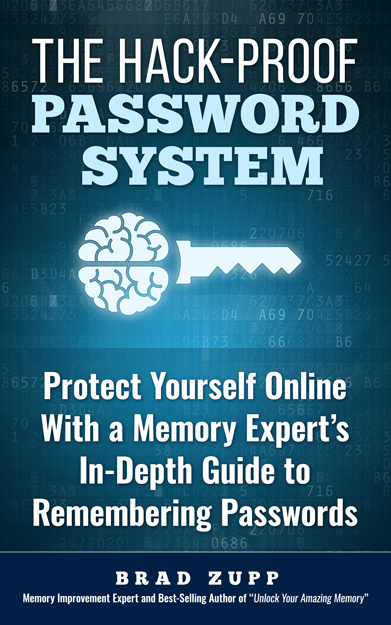

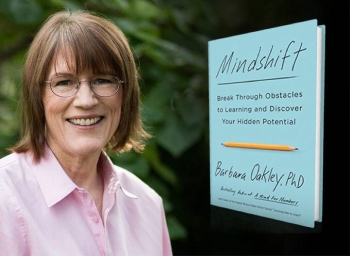 Don’t you love a teacher who can tell a good joke?
 Would you like to pick the mind of the greatest living Major System masters?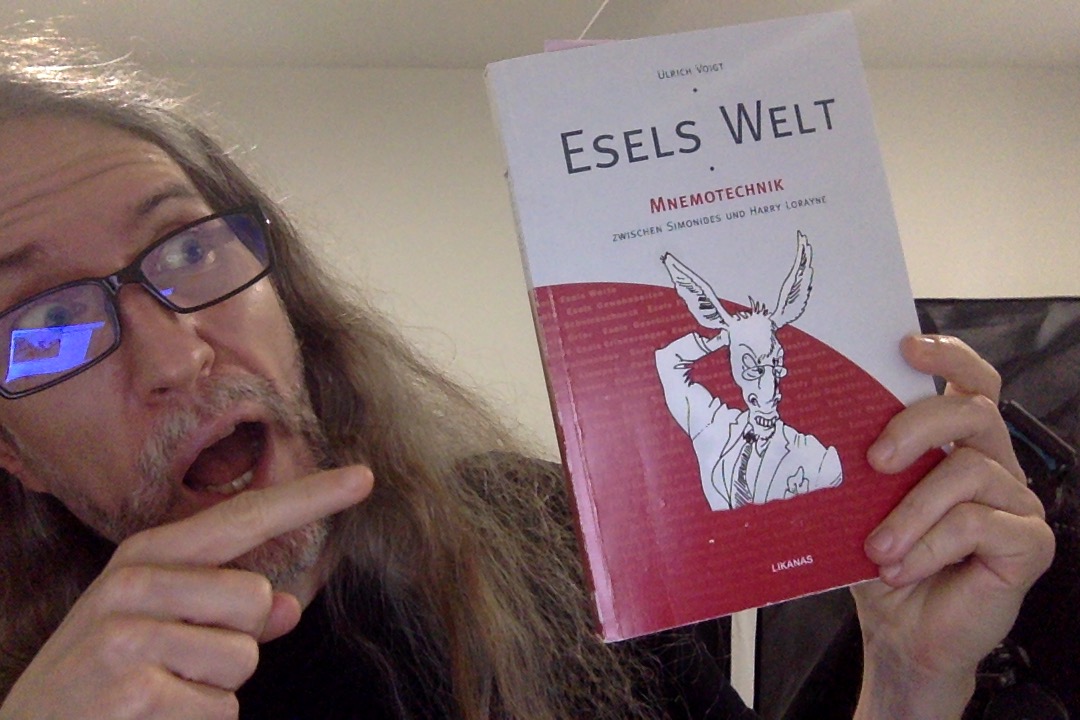
 Go ahead and admit it.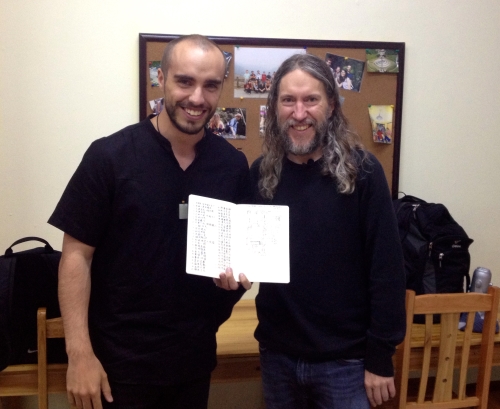

 Hey, it happens.




