TopPodcast.com
Menu
  • Home
  • Top Charts
  • Top Networks
  • Top Apps
  • Top Independents
  • Top Podfluencers
  • Top Picks
    • Top Business Podcasts
    • Top True Crime Podcasts
    • Top Finance Podcasts
    • Top Comedy Podcasts
    • Top Music Podcasts
    • Top Womens Podcasts
    • Top Kids Podcasts
    • Top Sports Podcasts
    • Top News Podcasts
    • Top Tech Podcasts
    • Top Crypto Podcasts
    • Top Entrepreneurial Podcasts
    • Top Fantasy Sports Podcasts
    • Top Political Podcasts
    • Top Science Podcasts
    • Top Self Help Podcasts
    • Top Sports Betting Podcasts
    • Top Stocks Podcasts
  • Podcast News
  • About Us
  • Podcast Advertising
  • Contact
Not in our directory?
Add Show Here
Podcast Equipment
Center

toppodcastlogoOur TOPPODCAST Picks

  • Comedy
  • Crypto
  • Sports
  • News
  • Politics
  • True Crime
  • Business
  • Finance

Follow Us

toppodcastlogoStay Connected

    View Top 200 Chart
    Back to Rankings Page
    Education

    Anthony Metivier’s Magnetic Memory Method Podcast

    Learn, Memorize And Recall Anything Using Memory Techniques, Mnemonics And A Memory Palace Fast

    Advertise
    • Apple Podcasts
    • Google Play
    • Spotify

    Latest Episodes:
    Bilingualism: Why Language Learning Makes For a Healthier Brain May 02, 2018
    Show notes

    Are you a polyglot looking for more information on why bilingualism is so good for the brain? No, I don’t mean a ghost that walks around the attic making loud noises and moving objects. That’s a poltergeist! A polyglot, on the other hand, is a more tame individual who is fluent in several languages. Then there are the hyperpolyglots – those who actively learn and master six or more languages, like Emil Krebs, a 19th-century German diplomat who had mastered around 65 languages by the time of his death. While only 1 percent of people are polyglots; more than half of the world’s population is bilingual (those who speak fluently in two languages). Being bilingual (or multilingual) is said to enhance your better problem-solving abilities, and improve your concentration and focus. These are valuable resources in everyone’s life, something I’ve enjoyed as grad student, professor and avid language learner myself. So, if you are geared to pick up a new language or just want to get better in your mother tongue, use these five amazing hacks in addition to understanding everything about bilingualism we’re about to cover on this page: https://www.youtube.com/watch?v=hyIHcBLHYxE And while you practice your German or French, ask yourself this: Why Bilingualism Gives You A Healthier Brain Seriously: There is a ton of research backing claims that being fluent in more than one language is good for your brain. More importantly: Unlike other areas of science and memory, few articles evoke grave doubts on the advantages of being bilingual. That said… A 2015 article in the New Yorker by Maria Konnikova “Is Bilingualism Really an Advantage?” makes an interesting point: Konnikova says the bilingual advantage seems to have more of a protective effect on the aging brain than it does anything to enhance executive-control functions of healthy individuals. While Konnikova’s arguments are persuasive, I am sure of one thing: When you learn a new language and use new words and grammar rules, multiple areas of your brain work together. It is possible the greatest long-term workout for your brain. And since your brain is a muscle, it needs regular workouts to remain strong, supple and stable! The Inside Story: Why Bilingualism Is Not Just About Speaking Two (Or More) Languages Contrary to general perception, bilingualism is not just about the ability to speak two languages fluently. There are a lot of little nitty-gritty aspects involved. For instance: You could be a “simultaneous bilingual” who learns two languages from birth. Or, you could be an “early sequential bilingual.” Let’s break these terms down: “Early sequential bilingual” is a fancy term for those kids who speak one language at home but learn to speak the community language at school. There is also the “late sequential bilingual” – someone who grew up with one language and then moved to a country that speaks another. Why are these terms important? The differences in how and when you learned your second language often leads to different levels of proficiency and fluency. This, in turn, affects your level of being bilingual. For instance, if you were fluent in French (along with English) in high school but have been using only English ever since, your bilingualism and its related advantages may have deteriorated. The Science Behind Bilingualism In fact, according to a study, simultaneous bilinguals and early sequential bilinguals show different levels of behavioral performance in a lexical representation task that measures how quickly you can classify a stimulus as words or nonwords. (Sebastián-Gallés, Echeverría & Bosch, 2005) Remember this: The more articulate you are in a language, and the more fluently you use both your languages in your daily life, the more bilingual you will be. “You have to use both languages all the time. You won’t get the bilingual benefit from occasional use.” This quote is by the cognitive neuroscientist, Ellen Bialystok who has spent almost 40 years learning about how bilingualism sharpens the mind. A recent study by Yeh-Zu Tzou shows how working memory is important but language proficiency in the native language (L1) and second language (L2) assumes a more critical role in a person’s ability to process and store information simultaneously. Another study shows bilingualism is not a categorical variable (that is you are either bilingual or not) but rather the “bilingual experience is composed of multiple related dimensions that will need to be considered in assessments of the consequences of bilingualism.” The Trouble With Knowing Two Languages: Each Fight For Supreme Control As a bilingual, when you use one language, the other is also active at the same time. This creates a persistent linguistic competition which can result in language difficulties. For instance, bilinguals are known to be prone to the tip-of-the-tongue syndrome where you can remember specific details about a word but cannot conjure the word fully. Some mnemonists and memory champions also term it as “ghosting.” I refer to it as “Magnetic fossilization.” Either way, if you have ever been in a position where someone’s name is right on the tip of your tongue but you can’t get your brain to say it out loud, remember that the word is in competition with some other information or similar sounding words in your brain. But there is good news: The bilingual brain relies on control mechanisms such as attention and inhibition, every time she or he speaks or listens to maintain the balance between the competing languages. Due to this constant practice, these control mechanisms are strengthened with changes occurring in the associated brain regions. Could there be other benefits to this constant brain workout? Bilingualism And Its Connection With a Better Brain As I said earlier, being bilingual provides constant brain exercise. Regularly juggling two languages gives the brain better abilities to filter out unnecessary information which helps in improved focus and attention. Since bilinguals are used to switching between two languages, they are also excellent at switching between tasks, even if these tasks have nothing to do with language. A study by Dr. Viorica Marian and her team proved that bilinguals are better at filtering out unnecessary words than people who speak only one language. In the study, participants were asked to perform language comprehension tasks where they had to hear a word and then recognize its corresponding photo. For example, volunteers would hear the word “candy” and then they would see four pictures, including a picture of candy and a picture of a similar-sounding word, such as “candle.” The experiment aimed to see how well the participants were able to recognize the correct word and ignore the similar-sounding competing word. The results showed that bilinguals performed better than their monolingual counterparts at ignoring the competing words. These results exist because people who speak more than one language are already used to controlling two languages and suppressing irrelevant words they don’t need. The ability to tune out irrelevant information is a strong indicator of mental abilities. And being able to instantly break unwanted mental patterns can help bilingual individuals concentrate better by blocking outside noise in a busy classroom or office space. Why Bilingual People “Monitor” Their Minds Better Another advantage of speaking two languages – you have more efficient monitoring systems. According to this 2009 study, when conditions required high monitoring demands, bilinguals were faster than monolinguals. The most persistent advantage to being bilingual comes at a later stage though. It seems that the aging brain of a bilingual person can resist the effects of dementia far better than those who speak only one language. Research has also shown that multilingual people have a higher density of grey matter in their brains, and older people who speak more than one language tend to have better-maintained white matter. But the big question remains: Does Bilingualism Make A Healthy Brain Smarter? The answer I am afraid is no! No research (that I can find) proves bilingualism enhances executive intelligence, emotional intelligence or intelligence quotient. A Simple Method For Maintaining a Superior Brain (And Mastering Another Language) The truth is … Improving brain function and memory does connect with mastering a new language. But the real gains come from eating a balanced diet, getting lots of hydration, maintaining an active lifestyle and sleeping for 7 hours every night. Add consistent memory training to that healthy mix and you’re golden. But if you leave aside the health benefits, the simple act of learning a new language in itself is a fun proposition. It enables you to interact with interesting people and exposes you to new cultures and practices. Any new challenge and novelty help to keep the brain active and vibrant. Like doing crosswords, for instance, stimulates the brain and makes for a fun workout… So long as you don’t let them frustrate you! And of course, being multilingual can be extremely useful when trying to impress a date. Just don’t say something cringe like, “How do you like my bilingualism?” But the coolest, most fun way to quickly master a new language while maintaining a superior brain is to build Memory Palaces the Magnetic Memory Method way. One important reason why Memory Palace is effective and attractive to many users is that it reduces cognitive overwhelm or overload. There’s more… Creating Memory Palaces the Magnetic Memory Method way unlocks the power of your multiple intelligences. It helps you tap into: Autobiographical memory Sensory memory Iconic memory Episodic memory Semantic memory Procedural memory Working memory Prospective memory Crystal and fluid intelligence This incredible combination of intelligence and memory strengthening is very powerful because, combined with Recall Rehearsal, the holistic process lets you move information from short-term memory into long-term memory faster. If you are keen on this memory training technique… Click on the image below to get started: How Memorizing Vocabulary Makes Bilingualism Achievable Most polyglots use some kind of mnemonics to memorize vocabulary. Some of them use them across the board. Others save the memory techniques covered on this blog for what they call “the Stubborn Quintile.” These are the toughest words amongst the most important words you need to know in order to be fluent. Whether you’re using mnemonics for every word or just a percentage, language learning expert Benny Lewis gives a great example of how he uses them in his excellent language learning book, Fluent in 3 Months. Plus, I cover exactly how to memorize vocabulary in detail myself. The process creates greater brain health because you’re using what memory scientists called “elaborative encoding.” This process is better than rote learning because you use your imagination to interact with the vocabulary you want to learn. Once you’ve mastered memorizing individual words, you can move on to phrases. And before you know it, you’ll be speaking quite well. Just ask Luca Lampariello, another famed polyglot I’ve interviewed at length about his expertise with learning languages. When Words Don’t (And Won’t) Boost Your Brain… Knowing many languages has the power to help you express yourself fluently. And language learning is tremendously useful when you are trying to improve memory, clarity, and focus. With the Magnetic Memory Method, you gain the ability to not only remember information faster. You’ll also enjoy predictable and reliable permanence. This grows in strength each time you create Memory Palaces using this method to create bilingual advantages. Ready to add this memory improvement method to the lexicon of your life? Let me know in the comments below or feel free to post your questions.

    Full show notes at the publisher

    Can Stress Cause Memory Loss And Confusion? Apr 19, 2018
    Show notes

    Can stress cause memory loss and confusion?

    Not if you’ve got a gun in your face.

    Like Ben Thomas.

    Ben was walking through an L.A. neighborhood when he was robbed at gunpoint.

    Next day, when the detective asked him to identify the perpetrator, Ben was able to do it very easily.

    Over time, however, the author who experienced this violent incident, reported that he “remembered fewer images and more facts: the colors of the thief’s hoodie and pants, the words he’d said, even the exact time displayed on my iPod (12:36) at the moment I’d handed it over to him”.

    Why would Ben remember more facts than images?

    It’s because some memories formed under highly stressful situations get so strongly encoded in our brains that we never forget them.

    But does that mean you should put yourself under stress to memorize your sales presentation?

    Can Stress Cause Memory Loss? The Answer Is A Big NO!

    Because, in general, stress impairs memory, makes you forget things or even remember things differently.

    Ben, for instance, could recall the thief’s face vividly for a day or two but after a few weeks, he couldn’t picture the guy’s face at all.

    And keep in mind that Ben’s no dummy.

    He’s not only an author, but also someone who happens to be an independent researcher who studies consciousness and the brain.

    High IQ or not…

    When we’re stressed, some memories stick like super glue while others get warped or lost.

    For that reason, please understand this:

    It’s never a good idea to induce stress when trying to memorize a book, your lessons or your campaign presentation.

    You never know what essential information your brain will skip remembering!

    Instead, increase focus and concentration from the ground up using a WRAP technique:

    https://www.youtube.com/watch?v=MxWLhAeIYOU

    When Are You Under Stress? A Scientific Definition

    This quote is worth reading twice:

    “When an organism faces emotional distress or is physically challenged the autonomic nervous system, a subdivision of the sympathetic nervous system, is automatically activated. Once activated, a cascade of physiological changes occurs that better enables an organism to confront (i.e. fight, freeze) or escape (i.e. flee) danger. The term “stress” applies to the condition under which the autonomic nervous system is activated and stress hormones are released.” (Impairing and Enhancing Effects of Psychosocial Stress on Episodic Memory and Eyewitness Report, Siobhan Marie Hoscheidt, 2011)

    And guess what?

    When you’re frozen, or busy running away, learning gets really tough.

    Worse, there’s a part of the brain that controls stress that can really wreak havoc on your focus and concentration.

    When you undergo a stressful event, the amygdala – a part of the brain that enables emotional processing – sends a distress call to the hypothalamus. The hypothalamus is like a command center that communicates with the rest of your body through the nervous system so that you have the energy to fight or flee.

    Does Stress Make You Forget Things? Yes…
    Even If You’re a Memory Champion

    Want in on a little secret?

    Stress doesn’t discriminate between the regular Joe, a presidential candidate or a memory champ.

    It does and will mess with your brain.

    Like it did for world memory champion Jonas Von Essen.

    When Jonas was called to recite the closing credits of Newsnight from memory, he struggled to remember the presenter Jeremy Paxman’s surname as well as some other names.

    If that doesn’t put the spotlights on just how bad stress can be for even the best memory athlete, I don’t know what does.

    Even as a memory expert, Jonas felt on the spot and stress was part of his embarrassing flub on TV.

    But is it really a fail?

    The answer is a bit more complex, so let’s have a look.

    How Does Stress Affect Your Memory: The Inside Story

    When under stress, brain freeze like what Jonas encountered happens mostly because your thinking is preoccupied with the stress-inducing stimuli – am I looking cool on TV – blocking out other thoughts.

    But that’s not the complete picture.

    While low levels of anxiety can affect your ability to recall information; high-stress situations, like being robbed at gunpoint, increases your brain’s ability to encode and recall traumatic events.

    A study by Marloes J. A. G. Henckens and team demonstrated how “acute stress is accompanied by a shift into a hypervigilant mode of sensory processing in combination with increased allocation of neural resources to noise reduction. This reduction of task-irrelevant ambient noise, in combination with a stress-hormone-induced optimal state for neural plasticity, may explain why stressful events attain a privileged position in memory”.

    What Does This Stress Memory Loss
    Chemical Connection Mean?

    In simple words, when you are anxious, your brain will put you on red alert and increase your focus and concentration on that stressful event by eliminating any other distracting information. This can aid in encoding some information into your long-term memory better.

    However, there’s more to this story.

    Chronic stress, like constant worry about losing your job, can have devastating effects on memory.

    Here’s another one of those quotes worth reading twice:

    “The effects of stress on memory are not always facilitatory. Several studies have demonstrated that while memory for emotional information is enhanced when encoded under stress, memory for neutral information can be impaired (Payne et al., 2006; 2007).” (Impairing and Enhancing Effects of Psychosocial Stress on Episodic Memory and Eyewitness Report, Siobhan Marie Hoscheidt, 2011)

    Here’s another:

    “Schilling et al. examined the effect of varying levels cortisol (a common measure of stress) on recall performance. The results provide evidence that stress and memory performance have an inverted U-shaped relationship, where too much stress has a deleterious effect on memory performance.” (Psychosocial Stress Increases Activity-but not Event-Based Prospective Memory, Mollie McGuire, 2016)

    What does all this mean?

    Simple:

    When under stress, your body activates a part of the adrenal gland that dumps cortisol – also known as the stress hormone – into the bloodstream.

    Can Stress Cause Confusion? The Truth About Memory, Stress And Cortisol

    In the short term, cortisol may be beneficial (basically because it mobilizes white blood cells and enhances the immune system).

    However, cortisol binds to cells in that area of the brain that converts new experiences into memory. This binding disrupts the memory-forming process, ultimately making memory impairment permanent.

    Researchers at the University of Iowa also found a connection between cortisol and short-term memory loss in older rats.

    Another study by Cheryl D.Conrad found that chronic stress reduces spatial memory: the memory that helps you recall locations and relate objects. “Chronic stress clearly impacts nearly every brain region.”

    Precisely the reason you sometimes forget where you kept your car keys when you are about to rush to the office for an important (read stressful) meeting.

    High stress also activates the release of adrenaline into the bloodstream. Adrenaline increases your attentiveness which is important to support your defense mechanism of “fight or flight” when put in a stressful situation.

    However, adrenaline and memory do not mix well.

    While the increased attentiveness may have a fleeting beneficial effect on memory; the anxiety and distress – that causes adrenaline production – is likely to lead to brain fog and forgetfulness.

    A Non-Stressful, No Brainer Memory Booster

    It’s actually counterproductive if you worry about not remembering important details.

    The more you worry about losing your mind, the more your brain gets stressed and the more you forget!

    In reality, your ability to remember is related to the level of concentration and focus you used when trying to memorize facts than anything else.

    Focus and concentration are key to memory recall. They are necessary for creating complete memories without any added stress.

    One way to improve your concentration and focus is through meditation.

    This mental exercise which involves sitting comfortably, focusing on your breathing, and then bringing your mind’s attention to the present is also beneficial in calming the mind and reducing effects of stress and anxiety.

    Another thing to remember is that a ton of stress comes from poor diet. Specific types of food can have beneficial – or detrimental – effects on memory. Moreover, it is possible to change your diet to maintain, and achieve better levels of memory.

    But if you want just one thing that is not only the ultimate stress reducer, but also an effective memory enhancer, build Memory Palaces the Magnetic Memory Method way.

    This powerful memorization method was even adored by the ancient Greeks. I’ve added lots of additional tools, including relaxation techniques that enable you to get more from your memory – without the hassle of stress.

    Why Use A Memory Palace?

    Good question.

    It boils down to this:

    The Memory Palace is the best memory technique because as a foundational learning technique, it allows you to develop and use spatial memory in a way that unlocks the power of autobiographical memory, episodic memory, semantic memory and more.

    This enables you to move information into long-term memory faster and with reliable permanence.

    Building a Memory Palace is a simple technique. You start by associating information with specific areas of a familiar location.

    Then you walk through that location (in your mind) and place pieces of information that you wish to memorize in specific areas. When you want to recall that information, you go through that mental path and access that information easily.

    If you are interested in this memory method, click on the image below:
    Free Memory Palace Memory Improvement Course

    You can use more than just visual imagery to remember information through association!

    Truly magnetic imagery involves a combination of these six Magnetic Modes:

    Conceptual (Ideas)

    Olfactory (Smell)

    Gustatory (Taste)

    Kinaesthetic (Touch)

    Auditory (Sound)

    Visual (Sight)

    A quick memory tip:

    If you are struggling to remember these Magnetic Modes, rearrange them to make the acronym COG KAV. Next, create the image of a giant machine in a cave. Simple? Now, you will never forget your Magnetic Modes. Here’s an infographic to help make this strategy clearer:
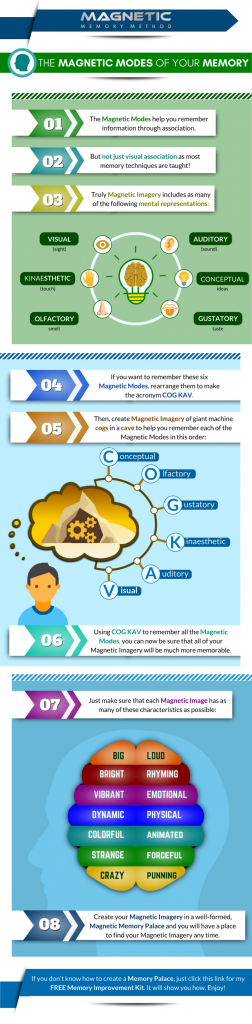
    Magnetic Memory Method Magnetic Modes And Magnetic Imagery Infographic For Powerful Memory Palace creation

    Lead A Balanced Life

    Dealing with constant stress and worry is not a great way to lead your life. Neither is it a reliable memory enhancement strategy.

    The good news is that leading a balanced life is simple.

    It involves a good night’s sleep, nourishing diet, meditation, and an effective, dedicated memory strategy (like the Magnetic Memory Method).

    Combined, these simple activities will enable you to create strong memories that you can enjoy without worry.

    Now how does that sound?


    Stoic Secrets For Using Memory Techniques With Language Learning Apr 12, 2018
    Show notes

    Christopher Huff Magnetic Memory Method PodcastStoic philosophy has helped thousands of people live better lives.

    But can it help you use memory techniques to learn a language better?

    Turns out…

    The answer is a resounding Yes!

    And to show you exactly how, Christopher Huff joins us on this episode of the Magnetic Memory Method Podcast.

    Click play and you’ll learn:

    * The secrets of rhythm you can use to help you remember words.

    * How Christopher used the American presidents to better remember Chinese tones. (This approach is kind of like a hyper-focused PAO without a Major System supporting it.)

    * How to memorize the prepositions in English in alphabetical order using a simple song.

    * The powerful lesson Christopher learned from his first interaction with mnemonics.

    [smart_track_player url=”https://traffic.libsyn.com/magneticmemorymethod/Stoic_Secrets_For_Using_Memory_Techniques_With_Language_Learning.mp3″ social_linkedin=”true” ]

    * Why Christopher places a cap on how many Magnetic Images he creates when using Anki.

    * The biggest mistake Epicurus says you can make – and how it applies to memory techniques and language learning.

    * The matter of jokes and telling lies in Toki Pona.

    Regarding that cool language, make sure to subscribe to Christopher’s Language Fan YouTube channel and check out his language learning videos.

    https://youtu.be/pl_jeMu9-ko

    * Christopher also has an amazing video about the Goldlist Method, and in this interview he mentions the super-fascinating Leitner system.

    * Christopher’s powerful definition of fluency, and how you can legitimately feel fluent even with a small pool of words and phrases.

    * Why Christopher compares the use of mnemonics for language learning to skitching.

    * The ultimate tool for developing fluency – something that we all have access to and yet too few people use!

    * … and many more memory strategies of the world’s best language learners.

    For more cool things from Christopher, please check out his Instagram – he draws cool comics and is constantly traveling all over the place.

    And if you have questions or comments, please leave them below so we can get back to you.

    In the meantime, if you haven’t already grabbed my FREE Memory Improvement Kit, here’s where to get it:

    Free Memory Palace Memory Improvement Course


    3 Shocking Ways Smartphone Addiction Erodes Your Brain And Memory Mar 15, 2018
    Show notes

    Smartphone addiction Magnetic Memory MethodCan smartphone addiction fry your brain cells?


    Not literally, but what about that twitchy connection to your phone?

    It definitely affects your abilities to concentrate and think deeply.

    And that means device addiction harms your ability to remember.

    Worse:

    Smartphone addiction not only turns you into a social pariah…

    It Can Also Be Fatal!

    In 2015, distracted driving (due to texting or talking on the cellphone) killed 3,477 people and injured another 391,000.

    And there’s more bad news…

    According to the National Safety Council, using cell phones while driving can make you more accident prone than even drunk driving…

    No wonder people are concerned over how cell phones are affecting their lives!

    In January this year, two of Apple’s biggest shareholders wrote an open letter to the company requesting it to provide “more choices and tools” so that parents could restrict their children’s smartphone usage time.

    The letter added that researchers have found this shocking statistic:

    “U.S. teenagers who spend 3 hours a day or more on electronic devices are 35 percent more likely, and those who spend 5 hours or more are 71 percent more likely, to have a risk factor for suicide than those who spend less than 1 hour.”

    Smartphone addiction is a serious issue and may need some creative problem solving using the C.R.E.A.T.E. formula:

    https://www.youtube.com/watch?v=LOKi8pe7C8M

    But here’s the real question:

    What about YOU?

    Are you displaying cell phone addiction symptoms?

    Let’s find out:

    Are You A Nomophobic?

    I know you will never admit it, but when you are unable to find your phone for even 30 seconds, it causes a minor anxiety attack.

    How do I know this?

    Because it happens to people every single second of the day.

    And there’s a name for is disease:

    Nomophobia or ‘NO MObile PHOne phoBIA’ is the fear of not being able to use your cell phone or have access to your device.

    Want to know if you’re truly addicted? Take this online quiz to find out.

    Nomophobia is real, but the medical community is not ready to declare overuse of cell phones as a clinical addiction.

    Ignoring The Data?

    They neglect to do so in the face of some shocking data.

    As the Joker suggests (I misquote), “whatever doesn’t kill us, only makes us stranger”…

    Nearly one in ten people admitted to using their smartphones during sex, in the shower, on a movie date, in church or other place of worship, as per the 2013 Mobile Consumer Habits.

    What’s more, nearly three-quarters of the respondents said that they were always within five feet of their smartphones.

    Although doctors do agree that if you can’t stop using your phone, even when it’s harming your life, you may be “addicted.”

    Smartphone Addiction Magnetic Memory Method Podcast

    “Only a small percentage of people qualify as addicted. But many people overuse their smartphones.”

    This quote comes from Dr. David Greenfield, assistant clinical professor of psychiatry at the University of Connecticut and founder of the Center for Internet and Technology Addiction.

    Smartphone addiction is not listed as an official mental disorder listed in the Diagnostic and Statistical Manual of Mental Disorders. However, psychologists are debating about whether that should change.

    Some researchers also say that the development of smartphone addiction is similar to that of a gambling disorder (or gambling addiction), which is included in the Diagnostic and Statistical Manual of Mental Disorders.

    How does addiction work?

    With gambling, the reward of winning once in a while is what hooks people to the habit.

    Smartphone addiction works on a similar principle. Most of the time, a phone notification will be insignificant.

    However, every once in a while…

    Something Meaningful Happens!

    Like a phone call from an old friend, or a Facebook notification that someone has tagged you in a photo. Researchers say this type of messages are irresistible and can lead to overuse or addiction to your device.

    There’s more…

    Device addiction can extend far beyond just the smartphone.

    Recently, the World Health Organization announced that video game addiction will now be classified as an official mental health condition in the 11th revision of the International Classification of Diseases.

    According to the WHO, gaming disorder is “characterized by a pattern of persistent or recurrent gaming behavior manifested by:

    1) impaired control over gaming (e.g., onset, frequency, intensity, duration, termination, context);

    2) increasing priority given to gaming to the extent that gaming takes precedence over other life interests and daily activities;

    3) continuation or escalation of gaming despite the occurrence of negative consequences.”

    “The behavior pattern is of sufficient severity to result in significant impairment in personal, family, social, educational, occupational or other important areas of functioning,” WHO adds.

    Whether it is to play video games or check your Facebook notifications, here’s the truth:

    Spending too much time with your smartphone will slowly but surely harm your mind.

    How Smartphone Addiction Damages Your Memory

    For starters, the presence of smartphone alerts is disrupting our already weak ability to focus on the task at hand.

    Moreover, excessive use of cell phones also causes headaches, impaired concentration and memory, and fatigue.

    If you are constantly using your mobile phone to surf the internet it affects the brain’s frontal lobe and brainstem functions, resulting in decreased ability to speak, reason and comprehend social cues.

    Researchers also found that smartphone addiction can lead to an imbalance in brain chemistry that triggers depression and anxiety.

    Ultimately, smartphone addiction can impair your ability to interact in the real world to the detriment of your personal and professional relationships.

    It’s Not Just Brain Damage

    Smartphone addiction does more than alter your brain chemicals. Your posture also gets affected when you use your phone all the time.

    And according to the National Center for Biotechnology Information, posture affects mood, behavior and memory.

    Therefore, frequent slouching to look at your device screen can make you depressed.

    What’s more, Researchers at the University of Michigan state that the tucking your chin (or chins) and hanging your head to look at the smartphone is also causing empathy levels to fall and narcissism to rise among individuals.

    The only thing worse than narcissism is abusing these memory improvement vitamins.

    A Reliable, Easy & Fun Way To Learn Things
    (Without Googling It On Your Smartphone)

    We have all done it:

    Reached for our smartphones the instant we want to verify a fact, learn a new bit of information, watch a video or read an ebook.

    But there are other approaches.

    One simple way to undo the damage done by mobile phone overuse is to switch off the phone and go back to a real book for information or entertainment.

    Need more incentive?

    Re-read of a book from the past. This way you’ll not only defeat Digital Amnesia, you’ll also enhance your attention as you give your brain the opportunity to revisit information from the past offline. Re-reading (and reading in general) also promote delayed gratification. You have to get through a lot of pages in order to see the entire story. The reason this works to preserve your brain has to do with what scientists sometimes call desirable difficulty.

    You can also Mind Map, and I’ve recently shared one of my own to demonstrate just how powerful this approach can be for memory, focus and concentration:

    https://youtu.be/7DjtAAZcw6k

    Digital Fasting…
    The Cure For Smartphone Slavery?

    But the ultimate technique is called “Digital Fasting.”

    It’s easy:

    Just leave your smartphone at home or sit in a cafe with no WiFi so that you are not distracted by your device and can dedicate mental space to the book at hand.

    And if boredom strikes and you feel the need to sneak out your smartphone, use these 3 ridiculously boring ways to add focus and excitement to your life.

    But no memory improvement training will work to the highest possible degree if its not linked to memorizing information that will immediately improve your life.

    And to do that, you learning projects need to involve Memory Palaces (ideally by creating them the Magnetic Memory Method way, including these sensory memory exercises).

    Why On Earth Is That?

    Because when you create Memory Palaces using the Magnetic Memory Method it lets you measure your memory improvement activities.

    And tracking your outcomes leads to rapid improvement in the way information gets stored in your long term memory.

    Even better:

    All other memory techniques including playing crossword puzzles can be used inside of Memory Palaces.

    But this never takes place the other way around (For example, you can’t use Memory Palaces inside of the Major Method the way you can use the Major Method inside of Memory Palaces.)

    Building Memory Palaces is also great for dealing with a diminishing attention span.

    Use the tips in this video about how to break through your attention span myths and limitation to help you craft the attention span you deserve.

    If you are looking for a complete brain rehab try this method…

    Click on the link below to get started:Free Memory Palace Training Magnetic Memory Method

    Get More Out Of Your Existence

    You want to live a full, vibrant, exciting life?

    You don’t want a zombie-like existence where a handheld device controls your emotions, moods, experiences and even what information your brain can or should store? Focused attention is what you want instead.

    If “hell yeah” is your response then we are on the right track!

    But don’t worry if you don’t have it all mapped out when trying to get rid of the smartphone addiction habit. You don’t have to.

    You can create your own hacks for building better habits. You can explore multiple mnemonic strategies. And you can learn to master many mnemonic devices that will make using your mind and memory an absolute delight.

    Better still, use the magic of Memory Palaces to unlock your brain’s true potential and lead the magnetic life you deserve.

    Come on, say it loud (just not into your smartphone) – hell yeah! 🙂


    Tansel Ali On How Gratitude Can Help You Remember Almost Anything Mar 08, 2018
    Show notes

    Tansel Ali Magnetic Memory Method PodcastTansel Ali is possibly the most positive memory champion on the planet.

    Turns out there’s a solid reason why.

    A few reasons, actually.

    And in this episode of the Magnetic Memory Method Podcast, I speak with 4x Australian Memory Champion Tansel Ali talks about memory improvement and positive thinking.

    This may well be the most valuable hour you spend listening to a podcast about memory improvement.

    Why?

    For starters…

    In addition to discussing the role of gratitude in coming up with effective visualizations when using mnemonics, Tansel discusses the importance of reading, memorizing cards with music on and focusing on the right things to maximize performance in your memory and life.

    Plus, when you scroll up and click play above, you’ll soon discover…

    * Why Tansel was originally skeptical about memory improvement and thought all TV memory trainers were fake.

    * The factors responsible for making people suspicious of memory techniques because they seem like magic “tricks.”

    * How Tansel wound up at his first memory competition and took second place.

    * The other rewards memory improvement brings you, including mindset, job performance and fun.

    * Tansel’s transition from memory competition to enhancing his own life and the lives of others through teaching memory.

    * Why you need to continue challenging your memory almost like the physical training of the body to keep the mind in top shape.

    * Exactly how participating in memory competitions help you develop preparation and developing positive self-talk.

    * Why Tansel sometimes FORCES himself NOT to use memory techniques in order to challenge his brain. This is a very powerful study tip.

    * Tansel’s definition of consistency and the development of successful habits that you can use to challenge yourself.

    * Why you should go without fear of making mistakes for the health of your brain and the development of effective discipline.

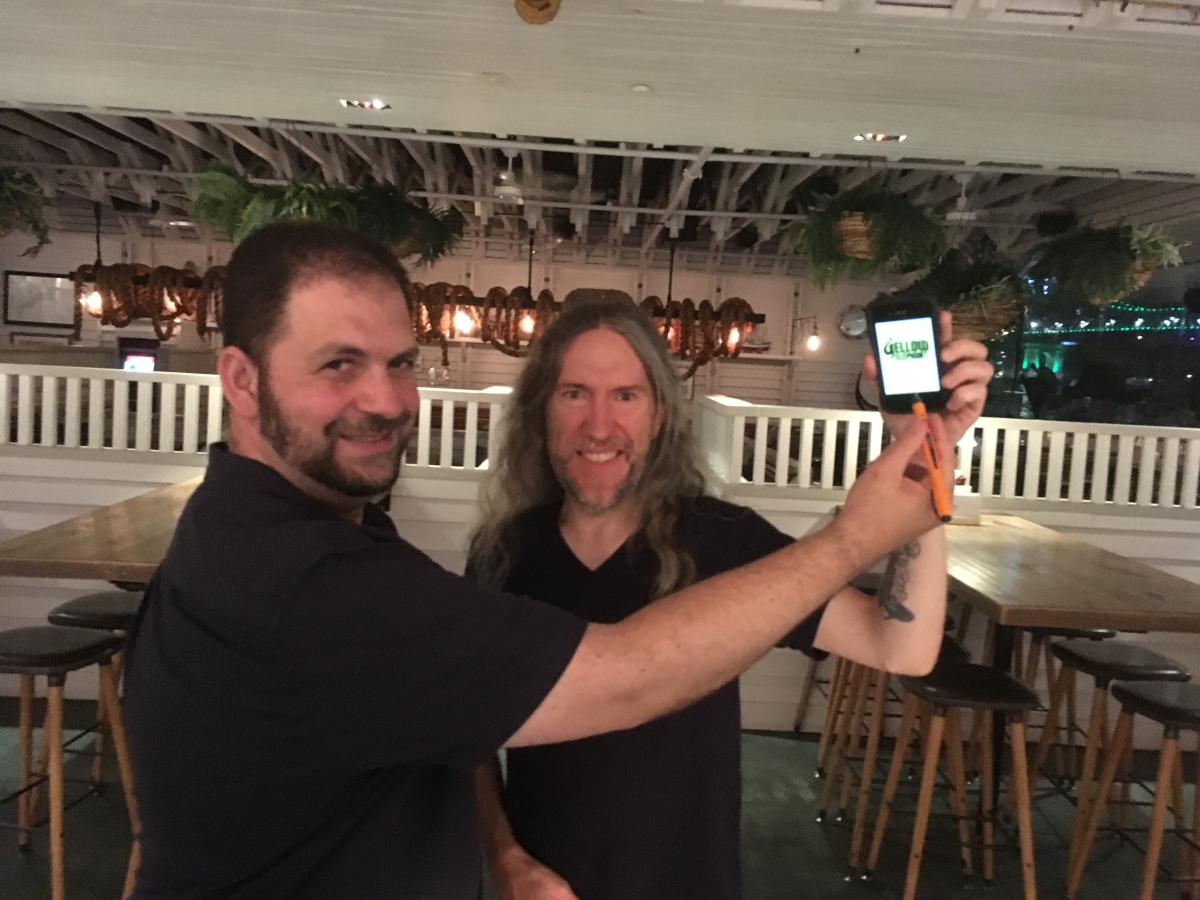
    Tansel Ali Anthony Metivier Mind Exercises Around the World Magnetic Memory Method Podcast
    Tansel Ali book signing of The Yellow Elephant on Kindle for me in person.

    * Tansel’s personal training regime and how he makes it count.

    * How Tansel thinks about visualization as a kind of muscle and how he trains it for competition.

    * A quick comparison of Alex Mullen’s training regime and Tansel’s focus on efficiency to improve the right skills and maximize performance.

    * A discussion of aphantasia and why you don’t actually have to see pictures in your mind to use memory techniques.

    * How Tansel uses feelings and thinking in words to create mnemonic imagery – and why feeling creates more impact.

    * How to give the mnemonic imagery you create greater value through personalization.

    * Practical reasons you should memorize cards. For one thing, they set you up to make creative decisions that goes beyond just remembering information. And here are 13 more reasons you should have a system for remembering cards.

    * Tansel’s thoughts on music and memory and how he memorizes cards with music playing.

    * The benefits of training your memory and where to start (also discussed in this video):

    https://youtu.be/4hHtkIOy36E

    * The importance of making memory training fun and interesting, rather than a chore.

    * Tansel’s history with apps for memory training and meditation and how to reduce stress.

    * How Tansel changed from wallowing in negativity to living in positivity.

    * Why you don’t have to use bizarre or violent imagery to remember information and positive options you can explore for creating and using mnemonics.

    * Why we both approach shows like Breaking Bad with caution in order to maintain a positive mindset. Not that Breaking Bad can’t be useful for memory improvement, as you can see here:

    https://youtu.be/xES-JOf3n20

    * The role of gratitude in increasing the value of your imagination by focusing on specifics.

    * Why “the law of attraction” is useless without taking action – and how you can use mindset to create the excitement needed to make sure you achieve your goals.

    * Why Tansel wishes he had read more as a young person.

    * Some of Tansel’s favorite memory books and why they changed his life, including books by Tony Buzan and Dominic O’Brien.

    * Tansel’s take on Digital Amnesia and why he chooses to see the positive side of the debate about the so-called Google Effect.

    * How Turkish is helping Tansel learn Japanese even without using Kevin Richardson’s Learn Japanese App (a.k.a. Memory Palace).

    I want to thank Tansel for being on the show and thank you for listening. Please be sure to grab his books, visit his site and get connected on his various online platforms using the links below.

    Further Resources

    Yellow Elephant: Improve Your Memory And Learn More, Faster, Better by Tansel Ali

    How to Learn Almost Anything in 48 Hours: Shortcuts And Brain Hacks For Learning New Skills Fast by Tansel Ali

    Subscribe to Tansel Ali’s YouTube channel

    Visit Tansel Ali’s website

    Tansel Ali on Twitter

    Tansel’s World Memory Stats


    4.1 Painful Life Mistakes Burned Into My Memory And How To Avoid Them Feb 27, 2018
    Show notes

    We all make mistakes. In fact, life mistakes are inevitable. Heck, in many cases, they’re even desirable. After all, we learn from our mistakes when picking up a language – including our native mother tongues. But some life mistakes are probably avoidable. Like the 4.1 I’m going to discuss in this post. They are in no particular order of importance. But I’ve stuck the one with a tutorial at the end. I believe if you pay that final point the most attention… … and put its mini-lesson into action… You will avoid SO much pain and suffering. I wish I had known about that unique set of strategies anyone can use at least 21 years sooner! So whether you’re 41 or any other age, let’s dive in with these mistakes life has burned into my memory and that I could have done without. 1. You Cannot Fulfill Anyone Else’s Dreams(No Matter How Hard You Try) Maybe it’s all the Romantic poetry I read. Or maybe it’s just in my genes. Whatever the reason, I have somehow wound up with a tendency to try and make others happy. But it’s a trap! Every time. First off, “happy” is mostly meaningless. There are too many possible definitions. Most of them are far from impressive, let alone correct. I prefer the Greek term eudaimonia. Some people translate it as happiness, but it actually refers to “flourishing.” Already, that sounds better. Concrete. Something you can feel, see, embrace. But even then, you cannot give flourishing to another human being. The best you can do is reach out and try to connect. Share with them some of what you know and the story of how you came to understand it. Yes, there is “hard teaching.” There is the do-this, do-that of the Memory Palace. Anyone can repeat the process, even if they’re a skeptic at first. (Especially if they’re skeptical.) Likewise with brain exercises. But getting people to complete the exercises? That’s entirely on them. The best you can do is offer inspiration and encouragement. And if you love them, let them be. Our siblings on this long-suffering earth can only do the things they are going to do. And those of us who have traveled to a particular destination, can only show the way – the way we took, amongst many possible paths. Though to reach some destinations, there really are only singular and definitive ways to reach the end. Either way, if student and teacher are lucky enough to meet somewhere on the road, they can break bread. Maybe sing a song or two together. Or just hang out on a YouTube Live like this one we did for my birthday: https://youtu.be/kf4KC8O6sJY (If you’re not subscribed to my YouTube channel, you can take care of that here.) But sooner or later, both will be off again on their individual journeys into the unknown. And that’s a beautiful thing. But when you try to tether ships together… All too often, the ship bows start to knock. And no two sails interpret the wind quite the same. How could they? Same wind. Different sails. If something you’ve taught them about sailing helps them correct course to wherever it is they’re trying to navigate, that’s great. But they ultimately accomplished the task of navigation. From the deck of their own ship. And there are lots of possible destinations. We can’t all wind up on the same islands together. Nor should we. Anyhow, I’ve wasted a lot of time and energy trying to redirect some of the wind filling my sails to help others. It never works. Here’s What Guides You To Success Better What does work is this: Sharing the miracle of what one has learned about harnessing the wind’s power. And respecting what the wind can do. It sometimes makes sense to help a friend patch up one of their moth-bitten sails. But you’ve got to make sure you don’t get stranded on their ship. Especially during a storm. Keep yourself tied to your own mast. That way you’ll always have a way back to your own ship. And you reduce the danger that you may be the reason why the ship of your friend has started to go down. Because the cruel reality is that help can be a hindrance. Keep your awareness high of that potential problem and you’ll be better off and help save yourself and others from drowning under the weight of wisdom they may neither want nor need. Is all that too abstract? Perhaps. But rest assured that the stories lurking behind these images are memories I could do without. And I think that even without concrete examples, they could help you avoid many disasters too. 2. You Always Have All The Resources You Need(Even If You Sometimes Fall For The Scarcity Illusion) Actually, I don’t have any unusual nightmares lurking behind this life principle. But I’ve seen many people not take action because they believed in scarcity, rather than abundance. They didn’t have enough money. They didn’t have enough energy. They didn’t have enough time. In every case, I could easily spot why these claims weren’t valid. And when I opened my mouth about why I thought so… well… see point one above. It’s very hard to make abundance visible to people convinced that they don’t have enough. In fact, it may be impossible. It seems like a universal rule that they have to figure it out for themselves. I hate cliches – especially when they’re right – but I too have been the horse you could not force to drink. Not often, but I get it. I’ve just been blessed not to be duped by the lie of scarcity all that often in my short life. But I’m aware of its potential for evil. And the scarcity-mindset truly is evil. The “Else” Exercise That Erases Scarcity From Your Brain If you suffer from it, here’s a simple tip Jonathan and I talk about in Branding You Academy: “Else.” When you’re asking any of the famous “W” questions (What, Where, When, Who, Why) always add an “else.” Like this: What else? Where else? When else? Who else? Why else? And of course: How else? Get out a big fat sheet of paper and let it all out. Brain dump. Mindmap. C.R.E.A.T.E. the way I talk about in this YouTube Live: https://youtu.be/LOKi8pe7C8M Do whatever it takes to squeeze out every possible option. Whatever it is you want to accomplish, you can find a way. At the very least, you can find a way to get started. And there will be magic in the movement. Action is a special energy. Without the woo-woo of “the Secret” or “the Law of Attraction,” I can explain why you will start to attract all the resources you will need if you just start moving – and keep moving: It’s simple: Because movement reveals hidden resources! And it gives you what Gary Halbert calls a Fighter Pilot Attitude. The Amazing Self-Help Secret Buried In A Fragment From Kafka I also think of that story from Kafka. You know the one (I’ll add a bit of my own flair, if you don’t mind): The man who always takes the train to the next town for work misses his train. So he borrows a bike. When he gets to the next town, he asks an old man to watch over the bike as he goes to work. Before he leaves, he tells the old man: “I can’t believe how many more things I noticed about the landscape while riding the bike.” The old man replies: “Just think how much more you’ll notice if you walk.” Exactly the same thing will happen to you if you take action. Instead of sitting on a speeding train of inactivity with your eyes blind to all your options, take another route. And take that route another way. You’ll start to notice a whole new world of detail – and possible avenues of action. And you’ll talk to people you never noticed before. People who will open you to even more perspectives. Before you know it, you’ll be walking everywhere – the world will seem too abundant not to take your time and bask in everything it offers. 3. There Is No Such Thing As Free The Internet is pretty cool. But I’ve been burned by it many times. It’s like jacking the Gutenberg press directly into a vein. The only problem is… No one can consume all that content. And even if any of us could… They’d never be able to take action on even a small percentage of that knowledge. And that’s a real problem. Thanks to our genetic heritage, we are hunter-gatherers. And the Internet triggers that ancient need to hunt and gather things that seem valuable to us. We stock ‘em up and store them for the great famine. Works great with berries and meat – if you know how to preserve them. But with knowledge? It’s horrible. We’ve got a world full of people with all the knowledge they’ll ever need at their fingertips. There’s NOTHING you cannot hoard into your coffers on the Internet for free. And that’s a real problem for reasons that go far beyond file-sharing and lost revenue for content creators. It’s a problem for all of humanity because discipline is slipping. Completion rates are plummeting. And those who escape the grip of Digital Amnesia and don’t fall prey to the attention span myth are getting fewer and fewer. The consequence appears to be a growing elite of action-takers. This elite wins more and more as an ever-increasing majority of people fall into the munching gears of the machines and algorithms that have turned human attention into a commodity. People struggle to pay attention on digital devices. And they’re not processing information the same way. For this reason, information now costs far more than ever before. Learning costs you more time and mental energy. Why? Because it takes longer to consume content when you’re endlessly flipping between 100 tabs and interrupted by dozens of notifications per minute. And then you have to go over it again because the information is far too quickly – and easily – forgotten. We’re still learning the lessons we need to learn, but the solution won’t change: Invest in offline education at least as much as online education. How To Complete The Quest For Balance BetweenOnline And Offline Knowledge Find a balance between the two. Get and read at least as many print books as digital books. Attend at least as many live training events as the video courses you complete (assuming you can finish them in a world of digital distractions). Invest in others by being with others. That will help you invest in the future. Sure, it’s grassroots. Not always as International as the Internet seduces us into wanting. But we know from basic brain chemistry that we need the chemicals that only being around others create. And so much of the confidence and self-esteem issues, not to mention the vapid tribalism that seems to be getting worse and worse, is quite obviously tied to how much time we’re spending in online tribes instead of local ones. That said… 4. There Is No Such Thing As Failure The truth about failure is a hard and contradictory lesson to learn. Especially when living at the top of your game technically requires you to fail a fair amount. Or at least… That’s the way it’s usually framed. Here’s the truth, however: No one likes failure and they’re right to try and avoid it. Failure is painful! And the typical way people advise us to “hack” failure is, to be frank, totally obnoxious: “Fail fast. Fail often.” Uhmmmmmm… No. And A Thousand Times No I say this with certainty because the best antidote to failure is simple: It’s success! Now, I realize that I waxed messianic at the beginning of this post about the serious role mistakes play in our success. I have not forgotten that little speech. But mistakes aren’t failures. They’re sign posts that something needs to be changed. Like you sometimes need to change the ways you approach learning faster and remembering more. Dive in because taking action leaves clues regarding what to change and often reveal precisely how to change things.lan Especially if you use the “else” exercise I shared above. But there’s also something else that leaves clues and shows us how to correct things that have gone wrong. Again, it’s success. So instead of failing and failing often, how about succeeding and succeeding often for a change. And to do that, maybe you do have to put yourself in situations where you will “fail” from time to time. But often enough, with just a bit of research and self-understanding, you can put yourself in contexts bound to give you more “quick victories” more often. For example, if you know about your sensory preferences and the personal learning hierarchy I teach you how to discover in The Magnetic Memory Method Masterclass, you can “engineer” learning situations in which you’d actually have to try hard to fail. In brief, we all have at least 6+1 Magnetic Modes. The main 6 look like this: The 7th is space itself. The 7th is the Magnetic Mode we use to create and use Memory Palaces. Do You Know Your Learning Hierarchy? You Learning Hierarchy is based on knowing whether you are more visual, auditory or kinesthetic concerning a particular topic. Oh yes, your Learning Hierarchy can change! (It’s sneaky that way!) But self-understanding is the way you stack the chips in your favor. Sadly, most people are stacking those chips against themselves. I’ve done it to myself far too many times. But here’s the cool thing about getting older and having been fortunate enough to stumble into the art and craft of self-observation: I feel I’ve managed to get out of the major life ruts we humans tend to fall into… … just in time to set the stage for a much more enjoyable passage into the next stage of life. Speaking of self-observation, here’s what I really wish I’d discovered sooner: 4.1 Not Learning To Meditate Sooner CreatedYears Of Unnecessary Suffering Frankly, every minute spent in meditation is the best investment of time and energy in the world. And I wish I’d taken it more seriously sooner. I first learned about it in Grade 12 English. Our teacher took us through a guided meditation out of the blue. I’m not sure why he didn’t do it at the beginning of every class. But it made sense to me then and although it would be many years yet before I got into it seriously, the practice made a mark. However, I’m a skeptic at heart. And I need science that makes sense before I take action on certain things. And I just didn’t know that a lot of science supports a number of the meditative practices I had dismissed. Like these reports on how to improve concentration and memory Buddha-style. To be fair, a significant amount of the science I needed to discover wasn’t out there yet. And the Internet, as dangerous as it can be for taking action, wasn’t around to make it discoverable. Plus, I was in that deadly hunter-gatherer mode that leads us to “save data for later” in the form of books marks and other dangerous tools that create forgetting. Why There Truly Is Happiness Beyond Thought And it wasn’t until a friend told me about Happiness Beyond Thought by Gary Weber that I ordered a print copy of the book and gobbled it down in a way that never happens online. (Thanks to Ben at Project Monkey Mind for the wind I needed in my sails!) At least for me, it was important to get the physical copy. Reading it would never have happened online because it’s just too twitchy a space for me to get any reading done. Anyhow, Weber gave some solid science. And he explained how research reveals certain yoga moves are more likely to help men for some reason. Yet, oddly enough, a number of those moves tend to be practiced more often by women. Meanwhile, men lock themselves into poor results because they tend to be more attracted to the cerebral brain exercise-type meditation. Lo and behold, I gave some of these more movement based meditations a try. And before you know it, I was enjoying PNSEs like there’s no tomorrow (Persistent Non-Symbolic Experience). At first, these experiences scared me. How I Escaped My “Dark Night Of The Soul” I guess you could say I had what some people call a “Dark Night Of The Soul.” It lasted for almost a year. Across this period of time, I mainly experienced the oneness that the non-dualist Advaita Vedanta-types talk about. And frankly… I didn’t like it. For awhile, I couldn’t even understand the point of being alive at all given the conclusions this experience raised in me. But then… With consistent, persistent practice… T…

    Full show notes at the publisher

    The Freedom Journal For Language Learning: The Ultimate 10-Step Guide Feb 23, 2018
    Show notes

    The Freedom Journal… sounds ambitious right? Well, what if I told you that I’ve discovered profound memory benefits from journaling for language learning, including boosts in physical and emotional wellbeing? Benefits that definitely deserve the word “freedom.” That’s what I am going to tell you about. And it’s all happening right now in this step-by-step guide. This page will show you how to use The Freedom Journal to experience multiple levels of mental freedom while using it to learn a language with consistency and confidence. The best part? You don’t have to journal blindly. You don’t have to start from scratch or wonder exactly how you’re going to chart your path towards improved fluency. You just have to: Click play on the podcast above. John Lee Dumas himself is on this episode of the MMM Podcast to help explain how this amazing tool came into existence. Grab yourself your very own Freedom Journal. ideally in print for the fullest brain benefits. Note: It’s now called the 100-Day Goal Journal. Then, have the language you want to learn… A couple of Memory Palaces… 5-10 minutes in the morning, another 5-10 in the evening… And you’re ready to experience brain benefits and fluency like never before. Ready? Let’s go! A (Very) Brief History Of Journaling You know what journaling is, right? Your words. About you. On paper. Or written inside a digital document. Take your pick. More carefully defined: A journal (or diary) is a place you store entries on a daily or near-daily basis. It is voluntary, helps you put problems to rest and keep yourself moving forward. You can journal to maintain flow, learn more about yourself and use the Magnetic Memory Method better as you go. Or, like the Roman Emperor Marcus Aurelius wrote in Τὰ εἰς ἑαυτόν (To Myself), you can journal purely to capture your thoughts. These days, “To Myself’ is known as Meditations. Aurelius wrote it in the second half of the 2nd century AD and, even though this book started as his journal, it is still a bestseller today. Here’s the important point: Journaling is powerful and the practice has stood the test of time. Therapeutic Journaling And How It Can Help You Learn A Language Did you know that in the 1980s, James Pennabaker’s expressive writing paradigm opened scientists onto a whole new world of understanding what makes journaling so good for your health? He started by looking at journaling as a tool for helping people deal with trauma. But soon after that, dozens and soon hundreds of studies started to appear showing similar effects. A lot of them are gathered up and synthesized in one of my favorite books of all time, 59 Seconds: Change Your Life in Under a Minute. Sounds like hype, right? It isn’t. Wiseman is one of the best science writers of our era and if you want the hard data on why journaling, ideally by hand on paper, works so much magic, you’ll want to read 59 Seconds. Here’s why all this matters: Journaling Makes You Feel Better And Remember More Feeling better literally helps you remember more because the absence of pain is an incredible way to increase your focus and concentration. And that is a huge help when you’re learning a language. That said, if you don’t feel frustrated or discouraged, then maybe you don’t need journaling. But before you decide, check out these… 3 Warning Signs That Scream You Need Journaling To Succeed With Language Learning We’ve talked before about these 15 Reasons Why Learning A Foreign Language Is Good For Your Brain. And the reason you need at least bilingualism in your life is simple: Learning a language is excellent for the resilience of the white and grey matter in your brain. The ongoing use of other languages creates has been shown to fend off Alzheimer’s and Dementia. (So long as you’re not reducing your results with Digital Amnesia and self-deception about your attention-span.) But often, scientific proof isn’t enough to create significant motivation for language learning. In fact, you might be experiencing one of these 3 warning signs that you need journaling for Language Learning. 1. You’re Not Consistent There’s no doubt about it: Learning a language takes time plus consistency. Consistency is a skill, and for many of us (including me), not always one that shows up on autopilot. Journaling can help. 2. You Struggle With Organizing Your Time Let’s be honest: Time is a slippery fish. Yes, yes, we all know the old line: “Everybody gets the same 24 hours a day.” But you know what’s so maddening about that cliche? Even if it’s true… Not everyone has your life situation, nor your obligations! Journaling (with the right journal) can help you find a tailor made solution. 3. You Forget Where You Left Off(And Even Why You’re On The Journey) Do you know why artists use sketchbooks? Yeah, they’re convenient. Duh. But they’re also a time machine. They reveal the ongoing progress and serve as reminders of where things need to go. And just as an artist needs to see the development of their strokes and abilities with shading… So too do they need clues about what to work on next. It’s exactly the same with language learning. With a journal, you can look both forward and back into the past with ease. How To Stop Gambling With Your Language Learning Success Gambling? C’mon, Dr. Memory. Isn’t that a rather theatrical way to put it? Not if you value your time. After all, every minute you spend learning a language only to forget what you’ve learned… Frustrates you. Demotivates you. Chips away at your resilience and makes it harder and harder to succeed. Enter John Lee Dumas And The Freedom Journal All of a sudden one of the most impressive Kickstarter campaigns I have ever seen was everywhere. Great videos and images were talking about how to gauge your pace by setting proper goals and breaking them up into sprints. I’d already been journaling for years. I’d already seen variations on the “regimented journal” many times before. But The Freedom Journal was different. I instantly saw how it could help language learners. And, quite frankly, I was pretty sure it could help me too. Because if there’s one thing I hate above all things… It’s gambling with my time! My First Experiment (And MASSIVE Success) With The Freedom Journal Learning a language is a big project. And I had just started with Chinese at the time. But I had another project I knew I had to get off my shoulders. The Zeigarnick Effect it was giving me had gotten far too strong. The course is called Genre Frameworks and I’m delighted that it’s finally done. But before I sought help from The Freedom Journal, this incomplete project was interfering with my mental space for Chinese and a few other things. So I decided to see if I could bolt the two things things together: 1) Finally get one of my old Film Studies lecture courses into video format and… 2) Learn enough Chinese to ask April’s dad for his blessing to get married. After a bit of small talk, of course. All while still showing up for my day job, which involves: Blogging Vlogging Podcasting Developing Branding You Academy Plus… …wearing the 9000 other hats stubborn entrepreneurs with a massive vision for improving lives around the world gladly heap onto their heads. No matter what your calling, perhaps you can relate to be being busy in your own life too? At any stage of your career, or in any life situation, you really can get multiple things done if you have a plan and follow a structure. So to pull of these two projects while still keeping the Magnetic Memory Method ship rolling along without skipping a beat, here’s what I did: How The Freedom Journal Helps You Take Charge Of Your Time & Memory The Freedom Journal starts off by helping you define a goal that you: a) Want to achieve b) Can achieve within 100 days It walks you through a simple process for “fact checking” yourself so that you’re not stacking the chips against you and your project. Remember, no one likes to gamble with time. When you do, you always lose. With the Magnetic Memory Method on my side, and all the things I’ve learned from Olly Richards about how to consistently get quick victories with language learning courses, I hopped on a call with my Chinese tutor. I booked every single session with my tutor in advance, another little trick I learned from Olly to “brute force” your way into showing up consistently. Using the Magnetic Memory Method Vocabulary Builder in combination with The Freedom Journal, we charted out a course for the next 100 days with 2-3 speaking sessions per week. Using the Freedom Journal, I broke the 100 day mission into 10-day sprints. For language learning, that process looks like this: 1. The Rule of Ten Magnetic Memory Palaces Create 10 Memory Palaces with no less than 10 Magnetic Stations (ideally a bit more than 10 to give yourself some breathing room and fend off Memory Palace Scarcity). Then keep creating Memory Palaces for the spatial memory benefits. 2. The Rule of Ten Words Per Memory Palace In each of these Memory Palaces, memorize 10 words per day. If you’re more advanced, you can immediately add phrases to each word. If you’re not yet skilled enough with memory techniques, do this instead: Focus on individual words for the first 2-3 sprints. By the time you hit your stride in 2-3 weeks, you’ll easily be able to memorize both core vocabulary and entire phrases. 3. The Rule of Journaling Every Day The Freedom Journal is so valuable because on a time budget of just two pages a day, you get all the emotional benefits and psychological benefits discussed in the scientific research that supports the benefits of journaling. You also get the art sketchbook effect where you can see your progress over time and comfortably predict the future. And by the end of the 100 days, you’ll have 100 words and anywhere from 50-80 phrases in long term memory. A Detailed Anatomy Of The Freedom Journal For Language Learning Part One: Conquer the Morning, Conquer the Day Step-by-step, here’s how a typical morning using The Freedom Journal works: 1. A Powerful and Inspiring Quote First, you get what I’ve come to think of as a “Mindset Adjuster.” It’s a great way of thinking positively and remembering the things that really matter. Many of them are worth committing to memory too. 2. Quick Reflection Next, you reflect on what makes you grateful. Now, you might be wondering… Does gratitude actually work? The answer is “absolutely.” Again, 59 Seconds is great reading for the proof, but you can also check out Dr. Erin Olivo. The way she describes journaling really resonates with me: Journaling has been demonstrated beyond doubt to create greater levels of happiness. Thus, happiness is a choice. Bonus tip: Over deliver on gratitude by pushing for as much as you can. When you realize how lucky you are to have things like food and water, it’s gets pretty difficult to focus on the wee bit of effort learning a language takes. After all, you could be wandering through the desert under the weight of two barely functioning buckets instead of reading this post on a mobile phone on the bus or in a Starbucks, right? 3. Break The Steps Down Yes, The Freedom Journal asks you to do this every day. For really long projects like the one I completed, I’ll be honest with you… It got a little tedious. But I practice what I preach, so I’m going to put my Nikes on before I climb the soap box: Just. Do. It. The cumulative effects of reminding yourself of what needs to be done are powerful. 4. Action Plan On the day you see pictured here, I’d already done most of my language learning activities. You likely won’t fill it out at the exact same time every day either. But that’s the beauty of it all: By checking in with The Freedom Journal daily, you develop the habit of translating your journaling into action. So keep journaling and filling these parts out even after they become second nature to reinforce them. And if you’re wondering about exactly what I did with my language learning ritual, check out Mandarin Chinese Mnemonics And Morning Memory Secrets. Basically, it works like this: Come already prepared with the vocabulary and/or phrases you want to memorize ready to go with your Memory Palace for the day already drawn in The Freedom Journal. See Part Two for more. 5. Morning Mind Relief We know from many creativity studies that a quick switch to something else helps keep you sharp. And so part of the genius of The Freedom Journal is that it gives you something else to think about for your creative projects by suggesting a resource each and every day. Even if you already use the tool under recommendation, it triggers ideas. And that’s good for your brain. Part Two: Conquer the Evening, Conquer the Morning 6. Record Your Wins & Your Memory Palaces At the end of the day, I love listing two quick wins as structured by The Freedom Journal. And by luck, fate or some other level of synchronicity, there’s just enough room in the corner to sketch out most Memory Palaces. But any time I needed more space, no problem. I would just use one of my Memory Journals or Mind Mapping journals, like the kind you see in this video: https://www.youtube.com/watch?v=LOKi8pe7C8M 7. Acknowledge Any Struggles We all have blind spots. And that means we keep bumping into obstacles. Or maybe it’s physical pain, like I was struggling with at the time. But reflecting on what we might not be seeing can be huge for opening up even the most bruised and blackened eyes. And as they sometimes say, in the land of the blind, the one eyed man is king. Or in the case of chronic pain, acknowledging it and owning it is the best way to get over it and move forward. I certainly wasn’t going to let my psoriatic arthritis symptoms get in the way. So if you want to finally rule over your obstacles and issues, this part of The Freedom Journal will help. 8. Prime The Future For Success If it’s true that conquering the morning will help you conquer the day, then this is also true: Conquer the morning before you hit the sheets. The Mastery Journal, which is the “sequel” to The Freedom Journal has additional tools for making every tomorrow successful. But if you’ve been thinking Freedom Journal vs Mastery Journal, my suggestion is to start with The Freedom Journal and graduate upwards from there. Seriously, even just this little “tomorrow priming” section can make a huge difference. You can use it to pump yourself up or even make a quick action plan for the following day. 9. More Musing Please don’t dismiss this step: There’s tons of science that demonstrates just how good mind wandering really is for the human brain. You can literally allow yourself to just write anything. For more of the evidence supporting musing and mind wandering as a deliberate practice, check out Rest: Why You Get More Done When You Work Less by Alex Soojung-Kim Pang. 10. The Freedom Journal’s Hidden Asset For Magnetic Language Learners No, it’s not a huge amount of space. But I knew it would be just enough the instant I saw it. And it’s just right for 10 words. Plus, if you do the math, 10 words over 100 days is 1000 words. 1000 Words Memorized In 100 Days? Totally Doable! Well chosen (perhaps using the MMM Vocabulary Builder), developed into phrases and used in combination with The Big Five Of Language Learning… … even just 500 words based on a 50% accuracy rate will represent an enormous boost in fluency. Most people who really get into memory techniques, however, will have a 85-90% retention rate, which is massive compared to rote learning studies. And even if the best can still get around 40% retention from rote learning using either index cards and Spaced Repetition Softwares, these approaches: 1) Cannot scale the way a solid Memory Palace practice quickly compounds over time 2) Take way too long and way too much discipline for the effects to settle in (for most people) 3) Bore the tears out of the majority of learners Again, some people get on just fine with rote learning. There’s even a scie…

    Full show notes at the publisher

    Episodic Memory And How To Improve It: A Step-By-Step Training Guide Feb 08, 2018
    Show notes

    Does your episodic memory help you remember your first prom? You wore a lovely turquoise gown, your mom couldn’t stop smiling, and your dad was delighted to meet your date. It was a fantastic evening, right? Well… Let’s just say, that’s how you remember it. If you ask your mom, on the other hand, she would say: “It was a frantic evening. You couldn’t decide what to wear and were almost in tears when the hair-rollers wouldn’t set in. More annoyingly, your dad was upset about your date and was being difficult”. Each person remembers a specific event in his or her unique way – this is called your episodic memory. As a Film Studies professor in my previous career, I was always fascinated by this form of memory because I used a lot of audience analysis to study how people remembered the movies they watched. Now, as a memory expert, I’m even more fascinated by how this form of memory functions, and how we can improve it in a variety of ways you’re about to discover. What Is Episodic Memory A proper episodic memory definition must include a few features: Episodic memory is related to periods of time. It is unique and personal to you. It relies on semantic memory. It is not autobiographical memory. Your experience of episodic memory may include aspects about yourself, like your first dentist visit. They tend to be memories that you can easily relate to others verbally, and observe how your recall may differ from that of other people. In sum, episodic memory involves the recollection of specific events, situations, and experiences. Episodic Memory Examples Are Easy To Find More examples of episodic memory would include your memory of your first day of school or your first kiss. Apart from your overall recall of the event itself, episodic memories also involve your memory of the location and time that the event occurred. And it is important to notice that these memories are time bound. They have a beginning, middle and an end. For another powerful episodic memory example, please watch this video. It also includes some powerful exercises that will help you improve your episodic memory: https://youtu.be/1DnV1pGYxqI Someone else’s recollection of that same event or experience would be different (maybe not as dramatically different as your prom night, but different nevertheless). If you want to remember past events in its full technicolor details, you must strengthen your episodic memory. Are Episodic Memories And Autobiographical Memories The Same? Not exactly! Autobiographical and episodic memories are personal memories from the past. However, autobiographical memory is more general, for example, when you recall the street name of a house growing up. On the other hand, episodic memory is more specific to time. It’s like remembering your 13th birthday party that took place on a particular street. (Electromagnetic Differences in the Brain during Memory Retrieval, Warren Scott Merrifield, 2007) Although autobiographical memory involves episodic memory, it also relies on semantic memory. For instance, you can remember the city you were born in and the date, but you wouldn’t have any specific memories of being born. For more information, here’s a full article on the differences between semantic and episodic memory. A Fascinating Way to Understand Episodic Memory From an Oscar-Winning Actor I recently profiled the script memorization ritual of Sir Anthony Hopkins as he discusses it in his book, We Did Ok, Kid. When it comes to episodic memory, the most relevant part of the autobiography relates to his candid sharing around his past struggles with alcoholism. Hopkins noted that years after working on a movie, he would sometimes have conversations with other actors who were as drunk as he’d been on set. None of them could remember the time they’d spent together performing their roles. As strange as that is given how expert actors are when it comes to remembering there lines, here’s the astonishing part: Hopkins and the other actors always knew their lines while they were on set. So how can someone be intoxicated… remember Shakespeare perfectly… but not remember anything about the day of filming itself? Well, basically it comes down to this: Alcohol disrupts the hippocampus and impairs the formation of new episodic memories. This is the “what happened” timeline. In other words, the deeply drilled material, such as semantic words remains available to explicit memory despite the drunkenness. Likewise, proceduralized ways of delivering the lines remains accessible while a completely different level of memory completely fails to record the, episodic information about the performances themselves. For more nuance on the memory-related aspects of Hopkins’ autobiography, feel free to check out my full video discussion: https://www.youtube.com/watch?v=nhjIkGu32CA Here’s Another Fascinating Fact: Research into links between various types of memory and handedness suggest that ambidextrous people (who can perform some tasks with one hand and some with the other) tend to show better autobiographical memory than people who perform almost all tasks with either one hand or the other. In contrast to autobiographical and episodic memories, semantic memory refers to the understanding of factual knowledge. This aspect is important: It means that information is not connected to any specific time and place. For example, consider your understanding that the sky is blue. You don’t have to think about any particular section of sky, or any particular time of day. For this reason, semantic memory is similar to looking an item up in the dictionary. Often an individual has no specific recollection, or thoughts of re-experiencing, the event in which the semantic information was acquired; therefore, semantic memories are thought to be “known” rather than “remembered” (McKoon, Ratcliff, & Dell, 1986). Of course, as this study shows, things can change as you age – including where in the brain your episodic memories get stored. Episodic Memory + Semantic Memory = Declarative Memory Episodic memory and semantic memory together makeup part of your long-term memory and are known as declarative memory. But before a memory is cemented into long-term memory as episodic memory, it must pass through the semantic memory, noted Endel Tulving of the University of Toronto in his book, Elements of Episodic Memory. Tulving and colleagues (Habib, Nyberg, & Tulving, 2003) reviewed a large body of neuroimaging research to develop the Hemispheric Encoding and Retrieval Model (HERA). According to HERA, the left prefrontal cortex (PFC) is more involved than right PFC in episodic memory encoding while the right PFC is more involved than left PFC in episodic memory retrieval. As the left hemisphere is related to semantic processing, encoding of the episodic information appears to involve the semantic network. (Intensive Semantic Memory Training: A Comparison to Traditional Episodic Memory Therapy in TBI, Elisabeth C. D’Angelo, 2016) Lost & Found:The Incredible Sense Of Episodic Memory In the 1913 novel In Search of Lost Time, Marcel Proust describes an interesting scene. The protagonist of the novel, upon tasting a Madeleine cake for the first time in many years, is overcome with a sudden change in his thoughts, emotions, and overall internal mental state. Initially, he struggles to define the change that has occurred. Soon, and with conscious mental effort, he is able to identify what change has overcome him: he has retrieved an episodic memory. The memory was of his youth when his Aunt used to serve him the small cake at her kitchen table. (Spatiotemporal Dynamics Of Neural Activity During Human Episodic Memory Encoding and Retrieval, John F. Burke, 2014) And it’s a memory that involves all the senses, just like we talk about with the Magnetic Modes: How Are Episodic Memories Formed? Forming episodic memories is not an easy recipe. Several individual steps are involved, each of which requires activating distinct regions of the brain. The first step is called encoding, a process that your brain follows each time you form a new episodic memory. The next step is consolidation, where the information moves from your short-term memory to your long-term memory. This enables the memory to become strongly ingrained so that it is not lost even if the brain suffers any impairment. The final process involves recall. During this stage, your memory retrieves information about a specific incident. Sometimes recollection from long-term memory is effortless, while other times it may need a trigger – such as a word, an image or even a smell. Other times, you might be lucky enough to experience a flashbulb memory event. Why You Need To Improve Your Episodic Memory Even if that’s not the case, here’s the thing: In everyday life, episodic memories come to our rescue all the time. These memories are essential to: Recalling the name of someone you have previously met Remembering the current date Remembering to go to your dentist’s appointment … and much, much more! Episodic memories also enable you to recall and reminisce personal experiences that are an important part of your life. Can you imagine not being able to do that with other people who were part of those events? That would be sad. Especially since such memories create a sense of personal history as well as a shared history with other individuals in your life. More importantly, episodic memories allow you to “travel back in time” (Tulving, 2002) and be consciously aware of a re-experience of important life experiences. Is There An Episodic Memory Advantage For People With ADHD? Recent research by Jeffrey S. Skowronek revealed that children with ADHD showed deficits in working memory but showed equal or enhanced performance on long-term episodic tasks. “When discussing a special-event in their life, children with ADHD provided lengthier and more descriptive narratives. This ability to recall very specific details results in a successful and impressive account of the event, rich both in event-specific details as well as semantically related knowledge”. (Long-term Episodic Memory in Children With Attention-deficit/Hyperactivity Disorder, Jeffrey S. Skowronek, 2005) Then there’s Jonathan Levi’s frank discussion of ADD, which I’m confident you will find a compelling listen when it comes to how he uses his episodic memory to deal with this issue. Why Is This So Important? Put it this way: If you could strengthen your episodic memory, you would be able to remember better details about past experiences and events. A stronger episodic memory would also result in improved long-term memory in students – enabling them to do better in studies. More importantly, strengthening your episodic memory would also enable you to perform better in all aspects of your life starting today. It’s certainly better than taking vitamins for memory (here’s proof). However, episodic memory function is extremely susceptible to cerebral aging and neurodegenerative diseases. Just check out Jennie Gorman’s memory loss story: https://youtu.be/Q9wY6JabdtM Think about this, though: The older you get, the more events you witness and the more experiences you acquire. If you could retain and recall all those memories in detail, imagine how rich a repertoire of knowledge and experience you would have to pass on to the next generation. You may not be able to control aging, but there are ways to ensure your brain stays young and healthy even as the years pile on. And of course you can learn memory techniques any time to help improve your memory for studying. How To Improve Episodic Memory Exercise your brain. Regularly. Period. That is the most effective strategy to improve memory and retention. But here’s the catch: To get tangible results, your brain exercises must be targeted towards specific goals. Playing brain exercise games on your “smartphone” is not necessarily brain exercise. Nor will doing crossword puzzles keep your brain young and active. Instead of improving your brain in its entirety, playing crossword puzzles or brain games on a handset will only improve your abilities for those games. You don’t have to take my word for it. Just check out all the people on this live call who agreed: https://www.youtube.com/watch?v=1zVwMnho_Mo What’s the solution? Watch movies. I know that sounds ridiculous. But please hear me out as I explain in detail How to Increase Memory By Watching Movies & Series. The next time you watch a movie, give it your entire attention with the intent to remember more. That’s the first step. According to Harry Lorayne, (who always tells great stories)memory ability begins and ends with our attention. If you do an activity like watching a TV series or a movie with the intention of remembering more details, you’ll have already given yourself a memory boost. 4 Step-By-Step Strategies To Improve Memory And Retention Using Movies 1. Watch the movie and try to remember the beginning, middle, and end of the plot with some details about the characters: names, clothes, objects they handled, houses they lived in, street names, maybe even dialogues. If you’re interested in learning more about memorizing plot points, check out this episode of the Magnetic Memory Method Podcast on memorizing plot points. 2. Next, retell the entire story to a friend or your partner. (Just make sure it’s not a movie they have been waiting to watch themselves. It can be extremely hazardous to reveal plot spoilers!) 3. For added benefits, verbally recount the movie and then write down a description. This will exercise more parts of your memory and deeply improve recall. 4. Another related method is to listen to your friend retell the latest episode of your favorite show. Commit to memory at least three major pieces of information from that story as your friend tells it to you. https://www.youtube.com/watch?v=WV_Z9hdlCfU This Memory Strategy Works Amazing For Adults Next time you meet someone, memorize four details about that person – like what they are wearing or how they order their coffee. I learned about this when I discussed Memory Improvement Tips With Dr. Gary Small. This simple method of observation with intent and then detailed recall will strengthen your episodic memory and enable you to become a better observer of the world around you. Add A Memory Palace There’s more: If you want a guaranteed method that will improve your episodic and semantic memory as well as autobiographical memory, build Memory Palaces the Magnetic Memory Method way. Unlike mind mapping, which unlocks multiple intelligences, a Magnetic Memory Method Memory Palace approach does that and more. This incredible combination of intelligence and memory strengthening is very powerful. This is true because, combined with Magnetic Recall Rehearsal, this holistic process lets you move information from short-term memory into long-term memory faster. All you have to do is add the details from movies, or from people you meet in the streets to your Memory Palace. The best part? You can use The Freedom Journal to help you organize your Memory Palace Network and write about your life every day. Even better: While you can use all other memory techniques inside of Memory Palaces, it never happens the other way around. For instance, you can’t use Memory Palaces inside of the Major Method the way you can use the Major Method inside of Memory Palaces. If you choose this memory training technique… Click the image below to get started: Be Mindful Of Your Surroundings No, not this kind of mindful (though meditation for memory and focus will certainly help): https://youtu.be/mBRZZEbX4w8 Just be mindful of the things around you and repeat the stories that surround them to exercise your episodic memory. Being mindful and paying attention to everyday events is essential to creating complete memories and useful recall of information. Mindfulness Of Episodes In Life = Memory Improvement The more mindful you are…

    Full show notes at the publisher

    Coconut Oil and Memory: Can It Boost Your Brain? [Advanced Study] Feb 01, 2018
    Show notes

    Is coconut oil good for memory? Well, many people think that a diet rich in coconut oil is essential to prevent brain fog, memory loss, dementia and even Alzheimer’s disease. But… Here’s the thing: For years, coconut oil has been been a staple in ketogenic diets for its high fat levels and low carbohydrate content. Interestingly, a 2016 study by Klaus W.Lange and his team revealed that “both the direct administration of ketone bodies and the use of high-fat, low-carbohydrate ketogenic diets have been shown to be efficacious in animal models of AD (Alzheimer’s disease) and clinical trials with AD patients.” But there’s a catch… The study stated that “the mechanism underlying the efficacy of ketogenic diets remains unclear, but some evidence points to the normalization of aberrant energy metabolism. At present there is only limited evidence of the usefulness of ketogenic diets in AD.” https://www.youtube.com/watch?v=8mWy3ksHdss Don’t get deterred through… There are other foods that improve memory well worth checking out too. And yes, I like to cook with it myself, such as when making my Memory Friendly Chocolate Pancakes With Cacao Powder: https://youtu.be/Kbv06gmm8S4 But despite being a wonderful ingredient in memory recipes like we used to make at the Magnetic Memory Method Headquarters in Brisbane, one question remains… How vital is coconut oil in boosting your brain? Let’s find out. Starting with where the idea that coconut helps your health began. The History Of Coconut Oil And Its Link With A Healthy Brain Settlers in tropical countries used all parts of the coconut tree. The leaves were weaved into baskets and mats, the sap of the flowers used to create syrups and the meat of the coconut served as food. Gradually, the settlers pressed coconut meat to produce coconut oil. For at least 2000 years, coconut oil has been an integral part of Ayurvedic medicine. It has been used to heal wounds, treat hair fall, as a skin moisturiser and sunscreen, taken as a health tonic and even considered beneficial for the heart. You could say coconut oil was the ‘swiss army knife of medicine’. But there’s the kicker… Despite its rich history, coconut oil is not used as extensively as it used to be. Why? In the 1950s physiologist Ancel Keys discovered that hydrogenated oils had saturated fat which was responsible for heart disease. Remember, hydrogenated coconut vegetable oil was used extensively for cooking at that time. In response, the vegetable oil industry blamed saturated fats in processed coconut oil and gave it a bad name. The tactic worked and throughout the 1950s and 60s coconut oil was replaced by polyunsaturated vegetable oils. New Discovery Brings Coconut Oil To The Forefront Again Half a century after Dr. Keys discovery, scientists found that Medium Chain Triglycerides (MCT) which are present in coconut oil can improve memory for Alzheimer patients. That again changed public perception of this humble oil. In a 2004 study, elderly subjects were fed either MCT oil or a placebo at random. Subjects who had symptoms of Alzheimer’s showed an immediate improvement on the paragraph recall memory test after consuming the MCT solution. Then in 2008, Dr. Mary Newport – who was researching possible treatments for her husband diagnosed with Alzheimer’s disease – came across the patent application for Ketasyn (which contains MCT), which stated that the oil was derived from coconut oil or palm kernel oil. Here’s where it gets interesting: Dr. Newport fed her husband around 35 grams of coconut oil each day. In her popular book What If There Was A Cure?, she described rapid change in her husband’s behavior two months after the treatment. From the case study by Dr. Newport: “He walks into the kitchen every morning alert and happy, talkative, making jokes. He is able to concentrate on things that he wants to do around the house and in the yard and stay on task, whereas before coconut oil he was easily distractible and rarely accomplished anything unless I supervised him directly.” So the question is: Will guzzling gallons of coconut oil result in improved mental alertness? Before we answer that let’s understand the connection between coconut oil and ketones. The Ketones Story: How to Power Your Brain Our body uses glucose to power brain cells under normal circumstances. If there is no glucose available, our body burns fats to produce ketones which are then transported to the brain. However in case of Alzheimer’s and dementia, your brain cells tend to resist glucose, and won’t function effectively. Scans have shown that areas of the brain which resist glucose, use ketones as an alternative source of energy. Why does this matter? Coconut oils consists 60% of MCTs which contains Medium Chain Fatty Acids (MCFAs) that release ketones when burnt. The Popularity Of Coconut Oil for Memory:Is It All Just A Marketing Gimmick? It seems a lot of popularity of using coconut oil for memory loss is based on Dr Newport’s research. On September 27, 2011, Dr. Mary Newport published Alzheimer’s Disease: What If There Was A Cure? The book detailed her husband’s struggle with Alzheimer’s and how regularly consuming coconut oil drastically improved her his condition. Notice the spike in coconut oil searches on March 2012, a few months after the release. Coincidence? Maybe not. It’s quite possible that her positive experiences with coconut oil treatment was a ray of hope for families with Alzheimer patients. In their bleak situation, it’s understandable that families would try anything for the wellbeing of their loved ones. Just How Bleak Is Alzheimer’s Really? Trust me, it’s bleak. Worse: Alzheimer’s is the most common cause of dementia and one of the earliest and most distinctive aspects of Alzheimer’s is its effect on memory. And so far… There’s no cure for Alzheimer’s. We do have these 3 Things To Remember About Alzheimer’s, however. Plus, there are a few treatments and medications to help manage the disease. But here’s the problem: The costs of these treatments can be an additional burden on families. On the other hand, being so inexpensive, coconut oil treatment seems like an attractive option. Coconut Oil… A Miracle Cure? And under such circumstances, it is understandable that families wanting a miracle cure will grasp anything that even remotely suggests a cure. No wonder, Dr. Newport’s studies were treated as the gospel truth. Soon after, hundreds of families reported that coconut oil improved their family member’s symptoms. Their claims were not as dramatic as Steve Newport’s progress, but any development was hailed as positive. Especially improvements to episodic memory because we use this to share the stories of our lives. This is a common psychological phenomenon… We tend to see or believe what we want to see. The Newport’s story was so remarkable that it was even featured on CBN. Soon after this report appeared, the coconut oil fad reached its peak. Is Coconut Oil A Superfood? Some sure like to say so. Coconut oil is marketed as a superfood. A few health bloggers claim that coconut oil can improve mental performance, support the immune system and improve digestion. Companies even sell coconut oil pills. Will popping an oil pill make you smarter, boost your memory and keep that brain fog away? The truth is harder to swallow.. Dr. Newport states that a person needs to take fourteen 1 g pills to receive the same effect as 1 tablespoon of coconut oil. That is a lot of pills even for the most ardent pill popper! Before we go further, take a quick peek at the truth about the best supplement for memory and concentration: https://www.youtube.com/watch?v=AYex6asMMwY Coconut Oil And Memory: No Real Connection? Should you take coconut oil to improve memory? Dr. David Morgan, CEO of BYRD Alzheimer’s Institute states: “There is only anecdotal information that shows it can be beneficial, but there is not enough research on the matter.” And I think he is right. Although there are studies prove MCTs might benefit brain health such as improving brain cells and learning in older dogs and rats , there exists no clinical data that MCTs promote long-term brain health. Another study shows that MCT supplements have shown to increase in memory and motor skills in a few Alzheimer patients. But here comes the sad part… The effects are only short term. What Does MCT Have To Do With Improving Memory? As it turns out, nothing much! Under normal conditions, brain cells require glucose. Only after your body runs out of glucose, ketones supply energy to your brain cells. So an additional source of MCT in your diet just produces additional ketones which may not be even used by your brain. There are some embarrassing side effects to this treatment too. Patients who took MCT supplements reported cases of diarrhea, flatulence, and dyspepsia. That’s not all… You also need to be vary of the dark side of coconut oil. According to a recent paper on Dietary Fatty Acids Directly Impact Central Nervous System Autoimmunity via the Small Intestine: “Lauric acid (LA), which usually makes up 50% or more of coconut oil, tips the balance of T-cells (immune cells that actively participate in the immune response) towards the production of inflammation, and also, in mouse models, exacerbates multiple sclerosis (MS), in which your immune system attacks the protective sheath (myelin) that covers nerve fibers and causes communication problems between your brain and the rest of your body.” A More Nourishing Way to Build Your Memory Cells No known supplement or oils can help your memory. There is an easier and far less complex way to help you improve your memory: build Memory Palaces, using the Magnetic Memory Method way. Memory Palaces work even in the most broken brain. But they work REALLY well in healthy brains. Memory training through daily exercise that keeps your mind active, in tune, and fully under your control is a great way to noticeably improve your brain. Just look at Nelson Dellis and Climb for Memory charity. Nelson is a firm believer that “exercising” the brain daily can keep the mind sharp and delay, or even prevent, Alzheimer’s disease. It gets better: The Memory Palace is the best memory technique because it allows you to develop and use spatial memory in a way. Spatial memory, the basis of the Memory Palace technique, unlocks the power of multiple levels of memory, including: Autobiographical memory Episodic memory Semantic memory Procedural memory And more… So that you can move information into long term memory faster and with predictable and reliable permanence. This incredible combination of intelligence and memory strengthening is very powerful. Combined with Recall Rehearsal, the holistic process lets you move information from short term memory into long term memory faster. Build Your Memory By Using a Memory Palace The Memory Palace technique is by far the easiest way to boost your retention and make it easy to learn and remember anything. Grab this free course if you’d like to learn more abut how to use it: In sum… Vitamin supplements or coconut oils are not the best “nutrients” for gaining improvement in memory or recall. You could try using coconut oil for hair loss, though. I’ve been thinking of doing that myself. In the meantime, here’s what is likely going to work best: A balanced diet, meditation, sleep, and an effective, dedicated memory strategy (like the Magnetic Memory Method) are the real ingredients to enhance your memory, concentration and focus. Bilingualism can also make for a healthier brain. Ready to improve not just your memory, but your entire life? Let’s get cooking!

    Full show notes at the publisher

    Ambidextrousness And Memory: Can Dual Handedness Boost Your Brain? Jan 18, 2018
    Show notes

    Can you write legibly with both your left and right hands? Midway through a gig, can you swing the guitar to your left arm and continue strumming the ballad? If you can, you are part of that 1% of the population who do not have a dominant hand and experience ambidextrousness. And as you’re about to discover, ambidextrousness truly is an experience! If you are ambidextrous, you’re in good company too. Or at least, interesting company. Other members of this ‘exclusive’ group include Benjamin Franklin, Kobe Bryant, and even Nikola Tesla, just one of many reasons I featured him on the cover of The Memory Connection: Many people believe training oneself to use both your hands equally unleashes hidden creativity and even improves memory. The idea that becoming ambidextrous boosts brain function has existed for over a century. Moreover, it is also claimed that if you harness this ‘power’ you can improve your academic performance, decision making skills and grasp difficult concepts quickly. Can ‘learning’ to become ambidextrous really have all these advantages? Let’s find out. Ambidextrousness: A Dual Handed Benefit? There is a bit of confusion regarding the actual definition of ambidextrousness. You are ambidextrous, if you can perform any task equally with either hand, for instance, write legibly using either of your hands. However, if you do some tasks with your right hand and others with your left, experts will term it as being mixed-handed. Jimi Hendrix is a good example of mixed-handedness. He used his left hand to throw and comb his hair, but he wrote, ate and held the telephone with his right hand. How To Become Ambidextrous? (Because Few Are Born This Way) In the 1800s Paul Broca and Carl Wernicke discovered that different hemispheres of the brain handled different functions such as speech, language and even motor functions. But it was only in 2009 that scientists researched around 25,000 families and found certain genes were responsible for ambidextrousness in people. Then in 2015, researchers found that brain function within the cerebellum is responsible for creativity. This certainly proves why many ambidextrous people have unconventional problem solving abilities. If you want to develop these skills, multi-sensory neurobics exercises are your best bet. This is because they amp up your ability to use both hands. For example, you can learn to write backwards with your dominant hand first and then do so with your non-dominant before switching from left to right. Yes, it’s a mind bending brain exercise. But that’s precisely the point. Without stretching yourself, you cannot experience growth. Part of what it takes to become a creative genius is willfully exposing yourself to challenges. Creative Geniuses, Or: The Celebrities Of Ambidextrousness Nearly 60 years after his death, neurosurgeons studying Einstein’s brain discovered that his brain hemispheres were extremely well-connected. The ability to use the right hemispheres creativity and the left hemispheres logic gave the Father of Relativity a significant advantage from his peers. Despite a lack of evidence proving Einstein’s ambidextrousness, the study confirmed Einstein’s non right-handedness. Another historical figure who belonged to the ambidextrous club was Leonardo Da Vinci. The famous artist (and scientist of art) could easily write with both hands. When Da Vinci wrote an ordinary letter, he used his right hand. However, he wrote his secret diaries in mirror writing using his left hand which made it difficult for others to read. I’ll bet he used some of these visualization exercises too. Are All Ambidextrous Individuals Creative Geniuses? Not really! Left-handed tennis player Evgenia Kulikovskaya can switch her racket hand mid game to keep hitting forehands when her left hand gets tired. She doesn’t have a backhand! Take a look at this video: https://youtu.be/EEuTjl1Wiao The Controversial History Of Ambidextrous Training: John Jackson Though many modern studies link ambidextrousness with increased brain function in both hemispheres of the brain, this idea was not well received at first. In 1905, English educational reformer, John Jackson established the Ambidextral Culture Society. He believed that a two handed, two brained society encouraged superior learning as it engaged the entire brain. He also expected a lot from his disciples. Whether it was playing the piano with one hand or writing a letter with the other, he required his disciples to execute them flawlessly. Was he successful in his mission? Not quite. His society was a laughing stock of the scientific community at the time. Leading British neurologist, James Crichton-Browne criticized the society and even warned Jackson against going the evolutionary process. John Jackson’s movement died out in the 1920s. However, his ideas did not. They continued to fuel misconceptions regarding the power of ambidextrousness. Can Being Ambidextrous Make You More Creative? A Few Myths Busted Jackson’s theories were not random ideas. They were derived from Paul Broca’s studies of brain lateralization that states that some cognitive brain activity is dominant in one hemisphere, and that each hemisphere was linked to the opposite hand. No wonder people believed that using your less dominant hand would help activate both hemispheres of the brain leading to higher mental abilities. That’s just the beginning… In her book, The Power of Your Other Hand, Lucia Capacchione claims that writing and drawing with the non-dominant hand gives greater access to the right hemispheric functions like feeling, intuition, creativity and even spiritual wisdom. These claims are based on the fact that the function of the right hemisphere is responsible for creativity. Is there any truth to these claims? “Although there are recurrent claims of increased creativity in left-handers, there is very little to support the idea in the scientific literature.” This from renowned psychologist Chris McManus in his book Right Hand, Left Hand – The Origins of Asymmetry in Brains, Bodies, Atoms and Cultures. The Truth About Learning To Be Ambidextrous And Getting A Sharper Brain While there is no hard data to prove that training your non-dominant hand can improve your mental prowess, there is now evidence to state that if you are born ambidextrous, you may have some mental health issues. After 8 years of research, German psychologist, JB Sattler discovered that children who switched from their dominant left hand to a non-dominant right or the reverse did not see “a change in cerebral dominance but rather a multifaceted cerebral disturbance or damage”. The psychologist noted that ambidextrous children even had decreased memory for all three areas of information processing – encoding, store and recall. Sattler said: “Ambidexterity is therefore neither a goal to aspire to nor is it a gift from God. Instead, it is first and foremost the mark of brain damage.” It May Sound Crazy, But It’s True! A study published in the 1998 edition of Neuropsychologia confirms Dr. Sattler’s research. In this study around 12,770 children were tested for their verbal, non-verbal, and mathematical ability and reading comprehension skills. They found that ambidextrous children had lower test scores as compared to those who were left-handed or right-handed. Need more proof? Another independent study led by Alina Rodriguez from Imperial College London showed that ambidextrous children exhibit higher symptoms of Attention Deficit Hyperactivity Disorder (ADHD). Ambidextrousness may also have a lasting effect on adults as well. In the creatively titled paper “Handedness and intellectual achievement: an even-handed look”, Michael Corballis reveals that ambidextrous adults perform more poorly on IQ tests (arithmetic, memory, and reasoning). Ambidextrousness May Actually Harm Your Brain Here’s why: For right-handed or left handed people most of their brain activity is localized in the opposite part of the brain. So your brain can easily access information through the majority of one hemisphere. For ambidextrous people information has to flow back and forth between both hemispheres of the brain through the Corpus Callosum. This can be a big problem. This rapid transfer may lead to mental dysfunction in some cases. Are There Any Possible Benefits to Ambidextrous Training? Yes, though they are not as dramatic as advertised. Mr. Corballis writes that it’s possible to train your non dominant hand for artistic purposes – like playing the piano for example. Other than that, there are no studies to prove that becoming ambidextrous can improve brain function. But what about improved memory? Ambidextrousness and Memory: A Genetic Connection Ambidextrous tendencies has been associated with improved memory. But here’s the catch: To reap even the slightest memory benefits of ambidextrousness, you would be need to have at least an ambidextrous parent or sibling. A 2001 study shows that families with one-left handed member may have better episodic memory rather than semantic memory. Which means they have a better time recalling the context of the story rather than the facts present in the story. The Only Trick You Need To Know To MakeBoth Sides of Your Brain Work There is one guaranteed method to improve both your episodic and semantic memory as well as autobiographical memory, spatial memory and procedural memory. One more thing.. This method won’t be painful and labour intensive as using your non dominant hand. (Of course, you can use both hands to draw them for the extra boost if you wish!) Okay here it is: Creating Memory Palaces the Magnetic Memory Method way. Memory Palace drawing by Olly Richards Memory Palaces have the unique characteristic that all other memory techniques can be used inside of them (not the other way around). So if you need to store a massive amount of information, Memory Palaces engage both hemispheres of the brain. How do they do this? Memory Palaces require a great deal of creative visualization, therefore it helps to activate your right hemisphere associated with creativity. You need more than one Memory Palace and as many as possible. That way you can revisit the technique to recall tons of information. If you want to know more – here’s some vital information about Memory Palace Science. If you want a complete brain workout try this brain fitness method… Click on the link below to get started: A Direct method To Improve Your Memory Learning to use your non-dominant hand to improve your memory can be a bit wasteful. You would have to spend days and weeks practicing to write with your other hand instead of focusing on what you need to learn. While this may be fun, it’s not useful. Memory improvement training should always be linked to memorizing information that will immediately improve your life. Using the Magnetic Memory Method is great because, once you’re rolling, good memory abilities get you more time. More time means you can practice memory enhancing techniques more often. And that means experiencing better memory, better focus, clarity and concentration. Especially when you’re studying tough subjects. Ambidextrousness might be fun to develop if you take caution. But, as we’ve seen, developing your memory is far more valuable! So, what are you waiting for? Please make sure you’ve claimed my free Memory Improvement Kit and use it to start experiencing better memory now.

    Full show notes at the publisher

    Previous 1 32 33 34 35 36 45 Next

    Related Podcasts

    Making Sense with Sam Harris

    1

    Making Sense with Sam Harris Education
    Grammar Girl

    2

    Grammar Girl Education
    Good Life Project

    3

    Good Life Project Education
    Explain It to Me

    4

    Explain It to Me Education
    Team Never Quit

    5

    Team Never Quit Comedy
    Optimal Living Daily – Personal Development and Self-Improvement

    6

    Optimal Living Daily – Personal Development and Self-Improvement Alternative Health
    footer-logo

    Contact Us

    Toll Free: 844-670-7747

    Links

    • Home
    • Top Charts
    • Networks
    • Apps
    • Independents Podcasts
    • Podcast Advertising
    • Podcast News
    • Contact Us
    • About Us
    • Analytics & Insights

    Stay Connected

      Privacy, Terms of Use & Our Code of Ethics Protecting Content Creators Copyrights