TopPodcast.com
Menu
  • Home
  • Top Charts
  • Top Networks
  • Top Apps
  • Top Independents
  • Top Podfluencers
  • Top Picks
    • Top Business Podcasts
    • Top True Crime Podcasts
    • Top Finance Podcasts
    • Top Comedy Podcasts
    • Top Music Podcasts
    • Top Womens Podcasts
    • Top Kids Podcasts
    • Top Sports Podcasts
    • Top News Podcasts
    • Top Tech Podcasts
    • Top Crypto Podcasts
    • Top Entrepreneurial Podcasts
    • Top Fantasy Sports Podcasts
    • Top Political Podcasts
    • Top Science Podcasts
    • Top Self Help Podcasts
    • Top Sports Betting Podcasts
    • Top Stocks Podcasts
  • Podcast News
  • About Us
  • Podcast Advertising
  • Contact
Not in our directory?
Add Show Here
Podcast Equipment
Center

toppodcastlogoOur TOPPODCAST Picks

  • Comedy
  • Crypto
  • Sports
  • News
  • Politics
  • True Crime
  • Business
  • Finance

Follow Us

toppodcastlogoStay Connected

    View Top 200 Chart
    Back to Rankings Page
    Education

    Anthony Metivier’s Magnetic Memory Method Podcast

    Learn, Memorize And Recall Anything Using Memory Techniques, Mnemonics And A Memory Palace Fast

    Advertise
    • Apple Podcasts
    • Google Play
    • Spotify

    Latest Episodes:
    7 Mental Exercises For The Brain From Around The World Jan 11, 2018
    Show notes

    Do you have enough mental exercises to genuinely help you experience real and lasting memory improvement? Whether it’s for learning a language, or even just remembering directions while traveling the world. Be honest about your answer. No one here is to judge. Quite the opposite. This blog post (and the podcast – hit play above!) is about about helping you better understand how to judge your memory as it is now and take the right steps toward improving it. To that end, last week we covered 3 Powerful Memory Training Techniques From Around The World. And I just hopped on a live video session to demonstrate just how powerful memory techniques can be in everyday life for memorizing the information in life that matters: https://www.youtube.com/watch?v=bTrP3FBrH4o This week, I’ve got 7 more mental exercises you can use to experience true memory improvement. Are memory techniques for everyone? Yes and no. But you can’t decide for yourself without the fullest possible range of perspectives. And let’s make this point as clear as possible: Memory techniques give you the best mental exercise on the planet. Study them well, everywhere they appear around the glob. With that point in mind, let’s get rolling with… 1. USA: Moonwalking With Einstein (And Elaborative Encoding) For Total Recall US memory champion Joshua Foer’s book Moonwalking with Einstein: The Art and Science of Remembering Everything talks about the importance of memorizing events and stories in human history. Sadly, Foer also documents the decline of mental exercises for memorizing in modern life. By the same token, with partial thanks to his book and the internet, the techniques that people need to adopt to restore the art of remembering have never been more popular. The memory trick that Foer explains in his book involves a process known as “elaborative encoding.” This involves converting information, such as your grocery list, into a series of “engrossing visual images.” For instance, if you want to remember a list of objects like gherkins, cottage cheese, etc. all you need to do is visualise them in an unforgettable manner. Memory expert Ed Cooke – who helped Foer develop his techniques – suggests remembering an item on a shopping list by imagining something like “Claudia Schiffer swimming in [a] tub of cottage cheese.” Of course, why someone would waste time on memorizing shopping lists in the best memory improvement books is beyond me. But feel free to memorize anything you like. Whatever works. So long as it really works to give you the memory improvement outcomes you seek! To ensure that, be sure to deposit these images you’ve created using elaborative encoding in a specific order in your Memory Palace. With practice, a mnemonist can trace a certain path around these memory rooms to recover thousands of images – and with them, thousands of memories. Nelson Dellis, repeat champion of the USA Memory competition, also uses a combination of vivid imagery linked with placing those images in your Memory Palace to remember a list of words. 2. Germany: Memorizing Names Through Association German memory champion Simon Reinhard is one of the top memory athletes in the world. He holds two records for memorizing a 52-card pack of playing cards in just over 21 seconds. Reinhard uses the “association” method to memorize names and faces. And it makes for great mental exercise. How does memorizing names work? When Reinhard hears a name for the first time, he imagines someone else (a familiar figure) with the same name and then try to find similarities between the two or associate it with a feeling. “Sometimes the names fit perfectly, for example a bald headed white Thomas could be the middle age monk Thomas von Aquinas. But if that doesn’t work and I don’t find an immediate connection, I try to search a bit more thoroughly what this name could tell me. For example the name reminds me of a feeling of anger and then I either try finding some angry expression in the face or the exact opposite, if the person is laughing. It is kind of a multi-faceted approach that doesn’t work automatically but comes easily when I look at the name with an open mind. This is my basic, natural approach.” This quote comes from an interview that Reinhard gave to Memory-Sports. (That site seems to have disappeared, but the Way Back Machine still has the interview.) Reinhard also uses memory palace method or the method of loci to remember decks of cards and digits. 3. Japan: Kioku-Jutsu Or The Ninja Mnemonic Method Ninjas were highly trained Japanese spies who were expected to gather and remember crucial information without having to resort to any written text. In order to sharpen their memory skills, Ninjas used the method of “association” to remember complex numbers. They would associate numbers with body parts or food – something that you will definitely recall. They used another extreme method. Please Do Not Try This Mental Exercise At Home! If the information was extremely crucial, Ninjas would cut a body part – the arm or leg – when trying to memorize that information. Crazy, I know, but apparently this action helped them associate that memory with a scar or the pain of injury, making it unforgettable. These methods of “association” are similar to the Peg System. It is also based on the principles of the Memory Palace technique – where you visualising a room and then associate each object in the room to each piece of information you want to memorize. Memory expert Tony Buzan equates the Ninja Kioku-Jutsu technique to hanging a coat on a hook. You can always remember where to find your coat (which is a new information) if you hang it on an immovable hook (a number or a word you can remember easily). 4. Australia: Can You Ever Forget The Obvious Elephant In The Room? Tansel Ali is a 4 x Australian Memory Champion, most famously known for memorizing two Yellow Pages phone books in only 24 days. He is also the author of The Yellow Elephant and How To Learn Almost Anything In 48 Hours, and a celebrity memory coach. Ali advocates using the Major System along with the Memory Palace (which he terms as the Journey System) to memorize playing cards. I also recommend checking out Florian Dellé’s Major System recommendations. He will take your ideas on what you can do using this wonderful memory tool to the next level. 5. UK: A Person-Action System To Call Numbers To Mind British mnemonist Dominic O’Brien is the eight time World Memory Champion. Accomplishments like these are no small feat! A master of memory, O’Brien is a major innovator in the field of memory techniques. His Dominic mnemonic system is a brilliant memory training system that he invented to remember long strings of digits. It is somewhat similar to the mnemonic major system and is widely used by brain athletes in memory competitions. And it also makes for fantastic brain exercise. While the Major System associates sounds with numbers, the Dominic System is designed as a person-action system where the letters comprise the initials of someone’s name. “Like the mnemonic major system, the Dominic system can be combined with a memory palace, thereby creating the Hotel Dominic.” (Ron Hale-Evans, Mind Performance Hacks: Tips & Tools for Overclocking Your Brain) Another of O’Brien’s big contributions to the world of memory is his Rule of Five. It states that we should recall information strategically by using the following pattern: First review: Immediately Second review: 24 hours later Third review: One week later Fourth review: One month later Fifth review: Three months later Also notable from the British world of mnemonics is Mark Channon. Mark brings great insights from the worlds of acting and setting highly effective goals. He also gave a wonderful presentation at Magnetic Memory Live in London in 2015. 6. India: The Katapayadi Shankya To Remember Numbers Ancient Indians used various mnemonic techniques to remember complex texts and numbers, the most talked about being the Vedic Memory Method. More on that ancient memory technique later. First, let’s look into the ancient Indian numerical notation – Katapayadi system – that assigns letters to numbers so that the numbers may be easily remembered as meaningful words or verses. Under this system, several letters can be assigned the same number, however every letter is not allotted a number. Have a look at this chart: Ancient Indians used this system to encrypt mathematical formulas into their devotional hymns to Lord Krishna and also recorded historical data in the codified lyrics. Take for instance, this verse written in praise of Lord Krishna: Gopibhagya madhuvrata srngisodadhisandhiga| Khalajivitakhatava galahalarasandhara|| When translated it means: Oh Krishna, the fortune of the Gopis, the destroyer of the demon Madhu, Protector of cattle, the one who ventured the ocean-depths, destroyer of evildoers, one with plough on the shoulder and the bearer of nectar, may (you) protect (us)! Have a listen: https://www.youtube.com/watch?v=S7mSt7A6dmk How is the mental exercises involved in memorizing this text relevant? The answer might astonish you: Using the Katapayadi system when you replace the letters of the verse with its corresponding numbers, like this – ‘go’ by 3, ‘pi’ by 1, ‘bha’ by 4, ‘ya by 1’ and so on, you get the following result: 31415926535897932384626433832792 Why is this number important? This is the decimal representation of pi up to 32 decimal places. Look like memorizing a long digit like that requires magic? Far from it. All it takes is a dedicated mnemonic technique! If you like, listen to Brad Zupp talk about how he memorized way more of Pi than you see here. Brad also shares his thoughts on using your memory in place of a passwords manager. Vedic Memory Techniques: Ancient Science Or Just A Fad? Vedic memory techniques were systems put in place to memorize ancient texts known as the Vedas, which were composed and handed down orally over a period of about 10 centuries, from about the 15th to the 5th century BCE. There are four Vedas, the Rig, Yajur, Sama and Atharva with over 100,000 plus verses. So how did the ancient Indians ensure no errors crept into the original texts? “The oral tradition of vedic learning has preserved the entire vedic texts by purely human memory for several generations…This has been made possible by a diligently devised systematic scheme of chanting the vedic corpus.” This quote is from Krishna Prasad Miyapuram in Divide and Link: Robust Memory Techniques from Vedic Learning. That’s not all… They developed highly complex techniques of recitation that had mathematical precision to ensure that the Vedas remained unchanged in content, intonation, and inflection. “The first (technique) is Samhita, the simplest form of recitation that approaches the mantra as it is, for example, ‘the sky is blue’ (abcd). Next is Padha, where each word is broken down, as in, ‘the/sky/is/blue’ (a/b/c/d). Krama, the third technique, adds the first real level of difficulty into the recitation through a pattern of ‘the sky/sky is/is blue’ (ab/bc/cd). Jatapatha, the first of the more challenging, alternates between a repetitious interposing and transposing of words to create a pattern of ‘the sky sky the the sky/sky is is sky sky is/is blue blue is is blue’ (abbaab/bccbbc/cddccd). “Between Jatapata and the last technique are six other techniques (called Mala, Shikha, Rekha, Dvaja, Danda and Ratha) that again are built-in combinations and permutations that have ensured that the order and words of the Vedas remain unchanged. The ultimate and most complex technique is called Ghanam. It’s mind-boggling backwards and forwards pattern is, ‘the sky sky the the sky is is sky the the sky is/sky is is sky sky is blue blue is sky is blue’ (abbaabccbaabc/bccbbcddcbbcd).” This quote is from Suhag A. Shukla, Esq in Peeling Back the Layers of Sanskrit and Vedic Chanting. The Vedic way of dissemination of knowledge was mainly through Shruti or the oral tradition of seers and knowledge used to flow through the teacher-student lineage. Moreover, all these memory techniques were not operated in isolation. Learning was considered a lifelong process and a way of life during the Vedic times. What does all this mean? It means Vedic memory science was based on memory training systems or mnemonics. There was no learning by rote or memorising through concentration involved. Retaining information accurately is an essential part of any good memory training system and that has been demonstrated very clearly in the vedic memory science. You might be wondering… If The Vedic Memory Technique Was So Awesome… … why did it disappear? One simple reason is that since the techniques were closely linked to a particular way of life. Students would live in an Ashram (sort of a boarding school without summer breaks) to get education. But once that way of living changed, we lost this ancient science of super memory training. It might also be due to the rise of people who lack a mind’s eye. But don’t worry if you have that condition. Here’s Aphantasia: Develop Your Memory Even If You Cannot See Mental Images. As you can see, all is not lost. Far from it! And if you are skeptical about whether memory techniques work at all, you might be in for a treat! This is because… Skeptics Succeed With Memory Techniques Better Than Anyone Else 7. Global Mental Exercises For Better Memory: Tony Buzan And The World Memory Championships Tony Buzan – the inventor of mind maps – is a true master of memory as his mind mapping techniques have the potential to unlock multiple intelligences. As the co-founder of the World Memory Championships, Buzan actively promotes memory skills along with mind mapping in a wide range of books and software programs. Even Michael Jackson once sought him out in order to gain deeper insights into his creativity and mental abilities. So what is a Mind Map? It is a powerful graphic technique that harnesses the full range of cortical skills – word, image, number, logic, rhythm, colour and spatial awareness – to unlock the potential of the brain. You can use a Mind Map in every aspect of your life to improve your learning ability or induce clearer thinking. The question is… Can You Bring Mind Mapping And The Memory Palace Together? But of course! Reigning World Mind Mapping champion Phil Chambers can help you with that question in this podcast where he talks about Mind Mapping and how to bring this creativity, memory and learning tool together with a Memory Palace. So, now that you know about so many memory athlete techniques, you might be wondering… What’s the best memory training course? One Sure Way To Coach Your Brain To Remember Everything If you read through this post carefully, you would have noticed how many of the world’s top memory athletes used some form of Memory Palace Method to sharpen their brain power. How can you use a Memory Palace yourself? By building Memory Palaces the Magnetic Memory Way. Here’s how to take my free course to learn all the details so you can get the benefits of this mental exercise: Creating Memory Palaces using the Magnetic Memory Method allows you to develop and use spatial memory. What’s so cool about that? For one thing, this particular approach to the Memory Palace technique unlocks the power of your multiple intelligences. It also combines your autobiographical memory, episodic memory, semantic memory, procedural memory and other kinds of memory. We talked a lot about how to do that in part one of this two-part series about memory techniques around the world, so please be sure to link back to the first one for more information about the Magnetic Modes. But That’s Not All… When you build Memory Palaces with the Magnetic Memory Method, you learn to measure your memory improvement activities. Here’s why that makes everything better: Tracking your outcomes leads to rapid improvement which means you could be playing with the big guns at the next…

    Full show notes at the publisher

    The Perfect Learn Japanese App With Kevin Richardson Dec 14, 2017
    Show notes

    Portrait of Kevin Richardson who memorizes 30 Kanji a day using the Magnetic Memory MethodHave you been looking for the perfect learn Japanese app…

    Or maybe just wondering how to learn Japanese on your own with memory techniques?

    Are you still at the level where you’re searching Google with “learn Japanese alphabet,” unaware of its unique character sets?

    Or how about that wish to know how to speak Japanese fast?

    Well, in today’s guest post and featured podcast guest host, Kevin Richardson share his experiences using the best app to learn to speak Japanese in the world:

    The Memory Palace.

    But not just any Memory Palace.

    A Magnetic Memory Palace.

    Scroll up and click play to hear my interview with Kevin and read his separate assessment below. Take it away Kevin!

    The Man Who Almost Gave Up On Learning Japanese

    Without Magnetic Memory, I would have packed up my bags and given up on ever learning the readings of Japanese kanji.

    Now, I have no doubts that I’m going to complete my mission. I want to be fully literate in Japanese … and I want to be able to handwrite kanji too.

    In for a penny, in for a pound!

    This is actually my second attempt at using the Magnetic Memory Method.

    I won’t lie to you, the first time I tried making a Memory Palace wasn’t a great success.

    So take heart, don’t give up if you don’t get everything right the first time. Treat it as a learning experience. I promise you, you’ll get better quickly.

    I’m still only a fledgling Memory Palace maker, yet now I’m able to remember up to thirty kanji readings in a single day!

    Best of all – I know they’re there forever!

    Kevin Richardson's perfect Japanese app - A Memory Palace in a Memory Journal

    Before employing the Magnetic Memory technique, I’d used Heisig’s “Remembering the Kanji” volume 1 to memorize over two thousand kanji meanings in six months.

    I wasn’t setting the world on fire, but for someone who can’t even remember why I’ve gone to the convenience store, I was still pretty pleased with myself.

    Maybe The Memory Palace Stuff Wasn’t For Me…

    In hindsight, I wish I’d known more about Memory Palaces when I set about using Heisig’s method, but my first attempt wasn’t very successful and I resigned myself to thinking maybe this Memory Palace stuff wasn’t for me.

    It was then that I listened to Olly Richard’s podcast with Anthony Metivier talking about learning hiragana with the Magnetic Memory Method.

    By happy coincidence, I was just starting to think about the daunting task of learning thousands of readings for the kanji characters. I knew that if I could get the hang of it, this would be make or break.

    After all, Japanese people take about ten years to accomplish the same task; so for me, any technique that’s going to supercharge my memory was worth a punt.

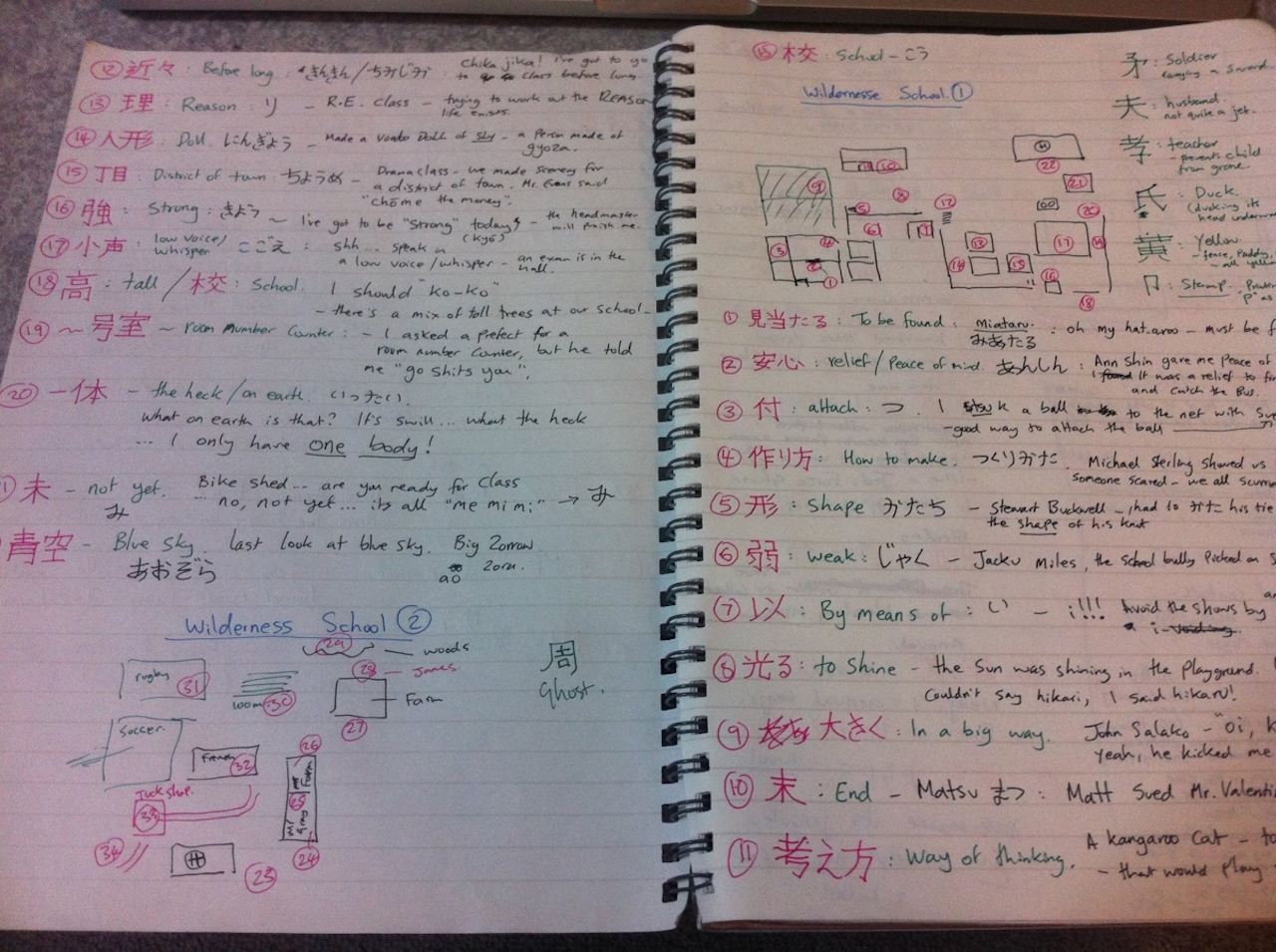
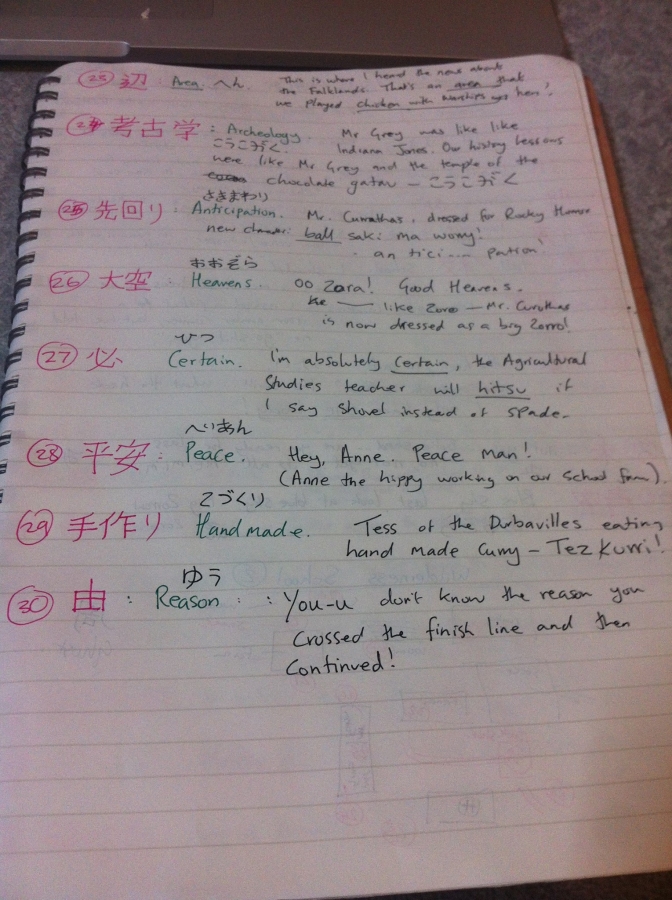
    A page from Kevin Richardson's Memory Journal for learning Japanese using mnemonics

    My first Memory Palace was a modest affair. I drew a sketch map of my apartment in Japan, numbered my memory stations in a logical route from bed to genkan (the place you leave your shoes).

    The first kanji vocabulary word I added to the bottom of my bed – 主に (omoni – ‘mainly’). The story, “oh money is mainly found at the bottom of my bed”. Next, 大気 (taiki – ‘atmosphere’) …

    That utter tyke, Russ Abbot singing “Oh what atmosphere, I love a party with an atmosphere” in the cupboard next to my bed. And as the tour went around my apartment, the story developed into a bizarre journey that I couldn’t forget.

    Do you remember the Hana Barbera cartoon of Godzilla? I always hated the baby Godzilla, “Godzuki”, yet when I came to the bathroom, I have to think about that dinosaur, Gojira (as the Japanese say) … I’m a big fan of Godzilla … (dai no gojira zuki desu).

    My Mind Couldn’t Help But Fill In The Gaps

    I took Anthony’s advice and walked through my Memory Palace ten times that first day. That made a big difference; I think by walking through the same linear path through my apartment, visualizing the story ten times, the story in my mind became like a sequence of video clips.

    My mind couldn’t help but fill in the gaps, so I’d see myself mainly getting my omoni from the bottom of my bed, so that I could throw some spare yen at Russ Abbot busking “atmosphere” in my cupboard etc etc.

    The next day, I walked through it in my mind a couple more times during breaks at work. I loved the fact that I didn’t need any technology, no batteries and could simply walk through my Memory Palace whenever I had some downtime.

    I decided that I’d start making one Memory Palace a week from that moment onwards. I’m now on my fifth Memory Palace and have gone from making twelve Magnetic Stations to now making over thirty Magnetic Stations in each Memory Palace.

    (* Note: During the making of this Memory Palace, a mosquito collided violently with my notebook … to honor it’s death, I shall always remember “Yuu HAVE made a mess here”)

    I’m not rushing anything. Like I say, I’m still a fledgling at this technique, but in the course of a month, my Memory Palaces are becoming richer, stranger, surreal and most importantly … unforgettable.

    I now draw my map and number my Magnetic Stations. Then I think of a mnemonic to connect the kanji with it’s reading.

    Then I write the whole story out as a walkthrough. Read it to myself and my mind can’t help but connect one station to another.

    My favorite on this page has to be Hulk Hogan speaking in his “hougen dialect”!)

    Now, I remember Olly and Anthony talking about the effort of making Memory Palaces being “top loaded.”

    Certainly seems to be true for me at the moment – I spend far more time constructing my Memory Palace and creating a walkthrough story.

    The Time I Save

    BUT … it works … and if it means I don’t forget anything, that’s time I save in the long run.

    In time, I can see myself not needing to write out my walkthrough story … and in time, I’ll eventually be able to take forty or fifty kanji readings, plot them out in my head, walkthrough the Memory Palace without having to write everything down.

    I can see how that will give me the ability to remember hundreds of readings a week … but small steps grasshopper … I’m happy enough that I’ve gone from having a sketchy memory of maybe six readings a week, to now remembering fifty or so kanji readings a week.

    That’s already a massive improvement … it’s certainly given me a huge boost in confidence that this heady goal of remembering thousands of kanji readings is much more achievable than I’d ever thought possible.

    Want To Hear From Another Student Who Has Turned His Mind Into Something Better Than A Japanese Learning App?

    Check out this interview with Magnetic Memory Method student Sunil Khatri. Like Kevin, he’s memorized hundreds of Japanese words.

    Brad Zupp is a memory expert who has also learned a lot of Japanese. Listen as we discuss his adventures with this language.

    Finally, John Fotheringham is an incredible teacher of learning techniques for Japanese. It was an honor to have him on the Magnetic Memory Method Podcast.

    Enjoy!


    How to Memorize Anatomy for Med School (Without Flashcards) Oct 19, 2017
    Show notes

    Illustration of ear for MMM Podcast and blog on memorizing Human anatomy with a memory palaceWhen you have to memorize the names of hundreds of bones and muscles, usually in complex Latin terms, you don’t want to spend hours fiddling with boring and ineffective flashcards. You just want to know how to memorize anatomy in a way that works.

    And you want to learn without rote repetition burning you out.

    When you learn the dedicated Memory Palace strategy I’ll teach you on this page, you’ll soon discover that the learning process doesn’t have to be hard.

    In fact, you’ll see me absorbing anatomy quickly in the same way I’ve used and taught thousands of students who have used the process to pass their medical exams.

    I’ll also help you skip the problems others run into when they aren’t taught the Memory Palace technique correctly.

    Ready to skip the stress of forgetting anatomy with detailed examples?

    Let’s dive in.

    What Is A Memory Palace & How Does It Apply To Anatomy?

    The Memory Palace technique allows you to “offload” difficult information onto locations by creating journeys. You can use a familiar location like your home, school, a church, museum or any building on a university campus.

    If you’ve heard of the technique before, you might have worried that you don’t have enough places for the massive amounts of information involved in learning anatomy.

    Please put this worry aside. I’ve got countless Memory Palace ideas you can use.

    In some cases, you can even use your body. For example, watch me memorize the carpal bones using my wrist as a Memory Palace in this video tutorial:

    https://www.youtube.com/watch?v=BL2EAWsClDQ

    If you’d like another example of using the body as a Memory Palace, here’s a guide to memorizing the ulna and radius.

    Proof It Works: How Alex Mullen Aced Med School

    You don’t have to take my word for how helpful these techniques can be when you’re studying all aspects of medicine.

    In addition to interviewing successful nursing students, I’ve had the distinct pleasure of interviewing Alex Mullen on the Magnetic Memory Method Podcast.

    In addition to winning the World Memory Championship three times, he successfully completed his medical training and now practices medicine.

    Although Mullen has told me he incorporate some flashcard practice and used Anki to a certain extent, strategic Memory Palace use was important to his success.

    And the key for my own students in med school is to use Memory Palaces in combination with other anatomy mnemonics and a principle called spaced repetition.

    4 Steps to Creating Your First Memory Palace For Anatomy

    Once you’ve decided on a location or area of your body, here’s what to do next:

    One: Create a Linear Journey

    As you can see in my carpal bone tutorial video above, I didn’t randomly memorize the carpal bones. I deliberately used the journey method to follow a logical path.

    This won’t always work when using the body Memory Palace technique, which is why you want to make sure your anatomy Memory Palaces are well-formed.

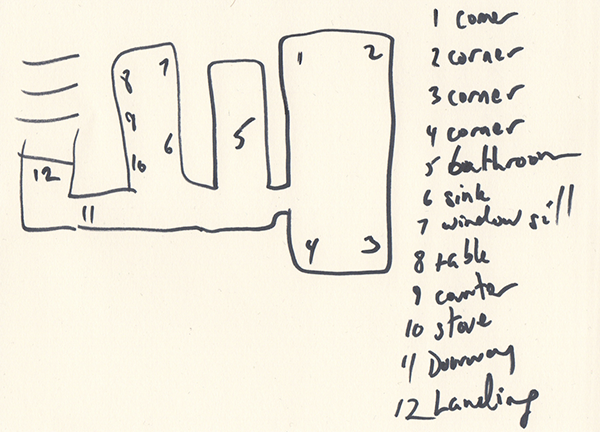
    As a general rule, start at the dead end of the location and move yourself towards an exit. Like this:

    Memory Palace by Anthony Metivier

    Because this Memory Palace example starts in the corner of a master bedroom and moves through the apartment to the doorway and ultimately the landing, there’s no confusion while using the Memory Palace.

    Two: Associate Each Anatomical Term with A Highly “Magnetic” Association

    The next step involves assigning what I call Magnetic Imagery.

    What is Magnetic Imagery? It’s my preferred term for mnemonic image.

    It’s incredibly easy, so let me show you how how it works.

    How to Memorize the Auditory Ossicles (Case Study)

    Let’s say you needed to memorize the “malleus” for the hammer bone in the ear.

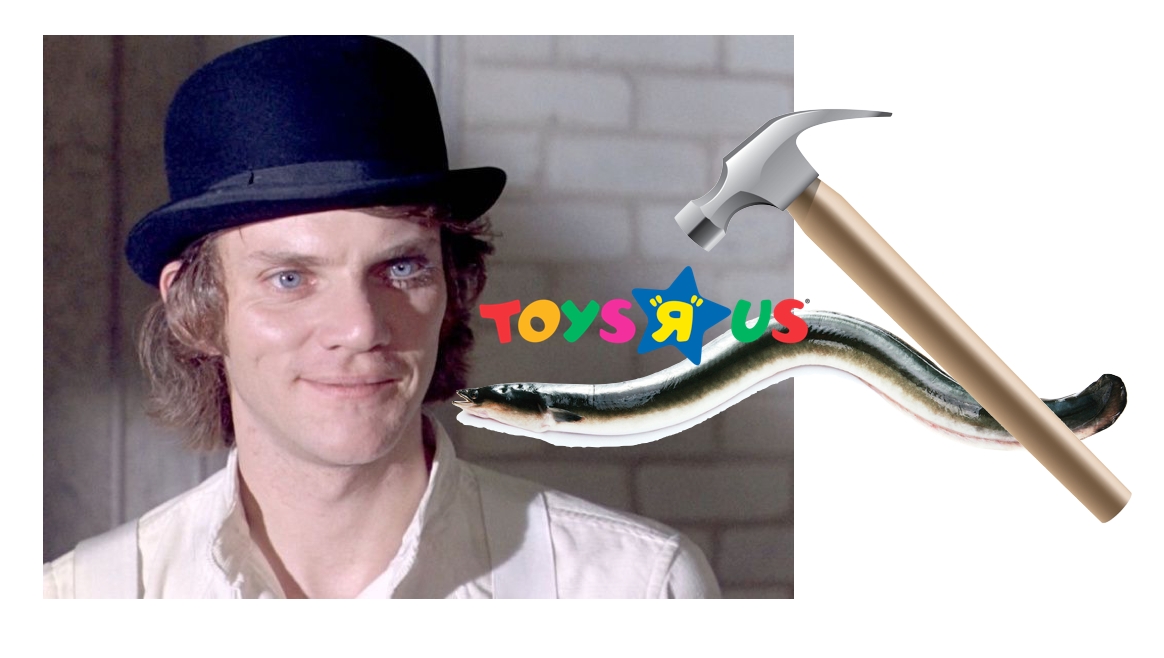
    In one corner of a room you’ve prepared as a Memory Palace, you can begin to imagine the actor Malcolm McDowell wrestling with an eel while smashing the Toys R Us logo into the eel using a plastic toy “hammer”…

    Like I’ve illustrated for you in this image:

    Mnemonic example for memorizing the Malleus bone in human anatomy using a Memory Palace

    Here’s why this form of association works:

    Malcolm + eel + hammer + Toys R Us logo = Malleus and hammer.

    How do you rapidly come up with sound and spelling-based associations like this?

    I suggest you go through my tutorial on the pegword method. You’ll complete a simple exercise where you write down a famous figure for each letter of the alphabet.

    Please make sure you actually write them down. This will start to train your procedural memory so you can look at any term and connect it with a dynamic figure.

    Three: Exaggerate Your Associations

    Associations work well, but in order to make them truly “sticky” in your Memory Palaces for anatomy, you need to do what scientists call elaborative encoding.

    Basically, you take each association and mentally make them:

    • Bright
    • Vibrant
    • Dynamic
    • Big
    • Colorful
    • Crazy
    • Strange
    • Emotional
    • Physical
    • Animated
    • Forceful
    • Loud
    • Rhyming
    • Punning

    Four: Use Recall Rehearsal

    Recall Rehearsal is an advanced form of spaced repetition based on principles taught by Aristotle and later codified in memory science by Hermann Ebbinghaus. He’s the guy who identified the forgetting curve.

    To beat forgetting anatomical terms after establishing them in your Memory Palaces, revisit them using patterns that maximize the primacy and recency effect.

    As I teach my students in the Magnetic Memory Method Masterclass, these patterns involve traveling your Memory Palaces and triggering your associations:

    • Forward
    • Backward
    • From the middle to the end
    • From the middle to the beginning
    • Skipping the stations

    This process will give recency and primacy to each station.

    If you’ve done a good job of elaborating your associations, the Von Restorff Effect will make them seem to leap out at you. I sometimes call this the “rubberneck effect” because you cannot help but start decoding the associations.

    How To Know How Many Memory Palaces You Need

    One problem learners face is working out just how many Memory Palaces they will need.

    For starters, I suggest that you develop at least one Memory Palace for every letter of the alphabet. That way you don’t have to think at all when you start to study something.

    For example, look at this list:

    • Inner Ear (I Memory Palace)
    • Middle Ear (M Memory Palace)
    • Outer Ear (O Memory Palace)
    • Nose (N Memory Palace)
    • Throat (T Memory Palace)
    • Mouth (M Memory Palace)
    • Skull (S Memory Palace)

    If you have the entire alphabet worked out, you’ll always have at least one Memory Palace to draw upon.

    From there, you just need to understand something suggested to me by Tony Buzan, legendary author of The Memory Book:

    “The rules will set you free.”

    Today, I’ve suggested a number of rules, and when you follow them, you’ll have an easier time getting anatomical terms and their locations into long-term memory.

    It’s really easy and thanks to following these simple rules, you’ll enjoy the process each and every time you sit down to study.

    If you need more help understanding Memory Palace creation as you work on improving your memory ability, consider reading the second edition of my book, How to Learn and Memorize Medical Terminology.Book cover for How to Learn and Memorize Medical Terminology (Second Edition) by Anthony Metivier

    And, if you’d like a free course that takes you deeper into the Memory Palace technique, grab my free course:

    Free Memory Improvement Course

    It gives you four video lessons and three worksheets with even more examples.

    As you can probably tell, I’m passionate about helping medical students. If you’d like more information on just how successful you can become, check out some of my student testimonials. This one from Dr. Joe Riffe is one of my favorites:

    https://www.youtube.com/watch?v=Y4eZcFNc9sU

    If you’d like results like that, the specific memory techniques you’ve discovered today will help, whether it’s for the tarsal bones or any other aspect of medical terminology.

    I’m here to help!


    The Magnetic Memory Method Dictionary of Mnemonics Oct 12, 2017
    Show notes

    Memory training is an ancient discipline loaded with fascinating terminology. There’s so much vocabulary specific to memory techniques that we need a mnemonics dictionary to combine and define them all. That’s what you’re getting on this page. Why create a dictionary devoted to mnemonic methods? For one thing, using mnemonics is mostly an internal art. In other words, nearly everything we do when using memory techniques takes place entirely within the “black box” of the mind. This means that it’s impossible to observe what others are doing when using memory techniques to perform deep encoding. And because practicing the memory arts relies on abstract cognitive processes, everything from visualization to conceptual association, and spatial navigation, shared definitions are the only bridge we have between instruction and execution. Without a standardized lexicon, a student attempts to build complex mental structures with vague blueprints, leading to fragile systems that collapse under the pressure of recall. But having a dictionary of mnemonics will serve you as a foundational guide for learning to use this mental architecture. That way, when you come across someone talking about a “hook,” “station,” or “image,” you have a place to look up what these terms mean. With precision. And accuracy. The kind that only someone who cares deeply about the ancient and modern aspects of memory training can create. How this Massive Mnemonics Dictionary Will Help You Why is the need for terminological precision so high? A few reasons. For one thing, we all need clarity when distinguishing between closely related techniques, such as the Journey Method and the Memory Palace. Is there really a difference? Today you’ll find out. And by reading this mnemonics dictionary, you will move from being caught in the trap of use these terms causually and interchangeably to being able to spot and make use of multiple critical distinctions. Another reason is that I want to honor the rich historical lineage of the “Ars Memoriae” tradition. There are many nuances to be explored between the ancient tradition and modern adaptations of it. When you’re able to understand whether a technique originates from the slow, meditative practices of the Renaissance or the high-speed processes innovated by modern memory athlete, you can better select the right tools for your specific goal. Ultimately, I want this online dictionary of mnemonics to elevate the study of memory. Although there is definitely a place for parlor tricks and study tips, many of us benefit from a more rigorous investigation of why how these techniques work according to science. Think of of it like this: Just as a musician must know the difference between a major and minor third to compose a good symphony, a mnemonist must understand the subtle gradations between an acrostic and an acronym, or the Major System and the Ben System. By establishing accurate, agreed-upon definitions, we as a community empower each other to stop guessing at the mechanics of these techniques and start using them with great focus and intent. Addressing Modern Threats to Mnemonic Accuracy Finally, we also have the rising problem of people, particularly on forums, flooding the Internet with AI slop. It’s not that AI-generated information is a problem as such. But as I mentioned at the end of a recent conversation with Andrew Mayne, there are bad actors out there creating problems when there are none. For example, several, nearly identical posts about Memory Palaces supposedly having downsides have appeared. Each one that I’ve examined bears the hallmarks of someone prompting an AI to help them poke holes in a flawless technique just to get some search traffic. The reason I can tell you with certainty that this kind of disappointing behaviour is so dangerous is because poking holes in the Memory Palace technique is like complaining that hammers come with downsides because they are designed to hammer nails. Although hammers might not be appropriate for all tasks in carpentry, needing to use a saw to cut wood does not mean that hammers have any kind of defect. So with all this context in mind, let’s dive into this collection of terms. Let it be your toolkit for mastering all of the mnemonic devices humans have developed over thousands of years. The Official Magnetic Memory Method Mnemonics Dictionary Naturally, I’ve arranged this dictionary alphabetically. I’ve also kept the definitions as slim as possible, sharing links to resources throughout. If you have suggestions for missing entries, please post a comment or get in touch. A Acronym: A word formed from the initial letters of a phrase or series of words (e.g., FBI, CIA, NASA or HOMES). Acronyms are one of the most common mnemonic strategies and are used around the world. Acrostic: A sentence where the first letter of each word acts as a cue that brings the target information back to memory. Unlike an acronym, acrostics typically result is a phrase, not a single word (e.g., “Every Good Boy Deserves Fruit” for musical notes). Alphabet Peg System: One of several mnemonic systems that belong to the broader realm of pegword methods. In this case, alphabetical peg systems use the 26 letters of the alphabet. Each letter is associated with a permanent image (e.g., A = Apple, B = Bear), allowing the user to memorize lists of up to 26 items in order. Alphabetical pegs can be used within Memory Palaces, or as conceptual Memory Palaces unto themselves. Ars Combinatoria (The Art of Combination): A logical and mnemonic framework that treats human thought and memory as a calculation. Instead of memorizing infinite individual facts, the practitioner memorizes a small, finite set of fundamental “root” concepts or images. By combining these roots in different permutations, you can theoretically generate infinite unique mnemonic images or logical propositions. This technique is rooted in the Lullian Art of Ramon Llull (13th century) and was later developed by Leibniz. Llull originally designed Ars Combinatoria as a “logic machine” to help discover theological or philosophical truths by mechanically combining divine attributes (e.g., Goodness + Greatness). It also helped his evangelists remember concepts, which was especially helpful when traveling to meet people in regions where it was difficult to carry books. https://www.youtube.com/watch?v=0cYDmaBXvJg Giordano Bruno revolutionized ars combinatoria by applying the mental mechanism to the imagination and expanding how it could be used for memory. Bruno realized that the rotating wheels (called volvelles when made from paper) could be used as “image factories.” By compressing archetypal figures on an outer wheel through abbreviation, actions on a second, and objects on a third, spinning the wheels would automatically generate bizarre, vivid scenes (e.g., Zeus riding a camel while eating liquorice could easily help you remember the German word zimperlich). In this way, ars combinatoria served as an early, mechanized version of a PAO (Person-Action-Object) System. It solved the problem of running out of mnemonic associations by allowing the mnemonist to instantly create a unique, pre-fabricated “memory hook” for any piece of data by simply rotating the mental dials to a new combination. For more about this technique and its relation to mnemonics, see my full article on Ars Combinatoria. Ars Quadrata vs. Ars Rotunda: Two distinct but complementary approaches to the Art of Memory, most famously juxtaposed by the English Paracelsian physician and mystic Robert Fludd in his massive encyclopedic work Utriusque Cosmi Historia. Ars Quadrata, or the Square Art refers to the traditional, artificial Method of Loci utilizing human-made architecture. It is “square” because it relies on the geometry of rooms, walls, and corners. Fludd viewed this as an ideal method for storing specific, mundane, or static facts. Ars Rotunda or the Round Art. This refers to “natural” or celestial memory systems utilizing the heavens. It relies on the circular movements of the Zodiac, the planets, and the celestial spheres. Fludd considered Ars Rotunda as “divine.” Instead of imagining a house, the mnemonist places images into the 12 houses of the Zodiac or upon concentric, rotating rings (similar to a Memory Wheel). It is dynamic and linked to the “macrocosm.” Ultimately, Fludd argued that the perfect mnemonic strategy was to combine both Ars Quadrata and Ars Rotunda. His famous “Theatre of Memory” engraving is a visual attempt to merge the round (the heavens/zodiac above) with the square and other geometric shapes in the illustration above. Although it can be difficult to understand his precise meaning, it seems that Fludd believed you can anchor terrestrial images (Square) to celestial powers (Round). This process could make memories became “enchanted” and indestructible, mirroring the connection between the body and the soul. Association: The fundamental cognitive process connecting a new piece of information to a stable, existing memory. It is the “glue” of all mnemonic systems. For example, one of the simplest mnemonic forms of association is used when remembering names. If you meet a new person named Brad and you’re familiar with the actor Brad Pitt, all you need to do is mentally associate the two. B Ben System: A complex phonetic system created by memory champion Ben Pridmore. You can watch him explain it in this video: https://www.youtube.com/watch?v=0X8NbzIqQzY It basically maps three binary digits to a single syllable, allowing for the memorization of massive amounts of binary data or cards at high speed. Body Peg System: A technique that uses parts of the human body (toes, knees, thighs, hips, etc.) as “loci” or storage locations. This approach allows a user to carry a Memory Palace with them at all times without needing to visualize an architectural structure. Bestiary: Historically, a Bestiary was a medieval compendium of animals (both real and mythical). Imagines of these creatures were often accompanied by moral or allegorical interpretations. These volumes essentially offer people pre-fabricated visual alphabets, giving the practitioner one animal per letter. Lynne Kelly is a major advocate of using a bestiary, as outlined in her popular book, Memory Craft. Developing a bestiary capitalizes on the brain’s preference for animate, emotional imagery. Since bestiaries were often filled with violent, strange, or distinct behaviors, such as the Pelican piercing its own breast to feed its young with blood, or a horned animal exuding flames from its backside, you get “corporeal similitudes” as recommended in the Rhetorica ad Herennium. In other words, the images usually involve the body, often in rude ways. In modern practice, the Bestiary is sometimes called an “Animal Peg List” (e.g., A = Alligator, B = Bear, C = Cat). Ancient or modern, this technique provides the mnemonist with a “Noah’s Ark” of distinct associations ready to be placed into Memory Palaces and highly capable of interacting with the target information to be memorized. Bridging Figure: A specialized mnemonic device used by Magnetic Memory Method students to maintain continuity and flow between stations in a Memory Palace. Each Bridging Figure is a dedicated character, ideally based on a: Celebrity Friend Family member Familiar figure in the community (dentist, teacher, pastor, politician) As mnemonic images, Bridging Figures are distinct from other mnemonic devices because they travel from station to station in Memory Palaces. There are several ways to use them. One of the key ways they can be useful is when learning a new language. As the illustration above shows, Abraham Lincoln is interacting with the Mona Lisa in a rude way. This association helped me memorize the German word “abartig” quickly. Using Lincoln as a Bridging Figure, I had him move from a hallway into a kitchen where I imagined him biting into a bottle to memorize the word “abbeizmittel” (paint thinner). For more on tactics like these, check out my tutorial on how to memorize vocabulary. Bruno’s Statues: Statues represent a specific class of “archetypal” mnemonic images described by Giordano Bruno, particularly in his books Lampas triginta statuarum and De Umbris Idearum. In English these books are usually called Thirty Statues and On the Shadows of the Ideas. Unlike standard memory images, which are often arbitrary and personal (e.g., “imagining your aunt to represent the letter A”), Bruno’s statues are typically generative and deeply rooted in mythological syntax. Bruno viewed the universe as a complex machine of moving parts. To model this in the mind, he used Statues. These were typically build from complex, pre-fabricated figures drawn from classical mythology (e.g., Apollo, Saturn, Zeus, etc). But Bruno did not treat them as static pictures. We should think of them more like “internalized talismans” or “magnetic centers” of intense mental activity. In this way, a single Statue served Bruno as a “root” or “topic” for an entire cluster of knowledge. For example, a Statue of Mars is not just a picture of a warrior. It exemplifies war and can be transformed in many ways. By modifying the statue’s “adjects” (what it holds, what it rides, what it wears), the mnemonist can encode infinite variations of “Martial” knowledge (war, iron, conflict, energy) without needing to create a new image from scratch. Bruno taught that by animating these statues, you can make them interact, mutate, or combine. They are essentially a kind of Ars Combinatoria with the properties of Memory Palaces. You can place multiple stations on each Statue, and Bruno recommended thirty. However, the mnemonist can “scale” their Memory Palaces infinitely. First, a single statue can unfold into a narrative, generating a “Chaos Palace” where the images are alive and constantly reorganizing themselves to fit new data. Or you can give your statue a pocket and place other statues within it, or other kinds of Memory Palace Networks. C Chaining: Also known as the Link System or linking, chaining is a method of connecting item A to item B, item B to item C, and so on, typically through a narrative story. Many people use this technique reliant purely on the interaction between items rather than a background location. However, linking is not something you have to divide from the Memory Palace technique. Memory Palaces themselves are a series of links in a chain. Chunking: Chunking is a process of breaking large strings of data into smaller, manageable units. For example, remembering a 10-digit phone number as three distinct groups of numbers is specifically a chunking memory strategy. D Dicsone’s Lunar Palaces (The Mansions of the Moon): A celestial memory system developed by the Scottish mnemonist and Bruno disciple Alexander Dicsone. In his work De Umbra Rationis (“On the Shadow of Reason”), Dicsone rejects the use of common terrestrial buildings in favor of an astrological architecture. You can read this work in both Latin and English by getting The Hermetic Art of Memory. https://www.youtube.com/watch?v=ArFTgRDIWo4 Dicsone utilizes the 28 Mansions of the Moon (the stations of the lunar orbit) as his primary loci. This creates a “Memory Palace” that is not a static building, but a cyclical path through the heavens. As a fierce defender of Giordano Bruno against the attacks of the English Puritan Ramists, Dicsone’s system is a prime example of the “Hermetic” tradition, where the memory system is not just a notepad. It’s a way to internalize the divine order of the cosmos. It possibly represents the height of the “occult” memory tradition before the scientific revolution replaced it with purely secular methods. Dominic System: A system invented by Dominic O’Brien that converts numbers into pairs of letters. These letters represent specific people (a kind of initial-based mnemonic system). For example, the number 15 might become A.E. (Albert…

    Full show notes at the publisher

    How To Stop Punishing Yourself When You Say Stupid Things Oct 04, 2017
    Show notes

    It happens. We all have verbal diarrhea from time to time. Sometimes we say something we think is funny. Other times we’re just being rude. Heck, sometimes we don’t even know why we get the feeling we’ve said something wrong or offensive. For whatever reason, often within seconds… Ours words suddenly rub us the wrong way. Worse: The bad feeling that won’t go away starts to itch… It may even burn, sometimes leading us to say even more ludicrous things that make us feel even worse. Once those words are out there … they’re out there. The worst thing of all: This Problem Chews Up Your Mental Space AndMemory Resources! Make no mistake: The things we say can be damaging. Very damaging, especially regarding how others perceive us and how we perceive ourselves. But it’s probably our self-perception that takes the hardest hit, especially if we have OCD tendencies and repeat words and phrases in our minds. (That happens to me a lot, along with earworms.) The “Childish” Reasons People Self-Punish Ultimately, no one knows why we self-punish. It could be that our bodies and minds are trying to build up energy to deal with the pain. But we do it in a childish way. Ludwig Wittgenstein has been credited with originating the story of the child who made his way into a cocktail party. While there, the child banged his knee on a table and started crying loudly. “There, there” said all the adults when they saw his bloodied knee. And the adults continued cooing at the child to comfort him as they applied rubbing alcohol and a bandaid to the wound. Now imagine the same cocktail party. This time, instead of a child, a grown man bangs his knee. He feels the exact same pain and his wound produces the same amount of blood. But the difference is that the man does not bawl in public. Instead, the grownup observes silently that he has banged his knee and excuses himself to the washroom. There, he finds the rubbing alcohol on his own and administers a bandaid. Do You Scream In Silence? Why does the man do all of this in silence instead of crying his heart out? Simple: Social conditioning over the years has not changed the nature of the pain or the work needed to care for the wound. But social conditioning has changed the nature of what makes for an appropriate response to the pain. According to some self-punishment theories, even the maturest of adults have minds that still need conditioning so that they respond in mature ways to mental pain. Since a lot of conditioning comes from words, we can use words to “recondition.” Here’s one simple and easy to remember trick before we continue with a host of holistic strategies: https://www.youtube.com/watch?v=kvtYjdriSpM Exactly How To Mature Your Mind AndStop Mentally Punishing Yourself I don’t know about you, but in my past, I’ve called myself an idiot for the verbal mistakes I’ve made at least a thousand times. In fact… I’ve said many things worse than that to myself. And no, I’m not going to repeat them. But I’ve come to understand that they were just the signs and symptoms of an untrained mind. There was nothing wrong with that mind. It just hadn’t been matured. And although this self-punishment still happens once in awhile, I’ve learned to settle the self-abuse down. The cure mostly comes down to a combination of relaxation, mindset and huge respect for memory and the practice of memory improvement and maintenance over many years. Here are four ways I’ve dealt with the self-punishment so that it no longer chews up memory power, no longer bashes self-esteem and no longer has the power to reduce life satisfaction: Tip #1: Learn The Scary Truth About Social Inattention Here’s a power reality: A HUGE percentage of the things we say to others tend to be forgotten. In fact, thanks to something called inattentional blindness, most people barely perceive what you’re saying at all. Why? Because the people you’re talking to are barely paying attention. Even if they were, human memory is flawed in your favor. If the minds of other people are barely tracking a tenth of what you’re saying, they are encoding far less than that into memory. The Ultimate Proof That Few PeopleRemember What You Say Want proof? Go ahead and study yourself when listening to others and I think you’ll find that it’s true. You’re not focused like a laser on what they’re saying. You’re not enjoying photographic memory, nor recording everything like a video camera. Quite the opposite. The truth? Your Mind Is All Over The Place! More than half the time, you’re thinking about what you’re going to say next. You’re probably even obsessively repeating what you want to say in your mind so you won’t forget. The rest of your conscious mind is either thinking about the past, the future or fantasizing about some alternate present. This significant amount of brain activity means that you’ll miss entire details completely. All this happens despite the fact that you’ll be experiencing reality as an unbroken continuity. Scary, but true. What this all means is that when you say inappropriate things, you shouldn’t get too worried about it and start flagellating yourself. You also shouldn’t start self-punishing yourself for having the attention span of a goldfish (you don’t). But if you get all hot and bothered about something you said, the best trick I know is to confront the feeling head-on. Just ask the person point blank: “Did what I said about x a little earlier offend you? Because I apologize if it did.” Chances are you’re the only one bothered by what you said, and it’s probably already been forgotten – assuming it was registered in the first place. If you punish yourself at all for things you’ve said, please take up this practice of publicly confronting this feeling. You will feel tremendous relief when you do. Tip #2:Take Responsibility For Your Verbal Oil Spills As I’ve just suggested, one great solution to managing your anxiety about verbal diarrhea is to confront it directly. If you’ve said something that bothers you, don’t be afraid to draw attention to it. And go in prepared to do so. Decide to be a conscientious conversationalist and own up to every faux pas you make. In other words: If you say something that either is insulting or you feel could be interpreted as insulting, be the one to call yourself out on it. What’s the worst that can happen? The answer is simple: The worst that can happen is that people think you’re weird… Not such a bad thing, is it? In all likelihood, they’ll probably appreciate you more and admire you. Why? Because you take ownership over your mouth – even if they never noticed the thing you said in the first place. Tip #3:Always Be Cool I can’t always pull it off the Always Be Cool rule due to food sensitivities and psoriasis arthritis. Unfortunately, even with the strict dietary controls I place on my diet, it’s impossible to know the location of every farm and every nibble eaten by every chicken. So yes, some things send me into a conniption that can last far too long. But overall, I’m generally a calm and cool guy. I owe that stability to a few things. The first is regular meditation. I practice multiple kinds, mostly structured around the sit-just-to-sit variety I learned from an Alan Watts recording. I’ll also practice Savasana, breath-withholding and walking meditations that incorporate a bit of both. (Yes, you can lay down in parks during walks.) Use Memory Techniques Everyday For Mental Relief Second, I use memory techniques everyday. For reasons that go beyond learning. Make no mistake: A lot of people use memory techniques as a means to an end, which is great. That’s what memory techniques are there for. Learning a new language, remembering numbers, remembering names, and more. Why Memory Techniques AreBetter Than Psychoanalysis But there’s also tremendous therapy to be had from memory techniques. They make you feel confident, composed and relaxed. These outcomes are especially important when you’re a guy like myself who is always fighting for stability and hoping to stay off medication to do it. If you want the background to that story, here’s a video from quite some time ago when I declared I was going on the psychopharmaceutical sauce for good: https://youtu.be/mbZ3ygFpt84 As brave as I sound in that video, it was actually one of the scariest things I’ve done in my life. But everything worked out. Why? The answer is simple: Memory Techniques + Meditation = The Perfect Time Machine When you practice meditation and memory, you’re always more in the moment. In other words, you’ve got a “time machine” that keeps you focused on the present. Why is being present so cool? Because true presence means that you’re paying attention to what you’re saying BEFORE you say it. And that’s the ultimate solution to self-punishment: Pre-awareness that prevents you from making the kinds of errors you punish yourself for in the first place. Tip #4:Learn To Listen To Yourself And Others This one is going to require a bit of self-analysis and the study of others. It might also be considered half-lunacy, as Freud himself noted in his General Introduction to Psychoanalysis lectures. Beyond that, the premise is that we all unconsciously encode messages in the things we say that seek to communicate what we’re really thinking. We typically tend to send these messages in the form of the stories we tell or off-handed remarks. They can be attempts at manipulation, retaliation or simply telling truths too dangerous for our conscious mind to handle. I learned to spot the tendency to encode information unconsciously in myself and others from Robert Langs. Langs was a controversial figure with whom I underwent Communicative Psychotherapy in New York. His style of therapy is based almost entirely on dream interpretation in a situation in which death anxiety is deliberately invoked by the therapist. Langs died recently and I’m still stunned by his passing. He seemed like one of those timeless figures who would always be around, particularly because his ideas were so impactful and larger than life. Although I only spent six months in weekly sessions with him, in addition to reading his books, my time with Langs completely changed my way of living and communicating. How To Get The Best PsychotherapyIn The World At Very Little Cost The best way to learn how to spot your unconscious communications without the help of a therapist is to journal your dreams. You’re not going to try and interpret them as such, but just get a feeling for the kinds of narratives that come up. In a session with Langs, he would ask you to narrate one or more dreams. He would then have you free associate to it and recite whatever came to your mind. This task always brought up a lot of irrational resistance in me. There was never any reason not to tell Langs the things that came to my mind, but yet it would often seem threatening to do so. Sometimes the resistance would bring the session to a complete shutdown. Gradually I learned to open up and reveal the connections that would come up in my mind. I couldn’t always do it, but Langs would always ask what the dream and how I related it had to do with him. It was always a perplexing question, but I’ll never forget the day I finally drummed up the courage to start answering it. Because the truth is that when we tell stories to others, there does always seem to be some comment we’re making on the present situation and the person to whom we’re speaking. So if you can find someone to whom you can tell your dreams and who can hear what you’re REALLY saying, this is a great way to practice the awareness of what you’re saying in any conversation. And you can learn to listen to others better too. That doesn’t mean judging them or necessarily telling them what you’ve perceived. But it will help you form better ideas about the real messages you’re receiving and shape how you respond in more sensitive ways. Ready To Stop The Self-Punishment? Although it won’t necessarily happen overnight and may still recur from time to time, you can get a handle on punishing yourself for saying stupid things. Just use the tips above and you’ll start to see a difference immediately. And if you’re interested in learning more about how self-directed dream therapy can help, I recommend getting my video course with its bonuses, How To Remember Your Dreams. In this course, you’ll learn more about hearing your true voice by unlocking an aspect of memory improvement that you’ve likely never considered before. Use Coupon Code “DREAM” and take $50 off your tuition in this exclusive memory improvement course. Alternatively, you can get How to Remember Your Dreams as part of the Magnetic Memory Method Masterclass. You might want to take my free course on creating Memory Palaces first. The choice is up to you and I’d love to hear you in the conversation below. What are your thoughts on defeating self-punishment for the stupid things we sometimes say and do?

    Full show notes at the publisher

    The Fluent Forever App: Eliminating The Busy Work From Language Learning With Gabriel Wyner Sep 10, 2017
    Show notes

    Would you like to eliminate the ‘busy-work’ from your language learning activities?

    You know the ones I mean:

    Scouring the Internet for vocabulary and phrases – the kind that will actually move you towards meaningful fluency…

    Hunting for images to open up the visual centers of your brain and memory…

    Driving yourself mad looking for audio clips that match the words and phrases you want to link together on your SRS device.

    Meet The ‘Tesla’ Of Language Learning Who Is Working To Engineer A Completely New Kind of Language Learning App

    As a polyglot, bestselling author and all-around nice guy, Gabriel Wyner is the man behind a completely new kind of language learning app and the book Fluent Forever: How To Learn Any Language Fast And Never Forget It.

    He also runs the incredible Fluent Forever blog where you can learn things like How To Use Flash Cards While Driving.

    And on this episode of the Magnetic Memory Method Podcast, scroll up, press play and you’ll learn:

    • Why pronunciation is one of the first barriers language learners face and why lack of familiarity with sounds frustrates most people.
    • Why Gabriel talked about memory scientist Hermann Ebbinghaus as a masochist, and how he’s helping eliminate masochism from the language learning process.
    • The role of learning a language without translations to cause your brain to make associations you wouldn’t discover any other way.
    • How to create useful language connections using Google images and create fill-in-the-blank-sentences.
    • Why Gabriel is working so hard to replace one of the most commonly used SRS software for language learning.
    • Why you need to make your own flash cards and the decisions you can make to take a more active role in your language education experience.
    • What makes SRS and search-based websites such a huge burden and Gabriel’s hard won experiences learning to use them with “two-handed mouse and keyboard maneuvers.”
    • The difference between “busy-work” related to language learning and actually learning the language.
    • The role of choice in language learning and why it pays off big time in language study and your journey towards bilingualism.
    • Why you need differentiation when looking at variation sentences for your memory to benefit from the Von Restorff Effect and related memory effects.
    • The value of looking at words both in context and out of context.
    • How engineering influenced Gabriel’s quest to create a language-focused SRS app better than any other in existence.
    • How Gabriel has tested and optimized the user experience in order to create an easier learning process with real people.
    • The hidden connection between desperation, motivation and the unexplainable sources of inspiration that lead to the “joy-fueled” energy that propels learners towards fluency.
    • Why you don’t need to know your “why” to learn a language.
    • How many words you need to know in order to become fluent.
    • Fascinating ideas on how to use recordings to help you remember gendered nouns – an incredible idea that you’re not going to want to miss!

    Oh, and Gabriel’s a great singer too. Check this out:

    https://youtu.be/Bz7QmlXHbAs

    So, what do you say? Are you excited?

    I know I am, so make sure to check out Gabriel’s Language Blog on the Fluent Forever website so you can learn more about his upcoming app and how to get involved.

    Additional Resources for Gabriel Wyner
    And Fluent Forever

    Great Derek Sivers review of Fluent Forever

    Gabriel Wyner on the Art of Charm Podcast

    How to Teach Old Ears New Tricks on Scientific American by Gabriel Wyner

    MyQuest For Your Memory Improvement with Edan Kertis


    7 Reasons Having A Memory Implant Would Really Suck Aug 16, 2017
    Show notes

    Let’s face it. Everyone has fantasized about having a memory implant.

    You know the kind:

    A small, unobtrusive thing, patched directly into your brain …

    … capable of letting you learn and remember at miraculous speeds.

    Heck, maybe this neural implant or brain prosthesis (whatever you want to call it), doesn’t even need to break the skin.

    It may even be possible that your memory could be manipulated by radio waves or some other external signal.

    But until that time, unless you’ve already decided you’re going to be the first in line …

    Here are 7 reasons why memory implants are probably going to suck.

    #1. Memory Implants Won’t Eliminate Practice

    I conduct a lot of surveys here at the Magnetic Memory Method headquarters.

    And that scene from The Matrix …

    https://youtu.be/6vMO3XmNXe4

    … comes up a lot.

    The problem is:

    People don’t watch the movie for what it’s really saying and the true metaphor about the value of training and journeying we can extract from the tale:

    Downloading IS NOT Learning!

    Not only does Neo have to get into the dojo and spar with Morpheus as a form of “accelerated practice” …

    … Morpheus next cajoles Neo into jumping off a building, part of a chain of events that causes the “real” Neo to bleed.

    Morpheus then tricks Neo with the woman in the red dress, proving again that downloading isn’t enough.

    Far From It!

    The mind still needs to be trained.

    The mind still needs practice.

    And let me ask you something:

    What is Neo’s ultimate showdown with Agent Smith other than another training exercise? An exercise that actually requires Neo to die before he experiences an awakening …

    … That leads to two sequels where he needs to practice being Neo even more until he can surrender his life to the war between humans and machines and finally die.

    And even then, some people reckon that Neo’s not really the one:

    https://youtu.be/VkMU1mKdwPI

    The point is this:

    When people fantasize that a memory chip implanted in their brains is going to give them knowledge …

    They’re just plain wrong about the definition of knowledge.

    Knowledge may well involve things you can store and retrieve …

    But at its core …

    Knowledge Is The Ongoing Practice Of Knowledge

    And that knowledge/practice coupling should ideally become better practice over time. But it can only be earned through consistent acts of practice, consistently applied.

    The level of learning most people want will never be instant. It will always require practice over time. And it will always involve an interesting combination of weaving and navigation as you create the paths you travel.

    [clickToTweet tweet=”Do you fear the man who has practiced 10,000 kicks once, or the man who has practiced one kick 10,000 times?” quote=”I fear not the man who has practiced 10,000 kicks once, but I fear the man who has practiced one kick 10,000 times. – Bruce Lee” theme=”style6″]

    Understanding takes time. Even understanding must be practiced through consistent contemplation.

    Yes, Yes, But I Still Want To Know …
    Is There A Shortcut?

    As a matter of fact, yes there is. A short cut even better than the shortcut many people seek.

    The only (and best) shortcut to contemplation is memory techniques. Learn them a.s.a.p.!

    Why? So you can STOP dithering around with the consumption process and get on with processing information.

    No computer can do that for you. Ever. That’s entirely on you.

    #2: If You Think Advertising Is Bad Now …

    A lot of people whine and complain about advertising. Sadly, this kvetching often comes from the same people who sacrifice hours of their time to social media and mindless television.

    To tell you the truth, it kind of makes me miss the PBS days …

    https://youtu.be/Cz9iP3iZcEU

    What people who complain about advertising don’t realize is that this big media platforms are chewing up your attention span by selling ads …

    … and THEN telling content creators how to make their content in ways that serve ads better and more frequently.

    Serve ads better – not necessarily you.
    And you had better believe that the first thing they’re going to do if implants succeed is erect billboards in your head.

    At least now we can fend off Digital Amnesia by digital fasting.

    But once the branded devices are fused with your brain, you’ll be the walking receptacle of advertising you can’t switch off.

    #3. The Nightmares Of Hardware Maintenance …
    In The Flesh!

    Taking care of our human bodies is hard enough. People do a better job with their pets and vehicles a lot of the time.

    And since we know the implant market will follow the trends of manufacturing processes, there will be an ongoing attempt to make the hardware as cheap as possible to maximize profits …

    Think about that.

    Do you really want a brain prosthesis built in a sweatshop constantly breaking down and rotting in your head?

    When you could simply learn memory techniques and have way more than you ever need?

    Plus, bad people will be constantly trying to hack into your implant.

    And the first place they’ll go is your passwords manager, while also working to put your entire brain on the fritz.

    #4. Medical Maintenance Monstrosities

    And that’s just the tech side of the equation.

    Imagine a hacker being able to cause electrical shocks or worse, simply by writing a line of code and “email thinking” it at you? Someone writing a “Brain Aneurysm” virus is almost a certainty.

    And it would be so medically disgusting. Or disgustingly erotic, as David Cronenberg envisioned the human-computer interface in eXistenZ:

    https://youtu.be/lfBNxmPt5u8

    #5: It Could Become Very Expensive
    (Even Deadly) NOT To Have A Memory Implant

    Don’t have an implant?

    Too bad, kemosabe. You’ll have to go live in the camps.

    Assuming the scientist can solve all the biotech problems I’ve just predicted, I foresee even worse problems.

    For example, what will it matter if you have all the currency in the world, if you don’t have the brain implant by which it is traded?

    Just as we are all now forced to have email accounts to do just about anything, social trends may wind up forcing a majority to adopt a thoroughly unhealthy implant just to keep up with the joneses.

    This Problem May Lead To All
    Kinds Of Terrifying New Governance

    We already see how slowly sovereign powers around the world have risen to deal with the Internet.

    And we see more and more control over this precious tool that will lead to greater control over the inside of our minds and memory if we allow wired neuralinking and the government lurking behind it to penetrate our skulls.

    Pause:

    In case you missed it, we were jamming on related topics with reference to everything from Jacques Ellul to the Unabomber to Videodrome on this Magnetic Memory Method YouTube Live. Feel free to enjoy the replay:

    https://youtu.be/WFN4SbcB20w

    #6: Memories Are Generated, Not Recorded

    Okay, enough Sci-fi …

    Another big reason brain prosthetics will suck is that our brains don’t record memories. They encode them, breaking them apart for reconstruction later.

    It’s a chemical process that can be guided by thought (itself produced out of the chemical brain).

    But if an implant “records” a memory for you, then it is not encoded.

    This will atrophy those beautiful parts of your brain, mind and willpower that need the fitness.

    Those parts of your brain need fitness as badly as the muscles in your arms and legs need pushups and squats.

    https://youtu.be/5kngspqvHa0

    Just walk around: Couldn’t more people use more physical fitness?

    Just talk to people: Aren’t most conversations a series of statements like, “I’ll have to look that up and send it to you”?

    Well, having an implant in your brain might make it possible to perform a quick search and send a thought email …

    … And heck, why not thought-Tweet it to everyone in the world at the same time? …

    That Will Only Create More Noise

    Worse, we’ll suffer even fewer instances of meaningful information consumption.

    More twitchy people who are less and less interesting to talk to.

    Because now instead of constantly monitoring their phones in the middle of conversations, they’re zoning out from inside their heads.

    #7: Non-Wired People Already Struggle
    With The Failure To Disconnect

    What will they do when it becomes impossible to unplug?

    Download and scan Orwell through their minds, and in a Neo-esque moment of triumph, proclaim, “I know 1984?”

    Not likely.

    Is There An Upshot?

    Sure.

    Through neural implanting, blind people have been able to experience sight. Valuable triumphs like these have been going on for a very long time.

    Perhaps there is even hope for brain lesions, curing Alzheimer’s and other problems that plague humanity.
    memory implant magnetic memory method

    But as science discovers more ways of fusing technology with the brain through neuralinking, neural implants and the like, let’s understand this:

    The brain is not now and never will be technology. Even if a strong enough neuralink is established, people who fantasize that machines will learn on their behalf completely misunderstand what memory and learning mean and how practical, everyday life will define it.

    And nothing will ever replace the amazing feeling of being accomplished in several areas of interest, skill and aspects of human and scientific knowledge.

    Don’t Want Those Things? No Problem.
    (Or Is It The Biggest Problem In The World?)

    Keep playing with your apps and fantasizing that spaced repetition software is the path to a truly powerful memory.

    Go ahead and be the first in line when the chopshops open up to perform neural implant surgery. Let the surveillance parameters of both computer hacker criminals and government and the marketers they barely control have at it.

    I’ll point out in conclusion that humans are very poor at predicting the future, including me.

    But whatever direction this project of neural implanting takes us, just don’t call it memory. The great tradition of memory techniques and the current Mnemonics Renaissance only holds meaning through our own acts of preservation through practice and practice as preservation.


    Memory Loss Story And Memory Recovery Tips With Jennie Gorman Jul 28, 2017
    Show notes

    The experience of memory loss creates the kind of story you normally only see in the movies.
    Yet, for Jennie Gorman, the experience of memory loss was all too real.

    Although we all experience the occasional mild loss of memory, it’s difficult to imagine what it must be like dealing with a disorienting and painful experience like this:

    Luckily, Jennie found incredible resources within herself that drove her to find a solution.

    And that solution could well help you too.

    If not now, possibly in the future.

    So buckle in, click play, and discover the root cause of Jennie’s memory loss and how she solved it.

    https://www.youtube.com/watch?v=Q9wY6JabdtM

    The Nasty Substances Creating Your Current
    Or Eventual
    Memory Loss Story

    We all put things into our body that don’t serve us.

    For some of us, it’s a bad habit like smoking (here’s the Magnetic Memory Method way to stop smoking if you need help).

    For other people, it’s the absence of foods that improve memory.

    Not everyone can get away from medication, but as Jennie points out in this podcast and video …

    … the substance rotting your memory ability might not be booze, tobacco or a medication.

    That means, you’ve got to dig deep to find the problem.

    Like Kasper Bormans is trying to do:

    https://www.youtube.com/watch?v=BMcduh1HEHA

    The Truth About Memory Loss And The Dark Of Night

    The quantity and quality of your sleep influence your memory in many ways.

    That means you can get a ton of sleep, but if it isn’t good sleep, you’ll still suffer memory problems.

    Likewise, you can get quality sleep, but still not enough of it to make an impact.

    In all cases, sleep deprivation is a memory killer. Avoid it at all costs.

    Protect Your Brain

    That brain of yours is like an egg in a shell. Brain trauma can happen anytime, so please exert caution when riding your bike, driving or engaging in sports.

    The sad thing about injuries to your head is that the symptoms and problems might not show up for decades. That’s why we must all exercise maximum vigilance at all times.

    Entrepreneurial Memory Secrets

    One of the most intriguing elements of Jennie’s story involves her success as an entrepreneur.

    As the incredible leader of Connexions Unlimited, Jennie is a master networker. The ability to recall names and faces is very important when you’re in business and her memory loss threatened this skill in an immediate way.

    Luckily, Jennie recovered her memory and eliminated a ton of stress-induced memory loss. This was a boon, given her work with other entrepreneurs.

    The level of care she brings to helping entrepreneurs grow their businesses extends far beyond their names. It involves helping them manage their business vision, mission and a number of goals and milestones.

    Apart from memory techniques … what’s the secret to keeping your memory fresh and alive when you’re in business?

    Plenty of networking and Masterminding, of course!

    Seriously. Keeping social and avoiding isolation helps your brain coat itself in healthy chemicals that will preserve your memory.

    Unfortunately, far too many entrepreneurs lock themselves away. But that too can create brain trauma of an even more pernicious kind …

    The Pen Is Mightier Than Memory Loss

    But if you’re going to isolate yourself, a great way to fend off memory loss is regular writing.

    As the author of Awesome Authenticity: Mastering Business Relationships, Jennie continues writing new books and on her blog and social media pages.

    Writing is an unknown memory preserver because of how it stimulates your brain.

    It doesn’t really matter if you write or type, but you do want to consider the advantages of handwriting for your memory, especially if you’re a student.

    Even if you’re not going to write books and articles, just 5-10 minutes of daily journaling can give your brain and memory huge benefits.

    Give it a try!

    What’s Your Memory Loss Story?

    Have you had an experience with memory loss?

    What are your thoughts on the difference between memory loss and forgetfulness?

    Let us know in the comment area below. 🙂

    In the meantime, for more about Jennie, who has sadly passed on since we recorded this episode, check out these links:

    Jennie Gorman’s The People Connector page on Facebook

    Jennie Gorman on YouTube


    The Only 4 Memory Improvement Systems You Need Jul 06, 2017
    Show notes

    Image to express the only memory system you needI’m a pretty calm and relaxed guy.

    But if there’s one word related to memory improvement that drives me bonkers, it’s “system.”

    And you’ve probably heard me talk all about why I don’t teach a comprehensive memory system like some of the others on the market.

    Nothing about my refusal to offer a memory improvement system is ever going to change.

    The truth, reality and scientifically demonstrated fact about your memory is this:


    No One On Planet Earth Can Give You A
    Memory Improvement System!


    Oh, but they’ll promise, which is exactly why I created this Memory Training Consumer Awareness Guide.

    (Side note: Can you believe that’s way back to Episode 9 of the Magnetic Memory Method Podcast! Thanks to your support, you can click the audio above to listen to this post as episode 180!)

    How to make your commute interesting Magnetic Memory Method Image

    Here’s The Bloody Truth No One Else Will Tell You

    Although you do need memory systems of a sort, YOU need to learn how to create them.

    And then you need to follow through and actually create them.

    That’s right. YOU.

    And if you do it right, you’ll discover that you, like me, will also think about the word “system” very differently.

    And here’s the very good news:

    Right Thinking About Memory Systems Will Solve
    All Your Memory Problems And Pains – FAST!

    And once you’ve come to share my admittedly biased (but always Magnetic) opinion that the only memory systems that matter are the ones you create yourself …

    You’ll be a master of your memory.

    The only question is …

    What are these memory systems that you need so badly?

    I’m glad you asked.

    There are just 4.

    They’re simple to understand, fast to get in place for yourself and super-easy to use.

    It all begins with …


    #1: A Location-based Mnemonic System

    Not such a sexy term, is it?

    Well, don’t fret. It has many other names.

    Looked at from the top, there are oodles of mnemonics out there, ranging from rhyming to creating crazy images that you let float in the void of your mind.

    Many people experience all kinds of success with the different kinds of mnemonics to choose from.

    But most people can’t just create a mnemonic and then toss it out into the void of their mind.

    They need to connect their Magnetic Associations to something in the world.

    Like a location.

    There are other kinds of locations that are more abstract, like Virtual Memory Palaces, but here’s the truth:

    Keeping It Concrete And Real Works Best For
    The Vast Majority Of People

    And that’s why having a system for creating Memory Palaces is so powerful.

    You can create them strategically by building up a storehouse in advance.

    Or you can create Impromptu Memory Palaces anywhere, at any time, completely on the fly.

    The trick is to know how to create them.

    And know how to create them well.

    If you haven’t taken the Magnetic Memory Method free video course, it’ll walk you through everything you need to know.

    (Hint: Just click that big subway image above or subscribe above and I’ll send you this course for FREE.)

    And then, Bang Presto!

    You’ll be a Master of the first memory system you need to succeed! Just make sure you ground it on a memory method.

    #2: You Need An Encoding System

    Once you’ve got a reliable way of creating the Memory Palaces you need, you next need a systematic way to encode the information you want to learn.

    It helps if you’ve got that information organized. That way you can quickly “map” it onto any Memory Palace.

    Luckily, a lot of information comes pre-organized for us, so you can easily use the How to Memorize A Textbook training to tap into that raw power.

    And have a goal. An outcome. A realistic target that you actually want to hit.

    From there, you just need to be able to look at a piece of information and associate it with something else.

    Ideally that “something else” should hit a number of characteristics.

    It should be:

    • Deeply familiar
    • Colorful
    • Big
    • Bright
    • Dynamic
    • Capable of interaction

    And don’t worry if you’re not a visual person (#noexcuses). Here’s the final word on that strange objection to using memory techniques:

    https://youtu.be/2l1DJXZyHmM

    Example of an image that fits all the characteristics defined above?

    Well, let’s take Homer Simpson.

    Are you deeply familiar with him?

    I sure am. He’s got the world’s worst memory, after all:

    https://youtu.be/KVyr-39IhNM

    But if you’re not familiar with Homer, you can probably name some other cartoon character. Bugs Bunny, Fantastic Mr. Fox, Fred Flinstone …

    The options are endless.

    And if that character, actor, politician, musician or even your least favorite aunt can move around in space (such as within a Memory Palace) …

    You can create a system for pumping out oodles of characters like these to help you encode information you don’t know with information you already do.

    You see, it’s association that makes things more memorable.

    And you can develop a system for making associations very fast.

    You’ve just get to set aside any fear that you can’t do it and get started doing it.

    That’s the secret of success.

    #3: A Decoding System

    You know, there are people out there willing to argue about whether students who use memory techniques spend too little time on encoding or decoding.

    The argument is a waste of time!

    What matters is how much time YOU spend on it relative to the results YOU want to experience.

    And so once you’ve started using the encoding system I’d love to teach you to create for yourself, you can then create a decoding system.

    As you work with these two systems, you’ll soon learn about your precise needs.

    You’ll discover where our strengths lie and what you can do to “bulk up” any memory muscles that might need a bit more grit.

    And that comes from just showing up mentally in one of your Memory Palaces.

    Looking around at the images you encoded there and then decoding them.

    In other words, if Homer Simpson is pounding the snot out of Bugs Bunny …

    Why on earth did you choose those images to associate with what information?

    Ask the right questions like Sherlock Holmes and you’ll become so good at decoding the little mysteries you’ve left in your own head …

    You’ll soon be in danger of never forgetting any information again!

    But don’t worry. That won’t amount to photographic memory.

    There’s no such thing and because you created these memory systems, YOU will always be in control.

    Unless, of course, you don’t have …

    #4: A System For Maintaining A Healthy Brain

    Far too many people abuse their brains.

    Sugar.

    Dehydration.

    Inadequate sleep.

    Couch potato lifestyle.

    Ironically, even with all that negative abuse of your brain and body going on … mnemonics will still help.

    But you know, the beauty of memory techniques working under adverse conditions aside …

    The real glory comes from how great it feels to live in an optimized brain and body.

    The kind of place that the human being truly can grow and thrive.

    And so the success of the other three systems truly does rest on what you do to take care of your brain.

    Because those other systems you create?

    They LIVE in your brain.

    And you have the choice to create them on shaky ground or steadfast bedrock.

    If you want to get started helping your brain right away, here’s my go-to list of Foods That Improve Memory.

    They’re all super-tasty.

    Inexpensive.

    And your brain will love you for eating them.

    No Use Hoping, Wishing And Praying

    I sometimes hear from people who say they “hope” these memory techniques I teach will work for them.

    Sorry.

    No.

    That’s not the way this game works.

    https://www.youtube.com/watch?v=pa_ArlEoDTs

    That’s like buying a piano and saying, “I hope one day this piano will play me.”

    The way memory techniques work is that you learn how to create your own memory systems.

    Then you fuel those systems with information you want to remember.

    Along the way, you learn to become a great master of those systems.

    And because you’re the one who built them, you own them.

    That means all the profit of knowledge, fluency in languages and time-saved because you know all your passwords and bank account numbers goes directly to you.

    The Boss. Of Your Own Head.

    What do you think?

    Could you possibly learn to create and maintain 4 simple systems?

    To put it another way … If I were the Morpheus of Memory …

    Could you be the One?

    https://youtu.be/RhlXqYiTz2Q


    MyQuest For YOUR Memory Improvement With Edan Kertis Jun 29, 2017
    Show notes

    What would you give if you could have the world’s best mentor accessible at any time?


    I’m talking about catering to your every need …

    So you can accomplish a specific goal

    … and in a way that fits that mentor inside your pocket?

    To be honest with you, at first I didn’t believe it was possible.

    But guess what?

    I’ve got …

    Good News For Students & Educators!

    In this episode of the Magnetic Memory Method Podcast, let me introduce you to the incredible thought leader and digital innovator, Edan Kertis.

    But first … here’s a limited time opportunity:

    If you’d like to shape the creation of the first Magnetic Memory Method memory coaching app (it will be in the form of a MyQuest!), please fill out this MMM App Survey (the link will open in a new tab).

    Edan and I thank you for taking the time to letting us know how we can help you and your memory further by guiding the creation of this memory improvement app.

    Now then, you might be asking yourself …

    Hold up, there! What is a “MyQuest?”

    As the co-founder and CEO of MyQuest, Edan is helping educators create “Quests” for learners.

    That means no more boring video courses that forget about you after you register.

    No more books that don’t even know you exist.

    No more teachers who can’t provide you the accountability you need to succeed.

    When it comes to MyQuest’s powerful platform, Edan and his team have made it possible for mentors to create educational journeys that help students learn through gamified, step-by-step missions and levels.

    The best part?

    MyQuest allows educators to lead a community towards a common goal while still addressing the needs of the individual learner.

    How On Earth Is This Possible?

    As a software engineer, Edan has helped surgeons plan surgeries better. It’s clear how his experiences with Brainlab have paved the way for even bigger accomplishments when it comes to learning how to learn.

    And in this exclusive interview (scroll up and hit ‘play’ to listen), you’ll learn all about how Edan came up with the idea for MyQuest, including:

    ⇒ Edan’s personal “Quest for Enlightenment” to expand his mind and experience self-development.

    ⇒ The “butterfly effect” and how small actions can influence others all around the world.

    ⇒ Why happiness is really all about what you remember.

    ⇒ Why everything with MyQuest is action-based with missions instead of lessons

    ⇒ Why you need to manage the level of challenge so that you’re always stretching, but never overextended so far that frustration holds you back.

    ⇒ Why how we frame our educational experiences with story and metaphor matters.

    ⇒ Why you need to spend time enjoying random thoughts and “doing nothing” in order to increase your productivity.

    ⇒ The power of “digital fasting” for completing any learning goal.

    ⇒ The importance of reporting on your progress with peers for accountability.

    ⇒ The dual role of push notifications in order to ensure your teachers don’t forget about you and you don’t forget about them.

    ⇒ How you can easily create your own app as a mentor and help thousands of people achieve their goals.

    ⇒ Why traveling is like meditation.

    ⇒ How to find what feels right inside – despite anything society might be telling you about what counts as “normal.”

    … and much, much more! 🙂

    What’s Your Quest?

    As a Magnetic Memory Method Podcast listener, please let me know what you’d like to learn the most. What skill would make the biggest difference in your life? What habits do you think you’ll need to master in order to achieve the outcomes you seek?

    Let’s face it:

    Like is like a game. And the best way to play the game is to play the kind of games that you want to be invited to play again.

    But There Will Be Obstacles!

    What would a game be if there weren’t obstacles to overcome and puzzles to solve?

    I’m excited that Edan and MyQuest are doing so much to create learning innovations that help educators create structured, yet responsive learning experiences that help learners accomplish their goals.

    Let’s all help MyQuest accomplish their quest by sharing this post and engaging in the discussion. Look forward to hearing from you!

    For more information about MyQuest, creating your own app using their educational technology and Edan Kertis, please visit:

    MyQuest.co

    Edan Kertis on LinkedIn

    MyQuest on Twitter


    Previous 1 33 34 35 36 37 45 Next

    Related Podcasts

    Making Sense with Sam Harris

    1

    Making Sense with Sam Harris Education
    Grammar Girl

    2

    Grammar Girl Education
    Good Life Project

    3

    Good Life Project Education
    Explain It to Me

    4

    Explain It to Me Education
    Team Never Quit

    5

    Team Never Quit Comedy
    Optimal Living Daily – Personal Development and Self-Improvement

    6

    Optimal Living Daily – Personal Development and Self-Improvement Alternative Health
    footer-logo

    Contact Us

    Toll Free: 844-670-7747

    Links

    • Home
    • Top Charts
    • Networks
    • Apps
    • Independents Podcasts
    • Podcast Advertising
    • Podcast News
    • Contact Us
    • About Us
    • Analytics & Insights

    Stay Connected

      Privacy, Terms of Use & Our Code of Ethics Protecting Content Creators Copyrights