TopPodcast.com
Menu
  • Home
  • Top Charts
  • Top Networks
  • Top Apps
  • Top Independents
  • Top Podfluencers
  • Top Picks
    • Top Business Podcasts
    • Top True Crime Podcasts
    • Top Finance Podcasts
    • Top Comedy Podcasts
    • Top Music Podcasts
    • Top Womens Podcasts
    • Top Kids Podcasts
    • Top Sports Podcasts
    • Top News Podcasts
    • Top Tech Podcasts
    • Top Crypto Podcasts
    • Top Entrepreneurial Podcasts
    • Top Fantasy Sports Podcasts
    • Top Political Podcasts
    • Top Science Podcasts
    • Top Self Help Podcasts
    • Top Sports Betting Podcasts
    • Top Stocks Podcasts
  • Podcast News
  • About Us
  • Podcast Advertising
  • Contact
Not in our directory?
Add Show Here
Podcast Equipment
Center

toppodcastlogoOur TOPPODCAST Picks

  • Comedy
  • Crypto
  • Sports
  • News
  • Politics
  • True Crime
  • Business
  • Finance

Follow Us

toppodcastlogoStay Connected

    View Top 200 Chart
    Back to Rankings Page
    Education

    Anthony Metivier’s Magnetic Memory Method Podcast

    Learn, Memorize And Recall Anything Using Memory Techniques, Mnemonics And A Memory Palace Fast

    Advertise
    • Apple Podcasts
    • Google Play
    • Spotify

    Latest Episodes:
    2019 Canadian Memory Champion Reveals His Memory Secrets Oct 29, 2019
    Show notes

    Portrait of 2019 Canadian Memory Champion James Gerwing For Magnetic Memory Method PodcastWant to become a memory champion?

    Great!

    Competition can encourage you to function at your absolute highest level.

    Even if…

    You’re retired.

    Yes, I said retired.

    You see, age need not reduce your ability to enjoy strong memory.

    In fact, people with more years to their credit can use memory techniques better.

    Why?

    Because mnemonics are based on the principle of:

    • Spatial association
    • People association
    • Object association
    • Sound association

    This means that the older you are, the more references you’re able to make. You have a distinct advantage over younger people, who might not be able to come up with nearly so many mnemonic devices.

    To help you understand exactly why and how anyone in their later years can success with memory skills, today’s guest is 2019 Canadian Memory Champion, James Gerwing.

    I’ve known James for many years. In fact, I’ll never forget when he wrote after a long gap to tell me this:

    Anthony, Jim Gerwing, here.

    About 5 years ago, I began taking your online course and then went into some memory competitions. I am the 4 time, current, undefeated (and record holder) of the Alberta memory championships.

    Even better: I just won the 2019 Canadian Memory Championships (AND the first ever pan-provincial championship). Thanks for your input.

    As you’re about to learn, I had no solid idea just what he meant by “input”!

    But I wasn’t entirely clueless either…

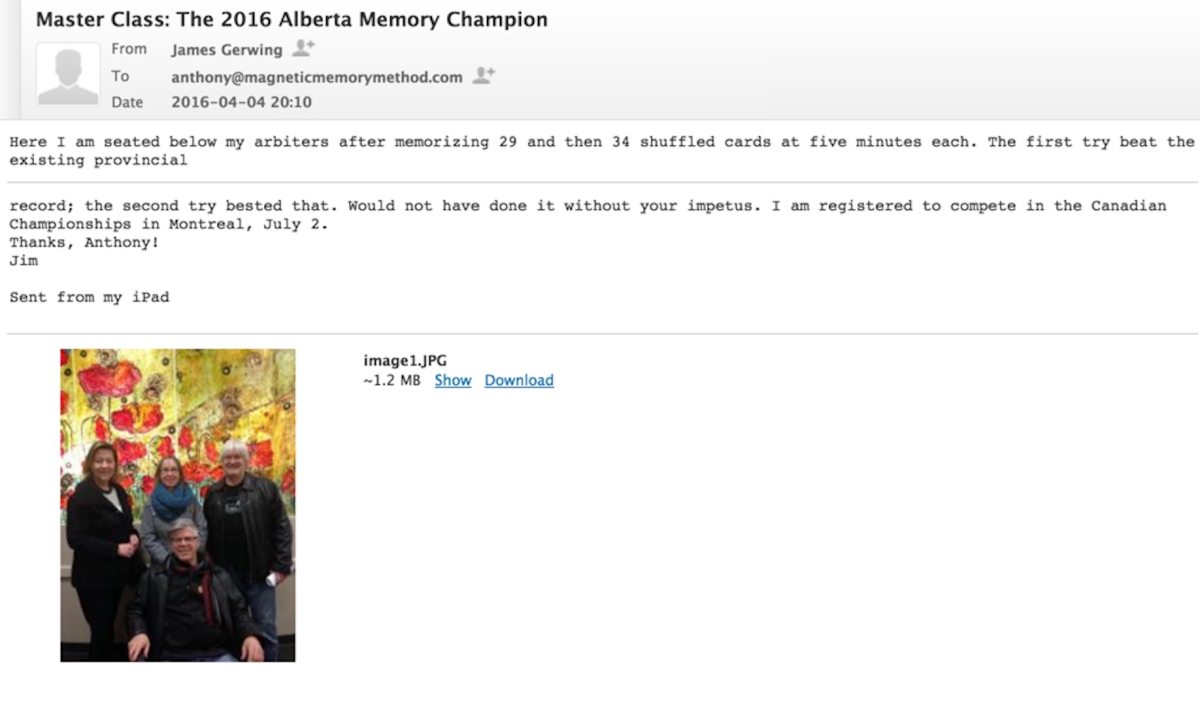
    As you can see from my State of Your Memory Address from 2016, he’d already broken a few memory competition records back then.

    James Gerwing Magnetic Memory Method Review Success Email

    You just have to love what emerges from consistent practice and exploration of these powerful techniques!

    And that’s why I just had to get James on the show to talk about how exactly the Magnetic Memory Method served along the way.

    https://www.youtube.com/watch?v=kAOzUFMXr7U

    About Memory Champion James Gerwing

    James is the 2019 Canadian Memory Champion.

    He’s also the winner of the 2019 and 2017 Alberta Memory Championships, and earned the bronze medal at the 2018 Canadian Memory Championships in Toronto.

    He’s obviously a memory expert too, and has even created his own “Mind Sharp” course.

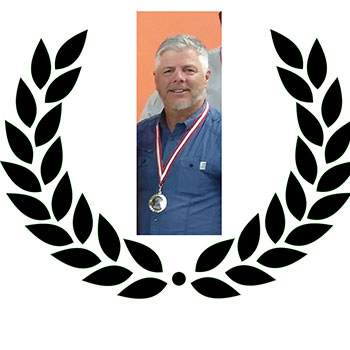
    Portrait of 2019 Canadian Memory Champion James Gerwing Magnetic Memory Method Masterclass Review

    In this Magnetic Memory Method Podcast interview, James shares his personal journey of memory improvement, and eventually, entry into the world of memory competitions.

    Now retired from an impressive career as an educator, James plans to continue competing. I’m confident he will continue to win!

    Do You Have To Become A Memory Champion To Learn These Techniques?

    No, but some experience with competition helps.

    For example, my own memory skills accelerated in unexpected ways after I sat to compete for charity with Dave Farrow.

    Obviously, competition isn’t for everyone, but as Simon Luisi has written on the Canadian Memory Championships site:

    “One of the best ways [to improve memory] is to participate in a memory competition.”

    Whatever side of the fence you stand regarding competition, I encourage you to take a few minutes and listen to James’ perspective.

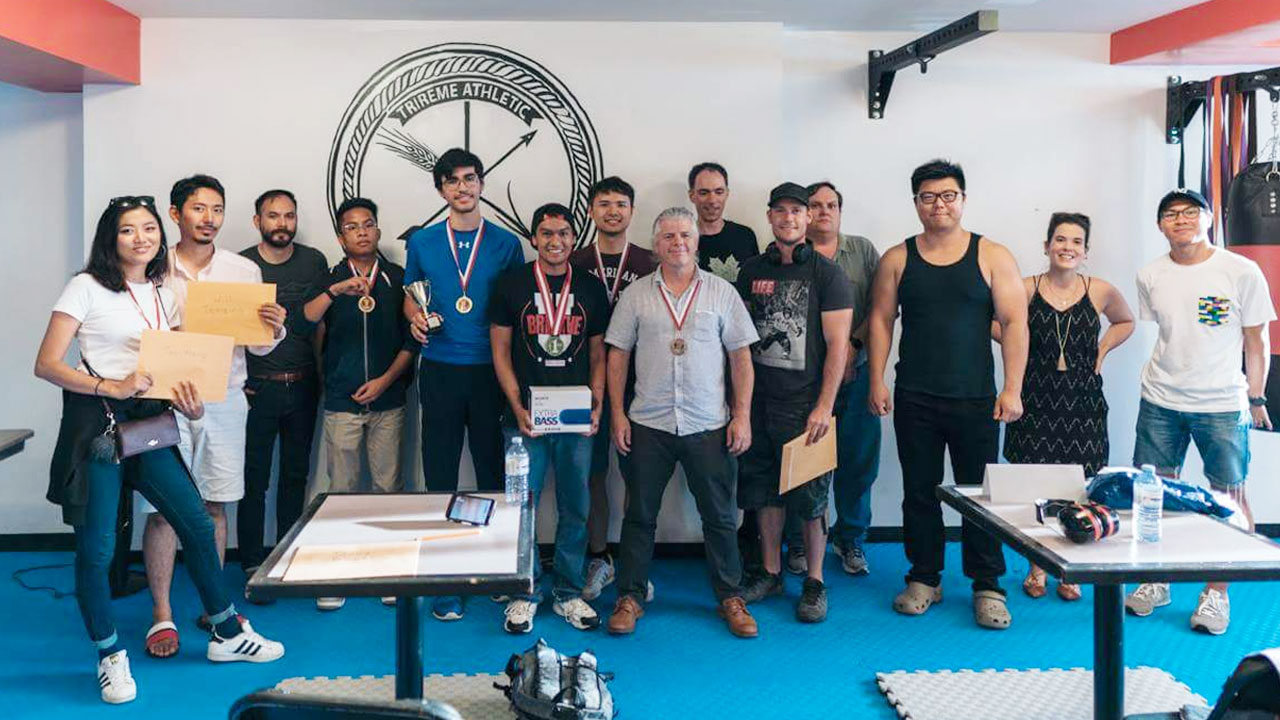
    Canadian Memory Competition picture with James Gerwing
    James Gerwing at a 2018 Canadian Memory Competition on the road to winning the 2019 national top spot.

    You just might reconsider where your opinion falls. I know I had and it handed me more knowledge than I ever could have expected!

    Just press play above and you’ll discover:

    • How a love of memory can be ignited at a young age, and memory techniques are vital to the education system
    • The reason competition performance differs from private practice in memory work
    • Why stress can be beneficial to memory improvement
    • The rationale of why memory techniques are not utilized in everyday life…and why they should be
    • How a memory champion really prepares for competition
    • A practical example of the use of the Major Method, and a welcome hack for “odd numbers out”
    • A proven way to relate cards, numbers, Magnetic Stations, and a PAO list
    • Why Memory Palace journeys don’t always have to be linear
    • When your memory associations are better off left unsaid
    • The reason memory competitions aren’t actually an external competition, but a solo performance
    • Plus much, much more, because…

    … a second part to this interview is exclusive to the Magnetic Memory Method Masterclass. It’s already available in the card course James used to learn the skills that helped him win!

    Further Resources on the Web, this podcast, and the MMM Blog:

    James’s interview the Edmonton Prime Times

    Major System Secrets And The Future Of Your Memory With Florian Dellé (referenced in this interview)

    Next Level Memory Training Secrets with USA Memory Champ John Graham (referenced in this interview)

    Katie Kermode On Memory Competition and Casual, Everyday Mnemonics

    Nelson Dellis on Remember It! And Visual Memory Techniques

    Idriz Zogaj On The Truth About Memory Training Apps

    Memory Improvement Fun And Games: Mark Channon Talks About How To Remember Anything

    Do you want to join in the competition? Check out Art of Memory’s current memory competitions list

    And if you need help, learn how to create an UNSHAKEABLE Memory Palace Training Routine, so you stand a chance of winning too. Both in learning, competition and life overall.


    Iconic Memory Defined: What It Is and How It Affects Your Recall Oct 17, 2019
    Show notes

    She disappeared in a flash, but when I closed my eyes, I could see her beautiful face looking pleadingly in my direction. Reads like romantic fiction, doesn’t it? It’s actually your iconic memory recalling a visual stimulus in its technicolor glory. In this post, you’ll learn all about iconic memory, why it’s important and how to improve it to enable better memory and recall. I’ll also break a few myths about picture-perfect memories. Here’s what I’ll cover in this post: What Is An Iconic Memory? Why Iconic Memory is Not The Same as a Photographic Memory How is Iconic Memory formed? George Sperling & Other Experiments How Does Iconic Memory Move to Long-Term Memory? What Function Does Iconic Memory Serve? How Can You strengthen your Iconic Memory? What Is An Iconic Memory? Iconic memory is one type of sensory memory. https://www.youtube.com/watch?v=2qU2zhO_UiE It is a short-term visual memory and lasts only a few seconds before getting discarded. Your brain uses iconic memory to remember (for a brief time) an image you have seen around you. Your sensory memory stores all information that you experience through your five major senses – touch, taste, sight, hearing, and smell. Check out these sensory memory exercises for a wild, mental adventure. Such storage of all stimuli is an automatic response by your brain. If sufficient attention is given to this stimulus, the information may then pass into your short-term memory, and from there, it can get encoded into your long-term memory. However, in most cases, sensory information is thrown out within a few seconds. This Puts The “Icon” In Iconic When some kind of sensory input enters your visual system, it goes into your iconic memory. The visual system includes the iconic memory, visual short-term memory and long-term memory. Iconic memory is simply your brain’s way of processing visual information. The brain sees this information as distinct flashes or ‘icons,’ hence the name iconic. For instance, imagine you are driving through the countryside and a lovely cottage with a red front door flashes past. You continue to drive, but can still see the “image” in your mind’s eye. This after-image of the cottage in your mind’s eye even after it ceases to exist in your visual plain is the working of your iconic memory. Here are some other examples of iconic memory: Your friend is reading a book, and you ask her which books is it. Your friend shows you the cover of the book for just a brief moment before hiding it, leaving you with only the impression, or iconic memory, of what the book’s cover looked like. You come home one evening and as you turn on the living room light the bulb burns out, leaving you in darkness. But your mind’s eye can still visualize (albeit briefly) what the room looked like in the luminance of the bulb. In other words, your brain takes a snapshot of every image it “sees” and stores that as an after-image only for a few seconds in your iconic memory. Apparently, this happens in your brain, even if you have aphantasia. The question is… how is it like a camera taking a picture? Is it the same as a photographic memory? Iconic Memory is Not The Same as a Photographic Memory Let’s get one thing clear. Photographic memory does not exist. The phenomenon where you have instantaneous recall of any and all events by uniting your visual, spatial, audio, and verbal memories is not possible by humans. You may have heard that Teddy Roosevelt could repeat aloud entire newspaper pages as if he was reading from it, or of artists like Arturo Toscanini, who was able to conduct the opera from memory after his eyesight became too poor to read the music. Many world champions and memory experts like Nelson Dellis can memorize and recall many digits of Pi, but there is no verified case which shows memory working like a camera with total and complete recall. But what if you can remember your experience in great detail – right down to the color of the car that you took to go to Disneyland when you were five years old? Does that mean you have a photographic memory? Simple answer: No. What you can have is an eidetic memory – a memory that is very vivid and has great potential for recall. However, to clarify – eidetic memory is not photographic memory. It simply means you can remember many things in great detail, but not all the details. More importantly, eidetikers may even invent details that were never there. Quick side note: Some researchers found that a mutated fruit fly could potentially possess a form of photographic memory. Over the course of their brief lives, a fruit fly with a boosted CREB gene could have a form of photographic memory. While humans also share DNA with fruit flies, the potential for a similar boost in humans is yet to be researched. So, if iconic memory isn’t photographic, why do we even need it? It seems unimportant, right? Maybe not. You’ll know in a minute. Let’s first understand how iconic memories are made. How Is Iconic Memory Formed? The occipital lobe is the central part of the brain involved in iconic memory. This lobe is responsible for processing and regulating visual information. When you “see” something, the visual information is received by the photoreceptor cells in the eyes and sent to the occipital lobe. Here it is stored for a few milliseconds before being it is forgotten or transferred to the temporal lobe. This visual memory or visual persistence is then converted from visual short-term memory to long-term memory by the hippocampus, which is located inside the temporal lobe. There may be psychological visual persistence of a visual stimulus for some time after its physical offset. There are three senses where it can persist. The Three Persistences The first is neural persistence which occurs when neural activity continues after the stimuli are gone. The second is visible persistence – when you continue to see an image even though it is gone, such as with a flash of bright light. The third is informational persistence – when an observer continues to retain information about a visual stimulus for some time after the stimulus is gone. In 1980, Max Coltheart performed research into the three stages of visual persistence. His study also suggests that any physical stimulus must be temporarily attached to a representation in semantic memory. However, episodic memory is not involved in this process. This temporary storage of information is what constitutes iconic memory. Iconic memory capacity is also extremely brief. Usually, the duration of iconic memory is less than one second, and this duration is fixed irrespective of how long visual stimulus is displayed. Iconic vs Echoic Memory The iconic memory and echoic (auditory) memory are the two most extensively studied sensory memories. The other main types of sensory memory include touch or haptic memory, taste or gustatory memory, and smell or olfactory memory. One big difference between iconic memory and echoic memory is regarding the duration and capacity. While echoic memory lasts up to 3-4 seconds, iconic memory or short-term visual memory lasts only up to one second. However, while iconic memory can preserve 8-9 items, the capacity of the echoic memory is 4-5 items. George Sperling & Other Experiments With Iconic Memory American cognitive psychologist George Sperling documented the existence of iconic memory. Cognitive psychology is the study of mental processes such as memory, perception, problem-solving, attention, language use, etc. Through several experiments, Sperling showed that humans store a perfect image of the visual world for a brief moment – as icons – before it is discarded from memory. However, it was psychologist Ulric Neisser who in 1967 labeled this form of quickly fading visual memory as iconic memory. Sperling’s initial experiment used a matrix with three rows of three letters. The participants were asked to look at a visual display of letters, for a short period, and then recall them immediately. Under this technique, subjects were able to, on average, recall 4-5 letters of the 9 they were given. The results helped Sperling conclude that our short-term visual memory can hold the information even if it is exposed to it for a few seconds. He reasoned that the reason the subjects were not able to recall all of the letters was that this memory disappeared in less than a second. Sperling didn’t stop there. Next, he tried a variation to this experiment, known as the partial report method. In this partial report method, after the visual display of letters, Sperling sounded a high, medium, or low tone. The tone was a cue for the participants. Depending on which tone was sounded, the participant read the high, medium, or low row of letters. This time around, when the participants had a cue they were able to recall more letters. The partial-report experiments determined that even though we see all the visual image of letters, we cannot recall them all because the memory is fleeting. While Sperling’s experiments with memory tasks mainly tested the information related to a stimulus, others such as Coltheart performed directs tests of visual persistence. Coltheart also questioned the relation between visual persistence and iconic memory. In his report, Iconic memory and visible persistence. Perception and Psychophysics, (27, 183-228), Coltheart says “Iconic memory and visible persistence are often treated as the same. However, whether these two phenomenon are the same is an empirical question. “The earlier review established that two properties of visible persistence are 1) an inverse relationship with stimulus duration and 2) an inverse relationship with stimulus luminance, or intensity. Iconic memory must exhibit these two properties before it can be equated with visible persistence. “There is no evidence that the duration of iconic memory and luminance are inversely related. Furthermore, although there is some evidence that increasing stimulus duration has an effect on iconic memory persistence, this effect is direct rather than inverse. Thus, visible persistence—which is very sensitive to physical display features—and iconic memory seem to behave differently.” Nearly two decades after Sperling’s original experiments, visual persistence and informational persistence emerged as two distinct components of visual sensory memory. How Does Iconic Memory Move to Long-Term Memory? A lot of focused attention is needed to move information from iconic memory to durable storage – which is your short-term memory and subsequently, your long-term memory. The human memory system works on encoding, storage, and retrieval of information. In 1968, Atkinson and Shiffrin suggested this model for human memory. It includes three components – sensory memory, short-term memory, and long-term memory. The Human Memory System Simplified Here’s a simplistic explanation on how your memory system works: In the first stage, any incoming sensory or perceptual information is held in the sensory memory. The information gathered through the senses is an exact copy of what you perceive. This information is stored in your sensory memory for a very short duration. For instance, as soon as you get a visual stimulus – you see an apple – it is processed by your eyes and moved into the occipital lobe. Next, recognition occurs, and this information is then placed into iconic memory. All this takes place very quickly. From the iconic memory, only a limited amount of information that you consciously pay attention to moves into the visual working memory – this is your short-term memory for visual stimuli. Everything else is discarded. This short-term memory does not have unlimited capacity. It can only store a limited amount of information. Conscious perception makes a significant difference in the memory process. The information can remain in the working memory for several minutes before being discarded or stored in long term memory. Over time, memories get etched in long-term storage. For this, you need rehearsal and petition to practice your recall of information which enables you to move information from short-term to long-term memory. What Function Does Iconic Memory Serve? If iconic memory lasts only for a few microseconds, is it at all important? Absolutely! The role of iconic memory in creating new memory is significant. This form of sensory memory provides a steady stream of visual information to the brain, which can then be processed by your short-term memory into more stable and long-term forms of memory. Scientists are also using iconic memory to make revolutionary discoveries. One of them is the role of this memory in change blindness or our inability to detect significant changes in our visual field. In certain experiments, they discovered that we tend to have trouble with change detection from one scene to another if we face brief intervals between them. According to researchers, that happens because that delay or interruption wipes out the iconic memory of the scene, which makes detecting differences all the more difficult if not downright impossible. Iconic memory loss has also been linked to the onset of Alzheimer’s disease, so it may be prudent to strengthen this type of sensory perception. How Can You Strengthen your Iconic Memory? Since iconic memory is one type of sensory memory, improving your overall sensory perceptions will result in better retention of visual information. Attention also plays a vital role in not only transferring information from iconic to working memory but also when the iconic memory is formed. According to this study, the formation of iconic memory is disrupted when attention is diverted even if that happens for a brief period of time. The human mind is capable of faultless information processing, just like a computer. It takes in information, organizes and stores it to be retrieved at a later time. However, for this information processing to be accurate, you need to be aware and deliberate in your learning. Be Intentional To Have Better Memory When you are intentional, you perceive things better. Why is that? Because you are paying attention to everything around you – all your senses are sharper and focused on absorbing the information around you. Greater attention means better perception, which results in good memory. Memory exercises can be used to strengthen your attention which in turn will improve retention and recall. However, your memory improvement training should always be linked to memorizing information that will immediately improve your life. It should always be measurable since tracking your outcomes leads to rapid improvement. This is where creating Memory Palaces using the Magnetic Memory Method can come in handy. It enables you to unlock the power of all types of memory – autobiographical, sensory, episodic, semantic, procedural and more so that you can move information into long term memory faster and with predictable and reliable permanence. Keen to unlock your natural ability to learn and remember anything fast? Why not try the Magnetic Memory Method today?

    Full show notes at the publisher

    Memory Palace Software: Matthew Snow on Using MemoryFiler Oct 10, 2019
    Show notes

    MemoryFiler Memory Palace Software LogoEver heard the phrase “Work smarter, not harder”?

    Well, what if there was a way to translate this idea into your memory improvement efforts?

    Sure, there are a lot of apps and learning systems that promise big results.

    In reality, most fall flat as tools and memory aids. But there is something potentially revolutionary in the memory software world that I want you, the Magnetic Memory Method Community, to know about.

    Today’s guest, Matthew Snow is the creator of the app, MemoryFiler.

    A former Army serviceman, Matthew initially became interested in memory techniques as a way to better himself personally.

    Using mnemonics eventually grew to Matthew’s desire to help others attain their memorization goals through using his fascinating Memory Palace Software. Here’s a demo:

    https://www.youtube.com/watch?v=iQXyLd94LmQ

    Matthew’s Memory Palace Software is highly personal, and isn’t a hack or a shortcut.

    Far from it:

    You’re still putting in the work, but it actually aids you in remembering your Magnetic Imagery. You do the encoding, and you make the associations. However, with this memory software, your images are at-the-ready for Recall Rehearsal as you work on committing them to memory to use in your work.

    The Difference Between This Memory Palace Software And The Rest

    That’s the difference between MemoryFiler and the flooded market. It takes your best efforts, your commitment, your encoding, and your imagery, and gives you a little boost, so that you can work smarter, not harder.

    So if you’re looking for a way to maximize your imagery, and if you’re searching for a more high tech way to record that imagery instead of putting pen to paper – if flashcards simply aren’t a tool in your personal toolbox, listen up.

    Simply press play using the audioplayer at the top of this page to discover:

    • How Matthew’s military experience was helped by the Memory Palace technique, and what servicemen and women really need to know for a promotion
    • The secret to getting “unstuck” with visual imagery used in memory techniques
    • What traits are necessary for success in entrepreneurship (and how consistency and routine relates to memory training routines)
    • Strengths and weakness of kinesthetic and visual learning styles
    • The benefit to reducing cognitive load through the use of apps, and why you shouldn’t “beat yourself up” over using them
    • Why social media is really asocial media, and why this is a metaphor for other “memory games” on the market
    • The need for analog and digital to work in tandem, and why we can’t “throw the baby out with the bathwater” when it comes to choosing one over the other
    • The reality of the generational gap between Generation X and Generation Z, and the influence the digital age has had on these groups
    • An explanation of dual-path readership and its development in modern culture
    • Why you should be concerned with media sovereignty
    • The real way to improve focus and concentration
    • The reason pop culture junk may be more useful than you think for memory work (Hint: It has to do with semantic memory)
    • Warning signs and indicators you’re dealing with the “pain of disconnect”

    Further Resources on the Web, this podcast, and the MMM Blog:

    Matthew’s App, MemoryFiler

    MemoryFiler on Facebook

    How To Find Mnemonic Imagery ANYWHERE (MMM Blog)

    3 POWERFUL Elaborative Encoding Memory Exercises (MMM Blog)

    4 Powerful Ways to Use the Pegword Method [10 Examples Included] (MMM Blog)

    3 Blazing Fast Ways To Increase Memory Retention (MMM Blog)

    https://www.youtube.com/watch?v=er-k8Ecgdfo


    Martin Faulks On The Memory Palace In The Masonic Tradition Oct 01, 2019
    Show notes

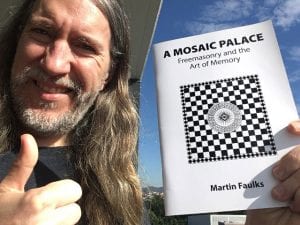
    Martin Faulks portrait for Magnetic Memory Method PodcastHave you ever thought about how improving your memory can improve your life? Not just surface level, daily routine improvements, but really transform who you are as a person?

    Did you even realize that memory training makes personal improvement possible?

    Or do you limit memory improvement in your mind as merely a tool for remembering dentist appointments and names?

    Well, here’s great news:

    The art of memory goes far beyond showing up on time and not having to look down at name tags and desk plaques.

    With practice, thorough memory training based on a scientifically sound application of the Memory Palace technique will radically transform you.

    Not just your outward life and the things you do from day to day.

    It will expand the limited notion of what you think your “self” to be.

    This outcome isn’t just what the ancient gurus promised, but also the same kind of results respected neuroscientists like Sam Harris are actively promoting in our time.

    How is this possible, you ask?

    My guest today is memory expert Martin Faulks. He’s also an expert in the field of meditation.

    https://www.youtube.com/watch?v=rdAdxSp84bA

    Complimenting his mediation and memory training experiences, Martin’s a martial artist, yoga teacher, and author of over half a dozen books on subjects such as enlightened living and tai chi. His newest book, A Mosaic Palace: Freemasonry and the Art of Memory explores the link between the ancient tradition of memory techniques and the secretive fraternal organization, the Freemasons.

    But Martin also takes on fun and unique memory challenges. For example, check out this interesting memory demonstration.

    As you can see, you really can incorporate fun activities with personal self-development.

    To that end, Martin and I explore memory as an internal transformative art that can change the very core of our being. Martin argues that while in antiquity inner transformation through memory was a common practice, too much of this tradition it has been lost in our modern age. The secret then to restoring this idea lies in your approach to committing to the techniques themselves with carefully chosen goals.

    The best part?

    It’s possible to have that transformation with a bit of guidance because the keys are already within you. What you seek is attainable, and it is within your means to take control of your own life.

    Whether you suffer from anxiety, unhealthy coping mechanisms, constantly feel a sense of failure when it comes to interpersonal relationships, or you find yourself sabotaging your own success you can benefit from the advice Martin so freely gives in our conversation.

    All you have to do is click play to learn about:

    • Memory training and the potential for learning leading to inner transformation (and how what you put into your consciousness can change who you are).
    • How the Renaissance caused the art of memory to become a path of cultivation of virtue instead of simply utilitarian
    • How Memory Palaces are useful as a form of meditation
    • The impact of adaptive strategies on our personality and coping and life skills
    • The hidden ways your mind is trying to help you
    • The method in which you learn something affects how easy it is for you to reference it
    • Why the church banned texts like the Ars Notoria as a “sorcery version of memory”
    • How the memory method of corporeal similitudes is the most powerful way to create associations for memory
    • The debate about whether Sherlock Holmes is a figure to look up to (otherwise known as a hero of an extra level of functioning) to when it comes to memory goals
    • Comparing and contrasting memory and sorcery, and memory palaces and magic circles
    • Why Giordano Bruno was a memory master and “terrible” teacher (yes, we question everything about him in this episode)
    • The differences in the definition of a memory master according to various cultures

    You can also watch Martin demonstrate Bruno’s memory techniques in this video:

    https://www.youtube.com/watch?v=i_ZWco1uLDA

    After listening to this interview, you might be wondering…

    Should You Read A Mosaic Palace By Martin Faulks?

    Martin Faulks portrait for Magnetic Memory Method Podcast

    In my view, absolutely.

    Anyone serious about the memory improvement tradition owes it to themselves to read as much about mnemonics as they can.

    It’s not just about you, as you’ll discover today. It’s about everyone’s role in preserving knowledge for the good of the whole.

    The number of ideas you discover when you focus on continuous study will impact your practice.

    A Mosaic Palace provides historical insight, diagrams and multiple Memory Palace Examples that you can translate into powerful Memory Palace training exercises.

    For example, Martin’s book inspired me to rethink some of my previously held notions about how the method of loci was used in the past.

    Few memory books combine history, philosophy and technique directed at self-realization. In a world cluttered by competition-based books, A Mosaic Palace is a breath of fresh air.

    Plus, Martin has more exciting contributions coming. I also can’t wait to read The Hermetic Art of Memory by Alexander Dicsone.

    The adventure never ends!

    Further Resources on the Web, this podcast, and the MMM Blog:

    Martin Faulks on YouTube

    Martin’s official website

    Scott Gosnell Talks about Giordano Bruno (MMM Blog)

    How to Memorize Like Sherlock Holmes with a Mind Palace (MMM Blog)

    How to Train Your Memory By Phil Chambers (Book review)

    Memory Craft (Discussion with Lynne Kelly)


    How Mike McKinley Memorized 66 Psalms WITHOUT A Memory Palace Sep 19, 2019
    Show notes

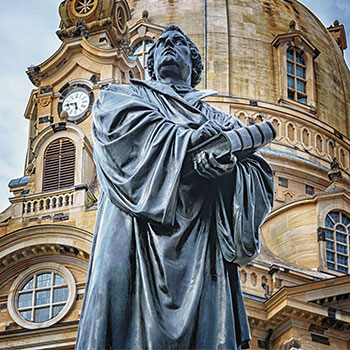
    Dresden sculpture of man with Bible for Memorizing Psalms without a Memory Palace podcastDo you struggle with the Memory Palace technique to complete large learning goals?

    For example, have you always wanted to memorize a substantial body of scripture, but…

    Kept putting it off?

    I know, I know…

    We all have something in our life that continuously gets pushed to the bottom of our never-ending to-do list…

    We all say “I’ll eventually get around to it”…

    We’re all guilty of never making moves to cross that item off our list.

    And yet…

    My guest for this podcast, Mike McKinley, has managed to AVOID that mistake when it came to making steps toward completing one MASSIVE goal.

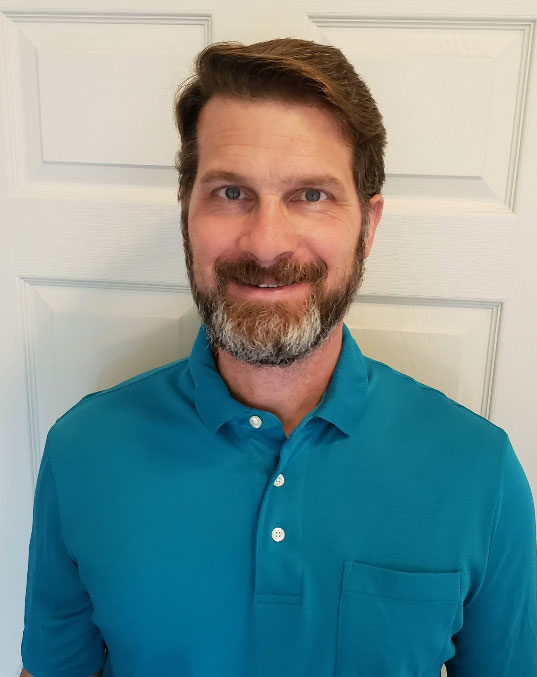
    Portrait of Mike McKinley

    Mike is an alumni of the Magnetic Memory Method Masterclass. He is also an electrical engineer and specialist in the area of radio frequencies.

    https://youtu.be/s5HEffOd27Q

    On top of those duties, Mike is a husband, father, seminary graduate, and full-time employee. Using the memory techniques he’s learned from the MMM Masterclass, he completed a three-year seminary course and memorized 66 chapters of the Psalms (and counting)!

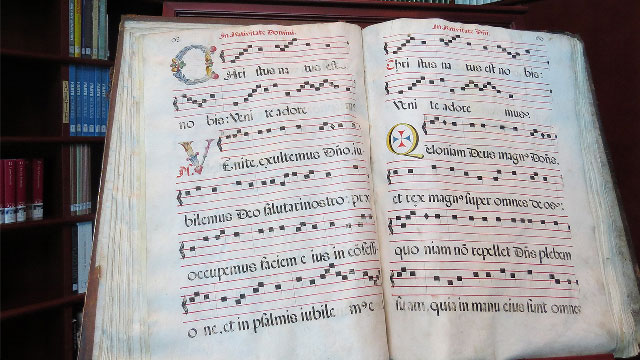
    Image of a Latin Hymn Bible

    So if you’re intimidated by the idea of undertaking an entire course to improve your memory…

    If you feel as though you don’t have the time to commit in an already packed schedule…

    Or you think, “How could I ever memorize something so lengthy?”…

    Just click play on the button above now and learn from Mike all about:

    • Why information is easier to remember in story form
    • The reason early Christians memorized the scriptures
    • Why recitation is an important memory improvement exercise
    • How actors and memory students are one and the same
    • The way manufacturing “spoiled us” with uniformity
    • The importance of small memorization goals and practicing the loci method when taking on large learning projects
    • The role of visualization exercises in memorization
    • The role of compounding or compressing in memorization
    • A tip on how to “reuse” celebrities, like actors, multiple times as symbols in memory work
    • The way long-form memorization is like running a marathon
    • The reason dogma has no place in the world of memory training and why memory is a creative event

    Of course, you might be thinking…

    What if I Want To Memorize Scripture In Another Language?

    No problem!

    Check out this incredible success story from one of Mike’s fellow Magnetic Memory Method students:

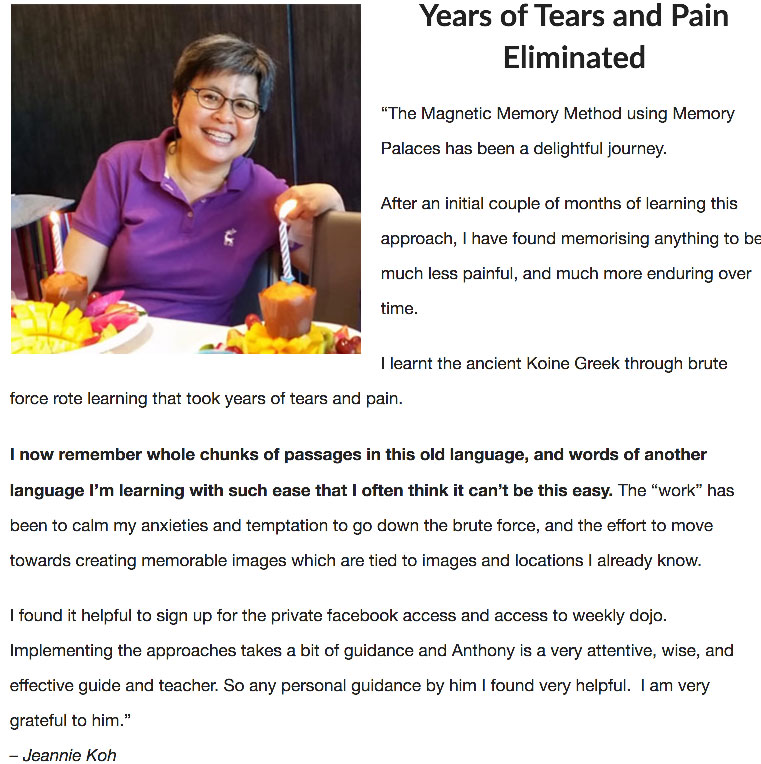
    Jeannie Koh Magnetic Memory Method Review for Bible Memorization

    (For more success stories, please visit the Magnetic Memory Method review page.)

    Like Jeannie, I also use a Memory Palace for memorizing scripture in other languages.

    Here’s a demonstration and discussion of how I make it work with a Sanskrit text called Ribhu Gita:

    https://www.youtube.com/watch?v=CgNQ9bU-nEg

    What’s the secret to this memory method?

    Easy:

    Take it one S.I.P. at a time:

    Study memory techniques

    Implement what you learn progressively so you improve your…

    Practice (daily is best)

    It really doesn’t get any easier than that, and the outcomes of having scripture in your mind and heart are profound.

    Dive in!

    Further Resources on the Web, this podcast, and the MMM Blog:

    How to Memorize Scripture And Verse Numbers In 5 Minutes Or Less (MMM Blog)

    3 POWERFUL Elaborative Encoding Memory Exercises (MMM Blog)

    4 Powerful Ways to Use the Pegword Method [10 Examples Included] (MMM Blog)

    How Do You Choose What Bible Passages to Memorize?


    How to Improve Semantic Memory: Boost Your Factual Recall Fast Sep 12, 2019
    Show notes

    Did you have toast and eggs for breakfast while reading the newspaper? If you can’t remember those specific words, then it is time to learn how to improve your semantic memory. What’s semantic memory? Check this out: The fact that you know and recognize objects like toast, eggs, and newspaper (without being told each time) is thanks to semantic memory. However, here’s what semantic memory is not: Recalling that you had toast and eggs for breakfast yesterday is part of what memory scientists call episodic memory (more about that later). In this post, I’ll explain what is semantic memory. Better, you’ll learn why it’s so important, how your brain forms these particular kinds of memories and how can you improve your semantic memory for words and facts specifically. Here’s exactly what I’ll cover: How to Improve Semantic Memory? Here are 3 simple techniques to improve your semantic memory: 1. Use The Magnetic Memory Method The easiest and most powerful way to improve your semantic memory, as well as episodic memory, is by learning how to build Memory Palaces using the Magnetic Memory Method. The Magnetic Memory Method Memory Palace approach is better for remembering and learning than something like mind mapping on its own. It is an incredible combination of intelligence and memory strengthening tool. Combined with Recall Rehearsal, this holistic process lets you move information from short-term memory into long-term memory faster and with reliable permanence. What’s more? You can use all other memory methods inside of Memory Palace, however, you cannot use a Memory Palace inside other memory techniques. This unique approach maximizes the power of the loci method and combines nicely with the pegword method. All that matters is that you don’t overthink the technique. We all learn it by doing it. 2. Exercise Your Brain It is essential. Exercising your brain regularly is the most effective strategy to improve memory and retention. Memory impairment or memory loss in older adults is common. However, there is a strong relationship between brain exercises and improved cognition and retrieval in older adults. Numerous tools and exercises can help you to assess your memory and enhance it through games and training exercises. It is a known fact that the more you utilize your neural circuit, the stronger it will get. This fact can also be applied to numerous neural networks associated with contextual memory, auditory memory, visual memory, short-term memory, working memory, naming, and more. You can improve your skill of identifying the right word to use for a concept or an object by training the neural network in your brain accordingly. Here’s a video that will inspire you to use memory techniques and treat them as the ultimate brain exercise. 3. Learn a New Language When you learn a new language, it requires you to learn and expand new sentence structures, grammar rules, and vocabulary. Such activities ensure that your semantic memory is continuously being utilized and strengthened as you make progress with the new language. Here’s a video that helps you learn and memorize the vocabulary of any language. https://www.youtube.com/embed/G1VNjzx31BI What is Semantic Memory? Semantic memory is independent of the context of learning and personal experiences like how we felt at the time the event was experienced or situational properties like time and place of gaining the knowledge. https://www.youtube.com/watch?v=SrWFkmjOeCI The level of consciousness associated with semantic memory is noetic because it is independent of context encoding and personal relevance. This was the finding of Endel Tulving in 1985. For instance, you “know” that Mr. Darcy is a famous character from Pride and Prejudice, which is written by Jane Austen. You may have read the book, seen the movie or someone may have told you about this character and the author. How you acquired the knowledge and in which context is not essential. What is important is that your semantic memory stored that bit of information as general knowledge. You can now recall this bit of general knowledge whenever necessary independent of personal experience and of the space or time context in which it was acquired. That is the beauty of your semantic memory. Usually, the recall semantic memory is automatic when particular information is prompted. However, there might be cases where you have to really think hard about certain facts stored in your semantic memory. Semantic Memory Definition Semantic memory is the structured record of facts, ideas, meanings, and concepts about the world that we accumulate throughout our lives and our capacity to recollect this knowledge at will. It is part of your long-term memory. The breadth of information stored in the semantic memory can range from historical and scientific facts, details of public events, and mathematical equations to the knowledge that allows us to identify objects and understand the meaning of words. For instance, understanding what the word “memory” means is part of your semantic memory. Semantic Memory Examples Memory competitors show their skills with strengthened semantic memory frequently. Source: The Malaysia Mental Literacy Movement For example, they are often asked to memorize vocabulary lists. Wei Qinru, the 2019 World Memory Champion, memorized 89 random words in 5 minutes. She also memorized 102 historical dates in 5 minutes, which is an incredible display of recalling semantic information. Another example is Nigel Richards. As Scott Young discusses in Ultralearning, Richards is said to have memorized the entire French dictionary in just 9 weeks. Finally, you use your semantic memory every day. For example, when you send a text message and add an emoji, the fact that you remember a colon and a parenthesis together means “I’m smiling” draws upon the complexities of semantic memory. When we draw from the alphabet and a myriad of symbols in everyday reading and communicating online, we are deeply engaging our semantic memory. The fact that this is a statue of Bruno in Rome is a semantic memory. My personal recollection of visiting it is an episodic memory. Here are a few final examples of semantic memory: Naming the state and capital city of your country correctly. Knowing that trees give oxygen or fish swim in water. Remembering your favorite drink or food or color. Being able to understand what the other person is saying. Knowing what the words you read mean. Next, let’s look back to the past. History of Semantic Memory Canadian experimental psychologist and cognitive neuroscientist Endel Tulving introduced the idea of semantic memory as a distinct memory system in 1972. Memory Expert Endel Tulving Before Tulving, there had not been many in-depth studies or research in the area of human memory. Tulving outlines these memory types in his book Elements of Episodic Memory. He notes that semantic and episodic differ in how they operate and the types of information they process. Here’s Tulving’s definition: Semantic memory is the memory necessary for the use of language. It is a mental thesaurus, organized knowledge a person possesses about words and other verbal symbols… (Episodic and semantic memory, Tulving E & Donaldson W, Organization of Memory, 1972, New York: Academic Press) After Tulving, two other experiments noting the differences between episodic and semantic memories were conducted by Kihlstrom (1980) and Jacoby/Dallas (1981). The study by Jacoby and Dallas was the first to note that implicit memory does not rely on depth of processing as explicit memory does. (Jacoby LL, Dallas M. On the relationship between autobiographical memory and perceptual learning. Journal of Experimental Psychology: General. 1981) J.F. Kihlstrom’s study showed that a suggestion for posthypnotic amnesia produced impairments on episodic but not semantic memory tasks. (Kihlstrom, J. F. (1980). Posthypnotic amnesia for recently learned material: Interactions with “episodic” and “semantic” memory. Cognitive Psychology, 12(2), 227-251.) These experiments paved the way for further investigation into semantic memory. However, it is only in the last 15 years where interest in semantic memory has greatly increased. One of the reasons for this newfound interest is an improvement in neuroimaging methods like functional magnetic resonance imaging. These neuroimaging methods reveal that the brain does not have one specific region dedicated to semantic information. Semantic memory is organized throughout the brain.It is now also known that semantic memory can be divided into separate visual categories such as size, color, and motion. Since specific parts of the brain are responsible for the retrieval of specific semantic memories, semantic memory can be divided into several categories beyond just the visual. For instance, the parietal cortex retrieves semantic memories of size while the temporal cortex retrieves memories of color. (Explorable.com, Feb 2, 2011, Semantic Memory). There may also be brain areas to consider when it comes to semantic memory on language acquisition. Is it Different from Episodic Memory? Absolutely. Both semantic and episodic memories are part of your long-term memory and are known as declarative memory or explicit memory (memories that can be explained and declared). However, while an episodic memory involves the conscious recollection of specific events and experiences; semantic memory refers to the mere recollection of nuggets of factual knowledge collected since childhood. Confused? Let me simplify it for you. Episodic memory allows us to consciously recollect past experiences (Tulving, 2002), while semantic memories are devoid of information about personal experience. For example, to be able to recall what happened during the last football game that you attended is an episodic memory. However, “knowing” that football is a sport without ever watching a game is a semantic memory. Here’s another example: When you say “summers in India are hot,” you are drawing that knowledge from your semantic memory. But when you remember walking down the streets of Delhi on a summer afternoon, licking ice cream, you are drawing on episodic memory. A Brief Deep Dive Into Types of Memory We cannot comprehend the entire concept of semantic memory without knowing a bit about the brain and different types of memory. Your brain has three major components: the cerebrum, the cerebellum, and the brain stem. The cerebrum – responsible for our memory, speech, the senses, and emotional response – is covered by the cerebral cortex (a sheet of neural tissue). About 90% of our brain’s neurons are located in the cerebral cortex. This cortex is divided into four main regions or lobes – frontal lobe, parietal lobe, temporal lobe, and occipital lobe. Now, the part of the frontal lobe that plays an integral part in processing short-term memories and retaining long-term memories is known as the prefrontal cortex. When we generally talk of “memory,” it is long-term memory. However, there are two other memory processes – short-term memory (also called working memory) and sensory memory (it retains sensory information after the original stimuli have ended). These must be worked through before a lasting long-term memory can form. This model of memory works as a sequence of three stages from sensory to short-term to long-term memory and is known as the Atkinson-Shiffrin model after Richard Atkinson and Richard Shiffrin who developed it in 1968. It is the most popular model for studying memory systems. Now long-term memory can be further divided into explicit (or declarative) memory and implicit (or procedural) memory. Declarative memory or explicit memory takes a different definition. It refers to memories that you recall consciously or deliberately. Procedural memory or implicit memory, on the other hand, describes the type of memory that deals with how to do things – like riding a bike or playing the piano. Here’s a fascinating fact: The hippocampus, entorhinal cortex, and perirhinal cortex encode declarative memories. These are then consolidated and stored in the temporal cortex and other brain regions. Procedural memories, on the other hand, are encoded and stored in specific brain regions – cerebellum, putamen, caudate nucleus, and the motor cortex. Declarative memory is further subdivided into semantic and episodic memories (now you know the context of our brief deep dive into types of memory). Another category of declarative memory known as the autobiographical memory, is similar to episodic memory in that both are personal memories from the past. However, while autobiographical memory is more general, for example, when you recall the street name of a house growing up, episodic memory is more specific to time. Why Is Semantic Memory So Important? We all need semantic memory to function smoothly in our daily lives. We use it every day to learn, retain, and retrieve new information. It is part of our cognition. Children and teenagers use it to retain new information that they learn at home or in school, while adults need it to know the sequence of tasks necessary to do their job. Without semantic memory, you wouldn’t know that the sky is blue or that birds can fly. Your concepts about time and space or meanings of emotions like love and hate are incorporated in your semantic memory. If your semantic memory is damaged due to any type of disease such as Alzheimer’s disease, you may not be able to identify or name everyday objects, understand the concepts of liberty or know what the word “coffee” means. There are many benefits to strengthening your semantic memory. A stronger semantic memory would result in improved long-term memory in students – enabling them to do better in studies. More importantly, strengthening your semantic memory would enable you to perform better in all aspects of your life without taking vitamins for memory. How are Semantic Memories Formed? We all learn new facts, tasks, or concepts from our personal experiences. So, in general, a semantic type of memory is derived from the episodic type of memory. For example, when you learn a new piece of information, your short-term memory relays it to episodic memory. Initially, you remember the exact time or place where you gathered the information. However, over time a gradual transition from episodic to semantic memory takes place, where your association of a particular memory to a particular event or stimuli is reduced so that the information is then generalized in your working memory as semantic memory. When it comes to the encoding process, both semantic and episodic memories have a similar process. However, semantic memory mainly activates the frontal cortex and temporal cortex, whereas episodic memory activity is concentrated in the hippocampus (amongst many other differences). The other areas of the brain involved in semantic memory use are the left inferior prefrontal cortex and the left posterior temporal area. Visual, acoustic, and meaning are the three main types of encoding used to commit information to semantic memory. Individuals may encode information to semantic memory through pictures or reading words and numbers, by repeatedly hearing the information, or by connecting the information to something else that has meaning in the memory. Different people have different learning styles. One person may do very well with visual aids. Another type of person may encode semantic memory through meaning or repetition. At the end of the day, there is no single route to semantic memory formation. But you can study better using mnemonics. Just make sure you don’t get into some of the issues we’ll discuss next. What Affects Semantic Memory? Some diseases and disorders may cause memory impairments in older adults. For instance, in the early stages of Alzheimer’s disease, there may be impairments or deficits in your short-term memory or working memory. Kasper Bormans demonstra…

    Full show notes at the publisher

    Scott Young On “Ultralearning” In Your Self-Directed Education Journey Aug 16, 2019
    Show notes

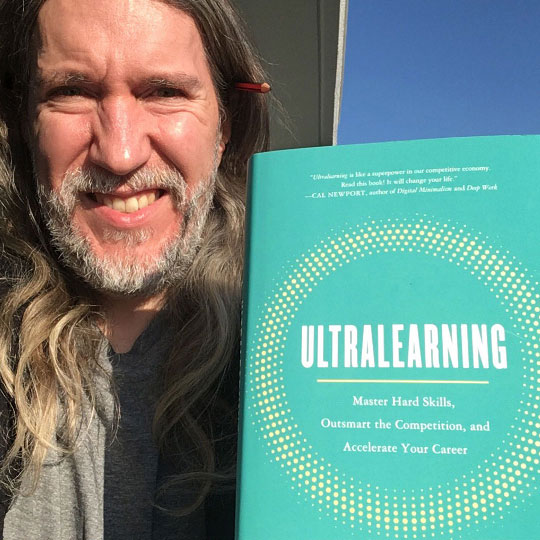
    Scott Young author of Ultralearning profile pic for Magnetic Memory Method PodcastYou’ve probably spent time in your educational career feeling frustrated, right?

    You know the routine:

    It’s the night before a test, and instead of resting…

    You’re “cramming” to try to remember the things that didn’t quite stick during a lecture.

    Here’s the thing.

    It’s not your fault.

    And there truly is a better way to learn.

    No, it’s not sitting and listening to a professor, reading or copying from a textbook, conversing with a language learning partner, or mindlessly practicing yet another skill suggested by a learning “guru”.

    To help explain what really works, my guest today on the Magnetic Memory Method Podcast is Scott Young, author of the new book, Ultralearning.

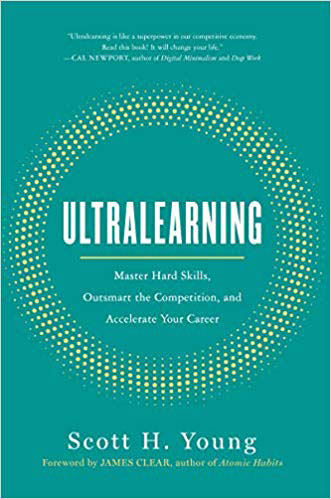
    Ultralearning by Scott Young Book Cover

    In this book, Scott shares the stories of people like language learner Benny Lewis, Eric Barone, World Championships of Public Speaking finalist Tristan De Montebello, and the French Scrabble world champion Nigel Richards.

    These are people just like you. The only difference is they’ve discovered a better way to learn, through “aggressive,” self-directed learning.

    Today’s conversation with Scott not only explores the concept of “ultralearning,” but Scott shares his own efforts to learn more, better, and faster.

    To be frank, a lot of involves simply directing your energy towards what works. Isn’t that better than spending years trying to fit into a traditional learning model that may not work for you?

    So, if you’ve ever struggled to learn a new language through books alone…

    If you’ve sat in a classroom only watching a professor demonstrate a chemistry experiment and not been able to “get it” because you lacked hands on experience…

    If you’ve used trial and error to make the perfect recipe and still ended up with a soupy mess for pancakes or an overly salty roasted chicken…

    Ultralearning can be the breakthrough you’re looking for to finally discover what really works for you to achieve you learning goals.

    Press play now and learn all about:

    • The definition of ultralearning and the origin of the term
    • The difference between autodidacticism and ultralearning
    • Why self-education is not always the best choice for effective and efficient learning
    • The importance of being a skeptic while being a reader
    • Why we really don’t know what we’re truly capable of…we’re actually shortchanging ourselves
    • How ultralearning can be masochistic, yet beneficial
    • Why you should actually care about the act of learning
    • Why self-testing and feedback are necessary, even with self-directed learning
    • The role of free will in education
    • What meaningful progress looks like in achieving your learning goals
    • The difference between procedural and declarative memory
    • How and when mnemonics are useful
    • Overcoming challenges with consistency in a learning practice
    • Contrasting the traditional work model and entrepreneurship (pros and cons of each)

    When it comes to consistency in scheduling, Scott is also tremendously generous in sharing how he schedules his time. Check this out:

    https://www.youtube.com/watch?v=q_BctXU7HWE

    So you see?

    It’s really not so hard.

    Does Ultralearning Get My Thumbs Up?

    Ultralearning by Scott Young Book Cover

    You bet!

    I’ve actually been reading Scott’s emails for a long time and even sought out his okay to hold this live stream walkthrough of a piece on his blog about critical thinking:

    https://www.youtube.com/watch?v=2NxJab-JrvU

    I hope he and I will have a chat to discuss the role of critical thinking in learning more in the future. But for now…

    Don’t miss this book and make sure you follow Scott Young!

    Further Resources on the Web, this podcast, and the MMM Blog:

    Scott’s official website

    Scott Young on Twitter

    Scott’s Facebook page

    Scott’s YouTube Channel

    Scott’s interview with The Leefkoe Institute

    Scott’s follow-up book, Get Better At Anything

    21 Study Tips on MagneticMemoryMethod.com


    Memory Craft: Lynne Kelly On The Potent Power Of Ancient Mnemonics Aug 08, 2019
    Show notes

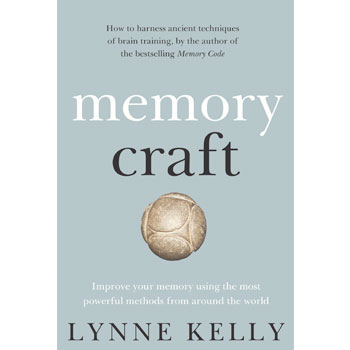
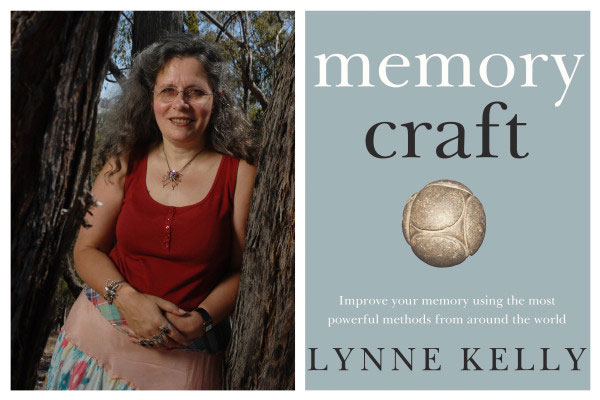
    Cover of Memory Craft by Lynne KellyIt only took three pages for Memory Craft to become my favorite book on the art of memory.

    Why?

    The answer is simple:

    Lynne Kelly, the author of Memory Craft, is devoted to helping people memorize information that matters.

    And in a world cramped with endless memory improvement books devoted to directing memory skills at insignificant trivia, Memory Craft is a breath of fresh air.

    Here’s why:

    Memory Craft concentrates on learning facts, languages and processes real people can use in every day life (like using the multiplication table directly from memory). She also addresses memory science and how these techniques can be used by young people.

    Now, you may remember Lynne Kelly from a previous interview where we discussed her fantastic book, The Memory Code.

    https://www.youtube.com/watch?v=jim_csNGV1Q

    I’m thrilled to have her return to The Magnetic Memory Method Podcast to talk about her newest release. The full title is: Memory Craft: Improve Your Memory Using the Most Powerful Methods From Around the World.

    For those of you not familiar with Lynne, here’s the lowdown:

    Not only is Lynne Kelly the author of several books on memory, but she is a highly skilled researcher, science educator, author and memory competitor.

    Lynny Kelly portrait with a cover of Memory Craft

    Most known for her theory about Stonehenge’s purpose, she has also contributed to work in popular science and is a promoter of skepticism. She’s even reported on the connection between learning and genetics to great acclaim.

    Lynne’s critical thinking and contributions to such a wide range of science subjects has led to awards from the Royal Zoological Society of South Wales among others.

    As a memory expert with a special focus on ancient memory techniques, Lynne Kelly is that rare practitioner who takes on large learning projects and shares the journey in addition to attending memory sport activities.

    And that’s what makes today’s conversation with Lynne so special. Lynne helps us explore our need as a species to treat our minds as “muscles” that deserve ongoing development, ideally through a combination of learning and play.

    Using tested memory techniques for completing fun and engaging memorization tasks, Lynne traces the timeline of the important role these skills have placed from ancient times to today’s memory competitors.

    As a unique book on accelerated learning techniques, you’ll discover visual alphabets, medieval bestiaries, indigenous learning systems, and modern card memorization as Lynne has explored and updated them for citizens of the modern world.

    If you want to learn a foreign language, you need to memorize and deliver a speech, or you’re a student preparing for an exam Lynne has a solution for your memory dilemma. The best part?

    Lynne’s suggestions for incorporating mental exercise into your daily routines work even if you only have 5 minutes a day.

    Intrigued? Press play above and you’ll discover:

    * The real reason why stores play such upbeat, catchy music.

    * Why outdoor Memory Palaces can be so helpful for memory retention.

    * The benefits of “setting aside” time for memory training versus incorporating practice into everyday life.

    * How vivid, violent, or vulgar imagery can bring abstract concepts to life.

    * Why “rapscallions” are useful memory tools and not just mischievous little creatures.

    * How art can help you remember more in a Memory Palace.

    * The pros and cons to living with aphantasia.

    * The key to using hooks and layering to create dynamic visuals.

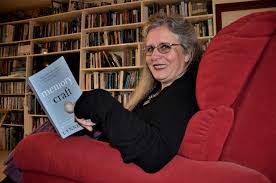
    Lynne Kelly holding a copy of her book Memory Craft* How to “dialogue” with your memory aids.

    * Why we should encode using music and places for maximum mental skill (and possible mental health) benefits.

    * The usefulness of memory techniques for school aged children and their long-term effects.

    * The secret to overcoming “ghosting” when using memory techniques.

    Further Resources on the Web, This Podcast, and the MMM Blog:

    Lynne Kelly (The Memory Whisperer)

    Lynne Kelly on Twitter

    Lynne Kelly’s TEDxMelbourne Talk

    Lynne Kelly on Amazon


    9 Awesome Accelerated Learning Techniques [Beyond Mnemonics] Aug 01, 2019
    Show notes

    Do accelerated learning techniques really speed up learning? Well, if you’re looking for ways to maximize your study sessions and get the most “bang for your buck,” here’s the real deal: Most of the shortcuts people associate with “speed learning” and “speed reading” actually make things longer and harder. That’s right: Speed reading is not a shortcut! (This is because most people can neither comprehend nor remember when they’re skimming like a maniac.) But if you want a collection of techniques that will truly accelerate your learning process and help you master your discipline in a shorter amount of time, then it really does need to be just that: A collection. And to be clear: Learning “faster” isn’t always about efficiency. Especially not when you’re studying massive topics of knowledge, as I share with you in this post about how I’m using memory techniques in law school. In fact, the fantasy of efficiency throws up one of the biggest barriers around. People waste time trying to master shortcuts that are never going to work. Why? Because they haven’t mastered the fundamentals that allow the learner to even understand the shortcuts, let alone effectively use them. And that’s why we’re going to start this training by busting some of the myths around learning techniques that some self-proclaimed learning gurus (strangely) vilify: Highlighting Re-reading Keyword notes We’ll cover when and why these 3 techniques can actually be great, and then explore 6 of the classic accelerated learning techniques everyone should know. What Makes A Learning Technique “Accelerated” I don’t know about you, but I’ve personally found highlighting and re-reading to be very helpful. But there is definitely a right and a wrong way to perform these strategies. In fact, they are deeply problematic if you don’t take into account what matters: Context and strategy. (Especially with respect to effective note taking techniques.) Whenever evaluating a learning technique, ask yourself important questions like, “What context am I in?” and “Does this apply to what I’m learning?” Take into account your desired outcome and the application of strategy in context. Use A Mind Map And Vision Statement To Help Literally map out what you want to achieve and see how relevant a learning strategy is to that goal. I suggest you use Tony Buzan’s Mind Map Mastery to help. I also suggest you create a vision statement. Here’s how: https://www.youtube.com/watch?v=MFz31HpVkj0 Then, analyze your results with the technique you implement into your study sessions. It literally requires some trial and error before you pass final judgment on what works in different contexts. Finally, you must be willing to conduct experimentation to improve your results. Don’t be afraid of making mistakes while searching for what works best for you. There is no end all, be all when it comes to study techniques. It doesn’t matter what others say. Highlighting can be useful in context, and I’ll explain why. Re-reading can be a great strategy for learning. Keyword notes can be extremely beneficial to achieve your desired outcome. My advice? Don’t listen to the critics who dismiss these techniques so easily…instead let’s explore them a bit more in depth. 3 Bad Learning Techniques Made Good (In The Right Contexts) Sensible Highlighting Highlighting can be useful for names, dates, key terms, and definitions. Why is it a useful technique? Certainly not because it helps you concentrate better while reading a text. After all, no matter how much you refine the approach, you’re still stopping and starting the reading process. Nonetheless, the benefit of highlighting’s usefulness is rooted in delayed benefits. For example, when you return to the text you can rapidly flip through the pages and say: “That’s information I need.” You don’t get the results immediately, but in context, the benefits can be powerful. Used in a sparse and targeted manner, highlighting is a great alternative to having to search for specific kinds of information. What kinds of information? When I was in university, I used highlighting for creating “beacons” that helped me rapidly gather: Names of people Dates Key terms and definitions I identified them on the first read, and then circled back to pick them up for memorization later. Color Coded Highlights? Should you experiment with color coding your highlighting? If it helps you rapidly distinguish names from dates, why not? I’ve personally never found pausing to change colors worth the time, but you might. For me, I limit this technique to specific “seek and find” tasks. Highlighting in just one color – sparingly – is the best strategy when I don’t mind marking up my books. Alternatives to Highlighting There are alternatives to highlighting as well. These are tidier and a bit easier on the eyes than a sea of neon in your text. For example, try something I’ve coined the Marginalia Dot, a simple dot in the margins. You can also use squares, circles, stars, or some other shape. These are much easier to scan and I find they work a lot better than brackets or underlining in a text. Their non-intrusive nature preserve the aesthetic value and readability of the book too. Even better, this technique introduces an element of memory exercise. Instead of “feeding” yourself the information you wanted to remember, the Marginalia Dot prompts you to remember. The book’s content helps remind you, of course, but you’re not taking the simple way out. You’re forcing yourself to grow. What do I do after laying out all these tiny dots? I use this textbook memorization technique with index cards. In all cases, develop your own system so you can discover what works best for you. Only you can, so dive in! Re-Reading I’m no stranger to re-reading a text, as you know. Personally, I feel that re-reading is always a good idea after pre-reading and priming as well as after reading a book, and even after note gathering and memorization. Now, I know that one of the reasons why re-reading is frowned upon is not because of the effectiveness of the technique itself. It’s user error. People have just not thought to budget and schedule the time for re-reading. The key is to set aside the time, instead of blaming time for being what it is. Keyword Notes While the precise definition of “keyword notes” varies from person to person, it generally just means boiling bigger ideas down into individual words that help us unlock the larger concept. For example, on this mind map, I boiled down an entire concept related to practice down to just that keyword, even though multiple ideas were involved. Not madness like this early mind map I created (though this approach was not entirely for nothing): A problem that many learners face is that they just don’t know what keywords they should use to unlock the larger concepts. The best way to gain clarity? Ask. Ask your professor, ask other students, or even the department secretary. Ask for copies of previous exams, or explore related texts by using indexes, bibliographies and online search tools suggested by librarians. You must become a bit of a self-directed detective. Learn to ask the “right” questions by just getting started with asking them. Also, here’s a next-level mindset tip: Let go of the idea that you could ever know everything there is to know. We are all constantly learning. We are lifetime learners, constantly searching out “keywords.” Accept this fact and enjoy the ride. What Makes The “Good Accelerated Learning Techniques” Coming Up So Good?… If highlighting, re-reading, and keyword notes are bad, what makes an accelerated learning technique good? The same things that make the bad, bad! (Mind-blowing, I know.) Remember, it’s not so much about the techniques, as it is the strategic deployment of the right technique in the right context. When it comes to the classic accelerated learning techniques, let’s explore more of the details that will help you choose based on the learning situations you find yourself in. Self-Explanation There are many ways to practice self-explanation, such as the Feynman technique: https://www.youtube.com/watch?v=D_JJcF1ZVo4 Another method is to perform regular progress checks. Here’s how: Record and analyze your progress. You don’t have to be hard on yourself if you don’t see a rapid improvement or something you believe is measurable, but really invest the time to explore where you are at with your learning journey. For related tips like these, please see: How to Create An UNSHAKABLE Memory Palace Training Routine Take Practice Tests Whether they be in textbooks, online, or are previous tests from your department of study, there are practice tests widely available for you to utilize if you seek them out. Once you take the time to find “where you’re at,” and know what needs improvement in your knowledge base, fill in the gaps with some “brute force learning.” Although this accelerated learning term sounds like cramming, it isn’t. Instead, putting on a timer and gobbling up as much related information as you can helps foster better understanding. It’s a powerful alternative to saying “I don’t understand.” Instead, you tell yourself “I’m going to understand this. This is not something that I get right now, but I’m going to write out what it is I don’t get, and then I’m going to craft a plan that helps me seal the gaps.” In this way, you are taking charge of your education through self-explanation and a little tough love. So the next time you get hung up on something, journal the nature of the problem and then write out the most likely way to solve it. Like this: “I don’t understand this concept about nuclear fission. My book defines it as ______________. What I don’t understand specifically is _____________. To help myself understand, I’m going to search the key terms on Wikipedia, YouTube and try to find a few blog posts from experts on Google.”Isn’t a small bit of time spent in self-explanation better than giving up? Elaboration Elaboration is a mental process where you repeatedly ask yourself the classic questions of “Who, what, where, when, why, and how?” Instead of just reading a text, this approach allows you to dig into it contextually. It’s essentially a means of manually injecting curiosity into your learning process. For example, when dealing with mathematical formulas (for example) you can ask: Who came up with this? What were they doing with it? When did they come up with it? Where were they when they came up with it? Why did they come up with it? How exactly did they come up with it? Really engage in the mental process of doing more than reading, but exploring, through questioning, the context. Historical context can be very important! The more you look at historical contexts, the more you’re able to compound a variety of levels of information. This act is itself a memory aid because you create more mental connections while doing it. You’ll also want to use tools of comparison and contrast. Compare things historically, geographically, and geo-historically. The possibilities are infinite. Use the power of combining multiple levels with these simple questions to your advantage. The Power Of Consequences Finally, take into consideration consequences of things which are always important to know. For example, you can ask: “For those who understand the consequences of this knowledge, what happens for them as a result?” Albeit conceptual, this is yet another layer of information that can deeply bolster your understanding and instantly make things more memorable. At the end of the day it all comes down to getting granular with the text and diving deeper than a surface level of engagement so common amongst those who read passively. Proper Goal Setting You must have a purpose and a why to what you’re doing. Too many times young people are pushed into making major life decisions at a very early age. Even if these people do become successful, they often wind up wearing golden handcuffs. What exactly are golden handcuffs? Golden handcuffs chain your life when you’re successful in completing goals, but you wind up miserable because you’ve led yourself into a career that is very different from what you wanted to do. For example, how many highly successful doctors or lawyers had childhood dreams of becoming artists or musicians? What about the corporate executive who really wanted to be an author when he or she grew up? At surface level they have it all figured out and should be happy. But we all know how it goes. In reality, so many people who seem successful are actually unfulfilled. And sometimes, accelerated learning techniques helped lead them into the maze that traps them. How can this be avoided? Easy: Proper goal setting. Set goals that: You can actually accomplish You actually want the outcome of, Help you grow Give you options beyond the outcome so that you’re able to go in different directions after you’ve accomplished a certain level of goal. Many people set goals that require smaller goals on the way to a larger goal, like stepping stones. The smaller goals build up larger and larger until the ultimate goal is accomplished, one leading to the next. Understand that even the smallest goal has to start somewhere. This should be based upon your existing competence. Proper goal setting takes into account an already established knowledge base, no matter how small. Proper goal setting also is conscious of the Challenge-Frustration curve. You may find yourself bored as things get easier, as your goals are achieved, and, admittedly, that is a tortuous thing. Experiment and find the balance of giving yourself sufficient challenge, but not so much that you are constantly frustrated and become burnt out. Finally, take into consideration the 80/20 rule when goal setting. Remove or Manage Distractions Easier said than done right? After all, distractions can be internal or external. Oddly enough, it’s the internal distractions that are bigger, meaner, and nastier than anything from the outside world. Internal Distractions Internal distractions are largely mental. The stories we tell ourselves, and the way we convince ourselves we’re not good enough, smart enough, or capable is grossly unfair. Although such rotten mental content has no place in an intelligent mind, nonetheless, it’s there. More crazy: We reason and justify negativity so that we believe it’s logical and our truth. It’s a constant inner battle. In my experience, meditation and taking care of diet and sleep are the best cure. External Distractions Distractions can also be external. Take into consideration your learning environment. Is it too crowded? Too noisy? How is the lighting? Find out if a steady hum of people and bright lights is beneficial to your or a distraction. Also, do you work better in a more dimly lit space with silence? Experiment with your study space to find what works best for you. Take steps to remove or reduce those environmental distractions to multiply your efforts. Multi-Sensory Learning We’ve talked in great detail about the Big Five of Learning – reading, writing, listening, and speaking and their benefits to memorization and learning. By creating a multi-sensory experience, far more physical and mental connections are made. When you use multi-sensory learning across multiple disciplines, the material becomes more naturally etched in your mind. In addition to the Big Five explore the idea of distributed practice. Experiment with studying in short sessions, learning broken up into smaller bursts, over a long period of time. Learn Faster By Changing Spots Finally, try changing contexts or locations. The novelty of a new learning environment may be exactly what you need for retention. Once you’ve found your ideal learning environment explore places with the same aesthetic. Rotate between several cafes or area libraries. If you find yourself hitting a wall at a location, move to the next. You can even take the opportunity to walk between…

    Full show notes at the publisher

    How to Create An UNSHAKABLE Memory Palace Training Routine Jul 18, 2019
    Show notes

    If you want to create an unshakable Memory Palace training routine, here’s the most important point: Your memory exercise routine needs to be immovable from your schedule. Like a mountain. Think for a second about what mountains represent: Mountains symbolize strength, and they dominate the landscape. Mountains endure extreme weather, erosion, and yet remain sturdy. Now, you may not think of your mind as being as sturdy and consistent as a mountain. But when it comes to establishing memory ability and the mental power consistent memory training can create in your life, this level of sturdiness is possible. All it takes is self-discipline, the application of the right techniques, and an established routine you love to maintain. But you might be thinking… That’s easy for you to say, memory man! I don’t even know how to get started! How To Get Started? The first step is to realize that you probably have mountain-sized obstacles in your path. For example, you might have these three BAD habits: https://www.youtube.com/watch?v=tAXBf61Q7Eg Now, it might take some time to get rid of those habits, but I’m confident you can do it. It wan’t exactly easy for me, but I was able to make progress. And the fruits of progress are very profound indeed. So let me me ask you: Mine are. And I’m so glad that I can say “yes!” But how do I really know they are rock sturdy? For one thing, I’ve recited the same passages from memory for nearly two and a half years (Ribhu Gita and Upadesa Saram). I talked about this project at a TEDx event, a talk I also memorized: https://www.youtube.com/watch?v=kvtYjdriSpM Then there’s my personal productivity. For nearly ten years as of today, I’ve released podcasts, blog posts and videos with (almost) weekly consistency. Let me be clear: Only a regular memory practice and personal discipline makes accomplishing such goals possible. Along the way, I’ve interviewed and made friends with many of the best memory athletes and memory experts on the planet. They’ve inspired me on my mission to spread knowledge about memory techniques as far and wide as possible, and to keep up with memory training each and every day. So, to help you, on this page, I’ll talk about what I’ve learned about Memory Palace training routines along the way. How To Topple The Biggest Barriers To Consistent Memory Training First things first, you must master your mindset. This step will help you eliminate the pain people associate with training, and the flight mode the fear of pain places people in. Listen, I know it’s easy to get overwhelmed when you’re building your first Memory Palace Network. Heck, for some people, even the first Memory Palace can be a challenge. That’s why I created this free course and separated it into smaller and simpler steps: But here’s the truth: Even the simplest course in the smallest amount of steps will still challenge you. Not only is challenge to be expected… It’s normal! Authentic brain exercise that leads to better memory must be a challenge. Otherwise, you won’t grow. This fact (one that all scientists and top performers acknowledge) means that challenges are never a reason to accept defeat. Yet… I’ve heard the same complaint a thousand times: “Oh this is so much work.” “How will I ever have time for this? What if it doesn’t work?” How To Escape The “Pain Vs. Gain” Hamster Wheel Well, what if? Mental mastery starts with giving up fear of the unknown. Why is this so important? Because life is – and always will be – filled with unknowns! For example, I just started memorizing Chinese characters. All of a sudden, my brain starts melting under questions for which there is no answer: What if I spend time on characters I won’t use? What if I don’t have enough Memory Palaces? What if I give up? What if, what if, what if… The good news is: I know how to shut these questions about the unknown off. And I can help you. Here’s how: You need to separate your “pain thoughts” from your “gain thoughts.” After all, the dread created by thoughts of “so much work” erases the promise of what you stand to gain. Plus, you can get all kinds of interference, as memory scientists call it, just one of many causes of forgetting. How To “Flip The Script” Instead of focusing on the pain, flip the script. Ask instead: “What if I actually had a fully functional Memory Palace Network and could memorize information quickly? AND not only memorize it, but have it at my fingertips, when I need it?” Replace focus on the pain with a serious grasp on the outcomes, the benefits, and the goals needed to help you create your first Memory Palace Network. Then create the simple systems that will help you achieve those goals. Want proof that the Memory Palace technique works? This memory science makes it undeniable! All you need to bring is the practice. The tips below will help. Keep reading! Fight Vs. Flight:How to Raise The Fists Of Your Memory And Keep Punching Are “fight” or “flight” behaviors typical for you? If you’re not sure, think about the last time you faced a really big challenge. Did you dive in, or did you sit still and further cement your status as a “couch potato?” through more inactivity? (Let me know in the comments below if you wish.) Now think about creating that Memory Palace Network (here are some varying examples of this memory technique to help you). Do you see it as a challenge you can rise to or something to run from? If you’re running from it, see if you can’t craft a different story for yourself. See yourself diving into battle without fear, for example. Such a simple shift in mindset really can enable you to make it happen instead of throwing your hands up in the air, admitting defeat and hiding your head in the sand. You really can harness those runaway, unhealthy, defeatist thoughts. You just need to step back from your ego a bit and objectively view the nature of your thoughts. Or use this simple tip: https://www.youtube.com/watch?v=dW8tHFiTVNY Contrary to popular belief, this form of self-inquiry like this does not lead to paralysis analysis. Instead, an honest analysis of how your mind creates fears and endless self-doubt really can help you take action. You really can start to understand that the barriers you face are really just thoughts in your mind. Walking meditation can help if you don’t like asking and answering these kinds of questions while sitting still. In all cases, you must take action in order to fully understand how memory techniques work. Put it this way: How would you know that you can’t lift Thor’s hammer until that you’ve actually had the handle in your grip? This is where having a proper mindset separates the wheat from the chaff. You must have an “all-in” attitude. You’ve got to go for it with laser-focused intent. The only question is… how do you develop the mindset that allows you to leave your fear and overwhelm about such a “big task” behind? Use The World’s Most Powerful Cliché And Find Your “Why” “Know your why” is a cliché, to be sure. But it works for a reason, and not just because it’s identifiable and relatable. Thinking about your why causes you to take a long, hard look at your reason behind doing anything, much deeper than surface level reasons like looking smarter or getting a raise. For this reason, every time we think about our Memory Palace training routines, we will do very well to revisit our why. How To Dig Into Your Why Ask yourself “What do I really need these techniques for?” It is to become a memory champion? To pass exams? To learn languages? Is it that you want to be able to deal with a large volume of information, or are you more concerned with the speed at which you’re learning and retaining information? Next, dig deeper. I recommend that you look for at least five levels of why. These reasons do not necessarily have to be in a hierarchy of importance. It’s just important that you have enough fuel to draw upon when times get tough or other priorities start to compete with your memory training schedule. Example of Five Levels Of Why For example, here are my five levels: To grow the garden of my knowledge through multiple layers of connection To deepen my understanding of how world history and philosophy connect To correct errors where they exist and increase factual accuracy To increase cultural understanding and communication through ongoing language learning To maintain brain health through continual brain exercise You might struggle at first to reach five reasons. Keep practicing and you’ll get there. The Bucket List Technique Another way to find your why involves creating a “bucket list.” Think of the things you would really like to do, and then ask yourself “Why would you like to do them?” Then ask yourself “Why else?” and repeat. If you can’t figure out five reasons, or five whys, why you want to do a thing… what are you even bothering wanting to do it for? Do you really want it after all? This high level “why” will help you not to waste time on training for things you don’t actually want to do, because your training will fall apart if you don’t actually want the goal you set out for. Do you have to stop at five? Of course not. But when you have at least five, you’ll discover it’s easy to complete the next, crucial step: Crafting a Vision Statement. https://www.youtube.com/watch?v=MFz31HpVkj0 And as you can see from Joe’s email and extract from his Memory Journal after he watched the video above, this technique really works: Vision Statement from Joe’s Memory Journal “Hey professor 🙂 I just wanted to say thank you again for putting that vision statement video out. If you want to see what I ended up with for a vision statement, I attached it to this email. There’s 18 pages of work I had to go through to get it boiled down to this. It was exactly what I needed at the time I needed it.” Thanks for sharing this part of your journey, Joe! Now all you have to do is… Link Your “Why” To Missions That Use Simple Systems Wait a minute? Isn’t having a fully developed why enough? In a word: No. A why is only as good as the action-based systems to which you link it. Put it this way: The biggest problem I’ve found is that a lot of people create goals that are forced. They proceed toward creating outcomes they’re not entirely passionate about. For example, their parents have the vision of them becoming a doctor or lawyer, when they’d rather write children’s books or become touring musicians. No wonder they don’t have a why they can create systems and missions for! You really can’t get a clear understanding of your why when… it isn’t yours. I know this from my own experience, when I once tried completing a mission with no truth to it whatsoever (long story). Condensed Memory Training System Example Here’s an example of a daily system I currently use: Wake up, drink water, stretch Recite memorized Ribhu Gita, Upadesa Saram and Bhagavad Gita verses in Sanskrit Memorize playing cards (a brief, but powerful eleborative encoding memory exercise) Gratitude journal and then recall the memorized cards Memorize more verses in Sanskrit How is this linked to my five levels of why? Very simple: I spent years getting a PhD that involved understanding Western history and philosophy. As great as this mission was, I learned next to nothing about the Eastern traditions. By studying a language and philosophical world of an Eastern tradition I grow connections between schools of thought in the garden of my mind. I deepen my understanding and develop greater factual accuracy. My cultural understanding develops and it all happens while fortifying my brain health through the combination of multiple memory exercises. And in case you’re wondering about the playing cards, it is well known that a simple creative memory exercise helps prime the mind before taking on a harder task. Plus, there are at least 13 reasons for memorizing playing cards. I thoroughly believe this memory activity is something everyone should do. How To Structure Your Time Obviously memory training takes place over time. It is a process and if you want the full benefits of what memory training can do for you, your practice sessions will take place over a period of time. Don’t say you’ll get to it when you “find the time.” Time isn’t something you stumble across. Time is something you structure. Structuring time is itself something you must practice, so the good news is that memory training lets you kill two birds with one stone. How to get started? It depends on your goal. For example, if you don’t yet have a Memory Palace Network, that should likely be your first goal so that you can practice effectively. Here’s how: Set aside the time to create one Memory Palace per day. That’s it. That’s not that difficult is it? It’s a goal that’s easily attainable for anyone, even someone just starting out. Squash those thoughts of overwhelm right off the bat using the tools discussed above. Commit to a routine and this will happen: In less than a month you’ll have the minimum recommendation of Memory Palaces in place to serve you (and they will last for the rest of your life while helping you memorize faster). Two to five hours is all the Memory Palace Network takes for most people. You can knock it out over a weekend. Once you have your Memory Palace Network in place, your mini-missions can evolve. You can incorporate card memorization, section off time to work on a larger project (like learning a foreign language), and practice encoding and Recall Rehearsal daily. For an extended example, here’s The Story of How to Learn and Memorize German Vocabulary. For these larger goals, I suggest encoding five to ten pieces of information in each Memory Palace per day. You can structure your time mentally, of course, but I would encourage you to save the mental space and journal. I use tools like the Freedom Journal, Mastery Journal, and Snapshot Journal. They help with keeping track of time spent and progress towards goals. When you look back over your days, weeks and months, you can make comparisons to see just how far you’ve come by utilizing “captured” time in your journals. How To Track Your Memory Palace Training Results The same methods for structuring time can also be used to help you track your results. But first you might be wondering… What does tracking results actually accomplish? In a nutshell, tracking helps you: Self-monitor and recognize when you’ve fallen off the wagon Spot trends (both positive and negative) Correct or improve negative trends (you’ll spot what isn’t working) Harness the value of positive trends (you’ll spot what is working and improve it) Produce solutions to training problems Create positive feedback at a glance that keeps your morale high Emphasize and ensure flexibility in your memory work When you’re properly tracking your progress, you’ll never frustrate yourself when mistakes take place or you have a down day. Instead of saying “Oh, this just isn’t working,” negative assessments will be replaced with, “That’s curious. What is it that I can do to improve this? What could I do to make a little change and experiment tomorrow?” Then, track the adjustments you make, note your progress, and you’ll be amazed at how far you’ve come. This will create an endless supply of enthusiasm, and therefore motivation to keep that daily practice as priority. How To Troubleshoot Memory Palace Training Problems What about when mistakes happen, or you fall off the wagon? Coaching Maybe you need to get some memory coaching. There’s a continuing huge trend in the field of life coaching, and for good reason. Perhaps you’re surrounded by “yes men” in your everyday life, or just people who needlessly enable you. Invest in someone who not only will listen to your B.S., but who will point out the nature of it. Seeing things through an objective lens will help you move forward, and move forward consistently. It doesn’t have to be a memory expert. Just establish some accountability through real communication, not ju…

    Full show notes at the publisher

    Previous 1 28 29 30 31 32 45 Next

    Related Podcasts

    Making Sense with Sam Harris

    1

    Making Sense with Sam Harris Education
    Grammar Girl

    2

    Grammar Girl Education
    Good Life Project

    3

    Good Life Project Education
    Explain It to Me

    4

    Explain It to Me Education
    Team Never Quit

    5

    Team Never Quit Comedy
    Optimal Living Daily – Personal Development and Self-Improvement

    6

    Optimal Living Daily – Personal Development and Self-Improvement Alternative Health
    footer-logo

    Contact Us

    Toll Free: 844-670-7747

    Links

    • Home
    • Top Charts
    • Networks
    • Apps
    • Independents Podcasts
    • Podcast Advertising
    • Podcast News
    • Contact Us
    • About Us
    • Analytics & Insights

    Stay Connected

      Privacy, Terms of Use & Our Code of Ethics Protecting Content Creators Copyrights