TopPodcast.com
Menu
  • Home
  • Top Charts
  • Top Networks
  • Top Apps
  • Top Independents
  • Top Podfluencers
  • Top Picks
    • Top Business Podcasts
    • Top True Crime Podcasts
    • Top Finance Podcasts
    • Top Comedy Podcasts
    • Top Music Podcasts
    • Top Womens Podcasts
    • Top Kids Podcasts
    • Top Sports Podcasts
    • Top News Podcasts
    • Top Tech Podcasts
    • Top Crypto Podcasts
    • Top Entrepreneurial Podcasts
    • Top Fantasy Sports Podcasts
    • Top Political Podcasts
    • Top Science Podcasts
    • Top Self Help Podcasts
    • Top Sports Betting Podcasts
    • Top Stocks Podcasts
  • Podcast News
  • About Us
  • Podcast Advertising
  • Contact
Not in our directory?
Add Show Here
Podcast Equipment
Center

toppodcastlogoOur TOPPODCAST Picks

  • Comedy
  • Crypto
  • Sports
  • News
  • Politics
  • True Crime
  • Business
  • Finance

Follow Us

toppodcastlogoStay Connected

    View Top 200 Chart
    Back to Rankings Page
    Education

    Anthony Metivier’s Magnetic Memory Method Podcast

    Learn, Memorize And Recall Anything Using Memory Techniques, Mnemonics And A Memory Palace Fast

    Advertise
    • Apple Podcasts
    • Google Play
    • Spotify

    Latest Episodes:
    How to Memorize a Monologue Fast In Just 10 Easy Steps Jul 02, 2020
    Show notes

    Want to know how to memorize a monologue fast? I don’t blame you if your mind is bogged down with questions. When I was preparing to memorize my TEDx Talk, I wasn’t entirely sure how to best approach the task either. Strange, I know, especially given that I was invited to give the talk as a memory expert. All the same, I had the same questions that many people face when approaching a task that involves reciting a lot of text from memory… without any cue lines from other actors to help you out. These questions include: Should you memorize the monologue word for word? Or is there a form of “compression” that allows you to memorize any monologue without having to create a mnemonic association for each and every word? The answer is yes. There is an approach that makes memorizing texts easier and faster. And once you have this technique under your belt, all that stress and anxiety around your auditions will permanently melt away. So if you’re ready to impress every casting agent in the industry for the rest of your career, all you have to do is read this post. Then turn the knowledge and experience I’m about to share into action. Let’s get started. How to Memorize a Monologue Quickly in 10 Steps Most trainings on monologue memorization talk about breaking the piece down and emotionally connecting with the piece. That’s all fine and dandy. But the real magic happens when you have a robust mnemonic strategy that goes beyond your standard memory techniques. The ultimate of these strategies is called a Memory Palace. When using it, you’ll automatically break the monologue down into manageable parts. But to use the technique, you need to actually have a Memory Palace. But developing and using one is not necessarily the first step. I’ll walk you through the Memory Palace technique and give you some examples. First, however, please make sure to consider zooming out for one of the most important memory aids of them all. Step One: Read And Analyze The Entire Piece The Monologue Comes From So much of acting is actually understanding. You need to understand the motivations and the reason characters wind up having them in the first place. Sometimes it’s perfectly okay to read the piece in isolation. Other times, you will benefit from additional research. Your character might live in a different era or area of the world, for example. Or your character might embody a belief system that is different than your own. It can be useful to know more about what the character you’ll be performing holds dear. Textual analysis will also be useful, but not necessarily by reading all kinds of commentary. You’ll want to think reflectively for yourself about what the text means. That will help you adopt the role and let the character (or your message) inhabit your mind more completely. Step Two: Choose A Suitable Memory Palace In case you’re new to the Memory Palace technique, it’s simple to grasp. All you do is select a familiar location, create a mental journey through it and then lay breadcrumbs that help you recall what you want to remember. For example, to remember my TEDx Talk, I chose the apartment I was living in and used the surrounding neighborhood. It was the perfect size for just over thirteen minutes of material. To rapidly create a Memory Palace without turning it into an epic task, I suggest you draw a floor plan based on the location you choose. Keep in mind the amount of material you need to memorize. For a four page monologue, I needed one apartment and the sidewalk space along a couple of short streets. If it helps your imagination, you can pick a location that is thematically related to the topic of your monologue. For example, if it’s about health, you could choose a hospital or a spa. If you’re reciting the speech of a criminal, you could choose the area around a police station, etc. Then, you want to break your text down into individual lines. Rather than try to tackle a “wall of text” in the form of long paragraphs, separate the text into 1-2 lines maximum. That will make it easier for you to focus on matching the lines to the various areas in your Memory Palace. Here’s the Memory Palace I used for the monologue I delivered for the TEDx audience. It’s based on a Brisbane neighborhood I used to live in. The red line indicates the journey I followed. Each of the tritons indicates the “stations” where I assigned the associations that helped me memorize each and every word of the monologue. I’ll explain how you can do this yourself next. Step Three: Assign “Magnetic” Associations When using a Memory Palace, we want to use as few associations as possible for the maximum amount of words without sacrificing accuracy. To show you how this is done, let’s take an example from Shakespeare. This is the opening of Hamlet’s famous monologue: To be, or not to be, that is the question: Whether ’tis nobler in the mind to suffer The slings and arrows of outrageous fortune, Or to take arms against a sea of troubles And by opposing end them. To die—to sleep, No more; and by a sleep to say we end The heart-ache and the thousand natural shocks That flesh is heir to: ’tis a consummation Devoutly to be wish’d. In the pictured example, a swan and a bumblebee are placed on the walls of a standard living room. Why a swan? Using the pegword method, each number from 0-9 can be given a simple image. For words like “to” a swan is perfect because it looks a bit like the number 2. As for the “bee,” when we want to remember “to be or not to be,” this insect sounds identical to “be.” To get the rest of the phrase, you can imagine the swan tying the bee up in knots, which would give you the word “not.” Carrying on, move to the next station in the Memory Palace and place an association that helps you remember the words. In this next example, I’ve taken the character Quincy and imposed a giant question mark on the Memory Palace station. Quincy is not only a character who is inquisitive, but his name starts with a Q to drive home the words in this line of the monologue. The goal is to have your images match the sounds of the words as closely as possible. Step Four: Focus On Keywords In the beginning, some people will need an association for each and every word in their monologue (the, but, and, if, etc.) That’s okay, but you want to move away from this reliance as quickly as possible. Take an example from Shakespeare: The heart-ache and the thousand natural shocks What would you say are the keywords in this phrase? For me, they are: Heart-ache Thousand Natural Shocks To compress these, we can use the link and story method within the Memory Palace. Using your imagination, imagine a story told in graffiti on the wall of a Memory Palace. Your heart breaks, spilling Thousand Island salad dressing all over a horse. The horse goes “neigh” is response and shoots lightning bolts from his hooves, shocking some “flesh” on the barbeque. This story encodes the keywords in the entire line, and connects with a keyword in the following line. It may take a bit of practice, but once you’ve got the hang of things, this technique is incredibly fast. Step Five: Recall Rehearsal Think of your Memory Palaces as theatre stages and your associations as actors. You’re the director. In order to get the best out of your players, you need them to rehearse their lines. Memory techniques are the same way when it comes to establishing long term recall. The beauty is that with these techniques, we can minimize the amount of repetition required and avoid the perils of rote repetition. To perform effective Recall Rehearsal, go over all of your associations in a linear manner by decoding the images you laid out in the Memory Palace. For bonus points, run them backwards as well. This will help you improve your recall and reduce the amount of repetition required. This process words because you’re using active recall, which essentially causes your brain to make stronger connections, faster. As I discuss in this video, I also like to recall my memorized monologues in different orders to make the memorization process go even faster: https://www.youtube.com/watch?v=gBvKFI7AlLE Step Six: The Power of Writing Even before you feel fully confident in hour associations, I recommend you start writing your monologue out from memory by hand. In fact, the actor Ashley Strand told me on the Magnetic Memory Method Podcast, that you should also write out your interpretation. He’s committed the entire Book of Mark to memory and performed it as a one-man show, so he really knows his stuff. Yes, you can type what you’ve memorized if you’re a computer fan, but I don’t think that you’ll get the same benefits. Writing by hand is organic, uses more muscles and more of your eyes due to the hand-eye coordination that is not necessarily engaged by typing. In fact, my feelings on the matter are backed by scientific studies. These researchers used MRI analysis to demonstrate that people who wrote notes by hand remembered more. The reason? Writing activates more of the brain. How many times should you write out your memorized monologue from memory? Ultimately, the answer will come down to personal preference. I wrote my TEDx Talk by hand three times for good measure. I even wrote it out backwards one of those times to make sure it was extra committed to memory. The next question that arises is how often do you need to recite the monologue in order to keep it in memory? My preference is to follow the science of spaced repetition. Again, the exact answer will come down to some personalization. But as a general guideline, aim to recite the monologue once a day for each day leading up to the delivery. Once you have delivered the monologue, you can experiment with a retention pattern like this: Once a week for five weeks One a month for five months Once a year for five years Then, if you need to perform the monologue again in a live setting, go back to once a day for at least five days before you need to perform. That’s what I would do if I was asked to deliver my TEDx Talk again at another venue. Even though I’d be able to revive it quickly, I’d still want to write it out daily for at least five days before delivering it again. Step Seven: Speak Your Monologue I’m a believer in memorizing the text of a monologue simply as text. I don’t worry too much about its meaning or the emotions involved because all of that can be considered from within memory later. In fact, it’s when speaking the material from memory that you really start to observe what your monologue is really all about. As you practice speaking it, try different kinds of presentation: By yourself in front of a mirror Audio recording Video recording While walking around I did all of these things for my TEDx Talk. Walking around was especially powerful, and these days people talk with earbuds in everywhere you go. No one notices what you’re doing. As you practice reciting your monologue, layer in the emotions and gestures you want to come through in your recitation. Step Eight: Rest and Reflect It’s very important to not overwork yourself. There’s a process called diffuse thinking that helps consolidate our memories, and it only works when we stop applying effort to the learning task. You can get enough rest by going to bed early, hanging out with friends, reading something unrelated, or even using memory techniques for a different outcome. For example, you might want to memorize the lines of a play you’re just interested in, but not responsible for performing. As you turn your attention away from the goal of memorizing the monologue, you’ll probably find that ideas about it flash into your mind. Keep a notebook handy so that you can capture these ideas. Many will be useful for enhancing your performance. Step Nine: Deep Relaxation Many actors are already well-versed in relaxing themselves and entering the performance space with total confidence. For those who aren’t, I highly recommend the following: Morning Tai Chi or Qigong routines Meditation (ideally with a memory component) Breathing exercises Progressive muscle relaxation Kirtan kriya As an added bonus, using the memory techniques for long form monologue memorization will itself create a meditative effect. Passage memorization is deeply rewarding. Step Ten: Study Other Actors I mentioned Ashley Strand above, the actor who memorized and turned the Book of Mark into a one-man show. You can learn a lot from a thespian like that. My friend and fellow memory expert Mark Channon was an actor too before he won the World Memory Competition. He’s written a book specifically for actors who need memory help. Although I’m not an actor myself, I have performed many times as a card magician. My shows involved more than a little acting. I’ve long gotten memory tips from actors for both inspiration and insight. Finally, it’s worth constantly studying as many memory strategies as you can. You never know when you might stumble upon a mnemonic technique that you never considered before. It could be just the thing that opens up new insights and paths to speedier retention for you. As all actors know, when it comes to memorizing monologues, speed of retention is a major asset. Memorizing Monologues Is Fast And Easy As you can see, it’s fun to create Memory Palaces and populate them with associations. You don’t have to stress over each and every word, but if you find that you want to in the beginning, you now have the pegword method to help you come up with associations. The final step is to get to your auditions, earn the roles and wow audiences around the world. And if you need more help, get my FREE Memory Improvement Kit: You’ll learn more about the Memory Palace technique and how to create powerful associations that propel the target lines from your monologue into your mind. So what do you say? Are you ready to get out there and start memorizing your monologue? Let me know in the comments what you’re working on and happy memorizing!

    Full show notes at the publisher

    Joseph Rodrigues On Mind Mapping For Accelerated Learning And Flow Jun 18, 2020
    Show notes

    Joseph Rodrigues Feature Image Magnetic Memory Method Podcast on Mind Mapping

    When I first reached out to Joseph Rodrigues, I wanted to ask him about how he mind maps books.

    After all, I think you’ll be very curious too after you see the dozens of books he’s mind mapped on his YouTube channel.

    All of these map examples are dedicated to showing you the nature of your mind and how to deeply integrate your learning.

    Joseph is an entrepreneur, YouTube content creator, IT industry veteran, host of the podcast Insights & Perspectives, and management consultant. In addition, he develops courses in personal development and teaches entrepreneurship techniques to professionals of any age at Online Training for Entrepreneurs.

    Joseph’s journey, covered on his bio, is fueled by curiosity, a constant need to know, and in our conversation we explore the concept of knowledge and its unbreakable bond to questioning.

    Not only questioning “Why?” but, more broadly, “What –“ “How –“ and “What if?”

    All of this questioning leads, not necessarily to answers, but a skillful way of thinking called “discernment.” For example:

    https://www.youtube.com/watch?v=-9JmZxqsslE

    Mind Mapping Helps Us Ask Better Questions

    Using mind mapping and this powerful method of asking questions, Joseph explains on today’s episode how this process adds fuel to the accelerated learning techniques our community uses.

    We not only explore the concept of mind mapping and questioning for personalized, accelerated learning, but how to integrate these techniques into our lives to create and nurture flow. This makes for easier choices in life as we combat chaos. Not only during the workday, but every day.

    So if you’re looking to get rid of that feeling that you need “just a few” more hours to focus on work…

    If you’re frustrated and have a feeling that life is just out of your control…

    If the restrictive box of being told how you “should” be learning just isn’t working for you…

    This podcast is for you!

    Stay questioning, stay curious and press play to tune in as we share ideas about:

    • Comparing two popular methods for achieving mind map mastery and the pros and cons of each
    • The many reasons knowledge is valuable (not just personally, but sharing what you learn with others!)
    • The true definition of accelerated learning (Hint: It’s more than just speedreading!)
    • Defining quadrant/format-based learning styles for effectiveness
    • Why context is so important (and without it why you’re actually working against your learning goals)
    • How Memory Palaces and mind maps improve retention (from a non-memory worker’s perspective)
    • The truth and practical application of the 80/20 rule
    • What M.E.A.T. really is (and why its opposition is more than something just vegans can get behind!)
    • The two-fold secret to combatting information overwhelm
    • Why staying “in flow” is so beneficial to life in multiple areas and the reason it’s a “universal language”
    • What stagnation really means (it’s more than just “standing still”)

    Further Resources on the web, this podcast, and the MMM Blog:

    Joseph’s Official Instagram

    Joseph on Facebook

    Joseph’s Youtube Channel

    The E-Myth Revisited (Michael Gerber) – book discussed in this podcast

    Reality Transurfing (blog, books, and social media – official site)

    Concentration Meditation: 12 Focus Exercises to Get You in the Zone (MMM Blog)

    What is Mind Mapping? The Ultimate Guide to Using This Powerful Tool (MMM Blog)


    How To Memorize The Presidents Using a Memory Palace Jun 10, 2020
    Show notes

    Want a quick and easy way to memorize the presidents of the United States? On this page, I’ll show you how based on the ancient art of memory. Even better, I’ll show you an intermediate-level memory skill using some seriously high-powered mnemonis that will let you add the dates in office for each president. And if you want to go full-blown expert-level, you can add more presidential details too. The more you explore memory techniques for powerful learning goals like committing American historical figures to your memory, the more you’ll be up to the demands of even the most rigorous memory tasks. And when it comes to the historical importance of America as a shining light of democracy, it just makes sense to commit to memory as much about the presidents as you possibly can.Excited to master the entire list? Here’s the memory skills this post will cover: How to Memorize the Presidents: An Ancient and Proven MethodA Proven 3-Step Process for Memorizing the Presidents with a Memory PalaceIntermediate: The Best Way To Memorize The PresidentsAdvanced: Adding More Information to the PresidentsCommon Questions About Memorizing The Presidents Let’s get started! How to Memorize the Presidents: An Ancient and Proven Method https://www.youtube.com/watch?v=uokCF1viizk First, you need to build a Memory Palace that is suited to the task of memorizing the presidents. What’s a Memory Palace? A Memory Palace is a well-formed mental journey that you create in advance. Typically, it is based on a familiar building or route. You assign exactly the amount of “stations” or stops that you need for each president. Some people prefer indoor journeys. Others like a mix of indoor and outdoor locations. And some people only use the outdoors. Yet others use fantasy locations like the homes in TV series or the landscapes of videos games. How do you choose which approach to use? The answer is easy: Start simply and keep in mind that you need quite a bit of space for all of the presidents. So let’s do the math as of 2020. The current list involves 47 names. (Okay, Trump is repeated twice, but you’ll still want to distinguish which numbers he takes in the historical order.) That means your Memory Palace needs to have 45 different “loci.” That’s the Ancient Greek term used when talking about the Method of Loci. This has also been called the Roman Room method. To make things more contemporary, I now call these “loci,” “Magnetic Stations.” You’ll see why when we get to the more advanced techniques. Once set up correctly, you can use them to literally stick more information in place, just like a magnetic can hold a calendar to the surface of a fridge – and allow you to slip in receipts, concert ticks and more. Getting Started Tips: To create 47 stations, I suggest you draw them on paper and make a journey that is linear and logical. It should not be something you have to memorize. It should be a journey that is already in your memory. That will save you time and energy. For example, I will use this apartment and the surrounding neighborhood: A Memory Palace Example for memorizing the presidents based on my local neighborhood To identify 47 stations, I will start in the most logical spot that allows me to move slowly and in a linear journey. This is important because you want to move without confusing yourself as you proceed from one place to the next. Numbering the stations is easy and might look like this: Although this numbered Memory Palace won’t have all the presidents, it’s easy to “teleport” to a second one to finish the list. Of course, you don’t need to hire a fancy artist to represent your Memory Palace for the presidents. You just need to get out a piece of paper and draw it. Like this: Start small. You don’t have to memorize all of the presidents in the same Memory Palace. You also don’t have to memorize all of them at once. What you will need, however, is a strategy, and the Memory Palace technique is the best for reasons we’re about to explore. A Proven 3-Step Process for Memorizing the Presidents with a Memory Palace 1. At this point, we’ve got the first step covered: Have one or more Memory Palaces prepared in advance. This step is really important because you will slow yourself down if you create the Memory Palace as you go. This creates mental issues like worrying that you’ll run out of space or lead yourself into a dead end. 2. Step two is to begin with the first president and the first Magnetic Station of your Memory Palace. You need to bring them both to mind at the same time. Let’s start small with the first four presidents and just one room of a Memory Palace. This one is made from an apartment I used to rent in Berlin, Germany: In your imagination, place the first president in the first corner of the Memory Palace you create. If you’re not visual, a quick sketch will help. As I think about that first corner, I’m also going to think about George Washington. Then, using a process called Elaborative Encoding, I’m going to allow my mind to bring up an association. WARNING: There are some incredibly sophisticated techniques you can learn that help with the association process. Some beginners go down the rabbit hole and try to learn these before they’ve mastered the fundamentals. Please don’t put the cart before the horse. Start simply and add tools like the pegword method to your skillset later. For now, the easiest and most direct thing to do is think of another person named George. I think about George Duke, a musician who played with Frank Zappa. I think about George Duke “washing” Frank Zappa’s hair on the first station of the Berlin apartment. This “encoding’ links the name George with the act of washing and that space in the Memory Palace, which makes it easier to “reverse engineer” later the name George Washington. This process is like building a mathematical equation out of words, images, concepts and spaces in the world. The real trick is in making sure that it all makes sense to YOU personally. For example, right now you might be scratching your head wondering who the heck George Duke and Frank Zappa are and how you’re going to find such rich imagery to use. If that’s the case, the answer is simple: practice. I used to be slow and rusty, just like everyone else who wants to memorize lists like the names of the presidents. But with practice, I got much faster. You’ll get faster too. All you have to do at any level of practice is mentally move from the first to the second station of your Memory Palace. As you’re thinking about that location, start to mentally “weave” together a new name with some imagery. In this case, we’re looking at John Adams. If you know these pop culture icons, you could have John Wayne in a shootout with a character from the Addams Family. Or you could be a bit more abstract and think of the famous advertising writer David Ogilvy in a fight with John Hurt. John is a one-to-one name correspondence, but in the case of Ogilvy, your mind is making a leap between his name and the profession of advertising. As you grow with these skills, you’ll discover many more ways to make associations. The more you learn about memory techniques and practice them, the faster your association skills will grow. Now then, there’s one more step before we get to the advanced options like adding dates. 3. Step three is Active Recall. In order to get the information into long term memory, you really do have to “reverse engineer” the imagery you place in your Memory Palace. As neuroscientist, memory athlete and memory expert Boris Konrad told us on this episode of the Magnetic Memory Method Podcast, no reliable memories can form without it. Different people engage in Active Recall in different ways. Dominic O’Brien has suggested that you need to recall the information using his Rule of Five. Personally, I’ve needed to be a bit more rigorous than that for much of the information I’ve memorized – but other times it can be less. It all depends on the nature of the information and your strategy. For the presidents, I would suggest you work in small sets of 2-10 names. Keep a Memory Journal that includes your Memory Palace drawings. Then test yourself in writing about 5 times the first day – or more often. There is no magic number, which is why I created this video on the problem of learning to create your own “repetition rules.” https://www.youtube.com/watch?v=8nOwZVQosNg The magic of memory techniques is that sometimes you’ll get the name back automatically without needing to think of the images you used. Other times, you’ll get the images back first and then reverse engineer the name. Ultimately, you want to get the target information into your memory as quickly as possible. The better you get with the technique, the more you’ll develop a sense for how much repetition is needed. Intermediate: The Best Way To Memorize The Presidents Remember when I suggested not putting the cart ahead of the horse? This suggestion still remains true. But the fact of the matter is that if you really want the best list of presidential info in your memory, you’re going to want to add the dates. Here’s how: You’ll need to learn a system that lets you memorize numbers rapidly. Things get a bit complicated because there are a few to choose from. My analysis of the Dominic System ultimately argues that the Major Method (sometimes called the Major System) is easier and better for most people, but it’s ultimately a personal preference. The important factor is that you decide to be a person who improves your memory and make this a journey for life. You can add multiple techniques to your memory toolbox over time. For the purposes of this tutorial, let’s assume you choose the Major. You just need to memorize this simple system: Then, when you see dates you want to memorize, you’ll combine the consonants to create words. For example, Thomas Jefferson was the third president (and a polymath with excellent memory, as you can read about in this profile about how he learned so much). To memorize his name, I would think of a friend Thomas I know arguing with George Jefferson from the TV show, The Jeffersons. Then, using the Major System, I would make words for 1801-1809, which are his dates in office. Since 18 is t+v in the Major, I’m actually already covered by my association for Thomas Jefferson. The Jeffersons is a TV show, after all. I just need to recognize that, link it to the Major and we’re good to go. By adding another technique like the Major System, mental imagery will help you remember the dates each president spent in office. But, if using mnemonics for important dates is too much of a leap for you in the beginning, you could imagine Jefferson on the third station of your Memory Palace smashing a TV (18) set down on the head of George Jefferson. For 01, you could have a “sad” tragedy mask , which is the image I use for that number. Since zero can be represented by an S and one by a D, then “sad” is a perfect choice. The tragedy mask makes it more than a word by turning the concept of sadness into a tangible object. (Pro tip: I go further than just using a non-specific mask. I think about the tragic mask worn by William Shatner in his performance of Oedipus Rex. This incredibly specific image based on a story I love makes the mnemonic imagery even more concrete to my imagination and thereby much easier to recall.) For 1809, you can probably skip having the TV image twice. I used to use a Subaru driven by a friend of mine, but now have added memory expert Brad Zupp. If you’re following the formulas of the Major, you’ll note that both words work before: Zero can be an S or Z and nine can be a B or P. S + B = Subaru or Z + P = Zupp. (Pro tip: Many people will wonder about the additional letters in a word like Subaru and ask: Won’t that make you think you need to recall the number 094 because R can represent four? It’s a great question, but I’m sure that you’ll find in your own practice that your brain can sort it out. Memory techniques are filled with all kinds of little knacky things like this, so it’s really important not to overthink these things techniques. Once you have the fundamentals down, you’ll find that your brain is supple enough to manage what appears to be conflicts or contradictions.)Now, what I’ve shared with you is a process of association that progresses toward having a number of images that combine a number of pieces of information. As you develop these images yourself, you can refine or change them. And you should, because the more you streamline them, the better your skills will grow. In sum, imagine the third Magnetic Station of a Memory Palace. On it, your friend Thomas (or another Thomas you know) has a TV balanced on his left hand. It’s playing The Jeffersons and involves someone doing something crazy with a tragedy mask. On his right hand, memory expert Brad Zupp is stomping on a Subaru. When you revisit this part of your Memory Palace later, you’ll be able to work it all out, ideally with pen and paper using your Memory Journal. You want this form of active recall in order to encourage the rapid flow of the information into long term memory. Advanced: Adding More Information to the Presidents At this point, I’m going to assume that you’ve gone through all of the presidents and at least have their names. After that goal has been reached, the first round of additional information to add I’ve suggested is their dates in office. You could also explore adding a second round by adding their birthdates and dates of demise (where relevant). But there are also interesting facts about them you can add. To accomplish that goal, here’s what I would suggest. James Madison was the fourth president of the United States from 1809-1817. On my fourth Memory Palace station, I would see James Hetfield of Metallica getting mad at his son. To make it more concrete, his son would be the Seventh Son of a Seventh Son Iron Maiden sung about on the iconic album of that title. You could also use the actual sun in the sky, or the sun from the movie poster for Sunshine. The options are endless. For the dates, making a new association for 1809 is not necessary in this case. You only need something for 17, in which case you could use a tack or someone like the political commentator Tucker Carlson. Or perhaps you could have a tack piercing Carlson (which I’m sure some people would like to do). Just that one additional image gives you the dates you need for this president. Let’s say you wanted to also remember that Madison was Princeton University’s first graduate. You could add a prince’s crown to James Hetfield’s head. Or, you could tuck a copy of The Prince by Machiavelli under his arm (or have both images). Let’s say you wanted to remember that Madison initially opposed the Bill of Rights. In this case, you could have him burning a document up, or scratching out what it says with a quill. Use your imagination. The images you can add are endless. And if you run out of space, all you need to do is add a Memory Palace just for James Madison. Common Questions About Memorizing The Presidents How long will it take? Some people manage to memorize all of them in under an hour. Others will need more time.I suggest the following:Instead of wondering how long it will take, have a strong reason why you’re memorizing the president. Then, if it takes a little longer, who cares? You’ll have fulfilled the reason and be able to soar past any bumps in the road. How will I remember which president belongs to which number? If you want to always remember that James K. Polk was the 11th president of the United States, you have a few options. First, you can make all of your Memory Palaces the same. If each Memory Palace has 10 stations, for example, you can just do some simple math. Since Polk will be the first station in your second Memory Palace, he must be the eleventh president. This gives you an additional calculation to make, but it’s going to be great…

    Full show notes at the publisher

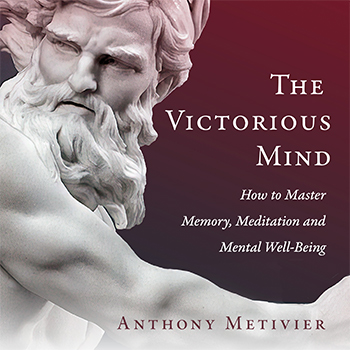
    The Victorious Mind Audiobook: New Memory Improvement Book Sampler May 21, 2020
    Show notes

    The Victorious Mind Audiobook Cover for AudibleIs it really possible to stop mental torment?

    Can the human mind actually completely stop thinking?

    These were the questions on my mind when I started combining my use of memory techniques with meditation practices.

    I had no idea what I was in for.

    But after experiencing incredible outcomes, I knew I had to share what I’d experienced with others.

    So I started writing a lot about the connection between memory and meditation.

    These writings quickly culminated in The Victorious Mind: How to Master Memory, Meditation and Mental Well-Being.

    In today’s episode of The Magnetic Memory Method Podcast, I’m sharing the opening of the audiobook with you. And I hope you will enjoy it.

    First however, I have to offer you a…

    Trigger Warning:

    The opening of The Victorious Mind is gritty.

    But for those unfortunate enough to suffer from scattered thinking and endless torrents of negative thoughts, I’m confident you’ll relate to my story.

    And having heard from hundreds of readers about the impact it has made over the years, I have every reason to believe that The Victorious Mind will help you make a positive change.

    https://www.youtube.com/watch?v=kvtYjdriSpM

    About The Victorious Mind

    The Victorious Mind tells the story of how one man – film scholar and creator of the Magnetic Memory Method Anthony Metivier – overcame the mental distress that imprisoned him in a “highly functioning manic-depressive” identity, and almost took his life, using three practices: self-inquiry meditation, memory training, and “biohacking.”

    But more than a story of self-transformation, the book offers detailed guidance through the techniques Anthony used to release himself from the haze of lithium along with the illusion of self. Both entertaining and erudite, brain-science informed and stripped of BS, The Victorious Mind takes us along on a journey through cities of the world and Memory Palaces of the mind, where there are bad acid trips along the way but also Buddha Smiles.

    The Victorious Mind is peopled with a surprising range of figures, from members of his Magnetic Memory Method community and Ancient Greek mnemonists, to secular-spiritual teachers of today such as Gary Weber, whose translations of ancient Sanskrit self-inquiry texts play a central role in Anthony’s self-transformation.

    This book is ideal not just for those struggling with mental illness but for anyone suffering mental malaise – whether it’s digital amnesia and scatterbrain, depression or “control freakism.” What sets this book apart is also what defines its key message: there’s no one technique, no one path to freedom and quality of mental and physical life, and there’s no one teacher.

    Rather, it’s the act of assembling the insights and practices of others with experimentation in one’s own body and mind that will enable us to be our own teachers, bring peace of mind and focus, and free ourselves from negative thinking.

    https://www.youtube.com/watch?v=ox4AyqQm_T4

    Praise for The Victorious Mind

    If only The Victorious Mind had been written ten years ago… It would have saved me a lot of frustration and self-blame in failing to keep up my regular meditation practice. Now I not only know why I struggled so much, but what to do instead.

    – Seph Fontane Pennock, Co-founder, PositivePsychology.com

    In The Victorious Mind, Anthony Metivier brings his terrifying experience of mental illness together with his depth of knowledge of memory systems to show how using mnemonics systematically can ease a troubled mind and replace terror with joy. This is a unique book from an author who speaks from a lifetime of experience beyond anything I could have imagined.

    – Lynne Kelly, author of The Memory Code and Memory Craft

    Anthony Metivier has a compelling personal story and a remarkable, practical methodology of helping us move beyond our stories and into the living truth. With one foot planted firmly in the relative and the other rooted in the Absolute, Anthony has hit the sweet spot that combines the two – which is authentic nonduality.

    – Fred Davis, author of Awaken Now and The Book of Undoing

    With so many memory books out there, this is really the first I’ve ever seen that heavily intertwines the ideas of meditation and memory. I’ve always felt the two go hand in hand and Anthony really does an amazing job at showing that! I highly recommend this book!

    – Nelson Dellis, 4x USA Memory Champion and author of Remember It!

    The Victorious Mind is a masterful book written by a master of the field. Anthony Metivier has written an invaluable resource to anyone who wants to learn to fully utilize their cognitive capabilities to build a sharper mind and a better life.

    – Nir Eyal, bestselling author of Hooked and Indistractable

    At last, someone has remembered the true purpose and potential of the Art of Memory. In times past, it was seen as a path of self development. Using its methods you could bring health, harmony and excellence into your mind and thus your life. Sadly, this beautiful, beneficial art has been all but forgotten, until now. In this dynamic book, Anthony Metivier teaches you this ancient wisdom with a modern slant. Written from his own experience this is a book that will show you how to develop a “magnetic” memory that holds the information you wish but also attracts the influences you want into your life.

    – Martin Faulks, author of Enlightened Living

    Anthony Metivier is a Warrior of the Mind!

    – Tony Buzan, author of Mind Map Mastery and Co-Founder of the World Memory Championships

    Dr. Metivier is a master of his craft and experienced teacher of the bridge between memory and meditation. In The Victorious Mind, you’re learning from the best!

    – Jonathan Levi, author of The Only Skill that Matters and creator of SuperLearner

    I now remember whole chunks of passages in another language. I’m learning with such ease that I often think it can’t be this easy. The real “work” has been to calm my anxieties, and in this, Anthony is a very wise and effective guide and teacher. I am very grateful to him.

    – Jeannie Koh

    I am usually a bit of an anxious person – not always suffering, but just someone with a very chatty mind, I’m always thinking, and being able to direct this energy in a productive way is very appealing to me. You have helped me direct my anxiety better.

    – Daniella Lopez

    I have made a lot of progress using this meditation technique to improve my spatial awareness and to see things clearer!

    – Jeff Jansson

    Anthony’s writing always triggers major moments of insight. The Victorious Mind goes deep and far beyond your typical “3 step method.” Highly recommended.

    – Jimmy Naraine, motivational speaker

    I’ve witnessed first-hand Anthony’s ability to channel his mind into overcoming challenges that would destroy most people. Extraordinary and inspiring.

    – Olly Richards, iwillteachyoualanguage.com

    The Victorious Mind is unlike any book I’ve ever read about memory and the human mind. Anthony shares his personal experiences with mental health, advanced memory practices and various types of meditation. He uses engaging personal transformation stories that stayed with me long after I read the book. It’s meticulously researched and contains many practices I’d never tried. I’m already working on my vision statement.

    – Bryan Collins, Becomeawritertoday.com

    Anthony has spent a lifetime bringing useful information to light on the subject of memory. In his latest work, The Victorious Mind, he opens an amazing door into the world of the human mind, blending ancient memory techniques with captivating meditative experiences. If you want a personal adventure into peace of mind, this is the read for you.

    – Jim Samuels, author of Re-mind Yourself: Better Memory, Lower Stress

    In one word… Wow! In this highly engaging and worthwhile book, Anthony shares his personal story… sometimes some very raw and vulnerable moments. I have completed masters studies in neuroscience and thought I knew a fair bit about memory. I even believed my memory capacity was reasonably good. I wasn’t even close! After reading The Victorious Mind, I realised there is so much more to embedding and remembering information successfully, which makes our lives more fulfilling.

    – Josie Thomson, MCC and author of The Wise Advocate: The Inner Voice of Strategic Leadership (with Jeffrey M. Schwartz and Art Kleiner)

    I’ve never read a memory book so visceral, yet so practical. Anthony holds nothing back in The Victorious Mind as he tells of his life-long struggle with mental illness in a manner both touching and humorous. I even learned things that I look forward to applying in my own memory training! I can’t recommend this book enough for anyone out there looking to improve their mental fitness.

    – Braden Adams, 2x Canadian Mind Sports Association National Memory Champion

    I consider Anthony Metivier a personal mentor. If there is someone who thinks about and uses memory techniques as often as he does, I haven’t found that person. He connects the dots better than anyone I know and will teach you how to use mnemonics to enhance the quality of your life.

    – John Graham, 2018 USA Memory Champion

    As a neuroscientist, I study the underlying mechanism of memory techniques and I am very interested in their widespread application. Because Anthony is such an expert in this field, having him uncover the use of mnemonics for mental health is fantastic and will help many readers!

    – Boris Konrad, Guinness Record Holder and Memory Competitor, Award-Winning Speaker, and Neuroscientist

    As a life long student of the art memory, I’ve read my fair share of rehashed How to memory books; this is not one of them. As someone who has dealt with depression and anxiety since leaving the military, this book really hit home. Dr. Metivier takes you through a guided tour of his early life, the demons he faced, his process of overcoming them, and his journey in becoming the modern-day Giordano Bruno.

    I can not thank him enough for his part in my metamorphosis from a mentally beat up U.S. Vet to a top student in University.

    – Adolfo Artigas

    I bought this book in hopes for some memory techniques and a good read. Instead, I was surprised to behold a Swiss Army knife of meditation, breathing, and memory skills wrapped in the warm blanket of human experience and fascinating autobiography.

    The writing is concise and to the point. Necessary for the teaching of time honored techniques and exercises, put here to a new focus. Memory and well being. Anthony reveals great vulnerability in telling his story through the sufferings and mishaps that plagued his past, but there is no , “poor me” syndrome in the tone of his writing. He writes sincerely, with an open heart, to help others avoid the detrimental mental states that limited his potential during his obvious suffering.

    He encourages you, step by step, leading you in exercises to avoid/alleviate the pitfalls he encountered. Inspired by the traditions of Zen Buddhism, Mindfulness, and the works of Gary Weber and Alan Watts, Anthony Metivier brings you lifetimes of meditation practices without you having to sit under a tree for eternity or stare at a wall for millennia.

    Where he really shines is in the memory exercises which are his expertise! Whether you have been using Memory Palaces for decades or are following along building your very first palace, he guides you thoughtfully into the powerful techniques which can transform your life. I found his candid tales through dangerous mental states inspiring and egoless. He did not make this book to huff and puff about highfalutin memory techniques. He draws you through his suffering and allows you to experience the grace of success within the handling of his own mental state with the exercises he bequeaths to you in this charming book. Come for the techniques, stay for the drama! You will not be disappointed.

    – Christian Fitzharris

    How to Get The Victorious Mind

    The Victorious Mind on Amazon

    The Victorious Mind on Audible


    John Fotheringham On Crafting Better Mental Tools For Language Mastery May 14, 2020
    Show notes

    John Fotheringham author of Master Japanese and Master MandarinEver really stopped and thought about how language learning occurs?
    When you’re a child the majority of the way learning occurs is listening and speaking, right? But what about when you progress in school and you are taught a second language as part of your curriculum? Is it the same process?

    Or is the focus more on reading and writing?

    Listening and speaking are innate, they’re organic, and it seems like they just happen “naturally” after much “natural” coaxing from parents and other people in the environment.

    Or are they…?

    Normally, we might say that reading and writing are human technology, an invention that differs from language itself.

    But learning these tools of representation language visually also involves a lot of coaxing and they are not any more or less invented than language.

    And when it comes to writing, it’s just a fact that some people go to school for decades, earn PhDs and still can’t write their way out of a cardboard box.

    I know this from personal experience because I’m still struggling to de-academize my own writing after all those years of indoctrination! 😉

    But guess what?

    Mastering your target language doesn’t have to be hard. It doesn’t have to be a struggle if only you make a shift in how you think about and approach the task of learning a language.

    Don’t think it’s possible for learning a foreign language to get easier? Think again and prepare to welcome the ease and flow that “just happened” with your native tongue.

    How?

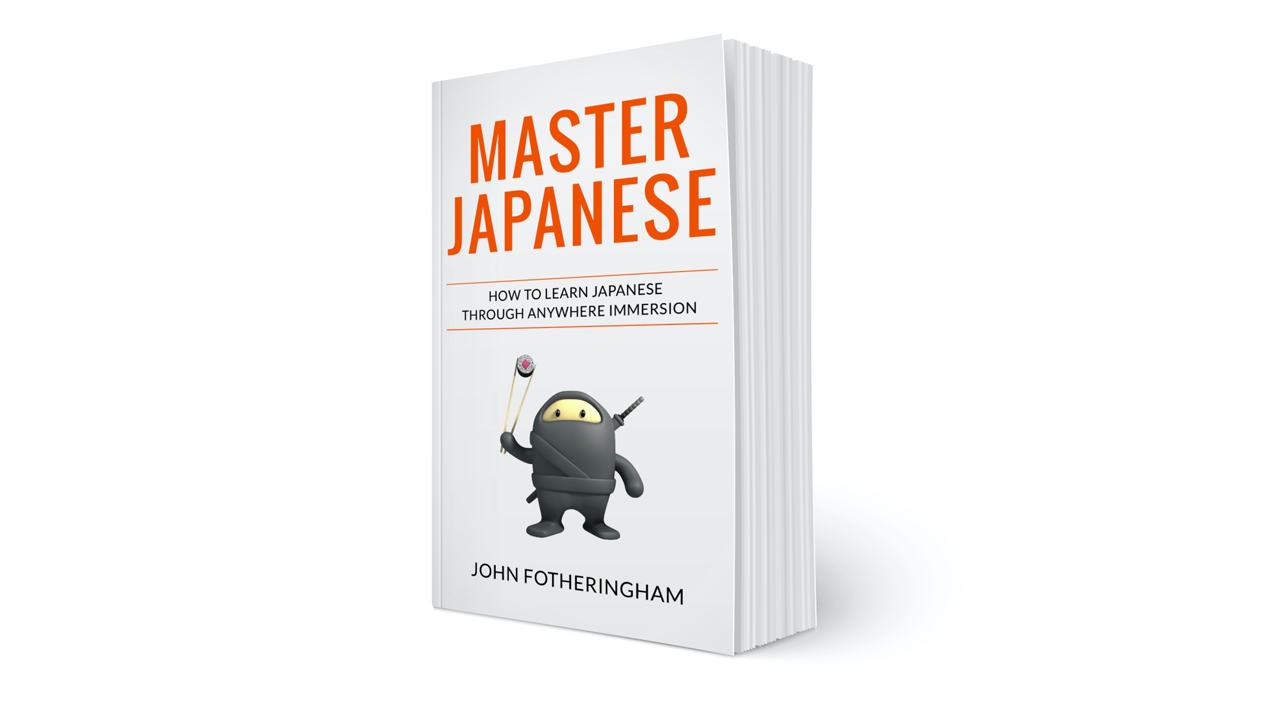
    Cover of Master Japanese by John Fotheringham

    My guest today is John Fotheringham, the man behind AnywhereImmersion.com (formerly Language Mastery).

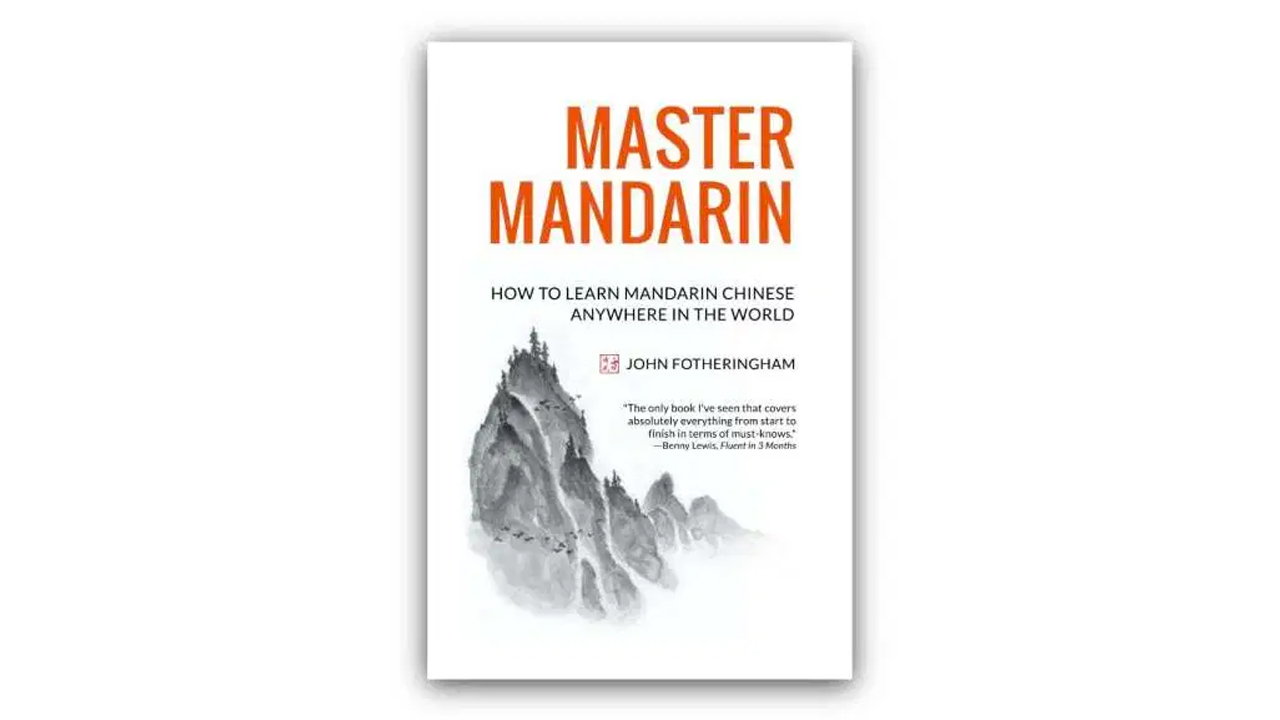
    He’s also the author of Master Japanese and Master Mandarin. He is self-taught in these languages and and now teaches others his techniques through courses and his podcast, The Language Mastery Show.

    John and I go deep into the “why” behind language learning.

    Sure, technique is high priority, but we dive into the reasoning and the psychology that drives (or can hinder) one’s learning journey, and the change necessary in institutions to truly revolutionize the learning process.

    Cover of Master Mandarin by John Fotheringham

    We even go, as John says, “off the rails” a bit and veer into questions of free will, mortality, and their place in self-taught education. So even if you’re not currently on a journey to master a second or third language there’s something here for you as well.

    Finally, we explore the idea of depression, its role in learning, and how a modified framework through the lens of your personality type can help you achieve your learning goals.

    This conversation with John is broad, enlightened, and, above all, encouraging. If you’re struggling with not fitting into the box of how you “should” be learning John reminds us that, indeed, there is no “one size fits all.”

    Remember:

    You are not the problem. The problem is the box.

    You are not broken. The system is.

    Encouraged? Intrigued? Press play now and discover:

    • Why mastery and fluency are very subjective, and why they should be defined loosely
    • The importance of pronunciation in language learning, and why more emphasis should be placed on it
    • The reason why learning should be shifted in focus to listening and speaking versus the more traditional reading and writing emphasis
    • Why courage is important in language learning and the psychology behind it is just as important as technique or motivation
    • The secret to avoiding “fossilized errors” with pronunciation with hyper focused minimal pairs
    • How best to utilize your time when choosing material to practice reading in your target language
    • Why curiosity should motivate learning, especially language learning
    • Why morality and biology should be separated to avoid the guilt with undesirable tendencies, or even just “beating yourself up” for not obtaining language mastery as fast as you believe you should
    • Breaking the stigma of language learning and its ease for children (pro-tip: the key may not be in the age of the learner, but relies on the “audience”)
    • Why ego has no place in language mastery
    • Why you can feel a sense of empowerment, even with depression, to achieve your learning goals
    • The reason learning should be tailored to who you are (and how to do it)

    Further Resources on the web, this podcast, and the MMM Blog:

    John Fotheringham’s author page on Amazon.com

    Lingodeer

    HelloChinese

    Memory techniques for Chinese with Mandarin Blueprint

    How I memorized Chinese characters to pass level III in Mandarin

    The additional method I used to help me learn Chinese

    Gretchen Rubin’s The Four Tendencies and Shinzen Young’s The Science of Enlightenment (referenced in this episode)

    Teach Yourself Using the Best Language Learning Books

    How to Learn a New Language Fast: A Step-by-Step Guide

    Bilingualism: Why Language Learning Makes for a Healthier Brain

    Sunil Khatri’s Japanese Mnemonics Mastery Success Story


    How to Memorize a Song: Lyrics, Chords, Solos, Melody & Theory Apr 04, 2020
    Show notes

    If you want to know how to memorize a song, the process can be much easier. Yes, even if you need to memorize chords and lyrics at the same time. You can even speed up how you memorize solos on the guitar, keyboard or any instrument you play. How do I know? As a touring musician who also happens to be a memory expert, I’ve done more than merely explore various memory strategies for remembering all kinds of music. I’ve performed on stages around the world. I can also remember the first time I sang in front of an audience. Sure, I was just a little kid in grade two, and I didn’t have a guitar at the time. But it was still quite the experience. I remember that I used rote learning at the time, a process that was more difficult than it needed to be. These days I know better, and on this page, I’ll show you how to make the process a lot easier. I’ll help you memorize songs thoroughly — know the lyrics, the notes, and how to do individual runs or riffs. Ready to flex your music memorization muscles? Let’s get started! Memorizing Songs With Mnemonic Devices Vs. Without To begin, we need to discuss the elephant in the room: I teach and use mnemonics to rapidly remember pieces of relatively complicated music like this: https://www.youtube.com/shorts/_HHChKwNkVU However, many people prefer to teach rote learning. Here’s what their advice typically looks like: Listen to the song repeatedly to familiarize yourself with the melody and lyrics. Break the song into sections and memorize using chunking. Separate learning the lyrics from learning the much. Visualize the song using images and scenarios that trigger your recall. Practice the lyrics without singing them, i.e. recite them as if they were poems. Engage emotionally with the music to make it more memorable. Repeat and use deliberate practice for the tricky parts. Practice regularly. Much of that advice is great. And it can work especially well if you’re already well-versed in music theory. However, I couldn’t use all of those tips when I was called to go on tour. I just didn’t have the time. For example, in the image below you see me playing in Berlin after being called in to learn ten complex songs for a tour with The Outside: In order to learn all of the songs in less than two weeks, I used a variety of mnemonic devices. These were important because as you can tell from a song like Empire, I had to remember notes, rhythms and understand chord structure for my limited, but vitally expressive bass runs. Here’s what’s involved. Memorizing Songs With Mnemonic Devices As we go through these mnemonic devices, please don’t feel overwhelmed. They can all be learned within a weekend. Once you have them, you’ll be able to apply them to all aspects of music. Music mnemonics come with a bit of a “catch,” however. Music is inherently mnemonic. As scientists have put it, music provides a kind of mental scaffolding, so the more you understand about your instrument and things like the circle of fifths, the less often you’ll need mnemonics. That’s okay. Once you know all the strings by note and how to memorize key signatures quickly, you can use memory techniques for many other things. Keep in mind too that performing from memory is not always desirable. As Jennifer Mishra’s research has shown, during certain historical periods, audiences did not like how performing from memory led to alterations of the music. Andreas Lehmann has also shown in Psychomusicology that various production factors influence the extent to which you need to memorize music. In my experiences, it totally made sense to read from sheet music while performing in an orchestra. But it never made sense while playing in a four-piece band. The key differentiator is style of performance based on audience expectation. With that in mind, let’s look at memory techniques for complex songs where you absolutely need to perform from memory without sheet music. One: Visual Associations For The Main Notes & Chords The basic strategy is simple. Rather than thinking abstractly about the notes by letter, give each one an image. Here’s how I do it for A through G using the pegword method: A = Al Pacino B = Bert from Sesame Street C = Cookie Monster D = Dracula E = Ernie F = Foucault G = Grover This simple foundation means that if a simple chord sequence moves A-G-D, then the story method helps me remember that Al Pacino is doing something weird to Grover who then does something strange to Dracula. Two: Add Mnemonic Images For Sharps, Flats & Naturals What you’ve just learned is the basic logic of how mnemonic images work. Using alphabetical association, you pair something highly familiar with something abstract. To know whether a note is sharp or flat, you can place objects in the hands of your famous figures. For example, take F#/Gb: Here, I’ve given Foucault a Swiss Army Knife because knives are “sharp.” If I needed to remember the note as Gb, I would give him a hammer and have him doing something outrageous like flattening the sun. Three: Use Number Systems For Theory & Application If you’re just learning either guitar or piano, you can apply number mnemonics like rhymes or a 00-99 PAO System based on the Major System to remember note positions. You can also apply this approach to learning theory, such as the modes. In Lydian, for example, the fourth note is sharp. Since my image for four is a sail boat, I imagined a knife cutting the sail, permanently installing this musical fact into memory. Finally, when I memorize Bach pieces like the one you see me performing here, I apply this approach for some of the trickier runs: https://www.youtube.com/watch?v=N6iHzX_YH6E All I’ve done is to think of my fretboard as a kind of Memory Palace. By placing my images on the fretboard in an order that creates a story, I can look at the sheet music and memorize all kinds of instrumental parts very quickly. You’ll be able to do the same once you develop your own mnemonic tools. Four: Use Proper Spaced Repetition One reason you might struggle to recall music is that you’re not using spaced repetition to maximize the learning process. I used to make this mistake all the time: repeating the song like a machine with no breaks or interleaving the piece with other learning activities. I’d repeat the same tricky passage repeatedly by starting the song over again from the beginning. That’s problematic for a few reasons related to the forgetting curve discovered by Hermann Ebbinghaus. Learning to use spaced repetition to defeat the Forgetting Curve started in earnest with the research of Hermann Ebbinghaus. Although he studied it based on words, the same thing applies to notes in music. Make sure that you take plenty of breaks and come back to practice the song at the most optimal intervals of time. How do you figure out what practice intervals are best for you? I suggest you keep a memory journal the way the top mental athletes do. You can learn how by watching or listening to this episode of the Magnetic Memory Method Podcast. Five: Apply Deliberate Practice Like A Pro Another mistake I use to make strikes me now as just plain silly. When I came across a tricky part of a song I wasn’t memorizing effectively, I would return to the start of the song. But beginning all over again rarely helped me remember the tricky parts. Eventually I learned to loop just the tricky bar over and over until I got it. Then I would add the subsequent bar and loop that. Finally, add in the prior bar and loop all three. After getting just this section fluid, go back to the beginning of the song. By the time you reach the problem area, you will have it both in semantic memory and procedural memory and pull it off much, much better. Although he uses different words to say the same thing, Dweezil Zappa recently shared his experiences following just this process in an interview with Rick Beato: https://www.youtube.com/watch?v=9eZbuCtXNE0 I was pleasantly surprised to hear him confirm this very important approach, especially given his pedigree. How to Memorize Song Lyrics Now that we’ve covered the main visualization techniques for song memorization through the use of mnemonics, let’s add in the lyric component. This is great for rapidly memorizing songs for auditions when you want the gig and will only get it if you can interpret the songs in your unique voice and style. Of all the common mistakes when memorizing songs out there, that’s the biggest one. Copying instead of interpreting. With that in mind, let me share the lyric process with you. 1. Poetic Analysis You don’t have to have a full understanding of the lyrics in order to memorize them, but it’s helpful to understand at least the basics. But watch out: don’t sit there and wait until you understand the lyrics before you start to memorize! One of the things you’ll discover, through the process of memorizing music, is your understanding compounds value. In academia, the accretion of value means that “the sediments of meaning build up.” The more you work with little bits of sand and stone (in this case, lyrics and music), the more settle and get baked in, the more and more meaning builds up over time. There’s always more understanding yet to come — and that’s a beautiful thing. 2. Emotional Analysis This is the simplest thing to do, something stressed by the actor Ashley Strand. Ask yourself: Is it a happy song? Is it a sad song? Are there multiple emotions? What emotions is the artist trying to get across to the audience? Do your best to interpret what’s going on with the song so you can perform it with feeling. https://www.youtube.com/watch?v=vx0T6wOTlto 3. Use A Memory Palace A Memory Palace is an excellent technique to help you learn how to memorize song lyrics (which is basically the same as mnemonics for memorizing poetry). By using the method of loci, it provides a powerful way of laying out your text word by word, in the order it appears (and the order it needs to be recalled). Then you can quickly transfer that information into your long-term memory. It’s easier to explain how all of this works via video, so please give this section of a longer tutorial on memorizing lyrics I made for you a watch: https://www.youtube.com/watch?v=M37RoCvtxkQ&t=1905s Once you are using Memory Palaces, you just associative imagery of the kind we discussed above for each note and chord. The only difference is that in this case, you’re applying the memory techniques to words instead of notes. In case you’re wondering how to memorize lyrics in a foreign language, the process is also the same. But for detailed discussion, check out how I memorized the Sanskrit phrases I spoke-sung in my TEDx Talk. My friend and I also used this approach to memorize the rap lyrics in our “Brain Games” song to promote the Magnetic Memory Method Masterclass: https://www.youtube.com/watch?v=e-KoZraMEkg The Ultimate Trick To These Techniques For Memorizing Songs Simply put: Everything in music and memory is theory until you start to apply the ideas. Whether it’s memorizing harmonies and vocal parts or working to absorb the intricacies of orchestral sheet music, these techniques are laser-targeted for getting long songs and short songs into memory fast. But notice too that part of the targeting involves analysis of songs by breaking them down into smaller parts. Far too many people overwhelm themselves by trying to take each piece of music as a whole. That’s just not realistic because even in performance, it all comes out one note or chord at a time. In order to get into flow, you need to combine knowledge of the song with practice performing it. If you need more help with developing your song knowledge, grab my free memory improvement course: It gives you four video tutorials and worksheets to help with the Memory Palace part. These simple activities will expand your spatial memory, which directly applies to how effectively you can handle your musical instruments. Now that you know the essential mnemonics used to rapidly absorb music, get out there and start learning the most captivating music you can find. Your audiences will respond with the most enthusiastic applause you’ve ever heard!

    Full show notes at the publisher

    Boris Konrad On The Benefits Of Scientific Memory Training Apr 02, 2020
    Show notes

    Memory expert and neuroscientist Boris KonradControl.

    In everyday life, or for the layman control is defined as a power to influence or direct others.

    If you’re out of control you’re said to be “off the rails,” or too wild to handle. Unpredictable.

    But there’s another definition of control.

    Control, as defined by science is “a subject or group in an experiment where the factor being tested is not applied, hence serves as a standard for comparison against another group where the factor is applied.”

    When it comes to science, control is used to make the data we’re measuring immune to influence. Simple enough, right?

    My guest today is Boris Konrad, International Grandmaster of Memory. He is a four time Guinness World Record holder, and lecturer on and teacher of memory.

    Professionally, Boris works as a neuroscientist and researcher at Donders Institute in The Netherlands. He is also an award winning keynote speaker of the prestigious German title of “5-Sterne-Rednerpreis.”

    In his years of research, Boris has taken the idea of examining the element of control far beyond the constraints of the scientific method.

    As a record-setting memory champion he has incorporated a scientific approach to memory improvement, treating his own regimen as an experiment, marrying his experiences in neuroscience to stretching the limits of memory work personally.

    In our conversation, Boris shares his story of overlapping profession and self-improvement and how you, too, can serve as your own control, stepping into the role of scientist in the laboratory of your mind, no neuroscience degree necessary.

    We talk about all these matters, and so much more that will benefit your memory training. All you have to do is press play above and discover:

    • What parameters should truly define science as a whole, and what distinguishes scientific guidelines
    • How neuroscience research began with the work of a single scientist and has evolved into many areas of study
    • Why retention time is influenced by the method by which information is encoded
    • How memorizing for competition differs from memorization for the purpose of learning
    • The tradeoff (and benefits) of investing time into experimenting with new memory techniques in your Memory Palace training routine
    • What constitutes a real feat of memory (and it may not be what you think!)
    • How mixing and matching memory techniques can be the most powerful tool for improvement
    • The reason intelligent spaced repetition works (and why robots aren’t all that bad)
    • How reusing Memory Palaces is possible without falling prey to the ghosting effect, no modifications required
    • The cause of spatial memory and how exactly science has recently proven this hypothesis of organization
    • Why the brain fills in gaps of what it fails to remember
    • The benefits of solo memory training and using yourself as a control, rather than comparison to others for measured improvement

    Further Resources on the Web, this podcast, and the MMM Blog:

    Boris Konrad’s Official Website

    Superbrain! (Boris Konrad’s memory training course)

    Boris’s TEDx Talk

    Interview with Johannes Mallow


    Selective Attention: 5 Quick Ways to Boost Focus And Memory Mar 24, 2020
    Show notes

    As you sit down to read… Your Messenger beeps. An email alert shows up next. A child wails outside. And your neighbor decides to practice his Conga drums (very loudly) on this bright, sunny morning! You need to turn on your selective attention. Now, where’s the remote to that thing? Spoiler alert: Getting your selective attention to work impeccably is not as simple as pressing a button. But if you are willing to put in the effort, I have some quick and easy ways to help you master the art of concentration. In this post, I’ll explain how selective attention works and how you can use it to improve your attention abilities. Here’s what this post will cover: Selective Attention: The What, Where, and How? A Walk Down History: Selective Attention And Its Theories Are There Different Types of Selective Attention? The Link Between Selective Attention And Memory Why You Must Strengthen Your Selective Attention 5 Magnetic Ways to Boost Your Focus & Memory Ready to get started? Let’s go! Selective Attention: The What, Where, and How? Before you can learn how to improve your selective attention, it’s important to understand just what it is. What Is Selective Attention? Selective attention is the process of concentrating on certain stimuli in the environment and not on others, according to the American Psychological Association. This allows you to push all incidental or unnecessary stimuli into the background or to the periphery of your perception, without actually removing the interferences. So, what is attention, you ask? In cognitive science, attention is the ability to focus on a particular stimulus, sustaining it and shifting it at will. There are four types of attention: 1. Divided Attention: Doing more than one task simultaneously. 2. Alternating Attention: Also known as attention switching — where you switch attention between two things. 3. Sustained Attention: Focusing on one thing or activity for a long time. 4. Selective Attention: What if you were able to direct your attention only on your presentation deck – or your novel or your driving – despite all the distractions around you? That is selective attention. The amount of selective attention you apply will depend on your capacity to concentrate and the interruptions around you. It can be a conscious or unconscious effort. In his book The Principles of Psychology, pioneering psychologist William James, famously says: “Focalization, concentration, of consciousness, is of its essence. It implies withdrawal from some things in order to deal effectively with others and is a condition which has a real opposite in the confused, dazed, scatter-brained state which in French is called distraction, and Zerstreutheit in German.” Where Do You Use Selective Attention? Here are some examples of the usage of selective attention ability in everyday life: Studying or working with the TV switched on. Listening to a podcast on the radio amid noisy traffic. Listening only to what the teacher says despite friends talking next to you. Reading a book or memorizing from a text book without getting disturbed by the noises in a coffee shop. Hearing the cry of your baby even if you are completely engrossed on your laptop. Hearing the ambulance siren, and making way for it, even if your attention is on the radio. How Does Selective Attention Work? Selective attention in young and older adults is a great example of contextual modulation by the brain and the visual cortex when it faces a cluttered scene (visual, or relating to any of the senses). Let’s try to understand the neural functions behind selective attention. Experiments by Basilis Zikopoulos and Helen Barbas of Boston University revealed a pathway from the amygdala to the thalamic reticular nucleus (TRN). The amygdala assesses the physical characteristics and importance of stimuli and relays it to other parts of the brain. TRN is a hub for attentional processing. Scientist Francis Crick called the TRN an “attentional searchlight” due to its orientation as the primary inhibitor of the sensory thalamus. More recently, a team of neuroscientists at McGill University led by Julio Martinez-Trujillo also got evidence of a neuron network in the lateral prefrontal cortex of the brain being responsible for visual processing and filtering visual features. They implanted a multielectrode-array implant (red square) in the lateral prefrontal cortex area (8A) of two macaques. This is where the active neuron network filters visual information and allocates attention, and is resilient to interference. Source: Neuron Now that you understand the what, where, and how… let’s look at a few of the models behind selective attention. A Walk Down History: Selective Attention And Its Theories Selective attention has been a focus area in the study of experimental psychology. To fully grasp why and how your attention span works, it is important to go through the various theories. These theories help pinpoint how individuals prioritize and process sensory inputs: Cherry’s “cocktail party problem” This was one of the seminal theories on selective attention proposed by cognitive scientist Colin Cherry in 1953. Here, a partygoer listens intently only to his friend in a noisy room filled with conversation and music. Broadbent’s Filter Model In his 1958 Filter Model, Donald Broadbent said that a filter (or bottleneck) buffers only the necessary information and blocks or ignores the rest. Source: Practical Pie Treisman’s Filter-Attenuation Theory In 1960, Treisman addressed the fact that unselected information also gets processed by the human brain, but with a lower intensity (a process called attenuation). These two were bottleneck models. They were also known as early-selection theories. Late-selection theories of attention entirely dropped the idea of an attentional filter or attenuator. You can see the difference below: Source: Berkeley Anthony Deutsch and Diana Deutsch’s theory The subjects in their studies analyzed inputs pre-attentively. You pay attention to any information depending on its meaning to your task. Kahneman’s model Through his experiments and findings, Kahneman showed that attention is a single mental resource that gets distributed among each task in varying amounts. So at a cocktail party, all your attention would be on friends, but you would respond immediately if someone else called your name. Next came a few variants to the capacity theories: Michael Posner’s Spotlight metaphor of attention During a magician’s performance on stage, all eyes are on him because of the spotlight. You don’t normally look at the rest of the stage (fringe) and the area outside it (margin). Zoom-Lens metaphor by other scientists Even if a spotlight weren’t there on the stage, you would still look at the magician, sometimes increasing your visual field to what his support crew is doing. If you’re interested in learning more about these theories, I recommend tools like Google Scholar to find scholarly literature related to your search. Next, let’s look at the 4 potential types of selective attention. Are There Different Types of Selective Attention? Selective attention can be divided broadly into: 1. Selective Visual Attention: The “spotlight” and “zoom-lens” models of attention describe the idea of selective visual attention, and 2. Selective Auditory Attention: Simply put, this is selective hearing. You focus on a particular sound of your interest despite several other sound stimuli around you. Nill Lavie and others proposed two other mechanisms of selective attention in their load theory of attention: 1. Perpetual Selection Mechanisms: This happens in a passive or involuntary way when you exclude irrelevant interruptions when there is too much information around you — because your attention capacity is limited. For example, you’re disinterested in the overload of information in your advanced calculus class and end up doodling in your textbook. 2. Active Attention Control: Here your attentional control rejects interruptions even when you perceive them. For example, when you work on more than one class assignment at a time, or when you take an open-book advanced calculus test in a noisy school campus. Is Selective Attention Same As Inattentional Blindness? Absolutely not! In inattentional blindness or change blindness, you focus so intently on just one thing you don’t notice anything new that comes into your visual search field. This can have dangerous effects — especially if it happens while driving a vehicle. Dichotic listening is a similar aspect of selective attention where you listen to and process different things presented to the two ears. How Is Selective Attention Related To Arousal? Selective attention is governed by our arousal level. Norman CC and others elaborated on Deutsch and Deutsch’s theory that the selection of stimuli depends on the relevance of the sensory input and its strength. The strength of the input occurs due to the stimulation of any of the sensory systems: visual, auditory, olfactory, or tactile, and is accompanied by arousal. The connection between selective attention and arousal is circular. An optimum level of arousal causes selective attention based on various aspects of our cognitive capacities and our experiences. At the same time, our experiences and perceptions of the stimuli also influence our arousal. These stimuli may then increase or decrease arousal, and the cycle continues. As Nir Eyal points out in Indistractable, you can stop that cycle, however, merely by being more selective about your choices. The Link Between Selective Attention And Memory The filter of selective attention saves the human brain from getting overwhelmed with information overload. It prioritizes what is important for the moment and filters out what is not. It prepares our cognitive processes and actions for each everyday task and in survival. Selective attention is also closely linked to learning and recall. As is other memory issues, which can be confusing, so make sure to read up on everything you need to erase the confusion around things like explicit memory. Impact Of Selective Attention On Learning and Memory Although your cognitive brain gets affected by all your experiences, only a small portion of those experiences are remembered. Studies have shown that what you encoded using selective attention makes for the strongest memories. This means that you have to first pay attention in order to store what is important to you in your short-term memory and working memory. Distractors also affect learning and recall. If there is music playing in the background while you study, your capacity to memorize things goes down a bit. Music is tied to your associative memory reminding you of things that you had associated the track with. This diverts your attention, making it less likely that you encode what you study. In effect, the music prevents information from moving from your short-term memory or working memory into your long-term memory. Why You Must Strengthen Your Selective Attention If your selective attention is weak, impaired or damaged, you can easily get distracted from your tasks. If this happens persistently, it can adversely affect your personal, school, or professional life. Selective attention is often impaired in disorders such as Alzheimer’s disease, schizophrenia, depression, and attention deficit hyperactivity disorder (ADHD). A specific neural network in the brain is responsible for selective attention. Manipulating the neuronal activity can alter a person’s ability to focus. This can be used to treat individuals or older adults who get distracted easily or suffer from ADHD, autism, and schizophrenia. So how can you improve your selective attention? 5 Magnetic Ways to Boost Your Focus & Memory You can easily strengthen your everyday selective attention – and thereby your focus and recall – using these five magnetic methods. 1. Exercise Coordinative exercises (those that need coordinated movement of large muscles or muscle-groups) help improve selective attention by pre-activating your cognitive related neuronal networks. High-Intensity Interval Exercise (HIIE) has been proven to improve selective attention, especially in university students. They strengthen your body and sharpen your cognitive control at the same time. When you improve your fitness, your fatigue decreases and your attention span lengthens naturally. If exercise isn’t in your routine yet, how about adding it in now? Set aside at least 30 minutes for working out in the morning or evening. Vary your workouts with running, aerobic exercises, cycling, or any other physical sport that you are interested in. You can also include mind-body exercises like yoga and tai-chi into your routine. 2. Use Focused Attention In their trials on a few participants, Eduardo Massad and others found that participants were physiologically aroused while doing a Monty Hall Problem (a brain teaser). This was because the intense decision-making process needed a higher attentional load by the participants. Paying deliberate attention to your task will let you do it with far more efficiency. Such focused attention on one exercise at a time will lead to better-formed memories and better recall. Whenever you find the time, participate in activities that demand concentrated attention. For example, pick the day’s newspaper and engross yourself in sudoku, finding the odd one out, or a crossword puzzle. Or engage in games such as chess, and obstacle courses. You could even give a TEDx presentation and deliver your speech from memory, as I recently did. 3. Sleep Sleep and selective attention seem to be polar opposites. But they regulate your awareness by filtering information from your conscious awareness. In fact, they regulate each other. Sleep is important for you to maintain optimal attention levels. And your need for sleep increases after tasks that engage selective attention. Sleep also helps in memory consolidation and in reorganizing memories. Mental fatigue and sleep deprivation can affect your capacity to pay attention, process, and remember information. Sleepless nights can severely impair selective attention. So snooze for a good 6 to 7 hours every day to wake up sharp and attentive. You will also be more present with whatever you do. 4. Don’t Pay Attention! Did you read that right? Yes. Interestingly, Atsunori Ariga and Alejandro Lleras from the University of Illinois found that repetitive tasks needing prolonged selective attention lead to constant stimulation of the brain. If it happens continuously, you register it as unimportant and eventually erase it. To prevent this, take short breaks from whatever you are focusing on – including studying for exams – and your attention will last a lot longer. 5. Build Memory Palaces A Memory Palace is one of the most powerful types of mnemonics. Here you peg all the information you want to remember in different parts of a familiar place — your home, for instance. So if you want to remember a history lesson, associate the events of one year to your coffee table, another year to your sofa, and so on. To recall the events in the right order, you simply have to do a mental walk through your home. In the process, you are forced to pay close attention to each historical event rather than just rehearsing it as it gets etched in your memory. Practice creating Memory Palaces using the Magnetic Memory Method. Use it to commit everything that’s important to your memory, not allowing any diversions to affect the process. Paying Attention Matters Selective attention is needed to perform almost every daily task. Training yourself to concentrate only on the information you need while averting a sensory overload is an important life skill. When you combine the power of selective attention with Memory Palaces using the Magnetic Memory Method, you can retain and recall information faster and with superior permanence. Ready to get started? Sign up…

    Full show notes at the publisher

    Can You Trust Memory Vitamins To Boost Your Brain? Mar 18, 2020
    Show notes

    Can you really supercharge your memory with memory vitamins? There is a multi-billion-dollar industry touting “advanced nutrition” to “upgrade your intelligence” with a “proprietary blend” of magic nutrients. Let’s find out if these ginkgo and ginseng pills can improve your cognitive faculties or cure absent-mindedness and dementia, as their labels claim. In this post, I’ll dive into numerous memory supplements available today, and the truth behind them. I’ll also show you three natural, effective ways that guarantee improved concentration and a razor-sharp memory. Here’s what I’ll cover: Why Do We Take Supplements to Boost Memory? Can Vitamins and Other Supplements Really Help you Improve Memory? The Truth Behind Memory Supplements Things to Remember When You Buy Memory Supplements Do Your Lifestyle Choices Affect Memory? 3 Effective Alternative Ways to Boost Your Memory Why Do We Take Vitamin Supplements to Boost Memory? Cleverly packaged and marketed vitamins for memory are too attractive to ignore — thanks to some of the perceived long-term effects and benefits. Memory vitamins claim to: Enhance blood flow in your brain. Boost energy. Promote communication between brain cells. Help brain cells form new connections, increasing plasticity. Increase motivation and creativity. Improve focus and alertness. Lower fatigue. Help in Alzheimer’s prevention and in curing other neurodegenerative diseases. Prevent oxidative stress in the brain. Lower the damaging effects of free radicals and brain inflammation, and more. How true are these claims? We need to delve deeper. Can Vitamins and Other Nutrients Really Help You Improve Memory? There are plenty of single-vitamin supplements or proprietary blends available today. They could be vitamins and minerals (vitamin B, C, D, E, K), herbal extracts (Ginseng, Ginkgo Biloba, Curcumin, Bacopa), natural molecules (Acetyl-L-Carnitine amino acid, Docosahexaenoic Acid, Huperzine A, Magnesium l-threonate) or synthetic compounds (Choline bitartrate). To understand whether they help, it is important to look at the clinical trials linking them to memory improvement. Vitamin B: Vitamins B12, B3, B6, and folic acid slow down cognitive decline, lower high homocysteine levels, and are used in Alzheimer’s treatment. Homocysteine is an amino acid. It is also believed that folate might prevent Parkinson’s disease. Studies show that these vitamins slow the atrophy of brain regions that are involved in Alzheimer’s disease. However, vitamin B12 and folate supplementation may not always reduce memory problems. Vitamin E: This antioxidant lowers oxidative stress in your brain cells. A study proved that adults with high levels of vitamin E are less likely to suffer from memory disorders including Alzheimer’s and Parkinson’s disease. Alpha-tocopherol (a form of vitamin E) slows down functional decline in people with moderate symptoms of Alzheimer’s disease. Vitamin D: This vitamin protects against cognitive decline and dementia, and reduces the risk of heart disease. However, patients suffering from heart disease may not benefit from higher doses of this vitamin. Older adults who had severe vitamin D deficiency were found to be more likely to develop cognitive disease like dementia and Alzheimer’s disease. Be aware that excess amounts of this vitamin can lower your reaction time. Vitamin C: Apart from cutting your colds short, vitamin C helps improve brain health with its antioxidant properties. It also crosses the blood-brain barrier to remove heavy metals like lead. Researchers found higher vitamin C levels in those who were cognitively intact versus those who were cognitively impaired. But it’s not clear how much of it is needed to support cognitive function. Also, your intake may not always translate into enough of the vitamin in your blood. Check out this Chief Life article for more on the benefits of Vitamin C. https://www.youtube.com/watch?v=bekJx1fDJE0 Vitamin K: High levels of this vitamin are known to improve verbal episodic memory in older adults. Elders with early-stage Alzheimer’s disease were observed to have a deficiency of this vitamin. High doses can worsen clotting problems in those who have severe liver ailments. Ginkgo biloba: Bottled ginkgo biloba contains ginkgo leaf extracts. It is said to prevent mild cognitive impairment and cognitive decline in Alzheimer’s patients. It is also considered to be beneficial in treatment of Parkinson’s disease. But, a 2008 study demonstrated that it could increase the risk of stroke. That’s why I personally skip using it, along with many other so-called natural memory enhancers and memory supplements. Ginseng: Ginseng is a slow-growing, short plant with fleshy roots. While American ginseng improves working memory performance, Asian ginseng improves brain performance and lowers mental fatigue. It is also effective in counteracting the aging effects of free radicals. Curcumin: Curcumin or turmeric root is proven to reverse memory problems in people with mild, age-related memory loss. It is less effective when taken as a supplement due to its poor absorption and rapid metabolism. It is more effective when consumed with food, or with agents like piperine. Cocoa Flavanols: Cacao is the dried and fermented bean from the cocoa tree used to make chocolates. It’s not to be mistaken with coconut oil, which this study shows might also help memory, especially episodic memory and semantic memory. Long term consumption of cocoa flavanols could improve attention, working memory, and verbal fluency in the early stages of memory loss. Bacopa Monnieri: Bacopa (Brahmi) is an Ayurvedic herb that boosts memory and attention in healthy people, by improving inter-neuronal communications in the brain. Source: Flickr Huperzine A: This natural supplement is derived from the Chinese club moss plant. Research shows that taking this for 12 weeks may boost memory in adults with mild brain impairment. However, its effectiveness in preventing cognitive decline has not been confirmed. Its short-term use is proven to be safe, but the long-term use is not. Omega-3 Fatty Acids (Fish Oil): Fish oil improves mild cognitive impairment (MCI). It contains two types of omega-3 fatty acids: Docosahexaenoic Acid (DHA) and Eicosapentaenoic Acid (EPA). DHA alone or with EPA is known to improve episodic memory in adults with mild memory problems. There is no proof that fatty acids can improve cognitive function in advanced stages of Alzheimer’s disease. Check your doctor to see if fish oil supplementation might be useful for repairing mild memory impairment. Phosphatidylserine: This is a fatty substance or a phospholipid that supports the formation of short-term memory, the consolidation of long-term memory, and the ability to focus attention. Having enough of these vitamins and minerals in your body will lead to improved memory and disease prevention due to their inherent benefits. But no research or clinical trial has proven that additional intake will lead to any significant improvement in memory or brainpower. The Truth behind Memory Supplements There are some caveats and unpleasant truths around these attractive brain vitamins you should be aware of. A team of neurologists in the US has critiqued the “pseudomedicine” practice where qualified healthcare professionals over-prescribe dietary supplements that have no insurance cover and need cash payments, for their own financial gain. And unlike medications, vitamins for memory are not strictly regulated by authorities like the Food and Drug Administration (FDA) — although the FDA has announced efforts to modernize regulation and oversight of supplements. And, you should be wary of any tall claims in advertisements. Because – unlike prescription drugs – brain supplements may not be thoroughly tested. Given these facts, what should you do when you set out to buy these supplements? Things to Remember When You Buy Memory Vitamins Think about it: when you visit a store or order online, there will be hundreds of brain supplements that come in thousands of ingredient combinations. Picking the right one for your specific requirements can be your biggest challenge. Remember that success in using memory vitamins varies from person to person — and there is no definitive verdict on any of them. And what you choose should really depend on your own genetics, health, diet, and cognitive abilities. Not only that, how can you differentiate between high-quality supplements and cheap knockoffs? Here are some tips: Do your own research — read product reviews, and ask for detailed opinions from people who have used them. Check if the product was packed, refrigerated, and maintained under the optimum conditions as mentioned on the pack. Read the labels carefully to understand the following: Ingredients, Dosages, Directions for use, Claims of efficacy and/or safety, Cautions or warnings, Possible side effects, and A seal of approval from a certifying authority like ConsumerLab.com. Now, let’s examine whether there could be other ways to improve your brainpower and memory. Do Your Lifestyle Choices Affect Memory? Your lifestyle choices can affect your body, mind, and your memory too. Taking fancy vitamin pills won’t help if you have an unbalanced lifestyle. The main culprits that can impair your memory and brain are: Food habits: An unbalanced diet with too many food additives and sugar, and little water can impair your nervous system and leave you feeling tired and disoriented. Sedentary lifestyle: An inactive lifestyle can lead to dullness and cognitive decline. Alcohol, smoking, and caffeine: Too much of these will affect your ability to store new information and lead to short-term memory loss. Lack of sleep: Inadequate sleep can lead to a higher risk of cognitive impairment. But surely, there must be ways to sharpen your memory in natural, non-intrusive, and possibly more effective ways! 3 Effective Alternative Ways to Boost Your Memory It should be clear by now that popping pills isn’t the best way to keep your brain sharp. Decades of research have gone by, but their benefits are yet to be demonstrated. Your best bet is to focus on brain training and a healthy lifestyle to prevent Alzheimer’s and memory loss. Let’s look at the three best ways to boost your memory. 1. Memory Palaces The most important vitamin for your memory is vitamin M — to use your brain and be able to commit everything important to your memory. A Memory Palace is a time-tested mnemonic tool that allows you to develop and use spatial memory in a way that unlocks the power of autobiographical memory, episodic memory, semantic memory, procedural memory, and more. You will be able to move information into long-term memory faster. For example, you can even remember facts about amino acids and other information related to the crucial information we’ve been discussing on this page. You not only get to remember the information faster, but also get predictable and reliable permanence that grows in strength each time you use the Magnetic Memory Method. The best part is that you can use any other memory technique like chaining, linking, or the Major System (or Dominic System) inside the Memory Palace. Sadly, it rarely works the other way around, though there are possibilities. The key to a Memory Palace is to associate pieces of information with a location you are very familiar with, like your home. For example, if you want to remember a history lesson, walk through your house and peg all the events of one year on your dining table, the next years’ on your living room console, and so on. When you want to recall the information, you retrace that mental route and the information will be easily accessible. 2. Mindful Eating Eating well and drinking plenty of water are as crucial to your brain as they are to your body. Mindful eating is all about eating healthy, and acknowledging and managing your cravings and the experience of eating. As for a healthy diet, you can get almost all the useful vitamins above through your daily diet. For instance: Vitamin B from beans, peas, dairy, eggs, fish, meat, green leafy vegetables, and some cereals. Vitamin E from nuts, seeds, blueberries, avocados, blackberries, spinach, and bell peppers. Vitamin D from salmon, tuna, mushrooms, and eggs, or simply by spending a safe amount of time under the sun. Water: Staying hydrated with at least 6-8 glasses of water a day helps improve concentration and cognition. Simply by paying attention to what you eat and how you eat, your body can avoid any vitamin deficiency, without risking the long-term brain-boosting effects of bottled supplements. Here are some more foods that improve memory you can add to your diet. 3. Exercise Physical exercise activates your brain and improves memory and cognitive function over the long term. A 2018 study found that 10 minutes of mild exertion improved mental ability in healthy young adults. There was increased activity in the hippocampus and surrounding areas, and better connectivity between the hippocampus and cortical areas that are responsible for memory processing. Deadlifting helps improve my focused attention and memory. Do you go to the gym? When we exercise, blood flow increases everywhere in the body, including the brain — this helps the brain to perform better. So set aside 30 minutes for working out your body — walking, swimming, climbing stairs, tennis, squash, or dancing, or just daily household activities. If you don’t have the discipline to do it on your own every day, join a class or identify an accountability partner to work out with. And track your progress periodically — this will encourage you to reach a goal. Otherwise, get a personal trainer to motivate you to exercise. Skip the Vitamins! Dietary supplements are quite tempting to try, but they come with too many risky ifs and buts. Even if you do try them, it is very important to seek medical guidance. Instead, try the alternative techniques in this post to improve your memory — especially building Memory Palaces using the Magnetic Memory Method. The long-term effects of using them to remember and recall information is definitely stronger, and it is the best way to sharpen your brainpower. If you’re new to Memory Palaces or want to learn more about how they can help boost your memory, sign up for my free memory improvement kit.

    Full show notes at the publisher

    Anastasia Woolmer on Memorizing Movement and Mastering Recall Feb 26, 2020
    Show notes

    Portrait of Anastasia Woolmer Memory Expert and Memory AthleteNo one has demonstrated the multi-sensory nature of memory techniques with as much grace as Anastasia Woolmer.



    In fact, Anastasia has literally married memory training with physical activity.

    This means that she’s released the Memory Palace journey and associated memory techniques from the mind.

    One of those ways is through dance.

    This is wonderful, because I’m asked frequently about how to memorize movement.

    Although I’ve played around with it, finally our community has access to the processes by someone who has spent a great deal of time with this memory-movement skill.

    It turns out there’s a lot to it – and some standards that already exist in dance.

    To supplement the audio, you can check out a demonstration for yourself by watching Anastasia’s TEDx presentation. Then, dig into this episode of the Magnetic Memory Method and learn the “mnemonic logic” behind the movement.

    https://www.youtube.com/watch?v=_gA2lcNWloU

    As you can already tell, Anastasia reminds us that mental imagery is not just visual.

    Indeed, the best memory strategies always encompass all our senses. The most solid and beneficial techniques incorporate all these senses into a unique and powerful tool that is universally accessible.

    The Path Of A WorldClass Memory Expert and Memory Athlete

    On top of being a self-taught, two-time Australian Memory Champion, Anastasia is a public speaker, memory coach, former professional dancer and contestant on Australian Survivor: Champions v Contenders.

    As the Australian Memory Champion, she was the first female to hold the title in the country. Anastasia set the record for the most binary digits remembered in five minutes at 360, the most numbers remembered in 15 minutes, 304, and the most consecutive spoken digits without an error, at a remarkable 86.

    Anastasia and I discuss her path, and transformation, from a widely-held (and untrue) belief that her memory was fixed and could not be improved, into a history-making Australian memory champion. As we proceed, you’ll learn more about how she married ancient memory techniques to modern dance to create a method that truly worked for her.

    And this podcast and her wisdom is not just for aspiring dancers or choreographers.

    As Anastasia demonstrates during our chat, you don’t have to settle for rigid and inflexible learning techniques. You don’t have to be frustrated with attaining your learning goals. You are not tied down to any “right way” to do things.

    In the world of dance, I believe this is called free-styling. You’re not bound by the choreography of what moves you should make. Listen to your body, all your senses, and make the journey, and the dance, your own!

    Press play now and discover:

    • The two components necessary to be a “fit” human
    • How economics relates to memory improvement
    • The best way to deal with the “initial panic” of an influx of new information to be committed to memory
    • The benefit of memory exercise in a variety of environments, and why noisy surroundings can actually be great for memory training
    • The “trick” to multitasked focus, and a simple activity that anyone can do to strengthen that skill
    • The best method for recovering from memory mishaps, even in a public speaking setting
    • How to use the Method of Loci to memorize and deliver a speech
    • The similarities between writing a story and creating a Memory Palace journey
    • When you shouldn’t memorize anything verbatim (even if it seems like a good idea and you want to strive for perfection – hint: you shouldn’t!)
    • How learning more, more information, more skills, and taking on more hobbies, is an endless cycle, and why you want to be on it!
    • The secret dancers naturally utilize that you will want to always employ in learning new information
    • Why the best methods to memory improvement are multifaceted, multi-sensory, and completely inclusive and customizable, and why individuality is the most important facet of incorporating memory training into your life

    Further Resources on the Web, this podcast, and the MMM Blog:

    Anastasia Woolmer’s official website

    Anastasia’s Master Recall courses

    Anastasia Woolmer on Facebook

    5 Sensory Memory Exercises for Better Memory Palace Success (MMM Blog)

    Aphantasia: Develop Your Memory Even if you Cannot See Mental Images (MMM Blog)

    Tansel Ali On How Gratitude Can Help You Remember Almost Anything

    2023 follow-up interview with Anastasia as she preps to memorize the entire dictionary!


    Previous 1 26 27 28 29 30 45 Next

    Related Podcasts

    Making Sense with Sam Harris

    1

    Making Sense with Sam Harris Education
    Grammar Girl

    2

    Grammar Girl Education
    Good Life Project

    3

    Good Life Project Education
    Explain It to Me

    4

    Explain It to Me Education
    Team Never Quit

    5

    Team Never Quit Comedy
    Optimal Living Daily – Personal Development and Self-Improvement

    6

    Optimal Living Daily – Personal Development and Self-Improvement Alternative Health
    footer-logo

    Contact Us

    Toll Free: 844-670-7747

    Links

    • Home
    • Top Charts
    • Networks
    • Apps
    • Independents Podcasts
    • Podcast Advertising
    • Podcast News
    • Contact Us
    • About Us
    • Analytics & Insights

    Stay Connected

      Privacy, Terms of Use & Our Code of Ethics Protecting Content Creators Copyrights