TopPodcast.com
Menu
  • Home
  • Top Charts
  • Top Networks
  • Top Apps
  • Top Independents
  • Top Podfluencers
  • Top Picks
    • Top Business Podcasts
    • Top True Crime Podcasts
    • Top Finance Podcasts
    • Top Comedy Podcasts
    • Top Music Podcasts
    • Top Womens Podcasts
    • Top Kids Podcasts
    • Top Sports Podcasts
    • Top News Podcasts
    • Top Tech Podcasts
    • Top Crypto Podcasts
    • Top Entrepreneurial Podcasts
    • Top Fantasy Sports Podcasts
    • Top Political Podcasts
    • Top Science Podcasts
    • Top Self Help Podcasts
    • Top Sports Betting Podcasts
    • Top Stocks Podcasts
  • Podcast News
  • About Us
  • Podcast Advertising
  • Contact
Not in our directory?
Add Show Here
Podcast Equipment
Center

toppodcastlogoOur TOPPODCAST Picks

  • Comedy
  • Crypto
  • Sports
  • News
  • Politics
  • True Crime
  • Business
  • Finance

Follow Us

toppodcastlogoStay Connected

    View Top 200 Chart
    Back to Rankings Page
    Education

    Anthony Metivier’s Magnetic Memory Method Podcast

    Learn, Memorize And Recall Anything Using Memory Techniques, Mnemonics And A Memory Palace Fast

    Advertise
    • Apple Podcasts
    • Google Play
    • Spotify

    Latest Episodes:
    Arthur Worsley On Getting Traction And Discovering Your Why Dec 03, 2020
    Show notes

    Arthur Worsley feature imageIt is no secret that we are all constantly in a state of self-examination.

    While some people may be more “self-aware” than others, no matter where you are on the spectrum, there is a constant need, a persistent desire to “Know Thyself.”

    The greatest task in that knowing, above all else, may be the biggest question, and, more complicated therefore, to answer, the question of “Why?”

    Today, more than ever perhaps, we are being challenged to slow down, to examine our priorities, to reflect on who we are and what motivates us.

    Whether that is an intentional choice, or the current state of the world has given you the gift of more time in the form of working from home and eliminating your commute, or governmental measures have encouraged a “safer at home” mindset, now is no better time for working towards that answer.

    My guest today is Arthur Worsley. He is the man behind The Art of Living blog, the author of the TRACKTION Planner, and the Moments app. He is an entrepreneur, graduate of Oxford where he studied psychology, philosophy, and physiology.

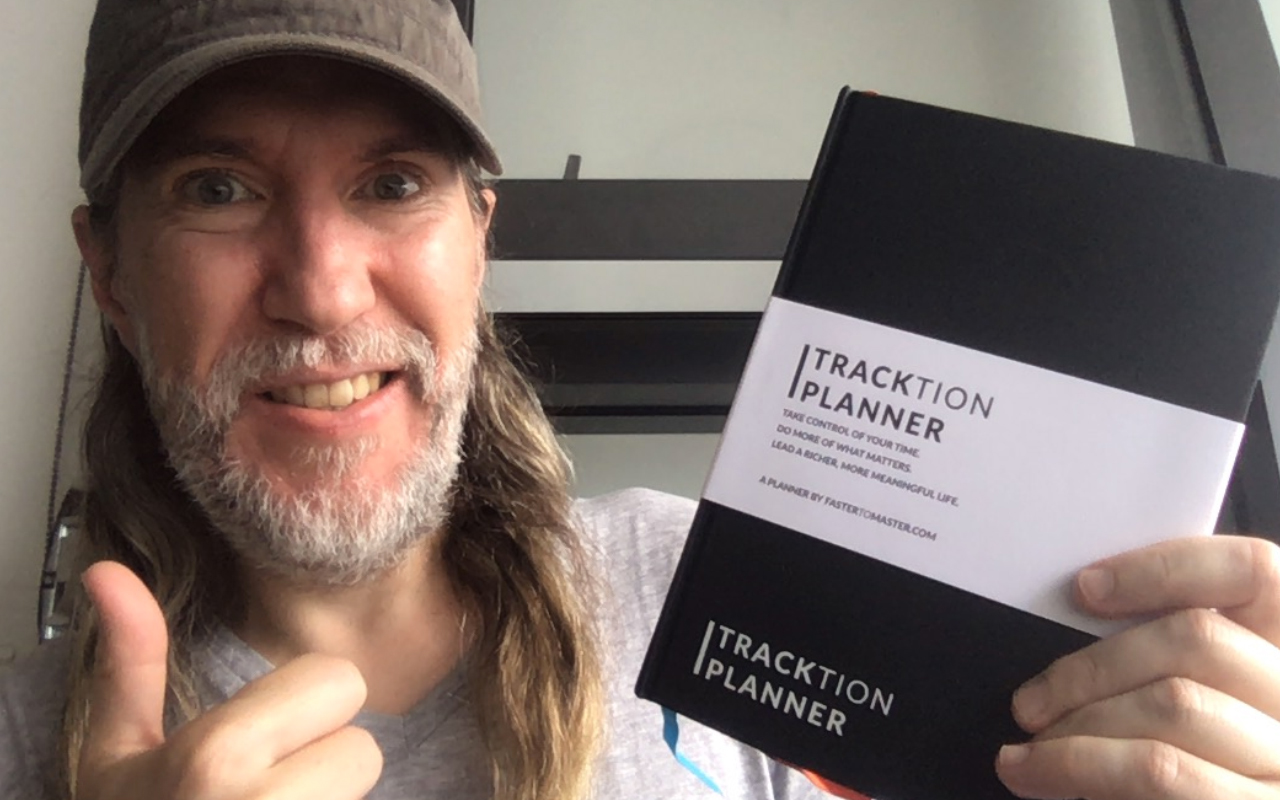
    Anthony Metivier with Tracktion Planner from Arthur Worsley Art of Living
    Thumbs up for the Tracktion Planner!

    We discuss his mission of guiding others to find their motivation, through practical, executable, analog tools.

    Arthur provides a real, honest look at a difficult situation that became his catalyst for self-discovery, and, through coaching, and his own journey, the roadblocks that others faced that were similar, and how they, and you, in turn, can also overcome them.

    He even shares his own experience with answering that big question of “Why?” as he applied for Oxford. In his words, it was “terrifying” to see one’s future residing in such an empty space. The question of why was intentional, providing a blank canvas, open to interpretation.

    He learned how to navigate and fill that space for himself, and with the tools and methods he has created, you can also learn to answer that all-important question of “Why?”

    If you’re struggling to find your motivation for your everyday….

    Or maybe the bigger challenge of your life’s purpose…

    Just take note of where you’re starting from.

    As you begin to answer that question, and, unavoidably, the others that arise, know you are enough.

    That self-doubt? It can serve you. That questioning is good. That questioning means growth.

    And why then wouldn’t we take that opportunity as we ask that very thing of ourselves?

    Press play now above to listen in as Arthur shares:

    • How physiology, psychology, and philosophy can not only live in harmony as disciplines, but how they actually, in fact, intersect and can help you improve your focus
    • The evolution of the Pyramid of Needs for modern day society – what’s missing, and why
    • The gap that exists between effort (what you do) and motivation (why you do it)
    • What loss of religion means practically, and the problem that “lack of faith” can create
    • The reason behind the current resurgence of Stoicism, and what questions that philosophy can answer.
    • Why meaning must be found in purpose, and not purpose within meaning
    • The relationship (that’s necessary) between decision making and data collection
    • The pros and cons to the novelty effect
    • The most common reasons planners fail, and how you can overcome them with just a few simple tools
    • The problem with perfectionism and its relationship to procrastination (often related to not having a feedback loop)
    • Why reading isn’t always beneficial – and how you may need to tweak your reading style (were you aware you had one?)
    • How problem solving can be addictive, and what mindset is required to achieve cyclical solutions
    • Why connection is such a critical why – even for an introvert

    And even more!

    Further Resources on the web, this podcast, and the MMM Blog:

    The Art of Living (Now defunct)

    The Wheel of Life

    Book Recommendations

    Book Summaries

    Arthur Worsley on the Nomad Podcast

    Optimizing Evernote and Other Productivity Software for Better Memory

    Olly Richards on Crazy Language Learning Goals and Mastering Motivation

    Mindset, Memory and Motivation with Sam Gendreau

    How Many Languages Can You Learn At Once?


    Dr. Bruno Furst’s You Can Remember: Does It Work? Dec 02, 2020
    Show notes

    Dr. Bruno Furst created a number of memory improvement courses and You Can Remember! is one of the most famous. He was a German lawyer and his full name was Johann Franz Bruno Fürst. People familiar with the long tradition of memory techniques will probably think he chose to go by “Bruno” to attract the attention of people already familiar with memory techniques. It’s impossible to know, but I personally find it hard not to think about one of the most famous memory teachers, Giordano Bruno. Since “der Fürst” can mean “prince” or “ruler” in German, I have often wondered if the entire name is invented to say something about Giordano Bruno’s constant influence. Given that this Bruno Furst fled Germany after Hitler came to power, this idea that he may have changed his name is plausible. Very little is known about him. The only Wikipedia page about him is in French and the New Yorker has their article about him locked in an archive. But the fact that he has a profile in that magazine gives us a clue to his prominence during his era. The question is… does his memory training work? The answer depends on you, your goals and your willingness to go on what Furst calls, “Adventures in Memory and Concentration.” This printed pamphlet is an advertising piece designed to increase your desire to become a memory master. Notice the many dated professions and conventions of the era Furst was addressing. This pairing of memory with concentration is important because you really can’t have one without the other. The good news is that improving one naturally improves the other. So with that in mind, let’s take a deep dive into this flagship memory training from Dr. Bruno Furst. I hope you enjoy this You Can Remember review. You Can Remember!: Everything You Need to Know First, it’s important to realize that Dr. Furst recycled his material often. That means you might be disappointed if you already have these books: Stop Forgetting: How to Develop Your Memory And Put It To Practical Use The Practical Way To A Better Memory: A Simple, Easy-To-Use Method of Training Your Memory I love collecting memory books and courses. You Can Remember! by Dr. Bruno Furst is quite unique. Although these books do have some differences in them, what makes You Can Remember! unique is a method of segmenting the different skills into ten sessions. These sessions are split up into ten small booklets of about 30 pages each. The package comes with four separate envelopes, each packed with “examinations” or “model answers.” The exams typically ask you to spend 20 minutes reading a magazine. You then quiz yourself and self-assess your accuracy. Inside, you’ll find simple questions on typewritten sheets. Finally, the box comes with the “Number Dictionary.” This small booklet is packed with words that fit the Major System from 00-1000. Overview of the 10 Sessions Bruno Furst faces the same challenge all memory experts run up against:There is no perfect place to start learning memory techniques. But I feel that Dr. Furst made the best possible choice by starting where I also introduce students to the art of memory, with the Memory Palace technique. Session 1: In his work, Dr. Furst uses the terminology of his era: The Memory Checkroom. Instead of calling each stop in the Memory Palace a “Magnetic Station,” he talks about coat hooks, each with a number. So that you can remember the numbers of each “hook,” you learn the Major System. The session concludes with a test of how you interact your different hooks with daily chores. Session 2: Furst extends the Major System in this session and helps you extend it to three digits. He shows how you can use it to memorize “telephone numbers, price lists, addresses, formulas of every kind – in short, everything connected with numbers in practical life.” The session ends with showing how flexible this number system is by sharing various mnemonic devices you can apply to different kinds of information. A historic image of Dr. Furst shows that he likely taught even more advanced uses for numbers in his live training sessions. You see him with specially printed playing cards that include 3-digit numbers, for example, but I don’t know exactly what he had in mind for these. Encoding past 00-99 is not covered in any of his material I’ve read. Session 3: This session goes further with extending your Major System and explains how to remember prices. Session 4: Here Dr. Furst discusses applying the techniques to memorizing information from newspapers and short stories. You are given a number of still photographs to work with. You also go through scenarios where you might want to remember an anecdote and how your mnemonic devices can help trigger the memories. Session 5: Dr. Furst explains the different types of memories and then extends the techniques to memorizing faces and then names. He explains how to apply the techniques at parties. Dr. Bruno Furst discussing how to memorize faces. Session 6: Here, you learn the “chain method,” which is essentially the same as the link and story method. He touches on how to use this method to memorize a speech. Session 7: In this session, Furst covers memorizing historical dates, geography and memorizing contest winners and information related to the tax code. This is probably one of the most dated parts of the Bruno Furst memory program, especially since there have been many advancements in how to use memory techniques in the past decade alone. Session 8: Dr. Furst starts ramping things up in this section by discussing adding facts to people. He discusses remembering names when you don’t actually know the person (such as artists, authors, historical figures, etc). You also learn how to tackle memorizing scripture and the US States. Session 9: By this point, Dr. Furst figures you are ready for some of the next-level techniques. Here, he introduces using classification systems to improve your memory. For example, if you need to memorize a bunch of items on a tray, you would isolate all the musical instruments into a category. When exactly anyone would need to do this outside of working for airport security is unclear, but this technique does relate to what we call the Conceptual Mode in the Magnetic Memory Method Masterclass. His introduction to using this kind of “mental division” is worth practicing even if the examples he gives don’t relate to many real world applications. One approach that still is potentially useful involves his discussion of using the Dewey Decimal system. This strategy is compelling and with a more robust approach to the Memory Palace, it’s quite easy to see how one could “nest” a number of them together using this categorical system. This session is one of the most important and it’s curious that more of this material doesn’t appear in the introduction. Furst waits until nearly the end to stress the importance of goal setting, planning and exposes the truth about creativity. (The truth is that real creativity in memory training involves bringing together preexisting elements, not “inventing” new imagery and associations.) Session 10: You learn how to memorize a deck of cards in this session and a few routines you can use to stun your friends. The course ends with Furst stressing the need for ongoing practice in order to maintain the skills you’ve gained. Can Bruno Furst Help You with Memory Improvement? If you’ve been following this blog for any period of time, you know that I feel more is better than less. “One,” as I often say, “is the most dangerous number” when you’re learning any skill. You want multiple teachers. But whether it’s Mega Memory, Pmemory or something by one of our contemporary memory competitors (like Nelson Dellis), you should think about a few things before deciding. Historical recency. Furst refers to dated newspaper formats, hairstyles that are no longer in fashion and checkrooms that one rarely sees anymore. If you’re a certain age, these examples won’t bother you. But there’s nothing about dealing with the Internet or information overwhelm. Dr. Furst couldn’t have even imagined what students of today deal with and this book shows it. (That said, the amount of techniques he covers is impressive and they’re all still relevant to today’s era.) The examples are incredibly vague and generic. We know so much more about multisensory, concrete associations these days. You will likely struggle if you use examples that may have worked for a few people in his era. Bad advice. Furst talks about not using rhymes for a reason that doesn’t really make sense and tells you to repeat names in conversations, which is not strictly necessary when memorizing them. He also seems to assume that everyone is an extrovert. He breaks learning a 00-99 PAO over 10 sessions instead of just focusing on this particular skill. He may have had the learning technique called “interleaving” in mind, but I doubt it. This strategy might reduce the cognitive load of developing your Major System, but you wind up switching topics many times and he never quite develops a solid use case as he might have by gathering this mnemonic strategy in one place. The History Of Memory Techniques Personally, I picked up these books and the You Can Remember! course to better understand the history of this beautiful tradition. Like Kevin Trudeau and Harry Lorayne, Bruno Furst was more than a memory teacher. He was a great marketer. The course I ordered came packed with the original advertising and it’s clear that Furst knew just how much convincing many people need in order to give these techniques a try. Testimonials for Bruno Furst came with You Can Remember! to help remind new students of the value in the program. The use of testimonials and what he calls “proof again” testimonials and offers for free training shows that he was devoted to “education-based advertising.” Although nothing in his marketing offers the kinds of “results in advance” we focus on in the Magnetic Memory Method world, it is inspiring to see the effort that went into these “listicles via mail.” There is also an “advertorial” in Maclean’s where he teaches the Major System in passing. It is not known whether Dr. Furst wrote these advertising materials himself, but they strike me as coming from the same author. I get this feeling because the memory training itself is written to encourage you take action, and this is common across all memory training programs. If you want, as Dr. Furst puts it, to “make more friends, and acquire greater popularity at social gatherings,” you have to take action. As I have done for years, he urges the learner not to be content with the examples he gives. The imperative to “try the system immediately in your daily life,” comes up as a mantra, and I agree that it needs to be repeated often. He correctly stresses that “every human activity rests in some way on memory” and shows how improving memory leads to great efficiency and pleasure in life. Finally, it is worth noting how Dr. Furst brings memory training together with general self help. When talking about classification, he talks about applying this mnemonic strategy to your goals. He suggests breaking your five year plan into categories like your business or work, social life and family recreation. Practical, But Dated Memory Training As I mentioned at the beginning, there is no perfect way to start your memory training journal. But if you want to split things across ten learning sessions and can get hold of You Can Remember!, I have no problem recommending it. Even where there are certainly aspects to the program I could complain about it, Furst knows his stuff and his own goals are in the right place. As he says, “Every advance in civilization and every step in cultural progress rests in the last analysis upon memory.”This fact remains true and those of us who love memory techniques owe a debt of gratitude for his work, whether we go through his material or not. For more memory training from the past, check out Giordano Bruno’s On the Composition of Images next.

    Full show notes at the publisher

    Focus Your Mind: 3 Powerful Concentration Secrets Nov 18, 2020
    Show notes

    Focus Your Mind: 3 Powerful Concentration SecretsDo you need to focus your mind?

    And while you’re at it, would you like to increase your concentration power?

    If so, I have 3 simple tips for you that are more powerful than a fistful of focus vitamins or a scientifically questionable brain training app.

    And I’ll even reveal what happened when I was attacked personally in an examination and needed these tips in order to keep focused so I could get my Ph.D.!

    Want to know the focus secrets that will help you perform even under the most hectic of situations?

    Here’s what this post will cover:

    1. Focus Your Mind on the Body
    2. Focus Your Mind on the Breath
    3. Focus Your Mind… on the Mind?
    How Do You Mentally Focus?

    Let’s get started.

    1. Focus Your Mind on the Body

    https://www.youtube.com/watch?v=Y-zTkA8MW2k

    Did you know that you can’t effectively work on your mind without also working on your body?

    It’s critical to start here because a lot of people think their mind is somehow different than their body. In fact, your mind is produced by your brain, a clump of physical cells located in your skull.

    The quality and health of these cells directly shows up in your ability to focus and concentrate.

    To start improving, learn to relax your body every time you sit down to study. You can do this by performing muscle relaxation exercises, breathing exercises, and daily meditations.

    Let’s look at how to combine all three in a quick morning ritual:

    1. Get a foam roller or lacrosse balls to help relieve shoulder pain
    2. Use trigger point therapy to get knots out of your shoulders
    3. And release a tight IT band

    (Be sure to check with your doctor or a physical therapist before taking on any new exercise or physical program.)

    I have been using rollers like these for years, and they really set the stage for much greater mental focus than I thought possible.

    We all hold far too much tension in our bodies, and this is a simple way to help release a TON of it.

    Perform these exercises every day for five minutes before you read or study, and you will undoubtedly note a huge difference.

    And if you are a student attending lectures on campus, consider getting a therapy massage cane — you can easily put it in your backpack along with your lacrosse balls for use before lectures.

    If you can’t carry such items with you, a simple body scan and deliberate squeezing of your major muscles is another possibility.

    A woman in a puffy jacket stretches out her legs before running. The quality of your brain cells directly correlates to the health of your mind.

    For example, before I sat for my dissertation defense – arguably the biggest exam of my life – I moved from my feet all the way up to my forehead, squeezing and releasing my muscles. No one noticed at all, and I waltzed into the room completely relaxed.

    In addition to muscle relaxation, I had two other secret weapons that enabled me to focus in the heat of battle where I was attacked personally and managed to do better than survive. Thanks to relaxation and memory techniques, I recited quotes and page numbers and pulled all kinds of abstract knowledge from my head.

    In fact, even after I was grilled intensively and even aggressively by one person on the committee, the head examiner said, “Anthony, the only guy cooler than you is Miles Davis.”

    What was my second secret weapon?

    2. Focus Your Mind on the Breath

    My second secret for how to focus right now is breathing.

    A sticker on a pole (overlooking a cityscape) reads "Dude, breathe."

    My favorite breathing exercise is called Alternate Psychic Nostril Breathing.

    It’s called “psychic” because you imagine in your mind that you’re inhaling through just one nostril — unlike Alternate Nostril Breathing, where you actually use your hand.

    But I didn’t have the concentration and focus skills for that level of kinesthetic visualization in the beginning. So I just started with the regular version.

    When you’re ready to switch over to the “psychic” version, just pretend that the nostrils are blocked as you go back and forth. With practice, you’ll find that you can do it all day.

    And even if you don’t, you can drop back into it during a moment of tension or stress.

    For example, when I was told during my doctoral dissertation that an entire chapter I’d written on Nietzsche had no Nietzsche in it, I didn’t get stressed or choked or panicked.

    I just squeezed the muscles in my hands and feet and imagined I was inhaling only through my right nostril and out through my left. By that point, I’d been practicing the technique for a while, which is why it took such immediate effect.

    Don’t expect to try it once and suddenly be as calm as a Shaolin Monk!

    After this examiner made this accusation and I’d quickly centered myself, I calmly remembered the page number my Nietzsche chapter started on and asked everyone to turn to that page.

    Then I quoted Nietzsche in German, one of the most important passages he wrote about friendship, which I’d written about in my dissertation. That quote helped me establish the theoretical grounding I’d laid out, not just in that chapter, but throughout the massive document everyone was now focused on.

    But I didn’t have to look because I knew exactly what I’d written and exactly where in the document the passage was located.

    An open book with a bookmark sits on top of a stack of books. Anthony's dissertation defense was helped by his ability to mentally "bookmark" what he had written.

    One thing I was reminded of that day: people attack each other for a reason, and one of them is because they know how easy it is to break your focus and cause you to make mistakes.

    But I don’t care. All that matters is that I was prepared by practicing these focus and concentration techniques.

    One key to my success with these focus strategies is to be F.R.E.E. That is, literally:

    Frequent practice in a state of…
    Relaxation and a spirit of…
    Experimentation and always letting these focus and concentration rituals keep you…
    Entertained

    These two strategies I’ve shared so far using the F.R.E.E. model – when practiced in advance – will help ensure that you’re not so quickly shaken. You might not be “as cool as Miles Davis,” but at least you’ll be moving in the direction of calm focus, cool clarity, and modesty too.

    Anyone who has the first world problem of focus and concentration issues while attending university (or reading books they bought off Amazon) can also bring in a bit of gratitude as a strategy too.

    Most of us just don’t realize how blessed we are. And that’s because we lack observation skills. This leads us to the third strategy for greater focus…

    3. Focus Your Mind… on the Mind?

    Let me cut to the chase:

    There are lots of kinds of meditation, and tons of confusion out there. I won’t pretend to know the best kind of meditation for you, because it’s not as simple as systematically relaxing your muscles.

    A woman sits, looking out over a remote lake. Meditation can help you focus your mind.

    But we do know that scientists have found that four times a week minimum is required for greater focus and concentration effects to take place. These don’t have to be hour-long marathons, either. Just ten to fifteen minutes of meditation will do.

    I suggest that you do some muscle relaxation and breathing first, and then just set a timer. Tim Ferriss advises that you should set your timer for two minutes less than you think you can sit for.

    For example, if you think you can sit for 10 minutes to just watch your thoughts, set it for eight.

    And that’s really all you need to do in the beginning. Turn off all the apps and other distractions. Sit just to sit.

    There are a variety of meditation techniques – including concentration meditation and visualization meditation – so try them on for size and see what works best for you.

    One of my favorites on Gary Weber’s channel is his Kirtan Kriya practice.

    https://www.youtube.com/watch?v=ehvokeZnXMM

    This simple meditation has been shown to help with memory, focus, and concentration. Kirtan Kriya also enables you to bring in a small amount of movement and sound. It’s also a step in the direction of longer meditations where you work with self-inquiry questions.

    But remember, research shows that you’ll want to practice at least four times per week to notice an effect.

    And be flexible with yourself. I have bad shoulder impingement issues and bursitis and sadly can’t sit for long meditations at the moment. I have to lay down instead or do them while walking.

    But thanks to muscle relaxation, breathing, and meditation, the pain is just something that appears in consciousness. And it’s a heck of a lot less painful than having a bratty professor in the room who just wants you to fail.

    And like that professor, both those attacks and this shoulder pain are something frequent meditation helps me simply observe, without getting emotionally tied up in them.

    Things in the world are just like waves of the ocean, rolling in and rolling out. They really don’t disturb the shore, which gets stronger and stronger the more you practice these three techniques.

    Before we wrap up, I have one more suggestion to help you focus your mind.

    How Do You Mentally Focus?

    If you’re having a hard time getting little rituals like these into action, here’s the solution that works best for me:

    Do all of these three exercises for better focus before you turn on the computer in the morning or look at your phone.

    Sometimes I’m not successful at doing that every single morning, but usually I am. If you’re new, even just a 20% success rate across a few weeks is a start.

    You can put your phone in a cupboard and make sure your computer is completely turned off. Designate a room in your home or spot where you can focus just on rolling out your muscles, practicing your breathing, and meditating.

    Anchor this place in your home with a mental image like the Buddha or Alan Watts, Gary Weber, or something you find peaceful like a tree or flower. Then go to that spot and practice.

    Later you can open the great avalanche of the connected world, and you’ll enjoy it with much more focus, concentration, and gratitude because you’ve completed these simple exercises.

    And if you want to learn more about my memory techniques – including meditations to help you focus your mind – grab your copy of my book, The Victorious Mind.


    How to Remember The Planets: A FAST & Simple Method Nov 09, 2020
    Show notes

    The center of our solar system is the sun. Moving out, we encounter… Mercury. Venus. Earth… But wait. There’s more than one planet that starts with M. What’s the difference between Uranus and Neptune? And what the heck happened to Pluto? If you find yourself wondering how to remember the planets, you’re in luck. When you need to know how to remember the planets in order, there’s an easy (and fun) way to memorize them. You can use an acronym or acrostic. But I recommend using the Memory Palace technique or method of loci. Why? There’s no perfect mnemonic for the order of the planets You can use the planets themselves AS a memory palace! But before we get ahead of ourselves, let’s look at what this post will cover: Eight Planets, Or Nine?Acrostic or Acronym to Remember the Planets?What Else Can You Use as a Memory Palace?Ways to Remember the Planets with Ars CombinatoriaSolar System MnemonicsMake a Memory Palace With the Planets in OrderWhat Are the Best Ways to Remember the Planets? Ready to remember the planets in order? Let’s get started. Eight Planets, Or Nine? Back in 2006, Pluto was reclassified as a dwarf planet. You might not think something as simple as a planet at the very edge of our solar system could be a source of outrage, but the reclassification ruffled feathers around the globe. According to NASA, “Pluto isn’t considered a planet because it hasn’t cleared the neighborhood around its orbit of other objects.” So let’s just say – whatever your opinions, thoughts, beliefs, or fantasies about what a planet is or isn’t – that Pluto isn’t a planet. We’ll leave NASA in charge of the classification and leave the Pluto question out of today’s discussion! The good news is, the techniques in today’s post can extend to any and all astral bodies. And if you want to go even further, you can combine the power of the Major Method and using Memory Palaces to memorize vocabulary to memorize anything in our sky. These techniques will work for you whether you want to memorize: The order of the planets in our solar system, Stars, moons, and dwarf planets, Spacecraft, astronauts, and astronomers, or Celestial bodies in galaxies far away. And if you want to learn more about our solar system, I highly recommend The Planets — a companion book to the BBC series. According to the publisher, “Andrew Cohen and Professor Brian Cox take readers on a voyage of discovery, from the fiery heart of our Solar System to its mysterious outer reaches.” Now let’s look at one of the first ways people usually learn the planets in order. Acrostic or Acronym to Remember the Planets? For the purposes of today’s post, we’ll stick to memorizing the order of the primary planets in our solar system, in order from closest to furthest away from the sun. What if you could take a “backpacking” tour of the solar system as part of your quest to understand how to remember the planets in order? Or, you could use an acronym to remember the planets… but MVEMJSUN isn’t a very sensible one, right? Instead, what if you used an acrostic? An acrostic is a poem or composition that uses certain letters in each line to form a word. So for our planets, we might see acrostics like: My Very Educated Mother Just Served Us Noodles. A fun brain exercise is to think of as many different acrostics as you can using the first letters of each planet. Quite frankly, I think acronyms and acrostics are not good ways to remember the planets. It just doesn’t make a lot of sense, in my view. And I believe we can do better! I think that we can do it in a way that allows us to turn what we do to memorize the order of the planets into a memory palace. In fact, it’s not just the planets you can use to create a memory palace — let’s look at your other options. What Else Can You Use As a Memory Palace? In the image below, we supposedly see Giordano Bruno looking out beyond the known solar system to imagine all the stars that lay beyond. Photo credit: Flammarion woodcut of Giordano Bruno I particularly enjoy the work and writing of Bruno, and have incorporated him into a series about the Art of Memory on YouTube. His book De Umbris Idearum and Ars Memoriae: On the Shadows of Ideas & the Art of Memory (as well as other works) talk a lot about the stars and the constellations, and how to use them as memory palaces. If you go on to read The Hermetic Art of Memory by Bruno’s student Alexander Dicsone, you’ll discover a means of using the mansions of the moon as Memory Palaces. In part two of the Art of Memory playlist, I show you the quote where Bruno essentially tells us (here I’m paraphrasing), “My solutions are just examples. Go your own way. Make your own mnemonic examples. You don’t have to memorize what I have memorized or use my tools…” And if you really want to understand The Art of Memory you do need to understand something about the stars, what Bruno may have done with them, and what this practice is all about. https://www.youtube.com/playlist?list=PLkZ2FGJhR5R9njWtWwRrkZKaq8j7OjDL3 Our takeaway from him is that we can use whatever symbols or objects we want in order to create a memory palace — so why not include the solar system as a memory palace to remember the planets in order? As we’re preparing to use the solar system to create a memory palace, we also need to discuss mnemonic devices for the planets. And this requires a little bit of discussion of Ars Combinatoria. But what’s that? Let’s see. Ways to Remember the Planets with Ars Combinatoria Ars Combinatoria translates to the “art of combination.” If you do a bit of research about it, you’ll find this definition on Wikipedia: “All concepts are nothing but combinations of a relatively small number of simple concepts, just as words are combinations of letters. All truths may be expressed as appropriate combinations of concepts, which can in turn be decomposed into simple ideas, rendering the analysis much easier. Therefore, this alphabet would provide a logic of invention, opposed to that of demonstration which was known so far.” We won’t dive too deep into Ars Combinatoria today, because it’s what I would call hidden-lost. Bruno was fascinated with the Catalan philosopher and theologian Ramon Llull (c.1232–1316) and some of the apparent contradictions around Ars Combinatoria. But without a time machine to go back and talk to these great philosophers, we get to reconstruct how they came about their discoveries. Instead, let’s look at something called the “coach effect” as an example. You can see this in lots of realms — sports, screenwriting, etc. The coach effect is that sometimes people are experts at getting performance out of other people, but can’t do it themselves. For example, when I was a story consultant it always amazed me how the best story consultants could get paid a million dollars to tell you what to fix about your screenplay… but they couldn’t write a screenplay to save their lives. They’re story mechanics who understand the topic so deeply but can’t operate on the other side of the pen. There is probably no other way for anybody to achieve the highest possible level except through Ars Combinatoria. If you’re feeling a bit lost with these concepts, be sure to sign up for the free memory masterclass to get the base knowledge necessary to be successful. Next, let’s work on the first step of our solar system memory palace: mnemonics. Solar System Mnemonics In our efforts to learn the planets in order (and make a memory palace out of them) let’s start with the planet closest to the sun and work our way out into the solar system. Mercury The closest planet to the sun is also the smallest. And the sunlight there would be up to seven times brighter than we’re used to here on earth! Buildings of the Campus Pierre & Marie Curie, Paris, France So how can we use Ars Combinatoria to help us turn Mercury into the first station of our memory palace? What magnetic imagery can we use to help us remember? One way is to think of Madame Curie. Maybe they’re working on a cure. MerCURy. Venus Have you heard the current debate about whether scientists have discovered signs of life on Venus… or if it’s just a weird chemical reaction? Whichever side of the debate you’re on, let’s look at our mnemonic example. “I’m your Venus.I’m your fire.At your desire.” The song by Dutch Rock band Shocking Blue can help you remember the second planet from the sun. Earth Did you know that the Earth is the only planet not named for a Greek or Roman deity? Instead, the germanic word earth simply means, “the ground.” When you want to remember our home planet Earth, how about visualizing an ear? Who has ears? Turns out, most living things “hear” in some way or another. But one sticky way to remember an ear is to think about our friends with giant ears — the rabbit. Mars Here on Earth, we have earthquakes. But did you know that Mars also has seismic activity? They’re called – not surprisingly – Marsquakes. Photo credit: Wikimedia Commons One of the first things that comes to mind when I think about the Red Planet is Martians. And one of the most famous Martians is… Marvin the Martian. If you can hear his voice in your mind, even better! Jupiter Jupiter’s Great Red Spot is large enough to swallow the Earth — measuring about 9,800 miles across. Let’s switch primary colors, from red to blue, and think about juniper berries. Juniper is obviously not Jupiter, but it’s aurally similar. Plus, if you know Amphitryon (an early Latin play by Plautus) then you know that Jupiter comes down to impregnate Alcmena, and Alcmena’s child is Heracles — and this is the story of the virgin birth many, many years previous to the story of the other virgin birth. But even if you’re not familiar with ancient Roman theater, it’s still easy to remember juniper = Jupiter, right? Saturn Titan is Saturn’s largest moon — large enough, in fact, to have its own atmosphere. The writers at Astronomy.com even went so far as to pose a thought experiment: since an airtight spacesuit is not a necessity on the satellite, what would Titan smell like? Turns out, “a bouquet of musky sweetness, bitter almonds, gasoline, and decomposing fish would likely fill the air.” Yum. The Arch of Titus, Rome, Italy For our purposes, let’s turn to something closer to our home planet. In Titus Andronicus (a Shakespearian tragedy) there’s a character named Saturninus who is Son of the late Emperor of Rome. Saturninus is a gloomy, saturnine character, very full of “Saturn” visual imagery. And if you haven’t read or seen Titus Andronicus, I highly recommend it. It’s wonderful for a mnemonist — full of dramatic imagery you can use for your memory palaces. Uranus Fun fact about the 7th planet… it’s tilted so far on its axis that it basically orbits the sun on its side. This odd orbit means seasons on the planet are extreme and last for about 20 years. https://www.youtube.com/watch?v=pN_AC9KHlM8 I know a lot of people might make jokes about Uranus… but for the purposes of our memory palace, we’ll think about Israeli-British illusionist Uri Geller and his spoon-bending illusion. He’s a great example of mnemonic imagery because he’s larger than life and filled with conflicting emotions. You can have cognitive dissonance with people like him, which makes him perfect for your memory work. Neptune Our eighth and final planet (sorry, Pluto) is Neptune, which has one large moon. Triton appears to be an object captured out of the Kuiper belt — and it almost destroyed the entire Neptunian system in the process of getting captured. While there are a few conceptual abstractions you could use to remember the final planet, let’s keep it simpler. Remember the Nebuchadnezzar, the hovership Morpheus captains in The Matrix? You can use the Nebuchadnezzar (nicknamed the Neb) to help you remember Neptune — maybe the scene where the Sentinels are attacking the ship. Now you have all your solar system mnemonics in place, let’s look at how to turn them into a memory palace. Make a Memory Palace With the Planets in Order You could make a memory palace with the planets in a number of different ways, but today we’ll put them into a two-room memory palace to keep things simple. You can even turn each of the planets into what’s called an “eternal station” so that any time you need assistance to help you remember something, you have imagery ready to go. In the Magnetic Memory Masterclass, I give you better ways to think about this and there are also some drills in the Card Memorization course based on this thinking. Although card memorization seems like an unrelated skill, it actually helps you develop a number of abilities that are useful across the board. For example, it helps you deal with repetitive words and ideas, as well as information types that have several units of meaning gathered together. In the image above, you can see each of the planets in their own corner of the memory palace. The whole point of the Art of Combination and memory techniques is your ability to get something going because you’re prepared in advance. It’s a very fun and simple way you can learn how to remember the planets. When you have a memory palace (or two) you can keep your eternal memory palace open so you can work with it for the rest of your life. Whenever you want to memorize more things, you have images you can work with and tie together. So where do we go from here? What Are the Best Ways to Remember the Planets? In the end, the best way to remember the order of the planets is to use the method that will work best for you — and the one you’ll stick with! You might decide to use a memory palace or learn how to memorize playing cards. Maybe an acrostic will work best for you. It’s up to you to experiment and find out. And if you want to learn more about how to create and use a memory palace, be sure to check out my free memory improvement kit. With the memory palace technique, you can memorize pretty much anything you want!

    Full show notes at the publisher

    How to Remember the Amendments in 3 Easy Steps Oct 28, 2020
    Show notes

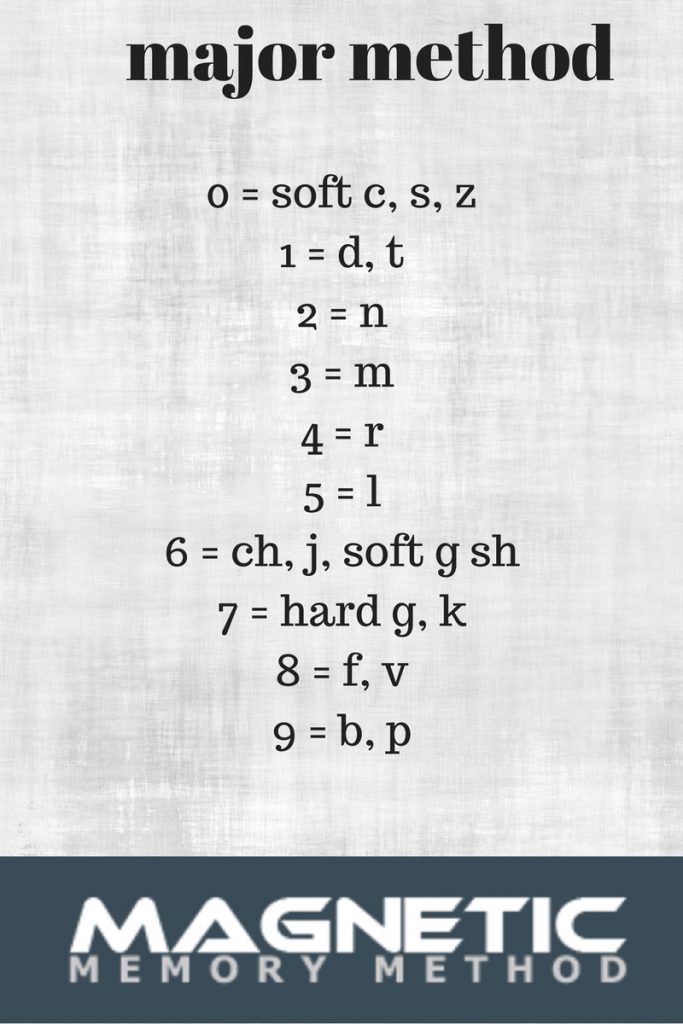
    If you need to memorize the 27 Amendments to the American Constitution, you’re probably thinking it’s going to be a lot of work. Instead of indulging in overwhelm, consider the following fact: For thousands of years, people have been using memory techniques to commit far more than 27 pieces of information to memory. In fact, there are people alive today who have committed entire books to memory — including the Constitution itself! So if you’d like an easy way to memorize the amendments, today’s your lucky day. There are at least three ways to do it, and I’ll reveal all on this page by covering: 1. The number rhyme system2. The pegword system3. The Memory Palace technique Let’s get started. 1. How to Memorize the Amendments Using a Number Rhyme System Number Rhymes are very basic and visual, which is why they work so well. Basically, you will associate each number with an object or person. For example: 1 is a bun2 is a shoe3 is a bee4 is a door5 is a hive The trick is to make sure you make each rhyme and image much more specific than an abstract old bun. For example, I think of the buns you used to get with Kentucky Fried Chicken when I was a kid. (I don’t eat fast food anymore and haven’t for over a decade to protect my memory. I eat these foods that improve memory instead.) To create a number-rhyme system, get out a piece of paper and make a rhyme for each digit. Make sure you think about specific shoes and bees that you have a special connection with. Then, when you think of the first amendment, which discusses “Freedom of Religion, Assembly, Petition, Press, Opinion, and Speech,” imagine that specific bun you’re thinking of with a gag on it while it’s trying to give its opinion. If “one is a bun” doesn’t work for you, try RhymeZone for ideas. You might choose the sun, or combine a bun with the sun. For example, you can imagine your opinionated bun having his rights burned up in the sun. Let’s try the second amendment: “The freedom to bear arms.” You have to admit that it’s pretty unforgettable to imagine your favorite pair of shoes signing its application forms to purchase a new handgun. What about something a bit more abstract, such as the third amendment: “No military in your home except in wartime”? Provided you have some specific bee or bees in mind, this should be no problem. For example, I think of The Bee Movie, starring Jerry Seinfield. I have him and a swarm of bees dressed as soldiers trying to enter my home. I meet them at the door with the third amendment to remind them they’re not allowed here. Is this method the best? It certainly is effective because it tells you the number of the amendment, but it’s also a bit random. It’s also relying solely on the strength of two levels of association: a rhyme and an object or cartoon character. But what if you have to memorize the exact amendment word for word? We’ll get to that with the Memory Palace technique, but first, let’s consider a similar alternative to the number-rhyme approach. 2. How to Remember the Amendments with a Pegword System Pegwords are very similar to number-rhymes. It’s just that there’s no rhyme and people tend to use the alphabet. For example, let’s say you’re memorizing the fourth amendment, “No unreasonable searches or seizures.” Let’s use the letter D and assume that we’ve covered the first three amendments with A, B, and C. With this approach, you assign a person or object to each letter. For example: A = Al Pacino (insisting he has the right to speak freely)B = Ben Kingsley (registering for a firearm)C = Cookie Monster (refusing the military entrance into his home. For the fourth amendment, you might assign Dracula to the letter D and imagine him explaining to a cop that he has the right to be free from search and seizure without good reason. If we assign E and Ernie from Sesame Street to the fifth amendment, you could have him almost incriminating himself and then catching himself just in time. Can you spot the weakness with this technique? It has all the same problems as the number-rhyme approach — but in this case, you have to know the number of each letter of the alphabet. That said, you could combine the two. In fact, if you did, you would quickly learn the number of each letter of the alphabet. For example, if you decide that six is drumsticks, you could have a philosopher like Michel Foucault for the letter F in your association. He could be pounding away on drums and chanting that he has “the right to a speedy and public trial.” If you would like lists of all my images for number-rhymes and the alphabet, please see my post on using the pegword method. 3. Using The Memory Palace Technique to Remember the Amendments A Memory Palace is probably your best bet. It will allow for a few things: It helps you have a “canvas” for leaving your images so you can find them later You can remember the number of each station by using a number-rhyme You can use Recall Rehearsal to harness the serial-position, primacy, and recency effect to get all of the amendments into long term memory rapidly To create a Memory Palace, draw a home or office where you have space for more than 27 different items. This is important in case you need more space. For example, if you want to memorize the amendments verbatim, you’ll notice that some are much longer than others. Personally, I would probably link together two or more Memory Palaces for this task, as I have done in this illustration of one of my favorites. This Memory Palace has more than enough room for all the amendments. I actually think of it as three separate Memory Palaces that just happen to be linked. Magnetic Stations 1-9 are one Memory Palace, 10-20 another, and 21-33 the final MP. I know all of this can be a bit overwhelming to learn in one goal, so please consider getting my training program. It’s free! Let’s take a look at a few more examples. Memory Palace Example for the Amendments We’ve already covered the first six in this tutorial, so let’s imagine that we’ve got them covered and start with the seventh amendment on station seven. Station seven is the elevator in a building. It says that Americans have “the right to a trial by jury in civil matters of $20 and over.” In this elevator, I would imagine Oliver Sacks handing a twenty-dollar bill to a jury of my peers. Why Oliver Sacks? Because he’s my symbol for 07 using a 00-99 PAO (Person Action Object) system. It’s a bit more advanced than number-rhyme and alphabet memory systems. It’s built from something called the Major System or Major Method. Basically, you pair every digit from 0-9 with a consonant. Then when you put two digits together, you make a word. Here’s a handy chart that lays out the system: Since 0 = s and 7 = k, I chose the word “sack.” Since that’s a bit limp and lame without an actual reference, I landed upon Oliver Sacks to make the association more concrete. Then, when I needed to memorize the eighth amendment, I would simply proceed to the next station in the Memory Palace and use the symbol for 08 to memorize “The right to fair fines and bail. No cruel and unusual punishment.” (08 = Shiva in my system but there are many other options.) But what if you need ways to remember the amendments line for line? How to Memorize The Amendments Verbatim So far, I’ve described ways to memorize the amendments that will give you the gist of each one. But what if you need an easy way to remember the amendments all word-for-word? No problem! In fact, it’s with verbatim memorization that the Memory Palace technique really shines. Because you have a lot of space, you can make an image for each and every word. For example, my image for 09 is memory expert Brad Zupp. The ninth amendment is “Individual Rights. Rights that are not in the constitution are still rights delegated to citizens.” I might imagine that Brad is a Star Wars character who feels “individual” about his rights. To remember specifically that the next sentence starts with “rights,” I would imagine the Wright brothers from NoMeansNo playing on a knot instead of a stage to remember, “Rights not…” Then I would have the Dell computer logo crashing down on a poster for the movie, Citizen Kane. Listen, these images might make zero sense to you. Your mind is probably filled with a completely unique set of popular culture images. But the principles behind these techniques are the same: You make a word-by-word association and lay out the mental imagery on a wall or along some kind of journey. How to Remember The 27 Amendments For the Long-Term Now you might be thinking, “Hang on, memory man! All that associating… it’s going to take forever!” Actually, it won’t. Studies have shown that using flashcards will get you about a 44% retention rate, whereas using the elaborative encoding process I’ve just shared should get you a rate of 85%. That rate will go up or down depending on your willingness to experiment with the techniques. But it’s not just about making these funny associations. You also need to actively recall each of the amendments. For that, the Memory Palace helps you do this in a highly refined way. First, I suggest you encode only 5-10 at a time. Then, visit each one in a strategic pattern: Forward and backward Start at the end and move to the beginning Start in the middle and move to the end Start in the middle and move to the beginning Skip the stations (i.e. recall 1, 3, 5, 7, then 8, 6, 4, 2, etc) Why go to all this trouble? Because this harnesses the power of serial positioning, the primacy effect and the recency effect. Without it, you’re likely to only remember the first and last amendments you place in the Memory Palace. FAQ: What About Flash Cards and Spaced Repetition Software? You certainly can use these, but I would recommend you still have a Memory Palace and the association process in the mix. One way or the other, the brain needs active recall to learn and it’s so much easier when you have a Memory Palace and associative imagery in the mix. You don’t have to take my word for it either. Memory expert, neuroscientist, and memory athlete Boris Konrad will offer you similar setup steps. Now, we know from his autobiography that Benjamin Franklin sought out better forms of memory. And we also know that he was a staunch defender of the freedom to speak your mind. And he also wrote this about how he committed certain styles of writing to memory: “I took some of the papers, and, making short hints of the sentiment in each sentence, laid them by a few days, and then, without looking at the book, try’d to compleat the papers again, by expressing each hinted sentiment at length, and as fully as it had been expressed before, in any suitable words that should come to hand.” This is an important clue to our final lesson: If you really want to get all 27 amendments locked permanently in your memory, write them down from memory. Literally test yourself and use active recall. First, call the Memory Palace back to mind. Then call back the association you made. Finally, allow the association to bring back the target information. Then write it down. You don’t have to recall it in order. If you can’t think of one immediately, simply move on to the next that you can and troubleshoot later. Troubleshooting All The Ways To Memorize the Amendments It’s very unlikely you’ll get through the process without making a mistake. The trick is to learn from our mistakes. If you miss a word, or an entire amendment, calmly assess the situation. Were your associations concrete enough? Again, I suggest you always push yourself to make it more specific. For example, if you use heaven for seven, ask yourself: Is “heaven” really a concrete image in your mind? Can you use characters from Highway to Heaven to make it more immediate? Or do you know a friend or celebrity named Evan you can use? Likewise when it comes to a Memory Palace. If you can’t remember which spot comes next, you need to remove the self-criticism and dispassionately assess the situation. Have you spent enough time creating a proper Memory Palace? Have you completed the free course offered on this site to help you through it? Is Any Of This Really Quick And Easy? Yes! I’ve seen people memorize far more than this amount of information in just days. It just comes down to a willingness to learn the techniques in a spirit of experimentation. Of course, some people get the knack for it faster than others. But anyone with skills enough to read this page can also memorize as much information if they want. And they can even learn to use memorization techniques to go much faster. But even if it takes a bit longer, so what? It’s the amendments we’re talking about — well worth it! In sum, it’s an incredible journey to memorize a list so central to the freedoms promised by one of the greatest nations on earth. My hat’s off to you for committing yourself to it and if you have any questions, just post them below.

    Full show notes at the publisher

    Kevin Trudeau’s Mega Memory: A Complete Review Oct 26, 2020
    Show notes

    Kevin Trudeau Mega Memory: A Complete ReviewIf you’re looking for a review of the Mega Memory program, you probably just want to know: Does it work?
    The answer is yes and no.

    If you’re a beginner, this book will almost certainly help you understand the basics of association and develop a peg system.

    If you’re an intermediate user of memory techniques, it might give you a few insights.

    If you’re an expert mnemonist, it probably won’t add much to your skillset. But you might find it useful and interesting for historical purposes. You can also consider it a chance to review core concepts and potentially think about the memory techniques from another angle.

    But will it “work”?

    No.

    And that’s because memory techniques are not things that do anything. It’s people who put the techniques into use.

    Just as no machine or dumbbell at the gym builds any muscle until the owner of the muscle puts the weight into motion, no memory technique does anything unless you put it to work.

    When you put any memory training to work, you can almost certainly expect:

    • Better memory
    • Increased focus and mental clarity
    • Boosts in confidence

    But it’s you who does the work to learn the techniques and put in the practice. (How could it be otherwise?)

    With this core principle in mind (one that is true of all memory courses on the planet), let’s take a deep dive into what Mega Memory is and think about whether or not it’s worth your time.

    Here’s what this post will cover:

    Mega Memory by Kevin Trudeau: Everything You Need to Know
    What is Mega Memory?
    What Mega Memory Covers
    Who is Kevin Trudeau?
    Mega Memory Review: Can It Help You With Memory Improvement?

    Let’s get started.

    Mega Memory by Kevin Trudeau: Everything You Need to Know

    First, we’ll clarify what exactly Mega Memory is (and is not).

    What is Mega Memory?

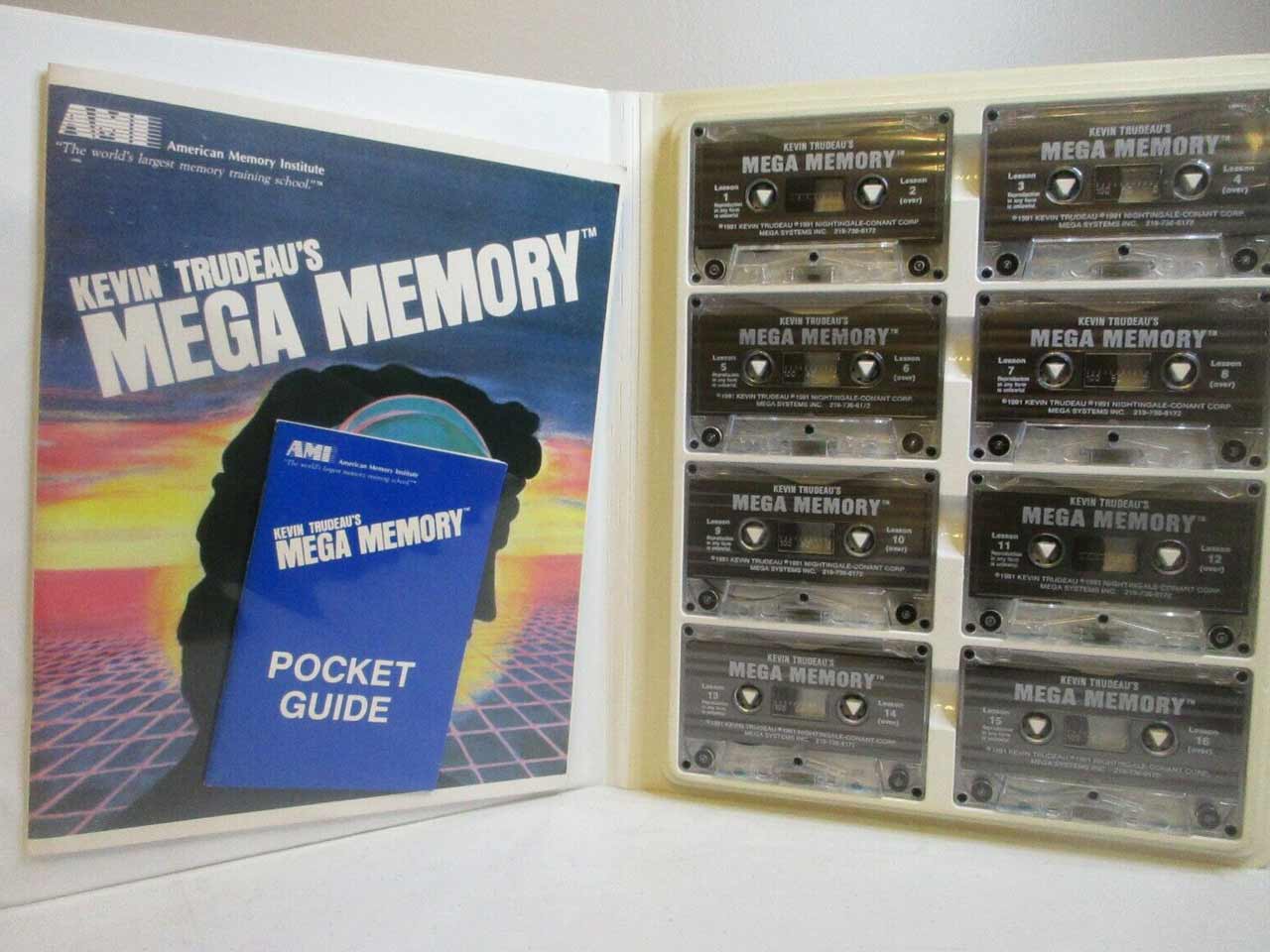
    It’s important to know that there are multiple versions of this memory training. These include:

    • Multiple print editions
    • Multiple audio editions (Mega Memory and Advanced Mega Memory)

    Cassette tapes of Kevin Trudeau's Mega Memory audio program.

    Some of the audio editions may or may not include:

    • A workbook
    • A pocket guide

    In this review, I’ll be referring to the print and audio editions.

    For all intents and purposes, they are essentially the same. The audio program has the benefit of the speaker’s enthusiasm and asides, though some listeners may find these aspects tedious and even grating.

    The book opens with a very important list of acknowledgments and thank yous.

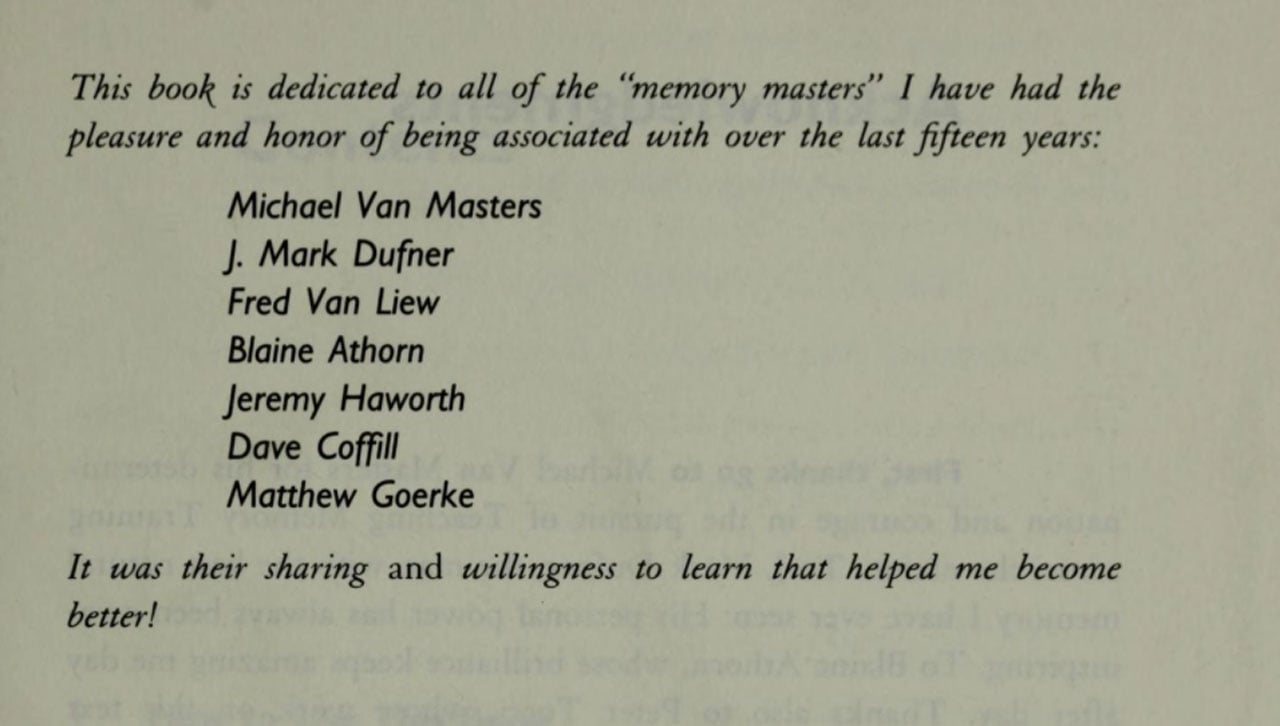
    The dedication reads, "This book is dedicated to all of the 'memory masters' I have had the pleasure and honor of being associated with over the last fifteen years. It was their sharing and willingness to learn that helped me become better!"

    I point this out because the creator, Kevin Trudeau, never claims to have invented or even innovated any of the techniques taught in the book. Instead, he places himself in the position of the learner, which is what all of us should strive to be for the course of our learning lives.

    Unfortunately, many reviewers often state that there is “nothing new here.” Such assessments are problematic for two reasons:

    1. If you don’t know these techniques, they are definitely new to you.
    2. There are innovations to the memory techniques all the time. Individual readers might not be able to spot them due to a lack of context.

    It’s dangerous to pay attention to such reviews because you simply don’t know what you don’t know.

    This raises the question: What can you expect to know about memory after you go through Mega Memory?

    What Mega Memory Covers

    The program opens with tips on how to make the most out of the learning experience. You are given ground rules, which are generally good to follow for many courses of study.

    These pointers include:

    • Go through the lessons in order
    • Study in short blasts
    • Take breaks
    • Schedule your practice
    • Remove distractions
    • Do not eat before reading or practicing

    Trudeau also asks you to self-test your “teachability.” This is important because some people just aren’t willing to do what it takes to get results from memory improvement courses.

    A latte and a watch sit on a desk next to a paper goal planner.

    This point links to an insight given by David Berglas in A Question of Memory. In this book, Berglas describes memory not as a “unitary mechanism” or thing — instead, memory is a behavior. It is something we do and how we do memory matters a great deal.

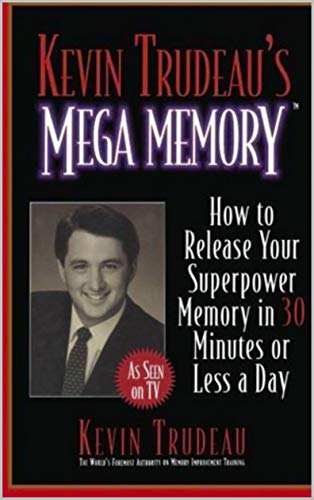
    The cover of Kevin Trudeau's Mega Memory book.Next, you’ll learn:

    • How to make associations
    • How to chain associations together (sometimes called linking)
    • Creating and using the pegword method
    • Creating various lists that amount to using your body and home as a Memory Palace
    • Applications for the memory techniques including names, numbers, vocabulary, and spelling
    • How to memorize playing cards

    You also get lists of words for stimulating what amounts to your own 00-99 object list based on the Major System.

    You also get an extensive “name guide” to practice with — something that might be useful for even the advanced practitioner who wants to practice in a park without the distractions of a smartphone or other device that goes online.

    Who is Kevin Trudeau?

    Unfortunately, many people missed the opportunity to learn from this book due to a few colliding issues:

    • According to Wikipedia, the FTC required Trudeau to stop marketing Mega Memory using infomercials. He made claims about photographic memory that are obviously false because photographic memory isn’t real. (Many uninformed members of the public have learned a false definition of eidetic memory as well, compounding the problems of gullibility in the market.)
    • Trudeau was sent to prison for a variety of reasons, including contempt of court.
    • Many people make the ad hominem fallacy that because of these troubles, the memory training Trudeau produced must be suspect or in some way inferior.

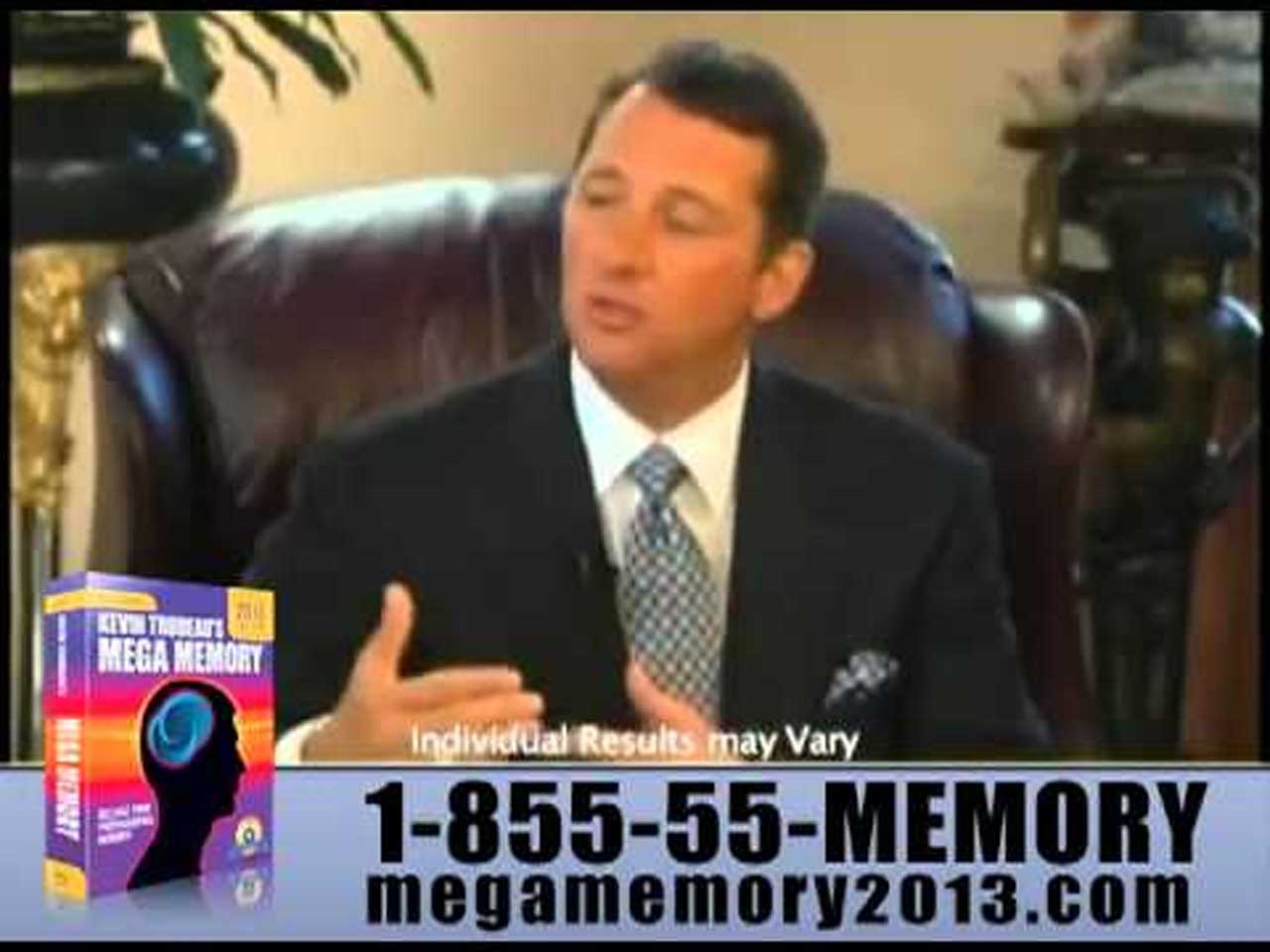
    An infomercial for Kevin Trudeau's Mega Memory program.

    As mentioned above, Trudeau hasn’t created any of these techniques or introduced anything “new.” It’s impossible for his behaviors to reduce the value of the techniques because they were never his in the first place.

    Will Kevin Trudeau enter the memory market again when he gets out of prison? It’s hard to say, but a recent report tells us that he’s been in touch with a judge to try and figure out how he’ll survive once he’s a free man again.

    Mega Memory Review: Can It Help You With Memory Improvement?

    The beginner who reads the book or completes the audio program thoroughly should walk away with a solid set of memory skills to practice.

    If you follow the program and bring your own information you need to memorize, the book should deliver what it claims. But if you struggle, that’s no reason to panic. The next book or program will help fill in any gaps you still have — as will practice.

    An open book against a yellow background.

    When you’re ready for more, I’d suggest some of these Memory Palace books. Frankly, I don’t think anyone should hang their success on just one book or course.

    In philosophy, you wouldn’t expect to understand Aristotle after reading just one book, and it’s not reasonable for most people to expect to understand everything after completing Mega Memory.

    In fact, as you’ve seen, Trudeau himself lists several teachers he’s benefited from.

    The fact of the matter is this:

    Who you choose as your teacher does make an impact. You need to connect with their voice (written or spoken) and the level of detail they bring needs to connect with where you currently stand with your skills.

    Whereas some aspects may be too pedestrian for you, others may be too challenging. This is normal.

    Some people will interpret Trudeau’s enthusiasm on the audio version as “hype.” A more charitable interpretation is to recognize that these techniques do take some effort and many people lack initiative, energy, and even the courage to take action.

    As one reviewer on Goodreads named Philip puts it, Trudeau “could charm a bird into paying for flying lessons. It is great to experience as rhetoric alone.”

    This comment is apt because memory techniques have historically been connected to the art of persuasion. I demonstrate this with reference to the marketing of memory in detail in my analysis of Rhetorica Ad Herennium:

    https://www.youtube.com/watch?v=X3rtsx8mvYU

    Fortunately, memory is not as tough a sell as it used to be, given the success of the World Memory Championships, Moonwalking with Einstein, and various specials like Memory Games on Netflix.

    https://www.youtube.com/watch?v=Gve0Y8cYAoo

    But even with all of these wonderful and encouraging demonstrations of the absolute validity of memory techniques for each and every one of us, many still need the tools of persuasion to get started and keep going with the practice.

    At the end of the day, Mega Memory is probably best considered as a product for beginners. But there’s no guarantee you’ll put in the effort needed to get the results. This means that the decision is not whether it “works” or not.

    There’s an abundance of evidence going back thousands of years that memory techniques are effective. This means that the real question is whether YOU are going to learn and practice the techniques.

    As I often like to say, carpe diem but caveat emptor. If you can get your hands on Mega Memory, I’d say you’ll do just fine and be able to spot patterns with how other memory training products can help you out.

    Perceiving the patterns could itself be the boost you need to start applying the techniques consistently.

    So what do you say? Is this a training you want to try? Or have you already gone through it and put its presentation of the techniques into action?

    And if you want a more in-depth look at how you can use memory techniques to improve your memory, pick up your free copy of my memory improvement course today!

    Magnetic Memory Method Free Memory Improvement Course


    How to Use Guided Visualization to Diminish Anxiety Oct 14, 2020
    Show notes

    It’s hard to find a decent guided visualization specifically to reduce anxiety, isn’t it? That’s because too many people focus on the “visual” part, when really good guided meditations always include multisensory experiences. You really need to dig deep into all the senses to root out anxiety issues, after all. In fact, without integrating the visual with the kinesthetic, auditory, emotional, conceptual and senses of space, taste, and smell, using your mind’s eye on its own can never be as powerful as what I imagine you want to achieve. So let’s look into how to point guided visualizations toward tackling anxiety in depth. Then I’ll give you a guided visualization with tips on how to build your own multisensory experience for tackling anxiety with even better results. I used my own self-crafted visualizations during my PhD. They helped a ton specifically because I created them on my own. Here’s what this post will cover: What is Guided Visualization?The 3 Key Benefits of Guided Visualization3 Guided Visualization Exercises That Reduce Stress and AnxietyOther Forms of Guided Visualization You Can Try Let’s get started. What is Guided Visualization Specifically For Stress Reduction? Humans have been guiding each other’s mental states since the dawn of language. Plato’s Dialogues are filled with stories like the Allegory of the Cave and the Tao Te Ching uses many metaphors to teach us how to live better in the world. Although these texts are typically read (or heard as audiobooks), they rely upon similar techniques in order to guide us to certain conclusions. Perhaps Franz Mesmer (1734-1815) is the person who really started working with guided visualizations. Mesmerism evolved from “animal magnetism” and the use of magnets on the body to a practice that involved the “mesmerist” staring, waving hands, and using language to try and induce healing for the sick. We now classify mesmerism along with other pseudosciences like phrenology and alchemy. According to Sabine Arnaud in On Hysteria: The Invention of a Medical Category between 1670 and 1820, it is possible that Mesmer’s greatest influence was on other practitioners, not patients. He was known to tell people, “Go forth, touch, cure.” This suggestion directly influenced the development of hypnotism. Although discredited, to this day people still use pseudoscientific techniques that resemble Mesmer’s strategy, including bracelets, crystals, and forms of touch they believe to have an effect on the “animal magnetism” of the human body. Sigmund Freud (1856-1939) later developed the hypnotism spawned by Mesmer and used mental imagery in psychoanalysis. Inspired by his teacher, Jean-Martin Charcot, Freudian concepts of “free association” encouraged patients to generate and describe their own mental imagery. They were typically guided by the analyst’s encouragement to speak “whatever comes to mind,” and overcome their inner objections or “resistances” to sharing their thoughts and fantasies. Guided visualization really hit its stride with figures like John Grinder and Richard Bandler, who arrived in the world of hypnosis around the same time the mass production of audio and video distribution became possible. As these men worked on developing neuro-linguistic programming (NLP), they drew heavily upon the ideas and therapeutic work of Milton H. Erickson. One of Erickson’s main observations was that not all people respond to the direct commands of hypnosis. For example, direct commands will involve statements like, “When I end the count of three, you will close your eyes. One… two… three…” As an alternative to this kind of command structure, Erickson developed a number of “passive” or “indirect” statements that led individuals to follow commands as if it was their own idea. “Whenever it feels right, you may like to close your eyes, if you feel your lids growing heavier along with the sound of my voice.” These statements not only make you feel as if it is your choice to follow along, but they are multi-sensory. Although some of the people I just mentioned have been controversial, we know from more conventional studies like this one, that significant reductions in anxiety are possible when you find or create guided visualization experiences that work for you. Now you have a brief history, let’s look at the benefits you’ll get. The 3 Key Benefits of Guided Visualization Given the questionable history of these techniques when it comes to real results, are there any benefits to practicing any kind of visualization? Yes! There’s a catch, however. There always is. Perhaps a personal story will help explain the benefits and encourage you to experiment with an open mind — but not one so open that your brains fall out. 1. Defining Outcomes and Creating Action in the Absence of Motivation When I was completing my Ph.D., I absolutely did not want to write my dissertation. I spent a few years gathering research, but my graduate supervisor told me something that completely deflated my ambition. Whereas I had big plans to become a professor who would teach my heart out and write many books, Jamie felt called to give me a wake-up call. We were walking along Bay Street in Toronto on our way to a cafe. He told me that academic jobs were drying up, and even if I published dozens of articles, it was going to be nearly impossible for me to get a tenure-track job. At that moment, I puffed out my chest and swore that I would build my own university if that’s what it took. Now, it turned out I sort of have built my own university on the Magnetic Memory Method website, but shortly after his talk, I fell into a slump. Fortunately, I’d studied hypnosis and even gotten certified by the National Guild of Hypnotists through the Ontario Hypnosis Centre. (I didn’t take the course to become a hypnotherapist, but rather as part of my dissertation research on friendship.) Thanks to the training, instead of moping around and doing nothing back in my Manhattan apartment, I recorded a guided visualization for myself. My script included multi-sensory ideas, images, and feelings that helped me mentally experience the accomplishment of finishing my Ph.D. and visualization taking the specific steps that still needed to be done. 2. Increase Positive Thoughts Day after day I listened to my own voice guiding myself through a visualization each morning before sitting down at the computer. I no longer have the exact script, but it was written in the present-tense and went something like this: As I sit at the keyboard, I feel the ideas and words flowing effortlessly through my fingers. With each keystroke, I can see my degree materializing in a frame on the wall. The sound of typing inspires electric energy as I look forward to submitting the finished document. The more I focus on the task at hand, the more my interest and energy grow and the taste of success fills my mouth. I enjoy the smell of victory as I continue to organize and refine my ideas, making sure to pay attention to the journey and cherish every moment. This form of guided visualization helped me center myself, focus, and just get the job done. It also helped root out some anxiety-induced memory loss I’d been suffering. I believe this process works so well because it follows the immersive, multi-sensory KAVE COGS formula: Kinesthetic – words like flow, feel, energyAuditory – words like sound, typingVisual – imagining the degree itself, phrases like “look forward”Emotional – words like victory, cherish Conceptual – reference to the ideas I was working onOlfactory – phrases like “the smell of victory”Gustatory – references to tasteSpatial – sitting at the keyboard, the act of organization Would I have written my dissertation without all of this “self-hypnosis”? Perhaps, but I doubt it. And if I had, it would have been a much more miserable experience than it was. But because I had a guided visualization to get myself started, I was able to immerse myself in the task with a positive outlook despite my supervisor’s grim outlook. 3. Reduce Stress & Anxiety In reality, my supervisor was both right and wrong. I never did get a formal academic position, despite having many publications. However, I did wind up winning a Mercator research grant that kept me very busy teaching Film Studies in Germany. And that was not only on the strength of my dissertation and the fact that I got my doctorate done. It was also because I knew how to be calm, cool, and collected when applying for such grants. In fact, I used a very similar guided visualization before going to defend my dissertation and before getting each and every teaching job I’ve had in the years since. It’s a very simple visualization meditation that involves a bench, a lake, and a bike. There are many more benefits. For example: Many athletes use visualization to increase their performance. Entrepreneurs use business plans to help create vision statements for their companies. Students use mental images of their future careers to help keep them moving forward. The trick is that you need to visualize accomplishments that are within your current range of skills. For example, if you have no skills in developing websites, you can visualize yourself as a millionaire enjoying the beach until you’re blue in the face. But it’s very unlikely to happen. However, if you create a visualization that helps inspire you to complete a web development course, this simple and realistic practice can provide what amounts to a simple ego boost. Exactly the kind I needed to shut up my monkey mind and its objections and keep my focus on the tasks at hand. I still use such visualizations to this day! But please note that I also always catch myself when visualizing — I make sure that I have the competence to actually accomplish what I’m visualizing. If I don’t, I correct the vision so it’s within the realm of my current abilities. Or, I make sure the goal involves taking a course or completing a practice regime that will get me the competence I need for the next milestone along the way to the goal. 3 Guided Visualization Exercises That Reduce Stress and Anxiety Another form of visualization I’ve benefited from involves guided meditations that tackle discomfort arising from stress and anxiety. Unfortunately, I’ve had my fair share of both, particularly during high school and university. For the purposes of this tutorial, the guided visualizations I’ll share with you involve a mixture of: Direct suggestions (or commands) Indirect suggestions (or passive commands) Multi-sensory images and feelings (like feelings, the images of eyelids growing heavier and references to sound) Important Disclaimers: Never use guided meditations while driving or operating any kind of machinery. Use of the following exercises is not to be considered medical advice or as an alternative to seeking professional medical help. Even if you don’t think you need it, leaving stress and anxiety unchecked is not advised. I personally have always sought proper, medical help even when I’ve explored alternative therapies. To make the most out of these guided meditation examples, I suggest you: Rewrite each script in your own words Include as many KAVE COG elements as possible Use the present tense Add in your own goals Record each script you create in your own voice Listen to your guided visualizations while seated or lying down Experiment with having your eyes open and closed Here are 3 of my favorite guided meditations. 1. The Field and the Sky As I breathe deeply, in and out, I center my mind on an expansive image of a field. I walk lightly along a path through its center, my hands brushing the soft tips of wheat. I feel each and every one, relaxing deeper and deeper as I move towards an opening in the field beside a tree. I sit beneath the tree and feel a comfortable breeze. I lay on my back and stare into the wide-open blue sky. With each breath, I feel more and more connected with the earth, the wind, and the colors of the sky. I pull the cool blue into my body, and circulate the sky itself through my body. The air flows through my body, and as it does I clench my fists, hold and release them. Each time I clench my fists, my body relaxes and I feel more and more connected with the earth and the sky. 2. The Volume Adjuster With each and every breath, I allow my ears to tune deeply into the sounds around me. I connect with each sound as a physical sensation. I notice the volume and feel the sound as sensations deep in my ears. Each sound and feeling relaxes me, flowing in synchronicity with my breath. As I breathe and listen, I imagine a music recording studio form around me. On a monitor, I see a graphic readout of the sounds in the world around me. On a control station, I reach out and feel a volume dial beneath my fingers. I control each and every sound, and as I make the sounds around me louder and quieter, I feel more and more deeply relaxed. 3. The Mirror In a room, I breathe deeply and walk towards a full mirror. As I look at my feet, they become deeply relaxed. With each breath I take, my eyes travel up my body. My calves, thighs, hips all become deeply relaxed. I realize that my body and the body in the mirror are becoming relaxed in uniform, and this realization relaxes me even more deeply. My belly, chest, hands, arms, and shoulders all relax deeply, just by looking at them in the mirror, twice as relaxed as I share the relaxation with my image. The muscles in my face all relax as I allow the tension in my jaw and cheeks to release. All tension around my temples and forehead completely falls away, each breath melting the tension and stress out of my body. When the moment is right, I breathe deeply and step into the mirror, doubling my comfort and relaxation yet again as I fuse with the perfect realization of myself as a deeply and completely relaxed person, feeling whole and complete in every regard. 4. BONUS: The Infinity Visualization As I breathe in and out, I become aware of my awareness. I notice my consciousness as a substance flowing through time. To become more intimate with it, I ask the following questions without expecting any specific answers. I accept anything that arises, including ‘I don’t know.’ When did my consciousness arrive? Where exactly is my consciousness? Can I find the easternmost point of my conscious awareness? The westernmost point? The southernmost? The northernmost? As I breathe and relax, I imagine an infinite line projecting out into space in front of me. I imagine another projecting behind me, more to the left and the right and directly upwards from my head. Although I accept that infinity is impossible to imagine, I feel each of these lines extending outward without end. On the line projecting in front of me, I place a hotel. In this hotel are infinite rooms, each filled with a relaxed version of myself. The more I think of each version of myself extending into infinity, the more relaxed I become. When I am ready, I make room for myself in the hotel by asking every other version of myself to move one room down. All of infinity moves to make space for me, and as I move into the room, a new me emerges from the infinite line behind me to take my place, making me deeper and deeper relaxed. Note: The hotel part of this exercise is inspired by David Hilbert’s Grand Hotel Paradox. Other Forms of Guided Visualization You Can Try Not everyone finds guided imagery easy. Although I’ve always allowed myself to “go along” with visual suggestions, I don’t actually see images in my mind. Many people with “aphantasia” don’t. But that has never stopped me. I’ve used recordings from others and watched videos. But ultimately, writing and recording my own has worked by far the best. If you don’t feel confident about making your own recordings and want to buy programs from others, many will do. It’s just important that you align your goals with reality and take everything with a grain of salt. There are a lot of sharks out t…

    Full show notes at the publisher

    5 Memorization Techniques That Help You Learn Faster Oct 12, 2020
    Show notes

    Diamond to express the value of memorization techniques for learning fasterAre you looking for the perfect set of memorization techniques?
    Yet, you keep getting frustrated?

    Well, don’t blame yourself. Because it is frustrating, isn’t it?

    I mean… everywhere you go people are using different terminology.

    Linking…

    P.A.O. …

    Mind Palace…

    Roman Room…

    Journey Method…

    Mnemonic Peg System…

    How Real Are The Promises Of Memorization Techniques
    For Students And Mature Learners?

    Very real!

    But we still have to deal with a lot of different terms. I mean, lets face it:

    All those terms sometimes make the whole memory improvement world feel a bit like a hoax.

    After all, even if science backs up the memorization techniques we talk about on this blog 100%…

    Why the heck can’t people get their terms straight!?!

    Well, let’s get the painful truth about the world of memorization techniques out of the way:

    Whether you want to know how to memorize a speech fast or are desperate for memorization techniques for studying…

    You’re going to come across a lot of different terms.

    That’s just the way the world of memory improvement ticks (and other professions that rely on terminology). Things have been this way since humans started developing memorization techniques to help them survive.

    And it’s only getting more complex!

    But in reality, a lot of those techniques are essentially the same.

    Each and every one has a location-based element in one way or another.

    That means that all memorization techniques are spatial.

    And as Thales, the first person in the West to be considered a philosopher and scientist in the same body, said:

    Megiston topos hapanta gar chorei

    (Space is ultimate for it contains all things)

    That’s the very cool thing about the discoveries here at the Magnetic Memory Method Podcast.

    Once you understand this and practice with memorization techniques from this basis, your results will accelerate.

    And the complexity eases down, even if there will still be ins and outs to consider.

    And if you’re interested in more about the history of where mnemonics come from to help humans deal with complexity and how they used space to do it, please check out Lynne Kelly’s The Memory Code.

    Just as we do here on this blog nearly every week, Lynne’s book will show you exactly how learning these techniques will help you deal with extreme complexity in modern life.

    My course which you can subscribe to at the bottom of this post will take you through everything too. It’s free.

    For now, let’s persist and do our best to get past all the confusing terminology.

    Let’s talk instead about the…

    5 Memorization Techniques You Can Use To Learn Anything Faster

    1. The Memory Palace Technique

    Ultimately, the memorization technique that will help most people the fastest is the Magnetic Memory Palace.

    You’ll hear this technique called by different names, such as the “method of loci” or the Roman Room.

    All you’re doing with this mnemonic device is turning a familiar location into a mental “journey.” You then place associative images along this journey so you can revisit them later according to a specific pattern.

    This pattern is known as “Recall Rehearsal.” It lets you get information into long term memory quickly and with a high level of accuracy. This outcome happens because the Memory Palace technique lets you harness the power of:

    • The Serial Positioning Effect
    • The Primacy Effect
    • The Recency Effect
    • The Von Restorff Effect

    Using all of these techniques combined can take a bit of practice, but if you’ve ever wanted to know how to to improve focus, this combination of techniques is the ultimate way to do it.

    Of course, it helps too if you know about motivation in learning too, such as intrinsic and extrinsic motivation.

    2. Multi-Sensory Association

    Imagine walking into an exam that you know you will pass with 100% certainty.

    It’s totally possible if you have the right memory techniques on your side. Like the Memory Palace technique.

    (In this episode about Giordano Bruno, Scott Gosnell talks about how you can create a Memory Palace out of the examination room itself.)

    But in order to use the Memory Palace well, you have to know how to place the best possible associations inside of them.

    To do that, you need to look at the spellings and sounds of words and then creating links or stories in your Memory Palace.

    This website is packed with mnemonic examples showing you how association works inside of a Memory Palace. Have a look at these details tutorials for a number of visual examples:

    • How to Memorize Anatomy
    • How to Memorize the Periodic Table
    • How to Memorize the Presidents
    • How to Memorize a Song
    • How to Memorize a Speech
    • How to Memorize Vocabulary

    3. Acronyms

    As one of the supporters of the Magnetic Memory Method once said:

    Use the right memorization technique for the job or go H.O.M.E.

    The acronym stands for:

    Huge

    Outcomes

    Means

    Exercising

    And let me tell you, if you want to know how to remember things you read or learn a new language, you’ll want to use acronyms often.

    4. Memory Techniques For Language Learning

    Did you know that there are truckloads of proof that bilingualism is a brain and memory health strategy?

    Not only is language learning an ongoing source of mental fitness, but you get the benefits of more socialization.

    You can literally meet more people and get to know them more deeply.

    This exposure to people enriches the brain with chemicals.

    And the best part is that you can use the Memory Palace technique to help

    However, you also want to add what I call The Big 5 of Learning.

    Graphic illustration of the Big Five of Learning

    This is based on the levels of processing effect, first identified in 1972 by Craik and Lockheart.

    To benefit from it, you want to memorize vocabulary and phrases using the memorization techniques outlined above, and also:

    • Read
    • Write
    • Speak
    • Listen
    • From memory and into memory

    Without using all of these levels, you won’t be getting enough of what scientists call “active recall.” It’s absolutely essential to making sure the techniques you choose work flawlessly.

    5. The Major System & The Pegword Method

    Start with the foundations of memorizing individual words and you will quickly learn to memorize entire phrases.

    From there, you’ll want to add the ability to memorize numbers too.

    The Major System is fun and easy to learn. It lets you turn any number into a word. Start by committing this simple system to memory:

    A common approach to the Major Method, using numbers paired with letters.

    Then practice turning two-digit numbers into words. For example 22 could be nun and 35 could be mail. It’s ideal to come up with a few words per two-digit combination.

    After that, it’s just practice.

    Next, add the pegword method. This memorization technique will let you have an association for each letter of the alphabet. You can also use the number of each letter of the alphabet for some “next level” learning at speed.

    How To Benefit From The Abundance Of Memorization Techniques

    Yes, there are a lot of terms out there as more and more people teach their favorite memorization technique.

    But now you don’t have to get lost in the terminology.

    Just find memory training and memory improvement courses you resonate with and trust.

    Give those memory experts your attention.

    Follow the instructions and recommendations.

    Experiment.

    You’ll be amazed by the memory improvement you experience.

    Better:

    You’ll be thrilled by the additional benefits using memory techniques brings.

    Are you ready to be thrilled? Let me know in the discussion area below and then grab the Magnetic Memory Method Improvement Kit to get started today!
    Magnetic Memory Method Free Memory Improvement Kit


    Scott Gosnell On Giordano Bruno And The Composition Of Images Oct 07, 2020
    Show notes

    Giordano Bruno On the Composition of Images feature imageGiordano Bruno wrote many fine books about the art of memory. Sadly, most of them were unavailable in English for the longest time.
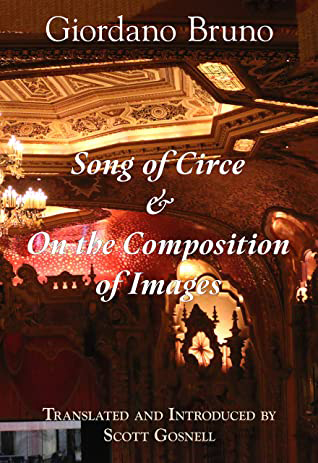
    Things are different now.

    My guest today, Scott Gosnell, is the man to thank.

    He’s spent the better part of a decade translating Bruno’s books for modern English readers. The latest release in a very fine series is Song of Circe and On the Composition of Images.

    Scott is also the CEO of Windcastle Venture Consulting, a public speaker, part-time college lecturer and the author of Startup Geometry.

    In our conversation today, we talk about Bruno’s enduring importance for students of mnemonics. We draw out the core ideas of balance and how you can craft a relationship between imagination and memory and get the most out of Bruno’s theory of confabulation.

    We also discuss Bruno’s techniques for the Memory Palace and just how advanced his approach was for his time. Thanks to Scott’s work, these “next level” approaches are even more relatable for the here and now.

    Song of Circe and On the Composition of Images book cover

    So if memory techniques have you intrigued, but you want more, this episode is for you.

    Or if you’re having trouble fitting into the mold of how you “should” be committing complex information to memory, you’re about to find encouragement.

    Or if you’re seeking a fresh start along your career path and you’re overwhelmed by a lot of material to learn…

    Why not give the advice of a “heretic” a try?

    https://www.youtube.com/watch?v=UbAUo5OHLTE

    Want to know more? Just press play above and to learn more about:

    • The dual-role of student and teacher in academia…and the need for both
    • The reason learning language out of necessity, not desire, can be of greatest motivation
    • How variants of singular truth and dual, or even multiple, modalities can exist in harmony, and what this means for committing that “truth” to memory
    • Bruno’s philosophy of a three-level universe (and how it’s even more relevant today)
    • Why organization is subjective, and how you can make it work for you, even if to someone else it looks like a “jumble sale”
    • The differences between copying and composition, and the reason the latter can be both more beneficial and easier
    • Why memorization is not always a perfect recollection, but instead a simplified reimagination (and why it’s perfectly natural!)
    • Why memory benefits both judgement and decision making
    • How we simply break down Bruno’s ideas of subject, abject, and intention, to easily incorporate them into memory work
    • The proven method for describing philosophical ideas – where, if we’re honest, we all can get stuck trying to memorize them
    • Why Hermeticism is so attractive, especially to students of memory
    • The Clavis Magna, perhaps Bruno’s greatest mystery

    Further Resources on the web, this podcast, and the MMM Blog:

    Bottlerocket Science – Scott’s blog and his own podcast

    Scott Gosnell on Twitter

    Windcastle Venture Consulting

    The Last Samurai by Helen DeWitt – referenced in this podcast

    Scott Gosnell Talks About Giordano Bruno – our previous interview

    John Michael Green on Giordano Bruno, Memory, and Time

    More Memory Palace Books You Should Read

    The Art of Memory Playlist on YouTube


    Nelson Dellis On Developing Your Memory Superpowers Sep 30, 2020
    Show notes

    Memory Expert Nelson Dellis holding a copy of Memory SuperpowersMy biggest mistake as a kid was asking for cliche abilities like x-ray vision instead of the memory superpowers I really needed.



    And if you made mistakes like that too, it probably isn’t your fault. After all, we’re taught to daydream about easy solutions far more than to enjoy deep training.

    The question is…

    Why is it that our global societies don’t prioritize learning to use our memories better at a younger age?

    To help answer that, and help all of us correct course for the future, I sat down today with Nelson Dellis.

    Nelson is a four-time US Memory Champion and Grandmaster of Memory. He is an author, world memory record holder, co-founder of the Memory League competition, and founder of the Alzheimer’s awareness charity Climb For Memory.

    Today we discuss Nelson’s latest book, Memory Superpowers!: An Adventurous Guide to Remembering What You Don’t Want to Forget.

    This excellent follow-up to Remember It! is geared towards helping younger students enhance their memorization skills.

    https://www.youtube.com/watch?v=DF_vOuyIx2A

    In our conversation, we delve into the benefits memory training creates. These include:

    • Thinking freely through the lens of memory
    • Discarding the self-imposed filters we utilize in our daily lives to truly revolutionize our work
    • The joy of letting our imagination run wild and boundless

    It’s been said that parents learn as much from their children as the child does from their parent along the journey of growing up and growing older…perhaps even those who aren’t parents can embrace those same lessons, viewing the world through the eyes of a child once again.

    So if you’re searching for an out of the box way to grow your memory practice…

    If you’re tired of the rules and the “shoulds” of how things should be done…

    If you’re a student and think memory work is something only grownups with “bad memories” do…

    Get this book, go through the interview and become the teacher of your children you need to be so you can learn from them a.s.a.p.

    Ready to dive in? All you have to do is press play above and listen in as we explore:

    • The concept of “active” reading, and the more fitting title for anyone who turns the pages of a book
    • The importance of engagement and immersion in learning
    • How dialogue is an effective training method
    • Why creativity is crucial in memory work (and how anyone can be creative…yes, you!)
    • Perspective for memory training – because “easy and fun” is not always realistic
    • The usefulness of simplicity (back to basics using the alphabet) …and in contrast the case for the “complicated” modern video games as memory palace inspiration
    • The benefit of familiarity in constructing paths in The Journey Method
    • Possibilities for linking ancient memory practices with modern technology…benefits for the screen-oriented
    • An argument that mastery isn’t necessary for memorization, but instead, just the opposite! Yes, really!
    • The demonization of memorization in the educational system, and why we should be praising its virtues instead.

    And so, so much more.

    Further Resources on the web, this podcast, and the MMM Blog:

    Nelson Dellis’s official website

    Nelson’s YouTube Channel

    Follow Nelson on Twitter

    Find Nelson’s books on Amazon (including Memory Superpowers!)

    Extreme Memory Improvement With Memory Champion Nelson Dellis

    How to Win the USA Memory Championship

    Memory Improvement Techniques for Kids


    Previous 1 24 25 26 27 28 45 Next

    Related Podcasts

    Making Sense with Sam Harris

    1

    Making Sense with Sam Harris Education
    Grammar Girl

    2

    Grammar Girl Education
    Good Life Project

    3

    Good Life Project Education
    Explain It to Me

    4

    Explain It to Me Education
    Team Never Quit

    5

    Team Never Quit Comedy
    Optimal Living Daily – Personal Development and Self-Improvement

    6

    Optimal Living Daily – Personal Development and Self-Improvement Alternative Health
    footer-logo

    Contact Us

    Toll Free: 844-670-7747

    Links

    • Home
    • Top Charts
    • Networks
    • Apps
    • Independents Podcasts
    • Podcast Advertising
    • Podcast News
    • Contact Us
    • About Us
    • Analytics & Insights

    Stay Connected

      Privacy, Terms of Use & Our Code of Ethics Protecting Content Creators Copyrights