Harry Kahne’s Multiple Mentality Course: An In-Depth Review
Mar 03, 2021
Show notes
How would your life improve if you could perform six mental operations at the same time? Do you think it would help you tap into more of your brain power? Harry Kahne certainly did. And he proved it many times, often by writing out quotes from books in both hands while talking to his audience about other topics. The strangest part? He claimed his mind was perfectly average. He told thousands of people around the world that anyone could perform multiple operations at the same time. I agree, and here is why: I’ve been practicing exercises from Harry Kahne’s Multiple Mentality Course for years. Although I can’t perform many of his impressive students, here are a few benefits I’ve experienced along the way: Sharper thinking More free time Improved numeracy Better memory Useful mental connections Enhanced abilities with memory techniques. Of course, I’m not practicing these techniques to deliver stunt performances… the odd time I might recite the alphabet backwards while juggling: https://www.youtube.com/watch?v=lGEuP-ls5hA The real reason I perform demonstrations is to aid my research into how to use memory techniques better. I’m also constantly crafting new brain exercises so others can experience mental sharpness that lasts. Why? For one thing, there’s a lot of warnings out there against multitasking out there – most of them very good. Normally, we’re told to avoid multitasking. But is this always a good thing? But when it comes to using mnemonic devices to memorize, say, all the names in a packed room, we definitely need to multitask in our minds. Directing multiple mentality at our use of memory techniques seems to me the finest possible use. So let’s dive deeper into who Harry Kahne was and what multiple mentality is all about. Who Was Harry Kahne? Harry Kahne proved that multitasking is indeed possible. He demonstrated this by performing demonstrations where he would write upside down with one hand, backwards with the other, all while reciting poetry. Harry Kahne solving a crossword puzzle upside down and backwards while reciting memorized information. Or, he might solve complex calculations with his feet while speaking to his audience as his hands wrote out newspaper headlines from memory. https://www.youtube.com/watch?v=LQ2S6dExuHA Born in 1894, Kahne said that he started practicing multiple mentality during school. His teachers kept catching him daydreaming, so he devised a way to read his school books and daydream at the same time. Clever! Derren Brown By the time the 1920s rolled around, Kahne was touring as The Incomparable Mentalist. I don’t know if Harry Loryane ever saw Kahne demonstrate his skills, but certainly these kinds of performances were common on the vaudeville circuit at that time. These days, Kahne’s work looks more like what we see from mentalist Derren Brown. To help other people learn how to perform several operations at once, he explained how others can practice the same “mental gymnastics” he used to develop his skills. Multiple Mentality Course Review Hopping into a time machine to attend a live lecture with Kahne is sadly not possible (yet). But we can find a PDF or webpage version of his teaching, and it is incredibly helpful. Here’s what you’ll learn: One: Why People Fail To Exercise Their Minds Kahne feels that schools focus more on socializing individuals than it teaches them to think. He also points to modern comforts as a source of weakening the mind, citing earlier survival requirements as being essential to better thinking. Although I think Kahne is right that needing to hunt, farm, build shelter and raise a family without the luxuries of contemporary medicine required more thinking, I don’t quite agree. For one thing, those skills have very little to do with writing poetry in reverse with your hands while verbally solving math problems. Also, we have the problem that the very reason we have so many luxuries comes from masses of people who have developed improved thinking skills. Kahne’s historical fallacy in this regard suggests that his objective reasoning might not have been as improved by multiple mentality as he claims. Nonetheless, Kahne is correct that all of us need “warming up” when it comes to using our mental abilities better. In fact, this point shows up in creativity studies. Just like your body needs warming up before exercising, your brain needs it too. For example, Dr. Robert Epstein is a leading authority on creativity. In numerous articles, many gathered in his book, Cognition, Creativity, and Behavior, Epstein shows how a quick warmup improves creativity, focus and attention while engaged in more complex tasks. This is why I like to quickly memorize a deck of cards or juggle while reciting the alphabet backwards before sitting down to do any writing or language learning. Two: Alphabet Exercises Kahne explains that these are the most important aspects of his training. Having practiced them myself, I can see why. First, he asks you to write out the alphabet backwards… from memory. Unfortunately, he doesn’t teach you how to memorize it in reverse order, and gives the bad advice that you should write it out 50 times to learn it. That’s too much work! So to reduce all of that unnecessary repetition, I teach you how to memorize it backwards in the Magnetic Memory Method Masterclass. In addition to working with the alphabet in reverse order, Kahne asks you to: Pair the alphabet’s extreme ends by mentally reciting them, i.e. A-Z, B-Y, C-X, etc. Start at the center of the alphabet and pair them in reverse order I would also suggest that you learn the number of each alphabet letter. You can rapidly do this by using the pegword method and a Memory Palace. Three: Writing and Verbal Exercises Starting with 3-letter words, Kahne asks you to write one word while spelling another out loud. For example, as you write S-K-Y to spell “sky,” you would spell pen, i.e. P-E-N. It’s actually trickier than it seems – give it a try! Next, work on writing one word forwards while verbally spelling it backwards. Then, write a different word backwards while verbally spelling it forward. From there, move on to 4-letter words and beyond. There are many ways to increase the challenge of Kahne’s multiple mentality exercises. For example, you can visualize other things while performing them. For an additional challenge, try visualizing something completely different. For example, as you’re spelling “tree” and writing “cart,” imagine a tent. Four: Write Words From Memory Kahne asks you to find forty words and write them on paper. Then he asks you to crumple the paper up and write all those words again on a fresh piece of paper. I think he’s quite misguided in asking you to repeat this 25 times or more. You could just learn how to memorize vocabulary and get the list correct the first time. For a great word generator, I suggest the IAM memory training website. It generates words, numbers and other memory competition-related material for you. It also lets you test your results. Or you can just grab a deck of cards and memorize those. Memorizing playing cards is a powerful form of brain exercise that uses multiple parts of your mind. Five: Recite Poetry While Writing Your Name And Address Now we’re talking! Although Kahne gives no instructions on how to memorize poetry, this is a great exercise. As Kahne points out, however, your address is going to be rather easy. To increase the difficulty, recite a poem while writing out the address of a friend. Six: Word Recombination Next, Kahne suggests that you take the 4-letter words you memorized and start recombining them. For example, if you memorized fish and cart, you would spell something like “fictrash.” Or, if you intermingle them in order, it would be one letter from each word interleaved: F-C-I-A-S-R-H-T It’s actually REALLY hard to do correctly, and typing presents a different kind of challenge. You can think of it as the mental version of preparing your fishing line. This particular brain exercise is kind of like preparing fishing line in your mind. Kahne suggests you spend 20 minutes daily on intermingling the letters of words. The only change to this exercise I would suggest is that you quickly do this after memorizing vocabulary from the IAM lists. And I’m not convinced you need to spend quite so much time on the exercise. Probably 5 minutes will do. Seven: Intermingle Entire Texts There are many more exercises in the Multiple Mentality Course. I’d be robbing you of the opportunity to discover them for yourself when you read it. But to skip to the kingpin of them all, imagine memorizing three verbatim texts, say a poem, a speech and a list of 3-digit numbers. As you recite the memorized speech, you write the poem with your left hand and the digits with your right hand. How will you get there? Practice with just writing first. For example, write the first word of the speech, then the first word of the poem, then the first string of digits. Carry on from there, alternating as you go through all three pieces of information, unit by unit. Will Multiple Mentality Really Help You? Ultimately, I cannot say. But practicing these skills has been noticeably beneficial to me because I suffer from brain fog if I don’t get enough mental exercise. Plus, I have so much chronic pain to deal with, I need the mental strength these activities bring in order to cope. And all the more so, given that I myself have to memorize speeches and deliver them well. Even if some of the ways I use these exercises are not as elaborate as Harry Kahne’s demonstrations, given all the challenges I face, I need all the mental robustness I can get. And these activities deliver. Taking on challenges is key to mental growth throughout life. The real reason I think these exercises work is simple: They promote cognitive switching, which is known to help people establish mental flexibility They improve memory because you are exercising it They expand hand-eye coordination because you are writing in challenging ways They exercise verbal memory because you are reciting information in a novel format Beyond that, they get you working with information in ways we’re not used to doing. This simple “out of your comfort zone” stretching provides mental dexterity we wouldn’t have otherwise. And if you think about it, the other ways of developing such skills of the mind are very similar: Reading a lot, drawing from your memory frequently, combining ideas in different ways. Those things are draining, however. That’s why using Kahne’s exercises as warmups has helped me do all the things I do, both in memory and running this site. Think about how many years I’ve been juggling the MMM Podcast, Blog, YouTube channel and the courses – talk about multitasking! All that said, here are my main concerns: Kahne’s social criticisms are obviously not correct. It’s also strange to me that Kahne doesn’t teach mnemonics. But that’s okay. It gives me the opportunity to fill in the gap through a free course I invite you to sign up for now. When you add memory techniques to the exercises we’ve talked about today, I’m sure you’ll find all of Kahne’s exercises beneficial. In fact, I’m not sure I would have been able to use ars combinatoria without having practiced them first. And that skill has been very beneficial to me indeed. What other mental exercises do you know that exercise multiple mentality?
11 Benefits of Critical Thinking That Rapidly Improve Your Life
Feb 24, 2021
Show notes
Can you guess how many benefits of critical thinking you’ll enjoy along your journey of mental mastery? The number is huge and here’s why: The value of learning to think critically compounds over time. In fact, the more you practice, the more positive outcomes you’ll experience. So let’s dive into these benefits and point out some tips that you probably haven’t applied before. The best part? We’ll exercise our critical thinking skills as we go as I demonstrate a few ways I’ve used critical thinking myself. Why Is Critical Thinking Important? See what I just did there? I asked a question to demonstrate the first major benefit. Asking and knowing why something matters helps you: Place it in context Learn about its history Unpack and analyze its parts For example, we know that human civilization only really starts going when people started to think. And that probably only became possible because our ancestors discovered how to irrigate land for farming. Although human history is obviously more complex than that, it’s also pretty simple: If you don’t have to spend all your time hunting and foraging for food, you can rest and think more. The more you can rest and think, the more you can think about maximizing your free time, which is ultimately what gave rise to the Internet we’re using to communicate with each other now. This means that more free time and better communication between people make critical thinking so important. Why? Because the better you get at thinking critically, the more free time and better communication you will enjoy. I expand more on the reasons why critical thinking is so valuable and has been personally useful for me in this video tutorial: https://www.youtube.com/watch?v=TS7BZgAXSBc 11 Incredible Benefits Of Critical Thinking The following list of the benefits you can expect from thinking more critically are in no particular order of importance. But that doesn’t mean they can’t be ordered. You can benefit a great deal by thinking through which of these benefits you feel are the most important. Use ordering as a means of practicing your objective reasoning skills. One: Critical Thinking Gives You Practice In Multiple Disciplines Want to be able to think faster? Use “mental rotation.” When I was in university, and even to this day, I used this critical thinking skill. Here’s how it works: Let’s say you are given a problem to solve, such as inner city poverty. It’s a huge benefit when you can look at the problem from several perspectives, rather than just one. For example, you can mentally rotate through: Political perspectives Psychological perspectives Biological perspectives Ethnographic perspectives Historical perspectives Economic perspectives Ethical perspectives Etc. The critical thinking benefits of “rotating” through these perspectives happen because they exercise your thinking skills. As your perspective grows, you can spot more possible options for the next benefit. Think of “mental rotation” like a moving windmill of possible mental models you can move through while enjoying the benefits of critical thinking. Two: Avoid Unnecessary Problems The more perspectives you have, the more models you can mentally navigate. These models (like the ones listed above) help you imagine different outcomes. Essentially, you enable yourself to create multiple versions of the W.R.A.P. technique taught in the training on ars combinatoria, an early critical thinking tool you might want to explore. It’s just one of several critical thinking strategies you’ll want to learn. Of course, not all problems are avoidable, and it would not be appropriate to think critical thinking will create some kind of friction free paradise. But although some decisions will always create new issues, you can seriously reduce the negative impact of those decisions in advance simply by thinking things through with the widest variety of mental tools you can find. Three: Brain Exercise You get brain exercise from critical thinking for a few reasons. When you shift through multiple perspectives, you’ll be promoting cognitive switching. Research shows that this mental movement is the healthy equivalent of walking for your heart and lungs. Only in this case, the benefits are directed at your brain. In this case, you’ll be getting even more benefits thanks to how critical thinking gets used in conversations. For example, a fit brain is much more likely to use objective reasoning and avoid the traps of subjective reasoning. Here are more brain exercises I think you’ll enjoy. Four: Personal Time Expands Now, we’ve talked about how critical thinking was used to help entire societies expand their free time. This works at the individual level too. For example, if you run an online business and want more free time, nothing will help you faster than applying critical thinking skills to how you can release yourself from certain tasks. If you’re a student, you can learn techniques like interleaving, just one way of several authentic ways to read faster. But, if you don’t have critical thinking skills to help cut through the rubbish and pseudoscience out there, you could wind up losing time instead of gaining it. Five: Communication And Your Use Of Language Improves Conversations become so much more beneficial when you can use multiple forms of critical thinking in real time. Like any area of skill, you will learn new vocabulary when you study critical thinking. New words directly lead to improved language abilities. Plus, you’ll gain a sense of which kinds of words and phrases to use in which contexts. Linking thinking with better use of language has always been part of the memory tradition we discuss on this blog. It goes back at least as far as 90 BCE where it was codified in Rhetorica ad Herennium. https://www.youtube.com/watch?v=X3rtsx8mvYU Six: Scientific Living Improves Health When you use your mind well, you’ll be able to make much better decisions related to your health. For one thing, instead of always taking your doctor’s word for it, you’ll learn to understand the math behind their decisions and decide just how much it applies to you. This relates to the use of language as well. For example, how many people know that “doctor” is the Latin word for “teacher.” Using critical thinking can help you correctly assess the roles of people in your life, such as knowing that “doctor” means “teacher.” If you start to think about your own medical professionals in this light and treat them as the starting point for educating yourself, you’ll probably make much better health decisions. Plus, when you know word origins like this, an important skill for critical thinkers, you’re able to think faster on your feet. That is very beneficial for our text major set of benefits: Seven: Catch Yourself In Conversations How many times have you found yourself in a loop of self punishment after saying something you regretted? According to psychoanalysts like Robert Langs and Robert Haskell, we “encode” unconscious ideas in how we speak. Now, some critics think these thinkers were reaching after hidden meanings that aren’t there. Although it is true that some of the evidence presented by both is questionable, at least in Langs’ case, he was protecting the identities of his clients. I feel that Langs has compelling ideas and one of the issues he faces is simply that his theory attempts to account for criticisms leveled at it. As a result, there is a history of people going on the attack rather than having a decent conversation about the topic. And that’s said because if Langs is even remotely correct, we could all stand to reduce a lot of unnecessary problems from our lives by holding our tongues in advance, rather than feeling badly about the innuendo encoded in our speech later. Eight: Intellectual Honesty Increases I give the Langs example because the contemporary world is filled with bad actors willing to criticize theories or ideas they haven’t fully explored or tried. That leads to intellectual dishonesty and it harms many people. But if you’re willing to admit that you haven’t looked at something enough to think critically about it, you do everyone a favor. You also save yourself a huge amount of time and energy because you don’t have to backtrack, watch your back or have part of your brain monitoring the environment for threats created by a lack of integrity. Nine: Critical Thinking Promotes Independence People who fail to acquire the advantages of critical thinking never experience as much independence as they could. Obviously, we always want to consult others. That need is never going to go out of fashion. But there are many situations in life where we simply don’t have the luxury of getting a second opinion. And when that happens, we want to be able to rely upon ourselves. The problem is… what if you can’t remember how to use the tools of critical thinking? Don’t worry. I’ve got you covered. Or at least, I’ll do my best as you complete this free course: Once you can remember the critical thinking tools and perspectives you’d added to your mental toolkit, you can use the same Memory Palace technique to train yourself to use them almost on autopilot. Ten: Better Career Who enjoys the best jobs on the market? The people who can think on their feet and consistently make great decisions. Not only that, but they’re able to accomplish other lifestyle goals a lot faster because they have great careers. Think about it. When you have a great job, you’ll enjoy: Better salary Gold standard health insurance Retirement packages Company perks like travel expenses and a car Nicer offices to work in Closer access to higher level colleagues The pleasures of contributing more, etc. Eleven: Everyone Becomes A Better Citizen Of Planet Earth Of course, you don’t have to be (or even want to be) a top level employee or executive manager. Improved critical thinking benefits everyone. Think of our entire planet as “Team Together” and make sure you bring your best game. You can enjoy the benefits of contributing to your fellow humans no matter what roles you choose in life. Merely by learning the importance of critical thinking and applying it in daily life, you will be helping other people. How To Improve Critical Thinking Quickly All of these benefits sound nice, don’t they? They certainly are, but they beg the question… how do you get better at critical thinking without having to spend years at university like I did? As someone who taught critical thinking as a professor for several years, here are my best suggestions: Ask Questions Relentlessly Merely by asking questions, you will exercise your critical thinking faculties. I actually use a simple model I teach in this tutorial on using a Memory Wheel. It’s based on a questioning model introduced by the philosopher and memory expert Giordano Bruno during the Renaissance. You literally string the most important questions up on a wheel you create in your mind and rotate through them. It’s a lot of fun and will help you think through things critically in a structured manner. You can also practice Socratic questioning, which is used to help you explore the logic underlying how other people think and make decisions. Whatever method you choose, question everything. It’s one of the best critical thinking strategies I know. Stay Curious At All Costs Did you know that researchers have found that curiosity tends to go down as we age? This study suggests that curiosity shrinks as we age because we tend to need to conserve our energy compared to when we’re younger. Although that might be a natural process, it doesn’t mean you can’t manually cause yourself to continue being curious. I’ve had to attend to this issue myself. First, I worked on my mental strength using these strategies. That way, I became less likely to cave into pre-judging things instead of approaching them with maximum curiosity. And because critical thinking is so important, I completed various learning projects that were somewhat against my inclination. For example, as I shared in my TEDx Talk, I used to be a militant atheist. https://www.youtube.com/watch?v=kvtYjdriSpM To make good on the mental strength tactics that helped me remain open to various other forms of thinking, I memorized some scripture and even a bunch of Sanskrit phrases. I really can’t exaggerate the value of having opened my mind in this way. My only wish is that I’d gotten started sooner. I’m confident that will be your wish too when you work on improving your openness and curiosity. Get Familiar With Your Biases Unfortunately, all humans are biased. In fact, there are memory biases that can contribute to being close-minded and lacking in curiosity. To combat these, everything starts with educating yourself about bias. Then, commit to change, or at least keep an eye out for how they might be shaping your behavior. If you can spot them, you can think critically about them. Practice Active Listening In our world of shattered attention, it’s easy to engage in conversations without actually listening to what people are saying. That’s a shame, because this study shows how easily people perceive when you’re not listening to them. That will condition the kinds of answers they give you during conversations. To improve in this area myself, I started repeating what people are saying in my mind. This simple action kept me focused without mind wandering. I’ve had much more to think about critically as a result – and much better outcomes from my discussions. It’s very helpful for remembering conversations too. Engage in Friendly Debates Often we avoid debating one another. However, I believe this is a mistake – it’s not like you have to engage in debate prep to improve your critical thinking while discussing with others. The key is make sure you keep it friendly. I personally practice letting go of the outcome, which means not wanting or needing to win. That way, I can enjoy breaking issues down and simply practicing the various angles involved as my friends challenge my assumptions. Debates are a fantastic way to practice problem-solving too. You just need to pick unsolved problems to debate over so you can think through various ways you might attempt to solve important issues. How Many More Benefits Of Critical Thinking Do You Want? As you can probably tell, there’s a fair amount of crossover between these benefits. And that means you can expect a lot more than eleven benefits as you practice critical thinking in your daily life. I know because I taught a fourth year Critical Thinking course for several years as a professor. I saw many students experience all of the benefits on this page and more. If I were to sum it up in one word, it would be that they flourished. This means that they were more than happy. They enjoyed an abundance of positive rewards, and all because they took a bit of time to learn how to think better. So what do you say? Are you ready to start practicing your thinking skills? Let me know in the comments section and together we can contribute so much to the world.
Objective vs. Subjective Reasoning: Everything You Need to Know
Feb 17, 2021
Show notes
Have you ever made a decision, only to realize you could have been more objective and less emotional? It happens to people all the time, and that’s usually because they don’t have decision parameters. In other words, they don’t have systems of thought that help them use objective reasoning. That’s important, because it’s definitely not something that happens on autopilot. This point is also important: It’s not that subjective reasoning or emotional reasoning is bad. Objective reasoning is not some kind of superhero force of good battling the dark forces of subjectivity. But without placing our subjective experiences and ideas within the context of as much pure objectivity as possible, we rob ourselves of important opportunity. What opportunity? The opportunity to harness the power of context. Moreover, we want to enjoy the fullest possible field of context so that we can successfully weigh all of our options before making critical decisions. What Is Objective Reason? A Working Definition Objective reason goes beyond decision-making and your overall critical thinking strategy skill stack. Being able to reason objectively also helps you understand history, psychology and many other topics much better. And when you can reason through any topic using multiple layers of reasoning, you’ll remember more as you understand the contexts at play much better. When defining objectivity, we need to look at standards of thinking. In other words, we want our definition to include: Logic Impartiality and balance Practical matters Theoretical matters Time for deliberation Psychological biases that interfere with objectivity Objective reasoning involves a balancing act of several elements, including logic, data and awareness of many cognitive biases. In a phrase, objective reason is a mental thought process that requires logical consideration of a situation or topic that is informed of the possibility for distortion from subjective bias. For example, people using objective reasoning will be: Highly self-aware of their minds Aware of a variety of tools for analysis Informed about the role of science and data in making good decisions Willing to take time for research and deliberation What Is Subjective Reasoning? People using subjective reasoning tend to either avoid or not know about the importance of objective tools, theories and the need for scientific data. Data is a key part of learning to reach reasonable conclusions. Instead, they rely upon their personal opinions, experiences and tastes. If they think outside of their personal context, they will tend to refer only to other people they know. For example, they will say, “I don’t know anyone who has had this experience,” and allow that small, personal data set influence their decisions. By contrast, an objective reasoner will say, “Although I don’t know anyone who has this experience, I’ll do some research to find out what scientific studies exist so I can expand my awareness.” This form of reasoning is objective because it looks to the external world for information rather than relying solely on the individual’s first-person experience and ideas. Is Objectivity Even Possible? Good question. The answer is yes. However, we need to realize that the tools of science and data appear in the human brain’s of individuals. This creates the fact that each and every person experiences everything subjectively. This fact does not mean that we as individuals cannot use objective reasoning to access facts that are true regardless of our subjective opinions and experiences. We just need to be aware of the fact that we all experience cognitive biases. In fact, we need them to survive. For example, humans are biased for evolutionary reasons critical to our survival. But in the modern world, researchers like Daniel Khaneman have shown many ways we can avoid some of the traps of subjective reasoning and become objective where it is useful to do so. In addition to learning about cognitive biases, it is useful to also study game theory books and texts on critical thinking. Why People Believe Weird Things by Michael Shermer is one of my favorite critical thinking books of all time. You Are Not So Smart is a close second. How To Be Objective In Your Decisions Now that we have a working definition of objective reasoning, let’s dive into some tips that will help you use objectivity to make better decisions. I’ll share even more of my favorite books along the way. One: Keep Learning About The Differences Between Objective and Subjective Reasoning Now that you’re here, the journey has just begun. And it’s very important you keep studying this topic. Here’s why: It’s nice to learn about things, but that doesn’t mean you will completely understand them, let alone remember the key points. To really benefit from developing objectivity in ways that will benefit you for life, find books that will teach you: The history of reasoning Cultural/geographical differences that influence reasoning (like proxemics) Philosophical issues Psychological issues Decision making books related to specific topics (business, family, health, etc) It’s a great journey and the more you learn about this topic, the more you can learn about it as your brain makes deeper connections over time. Two: Practice Objective Reasoning Frequently On top of educating yourself, the key to making objective decisions well is practice. The great thing about many objective reasoning tools is how they can be deployed almost anywhere. Practice involves a few components: The decision to start Ongoing analysis of your thought processes Learning to identify and separate your subjective reasoning impulses Creating distance and delay between your subjective ideas before making decisions Analyzing your own subjectivity Performing needed deliberation and/or research Stress-testing your conclusions by imagining various outcomes Making the decision and following up with “postmortem” analysis I realize this sounds like a lot of steps, but in many situations, it takes just a short while to go through the process. In fact, during earlier periods of history, people frequently used a mental tool called ars combinatoria to help them with critical decision making. Three: Use Writing Writing is a key tool of reasoning. They say that the pen is mightier than the sword. It seems to help us think better too. There are a number of ways to use writing to help you make objective decisions. For example, you can: List the pros/cons of a decision Create a to-do list for people you can consult Brainstorm some research resources to search through Mind map a series of possible outcomes after making a decision Email yourself a written version of your thought-processes Four: Discuss Frequently With A Variety Of People Many people say that you are the average of your five closest friends. I’m sure there’s some truth to this statement, but I wouldn’t rely on it. Instead, try to have conversations with as many people as you can, of all ages and all stations of life. Frequent discussion with people from all walks of life stimulates more reasoning abilities. This is important because you’ll build your pool of perspectives based on lived experience. And because there will be a large number of positive and negative experiences, you’ll have a stronger “radar” for what might be better for you. Plus, you’ll have a better sense of what kinds of decisions to avoid. Remember O.T.E. as one of the most powerful resources you can have: Other People’s Experience. Five: Talk To Yourself Eckhart Tolle does a great job of pointing out how we drive ourselves insane with inner dialogue in The Power of Now. However, that doesn’t mean all dialogue is bad. Just as writing and speaking with others helps you gain an objective set of perspectives, you can also benefit a great deal by using your inner monologue. Asking yourself targeted questions leads to better decisions. I personally like to ask a lot of “if?” questions. For example: If I make this decision, what will be gained? If I don’t make this decision, what will be lost? You can also ask questions that help determine how you are behaving around a situation. For example: Am I making this decision in order to win? Am I making this decision in order to avoid a loss? Sometimes when you frame things in this way, you’ll notice that you may well be trying to avoid a loss, only to notice that the loss is quite small compared to what you could gain. But without asking yourself such questions, you’ll never know. Six: Schedule Critical Thinking Sessions Scheduling time for thinking is key to developing your reasoning skills. If you want to get sharp at using objective reasoning to make better decisions, you need to practice. Why wait until you’re forced to make a decision to use your skills? Every day, you have the opportunity to set aside some time to journal and go over the decisions you face now and in the future. For example, I like to journal frequently during morning walks. I find a bench and spend 20-30 minutes going over the decisions I’ve either already made or need to make in writing. Using a journal to contextualize my subjective reasoning and arrive at objective conclusions has helped me make many better decisions in life. There are many ways to journal during these sessions. You can: Use pros vs cons lists Describe possible outcomes Create to-do lists for completing research and due diligence projects Mind map Brainstorm Test motivations and rationales The important thing is to create the time and space for deep reflection. Seven: Create Clarity Around Your Motives and Intentions We’ve all heard the advice that you need to “know your why.” However, this statement is a bit misleading and will potentially weaken you. Is “knowing your why” as important as people make it out to be? Here’s what I mean: Is just one “why” really enough? If you’re making any kind of serious decision, you probably want to have at least five reasons why you’re doing something. Not only that, but try this alternative reasoning exercise: List out at least as many reasons “why not.” By completing this step, you create a set of counterarguments that can help you avoid decisions that may prove destructive. Another way to get great clarity around decisions in an objective way is to use the W.R.A.P. model taught in Decisive by Chip and Dan Heath: Widen Your Options Reality test Attain distance Prepare to fail The W.R.A.P. formula is easily remembered and incredibly powerful for elevated decision-making. This easily remembered formula is very useful for avoiding errors and generating reliable ideas and possible paths to solutions you likely wouldn’t find in any other way. Eight: Create Benchmarks Once you have your “why” in order and have applied W.R.A.P. it’s important to set benchmarks. These are specific milestones on the way towards your goal. They matter because many goals take a long time to reach and need to be broken down into smaller tasks. Benchmarks also help you make decisions along the way, so it’s useful to schedule in regular periods of review so you can pivot or augment a certain process when and where needed. Nine: Create Metrics For Measurement As you make decisions and execute on them, you’ll want to have a means of knowing whether or not you were successful. It’s often said that you can’t manage what you don’t measure, but I think we need to go a step further. It’s important to measure results in order to reveal clues for attaining more progress in the future. We need to become aware of the benefits and potential cons of measurement. For example, we can wind up getting so involved in gathering and analyzing data that we wind up in collector’s fallacy. So as useful as metrics certainly are for testing the validity of the decisions we’ve made, it’s important to cultivate and maintain an awareness of the potential traps in data. This is one of the core points of The Tyranny of Metrics, which anyone interested in objective thinking would do well to read. Ten: Explore Other Kinds Of Objective Thinking In addition to the W.R.A.P. formula, referring to other thinking models is one of my favorite things to do. For example, the Triz principles have many useful processes that can get you thinking in multiple ways. Although something like Triz applies to design and engineering, it will still be beneficial. Thinking through such principles, you expand your perspective and can look at your area of expertise with greater objectivity through another lens. Eleven: Revisit Your Assumptions Frequently Again, objectivity is something that you experience from within your subjective mind. This means that no matter how objective you may think you’ve become, your objectivity can still go stale or become corrupted. One great way to ensure you keep sharp is to develop a regular rereading strategy. We also change as we age, so it only makes sense to revisit our thinking, ideally by going through the same sources that formed our thought processes in the first place.. Plus, the world is always transforming too. How To Remember The Steps Involved In Objective Reasoning Now, you might have noticed the nuance involved in developing reasoning skills that will last for life. But the good news is that you can remember everything quickly. To do that, I recommend learning the Memory Palace technique. With it, you can take something like the W.R.A.P. model and rapidly remember everything. You can also create a mnemonic calendar to help you remember to show up and practice the skills we’ve talked about today, like journaling. Anyone Can Develop, Maintain And Improve Their Objective Thinking Identifying your cognitive biases and learning about logical fallacies are admirable learning projects. It’s just important to understand that the task is never done. To be truly objective, you not only need to make sure you nurture yourself with multiple viewpoints and learn to be a solid researcher. You need to continually revisit the process in order to compensate for change. Your subjectivity won’t go away either, so it’s important to develop the ability to contextualize it amongst the multiple factors that go into being an individual with a sense of self. Above all, practice making decisions with these tools frequently. Analyze the results of the decisions and allow the data to help guide future choices you make. None of this should be a chore. Quite the opposite! Once you have the steps involved honed into habits, it’s all fun, rewarding and helps you live as a better citizen of planet earth. It’s a win-win for everyone involved.
How to Think Faster & Fix Mistakes You Don’t Know You’re Making
Feb 02, 2021
Show notes
If you want to think faster without tripping over sloppy conclusions, here’s the inconvenient truth: The fastest path to boosting your thinking speed isn’t caffeine, hacks, or watching endless clips. It’s practicing your memory so that you can recall lots of details on command. Think about it: When you can surface the right facts, names, and examples instantly, your brain feels like it’s running at full bandwidth. I’ve experienced the benefits of thinking at top speeds firsthand. Before becoming known worldwide as a memory expert and accelerated learning instructor, I spent years teaching critical thinking and Film Studies at the university level. Later, I took the internet by storm with methods that showed people how to think better – not just faster. My key discovery? Thinking speed is a by-product of memory strength and having decision frameworks deeply embedded in your mind. Using tools like Memory Palaces, priming, and the W.R.A.P. model, you can train your mind to respond quickly and accurately in conversations, exams, and high-stakes decisions. The good news? I’m about to share all of those tactics with you today. Let’s dive in. Here’s what this post will cover: Why Do You Want to Think Faster? WRAP Your Way to Faster Thinking 9 Factors That Slow Thinking Think Fast! 4 Ways to Improve Your Speed Questions to Ask for Faster Thinking 9 Tips to Help You Think Faster Book Recommendations How to Be a Quick Thinker Ready to learn how to think faster? Let’s get started. Why Do You Want to Think Faster? Before we dive into the techniques I’ve got for you today, ask yourself: Why do I want the ability to think at faster speeds? Knowing your “why” is important, as is knowing your “why not.” Seriously. Before you read any further, pause for 30 seconds and ask yourself: Do I want to think faster mainly to look clever in front of others? Or do I need it for performance under pressure (exams, meetings, sports, decision-making)? When I freeze or feel slow, is it because I lack facts to recall, a framework to lean on, or simply practice time? If your answers lean toward vanity, you’ll be tempted by shortcuts that backfire. If your answers lean toward performance, you’re ready for the strategies that follow. Why? Because they’re optimized to train you for accuracy and speed as you solve problems and learn new things. WRAP Your Way to Faster Thinking Personally, I’ve managed to think faster in an ironic way. For example, I use thinking models that help me slow down and think more thoroughly. One of these models is the W.R.A.P. technique. It “speeds things up” unto itself, but also buys time because fewer errors get made. I learned about this technique in a book called Decisive. In it, Chip and Dan Heath talk about how to make better decisions, faster and more accurately. In their model, W.R.A.P. stands for: Widen your options Reality test Attain distance Prepare to fail Ever since I read the book, I’ve been using the W.R.A.P. formula for many of the things I do in my life. Now that you have an initial thinking model under your belt, let’s look at some of the factors that might be holding you back. In each case, you can use the W.R.A.P. technique to remove the following factors that might be slowing you down. 9 Factors That Slow Thinking You’ve decided you want to think faster and more accurately. But what if hidden factors are standing in your way? Let’s break down nine things that might hold you back from quick thinking. 1. Lack of Preparation One of the factors that slows down thinking is not understanding how to prime. But what is priming? In a nutshell, it’s a phenomenon where you respond differently to a stimulus based on how you experienced that stimulus previously. The stimuli are often at least conceptually related. I listened to a presentation by Damien Patterson when he talked about this amazing way he used to pass exams in school. Then he went on to immediately denigrate his approach by saying, “this isn’t the most scholarly way of doing things.” I went up to him during a break in his presentation and had a quick conversation with him. I told him he should congratulate himself for doing what speed reading experts call priming. I made him aware that it was a major industry that teaches people how to read faster — and that’s why he got top grades instead of the more diligent students. Those other students were fumbling around and not using proper learning skills. They didn’t have the thoroughness of accelerated learning techniques to get their studying done right the first time. When people don’t prepare properly and invest in accelerated learning techniques (like priming), it slows down their ability to learn. And even for the people who do, another factor that slows their thinking – and the value they get out of the material – is that they aren’t thorough about taking the course. 2. An Overflowing Calendar How many people do you know who schedule time just to think? The answer is probably none (or not many). But this is one of the essential factors that will help you think faster. Let me ask another question: have you had your thinking time today? This is not a hypothetical question. Have you literally checked off the box on your to-do list that says, “Yes, I did my thinking time.”? If not, this is a problem. If you want to speed up your thinking – really accelerate it – schedule some thinking time. At the end of the day, if you’re not making time to think, you’re not going to be able to practice it. 3. Substance Abuse Much like the engine of a vehicle, the human body is not made to run on junk. Smoking, drinking, and other types of substance use and abuse will severely slow your thinking. By keeping your body clean and efficient, it’s able to use the fuel you give it. For example, if you drink, you make the liver work harder to process out the alcohol. And if you smoke, it’s like clogging up the air filters in your car’s engine. Instead, keep your machine running clean. 4. Mental and Physical Injuries Similarly, other kinds of injuries also impact your ability to think faster. Back at the beginning of 2020, I hurt my shoulder. It took me a while to get back to the gym, and while I was working through the injury it impacted my thinking speed. Harvard Health shared findings showing that “moderate-intensity exercise can help improve your thinking and memory in just six months.” There are both direct and indirect impacts: physiological changes as well as indirect action on the brain itself. Both physical injury and brain injury can slow thinking. When I developed bursitis in my shoulder, I noticed a dramatic reduction in my memory capacity. I did a podcast interview and made a mistake in one of my memory demonstrations. Now, this might not seem like a big deal to some of you, but I very rarely make mistakes when it comes to memory. I’m sure it came from the injury because I was very slow and foggy at the time. Once I could get through physical therapy and get back to the gym, I felt so much sharper. It was like night and day. 5. Behavioral Health Issues Depression is also a significant contributor to delayed thinking. Many people who suffer from depression report symptoms of “brain fog” as part of their experience. This cognitive dysfunction can mess with your thinking speed and your reaction time, memory, and executive functioning. But it’s not just depression that can be an issue. Medications can also slow your thinking, as can normal aging. 6. Poor Nutrition Think back to the car analogy we used earlier. Proper nutrition is like giving your vehicle the right type of fuel so it can run smoothly. When you consume too much sugar, dairy, wheat, and other allergens, it’s terrible for your brain and your speed of thinking. No one diet will work for everyone, so part of your research into how to think faster will involve trying out elimination diets, rotation diets, and just generally experimenting to see what type of foods make you feel (and perform) your best. I personally cleaned up my dietary act. I got rid of the booze, wheat, sugar, dairy… and my life changed. My brain got so much sharper. So much faster. And my memory improved, too. I know we can’t make everyone do the same, but I’ll spend the rest of my life trying to convince you why it’s so important. 7. A Lacking Lexicon This one might surprise you: many people can’t think faster because they don’t have a large enough vocabulary. When I interviewed Jesse Villalobos – a Magnetic Memory student – on my podcast, he basically said he loves that I use big words because it helps with his thinking. Coming back to the idea of speed reading, there’s new research debunking it. Studies show that the only way to read faster is to have a more extensive vocabulary and significant knowledge of the field. I dig deeper into the idea in this post about speed reading. 8. An Excess of Edutainment A lot of people ask me, “Wheres the meat?” But what does M.E.A.T. mean? Here’s how it breaks down: Meaningless Edutainment Absurdly Thriving It seems to be thriving a lot more on the internet. Instead of aiming to deepen their knowledge on a subject, people think, “Oh, I just want to look for short videos that are all cut up and spread across a couple of hours, so I don’t have to focus or concentrate or engage with the knowledge.” Don’t be one of those people. 9. Digital Amnesia I think the kingpin of all of these factors is digital amnesia. I can’t tell you how often viewers will tell me they wish I made shorter YouTube videos. But if they took a second to look around, there are plenty of shorter videos on the Magnetic Memory Method YouTube channel. They’re already showing signs of digital amnesia because if they can’t find short videos from me, then there’s something going on with their field of perception. They’re looking on devices that hide half the content. And this is not how intelligent people go about studying things. You need the largest possible screen so you have the biggest field of perception possible — this is how to eliminate digital amnesia. The smaller your field of perception, the less room you have for the seeds of detail that grow into knowledge. My advice? Get away from the influence of this small device as much as you can. The convenience is killing so many people and ruining their brains. It’s also destroying their ability to see information in context. It’s Drama Theory 101. The shorter the content you consume, the more often you have to “turn on the engine.” If you constantly stop and start the engine of content, you end up with cognitive drain. But what can you do instead? Train yourself to sit and pay attention! Grab your pen and paper, and go through our notetaking training: https://www.youtube.com/watch?v=U64awMHJkAU One of the biggest challenges we face in our quest to think faster is the accumulation of the nine factors above. So instead of letting them slow down your thinking, let’s look at what you can do instead. Think Fast! 4 Ways to Improve Your Speed We’ll get more into how to incorporate the W.R.A.P. approach to faster thinking, but first, let’s tackle an important way to make sure everything you’re learning sticks. 1. Implement Immediately The first thing to do as you’re learning how to think quicker is to speed up your implementation. One easy way to do this? Immediately after you read this post, put all of the recommended books into your online cart at your favorite book retailer and hit submit. Why? Because you’ll follow the speed of implementation rule — every minute that goes by where you don’t take action, it gets less and less likely you ever will. This will guarantee you never think as fast as you want because you’ll never get to the next stage. Instead, speed of implementation is a principle for thinking faster because it helps you make decisions as quickly as you can. And my strong recommendation is to only read in physical form, especially books that contain any kind of information of substance. For example, if you see a recommendation from a reliable source telling you what to do to fix a problem, don’t overthink it. Get your priorities straight, and then follow the advice within 5 minutes of getting it. Then, when the book arrives, read the whole thing right away. 2. Get S.M.A.R.T.E.R. Earlier in this post, I mentioned my friend Damien Patterson. He believes in L.U.C.K. — which comes from one of his books. Learn Using Correct Knowledge And by using this correct knowledge, we get S.M.A.R.T.E.R. Serious Mature Absolutely Ready To Embrace Reality The reality is, 6-minute video clips are not going to help you think faster. Instead, they train you to think within a small field — and you cannot expect to think faster if you reduce the field in which thinking happens. You have to expose yourself to longer forms of content to see “thinking out loud” demonstrated and think along with it. I get frustrated with so-called education “experts” who praise the “snippetization” of content because it gets more people through to the end of courses. But who cares how much content you get through if it’s eroding your ability to think coherently and consistently across time? In the real world, you need to demonstrate and capitalize on your ability to focus and concentrate. If not, reality will smack you, and you’ll hit the ground so hard you don’t know what hit you. Your brain is rotting every minute. We’re all dying. It’s just a fact of being alive, and recognizing that fact is part of having good critical thinking strategies. And you can accelerate the death of your brain by constantly exposing it to snippets of content. Or you can increase your attention span by giving your brain longer content to focus on. If you need more ideas than the ones I’m offering in this tutorial, check out my favorite concentration meditations. 3. Exercise Your Brain To accomplish this increased attention span, you need brain exercise. One way to get brain exercise is by thinking as correctly as possible — to do the best you can in the moment. Do it regularly, frequently, and in a way that my mentor Tony Buzan would. He says, “follow the rules and the rules will set you free.” To me, what it means to be free is to study Frequently with Relevant information that improves your life in a spirit of Experimentation and Entertainment. That’s where memory techniques come in. Practice frequently with relevant information that isn’t compressed and squished into 6-minute snippets. Find longer content that allows you to think out loud — all in the spirit of implementation (and in an entertaining way). 4. Set Aside “Thinking Time” No matter what condition you face – be it trauma to the brain or body – thinking must be practiced. But we all know how busy life can be. How do you set aside time to think, with all the other things you have going on? Let’s take a look at a few different approaches. Digital Fasting You have to actually set time aside, not just think about it or promise to do it. And one great approach for setting aside time to think is to do a digital fast. There are two kinds of digital fasting: 1. Walkabout Digital Fasting For this walkabout, you will leave your house with no device whatsoever. Maybe you take a small journal to write in. But the most important thing is to physically separate yourself from technology. You might go to a cafe or your favorite park. Choose somewhere that you can do nothing but think. You can also choose to bring along a physical book to read during your fast. You might consider what to think about on your digital fast, or you can allow yourself time to think about other things as well. The most important thing is to set aside time for U.S.S.R., or Uninterrupted Silent Sustained Reflection. 2. Creating Digital Borders I used to avoid Instagram completely. But I finally figured out a way to enjoy the platform without getting trapped in it. Here’s how. (You can learn more about this approach in Nir Eyal’s book Indistractable.)…
What Is Ars Combinatoria? A Detailed Memory Wheel Example
Jan 28, 2021
Show notes
Ars combinatoria is a mental technique that helps with both memory and decision making. The term means the art or technique of combination and is very powerful.
Sometimes called a “thinking machine,” here’s briefly how it works:
You compress larger ideas down into individual letters. These letters are then either referred to purely mentally. Or, as you’ll see, they can be placed on a “memory wheel.”
For example, the letter B might help you compress the word and concept of beneficence.
There may be other letters related to B that unpack other large ideas. If that’s the case, the user may need to follow a logical order or use multiple Memory Wheels. Everything depends on the users goals.
To make this technique as clear as possible, including its uses for decision-making, I’ll share a very simple example on this page using a contemporary thought strategy known as W.R.A.P.
And further down this page, I’ll show you a new way I’ve been using Ars Combinatoria.
I’m not sure why it didn’t occur to me earlier as a specific critical thinking strategy, but now that I’ve got it running, it’s a very rewarding application of the technique.
https://www.youtube.com/watch?v=0cYDmaBXvJg
Ars Combinatoria: A Short History
The technique likely originates with Ramon Llull, a philosopher who lived between 1232 and 1316.
Ramon Llull
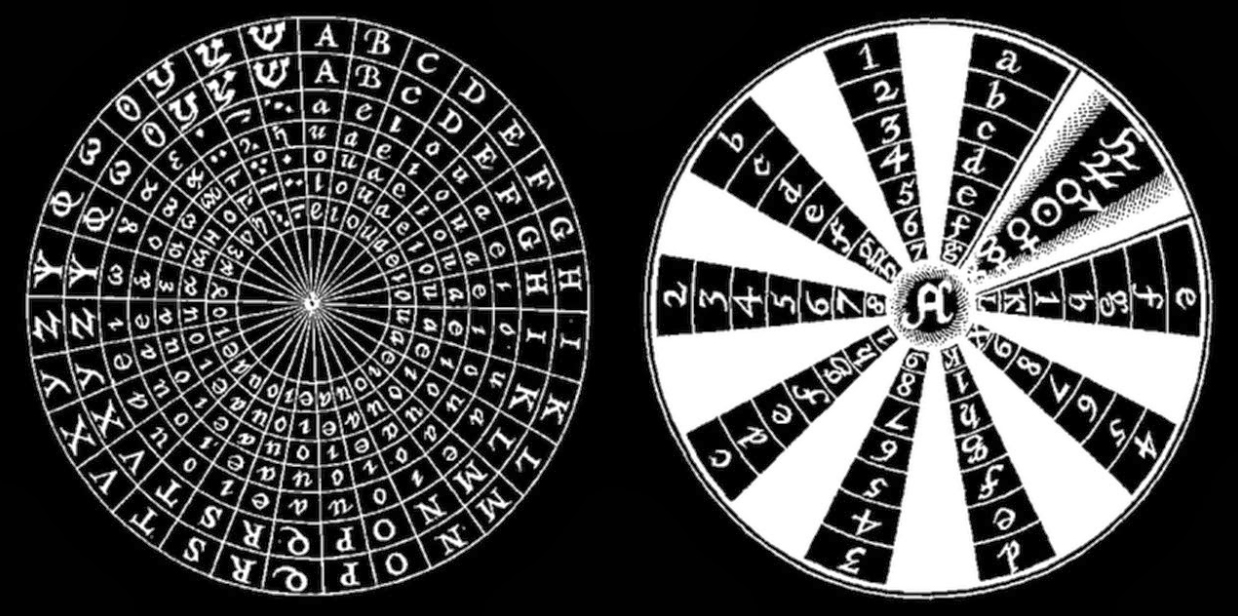
Its influence is strongly felt and most usefully expounded by the Renaissance memory master, Giordano Bruno.
Note: Sometimes people mistake Bruno’s astronomical diagrams for memory wheels. It’s important to understand that his attempt to help us visualize an infinite universe based on finite solar systems does not necessarily relate to his theories of knowledge and memory.
Although using this critical thinking strategy may involve a “memory wheel,” using one is not strictly necessary. You could also use a traditional Memory Palace.
The point of using such a technique?
Ars combinatoria provides rapid mental access to pre-existing mental content you can use to either follow a process or arrive at optimized conclusions.
Two example memory wheels that use ars combinatoria.
How to Apply The Ars Combinatoria to Your Learning Journey
The first step is to have a goal for using ars combinatoria.
For example, when Ramon Llull devised the technique, he wanted instant access to information needed to persuade people to adopt Christianity. Since books were heavy and difficult to transport and people are skeptical, it was important to deliver reasonable arguments based on deep familiarity with doctrine.
And Llull didn’t just want this rapid access for himself. He wanted a specific pattern of reasoning to flourish in the minds of many evangelists. That way, his convictions stood a stronger chance of spreading far and wide.
In Giordano Bruno’s case, Bruno adopts some of the ideas from Llullian ars combinatoria, but applies them more to what we might now call “self help” concepts.
Perhaps the best book to read for clarity on this matter is Bruno’s The Seal of Seals.
Other Teaching Traditions
Arguably, the arrangement of information into mental memory wheels influenced the development of the textbook. This is a point brought forward by Walter Ong in his study of Petrus Ramus.
You will often see such compressions of information down into different letters in other spiritual and philosophical traditions, such as Advaita Vedanta.
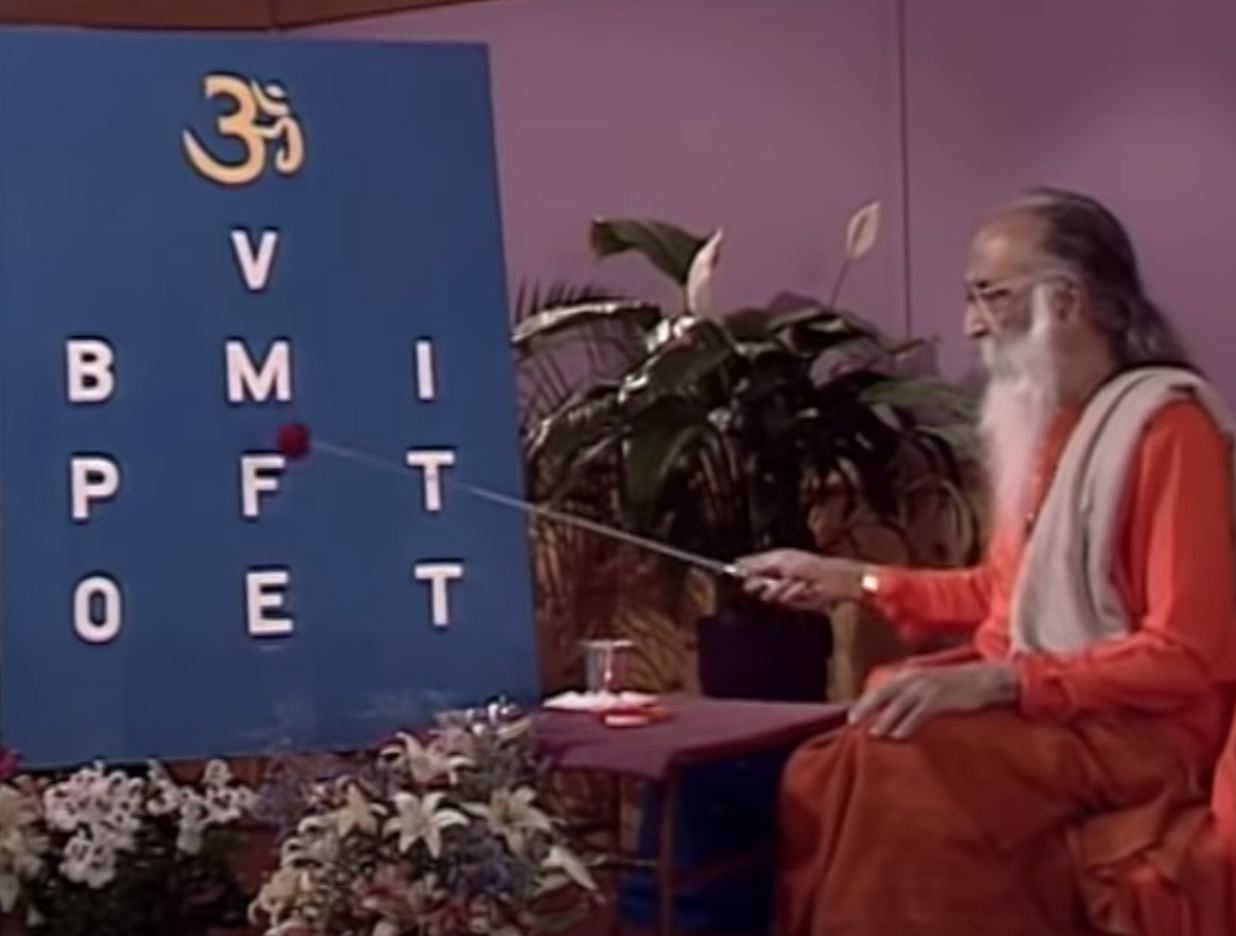
For example, Swami Chinmayanada uses the BMI chart (Body Mind Intellect) to teach how certain mental impressions (vasanas) hold us back from lasting self-realization.
Swami Chinmayanada and the BMI chart show a similar compression of large ideas compressed into a spatial arrangement.
If you watch him teach it, you’ll see that he clearly has it all memorized.
But as Llull imagined people might do, this chart is being used to instruct others towards adopting a particular outcome. The chart allows him to “combine” multiple ideas by extracting meaning from the individual letters as he goes.
Why Ars Combinatoria Is NOT Really A Memory Palace
Although this technique shares characteristics with the Memory Palace technique, it is ultimately very different.
The main reason is simple:
Anything you would place in a Memory Wheel for “combining” or “recombining” would have already been memorized by the user. This is quite a different application of using spatial memory when compared to something like memorizing the planets, a much more common learning task during the Renaissance than now.
If you’d like to see how to use a Memory Wheel for language learning, I’ve created on and give a full walkthrough with a demonstration in this video tutorial:
https://www.youtube.com/watch?v=UmbvbbwX1cU
A Memory Palace, on the other hand, is used to memorized the information placed in the wheel. You then use the wheel to access the information in different ways, such as recalling details from important philosophy books.
We know this is the case because Giordano Bruno teaches the techniques separately and the “Combinator” is designated as a seal, not as a Memory Palace.
That said, I have found a few ways you can use Memory Wheels for spaced repetition. That’s a main reason why they are well worth looking into as mnemonic tools.
A Modern Example Of Ars Combinatoria Using A Memory Wheel
Let’s make a very simple memory wheel based on a decision making tool Chip and Dan Heath share in their book, Decisive.
We’ll call this memory wheel our Decision Palace. I’ve used what you’re about to learn often, and I hope you’ll consider building one like this for yourself.
Here’s exactly how I built and configured mine to help me make decisions better and rapidly identify the best possible solutions, almost purely from memory.
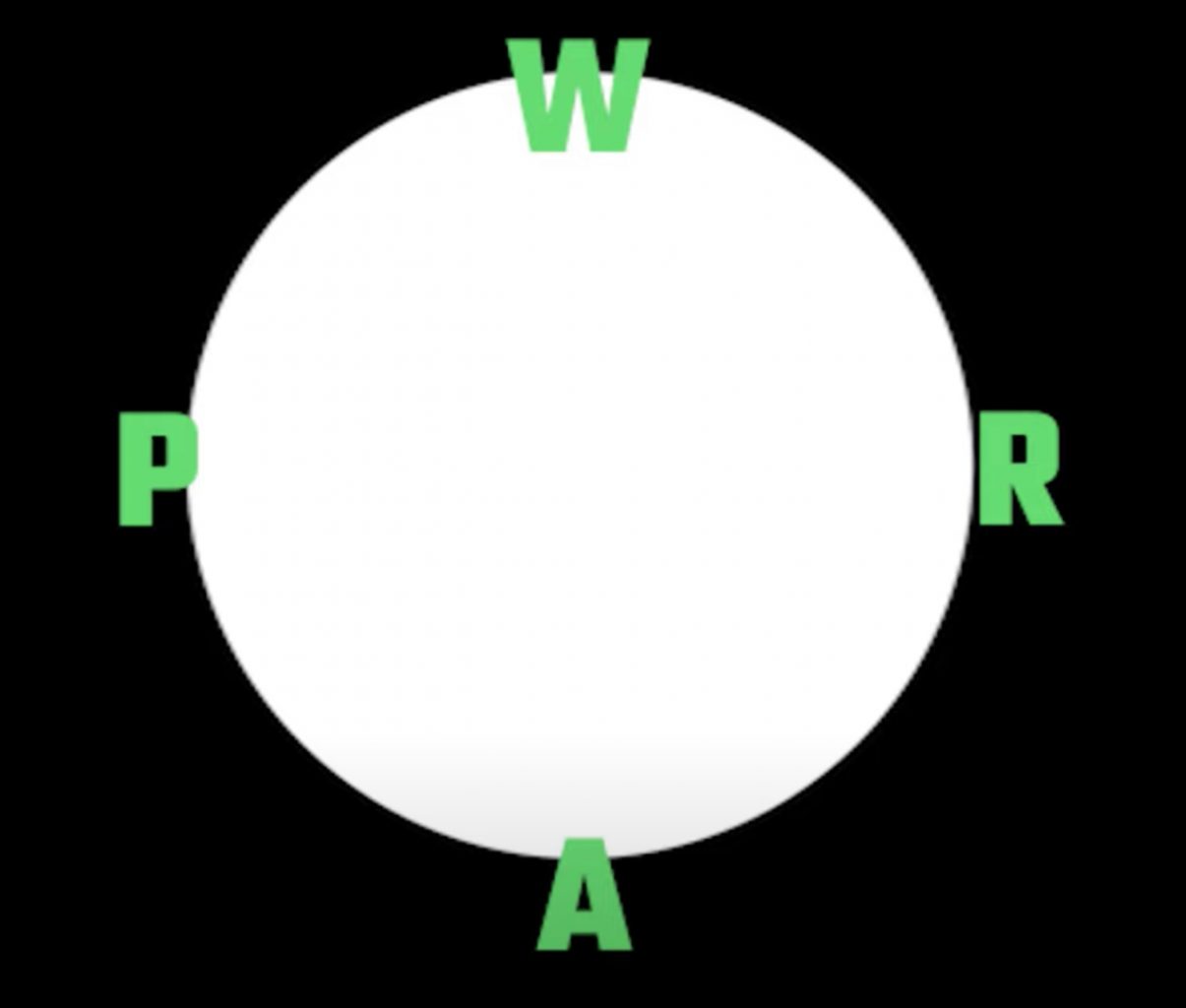
Imagine a circle broken into fourths. Place the letter W at the top, R to the right, A at the bottom and P to the left.
Unlike the Bruno memory wheels, this WRAP outer ring is simplistic.
However, based on what Bruno describes in Thirty Seals, The Seal of Seals and other works I’ve read, the functioning I’m sharing here is accurate in tone, tenor and outcome when it comes to using a self inquiry to reach decisions based on memorized decision metrics.
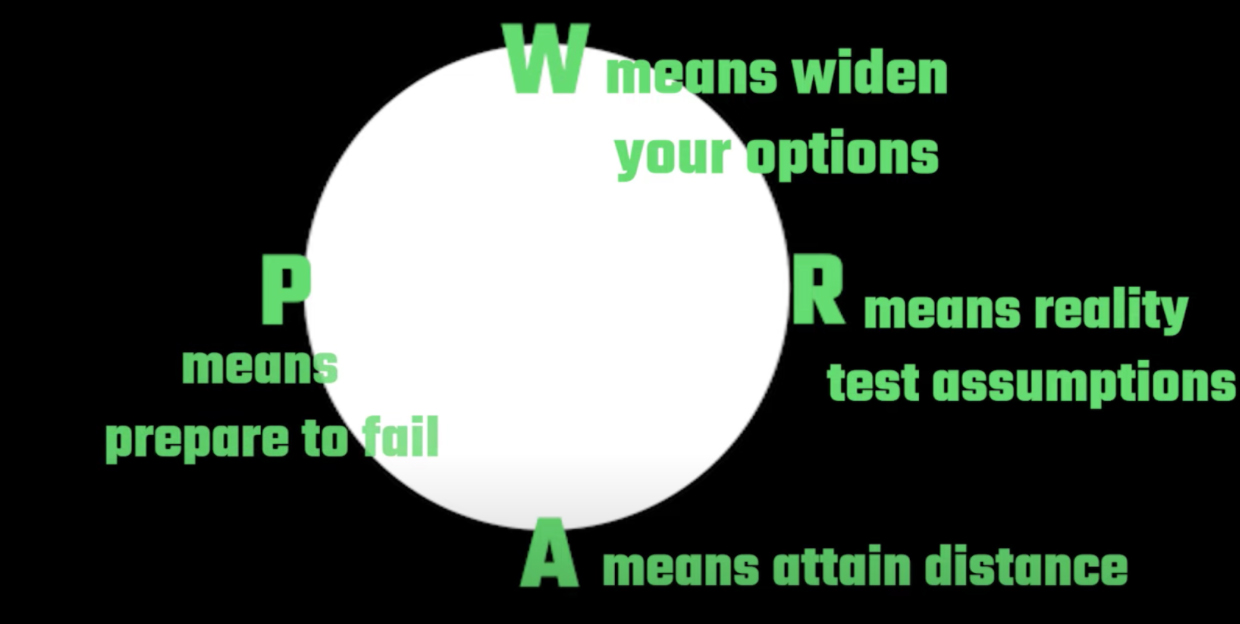
W means widen your options
R means reality test assumptions
A means attain distance
P means prepare to fail
To learn more about this decision tool, please check out Decisive, by Dan and Chip Heath.
An Example Memory Wheel
My particular wheel is not merely a mental construct. It is a Memory Palace based on the Anzac Square Memorial in Brisbane.
I could have easily used the circle-like structure of the Bergeron Centre at York University, or “squared this circle” in any number of standard rooms around the world.
Does the memory wheel have to be based on a real location?
Not necessarily, but since spatial memory practice is so beneficial, why not?
If you want multiple memory wheels that feature clear and distinct wormholes or portals to other memory wheels in the manner Bruno suggests, it’s probably beyond most of us to get there without some kind of Memory Palace strategy. But it’s your journey and it’s entirely up to you.
A Modern Scenario
Now, for a practical example of how the outer ring of our WRAP Decision Palace works, let’s introduce a contemporary scenario. Let’s say our robot overlords have made changes to the internet and we have to update our websites.
The new requirements mean a decision must be made to keep things humming, it has to be the best possible decision. Due to all kinds of psychological biases, our brains pressure us to fall back on previous decisions, a problem we’re aware of and know can cause great harm.
That’s why we consistently train our memory to remember to use the Decision Palace. In other words, consistent memory training heightens the self-awareness.
Not only that, but constant practice helps us remember that we don’t know what we don’t know. So to avoid potential bad decisions and make sure we have the best possible ideas to consider, we enter our Decision Palace and proceed to W. This letter opens up and reminds us to widen our options.
The Next Circle
Now, before proceeding to the next step, we go from the outer circle to an inner circle which contains 5 more Ws and an H. Who, what, where, when, why and how. Depending on the exact situation, we’ll want to go through each.
Let’s say we better determine what needs to be done, but still haven’t widened are options enough.
So we ask “who” can help. To do this, we step one circle deeper into the Decision Palace, where we find every letter of the alphabet.
Start with A and think of every Internet person we know. We recall Andy, who owns one of the world’s largest yoga websites. He might have some ideas.
B… No one is coming to mind but I think Jonathan mentioned an internet wiz named Bonnie once upon a time.
C… and so on. The deeper into the alphabet you go, the more you’ve widened your options.
Using Ars Combinatoria For Critical Thinking… With Help From The Best Philosophers
Most of us have probably heard that phrase, “What would Jesus do?”
And it’s not uncommon to “mastermind” with different authors by thinking about how they would respond to certain topics. Bertrand Russell talked in a private letter about how that he did this frequently. He also often fantasized about how his own students and readers might commune with him in his absence.
Try this:
Make two Memory Wheels, each with the alphabet from A-Z (or the letters in your preferred language).
For each letter, or as many as you wish, link a mnemonic image of a philosopher whose name starts with that letter, i.e. A for Aristotle, B for Bataille, C for Cixous, etc.
Then, when you find yourself considering an idea, you can rotate through the wheel and think about what each philosopher would think about that topic.
By moving down to the secondary wheel, you can put your primary philosopher in dialogue with another philosopher by spinning your philosopher memory wheel. For example, you can get Aristotle in dialogue with Zizek within seconds.
The Benefits Of Using Ars Combinatoria
When it comes to critical thinking and the contemporary example I’ve shared on this page, the answer is simple:
You no longer need to be worried about limited resources or fall into a scarcity mindset. Your mind already has dozens of ideas for people to ask or even just study their sites to see what they’re up to at the moment and gather ideas.
Then, when we get to R, which in some circumstances could be weeks later, we’ll use either the same 5WH circle, or perhaps another will appear to assist in this stage of the game.
As a word of warning: You could potentially have endless circles inside of circles, so strategy and placing reasonable limits on things will be your friend as you practice.
Of course, neither Llull nor Bruno had any such Internet needs in their time. But I believe everything they placed in their memory wheels were just as practical in the same way that Ars Notoria was probably a legitimately effective mindfulness routine during the medieval period.
What do you think? Does ars combinatoria seem like a mental technique that might be useful for you?
7 Active Reading Strategies That Help You Remember More
Jan 13, 2021
Show notes
You’ve probably heard that you need active reading strategies in order to understand and remember more. The question is… what exactly are these strategies and how can you use them effectively? On this page, we’re going to cover what I consider to be the best active reading techniques. According to whom? First, scientific research. Second, I’ll share techniques I learned as part of my journey towards getting two MAs, a PhD and working for decades as a research and writer. So if you like the best of both proven research and lived experience, you’re in the right spot to learn how to read better and faster. Let’s get started. What Is Active Reading? Active reading is distinguished from passive reading, an activity where you read just to read. By contrast, the active reading process involves strategies. These strategies may include: Mindset Mental heuristics Specific steps followed in a particular order Advanced note taking techniques Using memory techniques like the Memory Palace during or shortly after reading The most important aspect is that you have a specific goal in mind. For example, as I teach in How to Memorize a Textbook, a goal might be to extract and remember three points per chapter. Here’s another example: Whereas passive reading might involve just picking up the latest book to hit the market, active reading involves researching books that belong to a specific example. Some of my personal case studies have involved the Advaita Vedanta research project that led to my TEDxTalk, Two Easily Remembered Questions That Silence Negative Thoughts. All of the books I read for this project are compiled in the bibliography of The Victorious Mind: How to Master Memory, Meditation and Mental Well-Being. The success of these projects required reading actively in each of the following ways we’re about to cover in depth. How to be an Active Reader: 7 Proven Active Reading Strategies As you go through each of the following strategies, I suggest you take notes. Why? Because it is one of the best possible techniques you can do to really switch on the power of fully engaged reading. One: Active Note Taking I take notes in a number of ways. These include: Linear thinking while taking notes Note taking on index cards so they can be moved around later Mental note taking using a Memory Palace Mind mapping I have written a lot about many unusual note taking techniques. Two of my favorite include using index cards in different ways. The first way involves capturing individual ideas on individual cards. I usually decide on how many notes I will take from each chapter to keep things simple and follow the “less is more” principle. Next, I will make the first card have the title and name of the book. Each card thereafter will feature a quote, key point or my own observations. I always add the page number in case I need to find my way back to the place in the book for context. The second style involves cramming everything on to just 1-2 index cards per book. For example, when going through certain books, like some novels I’ve read for a research project on consciousness, there’s no need for multiple index cards. I use just one index card as I read and jot down first the page number and then the quote or idea. This single card keeps my attention focused on the goal of reading the book. Sure, some of them might be entertaining, but here’s what matters: Using the index card while reading helps me remember the goal of paying attention to the theme of consciousness – the core reason I’m reading the book in the first place. Two: Question Everything While Reading One thing that puzzles me about people who practice speed reading is their contradictions. For example, they’ll tell you how to stop subvocalizing, yet at the same time instruct that you should ask questions while reading. How exactly is this possible? I’m not sure, but I can tell you that I ask questions all the time and vocalize on purpose. In fact, to make reading extra-active, you can adopt the voice of particular people in your mind. For example, you can pretend that you are Einstein and ask questions in a German accent. Now that’s what I call active and engaging. And the best part is how it all helps with retaining new information for the long term. What questions should you ask? The obvious ones, of course: Who? What? Where? When? Why? How? But you will make your reading even more active by asking other questions. A first level of additional activity would be to add “else” to each question above: Who else? What else? Where else? When else? Why else? How else? If you can push for 5 answers in each case, your engagement will go through the roof. Especially when reading challenging books. For more strategies on that, read my guide to dealing with exceptionally hard reading material. I would suggest you also ask questions like: According to whom is this true? On what grounds are they an authority? How long is their point valid? What challenges or contradicts their point? Under what circumstances is their claim not true? What other evidence exists that they did not include? There are potentially hundreds of questions. The more you practice asking both simple and more complex questions, the more powerful questions will come to mind. Three: Use Multisensory Visualization A lot of people tell you to visualize while reading. That’s great advice, but what if you have aphantasia (lack of a mind’s eye)? The answer, whether you have this condition or not, is to widen your options. In the Magnetic Memory Method Masterclass, you’ll learn to visualize using multiple senses that we remember through the KAVE COGS formula: Kinesthetic Auditory Visual Emotional Conceptual Olfactory Gustatory Spatial The Magnetic Modes can be practiced to the point that they work like high-precision cogs in a clock. Touching on each of these “Magnetic Modes” brings even the most abstract information to life, especially if you’re using mnemonic devices. Here are some examples of active reading using a few such devices: You read a book about the presidents and want to memorize one or more names. When you come across “Grover Cleveland,” you think about the kinesthetic sensation of stroking the blue fur of Grover from Sesame Street. You hear the sound of traffic in Cleveland in the United States and visualize the waves by the lighthouse in Cleveland, Australia. You read an equation like 5 ( x – 3 ) = 35. You imagine holding a seahorse in your hand (which looks similar to the number 5). It drives a bulldozer with a scoop shaped like a parenthetical mark. You hear it pushing against a cross in the ground that shoots a bullet at a moustache lying on its side. You estimate that it is about 35 metres high. You read a difficult concept like the halting problem. You imagine Alan Turing “halting” a computer program as it is about to run a speed light. You “hear” their argument in your mind. (Yes, it’s okay to subvocalize while reading.) There’s no doubt that many people will struggle with some of these active reading activities in the beginning. We often haven’t used any of them since early childhood, and even then, they were neither strategic or as sophisticated as they could have been. The trick is to just get started. Study more accelerated learning techniques like these as you go. Practice more often and regularly analyze your results. Four: Pause On New Or Difficult Vocabulary Amongst the many bad pieces of advice given in the speed reading community, reading without stopping is amongst the worst. In reality, the path to reading faster is to increase your vocabulary. That way, you won’t be slowed down in the future. You’ll just know what more words mean. Here’s a simple routine you can follow when you don’t recognize a word while reading: Pause and guess at its meaning. What is the work likely to mean? Try to think of alternate words that might fit in the sentence and still make sense. Write the word down on an index card for vocabulary or in a notebook. Jot down the page number and come back to reread the passage later. I suggest that you do not stop to look words up as you go, at least not in an online dictionary. Doing so interrupts the routine I just shared and also opens you to all kinds of distractions. It’s perfectly fine to save the material for later and doing so improves your memory while fending off digital amnesia. Five: Draw Difficult To Understand Charts And Diagrams Sadly, I used to skip charts and graphs. This bad reading habit slowed my path to understanding and weakened my visual interpretation abilities. Eventually, I learned that it is worth a bit of time – and is highly engaging – to contend with graphs and charts. And the best tactic for doing so was taught to me by my mentor Tony Buzan. As you can see, I’ve redrawn what Tony Buzan called “The Most Important Graph In The World.” He’s right, by the way. And the graph pictured above explains the science of how to establish long term memory of information in the shortest amount of time. It’s called spaced repetition. If you want a highly active means to understand visual information better, I highly recommend not only drawing graphs and charts. Discuss them verbally with yourself while drawing and later with others. When you teach, you learn the lesson twice. Six: Revisit Your Reading Strategically The index card method I’ve shared on this page allows you to revisit only the most important information from books in a compact format. However, sometimes you need to go back and read more. I would suggest that you turn “sometimes” into “almost always.” (Obviously, there are some books where this is not necessary. But even then, it’s worth revisiting them for better memory.) Unfortunately, there’s no magic number for how many times you should revisit a book to keep your familiarity active. You need to decide the revision frequency based on your current memory ability and your needs for the information. But here’s a fun idea: Place your books on your bookshelf in three categories: Just read Read six months ago Read one year ago Experiment with different patterns. For example, you can look through books you’ve read in the “Just read” area five times a week for the first month and then move them down one shelf. When the book is in the “6 months” area, look at your material once monthly for six months before moving it to the yearly area. Once there, you can look once a year, or start again by putting it at the top. This powerful variation on the Zettelkasten method helped me a lot during graduate school. Thanks to having index cards in the books, I used Roman numerals to manage the amount of reviews I’d done. Of course, you’re probably wondering… what if I only read digital books? Audiobooks? Or what if I can only access the books I read at a library? Good questions. Here’s where using physical index cards will come in handy. You can store these and arrange them according to the needed review patterns in shoe boxes. This is how I’ve always done it. And I’m not the only one. In fact, here’s a picture from one many Magnetic Memory Method course participants who do the same. (You can find Mike McCollum’s full success story on our community’s testimonials page.) If you want to learn more about techniques like this, consider adding the Memory Palace technique. It’s a fun and easy process and it only takes a short amount of time to learn how: Seven: Summarize Using Multisensory Routines Reading doesn’t end when you close the book. I learned this during graduate school when Dr. Katie Anderson supervised a directing reading course. In case you’re not familiar with the term, it’s a course where you agree on a reading list with a professor. In lieu of attending a class with others, you meet with the professor and submit papers, usually for publication at the end of the course. Dr. Anderson wanted more than just a paper from me. She wanted weekly meetings based on full book summaries I’d written. In the beginning, the process of writing about every book and article I read for the course was a pain. But as my memory of everything I read was incredibly sharp thanks to the exercise, I soon came to love. The best part? When you’re actively keeping those index cards and using the Magnetic Modes I shared above, writing a summary only takes a few minutes. To get started: Read a book Gather notes and any interesting or unfamiliar terms Apply the Magnetic Modes Create a document on your computer Write the title and author of the book at the top Summarize all the big ideas in the book and any important details and impressions Store in a meaningful file system for organization Print out the summary and wrap it around your index cards for physical storage in a box or something similar Of course, some people are thinking… we’re in the 21st century! Why print this summary out? Well, when I was in grad school, I remember the very sad story of the grad student who kept everything on his computer. When his machine died, so did all of his research, including the full draft of his thesis. He ultimately dropped out, because the pain of doing all that work over again was too much. Sure, you can back things up in the cloud or on a backup drive, but everything digital is subject to decay and disorganization. It’s entirely up to you, but as far as I’m concerned, backing up your summaries in print is itself an active reading strategy worth putting into practice. Conclusion: The Active Reading Process Pays Off If you want to remember more of what you read and develop deep and lasting comprehension, these active reading strategies reap many rewards. The best part? The more you read strategically, the more strategies you’ll discover. Each person develops their own style, relative to how consistently they practice reading. And when you do, I hope you’ll come back to this page and share them in the comments. In the meantime, please let me know: Which of these strategies appeals to you the most?
Skimming vs. Scanning: Which Helps You Remember More?
Jan 06, 2021
Show notes
If you’re as skeptical about speed reading claims as I am, you’ve probably wondered about skimming vs. scanning. Do either reading strategies really help you remember more by reading less of some books? That’s what we’re going to talk about on this page based on my years of graduate school study and teaching as a professor in different countries. I’ve skimmed and scanned in multiple languages, which gives me a unique perspective. And on that basis, I can tell you that the biggest problem you face isn’t that you need to read faster. It’s that you need to read in a way that doesn’t sacrifice reading comprehension. Here’s the very good news: When I skim and scan, I do it properly. What I’m going to teach you today avoids the highly questionable eye-training and subvocalization nonsense taught in speed reading books and courses. The way I managed to read several books a week also works without sacrificing comprehension. Now, I don’t say this to come across as arrogant, but I hold academic credentials and publishing credits that demonstrate my thorough reading skills. So stick around because on this page, I’ll share my best tips on several skim and scan reading strategies. I’ll do so with a particular focus on remembering more. I can only recommend that you don’t skip around (at least for now) – and we’ll talk about why in a second. That way we can dive in by looking at these techniques from a higher level first. Skimming vs. Scanning: What’s the Difference? At first glance, there doesn’t seem to be much that distinguishes these two reading techniques. As you’ll soon see, there are key differences, and their value to you stems from what you’re trying to get out of the reading material in question.Therein lies the ultimate difference: Reading techniques matter, but they matter most when deployed in context. You need to use the right techniques that work to produce the desired outcome. And, scientists have shown that skimming on screens reduces comprehension. That’s why in many cases, neither skimming or scanning will work. In fact, this study shows that even when proper skimming and scanning techniques are taught, it is “difficult to get students to skim and scan because of negative attitudinal biases of both students and teachers.” Well, sometimes we should feel negative towards techniques that are hard to learn to do well and only work in certain contexts – such as only when reading physical books. It’s also important to understand the role of context in reading. If you have no familiarity with the topic area, these techniques won’t help because your brain doesn’t have enough connections to the material. Even though I feel I have a big vocabulary, I still continue to work on expanding it in my mother tongue. I recommend consistent vocabulary acquisition to everyone wishing to improve skimming and scanning. Also, you might not have enough vocabulary to use either of these techniques effectively. This issue usually means that without some preexisting knowledge of a subject area, the differences between these two techniques doesn’t really matter. You will want to start with my free power-training on how to read faster instead. With this higher level points derived from both scientific research and critical thinking in mind, let’s get into some definitions that show how and why these techniques differ. Skimming Defined If we look at the origin of this word, it literally means to scoop a substance from a surface. That means when we’re trying to differentiate skimming from scanning, we already know that skimming can never serve as a depth reading technique. It’s all about the shallow elements of a book or other text. However, shallow does not necessarily mean superficial. As scholar and narratologist Gerard Genette discussed in his epic book, Paratexts, the “surfaces” of what we read often contain tremendous amounts of detail. For example, Genette points out the power of reading the colophon page for all kinds of important clues, including: Date and location of publication Translation information Edition number Author’s biographical data and rights Now, you might be thinking: This stuff has nothing to do with the meaning of the book! That may or may not be true, but it is always a best practice to at least glance at the colophon page. As I discuss in this video, you can pick up a very powerful memory tool: https://www.youtube.com/watch?v=er-k8Ecgdfo Other parts of the books you can skim intelligently include: Table of contents Index Bibliography Images and graphs Section summaries Practice questions Acknowledgements Combined, skimming these elements of a book give you a lot of context. They are worth doing anytime you read any book because they help to form a field of understanding in your mind. And if you use mnemonic devices, you’ll be able to remember more by skimming. “Brute force learning” in my office while completing my PhD. I often skimmed and scanned through this many books in a day. Scanning Defined In Brilliant Speed Reading, Phil Chambers says that scanning differs from skimming because it is “less pre-directed.” I’m not so sure about that. As we’ve seen, how we define our terms should really come down to your desired outcomes. In my view and experience, scanning includes the skimming we just talked about. Scanning might include skimming, but doesn’t necessarily need to include the other strategy. If you want to skim or scan as fast as the Flash runs, you’ll want to define your terms carefully so you can practice them well. Scanning definitely involves going deeper. Rather than just familiarizing yourself with the “surface” features, you would go deeper, including: Flipping through the pages of each chapter Analyzing any graphs or charts Looking at images (what learning expert Barbara Oakley calls taking a “picture walk”) Reading chapter openings and conclusions Reading the book conclusion I included some dedicated reading in scanning because scan reading is useless without giving you something to base a decision on. What decision? Whether or not you’re going to continue and read the entire book. This decision is one of the best reasons to use both of these techniques because it can save you a ton of time on either: Skipping books unlikely to serve your goals Saving books for later that you don’t need to read right now How To Skim Read When learning how to skim a book, I suggest you start with the back cover. Try to mentally notice at least three (or more) details or observations that come to mind as you read. For example, on the back cover of The Victorious Mind: How to Master Memory, Meditation and Mental-Well Being, you might notice a few things like: The author is a film scholar Terms like “self-inquiry” and “control-freakism” are used It talks about the importance of experimentation The works of Gary Weber are mentioned An image of a “magnet” accompanies the name of the publishing imprint I always try to mentally highlight at least three points or key ideas from the “paratext” on book covers. By reading the back cover, a “field” of awareness is already developing in your mind. These observations will compound as you dive into the colophon page, the index, bibliography and other “paratextual” elements of the book. The most important aspect of this kind of strategy to remember is that you’re reading to develop context. You’re not even sure you’re going to read the entire book yet, but you’re taking every opportunity to make sure you remember more by consciously observing its “surface” details from the beginning. The Top 10 Scanning Techniques To scan effectively, you will want to first decide a few things based on what you’ve learned from the skimming exercise. The main question to ask is this: Does the book warrant reading further? If the answer is “yes,” then I suggest you: Get out an index card. Write down the name of the book and the author (include publishing date) Memorize the publishing date using the Major System or Dominic System Count the number of chapters and then page through the entire book Note any keywords or key ideas that leap out at you When you find interesting points, add them to new index cards and include the page number Note any key graphs or images (you may want to redraw some of them if you find them hard to understand) Ask questions as you scan Jot down a summary of what you understood about the book from scanning Index or flash cards are one of the best ways to “speed read.” They also map into Memory Palaces very well. When asking questions, you can include the stock questions common to most people who use critical thinking strategies: Who What Where When Why How But you can also go further. You can ask questions like: How and why is this author an authority on the book’s topic? How does the author demonstrate the validity of the research references in the book? How does the author share the views of those who contradict the book’s established position? What is the book’s big idea in my own words? What are a few of the sub-ideas in my own words? Do I need to read this book in full? Do I need to start at the beginning or can I select certain chapters? One of my favorite questions is: So what? To put it another way, “if this claim is true, what changes? If it isn’t true, what changes?” If you find that the answer is… “nothing changes,” then the stakes presented by the book simply aren’t that high. It might be worth skipping the book altogether. In sum, the quality of the answers you get from these questions will depend on your skills as a skimmer and your general familiarity with the field before you started the skimming and scanning exercises. Now, if using index cards is not something you care to do, you can use these mind mapping examples to consider some alternatives. Should You Skim Or Scan? As you can tell by now, my answer is both. One reading strategy is almost valueless without the other. Plus, you really need to perform some self-analysis before getting started. If you’re not already familiar with the area, neither of these techniques will be particularly helpful. In fact, they could damage your enthusiasm for learning the topic at all. If necessary, work on your reading comprehension strategies first so you can gain familiarity with the field. Everyday Applications For Using The Skimming And Scanning Technique If you’re in a bookstore, that’s definitely the time to simply scan a book. As a nearly universal rule, when I have found a book that passes the “scan test,” I get it. Too much time is wasted wishing I would have just got something and little is lost by having another reading resource around. When working in libraries, it definitely makes through to go through both skimming and scanning. To keep my index cards gathered together in a compact manner, I usually put them in ziplock bags. I know: this process is kind of weird. However, I’ve been practicing it since 2000. The organizational power alone has been invaluable over the years. Plus, I simply remember a lot more along the way about books I’ve seen, even if I haven’t read them all. For online applications, you can do something similar, taking care to write the web address and the date you accessed the article online. Some people will want to use Evernote, and there are tactics you can learn to optimize all kinds of software programs of this kind. How To Skim A Book For Use With The Memory Palace Technique There are a lot of ways to remember more of what you read even if you’re skimming and scanning. Of course, this assumes that you know how to use a Memory Palace. If you don’t have this skill yet, grab me free course and start developing it now: Once you know how to use a Memory Palace, you have options. For example, you can: Rapidly memorize the publication date, title and author name of any book Quickly create images based on page numbers using a 00-99 Use individual pages as simple Memory Palaces Ultimately, you’ll want to save these techniques for a full read of the books you encounter. And for that I suggest you learn how to memorize a textbook in greater detail next. How To Choose Your Reading Wisely And Contextually At the end of the day, the techniques you choose for your reading are less important than what you read and why you’re reading it. I read this book in three different ways. I skimmed and scanned it, and then read it thoroughly. I took it with me everywhere so I can keep consistent pace and finish it quickly. Unfortunately, no one can tell anyone else exactly what to read. That’s why I recommend you deploy these techniques within the context of a vision statement. For example, I have a long term reading project about NASA and space travel, one that is nested inside a learning project about the relationship between memory techniques and early developments in science and astronomy. When I found Dr. Richard Wiseman’s Shoot for the Moon in a bookstore, I skimmed it and instantly saw how it fits my reading project. Later I scanned it to maximize my field of understanding and finally read it thoroughly from cover to cover for best results. When you use skimming and scanning techniques in this way, you’ll go beyond the energy-draining tactics that lead to highly suspicious ideas like “photoreading.” Instead, you’ll have energy-creating strategies that keep your enthusiasm high. You’ll enjoy this result because you’re legitimately extracting maximum value from each and every book you read. Without context, all the skim tips in the world won’t help you learn how to read faster. So let me know, what do you think of these definitions of skimming vs. scanning? And what vision do you have for your reading goals?
How to Stop Subvocalizing: My Surprising Solution
Dec 31, 2020
Show notes
Wondering how to stop subvocalizing? Well, let me ask you this: What if this rather strange term from the world of speed reading is fraudulent? Or what if reducing subvocalization is tactically a false goal for any serious lifelong learner? Here’s an even better question: What if there exist strategic ways to use your “inner voice” to read faster? You’re in luck. You see, the Magnetic Memory Method stresses the importance of avoiding energy-draining “tactics” so you can focus on enthusiasm-producing strategies that actually help you learn faster and better. That’s why on this page, we’re going to explore: How this strange term “subvocalization” has been defined and used historically. The psychological pain used to exploit people who are desperate to learn (this is probably what allows for the perpetuation of pseudo-scientific fraud in this area). Real techniques you can use to improve reading comprehension and speed by using your inner voice. And hey, if after you discover the truth subvocalization you still want to reduce it, I’ve got something for you. I’ll mention a simple trick from the world of meditation that is more likely to get you there. It’s perfectly a reasonable exercise. And the best part is that it relates scientifically to the nature of consciousness and studies in other aspects of learning where the eyes are involved. Let’s get started. What Is Subvocalization? First of all, there’s a long history to this term, and “subvocalization” isn’t the only word people have used. As Donald L. Cleland and William C. Davies show in “Silent Speech – History and Current Status,” the term also appears as: Silent speech Implicit speech Innervocalization Lip reading Vocalization The first recorded observation of people “speaking silently” to themselves occurred in 1868. Two psychologists focused on human physiology created a device like a telegraph key activated by the tongues of their test subjects. Everything they discovered is premised on the idea that parts of your mouth and throat move while you are reading. Somehow… for reasons no one seems to know… these movements came to be negatively portrayed as a (gasp!) habit. What we do know is that people who cite the same research clearly haven’t interpreted it as I have. They clearly missed Ake Edelfelt’s conclusion that subvocalization should not be stopped (more on his research-based assessment below). Frankly, if my interpretation is correct, and the “speed reader” who says the research calls it a bad habit is correct, then one of us is a horrible reader. Given that no one writing on that site uses a full name or lists any academic credentials… I don’t wish to come across as arrogant, but the bad reader probably isn’t me. Carrying on… The Historical Devices That Proved Subvocalization Is Normal Later devices used to study subvocalization included connecting a pneumograph to a kymograph. Some of these studies may have been mixed up with research into stuttering, which also involved using a pneumograph. If you read John Madison’s An Experimental Study of Stuttering, for example, he finds that stutters suffer brain fog and poor concentration. But he also finds that the use of a telegraph key for gathering data related to vocalization is highly suspect. Obviously, early 20th century science was not as sophisticated as what we have today. A lot of different people entered fields of study without necessarily having direct or even indirect credentials. It is thought, for example, that Rune Elmqvist, inventor of the first pacemaker, may have contributed an early electronically activated writing machine to initial experiments. It is not that he shouldn’t have, but when you see so many people with so many devices studying phenomena like this, here’s a suggestion. Start thinking “Wild West of Knowledge.” That will be more effective than expecting anything like clear and focused scientific analysis from this historical period. Indeed, when the first serious publication finally arises in 1960, Ake Edelfelt completely dismisses subvocalizing as a problem: “Silent speech is universal during silent reading; efforts to eliminate it should be discontinued.” Jump ahead to the present day and nothing amongst serious scientists has changed. According to research compiled by Scott Young, if you want to read well, you need to subvocalize. How To Stop Subvocalizing: Seven Weird, Unproven Tips That Probably Won’t Work The first thing you need to understand is that it’s more than fraudulent to claim that subvocalization should be stopped. It’s contradicted by almost every speed reading program and book I’ve seen. For example, in a course called “Kwik Reading” by Jim Kwik, you are given ways to reduce subvocalization. A few videos later, you are told to ask questions while reading. Well… which is it? Hear your inner voice or don’t hear your inner voice? How are you supposed to ask questions mentally if you’re trying to be silent? The lack of clarity and the utterly impossible to ignore contradiction in terms should instantly remind you of Ake Edelfelt’s finding: stop trying to do this. To persist in forcing yourself to be silence is nonsense. In fact, my research has yet to show exactly how something as normal and natural as subvocalizing came to be called a “habit.” It’s even less clear how the speed reading crowd started heaping so many negative connotations on your natural reading voice. But wait. There’s more, because the advice only gets worse. For example: One: Keep Reading A lot of speed reading training books and programs tell you to stop “backreading” or “regressing.” This “tactic” is utter nonsense for many reasons. For example, have you ever read Nietzsche? He causes you to reread things he’s said frequently. Have a look at this passage from The Gay Science: Owing to three Errors. Science has been furthered during recent centuries, partly because it was hoped that God’s goodness and wisdom would be best understood therewith and thereby – the principal motive in the soul of great Englishmen (like Newton); partly because the absolute utility of knowledge was believed in, and especially the most intimate connection of morality, knowledge, and happiness – the principal motive in the soul of great Frenchmen (like Voltaire); and partly because it was thought that in science there was something unselfish, harmless, self-sufficing, lovable, and truly innocent to be had, in which the evil human impulses did not at all participate – the principal motive in the soul of Spinoza, who felt himself divine, as a knowing being: – it is consequently owing to three errors that science has been furthered. Nietzsche says he’s going to talk about three errors at the beginning of the passage. He then doesn’t use the word “error” again until the last sentence. To understand what the errors are, you literally have to go back and reread the passage. Different ways of referring back to points within entire books or even individual paragraphs is a strategy that good writers use all the time. It’s like a P.S. inside of prose, or a callback to a salient point mentioned earlier in the text. If an author says, “As I mentioned back in chapter one,” there is zero reason why you would not go back to reread the passage if you can’t remember it. Sure, you might “read” faster by not going back to refresh points an author reiterates, but you’re not guaranteed to understand more just by plowing forward. If anything, your path to meaningful comprehension will be slowed, if not destroyed. Pro tip: Although I strongly disagree that you should avoid “regressing” backwards by rereading information (in fact, one of my most popular posts teaches a rereading strategy), there is a subtle point to be drawn here. When you can’t understand something and repeating an idea isn’t making it any clearer, moving forward can be helpful. There are many difficult topics I’ve read where I needed to not only keep reading, but also read outside of the text by using supplement guides and other resources. I also needed to memorize information I did not understand, which is one of the three corrections I made when correcting these three pieces of bad advice memory experts tend to give. Two: Use Your Finger Or A Pointer If running a finger, pencil, chopstick or broken antenna from a transistor radio helps you read better, that’s great. You’ll get no argument from me. But I think you deserve to know the origin of this tactic, which may have hypnotized people around the world into thinking it has an effect it might not. According to Marcia Biederman in Scan Artist: How Evelyn Wood Convinced the World That Speed-Reading Worked, the origin story of this technique is beyond belief. Here’s how it goes: Once upon a time, Evelyn Wood dropped a book. As it was flying through the air, she reached to grab it and noticed she could read a sentence faster as her finger paced beneath it. Let me ask you this: How do you read a moving sentence on a small object like a book, even with a finger between your eyes and, say 21 words, flying through the air? The answer is that this story sounds like nonsense. Again, I’m not saying that some kind of aid can’t help. But before you invest a ton of time in it, consider how these tactics come into being in the first place. You could save yourself a lot of time and energy as you use the rule strategies needed for reading faster. Pro Tip: The rare time I can’t focus, I will use a blank index card to cover up parts of the page I’m not reading. I find this approach useful because it removes the stimulation of all the other words. It also does it in a way that doesn’t add a meaty finger between my eyes and the text. You can move the index card slowly down without even having your fingers appear near the page. Three: Count From 10 to 1 While Reading Counting while reading is another tip from Jim Kwik. Huh? Vocalize one type of content in the hopes that it will blot out another? I’m not sure how this makes sense. However, there is a technique related to this that is worth using in the context of meditation. It appears in Gary Weber’s Happiness Beyond Thought. This techniques stems from the Zen tradition. To perform the exercise, count from one to ten and try to suppress the even numbers. It’s kind of like playing a game of, “Don’t think of a red cat,” but I’ve found that I actually can do it (even though it took over a year of trying). Has this exercise helped me concentrate more while reading while also picking up speed and comprehending more? Yes, but that’s because many meditative activities have been shown to improve memory and concentration for reading. That’s why I practice this technique while meditating, not while reading. Four: Listen To Music While Reading Some people can listen to music while reading. When I was younger, I was able to do it all the time. I used to write a lot while listening to music (and sometimes still do). However, I don’t see how doing this can help reduce your inner voice. This article provides no research to back up the claim and says that “Classical usually music works best.” Really? Which Classical music? What does “usually” mean? I don’t know about you, but when I listen to Bach and Beethoven, those masters grab my ears by the throat and don’t let go. Good music commands our attention, so although I know from personal experience that it’s not impossible, these dubious claims with zero substantial research evidence or even anecdotes make no sense. They only raise questions. Five: Force Yourself To Read Faster Than Normal Although there is merit in pushing ourselves for better performance, there’s a potentially huge problem in this suggestion. For one thing, if you’re pushing yourself to read faster how are you doing it? Chances are… you’re doing it in thoughts. And that means you’re almost certainly “subvocalizing.” Plus, speed reading books and courses always advocate defining your “normal” reading speed. They talk about spending a lot of time testing how fast you’re reading and recording the numbers. I find this practice odd for a few reasons: As with the command to read faster, you’re creating mental content that almost certainly places a filter or lens between you and the content you should be focused on. Being aware of having a timer on and needing to count words also creates more mental content to think about (and vocalize while reading). How many people are actually skilled enough with the numeracy needed to: Create and gather accurate data? Analyze the data they produce accurately? Reasonably and reliably crossindex the speed data against the behaviors of their throats while reading? By all means, experiment with placing such filters on the reading experience. As John Graham has shared, adding “obstructions” during memory training helped him win the 2018 USA Memory Competition. But keep in mind that those training efforts were directed at a competition outcome, and there is nothing in particular any memory competitor needs to understand. When it comes to speed reading competitions, where timing is definitely an issue, I couldn’t find any sample questions to get a sense of how in-depth the comprehension questions go. That would be interesting to know, as would the specific criteria that apparently satisfied a “group of [unnamed] reporters” that Anne Jones read the final Harry Potter novel in 47 minutes. I’m seriously suspicious of the intellectual credibility of the questions she was asked, especially when her summary of a novel that was not read in anything like test conditions is that it was “very, very interesting.” Again, even if we had access to the standard used to question Jones’ comprehension, the larger point is this: Competition and speed reading demonstration outcomes do not necessarily reflect anything related to the reading comprehension strategies that actually help people get ahead in their lives. It’s also easy to fake knowledge of fiction, especially pop culture fare, because they are grounded upon well-known principles of narratology, such as the hero’s journey archetype. I’d love to see someone read Naked Lunch by William S. Burroughs in the same period of time. That book too is something anyone could call “very, very interesting.” Six: Train Your Eyes I’m not sure how running an infinity sign in front of your eyes with your finger is supposed to stop you from reading in your head. It’s also not clear how any number of arm movements are supposed to help in this regard, though many speed reading books and courses insert what appears to be elements from Qigong and so-called Emotional Freedom Techniques (EFT) like “tapping.” Personally, running my eyes around in circles only gives me a headache. I highly recommend you check with a doctor first before engaging in any eye movement exercises. And take other body movement instructions with a grain of salt. There’s no doubt some physical movement can help you read better, but what it has to do with learning how to read without subvocalizing remains a mystery. Seven: Train with Software The Internet is awash with software programs purporting to help with different speed reading skills. Most of these softwares show you one word at a time, kind of like certain movie previews flash words on the screen for dramatic effect. I’m not sure how being shown individual words is going to help, but clearly part of the idea is that you will experience the words so quickly, you won’t have time to sound out the words. I’m not sure if it’s true, but when looking at these softwares, I quickly feel nauseous. To be fair, I once submitted myself to reading an entire chapter of a Dostoevsky novel using one of these software programs. Sure, it does feel like you’re following along. But there’s a catch. I can’t remember which novel it was, I don’t remember anything about the chapter, and who knows… maybe it wasn’t even by Dostoevsky. Worse, the reading experience was far from pleasurable. In fact, the experience was downright p…
9 Critical Thinking Strategies That Lifelong Learners Need To Know
Dec 19, 2020
Show notes
If you’re looking for critical thinking strategies to help yourself or others, congratulations. Learning to think better is one of the best ways to help ourselves improve the world. I’m talking about using thinking to be a better student, employee or employer. As a student, I used critical thinking strategies to get better grades. As a professor in three different countries, I strategically thought my way into getting better results for my students. And as an employer myself, I always think using the strategies on this page to enjoy a great business. And on the basis of all my real world experiences and study of the world’s best critical thinking books, I’m going to treat you to an epic lesson in critical thinking techniques that can: Improve your performance at school or work Help you make better decisions Assist in avoiding mistakes that crush others Improve profits as an entrepreneur Using creative thinking and critical processes of understanding that improve your memory This final benefit is especially important if you find yourself forgetting information. And on this page you’ll even learn more about how to remember the steps involved in thinking more critically. 9 Types Of Critical Thinking That Help Learners Outperform Their Competition Let’s face it. The reason we learn critical thinking is not just so we can improve the world. It’s so we can compete in the race to improve the world. That means that critical thinking cannot stand on its own. It has to also include analytical thinking and creative thinking. That’s why we have to go beyond the typical stuff you read online about asking: Who What Where When Why How Don’t get me wrong. Those are important questions to ask. But let’s dive in and understand four of the biggest and best categories of critical thinking: 1. First Principles Thinking This kind of thinking breaks a problem down to its basic parts and uses them to explore new paths. It tends to keep a goal in mind at each step. To use this kind of thinking, you also want to: Identify core assumptions Break the problem down into parts Create new processes towards a clearly defined goal Example: We know that memory requires at least some level of repetition. But how can we reduce that amount? Looking at our core assumptions, we can break the problem down into parts and notice that primacy and recency effect allow us to create a tool. The new process is the Memory Palace technique, something that every memory competitor and many students use and refine year after year, usually by repeating this same critical thinking strategy. 2. Blank Slate Thinking This technique starts with first principles, but you go further. You ask: What would this look like completely from scratch? Example: Imagine you’re trying to solve poverty in an inner city. Even though it won’t be possible to start the city over, by thinking about what the area looked like before it was inhabited, you can imagine a new history and try to figure out how greater fairness might have been achieved. 3. Synergistic Thinking Synergy is about combining things together that don’t normally go together. As a way of stimulating more critical thinking, you would get a bunch of items together and keep asking, Why don’t these items go together? Then dream up ways they could be combined as a critical thinking exercise. Example: Imagine scissors and a banana or a kite and vase. Ask: Why don’t these items go together? Your answers might be something like, because bananas don’t need to be cut and vases don’t need to fly. Try to come up with at least 5 reasons why the items you’ve paired don’t go together. Then try to come up with at least 5 ways they could. Even if the solutions you come up with are silly, they will exercise your mind. For example, maybe banana skins can oil rusty scissors or kites could deliver flowers to people in hospitals where the elevators are broken. 4. Adaptation A lot of innovations come from people transferring a feature from one area to another. Example: Book of the month club business models have become everything from vinyl record clubs to monthly underwear subscriptions. Another way to think about adaptation as a critical thinking strategy is ars combinatoria. This ancient technique let you adapt a Memory Wheel based on “contracting” larger ideas down into individual letters. Then, if you had a problem you needed to solve, you would expand the letters and adapt the ideas within them. It’s hard to explain, so here’s a video that describes the technique in-depth: https://www.youtube.com/watch?v=0cYDmaBXvJg 5. Magnification and Minimization We often get stuck in our thinking because we’re looking at things in their actual scale. But when we change their size and dimension, we can gain new insights. Example: If you’re trying to solve a problem involving thousands of people, scale down to thinking about how to solve it for just ten people, or even one. Or, if you’ve having a hard time imagining something small like the operations of a biological cell, draw it as big as possible so you can zoom in on individual parts with greater ease. Although lesser known, magnification and minimization are two of the best ways to directly improve how you think about a variety of issues. 6. Reverse or Invert Have you ever wondered why magicians disappear in a puff of smoke instead of appearing in them? Or what about donut holes? Where do they go? Take problems and play them in reverse in your mind. Example: In the hard problem of consciousness, experiences like headaches are said to be impossible to measure. (This is because pain is typically based on perception.) To invert the problem, you might consider pleasure and how smiling is inherently visible. To reverse it, you might imagine tears flowing back into your eyes and try to trace them back to where in your brain the process of crying begins. 7. Assume Different Points of View We often make the mistake of seeing problems only through our own eyes. But it’s very useful to try to “walk a mile in someone else’s shoes” whenever you can. Example: Some criminals have broken into your local grocery store and broken all the windows. This obviously raises safety issues and the criminals should be punished. But can you spend 5-10 minutes thinking through the life situations that may have led these people to act criminally in this way? Did they have as much free will in it as you assume? Next, think through the perspective of the store manager. Think through the experiences of one or two of the employees. Then think through the perspective of some of your neighbors. Apply this kind of critical thinking strategy to many situations and you will gain a much greater perspective on human life and reality. 8. Mastermind Thinking I never met Einstein, and chances are, neither did you. But that doesn’t mean you can’t imagine having a conversation with him. You can also have imaginary conversations with Steve Jobs, Buddha and Joan of Arc. Although these won’t necessarily be accurate, the more you know about these people, the more you can ask, What would Jimi Hendrix do and get a reasonable answer. Example: Let’s say you want to 10x your revenue over the next two years. You can read the biographies of 3-5 entrepreneurs who have been successful in your field and then mentally assemble them for a council meeting in your mind. Ask them what they would do and let your understanding of their accomplishments guide your answers. 9. Last Principles Thinking Science Fiction is very good at asking, “What’s next?” Example: In SevenEves, Niel Stephenson imagines the moon blowing up and ultimately wiping out all life on planet earth. The entire novel answers the question: what’s next? To use this in your thinking, ask “If this situation is true, what happens next?” Although it’s usually impossible to know, by running the thought process, you will be practicing one of the finest strategies for critical thinking we’ve got. You don’t even have to avoid reductio ad absurdum issues, so long as you work to come up with several solutions. A Brief History Of Critical Thinking Strategies Before we discuss how to make critical thinking a habit you engage in automatically for life, we would not be thinking critically ourselves without looking at the history of thinking strategically. Indeed, every culture has developed tools for thinking better. Let’s list just a few classic examples: Asia: Tao Te Ching and The Art of War India: Panchadasi and the Advaita Vedanta tradition Greek: Plato and the Socratic Method Russia: Triz Britain: Analytic philosophy France and Germany: Continental philosophy and Nietzsche’s “genealogy” Spain, Italy, and other parts of Europe: Llullism and techniques like ars combinatoria This final problem-solving model is particularly interesting because it was key to the development of formal logic and ideas that eventually made modern computing possible. Critical thinking is always evolving and some of the newest applications are involved in everything from new political initiatives to quantum computing and innovations in space travel. How To Make Critical Thinking A Daily Habit You might have just read the strategies above and be thinking, “That’s all fine and dandy. I can see why these critical thinking examples are so useful. But how am I supposed to remember how to use them?” Here are some ideas: Use A Memory Palace This technique can help you readily memorize everything we’ve just discussed. Here’s how, which involves nothing more than registering for my free memory improvement course: Keep A Journal If memorizing critical thinking strategies isn’t right for you, you can always copy them into the first page of a journal. Then, when you need to solve a problem, you can write out your responses to each thinking process. Read About Other Impactful Critical Thinkers & Decision Makers Chances are that if there’s a biography about a successful person, they’ve been successful at critical thinking. Whether it’s an actor, entrepreneur, lawyer or president, success leaves clues and advanced thinking skills will be involved in every extraordinary achievement. Discuss Critical Thinking Strategies With Others Often A lot of people don’t think critically with any level of skill because they don’t engage in enough conversation. Is it strictly necessary? What if you’re an introvert? Those are good questions, but I’d use critical thinking itself to flip things around a bit. I would ask instead: What happens if I continue the way I’m going without enough conversation with others? Anytime you hit a stumbling block, such as an idea or belief about yourself that would prevent you from getting a benefit, it’s more valuable to ask about the price you’ll pay by not voluntarily embracing an obvious solution. In sum, discussion works and everyone who wants to be a better thinker should engage in as many of them as possible, with as many people as possible. I’ve found that Lunchclub is a great tool for meeting a large variety of people who come from all kinds of different perspectives. By speaking with others, you’re also placing yourself in creative and supportive environments that lead to even more ideas worth having. Read Books Regularly To Stimulate Critical Thought There are many big ideas and lessons that you’ll never encounter if you keep your head stuck in the sand of your own interests and preferred entertainment. For example, I find economics pretty boring. But by being willing to stretch, I’ve learned a ton, experienced many surprise insights and wound up using many directly useful ideas that improved my life. Go through these books that normally wouldn’t attract you slowly and with as much interest as you can muster. And if you need help, my article on dealing with boring topics is a must. A Bonus Critical Thinking Strategy Everyone Can Use So, what do you say? Can you imagine yourself using any of these critical thinking strategies? Or perhaps I should ask, What do you imagine the consequences will be if you don’t? Whether you’re using these approaches yourself or teaching them to someone else, here’s one last suggestion. Whenever you’re looking at a problem, new or old, ask yourself: What’s the real problem that needs solving? Far too often, people work on coming up with solutions for the wrong problem. Everything you’ve learned today should help in avoiding that sad outcome, but I just wanted to throw it in as a bonus. Just in case. And get this: It was thinking critically about this article using the very tools on this page helped me realize it needed to be here. (Last principles thinking) Cool how it all works, isn’t it?
Concentration Meditation: 12 Focus Exercises To Get You ‘In The Zone’
Dec 09, 2020
Show notes
Do you have a hard time focusing and wonder if concentration meditation will help? Right now, times are tough. There are hundreds of news stories, social media posts, and other distractions all vying for your attention — all screaming (loudly) about how important they are. Even before the world turned upside down, you already had a hard time concentrating. Then along came a pandemic and ruined any chance of being able to sit down and concentrate on anything important. But what if I told you your concentration is already 10 times better than you think it is? Chances are, you just haven’t learned how to pay attention to what concentration really is. So in today’s post, I’m going to break it all down — and I’ll teach you a number of exercises you can use to boost your focus. https://www.youtube.com/watch?v=i4PvLkzDB0o You’ll learn how to use concentration meditation, the benefits, and what shortcuts do (and don’t) work. Here’s what this post will cover: What is Concentration, Exactly?Benefits of Concentration MeditationExamples of ConcentrationConcentration ShortcutsHow to Get into a Flow StateTypes of Concentration Meditation1. Object Focus Meditation2. Word Focus Meditation3. Moving Meditation4. Breathing Meditation5. Number Skipping Meditation6. Chanting Mantras7. Biographical Thought Control Exercise8. Movie House Exercise9. The Music Album Exercise10. Neti Neti Exercise11. Flight of the Garuda Exercise12. Memory Palace Recall ExerciseMeditation and the Framing EffectConcentration Meditation FAQs Ready? Let’s get started. First, I’ll let you in on a little secret: I could not live without concentration, and neither could you. Here’s why exercises like these have been so important and helpful for me: https://www.youtube.com/watch?v=kvtYjdriSpM And get this: Memory will improve meditation — and meditation will improve memory. So let’s begin with a definition. What is Concentration, Exactly? When you think about the word concentration, what comes to mind? It probably brings up images of someone super focused. Maybe they’re reading a long and complex novel, studying for a big exam, or doing a task that involves being really careful. Or maybe you think about visualization meditation as the ultimate way to sharpen your concentration. Let’s look at four aspects of concentration you might not have considered. Focus All Your Attention The dictionary says concentration is the action or power of focusing all one’s attention. The two most important words in that definition are “all” and “attention.” So what does it mean to have the action or power of all one’s attention in concentration? Let’s start thinking about concentration by thinking about it as circles. Why? Because the word “concentration” comes from “concentric.” That means having a common center. And this is why you’re probably more concentrated than you think. It’s a matter of which circle or sphere of concentration you’re currently in. The meditation for focus and concentration you’ll learn later in this post is part of a tactical strategy guide. You’ll learn how to go out and try different things. And you’ll see (as I mentioned in the opening) how you’re already much further ahead than you think you are. This post and the meditations and exercises you’ll learn will help you accelerate your progress with concentration very quickly. Be Aware of Your Awareness If we dive even deeper into this idea of concentration, it can also be a careful mental application of your awareness itself — not just attention. When you’re aware, you’re already concentrated. How aware are you of your awareness? If you were to give it a number out of 100, what would it be? 80 percent aware? 20 percent aware? Do you even know if you’re aware of your awareness… or not? The reason I ask you to think about this is, arguably, all we are is awareness. Therefore, we’re always 100% concentrated. We’re already there. If you’re feeling a little confused or like this concept is a bit far out there, I’d encourage you to read a book called Standing as Awareness: The Direct Path by Greg Goode. The book can help you wrap your mind around this concept — it’s eye-opening when you start to understand what awareness is, and how it ties into concentration and focus. Moreover, my research has revealed that memory training has been about realizing total presence since at least the 1500s. I talk about this in-depth in a mindfulness YouTube series I’m developing called The New Art of Memory. https://www.youtube.com/playlist?list=PLkZ2FGJhR5R9njWtWwRrkZKaq8j7OjDL3 Shift Your Understanding A close mental application of concentration, paired with the meditations we’ll do later, require a shift in understanding. Because concentration is only as good as your awareness of awareness itself. And awareness of consciousness is not just that, but it’s awareness of consciousness plus something – which is everything in it. Everything that is consciousness right now. And you can zero in and focus, or you can zoom out and be much wider, and you can think about things as a kind of oneness. In some sense, this is what you want to get to. You want to live in the zone. You want to be so focused, so hyper-aware, that you’re just blissful every single moment — because you have this oneness with the present moment. As a tactic for creating laser focus that stands the test of time – and hopefully also improves and grows in intensity over time – you have to understand it as awareness. And if you want to learn even more, Greg Goode also wrote a book called The Direct Path, which has even more activities. These will really help you exercise your focus and concentration muscles. Don’t Lose Yourself in the World When I think about how to define concentration and attention, I think of a line from Eckhart Tolle’s book Stillness Speaks: “When you lose touch with inner stillness, you lose touch with yourself. When you lose touch with yourself, you lose yourself in the world. Your innermost sense of self, of who you are, is inseparable from stillness. This is the ‘I am’ that is deeper than name and form.” This is what we’re after when we want to increase our concentration. We want to not lose ourselves in the world. We want to be that observer of all that is in the world. Stillness is being the witness to all that is in our awareness as we are standing as awareness. Eckhart Tolle says that “Stillness is your essential nature,” and you can get there with a bit of time and practice. There are all the kinds of things you will achieve when you understand that concentration is stillness — and when you are, as Greg puts it, standing as awareness. All focus. All concentration, in that moment, on a singular action, a singular movement. This is what you already are. You just have forgotten it. Next, let’s look at the benefits of meditation for concentration and focus. Benefits of Concentration Meditation Concentration is stillness. It allows you to take a drifting mind and bring it back to center, to your essential nature. This means you don’t really have to do much to get yourself back there, but it’s still helpful to understand how you can “stand as awareness.” When you get knocked down, to know how to come back to center so you can work around irrelevant thoughts. Neutralize Your Thoughts You can’t totally eliminate distracting thoughts… but you can turn them off. When you’re able to change the form of their energy, you can – as the Atma Bodha says – change thoughts through practice: “Constant practice of self-knowledge neutralizes ignorance as a base neutralizes an acid, purifying the individual self.” In this case, ignorance is not being in stillness. Not being able to find your way back to center because you’re not practicing self-knowledge. One of the things to focus on here is a Zen principle: finding the starting point is always the practice. You just have to find the start — because always being at the starting point is the goal. The wave of our focus and our concentration is always changing. So how can we be constantly in search of the starting point? Make Motivation Irrelevant When you understand that concentration is stillness, you eliminate the need for motivation. A lot of people say they’re “not motivated” — they’re constantly waiting for inspiration or motivation to strike. But motivation isn’t real. It isn’t a strategy. And motivation is never going to just randomly show up on a Tuesday. What would better serve you is to get past motivation. And the way you do that is to realize you are already what you seek. It’s like this line from The Flight of the Garuda: “The nature of mind in its purity is like a stainless crystal ball. Its essence is emptiness, its nature is clarity, and its responsiveness is a continuum. In no way, whatsoever, is the nature of mind affected by samsara’s negativity. From the first, it is Buddha, ‘Trust in this.'” Only a Buddha knows a Buddha — you are already awareness. You are perfect stillness. But ignorance of this quiet moment, the stillness inside you, throws you off seeing what’s right in front of your eyes. Instead, you clamor for motivation and get attached to the idea of needing to be motivated in order to accomplish anything. Get Centered When you get to the point where you realize that concentration is stillness, your memory will improve. No matter what’s going on in your life, you are able to find stillness. Whether you have family in a COVID-19 outbreak area who can’t find masks or you have a garden-variety bad day, practicing concentration meditation helps you focus. You don’t need to be motivated — because motivation is irrelevant when you have true concentration. And then your memory improves. You find your way back when you lose your place. You find your way back to the starting point we just talked about. It’s no longer an intellectual thing. Instead, it’s something you live. You live it because it’s the only thing that exists. Because you’re so concentrated on it. Stop Forgetting When you start to live this type of awareness, you have access to a broad range of techniques that help you get back to center. You stop forgetting what you need to do next. Have you ever had that experience where you have so many things you need to do, but you don’t remember what it was that you need to do next? That goes away. We can talk about oneness, but in the oneness there are many techniques. One is the most dangerous number — and that’s why there are 12 different techniques included in this post for you to explore. Destroy Boredom So many people say they’re struggling with boredom. But boredom simply isn’t necessary — it’s a choice. If you want a simple way to get rid of boredom, I would suggest picking up some “bring gratitude” cards — they have a number of exercises to help you understand how blessed you are. If you have internet access, you have no right to be bored. Instead, get yourself some gratitude for your life and kick boredom to the curb. Next, let’s look at some direct benefits of concentration meditation. Short- and Long-Term Memory Boosts We’ve covered a number of the benefits so far, but I want to talk about a few that will help you as you build focus and concentration. There are both short- and long-term memory benefits that come along with regular concentration meditation practice. You’ll also discover the nature of your focus — and what breaks or impedes it. Restore Your Focus As you continue to meditate consistently, over time you’ll start to notice your awareness is segmented. It’s like the concentric circles we talked about at the beginning of this post. You’ll be able to get back to certain circles in your awareness, see what breaks your concentration, and then – much like a Zen archer – shoot an arrow through the thing interrupting you. And even if you get impeded, you’ll be held up for less time — and less often. The circle continues, and you’ll grow your gratitude and be able to take more risks. Tame the Monkey Mind So many people have issues with monkey mind. I’ve had years of suffering from it, and know it’s no fun. Mindfulness meditation teachers often describe the mind as a scorpion-bitten, drunk monkey — it’s that hard to control it without dedicated practice. When you do shoot those Zen-arrows, you want them aimed in the right direction, and at the time of your decision. In an ideal world, you can tame the monkey mind and think what you want to think when you want to think it. Make Better Decisions When you are able to re-perceive, it helps lead to better decisions. But what does that mean? To answer, let’s take a look at a 2017 study by Elisabeth Norman, Metacognition and Mindfulness: the Role of Fringe Consciousness. She says (lightly edited): Over the last years, there has been an increased interest in the relationship between mindfulness and metacognition… The relevance of metacognition to mindfulness can be illustrated by the fact that heightened attention and an open orientation to one’s own mental events, which are characteristic of mindful states, both require that the person monitors and controls aspects of their ongoing cognitive activity, which are the two core functional mechanisms of metacognition… [One of the referenced studies] specifically linked mindfulness to metacognition, arguing that the process of mindfully attending with openness and nonjudgementalness leads to what is referred to as reperceiving. This involves a shift in perspective, where thoughts, feelings, and sensations that were previously “subject” now become “object,” in the sense that they are experienced more independently of one’s expectations, experience, or attitudes. This involves a more flexible attitude to one’s experiences. The contrasting state of mind would be mindlessness, during which the individual is highly context-dependent, ignorant to novel aspects of their environment, and over reliant on learned schemas and scripts. When you are able to shift your perspective, you can experience life away from the structure of your likes and dislikes, your experience, and any assumptions that might lead to poor choices. Improve Willpower I don’t want to get lost in the weeds of free will — but I do want you to understand that when you understand the difference between choice and selection, you will have a greater ability to have acts of will. Choice is an illusion. There’s no power to choose. You are born, you don’t choose your parents, and then karma takes over. Then you constantly face the pressures of the laws of reality — you have to eat, you have to breathe. There’s no choice involved. Choice creates great misery. At the same time, you’ll have many selections to make. The quality of the selections you make has a lot to do with the field of your awareness — how big it is, how well-practiced, and how cultivated through constant study and implementation. So you get to select from a field of potential things, not choose. And you need to select better, to use acts of will in order to select. The important benefit comes when you can see the distinction and accept the things you can’t change. This allows you to focus instead on using your acts of will to select better in life, rather than reacting when things appear in your field. Cultivate Patience I always think about the story in Eckhart Tolle’s The Power of Now where he talks about how to react when you’re waiting and someone doesn’t show up on time. Instead of being angry they’re late, you could just say, “Oh, I wasn’t waiting for you. I was just enjoying being here. Just being.” Concentration meditation will help you achieve that attitude. By paying more attention to the current moment rather than getting upset about someone else’s behavior, you get to enjoy whatever is happening in the moment. There are a bunch of brain chemicals that switch on when you meditate — in a podcast episode with Daniel Kahneman, Sam Harris calls it “heroin-level meditation.” I don’t know if that’s the best analogy for it, but it certain…

 Our TOPPODCAST Picks
  Stay Connected


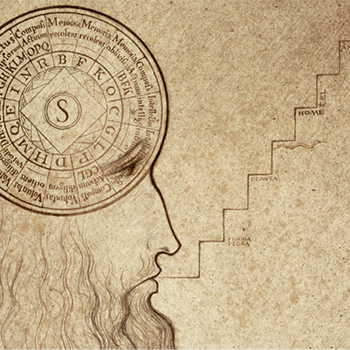 Ars combinatoria is a mental technique that helps with both memory and decision making. The term means the art or technique of combination and is very powerful.