TopPodcast.com
Menu
  • Home
  • Top Charts
  • Top Networks
  • Top Apps
  • Top Independents
  • Top Podfluencers
  • Top Picks
    • Top Business Podcasts
    • Top True Crime Podcasts
    • Top Finance Podcasts
    • Top Comedy Podcasts
    • Top Music Podcasts
    • Top Womens Podcasts
    • Top Kids Podcasts
    • Top Sports Podcasts
    • Top News Podcasts
    • Top Tech Podcasts
    • Top Crypto Podcasts
    • Top Entrepreneurial Podcasts
    • Top Fantasy Sports Podcasts
    • Top Political Podcasts
    • Top Science Podcasts
    • Top Self Help Podcasts
    • Top Sports Betting Podcasts
    • Top Stocks Podcasts
  • Podcast News
  • About Us
  • Podcast Advertising
  • Contact
Not in our directory?
Add Show Here
Podcast Equipment
Center

toppodcastlogoOur TOPPODCAST Picks

  • Comedy
  • Crypto
  • Sports
  • News
  • Politics
  • True Crime
  • Business
  • Finance

Follow Us

toppodcastlogoStay Connected

    View Top 200 Chart
    Back to Rankings Page
    Education

    Anthony Metivier’s Magnetic Memory Method Podcast

    Learn, Memorize And Recall Anything Using Memory Techniques, Mnemonics And A Memory Palace Fast

    Advertise
    • Apple Podcasts
    • Google Play
    • Spotify

    Latest Episodes:
    Explicit Memory: Everything You Need To ERASE The Confusion Feb 18, 2020
    Show notes

    Do you remember your first trip? Maybe it was to Paris, or just a school outing. My first travel memory is with my family. We crossed much of Canada, camping and fishing our way from British Columbia to New Brunswick. And my first school trips were to a farm and a chocolate factory. You better believe I will never forget the chocolate trip! No matter where you went for your first outing, I bet you can describe it in all its technicolor details. Or how about this: Do you know the capital of Iceland? Or what about some other fact you memorized for a pop quiz or trivia night a few months ago? In all these instances, it is your explicit memory that helps you intentionally recollect facts and personal experiences. Amazing, isn’t it? In this post, I’ll explain all about explicit memory, how you form them and how you can build better and stronger memories. This is what we’ll cover: What is Explicit Memory?Are There Different Types of Explicit Memory?Implicit and Explicit Memory — How Do They Differ?How Do You Form an Explicit Memory?How Does Your Brain Retrieve an Explicit Memory?3 Fun Ways to Boost Your Explicit Memory Let’s get started. What is Explicit Memory? Explicit memory or declarative memory is part of your long-term memory. You use it throughout the day. When you recall the time of your dentist appointment or recollect your 16th birthday party, you are using your explicit memory. Explicit memory needs conscious awareness. The cognitive processes of forming explicit memory are also often associative — you link different specific memories to form one consolidated human memory. There are two types of long-term memory: implicit and explicit memory. While implicit memory or procedural memory are skills that you pick up unconsciously and unintentionally, explicit memory is everything you actively work on remembering. Some examples of explicit memory include trying to remember the name of people you meet or trying to cram into your human memory that the capital of Iceland is Reykjavík. Although implicit and explicit are subtypes of long-term memory, when you think of memory function in “general,” you are referring to the explicit segment. What’s more? Implicit and explicit types of memory get affected differently with Alzheimer’s disease. While explicit memory is damaged in Alzheimer’s disease, implicit memory remains intact. Both implicit and explicit memory systems work together in healthy individuals. Fun fact: there are two other memory processes – short-term memory (also called working memory) and sensory memory (it retains sensory information like those from sounds in the form of echoic memory). A memory must move through these before a lasting long-term memory can be formed. Are There Different Types of Explicit Memory? We can categorize explicit memory into episodic memory and semantic memory. In 1972, Canadian experimental psychologist and cognitive neuroscientist Endel Tulving found a few differences between episodic and semantic memories and proposed the distinction between these two types of explicit memory. Curious? Let’s take a quick look: What is Episodic Memory? Episodic memory, like the name implies, is a memory of a previous experience, past event, or activity. Memories of specific events like your first kiss, that fantastic trip to Greenland, or your first prom are all episodic memories. Some episodic memories are also autobiographical, like remembering your date of birth or the street name where you grew up. You can consciously recollect these past personal experiences. You’re usually able to associate how you felt during these specific memories. That’s because your emotions are essential when it comes to memory consolidation. Your brain’s hippocampus is in charge of processing and storing your episodic memories while your cerebellum is involved in retrieval. If you can recall the excitement of your first day at university or the stress of moving to another home, you can very clearly remember everything that happened on that day based on how that episode made you feel. That’s the main difference between this type of memory and semantic memory. What is Semantic Memory? Semantic memory is usually based on knowledge that you picked up throughout your life and your capacity to recollect this knowledge at will. These aren’t based on personal episodes in your life. Semantic memory usually refers to general knowledge. Things like how WWI started in 1914 or how the White House looks are examples of semantic memory. However, it’s not just limited to general knowledge. For example, you know that the sky is blue, what an elephant is, and how to ride a bike. You probably started learning all of these when you were a kid, as you were starting to experiment and interact with the world around you. You don’t remember how you learned them and yet they’re still consolidated in your mind. These specific forms of memories aren’t tied to a feeling or to any personal experience. Implicit and Explicit Memory — How Do They Differ? As you’ve probably noticed, explicit memory involves conscious recollection. Whether you remember it based on how you felt that time or based on how hard you studied for that exam, you consciously worked to remember it. This is not the case with implicit memory. Implicit memories (often called non-declarative) are those you never consciously tried to remember. They are a form of memory that you use to interact with the world around you every day. These include your vocabulary, your spatial memory, and your motor skills. You learned them and then don’t have to relearn again and again to perform them. You usually can’t even remember learning that skill and yet you can do it almost automatically. An example of implicit memory can be a simple task like how to use a fork, how to boil an egg or even the chorus of ‘Single Ladies’. All of these are unconscious memories that you may not even know you had! Just reading ‘Single Ladies’ may probably be enough to get that song stuck in your head for the rest of the day. Sorry about that! How Do You Form an Explicit Memory? The processes used to form explicit memories are encoding and retrieval. First, you record or encode information by absorbing it when you read, hear something, or interact with someone. During recording, memories are stored in the hippocampus, which is located in the brain’s temporal lobe. The hippocampus is the one involved in creating neural connections in different regions. When you’re rehearsing a memory, the memory passes through your hippocampus multiple times. You have both short-term memory and long-term memory. Anything you remember is first kept in your short-term memory. From there, your hippocampus has the task of deciding if that temporal memory is going to become a long-term memory or simply be forgotten. If a memory is important, it’s moved to your long-term memory throughout your cerebral cortex. Its exact location will depend on the type of memory. Physical damage to the cortex (as seen in a magnetic resonance) has been shown to affect your cognitive processes related to memory directly. Your brain labels most of the memories you make as unimportant and it discards them, so they never make it to long-term memory. Since explicit memories are part of your long-term memory, these would be facts, figures, experiences, and episodes that your brain consciously moved from short-term to long-term parts of your memory. For example: Do you remember the trousers you wore to work two weeks ago? No, right? That’s because your hippocampus didn’t consider that information relevant enough to retain for longer than a few seconds. That’s when repetition comes in. The more you retrieve a memory, the easier it’ll be to retrieve it again because you’re telling your hippocampus that it’s important. Now: If a young lady happened to notice your trousers and complimented you about them, you would want to tell all your friends about it (as many times as possible, presumably). At every instance possible, you would repeat the story of how you were just sauntering down the road when this amazingly beautiful girl smiled at you and complimented your trousers. The more you repeat that story, the more you reinforce that memory and the recording becomes permanent. You will never forget those trousers. Maybe they even become your lucky trousers! Once a memory becomes a story, you don’t just remember facts; you remember how those facts made you feel. Your amygdala connects your memories to specific emotions. And you can recall such memories at will. Is Sleep Important to Form Better Explicit Memories? There’s a reason why when you’re jet-lagged, or you simply haven’t slept well, you keep forgetting things. That’s because sleep plays a crucial role in memory formation. When you sleep, you perform the most crucial part of making new memories: consolidation. When you’re awake, you acquire the memory or learn a new fact or skill. But it’s only during night time when you sleep that your brain files the memory in a place you can retrieve it later. And sleeping doesn’t just help you consolidate the memories you’ve gained that day. When your brain is organizing new memories, it can associate them with older memories as well. This not only helps you remember things better, but also helps you in your creative process by finding links to your memories you didn’t have before. When you don’t sleep well, your brain simply lacks the time for filing, organizing, and processing new memories, leading to bad recall later. Believe me – I’ve been there! https://www.youtube.com/watch?v=SY_b168fWTM If you want to remember what you learned here, you better get your 8 hours of beauty sleep tonight. How Does Your Brain Retrieve an Explicit Memory? Memories are usually retrieved by association. When a teacher asks you a question about Independence Day, you’ll probably try to remember the lecture he gave a week before. Memory isn’t perfect, though. If you think back to that lecture, you’ll probably remember what the teacher said but not the shoes he was wearing. That’s because once the explicit memory is consolidated, it is stored by a group of neurons that react in the same pattern created by the original experience. You won’t remember the shoes because they didn’t create an impact on your original experience, so the memory was lost after being a short-term memory. These patterns are recorded several times over to create redundancy. That way, if there’s damage to the original, you’ll still be able to retrieve the memory. Can Memories Get Corrupted? However, this also means memories can become corrupted with time. Since you can’t notice everything at once – and your mind doesn’t like to have holes – it fills up the gaps between your memories from other similar memories. If you try to retrieve details from a memory that wasn’t there, your mind may fill that detail with information from a different memory. Then every time you retrieve that memory, you’ll reinforce that false detail into the experience. That’s why you may be sure you remembered the right thing for a test only to find out you were wrong when getting the result. Explicit memories don’t have to be retrieved on purpose. Sometimes simple stimuli can act as a trigger. Have you ever smelled some spice or perfume and felt as if you were teleported to another place? Explicit memories are remembered by an association that your brain makes, in a conscious or unconscious manner. However you make them, it’s essential to keep up on the state of your memories. One study compared over one thousand Alzheimer’s patients and found that patients who are aware of memory loss are less likely to develop Alzheimer’s disease. Why Do You Lose Memory? Do you keep forgetting things? Don’t get an MRI just yet! Forgetting things you used to remember is a normal part of the learning and memory process, especially as you age, and it rarely signals memory impairment. Memories are a use-it-or-lose-it kind of thing. If you don’t remember a particular memory for long enough, your brain’s response is typically to forget it to make space for new ones. And that’s great! In a healthy brain, time heals all wounds. However, some people don’t get that luxury. The findings of different studies that compared the memory process of patients with post-traumatic stress disorder show that PTSD directly impaired the creation of explicit memories in their subjects by affecting brain activity in the hippocampus and prefrontal cortex. This also affected facial emotion recognition since you rely on these areas to remember and recognize those signals. However, the tormenting effect that other memories typical of PTSD causes are hard to forget. For experimental psychology, getting better at forgetting is just as big of a challenge as getting better at remembering. 3 Fun Ways to Boost Your Explicit Memory Since explicit memories are memories you put effort into recording, you can create those at will. The problem arises when you’re trying to record information that doesn’t seem particularly relevant to your brain. Imagine you’re at a party and get introduced to five people. By the time you get to the third person, you probably already forgot the name of the first one. Why? Because your brain wasn’t thinking about it. You were probably more worried about creating a good impression, giving a good handshake, or trying to look friendly. All that was very important to your brain, so listening to their names was pushed to the side. How can we solve it? Here are three fun ways to strengthen your memory performance: 1. Repeat, Repeat, Repeat Repeating information is an excellent way for temporal memories to become permanent ones. If you make an effort to repeat someone’s name when you get introduced to them, you’re more likely to remember that name for a long time. Although repetition is usually associated with implicit memories (like riding a bike), it can also help you form explicit memories. Repeating answers for a test, passwords, and even phone numbers is a simple but proven way to consolidate a memory. It’s even better when you use elaborative encoding (exercises) because that reduces the amount of repetition while increasing the impact of each. 2. Use Bizarre Association A great way to remember information is to associate it with things you already know. Try to think about how things make you feel or tie the memory to another strong memory you have. The stronger the connection, the easier it’ll be to remember. Even the most forgetful person will probably remember another person who shares their moniker. You can use this technique when you go grocery shopping. What most people do is try to memorize a list of words of what they’re going to buy. Then you associate your grocery list with a number. A more effective way is to associate it with a more memorable thing, like a recipe. Why? Because your brain finds the task of processing and recording visual memories far easier than a list. This is exactly what a study that compared participants involved in a supermarket scenario found: people are more likely to remember the image of their groceries than the simple words. And, if you’re using a recipe, it doesn’t even have to be a real one! For example, say you need to buy eggs, milk, tomatoes, toilet paper, and batteries. You can associate all of them by imagining making scrambled eggs with a bit of milk and tomatoes, mixed with batteries and garnished with little bits of toilet paper. Make it as realistic in your head as you possibly can. Imagine the colors, the smell, the texture, and even the taste. The more ridiculous your association is, the more memorable it’ll be! And when you use the Magnetic Memory Method to become a mnemonics dictionary, all the better. 3. Build Memory Palaces The last two techniques work better combined. The Memory Palace technique is an ancient way of remembering things. Traced back to the Greeks, it has been used by geniuses like Hannib…

    Full show notes at the publisher

    Reading Comprehension Strategies: 13 Ways To Eliminate “Rewinding” Feb 11, 2020
    Show notes

    We’ve all been there. Drudging through a book that’s hard to grasp without any decent reading comprehension strategies. What started out with such enthusiasm soon becomes a joyless task. ‘’What does that mean?’’ you cry out. And just as soon as you start getting into a reading flow… you’re rewinding again. It’s a killjoy. It sucks the pleasure out of reading. It’s enough to make you quit. And the scary thing is you miss out on so much when your reading becomes stagnated. But reading comprehension strategies are not just for teachers or struggling students. Mature learners need to keep pace with the younger generations and test their comprehension, too. With better comprehension, you can remember and use more of what you read. Here’s what we’ll cover today: 1. Something’s Missing From Your Learning Toolbox2. Be Purposeful For Pleasure’s Sake3. Physical Books — One Antidote to Digital Amnesia4. Evaluate and Expand Competence5. Monitor Understanding To Leap Ahead and Recalibrate6. Recognizing Story Structure and Maps7. Generate Questions to Branch Out8. Make Inferences (and Predictions) Along The Way9. Seeing With Graphic Organizers10. Summarizing And Panning for Gold11. Memory Palace a Stairway To Heaven12. The Major Method — Where Numbers and Letters Collide13. Input-Output Lifestyle ChoicesThe Four Levels of ReadingYour Next Chapter! Let’s jump in, or if you prefer watching: https://www.youtube.com/watch?v=anRi9lhlfvs 1. Something’s Missing From Your Learning Toolbox How do you improve reading comprehension? Maybe you’re a teacher and want to help your students with reading comprehension. Or you’re simply trying to uncover reading comprehension strategies for adults. Whatever the case, you realize it’s not just the topic you need to master first, but the correct tools for learning. In a well-known essay, Dorothy Sayers discusses the lost tools of learning: ‘’Although we often succeed in teaching our pupils ‘subjects,’ we fail lamentably on the whole in teaching them how to think: they learn everything, except the art of learning.” Since reading uses the information you already know, better memorization leads to clearer reading comprehension. The result? You can understand and remember more of what you read. The cumulative effect is powerful. 2. Be Purposeful For Pleasure’s Sake Being purposeful about your reading goals and the reading techniques you use aids comprehension in and of itself. Drill down into your intentions and ask, ‘’what’s in it for me?’’ Why are you reading anyway? If reading isn’t meaningful it can become an empty pursuit. It’s another reason people quit in the second round. On the other hand, when your reading is aligned with a clear aim, enjoyment follows. Not only that, it aids your memory as time marches on because: Pleasure is instantly easier to remember! If you’re still uncertain, start with steps that feel more basic. For example, start practicing regular reading with less challenging novels — this will blend enjoyment and momentum. Then when you decide to tackle tougher books your comprehension skills are already well-honed. 3. Physical Books — One Antidote to Digital Amnesia While digital books have many excellent benefits (cost, search ease, mobility, sustainability, sharing) it’s worth remembering the trusty paper book. But why would you choose physical books over digital or eBooks? For one thing, your precious memory plays a vital role in reading comprehension. Digital amnesia affects our cognitive ability to remember – and learn more – faster. Since your aim is to become a better reader through magnetic memory, paper books help to: Index the material better in your mind Reference and re-reference while reading Keep the books visible Use reading to practice Digital Fasting Remember page numbers and details Assimilate reading into your life, and… Demonstrate the values and virtues of reading from real books and remembering as much as possible from them In a world of devices, wi-fi, hotspots, and tabs… your physical book can become a spiritual retreat. 4. Evaluate and Expand Competence Let’s face it: some textbooks are long and (frankly) scary. Every reader can struggle with how these books are presented — with lengthy paragraphs and sentences, and challenging vocabulary. A good place to start is to evaluate your strengths and weaknesses. The trick is to gauge your level of competence and gradually expand it (E.E.C. = Expand Existing Competence). What does your typical reading session look like? Do you start daydreaming after 30mins as your energy drains? If so, try to push 10 minutes beyond. You might use a Pomodoro timer to take a break after 30 minutes. It helps to understand your levels of processing effect in the Big Five of Learning: In other words, your ability to read, write, speak, and listen comes from memory. When you read, write, speak, and listen you put comprehension into memory in the first place. Memory to Read –> Reading to Memory It’s a perfect circle that highlights the importance of developing a better memory. 5. Monitor Understanding To Leap Ahead and Recalibrate Monitoring is about realizing what you know, what’s unclear, and any gaps in your understanding. The method helps you find the blockers to comprehension. By defining issues with comprehension you can tackle them head-on. Einstein said: “If I had an hour to solve a problem I’d spend 55 minutes thinking about the problem and five minutes thinking about solutions.” When you write, listen, and speak about a text you reflect on its meaning. It’s a chance to move from vagueness to better clarity. The offshoot is, you can zone in and identify blockers and get misconceptions out of the way. Also, ask for help. By sharing your thoughts with a study partner you can get valuable feedback too. This feedback loop can enhance your understanding and uncover any confusing passages. Monitoring comprehension can help you to read more books and supercharge your subject knowledge. This is all part of developing mental strength. 6. Recognizing Story Structure and Maps Mature learners can benefit from recognizing a story’s structure. It highlights the branches an author uses to structure the text. The contents, headings, and bibliography sections are obvious places to start. By further delving into the order of the subheadings, the setting, events, and characters begin to unfold. It’s no surprise that you can also start to guess the theme and predict what might happen. Using your imagination in this way is bound to improve your reading comprehension. 7. Generate Questions to Branch Out It’s only right that grown-ups should take a more proactive stance to learning. And there really are no silly questions when it comes to your reading goals. Let’s face it, who’s listening? Because this is more like self-reflection behind closed doors. The mental process of elaboration involves repeatedly asking the classical questions: “who, what, where, when, why, and how?” By questioning and eliciting answers, guesses or theories, you can boost your understanding of a text. Rather than just reading and being a reactive passenger, you’re driving to understand the context. You engage more with what’s going on through questions. And instead of a mundane reading challenge, you turn the pages with a new curiosity. Depending on your reading genre you can create unique questions to aid memory and faster learning. 8. Make Inferences (and Predictions) Along The Way Research by Robert Marzano (2010) states that inference is a foundational 21st-century skill for higher-order thinking. So how do you make inferences in a book you’re reading? Four words — ‘’read between the lines’. Inference involves drawing conclusions from what’s implied rather than stated directly. Put simply, you use what’s known to make a creative guess about what you don’t know. Inference as a reading skill is about searching for clues in the text to figure out what’s being said from the context. Then through your exemplary best judgment, you can land on what’s being suggested. Whether your inferences turn out to be wrong or right, you start to glean value and construct meaning. That just means you have to adjust your thinking as you read. For example: What’s not being said? Based on these clues I think….? Because of the way these characters act it means…. I think….will find an escape route because…. I predict….will get married I wonder if….Mr….is the actual villain I suppose….might become the leader I predict…. will fail It’s useful to look over Nonaka and Takeuchi (1997) to get an idea of the differences between tacit and explicit knowledge. Spiral of knowledge (Source: Adapted from Nonaka and Takeuchi, 1997) 9. Seeing With Graphic Organizers “A picture is worth a thousand words.” It’s true — many words can be conveyed in a single image.A graphic image has the power to distill big ideas into a bite-size visual. Like rote learning, graphic organizers can boost your reading understanding. Graphic images are often more suitable for expository or information type books. It’s no surprise that presenting concepts and connections graphically helps you remember them.It helps draw your attention visually to various features in your book. With a little imagination, mind maps and tables work well because they help you understand, memorize, and learn faster. Here are a few examples of graphic organizers: Tree diagrams – categories and hierarchies Tables – compare and contrast data Time and cycle diagrams – order of events (biology, life, water cycle) Flowcharts – steps of a process​ The hierarchy of knowledge is another reading comprehension idea to consider. It’s about the relationship between data, information, knowledge, and wisdom. This becomes more important when you need to make a graphic organizer. Source: https://kvaes.wordpress.com/2013/05/31/data-knowledge-information-wisdom/ 10. Summarizing And Panning for Gold Prior to summarizing it’s helpful to do intelligent highlighting while reading.Decide beforehand how many key points you plan to memorize in the chapter. There’s rarely any need to do a total recall and try to memorize everything. That’s why proper goal setting helps you make a scope limit — it forces you to zoom in on the main ideas. Scott Young’s Ultralearning is great for more tips on this aspect of improving your reading missions. Rereading can help to uncover any summary information that you mysteriously can’t remember. Like retelling, the process of summarizing condenses the main points into your own words. It’s like panning for gold. Once you’ve found some nuggets, you disregard the sand. Afterward, you can feel satisfied with a summarization mini-chapter. Periodically, stop reading to contemplate on the main ideas in the text. This forces you to combine the key points into a clear outline. You could use new vocabulary as mental triggers when summarizing. A good summary should paint an honest account of the big picture. The offshoot is that long passages appear less daunting. ‘’The more you share knowledge the more you memorize it. Share it, save it.’’ The process of sharing isn’t confined to your latest book. Try to practice making summaries of podcasts you listen to, informative videos you watch, or interesting conversations you have. 11. Memory Palace a Stairway To Heaven The memory palace technique is a classical tool used in the ancient world. (Check out The Memory Code for the fullest possible depth of history.) It can boost understanding of books, since remembering information is a big part of why we read. It’s a top recommended technique of memory champions and experts in the field. A Japanese man, Akira Haraguchi, recently demonstrated its power by memorizing π to 111,700 digits! So how does the Memory Palace technique work? Begin with association. You associate each piece of information you want to memorize with parts of a location you’re very familiar with; usually, your house is a good start. Since you know this location very well, you place items you wish to memorize along a linear route through your house. These are mental constructs you build in your imagination. When you want to recall the information, you go through your mental route, and the information will be easily accessible. When you add surprise characters and features to your memory palace, it helps make your Memory Palace even more effective. You can also learn more about leveraging your imagination with Memory Palaces. 12. The Major Method — Where Numbers and Letters Collide The Major Method is named after Major Beniowski. The earlier Major System (another term for it) was developed by Aimé Paris. He was world-renowned for his work in memorizing numbers. And thank goodness. His contributions have helped many thousands of people connect what we already know with what we don’t know. Even with aphantasia, working with these techniques leads us to one incredible equation: Exercising Your Memory = Improving Your Concentration = Better Reading Comprehension The Major Method works by creating associations between numbers with sounds. Usually, a number is linked with a corresponding consonant like in this pattern below: 0 = soft c, s or z1 = d, t2 = n3 = m4 = r5 = l6 = ch, j or sh7 = g, k8 = f or v9 = b or p For example: to memorize the number 22 could be ‘nun’. Adult learners can use this sound-word association to memorize many numbers. All of this will come in super-handy when you know how to memorize a textbook. Combined with a Memory Palace, you can use the Major to link numbers with other concepts you want to remember, like this: A Memory Palace example showing the Major System combined with other mnemonic examples for remembering information. 13. Input-Output Lifestyle Choices Lifestyle choices like taking care of diet, sleep, exercise, and meditation are often overlooked factors in reading (and learning in general). Exercise: With people leading more sedentary lifestyles, health has never been as important. Regular physical exercise plays a big part in academic performance. A fertile mind enhances your creative energy. Digital fasting: Mature learners are probably more adept at blocking out digital distractions. The aptly named smartphone is dumbing down our memory. Simply stepping away from devices can boost your focus and concentration powers. As a part-antidote to digital amnesia, reading leads to better brain health. Diet: Our mind and body is a highly sophisticated organism. Yet some people live off processed artificial food and drink, and wonder why they’re ill so often. Eating more natural whole foods and avoiding refined sugars can help you become a higher performer. Sleep: There is a good reason why airline pilots must get eight hours of uninterrupted sleep before flying. It leads to peak concentration and better overall performance. Meditation: Meditation helps keep you on track with your vision. You can gain inner relaxation to keep you centered on what’s important. Whether it’s reading comprehension or memorizing numbers, meditation helps you to stay focused while everyone else falls by the wayside. It helps with visualization while reading too. Bonus: The Four Levels of Reading The team at Educational Technology and Mobile Learning put together an amazing infographic explaining the four levels of reading every student should know. Source: https://www.educatorstechnology.com/2016/01/the-four-levels-of-reading-every.html Your Next Chapter Remember that frustrating feeling when you couldn’t grasp that new book? Having to ‘rewind’ through pages and paragraphs to eke out some understanding?Instead of a dampened mood because you know you’re missing out on the valuable insight you need, reading comprehension strategies can help you race through the books you’ve always wanted to read. It’s a fundamental skill that will serve as a tool to unlock any subject matter. You can truly leverage reading comprehension to achieve any goal like starting a business, passing exa…

    Full show notes at the publisher

    Mental Strength Strategies: 16 Ways to Boost Resilience Feb 05, 2020
    Show notes

    Do you ever feel helpless? Like your brain is fuzzy and you just want to pull the covers over your head and leave life’s challenges for another day? Or maybe you just want someone else to come along and tell you what to do, say, think, and feel. If so, you’re not alone. In fact, my mind used to be pathetic and weak. I endured so much suffering, with a mind that had no power, no individualism, and no ability to rise up to life’s challenges. I constantly sought others to pick me up and guide me along. During this time period, I was in deep and profoundly painful “learned helplessness.” I had no mental strength — because I had no mental strength strategies. But there’s a happy ending to this story. With hard work and determination, I pulled myself out of this helpless state. I created strategies that worked for me. And today, I’m sharing everything I learned so you can do the same. Want to see what’s ahead? What Does Mental Strength Mean?How to Test Your Mental StrengthHow to Be Mentally Tough 1. Know and Evaluate Your Values2. Seek Greatness3. Water, Weed, Repeat4. Track Your Progress5. Accept Mistakes6. Embrace Discomfort7. Build Character8. Craft Your Moral Compass9. Practice Gratitude10. Remind Yourself of Your Responsibility11. Follow Through12. Regulate Your Emotions13. Take Care of Your Physical Health14. Be Flexible15. “Feel the Fear and Do it Anyway”16. Practice, Practice, Practice How to Be Mentally Tough: Book RecommendationsMental Toughness WorkoutsBecome a Mental Strength Master https://www.youtube.com/watch?v=qxH06MEuYjY Ready to build your mental stamina and become strong and resilient? Let’s get started. What Does Mental Strength Mean? Before you can build mental strength, you have to understand what it is. Mental strength is a state of uninterrupted focus you can use to get the best quality from the effort that you put into a task. Basically, knowing how to build mental toughness begins with having a strategy in place. It means having a plan for when things don’t go the way you expected — and the resilience to bounce back in the face of challenges. Let’s look at a few other ways you might have heard the term. Other Terms for Mental Strength Resilience — if you look into psychology studies you’ll find the term “resilience” comes from engineering. It means the ability to spring back into shape. If you have a baseline level of performance and your focus gets interrupted, how quickly can you spring back into focus? These interruptions can be of several different types: • Food interruption. You’re hungry and wander into the kitchen looking for a snack.• Noise interruption. The phone rings or the neighbors are playing loud music again.• Shiny object interruption. Something new and much more fun grabs your attention. I use the acronym U.S.S.R. to assess my focus. In this case, resilience means being able to get interrupted and “spring back into the shape” of Uninterrupted Silent Sustained Reading. Mental Stamina — stamina is both a duration and a qualitative notion. It’s not just that your focus lasts for a certain amount of time, but also maintains a certain shape and level. It’s essentially grit, a kind of toughness. And sticking with something over time and with a certain maintenance of a level. You might need to start with shorter periods of time (for example, focusing for 15 minutes instead of an hour) and then extend the time frame as you get more comfortable. Discernment and Decisiveness — how easy is it for you to make decisions? I use the acronym W.R.A.P. (from Decisive, by Dan and Chip Heath) as a tool to help me make decisions. Widen your options Reality test Attain distance Prepare to fail Now you know what mental strength is, how do you get it? Mental Toughness Training You may wonder: can mental toughness be taught? The answer is… of course, yes. But also no. In the end, it’s up to you to teach yourself how to be mentally tough. The Feynman Technique – a method that allows you to learn complex concepts easily by explaining them in simple language – can be used to develop self-resilience as well as how to study more effectively. Mental fortitude can be learned, by learning how to teach yourself. Seek teachers who teach by abandonment — they will have either limited availability or the skill of asking you questions that cause self-reflection and self-analysis. These teachers will help you fly on your own and rely on yourself. For example, I always like James Swartz, who talks about how he approaches enabling students like this: “Let’s get you in the door, and back out again, as soon as possible, because you’ve got it, you learned it, you’re ready to go.” That’s the best possible kind of teaching. Next, you will develop a testing mentality and be a scientist in the laboratory of life. You’ll gather evidence that confirms or denies your hypotheses or propositions. You’ll test them through your own personal experience. And you’ll validate (or invalidate) them. The more actively engaged you are as a scientist and the more you get feedback from what some call your inner, “wise advocate“, the more progress you can make toward building your mental resilience. Now you know that mental strength can be taught… but what does mental toughness have to do with memorization? Mental Toughness and Memorization As well as mental toughness being “taught” it can also be “caught.” You’ll memorize relevant information for extended reflection. It’s not so much about teaching or being taught, it’s about you then reflecting on what you’ve been taught. A major strategy for how to build mental toughness is to set aside time to reflect — to journal, mind map, take notes, and sit with the information you’ve memorized. This allows you to take the journey from internal (in your head) to external (into the world for reflection). You can reflect until you’re blue in the face, but that’s no way to succeed. You have to dive right in, even if you’re scared or worried. You have to let go of the outcome and take action. But you can’t take action if you don’t have a plan. Now you’ll take the results of your extended reflection – that journaling and mind mapping – to create an action plan. You might even try an unconventional means of doing this, such as using The Cosmic Journal. However you arrive at creating one, follow your plan. Take the steps, test out your hypotheses, and see what works. As you’re taking your scientific approach to building your mind muscles, is there a way to test your mental toughness? How to Test Your Mental Strength Are you ready to unlock your best mental energy? This is a very powerful mental strength test that will help you analyze yourself using a series of questions. Get out a piece of paper or a text document, and answer the following 8 questions. Then give yourself a score on a scale of 1 to 10, with 10 being your strongest, most confident answer. And be honest with your answers, because that’s the only way to come out of this with a plan and a path toward positive change. 1. Do you have a strategy for the next 3-5 years? If not, you probably don’t have the mental strength to get where you need to go. For example, if you were to lose your job (or your main source of revenue) do you have a strategy to pivot and compensate? Rather than going into panic mode, do you know how you would proceed? You don’t need to make a “Plan B” — instead, you need a strategy that already encompasses situations that are not in favor of your goals. 2. Can you relax during moments of tension? This is what mental strength is all about. Relax, relax, relax, relax. You need to relax. I’ll say it again: you need to relax. For example, when I did my field exams for my Ph.D. and my dissertation defense, these were moments of extreme tension. They were pass or fail — moments of decision that would reflect on the rest of my life. I spent years getting to those tests and if I didn’t pass them, those years would be for nothing. The good news is, I had relaxation strategies that allowed me to relax even during these incredibly important moments. The day I passed my dissertation defense, I’ll never forget Victor Vitanza (one of the external academics on my dissertation committee) telling me, “The only guy cooler than you is Miles Davis.” That’s how relaxed I was, even though one member of the committee kept trying to fail me. And despite this level of tension, I was able to remain calm and relaxed throughout the entire process. 3. Does failure cause you to quit, or work harder? There are certain mental escape hatches – reasonable, rational times to throw in the towel – but most people quit when they should just reassess and figure out how to work harder or do things differently. Don’t quit when things get tough — because things will get tough. You can fail and still win. A test of your resilience is the ability to show up anyway and try something different. For example, there was a point at which I was very tempted to give up on my Ph.D. Instead, I pressed on by creating an effective mental model that allowed me to keep going. I didn’t want to be “that guy” who gave up. I knew enough people who had ABD (all but dissertation), and I didn’t want that outcome. Instead, I created this mental image of my personal Mount Everest. It was the sort of thing where you start to climb the mountain and you’ll either know what it’s like to get to the top, or not. I decided I’d prefer to see the view from the top and plant my flag there. 4. Are you in control of your emotions, or do they control you? This doesn’t mean things like laughing until your sides hurt, or being swept up in joyful moments. In this case, what you’re looking at is being controlled by destructive emotions that cause you to break things — whether physical objects or relationships. You might also consider those times when you’re too in control of your emotions. You might not be able to let your hair down, or laugh with joy, or tell someone you’re happy for them. Instead, you’re so clamped down and in scarcity mode, you can’t express anything. So for this question, think about “control” in both ways. Are you not in control? Too controlling? Or somewhere in the middle? 5. Do you believe in yourself? Do you believe you can make it, and that things will work out fine in the end? You also need to cross-index this with a strategy, so it’s not a completely meaningless statement. The “self” should be a series of strategies you can believe in. You might also ask, “Is there something in me that is worthy of belief?” And then do this test in a scientific way, by running experiments, setting goals, and seeing if you are able to accomplish them. Another exercise you can do to help you determine your beliefs is to write out 10 things you believe in or about yourself, and another 10 things that you’re not sure of or you don’t believe. 6. Do you have a strategy for handling self-doubt? Self-doubt is normal. The insular cortex of the brain guarantees you will have self-doubt, and you’ve got to have strategies for it. So when you find yourself in a situation where you don’t believe in yourself, what do you do? If you don’t have a strategy for handling self-doubt, there’s a high likelihood you won’t take action — and when you don’t take action, you don’t get the results you want. One of my favorite strategies for handling self-doubt is self-inquiry. Another is having a community where I can poll other people about the things I’m unsure of. Most people have more resources than they realize but never tap into asking questions of others. 7. Can you stay focused during complicated situations? To help you answer this question, do a mental inventory or memory test. Try to write down ten complicated situations you were in and how focused you were during those situations. You might consider the different ways situations get complicated — look at different genres of situations, and what focus means in those particular situations. What kinds of focus might you need in those different situations? And what kind of focus did you have in those situations? 8. Are you equipped with decision-making tools? Finally, when you’re faced with a decision do you just make it, or do you go through a process first? For example, if you were trying to listen to a podcast or training, or read a blog post, and people in the room were speaking loudly, what would you do? Do you have some decision-making tools that would make it possible for you to listen or read somewhere else — where there aren’t interruptions? Or how about choosing a topic to focus on? Ultralearning has some great tools that will help you decide, and then stick with it along the extra mile. Next, you’ll figure out your score. Score Your Mental Strength Test Go back through each of your answers and give yourself a score of 1 to 10, if you haven’t already. 1 = not really, I don’t do this10 = yes absolutely, I always do this Then, add up each of those scores and tabulate your total: 80 = Mental Strength Master!60-79 = Mental Strength Adept40-60 = Mental Strength Squire20-40 = Fledgling Mental Strength Novice0-20 = Adventurous Activities Ahead Wherever you land on the scale of mental strength mastery, let’s look at how to build mental toughness — to get you set up with strategies and a path forward. How to Be Mentally Tough One of the biggest keys to mental stamina is to take action! The good news is, you’re already on the right track. By taking the mental strength test, you took a micro-step. That tiny action is important, because most people make big plans for change and their first step is so monumental they never get started. The micro-step you just took is the first of many. The first step leads to the second, and the more steps you take the more you begin to transform and change the neurochemicals in your brain. This leads to more action, and those small incremental changes lead to massive change in the long run. And as part of your mental toughness training here today, you need to know your values and create a vision for success. So let’s get started. Part of that vision requires strategies for being S.M.A.R.T.E.R. which means Serious, Mature, And Ready To Embrace Reality. To get “smarter” you need a vision and a guiding star — you need to have some practical idea of how you’ll get where you want to go. Let’s look at 16 powerful ways to cultivate mental resilience. 1. Know and Evaluate Your Values Beyond just knowing your values, it’s important to evaluate and test them. You also need to test that you actually want to get to that place… because many people create destinations and destinies they realize they don’t really want once they get there. Maybe their parents or spouses (or even an earlier version of themselves) want it. And because of Primacy Effect in the mind or in their memories, they end up caught in a prison of previous desires that are no longer true. But how do you create a vision statement to get you where you actually want to go? Your vision statement can be as simple as saying, “in the next X number of years [whether it’s 2 or 3 or 10] my vision is to accomplish Y.” But I would recommend digging a little bit deeper, so I created this video to help you do just that: https://www.youtube.com/watch?v=MFz31HpVkj0 In that video, I share my vision statement for Magnetic Memory Method and for my own projects, as well as a few other examples to help you craft your own. 2. Seek Greatness As you evaluate your values, create your definitions of greatness in a way that’s possible for you to achieve them. When we think about “greatness” it’s often tempting to exaggerate and create a vision that’s outside our reach — because we think it has to be epic. Instead, true greatness is achieving something because you set a goal based on your existing competence. For example, what things have you achieved already, and how can you build on an existing strength? And then, how can you set the path for another level that’s possible for you to attain…

    Full show notes at the publisher

    How to Improve Crystallized Intelligence: 10 Simple Steps Jan 15, 2020
    Show notes

    If you want to know how to improve crystallized intelligence, you definitely can do that. In fact, I’m going to share five simple steps to walk you through giving this specific type of intelligence a boost. But it’s important to first make sure you understand what crystallized intelligence is and how it interacts with fluid intelligence. To get started on understanding the tricky nature of the difference, imagine the following dialogue: Jane: “Did you hear Jonas’ speech? He spoke so well! Expressive and kept the audience enthralled. Very intelligent!” Amanda: “Yeah, he was great! Creative, definitely! But intelligent?” Jane: “It’s the same. You don’t need to be a mathematician or scientist to be intelligent.” Is Jane right? And what does she mean by intelligence? Is she talking about fluid intelligence, crystal intelligence, or both? Let’s delve into these two types of intelligence (Fluid Intelligence and Crystallized Intelligence). Once you know how they work together, you’ll learn how to improve your crystallized intelligence in just 5 steps. And later I’ll give you an additional 5 steps so you can also boost your fluid intelligence at the same time. With all of this is mind, here’s what you’ll discover on this page: What is Intelligence? What is Fluid Intelligence? How to improve Crystallized Intelligence Can Fluid and Crystallized Intelligence Work Together? Is Fluid Intelligence More Important Than Crystallized? 5 Magnetic Ways to Keep Your Fluid and Crystallized Intelligence Sharp? https://www.youtube.com/watch?v=QjFcIrybp78 What is Intelligence? It’s a tough question. Many of the world’s most ‘intelligent’ scientists, researchers, and psychologists have been debating ad infinitum over a standard definition of intelligence. For our understanding, intelligence is your ability to learn new information and use that knowledge to identify and solve problems. You are deemed intelligent (read: smart) if you can use logic, reasoning, quick thinking, and planning to conduct daily activities effectively. The good news? You are not born with finite intelligence. You can boost your intelligence and thereby your social capital by using a proper memory method. (More about this later). Are There Different Types of Intelligence? Yes. Intelligence is subdivided into two distinct types — fluid intelligence and crystallized intelligence. They also go by the nicknames of gf and gc, where “g” stands for general intelligence. The theory of fluid and crystal intelligence was first proposed by psychologist Raymond Cattell in 1963. He referred to the ability to reason as fluid intelligence, and the capacity to acquire knowledge as crystallized intelligence. The concept was further developed by his student, John L. Horn, in the 1970s and 1980s. Their findings came to be known as the Cattell-Horn Theory of Intelligence. The natural intelligence displayed by humans is very different from artificial intelligence (AI), which is intelligence demonstrated by machines. Our intelligence also differs in its cognitive capabilities from that demonstrated by open-source intelligence, which uses information collected from publicly available data sources. That’s not to mention our intelligence for developing concentration and memory through meditation. A Fun Definition of Fluid Intelligence Once, at a Paris hotel, my shower wasn’t working. I had checked in late at night, so there was no possibility of calling the plumber. But I did manage to take a quick bath. I used the Indian bucket bath method: where instead of a bucket and jug, I filled the drinking glass with water from the tap to pour over my body. Genius, or what? It was my fluid intelligence hard at work to come up with a novel solution to a unique problem. Fluid intelligence is your ability to analyze, reason, and think out-of-the-box to find original solutions to new problems. Your fluid intelligence uses logic in new situations or tasks, recognizes patterns, and incorporates abstract reasoning towards problem-solving. Often, fluid intelligence is used when you solve math problems or jigsaw puzzles. You also use fluid intelligence when you start plucking on a guitar without prior training. Your fluid intelligence does not depend on previously acquired knowledge. A person who is ‘street smart’ uses his fluid intelligence very effectively. Fluid intelligence depends on your working memory, which is stored in the prefrontal cortex of your brain. It is governed by the anterior cingulate cortex and dorsolateral prefrontal cortex — regions of the brain responsible for attention and short-term memory. More Examples of Fluid Intelligence You use your fluid intelligence when you: Identify patterns in logical reasoning questions, Assemble a complex jigsaw puzzle using a picture, Develop strategies or a game plan to solve problems, Think outside the box when solving problems, or Eliminate unwanted information when you conduct research. There is bad news, though. Fluid intelligence starts to decline with age, sometimes even as early as your 20s or young adulthood. Therefore, cognitive functions in elderly people may be reduced. However, there are ways to keep it sharper and stronger even as you age. (We’ll come to that soon!) Next, let’s look at crystal intelligence. How to Improve Crystallized Intelligence First things first, let’s define this term: Crystal intelligence or crystallized intelligence is your ability to use knowledge and information previously learned over the years. This type of intelligence is what you acquire through education and experience. Crystal intelligence gets cemented in the hippocampus, neocortex, and amygdala — parts of the brain that store and use long-term memories. You use crystal intelligence when you do long division, or learn a new language. These tasks also require focused attention. Ultimately, these terms are measurable. You can literally test and measure it through your grasp of vocabulary, grammar, reading comprehension, and your competence in quizzes and game shows. Both internal and external factors impact the development of crystallized intelligence. Internal factors include your innate curiosity and motivation to learn new things. External factors are the surroundings that you grew up in — your family, educational institutions, and society in general. Examples of Crystallized Intelligence Crystal intellect is at work when you: Answer questions related to history or geography in a quiz. (For example, when did Columbus first arrive in America?) Learn and speak different languages. Know the exact ingredients used to prepare your favorite dishes. Learn new words in your native language. Memorize new maths formulae or facts Conduct a surgery on a patient. Remember the demographic statistics of a country you’re reading about. The good news is: since crystal intelligence relies on the accumulation of knowledge, it is usually maintained with age. It peaks and declines much later in life as compared to fluid intelligence. Interestingly, research shows that elderly people are valuable as workers as they make up for a decline in fluid intelligence with crystallized intelligence. Cautionary note: While stronger intelligence may give you a head start in life, it may not prevent you from being affected by Alzheimer’s disease. Now let’s look at seven specific ways you can improve crystallized intelligence. One: Engage in Constant Learning One reason people fail to develop any kind of intelligence is that they fall into stasis. That’s why for years I’ve tried to inspire people by sharing one of my favorite personal mantras: “Stop stopping.” In addition to getting rusty if you don’t practice continual learning, this scientific study shows that crystallized intelligence is higher for older adults, especially those who continually learn new things. You might even consider practicing polymathy. That’s what I’ve done for decades and it has helped me continually learn new things to positive effect. Two: Specialize in Particular Topics Although you want to rotate through as many learning projects as possible, focus is also important. As this study shows, people who specialize ultimately become much more knowledgable in multiple domains. I have a PhD in Humanities, which means that I did a lot of interdisciplinary study. But not at the expense of specializing in what the “Humanities” are at their core. Three: Practice What You Learn One problem many people face when developing their intelligence is what I think of as a “hunter/gatherer” issue. The Internet has turned seeking and gathering information into a kind of sport. But far too often, this happens at the expense of actually implementing the ideas and knowledge people discover. As we’ve seen before with continual learning, these scientists have discovered that the earlier you start practicing what you’ve discovered, the more likely your intelligence will develop in these areas. I can share a personal anecdote around this: When I was in grade four, computers were quite new in Canadian classrooms. Back then, I had behavorial problems, so the teacher would put me in front of the only computer in the classroom. I learned to type and wrote many stories. I’ve practiced writing ever since, and this skill has become my career. It was central to my PhD and many millions of people have read this blog, or watched my YouTube videos, most of which are written first. As a result, if I’m asked to write an article for another publication, I’m able to produce quality writing quickly. That’s the power of practice. Four: Enrich Your Cultural Knowledge We all know that it’s valuable to speak at least one other language. But as this study shows, bilingualism also improves your ability to correct yourself when you make mistakes. Another study shows that self-control increases in individuals who speak more than one tongue. And it probably goes without saying that reading will make you smarter, especially if you can immerse yourself in at least one other culture through their language. So, if you want to outperform yourself and others, learn another language and read books from the culture of that language. Your future self will thank you for it. Five: Interact Socially Part of having solid crystallized intelligence involves autobiographical memory. In order to exercise this type of memory, it is essential to speak with other people frequently. As this study shows, your ability to perceive everything from time and complexity in the world stem from the exercise your brain gets while socializing. I remember Tony Buzan mentioning something similar to me when he discussed how he was influenced by the theory of multiple intelligences. In fact, he hints at what you can do if you’re not able to socialize: Read widely and mind map about the content. These days, on social media, you can easily post your mind maps. Although this kind of socializing isn’t quite the same, it’s better than nothing. Now that you have all these tips under your belt, you might be wondering: Do crystal and fluid intelligence work together in any specific way? Can Fluid and Crystallized Intelligence Work Together? Turns out, fluid and crystallized intelligence are great team players. Even though they are two distinct types of intelligence that cover different cognitive abilities of the brain, they work together more often than you might imagine. For example, when you DIY a table, you use the woodworking skills your dad taught you years ago. This is your crystal intelligence. You figure out which raw materials to use, which tools to use, and how to follow a detailed design. You also use fluid intelligence to reason and find solutions to any hurdles you face — for example, maybe a certain tool is not available and you need to find a substitute. This solution is then transferred to long-term memory and becomes part of your crystal intelligence. If you face the same problem in the distant future, the solution would be retrieved from your long term crystal memory. Use of Fluid and Crystal Intelligence When Cooking Here’s another example of the interwovenness of fluid and crystallized intelligence: When you cook a meal, which actually provides a decent brain workout), you utilize your crystallized intelligence to understand and follow the recipe. However, if you modify the spices or find substitutes for some ingredients according to your tastes and dietary requirements, you are utilizing your fluid intelligence. These forms of intelligence seem quite different, but is one more important than the other? Is Fluid Intelligence More Important Than Crystallized? Not at all. Both types of intelligence are equally important to function well in everyday life. As I discussed earlier, fluid intelligence is directly related to being creative and innovative (i.e., your street smarts). Crystal intelligence, on the other hand, relies on being book smart. However, today’s education system and our dependence on technology may deprive our brain of developing its natural aptitude for creative problem-solving. Educational institutes even resort to the Wechsler Intelligence Test or other IQ tests to determine the cognitive skills in students based only on crystal intelligence. Many cognitive training tasks also give more importance to developing crystallized intelligence. However, I believe the goal should be to strengthen your overall intelligence — be it crystal or fluid. Crystal intelligence is closely linked to long-term memories. Fluid intelligence is, however, associated with short-term memory or working memory. Research says that if working memory is deficient, the ability to acquire knowledge and related skills will be limited. A study by Susan Gathercole and Tracy Alloway showed that “working memory functions as a bottleneck for learning in individual learning episodes required to improve knowledge.” But what does that mean? In simple terms: you need to develop your fluid intelligence to enable your crystal intelligence to work well! Let’s look at how you can do just that. 5 More Ways to Sharpen Your Fluid and Crystallized Intelligence Here are five great ways to improve both types of intelligence. Six: Create Memory Palaces When you build memory palaces using the Magnetic Memory Method, you are using both fluid and crystal intelligence in ways that enable you to improve them. The Magnetic Memory Method Memory Palace is a powerful way to train the brain regions that govern your fluid and crystal intelligence. It’s also a better method for remembering and learning information than using other techniques like mind mapping on its own because you’re innovating and drawing upon existing mental content at the same time. Plus, any time you can combine intelligence and memory strengthening, you get holistic improvement of all levels of memory. You can move short-term memory into long-term memory faster (and permanently) with a minimum amount of practice. Seven: Get Creative It is believed that to be creative, you don’t have to come up with original ideas all the time. You’re creative just by finding new connections between existing ideas. This could be as simple as finding a new route to go to work, starting new eating habits, or adding new ingredients to a pasta recipe you’ve stuck to for years. Or, if you’re an artist, simply abandon your tools for a while and wander outside or travel to a new place. Inspiration for your next masterpiece may strike you from unexpected places. And sometimes constraints fuel creativity, so set yourself time and space limits to complete a project. Eight: Challenge Your Brain Technology has made everyday life so easy for all of us — so switching off is a great way to challenge your brain. Remember the saying “use it or lose it” and unplug from your devices every once in a while. For instance, navigate to a new landmark in your city without a GPS. Seeking new experiences, learning new skills, and staying busy with hobbies and people are great ways to kee…

    Full show notes at the publisher

    Simon Luisi On Expanding The Major System In Your Memory Castle Jan 09, 2020
    Show notes

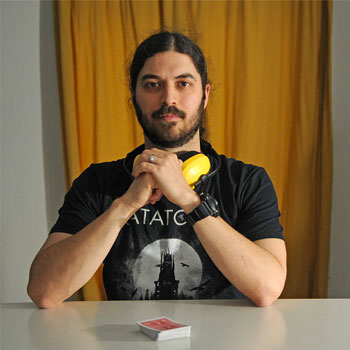
    Portrait of Simon Luisi Canadian Memory Championships FounderSimon Luisi is a memory enthusiast who has helped organize memory competitions in Canada.

    There are the type of events where memory athletes work at completing seemingly impossible feats like memorizing 130 random words in a minute.

    Or how about 1170 binary digits memorized in five minutes?

    It seems impossible.

    Yet, most memory competitors will tell you that they have completely normal minds.

    Often, they’ll also admit that they have terrible memory skills.

    Except when they’re using memory techniques.

    I have been reporting on the world of memory competitions for over fourteen years now.

    I’m also a student of memory science and a practitioner of memory techniques myself.

    That’s why it was a delight to sit down with Simon for this detailed discussion of memory techniques and how memory competitions encourage more and more people around the world to explore the world of mnemonics.

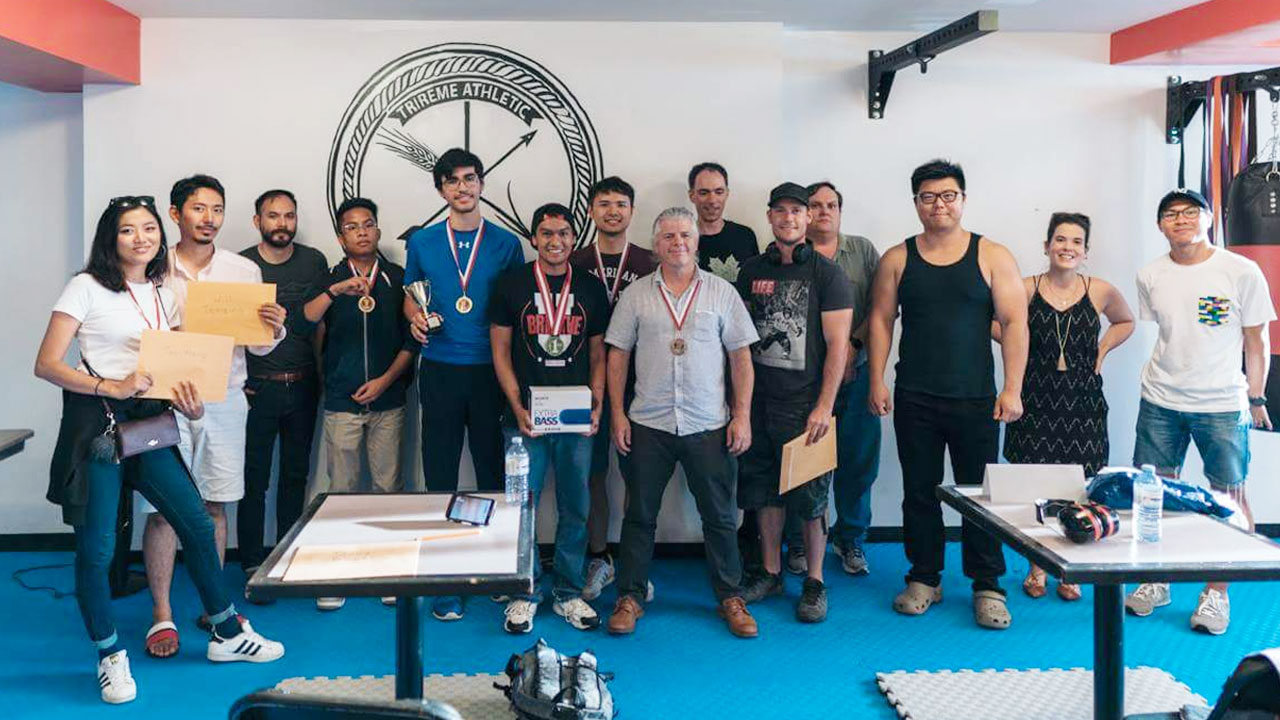
    Canadian Memory Competition picture with James Gerwing

    Who Is Simon Luisi?

    Simon does a lot more than jsut serve as the chairperson of the Canadian Memory Championships. He is aalso a keynote speaker on memory and inventor of the directional memory method for card memorization.

    As if that weren’t enough, he is also a Gold Award winner for Toastmasters and a chess enthusiast.

    Pictured above, you’ll see James Gerwing who won the 2019 competition. Simon is behind him to the right. (James took the Magnetic Memory Method Masterclass and you can hear us discussing his win on this episode.)

    Simon and I discuss the skills necessary for memory competition, how they can improve your day-to-day as a lifelong learner, and why a personal memory training routine is necessary for any kind of personal development in memory arts.

    If you know that a one-size-fits-all practice isn’t for you…if you’ve tried other techniques and failed because they were too rigid…or you just didn’t know where to begin…

    If you want to break into the world of memory competitions, but believed those athletes to be “way out of your league”…

    Or you just want to understand the hype and what the Major Method’s all about…

    This podcast is for you.

    All you have to do is press play down below to listen in on:

    • Why Simon prefers the term Memory Castle to Memory Palace, what’s the difference, and which one you should use
    • What’s required (or not) to participate in memory competitions (it’s easier than you may have been led to believe!)
    • Which memory disciplines to devote daily practice to to become a champion of memory…even if you don’t ever compete
    • The reason a distraction-free study zone isn’t ideal for optimal memory training, especially if you study tough subjects
    • How memory competitions can be revamped in order to give a real challenge
    • Simon’s tweak to the Major System that revolutionized his practice (and it can do the same for you and might be interesting, even if you’re using the Dominic System!)
    • Why customization and self-leadership in memory systems is important
    • The reason to be a self-learner if you truly want to improve your memory
    • How photography and film exposure relates to memory training and time (well-spent) in practice

    Further Resources on the Web, this podcast, and the MMM Blog:

    7 Memory Champs Reveal Their Language Learning Secrets

    Simon’s official home on the web

    The Canadian Memory Championships

    Simon Luisi’s Twitter

    Memory Athlete Braden Adams On The Benefits Of Memory Competition

    Katie Kermode On Memory Competition and Casual, Everyday Mnemonics


    What Are Cognitive Maps & Do They Work With Memory Palaces? Dec 18, 2019
    Show notes

    When James called me this morning from the cafe, I was able to give him exact directions to my pad thanks to having strong cognitive maps. I did not have to think about the route. I did not have to look it up on Google Maps. The path from my favorite cafe to my apartment is laid out clearly in my brain. Every turn, every lane is distinctly mapped in my memory. How can I do this? It is my superpower. Voila! Okay, that’s not correct. It’s not my superpower. We all have this superpower. We all use cognitive maps or mental maps every day to navigate unfamiliar territory, give directions, learn or recall information. In this post, I’ll explain what are cognitive maps, how do they work and how to use them in memory strengthening exercises like memory palaces. Here’s what I’ll cover: What are Cognitive Maps? Importance of Cognitive Maps How do Cognitive Maps Work? Are Cognitive Maps Accurate? Are Cognitive Maps Different from a Mind Map? How to Build Memory Palaces with Cognitive Maps? https://www.youtube.com/watch?v=Zjn0ndC5h6Q What are Cognitive Maps? In brief, they are mental representations or images of the layout of one’s physical environment. That spatial representation can include the exact specifics of a location and the general area of a location. As we interact with our surroundings, we interpret and encode them into mental maps or nodes of knowledge. We then use these mental maps or spatial information to travel to our favourite restaurant, nearest hospital or just get to the office. We can also use mental maps to form powerful memory palaces and memorize anything. I’ll tell you more about this later. Edward Tolman coined the term “cognitive maps” in 1948. Coined in the 1940s by American psychologist Edward Tolman, cognitive maps are an internal spatial representation or mental model of the landscape in which we travel. The term and the concept were introduced by Tolman in an article in the journal Psychological Review in 1948. Cognitive maps are also known as mental maps, mind maps, schemata, and frames of reference. They are a small part of a person’s spatial cognition. The branch of cognitive psychology that studies how you gain and utilize knowledge about your environment to identify where you are, how to obtain resources, and how to find your way home is known as spatial cognition. According to D.R. Montello, in the International Encyclopedia of the Social & Behavioral Sciences, 2001: “The cognitive (or mental) map includes knowledge of landmarks, route connections, and distance and direction relations; nonspatial attributes and emotional associations are stored as well. However, in many ways, the cognitive map is not like a cartographic ‘map in the head.’ It is not a unitary integrated representation, but consists of stored discrete pieces including landmarks, route segments, and regions. The separate pieces are partially linked or associated frequently so as to represent hierarchies such as the location of a place inside of a larger region.” Importance of Cognitive Maps Cognitive mapping has a definite function. It is an essential skill for many living organisms, and it is the reason we do not get lost in places we have been in before. Tolman believed cognitive mapping to be a type of latent learning where individuals acquire large numbers of signals or cues from the environment and use these to build a mental image of their environment or a cognitive map. The fun part? When you drive or walk the same route every day, you learn the locations of various objects and buildings and build mental models of these routes. The cognitive processes take place automatically. You are usually not cognizant of this latent learning. Now when you need to find a building or object on that particular route, your cognitive mapping of that route comes into play. Your cognitive processes use existing knowledge of the environment to generate new knowledge or pathways to find the building or object. You usually do not have a problem locating a familiar place, even if you have access to a wide range of mental models. Cognitive Maps & Mazes Edward Tolman’s experiments involving rats and mazes was how he was able to visualize the importance of cognitive mapping in the human brain. Tolman placed a rat in a cross-shaped maze and allowed it to explore the maze. After the rat had explored the maze for a bit, it was placed at one arm of the cross, and food was kept at the next arm to the immediate right. Since the rat was familiar with the layout, it learned to turn right at the intersection to get to the food. Next, the rat was placed at a different arm of the cross maze. Tolman was interested to see if there was a change in behavior. Did it get lost? No, the rat was still able to move in the direction of the food no matter where in the maze it was placed. Differences in the position of the rat did not matter. Tolman stated that this was because of the initial cognitive map it had created of the maze. Tolman’s experiments with rats ingrained the idea of the cognitive map in cognitive psychology. How do Cognitive Maps Work? What is the process to design cognitive maps in your brain? Your brain creates a cognitive map using a number of sources. It uses visual stimulus and other cues like olfaction and hearing to deduce your location within an environment as you move through it. Using these cues, a vector is created that represents your position and direction within an environment. The vector is then passed to the hippocampal place cells where it is interpreted, and the brain gets more information about the environment and your relative locations within the context of the cognitive map. The entire activity may seem complex, but it happens almost automatically. The Hippocampus As A Cognitive Map Interestingly, both birds and mammals form cognitive maps using the brain’s hippocampus. In The Hippocampus as a Cognitive Map (1978), neuroscientist John O’Keefe and neuropsychologist Lynn Nadel, say that neurons in the hippocampus form a memory of the animal’s environment. Then when the animal goes to that particular place, these neurons are reminded of that place, as if they were reading from a map. The book provided a more allocentric interpretation of the cognitive map. Other studies by Torkel Hafting and Marianne Fyhn – part of a team headed by Edvard and May-Britt Moser at the Norwegian University of Science and Technology – discovered the existence of grid cells in the brain. They used techniques mastered by O’Keefe to study inputs to the hippocampus. The researchers found a new type of spatial cells in the entorhinal cortex. The entorhinal cortex is the part of the brain that sends more information to the hippocampus than almost anywhere else. Surprisingly, the researchers found that these cells fired only when the rat went into specific places in the environment and that they fired in many places. More interesting still, these cells formed a hexagonal pattern in which each firing place was the same distance from all its neighbouring ones. The study led researchers to the discovery that metric information is inherent in the brain, wired into the grid cells, regardless of its prior experience. The discovery proved to be both surprising and dramatic discovery. Scientists drew an important inference. They now understood that the hippocampus is both a map and a memory system. Does Cognitive Mapping Use Memory? Cognitive mapping uses spatial memory, but it is more than that. Spatial memory records information about one’s environment and spatial orientation. Now, here’s the most important point to understand: The fact that you can retain the sequence of streets in the directions to your house is spatial memory. However, when you see these streets in your “mind’s eye” as you give directions – that is cognitive mapping. Are Cognitive Maps Accurate? Cognitive maps are not completely accurate. When you create a cognitive map, your brain will omit information that is irrelevant to the task at hand. For example, you and your colleague, who lives in the same apartment block, take the same route to drive home daily. However, while you are in the driving seat, your colleague has a driver. So, while you may be able to describe the route from the office to home accurately, your colleague may have a more basic idea of the road and objects en route. Why? Because he does not have to concentrate on the road during the drive, whereas you must. Therefore, both of you sketch maps of the same route differently. The example also shows that travel modes can impact cognitive mapping. The way people travel has a huge impact on your cognitive mapping – especially if they regularly use neurobics. Understanding how the brain processes and sketches cognitive maps has important implications for transportation planners and accessibility planning in cities. What this also means is that a cognitive map can be different from the actual environment that a person is mapping due to the relationships of an individual with the environmental stimuli. Furthermore, the way spatial knowledge is represented in your mind leads to certain patterns of distortions. Spatial knowledge in the human brain is not as well modeled as the Euclidean geometry of high school math. For example, people often think the distance to go from A to B is different than from B to A. Moreover, cognitive maps generally get distorted by simplifying assumptions, beliefs and preconceptions. For instance, in your cognitive maps, all roads may join at right angles or straight lines even if they do not do so in the real-world. Are Cognitive Maps Different From a Mind Map? When it comes to the real of ideas, mind maps do relate. You can think of them as the most simplistic and straightforward type of cognitive maps. They are quick to create and have a clear hierarchy and structure. A mind map is akin to a tree with branches, where the bark represents a central topic, and the branches denote the subtopics. A quick Mind Map for learning German vocabulary related to cooking (hence the fish). In mind-mapping, the map represents information and ideas that are connected to each other. Such connections enable you to retain and learn new things quickly and easily. Mind map “links” are usually “dynamically passive” – they don’t represent anything more than connectivity used for creativity and enhanced memory. To get really good, I suggest you check out Tony Buzan’s Mind Map Mastery. In cognitive mapping, a model of the world is created using links as well as concepts. Moreover, cognitive mapping also uses links more actively than mind mapping. But the larger point involves strategy, which is what we’ll cover next. How to Build Memory Palaces with Cognitive Maps? Can these special maps in your brain enable you to find and build memory palaces? Absolutely! Here’s how: As you form new cognitive maps of places you visit or recall your childhood home, college dormitory, a beloved first apartment, or your current residence, try to use them as multiple Memory Palaces. Seen a new movie or read a new novel? Use the layout of the fictional character’s home or environment to create your own mind palace. Think the tiny home of Frodo Baggins from Lord of the Rings or Monica’s iconic New York apartment on Friends. In sum: Just use your natural ability to form mental maps to build strong memory palaces and you can remember anything that you want. Ready to get started? If not, let me know your questions and let’s get you more clarity so you can!

    Full show notes at the publisher

    Nir Eyal On Creating An Indistractable Life And Techno Panic-Free Focus Dec 12, 2019
    Show notes

    Portrait of Nir Eyal for Magnetic Memory Method Podcast

    Originally published 11 December 2019, I am republishing this interview with Nir Eyal on 31 July 2026 after re-reading and finding Indistractable’s value has grown in the face of new distractions posed by AI and other changes to the Internet.

    Writer and philosopher Paul Virilio famously said “The invention of the ship was also the invention of the shipwreck.”

    In this day and age, how true, how fitting…

    With every success comes unforeseen consequences.

    Just look at Facebook.

    Once touted as a revolutionary social networking giant, and undoubtedly the forerunner of modern digital communication, it is now more famous for its “scandals” in the 2016 US Presidential election and data breeches (i.e. selling your private data).

    Do you think Mark Zuckerberg could ever have imagined this level of influence and power could be his when he dreamed up the platform in his dorm room? Or the consequences and downfall that comes with it?

    And that’s just the “big stuff.” What about the role of tech and social media in our everyday lives?

    Don’t we enjoy a rush of adrenaline or a bit of a dopamine spike when our device lights up and sounds that familiar ping, or we see our phone buzz on our desk?

    We are, without a doubt, under a spell.

    And it’s not just Facebook. I’m looking at you Instagram, YouTube, Pinterest, Snapchat, and Tiktok (and whatever the hot new app is coming down the pipeline next).

    The notifications call.

    We answer.

    And just like the Titanic, we unwittingly are steering our ship towards an iceberg, all due to distraction.

    But what if our lives weren’t ruled by the hefty priced device in our pocket?

    In this episode of the Magnetic Memory Method Podcast recorded originally in 2019, I sat down with bestselling writer, Nir Eyal, author of Hooked: How to Build Habit-Forming Products and Indistractable: How to Control Your Attention and Choose Your Life.

    Now, in 2026, it’s worth revisiting given how so many distractions have arisen in the realm of A.I.

    Nir is a former Stanford Graduate School professor and accomplished and successful angel investor, consultant, and teacher. We discuss Indistractable and how you can break the cycle of “ding, glance (or in reality 30 minutes later), return to task/conversation/work/sleep, repeat.”

    You don’t have to live as a slave to technology. You are not a slave of your own making. You are the captain of your ship.

    Curious and want to know more? All you have to do is press play (above) now and you’ll discover:

    • Why “indistractable” is a noun, and not an adjective
    • How a moniker can set you up for success
    • The reason we can look to religion as an example of healthy habits…even if we’re “nonbelievers”
    • The benefit of teaching others to form your own identity
    • The tactful way you can encourage those around you to be “indistractable”
    • How we define social antibodies, and how they can help culture, as a whole
    • Why we should lead by example where technology dependence is concerned… but, at the same time, need to push back on the techno panics (I agree to large extent with Nir on this point, but still feel Digital Amnesia is a pressing issue and we’re too early in the game to say much either way)
    • Where blame really lies for technology addiction (and it’s not what you think)
    • Why detoxes, “30 day plans,” and other extremist responses aren’t the solution to calm a distracted mind and life
    • The reason distraction doesn’t always look like what we think (it’s not all Instagram and Candy Crush folks!)
    • The real cause of our distraction and the greatest source of distraction (hint: it’s not an outside source and within reason, many software programs are okay to use)
    • Why a five year plan approach isn’t the most effective measure of your values…and what is
    • The three key areas to consider when dividing and prioritizing your time

    Do I Recommend Indistractable?

    As a matter of fact, I do.

    And still do, even if much has changed since it was originally published.
    Anthony Metivier with a copy of Indistractable

    Even though I’m goofing around in this photo, the fact is that without the techniques Nir shares, I’d be a nutcase.

    No kidding.

    Without knowing how to deal with distractions, I’d never be able to keep up the pace of releasing:

    • A nearly-weekly podcast
    • Weekly YouTube videos
    • Weekly blog posts
    • Quarterly new memory training products
    • Reading 2-3 books weekly
    • Continually practicing the memory skills that help me retain more

    So yes, learned new concepts from this book. Very importantly, reading it reinforced old ideas that were well worth revisiting too.

    Even if you think you’ve heard it all before, I promise you this book will give you some surprises, compelling new research findings and unexpected help. To wit, you even get a precious analog device that could be worth millions to you one day. (No exaggeration.)

    And if you are that rare cat who really has heard it all before, then you already know the wisdom of reinforcement. You have already used the speed of implementation rule to order your copy. Congrats!

    In case you don’t know that rule, watch this:

    https://www.youtube.com/watch?v=386LzJmXWHE

    Further Resources on the Web, this podcast, and the MMM Blog:

    Nir And Far (Nir’s official website)

    Special link for ordering Indistractable

    Nir’s scheduling tool

    Nir’s distraction guide

    Nir’s article on habits vs. routines

    Nir on Twitter

    Nir Eyal’s Morning Routine on Business Insider

    Indistractable’s feature on Forbes.com

    3 Shocking Ways Smartphone Addiction Erodes Your Brain and Memory


    Memory Athlete Braden Adams On The Benefits Of Memory Competition Nov 27, 2019
    Show notes

    Portrait of Memory Athlete Braden Adams with a deck of cardsMemory competition is one way to train your brain and keep your mind sharp.
    And who best to talk about how the benefits you can expect from joining a competition than one of the most disciplined students and trainees of memory?

    My guest today is fellow Canadian Braden Adams from Chilliwack, BC.

    Braden is the cofounder and board member of the Canadian Mind Sports Association on top of being an accomplished memory athlete himself.

    He is a multi-time Memory Champion including wins like the 2018 CMSA’s National Memory Champion and the 2018 IAM Canadian Memory Champion.

    On this episode of the Magnetic Memory Method Podcast, Braden shares his personal memory journey, beginning purely by chance, and evolving into an absolute passion for mental athleticism.

    Braden shares his tips and secrets to his success that just may have you interested in going toe to toe with one of the world’s premiere memory athletes.

    https://www.youtube.com/watch?v=iqazyPfDHYw

    Just press play now and you’ll learn all about:

    • The (perhaps unintended) introduction to memory techniques that (probably) 80 to 90 percent of memory athletes in the last decade share
    • Which book may be the most polarizing in the memory world
    • Why memory competitions aren’t as intimidating as you may think
    • How to prepare for “real life” memory challenges in environments that are less than ideal
    • The two-fold benefit to competing in memory sports
    • How memory techniques can help even those with a naturally good memory
    • Why memory training is not so different from drinking water or hitting the gym
    • The way to maximize your time to get the most out of memory exercise
    • How a beloved TV sitcom can help you to remember more than you thought possible
    • The reason magicians make great memory competitors (hint: it’s in an unassuming prop)
    • Why we cannot place limits on our memory

    Further Resources on the Web, this podcast, and the MMM Blog:

    “Memorable Victory” on CBC News

    2019 Canadian Memory Champion Reveals His Memory Secrets (James Gerwing’s interview referenced in this podcast)

    Braden Discusses How to Memorize 70 Decks of Playing Cards:

    Simon Luisi on Expanding the Major System in Your Memory Castle

    Anastasia Woolmer on Memorizing Movement and Mastering Recall

    Ready to enter a competition? Read more about the Canadian Mind Sports Association’s 2019 National Memory Championship or check out Art of Memory’s current memory competitions list


    Focused Attention: 5 Fun Ways To Experience It And Boost Your Memory Nov 21, 2019
    Show notes

    Focused attention is…look a squirrel! Aren’t they the cutest? Gotta get to the laundry. Now, wait a minute…where was I? Right! I was writing about focused attention. It is usually the squirrel’s fault, but often deliberate use of focused attention is needed to do the task at hand or to know what’s happening around you. So what is focused attention? In this post, I’ll explain all about it plus give you five magnetic ways to improve your concentration abilities. Here’s what I’ll cover on this page: What is Focused Attention? A Few Risky Examples Of Focused Attention Different Types of Attention What Happens if Your Focused Attention is Damaged? The Link Between Focused Attention and Stronger Memory 5 Ways to Strengthen Your Focused Attention (Once you have it) What is Focused Attention? Focused attention is the ability of your brain to concentrate on one activity for a specified period of time. https://www.youtube.com/watch?v=1tSbVxdwww0 When you use focused attention, your brain allocates cognitive processing resources that allow you to choose and concentrate on one task at a time. It is an essential skill that enables you to carry out different tasks in your daily lives with a high level of efficiency. However, you need to understand that to pay attention to one stimulus or action, your brain, by default, ignores all other stimuli. If every stimulus had to be perceived, we would go crazy. For example, you are at a loud, crowded party, looking for your friend. You look for her blue sequined dress, and you concentrate on hearing her voice over the music. Your brain is continuously, moment by moment, ignoring the voices of other people to focus its attention on finding the voice of your friend. And there she is! Calling out your name, which your mind was able to hear over the general uproar due to its use of focused attention. A Few Risky Examples of Focused Attention Imagine watching TV while cooking. You are doing two things, but if your focus wanders away from the pot, you may burn your sauce or over boil the pasta. On the other hand, when you are concentrating on cooking, you may miss the next Kardashian scandal. In effect: Your brain uses focused attention to do one task at a time. If you try to multitask, your performance levels would be low for each task. For instance, it is not possible to try to study while watching TV and retaining the information presented by the book as well as the TV show accurately. Hanging out in a coffee shop after an intense learning session in Brisbane However, there is something called selective attention that you use when working from a noisy environment like a coffee shop. How does that work? A coffee shop is not a quiet place. There are customers ordering lattes, people exchanging gossip or speaking loudly on the phone. However, these levels of background noise are low enough for the mind to concentrate on the work at hand. You use focused attention every single day, from when you clean up the table after dinner to when you pick up something that fell off the desk. Before we move on, let’s take a brief deep dive into other types of attention. What Are the Different Types of Attention? The American philosopher and psychologist William James defines attention as “the taking possession by the mind, in clear and vivid form, of one out of what seem several simultaneously possible objects or trains of thought. Focalization, concentration, of consciousness are of its essence. It implies withdrawal from some things in order to deal effectively with others…” (The Principles of Psychology, 1890). Attention is not a simple process. It is the beginning of other cognitive functions. You need to pay attention before you can comprehend something. The Sohlberg and Mateer Hierarchical Model breaks attention into five sub-components. The model was initially used to test the recovery and development of attentional function in long-term coma patients (after they were awake, of course). However, it was soon found to be useful in determining attentional skills in other people – including students, making this a popular model for the study of “attention”. The sub-components of the Sohlberg and Mateer Hierarchical Model are: Focalized (Focused) Attention: This refers to your ability to focus attention on one stimulus. For example, when you are writing an exam and need to concentrate entirely on your answers. Sustained Attention: This is your ability to attend to an activity or stimulus over prolonged periods of time. For instance, when you are playing a video game. Selective Attention: This refers to your ability to focus on a specific stimulus in the presence of other distracting stimuli. For example, in a classroom, this would be a student’s ability to maintain focus on the lesson while his peers chatter or pass notes. Alternating Attention: Commonly known as multitasking. This is your ability to change focus attention between stimuli that need different cognitive functions. For example, reading a recipe while preparing a meal. Divided Attention: This refers to your brain’s ability to attend to different stimuli at the same time. For example, when you are driving a car while talking to a passenger. Even thinking and listening at the same time can divide our attention. As the cognitive science of attention evolved, it emerged that your ability to pay attention depends on various factors: It is easier to process a task correctly when you’re motivated and alert than sad or tired, or if the stimulus is monotonous. Anxiety also affects your ability to focus on a job. If a task is complex, your brain finds it more difficult to sustain focused attention on that particular task. It can get distracted easily. Your brain takes less effort to complete a routine task, but if the work is new or unfamiliar more effort is required. Your cognitive abilities are affected by your levels of mindfulness when doing a task. Knowledge of the cognitive science of attention improves our learning of the nuances that affect “attention”. It enables us to understand what processes are needed to function efficiently in our everyday environments and how to eliminate distractions that damage our attention capacities. What Happens if Your Focused Attention is Damaged? Getting distracted is common. And losing focus or awareness of your surroundings when you are distracted is also usual. However, if you get easily distracted or have trouble paying attention when conducting everyday tasks like reading a book, listening, writing, or even watching TV, it may be cause for concern. Your focused attention can get damaged due to disease, disorder, or damage to some parts of the brain. Hemispatial neglect or heminegligence is a common disorder that can cause loss of focused attention. Hemispatial neglect is a neuropsychological condition caused by damage to one hemisphere of the brain due to stroke or injury. ADD Vs. ADHD And How They Degrade Attention Another known disorder is Attention Deficit Disorder (ADD) or Attention Deficit Hyperactivity Disorder (ADHD), which majorly affects the attention of the individual, making it difficult for them to detect the target stimuli. Usually, a continuous performance test (CPT) detects Attention Deficit Hyperactive Disorder (ADHD). However, researchers are now conducting studies to validate the usefulness of a continuous performance test in diagnosing ADHD in children. Some kids with autism spectrum disorders (including Asperger’s syndrome) also show symptoms which are similar to learning and attention disorders. However, these two conditions are different and need different treatment. Other disorders that affect focused attention include dementia, Alzheimer’s disease, and schizophrenia. But the good news is that memory training helps, such as one of students found when suffering yet another issue: PTSD. The Link Between Focused Attention and Stronger Memory Have you ever noticed how, when something is interesting, your focused attention is absolute? For example, you can focus better when watching the World Cup as opposed to when you have to compile the 10-page sales report. However, if your boss is waiting for the 10-page sales report, you would work on it despite all distractions to get it ready on time. So you see, your attention span or focus can change depending on whether the stimulus is exciting (football match) or if the stakes are high (work deadline). Which also brings to focus the fact that you can train yourself to do everyday tasks with a higher level of focused attention. And as we all know… Concentration or focus is the key to better memory recall. Focused attention is essential to well-formed memories and useful recall of information. A lack of attention, on the other hand, leads to difficulty remembering crucial pieces of information. By becoming more deliberate and paying attention to the task at hand, you can do it with far more efficiency. What’s even better? Everything you do to improve your focus will also improve your memory and awareness of your environment. How can you improve your focused attention? Let’s find out. 5 Ways to Strengthen Your Focused Attention Focus is to memory, what a key is to a lock. While you can force a lock, if you don’t have the key, it is always easier to open the door with the right set of keys. By making a few simple changes in the way you work, you can dramatically improve your levels of focus and thereby your ability to remember information fast. Here are five ways you can strengthen your focused attention: 1. Create Memory Palaces Regularly Creating Memory Palaces using the Magnetic Memory Method way can quickly improve your attention span. The Magnetic Memory Method Memory Palace approach teaches you how to pay focused attention when you come across new information. When combined with Magnetic Recall Rehearsal, this holistic process lets you move information from your working memory into your long-term memory faster and with better permanence. Memory Palaces also enhance your mindfulness and awareness, which are essential in improving focus. This video gives you some great hacks to extend your attention span quickly. https://www.youtube.com/embed/n2A7WIvO6nI 2. Meditate Meditation has been practiced for thousands of years to improve focus and concentration. It is a powerful and scientifically proven method. What’s more? Meditation can be practiced anywhere without the need for fancy equipment or extensive training. Walking meditation works too! Moreover, you don’t need to meditate for many months before you can start noticing the benefits of your practice. Within a week of consistent mindfulness meditation, you can experience improved concentration. Need more motivation? Meditation doesn’t just improve focused attention. It also improves your memory, including semantic memory. I memorize lots of Sanskrit in my personal practice to help ensure that. In an age of endless distractions and heightened stress, incorporating meditation to improve concentration, eliminate emotional problems, and refocus your mind is crucial. Meditation has at least three categories: focused attention meditation, concentration meditation and open monitoring meditation. During focused attention meditation, you pay attention to a single object like a mantra, a candle, or your breathing. When you practice open monitoring meditation, your attention is open. You remain aware of everything that is happening, including your thoughts, feelings, emotions, sounds, and bodily sensations. Here’s a simple, step­-by­-step guide you can use every day to meditate. Choose a time. Morning, noon, evening, it doesn’t matter. Select a place to meditate. It could be your backyard garden or bedroom floor. Set a timer (This is optional). Initially, set the timer for five minutes and when it rings, turn it off and then sit a little longer. Sit and do nothing else. Focus on a specific emotion or general thoughts and feelings. You can even concentrate on your breathing. When you finally arrive, enjoy, and observe. Practice this simple form of mindfulness meditation for just five minutes a day, four times a week, and you’ll see improvements in many aspects of your life, including memory and focus. Check out The Five-Fold Path To Memory Improvement, if you are keen on a more advanced approach to meditation (the one I use most often). 3. Exercise Working out is an excellent way to improve focus. Apart from improving your happiness quotient and keeping you fit, regular exercise can boost your levels of attention and concentration. Deadlifting helps improve my focused attention and memory. Do you go to the gym? One study observed that the attention spans of Dutch school pupils improved when 20-minute bouts of aerobics-style exercise interspersed their lessons. In another study, a large randomized controlled trial in the US looked at the effects of daily after-school sports activities on the fitness levels of children. Predictably, the study found that the students got healthier. What was more interesting was that the students also became more adept at ignoring distractions and multitasking. The takeaway: If you’re still thinking about going for a run, get on with it. Take action now to improve your focus and memory. 4. Rest Resting to improve focus may seem a bit odd. But it’s true. Especially if you need help remembering things at work. Silicon Valley futurist Alex Soojung-Kim Pang in his book Rest: Why You Get More Done When You Work Less, says successful people throughout history who displayed high levels of focus and concentration took a lot of “deliberate rest”. From Charles Darwin to Ernest Hemingway to Stephen King, every one of these creative and highly accomplished people took “brain breaks” for extended periods of time to relax and rejuvenate.When our brain is in resting mode, it switches to the highly active Default Mode Network (DMN). When you focus attention on the outside world, you suppress this default mode of neural processing. These brain breaks allow you to update information and gain access to deeper aspects of yourselves, thereby enhancing your resilience, creativity, and decision-making capabilities. Once you are back from your rest, you can focus better on the tasks at hand. 5. Practice Single-tasking Focusing on one task at a time is your brain’s natural way of doing things. When you avoid multitasking, you make fewer errors. Fewer errors also mean less stress, and that can enable you to concentrate better. Single-tasking also helps to stabilize your mood and improve your memory since you pay more attention to one singular activity. Give Tasks the Attention They Need When driving, focus on the road. When eating breakfast, focus on your cereal or avocado-toast. When writing a report, focus on the specific task, and you’ll see how fast and efficiently you’ll get it done. Giving each task the attention it needs improves your overall efficiency while enabling your mind to transfer information into your working memory. Deliberate attention, in turn, improves retention and recall. Need more ways to improve memory? Why not get started with the Magnetic Memory Method Masterclass?

    Full show notes at the publisher

    Lev Goldentouch On The Ultimate Key To Study Results Without Strain Nov 14, 2019
    Show notes

    Portrait of Lev Goldentouch, creator of Key to StudyHow many books have you read this year?

    What about time spent reading news articles, magazines, or journals?

    The numbers are shockingly low.

    24 percent of adults surveyed hadn’t even read part of a book last year.

    Even more surprising, in 2017, people in the U.S. over age 15 only spent, on average, 16.8 minutes a day reading for pleasure, or not required for work or school.

    It seems a bit surreal doesn’t it?

    Before television, radio, and, most recently, the smartphone, reading was one’s primary source of both entertainment and a source of news.

    If you wanted to stay up to date on current events you picked up a newspaper. If you were looking for a way to escape the day to day humdrum of life you picked up you searched out your favorite author’s newest work of fiction.

    It’s astounding to me that reading as a whole has declined so much. It’s no secret that reading is a great method of mental stimulation, stress reducer, and obvious knowledge booster and vocabulary expander.

    The benefits to reading expand far beyond these named few and even boast a benefit that may surprise you…the simple act of reading can improve your memory.

    Well, don’t fret. Because…

    Lev Goldentouch Has The “Key To Study” That Helps People Read More… Faster!

    My guest today is Lev Goldentouch.

    He is an author, machine learning and information expert, as well as a lifehacker and technology guru. Through his blog, Key to Study, Lev teaches eager students his methods for improving their reading speed, retention, and therefore, their memory.

    I know his skills in a more personal way too. We even share a cafe Memory Palace!

    Anthony Metivier and Lev Goldentouch in a Tel Aviv Memory Palace
    Dr. Lev Goldentouch and Dr. Anthony Metivier in Tel Aviv

    So here’s why this interview is so important for you to hear:

    If you want to remember more of what you read with less effort…

    If you’ve tried other methods to improve your memory, relying too much on apps programs, and are looking for a change…

    If you have a desire to transform your life by picking up a good book…

    You’ve come to the right place. This podcast is a real page turner.

    It’s as simple as clicking the play button above to discover:

    • The difference between a memory expert, a speed reading expert, and a machine learning expert
    • The overlooked way that people can forget things they would have liked to have remembered (Note: developing some dual-handedness skills can help too)
    • How to compare and contrast the different kinds of reading
    • Why actually having an interest in a subject is an important prerequisite to reading
    • The secret to becoming both more creative and spontaneous (it may surprise you)
    • How visualization is a universal tool, even for those blind since birth
    • Why your goals should meet certain criteria in order for you to be able to achieve them
    • The reason to copy a teacher and not a god or fictional character
    • The power of dancing to improve your memory
    • How it is possible to shape your future and to overcome bad fortune
    • What style of teaching makes a teacher the most effective

    I hope you enjoy this episode of the Magnetic Memory Method Podcast and please consider investing in Lev’s complete training course. If you struggle with getting through learning materials, here’s how to complete a memory course rapidly.

    Further Resources on the Web, this podcast, and the MMM Blog:

    Lev Goldentouch’s Key to Study Premium Training Course

    Lev Goldentouch on Amazon

    Lev Goldentouch on Twitter

    The Simple Reading Technique That Prepares Your Memory For Anything (MMM Blog)

    How to Study Fast: A Guide to High-Volume Learning At Speed

    11 Reasons You Should Re-read At Least One Book Every Month


    Previous 1 27 28 29 30 31 45 Next

    Related Podcasts

    Making Sense with Sam Harris

    1

    Making Sense with Sam Harris Education
    Grammar Girl

    2

    Grammar Girl Education
    Good Life Project

    3

    Good Life Project Education
    Explain It to Me

    4

    Explain It to Me Education
    Team Never Quit

    5

    Team Never Quit Comedy
    Optimal Living Daily – Personal Development and Self-Improvement

    6

    Optimal Living Daily – Personal Development and Self-Improvement Alternative Health
    footer-logo

    Contact Us

    Toll Free: 844-670-7747

    Links

    • Home
    • Top Charts
    • Networks
    • Apps
    • Independents Podcasts
    • Podcast Advertising
    • Podcast News
    • Contact Us
    • About Us
    • Analytics & Insights

    Stay Connected

      Privacy, Terms of Use & Our Code of Ethics Protecting Content Creators Copyrights