TopPodcast.com
Menu
  • Home
  • Top Charts
  • Top Networks
  • Top Apps
  • Top Independents
  • Top Podfluencers
  • Top Picks
    • Top Business Podcasts
    • Top True Crime Podcasts
    • Top Finance Podcasts
    • Top Comedy Podcasts
    • Top Music Podcasts
    • Top Womens Podcasts
    • Top Kids Podcasts
    • Top Sports Podcasts
    • Top News Podcasts
    • Top Tech Podcasts
    • Top Crypto Podcasts
    • Top Entrepreneurial Podcasts
    • Top Fantasy Sports Podcasts
    • Top Political Podcasts
    • Top Science Podcasts
    • Top Self Help Podcasts
    • Top Sports Betting Podcasts
    • Top Stocks Podcasts
  • Podcast News
  • About Us
  • Podcast Advertising
  • Contact
Not in our directory?
Add Show Here
Podcast Equipment
Center

toppodcastlogoOur TOPPODCAST Picks

  • Comedy
  • Crypto
  • Sports
  • News
  • Politics
  • True Crime
  • Business
  • Finance

Follow Us

toppodcastlogoStay Connected

    View Top 200 Chart
    Back to Rankings Page
    Education

    Anthony Metivier’s Magnetic Memory Method Podcast

    Learn, Memorize And Recall Anything Using Memory Techniques, Mnemonics And A Memory Palace Fast

    Advertise
    • Apple Podcasts
    • Google Play
    • Spotify

    Latest Episodes:
    Short Term vs Long Term Memory: What You Need to Know Dec 07, 2022
    Show notes

    Few things could be simpler to understand than the difference between short term and long term memory. Check out this simple explanation: Short term memory holds a small amount of information, often for as little as twenty seconds. That information either enters long term memory or it doesn’t. Long term memory holds larger blocks of information indefinitely. And unlike short term memory, long term memory seems to have an unlimited capacity. That’s the brief answer, and let me frame it for you a slightly different way with some quick examples: Short term memory involves a very small amount of information remembered for a short period of time. Like when you remember a passcode only for as long as you need it. Long term memory involves much larger sets of information for longer periods of time. Knowing the names of dozens of states in your country even if you haven’t thought about them for decades is a simple example. Of course, there’s more to long term vs short term memory, so let’s dig in and discover more. Short Term vs Long Term Memory: An Overview Both short term and long term memory are about relationships in your mind. These relationships involve the intersection between: The major memory types Perception Problem solving Everything from pattern recognition to critical thinking emerge from those three characteristics of the mind. https://www.youtube.com/watch?v=JRdQsg4qyWA Major scientists involved in short term memory research include George Miller who identified chunking and Alan Baddeley. Endel Tulving discovered the main characteristics of long term memory, specifically episodic memory and semantic memory. Larry Squire is also an important figure in long term memory research. Overall, many scientists have contributed to our understanding of these two memory types. But because science is always changing, it’s best to combine a solid understanding of the history of memory science with the latest research articles. Studies in Long Term Memory and New Research on Short-Term Memory are decent introductions on the fundamentals of these two types of memory. For the latest studies, setting up Google alerts for “memory science” has helped me keep abreast of the latest findings, along with continually talking to memory scientists on the Magnetic Memory Method Podcast. The Differences Between Long Term and Short Term Memory Major short term vs long term memory differences boil down to: Time spent with the information The amount of information Duration in memory The mental and physical condition of the individual Let’s look at each of these in depth. Time Spent With Information In short term memory formation, you will typically have only a few seconds to perceive the information. Any time someone gives you their phone number or a passcode, your short term memory is engaged. A simple way to improve your working memory is to play games that require you to hold onto to small amounts of information for short periods of time. There are many memory games that help with this goal. For long term memory, language learning is a key example of spending a lot of time with information. Bilingualism is known to provide many benefits because of how it exercises long term memory. The Amount Of Information Short term memory involves small amounts of information, typically about as long as a password or phone number. However, memory athletes have pushed the limits. For example, three time world memory champion Alex Mullen has broken records by memorizing an entire deck of cards in under twenty seconds. Memory athlete Alex Mullen Long term memory involves much more information. If you’ve ever seen someone recite an entire story from memory, you’ve seen it at work. Likewise, people who memorize speeches are displaying how long term memory relates to large amounts of information. Duration In Memory Sometimes the clarity of your recall is astonishingly long. But even more surprising is when you remember selectively. In other words, you leave out certain parts only to have them suddenly flash into your mind after the fact. For example, sometimes you tell someone a story and miss a few details. A few seconds later, you say, “Oh, I forgot to tell you this important part.” The reason you suddenly remember those missing details has to do with context dependent memory. No one knows exactly why an entire memory doesn’t come back properly the first time, but context does trigger more of our memories once we start recalling them. It’s a way of experiencing memory durability from a different angle. And recently, research conducted by Paul M. Garrett has suggested that even “fuzzy memories” have a much longer duration than previously supposed. As he discusses in this article on The Conversation, memories leave a trace that could help you in decision making and when completing other tasks you mistake for a gut-feeling. This research suggests that the difference between short and long-term memory might not be as clean as we think. Mental And Physical Condition So much of what we know about memory comes not from studying healthy people. Often we learn about memory by studying the memory of people with a variety of issues. Baddeley’s theories of amnesia, for example, reveal many interesting things about normal human memory. As reported in Studies in Long Term Memory, he found that amnesiacs struggle in particular with new material related to verbal memory. This is because the entrance of information into long term memory suffers from more interference. Incidents of interference possibly increases because the capacity of short-term memory is already limited in healthy individuals. No matter how mentally sharp you are, your short term memory is already easy to distract. When you get disrupted, the amount of time you spend with the information you want to remember is lessened and the quality of that time will not be as good. This fact means that even though your long term memory seems limitless and is generally more stable and enduring, the benefit of spending time with information does not matter if you cannot get it into either your short or long term memory. Another characteristic of long term memory we need to consider is repetition. Even the most robust information will require use in order to remain consolidated in your brain. So let’s look at the role of repetition next. Short Term Vs Long Term Memory: The Ultimate Truth Ultimately, short term memory lets you juggle small sets of information for a short period of time. You can hold a telephone number for a short while without having to repeat it over and over again. In fact, if you use rote repetition with a phone number, you’ll probably wind up placing it in long term memory. That’s really short term memory in a nutshell. The problem with long term memory is that no one knows exactly how many times you have to repeat something in order to recall it over time. But we do know that we can avoid rote and repeat information in ways that are much more engaging. For example, if you use memory techniques, you can reduce the amount of needed repetition. And the repetition you do perform will be much more interesting thanks to how the techniques work. You can also increase your expertise by reading multiple books on a topic in depth. Simply reading more will increase the elaborative rehearsal needed for strong and enduring memories. Using the information you’re reading will also strengthen its place in your long term information. You can do this through writing or discussing the information, which are natural forms of repetition that can be quite fun and engaging. But the exact amount of time you need to repeat something is simply not known. We only know it goes down relative to the depth of your experience with a specific kind of information. For this reason, learning experts never recommend cramming. They recommend legitimate memory hacks instead. Is Working Memory Short Term Memory? In a word, no. But even though they are distinct concepts, they are related. Working memory is like your mental workspace – kind of like the desktop on your computer. It allows you to temporarily store and manipulate information. Long term memory is like the folders you use to later clear up your desktop and access the information you decided to keep later on. Ultimately, it’s easy to be confused by these different terms. But as a general rule of thumb, scientists use different terms to distinguish them. They’re not the same and these terms help us talk about the specific differences, even though they all ultimately fall under the rubric of “memory” at the end of the day. For this reason, it doesn’t make sense to think of working memory vs short term memory. They work together. How to Improve Your Short Term and Long Term Memory At The Same Time There are many ways to improve your memory. The best ways always involve some kind of goal. My recommendation is to learn a variety of memory techniques, including: The Memory Palace technique Number Rhymes Linking and Story method Major System PAO System Pegword method These are all modern variations on ancient memory techniques. They exercise your short term and long term memory at the same time for all the reasons discussed above. You get exercise with both small amounts of information in short periods of time and larger amounts of information over extended periods. The simplest activity is to memorize names. When I give demonstrations in the community, I get the short term exercise. When I later run into those same people, I draw upon my long term memory. As 2018 and 2022 USA Memory Champion John Graham has shown in his TV spots, it’s easy to add numbers to any name you’ve memorized as well. And when you use mnemonic images in the ways I teach, you’ll draw upon your autobiographical memory in ways that are personally rewarding and fun. You can also practice memorizing future events. This will exercise your prospective memory both immediately and over time. Because numbers like the exact day and hour on a calendar are involved, you have a small set of information that needs to be recalled in the future. This kind of exercise provides the best of all possible worlds – and you’ll be on time too. Beyond Short Term And Long Term Memory Now that you’ve discovered the critical differences between these two forms of memory, you might be wondering what to do next. How about becoming a memory master yourself? I introduced you to a few people like Alex Mullen and John Graham. You can develop memory skills just as profound. If you’d like that, please grab my FREE Memory Improvement Kit: It will help you remember everything on this page, and much more. Even better, it will exercise all the levels of your memory in ways that are easy, fun, effective and efficient. The ultimate trick to memory improvement is to treat your practice sessions like going to the gym. The more you use your muscles, the stronger they’ll get and the longer they’ll last. I don’t know about you, but I want both my short term and long term memory skills to be strong for the rest of my life. So what do you say? Are you ready to dig deeper into these topics and experience incredible short and long term memory skills yourself?

    Full show notes at the publisher

    What Is Verbal Memory (And Can You Improve It)? Dec 01, 2022
    Show notes

    Verbal memory is simple to understand when you keep one thing in mind. And when you understand this one thing, endless ways to improve your verbal working memory emerge. Ways that are easy and fun. So here’s the biggest and most important thing to understand before I take you into some examples of verbal memory. Then I’ll share some proven exercises to help you improve it. Verbal memory is about learning, specifically learning tasks that involve language. I’m talking about: Letters of the alphabet Numbers Words Sequences of words Sequences of numbers Passwords The names of symbols Directions Instructions Learning a language We need to be able to track, understand and act on verbal information from each of these categories. And often we have to use our verbal memory for multiple things at the same time. For example, having someone spell a word out loud so you can pronounce it properly involves chunking a few auditory elements at the same time. So with this big picture in mind, let me introduce you to the granular details and show some ways to improve this very important part of your memory. What Is Verbal Memory? Verbal memory is a term scientists use to analyse and discuss how the brain receives auditory stimulus and responds to it. Psychologists interested in this level of memory usually take echoic memory into account, another sensory type of memory. According to Donald Kausler in the Psychology of Verbal Learning and Memory, it’s possible that the brain tags certain auditory information for “rightness” and “wrongness.” If true, this process suggests that verbal memory has to be constantly on guard because there are many homophones like “prey” and “pray” that don’t sound different at all. Yet something about our brain understands the difference, and if we are reading and find a typo with words like these, it is likely because the auditory part of our memory has fired off a “wrongness” tag. Interesting, isn’t it? Testing Verbal Memory The first serious tests of verbal memory probably started with Hermann Ebbinghaus. He made up a list of over 2000 invented words he called “sinnlosen Silben” (senseless syllables). Ebbinghaus memorized these words and tracked how many repetitions he needed to remember them. He also tracked their rate of decay, which lead to the discovery of the now famous forgetting curve. Unfortunately, many software developers have misunderstood his findings and created a plethora of “spaced repetition apps” that promise to help you learn faster. Some people swear by Anki, but as Postman and Greenbloom remind us is Verbal Learning and memory, Ebbinghaus was not testing repeated exposure to information and memory. He was testing deliberate practice of memorized information using what we now call active recall. You can literally test the difference yourself by using a variety of memory techniques, especially the ancient memory techniques that pre-date Ebbinghaus. Beyond that, verbal memory is often tested by scientists who use Bayesian prediction models. Such testing helps scientists know more about how young people learn and comprehend compared to older people, for example. Examples of Verbal Memory There are many examples of verbal memory. Each example breaks down to: Volume (the amount of verbal information you can retain) Duration (how long you can listen and recall verbally related information) Encoding (how fast your working memory needs to place verbal information into long term memory) Decoding (how quickly you can recall verbally related information) Here are some examples of where verbal memory plays a strong role. One: Conference Interpreting Conference interpreters listen long and hard to what people are saying. They not only understand and remember what people say in real time. They also translate the information. Conference interpreting draws on other levels of memory as well, such as explicit memory and implicit memory. Although there are differences between these two kinds of memory, in other ways they strongly relate. Two: Translating Symbols Remember when I told you that verbal memory involves receiving auditory stimulus and responding to it? This isn’t always the case. Sometimes your visual memory and your iconic memory get involved too. Have a look at this picture: Why does your brain know how to respond by saying, “I love you too”? Because as soon as your visual memory and iconic memory interpret the symbol, the words come to your mind. Often they are out of your mouth before you even have a chance to think about it. Three: Obeying Commands You do this while operating vehicles and machinery as well. Procedural memory comes into play very quickly when you find yourself squeezing the brake on your bike as soon as you hear someone yell, “Stop!” Four: Playing Games Recently, the Magnetic Memory Method community played Memory Detective, a memory improvement game I created for people interested in learning and using memory techniques. Although the game involved several pictures, I often asked questions and gave verbal clues. Not only did the people playing Memory Detective have a lot of fun. They told me they also learned a lot about how mnemonic devices work. And the best part is that science has shown playing games like this is very useful for improving verbal memory, especially in adults. There are many other memory games that will help exercise your verbal memory, so keep an eye out for the ones that involve a lot of listening and speaking. Five: Language Learning Few other things exercise your verbal recognition than learning a new language. This is because becoming fluent practices stimulus and response frequently. Sure, you can get pretty far learning a language with Netflix, but realistically, you need 2-5 hours speaking practice with a native in order to truly flex your verbal memory enough to get substantial results. Six: Pi Day Here’s one of my favorite verbal learning examples of all time. For Pi Day, my student Marno Hermann memorized 1200 digits of pi. As a result, he established a new record in South Africa, the same country Unlimited Memory comes from. Many people memorize numbers directly from an auditory source. Brad Zupp, Nelson Dellis, Alex Mullen and many more are memory competitors. During these competitions, someone reads numbers out and the memory competitors memorize them. Moonwalking with Einstein was written by a journalist who reported on such competitions and wound up winning himself. The best part is that anyone can learn these techniques and get similar results. Even if you don’t become a memory athlete, you’ll get a brain brain workout. How to Improve Your Verbal Memory In a word, improving verbal memory comes down to practice. What kinds of practice? At least these kinds: Serial learning Extended serial learning Paired-association learning Free recall learning In all of the verbal memory examples I gave above, we’ve already seen these practice activities at play. But let’s look deeper at some specific activities you can do. Memorize Vocabulary You can readily get in some serious serial learning practice by memorizing vocabulary lists. Personally, I like to practice with a foreign language dictionary rather than a software. But there are certainly tons of programs that will pump out lists for you. If you want to replicate the Ebbinghaus nonsense syllable activity, you can use this one from Uni Saarland in Germany where I used to teach. Memorize And Sing Lyrics If serial learning involves memorizing a list of words, extended learning is the same thing extended to sentences. And one of the most fun and easy ways to exercise your verbal memory in an extended way involves memorizing songs. Here’s a tutorial on how to do it, including information related to the notes themselves. Remember: It’s extended practice because it involves both entire sentences, and entire verses. Play Word Games Of all the brain exercises out there, the simplest for improving verbal memory involve word pairs. Get a friend and just start listing out words, asking them to supply either the opposite or whatever comes to mind. So if someone says “sky,” the other person says “earth.” Or if you say, “banana,” your partner can pair with the category. In this case, that would be “fruit.” Not only will this game exercise your verbal memory, it’s also silly and fun. List Games Free-recall involves listing out as many things as you can with no specific order. For example, you can list out all the states in the USA that start with the letter A. The order doesn’t matter, just that you name as many as you can. It’s actually more challenging than it seems, even if you already know how to memorize the States. Other versions of this kind of free recall would involve naming as many composers, artists, authors and other celebrities as you can. We use this kind of activity a lot in the world of memory improvement, so if you’d like more listing exercises, grab my free memory improvement kit: It will help you conquer so many verbal memory and verbal learning activities.That’s because it provides you with superior memory skills. And fast. This course also connects you to some of the cool memory techniques that involve numbers and the alphabet, like: Number rhymes The Major System PAO System Pegwords … and more. Give A Speech Of all the ways to improve your verbal memory, I think learning how to memorize a speech and delivering it is the best. Not only does it give your mouth a real workout. It also gives you feedback from the audience that helps you improve your next one. Remember: Verbal memory is all about reception and response. What finer way to exercise it than to talk to others and hear what they have to say? Verbal Memory Mastery So what do you say? You now have a clear explanation of what verbal memory is, a detailed set of examples and multiple ways to improve it. Are you ready to get out there and make the most out of this incredible aspect of your mind? I know I sure am, and if you’re curious about my own skills in this area, check out my TEDx Talk. It gives you proof of concept, in more than one language too. https://www.youtube.com/watch?v=kvtYjdriSpM

    Full show notes at the publisher

    How to Avoid Falling Asleep While Reading & Fully Recall Any Book Nov 23, 2022
    Show notes

    If you want to know how to not fall asleep while reading, here’s what you don’t need: You don’t need another post telling you not to read in bed. The fact of the matter is that I read in bed often. I love it and have some strategies to share that will allow you to do the same. Without feeling guilty about it. That said, reading in bed is not always an ideal strategy. In reality, any time you rely on just one strategy, reading and understanding will always evade you. To stop feeling sleepy while reading, you need to combine a small number of reading techniques. These techniques are easy to learn and match with the specific type of reading you’re doing. I learned to combine strategies over eleven years as a university student and ten years as a professor. As an independent researcher I continue to read massive amounts of material to this day. And sleepiness simply isn’t an issue. So if you’re ready for my best reading and comprehension tactics that literally push sleepiness away on autopilot, let’s dive in. “Why Does Reading Make Me Sleepy?” – The Surprising Answer A lot of people think there’s something wrong with them when they fall asleep while reading. Nothing could be further from the truth. Let me spell this out loud and clear: Reading is not natural. It is a learned skill based on artificial technologies of alphabets and books created by humans. This simple fact means… No one is born with a brain adapted to reading books. Not only that, but what we call a “book” is not a fixed thing. It’s always changing and you can see that change in this brief history of books. Moreover, the human eye is optimized for scanning environments and faces, not words on paper or screens. This is why we can hang out at the beach all day without eye strain, but quickly get tired while reading on the beach. Other Reasons You Get Sleepy While Reading Of course, there are other reasons you might get sleepy while reading. You could be: Hungover Lacking focused goals Suffering the effects of poor diet and low fitness Struggling with an illness, stress or pain Overworking while reading due to poor vocabulary (which is easy to increase) Or it could be a mixture of these factors. I remember when I was in university I suffered depression, poor diet, chronic pain and poor fitness at the same time. Not only would I fall into hibernations that lasted entire days during this time, but I could barely bring the pages I was looking at into visual focus. It was only until I started applying the tactics you’re about to discover that I started to see improvement. One of the first things I needed to do, however, was to categorize the different types of reading I was doing. Types of Reading And Their Demands We read for many reasons: To pass exams Personal learning project Professional research Liesure All of them can be pleasurable, and sometimes we read strictly for pleasure. But as Beatrice Mikulecky points out in her books Reading Power and More Reading Power, your eyes can still get tired when reading for fun. Her answer? Practice reading more. The more you read, the stronger your eyes will get. And the stronger they are, the less easily they’ll grow tired. Likewise, you can train your skills by practicing: Skimming and scanning Non-pseudoscientific subvocalization tactics Legitimate techniques for reading faster In sum, reading is a set of trained activities and we need to do it in different ways depending on the kind of book and the exact goal of our reading. So if you keep asking, “Why do I fall asleep while reading?” you can put the mystery to rest. Reading tires your eyes out no matter how much practice you get. All the more so if you have some of the issues we just discussed. But even if you have some of those issues (I still have chronic pain, for example), there are strategies that can keep you awake. So let me start sharing them with you now. How to NOT Fall Asleep While Reading (And Also Actually Remember What You Read) As we go through these strategies, there’s no particular order of importance. Each and every one is useful, and it’s up to you to explore them. Also, always consider context. Sometimes it’s cool to use reading to help you fall asleep, for example. But generally, we want to keep Mikulecky’s larger point in mind: Reading, even reading for pleasure, is a trained skill. The sooner you start training yourself, the sooner you’ll find ways to keep yourself awake while reading in a way that creates excitement and energy. These tips have helped me for a very long time and I hope they help you too. One: Don’t Read. Hunt. As I mentioned, we are born with brains evolved to track the environment and scan faces. So why don’t we apply those natural and inherent abilities to our reading? Have a look at this image: All of those books belong to a specific category. I “hunted” for them and took them from the shelf. Not a bunch of random books, but content specific books. Then, just as if I was scanning for the most nourishing food, I plowed through these books intentionally with the mental attitude of a hunter. This involves adopting a particular posture. Have a look at this image: Notice how I keep my pile of books to the side, but am sitting up and looking down at just one book. There’s really no way to fall asleep while sitting like this. And the hunter attitude really matters. Some of the science on adapting a mental image like this has been provided by Nir Eyal, who joined us on this episode of the Magnetic Memory Method Podcast. Two: Remove Energy Draining Distractions Speaking of Nir Eyal, his book is called Indistractable. It’s great, but one thing it doesn’t talk about his how draining noise and light can be. If you want to keep your eyes sharp and fresh for reading, it sounds weird, but reducing noise can help. Not just while you’re reading, but throughout the day. So if you know that you have a bunch of heavy reading to do during the evening, consider wearing earplugs throughout the day if you can. I share more powerful tips related to great study locations and give you my absolute best tip for ear plugs. Focus also on how you can reducing other distractions. For example, I used to have quite a few dramatic relationships. Choosing your friends and romantic partners wisely can do a lot to make sure you have the energy you need while reading. There’s also something called misophonia, which scientists have shown can create a wide range of energy-draining emotions. Without education on these matters, you could wind up always being tired while reading. But now you have a massive clue that will help you reduce the issue. Three: The Pinch Technique If you’re a serious learner like I am, you need to get through some heavy and daunting books. That’s why one of my favorite focus strategies for reading is the Pinch Technique. It’s simple. Instead of feeling overwhelmed by so much reading, I chunk it down by physically feeling how many pages I have left to go in a particular chapter. This works when reading in bed or anywhere. I know it seems silly, but it helps me tremendously, especially when I cannot avoid reading while tired. Four: Be Patient with Boring Books What makes a book boring anyway? Usually it’s one of or a combination of a few things: It’s badly written You don’t have the background prerequisites to follow the book’s message or theoretical basis You may have vocabulary issues, which I also come across sometimes (and that’s why I’m always improving my vocabulary) In addition to vocabulary at the level of individual words, there’s also what you might call “terminological vocabulary” or nomenclature. You might also come across challenging charts and diagrams like this: For example, one of my big learning projects right now as I prepare to write another installment in my Memory Detective series of novels is learning all about linguistics and constructed languages. I keep coming across terms like functional load, syllable weight, and experiential liminality. Yikes! I know what each of the words in those phrases means, but I don’t know yet much about what the phrases themselves mean. But learning them and committing them to memory is like investing in future energy. Through pattern recognition while reading, I feel awake and alive when I see them in the future. I believe you will too, and it really just takes a bit of patience with boring books. And a bit of patience with yourself too. Five: Read Aloud I was required to read James Joyce’s Ulysses for my first field exam in 2004. It’s one of the biggest and most boring books I’ve ever read. It was a dark Canadian winter, my clinical depression was heavy to the point I was worried I would not survive, and I was not in good health at all. But I was devoted to passing this first important exam in my PhD, something that was just not going to be possible without knowledge of that book and many others related to Modernism. So to help my tired mind and body, I listened to Ulysses on cassette with the book in my hands. There was no other way because back then, YouTube wasn’t even a thing, let alone the treasure trove of audiobooks we have online now. There were many other books where I could not find even on cassette. So I read them aloud myself and often used a micro-cassette recorder so I could listen back to key passages, especially the tricky ones. I read tricky passages aloud to this day. It not only helps with concentration and comprehension, but it’s a sure-fire way to keep myself awake. I’m confident it will work for you too. Six: Multisensory Visualization Nothing keeps you more engaged and awake than comprehending through multisensory visualization. The process is easy and you can do it while in bed: Instead of passively reading, you actively put the words into motion. Typically, this is done by assigning mnemonic images. It’s one of the memory techniques used by our ancestors and I’m sure it helped them keep alert while reading too. The trick is to make sure that the associations you are using are truly multisensory, which is why I recommend the exercises in the Magnetic Memory Method Masterclass. Does this tactic require a bit of setup and practice? Sure, but I’ve seen many people pick up the skills in a weekend or less, and you can check out their stories for yourself. Seven: Ask Questions Constant questioning can certainly feel tiring, but it can also generate more energy and enthusiasm when asking philosophical questions. Do your questions have to be philosophical as you read? No, but I do recommend that you question just about everything. Not only will this process of questioning help keep you away. It will also help you understand a lot more of what is going on. Some standard questions I use include: What else does this point connect to? Who else says something like this? If this point is correct, who benefits? What is the author missing here? Why is this point valid? What could make this point stronger? The more you question, the more unique and interesting questions will arise. Eight: Sleep Without Guilt Sometimes we should stop trying to figure how to not fall asleep while reading. Depending on your age, you will likely remember a lot more if you get plenty of sleep after reading. As scientists have shown, sleep helps you consolidate memories. This means that reading a bit and taking a nap can be beneficial, not just for reading, but also implicit and explicit memory functioning overall. And it bears noting that when you’re well-rested, you’re much less likely to fall asleep. Nine: Build a “Magnetic Index” While Reading Many “speed reading” courses (like this one) talk about using a pointer. Personally, I don’t and would rather train my eyes to follow a line without a pencil getting between my eyes and the page. However, there are some key ways I use a pencil while reading. One of them is to take quick notes. I use this technique a lot while reading in bed, where I do not keep notes using devices or even my beloved journals. The technique also helps me stay awake, and it’s part of the “hunting” mindset we discussed before. One way I ensure I do not fall asleep while reading is to build what I call a “Magnetic Index.” I call my approach the “Magnetic Index” technique. It’s a clean and efficient way to keep engaged while also avoiding marking up beautiful books with all kinds of underlining and highlighting. All you do is put the page number and some keywords related to the key ideas. Later, you can find them. This fast process helps with recalling all of the key details from any book. And it will help you brain make connections that bring up even more details you haven’t made note of. This technique supplements but does not replace the advanced flashcard technique I share in How to Memorize a Textbook. Ten: Abandon Boring Books with Caution People like Scott Young talk about abandoning books early and often. Although I don’t disagree outright, I think it’s horrible advice in a lot of contexts. I don’t know what kind of reader you want to be, but I want to be as thorough and complete as possible. I do skim through books and read them out of order, but overall, I push through big and challenging books precisely because I want to be the kind of person who enjoys foundational knowledge. That way, it’s possible to see things no one else sees and make connections no one else makes. The question is: How can developing stick-to-it-ness help you keep awake while reading? The answer is simple: Use a Memory Palace. This technique, when used fully and completely, helps you established webs of knowledge in your mind that increase your engagement. This happens because the more you know, the more you can know. I realize this statement sounds abstract, but you’ll experience it soon enough. And it will help you determine with a greater degree of accuracy when it makes sense to abandon books and when it doesn’t. If you’d like to learn this technique, please grab my FREE Memory Improvement Kit: It will help you develop this skill. And stronger memory will automatically translate to more alertness, focused attention and understanding that is free from memory biases that hold so many learners back. Make no mistake, we all have cognitive biases, so to rid yourself of them, I’d suggest staying up late to learn all about them soon. Stop Falling Asleep While Reading As we’ve seen, the goal is a bit more nuanced than simply stopping the issue from happening. In reality, you can read in bed, provided you set yourself up for success. I’ve got a PhD and two MAs and read in bed all the time. I hope my tips have helped you discover not only how to keep alert while reading, but also to remember and understand more. And I hope you now understand that feeling sleepy while reading isn’t your fault. It’s normal. And provided you structure your time and environment appropriately, it’s actually okay to fall asleep while reading. Sleeping isn’t the issue. It’s timing, structure and a personal commitment to exploring better tactics over time. So what do you say? Are you ready to get out there and read with greater alertness?

    Full show notes at the publisher

    Memory Bias: 6 Ways To Stop Your Mind From Deceiving You Nov 16, 2022
    Show notes

    Suffering from memory bias is very common. As is suffering from cognitive biases overall. Many critical thinkers, psychologists and philosophers have pointed out that the key to living a happier life is to reduce every negative cognitive bias that you possibly can. Is doing so a difficult mission? Potentially. But when you understand the variety of memory biases out there, nothing could be easier. And on this page, I’m sharing descriptions, examples and resources that will help you reduce their impact in your life. Can I share something weird with you before we get started, though? Here it is: Not all cognitive biases are bad. Our brains simply must take shortcuts in order to survive. Yet, we can develop an awareness of what these shortcuts are and why the brain is taking them. With that level of “meta consciousness” established, we can lead better lives. So if you’re ready to understand what these biases are and benefit from the useful ones while reducing the impact of the damaging memory biases, let’s dive in. What Is A Memory Bias? Put simply, a memory bias is a mental operation that usually takes place unconsciously. It’s like a shortcut, often called a “heuristic” by psychologists like Daniel Khaneman in landmark books like Thinking, Fast and Slow. There are many kinds of biases, and it’s important to note that psychologists give them names by way of bringing clarity to what the human mind is and how it works. It’s like implicit and explicit memory, two terms that help us see the difference between memories we draw upon consciously and those we draw upon unconsciously. Many memory biases are unconscious, which may be part of why we sometimes use the phrase “asleep at the wheel” to describe how people take mental shortcuts that lead to less than ideal outcomes. And that’s important to understand. Most of our memory biases are unconscious. They’re difficult to detect as a result. Yet, they can powerfully force you to associative negativity to neutral aspects of life. For example, you may have heard someone say they’re a “burnt child.” I just said this myself. Earlier today I met a marketing agent representative and she asked me if I had any hesitations about working with her agency. “Yes,” I explained. “I have a history of working with companies and individuals that made huge promises but failed to deliver.” My leaning toward the negative experiences shines poorly on this new company who wants my business. That’s because my memory is delivering up a bias towards being let down. Counterintuitively, this company could be the best possible agency to help me, and I might never know if my memory bias wins and I decide to decline their offer. On the positive side, you can think of companies you’ve used for years and would never change. That is the positive side of a memory bias, and it can keep you in good stead. Unless this positivity bias prevents you from leaving a company because you’re stuck with previous memories of good service. Your mind could be “tricking” you into holding on longer than you should because it tells you things will get better. So the question is: How do we spot these biases and reduce or eliminate the bad ones from our lives? The first step is to get more familiar with what they are and how they work. 5 Types of Memory Bias You Need To Master As we go through this list, I’ll share with you references and examples. If you want to learn them all and remember the details, I suggest learning how to use a Memory Palace. This ancient technique is one of the most reliable ways to counteract the biases we’re about to discuss, because it replaces passive, error-prone recall with deliberate, structured encoding. Also, note that the following memory biases are in no particular order of importance. In reality, they’re all important and they all influence each and every person in different ways. Do all biases relate to memory? I believe so. That’s because they’re all taking place in the brain which involves many types of memory, ranging from procedural memory, episodic memory, autobiographical memory, explicit memory, implicit memory, prospective memory and more. With that in mind, let’s look at the most key biases related to memory directly. And let’s discuss how to use them well or reduce their impact. One: Memories Are Not Recordings A lot of my students in the Magnetic Memory Method Masterclass tell me that they want eidetic memory. This is the scientific term for what people often call photographic memory. Therein lies the rub. Memory is more like a process than a photograph, yet we are biased to think of our memories as picture perfect. Memory is like neither a movie or a photograph. It’s a process that is always changing. Dr. Gary Small likens our memory to a neighborhood filled with traffic and people moving around from house to house. Our memories literally travel around the brain over time, just as humans move around the world. And just as we change when we travel, our memories change as they move around the brain. Yet, we have a bias towards thinking of our memories as static and unchanging. This simple is not true, expect perhaps when it comes to semantic facts, and that’s assuming we remember information about words and numbers correctly. In reality, memories can be implanted and they transform all the time without us even knowing. Using memory techniques frequently is a great way to help keep your facts straight, but we all need to be open to the fact that we could be wrong. And when we are, we need to use those same techniques to help us update the information. Two: Bad Habits Don’t Necessarily Fade I’ll never forget the day I realized that I am my father’s son. I’d been meditating for a number of years and finally gained enough to detachment to observe myself dispassionately much of the time. I noticed that I would freak out a lot like he did. Especially when I followed in his footsteps of drinking too much, which gave me a beergut. Extinction bias happens when you commit to quitting a habit. It can force you to return to it even stronger than before. I’m not talking about throwing a tantrum, necessarily. It’s more about finding it very difficult to handle things not going smoothly. Then I would commit to not being like my dad, only to find myself… being just like my dad when I failed at this commitment. Why does this happen? Psychologists call this phenomenon an “extinction burst.” One way of looking at it has to do with how the values of our parents rub off on us. Dr. Nick Bendit has related how this transference of parental behaviors to us in relation to implicit memory in his research. I personally respond a lot to his research findings because even though I’ve found great peace over the years (as reported in The Victorious Mind), trying to avoid these habits engrained deeply from birth remains incredibly tricky. As an exercise, you can journal for self improvement outcomes to help discover where you might have habits that seem to get even stronger after you commit to removing them. And don’t worry. As reported on Psychology Today, even if the solution to these bad habits might involve “giving in,” it doesn’t mean giving up. And you can really can improve by applying self reflection exercises and simply understanding that this memory bias exists. In my case, it’s not all bad. Far from it. When I explored more of my father’s character in me, I also found more inner strength to draw upon. He’s a survivor, after all, and tremendously skilled and creative person. His accomplishments are astonishing and journaling about it helped me realize that and let bygones be bygones. Three: Recency Bias If you’ve ever heard that some people have a memory bias toward items at the end of a list, this notion is often true. Recency bias causes some of us to take into account more recent events. It can be so strong that the brain practically wipes out years of data, not just the details at the beginning of a list. I have this bias quite badly myself. Often when I look at how my business is doing, my brain takes into account only the past three weeks. It’s like it erases the entire history of my work and I start to freak out. The best solution for this one is to know what it is and feed yourself with the larger context. It will help unlock your memory from its focus on just the past few weeks. Keeping a memory journal is a key strategy that will give you rapid access to more information, something Johaness Mallow and I discussed recently on the Magnetic Memory Method Podcast. You can also reexamine your goals. For example, if you find yourself only focusing on your most recent results on an academic exam, you may benefit by looking at the larger picture. Once, while I was a graduate student, my dissertation supervisor told me that the job situation looked bleak. Although I was frustrated by his statement and could not deny the evidence, I looked at the big picture. By realizing that things were indeed in decline recently, I decided not to abandon my doctoral studied. Although I no longer work as a university professor, deciding to finish was very important for my mental well-being and gave me valuable skills and credentials that have served many times since. But had I let his recency bias influence me to quit, I would have missed out on so many positive experience. Four: Hindsight Bias “I told you so.” Have you ever said that to someone? Chances are, your memory is playing tricks on you. This is because hindsight bias causes us to believe we knew something all along, when in reality, the result has distorted our memory of the bigger picture. Hindsight bias is negative when people say “I told you so.” They often don’t realize that their memory changed their perception of reality. This bias can have positive aspects, however. In my life, I’ve experienced this in a somewhat positive way. True, this example somewhat strokes my ego, but check it out and tell me what you think. When I finally decided to write for a living, once I started seeing success, I had the feeling that if I had only started sooner, I would have been able to enjoy this career sooner. Now, this feeling is probably a distortion. The more likely scenario is that I probably wasn’t mature enough to make it as a professional writer. But my hindsight bias that I was always “destined” to write for my living actually helps drive me forward and continue doing it. Overall, however, this bias is not great. To fix hindsight bias, you can think through “counterfactuals.” This means considering how things could have been different, as I did in the example above. Scientists have validated that this approach helps avoid this bias, or at least have clarity around it. Five: One Example Is Rarely Enough The availability bias is a mental shortcut, and a particularly nasty one. You see it whenever someone tells you, “None of my friends have this problem.” Or, you might hear about a crime in a neighborhood you want to move into. Because you’ve found one example, the availability bias digs the impression deep into your mind that this particular place is dangerous. A major time this happened to me took place shortly before I moved to Brisbane. I read in the news that a year before we made the move, someone had set a bus driver on fire. It’s a really hard bias to deal with because instantly my mind decided that Brisbane must be a very dangerous place. But because I knew about this bias, I knew that this one case was no way to make such a decision. And as it turns out, Brisbane is actually great. There’s an old story about Socrates meeting two visitors to Athens that illustrates this bias in a different way. As the story goes, one traveler asked Socrates what Athens was like. Before answering, Socrates asked, “What’s it like where you come from?” The traveler said, “Oh, it’s noisy, people are rude and always in a hurry.” Socrates replied: “Yes, it’s like that here too.” When another traveler approached Socrates with a question about Athens, Socrates also asked his question before answering. In this case, the traveler said, “Where I come from, the people are friendly, help each other and do all they can to lead great lives.’ “Yes,” Socrates said, “it’s like that here too.” Six: False Memory Bias (Why Thousands of People Remember Things That Never Happened) Have you ever been completely certain you remembered something correctly, only to discover you were wrong. And not just you. Thousands of other people seem to be experiencing the same thing too? There’s a name for this. It’s called the Mandela Effect, and it’s one of the most dramatic examples of memory bias in action. I cover the topic in depth in this video to explore how easy it is for your memory to play tricks on you: https://www.youtube.com/watch?v=XBRnKl7h0hw The term originally comes from the widespread false memory that Nelson Mandela died in prison in the 1980s. In reality, he was released in 1990 and went on to serve as President of South Africa. I know these facts because I went and bought his book, The Long Walk to Freedom, and read it as part of walking my talk when it comes to checking my own memory biases. Another famous example? The Berenstain Bears. If you Google the name, one of the first “people also ask” questions is: “Why did they change the name of the Berenstain Bears?” They didn’t. It was always “Berenstain.” But because that’s an unusual spelling, the brain quietly “corrects” it to the more familiar pattern of “Berenstein.” Your mind would rather make the information fit than admit it doesn’t know. This is false memory bias at work, and it goes deeper than spelling errors and pop culture trivia. False memories occur when a person recalls something that did not happen. Or things that happened differently than they recall. Psychologists have identified several mechanisms that drive this, including suggestibility, source misattribution, and the incorporation of misinformation after the fact. Your brain also has a persistent drive toward what researchers call “effort after meaning to describe how it fills gaps and transforms unfamiliar details to make them more understandable. This is closely related to confabulation, where your brain patches holes in your recall so the story feels complete. The result feels like a real memory. It just isn’t one. The unreliability of eyewitness reports is a well-documented example, largely due to the work of Elizabeth Loftus. Simply changing a single word in a question can change what a witness reports seeing. Priming before an event and information learned afterward can both reshape what someone genuinely believes they experienced. And here’s what makes false memory bias especially tricky: it doesn’t feel like a bias. The other biases on this list might make you lean in a certain direction, but false memory bias rewrites the record entirely. You don’t just prefer a wrong answer. You’d swear on it. This is one of the strongest reasons I recommend building a deliberate memory practice using techniques like the Memory Palace. When you encode information through structured, active recall rather than relying on passive memory, you create reliable reference points that resist the kind of distortion false memory bias thrives on. Does It Matter That We All Suffer From Memory Bias? As the story with Socrates illustrates, we’re all biased and more than one thing can be true at the same time without contradiction. But it really helps when we can become aware of these biases and reduce their negative impact in our lives. And philosophy is another important tool that can help us in addition to generally learning about these psychological quirks we all share. Our biases can be beneficial too, such as when journaling creates self awareness and change. And if you want to see how these principles apply to practical memorization, explore how to memorize a speech or how to retain information. These are both performance areas where understanding your biases…

    Full show notes at the publisher

    The 11 Best Places to Study (And How to Study at Each One) Nov 10, 2022
    Show notes

    places to study feature imageSo you’re looking for a public place to study.

    Tricky challenge, isn’t it?

    I went to university for eleven years before I finally got my PhD. That means I’ve faced every issue you can imagine when it comes to discovering the best and quietest study locations.

    I’ve overcome every obstacle and barrier under the sun.

    And later, when I was a professor myself, my skills at focusing in a variety of places paid off big time. I still use these skills as an author to this day.

    I’ll share a bit about my current study habits with you too. Because, quite frankly, I wish I’d known what I found out as a professional much earlier.

    But more on those points later.

    Let’s talk about finding learning locations that you can rely on. I’ll pile on some of my best learning tips as we go.

    The 11 Best Places to Study (and How to Actually Study There)

    As we go through this list, there’s no particular order of importance.

    But I’ll stress one point:

    Any place you can study is the best place.

    Variety is the key at the end of the day, as is training yourself to focus your mind at will.

    One: The Biggest Library You Can Find

    Libraries aren’t necessarily quiet places to study. That’s why the bigger they are the better. You will have multiple options to choose from if the part you’re in starts getting noisy.

    Multi-floor libraries are especially good, as is moving regularly. Not only can you get the scientifically proven benefits of moving around. You’ll also have a chance to practice interleaving.This process can be as simple as flipping through a few other books so that your brain absorbs the main topic with greater depth and speed.

    Finally, large libraries tend to have better trained staff.

    Make no mistake:

    A good librarian can help you solve many problems. I’ve not only drawn upon the help of librarians around the world. I’ve worked in three libraries myself, once as an assistant for the head research librarian at York University.

    Librarians are smart people and they can point out resources you’d never find on your own, which makes your research easier and much more fun.

    Two: Clubs & Associations

    While at York University, I became the president of the English Undergraduate Student Association for one simple reason:

    It came with an office. I also had access to multiple parts of the campus that regular students did not.

    When you’re part of a university club or association, you may be able to do the same.

    Please don’t laugh this suggestion off. If you suffer from low concentration like I did during university, having access to an office will be a boon.

    The trick is to tie the club or group activities into the topic you’re studying as much as possible. For example, every guest I invited during my presidency was related to an area of study or assignment I was working on. That way, I was always technically studying while working on my duties for the association.

    And make no mistake: When you can shift the activities of the organization you choose to participate in, you’re getting more than good places to study. You’re getting fantastic experiences for your resume and reference letters for the future.

    Three: Parks With Statues & Buildings

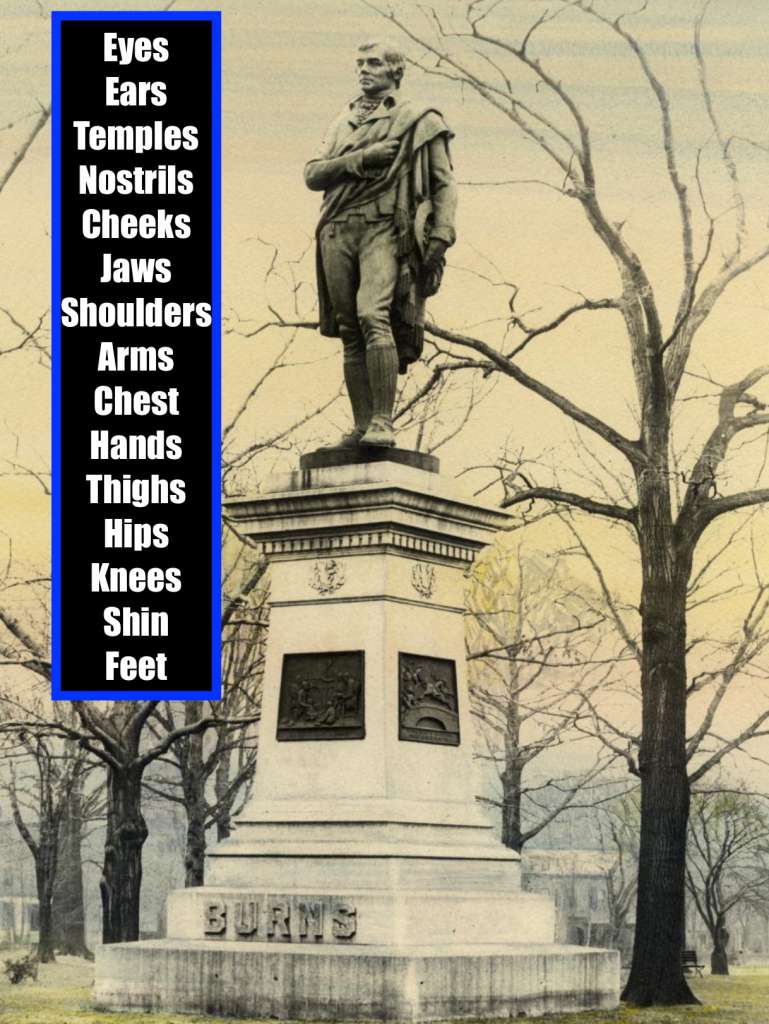
    Whenever it’s warm outside, I like to study in parks. Back in Toronto, I loved studying in the Allan Gardens because I could use one of its buildings and a statue as a Memory Palace.

    It works simple:

    You chart out a journey on the statue or use an ancient memory technique taught by Giordano Bruno. I did this with the Robbie Burns statue by creating 30 stations:

    statue memory palaces provide great places to study

    By selecting only the parts of the body that come in pairs, you get 30 stations in total. You can also use the pedestal if you like, but in this case I did not.

    Once you have the statue mocked out with stations, you just need to apply some mnemonic imagery to each of the stations. That way, the information has a place it can stick.

    The only downsides to studying in parks is that the weather can change in a flash. Traffic noise can pick up during certain times a day and you never know when a demonstration might arise.

    Other than that, they are by far my favorite places to study. I still study out doors, often for weeks at a time without missing a day.

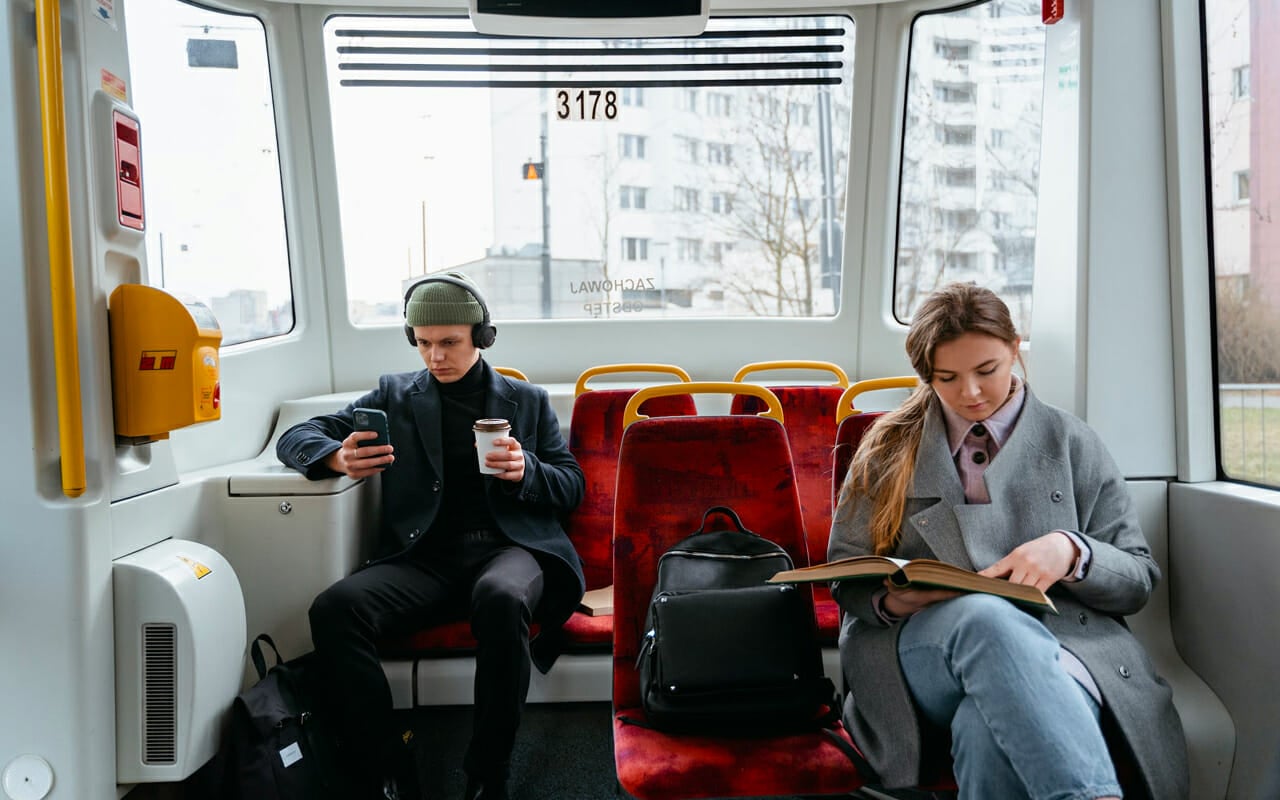
    Four: Buses & Trains

    Sure, they can be noisy. But I used to play in bands and always had ear plugs with me.

    They’re cheap and you can find them at just about any drugstore or pharmacy.

    The main downside is that you have to keep an eye on the destination, but I often set a timer so I could feel my phone buzz in my pocket in good time to gather my stuff in time to depart. Or I would tell the driver that I would be wearing ear plugs and ask for a reminder. Many drivers are perfectly happy to help you out and you can sit close to them. That makes it easier for them to alert you.

    Later, when I taught at Rutgers, I found myself living in Manhattan. I had to commute all the way from Washington Heights to New Brunswick in New Jersey.

    I would study for my dissertation on the way in and grade student assignments on the way back. More often than not, I got all of my grading done before reaching Penn Station.

    study in a bus

    Five: Rooftops

    When I lived in Vancouver, the “secret garden” on top of the Vancouver Public Library was one of my favorite study places. I also use to hang out and study with my friend Jen on her rooftop to read books and discuss what we were studying.

    There are all kinds of little places like these around and all you have to do is ask about them or search the Internet.

    Six: Grad Lounges

    One of the reasons I learned so much at university is because I hung out in the grad lounge. Back at York, it was called the Seventh Floor Grad Lounge. Now it’s on the ground floor.

    Places like these are great for studying at certain times of day. You’ll often hear graduate advisors helping their students and get inspiring ideas from overhearing their meetings.

    Or you’ll talk to some of the star faculty yourself. I sat with Robin Wood many times, a highly regarded film scholar during his time.

    Frankly, between him and the man who eventually became my own graduate supervisor, I probably learned more talking with these guys than from all of my courses combined.

    The only problem with these locations is they can get noisy in the mid-afternoon and stay noisy until late at night. Budget your time for this happening.

    Seven: Cafe Circuits

    Just as you want big libraries so you can move around, having a “circuit” of cafes is tremendously useful. In Toronto during my university years and later in Berlin while writing and studying German, I charted out a robust map of cafes.

    Rather than study in just one, I would spend approximately forty minutes to an hour. Then I would move on to the next.

    The routine gave my brain plenty of focus time and an opportunity for mind wandering. If you’re concerned that you’ll be losing time while walking between cafes, Rest, Mindwandering and Stolen Focus are three science-packed books that beg to differ.

    The main thing you have to watch out for is not burning out your adrenals. Coffee can boost focus and attention, but too much of it has a negative effect.

    Eight: Some Bookstores

    There are so many great bookstores. But not all of them are suited for studying.

    study in a bookstore

    It can take some hunting, but some of them have cafes in them. Or they have open spaces with nice chairs and tables.

    Used bookstores in particular can be especially useful. They have older books that you probably wouldn’t stumble across otherwise. If you know how to read faster, you’ll readily get a lot out of them.

    Nine: Closets

    Okay, this is going to sound kind of weird.

    But during part of my studies, I suffered bad clinical depression.

    Noises used to drive me bonkers, as did too much light. “Where can I go to study?” I would fret.

    Then, suddenly a memory dawned on me and I returned to something I used to love doing as a kid.

    See, we had a hard curfew when I was young. So I would sneak one of my dad’s flashlights into my room. To hide the light, I would crawl into my closet and read until three a.m. or later.

    I remembered this when I was struggling during university. Tossing a bunch of pillows and blankets into the closet and propping up the biggest flashlight I could find provided me with maximum comfort and focus while reading.

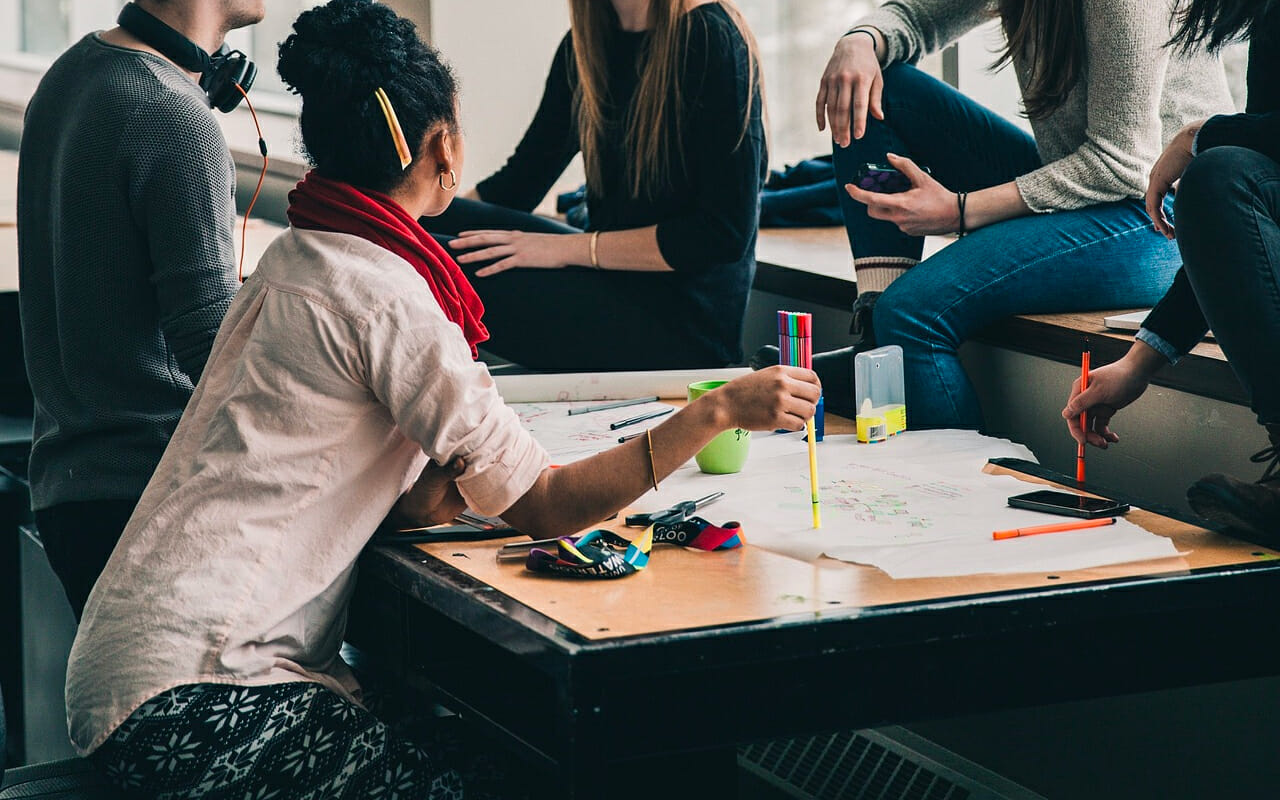
    Ten: Study Groups

    Many libraries have rooms for study groups. You just need to book them in advance.

    You can often get them just for yourself, but it’s great if you can get a few people together who are focused on a similar topic.

    Obviously, you’ll also need private and quiet study time. And you can get a ton more out of studying with others if you’re slightly prepped.

    My favorite study group in grad school was hosted by my Hebrew tutor and reach of us read a different article in advance. Then we’d present what we’d read. This mean getting exposure to a much larger pool of knowledge than any of us could have on our own.

    study groups

    Eleven: Places Where You Can Trust Others

    “Hell is other people,” or so the philosopher Sartre said.

    Although that’s a bit of an extreme way to look at things, let’s call a spade a spade:

    One of the biggest problems learners face is getting people to keep quiet and eliminate distractions.

    To do that, you sometimes have to draw upon a kind of “commander-in-chief” aspect of your personality.

    How?

    Make it clear to people that you’re not to be disturbed and they will tend to respect your request. And realize that there is a hidden, yet massive benefit to alerting people that you mean business.

    And that’s another sub-tip: When you’re a student, you’re investing in your future. You have to schedule your own time in order to schedule the “no interruptions” periods that other people in your life need to recognize.

    When you explain to them that you’re a serious investor in your education and want the best possible return on that investment, people are much more likely to respond in a helpful way.

    You should also block off certain spaces.

    I learned a lot from my friend’s mom. She was a professor and had a simple sign on her home office door. It said, “writing.”

    And when that word was facing you, no knocking or talking was allowed.

    Simple, yet effective. All it took was communicating with other people and blocking off both time and space for study.

    The Best Public Place To Study

    The absolute best public place to study is the one you:

    • Practice studying in
    • Get the best results in
    • Test and experiment with over time

    This set of conditions means that many places can be the “best.”

    And my philosophy has always been to do whatever it takes to get the job done. That’s why I often moved around and continue doing so.

    Even when revising my books, which is a kind of study, I will get them printed and read them in different locations. It’s so key to observing a maximum amount of details, rather than the minimum.

    As I shared, ear plugs are key, but here’s one step better.

    In 2012, I invested in custom ear plugs. These are the kind you can put filters in.

    They’re so comfortable and you can still hear your surroundings. The noise just interferes with you less.

    It takes a bit of time to get them fitted and they’re not exactly cheap. But they last for years, travel small and make it possible to study just about anywhere without any distractions.

    So there you have it. My best tips for finding incredible study spots.

    Why not get out there and start experimenting so you can find yours?


    Moonwalking with Einstein Review: Will It Change Your Life? Oct 05, 2022
    Show notes

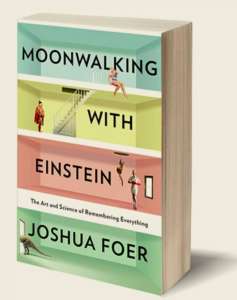
    moonwalking with einstein review feature imageMoonwalking with Einstein is an incredible book for many reasons.

    But will reading it improve your memory?

    Even more importantly, will reading Moonwalking with Einstein by Joshua Foer improve your life?

    Sorry to give you a cliche answer, but rest assured you’ll get more nuance as we go.

    The answer is:

    It depends.

    In this review, you’ll learn who this book is for, who it’s most likely to help and whether or not you’re the kind of person who will benefit from reading it.

    And in case you’re wondering why I would know, that’s a very good question.

    I have a few insights because I’ve interviewed and spent time with many people in the book.

    One of them gave me the Warrior of the Mind emblem for Outstanding Contributions to Global Mental Literacy. You’ll read about that pendant in the early parts of Moonwalking with Einstein.

    But above all, I’ve benefited from reading this book myself, albeit in a quirky way.

    All will be revealed, so if you’re ready to take a deep dive into this fascinating book, let’s get started!

    Who Is Joshua Foer?

    Joshua Foer was a science journalist when he wrote Moonwalking with Einstein and published it in 2011.

    These days, he owns a company called Atlas Obscura that serves as a guide to the world’s hidden treasures.

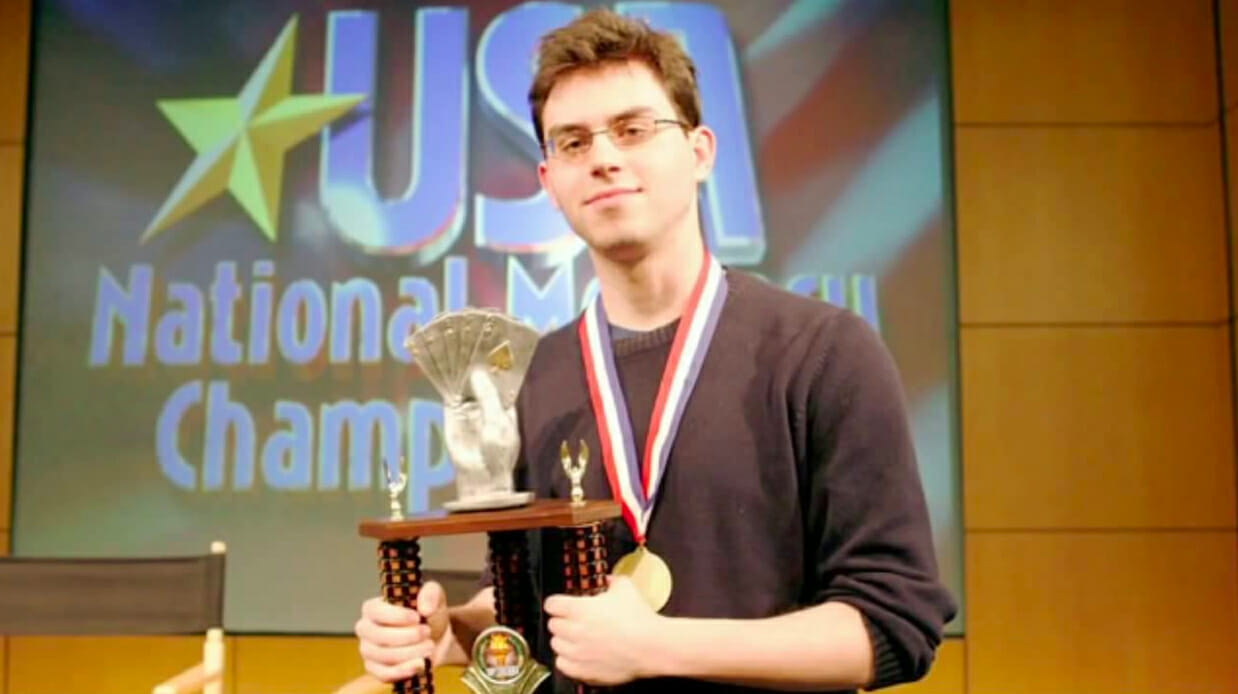
    According to the book itself, he won the 2006 USA Memory Championship and later ranked 13th at the World Memory Championship event.

    Joshua Foer with USA memory champion prize

    Foer told Nelson Dellis in a 2022 interview that although he still uses memory techniques once in a while, it is usually for numbers. But he no longer pushes himself to the level of being a viable memory athlete.

    Of the greatest interest for language learners, Foer successfully learned Lingala to a decent degree. He attributes memory techniques to his success based on an older version of Memrise, which included a lot of mnemonic examples at the time.

    If you’re wondering if Joshua Foer is legit, the answer is definitely yes. He’s gone beyond using memory techniques for competition and applied them to developing knowledge. That’s exactly what we want in a memory expert.

    Moonwalking with Einstein Review: What You Need to Know

    The first thing you need to know about Moonwalking with Einstein is that it’s not a memory training book. There’s little in it that could be described as a “lesson.”

    That said, the title itself is a lesson in mnemonic imagery. And the best kind because it’s a highly specific mnemonic example.

    And if you follow along as you read, you’ll come to know how memory techniques work and gain insight in how to use them. The main problem is that, except for the chapter on how to memorize a poem, you’ll primarily discover how to use mnemonics for competitive outcomes.

    moonwalking with einstein book cover

    More importantly, Moonwalking with Einstein is a book based around some classic themes that are very inspiring. These themes are:

    The Value of Experimentation

    Throughout the book, you discover how many different people learned about memory techniques and made them their own.

    This theme is so critical because a lot of people expect someone to hand them a memory system.

    Although there are some memory systems that many memory athletes share (like the PAO System, Dominic System and Major System), each person needs to do a number of things:

    • Learn the systems
    • Understand how and why they work
    • Modify them so they’re personalized (part of active recall in memory science)
    • Absorb them through practice
    • Observe and track how they perform
    • Make improvements over time

    The Value of Community

    Memory competition requires community by its very nature. You cannot compare your memory skills against others on your own.

    A huge theme of the book revolves around the friendships Foer made and the mentors who guided his progress with the memory techniques.

    I share one of those mentors with Foer in our dearly departed Tony Buzan.

    In one of the book’s early sections, a section that proves Foer’s skills as a writer, Foer notices “a neuron shaped pin adorned [Buzan’s] lapel.” That pin is the Warrior of the Mind Emblem, something Buzan gave me at an event, making me part of a community of memory teachers. For someone who talks for a living, I was speechless!

    As Foer describes the scene, Buzan acts like Merlin by making a great call to adventure. Just as Buzan once took me aside, he took Foer aside and had him imagine becoming the USA Memory Champion.

    This call to adventure is what leads Foer to travel and meet many memory athletes, memory experts and ultimately enjoy membership in KL7, a secret society of memorizers headed by the Grandmaster of Memory, Ed Cooke.

    The Value of Practice & Having Goals

    Although the stories of meeting various people are wildly entertaining, the book’s most important theme revolves around practice.

    In this regard, the book could be about many competitive sports, though perhaps chess is the closest comparison.

    As Foer learns, commitment is rare. And if the book ends on a bittersweet note, it is that Foer learns how easy it is to slip back into easy mode and stop using memory techniques.

    But is the backsliding Foer ultimately describes really about a retreat to easy street?

    I’m not sure. Given that we know Foer later used memory techniques to help himself learn a language and memorize 1100 words from a Lingala dictionary, I think a major theme of the book is quite simple to express.

    Have a goal.

    Having meaningful goals is just as rare as commitment in today’s world.

    And in some ways, Moonwalking with Einstein is not just about one science journalist winning a memory competition.

    It’s about the nature of how American society practices and sets goals compared to other countries.

    I recommend readers think about the differences between nations that Foer outlines in order to get maximum value from the book.

    Should You Read Moonwalking With Einstein?

    In a word, yes.

    However, I think many people who are just starting with memory techniques will need at least one other book to help them fully understand the techniques.

    You will learn the Memory Palace technique (especially in the chapter on memorizing poetry).

    But I’ve read so many people complaining that Moonwalking with Einstein confused them or didn’t help them learn how to improve their memory.

    On the other hand, Braden Adams told me that he read the book once and ran with it. He’s now an impressive memory competitor.

    And that’s ultimately the book’s strength and weakness. The subtitle says that it’s about “the art and science of remembering everything.”

    But as we saw in Where Did Noah Park the Ark? trying to address everything can lead to many people doing nothing.

    This statement is not a criticism of any memory book that casts its net wide. But people who don’t suddenly wake up understanding how memory techniques work should not blame Moonwalking with Einstein. It’s mostly about what memory is, how it works, and specifically how to harness those characteristics to win a memory championship.

    And the key to that is something Nelson Dellis gave us long ago. You have to practice at least two things:

    • Practice the memory techniques
    • Practice using the techniques in competition

    So if you’re looking for a stimulating read that might give you insights you need as a competitor, Moonwalking with Einstein is pure gold.

    But it’s also gold if you want to get inspired and learn more about the value of practice and commitment to a goal.

    It’s incredibly well-written too and very exciting.

    In my view, you simply cannot go wrong by reading it, but now you know what some of its limitations might be for you.

    And if you liked this review and think you might want to learn my approach to using memory techniques, go ahead and grab my FREE Memory Improvement Kit now:

    Free Memory Improvement Course

    This course is not targeted at competition at all (though my own competition experience is described in The Victorious Mind).

    Instead, my course focuses on how ancient people used memory techniques to carry massive amounts of information in their minds when they could not carry books on their backs.

    At the end of the day, if you really want to help improve the world, the more books you read and the more courses you take, the merrier we will all be.

    So what do you say? Are you reading to start “moonwalking” with Einstein?


    Ars Notoria: Rapid Learning or Mindfulness Guide? With Dr. Justin Sledge from Esoterica Sep 22, 2022
    Show notes

    Ars Notoria Feature ImageWhat if there was a book that helped you learn at a rapid pace by chanting the names of angels while looking at interesting images?

    There’s more to the Ars Notoria than that, of course.

    But the interesting thing is that this book may actually have provided a beneficial effect.

    For one thing, the text likely created a meditative state.

    And it’s been well-demonstrated that meditation improves memory.

    It also improves focus, attention and your overall awareness.

    To help us learn more about the Ars Notoria and the people who used it, we’re joined in this episode of the Magnetic Memory Method Podcast by Dr. Justin Sledge from Esoterica.

    https://youtu.be/SIEWtw8B-j4

    What Is The Ars Notoria?

    The Ars Notoria is hard to describe.

    But generally, it probably belongs to a genre called grimoire. This word probably relates to “grammar” and refers to texts proclaiming to teach the art of invoking angels and/or demons.

    In the case of the Ars Notoria, the idea seems to be that you “inspect” certain “notes,” ostensibly while chanting the names of angels you’ve memorized.

    Why?

    Because the book promises that you’ll rapidly acquire the trivium and quadrivium at an epic speed, provided you still attend lecture and do all the assigned reading.

    The “notes” you’re supposed to stare at, one assumes, the images included in the book. But it’s possible that you also created your own when using the pecia system to copy books you could not afford to own.

    If you want to check out the text for yourself, this is the version of the Ars Notoria I read. It appears that a new version is coming out soon as well.

    To understand the medieval practice of this form of magic, I recommend Claire Fanger’s Invoking Angels.

    And of course, there is Dr. Sledge’s excellent video analysis of the text:

    https://www.youtube.com/watch?v=vv0plm9SVIo

    How Would You Use The Ars Notoria?

    Based on my reading so far, here’s what I would probably do:

    • Memorize the recommended names and words using a Memory Palace
    • Recite the content while considering the images
    • Repeat daily while studying the material using other memory techniques

    Although not quite so elaborate, I have done something similar already with Sanskrit. I memorized a substantial part of the Ribhu Gita, for example.

    Here’s the demonstration video and here’s my TEDx Talk about the experience.

    Do The Promises of the Ars Notoria Deliver?

    As Dr. Sledge and I speculate, it’s highly likely that using the Ars Notoria provided students and other individuals some benefit. If it didn’t, why else would manuscripts of the text have flourished?

    I think the relationship here with other kinds of concentration meditation and visualization meditation is clear.

    Some people will certainly learn faster and remember more based on the benefits of concentration meditation alone.

    But my thinking aligns with Claire Fanger’s suggestion that working with the names of angels probably helped people improve their use of mnemonics.

    This intuition makes total sense to me because the more strange names and words you know, the more connections you can make while using mnemonics.

    In other words, this could have served as a kind of practice akin to what we do now with things like the pegword method, the Major System and the PAO System.

    Ultimately, the only way to know whether or not this approach will work for you is to give it a try.

    Stay tuned to this page for updates as more resources and materials emerge.

    When the new version comes out, and if it fills in the gaps in the current versions we have, I might just give this technique a try.

    And if I do, I’ll document everything for you. Watch this space and if you’d like to improve your memory between now and then, grab my FREE Memory Improvement Kit:

    Free Memory Improvement Course

    This course provides you with contemporary and scientifically proven boosts to your memory.

    And you don’t have to pray to anyone or anything in order for it to work!


    9 Memory Hacks That Are Actually Worth Your Time And Energy Sep 14, 2022
    Show notes

    If you want to retain information, you need the memory hacks you’re about to discover on this page. They are by far the most exciting, next level memory tips you’ve ever discovered. And I promise you that if you read this article all the way through, you will be able to absolutely crush any exam, learn any language faster and never forget a name again. I know not only because I’m a bestselling author of books on memory improvement and a professional mnemonist who regularly demonstrates how memory techniques work. As someone who uses these techniques for a living, let me share exactly helped me during a time when I was so frustrated by what other “memory experts” were offering. See, a lot of their tips fail because they are memory competitors. That means they use memory techniques to win competitions. Then they instantly forget the numbers, vocabulary and names they memorized. It’s not that you can’t learn a few things from them. It’s just that their approaches are not particularly useful for lifelong learning when you need to retain information. Then there are the scientists (or journalists pretending to write scientifically). Let’s face it: Memory tips like “take a nap” and “use repetition” aren’t actually “hacks.” Sure, those activities do work. A little. But if you’re struggling with small memory problems… Or even big ones… The standard advice simply won’t do. The memory hacks you need will be science-based and help you delve into the vast miracle that is the human mind. https://www.youtube.com/watch?v=hXinnhU-zTY But they’re not going to be helpful if they’re written by people who don’t use memory techniques for long term retention. I do. So are you ready for a memory hack “manifesto” loaded with techniques that will actually get you results? Great! Let’s dive in! 9 Memory Hacks That Actually Work As you go through this list, please understand that there is no special order here. Each and every one of the memory improvement tactics you’re about to discover is more than useful. They are all foundational to enjoying substantial results. The best part is that you can use some of them in combination for maximum results. Spoiler Alert: There is no mention of AI in this list. That’s not because you can’t use it. I sometimes do. But as Scott Young has recently pointed out in one of his email broadcasts, the time to go to an AI is after you’ve attempted to learn something or pick up a new skill on your own. Keep that in mind because I believe we have every reason to believe he’s right about that. Even people like Andrew Mayne, practices some of these “old school” hacks as his first line of attack for keeping his memory sharp. He’s not only a tech enthusiast, but also host of the Open AI podcast, so that should really tell you something about the value of the suggestions you’re about to read. One: Give Yourself Time For Learning So You Never Have To Cram Organizing your time might not seem like a memory hack. But it absolutely is. When you have to learn something in a rush, the worst thing you can do is sit there and try and force it into your head. Although some rote repetition can be a good thing, making sure you have enough time to study is key for a few reasons. For one thing, it allows you to take lots of breaks. I recently saw just how important breaks are during my recent trimester in law school, which is soon coming to an end. Rather than cram, I gave myself enough time to review frequently with pauses in between study sessions. Scientists call this strategy the spacing effect and it is powerful. It helps you beat what is sometimes called the forgetting curve. To give you another example apart from my law memorization project, I didn’t have much time when I memorized the speech I gave at a TEDx event. But in the limited time I did have, I focused on 2-3 sentences at a time using a technique called the Memory Palace that you’ll learn about in a minute. After about 5 minutes of focusing on those sentences, I pulled back and did something else. Memory expert Dave Farrow established two Guinness Records and he used a similar approach to accomplish his feats. In fact, he’s a big proponent of studying in small doses as brief as five minutes at a time. Although I don’t compress my study time down that much, it certainly can help to reduce the amount of time you spend during individual study sessions. In sum, organizing time is a powerful hack. Start experimenting with how it can be used. Two: Use Memory Techniques When it comes specifically to hacks for memorizing, did you know that there are over 20 memory techniques to choose from? You don’t have to use them all, but spending just a little time picking up a few mnemonic methods will revolutionize your memory quickly. At their core, memory techniques almost always involve some kind of association. For example, if you meet a person named Dawn, you might perch an imaginary version of Donald Duck on her shoulder because “Donald” has the sound “dawn” in it. You can apply this same approach to all kinds of information, including the very complex. In order for these associations to scale, it’s essential that you learn how to use a Memory Palace. This specific technique “hacks” into your memory of locations like buildings, schools, churches, libraries, stores, parks and highways. You literally think about locations you’re familiar with and pair them with information you need to remember using visualization exercises and mnemonic imagery. Three: Mind Map Tony Buzan says in Mind Map Mastery that he gave up on the mind map as a memory hack decades ago. I think this conclusion was premature. For one thing, mind maps can readily be used as a type of Memory Palace. But merely by creating them, ideally with multiple colors, you give yourself a shot at experiencing the benefits of active recall. Using multiple colors on your mind maps will increase your focus and make their content more memorable. This means that you’ll remember what you’ve mind mapped better because you personalized the information. And you’ve engaged with it in a way that involves novelty and variety. The principles of novelty and variety are so powerful, they deserve a discussion on their own. So let’s dive into both a bit deeper next. Four: Inject Novelty and Variety One of my most used memory hacks during university was studying in multiple locations. I literally went out of my way to study in as many of Toronto’s libraries as I could. Just as often, I would visit new cafes or even study in parks I’d never seen before. I would ride my bike from place to place, which also had the benefit of giving me breaks. (It’s really hard to cram when you’re on the road, but very easy to reflect on what you’ve studied. Thinking about the material forms memories quicker.) Why does including a variety of new locations for learning help with memory formation? Scientists believe it has to do with how it causes the brain to increase levels of dopamine and noradrenaline. These are all important chemicals when it comes to forming new memories. The best part? Moving around is fun and easy too. It also makes you a more interesting person. Five: Optimize How You Use Flashcards Sometimes people think I’m all about the Memory Palace technique and totally against things like Anki and flashcards. Such statements couldn’t be further from the truth. Although I don’t use spaced repetition software often, when I do, I enhance it by using the principles we’ve already discussed: Personalization and variety. It’s very simple to draw your own flashcards and photograph them, for example. You can also align your cards with your Memory Palaces using the technique I teach in how to memorize a textbook. As for Anki, I limit my exposure to all apps as part of avoiding digital amnesia. Six: Learn the Chunking Method Many of the methods we’ve discussed above pretty much “force” you to break information down into smaller units. That’s not by mistake. Breaking things you want to learn down into smaller components is called chunking. The easiest way to understand why and how chunking works is to think about how phone numbers are separated into units of 3 and 4 digits, such as 384-8343. By breaking the larger digit down into two groups, both are easier to remember. When memorizing longer pieces of information, you simply do this intentionally. For example, in language learning, I used the Memory Palace technique in combination with chunking by breaking the Latin word “expetendorum” down into ex/pet/en/dor/um. In the Magnetic Memory Method Masterclass, this is called the Principle of Word Division. Whereas some people will be concerned that chunking slows learning down, it’s actually the opposite. You will be able to use mnemonics much more effectively and efficiently. As a result, you’ll remember more of what you study and retain it for longer. Seven: Memorize Stories Keeping chunking in mind, let’s look at longer-form content. One problem a lot of people struggling with memory face comes down to articulation. Their tongues get tied or they lose their train of thought. By spending a bit of time not just passively reading stories, but deeply internalizing their plot points, you’ll hack your memory and improve it fast. This is because keeping much larger units of information in mind exercises multiple levels of memory. Now, back to chunking, you certainly don’t have to memorize an entire story in one go. And if you feel that stories still are too ambitious, you can start with quotes, jokes or parables. But at some point in your memory improvement journey, I suggest committing at least one long narrative to memory. Just break it down into units and soon you’ll have a much larger representation ready to access in your memory. And a stronger set of memory skills overall. Eight: Make Long-Term Memory Projects Part of Your Life One of the best hacks is to simply have memory projects on the go all the time. For example, you can: Memorize the preamble of the United States Constitution Memorize the most popular chess openings Memorize a prayer Learn the notes on a fretboard Commit the planets to memory Get into memory sports and keep a Memory Journal Memorize the periodic table Personally, I regularly take on long-form projects like memorizing Sanskrit mantras, poems and new songs. I even shared this attempt to model how Anthony Hopkins memorizes his scripts. By continually challenging yourself to memorize information, you strengthen multiple aspects of your memory. As you continue taking on new projects, you can explore more of these memory strategies. Nine: Read Daily Reading exercises multiple aspects of your memory. And all the more so now that we’re living in a world filled with more digital distractions than ever. The catch is that you need to read frequently. I suggest you get in the habit of carrying a physical book with you at all times. This will help you get more reading into your life. For additional memory boosts from reading, re-read books too, approximately one per month. I do this myself for the reasons I shared in my writing about developing a re-reading strategy. Although it might seem like a memory expert would never have to re-read books at all, the reality is that we all miss things the first time around. But by triggering our recall through re-reading, we strengthen the previous knowledge we established. And new connections form. To double down on the power of re-reading as a memory hack, be sure to write quick summaries or journal about what you’ve read. Writing helps establish even stronger recall thanks to adding an additional layer of mental processing. The Biggest & Best Hacks To Improve Memory Of Them All If you like what you’ve read so far, let me encourage you to go deeper. The biggest memory hack of them all is this: Decide to become a master of your memory. What do I mean by that? I cover the principle in this video lesson: https://www.youtube.com/watch?v=5k7hotyHROk Basically, I believe “mastery” means get into memory training and stick with it. Because the truth is there is no short term memory hack that’s going to last forever. You have to keep using your memory in order to maintain it. Think of it like this: You can’t go to the gym once in a while and expect your biceps to grow. Memory is like a muscle like that. It needs ongoing attention. And if you’d like to learn the most powerful technique for making your memory not only improve, but flourish so you can learn languages, concentrate better and stop forgetting things, grab my FREE Memory Improvement Kit now: It will help you start the path to memory mastery that lasts. That way, you won’t need hacks any more. You’ll be the one everyone goes to for help.

    Full show notes at the publisher

    Memory Techniques For Chinese with Mandarin Blueprint Sep 07, 2022
    Show notes

    Dabbling Vs. Doing: Mandarin Blueprint's Advanced Memory Palace Tactics with Phil CrimminsOne of the biggest problems when it comes to mnemonics for Mandarin Chinese has recently been solved.

    To explain more about the issue and the solution, Phil Crimmins from Mandarin Blueprint joins me on the Magnetic Memory Method Podcast.

    Now, Phil’s credentials and experiences with Chinese are exceptional.

    He’s an accomplished entrepreneur, sure. He’s also very chill thanks to meditation, mindfulness and a great understanding of how to manage his mind.

    And he’s a great lifelong learner who has focused on learning Chinese with incredible speed and accuracy.

    But it wasn’t always simple. And some mistakes were made along the way.

    You can learn from those mistakes.

    And take inspiration from how Phil went on to complete a degree at Sichuan University.

    Even better, he was awarded an “Outstanding Thesis Award” for his dissertation.

    What was this dissertation all about?

    “Chinese Acquisition Methods from the Perspective of a Mandarin Learner.”

    This means that Phil is not only great at speaking Mandarin, but writing it too!

    https://youtu.be/xJOuWDnhpRc

    Want To Make Reading And Writing Mandarin Easier?

    In this episode of the Magnetic Memory Method podcast, you’ll learn how Mandarin Blueprint has been helping thousands of people around the world rapidly acquire Chinese language skills.

    Let me tell you:

    Phil and his partner Luke Neale really know their stuff.

    Sure, their Chinese is great.

    But I’m also incredibly impressed by their knowledge of memory techniques, including the Memory Palace and other memory hacks.

    The Mandarin Blueprint Method logo

    What Is Mandarin Blueprint?

    Mandarin Blueprint is an online course, but it’s also something more.

    It’s an experience.

    See, Phil and Luke understand the brain’s need for a combination of variety, simple challenges and careful progression into more challenging aspects of the language.

    Scientifically, they’re keenly aware of active recall and how to help you maximize its benefits.

    It’s not just videos on a screen, either. You get quizzes, powerful downloads and activities to complete. There’s also a unique flashcard system that is built for people who use memory techniques to learn Chinese.

    What about Chinese characters and pronunciation?

    It’s in both of these areas that Mandarin Blueprint really shines.

    As good as Phil and Luke’s pronunciation is, you also get a native speaker. It not only proves how well they speak, but gives you that all-important variety of voices that stimulates faster learning.

    Memory Techniques For Chinese

    So what exactly are these special mnemonics in the Mandarin Blueprint program?

    That’s exactly what Phil and I discuss today, but as a bit of a preview…

    Mnemonics for Chinese go back at least as far as Matteo Ricci in the 16th century. He traveled to China from Italy and even wrote a book about how he learned the language using the art of memory.

    Then it’s mostly radio silence until the James Heisig books appeared with titles like, Remembering the Hanzi.

    Mandarin Blueprint has taken the best ideas from the memory tradition and improved them, including some ideas from the Marilyn Method. They give interesting ways to connect your associations to both their unique flashcard system and Memory Palaces.

    And these ways work, all the more so because they take pronunciation into consideration. In my experience, the Mandarin Blueprint approach is totally unique.

    You should definitely try it.

    What if you’re not learning Chinese?

    Two things:

    1. Why not?
    2. You can still learn a ton about memory techniques by listening to Phil’s experiences using them.

    After all, Mandarin is neither easy or difficult. Those matters are just a state of mind.

    But there’s definitely a level of involvement with Mandarin that requires more robustness in the memory techniques you use.

    And that’s what makes this conversation so valuable. Those robust approaches will transfer over to anything you want to learn!


    Can I Use Video Games As Memory Palaces? Aug 25, 2022
    Show notes

    video game Memory Palace feature imageMany people ask me about using a video game as a Memory Palace. Here’s how such questions are often worded:

    Hey, could locations in video games work for my Memory Palace? I’m talking about games such as Grand Theft Auto, Minecraft or the games favored by Pewdiepie? What about the Metaverse?

    Before we get to the answer, a quick thought experiment in the form of a question:

    Do you know the location of the Memory Palace Police Headquarters?

    I’ll give you the address later, but think about it as we dive into the topic of using a video game as a Memory Palace.

    I have only a passing familiarity with the games indicated by the question, but the quick and dirty answer is:

    Yes. Of course. Why not?

    A Memory Palace is a reference to space. This space is used either as a surface we paint mnemonic imagery onto, a surface we place it upon.

    Or we might hover the associations above the loci. We can even stash them under or inside of locations inside of Memory Palaces, such as by using cupboards or even the pockets of our Magnetic Bridging Figures.

    So long as you understand what the Memory Palace technique is and practice it, you can use video games. Or even movies. Heck, you can even make Memory Palaces from the individual pages of books to help you use elaborative encoding as you use both simple and advanced memory techniques.

    The Truth About Using Memory Palaces Based On Video Games

    In truth, it doesn’t matter what I think. The real answer is up to you.

    And here’s a potentially MASSIVE time saving tip:

    When it comes to memory training, any “can I” or “could I” question almost always has the same answer:

    Dive in and give it a try! If it doesn’t work…

    Come back to the Magnetic Memory Method for foundational training.

    But always understand two things:

    • Using memory techniques like the Memory Palace is always experimental in nature
    • Memory Palaces are always already virtual

    Why Memory Palaces Are Always Experimental

    What do I mean?

    Every time I personally set out to use a Memory Palace, it’s an experiment. The Memory Palace is like a mental laboratory. If I’m memorizing anything using it, it’s a test of my skills. And I always learn something new.

    Why Memory Palaces Are Always Virtual

    This point gets into the philosophy of memory, and it may or may not be useful to you.

    In brief, the world is represented to your mind by your brain. That means that it is a recreation of what is “out there,” not an accurate depiction of reality.

    Therefore, when you use a memory of your childhood home, you are tapping into your brain chemistry. The same brain chemistry that you’re tapping into when you think about a video game you want to use as a Memory Palace.

    How is accessing one of these potential Memory Palace sources more “real” than the other?

    The answer, in my not-so-humble, but always Magnetic opinion is that they are both equally virtual.

    But what matters at the end of the day isn’t the intellectual debate.

    It’s how well one option works compared to the other.

    There are also issues of recursion to consider, as I did in this video about using a paracosm vs. the Metaverse.

    Familiarity = Speed

    I choose Memory Palaces that are based on “real” locations I’ve visited because I noticed one simple thing early on in my practice:

    It’s faster and easier to set them up when they are based on real buildings. The amount of decisions that has to be made is drastically reduced.

    But that might not be a concern for you.

    If you are so familiar with that location in the video game that you can create a journey through it and don’t have to spend a millisecond thinking of what comes next, then I think that is great.

    I’m being a bit dramatic with the “millisecond” thing, so don’t take that as law. The point is that speed is very important when learning, as is the principle called speed of implementation:

    https://www.youtube.com/watch?v=386LzJmXWHE

    The idea here is that the faster you can get something into action, the faster you’ll be able to use it. And that means the faster you’ll get results.

    For this reason, I would suggest applying the same guidelines for preparation and predetermination I teach you to apply to “real” spaces to imagined spaces as well.

    All the details about this are covered in my free course:

    Free Memory Improvement Course

    The Real Reason People Want Video Game Memory Palaces

    I think it’s worth thinking about the intention behind this memory improvement question.

    In many cases, people want to create a video game Memory Palace Network simply because they never get out enough.

    Is that a healthy reason?

    I ask because so many issues with brain fog and depression that harm our memory come from social isolation and lack of exercise.

    Even if you do have to stay inside, it’s still possible to find more Memory Palaces.

    By the same token, my fellow memory expert Idriz Zogaj explains that some of the best memory athletes use movies to increase memory.

    And we know that playing games can increase hand-eye coordination (not the same as ambidextrousness, but still cool to develop).

    In any case, if you’re using a video game to avoid getting out into the world, you’re probably shooting yourself in the foot.

    Creating a Memory Palace Network by visiting more of your city is a great memory exercise. And as I mentioned, it’s healthy too.

    What About Reusing Memory Palaces?

    This is a very personal thing, but I would predict that people who do not have enough Memory Palaces based on real locations are going to have issues reusing imaginary Memory Palaces.

    Even if both actual and imagined locations are equally “virtual” in my view, it comes down to simplicity and speed of implementation.

    The Memory Palace you can use thoroughly and well is going to be easier to reuse thoroughly and well.

    But as I’ve talked about many times before, reusing Memory Palaces is rarely necessary. Nor is it always recommended:

    https://www.youtube.com/watch?v=Umt-innA-u8

    That said, I have discovered some interesting alternative ways to reuse Memory Palaces that I’ve never seen discussed before. These are covered in the Magnetic Memory Method Masterclass.

    As a case study, I reused the speech Memory Palace for my TEDx Talk three times in total.

    Again, this is not necessarily recommended. But like I said, memory techniques are best when you treat everything like an experiment.

    The Ultimate Truth About Video Game Memory Palaces

    I think I said it best in this quick video, then we’ll follow up with the nitty-gritty:

    https://www.youtube.com/watch?v=9BpwRp5Jxwo

    If you’re going to use Memory Palaces based on games…

    Platform Games Have Worked Best For Me

    Here’s why:

    When I’ve used video games for my memory and learning goals, I prefer Donkey Kong as the Memory Palace.

    This is because the entire game plays out on a single screen, not an endlessly changing landscape.

    Platform games are also like how I imagine each room in a Memory Palace.

    Each station is “fixed.” I move mentally from corner to corner, and for that reason, it’s better if the space doesn’t rotate around without your head having been in it.

    See my post on Memory Palace Science for more knowledge on why this spatial element is so important when it come to thinking through the topic if you aren’t good at mentally navigating space.

    You can also check out these five kinds of Memory Palace navigation:

    https://www.youtube.com/watch?v=rWd1KaWFBm0

    Here’s another point that makes me like platform games a lot better:

    The screens used for game play in platform games can be easily divided into quadrants without thinking too much about the layout. In this way, platform games are a lot like chess.

    And chessboards seems to me a more likely solution for quick and easy to use Memory Palaces than a highly dynamic game with multiple environments that have to be memorized in order to be useful.

    That leads to using Memorized Palaces instead of Memory Palaces. And that is ultimately a deviation from what the Magnetic Memory Method is all about.

    Using Donkey Kong As A Memory Palace Example

    If we take Donkey Kong as an example, the journey could start at the bottom left of the screen. That corner would be station number one.

    Looking at the screen, you might see a number of platforms. Without Googling to see just how many platforms there are on level one, you can mentally decide that there are five and Donkey Kong stands at the very left of the top platform.

    You can then assign the rule that each platform gets three stations (left, center, right) and another rule that you would move across each platform in a zipper formation (left to right, right to left, left to right, etc).

    It’s completely up to you whether or not you “see” a figure moving in the Memory Palace or not. I don’t really have much of a mind’s eye (aphantasia), so that’s perhaps one reason I prefer to make mental calculations and keep things super-simple.

    But simple doesn’t mean limiting.

    Just do the math on this example:

    This particular configuration with a few simple operating principles based on one screen of Donkey Kong gives me 15 Memory Palace stations total!

    That’s a ton of new information that can be memorized at the drop of a hat!

    Of course, I don’t know the game involved in the original question. Perhaps you can set up Skyrim with a similar grid. Isolating a single screen when beginning with a game like this for a Memory Palace might help you more than trying to create an entire journey.

    If you do, please let me know which game you used and a little bit of the journey you created. 🙂

    On the matter of using “virtual spaces” for Memory Palace memorization, this topic is discussed in detail here:

    How to Enhance Your Memory with Virtual Memory Palaces

    The Final Word On The Video Game Memory Palace?

    In sum, if you’re using the Memory Palace technique for learning, you want the technique that works best for you.

    I don’t have the final word. You do.

    And when it comes to knowing how to study fast, it’s always an individual journey.

    My suggestion?

    Try both versions of the Memory Palace technique. Use your past often, including your childhood and other aspects of your autobiographical memory.

    Then you’ll know.

    And if nothing else, you’ll have the benefit of some great brain exercise better than most of the brain games out there.

    Where Are The Memory Palace Police?

    Ultimately, there is no final word on this topic. There’s so much more to explore when it comes to the Memory Palace technique, and using memory spaces in general.

    But the Headquarters of the Memory Palace Police?

    https://youtu.be/6ODk_lsqXSM

    It is nowhere. It doesn’t exist.

    At least, not yet, except perhaps in one of my future novels. And that’s a very good thing.

    Because at the end of the day, the Magnetic Memory Method is about helping you discover the methods you can use to create your own memory systems.

    It’s about encouraging you to think for yourself.

    And so for just about every “Can I”? question related to using memory techniques out there, the answer is very simple:

    Yes, you can. Just treat it like an experiment.

    And if your experiments don’t pan out, journal about them, like I discussed with Johannes Mallow and elsewhere in my teaching.

    Don’t wait for the confidence to experiment to fall from the sky.

    Build it by taking action, and use the speed of implementation rule to help urge you forward.

    So what do you say?

    Are you ready to become the architect of your mind and experience better living through better memory?

    Give me a hell-yeah in the comments if so!


    Previous 1 18 19 20 21 22 45 Next

    Related Podcasts

    Making Sense with Sam Harris

    1

    Making Sense with Sam Harris Education
    Grammar Girl

    2

    Grammar Girl Education
    Good Life Project

    3

    Good Life Project Education
    Explain It to Me

    4

    Explain It to Me Education
    Team Never Quit

    5

    Team Never Quit Comedy
    Optimal Living Daily – Personal Development and Self-Improvement

    6

    Optimal Living Daily – Personal Development and Self-Improvement Alternative Health
    footer-logo

    Contact Us

    Toll Free: 844-670-7747

    Links

    • Home
    • Top Charts
    • Networks
    • Apps
    • Independents Podcasts
    • Podcast Advertising
    • Podcast News
    • Contact Us
    • About Us
    • Analytics & Insights

    Stay Connected

      Privacy, Terms of Use & Our Code of Ethics Protecting Content Creators Copyrights