TopPodcast.com
Menu
  • Home
  • Top Charts
  • Top Networks
  • Top Apps
  • Top Independents
  • Top Podfluencers
  • Top Picks
    • Top Business Podcasts
    • Top True Crime Podcasts
    • Top Finance Podcasts
    • Top Comedy Podcasts
    • Top Music Podcasts
    • Top Womens Podcasts
    • Top Kids Podcasts
    • Top Sports Podcasts
    • Top News Podcasts
    • Top Tech Podcasts
    • Top Crypto Podcasts
    • Top Entrepreneurial Podcasts
    • Top Fantasy Sports Podcasts
    • Top Political Podcasts
    • Top Science Podcasts
    • Top Self Help Podcasts
    • Top Sports Betting Podcasts
    • Top Stocks Podcasts
  • Podcast News
  • About Us
  • Podcast Advertising
  • Contact
Not in our directory?
Add Show Here
Podcast Equipment
Center

toppodcastlogoOur TOPPODCAST Picks

  • Comedy
  • Crypto
  • Sports
  • News
  • Politics
  • True Crime
  • Business
  • Finance

Follow Us

toppodcastlogoStay Connected

    View Top 200 Chart
    Back to Rankings Page
    Education

    Anthony Metivier’s Magnetic Memory Method Podcast

    Learn, Memorize And Recall Anything Using Memory Techniques, Mnemonics And A Memory Palace Fast

    Advertise
    • Apple Podcasts
    • Google Play
    • Spotify

    Latest Episodes:
    How to Write Learning Goals That Work For Mastering Any Topic Oct 11, 2023
    Show notes

    All successful learners set learning goals. Even if the exact path isn’t clear and there might be some wiggly lines involved, this truth matters above all: You can’t expect success from self-directed study programs without at least forming some kind of destination. And the truth is, having a clear destination in mind, isn’t always the best policy. Sometimes you have allow for a little wiggle room. If not a lot. As someone who has been both student and professor, I can help you from both sides of the coin. I’ve passed multiple exams based on many courses. But I’ve also gone on to learn on my own to learn new skills and research and write multiple books. To help you out based on solid scientific research and experienced earned from preparing many outlines for my memory goals, let me give you some examples you can model. And let me do even better than that: In this post, I’ll show you how to create a learning goal that actually gets you the outcome you want. Whether that’s learning a language, mastering a musical instrument or becoming an expert in a difficult topic, this is the blog post for you. How cool is that? Very cool, as you’re about to see. So let’s dive in. https://www.youtube.com/watch?v=dPfW-pDyrmc What Are Learning Goals? Learning goals are like destinations on a map. You have never been to the location, but you know that it exists. The reason you know it exists is either because others have been there, or others have tried to reach the destination. And this is an important point: A lot of people think that learning goals must be achievable. Frankly, I think we have every reason to believe this simply is not true. For example, must it be achievable that we do all we can to learn about space travel? We don’t know if it’s actually possible or not, but we’re doing it. To take a more down-to-earth example, I had no idea whether or not I would be able to understand many topics or learn some of the languages I’ve tackled. And right now, as part of my current learning cycle, I’m studying physics. It’s really hard to understand, but I take heart from a quote I found early on from one of the most renowned physicists, Richard Feynman: It is my task to convince you not to turn away [from physics] because you don’t understand it. You see, my students don’t understand it either. That’s because I don’t understand it. Nobody does. Ultimately, this means that the exact definition of learning goals is exactly what I’ve suggested: It’s a destination. And all you need is an inkling that the destination exists just as Richard Feynman and millions of other people make learning goals based on their intuition that physics and math exist. Examples Of Written Learning Goals Of course, it’s easy to theorize. Here are some examples of my own written learning goals so you can see the principles in action. Language Learning Goal Every time I sit down to study a language, I start off by writing down my intention. I started doing this years ago with German, and here’s what I wrote: By the end of one month, I will be able to hold conversations on everyday topics like travel, work and my hobbies. To accomplish this, I will memorize vocabulary and phrases in my language learning Memory Palaces daily and speak with a language exchange partner two times a week. I will listen to German radio and watch German movies for twenty minutes per day. Reading Challenge I rarely dread reading challenging books. But Gödel Escher Bach is legendary for its complexity and wards off many readers. But because reading it is essential for understanding memory and consciousness, I helped myself get through it by writing the following goal: Over the next 6 weeks, I will complete Gödel Escher Bach by reading at least 15 pages per day. I will write summaries as I go to better understand key themes in the book. I will also seek out at least three interviews with the author and take thorough notes from them. Mastering Philosophical Concepts A few ago, I decided I needed to understand Zen and related schools like Advaita Vedanta. For whatever reason, their core ideas had always evaded me. To get that task done, here’s what I wrote: In the next 6 months, I will thoroughly understand what these philosophical traditions mean by “no mind.” I will dedicate an hour each day to reading and an additional hour to practicing the recommended meditation techniques. I will supplement my understanding by watching lectures related to Zen and Advaita Vedanta. Did I succeed? Judging by the millions of views my TEDx Talk reporting on the mission has received, I’d say so. Why Is It Important To Set Learning Goals For Improvement? We need learning goals precisely because without a direction to follow, we wind up getting either nowhere, or someone other than we want to be. Having goals for our learning also helps us identify others who have attempted and succeeded at similar projects. It’s not just about goals either. Using mental metaphors based on images of other successful people is very helpful. Nir Eyal makes this point in his book Indistractable. Carol Dweck says something similar in Mindset: The New Psychology of Success. Only she puts a bit of a twist on it: We like to think of our champions and idols as superheroes who were born different from us. We don’t like to think of them as relatively ordinary people who made themselves extraordinary. In other words, to be successful requires a combination of big dreams and thinking practically about how others have completed them. This process is sometimes called “reverse engineering.” For example, you might notice where and when people act on their goals. This is a point suggested by Dr. Heidi Grant. We often think about the outcome when we actually need to visualize the process. How to Write Learning Goals That Work:4 Strategies for Writing Successful Learning Goals When it comes to achieving our dreams, whether it’s learning the law or acing med school, one quote has always stuck with me. I heard it from a “business guru” named Dean Jackson: All wealth comes from writing. I’ve always found this to be true, so let’s start with some nuance on that tip. One: Test Your Goals Through Writing A core part of my teaching involves journaling. I’m talking both about journaling for self improvement and keeping a journal like a memory athlete. When it comes to goals, I’ve found that it’s really important to write them down. But not just once. To really test that I want to go through something, I ask myself to write out the goal several times over a few days, if not weeks. Why? Because I’ve found that a goal I’m not willing to write out a few times signals I’m not really interested in completing it. Plus, writing out a goal several times helps test the “truth” of the goal. Sometimes we just want an outcome for the sake of having it. But we don’t actually need the outcome. So in the journal, I divide the page into two columns: Want vs. Need. By focusing on what I really need to learn, I wind up having much more free time and enjoyment at the end of the learning goal. I know this process sounds challenging. But it’s 100% scientific. Angela Duckworth would likely file this kind of exercise under her concept of developing “grit.” I consider it an exercise that helps you establish and maintain mental strength. Two: Decide Why, Where & When Once you’ve tested that you really want to learn something, it’s important to keep journaling. My three questions each morning before I engage in a learning activity always come with: Why? Where? When? It’s a simple model that helps build both intrinsic and extrinsic motivation. For example, I’m working on a book and part of my research involves reading Shakespeare to follow-up on someone’s suggestion that the great memory master Giordano Bruno may have influenced Shakespeare’s creation of Hamlet. Shakespeare’s not exactly light reading, so I remind myself of why I’m doing it. Then I plan where and when I’m going to get the reading done. This simple metric is useful to go through because it can help you choose times when you have the best possible energy for certain tasks as well. Three: Give Yourself Space for Focused & Diffuse Modes of Thinking Here’s one of my favorite learning goals examples: Study hermeticism Study the memory systems of Bruno and people like Ramon Llull Compare with multiple traditions and philosophies Compare with contemporary memory science and memory athletes like Ed Cooke Write up the findings in a book If you want to know how to write a learning goal, that’s basically what the framework looks like. I then tested it as described above. As of this moment, the first draft of this book is now done based on my research and learning. However, due to the enormity of the project, I couldn’t cover it all overnight. So I remembered lessons I learned from Barbara Oakley in her Learning How to Learn book and course. Some of these ideas area also in her excellent book, Mindshift. Basically, you get very clear about when you’re going to study. But you used spaced repetition to take plenty of breaks. This shifting between focus and taking time off for “diffuse thinking” allows the brain to form connections, primarily while you’re resting. Four: Accelerate Everything Using Memory Techniques Now, you might be thinking… I can learn while resting? Yes, and it’s an important part of any learning routine, especially when studying tough subjects. There are many ways memory techniques can help you: Mnemonic images make ideas stick faster Memory Palaces help you scale the amounts of raw data you can learn Spaced repetition speeds up how fast you can establish long term retention If you’d like more information, please dive into my free memory improvement kit: It will walk you through a learning plan for mastering your memory. Crafting The Perfect Learning Goals Outline Action is perfection when it comes to learning. If you’re learning a new language, you need to speak and learn from mistakes. And when you’re learning how to train your memory, you need to practice putting together the perfect routine. Time management and setting goals also requires practice. I suggest always keeping in mind the Feynman quote I shared above. No one quite understands how to do anything perfectly, or what it means to master a study subject. We need to keep humble and keep moving. Action reveals and if you start with the journaling and testing process first, you’ll find that exactly how to accomplish your learning goals will tend to reveal itself to you. So what do you say? Dive into these suggestions and I can’t wait to hear about how you feel when you accomplish your learning goals with greater ease and efficiency!

    Full show notes at the publisher

    Obsidian & the Memory Palace Technique with Aidan Helfant Oct 06, 2023
    Show notes

    Aidan Helfant feature imageUsing memory techniques in combination with software programs like Obsidian is enticing, isn’t it?

    The promise is not only that you’ll remember more… faster… but you’ll also be able to make more mental connections.

    Although I personally don’t use software much at all in my learning journey, I have helped promote others who have great ideas and a proven track record of success.

    For example, years ago we took a deep dive into Evernote when it was still all the rage…

    Not that I ever hear anyone talking about that software anymore, however.

    These days, all I hear about is Obsidian. Or AI, especially in the positive ways Andrew Mayne has discussed artificial intelligence for better memory.

    That’s why when I learned about Aidan Helfant’s results using the software, my ears perked up.

    And I just knew I had to get him on the Magnetic Memory Method Podcast.

    Click play and listen in as we take a deep dive into the use of Obsidian as part of your learning strategy.

    https://www.youtube.com/watch?v=AbGBktY3cmY

    Who Is Aidan Helfant?

    Aidan is an incredible learner who is creating incredible tutorials that help students enjoy going to college much more. His excellent blog covers a number of very important learning strategies, from mastering the Memory Palace technique to overcoming distractions.

    Aidan’s teaching is well worth paying attention to because he focuses on the fundamentals:

    • Learning habits
    • Staying away from foods that are bad for your memory
    • Aligning your true interests with your choice of degree
    • The truth about multitasking for lasting success
    • What it takes to really succeed at a university like Cornell

    In all things, I suggest you get into his work and apply the ideas he shares to what you want to learn a.s.a.p.

    Here’s where to find Aidan on YouTube and his excellent Twitter/X account.

    In all things, if you want to beat procrastination, create dense mental connections without having to explore mind map mastery, and fill your life with meaningful activities, Aidan’s a great new voice on the scene.

    Avoid the soul-sucking tedium of rote learning and actually enjoy studying for a change!


    How to Rewire Your Brain and Boost Memory With Neuroplasticity Sep 20, 2023
    Show notes

    If you want to know how to rewire your brain, rest assured: You absolutely can do this. But you’ve got to avoid the charlatans. Far too many people are shilling “tricks” and “tips” for rewiring your neural pathways that just don’t work. That’s because they don’t follow a simple rule I’ll share with you today. Of course, simple doesn’t necessarily mean easy. And that’s the catch the sharks in the water don’t want you to know. But I will share with you the pros, the cons and some of the ways that make it possible for you to stretch your brain cells, even if it feels challenging. Because that’s one of the other secrets that’s usually hidden from you: Neurogenesis, the growth of new brain cells and neuroplasticity, the changing of the brain? Both require challenge. You literally do have to stretch yourself. Repeatedly, making sure that the challenges you take on align with positive habits like mindfulness, games and visualization. And when you take certain challenges on willingly, there’s no ceiling to how much you can improve the quality of your mind and mental abilities. Ready for what really works? Let’s get started! https://www.youtube.com/watch?v=VRMHV9ao7wM Rewiring Neural Pathways: Can You Change Your Brain? It sounds like science fiction. But countless neuroscientists and other professionals have shown that you literally can change the physical characteristics of your brain simply by thinking in particular ways. This is the core premise of John Arden’s Rewire Your Brain: Think Your Way To A Better Life. The title of this book refers to psychologist Donald Hebb’s famous finding that “Neurons that fire together wire together.” This statement has been validated by scientists countless times and is now known as Hebb’s Law or Hebbian theory. Sharon Begley has done great work in showing how the ancient sages were right and why meditation literally changes the brain. Train Your Mind, Change Your Brain is a great study that includes research about how to increase neuroplasticity through meditation. I’ve personally experienced the benefits described by Begley and other researchers like the authors of How Enlightenment Changes Your Brain. I wrote up my experiences in The Victorious Mind and shared them at a TEDx event. Long story short: Yes, you can change your brain. Why It’s Possible to Increase Neuroplasticity After Trauma According to Dr. Tim Dalgleish, it really comes down to intervention. For example, he and his research teams have studied using memory-based interventions for depression and PTSD. I didn’t know about these studies until after my own depression improved after using the same method of loci and Memory Palace interventions they used in their studies. And my student Nic Castle also reported relief from his PTSD. I was so inspired by the survivor story he shared on the Magnetic Memory Method Podcast, I wrote an entire “Memory Detective” novel that is influenced by it. (Nic was a police officer.) However, it’s important not to confuse the positive activities you’ll discover below with the idea that the brain somehow reorganizes itself following various physical and psychological traumas. These researchers have presented compelling that this is not the case. So please always remember that in order for the positive change you seek to take place, you need to willingly take action. That way, you’ll not only improve how your brain operates, but also keep it sharp as you age. Example Of An Intervention That Created Positive Neuroplasticity After reading Tim Dalgleish’s research, I followed his suggestion and created a simple Memory Palace with 10 positive memories. These work to “defang” negative memories because when you experience them, you intervene by using the Memory Palace to think of happy memories instead. I found this technique so useful, I went one step further by choosing a home from my youth that was packed with bad memories. But instead of filling it with bad memories, I filled by memorizing positive poetry written in Sanskrit. Since going through this exercise, it’s now possible for me to think about those experiences without re-traumatizing myself. My brain has been “rewired.” But it did take an intervention. And that’s the catch if you want to enjoy a rewired brain. You need some kind of behavioral interruption. Good news: I’ve got a bunch of activities that will give you exactly these kinds of positive interruptions, plus another essential ingredient. Just keep reading. 6 Methods to Rewire Your Brain for Memory Improvement As we go through this list of ways that you can enjoy the benefits of neuroplastic changes to your brain, keep challenge in mind. Also, repetition and focus. As all of the books and studies I’ve cited above demonstrate, taking on some kind of mental challenge is the key. Variety matters too so you can rotate between activities and stave off getting bored with any single one of them. I suggest gathering all of your activities in three broader categories: Practices that involve mindfulness Challenging activities that involve games and learning new skills Routines that require visualization Rotating between activities in these categories is key because, as performance experts like James Clear, have shown, improvement requires a special ingredient. This ingredient is called time. Typically, when we want to experience meaningful change that lasts, we need at least 90-days of practice. Why? Well, it takes that long for the brain to form new neural pathways. There are also brain chemicals involved, such as myelin. An excellent and highly readable study that condenses all the science is Daniel Coyle’s The Talent Code. So keep in mind that challenge over time is the special sauce that makes everything I’m about to share with you tick. Without taking on the challenge and giving the challenges the necessarily time to form new neural connections in your brain, it’s unlikely that you will experience the changes you seek. But use a tool like a simple journal or notebook, and you will succeed and become a whole new version of yourself. Someone with a brain of steel! One: Neurobics For most people, the easiest way to get started is a simple set of activities called neurobics. It’s basically aerobics for your brain. A simple example is writing with your non-dominant hand. This challenges parts of your brain that you don’t normally use. Provided you have someone to observe you, you can also practice walking backwards or walking with your eyes closed. Taking different routes also counts as neurobics. It’s worth taking up these practices to help revivify your brain and form new neuronal connections. Two: Learn New Skills We’ve all heard that learning music is great for the brain. But do you really have to learn new skills that challenging to enjoy neural benefits? No. You can also build upon abilities you already have. For example, you probably already know how to bounce a ball and you know how to use a hammer. But can you bounce a ball on a hammer? That’s a new skill, a physical game for building your brain, focus and concentration. Or you can take up fun activities like card magic, and perhaps even learn how to use a memdeck. Finally, you can build upon your existing math skills and learn to perform mental calculations. Adding challenges based on your current skills is a great way to stimulate your brain. Make sure to take time to visualize your journey from beginner to competence with each skill frequently. As these researchers have found, taking a moment to imagine success enhances your performance. Three: Learn A Language Many studies show that bilingualism changes the brain in positive ways. In fact, scientists are actively working on ways to make sure this message reaches the larger public. That’s because language learning creates cognitive reserve. This special benefit helps protect your brain from diseases like dementia and Alzheimer’s. So if you aren’t already learning a language, please get started soon. (You’ll need to spend more than 90-days for full fluency, but it will be worth it. And even just 90-days will give you many benefits, especially if you use a language learning Memory Palace.) Four: Play Challenging Games Most of us know that playing games provides a certain level of cognitive training. The trick is to find solid brain games and game-like brain exercises that legitimately challenge you. Dr. Christine Till is one scientist who has studied some of the apps that claim to provide benefits through gamification. But like me, she’s skeptical. Crossword puzzles aren’t necessarily the ticket either, as my research into them has shown. Ultimately, you need to experiment and keep in mind the exact kind of brain rewiring you’re after. Then it will be easier to find games that suit. Five: Read & Write Scientists study how reading changes the brain with great gusto. Although there’s still much to be understood, the reality is that reading transforms the brain in many positive ways. But it’s not just about reading alone. Writing also helps. As memory expert Lynne Kelly has shown in books like Memory Craft and The Memory Code, writing has historically been key to the ways we remember. So I suggest finding a balance between learning how to legitimately read faster and effective note taking. Six: Use Memory Techniques My personal favorite method for keeping my neural pathways strong involves using memory techniques. These are useful when meeting people and remembering their names. Or you can use them to remember lists using simple rhymes. I teach ways to use mnemonics much more broadly for what I call “holistic memory improvement.” This is an important approach because many people want to focus only on their working memory. But for better and faster improvements, you want to include memory training in many areas of your life. That means using memory techniques as part of meditation, diet, goal-setting, positive visualization practices and everything we’ve talked about above related to skills acquisition and language learning. If you’d like my FREE course on how to get started, just click the image below: Please just remember that although it’s free, it will challenge you and I do suggest at least 90-days of practice for best results. And that’s the key takeaway worth repeating. You see, there are all kinds of things that can negatively rewire your brain and we have no problem doing them repeatedly for very long periods of time. There are also weird ideas floating around, like accepting a brain implant. Then there are the everyday terrors we put ourselves through. I’m talking about eating horrible foods that cause memory loss instead of memory friendly meals. So always remember that to make changes, you need to challenge yourself. And the first challenge is being willing to make the change. Positive changes might not be easy, but they’re definitely the most rewarding. That’s what this blog is all about, so what do you say? Are you ready to rewire your brain and live a better life? Make it happen!

    Full show notes at the publisher

    7 Mental Training Tips To Boost Your Life and Enjoy Total Success Sep 13, 2023
    Show notes

    The world’s a challenging (and sometimes crazy) place, and that’s why everyone needs mental training. If you’re like me, someone dealing with multiple physical and mental health issues, training your mind regularly is even more important. That’s because it takes a particular kind of mind to show up to life, even when things are going good. See, you either want your brain to: Start doing something Stop doing something Resume doing something you started but dropped Or you have a learning situation where you just can’t get your memory to make something stick. What will help you make the change? Mental training. And here’s the very good news: Many scientists have studied what it takes to keep your mind and memory strong. And I’ve personally run a number of experiments I’ll share with you on this page. So if you’re a person who wants to enjoy a high-performance mind, you’ll love the tips and strategies you’ll find on this page. Let’s get started! https://www.youtube.com/watch?v=_3gtp4B56-I Mental Training: The Superpower That Helps You Master Any Topic Or Skill Mental training is defined quite simply as anything you do to keep your mind sharp, focused and helping you move towards your goals. The main trouble with the idea of taking on various exercises is that in order to grow your mental strength, you need to choose specific exercises with a goal in mind. To help you think of the goal you might want to pursue, here are some of the main experts in the area of mental performance. Dr. Carol Dweck Dr. Dweck measures mental strength in terms of mindset. She distinguishes between having a growth mindset versus a fixed mindset. She suggests that hard work, dedication, and training will train your mind on their own. However, this suggestion may not suit you. Many things involve several learning stages, and you may need to put some thought into where exactly you start. Diving straight into learning new skills without knowing where to begin can sometimes wind up unnecessarily frustrating you. Still, her book Mindset does contain some powerful suggestions, such as giving yourself a kind of cognitive behavioral therapy. If you get frustrated, she advises you not to call yourself stupid. Rather, she advocates replacing negative thoughts with positive ones. I can agree because I used to ridicule myself a lot until I learned to ask the self inquiry questions I shared in this TEDx Talk. Since learning how to stop filling my brain with so much mental noise, my concentration is so much better. You also can boost your concentration quickly if you wish. Dr. Anders Ericsson Some people attribute Dr. Ericsson with developing the concept of deliberate practice. Although he may have coined that term, musicians have been using this form of practice for centuries. Nonetheless, he scientifically demonstrated how focus on specific goals combined with targeted feedback can lead you to mastery in any given field. And he’s definitely right that you need continuous practice and some form of journaling to provide feedback if you want to achieve peak performance. As memory champion Johannes Mallow has shared, journaling has been a key part of how he trained his mind to improve as a memory athlete over the years. Dr. Richard Davidson Dr. Davidson has conducted impressive research on the brain to teach us about how it is affected by meditation and mindfulness practices. Similar to Dr. Dweck, he has found that simply starting the practice is a good unto itself. Meditation often makes more meditation easy to perform because of how it increases well-being and resilience. After a short while, you don’t have to force yourself to do it. You simply find yourself attracted to doing it. I’ve reported similar experiences in The Victorious Mind and shared more substantial concentration meditations you can try. Dr. Martin Seligman Dr. Seligman has studied both the bright and dark sides of mental training. For example, he studied learned helplessness. Before I used mental training to heal my problem with high places, I literally went out of my way to train my friends to help me steer clear of bridges. It wasn’t until I learned of his work that I was able to use mental training in a better direction. I’ve used concepts he’s talked about like learned optimism to cultivate a more positive attitude and enjoy more resilience in the face of challenges. Dr. Angela Duckworth Dr. Duckworth talks about the concept of grit. It’s definitely something we can all use, especially those of us who need perseverance and passion in order to achieve our long-term goals. Dr. Duckworth has suggested that grit is a better predictor of success than IQ, inborn talent or any level of natural skill or ability. Like Dr. Dweck, a theme of developing grit through hard work, resilience, and a growth mindset run throughout her work. 7 Mental Training Exercises to Unlock Your Mind’s Potential Although I’ve learned a ton from each of the experts listed above, some of the books they’ve written are for the popular market and heavily shaped by traditional publishers. That means they tend to stick to the easy techniques and use the books as long “sales letters” to expensive training programs or software packages. How about some more substantial mental training exercises? Ones that won’t cost you a dime? Before we get started, this point is important: Please understand that if you don’t put these suggestions into action, no mental training will take place. Each person has to pick up the tools and put them into motion, so if you’re depressed or suffering brain fog, you may need to weed out any foods that harm your brain from your diet first. Seriously. All the training routines in the world will do very little for your mind if your brain is sick. With that in mind, here are some of my favorite brain training routines that directly tackle the strength of your mind. One: Brain Exercise There are many ways to exercise your brain. For example, you can: Practice memory-related brain exercises Play memory games Play brain games especially designed for adults Ask philosophical questions Develop your critical thinking skills Learn to change your physical brain through neuroplasticity Engage in daily brain warm up exercises Play chess and memorize the major openings There are many other brain exercises that will provide mental stimulation. But these all go directly to the mind itself. Two: Memory-Based Meditation We’ve talked about meditation already, but let’s kick things up a notch. Memory-based meditation involves memorizing long form content, like personal mantras. At the moment, I’m personally memorizing the Lojong phrases to create more mental peace. Many of them are also great reminders to keep practicing and how to think about the nature of real practice. For example, one of the Lojong says, “If you can practice even when distracted, you are well-trained.” That’s the ideal I strive for, and memory-based meditation is the finest path I know for crafting a mind that remembers to practice for the goal of avoiding distraction. These practices are also useful for improving negative attitudes, something I certainly needed at one point in my life. Three: Develop Your Vocabulary Huh? What does memorizing vocabulary have to do with mental training? A lot. For one thing, having a bigger vocabulary helps you read faster. It will also serve as a learning project that helps you develop some of the grit discussed by Dr. Duckworth. Four: Read Something Challenging For At Least 30 Minutes Daily A lot of people weaken their minds and create digital amnesia by endlessly scrolling through social media online. Make no mistake: Just about everything you see online is designed to be lightweight and not exercise your mind. In fact, it’s a kind of rote learning that has been shown to reduce critical thinking. But carrying a physical book, whether it’s a novel or a non-fiction study of something you’re interested in, you’ll get much more mental exercise. Don’t worry if you don’t understand everything. I personally go out of my way to choose books I don’t understand. Challenge is the only way to get the mental fitness I seek, so I go out of my way to find it and you should consider doing so too. If you struggle to get started, or can’t focus, try these focus for reading tips. Five: Yoga Did you know that yoga can improve your concentration? It gives you memory boosts too, which you can increase by memorizing the terms related to the practice. Even though it’s technically not dopamine fasting, yoga does provide a great way to give yourself a break from the dopamine spikes created by too much time spent online. Six: Practice Multiple Mentality One of the hardest courses I ever completed is Harry Kahne’s Multiple Mentality. I first heard of him from performer and magic historian, Ricky Jay in his book Learned Pigs & Fireproof Women. (How’s that for a strange and intriguing title?) The basic idea is that you play various games with the alphabet in your mind, such as learning to recite it backward. It sounds silly, but it’s quite a challenge and provides a lot of focus and clarity. From there, you can learn to write backward, or develop something like ambidextrousness. For some other exercises related to these powerful challenges, check out neurobics. Seven: Memory Training The most direct and powerful mental training involves committing information to memory using memory techniques. One of the most effective is the ancient memory technique called the Memory Palace. To master this form of memory training, I invite you to check out these Memory Palace examples so you can start training. Next, get my free memory improvement course: It will teach you the Memory Palace technique and give you several exercise that will train multiple aspects of your mind. Mental Training Is The Challenge We All Need Now that you have a bunch of mental training routines you can follow, what do you say? Are you ready to put them into action? I hope so. The world needs more people who seek out the path to owning a finer mind. So I compliment you on joining us and can’t wait to hear how things go for you as you train your brain for total success!

    Full show notes at the publisher

    How to Use Kolb’s Learning Cycle to Improve Your Studies Aug 23, 2023
    Show notes

    learning cycle feature imageDavid Kolb’s learning cycle is based on a simple idea:

    We cannot learn effectively or efficiently if we tackle a subject from just one angle.

    According to the science of learning?

    Kolb is right.

    The question is: why do people pick up a book and fantasize that they’re going to master the topic just by reading it?

    According to Kolb himself, there are a few reasons.

    One of which is that the cycle of learning is not just a process that you clunk through mechanically.

    Learning any topic or skill using study cycles is also an art and a craft.

    And if you haven’t been taught to think of learning that way by your teachers, then it’s good that you’re here.

    Because we’re diving deep into exactly what Kolb suggests. I think he’s right, and I’ll give you some examples and steps you can follow to make learning much easier.

    Ready?

    Let’s dive in!

    https://www.youtube.com/watch?v=5VRTDkZlJEA

    What Is Kolb’s Learning Cycle?

    David Kolb taught at Stanford University and wrote extensively on the topic of experiential learning.

    However, his research quickly found that merely having experiences was not enough. Reflective thinking about those experiences was required in order for proper learning to take place.

    He proposed four stages of learning:

    • Concrete experience
    • Observation and reflection
    • Engaging in abstract thinking as you reflect
    • Testing your ideas and conclusions

    He called this approach a “learning cycle” because once you reach the final stage, you’re supposed to return to the top of the list. You can do that either with the same topic or another subject you want to learn.

    However, in a chapter he co-wrote in Student Learning Abroad, he said that “the learning cycle is actually a learning spiral.”

    He changed the term because:

    “When a concrete experience is enriched by reflection, given meaning by thinking and transformed by action, the new experience created becomes richer, broader and deeper.”

    Long story short:

    If you want to use Kolb’s learning style, just follow the steps. Start by finding opportunities for concrete experiences, observe what’s happening, then reflect on the experience. Finally, abstract some principles using a variety of thinking types and use these to create new experiments that lead to more concrete experiments.

    Do You Have To Use Kolb’s 4 Learning Styles (Or Can You Use Your Own)?

    You do not have to use Kobl’s approach to learning.

    In fact, it has been heavily criticized and for good reason.

    For one thing, what isn’t an experience? If I think abstractly about something, how is that not also an experience of concrete thinking at the same time?

    That question might puzzle you, but if you consider how I define and use abstract thinking myself, it’s totally possible to start with abstractions. Or you can start with a hypothesis based on either a deduction or induction. Or you can start with an observation.

    Remember:

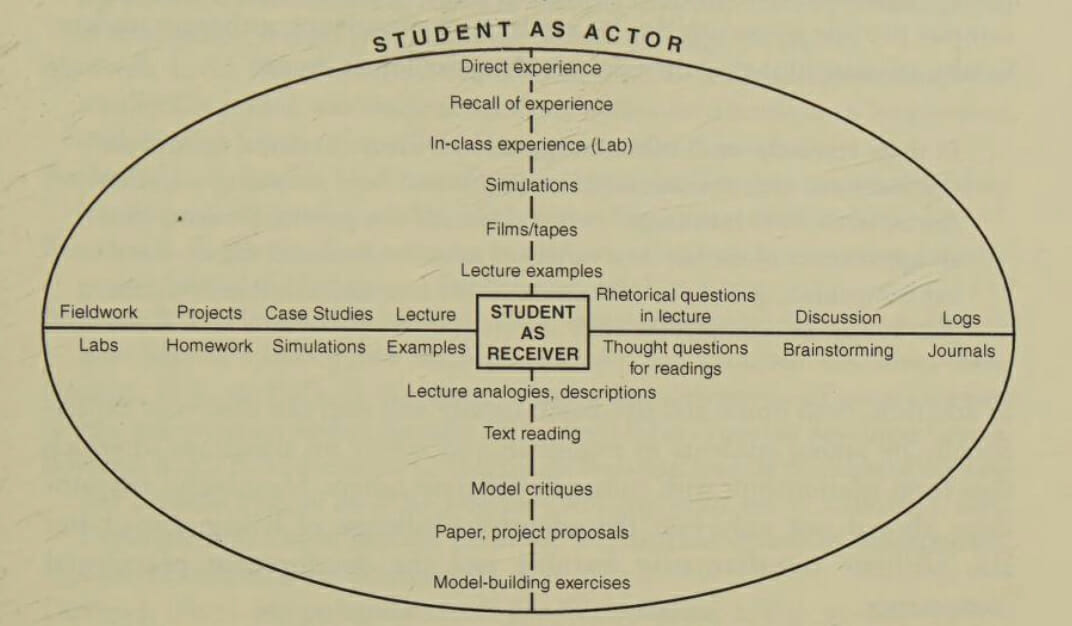
    Kolb was a theorist of how we learn. He was addressing teachers much more than students He wanted to help teachers create better learning environments for students so they could engage in what he called “holistic learning.”

    He thought of the student as both the receiver and actor based on the environment and processes provided by their teachers.

    The Kolb Learning Cycle adapted for teachers
    The Kolb Learning Cycle adapted for teachers in Student Learning Abroad.

    You can adapt a lot from this simple diagram. But you don’t have to follow it exactly.

    And as I’ve just suggested, there probably aren’t many circumstances where it makes sense to do so. Everything is an experience, including sitting still to perform a concentration meditation where your goal is to try and experience nothing.

    How To Craft The Perfect Learning Cycle For Your Goals

    Now, I’m not saying that you shouldn’t adapt from Kolb’s learning styles and turn them into either a cycle or a spiral.

    I’m only saying that personally, I’ve got a PhD, two MAs and many other certificates. I’ve also written many books and created nearly 1000 videos for this website. But I’ve never used exactly what Kolb is talking about.

    Instead, I’ve always studied using the following steps.

    But please understand this:

    Although I offer them to you openly, they’re not meant to be a cookie-cutter, one-size-fits-all model.

    I don’t always follow these steps in the same order, either. Generally, they reflect my process and I think you’ll do well to adapt from them with knowledge and inspiration from Kolb.

    Step One: Write A Vision Statement

    Recently, I decided I was going to learn as much as possible about physics.

    It’s a tough topic and in many ways, I don’t have the prerequisite math for it. Still, I’m interested, so I wrote using my journaling process to try and figure out why.

    This is kind of like starting with the final step of Kolb’s cycle first: testing.

    After that, I wrote out a vision statement. It was very simple:

    I will read three of the most important books on physics over the next six months.

    I started with two books at the same time using interleaving. And I was pleasantly surprised to find in Sir Roger Penrose’s The Road to Reality that he think the math isn’t that difficult for most people.

    If you need more information on crafting a vision statement before you start your next learning cycle, check out this free masterclass:

    https://www.youtube.com/watch?v=MFz31HpVkj0

    Step Two: Gather The Best Possible Materials

    One reason people get stuck is failing to research the topics they want to learn. That, or they rely on their teachers.

    Remember, Kolb was working hard to help teachers stop failing their students. But you don’t have to suffer if you’ve got a teacher that isn’t exciting you.

    Just do some research.

    The internet is amazing for that. You can use search phrases like I did: “syllabus physics textbook”.

    That’s how I found out about The Road to Reality. It has so many references, it’s easy to just keep building based on the books Penrose mentions once I’m done with his.

    I did something similar when I was learning about computer programming. I shared more of this selection and building process in my detailed blog on how to read faster.

    Step Three: Take Notes In A Sophisticated Manner

    Do you know the opposite of a learning cycle or learning spiral?

    It’s a learning nightmare. That’s what you call a situation in which, even if you’ve identified the best time to study, you’re completely scattered and cannot remember the main points, or what books you found them in.

    To avoid this problem, I suggest using either flashcards, Anki or a notebook in the highly optimized manner I teach. To this day, my preferred method is taught on this blog about how to memorize a textbook.

    index cards in shoe boxer

    I love index cards because they can be stored easily in shoe boxes and alphabetized. It’s also a great learning routine that helps fend off digital amnesia.

    Four: Use Memory Techniques

    Memory techniques are the alternative to rote learning.

    There are quite a few types, and the strongest of the bunch is the Memory Palace. It’s an ancient memory technique that helps you deal with large volumes of information.

    If you’d like to learn how to master the approach to learning, grab my free course:

    Free Memory Improvement Course

    It will help you through four free videos and worksheets that help you master your memory.

    That way, no matter where you are in a learning cycle, or which adult learning style you have, you’ll be able to recall the information you need to succeed.

    This technique also helps you fulfil your cognitive needs while filling the many gaps left by many teachers.

    Remember, teachers are only human too.

    And that’s why it’s wonderful to be able to discuss different ways of thinking about learning models like Kolb’s learning cycle.

    So what do you say?

    Are you ready to go out there, experiment with the steps I’ve suggested today or create your own cycle of learning?

    No matter what, remember that Kolb stressed one point I agree with above all:

    Learning is not just about science. It’s also an art and a craft.


    What Is A Paracosm? Plus: 3 Steps To Building A Paracosm Circle Aug 20, 2023
    Show notes

    what is a paracosm feature imageAre you paracosmic?

    I know I sure am.

    And it was easy and fun to get there by developing my own paracosm, even if it took a bit of time.

    I’m talking about having hundreds of fantasy characters constantly rolling around in my mind. Real people too.

    Sadly, some people think this state of having a large mental population is some kind of disease…

    Frankly, even if it is a disease, I absolutely love my paracosm symptoms.

    I wish I could get more.

    And to explain exactly why, on this page, we’ll look into why it’s so beneficial to build and use a paracosm of your own.

    What Is A Paracosm?

    A paracosm is an invented world, typically populated by many imaginary characters. They could number in the dozens, hundreds or even the thousands.

    “Cosm” simply means world or universe.

    The Latin prefix “para” can mean many things:

    • Alongside
    • Beside
    • Near
    • Above
    • Resembling
    • Beyond

    And it can even mean “abnormal.”

    Huh?

    https://www.youtube.com/watch?v=OZQGBJquR_g

    In the Handbook of Dissociation, Barry Cohen talks paracosm in adulthood as something belonging to either abused individuals or artists, if not both.

    He defines it in terms of repressed images that go through “revisualization.”

    Now, I’m not saying that some people don’t suffer so badly that they create what Cohen calls a posttraumatic paracosm.

    But he is walking a thin line and practically reifies having a rich imaginary life as a disease.

    You’ll find a more balanced approach in Imaginary Companions and the Children Who Create Them. In this book, Marjorie Taylor shows how it can be quite healthy.

    For example, she discusses the ways that Ancient Greek poets used to use the gods as their muses. The very idea that those gods exist and influence human affairs is an example of a very productive paracosm.

    Then we have more contemporary authors.

    For example, take the paracosm created by C.S. Lewis for his Narnia series of books. When I read them as a kid, I actively imagined all of those characters, and even added new ones by writing stories that took place in that world.

    a magic book on a desk

    Nothing could be healthier when you’re a kid than actively using your imagination. In this sense, having an invented world that lives alongside reality is rarely abnormal.

    And as we’ll see, people who use memory techniques have such a world living alongside them all the time.

    If Having A Paracosm Is Abnormal, What Are The Symptoms?

    In Anti-Oedipus, Deleuze and Guattarri famously argue out that capitalism creates mental illness.

    What they mean is that capitalism requires you to justify your existence by participating in an economic system premised upon the notion of production and growth.

    People who can’t follow along with this are often deemed mentally ill. You can see this in the Cohen article where you claims that a key symptom of having a paracosm is a lack of “growth.”

    Sadly, entire industries have developed in order to sell medicines and other forms of therapy to help people “fit in” and “grow” according to an economic agenda.

    So if you find that you or a loved one is lost in a paracosm to the extent that participating in the capitalistic system is impossible, then you might have “symptoms.”

    a woman is struggling with something

    These might include struggles to:

    • Learn new skills
    • Communicate
    • Remember things like important details, names, appointments, etc.

    But what if the symptom of having a paracosm could be having a better memory?

    This is where developing your own paracosm circle comes in.

    3 Steps To Build Your Own Paracosm Circle

    I mentioned at the outset that I went out of my way to create my own paracosm and link it to both the standard Memory Palace technique I use and the virtual Memory Palace approach.

    Why?

    Because I needed to remember a lot of information fast.

    At that time, a major depression practically destroyed my ability to focus or concentrate on my PhD studies and dissertation preparation. And a ton of negative memories kept coming up.

    Then I discovered memory techniques.

    One principle of these techniques is association, often based on fantasy characters.

    Memory athletes and memory experts often create what is called a PAO System to organize their characters.

    A variation technique is the pegword method.

    Then, you arrange these in a Memory Palace. The Memory Palace helps you associate your familiar characters with information you don’t know.

    And it lets you revisit both your fantasy characters and the information at the same time.

    To help you understand this better, I’ve created a free course called Memory Palace Mastery. Register here:

    Free Memory Improvement Course

    This kind of paracosm imaginary world is extremely powerful. I wish I’d created one like it much, much earlier! Here’s how to build one step-by-step.

    Step One: Create An Alphabetical Paracosm Circle

    Learn the Memory Wheel technique of Ramon Llull.

    Basically, you create a circle in your mind built from the alphabet.

    https://www.youtube.com/watch?v=Opmb-mU-KPI

    Step Two: Link Each Letter in the Paracosm Circle To A Figure

    This step is fun. When you think of the letter A, link it to either an existing fantasy character, or one of your own invention. I sometimes use Marvel’s Ant-Man. Other times I use Adam Apple, who is a character I’ve developed for personal use and my forthcoming Memory Detective Jr. series.

    I suggest going through the entire alphabet so you have at least one figure for each letter from A-Z.

    But it’s also perfectly okay to have a paracosm that uses only part of the alphabet. It really comes down to how much mental training you want to enjoy.

    Step Three: Draw Upon The Paracosm Circle With Purpose

    There are different reasons to draw upon your world of fun and friendly associations. Primarily I use these images during a learning cycle. For example, when studying a language, instead of focusing on how hard Italian may or may not be, I look upon the letters in the words (or in some cases the characters) I want to learn and then memorize them.

    Here’s a demonstration of what I mean specifically for the language learning example:

    https://www.youtube.com/watch?v=7Dvdeh-nt-g

    You can also draw upon your paracosm when you’re feeling down and want a mental vacation from stress. This technique has helped me a ton over the years.

    The best part? It’s something you can do completely in your own mind for a fast and fun distraction. You don’t have to expose yourself to yet another app, which we all know are often the source of the problems we’re trying to eliminate.

    Paracosm In Adulthood

    As we’ve seen, some people may create paracosms to escape trauma and abuse.

    However, when used for memory purposes, researchers like Tim Dalgleish have found that much relief can be found from using the method of loci in positive ways.

    (Note: method of loci basically means the same thing as Memory Palace.)

    I’ve seen students like Nicholas Castle turn things around for themselves. He created tremendous relief from his PTSD symptoms as I teach in the Magnetic Memory Method Masterclass.

    I myself experienced freedom from trauma by using these techniques. I shared the full story at a TEDx event:

    https://www.youtube.com/watch?v=kvtYjdriSpM

    Beyond that, we’ve talked about C.S. Lewis and his Narnia series.

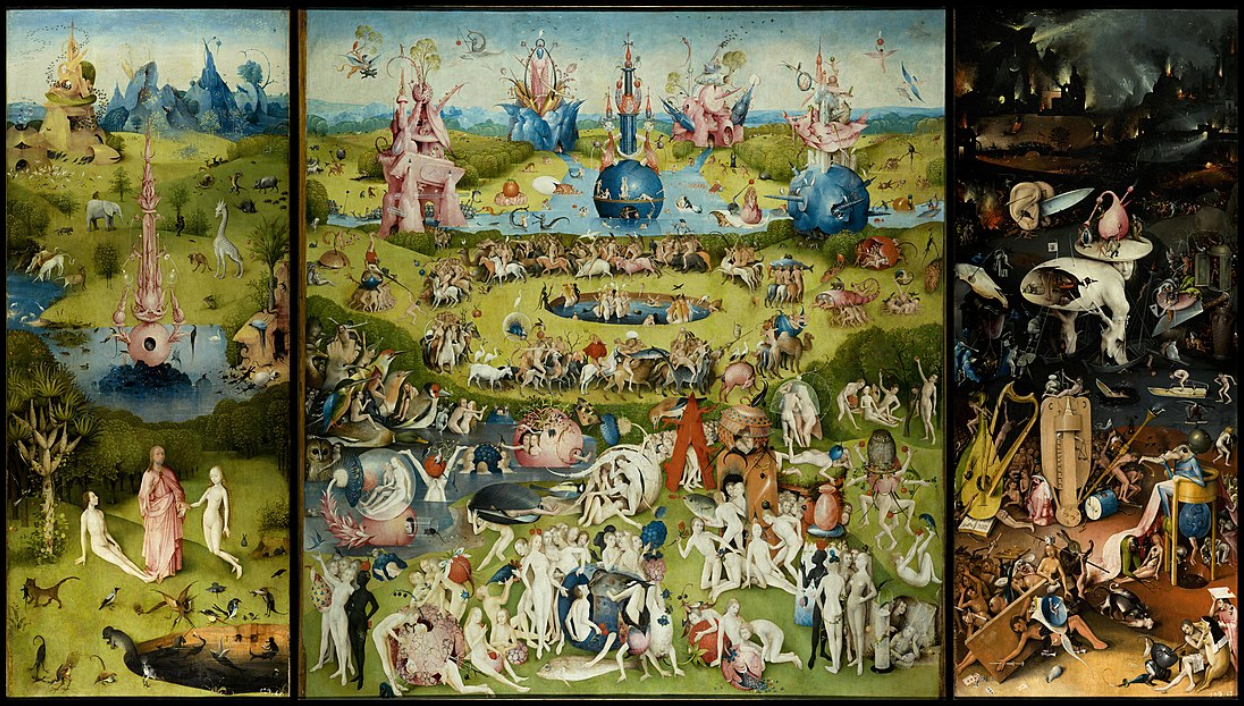
    Then there’s author Michael Connelly. As he has discussed, his Bosch series is inspired by the painting The Garden of Earthly Delights.

    As Connelly has his detective solve crimes across dozens of novels, he is trying to create a cast of characters that is literally like another world.

    bosch painting as an example of a paracosm

    Then there’s Mark Rosenfelder, who wrote The Planet Construction Kit for authors. He also wrote the Language Construction Kit so that all the people on your planets will have authentic sounding ways of speaking.

    As someone who also writes fiction, I’ve created many worlds and many people myself. (Ask me about Planet Etc. sometime!)

    Beyond fiction, my career as an author now stems from the “fantasy” worlds I’ve built to help me use memory techniques better. I’m not the first one. There have been many others throughout history, Giordano Bruno being one of the best.

    So in my final analysis, developing and maintaining a paracosm is a perfectly healthy thing to do. It might even help you experience hyperphantasia.

    I’m not a therapist, so please take what I’m about to say with a grain of salt. But it appears to me that a lot of paracosm psychology is broken.

    I’m not saying that it’s a good thing for people to respond to trauma with escapism.

    But to lump the creation of imaginary worlds together with acts of dissociation through fantasy is simply false. If you have an active imagination, that’s one of the greatest gifts in the world in my books. So many people wish they had your gifts.

    And if you are suffering from trauma, the memory training offered on this site has been scientifically proven to help people with such issues.

    So what do you say?

    Are you ready to develop your own paracosm?


    Does the Pimsleur Method Really Work? A Little, And Here’s Why Jul 31, 2023
    Show notes

    Paul Pimsleur wanted language learning to be fun, interesting and engaging. He spent much of his career finding ways to make language learning keep the attention of students without them needing to refer to a dictionary. To do this, he focused extensively on the specific words and phrases his various programs involved. He also included a variety of spaced repetition elements within short learning sessions. We talk about shrinking attention spans now, but even back in 1972, one of his books suggests that students of that era could not focus on a paragraph with more than 200-300 words in it. Since very little has changed for better or worse, many people still seek out and try the Pimsleur approach. But what is it exactly? And how can you know in advance if a Pimsleur language program will work for you? Good news: In this Pimsleur review, I’m going to share my experiences with it as a learning and memory expert. I’ll tell you why parts of his approach work and how to enhance those parts. That way, if you’re going in cold, you can hit the ground running. And if you already have a bunch of Pimsleur books or audio recordings kicking around, you’ll now be able to get much more out of them. Ready? Let’d dive in. https://youtu.be/ROCC8iJKxYw What Is The Pimsleur Method? The Pimsleur Method accomplishes a few things at the same time: Introduction to new vocabulary and phrases Listening and comprehension practice Voluntary speaking practice Exposure to passive, irregular spaced repetition A relatively weak invitation to voluntarily use active recall Having read a few of Dr. Paul Pimsleur’s textbooks, I feel that he was a credible educational innovator. There’s some real genius in what he put together, even if it has several weaknesses. The main weaknesses have to do with a combination of user error and “faults” common to all self-study programs: The individual has to bring their own personal volition and mental strength to get through the lessons. https://www.youtube.com/watch?v=ulEmB1lDjoA So whether you’re using one of the now dated Pimsleur textbooks (like the ones he made for Spanish and French) or an audio program, here’s the first thing to consider: Are you mentally stimulated by reading books on your own or listening to audio programs in a quiet study place where you won’t be disturbed? These are important considerations because that’s what the Pimsleur approach is: A technique that involves you studying from a book or an audio program on your own. You listen by yourself and repeat words and phrases based on a kind of mix of spaced repetition and context dependent memory exercise. This means that you could become quite good at “playing the game” while listening to the recordings and responding. But you won’t necessarily be able to read or speak the language in a real life situation. And if you’re a learner who needs interaction with others, Pimsleur risks being incredibly boring. But for what it is, the approach is definitely legitimate. It’s just not something that’s going to help you develop fluency for reasons we’ll discuss in a minute. How Does the Pimsleur Method Help You Learn a Language? The answer is that the Pimsleur Method doesn’t help you learn a language at all. And it can’t. It’s especially weak in some cases because it’s almost purely auditory. Even if you go through the guidebook, it won’t help you learn the hiragana or katakana, for example. It’s also weak because if you aren’t aware of how to supercharge it with mnemonics, you’ll quickly fall into rote learning. But don’t give up hope because it can help you develop some basic vocabulary and pattern recognition quickly. Let me share an episode from when I first started learning Chinese to show how specifically it helped me. Instead of expecting the Pimsleur program in Mandarin to help make me fluent, I used it for some basic vocabulary and phrases. That realistic mindset is key: I approached it as a tool, not a magic bullet. While listening, I actively engaged with the audio material by writing down a version of what I was hearing. Then, without resorting to Anki or flashcards, I memorized the material using a Memory Palace. I next wrote out what I memorized from memory and took the material into lessons with language tutors I found using some of the best language learning software. And yes, the Pimsleur Method helped me quite a bit as a source for some basic familiarity with Chinese. I previously used it this way for German too. The Pimsleur Method vs Other Auditory Memory Techniques This question is easy to answer: Most Pimsleur programs are dated. They often give you phrases in situations that are much less relevant in the 21st century than when they were recorded. This isn’t a total deal breaker. But Olly Richards has been doing amazing work by creating audio programs to accompany story-based language learning books that are very up-to-date with contemporary issues. Benny Lewis has likewise been proactive in making sure his language learning materials include phrases that relate to modern situations. Frankly, the datedness doesn’t devalue the Pimsleur Method that much. But it does make context a big issue that may discourage you because you’ll often meet native speakers who will tell you, “we don’t say it that way anymore.” Plus, even for the words and phrases that are good, you’ll still need to use the Big Five of Language Learning no matter which audio source or reading textbook you use. The Big Five of Language Learning is essential. It gives you a balance of all the activities needed to develop fluency in a language. You’ll learn how to balance them all effectively in this tutorial on how to learn a new language fast. The Pimsleur Method vs Other Memorization Methods Technically, Pimsleur is not a memorization method. It’s not even a memory technique. As Pimsleur wrote in Sol y Sombra, one of his still perfectly useful textbooks for learning Spanish, his goal is to help learners: Increase active vocabulary knowledge Practice grammatical structures Exercise comprehension Practice speaking and writing Although each of these things provide memory exercise, the approach is not mnemonic in the sense we mean in the Magnetic Memory Method Masterclass. Don’t get me wrong. Pimsleur’s approach is effective. It’s just not a mnemonic strategy because it doesn’t involve elaborative encoding. Having short study sessions and spaced repetition does involve some chunking, however. But if you do want a memorization-based language learning strategy, here’s what I suggest: One: Develop Memory Palaces Memory Palaces are useful in language learning for a few reasons. And they’re becoming increasingly popular since 3x World Memory Champion Alex Mullen and Mandarin Blueprint arrived on the scene. Then you have my students like Sunil Khatri and Kevin Richardson, amongst many others, who have crushed their language learning goals thanks to this simple ancient memory technique. This pre-numbered Memory Palace example shows you how I prepared to memorize the Atma Bodha in full. I know the text and the number of each verse in an ancient Sanskrit text thanks to my favorite memory technique. So what is it and how does it work for learning a language? Basically, you associate words you’re learning with familiar locations. Instead of passively listening to the Pimsleur material, you mentally translate those words and phrases and “place” them in a bedroom or on a living room couch. Two: Use Highly Memorable Associations For example, when I first started learning Chinese, I used Pimsleur in combination with a library in Berlin. The first sentence was, “Do you speak…?” I created a mental image, something like Bruce Lee kneeing Hemingway with his shoes. This translated easily into, “Nǐ huì shuō…” From there, you just add more images to learn an entire phrase. Three: Recall Strategically As mentioned in the video above, I wrote out what I memorized from memory. This exercised my memory through active recall. Pimsleur certainly prompts you to recall the information, but because it involves no memory training elements, you don’t form memories as quickly as you could. And again, if you’re recalling only in the presence of a recording, you might do okay in that context. But it’s actually conditioning you to not be able to recall nearly as well in real life situations. You need to also practice recalling what you’re memorized with native speakers. Four: Dictionary Sourcing As much as I admire many of Dr. Pimsleur’s innovations, I feel that one of his motivations was patently false. So many language learning gurus seem to think that students should not be using dictionaries. I find this incredibly strange because dictionaries are sources of words and meanings. Why would you want to avoid them when you’re learning a language? Not only that, but when you don’t know what a word means in your mother tongue, the dictionary is precisely where you go. Plus, if you want a variation on a word, you go to a thesaurus. So the prohibition or deviation from using dictionaries strikes me as utterly false. Using a Memory Palace Network in combination with a dictionary is incredibly useful. I also sometimes use mind mapping in language learning in combination with dictionaries, especially for tough words. Even though I’ve trained myself to become something like a walking mnemonics dictionary, for whatever reason some words still evade even my many years of practice using the Magnetic Memory Method approach to mental imagery. The point is ultimately moot no matter which way you look at it. Olly Richards’ books always come with a kind of mini-dictionary with key words in what you’re about to read or listen to. This kind of dictionary-esque feature has been with us at least since Wheelock’s Latin. And it’s this feature that makes Olly’s books amongst the best language learning books in existence. In a word, dictionaries work when you want to memorize the vocabulary of any language. Take advantage of them! So, Does the Pimsleur Method Really Work? As I hope you’ve discovered in this article, I think “Does Pimsleur work?” is the wrong question. Pimsleur can be a useful part of learning any language. But there’s no such thing as one source when it comes to learning any language. You need to combine a number of approaches. And if you’re willing to book enough sessions with language learning partners, you could potentially skip it altogether. Frankly, there are so many free sources of words and phrases from so many languages these days, you don’t really need to invest in an old recorded program that this company has transferred to MP3s. And that’s ultimately its biggest failing. It has “crystallized” how a handful of native speakers pronounce the language. What you really need is exposure to a variety of speakers, which these days can be accessed easily within your Netflix account. Plus, you need feedback from native speakers, especially when it comes to sharpening your verbal memory for sounds and meanings. So although I’ve used the program twice for German and Mandarin, I learned far more by following the Big Five and spending time with native speakers based on memorization. And if you’d like to know more about using a Memory Palace to commit mounds of vocabulary and phrases to memory quickly, grab this FREE Memory Improvement Kit: It will help you rapidly commit essential words and phrases to memory from any source. So what do you think? Do you like the Pimsleur concept yourself? Or are you ready to update your approach for the 21st century with the most scientific and direct language learning methods available to you at a very low cost?

    Full show notes at the publisher

    How to Use a Memory Palace for Language Learning Jul 19, 2023
    Show notes

    If you’re learning a new foreign language, the Memory Palace technique is one of the most powerful tools you can use. I know this from experience, not theory. I’ve used Memory Palaces to learn and retain vocabulary and phrases in multiple languages, from German and Mandarin to Hebrew, Latin and Sanskrit. But here’s the truth: A lot of people try the Memory Palace method for language learning and quickly fizzle out. Why? Because they unknowingly waste energy on the wrong approaches to using the technique. That’s completely avoidable. So on this page, I’ll walk you through exactly how to use Memory Palaces the right way for language learning, drawing upon my decades of experience teaching and using these methods personally. That way, you can use this incredibly powerful learning technique to supplement your language learning adventure. By the end, you’ll know how to avoid every common pitfall and walk away with a flexible, fun and fast system for remembering thousands of words and phrases. Let’s get started. https://youtu.be/3taeoaGe1es First, Avoid These Memory Palace Mistakes If you’ve tried using a Memory Palace to develop your fluency in another language and struggled, this first mistake is important to avoid. Stop blaming yourself. A lot of memory training on the Internet lacks nuance. Worse, a lot of it is designed to peak your interest with big promises, but not teach you anything. That’s not happening here. In reality, the technique works wonderfully for speeding up retention with any information. Beyond not having good sources of information, people struggle because: One Memory Palace is not enough The Memory Palaces they do have are poorly designed They do not use visualization and elaboration optimally They do not use their Memory Palaces with a proper spaced repetition strategy They do not situate the technique in the larger context of what it takes to learn a language They are not realistic about how many languages you can realistically learn at the same time Not exploring the technique in combination with tools like Anki, The Freedom Journal or flashcards They give up too soon Again, forgive yourself if you’ve encountered any of these situations before. We’re about to solve everything together. Can a Memory Palace Really Teach You a New Language? The Buddha reportedly said that “Expectation is the quickest path to suffering.” And a lot of people mistakenly think that the Memory Palace technique is going to magically “teach” them the language or make them fluent. But remembering vocabulary and phrases is not just a solitary activity. It’s a communal one. This is a key point made by Tim Doner in a TEDx Teen Talk where he also shows how he used the Memory Palace technique. To see such a young person so wisely embedding this ancient memory technique in the larger principles of what it takes to learn a language is inspiring. Because that’s what it takes: Use the Memory Palace as a tool from a toolbox containing other tools, not a magic bullet. What are some of those other tools? Language learning books Stories in foreign languages Speaking partners and community which some language learning software programs provide How to Use a Memory Palace for Language Learning The key to getting your first Memory Palace optimized for language learning involves the following steps. A lot of them come down to proper design, planning and exactly how you place foreign language vocabulary and phrases in your Memory Palaces. Your top priorities are: Making sure you’re using a true Memory Palace Making sure you can navigate it naturally Making sure you don’t trap or confuse yourself Making sure it works for Recall Rehearsal (spaced repetition) Making sure you have multiple Memory Palaces Making sure you populate the Memory Palaces with truly Magnetic Imagery Making sure you learn to scale from individual words to entire sentences Let’s go through each of these steps in order. One: Use A True Memory Palace By “true” Memory Palace, I mean basing your Memory Palace on a location you already remember. Some people don’t mind spending the time to memorize a location in order to use it. Or they are happy to base a Memory Palace on a video game, movie or even a story. All of these are what I call Virtual Memory Palaces. By all means, experiment with these forms. But if you find yourself spinning your wheels, come back to the principle of basing each Memory Palace for foreign language learning purposes on actual locations. Chances are you’ll be much more successful. This better outcome happens because you’re reducing the cognitive load by simply laying out associations on a journey you already remember. This principle reduces errors and saves time. Segmenting space you already remember is what distinguishes a Memory Palace from a Memorized Palace. Two: Navigate Your Palaces Naturally Many times I receive messages from people who have issues with language learning. When I ask them what they’re doing, they tell me they’re crossing through walls or mentally leaping through space and time. I counsel them to try navigating their Memory Palaces using one of these five examples. Each of them involves walking or moving mentally from one station in the Memory Palace to the next exactly as you would in real life. Again, this procedure has to do with reducing cognitive load. If you choose to magically penetrate a window and fly across town, you’ve given yourself an additional memory task. That takes time and energy away from using the technique to memorize vocabulary and phrases. But if you move from your bedroom to your balcony exactly as you would in the real world, you can focus much more attention on the content you’re memorizing. Three: Avoid Traps And Confusion So many Memory Palace tutorials tell you to start at your front door and move inwards. Sure, this can work, but personally, it makes me cringe. Every time I do this, I wind up running out of space very quickly. That’s why I learned to start at the “dead end” and move towards the entrance. That way, I can add more stations if desired by using driveways, mailboxes, etc. This approach allows you to patch in the best parts of the journey method, which involves outdoor locations. It also helps ensure that you don’t have to renovate any of your Memory Palaces later. Four: Make Sure The Memory Palace Assists Recall Rehearsal We know that the Memory Palace technique works. One of the most recent and most powerful studies conducted by a team involve David Reser and Tyson Yunkaporta showed excellent results in a study using an Aboriginal variation of the Memory Palace. This study revealed positive results for people with dyslexia using a software variation of the Memory Palace technique. And Lynne Kelly’s Memory Craft provides even more research if you’re interested. The point is that you need to follow all of these steps I’ve outlined because active recall and review are necessary. But you can’t be fussing around with the Memory Palace itself because that drains you of time, energy and enthusiasm for the technique. Some people find the setup itself daunting, and I can appreciate that. But I don’t think they’re correct when they say that rote learning would be better for them. Research has shown that rote learning can reduce your critical thinking abilities. So it’s worth the small amount of pre-loaded learning it takes to master the Memory Palace technique for language learning. Five: Multiple Memory Palaces Once you’ve made one Memory Palace and put it into action for approximately 10 words, it’s time to make more. Why? A few reasons: You can gather related words alphabetically or thematically in different Memory Palaces Rotating between Memory Palaces maximizes the benefits of chunking through interleaving You learn to use the technique better It helps you reuse or expand previous Memory Palaces effectively Some people find creating multiple Memory Palaces daunting. You don’t have to create dozens overnight. But if you sit down and complete the exercises I teach, the rusty chain in your brain will soon be oiled. Plus, once you start thinking alphabetically, you’ll see that the entire world is optimized for you to harness this technique. A simple case in point is that every street in my town has a name. Even if that name is a number, it can still be spelled. If I used 1st Avenue as a Memory Palace for ‘F’ words, I have a highly optimized mental journey that leans upon a feature in the world. This kind of Memory Palace reduces cognitive load by harnessing what is already known instead of wasting energy on coming up with invented associations. Six: Use Magnetic Imagery When people send me their associations, they often involve associations like “a hair stylist” for a German word like Herstellen. Don’t get me wrong. This is a great start. But it’s not optimized Magnetic Imagery. Mnemonic Images need more specificity to really pop and help you recall both the sound and the meaning of the words you’re learning. To improve the example a student sent me, I suggested imagining the German author Hermann Hesse “producing” a hair style for Ellen Degeneres. To be clear, I’ve linked the “Her” in Hermann to the “her” in herstellen, and “Ellen” to “stellen” and had their interaction express the meaning of the world. This level of specificity follows a variation of the principles I shared above. It relies upon people that are already in memory. They are concrete and specific and easy to animate. “Hair stylist” on the other hand is vague and generic. Sure, learning to make sure your images are properly “Magnetic” can take a bit of practice. But it’s well worth it and you’ll pick up the habit soon enough. In fact, with consistent practice, the skill will enter your procedural memory and you’ll find yourself doing it on autopilot. Seven: Scale To Entire Phrases The best part of this technique is that you don’t have to stop with individual words. Of course, it only makes sense to start by mastering one word at a time. That’s why I suggest started with approximately 10 words per Memory Palace. Once you can do this reliably, it’s time to add a useful phrase to each word. (And I do mean memorizing useful phrases. Often people spend time and energy on vocabulary and phrases they don’t actually need.) There are a few ways to do this depending on how you’re using the technique. For example, I first get all of the words into memory. Then I pick a couple and add phrases on the same station I originally used. But other times, I will transport the words to completely different Memory Palaces. I suggest taking everything on a case-by-base basis, even if you have some trusty and reliable routines. That way, you’ll always have a path forward, which becomes especially useful when you start to learn more than one language at a time. Memory Palace Q&As: What Does Success Look Like? Success obviously looks different for different people. But in general, here’s how I suggest you think about the process: Have fun. If you’re not enjoying the process, it really isn’t successful. But also take responsibility for making it fun. Memory techniques are like a bike. Everyone needs to adjust the seat and the handle bars, so spend enough time with the technique so that you’ve really settled into what it is and how it works. How Long Will It Take To Learn A Language? The length of time it takes to learn a language depends a lot on how you define fluency. Personally, I’m a fanatic of language, including my native tongue. I don’t think I’ll ever be done learning English, so I don’t worry about this question in any language I study. Rather, I set very specific goals. For example, after CLI heard my language learning podcast episode on The Memory Palace of Matteo Ricci, they invited me to China. That meant I had only three months to study Chinese. Instead of making a massive and impossible goal, I set the achievable goal of developing a 300 word vocabulary and mastering basic conversational phrases. And this worked very well. Later, I was able to start Level 3 at the Confucius Institute school in Brisbane without taking the first two levels. And I set my goal as simply mastering the course content. I passed with flying colors. But I expect to never stop learning Chinese, or German, or Sanskrit or any language I take up. Each language is an adventure for life. How Often Should I Use My Memory Palace? In the beginning, I would suggest using the technique as often as possible. Daily is best, and you can get great results with just 15 minutes a day, or even less. The reason to use the technique frequently is to ensure that your procedural memory can develop the skills involved in the technique. As I discussed in my first book on language learning with memory techniques, memory techniques and your mind are a bit like a bicycle. Once you learn how to get them working, you can take time off and still enjoy smooth sailing. But without consistent practice, it’s very difficult to build enough brain connections to ride freely. Is There A “Best” Way To Use Memory Palaces? Absolutely, yes. You want to use the Memory Palace technique in a way that will get you results. Returning to the bicycle analogy, you can’t just hop on a bike and expect it to be perfectly comfortable. You usually need to adjust the seat height and the exact angle of the bars. Memory techniques are like that too. The principles are universal, but some adjustments to personalize them are always required. Plus, there’s always personal experimentation involved. The need to dive in and get your hands dirty is a common theme in Memory Palace books, and your adventure is unlikely to be any different. Rather than seek the best way, I suggest you first find the most effective way for your specific language learning goals. Then develop your skills so that you’re more efficient. Finally, experiment with yet other approaches so that you’re able to grow your skills over time. The best part? You’ll be growing your fluency as you go thanks to developing your own “mnemonic style.” Now It’s Time to Create Your Own Memory Palace When you’re ready to start applying the Memory Palace technique to your language learning goals, please grab my free memory improvement kit: It gives you some powerful exercises and templates that will ensure your Memory Palaces are well-formed and error free. That way you can dive into crushing your language learning goals immediately. Enjoy this journey in whatever language you’re learning and I look forward to hearing from you in multiple tongues!

    Full show notes at the publisher

    How to Visualize Clearly And Effectively: 7 Proven Tactics Jul 18, 2023
    Show notes

    How to Visualize Clearly And EffectivelyIf you want to know how to visualize clearly and effectively, you probably already have a vision statement written.

    You have written out a vision statement by hand, haven’t you?

    If the answer is “no,” then I’m here to tell you that your visualization is neither clear nor complete. And that means you’re still struggling to achieve your goals.

    If you’re still not living the life you want, study this page carefully.

    You’re about to learn how to visualize images in your mind that will make it impossible not to become the architect of your dreams and fantasies.

    Better?

    You’ll also learn how to be the builder of your success.

    Here’s what this post will cover:

    How to Visualize Clearly: 7 Tips For Success
    1. Don’t Stop At The “Visual”
    2. Have a Written Vision Statement
    3. Mind Map Your Vision
    4. Create a Treasure Map
    5. Do a Visualization Meditation
    6. Journal Daily
    7. Plan Your Action Steps
    Visualize Images Based On Existing Competence

    https://www.youtube.com/watch?v=Z4WEO-8Wem8

    Let’s dive in!

    How to Visualize Clearly: 7 Tips For Success

    Ready to learn how to visualize better? Here are 7 pointers.

    1. Don’t Stop At The “Visual”

    Far too many people think that “visualization” is about seeing clear pictures in their minds.

    A man with a camera in his hand looks across a field during sunset.

    Not only is this single-sensory form of dreaming your way to success extremely limited — it also fails to really help you access all levels of your experiential brain.

    Instead, you want to tap into every possible sensation you can muster. That’s why I want you to memorize this simple acronym:

    KAVE COGS

    These are the eight most powerful senses of multi-sensory visualization I know:

    Kinesthetic
    Auditory
    Visual
    Emotion

    Conceptual
    Olfactory
    Gustatory
    Spatial

    Every time you visualize images, make sure you’re also feeling, smelling, tasting, hearing, and emotionally experiencing your goal.

    2. Have a Written Vision Statement

    A written vision statement is a simple, 2-5 page declaration of what you want to achieve in your own words.

    A person writes in a notebook, on a table with a laptop, coffee cup, and books.

    Words are just as “visual” to your brain as images, with each word acting like an interpretable picture at the conceptual level.

    Plus, by writing out your vision you symbolically and literally signal to your brain that you value your goals. You “see” yourself taking action and it becomes a lived experience.

    Plan to write multiple vision statements. It is a repeatable activity and each time you it will serve you well. So too will these additional 5 visualization exercises.

    3. Mind Map Your Vision

    A mind map, on the other hand, is more visual in the traditional sense. Here, you will use a combination of words and drawings to let yourself conjure up your goals at a glance.
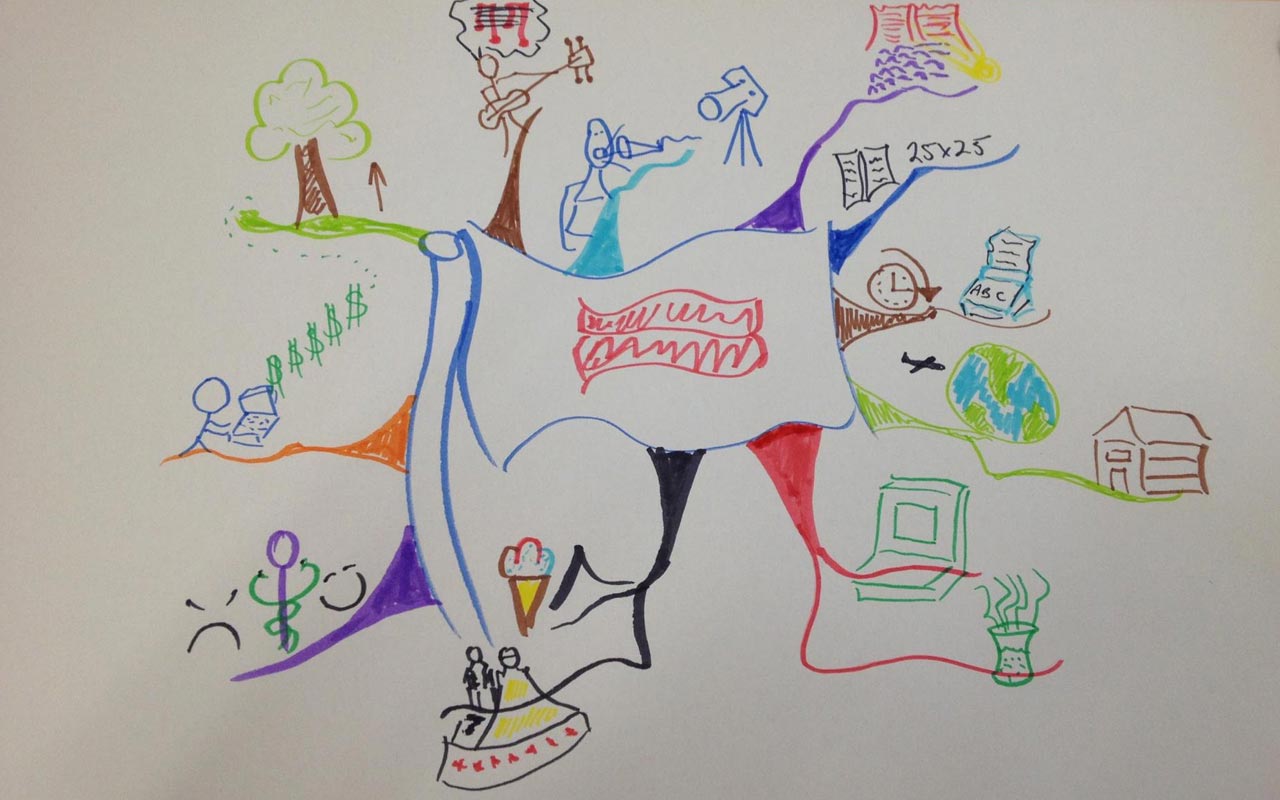
    A mind map drawing of Anthony's. Mind mapping can help you in your quest to visualize clearly.

    I was very fortunate to learn mind mapping directly from Tony Buzan. In fact, I mind mapped the Magnetic Memory Method mission under his personal tutelage back in 2016 and still follow the vision you see represented above.

    I find this approach very useful because mind maps are big, colorful and you can place them in your work area.

    This keeps you focused on the goal — and helps ensure you never forget what you’re working to achieve.

    4. Create a Treasure Map

    To use this technique, which is similar to mind mapping, open a Word document and search for images that represent your goals.

    Anthony's "treasure map" which includes pictures of a band performing on stage, playing cards, an airplane, books, a chest, and J.S. Bach holding an electric bass.

    In the above example, I made it my vision to publish multiple books, travel the world, and play in a band. So I added images that represented these outcomes.

    Within a few short months, using a combination of all the techniques you’re reading now, I was out on the road — and I’ve never looked back since.

    The trick is to print out a couple of copies and keep them where you can see them.

    5. Do a Visualization Meditation

    To experience a visualization meditation, sit on the floor, on the side of your bed, or on a chair. Close your eyes and bring your goal to mind using KAVE COGS.

    A woman in purple pants sits on a meditation cushion with her hands in a mudra, with a singing bowl next to her.

    I like to go through each experiential mental image in that exact order because it’s easy to remember the stack.

    For example, if you want to master playing a musical instrument and have learned how to memorize a song, start with kinesthetic sensations.

    That means you might imagine the feeling of holding your instrument or the stage beneath your feet as you step in front of an audience.

    Then hear the music flowing out of you. See the stage next, including the lights, the audience, and your fellow musicians. Let the emotions roll through you and carry on with the rest.

    Powerful stuff, isn’t it?

    Add a walking meditation to the mix and the other varieties I teach in The Victorious Mind: How to Master Memory, Meditation and Mental Well-Being and watch the results unfold.

    6. Journal Daily

    When I was learning how to visualize effectively, journaling was key.

    Two journals sit against a blank surface, with 2 colored pencils on top. Journaling can help you learn how to visualize effectively.

    In fact, I still journal a “Perfect Present” vision statement every day. It goes like this:

    I wake up healthy and strong. The worth of my being is great. I live in joy and abundance. I meditate, exercise and eat well. My passive income exceeds my lifestyle by 10x. I write and play music every day in joy and abundance.

    Again, writing things out makes your action visible to you. And you can run through KAVE COGS as you write out your goal.

    Not only is writing out a vision statement scientifically viable, research groups at schools like Notre Dame have been using texts formalized by other scientists and researchers (like Janel M. Radtke) going back to 1988.

    7. Plan Your Action Steps

    I took a snap of this Japanese Proverb outside of a cafe in Vancouver, British Columbia:

    Vision without action is daydream. Action without vision is nightmare.

    A chalkboard sign outside a cafe reads, "Vision without action is daydream. Action without vision is nightmare."

    In reality, there’s nothing wrong with daydreaming — so long as you’re willing to accept the suffering that comes from not achieving realistic goals.

    That’s why we need to break our goals down into milestones and individual steps or micro-actions we can take. These need to be charted out over time.

    As much as possible, these steps should be automated, or optimized, so they take place without the need for willpower or motivation.

    For example, every week I release new blog posts, videos, and podcasts. There’s a system behind how everything happens. It’s not exactly flexible, but not rigid either.

    It just serves the needs of my vision statement for the Magnetic Memory Method.

    And I plan, and replan, as you should too — including the time to meditate and visualize using KAVE COGS.

    Visualize Images Based On Existing Competence

    One last power tip:

    A lot of people visualize goals beyond their abilities.

    A person's hand sits on the frets of a guitar.

    For example, I am in no way accepting a “limiting belief” when I realize that I am not going to become a world-famous musician.

    My musical competence was good enough to play on quite a few stages in quite a few bands and do some recording. But I’m just not going to put in the time and effort to reach that “next level.”

    And that’s why when I worked to visualize clearly what I wanted to achieve musically, I placed it within the realm of what I could actually accomplish.

    That way, my efforts to join a band and get out on the road were not wasted. I could learn songs quickly and perform them to a decent standard.

    But my psoriatic arthritis flared while I was on the road. No amount of visualization was going to make my hands performance-ready for recording on the album with The Outside I’d been preparing to produce with them.

    But I could help out with the lyrics and even write a short vocal cameo I had on the album. In other words, I didn’t give up on the vision: I pivoted.

    Expand Your Existing Competence

    Sometimes you can visualize beyond your competence. For example, I’m a decent writer and it was great that I could get The Victorious Mind to reach #1 in three bestseller categories on Amazon as an independent author.
    The Victorious Mind: How to Master Memory, Meditation, and Mental Well-Being

    But I don’t want to be independent forever. So I have to visualize with radical honesty my existing competence and my dream of having a traditional publisher help with a book that will reach a larger audience.

    Then, I have to visualize all the skills I need to add in order to reach that next level — and write them out. Next comes the plan with all the milestones and individual micro-actions.

    Finally, the 7 visualization steps listed above are needed to make everything as clear and doable as possible. And it’s clear to me that the number one thing I need to expand is reaching out to editors and mastering relationship building with them.

    Sure, all of this takes mental strength. But it’s worth pursuing every ounce of grit you can get, and so I ask you:

    What can you do to visualize your existing competence related to your bigger goals right now?

    Never forget, every moment you aren’t taking action and visualizing based on the strongest possible multi-sensory models, you are leaving so much of life’s precious riches behind.

    Hopefully, by now you have more than a few solid ideas that will make your visualizations clearer than ever before. And if I’m missing any, let me know. I’ll visualize them into the mix!

    And be sure to pick up your copy of The Victorious Mind: How to Master Memory, Meditation and Mental Well-Being and put the meditations in the book to use on your journey to visualize clearly and effectively!


    From Cardiac Arrest to Fearless Bible Memory Before the Congregation Jul 14, 2023
    Show notes

    Matt Barclay Bible Memory feature imageHave you ever wanted to memorize Psalms from the Bible?

    Or that matter, any verbatim text?

    If so, delve into the extraordinary story and memory tips gifted to us today by Matt Barclay.

    I mean, get this:

    Matt experienced challenging memory issues following a cardiac arrest.

    Yet, using the Magnetic Memory Method, he recited almost an entire Psalm from memory!

    In public. Without breaking a sweat.

    Matt’s triumph is a true testament to the power of resilience, memory techniques, faith and using the Memory Palace technique to accomplish meaningful goals

    Especially inspiring is how Matt rose up from the cognitive challenges created by a cardiac arrest to become a fearless master of Bible memory.

    This episode of the Magnetic Memory Method combines heartfelt conversation and strategic analysis of Matt approaches memorizing scripture.

    Listen in as Matt shares his profound insights, guiding us through the intricate process of harnessing the mind’s potential to recall and recite scripture with unwavering confidence.

    Prepare to be moved and inspired. Matt’s incredible journey exemplifies the unyielding power of the human spirit and the triumph of action over adversity.

    https://www.youtube.com/watch?v=XiY58Z1ApCc

    How Matt Barclay Memorized So Much Of The Bible, So Quickly

    Here’s the good news:

    Memorizing scripture is not rocket science.

    Far from it.

    Whether you want to memorize a short prayer or even long passages to include as part of a memorized presentation, you have options.

    As Matt explains in this discussion, he started off using one of many linking-type methods, in this case the one described by Harry Lorayne.

    Although linking can be perfectly suitable for short lists, it’s not a particularly strong memory technique for any kind of verbatim text.

    That’s when Matt found the Magnetic Memory Method and the Memory Palace solution.

    It provides you with a much more flexible mnemonic strategy. You can use it to memorize the books of the Bible, and scripture in any language.

    How do I know? Because I’ve memorized a lot of scripture in Sanskrit and a smaller amount in Latin. Here’s a longer Sanskrit demonstration and a detailed case study of memorizing some of the Book of John in Latin.

    Even Mike McKinley who felt like he wasn’t using spatial memory still had a component of it in his 66 Psalms memory project.

    Ultimately, it helps to have solid reasons why you’re memorizing Scripture. If you need motivation, here are six reasons why memorizing scripture is worthwhile – even if you’re not a believer.

    How You Too Can Use The Memory Palace Technique To
    Memorize & Retain Biblical Scripture

    As Matt discovered, the principles I share in my memory courses really matters.

    The key principles boil down to:

    • Create your Memory Palaces in advance
    • Make sure you don’t lead yourself into dead ends
    • Don’t burn mental energy on crossing your own path
    • Use proper mnemonic images
    • Gear everything toward an effective spaced repetition strategy

    how to memorize a passage memory palace example

    For scripture, I also suggest you give yourself a lot of space. One of my longest pieces uses the entire neighborhood you see in the illustration above.

    It’s not possible to always predict exactly how much space you might need when you start. So it’s a best practice to design your journey so you can always add more Magnetic Stations if you need them.

    There’s a lot more to say in terms of the tactics you can easily learn. So if you want to learn more, check out How to Remember the Bible for additional details.

    You can also sign up for my free course:

    Free Memory Improvement Course

    It will help you master the fundamentals of the Memory Palace quickly.

    I hope you enjoyed this impressive and incredibly practical demonstration of memorizing scripture and reciting it from memory.

    I’m grateful to Matt for sharing this part of his journey and would love to hear from you if you’re also memorizing the Bible or other verbatim texts.


    Previous 1 15 16 17 18 19 45 Next

    Related Podcasts

    Making Sense with Sam Harris

    1

    Making Sense with Sam Harris Education
    Grammar Girl

    2

    Grammar Girl Education
    Good Life Project

    3

    Good Life Project Education
    Explain It to Me

    4

    Explain It to Me Education
    Team Never Quit

    5

    Team Never Quit Comedy
    Optimal Living Daily – Personal Development and Self-Improvement

    6

    Optimal Living Daily – Personal Development and Self-Improvement Alternative Health
    footer-logo

    Contact Us

    Toll Free: 844-670-7747

    Links

    • Home
    • Top Charts
    • Networks
    • Apps
    • Independents Podcasts
    • Podcast Advertising
    • Podcast News
    • Contact Us
    • About Us
    • Analytics & Insights

    Stay Connected

      Privacy, Terms of Use & Our Code of Ethics Protecting Content Creators Copyrights