TopPodcast.com
Menu
  • Home
  • Top Charts
  • Top Networks
  • Top Apps
  • Top Independents
  • Top Podfluencers
  • Top Picks
    • Top Business Podcasts
    • Top True Crime Podcasts
    • Top Finance Podcasts
    • Top Comedy Podcasts
    • Top Music Podcasts
    • Top Womens Podcasts
    • Top Kids Podcasts
    • Top Sports Podcasts
    • Top News Podcasts
    • Top Tech Podcasts
    • Top Crypto Podcasts
    • Top Entrepreneurial Podcasts
    • Top Fantasy Sports Podcasts
    • Top Political Podcasts
    • Top Science Podcasts
    • Top Self Help Podcasts
    • Top Sports Betting Podcasts
    • Top Stocks Podcasts
  • Podcast News
  • About Us
  • Podcast Advertising
  • Contact
Not in our directory?
Add Show Here
Podcast Equipment
Center

toppodcastlogoOur TOPPODCAST Picks

  • Comedy
  • Crypto
  • Sports
  • News
  • Politics
  • True Crime
  • Business
  • Finance

Follow Us

toppodcastlogoStay Connected

    View Top 200 Chart
    Back to Rankings Page
    Education

    Anthony Metivier’s Magnetic Memory Method Podcast

    Learn, Memorize And Recall Anything Using Memory Techniques, Mnemonics And A Memory Palace Fast

    Advertise
    • Apple Podcasts
    • Google Play
    • Spotify

    Latest Episodes:
    207 Deep Philosophical Questions for Smart People Nov 18, 2023
    Show notes

    News flash: philosophical questions for smart people must actually be philosophical. I raise this point because so many people ask general interest questions and call them philosophical. But that doesn’t mean that they actually are philosophical. Who am I to know? As I’ve learned as a scholar with a PhD in Humanities, much of the best philosophy involves investigating of the nature of being – existence itself. As a memory scientist and author of a book guided by the philosophy of Advaita Vedanta, demonstrating the ties between memory and ontological being has been a core aspect of my work for over a decade. This book is called The Victorious Mind. I’m also working on a new book now, about the philosopher of memory, Giordano Bruno. It dives deep into what I would call the ontology of memory. It asks, what is the philosophical nature of memory’s existence. Fascinating, right? Or is it too much intellectual noodling? I don’t think so. When it comes to philosophical questions, I don’t think we can ever dig deep enough. As Martin Heidegger often put it, asking deep philosophical questions of his own, we all need to question the being of being itself. Now how’s that for a mind bender? Take things a step further: How is it that we as beings have come to not only ask questions about the nature of being, but also come to question the nature of what it means to ask questions in the first place? The way Heidegger puts it, the ultimate philosophical question is to question the nature of questioning itself. So with that in mind, if you’re ready for more reflection and a massive list of my favorite philosophical questions divided into categories, let’s dive in! 207 Thought-Provoking Philosophical Questions With these points in mind, here’s a list of questions that will help you experience rich and rewarding conversations with friends and family. I’ve split the questions up into different categories and will sometimes discuss why the questions are so valuable to discuss. Ready? Let’s get started. Ontology As Dale Jacquette points out in his book Ontology, we often take the question of what exists for granted. What does it mean for something to exist? How does existence relate to things that are merely coming into being? Ontological questions focus on Being with a capital B and how it relates to the opposite: non-being or non-existence. However, asking about non-being is tricky. As Plato puts it in The Sophist, the opposite of being cannot be non-being because being is require in order to question this question. We didn’t have the “mind blown” meme back when I was in graduate school, but having my mind blown was exactly how I felt when I first thought about how non-being could never be the opposite of being. To think about nothing means you have to think about something. Wild! Along these lines, here are some of the most important questions in the area of ontology: Why is there something rather than nothing? What does it mean to exist? What must be true in order for us to say that something exists or does not exist? This question is especially interesting because we talk about many things that technically don’t exist, such as unicorns. Yet, the very notion of unicorn is premised upon other things that do exist, such as horses and animals that have horns. We can also think about horns in relation to seashells. So with this in mind, is it really the case that unicorns do not exist? What laws govern matter? When does life begin? This question applies both to life in terms of when it first appeared in the universe, and when life starts following pregnancy in a human. You can also ask to what extent that the universe itself might be alive. If it is alive, then the question of when it started living is fair game. That said, you might like to know about Nietzsche. He was a philosopher who definitely thought the universe was not alive. See aphorism 109 of his book The Gay Science for an extraordinary warning against such humanization of being. What happens to us when we die? What is the most perfect form of being? Does a god exist? If a god exists, why would we need to prove this? Is change real or only apparent? What is real? What is reality? Is reality one or many? This question means to investigate not just the nature of one reality as opposed to a multiverse. It is also the question of whether or not everything in the reality is connected, or if there is separation between things. Is reality material or spiritual? Is reality permanent, or is it itself always changing? If the entire universe is always in motion, can any object ever be at “rest”? Are light and darkness equal? Does history exist or did humans invent it? If so, does it repeat itself? Does the past continue to exist after it is gone? Is the world of tomorrow already here? These last two questions were raised by Einstein and Gödel. For a full analysis, see A World Without Time. In essence, it is fascinating to think that even though yesterday is gone, the world of yesterday is still there and potentially accessible. Epistemology As Christopher Norris puts it, epistemology boils down to the difference between opinion and verifiable fact. How do we know what we know and by what criteria do we know if that knowledge is valuable? Knowledge can be about ideas, things, substances or states. Here are a pile of compelling questions you can ask in this area: What is the nature of knowledge? Where does knowledge reside? In individuals or in humanity collectively? Is knowledge in our sense-impressions? In mental perceptions? In our judgements? What counts as a valid source of knowledge? What are the different sources of knowledge? Is knowledge something that we can possess? What is truth? How do we test what is true? What is a question? What is a good question? Why do some words and phrases translate cleanly between languages while others do not? Can we think something into existence? Can we think something into non-existence? Can we think about things that don’t exist? What is a substance? What is a number? Do “spirits” exist? If so, do they “know” things? What is a fact? What is an opinion? What is a mistake? What does the fact that mistakes are possible tell us about the nature of reality? If you know what you’re looking for, why would questions about it arise? If you don’t know what you’re looking for, how is it possible that you have enough knowledge to know that you want to find it? (This is essentially Meno’s Paradox.) How much can an individual person know? Can an individual ever know anything on their own? This question is very important because language is not owned by any individual. At its core, all knowledge is likely shared by virtue of this fact alone. What is “language”? Are all languages equal? What makes a justified belief justified? How does language refer to the real world? What is truly objective and not subjective? What is the order in information? Or is it all chaos? What is philosophy? Why is philosophy important? Am I doomed to always be naive? Ethics Peter Singer is one of the most important philosophers associated with ethics. One of his core concerns involves the duties of individuals with respect to the whole. Within this field, one must consider the maximization of pleasure and the minimization of pain. It’s very hard to balance these two factors without causing harm to some by minimizing pain for others – and this problem explains a lot of the strife and turmoil we see in the world throughout human history. These questions will help you think through philosophical questions related to ethics. By what principles do we judge things right or wrong? What does it mean when we say that things “ought” to be a certain way? What are the principles, criteria and standards by which we should decide what to do? Is justice good because we prefer it, or do we prefer justice because it is good? What makes a human being moral? Should you seek to maximize your personal pleasure? Is it right to take on pain for yourself if it helps maximize the pleasure of others? What does it mean to be a good friend? What are my personal responsibilities as a local, national and global citizen? Is there a scientific basis to ethics? Sam Harris thinks that the answer to this question is yes. He defends his answer in The Moral Landscape. What is fairness? What are rights? How would I act if I cared for all life on the planet? How would I act if I considered both the short and long term outcomes of all my actions? How do we know when an authority should be followed? How do we know when it’s right to disobey authority? Is it right to keep a person alive artificially? Is killing always immoral and/or illegal? Should people be allowed to worship in any way they please? Is it right to allow children to determine their own gender? At what age should people be allowed to marry? How should we decide who gets to receive organ implants? How do we determine when death has occured? Religion One of the fascinating aspects of religion is that people make truth claims about their chosen faith, yet all chosen faiths are under constant attack. As Mikel Burley has pointed out, this has put all religions on the defensive. In some ways, this makes religion very similar to philosophy because neither of them are a science. Although philosophy and religion are not the same, they both exist to help us answer the questions that science has yet to address. And as you’ll see from the following list, it is possible for some religious questions to be philosophical in nature. It basically boils down to looking at the philosophical questions that have come up in both the attacks against religion and the defenses various believers have mounted. Does god exist? What are the reasons to believe that god exists? What is the nature of a god? Is god the ultimate reality? What is the relationship between an individual and a god? If a god does not exist, is there some other form of transcendent reality? Is it rational to believe in a god? Do you choose your faith or does it choose you? Can you be faithful and still experience doubt? If infinity is real, has god already reached it? If so, how is that possible given the definition of “infinity”? Does heaven exist? Does hell exist? Is it right for a god to create and/or allow harm for any reason? If god exists, why is there evil in the world? Is god supernatural, or at one with the universe? Is religion philosophical? Does any scientific evidence validate any religion? Are all religions fundamentally the same? Why do different religions exist? How do we evaluate different religions? Why do so many religions rely upon stories instead of facts? If religion is real, why do atheists exist? Is it possible for an atheist to have a religious or spiritual experience? To what extent do moral positions have religious significance? Is morality pointless without religion? Do science and religion conflict with one another? Anthropological Philosophy Anthropology has to do with people and their environments and how this relationship leads to the formation of thoughts, beliefs and behaviors. One of the greatest philosophers in this area was Friedrich Nietzsche, who sought to understand how humans create their own values. He was especially puzzled by how humans failed to see that they are the creators of their own values in the first place. What are human beings? What is human hope? Desire? Belief? What is consciousness? What is a thought? What is thinking? How is it possible for the mind to represent the world? Can we really know anything? Is human nature inherently good or evil? Do you humans act out of free will, or are our actions determined? What is technology? When is our technology good? When is our technology bad? Who is ultimately responsible for the outcomes of using technology? Individuals, or the entire species? What is enlightenment? Why do some people think they have it? Does education improve people? If so, why do we seem to make the same mistakes repeatedly? Why do people limit themselves by giving responsibility to a god? Does free will exist? If free will doesn’t exist, why do I feel like I am in control? What is human evolution? How do humans evolve differently than other life forms? Why is there ethnic conflict in the world? Why do the behaviors of people differ based on where they are born? How do families form? How do individual identities form? Why do our personalities change over time? If your brain were transplanted into another body, would you still be you? How do social hierarchies form? Why are there different social classes? How do people learn languages? Why do some languages die? Do minds cause physical events, or does the physical body exclusively cause events in the mind? (Epiphenomenalism) What is it like to experience something? Why do humans pretend? How do I know that other people think and feel in the same ways I do? How do I know I’m not dreaming? Happiness Is happiness the product of chemicals flowing through your brain? Or is it more? What is the good life? Can people be happy? Do they actually want to be happy? Should people pursue happiness? Can you legitimately achieve happiness without making others unhappy? Is it selfish to want to be happy? Is it wrong to not care about being happy? Do we need goals in order to be happy? Does life have a meaning? Can meaning be found or does it have to be invented? (Existentialism) What is suffering? Is it rational to donate to charities? How do you describe happiness How do you measure happiness? Some people have thought that you actually can measure happiness. Jeremy Benthem’s felicific calculus is one strategy. How do you control your own happiness? For whom is happiness possible? Is the pursuit of happiness self-defeating? When does seeking happiness make you unhappy? How do you find happiness with others? Philosophy of Art Can art be defined? Do artists, consumers or institutions like galleries and museums get to define the meaning of art? What media belongs to art and what doesn’t? (Film, literature, cinema, etc.) Why do certain artists resemble one another while others couldn’t be more different? What is it about art that causes a response in humans? What are the different kinds of responses to art? Is the value of art in the work or in the mind of the beholder? Does art have a purpose, or is it an end in itself? What is an authentic performance of a musical piece? In Philosophy: The Basics, Nigel Warburton wonders how we could ever experience Bach authentically without a time machine? Is a high quality forgery still art? What is an artistic style? How do we know one when we see it? What do the cinematic arts teach us about the nature of time? Political Philosophy Plato believed that societies can be harmonized through political philosophy. He suggested an aristocracy would be best, and had some ideas we might think crazy now. For example, artists and poets would need to be expelled altogether because their representations bent reality. Ironically, one of Plato’s stories, the Allegory of the Cave (found in The Republic), forms the basis of The Matrix, one of the most popular movies of all time. When I did my second MA at the European Graduate School, there was no such contradiction. People were allowed to submit novels instead of formal thesis papers. I think it’s fantastic that scholarship has advanced to the point that art itself can be considered as a form of philosophical questioning at universities around the world. Here are some of the most compelling questions from political philosophy. What is equality? What is freedom? Are equality and freedom reasonable goals? How can they be achieved? What can justify the limits on freedom enacted by the state? Should money be equally distributed? What does it mean to “deserve” something without having “earned” it? Why do different people have different needs? Why does discrimination arise? Since voters typically cannot become political exper…

    Full show notes at the publisher

    How Will Australia’s Best Memory Champ Memorize The ENTIRE Dictionary? Anastasia Woolmer Reveals All Nov 16, 2023
    Show notes

    Anastasia Woolmer portraitAnastasia Woolmer is currently the most impressive memory competitor in Australia.

    She’s also a whizz when it comes to extending memory techniques to goals with practical meaning.

    Not that being a memory athlete is empty in any way.

    But she’s keenly aware that most people aren’t going to learn how to memorize thousands of digits.

    That’s one reason why she came up with a different project, one that gives her great brain exercise and teaches her practical and interesting information.

    Information you can actually use.

    What’s on the menu for memorization over the weeks and months to come?

    A dictionary.

    That’s right.

    The entire thing.

    Including the page numbers.

    https://youtu.be/tNw1oVbYKqk

    Can You Really Memorize The Entire Dictionary?

    As a matter of fact, yes.

    Last time Anastasia Woolmer and I spoke on the Magnetic Memory Method Podcast, we discussed the memorization of movement.

    In case you haven’t seen it, she uses movement as part of her mnemonic strategy, something you can witness yourself in her incredible TEDx Talk.

    When it comes to committing an entire dictionary to memory, there is precedent for such a task.

    Years ago, Ed Cooke tested an impressive mnemonist named Dr. Yip, a.k.a. The Man Who Learned the Dictionary.

    There’s also the case of Nigel Richards, who memorized the French dictionary and wound up winning the French Scrabble World Championship.

    You might also be interested in Matteo Ricci, who could reportedly recite entire books forward and backward.

    But ultimately, Ricci’s was a very different project than memorize prose because Anastasia’s involves core vocabulary, definitions and numbers.

    The Real Memory Skill Needed For Such Monumental Learning Tasks

    Sure, you’re going to need memory techniques. Lots of them.

    And, as Woolmer readily told me, she’ll need lots of Memory Palaces too.

    But according to Woolmer, it’s “holistic memory” that she focuses on the most.

    By making sure that she’s physically flexible, taking care of her diet and getting lots of sleep, she has the mental clarity needed to memorize the entire dictionary.

    I feel that this is exactly right.

    Yes, we need high-powered mnemonic strategies.

    But the functioning of mnemonics is reliant upon mental sharpness above all.

    Enjoy this interview, and be sure to visit her website for more information about her courses and live training events.

    Here’s a post about her upcoming workshop for more info. Hope you can attend!


    9 Deadly Critical Thinking Barriers (And How to Eliminate Them) Nov 08, 2023
    Show notes

    9 deadly critical thinking barriers feature imageWant to know why the biggest barriers to critical thinking are so insidious?

    The answer is simple:

    It’s because they’re lurking inside you.

    And if you don’t know that these barriers are standing between you and exploding your thinking abilities, you’re powerless to improve your situation.

    Starting right now, let’s identify and remove the biggest barriers.

    You’ll experience greater clarity of mind just by knowing what they are and how to get them out of your life.

    Ready?

    Let’s dive in.

    https://www.youtube.com/watch?v=VxP2gHhAT2Y

    The 9 Most Common Barriers to Critical Thinking (And How to Overcome Them)

    As you go through this list, keep a journal.

    Write down the barriers that pose the biggest issue for you.

    Then make time on your calendar to deal with each.

    Rest assured, without putting in the time, nothing will change.

    But when you do, your independent thinking abilities will explode. In fact, your critical thinking abilities will improve overall.

    One: Letting The World Revolve Around You

    Most of us experience inner talk. And it’s normal to include yourself and your experiences in the topics you think about.

    But those who have excellent critical thinking skills know how to contextualize their SRIN.

    What is SRIN?

    Self-referential Inner Narrative.

    Others call this the “blah blah blah” monkey-mind.

    blah blah blah

    No matter what you call it, if you can’t think about contexts larger than your immediate self, it will be impossible to think critically.

    Here’s what to do instead:

    • Notice when you say or think things like, “I don’t personally know anyone this has happened to.”
    • Stop and think about the larger context at the level of your neighborhood, your city, your region, your country, your continent, your hemisphere and the world. Where relevant, include the entire universe.
    • Imagine a topic through the eyes of at least one other person. In autobiographical memory studies, this is called shifting from the field perspective to the observer perspective.
    • Ask about what would be true even if you did not exist.

    For more help, these critical thinking examples will help you think through other perspectives.

    Two: Lack Of Critical Thinking Skills

    If you want to remove the obstacles to critical thinking you’re experiencing, some study will be involved.

    Critical thinking books abound and it is worth spending time with some of the best. Look for books that include examples and exercises.

    a student walking with some books

    You’ll also want to think about a particular goal for critical thinking that you have. For example, do you want to think better as a student preparing for law school? Or do you need thinking skills for being a better contributor to your family or neighborhood?

    Setting a goal can help guide which resources you choose and your study and practice plan.

    Three: Not Knowing Your Cognitive Biases

    We are all included to make serious errors in our thinking.

    But we’re not alone in making them. Far from it.

    In fact, because all of us operate from having a human brain, psychologists have identified patterns.

    These are called cognitive biases.

    One that I suffer from quite badly is called “recency bias.” Basically, it’s very tempting for me to judge reality based on the most recent events, rather than looking at the broad scope of history.

    I use all of the tips on this page to cope and improve. One of the most helpful benefits of critical thinking is the ability to engage in continual discussions with friends about history. It’s something I continue to read for one simple reason.

    a long history castle

    The more you know and discuss the past, the more you are automatically reminded of a bias like this.

    What cognitive biases are strongest in your life?

    Four: Being In A Hurry

    We’re all in a rush once in a while.

    But it’s one of the biggest critical thinking challenges all the same.

    If you don’t stop and think, mistakes are so much easier to make.

    One of my favorite tools for making sure I don’t rush into making decisions without thinking about them is called W.R.A.P.

    • Widen Your Options
    • Reality Test
    • Attain Distance
    • Prepare To Fail

    As can see, it has tools in it to help you slow down.

    It’s also a superior alternative to “trusting your gut.” In fact, Chip and Dan Heath who came up with it in their book Decisive did a lot of research on it for the book.

    They show that relying on gut instinct is often very harmful. (And it’s often a cognitive bias that drives us to rely on it anyway.)

    How do you remember to use the W.R.A.P. technique? You need to get thinking about it deep into your procedural memory.

    For that, a Memory Palace will help. Grab this free course so you know how to create and use one:

    Free Memory Improvement Course

    Five: Lack Of Scientific Literacy

    Unfortunately, a lot of people leave school not knowing how to evaluate research. They often have limited numeracy skills.

    They also barely understand some of the core principles of science, such as:

    • Sampling and generalizability
    • Probability and coincidence
    • Correlation and causation
    • Differentiating fact from opinion
    • Logical reasoning

    To remove these barriers from your life, make sure to learn what science is really all about. This is the kind of understanding that can help save your life as you think better. And the best part is developing your scientific literacy will boost your concentration skills, something far too many people lack.

    Six: Exhaustion

    Of all the most common barriers to critical thinking, not being well rested destroys our decision-making abilities.

    Sleep and memory go together, and we need to remember to think critically in the first place. Please be sure to privilege your rest.

    a women is sleeping on a blue pillow

    Seven: Lack Of Communication Skills

    Thinking is more than a two-way street. It’s a complex network of many freeways, highways, streets and cul de sacs.

    You need to communicate with many people and you need to do it well.

    Some people don’t have a big enough vocabulary, so need to learn how to remember more words.

    Others lack writing skills.

    Yet others are not yet able to read fast enough so that they can talk and write enough to effectively communicate.

    One way to improve in all these areas is to create a 90-day research and communication goal.

    For example, I spent 90-days learning about the art of memory in the sixteenth century. To practice building my communication skills, I spoke with many people about it, wrote frequently and read the suggestions I got from others.

    To remove your critical thinking barriers, spend the next 90 days reading about it. Find a philosophy discussion group. Start a blog or journal privately about what you’re learning.

    It will help you tremendously.

    a discussion group

    Eight: Fear Of Failure

    A lot of people are so afraid to make mistakes that they never take action.

    Well, critical thinking is itself an action. If you never get started, you won’t be able to learn from the mistakes you will inevitably make.

    This barrier circles us back to the problem of the ego and SRIN. You might be overly protective of yourself because you’re stuck in a self-referential loop.

    How to get past this comes down to:

    • Recognizing the issue
    • Committing to get past it
    • Setting a plan for when you’re going to start taking risks

    One quick win would be to join a debate club. This will give you meeting deadlines and specific topics for which you need to be prepared. You’ll have removed this common barrier in no time.

    Nine: Inability To Improvise

    Of all the critical thinking strategies out there, you need to be able to think on your feet.

    One of the reasons people fear failure so much is that they’re just not used to opening their mouths, making mistakes and being able to pivot.

    open the mouth

    I’ve learned to do this by giving lots of speeches from memory and other kinds of presentations.

    And I’ve also learned and memorized a lot about logic and philosophy, in more than just one language.

    Spend some time learning a language to break through this barrier. Practicing speaking in a new language will give you verbal dexterity that improves your ability to improvise in your mother tongue.

    The Best Time To Remove Your Barriers Was Yesterday

    Thanks for reading this post. It takes courage to recognize that your ability to think might be blocked and require attention.

    There are obviously more barriers than the ones we’ve gone over today, but as you can see, the nine I’ve listed are massive.

    My suggestion?

    Get started on just one at a time.

    Follow-up with the resources I’ve provided.

    Familiarize yourself with cognitive biases and improve your science literacy.

    And if you want to get started practicing your writing skills, feel free to post your thoughts in the comments below.

    Oh, and if you ever spot me suffering from issues in my thinking, please let me know. I always want to improve!


    How To Use Image Streaming To Improve Your Memory Nov 03, 2023
    Show notes

    image streaming feature imageIf you want to improve your ability to visualize, think clearly and remember more, proper image streaming is important.

    The best part is that you can learn to do stream images properly even if you do not have a strong “mind’s eye.”

    What’s the point of image streaming – and doing so in a better way?

    Well, just imagine being able to experience more of your inner genius on demand.

    Develop that ability and soon you’ll enjoy reading much more (including complicated books).

    Plus, your mind won’t feel so overwhelmed when you can instantly use mental imagery to focus on demand.

    In this post, I’ll actually teach you two different kinds of image streaming: passive and active. I used both while studying for my PhD at York University, and it remains one of my favorite practices in my writing and teaching career.

    Ready?

    Let’s get started.

    What Is Image Streaming?

    A lot of people attribute the streaming image concept to Win Wenger.

    Sure, Wenger wrote about it in a book called The Einstein Factor. Wenger defines the practice like this:

    “Image-Streaming consists of describing aloud, in as much detail as possible, to a live listener or an audience, or to a tape recorder as potential audience — while observing the ongoing stream of sensory imagery of all kinds.”

    Although there are some great things about Wenger’s book, it’s also packed with pseudoscience. And although it has some merit, I don’t fully agree with this particular definition of image streaming.

    Perhaps more alarmingly, there’s a stunning lack of awareness about Einstein.

    For one thing, Einstein is not known to have considered himself a genius. He probably had no time for such imprecise terms. If you’ve read The Unexpected Einstein, you’ll be aware of just how humble Einstein was about his discoveries.

    As Walter Isaacson shows in Einstein: His Life and Universe, Einstein had every reason to be modest. He’d actually borrowed the imagery he “streamed” from Aaron Bernstein.

    This was the influential author who “took his readers on an imaginary journey through space.” He also “asked readers to imagine being on a speeding train” as a bullet was shot through the window.

    Was imagine streaming part of how Einstein formulated the equations involved in general relativity?

    Absolutely not.

    “Image streaming” is a term Wenger apparently invented (if you can call putting two preexisting words together an act of invention). If anything, Einstein was mentally replaying images and concepts from Bernstein.

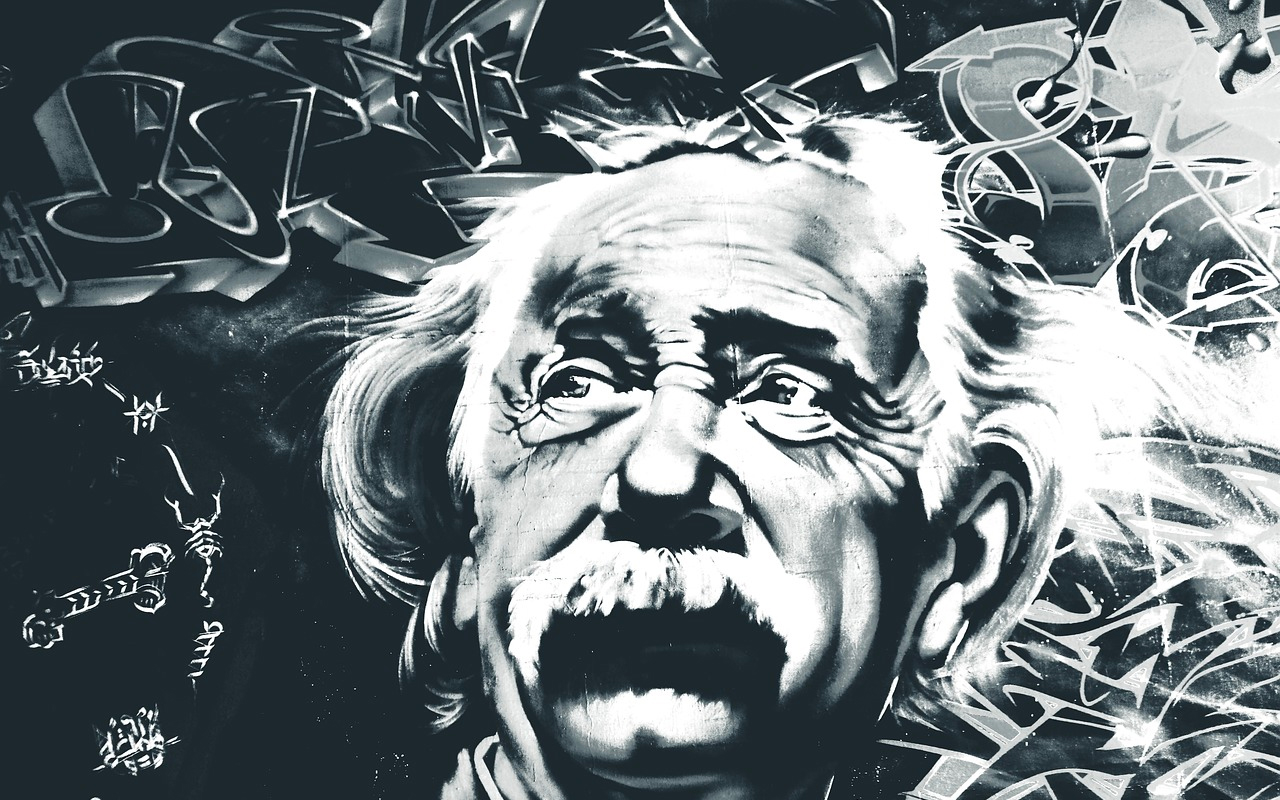
    picture of Einstein

    This does not diminish Einstein’s accomplishments. Rather, it places them in context and allow us to ask a better question:

    Did Einstein use an image visualization technique to arrive at his conclusions? Absolutely.

    And you can too. We just want to be a bit more historically accurate and scientific about the process so we can get started on the best possible footing.

    One way to instantly “stream” better while reading the claims people make, such as the one above, is to use active reading strategies. Although you might not wish to call them streaming, a lot of them will certainly get you into a similar state of flow.

    The Deep History Of Image Streaming

    I don’t want to go back to the beginning of time, but we know that humans have been visualizing for a very long time.

    And if you are visualizing for more than a few seconds, that experience is… “streaming” from one second to the next.

    Who has streamed imagery perhaps more than any other group?

    Ancient Indian yogis. Buddhist monks. Dominican priests and practitioners of hermeticism. Modern teachers of positive visualization.

    For each of these groups, the ability to sit and focus on mental imagery has been key to allowing ideas to arise and for expanding the mind.

    a women is sitting beside an ocean and doing mental imagery

    For more details on how visualization was used in different periods of history, you can check out texts like:

    • Pratyabhijñā (see The Recognition Sutras, a translation with commentary by Christopher Wallis and specific exercises that involve image streaming from Shaivism)
    • The use of Mandalas and visualization sutras in a number of Buddhist schools and some koans in various schools of Zen
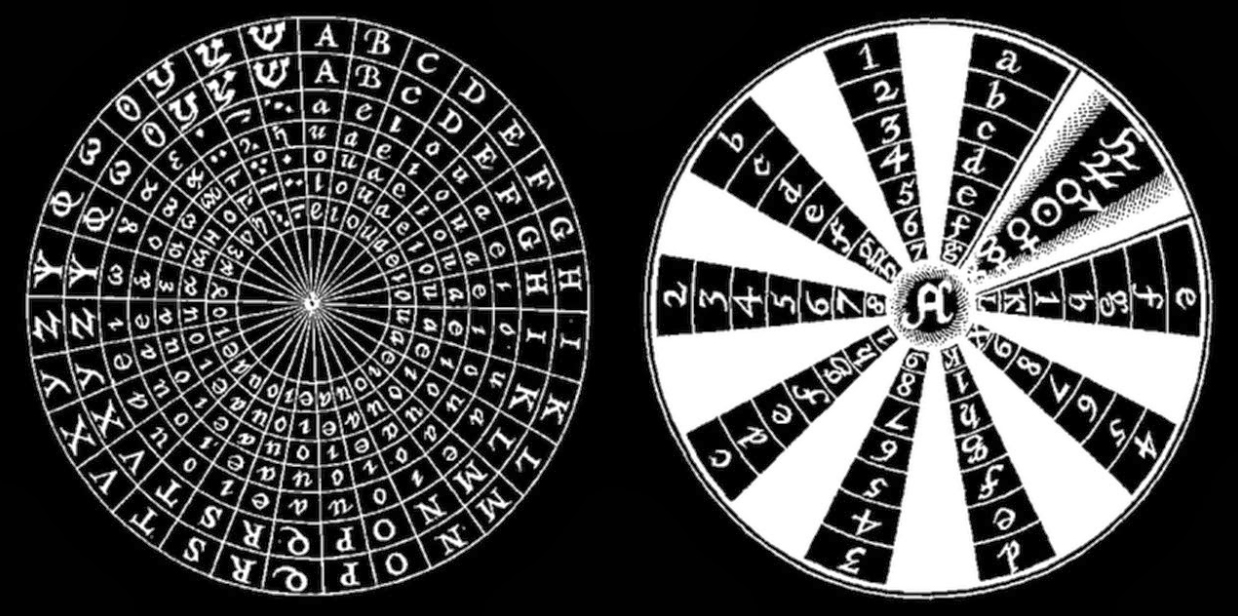
    • Ars combinatoria in Hermeticism

    And there is so much more.

    Image Streaming And Pseudoscience

    Now, you might be thinking… didn’t you just accuse Win Wenger of pseudoscience? Aren’t all of these ancient traditions also linked with woo-woo?

    Well, yes and no. For one thing, Wenger says image streaming will increase your IQ.

    This claim is highly dubious, and I doubt that any of the traditions listed above have ever claimed image streaming will help in this regard. That said, when combined with active recall, image streaming will certainly help you remember various kinds of information much better.

    Second, we have tons of research demonstrating just how powerful practices like deity meditation are for enhancing the efficiency of your visuospatial processing. You’ll also want to check out the summaries of many scientific studies and brain scans in Andrew Newberg and Robert Waldman’s How Enlightenment Changes Your Brain.

    brain scans

    Finally, the positive experiences I had with image streaming using the Memory Palace technique have been confirmed many times over.

    See for example the exhaustive research conducted by Dr. Tim Dalgleish.

    Dalgleish has shown how “streaming” positive memories can relieve clinical depression – which is exactly what happened to me years before I knew such studies existed.

    How To Practice Image Streaming

    As Wenger describes it, image streaming involves observing and describing mental experiences.

    I would rename this process “passive image streaming.”

    All you have to do is:

    • Find a quiet place to practice, either seated or lying down
    • Use a device to record your voice
    • Talk about what you’re experiencing in detail, perhaps while performing these visualization exercises
    • Use as many multi-sensory aspects of experience as possible
    • Review the recording for any additional ideas it might trigger

    I often use image streaming in real time when I can’t concentrate. For example, I will repeat in my own mind what people are saying and really make an effort to mentally experience their references.

    Harrison Ford

    In other words, if someone mentions a suspense novel, then I will think about a movie in the genre and an actor like Harrison Ford. The image streaming resulting from this simple practice has been tremendous for feeling more connected in conversations and remembering more about them.

    What if you have aphantasia? You might want to try some of the processes I shared with AphantasiaMeow when we talked about using mind mapping as a potential aphantasia cure.

    How To Practice Active Image Streaming

    At the end of the day, bringing your efforts with streaming imagery together with a specific goal works a lot better.

    And as I tell many people who ask me about this kind of visualization, the Memory Palace technique is one of the best ways to combine a goal with image streaming.

    To get started:

    • Choose something you want to remember (like vocabulary, songs, numbers or names)
    • Use associations in the Memory Palace to help you memorize the information
    • Use Recall Rehearsal to “stream” through the Memory Palaces
    • Use multi-sensory associations as you proceed

    If you need a bit of help getting started, please try this image streaming guided meditation:

    https://www.youtube.com/watch?v=DPrLt_sJgr0

    As an alternative, you can try Dr. Gary Small’s four details exercise. I use it as a brain exercise a few times a week and it’s very powerful for practicing visualization and exercising memory at the same time.

    How To Make Active Image Streaming Multi-Sensory

    To enact this tip on multi-sensory image streaming, I like to follow a pattern I call KAVE COGS:

    • Kinesthetic
    • Auditory
    • Visual
    • Emotional
    • Conceptual
    • Olfactory
    • Gustatory
    • Spatial

    As you go through a Memory Palace or just think through things, always try to touch on each of those sensory experiences.

    One of my favorite ways to stream in real time is to recite a long piece of literature, like the Ribhu Gita. I live streamed my recitation as a memory demonstration here:

    https://www.youtube.com/watch?v=CgNQ9bU-nEg

    As you can tell, the process is very peaceful and rewarding.

    And one reason why is that I am experiencing multiple sensations using KAVE COGS as I go along. You can literally stream those sensations in that order, which is especially useful when trying to remember things you’ve memorized.

    However, as this study shows, there’s a catch. Your outcomes from streaming images will be much more successful if they are tied to specific goals, ideally performance based goals.

    In other words, it likely won’t help much if you envision yourself as a great philosopher. Rather, you would do better by image streaming yourself showing up to study philosophical books and then actually showing up to do it.

    Another way to look at this factor is to think about your willingness to not only stream, but to do. As these researchers of visualization for academic performance concluded, future research on streaming goal-oriented mental imagery will do much better if they involve participants who have shown at least some level of willingness to implement.

    If you’d like to learn how to memorize anything, learn how to master the Memory Palace for this kind of image streaming here:

    Free Memory Improvement Course

    The Real Benefits Of Streaming Image After Image

    Some people might think I’ve been a bit sour in this post by pointing out issues in Wenger’s use of the term “image streaming.”

    However, I think it’s important, and maintain that skepticism is one of the great keys to remembering better.

    I rarely use passive image streaming myself because it happens to us all the time anyway. Our minds wander and we get lost in fantasy. Sure, you can initiative this kind of mind wandering intentionally during a visualization meditation, but typically we want to develop our focus, not weaken it.

    So I prefer to switch the strange habit of “mind wandering” into a tool. When I notice I’m drifting during a conversation, I pull myself back by using the conversation itself as a catapult into image streaming.

    And as I’ve hoped to show, many traditions stream imagery. They have done so for thousands of years. And as Lynne Kelly has shown in The Memory Code, the use of the Memory Palace is prehistoric. People have been using active image streaming for thousands of years.

    So what do you say?

    Are you ready to start experimenting with these two kinds of image streaming, passive and active?


    The Importance of Philosophy: 7 Life-Changing Reasons Nov 03, 2023
    Show notes

    Why study philosophy? After all, aren’t philosophers just a bunch of people who use big words in unreadable books? I mean, think about it… Half the time it seems like they’re preaching to us about how we should act in the world while they bumble through their personal lives. Although that assumption can prove true more often than I’d like, the importance of philosophy is not owned by philosophers. It’s also not necessarily the “love of wisdom” as people often translate it from the ancient Greek, φιλοσοφία. As Emmanuel Levinas put it, we might do better if we think about philosophy as “the wisdom of love.” I find Levinas’ formulation useful because it reveals how better thinking can help us discover what’s truly important in life. And when we focus on allowing the love in wisdom to guide us, we will almost certainly respond to our fellow citizens from an elevated position. Sure, it might not involve “love” as such in a personal way, but it will certainly involve much higher levels of care. https://www.youtube.com/watch?v=oU2Z9J-MijI Why is Philosophy Important? 7 Life-Changing Reasons In What is Philosophy? Deleuze and Guattari suggest that opinion is chaos. When you look at social media sites like Twitter, you almost feel like they must have had the ability to peer into the future when they wrote this book back in 1991. But if there’s one reason above all that makes philosophy important, it’s the reduction of random, chaotic influence. The more you develop yourself philosophically, the more you can avoid being yanked around by the chaos of opinion. With this point as our governing theme, let’s explore a few more reasons philosophy is so important. One: Systematic Analysis As different views and opinions flood the news and social media, instead of taking them at face value, you can use philosophical tools to pick them apart. How? There are at least 9 critical thinking strategies you can use. The more of these tools you have in your mental toolbox, the more you can overcome barriers that impede your thinking. By practicing this kind of analysis, you’ll also be better at perceiving systems as such. Systems that try and control you are everywhere and being able to spot them can help you avoid so much loss and agony in life. For example, when I was in university, my doctoral supervisor helped me see the ways in which the university bureaucratic system is a kind of game. After I submitted my dissertation, I took my new knowledge of how it worked and withdrew from the program. Why? Because the analysis my supervisor helped me with revealed that it could take an entire year for the committee to set a date for my dissertation defense. Once the date was set, I re-enrolled and wound up paying much less tuition than other students who didn’t know about this loophole. No one was going to tell me that was how the system worked. But when I learned how to analyze it, I saved a lot of money. I also saved a lot of grief later because if I had found out about this option, but not taken it, I would have mourned the lost money. Thinking philsophically helps you perceive and then remove the barriers that hinder your life. Two: Know When You’re Being Influenced Unfortunately, know matter how much we come to know what philosophy is, we all fall prey to gullibility from time to time. But the more we analyze the world around us, the more we can steep ourselves in positive influences while draining out the bad. And it’s important to note that even useful sources can sometimes deliver unhelpful ideas. We need to be able to spot influence as such. That way we can properly evaluate it. For example, I recently had to deal with a lawyer. He used a lot of tricky language to try and influence me. But because I could keep calm and objective as he spoke, I managed to better understand how he was trying to influence me. I ended up with a much better outcome as a result. These critical thinking books will help you develop the ability to seek top quality influences in your life and weed out the poor performers. These philosophy books will also help. Three: Interpret & Respond Optimally Events in the world create all kinds of emotional responses. But when you’re well-versed in philosophy, you’re equipped with a kind of “science of emotions.” You’re better able to perceive when you’re being irrational and use abstract thinking to pull away from your gut response. Now, you might be thinking, “Hang on, people keep telling me that I need to listen to my gut response, not ignore it.” True, there are some cases where you want to listen to your gut. Gavin de Becker’s The Gift of Fear has been personally helpful on that front. For example, when I’ve lived in big cities, I’ve had concerns on certain big holidays and stayed at home based on my instincts. In one case in Berlin, that was a very good thing because something tragic happened in the exact neighborhood I had intended to go. Following your intuition is great – but only in certain contexts. Thinking philosophically can help make sure you’re using the right tools at the right times. But in many areas of life, listening to your gut just doesn’t stand to reason. In fact, in Decisive, Dan and Chip Heath share research that strongly demonstrates going with your instincts is all-too-often one of the worst things you can do. Their W.R.A.P. technique is a fantastic little philosophical tool that helps you avoid irrational decisions so you can respond to life optimally. Four: Evaluate Ideas A large part of thinking rationally involves knowing the value of various ideas. For example, take two people, John and Cindy. They both buy the same book. John says, “It was $20 dollars, but I only got one idea out of it. I went on to buy five other books and ultimately never did anything with that original idea.” Cindy says, “I only got one idea out of the book, but it was only $20 and even though it was just one idea, I managed to put that idea to work in my business. It increased profitability by thousands of dollars.” Albeit simplistic, this example shows that Cindy evaluates ideas differently than John. Keeping our principle of philosophy as a form of active thinking in mind, she gives the idea life by using it. She also makes it valuable by putting it into action. As you explore philosophy, you’ll find that you can better evaluate many ideas. You’ll also reduce the kind of judgmentalism that causes you to dismiss ideas that could be extraordinarily valuable if you put them into action. Five: Understand the Law Many people do not realize that the laws governing them were arrived at based on philosophical thinking. Not only that, but many laws are the result of trying to answer profound philosophical questions about what is right vs. wrong. The more you learn about philosophy, the more you’ll be able to see how philosophical ideas shape the rules of your society. And this means you’ll be able to participate in how they are crafted in a more integral way. You can also start to see how governments lead heavily on mimetic behavior, which means shaping your desire based on the desires you see in others. This process is the basis of all propaganda, but it starts with philosophical ideas we can see in some of the earliest philosophers. For example, Confucius talks a lot about imitating not just what the ancients did, but also to desire what they desired. Likewise, Mozi advised kings to promote certain kinds of behaviors so that others in society would imitate them. See Readings in Classical Chinese Philosophy for these references. Six: Spot and Resolve Contradictions The human species is incredibly complex. And our success on the planet is difficult to understand because we contradict ourselves all the time. Despite their differences, both philosophy and religion have a lot to say in this regard, even if both fields contain inner contradictions. Yet, thanks to the mental tools we’ve developed using philosophy, we’ve managed to thrive. In many ways, the technological projects we’re engaged in are trying to resolve human contradictions. From memory implants to AI, it often feels like the human species is under attack. By the same token, we’ve always had this relationship with our technologies. Plato worried about how our technology might be able to copy itself and run rampant. Mary Shelly imagined Frankenstein’s monster taking vengeance on his creator for neglect and there are many other fantasies that philosophize about our inadequate human behaviors. They ask questions like: Although we clearly no better than to damage ourselves and our entire planet, why don’t we do better? Although we still rarely find consensus on the answers our philosophizing helps us produce, we’re lucky to have the thinking tools more available than ever before. We can consult all the major philosophers, often for free, just by searching Project Gutenberg and Youtube. Seven: Understand Your Thinking Style In Ecce Homo, Nietzsche tells us that Heraclitus was essentially his hero. During what appears to have been a period of great discomfort for the philosopher, Nietzsche seems to have taken great solace in this connection. As you read philosophy, you’ll encounter multiple styles of thinking and learn more about yourself as you’re drawn to some and have a harder time relating to others. This does not mean that you reject those who don’t resonate with you as invalid. It just helps you gain perspective on who you are and gives you a basis for reflecting on how and why you came to be that way. These perspectives will sometimes challenge and even destabilize your self-perception. But as we know from the example of Nietzsche, finding points of comparison can be tremendously stabilizing too. All the more reason to keep reading a wide variety of philosophers from multiple cultures and time periods. The ability to compare multiple perspectives is personally rewarding and provides great brain exercise. Why Study Philosophy? I think the number one reason to study philosophy is that we all practice active thinking each and every day to solve our problems. Why wouldn’t we want to get better at it? Philosophy is unique in that it is the one field of human endeavor that still makes sense to read historically. Here’s what I mean: It might be a novelty to read the earliest books on chemistry. But it won’t help you use contemporary chemistry very much, if at all. But when it comes to philosophy, it’s possible to gain tremendous value from going as deep into history as possible. We learn as much from the oldest philosophical books as we do from the new ones. Indeed, in many cases, we cannot understand many books of philosophy without knowing at least a little about the earliest philosophers. Sure, you can read Plato and get a great deal out of it. But you get even more out of it if you’ve also read and put some thought into the Pre-Socratics to whom Plato was responding. And this feature of philosophy means that you stand to receive endless rewards. Especially when you also learn about psychology and how it relates to philosophy for added measure. The study of philosophy is deeply pleasurable. And all the more so when you can remember the philosophy that you read. To help you out with that, please register for my FREE Memory Improvement Course: This exclusive program teaches you the Memory Palace technique with key exercises that help you excel in using it. That way, when you come across the names of philosophers in articles like this one, you’ll be able to remember them. You’ll also be able to remember the names of their books and key concepts too. As a result, you’ll be able to put their ideas into action. Again, action is essential. Without it, you cannot craft your own personal philosophy. You’ll struggle to increase your personal delight with the quality of your mind each and every day. So what do you say? Do you agree that philosophy is one of the most important mental activities in the world? And are you ready to deepen your relationship with it? I know I sure am. As a practice with no end in sight.

    Full show notes at the publisher

    Binaural Beats And Memory: Can This Crazy Music Make You Smarter? Nov 02, 2023
    Show notes

    Binaural Beats and Memory Improvement Magnetic Memory Method PodcastIt’s a popular perception among many people that listening to binaural beats has a special effect on the brain.

    They think binaural beats can help you follow a diet or stop smoking.

    Or they think these sounds can amp you up for a competition or calm you down, or even improve memory recall, focus and concentration.

    The question is…

    Doesn’t listening to any type of relaxing music have a similar effect?

    Possibly.

    In this post, we’ll find out if listening to specific frequencies can have a better impact on your mental prowess than listening to Mozart for Pink Floyd!

    What Are Binaural Beats?

    The word binaural means “having or relating to two ears.”

    The process works by sending a slightly different sound frequency to each ear. This has to be done simultaneously and through earphones or headphones.

    When two different pure tones are presented separately but simultaneously to each ear of a listener, the listener hears the illusion of a third tone.

    This third does “appears” in addition to the two pure-tones presented to each ear. And it is this third tone that is called a binaural beat.

    Let’s break this down:

    https://www.youtube.com/watch?v=Ni1saxS5zVk

    When you play a 350 Hertz (Hz) tone in the left ear and a 360 Hertz tone in the right, it yields a beat with a frequency of 10 Hertz. This third beat is the binaural beat.

    The brain then uses a process known as ‘frequency following response’ to follow along at the new frequency (10 Hz). This process produces brainwaves at that rate of Hertz.

    However, this outcome (apparently) occurs only if the the difference matches the alpha frequency range that lies between 7-11 Hz.

    Music or white noise embedded with binaural beats is very often used along with different meditation techniques and positive affirmations to gain varying results.

    In the memory training and memory improvement world, some claim you will experience results ranging from improvement in recall, concentration, focus, creativity and alertness.

    There is more:

    Listening to these beats is also said to provide relaxation, stress reduction, pain management, and improved sleep quality.

    Who Heard Them First?
    A Brief History of Binaural Beats

    Binaural beats were first described in 1839 by Prussian scientist H.W. Dove.

    However, it was Gerald Oster’s article in Scientific American in 1973 that brought this process to modern attention.

    According to Oster, the tones needed to produce binaural beats had to be relatively low-frequency and the beats themselves were in the range of one to 30 hertz. This is the range the human brainwave frequencies fall in.

    What to know the real story?

    Humans have the ability to “hear” binaural beats as a result of evolutionary adaptation.

    “Many evolved species can detect binaural beats because of their brain structure. The frequencies at which binaural beats can be detected change depending upon the size of the species’ cranium. In the human, binaural beats can be detected when carrier waves are below approximately 1000 Hz.” (Oster, 1973)

    The Binaural Process In Real Music

    Of course, binaural beats in terms of therapy is quite different than the binaural process found in music. This process was apparently invented by Manfred Shunke who used models of the human head created with the help of computer design software.

    As music historian Rob Bowman wrote in the notes for Lou Reed’s Between Thought and Expression:
    “The detail was as precise as possible down to the size, shape, and bone structure of the ear and ear canal. Microphones were then designed to fit each ear so, theoretically, what they recorded would be exactly what a human sitting in the position the head was placed would actually hear.”

    Binaural Beats To Manage Pain:
    Why The Truth Matters For Your Memory

    Chronic pain impacts between 10-50% of the adult population, while costing U.S. businesses over $61 billion annually.

    The neuromatrix theory suggests that the brain’s inability to return to a state of equilibrium is at the crux of chronic pain (Melzack, 2001; Melzack, 2005).

    Binaural beats has been effective in synchronizing brain waves, also known as entrainment, with an external stimulus (Kennel, Taylor Lyon, & Bourguignon, 2010), and has been associated with a number of positive psychological outcomes (David, Katz, & Naftali, 2010; Lane, Kasian, Owens, & Marsh, 1998).

    Research shows that an external audio protocol of theta-binaural beats is effective at reducing perceived change in pain severity.

    How does this affect your memory?

    The answer is simple:

    Pain free people pay better attention to their surroundings.

    Freedom from pain means that your levels of focus and concentration are automatically better than when impacted by ongoing or recurrent pain.

    Being pain free is especially important for learning, something that requires high levels of concentration.

    Kind of like crossword puzzles require high levels of concentration (not that there is much evidence they will improve your memory).

    Speaking of which:

    Do Gamma Brain Waves Improve Memory & Concentration?

    The highest frequency brain waves are apparently called gamma waves. These waves can have a frequency of anywhere between 25 and 100 Hz.

    People whose brains produce more gamma waves are said to have greater ability to concentrate, focus and experience higher levels of cognition.

    A recent study by Jirakittayakorn and Wongsawat tried to find whether “modulation of the brain activity can lead to manipulation of cognitive functions. The stimulus used in this study was 40-Hz binaural beat because binaural beat induces frequency following response.”

    According to the study, listening to 40-Hz binaural beat for 20 minutes enhanced working memory function evaluated by word list recall task.

    Does that mean we can change our brainwave patterns by listening to specific sounds?

    Maybe…

    But also maybe not!

    A research project by Richard Davidson, a neuroscientist, found that the brainwaves of trained monks who regularly engaged in meditation produced powerful Gamma waves. Whereas the control group – with non-meditating volunteers – had little to no gamma brain waves.

    What does this fact imply?

    One way to improve concentration is to go Buddha style and practice long-term or short-term meditation.

    Within a week of consistent meditation, you can start to experience improved concentration. So long as you’re not letting binaural beats combined with smartphone addiction get in the way.

    Meditation can be used to remember something because better concentration has a direct link to improved memory.

    But Can Binaural Beats Help Memory?

    Not in theory or practice according to a research article by David Siever in 2009 called Entraining Tones and Binaural Beats.

    But before we go any further, just as with other promises like those made about subliminals for memory, the actual claims are important to look at.
    So let’s take a step back and try understand how binaural beats work.

    The proponents of binaural beats claim that it induces brainwave “entrainment.”

    This entrainment supposedly influences and drives brainwave activity to a more desired mental state.

    More specifically, entrainment is a “synchronization of two or more rhythmic cycles” and the process of brainwave entrainment relies on the natural phenomena of synchronization.

    Think of it like this:

    When you strike a tuning fork and then place another one next to it, the second tuning fork automatically starts to vibrate at the same frequency.

    This is a natural synchronization. Pendulum clocks, metronomes, fireflies are few other examples of natural synchronization.

    However, Siever states that entrainment occurs only when a constant and repetitive sound of sufficient strength to “excite” the thalamus is present.

    Siever also noted that binaural beats are not very noticeable because the modulation depth (the difference between loud and quiet) is very small at just 3db, a 2 to 1 ratio.

    Here’s a longer quote:

    “This means that binaural beats are unlikely to produce any significant entrainment because they don’t activate the thalamus. But they do have some hypnotic and relaxing effect by way of dissociation (as does white noise and music).

    This outcome may be, in part, due to the Ganzfeld effect. The Ganzfeld effect is the process where the mind quietens as a result of having a monotonous sensory input.

    A natural example of the Ganzfeld effect may be experienced while sitting in a large field in the country while staring into the wide, blue sky. While sitting there, imagine listening to the white noise from the fluttering of leaves on the trees – away from the noise and other stimulation of urban life.

    In other words, thanks to the Ganzfeld effect, binaural beats, through passive means, may help a person relax.

    If, in theory binaural beats do not produce entrainment, do they produce entrainment and drive brainwaves in reality? The simple answer is NO!”

    It’s not just Siever!

    In another study, Gerald Oster used an EEG oscilloscope to conclude that binaural beats produce very small evoked potentials within the auditory cortex of the brain.

    What does this?

    It means that binaural beats are of little benefit in producing AE or auditory entrainment. (Oster, G. (1973). Auditory beats in the brain. Scientific American)

    Researcher Dale S. Foster also found that binaural beats in the alpha frequency produced no more alpha brainwaves than listening to a surf sound.

    Here’s Foster’s conclusion:

    “The analysis of variance of the data revealed that there were no significant differences in alpha production either within sessions across conditions or across sessions.

    Although alpha production was observed to increase in the binaural-beats condition early in some sessions, a tendency was observed for the subjects to move through alpha into desynchronized theta, indicating light sleep.

    Subjective reports of “dozing off” corroborated these observations. These periods of light sleep — almost devoid of alpha — affected the average alpha ratios.”

    A More Effective Way To Gain Mental Prowess

    The beauty of the human brains is that it needs a goal to improve.

    Your memory improvement training should always be linked to memorizing information that will immediately improve your life. 4x Australian memory champion Tansel Ali agrees.

    Moreover, the memory improvement activities should always be measurable since tracking your outcomes leads to rapid improvement.

    This is where the secret method of building Memory Palaces the Magnetic Memory Method way comes into play.

    Using this Method, you not only get to remember the information faster, but also get predictable and reliable permanence that grows in strength each time.

    Even better:

    All other memory techniques including listening to binaural beats can be used inside of Memory Palaces.

    But this never takes place the other way around (For example, you can’t use Memory Palaces inside of the Major Method the way you can use the Major Method inside of Memory Palaces.)

    If you are looking for a complete brain workout try this brain fitness method…

    Free Memory Improvement Course

    You can also see more Unconventional Techniques Guaranteed To Help You Conjure Your Best-Ever Ideas.

    The Ultimate Memory Improvement Beats?
    Listen to Music That Inspires!

    Use sound beats or music as a means of relaxation, rejuvenation or inspiration.

    When you feel relaxed and inspired you can create effective Magnetic Imagery that will enable you to build better Memory Palaces to improve recall, retention and memory.

    Now is that music to your ears, or what?


    Beyond Mnemonics: Exploring the Road to Enlightenment With 3x USA Memory Champ John Graham Oct 31, 2023
    Show notes

    John Graham feature imageBelieve it or not, using mnemonics can make you feel so great, it’s almost like your head is going to explode.

    On the one hand, it sounds obvious.

    When you can remember more, boosts in mood completely make sense.

    But what about feelings that are even more intense.

    Such as experiencing an “awakening”?

    Or even reaching a state of enlightenment?

    Not only do I believe it’s possible.

    I’ve read many accounts of such experiences in the memory improvement literature.

    I’ve even had mystical experiences myself.

    That’s why I jumped at the chance to talk with John Graham about it when he asked me about strange occurrences I’ve written and talked about a lot over the past few years.

    The only question is…

    What do we believe about our experiences?

    https://www.youtube.com/watch?v=ZcObjZbneMI

    That’s what John Graham and I discuss in this episode of the Magnetic Memory Method Podcast.

    Who Is John Graham?

    John is an incredibly accomplished mnemonist. In addition to being a memory athlete and memory expert, he’s extremely knowledgeable about focus and concentration – especially for business professionals who struggle with anxiety.

    John also have some next level memory training concepts that explain why he performs so well when it comes to winning at memory events like the USA Memory Championship.

    Why Talk About Enlightenment?

    The simple answer is…

    I don’t know.

    Free will – and its absence – is one of the key ideas that come up around topics of awakening and enlightenment.

    In fact, abandoning the sense of self is a hallmark of how many people talk about these experiences.

    We’ve seen it in the memory tradition from people like Ramon Llull and Giordano Bruno. Indeed, in On the Shadows of the Ideas, Bruno says he has light bursting out of his eyes thanks to his experiences with using memory techniques.

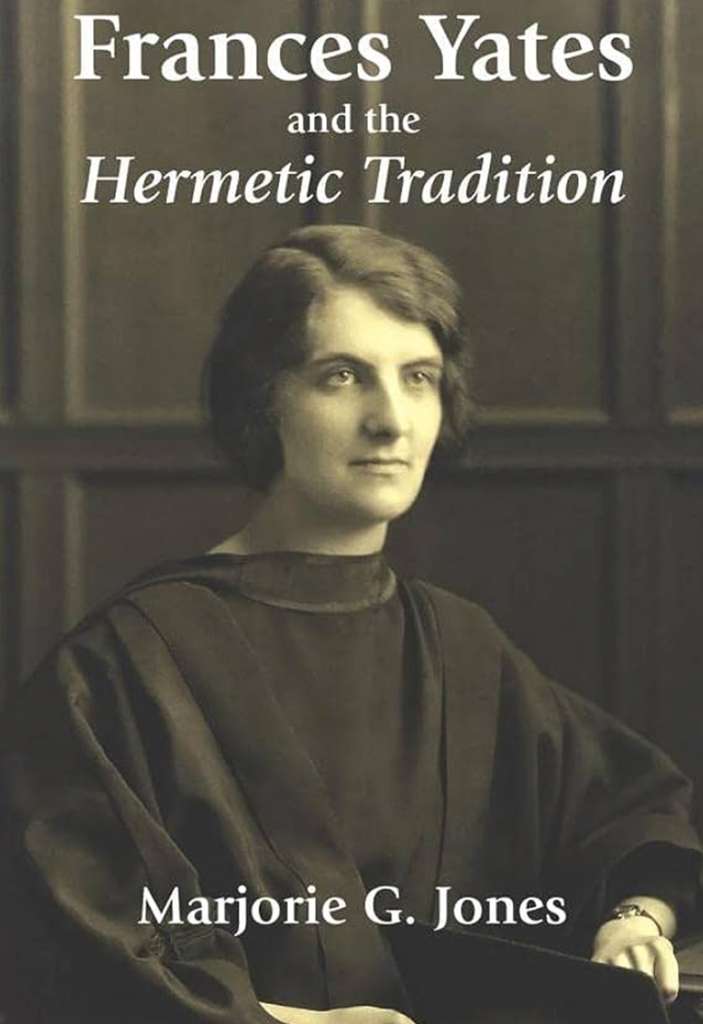
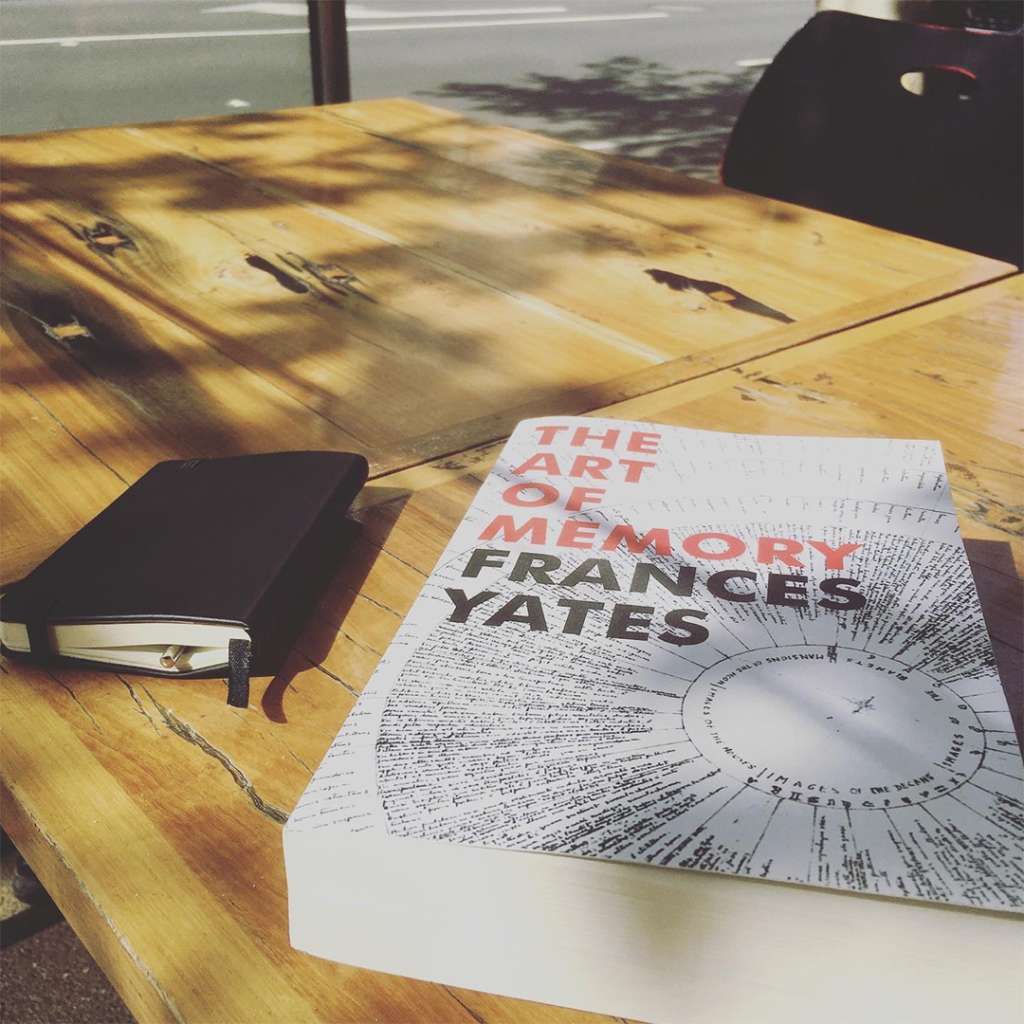
    You also find similar themes in St. Augustine’s work on memory. It’s a thread in Yates’ infamous Art of Memory. And in a very subtle way, the concept shows its face in Moonwalking with Einstein when Joshua Foer meets Tony Buzan and learns about becoming a “Warrior of the Mind.”

    I’m grateful to John for holding the conversation. Thinking critically through experiences like these is important.

    What do you think about memory training leading to states of enlightenment?

    Have you had similar experiences?


    Why Is Critical Thinking Important? 5 Compelling Reasons Oct 25, 2023
    Show notes

    why is critical thinking important feature imageIf you’re wondering why critical thinking is important, you might be tired of the same old explanations.

    The economy needs smart people…

    Critical thinkers are more creative…

    It makes you sound smarter…

    Well, yes. All of those things are true.

    But most posts only scratch the surface.

    On this page, we’re going to go much deeper into the topic.

    And we’re going to use critical thinking to do it.

    Ready?

    Let’s go!

    https://www.youtube.com/watch?v=TS7BZgAXSBc

    What Is Critical Thinking?

    Technically speaking, critical thinking boils down to two things:

    • Objective analysis
    • Accurate judgment

    Once you have those two things in place, you can make better decisions. Predictably.

    But a number of skills have to be in place before you can rely on this ability. You need:

    • Care and concern for the truth
    • Analytical thinking skills
    • Interpretation
    • Ability to judge the credibility of sources
    • Ability to ask questions that clarify the issue at hand
    • Inference
    • Open-mindedness
    • Self-correction and the desire to improve
    • Ability to defend your decisions

    Historically, we can look to thinkers like Confucius and Plato. They looked not only at how individuals think, but tried to balance each self against entire societies.

    a woman is thinking in front of a white board

    A true critical thinker is not trapped in his or her own mind, after all. They’re able to see the big picture and realize that individual minds are not merely influenced by other minds. They are constructed by them.

    According to Jonathan Haber in Critical Thinking, Aristotle is the first great critical thinker because he categorized and organized his thoughts about the world in the context of what others thought.

    In this vein, Aristotle worked on biology, politics, drama, logic, rhetoric and other thought processes. These categories still serve as what Haber calls “the building blocks of education.”

    Why Is Critical Thinking Important?

    So if you want to know why critical thinking is important, it really boils down to exactly Haber’s point:

    Because we have learned to think critically, we have those building blocks. We’re able to educate ourselves and others so that societies around the world can experience progress.

    yellow and brown chess

    Another way to look at it is like this:

    When humans weren’t capable of thinking very well, we suffered a lot more. But as our thinking abilities have grown, our suffering has decreased. Stephen Pinker is one of many thinkers who have demonstrated the validity of this point in books like Enlightenment Now.

    But we’re still just scratching the surface. Let’s look at some more reasons:

    One: Understanding Probability & Likelihood

    A lot of human history has involved guessing. People literally had no way of knowing what the weather would be like tomorrow, let alone making predictions about the stock market that could potentially make them rich.

    In today’s world, we learn to think probabilistically from a very young age. It’s a common part of mental strength that helps us avoid leading ourselves into traps.

    I’m talking about traps like golden handcuffs, or its alternative, slave’s luck. These are contemporary terms for the old phrase “selling your soul to the devil.”

    Because more and more people use critical thinking to see how employers trap them with false incentives and can use research to avoid miserable jobs, the world gets better.

    The more people think through the probabilities of future happiness, the better everything gets for everyone.

    And it’s not just about the future. Reflective thinking helps you tap into your past for important context.

    a woman laying on the floor and thinking

    Context is important for our next point:

    Two: Comparison and Contrast

    Would you agree that eating a ripe orange is better than eating a rotten one?

    If you just said, “yes,” that’s because you know how to compare and contrast two different things.

    Critical thinking relies on this all the time for much more consequential issues in life. But this simple example demonstrates the importance of distinguishing between things.

    Three: Defining and Using Definitions

    In Critical Thinking, Robert Ennis offered the FRISCO model to help define critical thinking:

    • Focus: identify the focus or central concern
    • Reason: identify and judge the acceptability of the reasons
    • Inference: judge the quality of the inference, assuming the reasons to be acceptable
    • Situation: pay close attention to the situation
    • Clarity: check to be sure that the language is clear
    • Overview: step back and look at it everything as a whole

    a woman is looking at her laptop

    There’s a reason that he starts this problem solving model with identifying the central issue. That’s because we need to be able to define things in order to make effective decisions.

    And once we can define things, we need to be able to compare and contrast various definitions.

    Four: Putting Solutions Into Action

    Have you heard of “analysis paralysis”?

    Too many people fall into it, but it’s not the fault of critical thinking. It’s coming from a lack of having effective critical thinking strategies.

    This criticism is valid because true critical thinkers must take action once they’ve decided what to do.

    If you don’t take action, you rob yourself of data. You cannot analyse results you haven’t produced, which prevents you from thinking at all.

    Everyone has the cognitive capacity to take action once they’ve made a decision. So if you’re getting stuck, try these critical thinking exercises.

    Five: Metacognition

    Remember when I said at the beginning we were going to use critical thinking itself in this post?

    We’re going to use it now because I was tempted to raise this point and define it very simply as our ability to think about thinking.

    blue shirt woman thinking and writing on her notebook

    According to Julianna Benson in Metacognition, we have to go beyond “cognition about cognition” as the definition of this term.

    Metacognition is definitely that, but it also involves:

    • Perceiving that thinking is taking place
    • Monitoring the thinking process without losing perception

    This is why critical thinking skills are important. We can’t rely on simplicity to get ahead in life. We need to dig deeper into complexity.

    Nothing new about that.

    For example, critical thinking practices blended with meditation have been around for a long time. Advaita Vedanta, Chan and Zen use various means of helping you perceive your thoughts and maintain the ability to monitor them without interruption.

    Developing these abilities lead to better pattern recognition, which can help you learn a language faster.

    It can also help you avoid the “groupthink” issues researchers have proven come from poor learning techniques like rote learning.

    One simple technique can use to start practicing metacognition today is covered in Gary Weber’s Evolving Beyond Thought. I discussed its impact on my own life at a TEDx event:

    https://www.youtube.com/watch?v=kvtYjdriSpM

    When You’re A Critical Thinker…

    We’ve covered a lot today. And we’re not even scratching the surface of what’s available in these critical thinking books and examples. And that’s not to mention the value of learning how to use abstract thinking.

    Nonetheless, we’re off to a strong start. I’ve shown you how to remember critical thinking principles, and memorizing has been scientifically shown to help you reason at a high level even during your senior years.

    But you want to know what I feel is the most important and most beneficial reason we all need to be critical thinkers?

    It’s this:

    When you’re a critical thinker, you’re never alone.

    That’s right.

    Loneliness disappears completely because you have joined a group of people who care about the truth.

    Not only that.

    This group of exclusive individuals is also always preparing to take action based on the truth.

    That’s fantastic company indeed.

    But if you’re still struggling to develop critical thinking skills, it might be a memory issue.

    To fix that, please consider grabbing my free memory improvement kit. It will help you remember everything we discussed today, and become a person of action.

    Free Memory Improvement Course

    At the end of the day, action, and taking the right actions consistently is what success is all about.


    The Zettelkasten Method Unleashed: Enjoy Better Note-Taking Fast Oct 19, 2023
    Show notes

    By Dr. Anthony Metivier, PhD | Updated August 5, 2026 The Zettelkasten method is a robust note-taking system that ensures your most valuable information doesn’t wind up buried in notebooks or computer folders. Although he didn’t invent the technique, the German sociologist Niklas Luhmann built a collection of over 90,000 such notes and was a major advocate of learning this way. Personally, I’ve been using a Zettelkasten system since 2000 when I learned it in grad school from a professor who enjoyed a very impressive career. Wanting to enjoy similar success, I took it up immediately and am grateful I did. However, over the years, I’ve noticed that many people make this “personal knowledge management” approach way too complicated! That’s a shame because the Zettelkasten method is about maximizing flexibility and increasing comprehension and recall. To a certain extent, you can also use this system for coming up with new ideas. So that you understand the technique comprehensively, on this page I’ll share with you the interesting history of the Zettelkasten as a note-taking approach. And I’ll share the incredibly simplified version I’ve used ever since it helped me earn my PhD. It’s helped me learn languages, write books, come up with ideas and give talks from the top of my head. Better: I’ll also show you how you can combine the Zettelkasten approach with the Memory Palace technique. That way, you’ll also remember much more of what you study. Ready? Let’s dive in! https://www.youtube.com/watch?v=OrN0kaE6DkY What Is the Zettelkasten Note-Taking Method? Directly described, “Zettel” means note and “kasten” means box in German. So a Zettelkasten method is a means of gathering small notes together in boxes. This is done not only for organizational purposes, but also to optimize a spaced repetition process that helps form memories faster. Here’s an example of my preferred Zettelkasten format: Notice in particular that quoted material is placed between quotation marks. Take this step to avoid any doubt later that you haven’t paraphrased the material. I’ve always found following this rule important, most especially during my recent law school memorization project where accuracy matters to a very high degree. In addition to gathering information in an organized manner that can be moved around, there are many benefits of using this approach: Flexibility and Interconnectivity: Zettelkasten notes are not isolated entities. Instead, you’re actively interacting and interconnecting the building blocks of knowledge. You are literally building a web-like network of ideas in your mind. As a result, you’re much more likely to experience holistic thinking and enjoy new insights. Enhanced Retrieval: Zettelkasten enables efficient information retrieval. With interconnected notes and a well-organized structure, you can easily locate specific notes, follow trains of thought, and access related concepts. This promotes effective learning and idea synthesis, especially when taking notes from a textbook. Creative Sparks: The Zettelkasten method nurtures creativity by encouraging the emergence of unexpected connections and patterns. As you interlink different ideas, innovative insights can arise, leading to novel perspectives and unique solutions to problems. Knowledge Expansion: By actively engaging with your notes and continually adding to them, the Zettelkasten method promotes deeper understanding and comprehension while reading. It encourages active learning, visualization while reading, reflection, and the expansion of knowledge over time. Resilience against Information Overload: The Zettelkasten method helps combat information overload. It provides a structured framework for capturing and processing information, helping you filter, prioritize, and make sense of vast amounts of knowledge. The History of the Zettelkasten Usually, people trace the Zettelkasten method back to the early 20th century, particularly to the sociologist and information scientist Niklas Luhmann. Luhmann sought a system that could help him manage and connect a vast amount of knowledge and accommodate random ideas. However, it’s a misconception that Luhmann came up with the idea out of nowhere. To take just one source, Luhmann was inspired by the note-taking method used by the renowned polymath and philosopher, Gottfried Wilhelm Leibniz. Stephen Wolfram has shared some images he took of Leibniz’s notes: A Pre-Zettelkasten Example from the philosopher and mathematician Leibniz. Other historical influences on Luhmann’s adaptation include Vincent Placcius‘s De arte excerpendi (the art of excerpting). Here’s an illustration from his book showing how he stored his cards: Placcius organized the notes he took onto slips for distribution in alphabetized slots in a series of wooden boxes. He was apparently legendary for having a prodigious memory. And no doubt. Using this simple note-taking approach lends itself to neuroplastic changes to the brain so that your mind can operates in a more organized way. Although it’s not like becoming a human dictionary or encyclopedia, it can feel as if you’re mentally attuned to think in similar structures. Luhmann’s Contribution to the Zettelkasten Method Luhmann’s Zettelkasten consisted of index cards or slips of paper, each representing a distinct idea or concept. He meticulously organized and linked these notes using a unique numbering system and cross-references. This structure allowed Luhmann to explore complex topics, make connections, and more effortlessly navigate his intellectual landscape. Over the years, Luhmann refined and expanded his Zettelkasten, ultimately creating a colossal knowledge repository that housed over 90,000 notes. The Zettelkasten became an integral part of his research, which was considered prolific. Apparently, this approach led him to make groundbreaking contributions in sociology, systems theory, and communication studies. The Mind-Blowing Efficiency of the Zettelkasten Structure Now, many others have used this approach in a variety of ways. But let me share the simplified style I’ve used for two decades. I’ve cut out so much unnecessary “meta” note-taking and kept only the core idea. This reduction has helped me use the Zettelkasten method faster and combine the approach with the Memory Palace technique much more directly. This comparison table helps me explain why my simplified approach has been so useful since I first started using it: Specifically what are the meta-note-taking structures I’ve cut out? Largely, I’ve removed the little markers that identify what kind of note is on each card. For example, many people spend time on adding a meta-note per card that says: Quote Idea Link Etc. As you’ll see in the Zettelkasten examples I’ll share below, this additional tagging isn’t necessary. As mentioned above in the standard example, quotes have quotation marks around them, so there’s no need to write out the word “quote.” Should I want to note that one idea links to another, I’ll simply put “re” on the card and then paraphrase the insight. It’s easy to decode during the review process. Alright, now that you know more about what I don’t do, let’s break down the exact steps I follow with a few major case studies from my student life and professional career. How to Use the Zettelkasten Process to Take & Memorize Your Notes As we go through these steps, please note that there is always a certain amount of flexibility in my personal process. I’m giving you the way it normally plays out, but sometimes there are variations. For example, I might approach extracting notes from a podcast slightly differently than I would from a book. With that in mind, everything begins with the most important step of all. Step One: Make Sure The Source Is Worth Taking Notes From A lot of people struggle to figure out the main points in the books they read. And no doubt. A lot of books are poorly written, which is one of the main reasons it can be challenging to read as fast as you might like. Now, there’s no perfect way to make sure a book is worth making notes from. But as a general process, I try to hit these steps in this order: Check out book reviews from qualified scholars Read reviews from the general public Read the conclusion of the book first to determine the importance the author gives to their own topic Read the most interesting or obviously important chapters first This simple process saves a ton of time because often the conclusion of a book reveals that the author did not discover anything truly epic. Step Two: Have Your Cards & Other Tools Ready As I share in my detailed tutorial on how to memorize a textbook, when I read a book, I have a number in mind. There is no way I’m going to try and extract every single last detail from a book. Why would I? That would involve copying the entire book onto cards. Instead, I decide that I’m generally going to extract 3-5 big points from each chapter. And to make sure I’m ready to do that, I bring enough index cards or blank flashcards with me to the library. Also, I bring a box of sandwich bags. Weird, right? Well, when I lived in North America, I used to use elastic bands to gather my cards together per book. But now that I live in Australia, I’ve found that elastic bands melt and fuse with the cards. Using plastic bags helps keep the cards nice and clean and prevents the rubber from melting into the ink and making my handwriting hard to read. All the Zettelkasten cards related to this book are behind an initial card with the book author and title information. This bag then goes into a shoebox of alphabetically organized cards gathered by book. Step Three: Follow A (Mostly) Uniform Note-Taking Process Almost without variation, I start my first card for a book with the information from the colophon page: author name, book title, date of publication and publisher. Although this information may or may not be “mission critical” to know in the future, it’s all part of knowledge and well worth recording and memorizing. Plus, facts like the publisher location and the publication date can help you rapidly assign mnemonic imagery. For example, by noting that a book is published in 1999, I can think about Jean Chrétien as the Canadian Prime Minister, and Bill Clinton as the US President. When I come across the first thing I want to memorize, I automatically have some associations to work with. On the subsequent cards, I simply jot out quotes and big ideas. If it’s a quote, I put the quote in quotation marks. If it’s an idea or an observation, I don’t. The bottom right corner of each card always has the book title and the page number from which I’ve drawn the quote or made the observation. That’s it. Clear, crisp, simple and uniform. The alternative is that if I’m taking notes from a podcast or video, there are no pages. For that reason, when studying from audio or visual media, I’ll write out the timestamp where the point was made. This Zettelkasten example reflects a quote drawn from a podcast. Note the time stamp near the bottom right. The speaker and name of the podcast is below the time stamp, a process I follow uniformly. Step Four: Organize the Cards Alphabetically by Source Some people like to get fancy. They buy or make wooden cabinets for their cards. Apart from not having elastic bands melt into my cards, I’m not that fussy. Instead, I organize my cards into shoeboxes and alphabetize them by title. So if my notes for a book called Nothing are in a plastic baggie, that will appear ahead of my notes from a book called One. Now, you could easily organize your cards by author last name. I’ve done that in the past, but for some reason I now prefer to do it by title. Alternatively, if I’m reading at home and the set of cards is very small, I will either: Store the cards in the book itself Not use cards at all, but write my own index on the inside cover Either way, everything is accessible in the order of the information in the source, either by page number or by time stamp. And it is very helpful that these cards are storable in a tidy manner. I don’t like to have random cards all over the place, except when I’m using them as part of a memorization or book writing project. Step Five: Cull Your Cards and Memorize Them Using a Memory Palace Let’s say that you’ve now got a bunch of cards that you’ve placed on one or more Zettelkasten. You know that you want to memorize the details on them, but don’t want to copy them into spaced-repetition software. Go through the cards and separate out the ideas that seem most worth memorizing. Then, start to place them in a well-formed Memory Palace. I often memorize ten ideas per Memory Palace to keep things direct, simple and as fast as possible. But sometimes I’ll use larger Memory Palaces. The great thing about having the cards marked by title and page order is that when I’m done, all those ideas now go back with the individual bag of cards to which they belong. Case Study From Preparing for My PhD Defense Here’s exactly how I used my own cards to prepare for my dissertation defense back in April 2009 at York University. Working with ten cards at a time, I would pick a Memory Palace alphabetically related to the information. For example, I needed to present on some ideas about Aristotle, so I placed those ideas in my A Memory Palace. To do that, I focused on the main point on the card and then used mnemonic associations to link it to a location. In that case, the first idea went on a wall in the back bedroom of a familiar home. Eventually, I had ten details about Aristotle’s writing on friendship distributed along a well-formed journey. After spending fifteen minutes encoding the information, I reviewed the Memory Palace using the principles discussed in the next section while continuing to memorize information from other cards related to my dissertation topic. Fortunately, I passed, and I attribute a lot of my success to my ability to defend my dissertation from memory without having to fumble for any written notes. Step Six: Revisit Your Zettelkasten Periodically As you go about your learning life, you’ll keep adding more cards and memorizing the key points. But it’s also useful to revisit the cards you’ve collected in the past from time to time. If you prefer, you can use a dedicated system called the Leitner Box system. I’ve also shared how I use the Leitner system in detail. The Leitner spaced repetition system helps you manage your exposure by placing accurate and inaccurate flashcards in boxes. Basically, this approach applies the forgetting curve principle to the Zettelkasten system. Anki is generally based on this review algorithm as well. Personally, I don’t use review patterns as regimented as this, and that’s largely for two reasons: I use Memory Palaces and this normally allows me to be more casual about when I revisit my Zettelkasten I’m always using active reading tactics, activities that create a natural form of spaced repetition I use Zettelkasten in combination with how I complete courses rapidly I write frequently about the topics I study When it comes to writing, this topic leads me to share with you yet another powerful learning strategy. Step Seven: Summarize by Writing and Speaking Although it’s fantastic to have many big ideas distributed across your easy-to-find Zettelkasten, true synthesis comes when you put the information into your own words. You don’t have to go to elaborate lengths like building a blog. Just 250-500 words per book will do. This simple process will stretch your recall of what you read and understood. And it will reveal any gaps in your understanding where you might like to fill in the blanks. In addition to writing summaries, having ample conversations will also help you engage in the active recall that forms memory and understanding faster. You can also practice memorizing what people say in response while conversing with them for extra results. Coming Up With New Ideas Us…

    Full show notes at the publisher

    The Art of Memory, Frances Yates & The Rise of Modern Mnemonics Oct 11, 2023
    Show notes

    The Art of Memory By Frances Yates HardcoverThe Art of Memory is one of the most successful memory improvement books of all time.

    Ironic, given that its author says she never tried to use the memory techniques she discussed in such detail.

    Frances A. Yates made a mark nonetheless.

    She was a meticulous researcher and The Art of Memory is not her only book to touch on the world of mnemonics.

    Are you interested in the art of memory at large, Yates’ contribution to the tradition of using mnemonics through her famous book and some of the best strategies she uncovered?

    If so, let’s dig in and explore what Yates discovered about the method of loci. As we go, we’ll look at some of the historical figures who used the techniques to learn faster and remember more too.

    https://youtu.be/TG5Fdilr9YI?si=1b9i8aNaXsVcOB-O

    The Woman Behind The Art of Memory:
    Who Was Frances A. Yates?

    According to Marjorie Jones in Frances Yates and the Hermetic Tradition, Frances Yates was one of the most important intellectuals in postwar England.

    As Jones points out, Yates is also significant for women’s history. We tend to focus on scholars of memory like Aristotle, Ramon Llull, Giordano Bruno and Robert Fludd. But beyond Lynne Kelly, Mary Carruthers and memory athletes who share their mnemonics like Katie Kermode, there don’t seem to be many women in the conversation.

    Frances Yates and the Hermetic Tradition book cover

    In fact, many people express surprise when I use “she” and “her” to discuss Yates. Many people tend to assume she’s a man – an impression perpetuated by the fact that her picture is not included with any of her books that I’ve seen.

    Yates led a scholarly life, and Jones gives some indication that Yates may have treated one of her main topics, the memory master Giordano Bruno as a kind of symbolic father. But Yates died in 1981 before completing a biography she’d started and called the “B Book.”

    It would be lovely to know more about Yates’ life, especially the fact that she didn’t use memory techniques. Jones subtlety casts some doubt on this claim Yates makes in The Art of Memory. By many reports, her memory was actually quite good.

    That could be a result of context dependent memory, however, not Yates’ understanding of the ancient memory techniques she wrote about in such depth. Authors tend to spend a lot of time preparing and editing drafts, so it would not be surprising for her to have better memory than others for topics relating to memory and intellectual history at large.

    Anthony Metivier holding a copy of Frances Yates and the Hermetic Tradition

    The Primary Principles of The Art of Memory

    As Yates discusses in The Art of Memory, her primary goal is to better understand Giordano Bruno. She wrote about him at length in another book, and in a work about Llull. Bruno also comes up in some of her work on Fludd.

    Contextualising Bruno’s historical moment is fantastic. To do so, Yates takes us all the way back to the ancient world.memory wheel

    Many interesting names come up, and the core mnemonic strategies that go with them are:

    • The Method of Loci, which is associated with Simonides of Ceos
    • The use of memory techniques to give speeches as discussed in Rhetorica ad Herennium
    • Memory wheels, thought to be originated by Ramon Llull
    • Guilio Camillo’s “Memory Theatre”
    • Rober Fludd’s “Theatre of the World”
    • Giordano Bruno’s alphabetical method for rapidly developing mnemonic images

    Yates is particularly interested in how Bruno’s mnemonic strategies connect with his cosmological ideas. Not everyone agrees with Yates’ interpretation. For one thing, there have been new discoveries since Yates stopped writing about memory.

    https://www.youtube.com/watch?v=nNrJlDiGIpk

    Dilwyn Knox suggests that Yates’ interpretation of Bruno as a hermeticist is forced, and I agree. But as John Michael Greer has suggested, everyone who works on Bruno is bound to invent their own version.

    All of Yates’ discussion of memory techniques becomes even more complicated when we add in her claim that she never used the memory techniques under discussion.

    Ultimately, I don’t know, but some of the ways she discussed mnemonics does suggest she didn’t understand them through experience.

    7 Memory Techniques (Mnemotechnics) From the Art of Memory

    In addition the memory techniques listed above, The Art of Memory discusses or at least mentions:

    • The Memory Palace
    • Number systems we now call the Major System or Dominic System
    • Memory wheels
    • Journey method
    • Pegword method
    • Spaced repetition
    • Meditation on topics, or what we might now call reflective thinking

    Yates didn’t live to see some of the Aboriginal memory techniques we now know about from people like Tyson Yunkaporta and Lynne Kelly’s Memory Craft.

    But that’s okay. Yates finished writing The Art of Memory in 1965 after all. And we probably wouldn’t have the work of countless others without her inspiration.

    My copy of The Art of Memory by Frances Yates

    The Art of Memory: Has It Stood the Test of Time?

    It’s difficult to say. Generally, I’m a fan of memory improvement books. And generally, reading makes you smarter.

    But is it in my personal top five?

    Frankly, no. Even though I’ve taken dozens of notes on it.

    If you want to learn about the history of memory techniques, then Yates’ writing is an absolute must.

    But if you want to learn how to improve your memory, then you might walk away confused.

    For best results, you’ll also want to read some of the primary texts Yates refers to throughout The Art of Memory. Some of these are easy to find online. For others, you can find them in their own volumes or in Carruthers’ The Medieval Craft of Memory.

    For a more direct path to memory mastery in contemporary terms, many people like Harry Lorayne, Tony Buzan and books like Moonwalking with Einstein.The Victorious Mind Audiobook Cover for Audible

    And of course, I’m honored if you read my book, The Victorious Mind. I probably never would have written it without having read Yates.

    Nor would I have written my own book about Giordano Bruno and his “infinite Memory Palace technique.”

    At the end of the day, I agree with Jones that Yates was a tremendous scholar.

    Although her takes on Bruno are a bit hard to swallow after having read a lot of Bruno myself, Yates’ overall scholarship about memory is profound.

    It’s just not a direct path to learning how to use the techniques, even if will inform you about the history of who used them.

    If you’d like the fastest path to mastering the most important memory techniques quickly, please grab my Free Memory Improvement Course now:

    Free Memory Improvement Course

    You’ll discover how to do what Yates did not:

    Use the techniques yourself.

    But something even more profound:

    Use the art of memory as an art, to be sure.

    But also as a craft, a science and a martial art of the mind.

    And that’s important, because another thing Yates glosses over in The Art of Memory is the role of critical thinking.

    Ultimately, that’s what the art of memory at large is really all about. Yes, you need to understand the composition of images as Bruno discussed mnemonic imagery.

    But Bruno, Llull and contemporary teachers of memory like myself urge you to take the art of memory into the realm of thinking better thoughts.

    The true art of memory is about using your memory to make better decisions and solve problems quickly. To solve them accurately. And to solve them with wisdom each and every step of the way.


    Previous 1 14 15 16 17 18 45 Next

    Related Podcasts

    Making Sense with Sam Harris

    1

    Making Sense with Sam Harris Education
    Grammar Girl

    2

    Grammar Girl Education
    Good Life Project

    3

    Good Life Project Education
    Explain It to Me

    4

    Explain It to Me Education
    Team Never Quit

    5

    Team Never Quit Comedy
    Optimal Living Daily – Personal Development and Self-Improvement

    6

    Optimal Living Daily – Personal Development and Self-Improvement Alternative Health
    footer-logo

    Contact Us

    Toll Free: 844-670-7747

    Links

    • Home
    • Top Charts
    • Networks
    • Apps
    • Independents Podcasts
    • Podcast Advertising
    • Podcast News
    • Contact Us
    • About Us
    • Analytics & Insights

    Stay Connected

      Privacy, Terms of Use & Our Code of Ethics Protecting Content Creators Copyrights