TopPodcast.com
Menu
  • Home
  • Top Charts
  • Top Networks
  • Top Apps
  • Top Independents
  • Top Podfluencers
  • Top Picks
    • Top Business Podcasts
    • Top True Crime Podcasts
    • Top Finance Podcasts
    • Top Comedy Podcasts
    • Top Music Podcasts
    • Top Womens Podcasts
    • Top Kids Podcasts
    • Top Sports Podcasts
    • Top News Podcasts
    • Top Tech Podcasts
    • Top Crypto Podcasts
    • Top Entrepreneurial Podcasts
    • Top Fantasy Sports Podcasts
    • Top Political Podcasts
    • Top Science Podcasts
    • Top Self Help Podcasts
    • Top Sports Betting Podcasts
    • Top Stocks Podcasts
  • Podcast News
  • About Us
  • Podcast Advertising
  • Contact
Not in our directory?
Add Show Here
Podcast Equipment
Center

toppodcastlogoOur TOPPODCAST Picks

  • Comedy
  • Crypto
  • Sports
  • News
  • Politics
  • True Crime
  • Business
  • Finance

Follow Us

toppodcastlogoStay Connected

    View Top 200 Chart
    Back to Rankings Page
    Education

    Teaching in Higher Ed

    Thank you for checking out the Teaching in Higher Ed podcast. This is the space where we explore the art and science of being more effective at facilitating learning. We also share ways to increase our personal productivity, so we can have more peace in our lives and be even more present for our students.

    Advertise

    Copyright: © Innovate Learning, LLC

    • Apple Podcasts
    • Google Play
    • Spotify

    Latest Episodes:
    Higher Expectations: How to Survive Academia, Make It Better for Others, and Transform the University Nov 06, 2025
    Show notes

    Roberta Hawkins + Leslie Kern share about their book, Higher Expectations: How to Survive Academia, Make it Better for Others, and Transform the University on episode 595 of the Teaching in Higher Ed podcast.
    [divwrap class=”one-half first”]

    Quotes from the episode

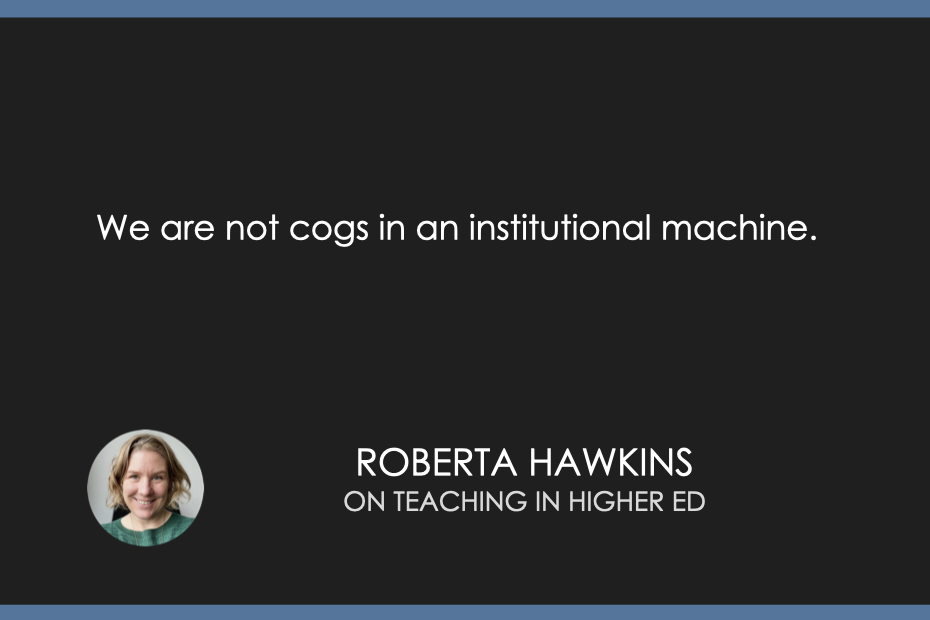
    We are not cogs in an institutional machine.

    We advise lots of different ways of rethinking our relationship with work in the book.
    -Roberta Hawkins

    You can’t solve institutional problems with individual sacrifices.
    -Leslie Kern

    We are not cogs in an institutional machine.
    -Roberta Hawkins

    One of the challenges, is the idea that our work is kind of a calling. It’s a passion project. The institution knows that we love our work and that we are passionate about our students and that we care about bringing great ideas to fruition in the world, so it will extract every little drop of that from you in terms of your time and energy.
    -Leslie Kern

    Invisibilized labor is an equity issue as well as a workload issue.
    -Roberta Hawkins

    [/divwrap][divwrap class=”one-half”]

    Resources

    • Higher Expectations: How to Survive Academia, Make It Better for Others, and Transform the University, by Roberta Hawkins and Leslie Kern
    • What you didn’t learn in class: Revealing the hidden curriculum, by Lindsay Vreeland, Center for Innovative Teaching and Learning at Northern Illinois University
    • Beyond Anxiety: Curiosity, Creativity, and Finding Your Life’s Purpose, by Martha Beck

    [/divwrap]


    Remembering Ken Bain, with Dave Stachowiak Oct 30, 2025
    Show notes

    Dave Stachowiak joins Bonni in remembering Ken Bain on episode 594 of the Teaching in Higher Ed podcast.
    [divwrap class=”one-half first”]

    Quotes from the episode

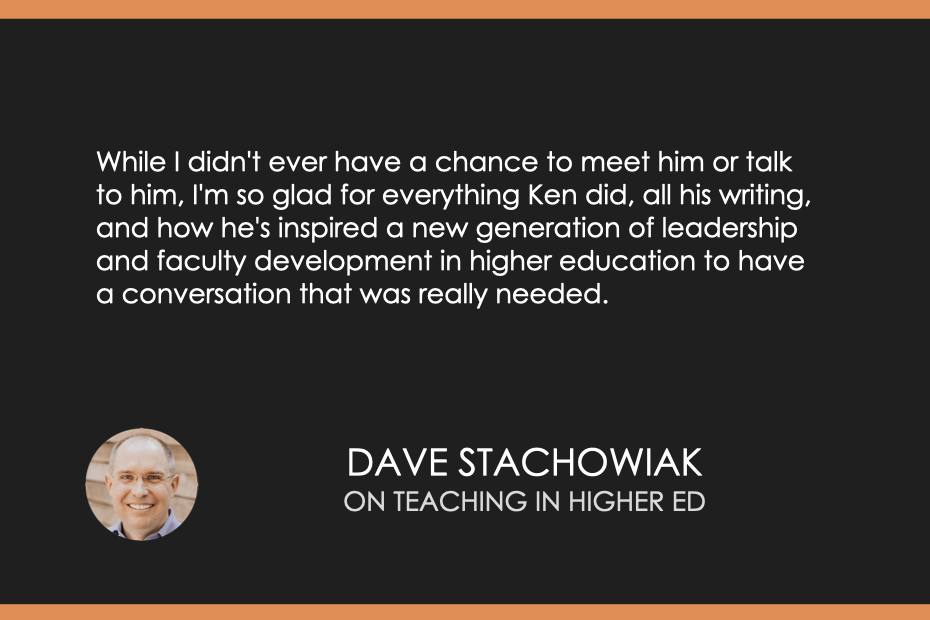
    While I didn't ever have a chance to meet him or talk to him, I'm so glad for everything Ken did, all his writing, and how he's inspired a new generation of leadership and faculty development in higher education to have a conversation that was really needed.

    Ken Bain was such good company to me and to countless people from around the world.
    -Bonni Stachowiak

    While I didn’t ever have a chance to meet him or talk to him, I’m so glad for everything Ken did, all his writing, and how he’s inspired a new generation of leadership and faculty development in higher education to have a conversation that was really needed.
    -Dave Stachowiak

    [/divwrap][divwrap class=”one-half”]

    Resources

    • Post: James Lang Shares About Ken Bain’s Passing
    • Obituary of Kenneth R. Bain
    • Episode 36: What the Best College Teachers Do with Ken Bain
    • Episode 100: The Failure Episode
    • Episode 146: James Lang and Ken Bain on Motivation in the Classroom
    • Johannes Haushofer CV of Failures
    • What the Best College Teachers Do, by Ken Bain
    • What the Best College Students Do, by Ken Bain

    [/divwrap]


    Analog Inspiration: Human Centered AI in the Classroom, with Carter Moulton Oct 23, 2025
    Show notes

    Carter Moulton shares about his Analog Inspiration (AI) card deck and human centered AI in the classroom on episode 593 of the Teaching in Higher Ed podcast.
    [divwrap class=”one-half first”]

    Quotes from the episode

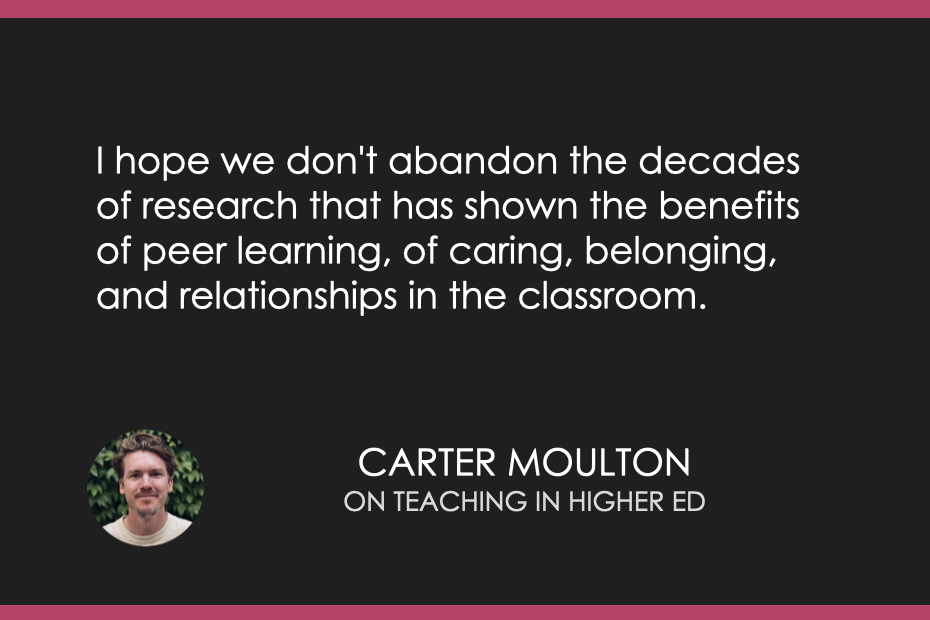
    I hope we don't abandon the decades of research that has shown the benefits of peer learning, of caring, belonging, and relationships in the classroom.

    I’m here to talk a little bit about the Analog Inspiration card deck, which really is a professional development resource under the guise of a game.
    -Carter Moulton

    I wanted to create something that would bring faculty together and talk with each other and wrestle with these moral and ethical questions.
    -Carter Moulton

    Those three questions underneath at the bottom of the card are really just trying to foster that critical thinking with students about what it is they’re making and what it is they’re doing and how they’re engaging with AI.
    -Carter Moulton

    I hope we don’t abandon the decades of research that has shown the benefits of peer learning, of caring, belonging, and relationships in the classroom.
    -Carter Moulton

    [/divwrap][divwrap class=”one-half”]

    Resources

    • Analog Inspiration Card Deck
    • How to Play
    • Free Google Sheet for Discussions
    • Buy – Analog Inspiration Card Deck
    • Analog Inspiration Project Overview
    • Bonni’s Analog Inspiration Unboxing Video (YouTube)
    • Bonni awkwardly tries to mention HAL 9000 and WarGames and just clearly wasn’t ready for the moment 🤦‍♀️
    • Episode 585: Toward Socially Just Teaching Across Disciplines with Bryan Dewsbury
    • 10 to 25: The Science of Motivating Young People: A Groundbreaking Approach to Leading the Next Generation—And Making Your Own Life Easier by David Yeager
    • Co-Intelligence: Living and Working with AI, by Ethan Mollick
    • Donna H. Hicks – Dignity Researcher
    • Anna Mills’ PAIRR Resources
    • Teaching with AI: A Practical Guide to a New Era of Human Learning, by José Antonio Bowen and C. Edward Watson
    • Human in the Loop (Wikipedia)
    • Stanford University Human-Centered Artificial Intelligence
    • Learning Curve Podcast: What If College Teaching Was Redesigned With AI In Mind? Hosted by Jeff Young with guests Paul LeBlanc and Maha Bali
    • Tolu Noah
    • Custom Playing Cards
    • Hidden Systems: Water, Electricity, the Internet, and the Secrets Behind the Systems We Use Every Day, by Dan Nott
    • TiHE Recommendations Page
    • Cooking with Vegetables by Jessie Jenkins
    • First Generation, by Frankie Gaw

    [/divwrap]


    Metaphors, Free Speech, and How We Learn, with Barbara Oakley Oct 16, 2025
    Show notes

    Barbara Oakley shares about her course, Speak Freely, Think Critically, and gives practical advice about teaching on episode 592 of the Teaching in Higher Ed podcast.
    [divwrap class=”one-half first”]

    Quotes from the episode

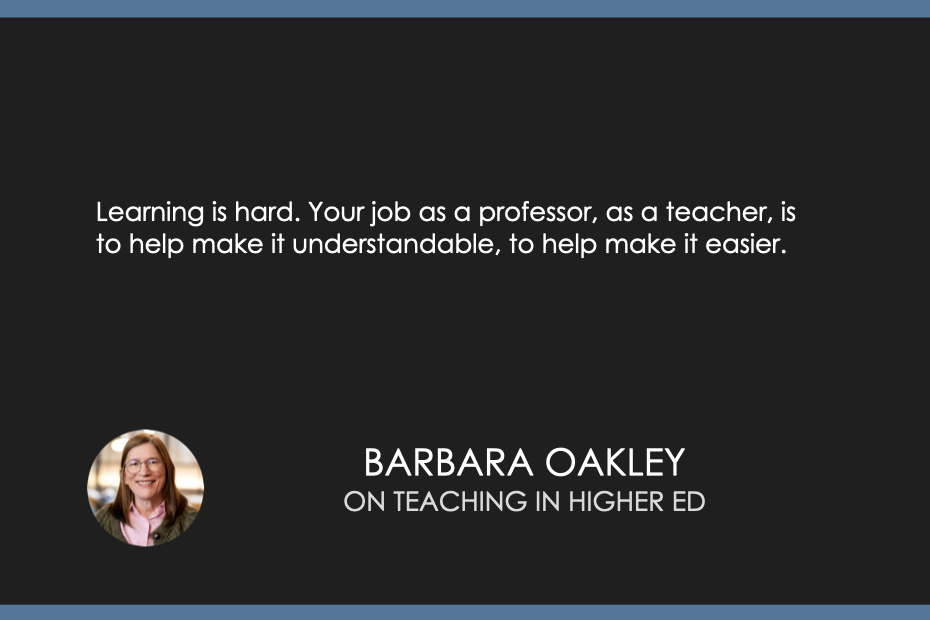
    Learning is hard. Your job as a professor, as a teacher, is to help make it understandable, to help make it easier.

    If you look at free speech from a historical and neuroscientific perspective, you can get a much better sense of people’s motivations and the continuing patterns that we see through history of people being really pro free speech until it affects them.
    -Barbara Oakley

    Really intelligent people find it very hard to be flexible, to change their mind.
    -Barbara Oakley

    Learning is hard. Your job as a professor, as a teacher, is to help make it understandable, to help make it easier.
    -Barbara Oakley

    [/divwrap][divwrap class=”one-half”]

    Resources

    • Speak Freely, Think Critically: The Free Speech Balance Act
    • Sway.AI
    • Barbara Oakley – Coursera Instructor Profile
    • Learning How to Learn
    • Think Critically: Deductive Reasoning and Mental Models
    • Barbara Oakley’s Website
    • Barbara Oakley – Wikipedia
    • Academy of Ideas: The Hidden Neuroscience of Democracy
    • A Mind for Numbers, by Barbara Oakley
    • Retrieval Practice (retrievalpractice.org)
    • Obsidian
    • How and Why I Use Obsidian, by Robert Talbert
    • SmarterHumans.ai

    [/divwrap]


    Rethinking Student Attendance Policies for Deeper Engagement and Learning Oct 09, 2025
    Show notes

    Simon Cullen + Danny Oppenheimer help us rethink student attendance policies toward deeper engagement and learning on episode 591 of the Teaching in Higher Ed podcast.
    [divwrap class=”one-half first”]

    Quotes from the episode

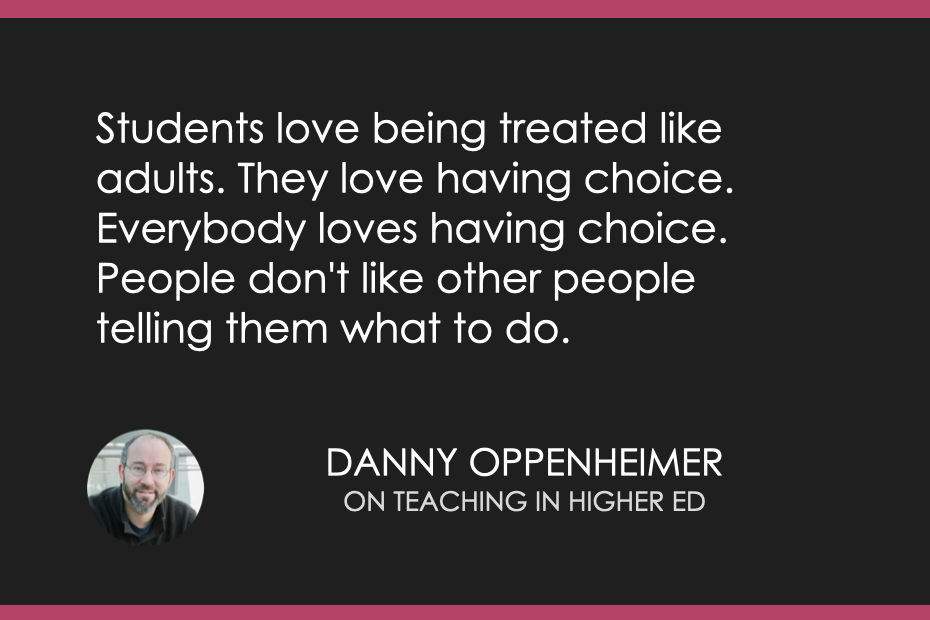
    Students love being treated like adults. They love having choice. Everybody loves having choice. People don't like other people telling them what to do.

    There’s a lot of evidence that coming to class is one of the best things a student can do to facilitate their learning and performance in class.
    -Danny Oppenheimer

    You can make students attend, and most faculty do. They set attendance as mandatory. And then students attend and they learn because they attend. But they also hate you, and they hate the subject and they hate everything to do with the class.
    -Danny Oppenheimer

    If you give people choices, sometimes they make bad choices. Scaffolding choices can help people make choices that actually align with their preferences more effectively.
    -Danny Oppenheimer

    Students love being treated like adults. They love having choice. Everybody loves having choice. People don’t like other people telling them what to do.
    -Danny Oppenheimer

    In some sense students have a preference to attend class. And in some sense they have a preference to not attend class. Those preferences can coexist in some way.
    -Simon Cullen

    [/divwrap][divwrap class=”one-half”]

    Resources

    • Choosing to learn: The importance of student autonomy in higher education, by Simon Cullen and Daniel Oppenheimer
    • Are we overlooking the power of autonomy when it comes to motivating students? by Danny Oppenheimer
    • Consequences of Erudite Vernacular Utilized Irrespective of Necessity: Problems with Using Long Words Needlessly, by Daniel M. Oppenheimer
    • Speak Freely, Think Critically: The Free Speech Balance Act
    • Punished By Rewards: The Trouble with Gold Stars, Incentive Plans, A’s, Praise, and Other Bribes, by Alfie Kohn
    • The Goodness Paradox: The Strange Relationship Between Virtue and Violence in Human Evolution, by Richard Wrangham
    • Finding Meaning in the Age of Immortality, by T.N. Eyer

    [/divwrap]


    Deep Background: Using AI as a Co-Reasoning Partner, with Mike Caulfield Oct 02, 2025
    Show notes

    Mike Caulfield shares about using AI as a co-reasoning partner and his Deep Background tool on episode 590 of the Teaching in Higher Ed podcast.
    [divwrap class=”one-half first”]

    Quotes from the episode

    Searching for information is a journey. How can we get the benefits of AI but still preserve that feeling of a journey?

    Critical thinking problems with students turn out to be critical doing problems.
    -Mike Caulfield

    AI doesn’t naturally think in terms of provenance, in terms of how it got this piece of information. It’s a little bit of a bolt on afterthought.
    -Mike Caulfield

    Searching for information is a journey. How can we get the benefits of AI but still preserve that feeling of a journey?
    -Mike Caulfield

    I’m working on this issue of follow ups with AI. It is magic to get students to think of these responses as not a single transaction. They’re coaching the AI through a process, not to get a specific answer that they want, but to look at the sorts of sources that matter for the question.
    -Mike Caulfield

    [/divwrap][divwrap class=”one-half”]

    Resources

    • Deep Background: A “Superprompt” to change the way you use LLMs
    • Reading the Room with SIFT Toolbox
    • New SIFT Toolbox Release (Substack)
    • SIFT Method (The Four Moves)
    • Verified: How to Think Straight, Get Duped Less, and Make Better Decisions about What to Believe Online, by Mike Caulfield and Sam Wineburg
    • Interview with Mike Caulfield on Deep Background (AACE Review)
    • Is the LLM Response Wrong, or Have You Just Failed to Iterate It, by Mike Caulfield
    • Episode 492: Verified with Mike Caulfield on Teaching in Higher Ed
    • Starlight Bowl in San Diego
    • Sound of Music
    • “Everything Could Have Been a Huge Disaster”: Nathan Fielder on Making ‘The Rehearsal’ Season 2
    • It Runs Through Me, Tom Misch (feat. De La Soul)
    • Tom Misch: Tiny Desk Concert
    • Me Myself and I, De La Soul (1989)
    • The Magic Number, De La Soul (1989)
    • Reasonable People with Tom Stafford
    • Pétanque

    [/divwrap]


    The Richness of Podcasting in Higher Education Sep 25, 2025
    Show notes

    The Richness of Podcasting in Higher Education, with Dom Conroy and Warren Kidd.
    [divwrap class=”one-half first”]

    Quotes from the episode

    Education is a relational experience.

    There’s so many different ways to capture people’s imagination through an audio feed.
    -Dom Conroy

    When we’re creating podcasts, we are putting ourselves on the line.
    -Dom Conroy

    Education is a relational experience.
    -Warren Kidd

    The act of teaching is reflective and reflexive.
    -Warren Kidd

    [/divwrap][divwrap class=”one-half”]

    Resources

    • Using Podcasts to Cultivate Learner–Teacher Rapport in Higher Education Settings, by Dominic Conroy & Warren Kidd
    • Optimizing Practitioner-Delivered Podcasts as Learning and Teaching Tools in Higher Education: Learner and Teacher Viewpoints, by Dom Conroy and Warren Kidd
    • International Podcast Day
    • Planet Money Episode 216: How Four Drinking Buddies Saved Brazil
    • S-Town Podcast: Chapter 1
    • BBC Radio
    • Walkman
    • The Wild Podcast: In Search of Silence
    • Good Robot Podcast
    • RCA podcast: Creative education through uncertainty

    [/divwrap]


    Learning About Grades from an Emerging Failure and Special Guest Emily Donahoe Sep 18, 2025
    Show notes

    Emily Pitts Donahoe shares what we can learn about grades from an “emerging failure” on episode 588 of the Teaching in Higher Ed podcast.
    [divwrap class=”one-half first”]

    Quotes from the episode

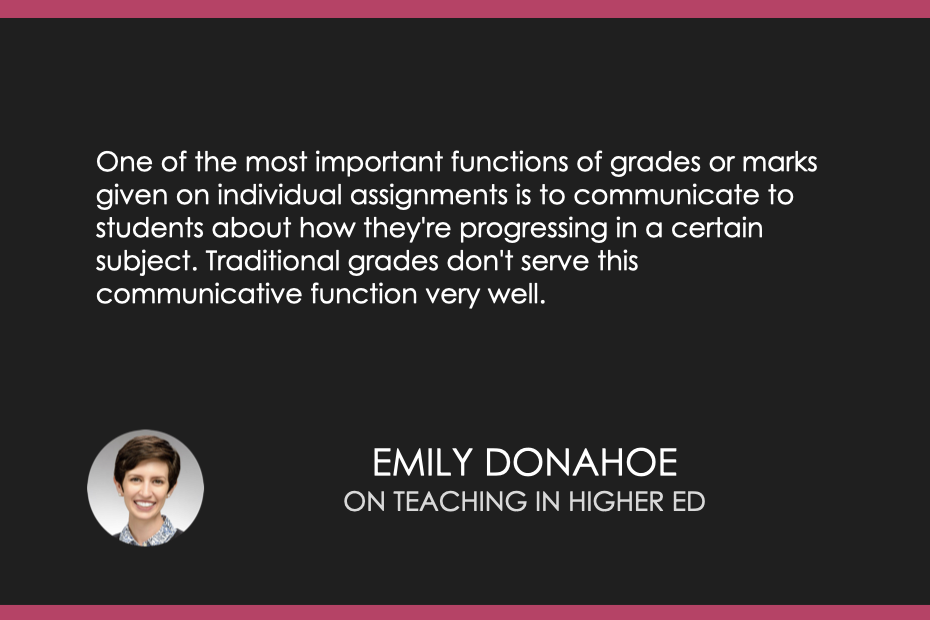
    One of the most important functions of grades or marks given on individual assignments is to communicate to students about how they're progressing in a certain subject. Traditional grades don't serve this communicative function very well.

    They introduced a framework that attempts to identify the common features of alternative grading for growth systems that are meant to prioritize student growth and student learning over just grades and performance.
    -Emily Donahoe

    Those four pillars are marks that indicate progress, reattempts without penalty, clearly defined standards, and helpful feedback.
    -Emily Donahoe

    One of the most important functions of grades or marks given on individual assignments is to communicate to students about how they’re progressing in a certain subject. Traditional grades don’t serve this communicative function very well.
    -Emily Donahoe

    [/divwrap][divwrap class=”one-half”]

    Resources

    • Unmaking the Grade, Emily Pitts Donahoe’s blog and reflective journal chronicling one educator’s experiences with ungrading and other progressive teaching practices
    • Grading for Growth: A Guide to Alternative Grading Practices That Promote Authentic Learning and Student Engagement in Higher Education, by Robert Talbert & David Clark
    • Grading for Growth
    • How Humans Learn: The Science and Stories Behind Effective College Teaching, By Joshua R. Eyler
    • Failing Our Future: How Grades Harm Students and What We Can Do About It, by Joshua R. Eyler
    • Harry Potter Wizards of Baking
    • Sarah Rose Cavanagh
    • Japanese restaurant at Irvine Spectrum all four of the Stachowiak family members like: Robata Wasa
    • Wicked
    • Harry Potter and the Prisoner of Azkaban
    • More Everything Forever: AI Overlords, Space Empires, and Silicon Valley’s Crusade to Control the Fate of Humanity, by Adam Becker
    • Braiding Sweetgrass: Indigenous Wisdom, Scientific Knowledge and the Teachings of Plants, by Robin Wall Kimmerer

    [/divwrap]


    Layered Learning, with M. C. Flux Sep 11, 2025
    Show notes

    M. C. Flux uncovers lessons for video creation from what he calls layered learning on episode 587 of the Teaching in Higher Ed podcast.
    [divwrap class=”one-half first”]

    Quotes from the episode

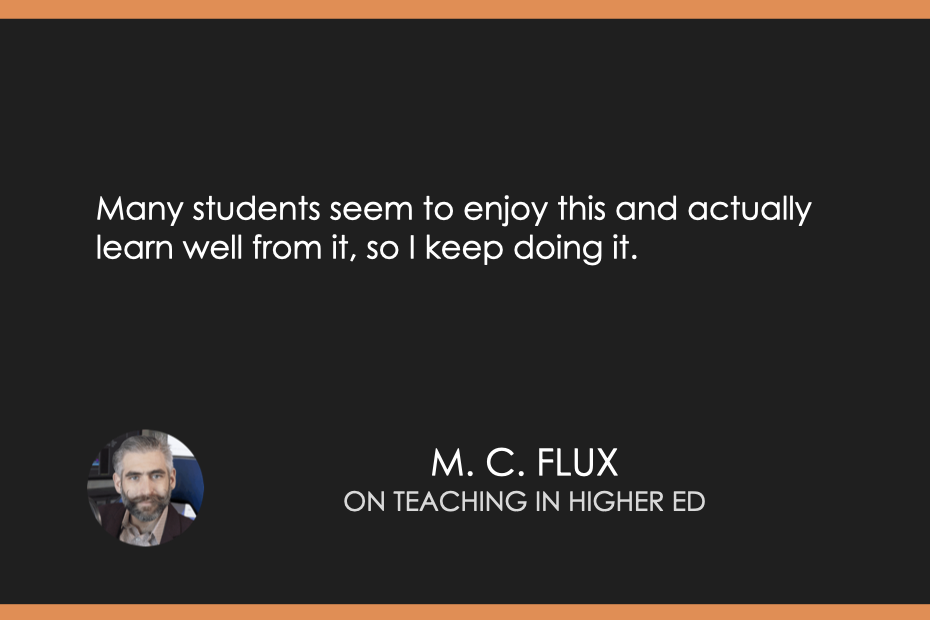
    Many students seem to enjoy this and actually learn well from it, so I keep doing it.

    I’ve also started creating these little quiz questions in them, but they’re not hard. They’re just to keep their attention going.
    -M. C. Flux

    Many students seem to enjoy this and actually learn well from it, so I keep doing it.
    -M. C. Flux

    I think these students struggle so much with attention that bringing them back with a really simple question just helps.
    -M. C. Flux

    The fact that students have shorter attention spans is still something we need to pay attention to. I don’t think it’s as bad as people say, but it is actually still a big piece of how I design instruction.
    -M. C. Flux

    A lot of students are used to rewatching things that they enjoy.
    -M. C. Flux

    [/divwrap][divwrap class=”one-half”]

    Resources

    • Video: Education as Content, by Dr. Flux
    • The Art of Gathering: How We Meet and Why it Matters, by Priya Parker
    • Preferences vs. What Works, by Robert Talbert
    • Song: Leave it Like it Is, by David Wilcox
    • Episode 555: A Big Picture Look at AI Detection Tools with Chris Ostro
    • LinkedIn: Christopher Ostro
    • LinkedIn: Dr. MC Flux
    • Netflix Special: Bo Burnham Inside
    • DJI Osmo Mobile 7P
    • Insta360 Flow Pro
    • HollyLand Lark Microphones
    • Games: Agency as Art, by C Thi Nguyen

    [/divwrap]


    Kindness and Community in an Online Asynchronous Classroom, with Seth Offenbach Sep 04, 2025
    Show notes

    Seth Offenbach shares about his article, Kindness and Community in an Online Asynchronous Classroom, on episode 586 of the Teaching in Higher Ed podcast.
    [divwrap class=”one-half first”]

    Quotes from the episode

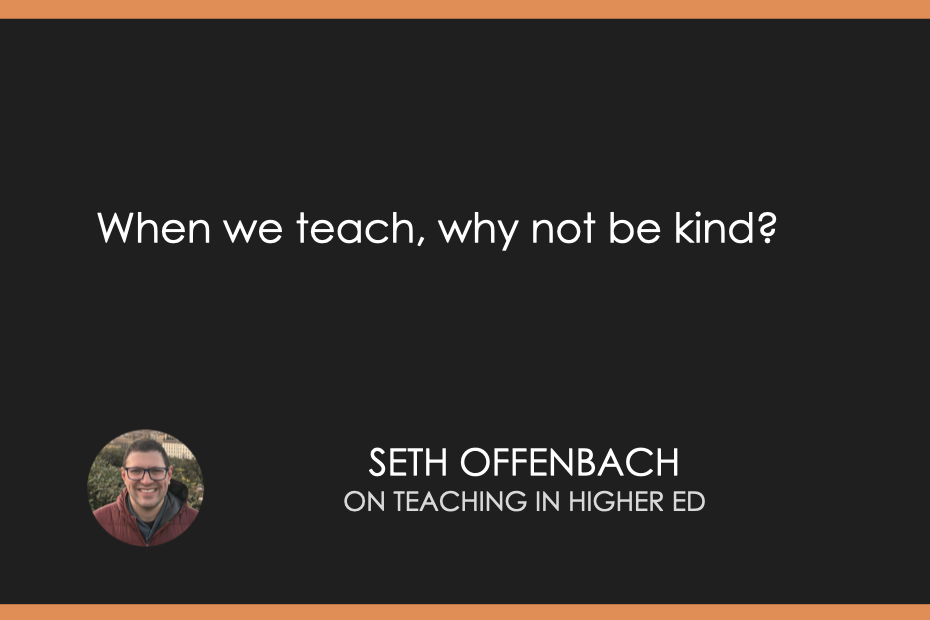
    When we teach, why not be kind?

    I had to recognize the reality that my classroom was never going to be the number one priority for people during the pandemic.
    -Seth Offenbach

    When we teach, why not be kind?
    -Seth Offenbach

    My goal is to challenge my students intellectually. My goal is not to stress them out.
    -Seth Offenbach

    We all miss deadlines.
    -Seth Offenbach

    In order to truly be kind, you have to create a safe space for the students where they feel that they can come to you, talk to you and learn with you.
    -Seth Offenbach

    [/divwrap][divwrap class=”one-half”]

    Resources

    • Kindness and Community in an Online Asynchronous Classroom, by Seth Offenbach
    • Currents in Teaching and Learning – January 2025 edition
    • Radical Hope: A Teaching Manifesto, by Kevin M. Gannon
    • The Social Justice Syllabus Design Tool: A First Step in Doing Social Justice Pedagogy, by Sherria D. Taylor and Maria J. Veri
    • Feeling Better: A Year without Deadlines, by Doreen Thierauf
    • A Pedagogy of Kindness, by Catherine Denial
    • Cultivating Compassionate Community to Foster Academic Integrity?, by Maha Bali and Yasser Tammer
    • An Equity Syllabus
    • Liquid Syllabus, by Michelle Pacansky-Brock
    • Jesse Stommel
    • The Practice of Ungrading, by Jesse Stommel
    • Remi Kalir’s Annotated Syllabus
    • Go Ahead and Ask for More Time on That Deadline, by Ashley Whillans
    • A Pedagogy of Kindness: The Cornerstone for Student Learning and Wellness, by Fiona Rawle
    • Effect of Syllabus Tone: Students’ Perceptions of Instructor and Course, by Harnish & Bridges
    • Replacing Power with Flexible Structure: Implementing Flexible Deadlines to Improve Student Learning Experiences, by Hills & Peacock
    • Enhancing Social Presence in Online Learning, by Joyce & Brown
    • The 1:1 method, by Seth Godin
    • Master Slave Husband Wife, by Ilyon Woo

    [/divwrap]


    Previous 1 4 5 6 7 8 65 Next

    Related Podcasts

    Making Sense with Sam Harris

    1

    Making Sense with Sam Harris Education
    Grammar Girl

    2

    Grammar Girl Education
    Good Life Project

    3

    Good Life Project Education
    Explain It to Me

    4

    Explain It to Me Education
    Team Never Quit

    5

    Team Never Quit Comedy
    Optimal Living Daily – Personal Development and Self-Improvement

    6

    Optimal Living Daily – Personal Development and Self-Improvement Alternative Health
    footer-logo

    Contact Us

    Toll Free: 844-670-7747

    Links

    • Home
    • Top Charts
    • Networks
    • Apps
    • Independents Podcasts
    • Podcast Advertising
    • Podcast News
    • Contact Us
    • About Us
    • Analytics & Insights

    Stay Connected

      Privacy, Terms of Use & Our Code of Ethics Protecting Content Creators Copyrights