TopPodcast.com
Menu
  • Home
  • Top Charts
  • Top Networks
  • Top Apps
  • Top Independents
  • Top Podfluencers
  • Top Picks
    • Top Business Podcasts
    • Top True Crime Podcasts
    • Top Finance Podcasts
    • Top Comedy Podcasts
    • Top Music Podcasts
    • Top Womens Podcasts
    • Top Kids Podcasts
    • Top Sports Podcasts
    • Top News Podcasts
    • Top Tech Podcasts
    • Top Crypto Podcasts
    • Top Entrepreneurial Podcasts
    • Top Fantasy Sports Podcasts
    • Top Political Podcasts
    • Top Science Podcasts
    • Top Self Help Podcasts
    • Top Sports Betting Podcasts
    • Top Stocks Podcasts
  • Podcast News
  • About Us
  • Podcast Advertising
  • Contact
Not in our directory?
Add Show Here
Podcast Equipment
Center

toppodcastlogoOur TOPPODCAST Picks

  • Comedy
  • Crypto
  • Sports
  • News
  • Politics
  • True Crime
  • Business
  • Finance

Follow Us

toppodcastlogoStay Connected

    View Top 200 Chart
    Back to Rankings Page
    Business

    Insureblocks

    blockchain & smart contracts in industries across the world

    Advertise
    • Apple Podcasts
    • Google Play
    • Spotify

    Latest Episodes:
    Ep. 148 – Challenges and opportunities of blockchain in the insurance industry – insights from IBM Feb 14, 2021
    Show notes

    Mark McLaughlin is IBM’s Global Insurance Director, leading IBM’s Global Insurance strategy, solutions, and partnerships. Mark’s teams analyse trends in the insurance business and in technology, predict strategies for insurers, and build IBM insurance solutions to meet insurer needs. In this podcast we discuss the challenges and opportunities of blockchain in the insurance industry with special insights from IBM.

    What is blockchain?

    For Mark blockchain is a trusted shared ledger. It enables business entities with different interest and different goals, that may not 100% trust each other, to establish a common ground where a set of documents, processes and data is maintained by a group across a business network.

    It is maintained in a way that is immutable where everybody can see the changes that are going on and where everybody has a record of it. Blockchain also have features like smart contracts that can help automate business processes in a trusted manner by all participants.

    Mark points out that there are a lot of different things you can do with blockchain from digital currencies to running shared business processes.

    How has insurance embraced blockchain technology?

    Mark believes insurers are feeling the heat on innovation due to the 46% CAGR on Insuretech investment and the entry of large players like Ping An and Amazon into online distributed type insurance ventures.

    Insurance being baked into other industries such as the purchase of an airline ticket in the US now comes with the offer of travel insurance as part of the process.

    The insurance industry knows that they have to figure out ways to connect to broader ecosystems and to innovate. Blockchain is one way of doing that. Whilst insurers have a high level of interest in blockchain they have had a little trouble getting started in some cases.

    Blockchain has great potential as a technology and an increasing number of insurers are willing to embrace it. The challenge however is with the business model. Other technologies such as AI (artificial intelligence) do not have the same challenge. AI is very easy to visualise, it can be used to better process a claim, underwrite a risk and advise an insured.

    Blockchain is a little tougher. The challenge isn’t the tech it’s the use case behind the technology. Insurers who have been successful at using blockchain are those who have correctly defined the business value. It is however a very tricky exercise because blockchain is about creating networks and you have to ensure that the value line up across all the players within that network.

    Digitising business during COVID

    There is a tonne of complexities in the insurance industry and people tend to stick to the process they know because they know how to manage the complexities within that process.

    However, some forward-thinking companies have during this COVID world looked at digital interactions and how they can rethink their business to leverage new technologies. For Mark, It is about “how do I build better interactions with my end user? How do I get closer to risk? How do I do a better job of providing personalised and customised advice around that risk? How do I connect relevant products and services at the point of risk?” Insurers that can figure that out and do that at scale will be the most successful ones in the future.

    Approaches to innovation and blockchain

    Too often insurers judge innovation in its ability to sell more of their existing products. The more successful insurers are those that think “Instead of how do I take my existing policies and my existing business and adapt them, they think more about how do I reinvent the entire risk process?” Too often the decision making process insurers get caught up with is very short term instead of thinking more long term and the bigger picture.

    Connectivity to customer and connectivity to risk is very important for insurers according to Mark. Blockchain provides some opportunities to either streamline the process to speed up your interactions with the customer and get more conversation, and to connect more risk data to the process and new customers that you couldn’t have easily reached out to before.

    With the ever increasing number of blockchain business networks from trade networks, supply chain networks and others, insurers can’t take an approach of selling them insurance. They have to engage them in the early days of their development not to sell them policies but instead to understand the kind of data streams they can now access to better inform their policies and their risk advice.

    Best practices when evaluating new innovating technologies

    First of Mark advises companies need to understand what the technology can and cannot do. For example, in the case of blockchain they need to understand the value a distributed ledger can bring and what can and can’t be done from a security and an optimization standpoint.

    Second you need to understand what’s the business problem you’re trying to solve. Not all business problems can be solved by blockchain. Business problems that are particularly well suited for blockchain are those where there is a large network of players that have complexities in their relationships such as in information exchange between them. These are complexities that blockchain can take out along with a number of costs.

    Third tackling those challenges from a consortium perspective has its challenge. Building for example a network of 40 insurers for subrogation, reinsurance, or proof of insurance can take a very long time and once there they tend to move quite slowly.

    What Mark feels is more effective is having two or three insurance players who are equally motivated to improve a shared process between themselves. The point being that the issue trying to be resolved only involves a few players instead of a larger number.

    The biggest problem Mark points out in blockchain initiatives is on “do we have the value convened correctly?” It’s a lot easier doing that with a few players than with a network of 40. Mark gives us the example of TradeLens which didn’t go to the industry to create a network of 40 shipping companies. IBM instead worked with Maersk, the dominant player in the industry, to work out the challenges of that industry.

    Insurers collaborating with other industry led blockchain initiatives

    There exists large opportunities for insurers to collaborate with other industry led blockchain initiatives whether that’s in supply chain, pharmaceutical or any other industry. The key though is not about taking a selling traditional insurance products approach.

    The key is to look at how to extract data from those chains in order to build a different risk value proposition based on that data. It’s about using that data to more effectively resolve claims in a speedy manner.

    The opportunity is participating in these things and developing new risk propositions over time and taking advantage of the data that exists in those change. Insurers can extract value of a chain that’s already connected to risk, use that to inform a claims process, an underwriting process and inform both the servicing and advice being provided.


    Ep. 147 – Challenges of adopting blockchain from a governance and risk standpoint Feb 07, 2021
    Show notes

    Dr. Denise McCurdy, Blockchain Governance Advisor at Grove Gate Consulting along with Tom Fuhrman, Blockchain & Cybersecurity Consultant at Vector MV, join us in this podcast to discuss the challenges of adopting blockchain from a governance and risk standpoint.

    Denise is a blockchain governance advisor who has written a doctoral dissertation on blockchain with a special focus on supply chain and governance. She’s also the VP of blockchain governance for a supply chain and logistics startup.

    Tom Fuhrman is a blockchain & cybersecurity consultant specialised in cybersecurity consulting for the last 25 years. Recently he has extended his scope into blockchain consulting, where he focuses on strategy, governance, risk management, and specifically looks at the intersections between blockchain and cybersecurity.

    What is blockchain?

    For Denise, blockchain is a database shared across a network of computers. As a record or block gets added to that database the blocks are chained together. Records on the blockchain are very difficult to change because each block has a hash which refers to the previous block. So, any change of a block requires a change of the entire chain. It is this attribute of blockchain which makes it very secure.

    For Tom, blockchain is a shared, continuously updated immutable database. It represents a single source of truth amongst trustless participants. As Tom is a cybersecurity expert he believes that blockchain inherently has two of the three attributes that cybersecurity requires:

    • Integrity because of its immutably nature
    • Availability because it is distributed
    • Confidentiality isn’t something that blockchain has inherently but it can be added with encryption

    Tom also reminds us that blockchain exists in two basic design philosophies: public permissionless and private permissioned. Permissionless is most famously known via Bitcoin where anyone can participate at any level. Everything is decentralised and transparent in a trustless environment.

    A permissioned blockchain has a restricted access. It isn’t as decentralised and they require a certain degree of trust.

    What is governance and its impact on blockchain and its members?

    Governance is about agreeing upfront the rules and the processes and what to do when things go wrong. It’s a system of rules that helps govern an ecosystem of players in how they can interact.

    Whilst working on her dissertation Denise started to interview supply chain business people who were trying to deploy a blockchain solution. During her interview she kept hearing that it isn’t about the technology but instead, a real lack of clarity around how firms need to work together much more closely than they’re used to doing due to the nature of blockchain. What her interviewees were expressing was the need for a governance framework, or playbook.

    Blockchain impacts its members because they now have to share business processes, confidential information and intellectual property. It’s synonymous to them having to expose the underbelly of their organisation in ways that they haven’t had to do before.

    This closeness of sharing sometimes blurs the lines in their eyes of where their company ends and others begins. For many this is a cultural shift which many companies are not used to.

    For Denise one of the key governance challenges is understanding the amount of changes that people and firms are going to have to do.

    Collaborative governance as a key mechanism to removing obstacles

    Collaborative governance is a particular type of governance that in Denise’s point of view is quite well suited for blockchain as it addresses many of the common issues at the beginning of blockchain such as: information asymmetry, incentives, prehistory of cooperation or conflict of members.

    These are starting conditions that have to be addressed at the very beginning. This then flows into an agreement on how to make decisions, what is equitable, how is trust maintained and what is the shared understanding of good governance. With good collaborative governance you can avoid a lot of the pitfalls that usually come out later.

    There are a number of design principles that need to be looked at when building a governance structure. Need to include a node to an agnostic party. In the case of the MOBI consortium that was down to MIT. Another design principle is who gets to vote and what happens under special circumstances. For example, what happens when one voting firm acquires another voting firm do they get a majority?

    Consortiums, set up as a for profit company or not for profit?

    According to Tom there are two points that comes to mind when looking at the implications of a profit versus not for profit consortium:

    • Membership in the governance body. In a for profit consortium there could be a need or desire to restrict the membership or set up different classes of membership with different authorities and voting rights.
    • Intellectual property. Intellectual property rights may be easier to be managed in a for profit entity that was created by investment from stakeholders.

    Ecosystems as a form of competitive advantage

    Supplier excellence leads to competitive advantage. Firms who do this well are known to be good at what they do as it means that their up and downstream suppliers are faster, better, less expensive, etc, with the firm reaping the benefits of that operational excellence.

    Denise explains that there are some schools of thought that believe that pods of ecosystems can become more competitive than other po ds. That’s because members within a blockchain ecosystem have access to new customers and have the ability to monetize stranded assets.

    What makes a good governance?

    Enterprises that have done a good job in implementing effective governance are the ones that have been very clear in expressing what Denise calls, WIFM (What’s in it for me). Every player within an ecosystem needs to be able to get something out of it. It needs to be transparent and there are mechanisms in place to hold entities accountable.

    Is blockchain a plug and play technology?

    In Tom’s opinion whilst blockchain has clearly improved and matured over the years it hasn’t reached a level equal to a plug and play technology. Blockchain platforms such as Hedera Hashgraph, Hyperledger Fabric, Ethereum, Corda, EOSIO and others now have large development communities as part of their ecosystem with many tools for implementing solutions. These are big steps forward.

    Now there are a number of companies such as IBM, T-Systems, Amazon, Microsoft and many more offering blockchain as a service which helps organisations jumpstart blockchain implementation.

    But blockchain is a complicated technology to implement as an enterprise grade software system. A blockchain that implements a business model usually depends on a range of external components such as external data storage, resources like oracles and notaries. Architectures can get pretty complicated and smart contracts too. However, once these complexities are ironed out and put under the hood future blockchain implements can adopt those learnings and build on that baseline.

    Main risks associated with blockchain platform

    For Tom, the categories of risk are the same as for other IT systems but they all have a blockchain flavour. These include:

    • Technology risk – risk that something could go wrong with the platform that affects the organization’s ability to function. This can be due to a programming error or an implantation error.
    • Cybersecurity risk – risk that a cyber-attack on a blockchain could disrupt an organization’s operations.
    • Liability risk – risk associated with the liabilities of distributed peer-to-peer data sharing and processing.
    • Data privacy risk – risk that personal data protected by law or regulation, protected health information, proprietary corporate data, or other sensitive data could be compromised.
    • Compliance risk – risk that a blockchain-enabled operation could violate compliance requirements (e.g., anti-money laundering in cross-border payments)

    Tom believes there needs to be more maturity and understanding the risks. There needs to be a formal way to manage the risk at the enterprise level and to add blockchain risks to the enterprise risk register. The problem is that many companies don’t have an enterprise risk register that identifies the main risks categorises and what to do about them.

    Tom would advise companies to identify the perils specifically associated with blockchain. To map them into the above categories. They then should ask themselves the following questions:

    • What is the likelihood and impact of those perils?
    • What if they happened?
    • What impact would it have financially or otherwise?
    • What is the chance of it happening?

    One way to mitigate those risks is considering risk transfer through insurance including general liability policies, directors’ and officers’ policies, and cyber policies.


    Ep. 146 – Self-Sovereign Identity and IoT – insights from the Sovrin Foundation Jan 31, 2021
    Show notes

    Michael Shea is the Managing Director of the Dingle Group and the Chair of Sovrin Foundation’s SSI in IoT Working Group. In this podcast we discussed the white paper he authored on Self Sovereign Identity and IoT. To explain the opportunities SSI can provide to IoT, Michael introduces us to three profiles: Jamie (machine to person), Bob (machine to machine) and Bessie the cow (digital twin).

    What is blockchain?

    Blockchain is a decentralised database, which is cryptographically secured and immutable. The decentralised part means that it operates in a wider ecosystem than traditional ones, that sits within corporate firewalls, which gives it greater resiliency and redundancy.

    The cryptographic component along with the different proof of work, resolve the double spend problem and bring a level of assurance that transactions have not been modified.

    An introduction to Self-Sovereign Identify (SSI), Decentralised Identifiers (DID) and verifiable credentials.

    Self-sovereign identity is an identity model, where an entity is in control of its own identity and information related to it. SSI as a concept started to take shape in 2016 with Christopher Allen’s 10 principles of self-sovereign identity. In December 2020 the Sovrin Foundation released its 12 principles of self-sovereign identity, which fundamentally is about an entity’s ability to control the information about themselves.

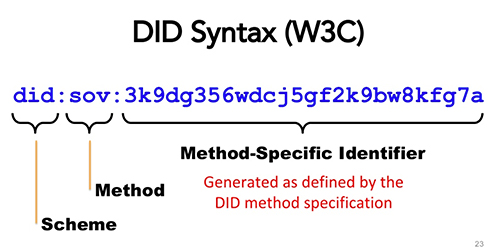
    Decentralised identifiers (DIDs) is a pointer to the identify information known as a DID document that helps to create the trust layers within SSI.

    A verifiable credential is a cryptographic bundle that is created by an issuer of a credential such as the DVLA for a driver’s license. That credential includes attributes stating that the driver is legally entitled to drive a vehicle and it may contain other pieces of information such as your address and other details. A cryptographic bundle is signed using the public private key of the issuer in this case the DVLA which is then returned to the holder of the driver’s license. That holder can then use that credential to a verifier to indicate his/her authorisation to drive a vehicle.

    Internet of Things (IoT)

    Machine to Person

    Machine to person is where a device is interacting with an individual. The machine can be attached or worn by a person and is measuring some aspect of the person’s personal or physical environment and transmitting this data directly or indirectly to a connected device. For example, a person with diabetes would have a sensor that is attached to their body reading their glucose level and communicating the data to an app on a smartphone or a separate physical device.

    Machine to machine

    Machine to machine is the communication between an IoT device and a computer, smartphone or device. Using the above analogy, the machine is the device or the smartphone speaking up to a central repository for transmitting that information to an endocrinologist on behalf of the patient.

    Digital twins

    A digital twin is a virtual digital representation of a physical object. That can be a person, an animal, or a thing. The most common use of digital twins is in an industrial setting. For example, a jet engine has hundreds of sensors embedded inside it, streaming data off to the aircraft engine manufacturers and creating a whole digital profile of itself.

    Risks associated with IoT

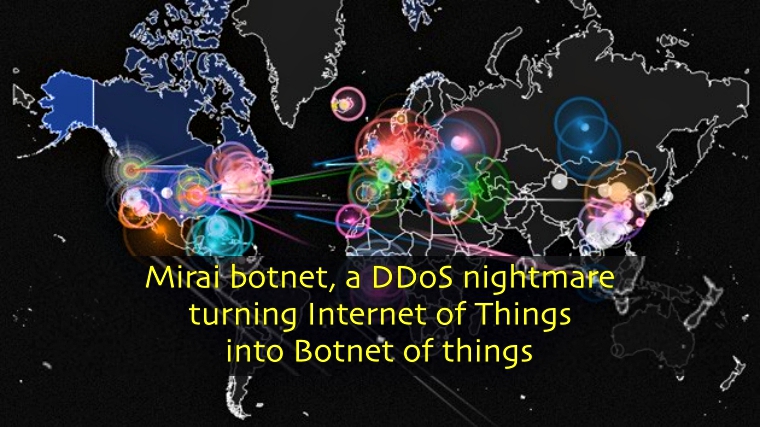
    On the 21st of October 2016, multiple major DDoS attacks happened which took down numerous high-profile websites such as Netflix, Twitter, GitHub, Airbnb and others. This denial of service attack, known as the Mirai botnet attack, was a result of the Mirai malware installed on a large number of IoT devices. Such attacks illustrated the risks associated with poor security on IoT devices.

    As the number of IoT devices continue to grow every year, Michael believes that IoT and security is going to continue being very much like oil and water. That’s partly because security is hard. IoT devices have a number of constraints:

    • Actual device in terms of their CPU and/or microcontrollers and their ability to deal with cryptography
    • Power constraints
    • Lack of a trusted execution environment or secure element that allows the device to store keys in a secure manner

    On the 1st of January 2020, Forbes reported that the state of California IoT Security Law came into effect mandated that all IoT devices sold in the state must also have “reasonable cybersecurity measures” embedded.

    Another point that Michael highlighted in the podcast is the one regarding AI bias. This is a challenge that traditional insurers models are going to run into according to Michael. There has been an increase in statistic models and AI based systems for measuring different things. The problem that many of those algorithms that run statistical models or AIs are bias. There algorithms are completely opaque and there is no open source as they’re often considered as their organisation’s competitive advantage or secret sauce.

    Self-Sovereign Identity and IoT white paper

    In August 2020, the Sovrin Foundation published their Self-Sovereign Identity and IoT white paper.

    The paper had two objectives:

    • To make the SSI community aware of the opportunity that exists in the IoT space
    • To make the IoT community aware of the potential and the possibilities that SSI, the DIDs and the credentials bring in addressing some of the security challenges that exist in IoT

    The white paper uses three personas — Jamie, Bob, and Bessie the Cow —to provide a basic introduction to SSI and IoT, explore practical challenges in context, and describe how SSI in IoT can meet these challenges.

    SSI-in-IoT-whitepaper_Sovrin-design

    Persona – Jamie – machine to person

    Jamie is a 55-year-old male who has Type 1 diabetes since childhood and has recently been diagnosed with early onset dementia. In recent years, he has been using a glucose meter implanted under his skin. The glucose meter connects to an App on his phone to keep a record of his glucose levels. Jamie has been sharing this data with his endocrinologist.

    His challenges and his partner’s challenges are ensuring he gets his regular dose of insulin and the risk of him wandering away because of his dementia / Alzheimer.

    With the use of decentralised identifiers and verifiable credentials, it is possible for his partner, Anne, to share delegated authorization to different people to have access to this information, such as access to the glucose meter. The other option, which is at a conceptual level, is to have inserts in Jamie’s shoes which can provide GPS location of where he is. These inserts can recognize Jamie by his gait and can even track Jamie’s physical location. This of course provides very personal information on Jamie.

    Anne, being Jamie’s legal guardian can share delegate access to rescue services, both the location information coming from the insert, and potentially the glucose levels information. The aim is that this could lead to a faster and safe recovery of Jamie before he goes into an insulin shock.

    Persona – Bob – machine to machine

    Bob is a facilities manager in a financial office who is responsible for the infrastructure and keeping the bank’s staff, financial resources, confidential information and proprietary data safe. He has a lot of devices from heating, ventilation, security systems, network access for WIFI access points, area access and CCTV. It’s very labour intensive to set up, provision devices and to set them up on the network.

    SSI along with DIDs and credentials provide the ability to automate to manage credentials for each of those devices whether is to replace them or revoke them for example.

    DIDs and credentials provide Bob with a global means to establish the identity of IoT devices, people, and organisations. This enables him to standardise the management of both Machine To Machine interactions (e.g. CCTV cameras uploading their footage to a server) and Machine to Person interactions (e.g. doorways controlling entering and exiting of restricted areas).

    The use of DIDs and VC’s in the asset management platform and wider IT ecosystem will increase security by ensuring all IoT devices are able to definitively self-identify and authenticate.

    Persona – Bessie the cow – digital twins

    Bessie is a Black Angus cow being raised by a rancher (keeper). The keeper (in contrast to the owner) of Bessie is required to keep records about Bessie, from birth to death. The tracking of cattle, and other farm animals, throughout their lives is a critical element in ensuring safety of the food supply chain. This was starkly proven during the foot-and-mouth outbreak occurred in 2007 in the UK when millions of animals were culled.

    Today animals have a passport when they are born that tracks all of the animals’ movements. The challenge is that this comes as a physical piece of paper which creates a number of issues from being tampered, modified, and lost.

    SSI brings the following elements to Bessie the cow and its ecosystem:

    • Eliminates paper
    • Managing multiple stakeholders

    SSI brings an element of data quality issue when eliminating paper. Instead of having someone having to write information on a piece of paper or having to rekey something you can avoid spelling mistakes, typos and transcription errors by introducing SSI.

    From a multiple stakeholders perspective, there have been issues or instances of where the person who has the cow on their property, along with the cow’s passport decides to sell the cow even if they don’t own it. SSi cryptographic credentials helps to introduce the notion of guardianship and delegation concept to avoid such type of problems.

    Business value coming out of SSI solutions

    SSI solutions bring two type of business values:

    1. Operational savings through reductions of liability and mitigation of risk. Another example are savings around data quality issues.
    2. When you start to have high confidence, high assurance, high trust around the interaction that you’re having, it starts to open the door for whole new business, different business models, new products and services to be created.

    About the Sovrin Foundation and its work on IoT

    The Sovrin Network- Making Self-Sovereign Identity a Reality from Sovrin Foundation on Vimeo.

    The Sovrin Foundation is a 501 (c)(4) nonprofit organization established to administer the Governance Framework governing the Sovrin Network, a public service utility enabling self-sovereign identity on the internet. The Sovrin Foundation is an independent organization that is responsible for ensuring the Sovrin identity system is public and globally accessible.

    Sovrin works alongside Decentralised Identity Foundation, and Trust Over IP Foundation to raise the profile of SSI in the IoT space.


    Ep. 145 – Parametric insurance revisited – insights from Arbol Jan 24, 2021
    Show notes

    Siddhartha Jha is the Founder & CEO of Arbol, an insurtech platform for parametric products that uses blockchain, big data, machine learning and smart contracts to bring transparency and remove delays and disputes of traditional insurance policies. In this podcast we revisit parametric insurance to discuss why it is now poised for new growth potential thanks to increased availability of granular data, improved technologies and attraction of non-traditional capital.

    What is blockchain?

    Blockchain is a system of distributed consensus. Instead of having a central authority determining when a transaction takes place, or when a particular event has taken place, you have a distributed consensus around that event or transaction taking place. Blockchain allows for immutability and allows for a tamper proof environment where different parties can agree on something happening without a central coordinating authority.

    What is parametric insurance?

    Parametric insurance uses data to make a loss assessment instead of having a human check the level of damage from an event and pay based on a subjective loss estimate. Parametric uses data sets as it’s index and a trigger to make a payment.

    Sid uses an example of a farmer who takes an insurance policy for $100,000 if he/she doesn’t receive 3 inches of rainfall on his farm. Such parametric insurance changes insurance from this subjective loss assessment process, which can be filled with delays, disputes and sometimes fraud to one where once a trigger is generated an automatic payment will happen.

    This creates a great customer experience where there is greater transparency and peace of mind. From an incumbent insurer standpoint, the simplicity of parametric leads to scale and reduce costs. They can avoid relying on loss adjusters, managing different claims process and legal costs as we’re now seeing in business interruption contracts due to COVID.

    From a regulator perspective, Sid believes regulators could get interested in parametric insurance in its ability to fulfilling many gaps in the traditional insurance system:

    • Covering high deductibles
    • Where data sets are becoming richer to provide new innovative parametric insurance as it removes the proving of burden of loss from the customer to the data set

    Why has parametric insurance not scaled yet?

    Parametric insurance has been around since the late 1990s but hasn’t quite scaled yet. Sid believes there are a number of reasons for that:

    • Availability of granular data sets
    • Technology and processing power can be an issue for processing simulations. For example, Arbol can process 40,000 – 50,000 simultaneous weather simulations to price an entire basket. This would have been very difficult 10 – 15 years ago with the available computing power back then.
    • Customers are only now becoming comfortable and familiar with parametric insurance

    Blockchain and parametric insurance

    Very often companies who offer parametric insurance using blockchain are challenged on whether or not they needed a blockchain. Sid believes that if you’re running a simple parametric insurance for one product in one region you don’t need a blockchain. A simple SQL database will be sufficient.

    Operating across a large number of regions, especially in regions where trust levels for institutions and insurance companies can be very low, blockchain can help.

    The decentralised nature of blockchain means you can have a data infrastructure which is decentralised. Something that Arbol has embraced since day 1. What this means is that when a payout happens a customer can know that Arbol had no control over that and that they can verify the original third-party data if they so choose to.

    Another reason why blockchain and parametric insurance can work well together is from an audit perspective. Parametric insurance can be using thousands of different IoT sensors that all require auditing. Blockchain’s time stamping, transparency, traceability and immutability nature of it makes it very valuable for the customer and for reinsurance capital.

    A third reason for why blockchain, is with regards to smart contracts that can manage large programmes such as automated payments.

    About Arbol & dClimate

    Arbol is an insurtech platform for parametric coverage. Arbol connects users such as businesses and farms that are affected by external risks like weather and climate risks to capital that is looking for diversification. Arbol uses big data, smart contracts and machine learning for pricing and AI as an underwriter.

    Arbol has the vision of bringing in non-traditional capital into new markets. Parametric insurance is a great bridge between the traditional finance world, which is used to things like derivatives, which are essentially payments based on data, and the insurance world.

    Arbol’s products serve a range of industries including agriculture, energy, maritime, leisure, and a host of other bespoke risks.

    dClimate is a transparent, decentralised marketplace where climate data, forecasts and models are standardized, monetized and distributed. It is governed by a governance token on the blockchain side. Similarly to how Amazon took AWS from an internal use to an external facing product, dClimate will be easily accessible to entities via a simple API.

    Chainlink and Arbol

    Insureblocks recently had Sergey Nazarov, founder of Chainlink who spoke highly of Arbol. Sid mentioned that Chainlink plays a key role in their ecosystem as early on they realised how difficult it is to access outside data sets into a blockchain in a stable manner. As Arbol builds up dClimate, Chainlink is going to be an integral part of its infrastructure in terms of reaching out to all the different data sets and validating them.

    Growth areas for parametric insurance

    Sid identified a number of growth areas such as in the renewable space where hedging for cloud cover and wind speed as the proliferation of solar and wind capacity continues to grow. In the hospitality sector from hedging vacations based on rainfall events.

    Finally a third one is in the agricultural space where farm level sensor based coverage can help to cover farmers in a more direct way.


    Ep. 144 – A new approach to blockchain – Ping An’s Insights Jan 17, 2021
    Show notes

    Frank Lu is Head of Ping An Blockchain Technology at OneConnect Smart Technology, a subsidiary of Ping An. Previously to Ping An, Frank Lu was one of the original founders of Hyperledger Fabric. In this podcast we discuss the different approaches to blockchain and the advantages of creating encrypted data networks for data privacy, cross validation of data and ability to run business logic on encrypted data.

    About Ping An

    Ping An is a Chinese holding conglomerate with 30 subsidiaries that mainly deal with insurance, banking, and financial services. The company was founded in 1988 and is headquartered in Shenzhen. “Ping An” literally means “safe and well”.

    Ping An ranked 7th on the Forbes Global 2000 list and 29th on the Fortune Global 500 list.

    The company is considered to be China’s biggest insurer, with US$107 billion in gross premium income in 2018. Its market capitalization is at US$220 billion in July 2019, making it the world’s largest insurer except for Berkshire Hathaway.

    Frank’s subsidiary, OneConnect Smart Technology, is mainly responsible for financial services. Frank heads the Technology Division for blockchain which is responsible for PingAn’s blockchain across the conglomerate.

    What is blockchain?

    Blockchain is a shared ledger technology which provides a single source of truth to all participants on a blockchain. It’s a way for different participants to be able to manage and work on the same data source. Every time a change is done to the data source, all participants will have visibility of that change. It has features which makes it immutable thus ensuring any attempts to delete a record or change a record will get noticed by the other participants.

    Frank’s journey to blockchain

    Back in 2013, Frank was part of the IBM WebSphere Strategy Team. His team was working on gamification technology which involved using coins and badges as game elements to motivate a workforce. In 2014, The project was pivoted to a mobile gaming backend as a service working for Jerry Cuomo.

    At that time Ethereum hadn’t yet launched but had published the Ethereum whitepaper along with a few lines of code which attracted the interest of the team Frank worked at. They investigated the Ethereum whitepaper to determine how they could use it for their gaming backend work.

    Based on the mobile gaming backend work a new project was launched, initially called “Blue Chain” that received $1m to explore blockchain solutions. John Wolpert was invited to lead Blue Chain and Richard Brownwas also invited to participate in the project.

    Initially the plan was to avoid having to start from scratch in building a blockchain solution. They looked at the possibility of partnering with Ethereum to bring their technology to the enterprise market. However, due to internal politics it was decided for IBM to build their own blockchain solution. The Blue Chain initiative was then called Hyperledger Fabric. In December 2015, Hyperledger Fabric was formerly launched under the auspices of the Linux Foundation.

    In early 2016, PingAn convinced Frank to join them.

    PingAn’s blockchain technology

    As head of blockchain technology at PingAn, Frank has an interesting view of consortiums. In his opinion consortiums are formed by entities who are interested in accessing other people’s data. Everybody wants to leverage other people’s data, however most aren’t willing to share their own data. His criticism of Hyperledger’s approach to blockchain is its use of channels which is essentially a point to point connection between counterparties, something which you can do with existing traditional technologies. Hyperledger’s approach is if you want to make confidentiality a priority then you should use blockchain technology.

    PingAn has a different approach. Their blockchain technology is heavily based on cryptography where all data is encrypted on the blockchain and where the participants can run business logic on encrypted data. Participants can cross validate their data with other participants’ data without actually know the specifics of the data.

    This approach can facilitate federated learning activities.

    PingAn uses a form of zero knowledge proof, also known as ZKP called 3D ZKP. Frank believes that today’s ZKP is extremely difficult to use and can take a lot of time to prepare. PingAn’s 3D ZKP enables business to create business rules by creating arithmetic equations. This approach ensures that 3D ZKP is significantly more efficient than traditional ZKP. It facilitates the manner in which you can validate your data with other people’s data through a business logic defined by an arithmetic equation.

    For companies to collaborate onto the PingAn’s blockchain platform they need to upload their encrypted data. For this to happen two levels must be adhered to. You need a common encryption standard for encrypting the data onto the blockchain.

    Most ZKP and multi party computation support the Pedersen Commitment. If you can standardise that commitment you can build different protocols and APIs on top of the encryption technology

    3D Zero Knowledge Protocol - English v1.0

    Trade finance use case

    In a hypothetical example a shoe factory receives a purchase order of $100,000 for 1,000 shoes at $100 a pair of shoes. The factory needs capital to be able to manufacture the shoes. They need capital to buy the shoes materials and pay for their workers. The factory takes the purchase order to a bank to receive finance on back of the purchase order.

    The bank, however needs to be able to confirm that the purchase order is real. The bank can access the data on the blockchain that carries information from the logistics provider from the customs on shoes that have been already been shipped. As the data is fully encrypted by each of those participants the bank can’t access the data itself but they can cross validate their own data with the data owned by other participants on the blockchain such as custom officials, logistics company, insurance company and others. They can validate the number of shoes that have been shipped, the price of the shoes and so on.

    The more check points the bank can access onto the blockchain the more they can increase the confidence over the data they have and the more they can reduce the financial risk involved in the trade.

    Plans for 2021

    Opportunity for linking more data to their existing platforms. To create an ecosystem of inter connected data, along with the creation of numerous APIs to leverage the data of multiple blockchains.

    The next big play in Frank’s point of view isn’t about the traditional blockchain use case but about federated learning, where Frank believes there are more opportunities.


    Ep. 143 – UN World Food Programme on the blockchain Jan 10, 2021
    Show notes

    Gustav Strömfelt is Project Manager at the World Food Programme & New Venture Consultant. In this exciting podcast we discuss some of the blockchain work the United Nations World Food Programme (WFP) has been conducting over the years including Building Blocks and collaborations with other UN agencies such as UN Women.

    Winning the Nobel Peace Prize

    Winning the Nobel Peace Prize represents for Gustav an important spotlight on the importance that food has towards global peace.

    Awarding the 2020 Nobel Peace Prize to WFP, the Norwegian Nobel Committee described the link between hunger and armed conflict as a vicious circle in which “war and conflict can cause food insecurity and hunger, just as hunger and food insecurity can cause latent conflicts to flare up and trigger the use of violence.”

    The Nobel Peace Prize gives WFP recognition “for its efforts to combat hunger, for its contribution to bettering conditions for peace in conflict-affected areas and for acting as a driving force in efforts to prevent the use of hunger as a weapon of war and conflict.”

    Gustav feels very humble and proud to be part of an organisation of 18,000 people, their partners and donors who all work together to ensure that the 690 million people who are hungry worldwide do not go to bed worrying about where they’re going to get their next meal.

    What is blockchain?

    A its core, blockchain is a fancy accounting technology with some interesting bells and whistles. From his perspective, Gustav sees blockchain as an amazing way to ensure a unified vision of the truth across participants in an ecosystem. This creates the opportunity for consensus to be shared between organisations that’s effectively coded into an underlying platform.

    From an application standpoint it opens huge opportunities for collaboration and cooperation for use cases that considers the needs of an ecosystem and a common customer. Whether that’s a specific good that’s passing through a supply chain or an individual receiving tokens.

    Blockchain is a great way for the WFP to drive transparency, consensus and a unified vision of the truth.

    About the World Food Programme (WFP)

    Created in 1961, the WFP’s purpose is to eradicate global hunger because one in 11 people worldwide doesn’t have enough to eat.

    The United Nations World Food Programme (WFP) is one of the largest UN agency with 18,000 employees serving 138 million people worldwide across 83 countries. Every year the WFP gives out 15 billion food rations and $30m in cash. At the moment the WFP is probably one of the largest operating airlines in the world with over 100 aircraft along with 30 ships, 5,500 trucks actively moving goods and people to deliver humanitarian responses around the world.

    The World Food Programmes Building Blocks

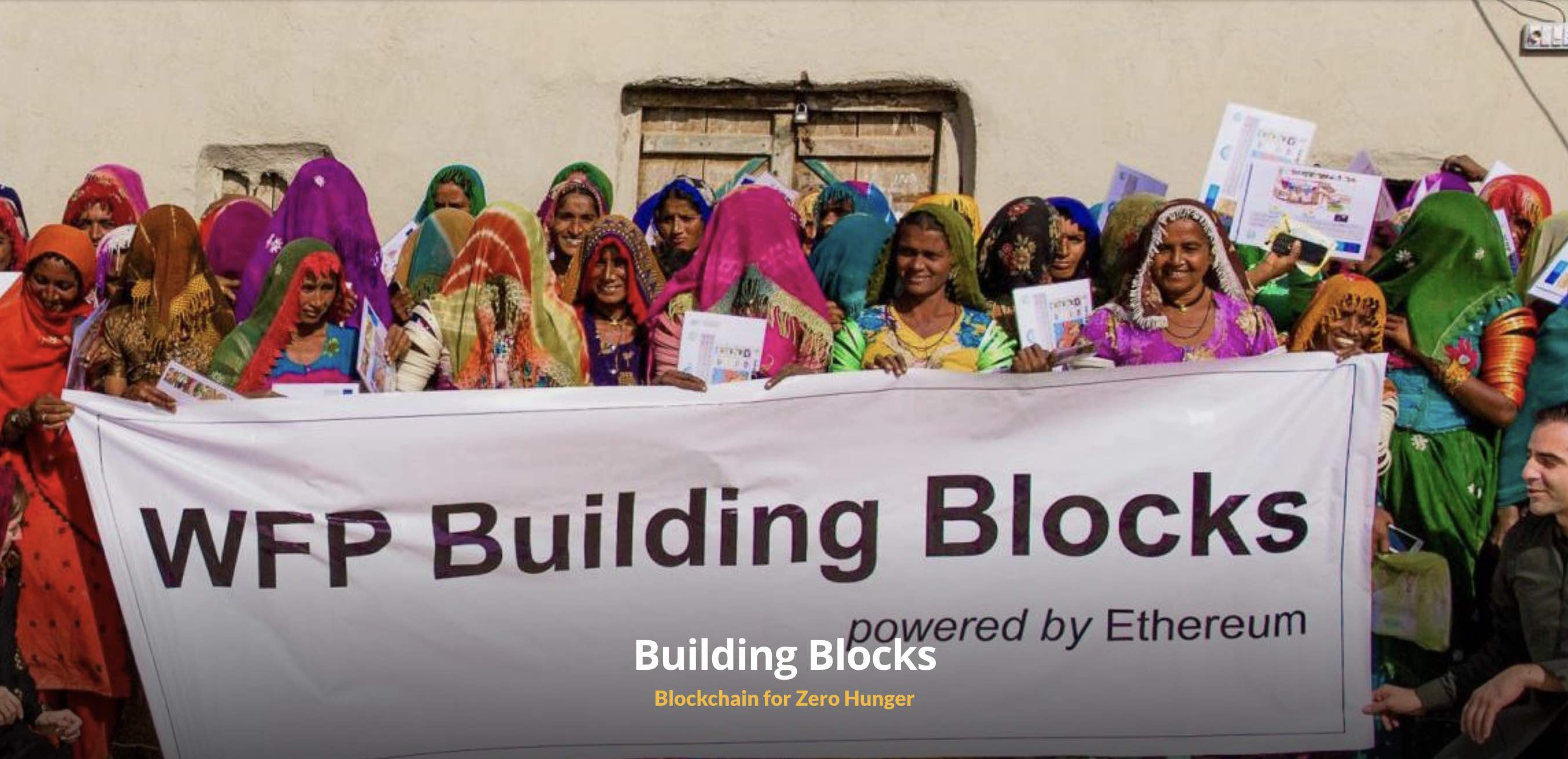
    Houman Haddad, is the founder of the WFP’s Building Blocks which launched in 2017 as part of their Blockchain for Zero Hunger initiative.

    What Houman realised was how inefficient cash transactions are from the creation of beneficiaries accounts to the way transaction are performed.

    The majority of cash delivery processes in humanitarian organisations is done through the creation of virtual accounts with a financial service provider. They hold custody of those accounts as in many cases refugees are not given the ability to open their own named accounts. Some from of authentication mechanism is created for the refugee’s virtual account via a card or via biometrics for a transaction to take place between the financial service provider and the merchant which has been contracted by the humanitarian organisation.

    That process creates significant costs. In Jordan for example the WFP is servicing 140,000 beneficiaries across two refugee camps, four merchant shops with each transaction costing a fee between 2 – 3%. With 300,000 – 400,000 transactions a month this transaction cost can rise significantly.

    With Building Blocks, a custodian wallet is created on behalf of the beneficiary. Transactions are done electronically using digital vouchers where the vouchers are transferred from the beneficiary’s wallet to the merchant’s wallet. A parallel settlement process then takes place where the vouchers the merchants received are paid out in cash. This process reduces transaction fees by up to 98%.

    Gustav recognises that at the beginning they could have used a simple database to deliver the building blocks voucher programme. However, blockchain has enabled them to bring on other organisations such as the UN Women. Blockchain has also enabled to create a lot of trust between the WFP and its vendors in Jordan who do not need to invoice the WFP anymore as they trust the information provided to them by Building Blocks.

    Gustav shared three key learnings gathered with Building Blocs;

    1. You need a champion to take corporate innovation forward
    2. Create the right kind of ecosystem and the right environment for innovative ideas to percolate. This may include having the right mentors and a steering committee
    3. Availability of funding to support the project

    Insureblocks ran in 2018 a campaign to collect funds in support of the WFP by recognising the blockchain work they did with Building Blocks:

    Working with UN Women for cash transfers in refugee camps with blockchain

    UN Women pay women in refugee camps for the work they do there. Traditionally this was done by cash, where cash was transported to refugee camps which can be risky. UN Women and WFP collaborated together to leverage Building Blocks to facilitate the transfer of cash to women in the Za’atari and Azraq refugee camps in Jordan.

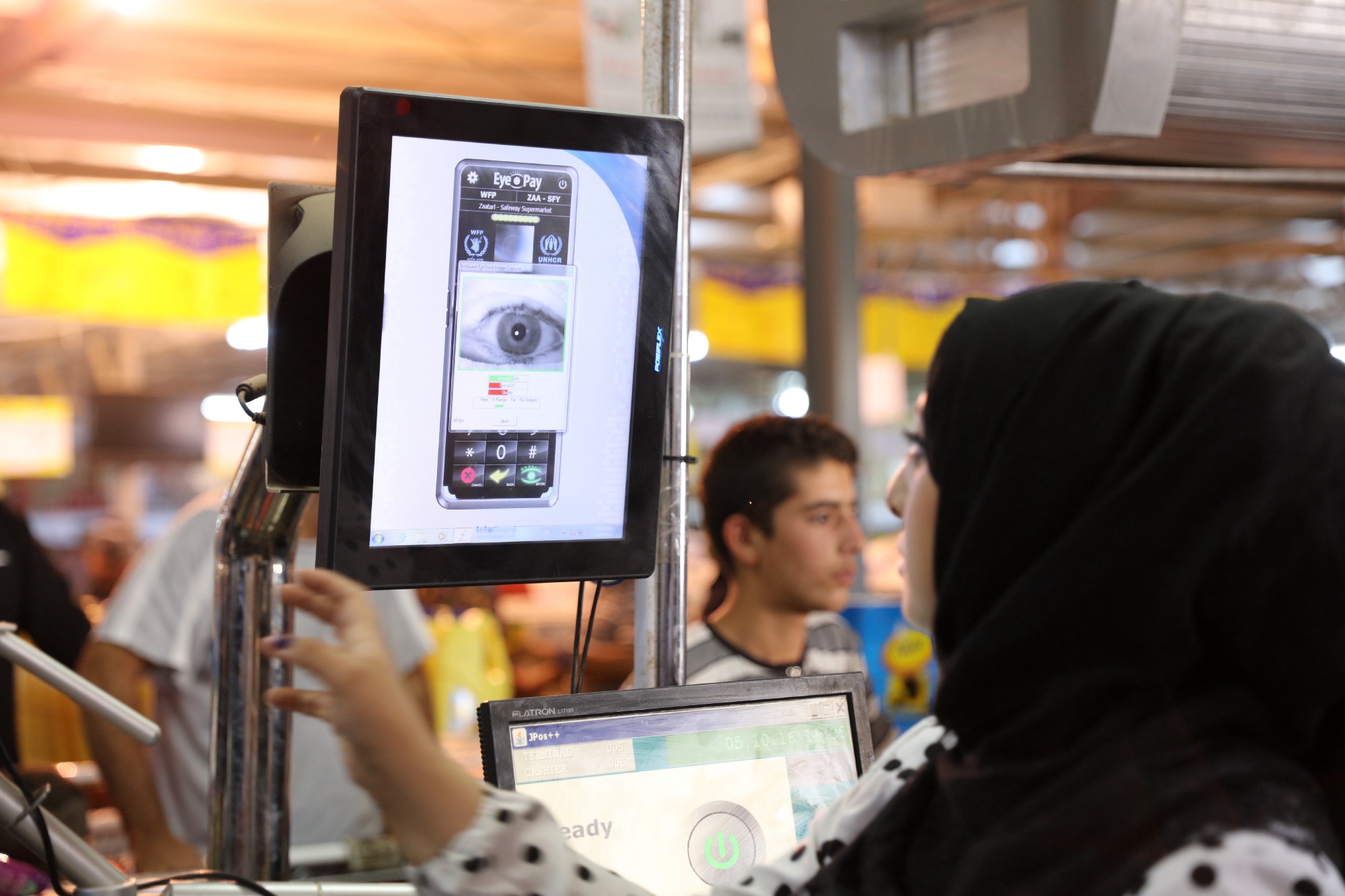
    UN Women uses the blockchain system to transact vouchers as a proxy for the Jordanian Dinar. The way it works is that a woman goes into a supermarket, authenticates herself with an iris scan which enables her to access her UN Women digital cash wallet in order to receive cash from the supermarket tills.

    The Atrium

    The Atrium, an interagency platform for blockchain technology, built on blockchain, designed to support learning, collaboration and conversation amongst the UN community.

    The Atrium was created two years by Gustav along with Christina Lomazzo and Ariana Fowler who also appeared on Insureblocks in Utilising blockchain at UNICEF. It was created as the three co-founders realised there was a lot of replication between different blockchain initiatives within the UN. The initial idea was how they can support the sharing of intellectual property, the sharing of ideas between UN agencies and thus reduce replication and increase collaboration.

    Since the launch of the prototype in mid 2019 UN staff members can come learn about blockchain and develop their own smart contracts. They can use a private permissioned network within WFP and UNICEF to test out ideas

    WFP Innovation Accelerator Programme

    The WFP Innovation Accelerator Programme was launched in 2015 to pilot new solutions and scale promising innovations to disrupt hunger.

    In just five years, they have evaluated over 6,100 applications, supported more than 100 projects around the world, with 14 innovations scaling up to reach 3.5 million people. In 2020, they were one of 10 organizations worldwide to be named in Fast Company’s 2020 awards: “Best Workplace for Innovators” and “Innovation Team of the Year.”

    A number of exciting applications have come up from he WFP Innovation Accelerator Programme such as:

    • H2 Grow is an innovation under the World Food Programme (WFP) Innovation Accelerator’s Scale-Up Enablement programme, recently brought together a global group of hydroponics experts in a 3-day research event to discuss hydroponics in the humanitarian and development context.
    • Share the Meal is an app from the United Nations World Food Programme that enables people to “share their meals” with children in need.

    Ep. 142 – Smart COVID data on the blockchain – insights from HealthTrends.ai Jan 03, 2021
    Show notes

    Susan Joseph is the CEO and co-founder of HealthTrends.ai, a trusted third party delivering ongoing authoritative health data that’s independently auditable and has legal weight. In this podcast we discuss the challenges the US Health Sector has regarding collection and distribution of health data and what role Smart COVID data on the blockchain can have to help fight the pandemic.

    Susan is both a consultant and attorney with startups and enterprises in a variety of settings, including financial services, data usage, ESG, and digital assets. She is also a consortium advisor to the Mining and Metals Industry Blockchain Initiative and is the Executive Director of Diversity in Blockchain, a 501(c)(3) entity that provides education and resources to support diversity and inclusion in the blockchain space.

    What is blockchain?

    Susan views blockchain as a communications network layer on top of the internet that allows direct peer to peer transactions. To accomplish this, it requires cryptography, incentives such as game theory, other economic incentives, and computing power. It can be applied to a wide range of transactions from anything such as currencies to data usage which is where HealthTrends.ai jumps in.

    In our previous podcast together entitled “Innovation & diversity in the Insurance Industry”, Susan had a more technical definition of what is blockchain. Now she views blockchain more as a social, political, economic and computing tool.

    Challenges the US Health Sector has regarding collection and distribution of health data

    The quality of public health data that is available to collect and act upon is the first defence at the beginning of a pandemic. The current pandemic has demonstrated that the manner in which the US captures public high quality health data, with which to make hard decisions, has been a stress test on every aspect of its healthcare system. That type of data, whilst published, is not easy to access, sort and aggregate thus making it really hard to make decisions in a timely manner in its current published form.

    In the US, every state is charged with issuing out public health information and publishing it. But they’re not told how to publish it and in what form to make it available. They just put it up on their website in an unstructured manner. This creates challenges on downloading active data in a timely fashion.

    Every state has in a sense, their own standard to the data, making it difficult to have a uniform dashboard where data is easily aggregated or sortable.

    The data that the states are publishing has legal weight. It is important to recognise that the state themselves have not been recipient of a lot of infrastructure funds and they do the best they can with what they have. Susan wants to give special recognition to the “data nerds” and public health officials for collating and getting health data every day since the beginning of the pandemic.

    She sees HealthTrends.ai as upgrading the data layer by empowering organisations to access the data to make the necessary decisions.

    About HealthTrends.ai

    Susan, is the CEO of HealthTrends.ai a company she co-founded at the beginning of the pandemic. They are a trusted third party, delivering ongoing authoritative health data that’s independently auditable and has legal weight. They’re the trusted data source that spans legacy and cutting-edge technology solutions, allowing innovative organisations to access both.

    Their mission is to help any organisation turn health data into something actionable that they can use and base their decisions upon. The first tool they developed is the Coronavirus API that runs Coronavirus statistics. It is a free tool to support first responders who specifically use the data to confirm trends, assess risk for non-compliance, and create predictions to help manage their populations. Similarly, this type of data is used in insurance, economic projections, supply chain logistics, health equity and academics.

    The role blockchain and smart contracts play

    Susan views HealthTrends.ai as a bridge, since they use both legacy and blockchain parts in their solution. They currently hash the data onto the Ethereum public blockchain via smart contract which allows them to detect any changes to data published onto the blockchain.

    They presently use Ethereum but Susan stresses that they are blockchain agnostic and could publish the data to any public or private blockchain. They’re now building a Chainlink node to afford certain data access within the smart contract environment.

    Data standardisation challenges

    As previously mentioned each state publishes the data in their own manner which in turn creates data standardisation challenges.

    The states are collecting medical records from a variety of sources which could be electronically generated, could be phoned in, and or faxed in. This creates data nightmare scenarios for the people who are collecting and parsing it back out.

    HealthTrends.ai takes the available published data and puts it up on the Ethereum public blockchain in a standard form.

    Launching a Chainlink node

    Source: HealthTrends.ai

    HealthTrends.ai is in the process of launching a Chainlink node. By launching their own official Chainlink oracle node, HealthTrends.ai will be able to broadcast state certified, authoritative COVID-19 data from their Coronavirus API onto many of the leading blockchain platforms like Ethereum, empowering a wide range of new smart contract applications to emerge for Life, P&C, and Health insurance, automatic rebalancing of supply chains, asset management and financial risk tools, and more.

    They chose Chainlink because they’re the most widely used oracle solution in the market.

    Plans for 2021

    Susan shared some of the exciting projects they have in the works from an accelerator, a test environment, some AI and ML work, working on search tools and they’re constantly refining their smart contracts.

    They’re expecting to expand their node to a solution that involves zero knowledge proof (ZKP).

    Recognising the growth in parametric insurance, Susan is keen to explore if there’s a low level parametric insurance that could happen in a pandemic. For example, if there are deaths at a certain level or shutdown orders at a certain level that could trigger business interruption insurance at a certain level. In a smart contract market you could test this hypothesis.


    Ep. 141 – How can blockchain and insurance be good bedfellows? – Insights from AXA Dec 27, 2020
    Show notes

    Laurent Benichou, is Head of Blockchain Europe & US, that sits within the Group Emerging Technologies and Data team at AXA. In this podcast we discuss the main takeaways from his experience with Fizzy and more importantly we discuss how can blockchain and insurance be good bedfellows. Laurent shares with us some of the main mistakes insurers make with blockchain but he also the main blockchain opportunities that exist in insurance.

    What is blockchain?

    In August 2018, Laurent defined on Insureblocks blockchain as:

    “A blockchain is a fully distributed database. This means it has no single point of failure and no central managing authority.

    Blockchain’s technical characteristics, such as its immutability and cryptographic verification, create numerous convenient features including fast and easy payments, smart contracts and the ability to indefinitely store information.”

    At that time his answer was a very technical one which he believes misses the essence of what is blockchain. Today, Laurent defines blockchain as a digital system of uncensored value transfer. The winning present blockchain use cases are ones around the exchange of value, such as Bitcoin and lending with stable coins.

    Main takeaways of Fizzy

    In September 2017, AXA launched Fizzy. Fizzy is a fully automated flight delay insurance policy that runs on the Ethereum blockchain and allows customers to get indemnified as soon as they arrive to their destination. The process is fully automated, with a smart contract deciding whether customers are eligible for indemnification.

    In November 2019, over 2 years after its launch AXA closed Fizzy. Laurent describes Fizzy as an opportunity to test out a new type of product based on blockchain technology. It provided his team with an incredible experience, which grabbed a lot more media attention that they had anticipated. They gained a lot knowledge during that experience on things such as: how to use a blockchain, how to handle gas fees on Ethereum, importance of auditing a smart contract, and much more.

    Taking the learnings from Fizzy, Laurent has the following top tips for aspiring blockchain projects:

    • It’s always easier to convince people with a functioning proof of concept than with a PowerPoint.
    • Never underestimate the cost and complexity of distribution especially when it comes to a B2B to B2C model.
    • All new digital services need to be API and mobile first

    Does blockchain and insurance make bad bedfellows?

    On the 24th of August 2020, Laurent wrote on Medium an article entitled “Navigating blockchain opportunities in insurance”. The first line of his article states:

    “Unifying Insurance and Blockchain has so far been the most difficult task of my entire career”.

    Laurent believes that insurance can play a part in protecting the crypto sector. He also believes that at their core both blockchain and insurance share a common element together which is about the exchange of value. However, they both tackle this common element in very different ways. Because of that difference it can be very difficult for them to work together in spite of the benefits blockchain can provide to insurance and insurance to blockchain. He is hopeful that the two will be able to work together.

    In the article Laurent lists out some mistakes he has witnessed while seeing “Blockchain projects” being developed, boosted or stopped in the insurance industry:

    1. Blockchain with or without tokens
    2. Add blockchain but leave the rest unchanged
    3. Ignoring the most obvious opportunities
    4. Refuse cryptocurrencies their status of financial assets
    5. Assume you can catch up later

    Mistake 1: Blockchain with or without tokens?

    Most insurers look at blockchain and decided to focus on the technology without looking at the tokens themselves.

    Looking at blockchain technology without the tokens is minimising the number of total use cases you could look at. Laurent gives the example of using blockchain to track a container of rice through an audit trail and a system of signatures. This has some level of use even without a token. However, if you were to tokenise the container of rice you could for example add instant payment to transfer the value of the container of rice. In addition, the value received for that container of rice could be used as a collateral for a loan. Tokens open up new possibilities in terms of financial services. That is why for Laurent, the most revolutionary use cases out of blockchain are the ones that includes tokens in public blockchains.

    B3i’s work that focuses on streamlining money streams between insurers and reinsurers is confidential information and thus shouldn’t happen on public blockchains. Most of the work that insurers do on blockchain is related to B3i or Risk Stream Collaborative that requires scalability and speed which public blockchain isn’t quite right for them.

    However, Laurent, believes that when use cases come out that involves the retail customer there will be a need to evaluate tokens and public blockchains.

    Mistake 2: Add blockchain but leave the rest unchanged

    Laurent reminds us that blockchain is not magic and when you consider using it you have to ask yourself the question of do you want to plug into it or do you wish to replace your existing system with it. Whether it is blockchain or the cloud when it came out, disruptive technologies have a range of problems regards compliance, security and other issues.

    As insurance works in a regulated industry Laurent believes that it is best to plug blockchain into an existing system rather than starting fresh with blockchain.

    With regards to the point of not just connecting to legacy technology but to legacy culture, Laurent believes that legacy culture can help to stress test ideas. Additionally, if your idea is fact based and there is a culture of change management within your incumbent then legacy culture will not prevent you from doing the right project.

    Mistake 3: Ignoring the most obvious opportunities

    The insurance industry should appreciate that the most immediate opportunities are not related to how crypto can support insurance but how insurance can support crypto. The cryptocurrency sector is a multi-billion dollar industry where a number of insurance products can be designed from insurance of wallets to insurance of custodians to insurance of smart contracts and many other opportunities.

    Decentralised insurance might the future of insurance or it might not be. Initiatives like the ones from Nexus Mutual, regarding decentralised insurance, provide the insurance industry with some great learnings.

    With regards to what role regulators can play, Laurent believes that regulators can help institutional investors better understand the crypto space which can ultimately help the retail sector to get active in that space too.

    Mistake 4: Refuse cryptocurrencies their status of financial assets

    According to Laurent, institutional investors are now seeing Bitcoin as the equivalent of digital gold. The Financial Times reports “2020: The year Bitcoin went institutional”. Institutional investors know that Bitcoin is an asset, not only to store value, but also to increase the return of a portfolio for the same level of risk. In a difficult year like 2020 which has been plagued with quantitative easing, the pandemic high levels of state debt, having crypto assets within an institutional investor’s portfolio can help protect that portfolio’s value. That is why companies like Fidelity have launched Fidelity Digital Assets to provide crypto services to institutions.

    Insurers aren’t yet investing in crypto currencies yet but Laurent isn’t ruling out the fact that it could happen in the future.

    Mistake 5: Assume you can catch up later

    Laurent believes that siting on the sidelines regarding blockchain is a dangerous game: “if you say, Okay, I’m on the sideline, and I’m going to be the first follower, because I don’t want to be the first one, the pioneer, and then have the problems of the pioneer and so on. At some point, you may realise that you’re not the first follower at all, you are one of the last followers.”

    Blockchain solutions have the potential to be very disruptive, which means if you sit on the sideline for too long blockchain may have completly changed your value chain and disintermediated you.

    Thus, it is important for incumbents to be constantly testing out new solutions so if a paradigm shift happens in the value chain you will have something to offer.

    Blockchain opportunities in insurance

    There are a number of blockchain opportunities within insurance. Laurent names the following ones:

    1. New insurance opportunities: insuring the crypto world
    2. New investment opportunity: hedge against fiat fall
    3. Reshaping insurance and finance
    4. Process opportunity: more timestamping in insurance processes

    Opportunity 1: New insurance opportunities: insuring the crypto world

    The problem and advantage of cryptocurrencies is the lack of a central party. It can be a problem because if your money gets stolen in the crypto world there isn’t a bank to go to, to help you resolve the problem and reimburse you your money. What cryptocurrencies need is security. This is provided by solutions such as experienced custodians and hardware wallets to name a few. However, you can’t rule out the fact that at some point somebody may be able to steal your cryptocurrencies. This is where insurance can become interesting because it could provide a complimentary layer of protection that security solutions cannot bring but that insurers can bring.

    Insurers can insure investors cryptocurrencies to the dollar value of that cryptocurrency no matter what happens to their wallet.

    Opportunity 2: New investment opportunity: hedge against fiat fall

    The COVID pandemic has put states in very high levels of debts with increased usage of quantitative easing. The expected post-COVID economic recession combined with sharp quantitative easing might lead to episodes of hyperinflation, potentially boosted by investor defiance towards sovereign and corporate debt.

    As we increasingly live in a digital world so does the risk of cyber attacks. When you look at all those risks together then you could foresee a potentially very difficult economic situation. Hedging against a fiat fall with investment in Bitcoin could be a useful store of value in the future.

    Opportunity 3: Reshaping insurance and finance

    The idea that insurance can only be provided by insurers is more and more disputed by new technology and digital disrupters. Traditional barriers to entry to the insurance sector are falling: actuarial expertise is challenged by new armies of data scientists, claims management is becoming useless with parametric insurance and IoT, public smart contracts eliminate the need to trust a big financial brand on the promise of a future payment, capital can be accumulated through liquidity pools and regulation is becoming irrelevant and powerless to regulate decentralized protocols and money flows. Under this new context, the insurance sector has to reinvent itself, disrupt itself before being disrupted, and find new areas where it can bring value.

    A number of new entrants have entered in sectors that insurers could have played a role. For example being an oracle (Chainlink), being a custodian (BitGo), insuring exchanges (Binance’s SAFU), inventing distributed insurance protocols (Etherisc), creating decentralized liquidity pools (Uniswap), insuring DeFi / hedging in DeFi (Nexus Mutual).

    Insurers should start researching in all of those sectors to determine which ones they should explore investing in.

    Opportunity 5: Process opportunity: more timestamping in insurance processes

    In insurance processes like a claims process or an underwriting process there are tools that assigns tasks to individuals that don’t always require a signature for that task. This creates scenarios were you’re not 100% sure whether someone has done or not done the task and if they were authorised to do it. This isn’t always exposed to the retail customer.

    The opportunity with blockchain is to have audit trails with signatures that are completely exposed to customers. For example, a car crash claims process can have the necessary audit trails from the moment the claims process was started all the way to the payment with all steps being time stamped, provable and digitally signed.


    Ep. 140 – How Shell is using blockchain in the Energy Industry? Dec 20, 2020
    Show notes

    Sabine Brink, Global Lead of Blockchain at Shell, shares with us how Shell is using blockchain technology within the energy industry. She walks us through a number of interesting blockchain initiatives they’ve worked on, such as decentralised digital passports, the Energy Web Foundation, LO3 Energy and VAKT. We conclude this podcast with her views on how decentralised technologies can support the fight against climate change.

    What is blockchain?

    Sabine recognises that there are many definitions to blockchain. One of the definitions that Shell uses is blockchain as an immutable tamper proof shared ledger of state changes of a digital asset. Technologies that enable blockchain such as algorithms, cryptography, and distributed systems have been around for decades. What makes blockchain unique is the combination of these technologies.

    Shell’s Blockchain Centre of Excellence

    Sabine’s blockchain team sits within the digitalisation organisation within Shell. The team was set up in early 2017 with the aim to help guide Shell through this increasingly decentralised world. They are also tasked to ensure that they accelerate the adoption of blockchain technology within Shell but also in the energy industry.

    The Blockchain Centre of Excellence has the following focus:

    1. Partnering with all the Shell businesses to help them realise the benefits of blockchain
    2. Ensure that the right technology choices are made
    3. Building the capabilities, toolkits and skill sets to enable Shell to accelerate their adoption of blockchain

    Sabine gave us an example of how that would work where they would partner with the new energy business to develop ideas and concepts for decentralised strategies. The approach they take is first and foremost to understand what is the problem they’re trying to solve.

    They would run exploratory workshops where the focus is on understanding the problem that they’re trying to solve, how big of a problem it is and identifying what is the best technology that can help them resolve this problem. If blockchain is the best technology as defined through a clear set of assessments, Sabine’s team would guide the business unit through the process of taking an idea to a proof of concept, pilot and ultimately deployment.

    Sabine is passionate about the combination of a disruptive technology like technology and what it can do within the energy industry. She’s very interested in how new technology brings disruption into existing systems and/or in creating new economies.

    Sabine initially started off as business analyst within the team before becoming its technical lead and ultimately growing into the lead of the blockchain centre. Her team is now working on 10 different blockchain projects and are very excited about the combination of blockchain technology within the energy industry.

    Shell’s early years with blockchain

    Shell was an early adopter of blockchain technology and started investigating its use in 2015. In the early years Shell had a small blockchain team testing out concept and running proof of concepts with different business units and building up their technical capability. From the learnings gained in proof of concepts in different business units they were able to formulate a clear strategy early on. This strategy helped them to understand where blockchain makes sense and where it doesn’t make sense.

    Shell’s blockchain strategy is defined in three key pillars:

    1. Reimagine current processes with blockchain technology to deliver cost savings, increase efficiency and drive standardisation. This includes creating digital ecosystems with Shell’s partners to remove inefficiencies and standardising non-competitive processes.
    2. Reimagining the operation of end-to-end value chains to find new value propositions, particularly in emerging or rapidly evolving markets such as the electricity market, carbon and mobility markets. Shell sees blockchain as an opportunity to revolutionise those markets by reimagining how the partners interact with each other and how value is distributed along those chains.
    3. Creating completely new markets. Sabine’s team works closely with the Shell Ventures team to identify startups that have potential to creating new markets.

    Each of these pillars and also every single use case may include working with or investing in start-ups and emerging companies, participating in industry consortia, establishing joint ventures that create new business opportunities or creating ecosystems.

    Shell’s decentralised digital passport

    Shell has initiated a pilot project to create a decentralised digital passport system for the authentication of equipment, parts and products within its supply chains. For example, when Shell procures a piece of equipment there will be four or five different company involved from building it, designing it, verifying it and inspecting it. Shell also needs to be 100% sure that the piece of equipment meets their specifications.

    A paper trail that follows the piece of equipment and a significant amount of back and forth exists today between all the companies within the value chain.

    Shell invited their key partners for mapping out the processes and how they could redesign this process using digital technologies. The output of this exercise was the creation of a digital passport for every single piece of equipment. They realised by doing that they could automate a lot of the transactions and verifications that need to happen through this digital passport that sits within a blockchain network.

    Sabine recognises that they could have built this solution in a central way where all the data is captured in a centralised solution. However, it is very challenging to scale such centralised solutions over a very large ecosystem like the one Shell has.

    Shell and its partners agreed on a decentralised solution whereby every single partner is able to store data in their own databases with a clear hash towards that digital passport that is shared within an open network.

    Now when Shell receives a piece of equipment they can scan it and get access to the complete passport and history of that piece of equipment.

    Energy Web Chain

    The Energy Web Foundation was set up in 2017 by Shell and 10 other energy companies as a global non-profit organization accelerating a low-carbon, customer-centric electricity system by unleashing the potential of open-source, decentralized technologies. Now in 2020, Energy Web has more than 100 affiliate members.

    In June 2019, Energy Web launched the first open-source public proof of authority chain called the Energy Web Chain. This platform is here to provide a customer centric energy grid that includes legacy grid operators, along with renewable energy developed, corporate energy buyers and others focused on open-source and decentralised digital technologies.

    The Energy Web Chain is a shared infrastructure for different energy players to build applications on top of this open shared infrastructure. It is one of the key critical enablers for Shell to deploy decentralised applications within this renewable energy space.

    The Energy Web Foundation has two main use cases:

    1. Being able to prove the origin of energy. Enabling customers to track energy certificates from the source and verify where the energy came from. Was it from a renewable source or not? It’s effectively creating a digital representation of energy.
    2. Energy Flex (EW Flex) is recognising that historically the energy grid was centrally operated. More and more we’re moving towards distributed energy grids with decentralised storage. What is required is to create digital identities for the new assets and allow them to participate onto that energy grid.

    LO3 Energy

    In early 2019 Shell invested in LO3 (local energy solutions) Energy, a New York based start-up that uses a modified version of the Ethereum blockchain to help individuals to buy and sell locally produced energy using the existing power network. Users set their preferences on a dedicated mobile app by choosing how and when to use the local energy resources available to them and selecting the specific sources they purchase energy from.

    The power flows through the normal grid transmission network, but the private, permissioned blockchain platform manages the definition of the energy source and the contract agreement to pay for it. This enables a wide range of business use cases, including peer-to-peer energy trading, energy hedging for businesses, virtual power plants, dynamic electric vehicle charging and demand response.

    The startup has now live projects in the US, the EU, Japan and Australia. They have also migrated their solution onto the Energy Web Chain which allows utility companies and their customers to enable distributed energy resources to be located and connected to these local energy marketplaces.

    VAKT Blockchain Platform

    VAKT is a consortium that was started off by the Shell Trading business. Shell trading was one of the first business units to start exploring the potential of blockchain technology back in 2016. A number of proof of concepts where established that demonstrated how the technology can remove inefficiencies from the trading processes.

    Shell invested and launched VAKT along with a number of major energy companies, trading houses and banks to enable post trade transactions of physical energy commodities. VATK’s goal is to make the market more efficient by bringing together all stakeholders in a single system that is well-designed, tamper-proof and adapted to commodity operators.

    Unlike other solutions focused on a narrow piece of the deal lifecycle, VAKT aims to transform the full post-trade lifecycle, becoming the single source of truth for the trading parties and the ecosystem participants: terminals, surveyors, agents, ship owners, brokers, banks, etc.

    Alongside VAKT, Shell has also invested in Komgo, a venture which seeks to digitise the trade and commodities finance sector.

    Consortium experiences

    Shell has participated in a number of consortiums and Sabine listed out some of their top experiences gained:

    • A common problem creates stickiness amongst members of a consortium
    • Identifying the incentives for each company to participate within the consortium
    • The problem is big enough to solve by the members
    • Be assured of the business value to be gained
    • It’s not about blockchain technology, it’s about business leaders that have the vision to bring multiple participants together to fundamentally change the way their industry operates

    Blockchain protocols and the question of public, private, permissioned and permissionless

    Sabine states that her team has been quite fortunate throughout the years to be able to experiment with different platforms, technologies and protocols. However, they are strong proponents of Ethereum. Shell selected Ethereum as the reference architecture for a number of reasons:

    • Biggest open source community of developers backing and contributing to it.
    • The platform is widely compatible, generic and modular ensuring that it is easy to build components on top of it.
    • Cryptographic economic incentives can be built into it

    On the debate whether enterprises should build on private vs public and permissionless vs permissioned, Shell sees a shift towards public networks, public permissioned or public permissionless. They see a future where they are going to be shifting more and more of their work to public networks to really benefit from the large benefits of blockchain.

    Shell’s use of decentralised technologies to support the fight against climate change

    Sabine states that the energy transition and climate change is the biggest challenge facing the world today. Just developing cleaner energy solutions won’t be enough to go through this energy transition. She believes what is needed is a complete change in the way the global energy system works and how it incorporates renewables in its journey towards a greener future. Blockchain along with other technologies will help to tackle that problem and manage a successful energy transition.

    There are a number of examples of how blockchain can help in this energy transition:

    • Peer to peer energy micro grids such as LO3.
    • Renewable energy trading enabled by blockchain can be more efficient and launched on a larger scale. For example, allowing the participation of energy assets into the grid such as EV vehicles and solar batteries.
    • Tracking of renewable energy sources to provide the assurance of its low carbon attributes. For example, Shell is exploring being able to verify the sustainable sources of hydrogen having been produced in a low carbon manner.
    • Explore how nature based solutions and carbon credit tracking can happen through blockchain.

    Sabine is particularly interested at the next horizon of capabilities that blockchain could bring which today we may not quite understand. It is about the transformation of the way a value chain operates today. It is about new forms of collaboration within a value chain between non-traditional partners whilst strengthening and redefining the existing collaboration between today’s present partners. This approach will allow the industry to break through certain barriers that exist presently exists to provide low carbon solutions to customers around the world today.


    Ep. 139 – Smart Contracts & Oracles – insights from Chainlink Dec 14, 2020
    Show notes

    Sergey Nazarov is the co-founder of Chainlink, a decentralised oracle network that provides reliable, tamper-proof inputs and outputs for complex smart contracts on any blockchain. In this podcast we discuss the fundamental opportunity blockchains along with smart contracts, connected to real world data via oracles, can provide in creating a level of hyper reliability for transactions to occur that hasn’t been possible up to now.

    We also discussed how blockchain, smart contracts and oracles can create better insurance products and transform insurance cash flows into securitised tokenised assets.

    What is blockchain?

    Blockchains are tamper proof data structures that end up creating an immutable highly reliable record of smart contract state or contractual agreement between parties.

    The way they do that is through the use of cryptography they prove that the data and the proof within a blockchain is actually reflective of what happened.

    For Sergey the fact that you have a system of record and a system of executing transactions that’s hyper reliable is actually a very unique innovation in the history of contracts and in the history of how people interact with each other. Because traditionally what you would have had are multiple parties, within a transaction, keeping their version of what happened.

    That means two important things. (1) that version of history, is their vision of history, whether it’s right or wrong. That version for example may have been corrupted or manipulated to their benefit. (2) It’s a version of history that they can’t easily present as a reliable proof of what happened to other parties, whether that’s the counterparty or whether that’s a regulator. This inability to prove what’s happening in a transaction or prove what the underlying value of an asset or prove what happened in an insurance kind of agreement is what leads to the big problems in the global financial system as was seen in the 2008 financial crisis.

    The 2008 financial crisis was really a problem of proving that certain assets were in a certain state, and that certain people were in a certain state of solvency. Because everybody had their own version of history, and no one had a unified, single trustworthy version of history, the markets became dislocated and disconnected from reality.

    Blockchain provides the ability for all parties in a transaction to have one single, hyper reliable form of history that everyone knows is true. And therefore, nobody even needs to keep their own copy.

    Smart contracts

    A smart contract is a tamper proof digital agreement that is represented on a blockchain. Blockchain provides a data structure, where the data about a transaction is hyper reliable. With smart contracts you now have a certain logic and conditions that gets executed, as coded into the contract. This is a hyper reliable system that sits outside the control of any of the people in the contract.

    Sergey believes that smart contracts should instead be named tamper proof digital agreements. Smart contracts take standard digital agreements and provide a level of unique guarantee that digital agreements can’t provide because they’re not secured cryptographically on a blockchain.

    Trust in a brand vs cryptography

    The relationship and the brand of an insurance company or financial institution is there to assure you of solvency and of reputational loss if the contract is mishandled, misrepresented or not executed properly. Reputation brand is essentially a mechanism to guarantee reliability.

    The internet has created a paradigm shift by being able to reliably guarantee a relationship between a user and the outcomes they expect from an internet based agreement. In those situations, people abandon brand and relationship and simply go towards the quality they can get at the best price.

    In addition, publicised failures from recognised brands like WireCard and Enron to name a few, will simply demonstrate that the guarantee of a brand doesn’t mean safety in a relationship with a certain type of contractual agreement.

    Mathematically guaranteed internet based alternatives gives people guarantees not based on conversations with other people, but based on firm, mathematically guaranteed outcomes.

    What a smart contract does, is it forces that agreement to function in a certain way, regardless of the entity with om the agreement was made. It enables to abstract away the risk that an entity won’t be solvent, or that an entity will fail to follow through on the commitments in the agreement. Parties to a smart contract can verify that the agreement will execute the way it was promised regardless of whatever the entity decides to do. If that’s the level of reliability, you’re now able to achieve from a digital agreement from a tamper proof digital agreement slash smart contract, then the value that a brand presents in creating that same guarantee is deeply lessened.

    The role of Oracles

    Smart contracts are the representation of a contractual agreement in a blockchain based data structure. In order to achieve their hyper reliability, they are purposefully limited in their interaction with the outside world.

    Even though they’re called smart contracts, they cannot actually connect to an external system. So, the only thing that a smart contract can know is the data that’s within a blockchain based system. The only data that’s inherently within a blockchain based system out of the box, is ownership of tokens and private key signatures.

    Blockchains are a hyper reliable walled garden, for contractual state that are completely disconnected from the outside world. Oracles are the gateway for the outside world. Decentralised oracle’s are the technology that provides data to smart contracts. What oracles do is expand the two types of data that a smart contract can be about, private keys and tokens to, hundreds, thousands and millions of data points from the real world. This has enabled the appearance of decentralised finance and decentralised insurance to appear.

    Chainlink provides the most widely used decentralised oracle mechanism, the most widely used decentralised oracle network that essentially provides data into these smart contracts. Whilst at the same time, does it in a highly validated, highly reliable form, so that the data meets the high reliability standards of the contracts. A universally connected smart contract is a smart contract that’s connected to the real world in a reliable manner from end to end – from the data that controls the contract, to the contract’s execution on chain, to the contracts execution of a payment outcome somewhere else.

    Ensuring hyper reliability

    Essentially, it boils down to the verification of outcomes, of transactional events, of real world events in the case of an oracle, multiple times by multiple independent agents, independent computing systems also known as nodes.

    In tandem with that, you have cryptographic proof, which proves the provenance of the data, which came from multiple sources. It provides an immutable guarantee of being proven by many nodes. In the case of Bitcoin and Ethereum this is from thousands of nodes.

    With oracles you have the same logic. You have decentralised computation to create definitive truth, whether that’s for proving the state of the weather, the state of an asset’s price, or the state of a good’s location. With that definite truth, that something has happened in the real world, you can automate the execution of a system and/or relationship in a highly efficient way.

    That is the real promise of the combination of Oracle’s and smart contracts that you can prove that something happened and that there’s a system that based on that proof can now act

    Adoption drivers of smart contracts in the insurance industry and enterprises in general

    The insurance industry seems to have a certain kind of fast follower strategy.

    However, just like FinTechs made their way into the global financial system and started eating into the market share of traditional banks and financial institutions. We’re now seeing a growing tide of InsureTechs that are using technology to generate better and easier to access insurance products.

    In Sergey’s point of view this is the kind of underpinning force that will drive adoption of smart contracts in the insurance industry. What he thinks will happen is that either smaller, more innovative insurers are going to launch new hyper reliable insurance policies, driven by data, such as parametric insurance and/or that insurance cash flows will become securitized.

    Smart contracts are the format in which parametric insurance can actually deliver on its guarantees. Smart contracts together with oracle’s enable parametric insurance to prove that something has happened, guarantees the policyholder of a certain outcome while enabling insurance providers to eliminate claims management.

    InsureTechs like Arbol and Etherisc are essentially combining oracle’s and smart contracts to make innovative new insurance products that actually enable them to go into geographies where they don’t even need a legal relationship with users. They can just have a relationship with users on the basis of technology and the users can trust that policy not because there’s a big brand and logo there. But because the technology and its guarantee are so highly reliable that the insurance policy will be acted upon immediately when an insured event occurs.

    InsureTechs are building out an increasingly easily consumable, hyper reliable insurance products, built on blockchains and smart contracts as a competitive advantage to guarantee that hyper reliability.

    Traditional, larger insurers will essentially continue with their fast follower strategy and will seek to build their own systems depending on their technological readiness and capacity to adapt to blockchain and smart contracts.

    The second event that Sergey predicts may happen is that insurance cash flows will become securitized. In his opinion the first people that are going to do that are going to become unbelievable successful.

    The way this would work is that you make hyper reliable insurance products that can be adopted by users globally without having to rely on a logo. You take the guaranteed cash flows from those insurance products and you turn them into securitized tokenised assets. This can be done either in the traditional financial world or in the decentralised financial markets. This already exists in the refactoring industry for global invoices and for trade finance. Sergey believes the same thing is going to happen within the insurance industry and that it can be underpinned by blockchain and smart contracts to provide both better insurance products but also the format through which to prove to the market that the insurance cash flows are turned into securitized tokenised assets.

    Chainlink enabling enterprises

    There’re a few key decisions that enterprises need to think through when they approach smart contracts and blockchains and oracles.

    The first key decision is, do they want to be an issuer? Or, do they want to be a participant?

    If you want to be an issuer, somebody who issues or generates or creates smart contracts, you essentially make new financial products, new insurance products, new global trade relationships, through smart contracts. You are the party that’s driving that innovation, you’re the party that’s building the contract.

    Once the enterprise has decided to become the issuer they need to create a blockchain team. They need to generate an internal competency around how to reinvent certain categories of agreements. They need a go to market strategy to educate their customer base. Numerous Insuretechs like Arbol and Nexus Mutual are good examples of companies who have done that.

    To build this you’re going to need contract developers, smart contract developers and oracles to connect to real world data. What Chainlink can enable you to do is to get the data that you need into those smart contracts in a validated form. Chainlink can actually connect your internal systems to those contracts as well.

    If you become an issuer or a creator Chainlink will enable you to do two things:

    1. Architect out contracts that are properly connected to real world data
    2. Be the abstraction layer that enables enterprise existing systems to interact with various types of blockchains

    If the enterprise doesn’t choose to become an issuer but instead a participant they are still going to still need to interact with contracts. They’re going to find themselves in a similar position that people experienced when email came about is that everybody’s going to start asking you for your email address to exchange information. At that point enterprises who didn’t want to become issuers and didn’t want to move quickly won’t have a choice. They’re going to have to participate in the environment that has the contractual agreement that their counterparty wants.

    In that participant category, what Chainlink will offer that abstraction layer, that’ll enable them to basically e-sign, interact with, agree to confirm their relationship to multiple smart contracts on multiple different chains.


    Previous 1 2 3 4 5 6 19 Next

    Related Podcasts

    How I Built This with Guy Raz

    1

    How I Built This with Guy Raz Business
    Planet Money

    2

    Planet Money Business
    Inside Strategic Coach: Connecting Entrepreneurs With What Really Matters

    3

    Inside Strategic Coach: Connecting Entrepreneurs With What Really Matters Business
    BiggerPockets Real Estate Podcast

    4

    BiggerPockets Real Estate Podcast Business
    The Smart Passive Income Online Business and Blogging Podcast

    5

    The Smart Passive Income Online Business and Blogging Podcast Business
    A Thousand Natural Shocks With Gabe S. Dunn

    6

    A Thousand Natural Shocks With Gabe S. Dunn Business
    footer-logo

    Contact Us

    Toll Free: 844-670-7747

    Links

    • Home
    • Top Charts
    • Networks
    • Apps
    • Independents Podcasts
    • Podcast Advertising
    • Podcast News
    • Contact Us
    • About Us
    • Analytics & Insights

    Stay Connected

      Privacy, Terms of Use & Our Code of Ethics Protecting Content Creators Copyrights