TopPodcast.com
Menu
  • Home
  • Top Charts
  • Top Networks
  • Top Apps
  • Top Independents
  • Top Podfluencers
  • Top Picks
    • Top Business Podcasts
    • Top True Crime Podcasts
    • Top Finance Podcasts
    • Top Comedy Podcasts
    • Top Music Podcasts
    • Top Womens Podcasts
    • Top Kids Podcasts
    • Top Sports Podcasts
    • Top News Podcasts
    • Top Tech Podcasts
    • Top Crypto Podcasts
    • Top Entrepreneurial Podcasts
    • Top Fantasy Sports Podcasts
    • Top Political Podcasts
    • Top Science Podcasts
    • Top Self Help Podcasts
    • Top Sports Betting Podcasts
    • Top Stocks Podcasts
  • Podcast News
  • About Us
  • Podcast Advertising
  • Contact
Not in our directory?
Add Show Here
Podcast Equipment
Center

toppodcastlogoOur TOPPODCAST Picks

  • Comedy
  • Crypto
  • Sports
  • News
  • Politics
  • True Crime
  • Business
  • Finance

Follow Us

toppodcastlogoStay Connected

    View Top 200 Chart
    Back to Rankings Page
    Education

    Anthony Metivier’s Magnetic Memory Method Podcast

    Learn, Memorize And Recall Anything Using Memory Techniques, Mnemonics And A Memory Palace Fast

    Advertise
    • Apple Podcasts
    • Google Play
    • Spotify

    Latest Episodes:
    How to Use a Memory Palace for Studying: 7 Simple Tips Jun 13, 2024
    Show notes

    Nothing could be easier than using a Memory Palace for studying. Once you know how it works, that is. Unfortunately, many learners think they do, but have really only scratched the surface. What is that surface understanding? You may have heard that a Memory Palace (also called the method of loci) is a mental map of a familiar location, like your home or your school. You then assign the information you need to remember to specific locations along a route through your chosen location. These locations then help cue your mind so that the facts you want to remember come flooding back. The problem is that this is only part of how the technique works. And even that explanation leads many people to use the technique incorrectly first. Today we’re going to fix this problem by focusing on how the Memory Palace technique actually works, specifically for studying large amounts of complex information. If you’re willing to learn the foundational skills first, you’ll be able to apply the technique to memorizing anything. And I do mean anything. I have yet to see a topic or information category for which the Memory Palace technique cannot provide tremendous learning advantages. How do I know? Well, I’ve memorized one of the most widely seen TEDx Talks about memory, used multiple Memory Palaces to complete my PhD, pass language exams, earn certifications and give epic demonstrations at meetings where I memorized the names of dozens of people within minutes. I did that most recently during a real estate licensing certification course. Not only did I pass thanks to my combination of Memory Palaces with other study techniques. But after seeing me recite the names of every student in the room, the teacher asked me to teach these techniques to the entire class. Which I did. By the end of this guide, you’ll know exactly how to do the same with a special focus on building a Memory Palace Network to study faster, remember longer and walk into any exam with confidence. Ready to learn from my experiences? Let’s dive in! https://youtu.be/c4J5ZUzCxZY Using a Memory Palace for Studying: 7 Tips to Memorize Anything Fast As we go through these tips, please understand that the tips you’re about to encounter build upon one another. And the first is non-negotiable because the Memory Palace technique is not a trick. It’s a formal practice that was perfected in the ancient world. Here’s the Magnetic Memory Method approach to Memory Palaces in a nutshell before we get into the granular details: Select a familiar location and map out a clear route with distinct stations by drawing out your journey by hand. Organize the material you want to memorize before doing any encoding so that you’re sure about what you want to memorize. Assign fully “Magnetic” associations using a multi-sensory approach like the Magnetic Modes (a.k.a. KAVE COGS). Use Bridging Figures to maximize the alphabetical principle of the Magnetic Memory Method. Review with Recall Rehearsal, a structured form of active recall and spaced repetition. Refine your use of the technique through practice. Whether you just want to remember simple things better or pass a major exam, the steps outlined above are the key to memorizing everything from simple facts to entire course syllabi. Now let’s dig into the granular details. One: Use Memory Palaces Correctly I see so many students either struggling with or failing with mnemonics. Largely, this happens because they treat the Memory Palace technique as if it’s a combination safe or treasure house for “storing” information. But as you can see in the video tutorial above, that’s not the way the technique works at all. It’s not a “set and forget it” approach to learning at all. Since knowledge is power, it’s helpful to understand why people get this impression in the first place. Although you might think the idea of storing information in rooms might stem from the Sherlock Holmes approach to memory techniques, the idea of storing information in rooms is much older. For one thing, that’s basically how St. Augustine described the technique. As he wrote in his Confessions: And I come to the fields and spacious palaces of my memory, where are the treasures of innumerable images, brought into it from things of all sorts perceived by the senses. The problem with Augustine’s description is simple: He makes it seem as if you just file information away as if Memory Palaces are the medieval equivalent of a hard drive. No, no and a thousand times no. In order to make the technique work, you want at the very least to add the elements of active recall. Briefly, you need to do these three things within your Memory Palaces: Make sure all of your mnemonic imagery is personalized and include as much variety as possible. Don’t cheat when reviewing. Push your mind a little to call back the information. Use the Recall Rehearsal patterns that are central to the Magnetic Memory Method Even though I’ve written about St. Augustine’s more useful ideas about memory at length, it’s tragic that he misses this final point about Recall Rehearsal. It’s essential. You cannot just encode information and expect memories to form. Rather, you need to recall the information as if you’re “reading” it from the walls of your Memory Palaces, ideally using the different patterns the Memory Palace allows for, including backwards. And if you think backwards is a stretch that doesn’t apply to you, Matteo Ricci would surely beg to differ. Make sure you’re using Recall Rehearsal based on your Memory Palaces. It is literally like “reading” from the walls of your mind, with associations instead of words. Two: Take Care When Assigning Your Memory Palaces Unfortunately, many people follow the advice of people who don’t actually use Memory Palaces for studying. Look, the memory competitors are impressive. I’ve interviewed many of them on my podcast, including Tony Buzan who created the initial memory competitions. The problem is that the vast majority of memory competitors have short term goals. Those who have taken on larger learning projects for things like medical school and language learning include Alex Mullen, Nelson Dellis and Joshua Foer. They all put a lot of care into how they select and use locations for their Memory Palace efforts. And you should too. So what are some quick tips to follow? From what I’ve seen, here’s what matters most: Simple and small journeys work best, even if you wind up needing a lot of Memory Palaces. Start at the “dead end” instead of at the door. That way you’re leading yourself to an exit and can add more loci later if needed. Don’t worry about “connecting” one Memory Palace to another. This usually wastes time and can be avoided by using Memory Palaces correctly. Only worry about reusing Memory Palaces after you can successfully use at least 10-20 with predictable positive results. Consider using the alphabetical method so you can link Memory Palaces with Bridging Figures. This technique is not always helpful, but you’ll be glad you’ve got it when you need it. Three: Organize the Information Before You Start Encoding It The Memory Palace technique is generally quite easy for most people who take it seriously. But what isn’t always so easy is figuring out what main points you need to memorize. I suggest you get started small and use the technique I share in how to memorize a textbook. This process will help you start recognizing what counts as a main point faster. And the more you practice how you’re going to place those points in your Memory Palaces gives you the personalization experience that active recall requires in order for you to master these techniques for memory and studying. It’s really important not to overlook the organization step. As another great memory master from the past named Thomas Aquinas put it so clearly in his Summa Theologica: “the mind favors organization.” Just as we organize food on a shelf, we can organize information in a Memory Palace. It takes a moment to work out a well-formed Memory Palace, but it’s worth it. Four: Get Past the Need For Mnemonic Examples A.S.A.P. I’m sometimes criticized for not giving people enough mnemonic examples in my books and courses. First of all, this is not true. If anything, I’ve given way too many. There are well over 300 in The Victorious Mind alone. Secondly, the legendary Harry Lorayne says the same thing in Ageless Memory. He’s probably the world’s leading memory expert, so if you can’t take my word for it, you can take his. Even Tony Buzan said Lorayne was the best of the best. The question is… why is my suggestion that you stop seeking so many mnemonic examples essential to your success? As pointed out in the Rhetorica ad Herennium, even students back in 90 B.C.E. were weakened by receiving too many mnemonic examples. This is because the only true way to make mnemonics that stick is to come up with your own. The sooner you start doing that, the sooner you’ll be able to apply them and remember what you study and read. You’ll also be fully maximizing your use of how your memory really works. Five: Practice Encoding At Calm Hours (P.E.A.C.H.) So many people try to “squeeze” their learning in. Yes, cramming can work once in a while. But it ultimately interferes with effective chunking using the best possible memory hacks. Here’s how to practice encoding at calm hours: Don’t reach for a phone or turn on a computer first thing in the morning. Use the time to meditate and then study. Sit with your book or flashcards in a quiet study area. Bring the best possible Memory Palace to mind. Use your training with mnemonic images to bring the best possible associations to mind. Place your mnemonic images in your Memory Palace in the way that makes most sense to you. Test in intervals throughout the day, ideally in a Memory Journal. Use Recall Rehearsal while testing (a.k.a. spaced repetition) Moreover, it’s helpful to know your goal. Literally say it out loud: “I am studying history and using my history Memory Palace.” Then, prepare everything you need the night before. That way, when you show up in the morning, you can dive right in. If you have multiple topics to study, instead of feeling overwhelmed or getting stuck in decision anxiety, here’s a little tip: Check in with your body. See if you intuitively have a felt preference. Then go with that. Or you can do an exercise I learned in The Wise Advocate. Ask which study topic makes you feel more expansive and go with that (as opposed to feeling limited or constrained). Decision metrics like these can help you loosen up and just get moving. You can also add the relaxation and breathing exercises discussed in The Victorious Mind. It is critical to be relaxed when using memory techniques for studying, especially the Memory Palace. Make sure to spend at least 10-15 minutes each day stretching, breathing and meditating, ideally in nature. Six: Treat Your Memory Practice like a Profession To be honest, the idea of memory techniques “for” students really doesn’t make that much sense to me. I suggest learners of all ages think of themselves as entrepreneurs, or at least investors. Yes, you’re learning and people who learn are called students. But often we use that image of the student to expect less of ourselves. If you treat the time you’re spending using memory techniques as an investment, you’ll immediately get a much higher return on that investment. As always, you don’t have to take my word for it. The mental metaphors we choose have been well-proven in Nir Eyal’s research. Keep in mind too that the Memory Palace is itself a metaphor for what is better called “location-based mnemonics.” Seven: Test Yourself Frequently If you do all of the above, you’ll have gotten a very high percentage of your learning material into long term memory. This outcome means that you won’t have to waste time “looking” into your Memory Palaces as St. Augustine’s description seems to suggest. The information will just leap to mind. But to get to this experience of topic mastery even faster, self-testing is essential. There are a few ways to self-test: Use the practice questions in your textbooks. Seek out practice exams from program secretaries or online. Make your own practice exams (coming up with your own questions is also a great way to improve your focus when reading). Meet with study partners to quiz each other. Visit your teacher for suggestions and to get tips on self-testing. Students rarely take the opportunity to meet with their teachers. But that’s what they are there for, so make sure to take advantage of their expertise. If you find that recalling information is difficult, this is when your Memory Palace efforts will come in handy. The steps are simple: Mentally ask which Memory Palace the information was most likely encoded into. Ask what your mnemonic images were doing in that Memory Palace. Don’t fear pushing yourself a bit, but also let yourself relax. Don’t get in a panic. If the information doesn’t come, move on to the next question or take a quick break. When the information arrives, celebrate and write it down. Later, think about how you can improve your use of the techniques so that particular information doesn’t slip your mind in the future. Generally, however, if you’ve used Recall Rehearsal properly and self-test thoroughly, you shouldn’t have issues on exam day. FAQs On Using Memory Palaces For Studying Want to go deeper on how to use the Memory Palace technique to improve your studies? Here are the most common questions I’ve received over the fifteen years I’ve taught people around the world. Each answer reflects real world tools, tactics and strategies you can start using immediately. Why is the Memory Palace technique so effective for studying? This technique leverages how the human brain works, specifically when it comes to spatial memory. Like many other animals, humans are amazingly skilled at recalling places. Uniquely, we’re able to imagine variations to locations and use elaborative encoding to amplify information through association so that it comes back to mind when we mentally revisit a location. The technique has been in play for thousands of years and used by everyone from Aboriginals to ancient Greek poets like Simonides of Ceos. How do I create a Memory Palace for studying? Technically, you don’t create a Memory Palace. You assign it. My preference is to assign them alphabetically, with one for each letter of the alphabet (A-Z). I recommend you draw them by hand in order to effectively plan your journeys and avoid needing to alter them later. Here’s an example of a Z Memory Palace I sketched out quickly and use when memorizing Z-related information (something that happens frequently when I study German and Mandarin). A Memory Palace drawn on an index card to maximize its value as a mnemonic device. This one is based on a bookstore in Zamalek, a part of Cairo. Once you’ve decided upon your location, assign the individual stations (or loci). These should be simple and already clear in your memory. Sometimes people worry that they move furniture around too often, which is no problem. Simply do not make furniture part of the Memory Palace if that concerns you. Use only the immovable walls and corners instead. Should I use one big Memory Palace for everything I want to study, or lots of small ones? The great thing about this question is that you have options. In this video, for example, I talk about ways to link Memory Palaces together so that you possible do wind up with one big “Grand Central Memory Palace.” https://www.youtube.com/watch?v=7RzQzqauhhM Generally, however, I suggest that you work with small Memory Palaces. As I once discussed with Brad Zupp on the Magnetic Memory Method Podcast, he used even his largest Memory Palace in segments. Since segmentation will ultimately be needed for effective spaced repetition, it’s best to simply optimize each Memory Palace for this purpose from the beginning. You save yourself…

    Full show notes at the publisher

    The Ultimate Guide to Using Mnemonics In Your Everyday Life Jun 05, 2024
    Show notes

    Usually I talk about using mnemonics for highly specific outcomes like learning languages or passing exams. But there are so many other ways you can use mnemonics in your daily life. Ranging from recalling your to-do lists to remembering the yoga moves that help reduce stress, there’s no end I’m aware of to the ways mnemonics can be useful. The trick is to make sure you have the best possible mnemonic strategies on your side. To help ensure that you do, on this page, I’ll share links to resources and tutorials I’ve created for you over the years. I’ve put a lot of love into teaching the ancient art of memory. And thanks to the many people who have visited this site, we have a treasure trove of material. People have asked many many great questions and shared their feedback after completing the Magnetic Memory Method Masterclass. And I’m always reading the latest memory science for new insights. Ready to discover all of the many options available to you for remembering more information as you go about your daily life? Let’s dive in! https://youtu.be/vb-a2-oCo74 Introduction to Everyday Mnemonics It’s important to understand what we mean by “mnemonics” above all. Technically, any technique you use to help you remember something is a mnemonic. Yes, that even includes rote learning. But even when it comes to repeating information in your mind, there are better and worse ways to do establish long-term. So when we talk about using mnemonic strategies in everyday life, it’s important to make sure we’re using the best possible memory techniques. That way, the best possible results will flow. So that you have them all in one place, here are the core techniques mnemonists love to use: The Memory Palace Pegword Method Major System (or Dominic System) PAO System Number rhymes Spaced Repetition It’s important to know that the Memory Palace receives so much focus because every other technique can be used inside of this special mnemonic device. Because so many people have used this particular ancient memory technique over thousands of years, it has evolved different names and slightly different uses. You’ll encounter variations as diverse as the: Memory Wheel Roman Room Journey Method Method of Loci Some people even like to use the term “Memory Castle.” Although there’s a lot of overlap between these terms, the key point is that the more you know about how all mnemonics work. the more holistic learning you can do. But today’s post is not so much about learning at the polymathic level. Today we’re talking about everyday uses. Here are a bunch for you. Mnemonics In Everyday Life: 8 Wonderful Strategies You’ll Love Using On The Go As we go through this list, think through your own daily life and imagine how much time you’ll save if you use memory techniques in the ways I’m about to describe. There is nothing fickle about some of the simpler, everyday uses. Far from it. In fact, when using memory techniques for simple things, you’re getting both neurobic benefits and great brain exercise. One: Remember Where You Parked Wandering around parking lots looking for where you parked wastes so much time. But when you have a simple pegword system and a number system, you can instantly place a mnemonic image on your parking space that will help you remember its name. As soon as you park, apply simple mnemonics to help you remember the name of your spot and the level. It only takes a second and saves time while reducing stress from your life. Let’s say that you park in B7 on level 2. When you have an image for each letter of the alphabet and for each number, you can mentally place those images on the parking space. By doing this, you’re turning the space into an impromptu Memory Palace. I often use Batman for B and a boomerang for 7. I would place these specific images on the parking spot itself and then near the elevator or staircase place a second image for 2 (a swan). That way it’s easy to remember everything when it’s time to leave the shopping center. To help and inspire people to learn this special, everyday use of mnemonics, I had Detective Williams use this technique after parking at the Vancouver Public Library where he was investigating a crime. This was in Flyboy, my first “Memory Detective” novel. Beyond that, I started this list with parking because it’s been a huge problem since people first started driving. Remembering where you’ve put personal items is such a big problem for so many people that Eran Katz named one of his memory improvement books, Where Did Noah Park the Ark? Now that you know this technique, however, you never have to lose track of your vehicle again. Two: Remember Your Shopping List When my wife sends me to the grocery store, I only sometimes write out a list. Usually, I take the opportunity to practice mnemonics. It’s really simple to memorize a list of items and you don’t need a Memory Palace do it most of the time. You can just use an approach called the linking method. Let’s say you need to pick up lettuce, salmon, cheese and eggs. To make the list memorable, you just have the items interact or “link” with one another. For example, can imagine: A head of lettuce with enormous teeth biting a salmon The salmon then drops a mountain of cheese onto some eggs, which crack horribly This mnemonic method is called “linking” because you’re creating associations between the items. By the same token, you’re also creating a mini-story. Using narrative elements can be a bit more advanced if you like, so check out my post on using stories to remember information for a full tutorial. As a bonus suggestion, I recommend learning your shopping lists in another language. Chances are you can use basic chunking to remember the list in your mother tongue. Why not spice it up a little and get more of a mental workout by going beyond the basic grocery list mnemonics? Three: Remembering Appointments & Other Future Events Sure, we have automated calendars. Yet, many of us still forget to show up for appointments. Why is that? One plausible answer is called digital amnesia. Something about storing information in the intangible space of a computer makes it harder to remember. Or so the theory goes. No matter the reason, I got sick of forgetting appointments, so worked out a way to use mnemonics in everyday life by building what I call a “Mnemonic Calendar.” It works very simply by drawing upon the 00-99 PAO System that memory athletes have used for decades. You can apply it to everything from memorizing playing cards to the fretboard of your guitar. To build a calendar, you need a mnemonic image for each number and an image for each month of the year. Have a look at the example above. Pumpkin is the image for October. Nail is the image is the image for 25 using the Major System. (If you don’t want to develop your own images, Bruno Furst included a Number Dictionary in one of his courses.) Once you have all of your images, it’s easy to imagine a quick image based on the month and numbered day. Need to remember specific times? No problem. Just add additional mnemonic images, much like you add the number of a floor to the name of a specific spot in a parking garage. You can use your Mnemonic calendar for all kinds of things beyond appointments. These include: When certain chores need completing Car maintenance schedules Assignment deadlines When bills are coming due and other aspects of personal or professional financial management Preparations for specific anniversaries Sure, this technique requires a bit of setup. But it’s worth it and has broader applications. Let’s have a look at one of those specific applications next. Four: Remembering Recipes And Amounts I’ll never forget when mixologist David Curtis sent me his testimonial about finally being able to memorize some of the more challenging drinks he was required to create in his profession: We eventually recorded an entire podcast about his experiences. https://youtu.be/DZexv4lMyu8 As with the examples for remembering your parking spot and assigning a mnemonic image to the days of the calendar, all you need is to have your memory skills amped up with these techniques in advance. Mixing ingredients applies to drinks, but also all kinds of cooking and other information related to meal plans. David’s not alone in having success with simple everyday tasks. Read more success stories and watch videos from people who love using mnemonics here. Five: Remembering Exercise Routines I’ll never forget the first time I learned about the set of yoga movements that improve your memory. I instantly knew I had to learn them all and put them into practice. I also needed to learn some of my body parts in order to work on healing certain injuries. Ignorance is definitely not bliss when you’re trying to release tension in your rhomboids, that’s for sure. Mnemonics can help you remember all kinds of movements, including choreography. In fact, one of Australia’s memory champions, Anastasia Woolmer, is a professional dancer and her TEDx Talk incorporates dance. Another aspect of fitness I’ve found is that personal trainers use a ton of acronyms. Mnemonics are perfect for remembering them, and scientists have shown that using acronyms is specifically good for specialized learning tasks. That’s a very good thing, because acronyms come up all the time. People also regularly invent new ones as time carries on. Six: Remember Names Of New People When I say new people, I don’t just mean the names I demonstrated memorizing for you in this tutorial. That was at a business event and not exactly an everday use of mnemonics Quickly remembering the names of new authors, actors, musicians and politics, etc. is an everyday event, however. And it is tremendously useful to be able to do so. The main way to remember names most of the time involves thinking of someone you already know of with that name. For example, if you meet a new Adam, you can think of a famous celebrity like Adam Sandler. Then you simply link the two people together. But what if the name is complicated or unusual? At the event you see pictured above, one of the attendees was named Mungo Bright. The solution was to relax and let the memory techniques do their work. I quickly thought of a monk playing Go with a bright light hanging over his head. Then I successfully recited each and every name. When coming across unusual names while reading, there’s much more time to think through your mnemonic images. The trick is to break the name down into syllables, just like I did with “Mungo.” The sooner you start practicing, the faster you’ll learn this skill. It’s tremendously useful, especially if you’re a reader who wants to retain names and look up different authors later. Seven: Remember Emergency Numbers & Passwords Although it happens less often now, sometimes it pays to know the numbers associated with your loved ones. Not just phone numbers, but medical insurance numbers in case you find yourself at the hospital and have lost your wallet and phone in an accident. You can include in this list important passwords, something memory expert Brad Zupp joined us to discuss some years ago on the Magnetic Memory Method Podcast. His book on the topic is still worth getting so you can rapidly commit important information like this to memory quickly. Eight: Daily News Events Right or wrong, just about everyone’s got an opinion on contemporary events. If you dislike losing debates due to poor memory, it pays to commit certain details from the news to memory. Not to pound your opponent into the ground, mind you. But just part of establishing your case as a good debater. There’s also the personal fulfilment that comes from connecting-the-dots as you think reflectively about the longer stretches of history. Here’s the key point about this particular everyday use of mnemonics: All news events are composed of words, names and dates. Since words are really just the names we give to people, actions and objects, you now have all you need to weave just about anything you want about world news into your long-term memory. Overcoming Obstacles To Success With Mnemonics In Everyday Life There are three common complaints I would like to address that I’ve received from people who would love to use mnemonics. Each one is a serious objection that deserves an equally serious answer. For some of them, all the memory improvement exercises in the world won’t change a thing. The individual’s attitude needs to shift. Here’s what I mean: I’m not visual person. How am I supposed to use these techniques? It’s common for people to learn about these techniques and focus entirely on the visual memory techniques at the expense of using mental imagery at large. As some of my memory competitor friends like Nelson Dellis point out, there’s no time to dream up all kinds of images on the fly. This is so important, and was never as much a part of the mnemonic tradition until people like Harry Lorayne started insisting that mnemonics are visual. That’s not really true. So if you’re worried that you can’t see images in your mind or that you have aphantasia, this is not at all an obstacle. Again, as many memory athletes have pointed out, visualization is part of using mnemonics well. But in the heat of using the techniques in real-time, there’s no time. If you want to know more about why mnemonics have always been primarily logical rather than visual, check out my post on ars combinatoria. Once I figured this aspect of mnemonics out for myself, I was able to memorize much, much faster. Won’t all these images make my mind cluttered? What if I don’t want so much stuff floating around in my head? This is a fair concern, especially since some teachers of memory techniques talk about making your mental associations as vivid and lewd as possible. Frances Yates shows in The Art of Memory just how far back in time this practice goes. Tyson Yunkaporta has given some alternative views as well in his book, Sand Talk, that show a bodily sense of how certain debates were settled that I’d rather not repeat. But for most everyday uses, the mnemonics quickly fade away. Even if you’re memorizing scripture and sometimes use an off-color image, the target information will fade away soon enough. I often counsel people of faith to consider why the creator would make it possible to have such images in the first place if not to memorize using them? St. Augustine and Thomas Aquinas asked similar questions and their answers relate to mine. If my encouragment to just allow the clutter fall away doesn’t work for you, it’s also perfectly okay to not use mnemonics. Rote learning remains an option, including flashcards and software programs like Anki. This all sounds great, but… what if I don’t have time to learn all of these mnemonic techniques? There’s no one-size-fits-all answer here, but I’m not convinced that most of us don’t have time. There’s a difference between interest and desire, after all. And for some people, the desire to pour time into social media, movies or some other distraction is just stronger. That said, behavioral change is possible. I’ve needed much of that myself in order to keep my scattered mind focused on completing goals. One tool that has helped me induce lasting neurological rewiring is called The Freedom Journal. I’ve used it to help me complete books and courses I wasn’t keen on slaving over. I also used The Freedom Journal to help me learn Chinese, which I felt merely lukewarm about compared to German. I also used descriptive journaling to help me see where my time was going. Here’s an image from one of my many journals that uses this strategy: Proscriptive time tracking in one of my journals This technique helps you see where your time goes. I personally find it very difficult to track time wasted on social media, so there’s been much less of it during times when I really need to get things done. And when it comes to enjoying better memory, I highly recommend making sure…

    Full show notes at the publisher

    How to Memorize Paragraphs, Sentences, and Passages Fast May 31, 2024
    Show notes

    how to memorize paragraph feature imageWant to know how to memorize a paragraph fast?

    Tired of the standard advice about using linking and rote repetition?

    I hope so, because it’s usually bad advice. Sometimes downright terrible.

    Why?

    Because techniques like rote, linking and “chunking” often create more overwhelm. That’s because a lot of people don’t learn to use them correctly.

    Worse, they often don’t know that there are powerful alternatives, like the technique for memorizing anything verbatim that you’ll read about on this page today.

    Why should you take me seriously?

    Well, I’ve memorized many paragraphs, both during grad school, as a professor and while preparing for events like delivering my popular TEDx Talk. And on this page will show you how to easily memorize long-form content just like I have done.

    And because I’ve memorized entire passages in many different contexts, I’m prepared to give you highly specific examples and a proven demonstration.

    You’ll learn the technique progressively and even discover how some of our ancestors used these techniques to memorize entire books.

    Back during the Renaissance, for example, society’s top autodidacts and polymaths basically had to carry entire books in their heads because books were rare and expensive back then. That’s why they needed the techniques you’re about to learn.

    And those techniques still work today.

    So let’s dive in.

    https://www.youtube.com/watch?v=x9aepJcY9II

    How To Memorize A Paragraph Quickly

    Few things could be easier than memorizing paragraphs verbatim.

    Whether it’s part of school exams or a technique you’re using to learn a language through passage study, the key is that you learn and follow a reliable process.

    Step One: Familiarize Yourself With The Paragraph’s Length

    First, count how many sentences you’re dealing with.

    Often, we trick ourselves into thinking that the material is longer than it actually is, leading to feelings of overwhelm.

    As Barbara Oakley points out in Mindshift, however, there are neurological reasons why we feel this way. You can reduce any sense of overwhelm easily by taking a moment to familiarize yourself with the exact amount that needs memorization.

    Step Two: Get Your Mouth Involved

    Read the paragraph aloud and get a sense of its general tone.

    Notice any words that leap out at you or that you don’t understand. If you need to look something up, now is the time so that you’re not slowed down later.

    This point is important:

    If you truly want the best way to memorize a paragraph, you need to remove all obstacles first. Words you don’t understand are one of the first things to tackle so that they aren’t obstacles anymore.

    Step Three: Prepare To Place Your Paragraph In A Memory Palace

    Once you know how many sentences are in the paragraph, create or identify a Memory Palace. It should have enough space to accommodate the amount you need to memorize.

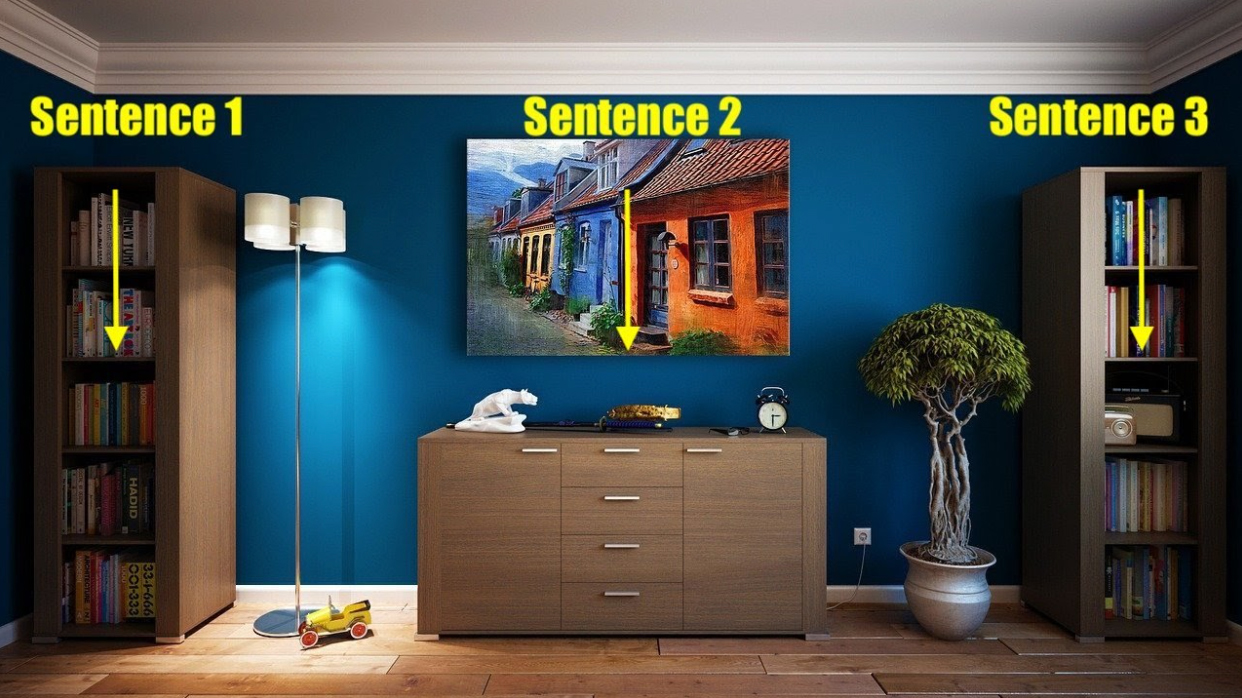
    Ideally, you want your Memory Palace design to have a structure that will accomodate the paragraph you need to memorize. To do this with the many paragraphs in my TEDx Talk, I used the Pillar Technique. I’ve illustrated it for you in this image:
    how to memorize a paragraph in a memory palace visual example

    Basically, how it works is that you mentally “paint” each sentence in rooms using columns that run from the top to bottom. In the Magnetic Memory Method Masterclass, there are several sections that detail more about how to use the Pillar Technique.

    With this approach, I’ve been able to memorize up to 17 words on a single Pillar.

    Usually, you can get 4-8 sentences in a single room when you’re using the walls and the corners (8 Pillars per room).

    How To Memorize Sentences Fast In Your Memory Palaces

    Now let’s look deeper at the process of memorizing the individual sentences in your paragraph.

    Although this point might seem obvious, it’s worth making:

    Before you can memorize an entire sentence, you need to be able to memorize words.

    The ancient memory master who wrote Rhetorica ad Herennium circa 90 BCE made this point very clear.

    To paraphrase, the author says:

    Those who wish to memorize more difficult things must first learn to memorize words.

    Learning how to memorize vocabulary is very good advice. It is the path to being able to memorize more than one word at a time.

    So how do you do it?

    Step Four: Use Associations For Each And Every Word In The Paragraph

    In the beginning, you might be be able to memorize only around 1-3 words per station. Don’t stress it: We all start somewhere.

    When I started, I needed an association for each and every word.

    To apply your associations quickly on a word-by-word basis, you want to develop your skills by learning the pegword method

    Let’s say the sentence you want to memorize is from Plato’s apology:

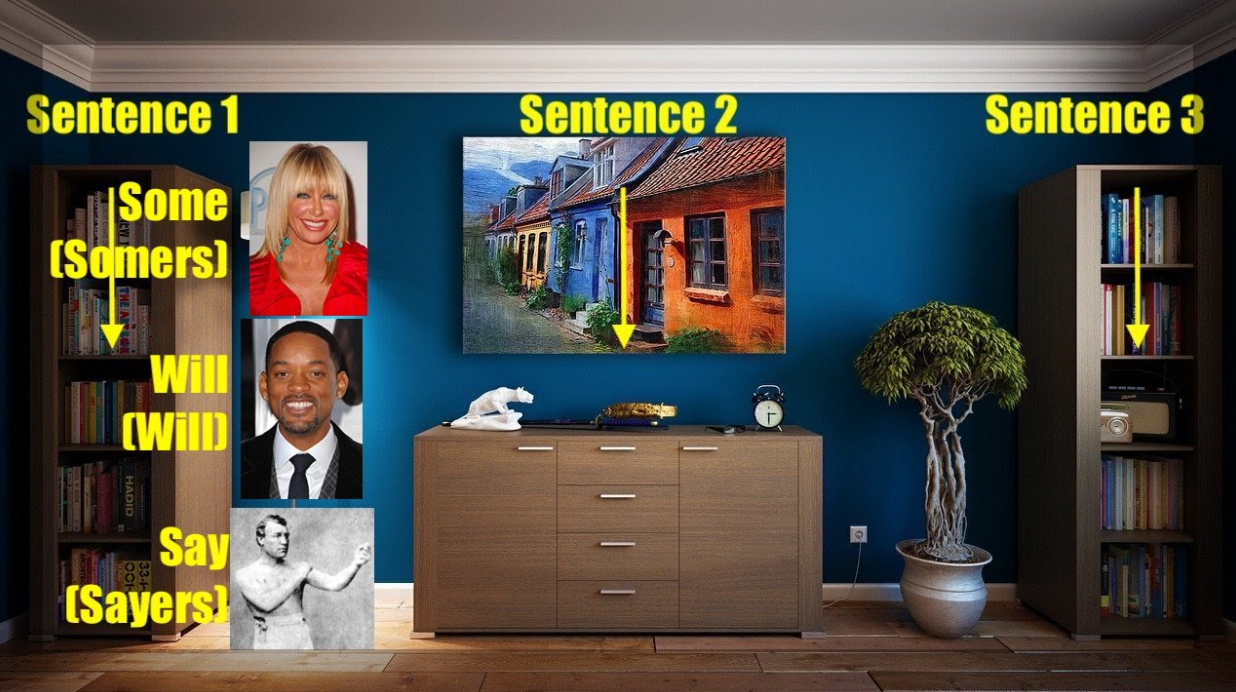
    Someone will say: Yes, Socrates, but cannot you hold your tongue, and then you may go into a foreign city, and no one will interfere with you?

    Later, you’ll be able to compress “Someone will say” into a single image. But for now, just focus on “Someone.”

    If you have your tools ready, maybe a famous actress like Suzanne Somers has already come to mind. Maybe she has a sum of gold in her hand. She may even be under the summer sun.
    how to memorize a sentence visual example

    Step Five: Use Dynamic And Gripping Associations

    By making alphabetical-sound associations between like-sounding words that evoke dynamic images, it’s easy to make associations.

    I highly recommend you develop parts of your pegword system based on celebrities so that these associations can be richly evocative.

    I sometimes refer to this as a “Celebrity List.” You can also build them from:

    • Politicians
    • Friends
    • Family
    • Teachers
    • Musicians
    • Artists
    • Authors

    good will huntingThe point here is this:

    It’s easier to imagine a familiar association doing something that triggers back the target words when you’re memorizing sentences.

    For example, to add “will say,” you can have Suzanne Somers with a character from the movie Good Will Hunting, or Will Smith. She can be saying something to Will Smith, or even to Tom Sayers.

    From there, move on to the next word. And as you go, I highly suggest you place these associations in a Memory Palace. That way they’re not floating in the void of your mind. It will also help with recalling the sentences word-for-word later.

    Step Six: Use Proper, Science-Backed Spaced Repetition

    Sometime when people hear about the Memory Palace technique for verbatim learning goals, they think about Sherlock Holmes.

    However, this technique is real and to use it in reality, we need to draw upon the findings of memory science.

    One of those findings is a principle called spaced repetition.

    In brief, you need to revisit the images you’ve placed in the Memory Palace on a timed pattern.

    There’s no cookie-cutter, one-sized-fits-all number that tells you exactly how many times you need to repeat the memorized passage.

    But a good rule of thumb is to go through it at least five times. When you’re really good with Memory Palaces and the kinds of mnemonic images I’m sharing with you on this page, you’ll soon be able to commit paragraphs to memory a lot faster and with fewer repetitions.

    How To Memorize A Passage Fast

    Let’s say that you’ve mastered paragraphs.

    What about how to memorize a long passage?

    That’s exactly what I faced when I had to memorize and then deliver a speech at a TEDx event.

    The talk was 1506 words divided over 60 paragraphs!

    Luckily, I had no problem memorizing it quickly with this as the result:

    https://www.youtube.com/watch?v=kvtYjdriSpM

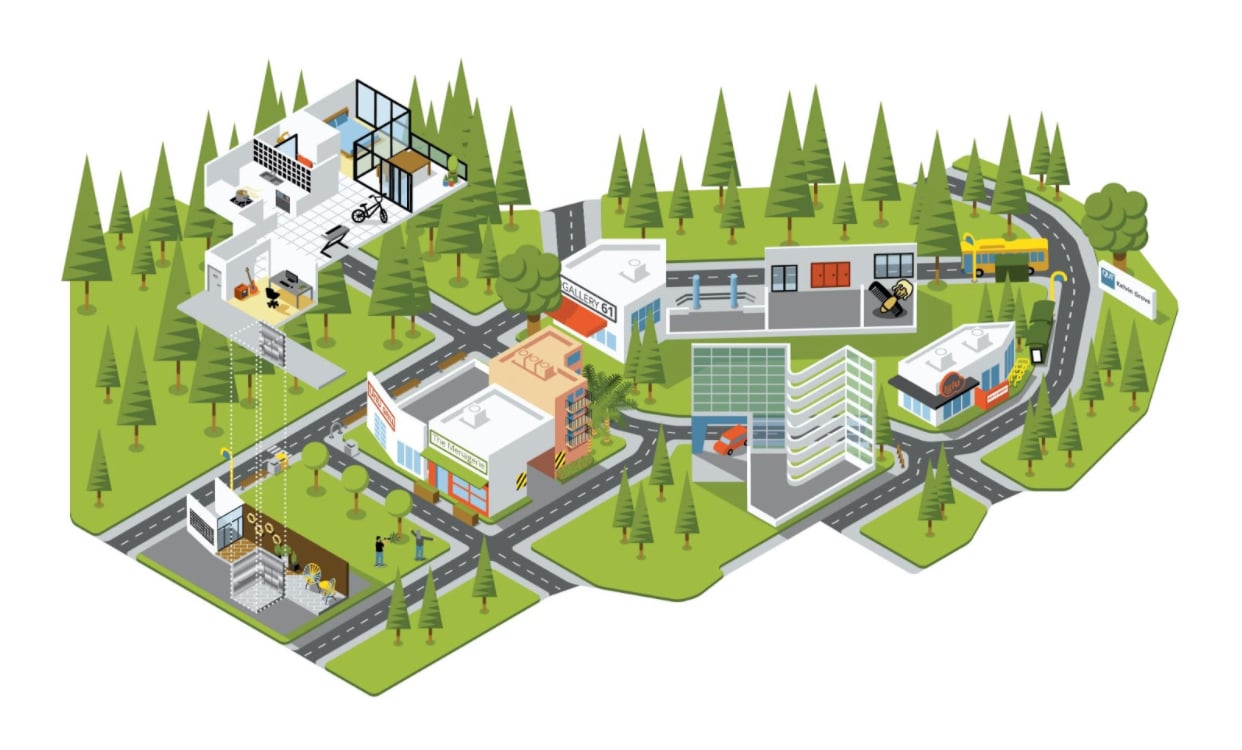
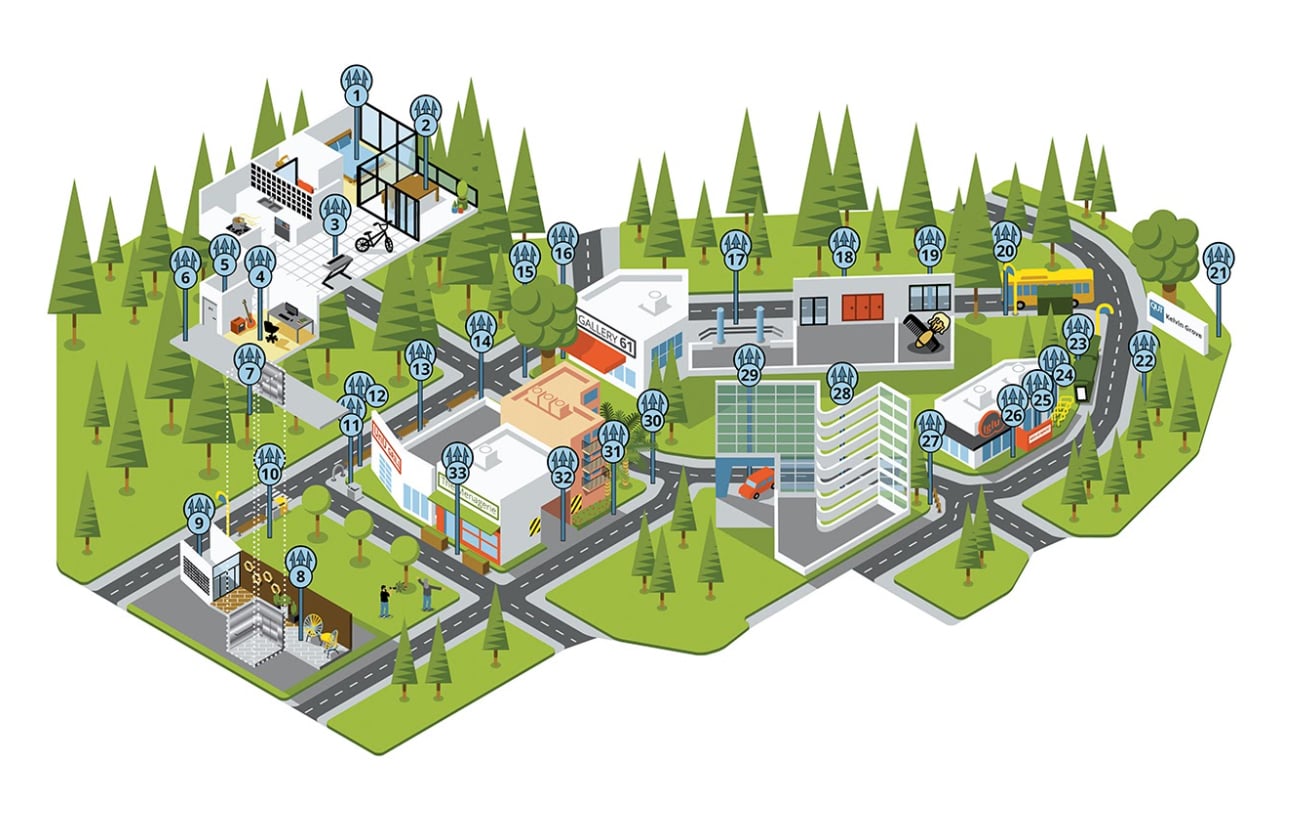
    Now, there are different Memory Palace examples you can explore. In this case, I used an entire neighborhood. It started in a building, but then moved out over several streets.
    how to memorize a passage memory palace example

    All you have to do is start preparing Memory Palaces like these in advance. With a general estimation, you should be able to accommodate any passage of any size in most neighborhoods.

    And if you need more space, just add more buildings and neighborhoods.

    One of the benefits of using neighborhoods is that you can then walk “through” the passage you’ve memorized.

    Walking was one of the tips my speaking mentor Thomas Krafft suggested for instilling how I memorized this long passage of text.

    I almost ignored the suggestion, but am glad I gave it a try. It’s not only good exercise, but does seem to deepen the associations and speed up the process.

    Getting Sentences, Paragraphs And Passages Into Long Term Memory

    So far we’ve talked about making associations. Memory scientists call this elaborative encoding.

    However, to make the content we memorize stick, we also need active recall.

    In brief, this means making the brain work a little to recall the associations and the target paragraphs.

    To do this, you simply call back to mind the Memory Palace, then the association, then the information.

    With training, you’ll find that the paragraph comes back to your memory faster than either the Memory Palace or the associations.

    There are a few more ins-and-outs when it comes to using active recall for paragraph memorization. I call these my “repetition rules.”

    https://www.youtube.com/watch?v=8nOwZVQosNg

    Advanced: How to Memorize Numbered Paragraphs

    Let’s say you not only want to memorize a paragraph. You also want to know exactly which sentence is 5th into the paragraph.

    Or perhaps you need to know the Bekker numbers of a philosophical text. Scripture memorization often also involves memorizing numbered paragraphs.

    In this case, you’ll want to employ an additional mnemonic device called the Major System. You use this to create a full 00-99 PAO. This means that you have an image for each number from 00-99.

    That way, you can number every station in a Memory Palace in advance. Each station will have a pre-assigned association that you can trigger any time.
    numbered memory palace example using a 00 99 pao

    Although ambitious, this advanced approach to memorizing paragraphs is tremendously useful.

    For example, it can help you compare two passages in two different books.

    You Really Can Conquer Paragraphs Quickly

    So long as you’re willing to set yourself up with the needed memory techniques, memorizing any paragraph will be a breeze.

    Make sure that you go one step further, however. Effective learning is not just about regurgitating entire sentences, paragraphs or entire passages.

    You also need to be able to understand the key points.

    And to do that, I suggest you:

    • Write your own summaries of the material
    • Mind map the key ideas based on effectively taken notes
    • Have discussions with others about the facts and concepts
    • Follow-up with more reading from multiple sources
    • Seek video and audio supplements to experience similar content in different media

    If you’re memorizing the paragraphs for an exam, taking practice tests is highly recommended as well.

    The more you include variety, the more opportunities for different levels of active recall you’ll get. And that means more memory benefits.

    So what do you say?

    Are you ready to get out there and start memorizing some paragraphs? If you have any questions, please just pop them below. I’ll get back to you a.s.a.p.

    Or, feel free to complete my free course on comprehensive Memory Improvement:

    Free Memory Improvement Course

    It gives you four free video lessons and worksheets that makes sure your Memory Palaces are perfectly suited for memorizing paragraphs quickly.

    You’ve seen through my personal example with the TEDx Talk that it’s possible.

    Now all you need to do is develop your mnemonic tools and start applying them to whatever paragraphs you want to memorize.

    Let’s do this thing!


    Why Can’t I Retain Information? 14 Ways To Fix Your Memory Fast May 29, 2024
    Show notes

    If you want to know how to retain information quickly, we can boil the process down to one simple term: Strategic repetition. Now, I realize you’ve come to this blog about memory techniques to get rid of repetition. I’m sorry. That’s not how it works. We always need to repeat what we want to remember. In fact, why remember something at all if you don’t need to repeat it? The key differences with strategic repetition vs. rote repetition are these. Strategic repetition is always: Fun Creative Skills boosting Scientifically proven Even if some repetition will always be necessary for learning, it doesn’t have to be painful. And you often won’t have to repeat nearly as much if you use memory techniques in the optimal way I’ll share with you on this page. https://www.youtube.com/watch?v=odoiukRwY2Q So if learning how to retain knowledge in ways that are engaging and stimulating strikes you as a good thing, stick around. We’re taking a deep dive into ways to retain information that you’re going to love. What Does “Retaining Information” Actually Mean? Retaining information means you can not only recall something you’ve learned. But you can also put that information to use with confidence. But after decades of memory training, I can tell you it rarely feels the way people imagine. That’s because truly retained information doesn’t always leap instantly to mind. Sometimes you give it a second and follow a logical path back to it through the associations you made, which is why I treat retention and recall as two different skills that need their own kinds of practice. I learned this lesson the hard way because I know what it’s like to struggle with memory while learning. During grad school, depression made it difficult to concentrate. As a result, information wasn’t getting into my memory in the first place. Compare that to a presentation I recently gave in law school, where I scored an A+ because I could deliver names, dates and Latin legal principles in crisp order. Even when I glanced up at the ceiling while retrieving a fact from memory, my professor’s feedback was that I came across as confident throughout. And that’s what retention actually feels like from the inside: you’re confident, safe and secure. Without feeling like you need to be a flashy show off. I mention this because many Magnetic Memory Method students start my program thinking that retention means perfect, word-for-word recitation. In some cases, it does, such as verbatim recitation. But in most contexts, you can paraphrase what you’ve retained in your own words. This matters more than ever now that original, authentic thinking is becoming increasingly precious in the age of AI. Why Can’t I Retain Information? The Surprising Truth The reason why most people can’t retain information is that they simply haven’t trained themselves to do it. That means it’s not IQ. It’s not genes. It’s not laziness. It’s simply learning how to use memory techniques and then practicing them consistently. When I took up memory training to combat my own issues with retaining information, it wasn’t immediately easy. In fact, I started training my memory for better memory during some hard times I went through in grad school. Despite fighting depression and deadlines, I was delighted by how quickly I started remembering the complex details related to my PhD. I was even more delighted when I used the same techniques to help me learn languages and start a career. Since then, I’ve helped thousands of people and I am confident the retention tips I have to share will help you too. We can take it a step further: People who can’t learn quickly and recall information on demand not only fail to use memory techniques. They haven’t trained their procedural memory so that they can use mnemonics almost as if on autopilot. You cannot “mind read” books. Use proper study and memory improvement techniques instead. You see, anyone can learn about memory techniques. But without practicing them consistently enough so they become second nature, all that information is just data. The Memory Science Behind Recalling Information Reliably The science here is very simple. We’re basically looking at five kinds of brain processes that you just need to link together: Encoding information strategically using elaborative encoding Decoding information strategically using active recall Serial positioning with the primacy effect and recency effects Habit formation so that you start using the strategies automatically Using scientifically valid chunking methods to group and review information We’ll pick up each of these scientific matters in greater detail as we go along. With each tip I’ll share, you’ll discover simple ways to harness the power of each principle both for your studies and using mnemonics in everyday life. Unable to Retain Information as an Adult? Why It Feels Harder Now As I near my fifties, let me tell it to you straight: Retaining information as an adult is somewhat different. For example, I used to be able to take shortcuts with my application of memory techniques. But on top of aging, after many years of working very hard, I’m more tired. As a result, I have to intentionally pay attention in ways my younger self didn’t. But here’s what a trained memory gives you that an untrained one doesn’t: When I meet a person or encounter a fact worth keeping, years of applying mnemonics kick in automatically, and that’s exactly why I urge people to start this training as soon as possible. Aging Can Help Memory Too Aging even brings advantages. For one thing, my pattern recognition is better than ever. As a result, I naturally associate ideas across fields, and those associations often create insights all on their own. Plus, we’re wiser as we age and many of us have more discipline. And I put this to the test constantly: I’m currently learning law as part of my research into polymathy, and building a memory-themed bookshop that requires absorbing entirely new entrepreneurial and investor skills. So if you think your window has closed, let me tell you about my student who started using the Magnetic Memory Method at 88. He didn’t like the term “Memory Palace,” so I told him to invent his own. He decided on “apartments with compartments.” Using this newly minted version of the ancient memory arts, my elderly student memorized over a dozen poems and revived his German fluency so he could re-read letters from a lost lover he’d met during WWII. And when adults ask me “is it too late?” my answer is: not at all. You can absolutely develop stronger retention if you study and practice the right things in the right ways. Stress, divided attention and fatigue all play a role in why retention feels harder now, but proper memory training helps you push through, and for many of us it’s simply a necessity. So with that in mind, let’s get into my best suggestions for you. How to Retain Information Quickly: 14 Proven Study Tips 1: Use Exaggerated Associations The fancy, scientific term for using exaggerated association is “elaborative encoding.” But you might be wondering… what is an association? Good question. It’s one of the most powerful mnemonic devices you can use. Basically, you’re going to look at the target information and find something you can connect to it. For example, if you need to memorize someone’s name, you’ll look at the first couple of letters. When I met someone with the complex name Gangador Dianand, I imagined a “gang” first. Next, I associated that sound with a rap band known to dress as gang members. Then I had them bang on a door. Using a rap band as a mnemonic device while studying helps you retain information in a fun and engaging way. That’s the association part. The elaborative encoding part is when you imagine those gang members larger than life and hear the sound of that banging extremely loud. (In your imagination, of course.) To take another example from one of my students in the Magnetic Memory Method Masterclass, Michael Wild shared how he passed his hazardous materials exam: https://www.youtube.com/watch?v=9uFL4n35pVA It’s the exact process Michael described in the video above. It’s the exaggerating the association that makes it so memorable. And that’s what helps with the next tip. Because as Michael discusses, it was placing the images in Memory Palaces that made all the difference in the end. 2: Use a Memory Palace When you want to retain info, you need to revisit it. You can do that using flashcards or Anki, but typically the Memory Palace technique is preferable. This special mnemonic device is just a mental recreation of a building you’re familiar with and can easily bring to mind. After elaborating information, you place it in this mental device and then revisit it strategically to usher the information into long-term memory efficiently. Here’s an example: Let’s say you need to memorize some details on a map. If you use Natalie Portman and Art Spiegelman to memorize that Spain and Portugal share a border, you’ll benefit from how the spelling of their personal names and and these countries match . First, you exaggerate an interaction between them. Then you place that association in a room. Later, to practice what memory neuroscientists like Boris Konrad call “active recall,” you revisit that area in the room and simply ask yourself: What was happening there? If you’ve made your association exaggerated enough, your two characters should come to mind. The spelling of their names should trigger the target information. And yes, this strategy is scientifically proven. Studies have shown that when you put down your textbook and practice recalling information you’ve elaborated, you will improve your ability to recall it better. Memory Palace Case Study For Recalling Information For a more complete case study of the Memory Palace technique, I encourage you to go through this tutorial on how I memorized my TEDx Talk. Using Google maps, I actually take you onto the exact street in Brisbane I used to commit the speech to memory and retain it: https://www.youtube.com/watch?v=gBvKFI7AlLE Although it’s been years since I gave the talk, I’m confident I could reconstruct most of it right now. I can also recite countless Sanskrit phrases I memorized back in 2017, over two thousand words worth of mantras. The Memory Palace technique works incredibly well and that’s why it has remained so popular for thousands of years. 3: Test Yourself Strategically In order to properly benefit from active recall, it’s important that you test yourself. Unfortunately, a lot of people cheat. They try recalling the information for a second or two, and then give up, exposing themselves to the answer. That’s called rote repetition. It’s painful, boring and rarely helps with retaining information. You want to use the best possible mnemonic strategies instead. However, if you have a journal or piece of paper in front of you and the target information is nowhere in sight, cheating is impossible. Then, when you write out what you memorized using exaggerated association, you get the benefits of active recall. Even if you make mistakes, you’ll still train your short-term and long-term memory to work better. Over time, you’ll get stronger and stronger. One case of self-testing I admire very much was sent to me by my student, Matt Barclay. He didn’t wait for perfection to get in front of an audience and test what he’d memorized. He used the self-testing demonstration as part of the learning process. Along these lines, please consider self-testing in the context of deliberate practice. This fancy term indicates a specific way of continually showing up to grow your skills. This form of practice is as important in retaining information for the long-term as it is for any skill. That’s because your memory is a performance-based feature of your mind. If you can’t retain information, it’s just a sign that you need not just more practice, but optimized practice of the kind only self-testing can bring. 4: Interleave A lot of people “force” themselves to get through one book at a time. I have a PhD, two MAs and a BA and I can tell you this: I never do this. Instead, I take many breaks while reading or taking courses and strategically “interleave” my study material. This scientific term means that you take breaks often and switch things up. By reading more than one book at a time, you switch from a focused state to the “diffuse mode,” which gives your brain space to remember more. The research on this goes back at least as far as Karl Duncker who wrote a book about the psychology of productive thinking back in 1935. More recently, Barbara Oakley has featured contemporary data that substantiates these findings in her famous course, Learning How to Learn. (Dr. Oakley’s course is also a printed guide and one of the 3 best speed reading books in the world.) 5: Use Proper Reading Techniques I just mentioned speed reading, but be careful. There’s a lot of garbage you’ll come across in that world. For example, most of what you’ll read about reducing subvocalization is a farce. Worse, skimming vs scanning strategies are usually poorly understood. The broad strokes of learning how to read faster boil down to this: Have goals, missions and systems that help you frame and stick with a focused reading program Learn to use “priming” Extract information strategically (see How to Memorize a Textbook) Use memory techniques to recall the information Make sure you test yourself using the active recall strategy discussed above (without cheating) 6: Improve Your Reading Comprehension Skills The first way to understand better is to change your definition of comprehension. Many people toss their hands up in the air the instant something doesn’t make sense—like in the process of learning a new language or a difficult subject. This is an incorrect approach because we read challenging material so that we might understand better. Without challenge, there is no growth. Instead, learn the best reading comprehension strategies and practice them consistently. For example, I used to look at charts and graphs and give up on them completely because visual overload frustrated me. By redrawing charts and graphs, you not only improve memory retention, but also comprehension. Now, I draw them with my own hand to understand them better. This step is essential because not only do I understand them better. I also remember more about what they were designed to convey. 7: Mind Map Mind mapping helps you retain information, especially when you revisit your maps strategically. For example, Phil Chambers has given the excellent suggestion that you revisit each map at least ten times. Leave a Roman Numeral each time you review it so you can remember where you are at in your spaced repetition sequence. This simple reviewing strategy has been endorsed by Rohan Jotwani, a former Admissions Committee Member at Columbia University. To improve your test taking skills, he advises that you “set up a study schedule that won’t overwhelm you.” Creating, reviewing and using Chambers’ suggestion to track your review sessions is definitely a great way to reduce overwhelm and doable by anyone studying any topic. But… what is mind mapping? Unlike concept mapping, it’s a graphical means of simplifying key ideas using colors, images and keywords. Mind Mapping Case Study For Better Retention And Memory Let’s say you want to memorize words in a foreign language. A mind map is a great way to do it. In this case study mind mapping video, you’ll see how I rapidly retained information about cooking in German, for example: https://www.youtube.com/watch?v=3I7h98IKaho Here’s the key point: Mind mapping works as one of the best ways to retain information if you optimize it for that purpose. So I suggest using the Phil Chambers tip I just shared to make that happen, taking care each time to track each review. Mind mapping is an incredible way to retain more information quickly. Here are more min…

    Full show notes at the publisher

    3 Memory Games You Can Play With Your Childhood May 28, 2024
    Show notes

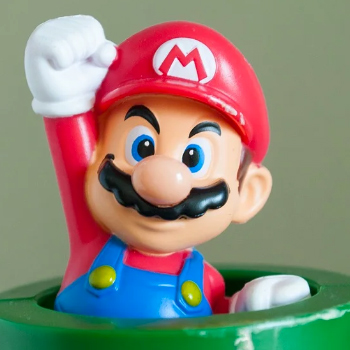
    Super Mario feature image for memory games you can play with your childhoodThe thought of memory improvement excites you, doesn’t it?

    But then you start reading all the books and watching the video courses and within seconds …

    Improving your memory suddenly starts to feel like a LOT of hard work!

    It’s understandable. Using a Memory Palace, associative-imagery and practicing Recall Rehearsal can be tough.

    The practice involves a lot of moving parts.

    But don’t give up!

    There is a fun and easy way to experience rapid improvement.

    To help you out, here are three games and exercises you can play that will help you handle those moving parts without even noticing the effort involved.

    They will exercise your memory, move the muscles of your imagination and renew access to parts of yourself you’ve probably long forgotten.

    Ready?

    Let’s dive in!

    How to Prepare To Play These Personal Memory Games

    Before we get started, you’ll need something to write with. And what you’re about to experience could well change your life forever. (In a good way, of course.)

    And when I say write, I mean “write.”

    Sure, you can play these memory games by writing in Evernote or whatever. But don’t. You’ll get more from completing the activities I’m about to share by using old-fashioned pencil and paper.

    You can also use your mind on its own too. These exercises can be completed while daydreaming on a park bench, during a guided meditation or wherever you find yourself.

    But by writing, you’ll enjoy the benefits of sensory learning that only writing can provide. And the pages you fill will prove to you that your mind is a vast place with many recesses. And you’ll enjoy the exercise more when you see what emerges from the depths of your imagination with your own eyes.

    Plus, you’ll be able to feel the weight of your memory in the paper on your hands. And that is a sensation you can’t get from any app in the world. (Though a device that gets heavier the more information it contains could be a fun option for those who want to go on a data diet!)

    Play These Mental Games Now
    (If You Want To Improve Your Memory Without Blood, Sweat Or Tears)

    I don’t want to sound preachy, but I think you know the drill.

    If you don’t actually use the “instruction manuals” for the mental games I’m about to share, nothing will change or improve for you.

    So here’s what to do:

    • Read the descriptions below
    • Pick one of the games
    • Schedule time for it
    • Come back for more
    • Rinse and repeat

    That is the path to success, and yes, as I’ve explained in this discussion about the effectiveness of brain games, these kinds of mental fitness activities do work. You just have to be willing to experiment with them.

    1. Make a list of all the places you can remember visiting throughout your life.

    Start local and go back as far as you can remember. For example, here are some of the first places that I remember visiting:

    • Where my dad used to train his duck hunting dogs
    • The farm at Tranquille where my mom used to work
    • A chocolate factory we visited on a field trip in Kindergarten

    Immerse yourself in your own memories as you complete the exercise. Think about colors, smells, textures. Recall the people you were with and call up as many people as you can.

    Then you can start listing other towns and cities. Again, go as deep into the past as you can.

    Technically, you’re digging into what we call autobiographical memory in the world of memory science.

    Amplify Your Memory With Guidance From Someone Close To Home

    Next, take these early memories and ask someone in your family to give them your version of the events and locations you jotted down.

    For example, I remembered flying to Prince Rupert with my dad while playing this game. When I pressed my memory for sensory detail, I remembered nothing of the flight. I do have glimpses of how the city looked, and I can smell beer on my dad’s breath. But beyond that, there’s very little.

    So I called him up and asked him what he remembers. He said he was surprised that I wasn’t nervous about flying at all.

    Extend Your Timeline In Adulthood

    For bonus points, move from the deep past of your childhood memories up until the present. And do your best to establish a linear time line so you have a feeling for the chronology.

    True, you’re taking yourself into your adulthood, but that’s fine.

    You can also extend the exercise by thinking through different people you’ve met or spoken with only by phone. For example, I’ll never forget speaking with memory expert Harry Lorayne on the phone.

    Even more prominent is the memory of shaking Tony Buzan‘s hand after he gave me the Warrior of the Mind emblem for Outstanding Contributions to Global Mental Literacy.

    Anthony Metivier with Tony Buzan

    For the purposes of this game, just following the basic historical memories you hold. Move from as early in your childhood as you can and proceed up until as close to the present moment as you care to explore.

    Don’t Worry About Exact Dates …

    … except for seasons if your sensory memory provides them.

    For example, in my first memory of watching my dad train one of the dogs, he’s wearing the white sweater my mom knit for him.

    Although there was no snow on the ground on those mountain plains, white clouds were shooshing from the dog’s noise as it ran after the dummy (it feels like a flashbulb memory, to be honest).

    And I remember my dad letting me the starter pistol and how cold it felt in my hand. These details make it safe to assume it was Fall.

    Once you’ve gotten your sensory details gathered, come back and add dates if you wish for an extra memory massage.

    And I do mean massage. When I think through my age and try to work out how old I was during different grades of elementary and high school, it gives my brain a real workout.

    If you find some dates that you’d like to commit to memory after going through this exercise, you can commit them to memory. To make adding strong recall of any historical date, please learn and start using the Major Method for memorizing historical dates.

    2. Recall the names of every classmate and teacher you can remember.

    Again, go as deep into the past as you can.

    From preschool, I remember Ryan and Clayton.

    Ryan moved away with his family in grade one, but I would know Clayton for many years to come. I believe the last time I saw him was grade nine, and we’ve only had a quick series of exchanges on Facebook since.

    For each friend you can remember from this deepest place …

    Fill In As Many Sensory And Narrative Details As You Can …

    Recall their homes, their parents and your activities together.

    With Ryan, I remember a white house at the top of a lawned hill with a backyard with white wood fences on either side and a chicken coup at the back.

    We played downstairs, and he once proudly displayed an American dollar. His mom worked for the Buy & Sell newspaper, and I distinctly remember eating tomato soup.

    With Clayton, I remember much more. It would take a novella to write it all out, but I find sharp highlights in my memory.

    These include building blanket tents, watching Chuck Norris movies during sleepovers, going to the pool, smoking cigarettes for my first time and once getting our bikes taken by weird apple orchard farmers for trespassing.

    Later our bad-ass dads, both bikers, spun by on their Harleys and sorted things out. Clayton’s bikes were always cooler than mine, but I was happy nonetheless to get mine back.

    The same goes for teachers. At least once a year, I like to write out the names of all the teachers I can remember. Given that I went to three different universities on top of so many high schools, the list is incredibly long.

    All the better for working out as many of the memory types the human brain uses as possible. The more you practice, the more of your personal memories you’ll jog.

    But the point of all these examples isn’t to share the details of my life. I mean only to show how much amazing information lays dormant in your mind. Do a little spade work and when you hit a pipe, you’ll be amazed by the valuable oil that gushes out.

    Not only will your memory get an easy workout. The exercise will expand your sense of place and time. And the more friends and classmates you list, the more you’ll enjoy the wines of those times you haven’t thought of forever.

    You’ll also be able to recall other personal memories as well. The more you play, the more you’ll improve your relationship with all kinds of recall skills.

    3. Recall the Rules of Childhood Games

    First, list all the games you can remember playing:

    • Tag
    • Hopscotch
    • Hide and go seek

    https://youtu.be/fZzswQaICfM

    Although with these games, there’s not a huge amount of rules to remember, you can still pull up sounds, sensations and locations.

    You may also recall different versions and hear the sounds of your playmates in your ears.

    Then move on to card games and board games:

    • Go Fish
    • Monopoly
    • Uno

    I can distinctly remember the friends of my parents visiting to play Uno. The sensory parts are easy, but it’s a workout to remember the rules. Plus, it’s inspiring to think about how on earth I could have understood those rules at such a young age.

    From there you can list video games and role playing games. I remember Pong as the coolest thing on earth, Chuck Norris and Tron for Coleco, Pacman and Space Invaders for Atari and Contra for Nintendo.

    https://youtu.be/DQPodM-NElA

    The list goes on and on. The more you press your memory for the details and rules of each game, the more fitness your memory will receive. In this case, you’ll also be exercising what is called your procedural memory, especially if you play some of those games you remember from your childhood.

    I recently revived an old game using playing cards and shot some footage of it so you can see one simple example of what I mean:

    https://youtu.be/-7Feazpc_ho

    Did You Like Learning About These Memory Games?

    I hope so.

    But don’t save this information for later. Get started today.

    Obviously, these are memory games you can come back to again and again. And it took me less than an hour to draft what you’re reading now – something that created great pleasure while giving me some powerful brain exercise.

    Just think of what you could accomplish in a cafe some afternoon using nothing more than a pen, pencil and that special thing called memory floating between your ears.

    Want to learn more about how to improve your memory?

    Free Memory Improvement Course

    This resource will help you learn, memorize and recall anything at any time, anywhere and under any circumstances.

    Further Resources

    How to Teach Your Kids Memory Techniques

    3 Simple Exercises That Make Your Life Worth Remembering

    Ambidextrousness And Memory: Can Dual Handedness Boost Your Brain?

    Sensory Memory Exercises That Improve Memory


    4 Types of Observation to Grow Your Memory & Observation Skills May 27, 2024
    Show notes

    How many types of observation do you think you’d need to get to the bottom of things and remember more – like Sherlock Holmes? Whether you’re a scientist, private researcher or just someone who wants to know more about the process of observation, the benefits are immense. For example, you can use observation skills to be a better professional. You’ll be the one who gets the raise because you’re the one who notices the nuances that improve the bottom line. And make no mistake: Observation is a key to remembering more. For example, actors use textual analysis as part of remembering Shakespeare better when performing his plays on stage or screen. Although you might not immediately think of textual analysis as a type of observation, that’s exactly what it is. So whether you want to be the scientist who wins all the grants and awards or the better student who provides stronger examples in your essays and exams, you’ll want to beef up on your observation skills. Ready to learn everything you need to know to use observation as part of making your memory better and stronger? Let’s dive in! First, the Basics: 4 Types of Observation for Better Memory According to the authors of The Power of Observation, no matter what type of observation you use, the real goal is objectivity. When I was completing my PhD at York University, subjectivity was given much higher status. I think that’s important, but in all that I’ve learned over my years of teaching memory techniques, subjectivity is stronger for comprehending and remembering when it’s balanced with objective observation skills. To get there, you want to work on developing an awareness of the assumptions you naturally make – and weeding them out. Or at least categorizing them so you can reflect on their nature. The use of categorization as a memory aid goes back at least as far as Ramon Llull. I’d suggest looking at categorization as a mnemonic aid in Aristotle as well. If you’re wondering how you’ll go about successfully observing the categories of your objective and subjective observations, the first step I’d suggest is to learn at least a little about how your memory creates biases. That way, you can bring balance to your subjective and objective observations. As we go into these major types of observation, keep in mind that we all bring subjective ideas and experiences. We don’t want to weed them out. But to be truly objective, cultural artefacts stuck in your procedural memory, personal beliefs and your personal interests and feelings need to be set aside or at least contextualized. As hard to accept as it can be, even your professional experience can create false interpretations. When that happens, we wind up memorizing the wrong things, which is why I’m making such a big deal about this point. Make no mistake: Creating distance between yourself as a person and what the data you’re observing actually says is one of the hardest parts of science. But that’s why it’s a good thing that no serious scientist works in isolation. The principles of science itself helps ensure true objectivity will emerge over time. Here are the techniques that make this possible and how they relate to boosting your memory. One: Controlled Observation If you’re a “control freak,” you’ll love what comes next. That’s because controlled experiments involve a level of technical design, surveying and measurement that gets very granular. The way controlled experiments generally work is that you set up two separate groups. You treat them exactly the same except for one variable. A simple example is one you’re probably already familiar with: When testing drugs, one group will get the real chemical. Another group will get a placebo. For an example of a controlled experiment related directly to memory, check out this Duke University experiment. Researchers had one group enter an art gallery with minimal instruction. Researchers told a second group to pretend they were art thieves planning a heist. It turns out that those who pretended to be art thieves remembered much more than those who did not. There are other kinds of controlled experiments in memory science. They take place outside of memory science too. For example, on a website like this, you can have half the people see a green subscribe button, and the other half see a blue subscribe button. These kinds of controlled experiments are run by Google, YouTube and even small sites like mine all the time. In the realm of branding, it’s of huge consequence how shapes, colors and specific words ensure that people remember the names of companies and service providers. They literally require observation and memory to connect in order to succeed on the market. Controlled Experiments In Memory Speaking of memory science, here’s a recent example with Drs. David Reser and Tyson Yunkaporta. In their case, they make observations about how medical students succeeded when using ancient memory techniques. One test group used Memory Palaces and mnemonic images to learn a set of complicated words and the other group did not. If you’ve been observing the main thrust of my message so far, you can probably predict that the group using memory techniques did much better. And you’d be right. Again, the point is to change only one variable between two groups. That way, you can be sure that what you’re observing is as clear and measurable as possible. But keep in mind that not all controlled experiments succeed. Some won’t reach statistical relevance, for example. Others will experience issues with study participants not complying with the instructions. An excellent book on the topic that will help you learn more about these issues is called Failing in the Field: What We Can Learn When Field Research Goes Wrong. This topic matters a great deal because when people observe a lot of errors in science, they often remember the wrong things about it. Sadly, poor scientific literacy has led to a lot of problems in our society. But you can be part of the solution by learning more about how people remember information and thinking objectively about what controlled experiments really suggest. Two: Participant Observation Ever heard of “immersion journalism?” One of my favorite examples has to do with memory. In Moonwalking with Einstein, Joshua Foer was hired as a journalist to report on the world of memory competitions. Joshua Foer started investigating the world of memory competitions as a journalist. He wound up winning top prize and then sharing both his objective and subjective observations in a book called Moonwalking with Einstein. He did just that, but also wound up observing how memory competitions work through participation. Foer even wound up becoming a USA Memory Champion. A researcher named Joseph T. Howell basically set the model for this when he wrote Hard Living on Clay Street. Describing the conditions for his study, he identified the following steps: Establish rapport with a group or community Immerse yourself in the field or site of activity Record data and your observations Analyze, consolidate and share the information This is basically what Joshua Foer did when reporting on the world of memory. Ben Cardall does something similar when it comes to methods of detection and deduction in his role as a private investigator. He’s a mnemonist who does a great job of highlighting the importance of bringing observation and memory together. Three: Naturalistic Observation Of all the types of observation, naturalistic observation is perhaps the toughest to approach objectively. For one thing, we’re all doing it all the time. Here’s what I mean: Everyone is observing the natural world around them. And it’s hard to be objective about our personal experiences. Some people say it’s impossible. That said, qualitative naturalist observation requires you to objectively record what you’re experiencing. A simple example is one you might have seen about Dian Fossey in the movie, Gorillas in the Mist. She studied mountain gorillas for decades until she was murdered, primarily in Rwanda. Often, she had just herself and a notebook. Sometimes she had a camera. These days, people have cellphones which lets them capture sound, video and take notes at the same time. You can also get multiple cameras together and create entertaining studies. Although somewhat questionable, the mentalist Derren Brown has incorporated many elements of naturalistic observation in his television specials. But his program, The Secret of Luck draws directly from the scientifically valid research of Richard Wiseman. Based on a ten-year study, Wiseman’s findings are available in his excellent book, The Luck Factor. Four: Indirect Observation Everything we’ve just discussed involves direct observation. They’re based on experiments that are set up and observed in real time. Or, they use some kind of form of control in a laboratory. But what about determining the laws of physics by watching leaves blow around or apples fall from trees? For centuries, scientists have correctly arrived at core truths by thinking indirectly. To this day, scientists and entrepreneurs use indirect thinking to arrive at “first principles” that help them approach problems in new ways. Being able to arrive at solutions indirectly is just one reason why critical thinking and philosophy remain so important to our species. 4 Proven Ways to Improve Your Observation Skills Now that you know the major types of observation and observational research, let’s talk about improving your chops in all of these areas. We’ve just talked about improving your critical thinking skills over all, so let’s start by expanding on this point. Read Widely Let’s face it. Developing scientific literary is hard. On top of providing so many data points you need to remember, full objectivity involves a lot of tangling with counterintuitive elements. But that’s part of what makes the journey exciting. Realizing that the world operates independent of your thoughts and opinions will liberate you in a way only scientific thinking can. Make sure to also read critical thinking books, philosophy books and take on the challenges of critical thinking exercises and puzzling philosophical questions. These activities will sharpen your mind for being a better observer. Network with Scientists and Scholars As I shared above, I’ve interviewed scientists like David Reser and Tyson Yunkaporta. There are many more I’ve recorded conversations with a variety of memory athletes and memory experts on the Magnetic Memory Method Podcast. I do this for the benefit of my own memory because any opportunity to practice the different types of observation we’ve been discussing leads to authentic memory exercise. Long before I had my podcast, I put this general principle into practice. How? I made sure to get involved in study groups and talked at length with as many of my professors as I could. Not only will networking help you observe better, but you’ll be observing people who have dedicated their lives to observation itself. You’ll naturally start to model them and put a variety of observation types into action. Run Your Own Experiments To Practice Different Kinds Of Observation It almost goes without saying that in order to understand the process of observation as fully as possible, you have to do some. You don’t have to wait for a professor to give you an assignment. Take some inspiration from Hermann Ebbinghaus, who discovered spaced repetition. He knew the rules that govern a good scientific study during his time and took the initiative to apply them to his interest in observing what actually makes memory function in the ways it does. One of his observations led him to discover what is now well known as the forgetting curve: Learning to use spaced repetition to defeat the Forgetting Curve started in earnest with the research of Hermann Ebbinghaus. Just like Ebbinghaus, you can set up and run your own experiments to sharpen your observation skills. And when you follow my advice to network with scholars and scientists, you’ll have a sounding board that can help you set up your experiments correctly and analyze them well. The trick is to experiment based on solid scientific principles. These principles need deliberate practice, and that means time and the support of your network for guidance. You’ll also need their objective analysis of your experimental data. I’m going through this process myself after having recently submitted a book chapter to a scholarly book on sensation and memory. I can’t wait to observe the feedback from my reviewers and put it into action. Expand Your Memory One thing I’ve seen holding so many people back from learning observation skills at the highest possible level is pretty easy to solve. When you expand your working memory, you’re literally able to process more information in your mind. More information will also enter your long-term memory for objective comparison over time. Although Sherlock Holmes is a fictional character, the memory skills the stories describe are real. It’s just a matter of learning and practicing them so that you can start to experience the benefits. If you need help in this area, please grab my FREE Memory Improvement Course (it’s got one of those green buttons I told you I once tested objectively): Being able to remember more of the information you observe is a pretty obvious win, so please enjoy. And consider this final point. Observation Methods for Memory…Do They Really Work? I believe that simply observing more will itself improve your memory to a certain extent. I’m not alone in this belief, and I don’t even have to believe it. See, Dr. Gary Small shared with us the four details exercise, one of many brain exercises which that have been experimentally proven to boost memory. And that’s what makes science great: the data decides, not you or me. To perform this simple exercise and use it experimentally, here’s what you do. Next time you’re out: Pick a person you see to observe Choose four details about them (red hair, blue shirt, black pants, brown shoes, etc) Write the details down in a notebook Set a timer and ask your memory to provide those details On a separate piece of paper, write down the details Check your memory against the record Over time, you should find that your memory improves. Even better, the habit of observing others improves. But as always, it’s the data that will tell. Listen, I’m sharing this exercise because being able to observe is a good unto itself. And the more you practice a variety of observation types, the more your metacognitive learning observation of your own mind will improve. So it only makes sense to get in as much practice as you can. With all that in mind, what do you say? Are you ready to go forth and observe the world in a much better way?

    Full show notes at the publisher

    How Did Actor Ashley Strand Memorize OVER 10,000 Words & Deliver Them Live On Stage In Record Time? May 23, 2024
    Show notes

    Ashley Strand, actor who recites the Book of Mark in his King Jame Live showWhen I heard about how Ashley Strand memorized the entire Book of Mark, I knew I had to interview him.

    His performance is incredible, for one thing. You can tell just how deeply he’s memorized this text simply by watching the preview for his one-man show.

    As someone who has memorized a fair amount of verbatim text myself, I can tell by speaking with Ashley that he really knows his stuff.

    I’m talking about the granular details of “the real work” involved in instilling large amounts of text into your long-term memory.

    To help you learn more about what’s involved in a memory project like this, Ashley takes us deep into the process.

    And some of the mnemonic methods he uses are surprising.

    Or at least they surprised me as we first started talking about them.

    The more I listened, the more I realized that there is an aspect of memory I just don’t talk about enough.

    More on that at the end of this interview with Ashley.

    But first…

    Who Is Ashley Strand?

    According to his Wikipedia page, Ashley began acting in 1996.

    He holds an MFA from Michael Khan’s Academy for Classical Acting. He’s appeared in several Shakespeare plays and The Duchess of Malfi.

    As a performer with comedic leanings, he’s entertained audiences around the world.

    His work with writing and performing one-man shows is of special interest to those of us interested in memory techniques.

    That’s because delivering long monologues from memory doesn’t come with the same amount of cue lines from other actors. As you’ll discover in our discussion, without having someone to help you during a performance, you won’t have any cue lines at all.

    https://youtu.be/0op9LSE3_yQ

    King James Live

    According to Ashley, “the gospel was written to be heard.”

    This is more than a cute slogan. Ashley’s made it his mission to bring scripture to life. So far, he’s fulfilled on this promise by memorizing the Gospel According to Mark.

    You can find a DVD of his live performance on his King Jame Live website to enjoy and see the positive audience reactions. There are also links to free streaming versions of the performance.

    A performance of this kind involves more than just reciting verbatim content. There are also choreographic considerations to be remembered, tonality and blocking.

    Blocking is an interesting aspect of memorization because it merges with the Memory Palace technique, something that we discuss in some detail with an extended example of how Ashley memorized a list.

    The Difference Between Memorizing A Bit of Scripture And A Lot

    I’ve memorized bits of Shakespeare and smatterings of Biblical scripture. When you need to know a few verses and the verse numbers, this tutorial will help get you there.

    My experiences with memorizing Sanskrit phrases relates to what Ashely has done. Whereas I’ve memorized just over 2000 words in Sanskrit, however, he’s done over 10,000. And that’s just taking his work with the Book of Mark into consideration. I don’t know the exact Shakespearian roles he’s played, but few of them are tiny.

    For me, the big takeaways from this conversation with Ashley boil down to:

    • The importance of textual analysis as a mnemonic device we don’t take stock of nearly enough
    • Finding ways to use Memory Palaces to combine the journey method with logic
    • Digging deep into the nature of your ego for a variety of reasons

    Big projects like memorizing the Book of Mark may not be on your plate, but I believe all of these lessons and more of the details we discuss will be of great use to you.

    For more insights into scripture memorization, you might also like hearing about:

    • How Matt Barclay used Psalm memorization as part of recovering from brain issues caused by cardiac arrest
    • Mike McKinley’s approach to memorizing Psalms without a Memory Palace
    • Memory tips from actors who don’t clown around
    • How actor Mark Channon won the World Memory Championships

    Thanks as always for listening and I hope you found this discussion as inspiring and informative as I did!


    How to Identify and Remedy Anxiety-Induced Memory Loss Quickly May 20, 2024
    Show notes

    Does anxiety affect memory and even cause memory loss? In a word, yes. I know the impact stress has on memory personally because I went through a lot of anxiety during both high school and university. I’ll tell you more about how I have mostly solved my anxiety in a moment. Even better, I’ll share how I’ve reduced the brain fog caused by anxiety. You might not have connected brain fog and anxiety, but chances are that you’re facing both. In my research the cognitive neuroscience literature has documented it as a by-product of stress-related dysregulation in the prefrontal cortex and hippocampus. But first, here’s something about the link between memory lapses that’s a little but counterintuitive: Anxiety can also increase your memory in certain situations. This point is important because anxiety can both help and hinder memory, and the difference comes down to attentional control. For that reason, we’ll focus specifically on the various kinds of anxiety that rob of you of the ability recall the information you need to remember. While helping you improve your focused attention. As a result, by following a few simple steps, you can expect to see improvements soon. Even better: If you’re struggling with anxiety-induced memory loss, you’ll discover that you’re not alone. Memory experts like myself and a very successful memory athlete I’ll introduce you to in a moment have been through it. And because we’re memory pros, our solutions are very likely to help you. Not just quickly, but thoroughly. My friend from the world of memory competition is especially interesting because he actually introduces anxiety to help him practice on purpose. But until he properly understood the relationship between memory and anxiety, he was a complete train wreck in his personal life. His fixes are fantastic, so please give this page a thorough read. By following the suggestions he and I have for you, I’m confident you’ll find yourself enjoying much better memory soon. And you’ll benefit from reduced stress and anxiety as a result. Can Anxiety Really Cause Memory Loss?Yes…And Here’s How Anxiety definitely interferes with memory. In many cases, the damage happens because it’s very difficult to pay attention to incoming information when you’re under duress. As one study found, anxiety negatively affects what scientists call attentional control. When I was a teenager and had anxiety attacks, I used to flee the classroom and run to the nearest church. My anxiety got worse instead of better because I had zero control over my attention. The panic attacks forced me to pay attention only to the pressure on my chest that made me feel like I could not breathe. Stress-induced memory loss can stem from anxiety causing physical symptoms like breathing problems. Later, I went through a similarly bad anxiety attack while delivering a lecture at the University of Saarland. During this episode, it wasn’t merely that I couldn’t remember what I wanted to tell the students as I started sweating and experience dry mouth at the podium. I failed to focus on my delivery because a sudden lack of attentional control caused me to focus on my physical distress. Both my high school and professional lecturing episodes are highly specific states of memory loss caused by anxiety. And the weird thing is that, although they impede learning and memory in the moment, the episodes themselves are highly memorable to me. That’s because stress can help form memories in certain circumstances. As Sallie Baxendale points out in Coping With Memory Problems, stress can also lead to the formation of what are called flashbulb memories. Often the stress of shock is involved, such as when someone famous like John F. Kennedy of Princess Diana passes away. The point is that anxiety and long-term memory losses cut both ways depending on the nature of the stimulus. How to Identify the Trigger Behind Your Memory Loss Here’s where things can get tricky. If you’re in an anxious state, it can be hard to remember the last five or ten minutes to figure out what might have triggered the episode. But as three-time USA Memory Champion John Graham shared with us on the Magnetic Memory Method podcast, figuring out what’s happening in your body is a huge part of solving the problem. That’s where you start: By scanning your body and then breathing into it. I’ve got more tips to share and recommended steps to follow for you in a moment. But I wanted to start with John’s personal story because his findings are both useful and inspiring. I’m so glad he found the courage to share what was going on in his life and the solutions he found. As you’ll learn from our discussion, some of his best solutions came from noticing how his body forced his attentional awareness onto physical symptoms. Only by starting at the level of how his body was triggered was he able to find the path to calming his mind. https://youtu.be/rdC28SEJaYo Of course, John likes to add anxiety in the context of memory training prep for competition. He calls it “chaos training.” It helps him prepare for the stress he gladly exposes himself to during the nerve-wracking matches he lives to attend. So the lesson here is again that anxiety cuts both ways when it comes to how it your ability to retrieve information. It’s important to use it in certain circumstances, and remove it in others. Now that you know a bit more about the need to identify the triggers that might be causing your anxiety and related memory loss, what follows are some powerful steps you can take. They’re all based on my own path to reliable solutions and science-backed. I’ve studied this topic for many years as part of solving my issues. Let’s dive in. One: Seeing a Doctor is Never Silly When I found myself in a lecture hall going completely blank as my heart pounded in front of nearly one hundred students, I stopped the lecture. After I regained stability, I went straight to a clinic. Even though I felt silly about it, I’m a PhD, not a medical doctor. It was worth the time, energy and money to get checked out. As Richard Shames points out in Thyroid Mind Power, there are many hormone issues that could be causing the anxiety and memory loss. Only a doctor can help you get to the bottom of issues like these if they’re taking place. Keep this fact in mind too. Even if you’re eating foods that improve memory, most people’s bodies run on a 72 hour digestion cycle. This means that you could mistakenly think that too much coffee earlier in the morning is the cause of your anxiety. In reality, it could be something you ate two days ago that is “suddenly” causing an issue. For more on the reasons why our physical condition and digestive processes are related to stress-induced memory problems, check out the following scientific paper on the stress-digestion connection. Ask Your Doctor About Medication & Cognitive Side Effects Speaking of digestion, many people take medications that either impair memory directly, or indirectly due to the anxiety they cause or increase. These might be SSRIs, beta-blockers, benzodiazepines or other chemicals. So when you visit your doctor, ask them how medications for anxiety can affect memory. And ask them to review your diet and how your daily eating patterns might interact with the foods you eat. If you’re able to rule out diet and medication as a cause of anxiety-induced memory problems, you can also ask your physician about CBT. As this study shows, Cognitive Behavioral Therapy is one of the most promising interventions for both anxiety and memory. Two: Journal to Find Your Triggers Few of us spend enough time in reflective thinking about our lives. But in just five minutes a day of journaling for self development purposes, you can rapidly spot triggers. I’ll talk more about how I use it further down this page. For now, I suggest journaling in a print notebook, but this study found that stress-reduction occurred even for those journaling online. You can also seek out Writing to Heal, which includes exercises you can follow. They’re all scientifically verified processes that help your body produce chemicals that restore you physically. According to Dr. Jeffrey Lieberman, writing can also reduce stress by calming the amygdala. I’ve found that journaling continually calms me down. It also opens up new insights and avenues for exploration. We often just cannot fully comprehend the nature of what we’re thinking until we put it in words, so this level of processing is highly recommended. Three: Plan the Best Possible Interventions Since each person is different, you’ll need to combine your doctor’s advice with your own findings through journaling. Over the years of food journaling I discussed in The Victorious Mind, I’ve worked out a variety of diets that help me avoid anxiety issues. I’ve also learned how to avoid situations that spike my stress levels. It’s not always possible because no one has a crystal ball. But being able to reduce them is very helpful. Finally, adding guided visualizations designed for stress reduction have been very helpful. Concentration meditation routines have also helped me develop better attentional control. That way, if I have an anxiety attack, I’m able to finish the lecture I’m giving without having to abandon it. Knowing what’s happening and having insight into why you’re experiencing mental blocks from stress is tremendously reassuring. The key is to make sure you combine medical support and personal insight through journaling. 5 Common Symptoms of Anxiety-Induced Memory Loss Now, I’ve mentioned the feeling of your chest tightening and not being able to focus due to attentional control. But what are some of the other symptoms of anxiety-induced memory loss? Let’s have a look. Overall Cognition Cognition means the ability to think and arrive at conclusions. Scientists have found that stress and anxiety can impede this ability greatly. When I’m stressed, I find that thinking slows down incredibly. For example, things change on the Internet all the time. Decisions have to be made, but it can be hard to make them. Then, when decisions are made, it can be hard to remember them. But once you’ve got your anxiety issues in check, you can start completing some cognition exercises to improve your overall abilities in this area. And when decisions feel especially difficult to make, it can be useful to simply write down your options. Then roll some dice and pick one. Action helps ease anxiety and creates perspective once you’re moving. Sensory Perception One of the major memory problems people with stress and anxiety face is that they don’t notice things in the first place. For example, your visual memory will be impeded if your attentional control causes you to miss visible information. Likewise, you might fail to hear things while under stress, which messes with your echoic memory. Then there are verbal memory issues and problems like the Ugly Sister Effect. The craziest thing is that when anxiety causes you to lose sensory perception, you’re not even aware of it. This is why we sometimes get in arguments. “I told you that already,” your partner says in a frustrated voice. The reason you didn’t hear them is simple. Anxiety prevented you from paying attention. A simple antidote is to simply share the fact that you’re feeling stressed out. You can even ask people to write down what they want to tell you so you’re able to pay better attention to it later. Alternatively, you can ask permission to record conversations for review. Many people are happy to let you do this, and these days it’s quite common for Zoom meetings to be recorded along with an AI summary. Losing Track of Important Items People suffering anxiety and stress often misplace things. Worse, you may feel even more stressed when you cannot quickly find items you’ve lost. The good news is that there are ways to stop losing the important objects you need in daily life. You can explore simple solutions like keeping them in the same place intentionally. Or you can try techniques like the Memory Palace. Forgetting What People Tell You Conversations are packed with so much important information. We can feel like we’ll remember what we’re told, but then later, it’s nearly impossible to track our way back to the message. Although this problem is related to sensory perception, it’s also a semantic memory issue. This kind of problem can take place when we think we know what certain works mean, but in fact do not. It can also be the case that the person you’re listening to is misusing the words because they don’t remember their proper meaning. It’s especially troubling that many people struggling the most often forget what their doctors tell them. So much healing would take place if people could only remember to follow medical directions. The good news that there are ways to remember more from conversations you can explore. I highly recommend pursuing each of them. Recalling and Following Directions One of the saddest things that happens to people is getting lost. As Christopher Kemp shows in his book, Dark and Magical Places, not keeping track of directions costs societies around the world in many ways. We lose in terms of productivity, family commitments and personal fulfilment. As usual, there are solutions. It’s just a matter of getting started with memory techniques that can help you remember details related to where you’re trying to go. 5 Coping Mechanisms for Generalized Anxiety and Memory Loss In addition to seeing a doctor, monitoring your symptoms through journaling and working on your diet, here are some additional things you can do. One: Optimize Your Sleep Lack of sleep causes increased anxiety because it throws off the levels of important chemicals in your body. You can also learn more about sleep and memory specifically. There are many solutions that will help you get more sleep if your life needs attention in this area. Two: Learn New Things Although taking on new learning tasks is not an alternative to getting medical attention, once you have a treatment plan, taking up a new learning project certainly can be. The positive outcome of experiencing reduced anxiety happens because learning new skills exercises your brain. In many cases, you’ll also meet new people while learning, which scientists have shown promotes your health. To take a recent personal example, I took a real estate licensing course. Not because I want to practice as a real estate agent. No, I just know that from years of studying brain health and learning techniques that learning activates key areas of the brain. And activation keeps mind and memory healthy. Some of the brain areas that learning activates include the: Hippocampus Prefontal cortex Parietal lobes Each of these brain areas are especially involved in memory formation. Even better, the more your learning activities challenge both your mind and some aspect of your body’s physical coordination, the more flexible, resilient and capable of coping with stress you become. You literally can rewire the brain, which we’ll discuss in more detail next. For now, if you’re not sure where to start with learning something new, consider: Picking up a new language Learning to draw or paint Starting a new instrument or switching musical genres Join a chess club and study the game intensively Try out some of the memory techniques I discuss throughout this blog (like the Major System) Three: Practice Neurobics When it comes to challenging your physical coordination, neurobics are simple activities that actively challenge your brain. As they do, they stimulate neurogenesis that can help resolve certain stress issues. Here’s a simple activity: With your left hand try to draw a circle in the air while trying to draw a square in the right hand. For more challenge, try to draw a square with the left hand and a triangle with the right hand. I’ve got a bunch more neurobics for you in this video as well: https://www.youtube.com/watch?v=bUV…

    Full show notes at the publisher

    What Is Prospective Memory? Everything You Need to Know May 18, 2024
    Show notes

    Prospective memory is fascinating. Your entire future success in life relies on it working well. Why? Well, let me ask you this: How do you know that in the future you will remember to remember? To test our ability to remember the need to remember in the future, researchers S. L. Penningroth and W.D. Scott asked a bunch of university students the following question: “Imagine that your friend has asked you to make a call tomorrow morning to provide a personal recommendation for a full-time job. You must wait until morning to call because that is when the potential employer will be in the office.” As Beatrice G. Kuhlmann discusses with reference to this study in, Prospective Memory, students participating in the study listed different strategies. To remind themselves of this future event, they might remember to make the call by: Mentally rehearsing the call Using an app for notification Leaving a note where they would be sure to see it Setting a specific time to make the call These are all examples of metacognition that helps us remember future intentions. Without both intention and metacognition, we are all at risk of some serious prospective memory failure. That’s why being able to remember to do things and perform actions in the future is so critical. And having a healthy prospective memory is what helps us remember future events successfully. Let’s look more at this important type of memory and make sure you understand its importance, how to preserve it and even how to make it better. That way you can stop missing so many appointments and forgetting to do the things that matter. https://www.youtube.com/watch?v=NXon2RZIJuc What Is Prospective Memory? Prospective memory is literally defined by remembering to do things in the future. This means that prospective memory is primarily linked to tasks such as: Attending a class Going to an appointment Completing a task at work on time Taking medication Remembering to pack a lunch The Two Main Prospective Memory Tasks There are at least two kinds of tasks that prospective memory influences: Time-based tasks Event-based tasks Taking medicine at a particular time of day is a time-based task because it happens at a specific time. Another example would be baking. If you warm the oven for 10 minutes before putting the cookies inside, that task is time-based and your prospective memory operates in accordance. You can also explore these kinds of tasks in relation to procedural memory (the kind of memory that helps you remember how to perform certain tasks, like riding a bike). By contrast, event-based tasks typically involve some kind of cue in your environment. Here’s an example of what I mean: You see a grocery store on your way home. It reminds you that someone in your family asked you to pick up some apples or tea earlier in the day. In other words, prospective memory does its job when something you see, hear or feel cues you to think about the task. In this case, it is seeing the grocery store that reminds you of the task someone asked you to remember in the future. Seeing a grocery store can trigger your memory that you need to do some shopping. How Do Researchers Study Prospective Memory? In order to analyze how people engage in prospective memory tasks, researchers create models. They do this by finding volunteers to participate in research studies that involve time-based or event-based tasks. For example, S.J. Gilbert devised a study testing how people “offload” their future tasks. By creating a model of how people behave, he noticed an interesting difference in leaving reminders for yourself that you might recognize: “I might write the details of an appointment on a piece of paper, which reminds me of where I need to go, but only after I have remembered that I need to go somewhere and consulted this record.” In other words, making a note about an appointment in the future is no guarantee that you will remember to look at the note. You might even be confused by notes that you left for yourself. Thus, the implication of this study is that: We often need more than written reminders We need to be very clear about the written reminders we do leave for ourselves One thing I’ve needed to learn as I age is to be much clearer in the notes I make for myself. If my notes about future tasks are too cryptic, I wind up wasting time trying to understand what I needed to do. Taking a second to make sure that future reminders are clear and cue the future task as explicitly as possible is very valuable. What Does A Model Of Prospective Memory Look Like? It’s pretty fascinating, actually! A typical model of prospective memory shows that there’s a process that is divided into three categories. Here’s an example: A simple model of prospective memory showing three phases with several steps in each. From the book, Prospective Memory (Current Issues In Memory). Prospective memory, which involves: Intention formation Intention retention Intention retrieval Monitoring, which involves: Predictions, “Will I remember this?” Experiencing working memory blips, “What was it I needed to do?” Assessing your memory for any reminders you might have left, “Didn’t I write the time down?” Control, which involves: Consciously using encoding strategies (like using a Memory Palace) Consciously reminding yourself about the task (rehearsal) Correcting for any errors (checking that an appointment was 4 p.m., not 4:30) Does Prospective Memory Worsen With Age? The answer depends on the nature of the experiment. Some have shown that older individuals do just as well as younger people. Others show that there can be issues, especially in cases where Alzheimer’s is present. Here’s an example from Dr. Dawn McBride, take from “What is Prospective Memory?” In the following quote, McBride discusses a study that reveals the difference between younger and older individuals: https://www.youtube.com/watch?v=pZj2ZnyJPqY “In a study we conducted in my lab a few years ago, we compared prospective memory for older adults, people who are 55 or older, and younger adults, college students. What we asked them to do was a common everyday task. We gave them a postcard and asked them to mail it back to us after a particular period of time had passed. In other words, a time-based task. Some subjects were asked to mail it the next day. Some, two days later. Some, five days later. All the way up to a month later. We asked the subjects not to use any reminders. Like, not to put it up on their refrigerator to remind them, not to put it in their calendar, not to set an alarm, anything like that. Because we wanted to know how good their prospective memory was without any of these reminders. We sent the subjects off, asked them to mail back the postcard without these reminders. And then we compared the performance for the older adults, those who are over 55, and the college-age students. And what we found is that, over time, the longer the period of time was before they were supposed to mail it back, the college students’ performance declined. So if it was the next day, they did pretty well with the task. We got most postcards back on time. But if it was a month later, we got very few of the postcards back for the college students. The older adults, however, did really well at this task. They in fact, almost all of them, sent the postcard back on time, even if it was a month later. However, what we found is that, even though we asked them not to use external reminders, the older adults did in fact tend to use external reminders, based on a questionnaire that we sent to them after the study had ended. So in this particular study, we showed that older adults do actually perform prospective memory tasks very well, but they rely a lot on external reminders to do those prospective memory tasks.” Note: In case you haven’t observed this point for yourself already, the older participants in the study either did not pay attention to the guidelines, or forgot to follow them. Prospective Memory Examples Pablo Picasso reportedly said, “What one does is what counts. Not what one had the intention of doing.” This quote is important because examples of prospective memory are really examples of intentions people have for the future. The key difference is whether or not they successfully remembered to do what they intended. Why is remembering what you intended to do important? Simple: The more goals you complete and the more problems you solve in life, the better your retrospective memory becomes. In other words, you enjoy going through your past so much more because you can be proud of all that you accomplished. With that point in mind, here’s a list of examples from prospective memory psychology textbooks: Setting a New Year’s resolution Joining a pre-scheduled fitness program at the gym Buying a concert ticket and remembering to attend Taking out the trash in time for collection Paying a bill on time Pre-planning a reaction (if x happens, I will respond with y) Watering plants on a schedule Remembering a birthday or anniversary Return borrowed books to a library Follow safety procedures (pilots, ship’s captains, etc.) Remembering to write down your dreams or keep a journal Can You Improve Your Prospective Memory? Yes. And you do this by improving on what scientists call “implementation intentions.” As Anna-Lisa Cohen and Jason L. Hicks point out in their book, Prospective Memory: Remembering to Remember, Remembering to Forget, “ implementation intentions can create habit-like behavior.” They suggest that it is possible to create plans with an “if-this-then-that” structure broken into two phases: Planning phase Execution phase The planning and execution phases of prospective memory. From the book, Prospective Memory: Remembering to Remember, Remembering to Forget. Basically, you need to add clarity to what you’re doing to strengthen the link between perception and action. With enough focused attention and repetition, you will be able to practice the habit of being clearer in a way that promotes better prospective memory in the future. We’ve already seen an example of this above: Instead of writing cryptic notes to yourself, like “4.p.m.” you want to include as much information as you can: Specific names, dates, locations and the purpose of the reminder. You can also memorize future events using a “Mnemonic Calendar.” Memory expert Jim Samuel helps senior citizens remember to take medication by helping them turn their homes into a Memory Palace based on the days of the week. I have found his approach to work very well for simple daily tasks that need to be remembered, especially when they have a tendency to change. For example, if you have to take a certain medication on Monday for the next three weeks, you can link Monday to your kitchen sink. If you imagine a giant moon in the sink and visualize this moon swallowing the pill you never take, every time you enter the kitchen, you can think about this mnemonic image and it will help you remember: To check what day it is currently If it’s Monday, to take the medication You can assign mental reminders like this all throughout your home. Not only will it help cue more memories related to future tasks you need to complete, the exercise itself provides you with a beneficial cognitive activity geared toward your needs as an adult. To learn more about memory techniques that involve using your home ways like this for improving your ability to remember future tasks, check out: Remember To Do Things: It’s Life Or Death As you’ve seen, prospective memory is pretty clear once you get into the details. And it’s even across the board, even if you think you might have a different learning style. Whether you’re an airline pilot or someone enjoying your retirement, you need to be able to remember future events. All in all, being able to remember what to do and when to do it is what makes us human. And the quality of our lives really do come down to how we’re able to perform both consciously and subconsciously in the now – and in the near and distant future. Obviously, science is not done studying this form of memory. But it’s pretty clear that intention is the key to improving it and there are some quick wins I’ve shared with you today. So what do you say? Is your future looking brighter now that you know the ins-and-outs of this form of memory?

    Full show notes at the publisher

    13 Powerful Cognitive Activities To Sharpen Your Brain May 18, 2024
    Show notes

    Are you looking for cognitive activities for adults to stimulate your brain? I sure am. As I age, it’s getting increasingly clearer that our cognitive abilities and brain health weaken with age. Illness, caused by genetics or poor habits challenges cognition and memory too. Here’s the good news: Cognitive stimulation activities provide a way to defy this deterioration — helping you improve your attention, memory, and overall mental health. In this article, we’ll take a brief look at cognitive processes. I’ll also show you 13 stimulating activities for cognitive development that will keep your brain fighting-fit, even as you age. Some of the activities are simple, especially the top ten you can see on this infographic I created for you: But there are many more “classic activities” that provide incredible workouts for short term memory and other aspects of cognition. One in particular is featured up front in this recent video tutorial I created for you: https://youtu.be/-7Feazpc_ho First, however, I believe it’s useful and important to set the stage by defining what we’re talking about. By understanding what cognition is, you’ll be better able to decide which activities are most likely to provide you with the greatest fruit along our shared quest for sharper minds and better memory skills. That’s right. I’m aging myself and sharing the journey with you and regularly studying my own cognition so that I choose only the most optimal cognitive training activities. Here’s What I’ll Cover In This Post: What Are Cognitive Processes? 13 Activities For Strengthening Cognitive Processes For Adults Why are Cognitive Processes Important? Do Cognitive Processes Decline as You Age? What Are Cognitive Processes? While you were binge-watching a streaming series, a burning smell caught your senses. You dashed to the kitchen to turn off the oven. As you cleaned up the mess, your brain made a list of ingredients you need to bake that cake again. You then drove to the grocery store, bought the ingredients, and returned home to bake again. What a day! But it was worth every bite of that oozy, chocolatey delight sitting at your kitchen counter. Now: Did you realize you used many of your cognitive skills in the above scenario? In his 1967 book, Ulric Neisser defined cognition as “how sensory inputs are transformed, reduced, elaborated, stored, recovered, and used.” Let’s go deeper. What are the Different Cognitive Processes? Here’s a closer look at the various cognitive skills you use in your daily life. They include attention, memory, logic, reasoning, and visual and auditory processing. They help you process the world around you. Attention Attention allows you to concentrate on a particular activity or stimulus instead of processing everything around you. Activities such as walking, wearing clothes, and driving require little attention because the repeated practice has made them a part of your routine. But activities like responding to a friend in crisis would require more attention. Your attention could also be selective to a strong stimulus, letting you focus only on it. For example, you could listen to a podcast on the radio amid noisy traffic or work on your laptop with the TV switched on. Sensation and Perception Sensation is the process of receiving information from the environment through your sensory organs — eyes, ears, nose, tongue, and skin. Perception is the process by which you interpret this information. Past experiences influence your perception and allow you to make sense of the world around you. Gestalt psychologists believe that we perceive our reality as a whole rather than the sum of different parts. For example, a dotted line (…………….) will be seen as a line and not as separate dots. Comprehension To comprehend means to understand and interpret what you read or hear. Your brain decodes the language of what you’ve read and makes connections with what you already know. For example, you read, “The train left the station and John’s friend was gone forever.” To process this sentence, you need to understand what is left unsaid: John’s friend was on that train. Memory Memory is made up of three processes: acquiring, storing, and retrieving information on ideas, facts, images, habits, or events around you. It is the store of all things you’ve learned and retained from your activities and experiences. Cognitive reserve is the brain’s ability to find alternate ways of getting things done. You can only improve it by performing new tasks and challenging the brain to learn new skills. That is where cognitive activities for adults can come to your rescue. Some of them even help people with Alzheimer’s and dementia. Let’s see what they are. 13 Powerful Cognitive Activities for Adults You’ll find plenty of cognitive stimulation activities for adults, including exercise workbooks and several enticing online brain training games and apps. I’d suggest you stay away from online apps as they may make you good at completing those tasks, but don’t really stimulate your brain. Another reason to avoid digital sources is that social baseline theory demonstrates that cognitive processes are best exercise within our communities. With that in mind, here are my top recommendations for cognitively stimulating activities, especially for older people. All of these activities will improve your cognitive skills — attention, comprehension, perception, memory, reasoning, and/or processing speed. 1. Mindful Walking A recent study on mindfulness established that mindfulness-based exercises help elders with mild cognitive impairment improve their daily life. When you step out for a morning walk, concentrate on sensations like the wind in your hair, your breathing, or the sounds around you. While the walk keeps you physically active, this mindfulness will help you build your attention span, filter out distractions, and boost your overall cognitive health. 2. Drawing Drawing or illustration involves the use of cognitive abilities such as perception and memory. A study also suggests that the process of drawing can help older adults fight memory loss. Observe a complex drawing with multiple colors or layers, and try to replicate it later. Or take in a scene around you and draw it on paper, bringing out all the minute details. Keep in mind that “drawing” doesn’t mean you have to be artistic. Just explore creating shapes. You can even trace over existing shapes, something that many fun adult coloring books make possible. No, coloring is not just for kinds. As someone who has created my own coloring books, it is one of many highly stimulating activities for the mind I highly recommend. 3. Counting Letters Select a paragraph from any book and count the number of times a particular letter appears. This will help you sustain your attention by focusing on one letter for an extended period of time. In a study on older people, researchers have used this cognitive stimulation activity to measure everyday attention. 4. Color Arrangement Take a piece of printed cloth and find out how many shades of a particular color are present in it. Color has cognitive stimulation properties and helps older folks improve their spatial memory. 5. Approximation and Estimation Exercises Keep two spoons next to each other on a desk. Then move the second spoon away from the first spoon. Now figure out how many spoons you can fit in between them. This is a handy exercise that adults can do easily to improve perception and information processing abilities. 6. Card Games Poker, Solitaire, and other card games for seniors can improve cognitive function — especially logical problem solving and memory retention. Try this card-matching game: Pick 8 to 12 pairs of identical cards and lay them face down on the desk. Ensure that the pairs are not together. Pick any two cards at a time and see if they match. See how many pairs you can match in five minutes. Keep increasing the number of pairs, to improve your memory and attention span gradually. If this description feels vague, scroll up and watch the video at the top of the page. I show you exactly how this brain game for powerful mental stimulation is played. Personally, I play Solitaire pretty much every day. In addition to helping me maintain mental sharpness, it’s also a great way to unwind while catching up on audiobooks or podcasts. 7. Word Games Try out crossword puzzles, Scrabble, or any other word game that you enjoy. Here’s another one — finding unrelated words. Pick a random word and think of words that are not related to it. If you pick ‘sky,’ then words like the moon, sun, night, or birds are not allowed. This exercise will help you improve your comprehension skills. Elderly adults can play this engaging brain game with their family members or caretakers. Some people might find this pastime a bit childish. I don’t find that at all personally because time spent on fun for fun’s sake is something not enough of us get. That said, I also have created a set of meaningful ways to improve cognitive function that you can explore. It’s about variety at the end of the day. 8. Remembering Sequences Try to remember words in a particular order. For example, list all the fruits you know. After an hour or so, try to remember the fruits in the same order. This is a classic memory improvement technique. You could do multiple variations such as unknown words, nonsense words, and increased distractions. 9. Number Games Calculation exercises and number games like Sudoku will keep your problem-solving skills sharp. Here’s an interesting twist — a license plate game. When you see license plates on vehicles, you could try to figure out the relationship between those numbers. For example, XP4812 on a license plate could be 4 + 4 = 8 and 8 + 4 = 12. Alternatively, 12 * 4 = 48, hence, 4812. This is an entertaining game that elderly adults can even play from the comfort of their home balconies to improve their memory and processing speed. 10. Board Games Board games like chess can help you boost your IQ, concentration, and focus. Get some partners to play with and alternate among Checkers, Clue, Monopoly, or any other board game to increase your creativity and cognitive functioning. 11. Reading Researchers have proven the power of reading in keeping Alzheimer’s disease at bay. Besides keeping you informed and entertained, it will spark your imagination and exercise your brain. You could read magazines, fiction, or non-fiction books. To make it more effective, retell the gist of what you read to someone. 12. Physical Exercise A study by Italian researchers proved that regular physical activity “is a strong gene modulator that induces structural and functional changes in the brain”, leading to improved cognitive skills and wellbeing. The Alzheimer’s Association says that regular exercise may be a beneficial strategy to lower the risk of Alzheimer’s disease and vascular dementia as well. Choose a workout routine that you enjoy and stick to it — be it aerobic exercise, resistance training, badminton, or swimming. 13. Creating Memory Palaces Creating Memory Palaces using the Magnetic Memory Method is an incredible memory technique that boosts your long term memory. To make it simpler on your brain, always draw them out before using them in your mind. Then, when learning a new language, mentally walk around your home. Use associations to place vocabulary and phrases related to shopping (in that language) on your kitchen counter, or the words related to travel on your sofa. This will help you store the information in your long-term memory and recall it easily at will. You can also try mind mapping to activate yet another level of your memory and creativity when learning something new. Why are Cognitive Processes Important? Cognitive processes let you: 1. Understand sensory inputs: Your brain transforms the sensations and information around you into signals for you to understand and act on. No matter what learning style you might have (or think you have), sensory learning is key. That’s how you instinctively drop a hot piece of coal or turn when someone calls your name, or push a person onto the sidewalk when you see a vehicle dangerously veering towards them. 2. Elaborate information: When you recall information, sometimes your brain fills in the missing pieces. For instance, while buying groceries, you may remember an item that needs to be restocked but wasn’t on your list. Also, at times when you narrate incidents to your friends, you may add details that weren’t part of the original memory. 3. Remember and recall information: Your short-term memory stores information, such as the office address for your upcoming interview. And your long-term memory helps you remember your childhood home address or a language you learned at age five. 4. Contextualize information and solve problems: Cognitive processes link past information to current information and help you make decisions to solve problems. Your attention to your surroundings, memories, understanding of language, biases, and judgments all contribute to how you interact with your environment. For example, you rush to turn off the oven when there’s a slight burning smell because you know the consequences of what might follow if you don’t. Now, here’s another important question: Do Cognitive Processes Decline as You Age? The answer is – yes – just as much as your physical function weakens with age. Some cognitive skills start to fade with age, especially your memory and attention. How does cognitive decline manifest itself? Here’s how: Life experiences that come with age (like your knowledge or vocabulary) remain stable. But your abilities such as riding a bicycle start to decline. Your childhood memories remain relatively intact, but forming new ones gets difficult. It may get tougher to remember where you kept the house key or spectacles, or the name of the new neighbor you met yesterday. Older adults may show a slower reaction time (the speed at which we respond to stimuli). Paying attention to multiple activities such as watching TV while chopping vegetables might become difficult. Solving problems and puzzles will take more time than when you were younger. Progressive neural decay leads to neurodegenerative conditions such as Parkinson’s disease, dementia, and Alzheimer’s disease. People with Mild Cognitive Impairment (MCI) are considered to be at an increased risk of Alzheimer’s disease or dementia. In their study, researchers Roberts and Knopman proved that 15% to 20% of people aged 65 or older have MCI. Diseases like Alzheimer’s and dementia are incurable, and a healthy cognitive reserve is the only way to combat these diseases. Some people who are diagnosed with mild-to-moderate dementia or Alzheimer’s disease opt for psychological intervention, including Cognitive Stimulation Therapy. Cognitive Stimulation = Get a Super-Fit Brain Keeping your cognitive processes sharp is a critical part of successful aging. Keeping mentally stimulated is so key because research has shown how important a fit memory is for making the best possible decisions in life. All these brain-stimulating activities, especially the powerful Memory Palace technique and a variety of brain exercises, will help you improve your cognitive performance effectively — even as you go about your day-to-day life and social activities. If you want to learn more about how to improve your memory (including how to use a Memory Palace), sign up for your free memory improvement kit. If you believe, as I do, that having a sharp mind for life is important, I encourage you to make time for all of the activities listed above. I know it can sound like a lot. But with a bit of scheduling, it’s easier to fit in than it might seem. The important thing is to get started and then develop ways to keep yourself going. The good news is that these activities are all so much fun, they quickly become part of your every day life. The rewards of mental f…

    Full show notes at the publisher

    Previous 1 10 11 12 13 14 45 Next

    Related Podcasts

    Making Sense with Sam Harris

    1

    Making Sense with Sam Harris Education
    Grammar Girl

    2

    Grammar Girl Education
    Good Life Project

    3

    Good Life Project Education
    Explain It to Me

    4

    Explain It to Me Education
    Team Never Quit

    5

    Team Never Quit Comedy
    Optimal Living Daily – Personal Development and Self-Improvement

    6

    Optimal Living Daily – Personal Development and Self-Improvement Alternative Health
    footer-logo

    Contact Us

    Toll Free: 844-670-7747

    Links

    • Home
    • Top Charts
    • Networks
    • Apps
    • Independents Podcasts
    • Podcast Advertising
    • Podcast News
    • Contact Us
    • About Us
    • Analytics & Insights

    Stay Connected

      Privacy, Terms of Use & Our Code of Ethics Protecting Content Creators Copyrights