TopPodcast.com
Menu
  • Home
  • Top Charts
  • Top Networks
  • Top Apps
  • Top Independents
  • Top Podfluencers
  • Top Picks
    • Top Business Podcasts
    • Top True Crime Podcasts
    • Top Finance Podcasts
    • Top Comedy Podcasts
    • Top Music Podcasts
    • Top Womens Podcasts
    • Top Kids Podcasts
    • Top Sports Podcasts
    • Top News Podcasts
    • Top Tech Podcasts
    • Top Crypto Podcasts
    • Top Entrepreneurial Podcasts
    • Top Fantasy Sports Podcasts
    • Top Political Podcasts
    • Top Science Podcasts
    • Top Self Help Podcasts
    • Top Sports Betting Podcasts
    • Top Stocks Podcasts
  • Podcast News
  • About Us
  • Podcast Advertising
  • Contact
Not in our directory?
Add Show Here
Podcast Equipment
Center

toppodcastlogoOur TOPPODCAST Picks

  • Comedy
  • Crypto
  • Sports
  • News
  • Politics
  • True Crime
  • Business
  • Finance

Follow Us

toppodcastlogoStay Connected

    View Top 200 Chart
    Back to Rankings Page
    History

    Walter Edgar’s Journal

    From books to barbecue, and current events to Colonial history, historian and author Walter Edgar delves into the arts, culture, and history of South Carolina and the American South. Produced by South Carolina Public Radio.

    Advertise

    Copyright: © 2023 South Carolina Public Radio

    • Apple Podcasts
    • Google Play
    • Spotify

    Latest Episodes:
    Coastal South Carolina Fish and Game: History, Culture and Conservation Sep 06, 2021
    Show notes
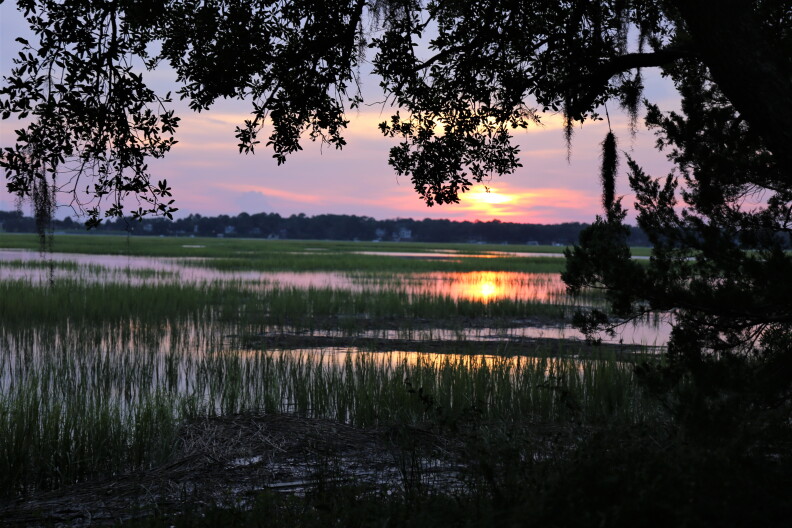
    FILE - The view from Lady's Island looking out at the Beaufort River
    FILE - The view from Lady's Island looking out at the Beaufort River(Victoria Hansen / SC Public Radio)

    Few people are familiar with the full history that shaped and preserved the fish and wildlife of coastal South Carolina. From Native Americans to the early colonists to plantation owners and their slaves to market hunters and commercial fishermen, all viewed fish and wildlife as limitless. Through time, however, overharvesting led to population declines, and the public demanded conservation.

    The process that produced fish and game laws, wardens and wildlife refuges was complex and often involved conflict, but synergy and cooperation ultimately produced one of the most extensive conservation systems on the East Coast. Author James O. Luken presents this fascinating story in his new book, Coastal South Carolina Fish and Game: History, Culture and Conservation.


    WEJ at 21: A Public Conversation with Pat Conroy Aug 30, 2021
    Show notes
    FILE - Pat Conroy
    FILE - Pat Conroy(Robert C. Clark / Wikimedia Commons)

    As part of our continuing series of encore episodes celebrating The Journal at 21, we encore a 2014 episode with the late novelist Pat Conroy, author of The Water is Wide, The Great Santini, The Prince of Tides, and The Death of Santini. Conroy joins Walter Edgar for an event celebrating the author’s life; his work; and One Book, One Columbia’s 2014 selection, My Reading Life (Nan A. Talese, 2010). The conversation was recorded before an audience of over 2000, at Columbia’s Township Auditorium, on the evening of February 27.

    - Originally broadcast 04/04/14 -


    WEJ at 21: The Life and Times of Judge Matthew J. Perry Aug 23, 2021
    Show notes
    FILE - Harvey Gantt, outside the Registrar's office at Clemson university.
    On January 16, 1963, the U.S. Court of Appeals ordered Clemson to admit Gantt who became its first African American student. The ruling was the result of a lawsuit filed on Gantt's behalf by then-attorney Matthew J. Perry( Clemson University Library)
    FILE - Judge Matthew J. Perry
    FILE - Judge Matthew J. Perry( Library of Congress)

    This week on Walter Edgar's Journal, we offer another in our series of encore broadcasts celebrating The Journal at 21, with a 2004 conversation with the late U. S. District Judge Matthew Perry. Perry takes us on a journey from his humble beginnings in a segregated South Carolina to his part in helping to break down the color barrier. In between he spins some delightful stories about the people who helped shape South Carolina throughout the turbulent 60’s and 70’s.

    - Originally broadcast 03/19/04-

    News and Music Stations: Fri, Aug 27, at 12 pm; Sat, Aug 28, at 7 am
    News & Talk Stations: Friday, Aug 27, at 12 pm; Sun, Aug 29, at 4 pm


    WEJ at 21: Charles Joyner on "Down by the Riverside - A South Carolina Slave Community" Aug 09, 2021
    Show notes
    "Slave Dance and Music"
    The Old Plantation (Slaves Dancing on a South Carolina Plantation), ca. 1785-1795. Watercolor on paper.( Attributed to John Rose, Beaufort County, South Carolina. / Abby Aldrich Rockefeller Folk Art Museum, Williamsburg, Virginia, USA.)
    Dr. Charles Joyner
    (Courtesy of Coastal Carolina University)

    In Down by the Riverside: A South Carolina Slave Community, Charles Joyner takes readers on a journey back in time, up the Waccamaw River through the Lowcountry of South Carolina, past rice fields made productive by the labor of enslaved Africans, past rice mills and forest clearings into the antebellum world of All Saints Parish. In this community, and many others like it, the enslaved people created a new language, a new religion - indeed, a new culture - from African traditions and American circumstances.

    From the letters, diaries, and memoirs of the plantation whites and their guests, from quantitative analysis of census and probate records, and above all from slave folklore and oral history, Joyner has gathers the story of a society and its way of life. His careful reconstruction of daily life in All Saints Parish is an inspiring testimony to the ingenuity and solidarity of a people who endured in the face of adversity.

    The 25th anniversary edition of Joyner's landmark study includes a new introduction in which the author recounts his process of writing the book, reflects on its critical and popular reception, and surveys the prior three decades of scholarship in slave history. He joined Dr. Edgar in 2010, during the 10th anniversary celebration of Walter Edgar's Journal, to talk about this edition.

    - Originally broadcast 03/26/10 -


    The River Alliance: Creating Vibrant Riverfront in the Midlands Aug 02, 2021
    Show notes
    Night at the Saluda Riverfront Park
    Night at the Saluda Riverfront Park(Eric P. Harkins / Courtesy of The River Alliance)

    For decades, Columbia’s rivers were seen as dividing lines between cities and counties. In 1994, the Greater Columbia Chamber of Commerce along with the Cities of Columbia, Cayce and West Columbia as well as Richland and Lexington Counties began to look at what the Midland’s over 90 miles of river could be. They saw a need for a dedicated organization that could provide to the community the benefits of the Congaree, Broad, and Saluda rivers, and The River Alliance was formed.

    The River Alliance is uniquely involved in the goals of protecting the region’s rivers, creating public river access, and providing positive benefits to the surrounding communities. The Three Rivers Greenway; the Congaree National Park access and the Visitors Center; the Broad River Blueway; and the concurrent economic activity along the riverfront are the result of The River Alliance’s vision and direct action.

    River Alliance CEO Mike Dawson talks with Walter Edgar about how the Alliance has worked together with riverside communities, city and county governments, and many other organizations to create community resources along the Saluda, Broad, and Congaree rivers in the Midlands of South Carolina.

    News and Music Stations: Fri, Aug 06, at 12 pm; Sat, Aug 07, at 7 am
    News & Talk Stations: Friday, Aug 06, at 12 pm; Sun, Aug 08, at 4 pm


    WEJ at 21: Cokie Roberts - "Founding Mothers: The Women Who Raised Our Nation" Jul 26, 2021
    Show notes
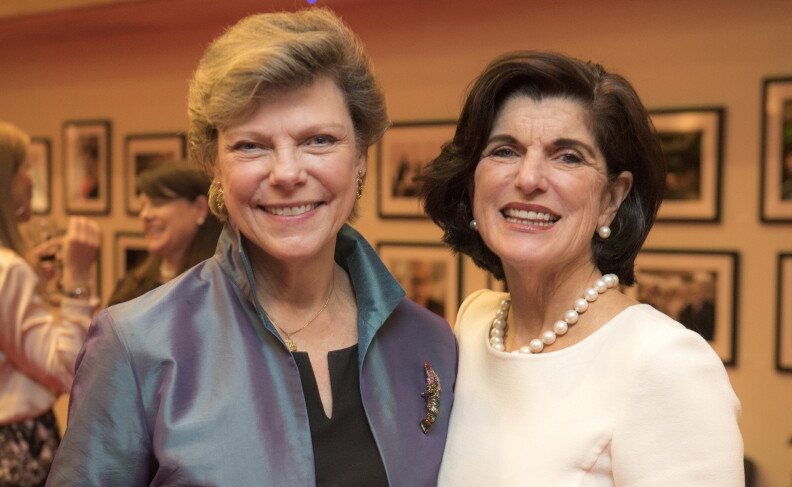
    FILE - Cokie Roberts and Luci Baines Johnson - On Tuesday, February 28th, 2017, the LBJ Presidential Library held An Evening With Cokie Roberts.
    FILE - Cokie Roberts and Luci Baines Johnson - On Tuesday, February 28th, 2017, the LBJ Presidential Library held An Evening With Cokie Roberts. (Jay Godwin / LBJ Library)

    For this episode celebrating Walter Edgar's Journal at 21, we’ve dusted off a 2004, on-the-road program, recorded at Litchfield Books on Pawleys Island. Walter's guest is the late Cokie Roberts, longtime NPR correspondent and commentator. Roberts talks politics, personal history, and about her book, Founding Mothers: The Women Who Raised Our Nation.

    Cokie Roberts, herself known as a “Founding Mother” of National Public Radio, served as a congressional correspondent at NPR for more than 10 years and later appeared as a commentator on Morning Edition. In addition to her work for NPR, Roberts was a political commentator for ABC News, and, from 1996-2002, she and Sam Donaldson co-anchored the weekly ABC interview program This Week. In her more than forty years in broadcasting, she has won countless awards, including three Emmys.

    - Originally broadcast 07/30/04 -


    Baptized in Sweet Tea Jul 19, 2021
    Show notes
    Ken Burger
    ( Courtesy Post & Courier)

    The late Ken Burger spent almost 40 years writing for two South Carolina newspapers, during a career that included stints covering sports, business, politics, and life in the Palmetto State.

    Burger’s book, Baptized in Sweet Tea, is a collection of columns he wrote for the Charleston Post & Courier. As the title hints, the common thread running through the collection is Burger’s southern-ness… and, more specifically, his identity as a born-and-bred South Carolinian. While he may have been baptized in sweet tea, his essays are steeped in a bittersweet nostalgia for a way of life that’s passing into memory… and a reverence for those timeless qualities that abide.

    This encore broadcast is part of our series celebrating Walter Edgar's Journal at 21.

    - Originally broadcast 02/21/13) -


    WEJ at 21: The Charleston Church Massacre and the Hard, Inspiring Journey to Forgiveness Jul 12, 2021
    Show notes
    The scene outside Emanuel A.M.E. Church, Charleston, SC, on Sunday morning, July 21, 2015.
    (Linda O'Bryon/SCETV)

    On June 17, 2015, twelve members of the historically black Emanuel AME Church in Charleston, South Carolina welcomed a young white man to their evening Bible study. He arrived with a pistol, 88 bullets, and hopes of starting a race war. Dylann Roof’s massacre of nine innocents during their closing prayer horrified the nation. Two days later, some relatives of the dead stood at Roof’s hearing and said, “I forgive you.” That grace offered the country a hopeful ending to an awful story. But for the survivors and victims’ families, the journey had just begun.

    In Grace Will Lead Us Home (2019, St. Martin’s Press) Pulitzer Prize-winning journalist Jennifer Berry Hawes provides a definitive account of the tragedy’s aftermath. And she tells the stories of survivors, first responders, city and state officials, as well as South Carolina citizens, and their personal journeys.

    - Originally broadcast 10/25/19)-


    Alice Ravenel Huger Smith, Charleston Renaissance Artist Jul 05, 2021
    Show notes
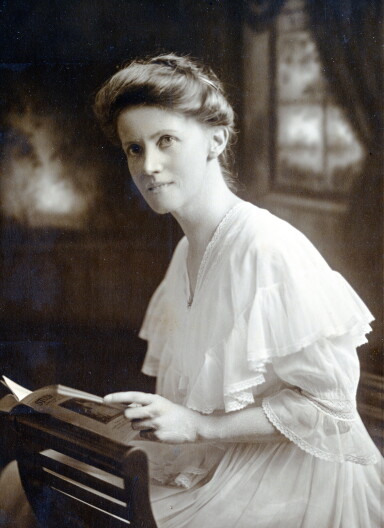
    Alice Ravenel Huger Smith, c. 1910.jpg
    Alice Ravenel Huger Smith, c. 1910.jpg( Courtesy of Middleton Place)

    Alice Ravenel Huger Smith (1876–1958), a leader of the Charleston Renaissance, immortalized the beauty and history of the Carolina Lowcountry and helped propel the region into an important destination for cultural tourism.

    In the book Alice: Alice Ravenel Huger Smith, Charleston Renaissance Artist, Dwight McInvail and his co-authors draw on unpublished papers, letters, and interviews to create a personal account of the artist’s life and work. The book is enriched by over 200 illustrations of paintings, prints, sketches, and photographs, many shared for the first time.

    McInvaill and internationally renowned South Carolina Artist Jonathan Green join Walter Edgar in conversation about Alice Ravenel Huger Smith and her work.

    News and Music Stations: Fri, Jul 09, 12 pm; Sat, Jul 10, 7 am
    News & Talk Stations: Fri, Jul 09, 12 pm; Sun, Jul 11, 4 pm


    WEJ at 21: How Partisans Fighting in South Carolina Helped Win the American Revolution Jun 28, 2021
    Show notes
    "Death of Major Ferguson at King's Mountain," Virtue & Yorston, 1863
    (Anne S.K. Brown Military Collection, Brown University Library)

    General U.S. history courses in many high schools depict the American Revolutionary War as a series of battles in the Northeast - Lexington, Concord, Bunker Hill, etc. - that lead inexorably to British General Charles Cornwallis's surrender of 8,000 British soldiers and seamen to a French and American force at Yorktown, Virginia, October 19, 1781. The truth is much more complicated, of course. A major component of the war, one that paved the way to Yorktown, was the fighting that took place in 1780 - 81 in the South - especially in South Carolina. In essence, according to Dr. Jack Warren and Dr. Walter Edgar, the war was won in the South.

    This encore broadcast from 2016 is part of our Celebration of Walter Edgar's Journal at 21.

    - Originally broadcast 03/04/16 -

    News and Music Stations: Fri, Jul 02, 12 pm; Sat, Jul 03, 7 am
    News & Talk Stations: Fri, Jul 02, 12 pm; Sun, Jul 04, 4 pm


    Previous 1 16 17 18 19 20 37 Next

    Related Podcasts

    Dan Carlin’s Hardcore History

    1

    Dan Carlin’s Hardcore History History
    More Perfect

    2

    More Perfect Government
    Casefile True Crime

    3

    Casefile True Crime Games & Hobbies
    The Way I Heard It with Mike Rowe

    4

    The Way I Heard It with Mike Rowe History
    BackStory

    5

    BackStory History
    The Black Dahlia Serial Killers

    6

    The Black Dahlia Serial Killers History
    footer-logo

    Contact Us

    Toll Free: 844-670-7747

    Links

    • Home
    • Top Charts
    • Networks
    • Apps
    • Independents Podcasts
    • Podcast Advertising
    • Podcast News
    • Contact Us
    • About Us
    • Analytics & Insights

    Stay Connected

      Privacy, Terms of Use & Our Code of Ethics Protecting Content Creators Copyrights