TopPodcast.com
Menu
  • Home
  • Top Charts
  • Top Networks
  • Top Apps
  • Top Independents
  • Top Podfluencers
  • Top Picks
    • Top Business Podcasts
    • Top True Crime Podcasts
    • Top Finance Podcasts
    • Top Comedy Podcasts
    • Top Music Podcasts
    • Top Womens Podcasts
    • Top Kids Podcasts
    • Top Sports Podcasts
    • Top News Podcasts
    • Top Tech Podcasts
    • Top Crypto Podcasts
    • Top Entrepreneurial Podcasts
    • Top Fantasy Sports Podcasts
    • Top Political Podcasts
    • Top Science Podcasts
    • Top Self Help Podcasts
    • Top Sports Betting Podcasts
    • Top Stocks Podcasts
  • Podcast News
  • About Us
  • Podcast Advertising
  • Contact
Not in our directory?
Add Show Here
Podcast Equipment
Center

toppodcastlogoOur TOPPODCAST Picks

  • Comedy
  • Crypto
  • Sports
  • News
  • Politics
  • True Crime
  • Business
  • Finance

Follow Us

toppodcastlogoStay Connected

    View Top 200 Chart
    Back to Rankings Page
    History

    Walter Edgar’s Journal

    From books to barbecue, and current events to Colonial history, historian and author Walter Edgar delves into the arts, culture, and history of South Carolina and the American South. Produced by South Carolina Public Radio.

    Advertise

    Copyright: © 2023 South Carolina Public Radio

    • Apple Podcasts
    • Google Play
    • Spotify

    Latest Episodes:
    Walter Edgar's Journal: A history professor on the radio? Nov 04, 2021
    Show notes
    Tom Fowler and Walter Edgar broadcasting a live episode of Walter Edgar's Journal in 2002 from Columbia's Woodhill Mall at part of the observance of SC Public Radio's 30th anniversary.
    Tom Fowler and Walter Edgar broadcasting a live episode of Walter Edgar's Journal in 2002 from Columbia's Woodhill Mall at part of the observance of SC Public Radio's 30th anniversary.( SC Public Radio)

    This fall Walter Edgar's Journal has been celebrating 21 years on the air by offering encore episodes from our vault. This week we bring you a special episode of The Journal with Walter and long-time Journal producer Alfred Turner as guests, and with SC Public Radio reporter Victoria Hansen guiding a discussion of the history of the program.

    In 2000 a special program aired on South Carolina Public Radio (then South Carolina Educational Radio). It featured a veteran broadcaster and a university professor as hosts and doing live news coverage of the removal of the Confederate battle flag from the state house dome. The program featured called-in comments from listeners.

    From that one-time broadcast came an idea for a live, weekly talk program with broadcaster Tom Fowler and historian Dr. Walter Edgar who would interview guests and take calls from listeners about topics of the day. The program, unnamed for its first few months, became Walter Edgar's Journal, and would evolve into weekly conversation with guests - authors, artists, politicians, and everyday folks - talking about everything from politics to barbeque, topics centered in the American South with a focus on our state's history and culture.


    WEJ at 21: Growing up with The Great Santini Oct 25, 2021
    Show notes
    FILE - Pat Conroy
    FILE - Pat Conroy(Robert C. Clark / Wikimedia Commons)

    In celebration of Walter Edgar’s Journal at 21, this week's episode is an encore from 2014 with world-renowned author, the late Pat Conroy in conversation with 4 of his 5 siblings.

    In his 2013 memoir, The Death of Santini (Nan A. Talese/Doubleday) author Pat Conroy admits that his father, Don, is the basis of abusive fighter pilot he created for the title role of his novel, The Great Santini, and that his mother, Peg, and his brothers and sisters have all served as models for characters in The Prince of Tides and his other novels. Now, for the first time, Pat gathers with four of his surviving siblings, Kathy, Tim, Mike, and Jim, to talk about the intersection of “real life” and Pat’s fiction, and what it was like to grow up with “The Great Santini” as a father.

    - Originally broadcast 04/18/14 -


    WEJ at 21: What is real southern cooking? Oct 19, 2021
    Show notes
    Southern food
    (Jennifer Woodard Maderazo / Wikimedia Commons)

    In celebration of Walter Edgar’s Journal at 21, this week's episode is an encore from 2010 featuring John T. Edge, author and Director of the Southern Foodways Alliance, University of Mississippi; and Matt and Ted Lee, award winning cookbook authors. The conversation was a preview of a debate on the topic, "What is Real Southern Cooking?" which aired on SCETV’s Take on the South.

    - Originally broadcast 07/09/2010 -


    Gullah Spirituals: The Sound of Freedom and Protest in the South Carolina Sea Islands Oct 14, 2021
    Show notes
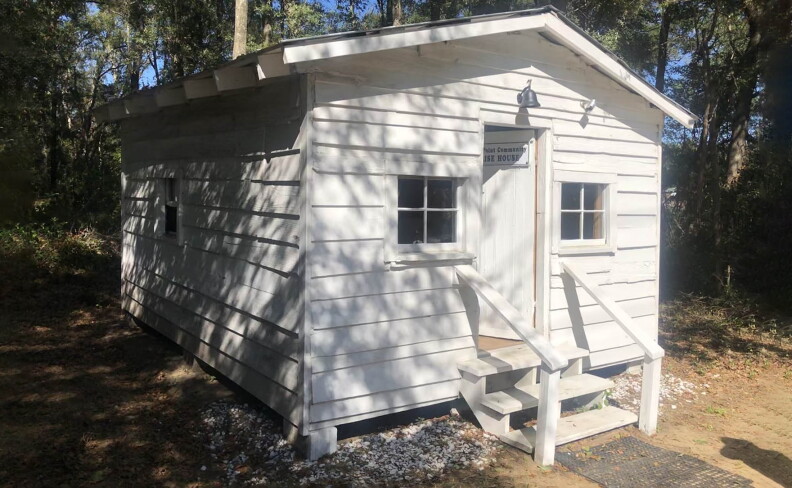
    Coffin Point Praise House
    Coffin Point Praise House, 57 Coffin Point Rd, St. Helena Island, South Carolina( Richard N Horne / Wikimedia Commons)

    In Gullah Spirituals: The Sound of Freedom and Protest in the South Carolina Sea Islands (USC Press, 2021) musicologist Eric Crawford traces Gullah/Geechee songs from their beginnings in West Africa to their height as songs for social change and Black identity in the twentieth century American South. While much has been done to study, preserve, and interpret Gullah culture in the lowcountry and sea islands of South Carolina and Georgia, some traditions like the shouting and rowing songs have been all but forgotten. Crawford talks with Walter Edgar about his work, which focuses primarily on South Carolina's St. Helena Island, illuminates the remarkable history, survival, and influence of spirituals since the earliest recordings in the 1860s.

    Grounded in an oral tradition with a dynamic and evolving character, spirituals proved equally adaptable for use during social and political unrest and in unlikely circumstances. Most notably, the island's songs were used at the turn of the century to help rally support for the United States' involvement in World War I and to calm racial tensions between black and white soldiers. In the 1960s, civil rights activists adopted spirituals as freedom songs, though many were unaware of their connection to the island.

    Please note: musical excerpts of Gullah spirituals used in the broadcast version of this episode are not included in this on-demand version, due to copyright restrictions.


    WEJ at 21: World War II battlefield hero - T. Moffatt Burriss and the crossing Oct 04, 2021
    Show notes
    (SCETV)

    (Originally broadcast 06/29/12) - In celebration of Walter Edgar’s Journal at 21, this week's episode is an encore from 2012, featuring the late T. Moffatt Burriss. Burriss was a former Columbia area contractor, Republican state lawmaker and American World War II battlefield hero.

    An Anderson native, Burris was a concentration camp liberator who also participated in the invasions of Sicily and Italy. During Operation Market Garden in Holland, he led the amphibious assault across the Waal River made famous in the movie, A Bridge Too Far. Burriss is the subject of an ETV special Man and Moment: T. Moffatt Burriss and the Crossing. He joined Walter Edgar, former State newspaper reporter Jeff Wilkinson, and documentary producer Lee Ann Kornegay, to talk about the war and about making the film.

    News and Music Stations: Fri, Oct 8, at 12 pm; Sat, Oct 9, at 7 am
    News & Talk Stations: Friday, Oct 8, at 12 pm; Sun, Oct 10, at 4 pm


    The Federal Courts and the Long Struggle for Civil Rights in South Carolina Sep 27, 2021
    Show notes
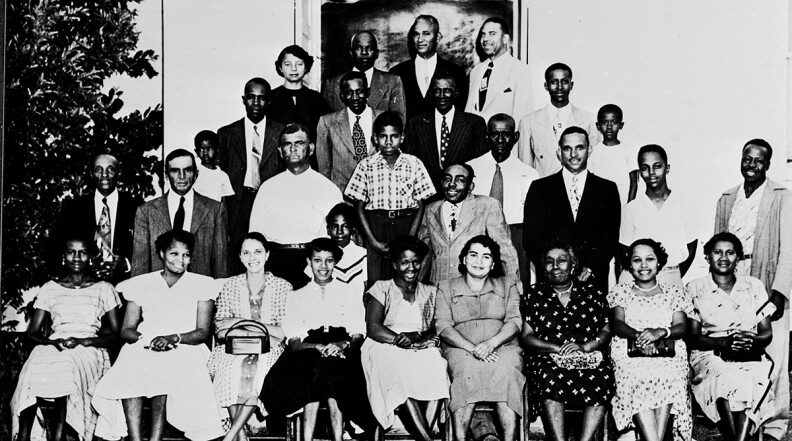
    Supporters and petitioners of Briggs v. Elliott sit outside Liberty Hill AME Church in Clarendon County, SC. The lawsuit led to Brown v. Board of Education, the US Supreme Court decisions in 1954 and 1955 that ended legal segregation in public schools.
    (Photo by E.C. Jones and Cecil J. Williams. Courtesy of Cecil J. Williams)

    In his book, The Slow Undoing: The Federal Courts and the Long Struggle for Civil Rights in South Carolina, Dr. Stephen H. Lowe argues for a reconsideration of the role of the federal courts in the civil rights movement. It places the courts as a central battleground at the intersections of struggles over race, law, and civil rights. During the long civil rights movement, Black and White South Carolinians used the courts as a venue to contest the meanings of the constitution, justice, equality, and citizenship.

    Lowe joins Walter Edgar to discuss how African Americans used courts and direct action in tandem to bring down legal segregation throughout the long civil rights era. But the process was far from linear, and the courts were not always a progressive force. The battles were long, the victories won were often imperfect, and many of the fights remain.

    Stephen H. Lowe is a professor of history at the University of South Carolina Union and director of the liberal studies and organizational leadership programs for the University of South Carolina's Palmetto College.

    News and Music Stations: Fri, Oct 01, at 12 pm; Sat, Oct 02, at 7 am
    News & Talk Stations: Friday, Oct 01, at 12 pm; Sun, Oct 03, at 4 pm


    Francis Marion: Rediscovering the Revolutionary War Battle at Parker's Ferry Sep 21, 2021
    Show notes
    This statue of General Francis Marion at Venters Landing commemorates the spot where Marion took control of the Williamsburg Militia in 1780 on the site formerly known as Witherspoon's Ferry. Marion also used nearby Snow's Island as a camp site during the revolution, earning him the nickname "The Swampfox."
    This statue of General Francis Marion at Venters Landing commemorates the spot where Marion took control of the Williamsburg Militia in 1780 on the site formerly known as Witherspoon's Ferry. Marion also used nearby Snow's Island as a camp site during the revolution, earning him the nickname "The Swampfox."(JobyD2000 / Wikimedia Commons)

    In March of 2021, the South Carolina Battlefield Preservation Trust purchased 31 acres in Colleton County to preserve the site of a Revolutionary War victory by Francis Marion and his men over the British in what became known as the battle of Parker’s Ferry. The site will soon become part of the Liberty Trail, which will be a unified path of preservation and interpretation across South Carolina. The Trail will tell the story of the events of 1779-1782 in the Carolinas, which directly led to an American victory in the war.

    Charles Baxley of the SC Battlefield Trust and archaeologist Steve Smith join Walter Edgar to talk about efforts to find the historical boundaries of the site, purchase the land, and establish the Liberty Trail.

    News and Music Stations: Fri, Sep 24, at 12 pm; Sat, Sep 25, at 7 am
    News & Talk Stations: Friday, Sep 24, at 12 pm; Sun, Sep 26, at 4 pm


    WEJ at 21: Dixie Bohemia - A French Quarter Circle in the 1920s Sep 13, 2021
    Show notes
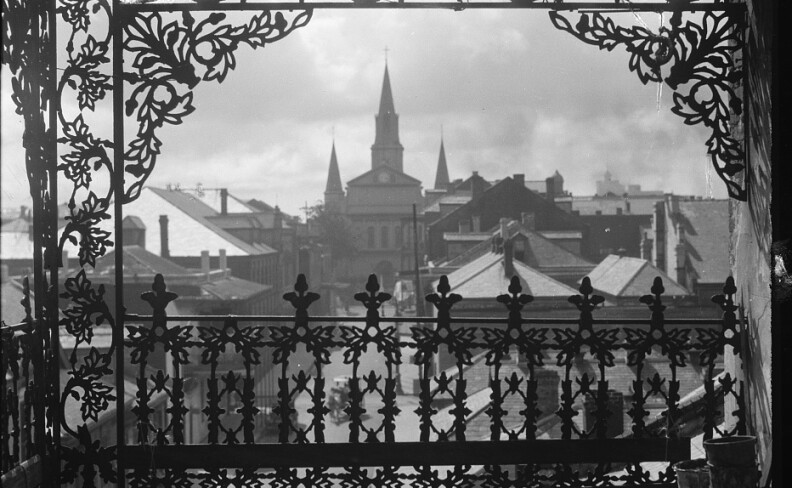
    A view toward Jackson Square in New Orleans in the 1920s.
    A view toward Jackson Square in New Orleans in the 1920s.(Arnold Genthe, 1869-1942 / Library of Congress)

    A part of our celebration of Walter Edgar's Journal at 21 we present an encore from 2014 with guest John Shelton Reed, talking about his book, Dixie Bohemia: A French Quarter Circle in the 1920s.

    In the years following World War I, the New Orleans French Quarter attracted artists and writers with low rent, a faded charm, and colorful street life. By the 1920s Jackson Square became the center of a vibrant but short-lived bohemia. A young William Faulkner and his roommate William Spratling, an artist who taught at Tulane, were among the "artful and crafty ones of the French Quarter." In Dixie Bohemia: A French Quarter Circle in the 1920s (LSU Press, 2012) John Shelton Reed introduces Faulkner's circle of friends ranging from the distinguished Sherwood Anderson to a gender-bending Mardi Gras costume designer and brings to life the people and places of New Orleans in the jazz age.

    Dr. John Shelton Reed is the William Rand Kenan Jr. Professor Emeritus of sociology at the University of North Carolina, Chapel Hill, where he was director of the Howard Odum Institute for Research in Social Science for twelve years and helped found the university's Center for the Study of the American South and the quarterly Southern Cultures.

    - Originally broadcast 01/10/14 -


    WEJ at 21: A Rising Sea, a Vanishing Coast, and a 19th-Century Disaster that Warns of a Warmer World Sep 13, 2021
    Show notes
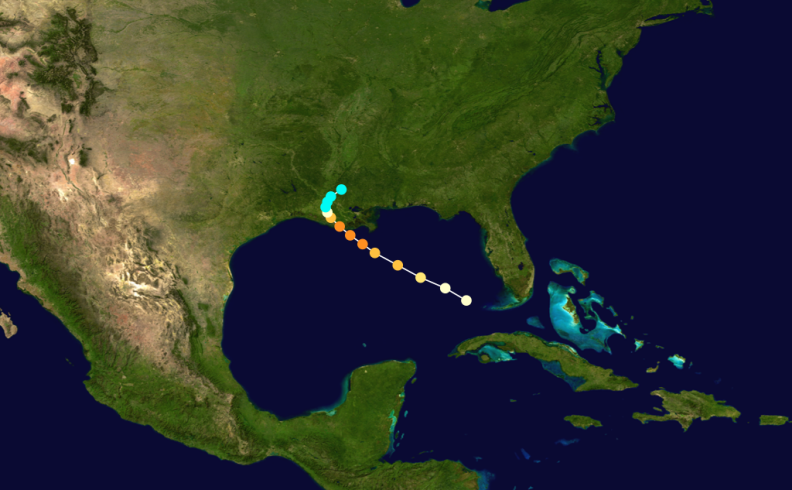
    The track of the 1856 hurricane that destroyed Isle Deniere
    The track of the 1856 hurricane that destroyed Isle Deniere( Wikimedia Commons)

    In the summer of 1853, many of New Orleans’s citizens traveled to Isle Derniere, an emerging island retreat on the Gulf of Mexico, presuming it a safe haven from yellow fever. On August 10, 1856, a hurricane swept across the island, killing most of its 400 inhabitants. What remained of the island was a forest stranded in the sea, a sign of a land that would eventually vanish.

    Map of Isle Dernier as it appeared in 1853
    Map of Isle Dernier as it appeared in 1853(Williams et al. under contract of U.S. Geological Survey / Wikimedia Commons)

    Dr. Abby Sallenger’s book, Island in a Storm: A Rising Sea, a Vanishing Coast, and a Nineteenth-Century Disaster that Warns of a Warmer World, is the riveting true story of the people who faced this fierce hurricane, their bravery and cowardice, luck and misfortune, life and death. It also chronicles a coast in perpetual motion and a rising sea that made the Isle Derniere particularly vulnerable to a great hurricane.

    Sallenger joins Dr. Edgar to tell the story of Isle Derniere and about the need to re-examine our ideas about living on the coast.

    Sallenger received his Ph.D. in Marine Science from the University of Virginia and is the former Chief Scientist of the U.S. Geological Survey’s Center for Coastal Geology. He presently leads the USGS Extreme Storms research group.


    September 11: Tragedy, Ministry, Forgiveness Sep 08, 2021
    Show notes
    FILE - Lyndon Harris
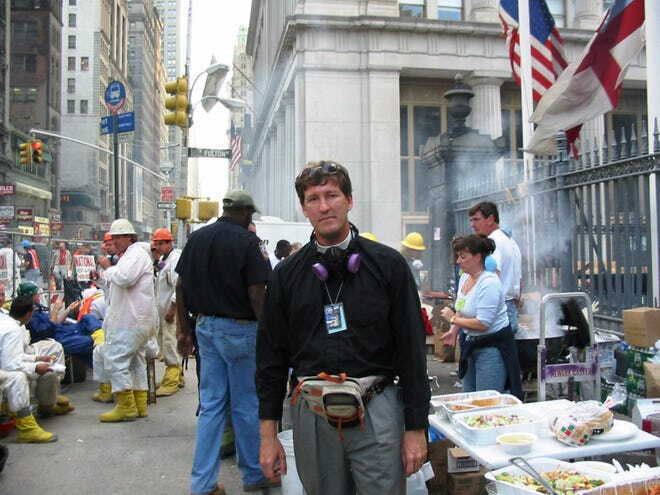
    Lyndon Harris, priest in charge of St. Paul's Chapel, NY City, pictured here outside the chapel, across from the collapsed World Trade Center towers. For 8 months following the terrorist attack, he helped run a ministry that provided food, counselling, and respite to emergency personnel and workers at Ground Zero.(Provided)

    On the 20th anniversary of the terrorist attacks of September 11, Walter Edgar's Journal offers this special encore of a conversation with Lyndon Harris, who was on Wall Street the day the World Trade Center towers fell. At that time, Gaffney, SC, native Lyndon Harris was the Priest in Charge of St. Paul's Episcopal Chapel, which was across from the World Trade Center.

    In September of 2011, Harris returned to his home state to take part in an exhibition at the Cherokee County History and Arts Museum, Eyewitnesses to 9/11: From Tragedy to Transformation. He joined Walter Edgar in our studio to tell the story of the extraordinary ministry begun at St. Paul’s on 9/12 and about his work with Gardens of Forgiveness, where he is currently Executive Director. Harris is also minister at the Unitarian Universalist Fellowship of the Carolina Foothills.


    Previous 1 15 16 17 18 19 37 Next

    Related Podcasts

    Dan Carlin’s Hardcore History

    1

    Dan Carlin’s Hardcore History History
    More Perfect

    2

    More Perfect Government
    Casefile True Crime

    3

    Casefile True Crime Games & Hobbies
    The Way I Heard It with Mike Rowe

    4

    The Way I Heard It with Mike Rowe History
    BackStory

    5

    BackStory History
    The Black Dahlia Serial Killers

    6

    The Black Dahlia Serial Killers History
    footer-logo

    Contact Us

    Toll Free: 844-670-7747

    Links

    • Home
    • Top Charts
    • Networks
    • Apps
    • Independents Podcasts
    • Podcast Advertising
    • Podcast News
    • Contact Us
    • About Us
    • Analytics & Insights

    Stay Connected

      Privacy, Terms of Use & Our Code of Ethics Protecting Content Creators Copyrights