TopPodcast.com
Menu
  • Home
  • Top Charts
  • Top Networks
  • Top Apps
  • Top Independents
  • Top Podfluencers
  • Top Picks
    • Top Business Podcasts
    • Top True Crime Podcasts
    • Top Finance Podcasts
    • Top Comedy Podcasts
    • Top Music Podcasts
    • Top Womens Podcasts
    • Top Kids Podcasts
    • Top Sports Podcasts
    • Top News Podcasts
    • Top Tech Podcasts
    • Top Crypto Podcasts
    • Top Entrepreneurial Podcasts
    • Top Fantasy Sports Podcasts
    • Top Political Podcasts
    • Top Science Podcasts
    • Top Self Help Podcasts
    • Top Sports Betting Podcasts
    • Top Stocks Podcasts
  • Podcast News
  • About Us
  • Podcast Advertising
  • Contact
Not in our directory?
Add Show Here
Podcast Equipment
Center

toppodcastlogoOur TOPPODCAST Picks

  • Comedy
  • Crypto
  • Sports
  • News
  • Politics
  • True Crime
  • Business
  • Finance

Follow Us

toppodcastlogoStay Connected

    View Top 200 Chart
    Back to Rankings Page
    History

    The Weird History Podcast

    Advertise
    • Apple Podcasts
    • Google Play
    • Spotify

    Latest Episodes:
    44 Live at the Steep and Thorny Way to Heaven, Thoughts on Richard III Aug 20, 2015
    Show notes

    Richard III is one of Shakespeare’s most compelling villains. Unlike other tragic figures who do terrible things (Macbeth, Othello, Brutus) Richard does not fall. He does not have some kind of tragic flaw that drives him to perform an evil act. Instead, he is a through-and-through villain from the very first scene of the play, and is all the more compelling for it.

    As you can imagine, the actual, real Richard III was somewhat different.

    Last week I spoke at a Portland performance space, The Steep and Thorny Way to Heaven, about some differences between the real Richard and the character in Shakespeare’s play. The event was a benefit show for an upcoming performance of Richard III that Steep and Thorny is putting on, and the evening also featured dancing, music, and other performers.

    King_Richard_III

    Related Links:

    More about The Steep and Thorny Way to Heaven here.


    43 Medusa Aug 13, 2015
    Show notes

    One of the most high-profile maritime disasters in French history also inspired a famous, and gigantic work of art. In 1816 the French frigate Medusa ran aground in the Bay of Arguin. The captain and several officers escaped on life boats, but 147 people were abandoned on a hastily built raft. For almost two weeks the raft-goers suffered from starvation, dehydration, and malnutrition. The desperate survivors descended into violence and resorted to cannibalism before being rescued (by chance) by another vessel. Of the 147 people abandoned on the raft, ten survived.

    A few years later, in 1819, the 25-year-old Romantic painter Theodore Gericault painted a gigantic, larger-than-life painting entitled The Raft of the Medusa. To compose his masterpiece, Gericault sought out dead and decayed bodies, contacted survivors, and memorialized the tragedy like a man possessed.

    RaftOfTheMedusa

    Related Links:

    More on The Raft of the Medusa on the Louvre’s website.

    A Narrative of a Voyage to Senegal in 1816 on Project Gutenberg.


    42 An Invention of Writing! Maybe. Aug 07, 2015
    Show notes

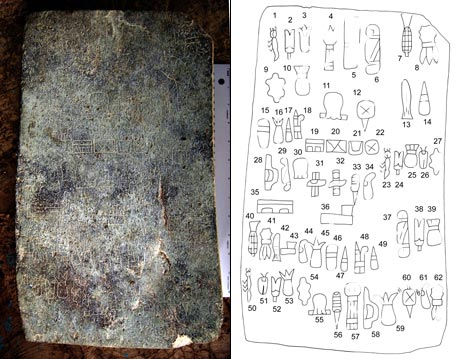
    Humans have invented writing not once, not twice, but three times. Ancient Sumeria, China, and Mesoamerica all invented the written word independent of each other. In the case of Mesoamerican writing, there’s some ambiguity about when and who made it. Most experts agree that by around 500 BCE Zapotec peoples had created a writing system, but there’s some debate about whether or not the Olmec, an even older civilization, were the first in Mesoamerica to invent writing. One artifact, the 3,000 year old Cascajal Block, suggests that the Olmecs did, in fact, have a writing system. The Block is strewn with glyphs in a language that nobody speaks or understands, and is, potentially, the oldest piece of writing in the Western Hemisphere.

    olmec writing

    Related Links:

    For more on misconceptions about Olmecs, check out Episode Three of this show, Incorrect Ideas About Olmecs.

    More about the Runamo Inscription, the supposed ancient Viking runes that turned out to just be cracks in rock.


    41 His Majesty Gregor MacGregor, King of Con-Men and Cacique of Poyais Jul 31, 2015
    Show notes

    In 1820 a Scotsman named Gregor MacGregor pulled off one of the most audacious cons of all time. MacGregor claimed to be descendant of Rob Roy and ancient kings of Scotland, and also claimed to have been granted a certain amount of land in what is now modern day Honduras. Calling his new (and entirely fictional) country “Poyais,” MacGregor began to solicit investments for his new, up-and-coming Central American country.

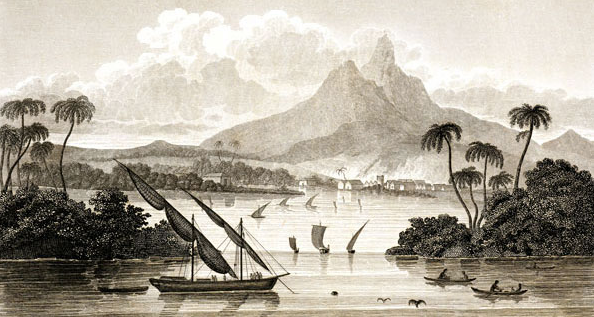
    The image below is a landscape of the supposed country of Poyais, taken from Sketch of the Mosquito Shore, a book that MacGregor penned under the pseudonym Thomas Strangeways. MacGregor promised that his land in the New World was filled with libraries, cathedrals, and a native population who were eager to welcome Europeans. There was nothing of the sort, and when colonists showed up in what is now modern day Honduras, they found nothing.

    Poyais

    Related Links:

    For more on Scotland’s failure to have Central American colonies, check out Episode 20, The Lost Empire of Scotland.

    Read Sketch of the Mosquito Shore by “Thomas Strangeways.”

    The Economist article cited in the episode, on why MacGregor’s investors could have been so credulous.


    40 Prison of the Mind Jul 23, 2015
    Show notes

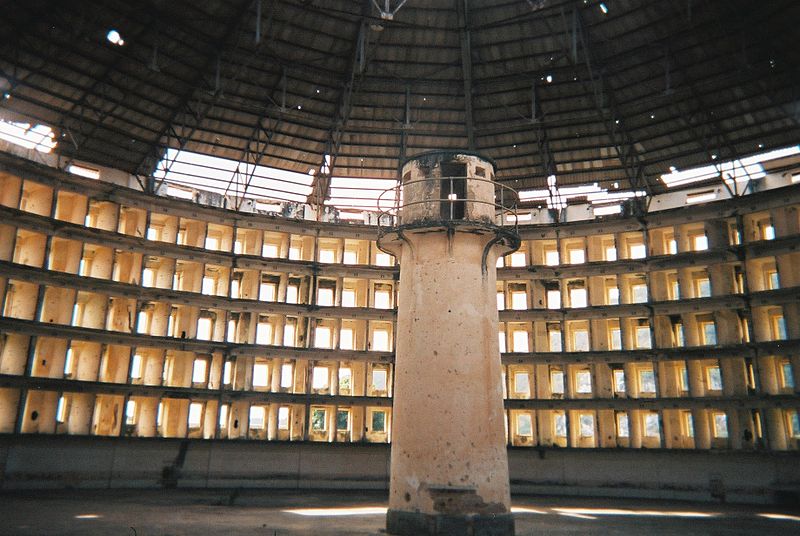
    “Morals reformed – health preserved – industry invigorated instruction diffused – public burthens lightened – Economy seated, as it were, upon a rock – the gordian knot of the Poor-Laws are not cut, but untied – all by a simple idea in Architecture!” Those are the words of Jeremy Bentham, an English philosopher who is now known as one of the founders of utilitarianism. The architecture that he refers to is a proposed prison known as the panopticon, a circular prison that would allow a single guard to see all of the inmates, and the inmates would not know if they were being observed or not. Bentham hoped that, because prisoners would not know whether they were being watched or now, that they would always act as if they were being monitored, and that the panopticon would lead to a gradual change in behavior for those confined within it.

    No true panopticons were ever built but several prisons (such as Cuba’s Presidio Modelo, pictured below) were based on the design. The panopticon’s true legacy is as a metaphor, most notably one used by the French philosopher Michel Foucault in his book about power and the history of prisons Discipline and Punish. In a panopticon, the discipline of the prison is not something that comes from chains, whips, or gross application of power. Rather, power and discipline is inscribed upon the mind of those imprisoned.

    Presidio Modelo

    Related Links:

    Bentham’s writings on the Panopticon.

    Foucault on the Panopticon from Discipline and Punish.

    Jeremy Bentham’s wishes were that his corpse be preserved in a cabinet called an “auto-icon” and viewable by… anyone who wanted to view it. The auto-icon now sits at University College London and you can find more info here and an interactive auto-icon here.


    39 How to Steal the Mona Lisa Jul 17, 2015
    Show notes

    The Mona Lisa wasn’t always an icon. Before 1911 Leonardo’s painting was certainly known and respected, but it wasn’t yet the most famous, most adored, most duplicated, and most parodied piece of art in the world. It was not yet the symbol and pop culture juggernaut that it is today. What made the Mona Lisa famous its theft at the hands of Vincenzo Peruggia who, along with two accomplices, lifted the painting off of the wall of the Louvre and simply walked out with it. He kept the portrait in a box in his apartment for over two years before attempting to ransom it, and, upon its return, the Mona Lisa went from merely a respected piece of Renaissance art to the single most famous painting in the world.

    The image below shows the blank spot left by Peruggia, and the four wall hooks that had previously held the Mona Lisa before its 1911 abduction.

    Mona Lisa Wall Hooks


    38 The Secret Plan to Nuke the Moon Jul 09, 2015
    Show notes

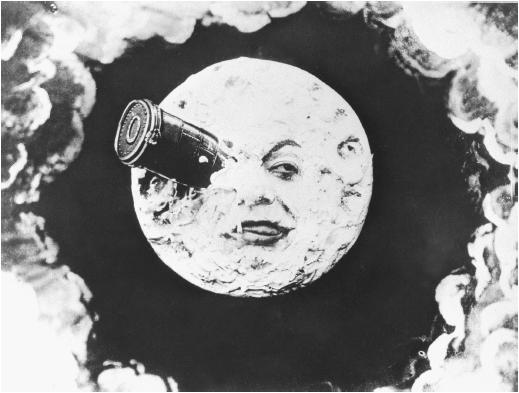
    In 1959 the United States had a secret plan to explode a nuclear weapon either on or near the surface of the moon. The plan was known as Project A119 and the hope was that a nuclear explosion on the moon would kick up a cloud of dust visible from the Earth, and would act as a demonstration of American power and technology. The project was shelved (obviously) and classified for years, and the only reason we know about it now is because Carl Sagan, who was involved with A119, let slip the existence of the plan to nuke the moon on a job application.

    While it might sound absurd, the idea of a nuclear demonstration to awe the world was a common idea among scientists in the waning days of WWII and the early days of the Cold War. There were multiple proposals for detonations on desert islands or other, similar uninhabited areas to show off the power of nuclear weapons and, hopefully, impress America’s enemies into submission.

    voyagedanslalune

    Related Links:

    A Study of Lunar Research Flights, Volume One

    The Franck Report

    The New York Times on Leonard Rieffel, the physicist who headed up Project A119.

    And, it wasn’t just the US. There were also rumors that the Soviets, too, wanted to bomb the moon.


    37 Roberts Versus Boswell Jul 03, 2015
    Show notes

    Last week the US Supreme Court legalized gay marriage. It was an amazing victory for equality and a long time coming. There were, however, dissents. Chief Justice John Roberts wrote:

    [T]he Court invalidates the marriage laws of more than half the States and orders the transformation of a social institution that has formed the basis of human society for millennia, for the Kalahari Bushmen and the Han Chinese, the Carthaginians and the Aztecs. Just who do we think we are?

    Roberts’ dissent is a version of the appeal to authority fallacy, with his authority here being the supposed constancy of monogamous heterosexual marriage throughout time.

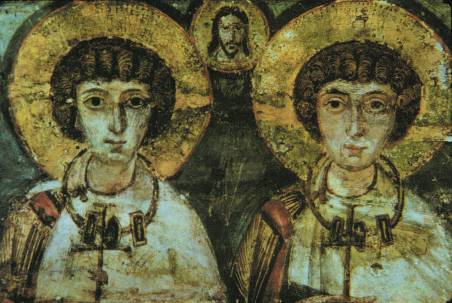
    On the other side of things, several media outlets began posting articles about how, in fact, gay marriage had been practiced a millennium ago by various sects of Christianity with a rite called adelphopoeisis. Two saints, Sergius and Bacchus (pictured below) were probably the highest-profile pair to undergo the rite which formalized and sanctified their relationship.

    The articles on adelphopoeisis as an early gay marriage rite went back to one historian, John Boswell, who claimed that it sanctified homosexual unions. Other historians contest Boswell’s claim, and claimed that adelphopoeisis was more of a brotherhood ritual.

    In this episode, I take the position that ultimately it does not matter what the nature of adelphopoeis was, and that it is also perfectly acceptable to contravene the traditions that John Roberts held so dear. The rightness of legalizing gay marriage does not rest upon what our ancestors did or did not do, but the future that modern people choose to make.
    Sergebac7thcentury

    Popular history sites like io9 and Cracked republished and re-posted their articles that had previously referenced adelphopoeisis.

    John Boswell’s obituary in the New York Times.

    More on appealing to history or tradition as a logical fallacy.


    36 Thirteen Ships Jun 26, 2015
    Show notes

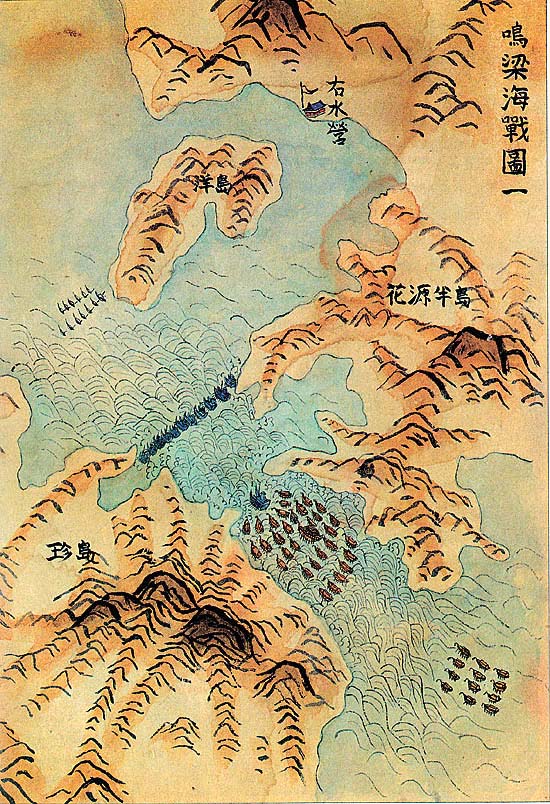
    In the 1590s Japan invaded Korea. The Imjin War lasted from 1592-1598, and it included all manner of land battles, guerilla skirmishes, sieges, spying, and everything else that you would expect to find in a full-on conflict. The entire war would take several episodes to cover properly, and this episode just focuses on the naval aspect, and one naval battle in particular.

    Under Admiral Yi Sun-sin, the Korean navy was able to successfully rack up victories against the Japanese. Yi was an admiral with no formal military training and, for complicated political reasons, was stripped of his rank, and a rival briefly took over the Korean naval forces. That rival led the Korean navy into a disastrous battle that destroyed almost all of the Joseon Dynasty’s ships, and Admiral Yi was let out of prison to command the remnants of the Korean fleet.

    At the Battle of Myeongnyang, Admiral Yi had all of thirteen ships. The Japanese had well over a hundred. With his small force, Yi managed to defeat a force larger than him by an order of magnitude, and the Battle of Myeongnyang remains, today, one of the greatest come-from-behind military victories of all time.

    myeongnyang

    Related Links:

    Read Admiral Yi’s diary.

    Admiral Yi has also been featured on the site Badass of the Week.

    The Admiral was a 2014 film about the life of Admiral Yi. Reviews seem to be mixed.


    35 Clairvoyance and Free Love on Campaign Trail ’72 Jun 19, 2015
    Show notes

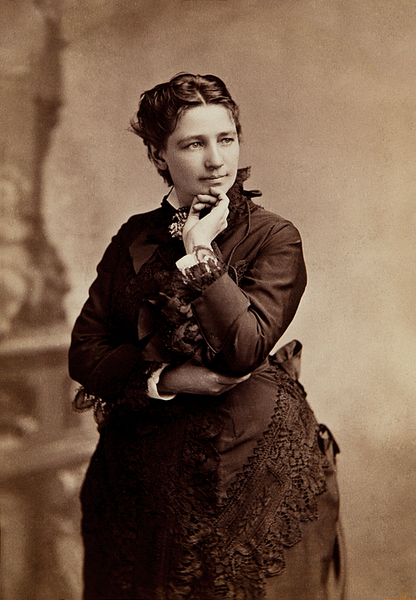
    It’s very likely that Hillary Clinton will become the Democratic nominee for president in 2016. When/if she does, some talking head will likely call her “the first women to run for president.” That talking head will be wrong. Women have been running for president for decades. The first woman to do so was Victoria Woodhull, a former Wall Street trader, traveling clairvoyant, spiritualist, newspaper publisher, and advocate for women’s suffrage. Woodhull advocated strongly for free love, i.e., the ability for women to marry whomever they chose, and for the disentangling of marriage as a social institution from the law.

    Woodhull obviously lost the 1872 election (Ulysses S. Grant won it) but many of her ideas about gender, women’s rights, free love, and marriage, have been integrated into what is now considered “normal.” Woodhull was a firebrand and a revolutionary at the time and, even though she lost that electoral contest, we now very much live in her world.

    Victoria-Woodhull-by-Bradley-&-Rulofson

    Related Links:

    victoriacwoodhull.org is a site devoted to, obviously, Victoria Woodhull.

    An 1871 report of one of Woodhull’s campaign speeches. (Requires login)

    Woodhull was demonized for her support of free love. As in, cartoonists drew her as a demon. A famous caricature of her declared her to be “Mrs. Satan.”


    Previous 1 20 21 22 23 24 26 Next

    Related Podcasts

    Dan Carlin’s Hardcore History

    1

    Dan Carlin’s Hardcore History History
    More Perfect

    2

    More Perfect Government
    Casefile True Crime

    3

    Casefile True Crime Games & Hobbies
    The Way I Heard It with Mike Rowe

    4

    The Way I Heard It with Mike Rowe History
    BackStory

    5

    BackStory History
    The Black Dahlia Serial Killers

    6

    The Black Dahlia Serial Killers History
    footer-logo

    Contact Us

    Toll Free: 844-670-7747

    Links

    • Home
    • Top Charts
    • Networks
    • Apps
    • Independents Podcasts
    • Podcast Advertising
    • Podcast News
    • Contact Us
    • About Us
    • Analytics & Insights

    Stay Connected

      Privacy, Terms of Use & Our Code of Ethics Protecting Content Creators Copyrights