TopPodcast.com
Menu
  • Home
  • Top Charts
  • Top Networks
  • Top Apps
  • Top Independents
  • Top Podfluencers
  • Top Picks
    • Top Business Podcasts
    • Top True Crime Podcasts
    • Top Finance Podcasts
    • Top Comedy Podcasts
    • Top Music Podcasts
    • Top Womens Podcasts
    • Top Kids Podcasts
    • Top Sports Podcasts
    • Top News Podcasts
    • Top Tech Podcasts
    • Top Crypto Podcasts
    • Top Entrepreneurial Podcasts
    • Top Fantasy Sports Podcasts
    • Top Political Podcasts
    • Top Science Podcasts
    • Top Self Help Podcasts
    • Top Sports Betting Podcasts
    • Top Stocks Podcasts
  • Podcast News
  • About Us
  • Podcast Advertising
  • Contact
Not in our directory?
Add Show Here
Podcast Equipment
Center

toppodcastlogoOur TOPPODCAST Picks

  • Comedy
  • Crypto
  • Sports
  • News
  • Politics
  • True Crime
  • Business
  • Finance

Follow Us

toppodcastlogoStay Connected

    View Top 200 Chart
    Back to Rankings Page
    History

    The Weird History Podcast

    Advertise
    • Apple Podcasts
    • Google Play
    • Spotify

    Latest Episodes:
    24 The Raider, the Playboy, the Sultan, and Roosevelt Apr 03, 2015
    Show notes

    In 1904 a Greek-American playboy, Ion Perdicaris was, along with his stepson Cromwell, kidnapped in Morocco by a man who would later be called “The last of the Barbary pirates.” The incident sparked a degree of outrage in the US, and was a talking point for Theodore Roosevelt in the 1904 presidential election. But… Perdicaris himself didn’t mind being kidnapped. In fact, he had a great time being held hostage by a roving band of desert brigands.

    The 1904 cartoon below from the Review of Reviews shows the US boldly telling the Sultan of Morocco to… pretty much give in to a kidnappers demands.

    Pedacaris Incident cartoon
    Related Links:

    News stories from 1904 about the Perdicaris Incident.

    Hostages to Momus by O. Henry, based on the Perdicaris Incident

    The Wind and the Lion on IMDB

    This is only very tangentially related, but The Mysteries of Harris Burdick is very probably the best collection of writing prompts ever made.


    23 A Dinosaur Named Sue Mar 27, 2015
    Show notes

    The most complete tyrannosaurus rex skeleton in the world, nicknamed “Sue,” in honor of the paleontologist who discovered her, stands over adoring crowds at Chicago’s Field Museum. However, Sue’s journey the field museum was not an easy one, though. Prior to finally being put on display in 2000, there was a battle for Sue’s bones. A fossil hunter, the ranch owner, the federal government, and a Native American tribe all vied for ownership of the dinosaur, in a fight that involved the FBI seizing a warehouse of dinosaur bones, and a man going to prison.

    Sue side full (Field museum)

    Related Links:

    “Bones of Contention” from the Chicago Tribune, 2003

    “A Dinosaur Named Sue Divides Fossil Hunters” from the New York Times, 1992

    Sue is the subject of Dinosaur 13, a documentary sympathetic to Peter Larson that has drawn some criticism.

    Peter Larson’s Reddit AMA


    22 Live at the Clinton Street Theater: How Arthurian Legend is Like Comic Books Mar 19, 2015
    Show notes

    On Sunday, March 15th I had the privilege of introducing one of my favorite movies of all time at the historic Clinton Street Theater, Monty Python and the Holy Grail. The organizers of the event asked me to talk about actual Arthurian legend prior to the screening, and I compared the tales of everyone’s favorite mythical monarch with something that I enjoy a great deal: comic books.

    The illustration of Camelot below is by Gustave Dore and was made to accompany Alfred, Lord Tennyson’s Idylls of the King, part of the Arthurian and romantic revival of the 1800s.

    Idylls of the King 3

    Related Links:

    Read Geoffrey of Monmouth’s History of the Kings of England Here.

    Read “The Tale of the Fisher King,” the first appearance of the Holy Grail in Arthurian legend here.

    And, just for fun, someone made a brilliant modern-style trailer for Monty Python and the Holy Grail.


    21 Shanghaied! Mar 13, 2015
    Show notes

    In the late 1800s countless men were exploited by a system that used debt and indentured servitude to keep them tied to the shipping industry. The process of getting sailors into debt was called “crimping,” and it was practiced throughout the US and Britain, but was particularly prominent on the American West Coast. Quite a lot of mythology, folklore, and pseudohistory has grown up around the subject, most of it with no basis in the actual historical record. Nevertheless, Shanghaiing and crimping were very real, and until approximately 1915 the process of acquiring sailors looked almost nothing like how one would expect to hire labor on an open, fair market.

    Pictured below are shipping papers from 1786. Possibly the most important part of the text is the following: In case they should, on any account whatsoever, leave or desert the said sloop without the Master’s consent, till the abovesaid voyage is ended, and the said sloop discharged of her loading, be liable to forfeit and lose what wages may at such time of their desertion be due to them, together with every their goods, chattels, &c. on board; renouncing, by these presents, all title, right, demand and pretensions thereunto for ever, for them, their heirs, executors and administrators. And it is further agreed by both parties, that eight and forty hours absence without leave, shall be deemed a total desertion, and render such Seamen and Mariners liable to the penalties abovementioned.
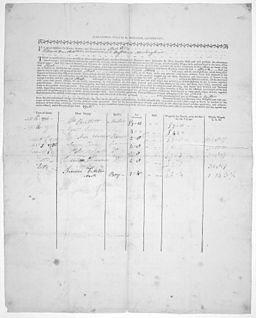
    Sloop-calley-shipping-articles-1786

    Related Links:

    Shanghaiing Days by Richard H Dillion is a comprehensive, albeit dated, book on the subject, covering crimping throughout the US in the 1800s.

    The Oregon Shanghaiers by Barney Blalock deals specifically with Portland and Astoria crimps.

    For an Oregon-centric view of Shanghaiing, check out Kick-Ass Oregon History’s two podcasts on the subject here and here.


    20 The Lost Empire of Scotland Mar 06, 2015
    Show notes

    In the late 1600s Scotland, in an attempt to start an international trade empire, founded a small settlement in what is now modern Panama. The venture was frustrated at every turn by the English, who did not want their northern neighbor competing on the international scene, and the Panamanian jungle proved to be an inhospitable environment. The settlers were plagued by starvation and malaria, and eventually the Scots were ousted by the Spanish.

    The dramatic failure of the colony led to the end of Scottish independence, and a few years later 1707 that country would permanently join with England. Had the colony succeeded, the map of Europe and Central America could look very different today, but as it is Scottish ambitions and independence vanished hundreds of years ago in the jungles of Central America.

    New Caledonia in Darien

    Related Links:

    The BBC on the Darien Scheme.

    A look at the Darien Chest, the object that held the money and papers for the Darien Scheme.

    One settler’s account of this history of Darien.


    19 Hey Big Spender Feb 27, 2015
    Show notes

    You can do a lot of things with wealth. You can buy stuff, make things happen, bribe officials, give to the poor… Or, if you’re Mansa Musa of Mali (one of the richest people in the history of the world) you can give away so much gold that you single-handedly cause inflation in Cairo.

    The small image below is a detail from the Catalan Atlas, a 1375 Spanish map with a small detail that depicts Mansa Musa in the approximate location of Mali.

    Mansa Musa

    Related Links:

    A Huffington Post article declaring Mansa Musa the “richest man of all time.”

    Mansa Musa on Crash Course World History.

    More images from the Catalan Atlas, which shows the best-known image of Mansa Musa.


    18 The Tulsa Race Riot Feb 20, 2015
    Show notes

    Probably the most violent singular example of post-slavery racial violence in the US happened in Tulsa, Oklahoma in 1921. Mobs of armed whites burned buildings, killed African-Americans, and utterly destroyed what had been known as Tulsa’s “Black Wall Street.” For years the incident was not extensively talked or written about, but it is now more widely known as one of the most horrifying examples of domestic terror that the US has ever known.

    Tulsariotpostcard2

    Related Links:

    The 2001 report commissioned by the Oklahoma state legislature on the riot.
    Walter White’s 1921 piece The Eruption of Tulsa from The Nation.
    The New York Times on the riot’s aftermath.
    A report on the riot from 60 minutes.


    17 Jaime Kirk on Piratical History Feb 13, 2015
    Show notes

    This week we interviewed a pirate! Kind of. Jaime Kirk is the current captain of PDX Yar, a Portland organization dedicated to all things piratical. The crew does, indeed, dress up like pirates for the purposes of revelry carousing, but they also do quite a bit with historical reenactment. PDX Yar does demonstrations of black powder weapons, presentations on how ships were actually run and managed, and the leadership have immersed themselves in pirate history for years now.

    Below is a engraving from the 1720s of Bartholomew Roberts, aka Black Bart, Jaime’s favorite pirate.

    General History of the Pyrates - Captain Bartholomew Roberts with two Ships (alt)

    Related Links:

    Find Jaime and the rest of PDX Yar here.

    More information on Black Bart.

    More information on Black Caesar.

    Get Under the Black Flag, Jaime’s, recommended book on pirate history, from Powells.com.


    16 The Siege of the Grand Mosque Feb 06, 2015
    Show notes

    In 1979 a group of religious extremists seized the Grand Mosque in Mecca and began a siege that would last over two weeks. The bloody event shook the Muslim world, and prompted reactions in Saudi Arabia that affect that country to this day.

    Smoke rising from the Grand Mosque, Mecca, 1979

    Related Links:

    This issue of Al Majalla, an English language Arabian magazing, has extensive coverage of the siege.

    Yaroslav Trofimov, author of of The Siege of Mecca, speaking about the event to NPR.

    Read unclassified US State Department memos about the siege here and here.

    Footage of the siege on YouTube.


    Announcement! Feb 03, 2015
    Show notes

    I’m committed to keeping this podcast ad-free, and to that end I’ve started a Patreon campaign. Patreon is a service that allows you to support creators you like on an ongoing basis. If you feel like you’ve been getting five dollars worth of utility out of the podcast every month, give us five bucks a month. If you feel like you’ve been getting ten dollars of utility out of the podcast each month, send us ten. Send us however much you like so we can keep this thing going. I don’t want to work for advertisers. I want to work for you.

    And thanks. Your support means the world to me.


    Previous 1 22 23 24 25 26 Next

    Related Podcasts

    Dan Carlin’s Hardcore History

    1

    Dan Carlin’s Hardcore History History
    More Perfect

    2

    More Perfect Government
    Casefile True Crime

    3

    Casefile True Crime Games & Hobbies
    The Way I Heard It with Mike Rowe

    4

    The Way I Heard It with Mike Rowe History
    BackStory

    5

    BackStory History
    The Black Dahlia Serial Killers

    6

    The Black Dahlia Serial Killers History
    footer-logo

    Contact Us

    Toll Free: 844-670-7747

    Links

    • Home
    • Top Charts
    • Networks
    • Apps
    • Independents Podcasts
    • Podcast Advertising
    • Podcast News
    • Contact Us
    • About Us
    • Analytics & Insights

    Stay Connected

      Privacy, Terms of Use & Our Code of Ethics Protecting Content Creators Copyrights




