TopPodcast.com
Menu
  • Home
  • Top Charts
  • Top Networks
  • Top Apps
  • Top Independents
  • Top Podfluencers
  • Top Picks
    • Top Business Podcasts
    • Top True Crime Podcasts
    • Top Finance Podcasts
    • Top Comedy Podcasts
    • Top Music Podcasts
    • Top Womens Podcasts
    • Top Kids Podcasts
    • Top Sports Podcasts
    • Top News Podcasts
    • Top Tech Podcasts
    • Top Crypto Podcasts
    • Top Entrepreneurial Podcasts
    • Top Fantasy Sports Podcasts
    • Top Political Podcasts
    • Top Science Podcasts
    • Top Self Help Podcasts
    • Top Sports Betting Podcasts
    • Top Stocks Podcasts
  • Podcast News
  • About Us
  • Podcast Advertising
  • Contact
Not in our directory?
Add Show Here
Podcast Equipment
Center

toppodcastlogoOur TOPPODCAST Picks

  • Comedy
  • Crypto
  • Sports
  • News
  • Politics
  • True Crime
  • Business
  • Finance

Follow Us

toppodcastlogoStay Connected

    View Top 200 Chart
    Back to Rankings Page
    History

    The Weird History Podcast

    Advertise
    • Apple Podcasts
    • Google Play
    • Spotify

    Latest Episodes:
    34 Norton I, Emperor of the United States and Protector of Mexico Jun 11, 2015
    Show notes

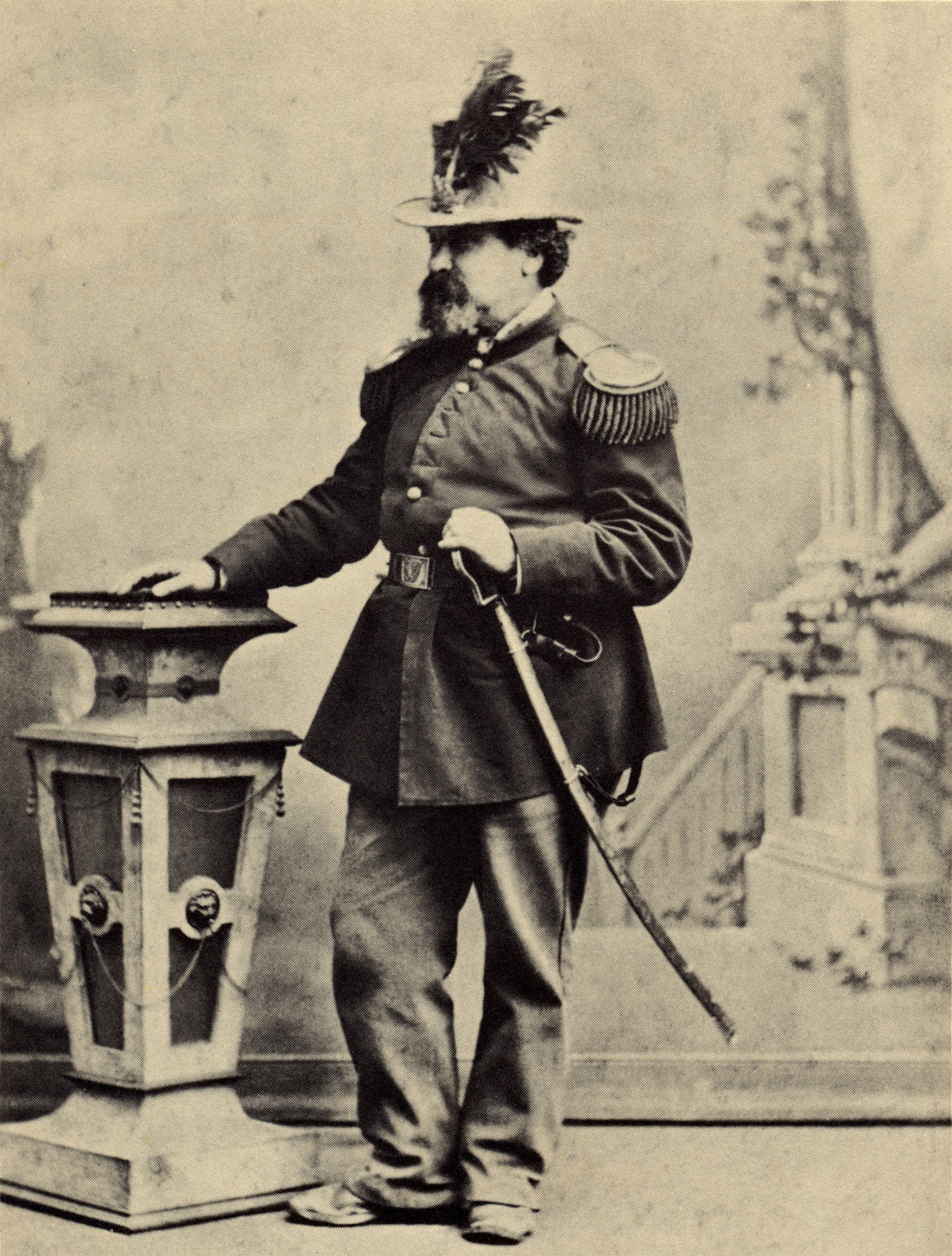
    If you were out and about in San Francisco between 1860 and 1880, you might have seen a curious figure on the streets. Joshua Abraham Norton wore a uniform reminiscent of European nobility, made proclamations, and styled himself as “Norton I, Emperor of the United States and Protector of Mexico.” Norton seems to have been embraced by the city he “ruled” over, to the point where citizens actually used the currency that he issued. His proclamations were popular reading in the city at the time, and often reprinted and imitated by newspapers of the era. He’s best known for proposing a bridge between San Francisco and Oakland, and renaming the Bay Bridge in honor of Norton has been proposed numerous times.

    Norton today is remembered as an eccentric and benevolent monarch, and his grave, just south of San Francisco, proclaims him simply as “Norton I, Emperor of the United States and Protector of Mexico.”

    Emperor-Norton-1870s-e

    Related Links:

    Emperor Norton’s grave on Atlas Obscura.

    Read a collection of Norton’s proclamations from the Virtual Museum of the City of San Francisco, who have tried to suss out which ones are genuine and which are hoaxes or pranks.

    Renaming the Bay Bridge as the Emperor Norton Bridge is a perennial topic of discussion, and (unsurprisingly) there’s a change.org petition out right now to do exactly that.

    There’s a tour guide who apparently dresses up as Norton and does walking tours of San Francisco. That sounds absurd, and I’m totally signing up for one of those the next time I’m in the Bay Area.


    33 Live at Velo Cult, the Legend of Polybius Jun 02, 2015
    Show notes

    This episode is a little different. About a year ago I was approached by a team of documentary film makers who were making a movie about Polybius, Portland’s mythical video game of doom. I’d previously spoken about Polybius at the Portland Retro Gaming Expo, and they asked if I would also like to talk about it on camera for the movie. I said yes. They set up an event at Velo Cult, a bike/bar/event space here in Portland, and I had a great time talking to people about a creepy nonexistent video game that, supposedly, did weird things to people’s brains.

    The Polybius Conspiracy is running a Kickstarter campaign to help with the funding of the film. If you want to see a movie about a legendary video game with me in it (and I hope you do) then consider giving them some of your dollars.

    Polybius maquina real

    Related Links:

    Help fund the Polybius Conspiracy on Kickstarter.

    The post on coinop.org that started the whole Polybius myth.

    Polybius, a song by James Houston and Julian Corrie.


    32 There’s No Such Thing as an Iron Maiden May 28, 2015
    Show notes

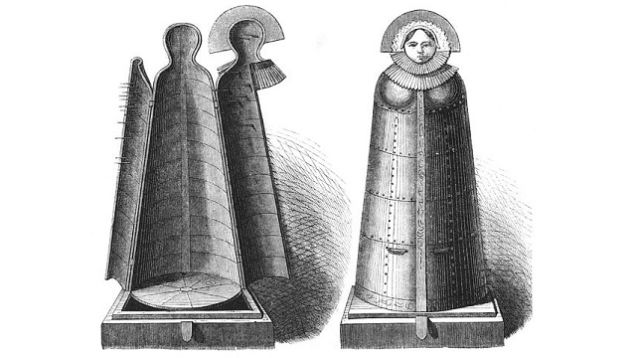
    Imagine a medieval dungeon. You probably imagine prisoners chained to the wall, a torturer in a black mask tormenting the occupants, several machines of torture such as the rack or the Catherine wheel, and, most imposingly, the dreaded iron maiden, a casket lined with spikes that would slowly bleed a prisoner to death in a grim mockery of an embrace.

    In all probability, though, the iron maiden was never an actual torture device, at least not in the middle ages. There may have been machines that resembled the famed spiked sarcophagus, but in all probability the most famous and feared resident of the medieval dungeon was probably a hoax dating back to the late 1700s.

    ironmaiden

    Related Links:

    The Museum Scholoss Kyburg’s listing for their replica iron maiden.

    A reference to the iron maiden in the New York Times in 1863.

    Polybius on Nabis’ iron “wife.”

    Time Magazine on Uday Hussein’s iron maiden.


    31 The Kingdom of North Sudan May 21, 2015
    Show notes

    The British Empire and other colonial powers did a lot of things wrong, and they famously ignored actual human patterns when drawing borders of Africa. In 1899, the British drew a border between Egypt and Sudan that simply ran in a straight line across the 22nd parallel, ignoring how people in the area moved and identified. A few years later, in 1902, they corrected their mistake and re-drew the boundary.

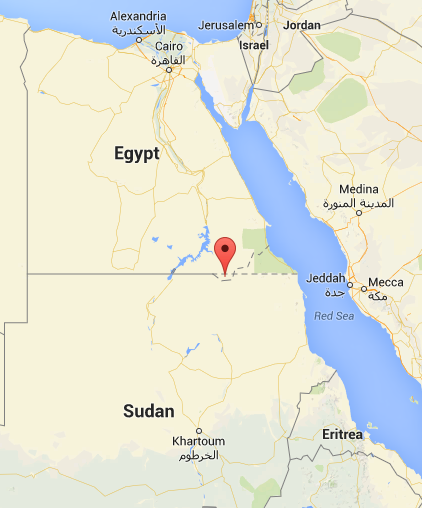
    The result has led to a border dispute between Egypt and Sudan where Egypt claims the 1899 border, and Sudan the 1902 border. This dispute means that a small patch of desert, Bir Tawil, is not claimed by either nation. In 2014 a man from the United States attempted to claim the land and declare it to be the Kingdom of North Sudan. Why? So his daughter could be a princess, of course.

    The image below shows Bir Tawil on Google Maps, with the pin in its location. Next to it is the Hala’ib Triangle, which both countries claim.

    bir tawil

    Related Links:

    Bir Tawil on Atlas Obscura.

    An opinion piece about Jerimiah Heaton and his micronation over at the the Independent. The author points out, with cause, how bad it looks for a white westerner to suddenly be claiming to own a chunk of Africa.

    A piece about Disney’s Princess of North Sudan on Deadline Hollywood.

    The official website for the Kingdom of North Sudan.


    30 The Heavenly Kingdom of Great Peace, Part Two May 15, 2015
    Show notes

    Hong Xiuquan and his Taiping rebels successfully founded a new kingdom in southern China. The Heavenly Kingdom of Great Peace sought to overthrow the Manchurian Qing Dynasty and form a new, radically different China. Hong, the supposed younger brother of Jesus Christ, retreated to a life of luxury in an opulent palace, and the actual governance of the kingdom was carried out by his cousin Hong Rengan, who acted as essentially the Heavenly Kingdom’s prime minister. Hong sought out aide from foreign powers to assist the Taiping in their struggle against the Qing, but none came.

    Instead, the Manchurian Dynasty and the United Kingdom would join forces to crush the rebels, and the supposed brother of Christ would die ingloriously while besieged in his palace. The image below is a memorial Taiping Heavenly Kingdom in Guanxi.

    Mengshan

    Related Links:

    Autumn in the Heavenly Kingdom on Powells.com.

    A brief biography of Zeng Guofan.

    A brief biography of Charles Gordon.


    29 The Heavenly Kingdom of Great Peace, Part One May 08, 2015
    Show notes

    In the 1850s a man who styled himself as the younger brother of Jesus Christ led China into a bloody rebellion. China in the early 1800s was ravaged by famine, natural disasters, and British meddling that introduced opium (and the Opium Wars) to the population. The country was ripe for rebellion against the Qing Dynasty who, being Manchurian, were often perceived as foreigners by many of China’s Han population. Into all of this chaos and discontent came a man called Hong Xiuquan who claimed to be the younger brother of Jesus Christ. Hong founded an organization called the God Worshipping Society, and he and his Christian rebels would attempt to destroy not only the Qing Dynasty, but also prevailing Chinese ideas of religion and civilization.

    This week’s show tracks the reasons behind China’s Taiping Rebellion, and gives a bit of background about Hong himself. Next week’s show will focus on the war itself, and the eventual fall of the Taiping Heavenly Kingdom. The image below (made some time after the Taiping rebellion in 1886) shows Chinese Imperial soldiers retaking a provincial capital from Taiping rebels.

    Regaining the Provincial Capital of Ruizhou

    Related Links:

    A website all about the Taiping Rebellion with a fairly obvious URL.

    A timeline for the Taiping Rebellion.

    BBC Radio 4’s In Our Time (one of my all-time favorite shows) on the Taiping Rebellion.


    28 Attack the Rock May 01, 2015
    Show notes

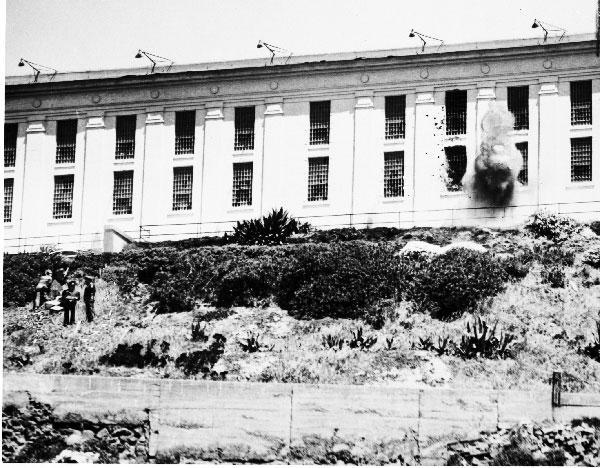
    The foreboding form of Alcatraz Island looms just beyond San Francisco, an obvious symbol of isolation and punishment. Alcatraz was never the biggest, or worst, or longest-lived prison in American history, but it’s definitely the most iconic. The island fortress seems to invite resistance and escape attempts, a setting like Alcatraz demands a narrative just as striking. In 1946 a handful of convicts attempted to violently escape from the island, giving that dramatic setting a dramatic narrative to match it. The resulting conflict, known today as the Battle of Alcatraz, claimed the lives of five people and wounded just over a dozen others. Ordinary San Franciscans were able to watch from their city as guns, explosives, and conflict raged just beyond the bounds of civilization.

    The image below shows the exterior of Alcatraz as U.S. Marines pelt the prison with mortars in an attempt to kill and suppress the rebels inside.

    Battle_of_Alactraz

    Related Links:

    Watch 1946 newsreels of the events here and here, in all of their retro media glory.

    Read more about the battle and other Alcatraz history here.

    This map via Wired of how other Alcatraz escapees could have, possibly, maybe survived.


    27 King of Jewels and Centaurs Apr 23, 2015
    Show notes

    One of the most persistent myths of the Middle Ages was that of Prester John, a mythical Christian king whose supposed domain was located beyond the eastern Muslim regions. Probably the most vivid portion of the myth is a letter received by the Byzantine emperor Manuel I Komnenos in 1165 claiming to be from the monarch. The letter (ostensibly written from one king to another, but with an arrogant, bragging tone that glorifies Prester John’s position relative to that of Byzantium) details a kingdom flowing with milk and honey, populated by fantastical animals such as centaurs and fauns, and featuring such wonders as Mount Olympus and the Fountain of Youth.

    Some writers, most notably Marco Polo, identified Prester John with the Mongols, and later versions of the story would move his kingdom to Ethiopia. Below is a 15th century painting depicting Ong Khan, a rival to Genghis Khan, as the legendary king Prester John.

    WangKhan

    Related Links:

    Prester John is profiled in chapter three of S. Baring-Gould’s Curious Myths of the Middle Ages from 1867.

    Prester John and Europe’s Discovery of East Asia from East Asian History, June, 1996.

    This YouTube video by a medieval studies grad student nicely illustrates the legend of Prester John with action figures. I have a serious amount of admiration for that kind of thing.


    26 Joseph Barker on Artificial Intelligence, Strategy, and Games Apr 17, 2015
    Show notes

    Today’s episode is slightly different than our other entries. We have another interview episode, this time with Joseph Barker, who has a PhD in artifical intelligence, and whom I quoted in the last episode about the mechanical Turk. Instead of talking about fake, illusory artificial intelligence, this episode is devoted to how real, actual machines play games and formulate strategy.

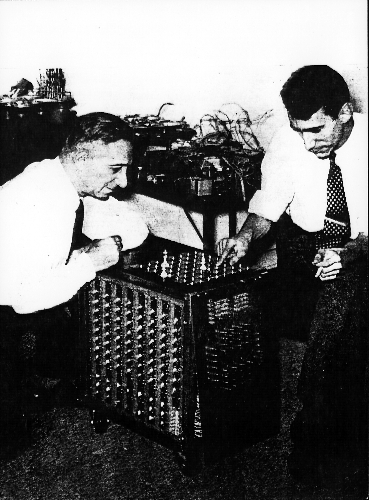
    The picture below shows Claude Shannon (whom Barker mentions in the podcast) and his chess machine at MIT in 1950. The machine, impressive at the time, could handle all of six chess pieces.

    shannonchessmachine

    Related Links:

    Barker mentioned John Von Neumann and Prisoner’s Dilemma by William Poundstone is an excellent introduction to Von Neumann and his ideas.

    Read more about Claude Shannon, a pioneer of chess programming.

    A good rundown from Slate about everything wrong with A Beautiful Mind.

    Play Dots and Boxes online courtesy the UCLA math department.


    25 Clockwork Genius Apr 09, 2015
    Show notes

    Humans have pursued artificial intelligence, in one form or another, for generations. One of the most potent signifiers of intelligence has, historically, been chess. Even though the ability to play the game does not actually require as much cognition as, say, cooking or carrying on a conversation, the ability to play the game has been used as a symbol of intelligence, such as when Deep Blue shocked the world by defeating chessmaster Gary Kasparov in 1997.

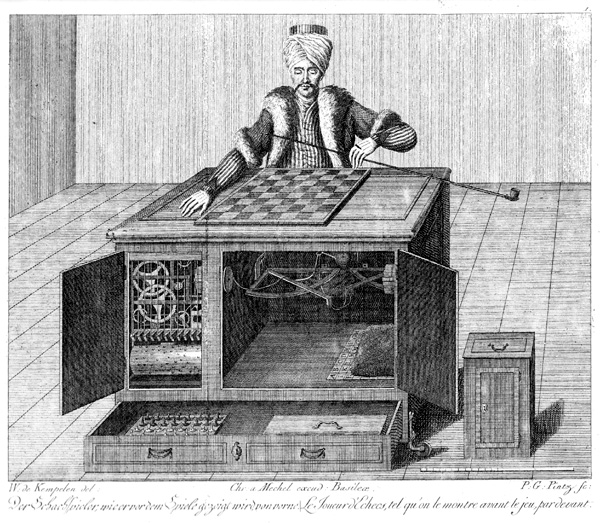
    Probably the most famous artificial chess player was a fake. The mechanical Turk, initially built in 1870, appeared to be an automaton that could outsmart and outplay human beings. In fact, it was a human being. A living, breathing operator was nestled inside the Turk’s innards, controlling the game. Nevertheless, it remains one of the most famous illusions of all time.
    Tuerkischer schachspieler windisch4

    Related Links:

    See a modern replica of The Turk in action.

    Tom Standage’s The Turk at Powells.com, the book that introduced me to the chess player, and annoyed me when I found out it was a hoax.

    Maelzel’s Chess Player by Edgar Allan Poe.

    The Turk was the inspiration for the 1927 silent film The Chess Player, about a fictionalized version of the Turk.

    The Turk lends its name to Amzon.com’s Mechanical Turk service, the subject of a podcast by NPR’s always excellent Planet Money.


    Previous 1 21 22 23 24 25 26 Next

    Related Podcasts

    Dan Carlin’s Hardcore History

    1

    Dan Carlin’s Hardcore History History
    More Perfect

    2

    More Perfect Government
    Casefile True Crime

    3

    Casefile True Crime Games & Hobbies
    The Way I Heard It with Mike Rowe

    4

    The Way I Heard It with Mike Rowe History
    BackStory

    5

    BackStory History
    The Black Dahlia Serial Killers

    6

    The Black Dahlia Serial Killers History
    footer-logo

    Contact Us

    Toll Free: 844-670-7747

    Links

    • Home
    • Top Charts
    • Networks
    • Apps
    • Independents Podcasts
    • Podcast Advertising
    • Podcast News
    • Contact Us
    • About Us
    • Analytics & Insights

    Stay Connected

      Privacy, Terms of Use & Our Code of Ethics Protecting Content Creators Copyrights