TopPodcast.com
Menu
  • Home
  • Top Charts
  • Top Networks
  • Top Apps
  • Top Independents
  • Top Podfluencers
  • Top Picks
    • Top Business Podcasts
    • Top True Crime Podcasts
    • Top Finance Podcasts
    • Top Comedy Podcasts
    • Top Music Podcasts
    • Top Womens Podcasts
    • Top Kids Podcasts
    • Top Sports Podcasts
    • Top News Podcasts
    • Top Tech Podcasts
    • Top Crypto Podcasts
    • Top Entrepreneurial Podcasts
    • Top Fantasy Sports Podcasts
    • Top Political Podcasts
    • Top Science Podcasts
    • Top Self Help Podcasts
    • Top Sports Betting Podcasts
    • Top Stocks Podcasts
  • Podcast News
  • About Us
  • Podcast Advertising
  • Contact
Not in our directory?
Add Show Here
Podcast Equipment
Center

toppodcastlogoOur TOPPODCAST Picks

  • Comedy
  • Crypto
  • Sports
  • News
  • Politics
  • True Crime
  • Business
  • Finance

Follow Us

toppodcastlogoStay Connected

    View Top 200 Chart
    Back to Rankings Page
    History

    The Weird History Podcast

    Advertise
    • Apple Podcasts
    • Google Play
    • Spotify

    Latest Episodes:
    One Year Later Oct 27, 2015
    Show notes

    Weird History launched one year ago today on October 27th, 2014. Thank you, all of you, for listening, and here’s to many more years to come.


    53 Bathory Oct 22, 2015
    Show notes

    Elizabeth Bathory is one of history’s most notorious killers. Supposedly, the Bloody Countess (as she is sometimes called) murdered an unknown number of young girls in a variety of way, ranging from stabbing, to burning, to exposure to cold. One detail of the story is that Bathory also bathed in the blood of her victims to preserve her youth and vitality, but that is almost certainly an embellishment added years after the fact. Still, Bathory’s appetite for murder has made her a popular figure of horror, and she has been the inspiration for movies, video games, and at least one metal band.

    Nowadays, there is some doubt about whether or not Elizabeth Bathory really was the excessive and cruel killer that she was made out to be. There is no evidence that she ever bathed in the blood of her victims (for instance) and most of the evidence obtained against her was gathered under torture, a notoriously unreliable method for getting to the truth. Nevertheless, even if the stories about Elizabeth Bathory were completely fabricated, her life still has the makings of a chilling horror story.

    Elizabeth_Bathory_Portrait


    52 Little Kill House on the Prairie Oct 15, 2015
    Show notes

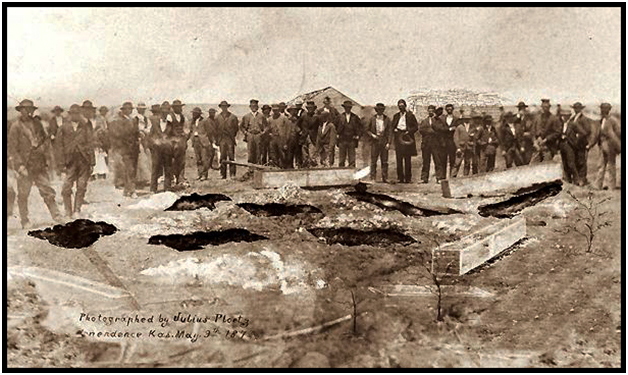
    It’s October. For the next three weeks, we’ll be focusing on bloody, violent, and generally horrifying historical episodes. This week: The Bloody Benders, America’s first ever documented serial killers.

    The Benders operated an on the Osage Trail (later called the Santa Fe Trail) where they allowed travelers to stay the night, resupplied pioneers with food and dry goods, and one of them, Kate Bender, promoted herself as a spiritual healer and fortune teller. They also killed several travelers, and buried their bodies in a garden (pictured below) that became known as “Hell’s Half Acre.” Probably the most famous person associated with the Benders is Laura Ingalls Wilder, the author of the Little House on the Prairie novels. Wilder was very young when her father joined a posse to hunt for the killer family, and did not include them in any of her books. While she had no compunctions about including violent and unflattering portraits of Native Americans in her novels (including several references to massacres supposedly perpetrated by the Osage Indians), Wilder, it seems, demurred at the idea of including killer white people in her work.

    BenderVictims


    51 The Ultimate Palindrome Oct 08, 2015
    Show notes

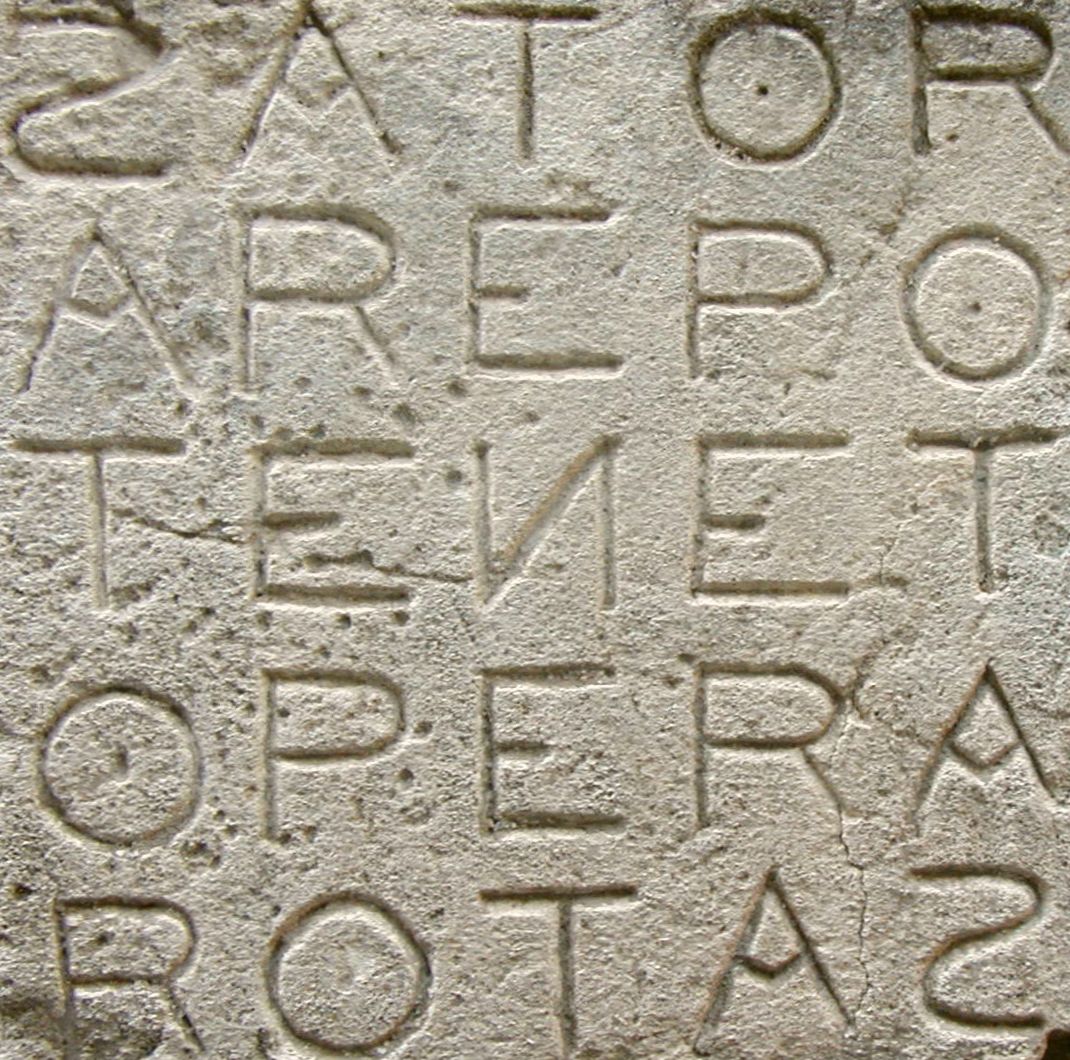
    The Sator Square is a level of palindromic perfection untouched by other palindromes. It reads perfectly backward, forward, up, and down. The inconsequential sentence (something like “The farmer Arepo works the plow”) is not not profound, but the structure of the phrase is a level of balance and perfection untouched by other word squares.

    The exact origin of the square is unknown, but it’s been the subject of all manner of speculation and pseudohistory. Multiple (spurious) sources have attempted to link the palindrome to Christian mysticism, but, in all likelihood, it was much more likely to be a meme than mystical. Before human beings obsessively reproduced “Kilroy was here” or LOLcats, they obsessively reproduced this perfect Latin sentence.

    OLYMPUS DIGITAL CAMERA

    Related Links:

    I’m serious. Send me your best palindromes, word games, and linguistic weird stuff on Facebook. Do it!

    I mentioned that “S” that we used to draw on binders and such. Here’s a video about it.


    50 The Rise and Fall of Nauru Oct 01, 2015
    Show notes

    The tiny island nation of Nauru once had one of the highest GDPs per capita on Earth. Today, the country has been stripped of resources and impoverished. Nauru’s booming economy during the 20th century was based on strip mining away the small island’s phosphorous-rich bird guano soil. The money flowed in, but a series of bad investments, con jobs, and one very bad London musical left the island impoverished. Nauru turned to money laundering and selling passports to foreign nationals to raise funds, but to no avail. Today, the island and its economy are both depleted shells of what they once were.

    Nauru_satellite

    Related Links:

    A Pacific Island Nation is Stripped of Everything from the New York Times

    Paradise Well and Truly Lost from the Economist

    Island Raiders from ABC Four Corners, 2004


    49 Destroy All Emus! Sep 24, 2015
    Show notes

    1932 was a bad year for farmers in Australia. Hot weather withered grain, because of the Great Depression, promised agricultural subsidies were not forthcoming and, worst of all, there were emus. The large flightless bird devoured Australian grain, prompting the government to go after them with machine guns.

    It was called the Emu War, and the emus won.

    Emus

    Related Links:

    Veritable Hokum did a delightful comic about the Emu War. It features an emu in a hat. Emus probably did not wear hats.

    Attack on Emus from the Melbourne Argus, 1932.


    48 The Swedish Titanic Sep 17, 2015
    Show notes

    The story of the the Titanic is usually one of human hubris, and then nature putting humanity back in their place. Implicit in any Titanic narrative is a critique of technology in general, of human arrogance, and of the supposed ability of our species to strive in the face of insurmountable laws of nature.

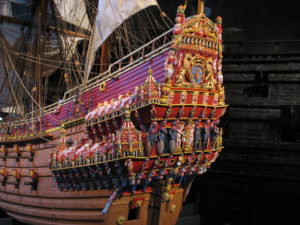
    The Titanic, though, is not the best fit for that narrative. The ship sank, yes, but it still worked the way it was supposed to before it hit an iceberg. Another vessel, though, fits that profile better. The Vasa was an immense warship commissioned by the Swedish king Gustavus Adolphus in the 1620s. The gigantic ship was a marvel, and like nothing that the world had seen before. It dwarfed other vessesl, bristled with canon, and was covered with elaborate ornamentation.

    And then, under the weight of all of its fancy guns and ornamentation, sank on its maiden voyage. The Vasa was, quite literally, too fancy to live, and is a better example of boat-based overreach and arrogance than the Titanic ever was.

    The image below is of a 1:10 scale model of the Vasa at Stockholm’s Vasa musuem, and it shows off some of the elaborate ornamentation that covered the exterior of the ship.
    Vasa_stern_color_model

    Related Links:

    Vasa Museum website.

    The Vasa on Atlas Obscura.

    Video of the Vasa’s recovery in 1961.


    47 Live at the Jack London Bar, The Postmodern Icon Sep 10, 2015
    Show notes

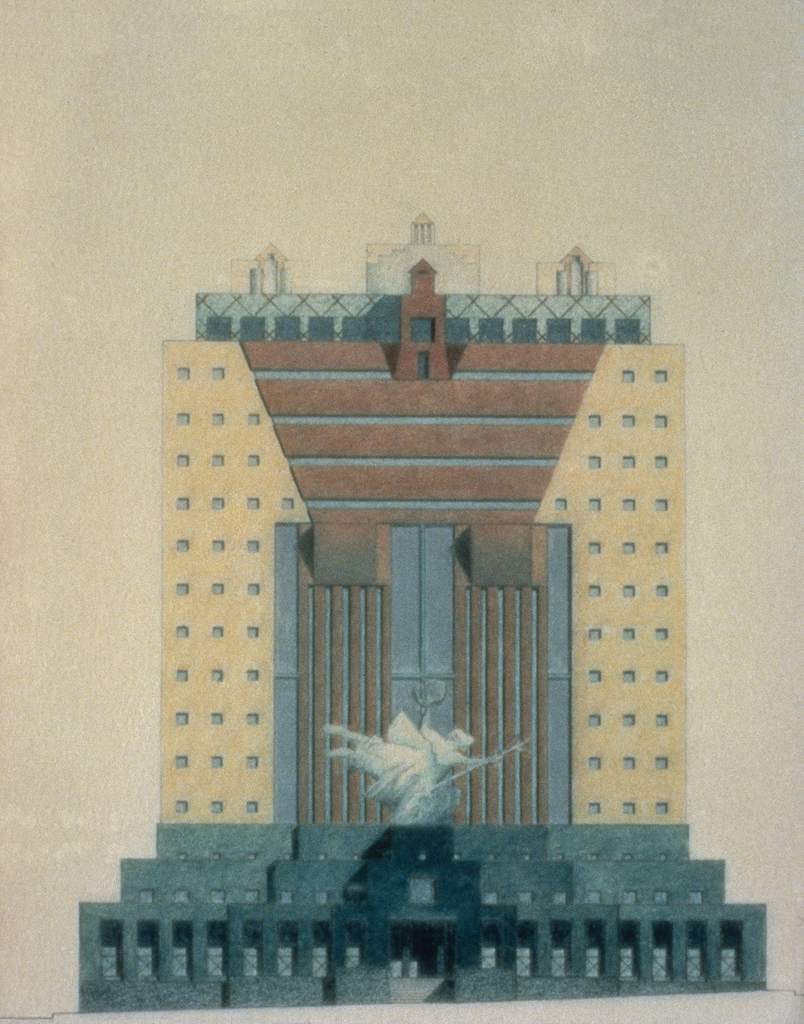
    This episode was part of Stumptown Stories, a Portland history lecture collective. Stumptown Stories meets on the second Tuesday of every month at downtown Portland’s Jack London Bar, and various authors, journalists, podcasters, and historians get into the good, the bad, and the downright weird of Portland’s past. This past Tuesday, September 8th, I talked about the origins of the Portland Building, the world’s first ever postmodern office building. In the early 1980s the Portland Building, and the design philosophy that it embodied, was considered the future of architecture. However, in the intervening decades postmodernism has not fared well, and is now considered a blind alley that’s been largely abandoned by architecture at large.

    Portland_Building_front_elevation_drawing_UO_2013_VRC_05237

    Related Links:

    More on the Portland Building, and its possible future.

    The Portland Building’s file for it’s submission to the National Register of Historic Places.

    On Michael Graves’ site, the Portland Building is conspicuously lacking from the list of government buildings his firm showcases.

    Like Stumptown Stories on Facebook


    46 Paper Theater, Golden Bat Sep 03, 2015
    Show notes

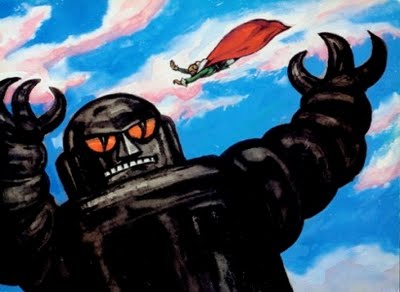
    Before Batman, before Superman, before even the Phantom, there was the Golden Bat. “Ogon Batto” (as he’s known in Japanese) is, arguably, the world’s first costumed superhero. The skull-headed, ruff-wearing, sword-wielding hero’s backstory was one that would fit in any of the wackier comics that Marvel and DC would later publish: He was a dweller of Atlantis from 10,000 years in the future, and sent back in time to fight injustice. In particular, he battled against Nazo, the evil Emperor of the Universe.

    Golden Bat wasn’t a comics character. Not exactly. He was from a form of storytelling called “kamishibai,” a words-and-pictures form of public performance popular in Japan during the first half of the 20th century. Kamishibai storytellers would set up in public spaces and tell tales of samurai, ninja, pulp heroes, cowboys, and superheroes to crowds of eager children, thrilling them with outrageous tales from the worlds of history and science fiction. The medium produced, among other characters, the Golden Bat, a superhero who proceeds Clark Kent by almost a decade.

    Golden_Bat_Giant_Robot

    Related Links:

    A contemporary example of kamishibai. It is, obviously, in Japanese.

    The Golden Bat’s theme song from his later anime appearances.

    Manga Kamishibai by Eric P. Nash, which collects multiple kamishibai tales from the Golden Bat and others.


    45 The White City of the Monkey God Aug 27, 2015
    Show notes

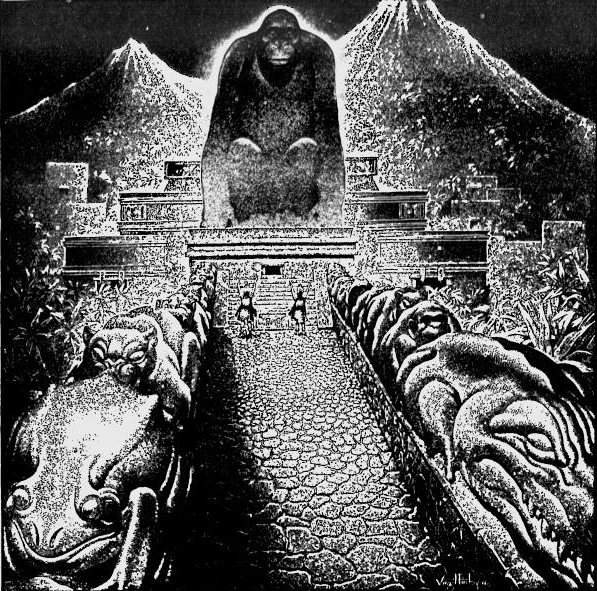
    In September of 1940 an American Explorer named Theodore Morde proclaimed in the Milwaukee Sentinel that he had found “the Lost City of Ancient America’s Monkey God.” Morde described a city of white stone

    Is there a ruined city deep in the Honduran jungle dedicated to a mysterious simian god, one who accepted sacrifices of human flesh by fanatical worshippers?

    No. Probably not.

    But the story behind the myth is entertaining, at least.

    Below is an illustration by Virgil Findlay, a pulp artist who illustrated Theodore Morde’s narrative in the Milwaukee Sentinel.
    Lost_City_of_the_Monkey_God

    Related Links:

    Theodore Morde’s account, In the Lost City of Ancient America’s Monkey God.

    The El Dorado Machine from the New Yoker.

    Rosemary Joyce’s critique of the “discover” of La Ciudad Blanca Good Science, Big Hype, Bad Archaeology.


    Previous 1 19 20 21 22 23 26 Next

    Related Podcasts

    Dan Carlin’s Hardcore History

    1

    Dan Carlin’s Hardcore History History
    More Perfect

    2

    More Perfect Government
    Casefile True Crime

    3

    Casefile True Crime Games & Hobbies
    The Way I Heard It with Mike Rowe

    4

    The Way I Heard It with Mike Rowe History
    BackStory

    5

    BackStory History
    The Black Dahlia Serial Killers

    6

    The Black Dahlia Serial Killers History
    footer-logo

    Contact Us

    Toll Free: 844-670-7747

    Links

    • Home
    • Top Charts
    • Networks
    • Apps
    • Independents Podcasts
    • Podcast Advertising
    • Podcast News
    • Contact Us
    • About Us
    • Analytics & Insights

    Stay Connected

      Privacy, Terms of Use & Our Code of Ethics Protecting Content Creators Copyrights