TopPodcast.com
Menu
  • Home
  • Top Charts
  • Top Networks
  • Top Apps
  • Top Independents
  • Top Podfluencers
  • Top Picks
    • Top Business Podcasts
    • Top True Crime Podcasts
    • Top Finance Podcasts
    • Top Comedy Podcasts
    • Top Music Podcasts
    • Top Womens Podcasts
    • Top Kids Podcasts
    • Top Sports Podcasts
    • Top News Podcasts
    • Top Tech Podcasts
    • Top Crypto Podcasts
    • Top Entrepreneurial Podcasts
    • Top Fantasy Sports Podcasts
    • Top Political Podcasts
    • Top Science Podcasts
    • Top Self Help Podcasts
    • Top Sports Betting Podcasts
    • Top Stocks Podcasts
  • Podcast News
  • About Us
  • Podcast Advertising
  • Contact
Not in our directory?
Add Show Here
Podcast Equipment
Center

toppodcastlogoOur TOPPODCAST Picks

  • Comedy
  • Crypto
  • Sports
  • News
  • Politics
  • True Crime
  • Business
  • Finance

Follow Us

toppodcastlogoStay Connected

    View Top 200 Chart
    Back to Rankings Page
    History

    The Weird History Podcast

    Advertise
    • Apple Podcasts
    • Google Play
    • Spotify

    Latest Episodes:
    The Future! Dec 31, 2015
    Show notes

    Happy New Year! There are some changes in store for 2016.


    Remasters and an eBook Dec 24, 2015
    Show notes

    No new episode today, I’m taking a break for the holiday. But, I’m happy to announce that I’ve re-recorded episode one and episode two, and the sound quality is much improved.

    Also, I wrote an ebook. The Legend of Polybius is all about everybody’s favorite mythical video game that supposedly warped your mind. It’s now available on Amazon as a Kindle download for $1.99.


    61 Puritans Versus Christmas Dec 17, 2015
    Show notes

    There is no war on Christmas. But there was.

    Contemporary political commentators have, in the past, complained and ranted about a supposed secular war on Christmas, a crusade to erase spirituality and religion from late December, a campaign to turn the occasion of the Nativity into merely “the Holidays.” But, Christmas has always been a season more about revelry and celebration than spirituality. The holiday is a re-appropriating by Christianity of pre-existing Roman festivals such as Saturnalia and the birthdate of Sol Invictus the sun god. Christian reinterpretations are just that: Reinterpretations.

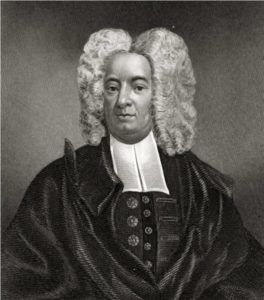
    One group that knew this very well was the Puritans, who saw Christmas as a fundamentally ungodly holiday, and sought to ban it and all of its various trappings in both England and Massachusetts. Puritan leaders such as Cotton Mather (pictured below) saw the holiday not as something for the glory of God or Christianity, but directly counter to it. In Puritan-controlled areas shops and businesses stayed open on Christmas, and anyone caught celebrating the offensive holiday was fined the sum of five shillings.

    Cotton_Mather


    60 The Goose’s Crusade Dec 10, 2015
    Show notes

    At the end of the eleventh century, a group of would-be conquerors followed a goose on crusade.

    The standard (and almost certainly overly simplistic) narrative of the First Crusade is that, in 1095 Pope Urban II rallied religious leaders at the Council of Clermont to retake the Holy Land. After a few stirring speeches and cries of “deus vult!” (God wills it!) a holy war began. Again, this narrative is almost certainly factually incorrect, but it’s stayed in the popular imagination.

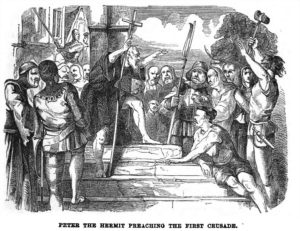
    The First Crusade, though, was far more disorganized than its neat and tidy origin myth suggest. Several lords, kings, and independent military leaders operated more or less independently. One of the most notable leaders of what would become known as the People’s Crusade was an itinerant preacher named Peter the Hermit who stirred his followers with tales of apocalypse, end times, and final battles. Among Peter the Hermit’s followers was a group of crusaders who followed a goose, claiming that that bird was speaking to them through the Holy Spirit.

    peterthehermit


    59 Man of Flames Dec 03, 2015
    Show notes

    The Wicker Man is one of the most creative and fearsome execution devices of all time. A figure of a giant, made of bent wood and reeds, looms up over a desolate Celtic moor, and hapless captives write inside of its cage-like form. A horde of barbaric and bloodthirsty Celts chant in the distance, eager to see the sacrifice, and a Druid, clad in fur and leather, ignites the massive statue and the captives within, sending them as a burnt offering to the insatiable gods who are forever thirsty for human blood.

    Like the iron maiden though, there’s scant evidence that the iconic wicker man ever existed. The only evidence that we have to go on is Julius Caesar’s propagandistic memoir The Gallic Wars. Despite that, though, burning effigy festivals are still popular throughout the world today. Guy Fawkes Night, the Burning of Judas, Zozobra, and, of course, Burning Man all remain immensely popular, despite the oldest known effigy probably being more folklore than fact.

    Wickerman


    58 Malthus, Borlaug, and Feeding the World Nov 25, 2015
    Show notes

    The planet Earth holds over seven billion humans. Somehow, against all manner of predictions to the contrary, we feed all of them. This would have astounded Thomas Malthus who, in 1798, predicted that humanity was careening toward a demographic catastrophe, despite the world population still being under a billion at that time.

    Part of the reason why humanity can now feed itself is because of agricultural advances in the 20th century known as the Green Revolution. Advances in crop yields, land use, pesticides, herbicides, and general efficiency have given us a food supply unlike anything that our ancestors knew. At the forefront of the Green Revolution was a biologist named Norman Borlaug who developed a type of semi-dwarf wheat that saved an estimated billion lives.

    normanborlaug


    57 The Mysterious Affair of the Irish Crown Jewels Nov 19, 2015
    Show notes

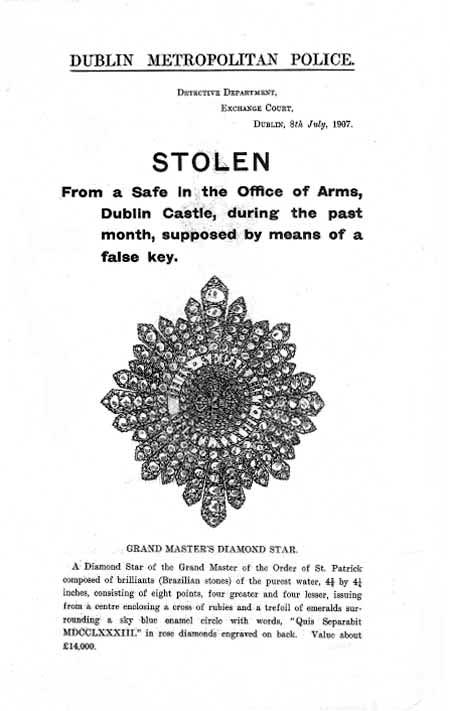
    The Irish crown jewels were stolen in 1907. To this day, no one knows who absconded with the regalia. While known as the “Irish crown jewels” today, they were not referred to as such until after their theft. In fact, they were the regalia of the Order of St. Patrick, a British Knightly Order associated with Ireland (England and Scotland had the Order of the Garter and the Order of the Thistle, respectively) and were worn by either the British monarch or their stand-in during investiture ceremonies or other state events.

    When they were stolen in 1907 from a safe in Dublin Castle, there was no sign of a break in, no forced locks, an no other damage of any kind. Since 1907 theories about the theft of the crown jewels have ranged from an operation carried out either by Irish Unionists or British Republicans to humiliate the monarchy, blackmail and bacchanals at Dublin Castle, jewel stealing femme fatales, and simple drunken incompetence. To this day, the fate of the jewels remains an enduring mystery.

    policenotice1


    56 Live at the Jack London, Lewis and Clark Through History Nov 12, 2015
    Show notes

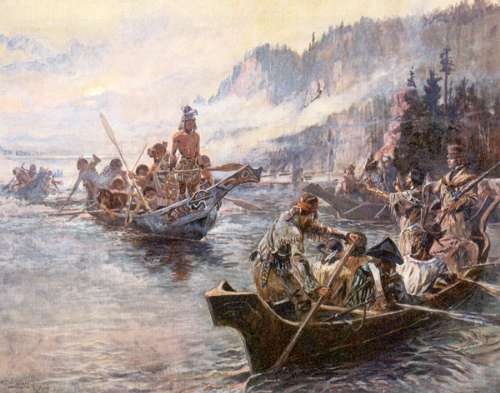
    Nowadays, Lewis and Clark are lionized and mythologized as American heroes, but their reputation was not always so grandiose. The expedition was initially considered a failure after their return, they were virtually un-talked about in the 1800s. In the early twentieth century they gradually began to molded and shaped into figures of American myth (in particular by a large, World’s Fair-style 1905 expo in Portland that bore their name) but it wasn’t until the sixties that they actually became popular. The painting below, Lewis and Clark on the Lower Columbia by Charles Marion Russel, is from 1905 and shows the first glimmer of Lewis and Clark as mythological figures, as opposed to strictly historical figures.

    This live event was part of Stumptown Stories, a monthly lecture series that focuses on Portland and Oregon history.

    Lewis_and_clark-expedition (1)


    55 The Pig War Nov 05, 2015
    Show notes

    Nowadays the US-Canada border is one of the most peaceful international boundaries in the world, but in 1859 the US almost went to war with British North America in what is now Washington State. A war sparked by a pig.

    The 1846 Oregon Treaty was poorly worded and it left San Juan Island itself in something of a state of limbo. This island was claimed both by the British Empire and the United States, and for several years American settlers and the Hudson’s Bay Company mutually occupied the island. However, an American frontiersman shot a British pig, and the squabble between neighbors threatened to turn into an international incident. The two powers were ready for armed conflict and, had a British rear admiral not disobeyed orders to engage the Americans, the conflict might very well have turned violent. In the end, it was a bloodless conflict. There were no casualties, excepting, of course, the pig.

    San Juans


    54 The Uses and Abuses of Mummies Oct 29, 2015
    Show notes

    For years, mummies were a commodity. Beginning in the sixteenth century, Europeans used mummy dust (as in real, actual, ground-up human corpse) as a medication to cure just about everything, and the pigment mummy brown was the color of dry, dusty corpses because it was literally made of dried, dusty corpses. Despite being an extraordinarily macabre commodity, there was still demand for mummy dust, so much so that a trade in counterfeit mummies (that is, bodies that had been dried out and treated with bitumen) sprung up, and the recently dead sold alongside ancient corpses.

    As a pigment, mummy brown was easy to work with, but prone to fading and cracking. It remained available until the 20th century, and modern versions of the color are made of minerals rather than corpses. Mummy dust and mummy parts also remained available for purchase until the middle twentieth century, though mostly in curiosity and oddity shops. The photo below shows a mummy seller in 1875, when mummy brown and medicinal mummy dust would have been on the wane.
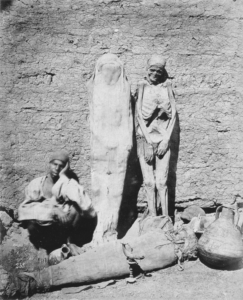
    Mummy Seller 1875

    Related Links:

    The Life and Death of Mummy Brown from the Journal of Art in Society

    The Gruesome History of Eating Corpses as Medicine from Smithsonian

    Mummy Brown and Other Historical Colors from the always-delightful Veritable Hokum


    Previous 1 18 19 20 21 22 26 Next

    Related Podcasts

    Dan Carlin’s Hardcore History

    1

    Dan Carlin’s Hardcore History History
    More Perfect

    2

    More Perfect Government
    Casefile True Crime

    3

    Casefile True Crime Games & Hobbies
    The Way I Heard It with Mike Rowe

    4

    The Way I Heard It with Mike Rowe History
    BackStory

    5

    BackStory History
    The Black Dahlia Serial Killers

    6

    The Black Dahlia Serial Killers History
    footer-logo

    Contact Us

    Toll Free: 844-670-7747

    Links

    • Home
    • Top Charts
    • Networks
    • Apps
    • Independents Podcasts
    • Podcast Advertising
    • Podcast News
    • Contact Us
    • About Us
    • Analytics & Insights

    Stay Connected

      Privacy, Terms of Use & Our Code of Ethics Protecting Content Creators Copyrights