TopPodcast.com
Menu
  • Home
  • Top Charts
  • Top Networks
  • Top Apps
  • Top Independents
  • Top Podfluencers
  • Top Picks
    • Top Business Podcasts
    • Top True Crime Podcasts
    • Top Finance Podcasts
    • Top Comedy Podcasts
    • Top Music Podcasts
    • Top Womens Podcasts
    • Top Kids Podcasts
    • Top Sports Podcasts
    • Top News Podcasts
    • Top Tech Podcasts
    • Top Crypto Podcasts
    • Top Entrepreneurial Podcasts
    • Top Fantasy Sports Podcasts
    • Top Political Podcasts
    • Top Science Podcasts
    • Top Self Help Podcasts
    • Top Sports Betting Podcasts
    • Top Stocks Podcasts
  • Podcast News
  • About Us
  • Podcast Advertising
  • Contact
Not in our directory?
Add Show Here
Podcast Equipment
Center

toppodcastlogoOur TOPPODCAST Picks

  • Comedy
  • Crypto
  • Sports
  • News
  • Politics
  • True Crime
  • Business
  • Finance

Follow Us

toppodcastlogoStay Connected

    View Top 200 Chart
    Back to Rankings Page
    History

    The Weird History Podcast

    Advertise
    • Apple Podcasts
    • Google Play
    • Spotify

    Latest Episodes:
    71 Live at the Jack London, The Story of Oregon Trail Mar 10, 2016
    Show notes

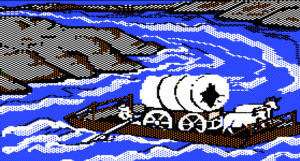
    Oregon Trail is arguably the most successful education video game of all time. Created in 1971 by student teacher Don Rawitsch, the popular simulation began its life as a game played on paper with dice and cards. Eventually Rawitsch, along with two other student teachers, adapted the game for play on teletype machines. The game eventually migrated to what would now be called a PC, and something like 65 million copies of Oregon Trail have made their way to various machines across the country.

    However, the Minnesota Educational Computing Conortium (MECC) that oversaw Oregon Trail’s distribution crumbled in the face of a hostile takeover and subsequent purchase by Mattel. The last real copy of Oregon Trail was released in 2001, and MECC is gone. The game now exists primarily on emulators and in the memory of people who played it as children.

    This talk was part of Stumptown Stories, a history collective that hosts monthly events in Portland, Oregon.

    oregon-trail


    70 Shirtless Zeus-Like George Washington Versus Alexander Hamilton Mar 03, 2016
    Show notes

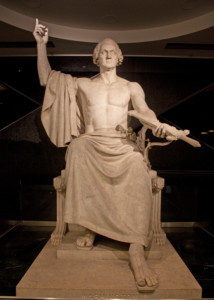
    Lin-Manuel Miranda’s musical Hamilton is an antidote to the traditional (and boring) way that America’s founding fathers have often been portrayed. The Founders are often shown as almost godly (like in the statue of Washington pictured below), without flaws, above mere mortals, and removed from the normal experiences humanity in general and politics in particular. However, Hamilton, the rap musical about America’s first ever treasury secretary, acts as a sort of antidote to that. In it, the founding fathers are very human, and that humanity and complexity makes them all the more compelling and inspiring.

    Also in this episode: Your humble podcaster getting yelled at by a Supreme Court Justice at the age of sixteen.

    George_Washington_Greenough_statue (1)


    69 Kingdom of the Mahdi, Part Three Feb 25, 2016
    Show notes

    Mahdist Sudan died violently.

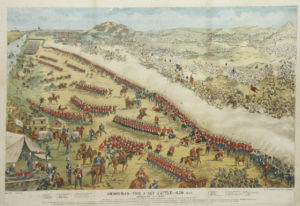
    The religious state persisted for approximately a decade and a half but after that the British, eager to solidify their influence and control in the region, brought the country to heel. Egypt had never recognized Sudanese independence, and thought of the new country as little more than a renegade province. Under British control and influence, the Anglo-Egyptian forces crushed the independent Sudanese state, making short work of the armed forces. The key to their victory was a new technology: The machine gun.

    After the British victory the military and cultural foundations of the Mahdist state were destroyed, and Sudan was soon in the same state of repression that it had previously been in, though instead of dealing with the Ottoman boot, now it suffered under the British.

    Omdurman


    68 Kingdom of the Mahdi, Part Two Feb 18, 2016
    Show notes

    After successfully defeating the Ottoman-Egyptian and British forces at Khartoum, Sudan formed an independent government based around Muhammad Ahmad, the self-proclaimed Mahdi or “expected one.” Unfortunately for Sudan, though, Ahmad died of Typhus only six months after the birth of the new state, and Mahdist Sudan was almost immediately faced with a succession crisis.

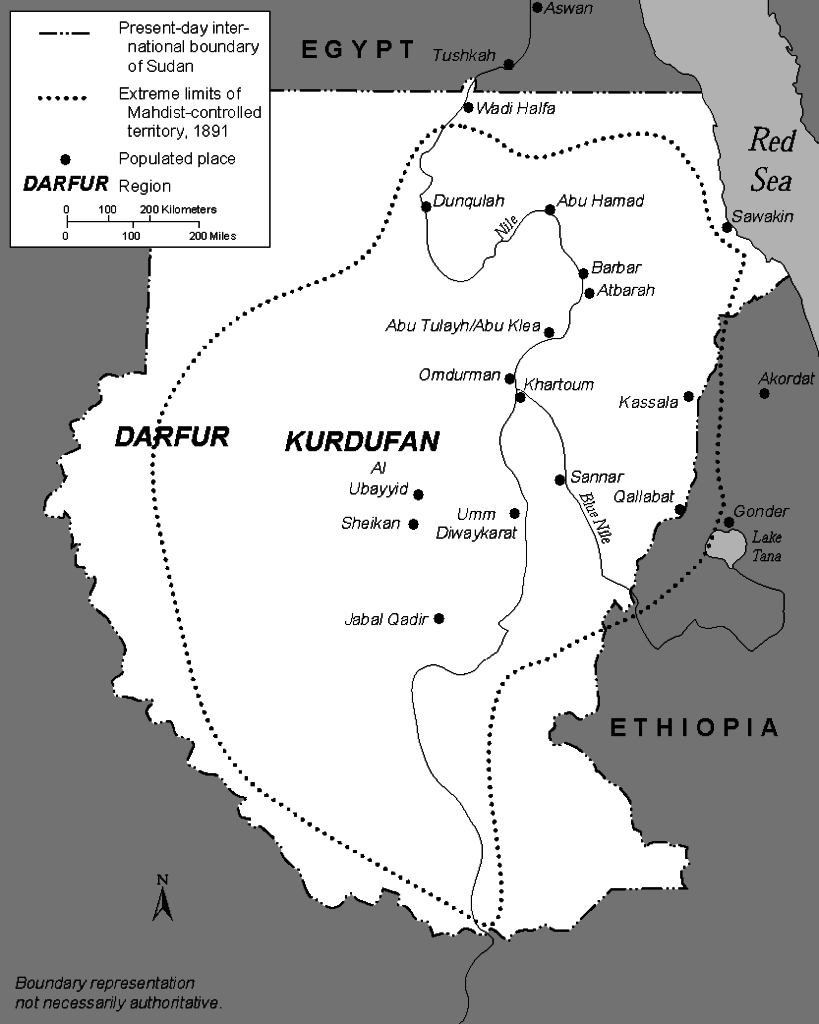
    It would only be the first of many trials for the new state. Regional rebellions and border skirmishes, a war with neighboring Ethiopia, and economic isolation and famine would all take their toll on Sudan, and over the lifetime of the Mahdist state, millions of Sudanese citizens would die as a result of violence and privation.

    The_Mahdist_State,_1881-98,_modern_Sudan

    Map via.


    67 Kingdom of the Mahdi, Part One Feb 11, 2016
    Show notes

    In the early 1880s Sudan suffered under the heel of the Ottoman empire. Military occupation and heavy taxes led to widespread discontent that eventually led to a religiously-infused rebellion. Muhammad Ahmad styled himself as the Mahdi or “expected one,” a prophesized Islamic figure, and drawing on discontent, Ahmad led a rebellion throughout the country.

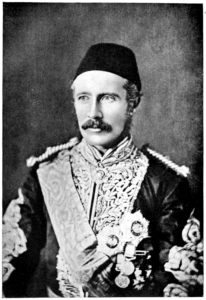
    The British officer Charles George Gordon (pictured below) was put in charge of evacuating Egyptians and other foreigners from the Sudan. But, because of his poor relations with the British and the Ottoman-Egyptian governments, Gordon ended up holed up in Khartoum, under siege by the rebel forces, and eventually dead at the hands of the Sudanese. The Mahdi had successfully defeated the foreign occupiers, and a new state formed under his religiously-inspired revolutionary power.

    General_Charles_George_Gordon


    66 Longest War Ever Feb 04, 2016
    Show notes

    Depending on how you measure and define things, the longest war in human history may very well have been between the Netherlands and a tiny collection of islands 28 miles off the coast of Britain known as the Isles of Scilly (the flag of which is pictured below) . The “war” lasted for three hundred and thirty five years and consisted of zero battles. It was a “war” only in the sense that the Netherlands had made a declaration of war in the 1600s, and then simply forgot to rescind it.

    In 1986 a historian on Scilly set out to debunk what he thought was a local legend but, instead, ended up confirming that, yes, his small island community was technically still at war with the Netherlands. The historian alerted the relevant authorities, the Dutch ambassador visited the isles, read a scroll aloud, and declared peace. After 335 years of “war,” one of the longest declared military conflicts ended without the loss of a single human life.

    scillyflag


    65 The Amazing Oceanic Adventure of 28,800 Adorable Rubber Duckies Jan 28, 2016
    Show notes

    In January of 1992 international trade routes, bad weather, and a shipping container full of bath toys all collided to form an amazing natural experiment in oceanography. 28,800 bath toys known as Friendly Floatees spilled into the Pacific Ocean, and over the years the easily-identifiable toys washed up on shores throughout the world. Though often referred to as “rubber duckies,” the toys were in fact made of plastic, and, in addition to yellow ducks, also included red beavers, blue turtles, and green frogs.

    The oceanographer Curtis Ebbesmeyer (pictured below) seized upon the opportunity to study the effects of so much readily-identifiable flotsam released into the Pacific, and eventually found that the Floatees didn’t just circulate in the Pacific. They also made their way to the Arctic, Indian, and Atlantic Oceans. The brightly-colored, cute little bath toys had gone international, and eventually were being scooped up by beachcombers worldwide.

    Curtis_Ebbesmeyer-2


    64 Yesterday’s Tomorrows Jan 21, 2016
    Show notes

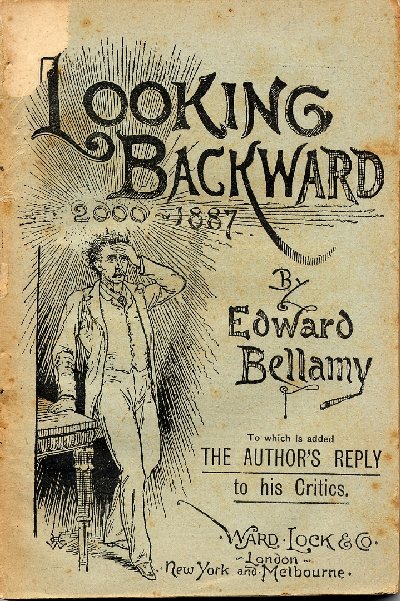
    It’s always fun to look back on predictions about the future that were wrong. For instance, Victorian portrayals of the 20th and 21st century had everyone flying around in blimps and ornithopters, which did not exactly come to pass.

    Looking back at past predictions is especially satisfying now because we are well into the 21st century. For decades, years that started with “20” (or even “199”) were simply vaguely futuristic. Now, they’re simply a date on the calendar. In this episode, we count through some of the most notable years in science fiction that have already happened from 1997 (Escape From New York) to 2001 (2001) and see how the year from pop culture lined up to the actual year that happened.

    looking-backward


    63 The Forty-Seven Ronin, Part Two Jan 14, 2016
    Show notes

    Last week Asano, Lord of Ako was ordered to commit seppuku, and his newly unemployed samurai were plotting revenge on Kira, the noble whom they blamed for their lord’s death. This week, the 47 ronin extract their revenge on Kira, and the incident becomes one of the most retold narratives in Japanese history.

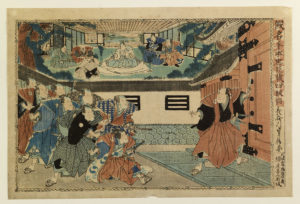
    The image below illustrates a scene from Kanadehon Chushingura, the most famous fictionalized version of the 47 ronin story. The characters in Kanadehon Chushingura have different names than the actual historical figures whom they purport to represent, audiences in 1748 and onward would have recognized the fiction as being roughly analogous to actual events. Anymore, Chushingura refers to the entire body of media either directly about or touching on the 47 ronin incident.

    Wataya_Kibei_-_Kanadehon_chushingura


    62 The Forty-Seven Ronin, Part One Jan 07, 2016
    Show notes

    One of the most famous and bloody incidents in samurai history is the story of the 47 ronin, a group of masterless samurai who extracted bloody revenge on behalf of their dead lord. The actual events of the incident are hard to parse out, as the facts of the events have been occluded by popular culture, drama, reinterpretation, and retelling. What we do know for sure is that in 1701 the daimyo of Ako (a domain near modern Osaka) was forced to kill himself after assaulting a courtier, Kira, in Edo. After the lord was dead, his various samurai were suddenly unemployed, and forty-seven of them planned revenge.

    The traditional telling of the story is that Kira was supposed to instruct Asano in the ways of etiquette at the Shogun’s court, and that Asano was supposed to bribe him in order to be treated well. Kira was dissatisfied with Asano’s bribe, insulted the young lord, and, in a fit of rage, Asano drew his short sword and wounded the etiquette instructor. After Asano’s death, his samurai took it upon themselves to finish what Asano had started, and vowed to kill Kira.

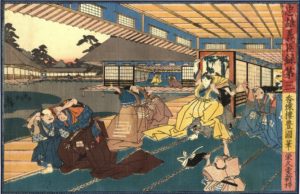
    The image below is a probably stylized rendering of Asano, the lord of Ako, drawing his weapon on Kira in a fit of rage.

    asanoandkira


    Previous 1 17 18 19 20 21 26 Next

    Related Podcasts

    Dan Carlin’s Hardcore History

    1

    Dan Carlin’s Hardcore History History
    More Perfect

    2

    More Perfect Government
    Casefile True Crime

    3

    Casefile True Crime Games & Hobbies
    The Way I Heard It with Mike Rowe

    4

    The Way I Heard It with Mike Rowe History
    BackStory

    5

    BackStory History
    The Black Dahlia Serial Killers

    6

    The Black Dahlia Serial Killers History
    footer-logo

    Contact Us

    Toll Free: 844-670-7747

    Links

    • Home
    • Top Charts
    • Networks
    • Apps
    • Independents Podcasts
    • Podcast Advertising
    • Podcast News
    • Contact Us
    • About Us
    • Analytics & Insights

    Stay Connected

      Privacy, Terms of Use & Our Code of Ethics Protecting Content Creators Copyrights