TopPodcast.com
Menu
  • Home
  • Top Charts
  • Top Networks
  • Top Apps
  • Top Independents
  • Top Podfluencers
  • Top Picks
    • Top Business Podcasts
    • Top True Crime Podcasts
    • Top Finance Podcasts
    • Top Comedy Podcasts
    • Top Music Podcasts
    • Top Womens Podcasts
    • Top Kids Podcasts
    • Top Sports Podcasts
    • Top News Podcasts
    • Top Tech Podcasts
    • Top Crypto Podcasts
    • Top Entrepreneurial Podcasts
    • Top Fantasy Sports Podcasts
    • Top Political Podcasts
    • Top Science Podcasts
    • Top Self Help Podcasts
    • Top Sports Betting Podcasts
    • Top Stocks Podcasts
  • Podcast News
  • About Us
  • Podcast Advertising
  • Contact
Not in our directory?
Add Show Here
Podcast Equipment
Center

toppodcastlogoOur TOPPODCAST Picks

  • Comedy
  • Crypto
  • Sports
  • News
  • Politics
  • True Crime
  • Business
  • Finance

Follow Us

toppodcastlogoStay Connected

    View Top 200 Chart
    Back to Rankings Page
    History

    The Weird History Podcast

    Advertise
    • Apple Podcasts
    • Google Play
    • Spotify

    Latest Episodes:
    81 Dancing Goats and Other Coffee Legends May 19, 2016
    Show notes

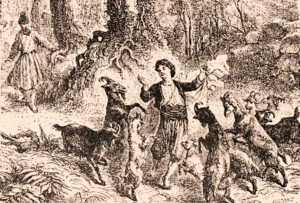
    The origins of coffee are encircled by myth and legend, sometimes involving goats. It’s one of the most popular beverages on Earth, and for many people (including your humble podcaster) one of the most important. Drinking coffee is a daily ritual enjoyed by millions, and there are myriad stories about coffee’s history that seem to buttress its importance and mystique.

    Dancing livestock, beverages on trial, self-sacrificing Frenchman, a sexy Portuguese guy, and a totally wired philosopher all figure into coffee’s mythology. In all probability none of these events ever happened, but their very existence says something about humanity’s reverence and need for the fortifying beverage.

    kaldi


    80 Live at the Jack London, the Rise and Fall of Claymation May 12, 2016
    Show notes

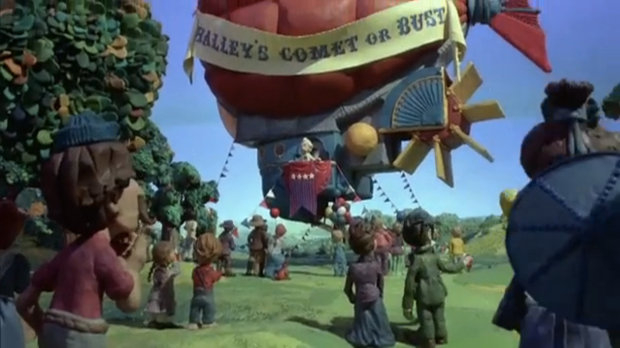
    Claymation was a dominant force in American popular culture during the late 1980s, which characters such as the California Raisins and the Noid achieving a sort of pre-Internet media ubiquity. The creative force behind Claymation was Will Vinton Studios, a Portland, Oregon production house that first rose to fame with the hallucinatory 1975 short Closed Mondays which won an Academy Award for Best Animated Short. Despite a fair amount of critical and commercial success, though, Will Vinton Studios only made a single feature film, The Adventures of Mark Twain, and in the 1990s Claymation ceased to be the powerhouse that it once was.

    The live event featured in this episode was put on by Stumptown Stories, a local Portland history collective dedicated to popularizing weird and overlooked episodes in Pacific Northwest history.

    marktwainairship


    79 Cecelia Otto on the Music of the Lincoln Highway May 05, 2016
    Show notes

    Before the interstate highway system spread over the US, the country was knit together through a network of railroads and auto trails. One of the longest of these was the Lincoln Highway, a coast-to-coast collection of roads that linked New York to San Francisco at the dawn of the 20th century, and could take weeks for early automobiles to traverse. Given that this was a huge tract of land, people wrote songs about it.

    Cecelia Otto is a classically trained singer who recently toured the remains of the Lincoln Highway and performed turn-of-the century popular music about the highway at various venues along the way. Otto wrote a book about and released an album after the tour, and is currently crowdfunding a project on the songs of World War I. I talked to her about her experience, how you crossed the country in an old automobile, and how popular music was distributed before electronic recording.

    CeceOtto


    78 A Statue of Crazy Horse Apr 28, 2016
    Show notes

    If it’s ever completed, South Dakota’s Crazy Horse Memorial will be the largest statue in the world. The gigantic structure will feature the Lakota leader’s face, upper body, and mount, and will dwarf every other monument and memorial on Earth. Crazy Horse’s head and headdress, for instance, will be larger than Mount Rushmore.

    If, that is, the work is ever completed. The first blasts to transform Thunderhead Mountain into a memorial were in 1948, and since then, only Crazy Horse’s face has been totally carved. The memorial is also controversial among present-day Lakota, many of whom do not think that blasting into a mountain is the best memorial to Crazy Horse. One person who’d almost certainly opposed to the memorial is Crazy Horse himself. The Lakota leader did not allow himself to be photographed, and turning his image into a statue of epic proportions seemingly runs counter to what the man himself believed in.

    Crazy Horse Memorial 2010


    77 Molly Newman on Crafting Good Trivia Questions Apr 21, 2016
    Show notes

    This week’s episode is an interview with Quizmistress and Jeopardy! contestant Molly Newman. Molly runs multiple successful trivia nights in Portland, Oregon, hosts private trivia events, and knows what makes questions good, bad, boring, easy, hard, funny, and compelling. With hundreds of fans in the Portland area (including your humble podcaster) she has made a career about entertaining people with facts both widely-known and obscure. We talked about how to craft good trivia questions, why some questions are too hard or uninteresting, and the surprisingly scandalous origins of Trivial Pursuit.

    Molly can be found at her website and on Facebook.

    MollyNewman


    76 The Yellow Kid Apr 14, 2016
    Show notes

    Nowadays, comic books are mainstream. Movies about superheroes dominate the box office, and you can’t go ten feet in a major retail outlet without seeing something related to popular comics culture. This is not new. Comics and comic books have always been an integral part of American popular culture ever since the 1890s, with the introduction of the Yellow Kid, America’s first popular comics character.

    The Yellow Kid (created by former Edison employee R.F. Outcault) sported a shaved head (a common deterrent for lice) and a ragged, hand-me-down nightshirt as his only garment. He eventually became a star in 1890s New York City, and his distinctive image could be found on everything from cigar boxes to cookie tins. Eventually the Kid led to a fight between newspaper magnates Joseph Pulitzer and William Randolph Hearst, who each tried to woo the public with their own distinct and competing versions of the popular comics character.

    yellow6


    75 About Mussolini and Those Trains… Apr 07, 2016
    Show notes

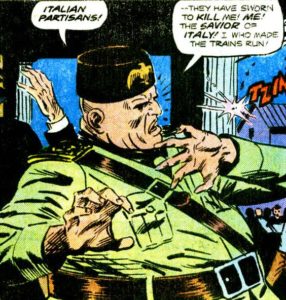
    “Sure, Mussolini was bad, but at least he made the trains run on time.”

    You’ve probably said it. Or, you’ve been in a conversation and you heard somebody say it. Or you’ve seen it written somewhere. This cliche has been repeated time and again in countless different media (such as in the panel below, from DC’s New Earth series) to the point that one is almost more likely to associate the Italian dictator with railways than with the fascist ideology he invented. However, the commonly repeated trope does not have a basis in fact.

    Supposedly punctual trains were part of Mussolini’s propaganda machine that put up a facade of well-functioning infrastructure for foreigners, suppressed reports of train collisions and accidents, and took credit for improvements implemented by earlier democratic regimes. There was no real bright side or silver lining to the authoritarian dictator’s reign. Not even well-functioning trains.

    Benito_Mussolini_New_Earth


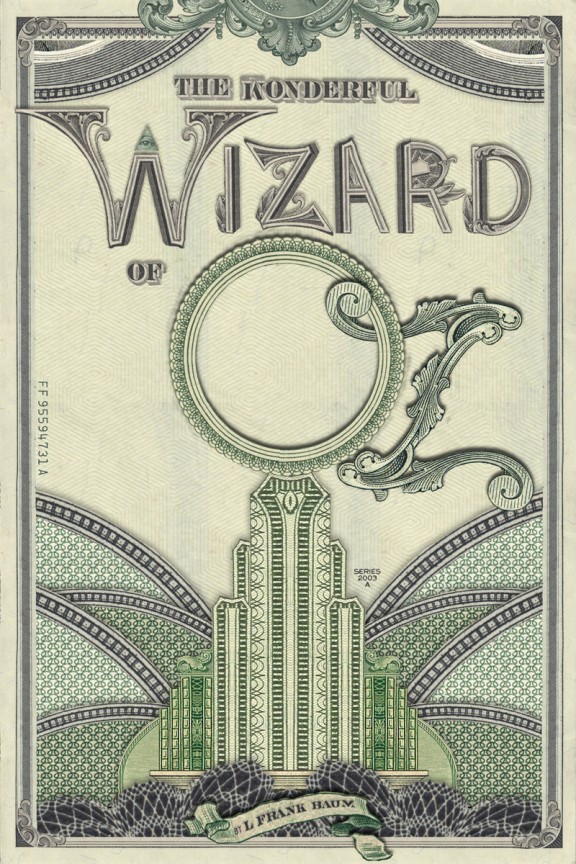
    74 The Wizard of Oz, Populism, and Dubious Fan Theories Mar 31, 2016
    Show notes

    You can be forgiven for thinking that L. Frank Baum’s The Wizard of Oz is all about monetary policy and populism. More than a few scholars, critics, academics, and teachers, have reiterated that line, and found parallels in the narrative between Baum’s fairy tale and the state of American politics at the end of the 1800s. The Scarecrow (the theory goes) is the agrarian worker, the Tin Man (or Tin Woodman, if you’re going by the book’s terminology) is the industrial laborer, and the Cowardly Lion is… Democratic candidate William Jennings Bryan. For some reason. Other perceived equivalencies include the Yellow Brick Road as the gold standard, and Dorothy’s silver slippers (they were changed to ruby in the Judy Garland film) as silver coinage.

    This theory began in 1964 with an article titled The Wizard of Oz: Parable on Populism by high school history teacher Henry Littlefield. It has since taken on a life of its own, to the point where this podcaster first heard this theory from his freshman history teacher. However, there is no real basis for The Wizard of Oz being a satire, parody, fable, or any other kind of tale about populism. Baum’s own biography and a closer reading of the text do not support that oft-repeated theory.

    Image via.

    Francisco-Hernandez-Wizard-of-Oz


    73 Jamie Jeffers on the Dating of Easter Mar 24, 2016
    Show notes

    Easter jumps around. Sure, it’s always on a Sunday, but unlike, say, the U.S.’s Labor Day (which always falls on the first Monday in September) Easter jumps around. It could be on the third Sunday in March. Or the fifth. Or the fourth. Or sometime in April. It jumps around. The dating of Easter comes from a combination of lunar and solar calendars, astronomical events, and religious tradition all crashing together. The result is that Easter is sometime in March. Or April. It’s complicated.

    To help shed some light on when Easter is actually supposed to happen, we sat down with Jamie Jeffers, the man behind the excellent British History Podcast. Jeffers has previously gotten into some of the controversies surrounding Easter on his own show, and has detailed how fights over the holiday led to actual, real violence among early Christians. Also, there were some very bad haircuts involved. Again: It was complicated.

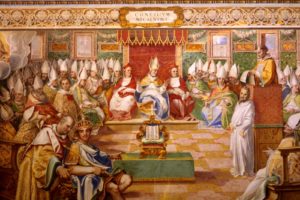
    Pictured below: The Council of Nicea, which tried (tried) to sort this all out. They only kind of did.

    Nicea (1)


    72 There’s No Such Thing As Lemuria Mar 17, 2016
    Show notes

    You’ve probably heard to Atlantis, but that’s not the hypothetical lost continent out there. There’s a whole subgenre of supposed submerged continents, with Atlantis being only the most prominent example. Other mythical lands include Mu and Lemuria.

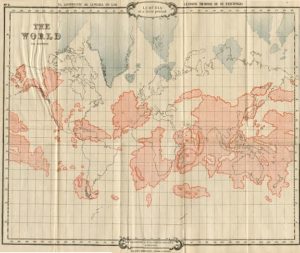
    Anymore, Lemuria is now associated with new age pseudohistory, but as an idea it was first posited by an actual scientist. In 1864 Philip Sclater was trying to puzzle out why there were lemurs in both Madagascar and India, but not in Africa or the Middle East. If the animals had migrated from one of those regions to the next, then it stood to reason that there would also be lemur populations between them. To solve this problem, Sclater proposed that there was once a large mass of land in the India Ocean he called “Lemuria” that would have allowed lemurs (and, presumably, other fauna) to migrate from India to Madagascar and back again.

    Sclater’s idea was eventually rendered obsolete by plate tectonics, but the idea of a lost continent was seized upon by occultists such as Helena Blavatsky. Charlatans such as Blavatsky claimed to have received special knowledge of humanity’s origin from the lost continent, and a whole subgenre of fake history was born.

    Map_of_Lemuria


    Previous 1 16 17 18 19 20 26 Next

    Related Podcasts

    Dan Carlin’s Hardcore History

    1

    Dan Carlin’s Hardcore History History
    More Perfect

    2

    More Perfect Government
    Casefile True Crime

    3

    Casefile True Crime Games & Hobbies
    The Way I Heard It with Mike Rowe

    4

    The Way I Heard It with Mike Rowe History
    BackStory

    5

    BackStory History
    The Black Dahlia Serial Killers

    6

    The Black Dahlia Serial Killers History
    footer-logo

    Contact Us

    Toll Free: 844-670-7747

    Links

    • Home
    • Top Charts
    • Networks
    • Apps
    • Independents Podcasts
    • Podcast Advertising
    • Podcast News
    • Contact Us
    • About Us
    • Analytics & Insights

    Stay Connected

      Privacy, Terms of Use & Our Code of Ethics Protecting Content Creators Copyrights