TopPodcast.com
Menu
  • Home
  • Top Charts
  • Top Networks
  • Top Apps
  • Top Independents
  • Top Podfluencers
  • Top Picks
    • Top Business Podcasts
    • Top True Crime Podcasts
    • Top Finance Podcasts
    • Top Comedy Podcasts
    • Top Music Podcasts
    • Top Womens Podcasts
    • Top Kids Podcasts
    • Top Sports Podcasts
    • Top News Podcasts
    • Top Tech Podcasts
    • Top Crypto Podcasts
    • Top Entrepreneurial Podcasts
    • Top Fantasy Sports Podcasts
    • Top Political Podcasts
    • Top Science Podcasts
    • Top Self Help Podcasts
    • Top Sports Betting Podcasts
    • Top Stocks Podcasts
  • Podcast News
  • About Us
  • Podcast Advertising
  • Contact
Not in our directory?
Add Show Here
Podcast Equipment
Center

toppodcastlogoOur TOPPODCAST Picks

  • Comedy
  • Crypto
  • Sports
  • News
  • Politics
  • True Crime
  • Business
  • Finance

Follow Us

toppodcastlogoStay Connected

    View Top 200 Chart
    Back to Rankings Page
    History

    The Weird History Podcast

    Advertise
    • Apple Podcasts
    • Google Play
    • Spotify

    Latest Episodes:
    100 Q & A Oct 06, 2016
    Show notes

    We made it to 100 episodes! For the occasion we’ve a new name, a new logo, and your questions and my answers.logo_itunes_new


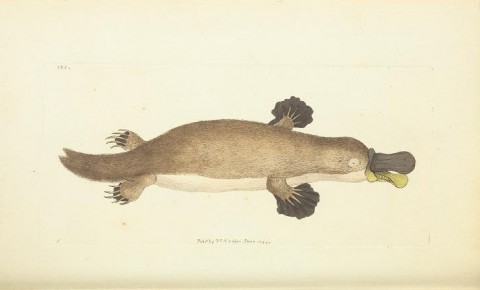
    99 Live Your Life Like You’re Examining a Platypus Sep 29, 2016
    Show notes

    The platypus appears to be some kind of melding or mashup between a duck and a beaver. It is not, though the first Western scientist to examine a specimen thought that it was exactly that: A taxidermy hoax made of existing animal parts.

    Plus: An important announcement about the future of this podcast.

    shawplatypus


    98 Blood and Types Sep 22, 2016
    Show notes

    Belief that one’s blood type affects personality is common in Japan. Dating sites, celebrity profiles, and vital statistics for fictional characters often include blood type, and belief that it affects personal attitude or character is somewhat akin to belief in astrology in the United States. The beliefs have their roots in pseudoscience from before World War Two. In the 1970s a series of Japanese self-help books claimed that understanding blood type was the key to understanding personality, and a phenomenon was born.

    It’s easy for an outsider to mock beliefs in pseudoscience like this, but humans do have a persistent desire to put themselves into boxes and groups, and to assign themselves certain group characteristics. This can take the form of astrological sign or blood type, but it also shows up in online quizzes, debates about which Ninja Turtle you are, or deciding which house you’d be sorted into if you went to Hogwarts.


    97 American Exiles Sep 15, 2016
    Show notes

    Immigration from Mexico to the US is not new. Workers have been deciding to immigrate to the US, legally or not, for over a century. However, legal channels for immigration have often not been forthcoming. In the early twentieth century the Mexican government attempted to stop migration northward so that local agribusiness interest could freely exploit Mexican labor. The US did institute a guest worker program known as the Bracero Program, but it proved to be insufficient. The demand from Mexico for job, and the demand from American agribusiness for cheap labor, proved to be more than the legal channels would allow.

    Later in the 1950s American border officials enforced a sweeping, large-scale crackdown known as (and this was the program’s official name) Operation Wetback. That program dealt with large groups of migrants all at once and ultimately deported over a million people from the United States. However, errors and human rights abuses were unavoidable, and the “solution” to the problem of illegal immigration proved to be worse than the perceived problem that it sought to fix.


    I’m Not Dead Sep 08, 2016
    Show notes

    It was bound to happen eventually. There’s no new episode this week.


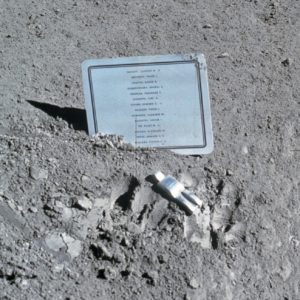
    96 Funeral on the Moon, the Story of Fallen Astronaut Sep 01, 2016
    Show notes

    There is a statue on the moon. In 1971 the crew of Apollo 15 placed a small figurine and a plaque on the lunar surface to memorialize American and Soviet astronauts who had died in the pursuit of space exploration. The memorial, dubbed “Fallen Astronaut,” was meant to enshrine their memory in space. However, the artist who made the figurine itself, Paul Van Hoeydonck, had other ideas.

    Van Hoeydonck did not see the statue as a memorial. Instead, he wanted to make a statue that represented all of humanity reaching for the stars. He also wanted to be known as the man who made the statue on the moon, and hoped to sell replicas of the work in his New York gallery. The public reaction to Van Hoeydonck’s attempt to commercialize space was mostly negative, and he never gained the fame or success that he thought the moon statue would bring him.

    Fallen_Astronaut


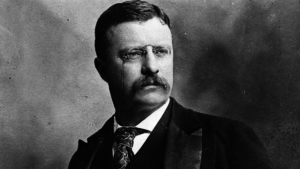
    95 Live at the Jack London Bar: Teddy Roosevelt and the Mystery of the Missing Time Capsule Aug 25, 2016
    Show notes

    Teddy Roosevelt buried a time capsule in Portland in 1903. One hundred years later, Roosevelt’s time capsule was nowhere to be found. The box laid by the president that was meant to preserve history for 100 years could not be found a century later. However, time capsules are generally not valuable finds for serious historians or archaeologists. The artifacts preserved are generally out of context from people’s daily life, and therefore they lack the provenance that is of interest to future scholars. For the most part, time capsules serve mostly to get the public interested in history, rather than preserve it.

    This episode was part of Stumptown Stories, a Pacific Northwest history collective in Portland, Oregon.

    SexyTeddyRoosevelt


    94 The Know-Nothings, Part Two Aug 18, 2016
    Show notes

    In 1854 the anti-immigrant Know-Nothings made their debut into American politics. They ran candidates in 76 of the 82 available House of Representatives races, and won 35 of those seats. At the same time, they also became a force to be reckoned with in state and local governments. After their initial success, the Know-Nothings installed one of their own as the Speaker of the House and, at the local level, began passing laws and ordinances that restricted the rights of immigrants.

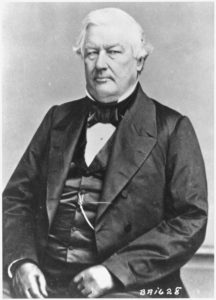
    In 1856 they made a play for the Oval Office, nominating former president Millard Fillmore. As president, Fillmore signed the Fugitive Slave Act that led to the dissolution of the Whig party and (indirectly) to the power vacuum that allowed for the Know-Nothings’ ascendancy. Fillmore did not identify with the Know-Nothings, but saw the nomination as a chance to form a national party that was untroubled by the issue of slaver.

    Unfortunately for Fillmore and the Know-Nothings, slavery is possibly the most contentious and important political issue in American history. The issue of slavery (and secession and disunion) dominated the 1856 election. The anti-immigrant Know-Nothings continued to ignore the issue, and after 1856 the momentarily successful party slid into irrelevance.

    MillordFillmore


    93 The Know-Nothings, Part One Aug 11, 2016
    Show notes

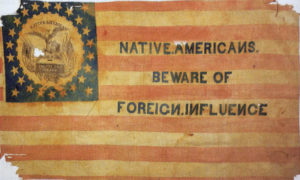
    Decades before the modern versions of the Democratic and Republican parties formed, the US also had a few other major political parties. One was the Federalists, led by Alexander Hamilton and John Adams. Another was the Whigs, who had intermittent success before collapsing in the middle 1800s. Out of the ashes of the Whig party two other parties rose to take its place: The anti-slavery Republican party, and the anti-immigrant American Party, better known as the Know-Nothings.

    The Know-Nothings opposed immigration to the United States, particularly from Catholics. Anti-Catholic paranoia has a long history in the US. Catholics (the thinking went) were more likely to be loyal to the pope than the country they lived in, were unable to work with people whom they deemed to be “heretics” and were, in general, less hardworking and virtuous than their fellow Protestants. This xenophobia, paranoia, and bigotry was prevalent enough that in the election of 1856 the Know-Nothings would contend as a major political party, albeit a failed one.

    KnowNothingFlag


    92 We Don’t Know Things About the Mesoamerican Ball Game Aug 04, 2016
    Show notes

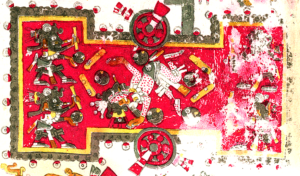
    The ancient Mesoamerican ball game is very probably the oldest ball game in the world. We know that it was played with a rubber ball on a stone court, and that players would try to hit the ball with their hips, knees, and sometimes elbows and forearms around the court. Ballcourts often featured a stone hoop that was possibly the goal, but it is impossible to know if hitting the hoop was the only goal of the game. No written rules survive, though the game is mentioned multiple times in Popol Vuh, the written account of Mayan mythology.

    Contemporary mentions of the game often conflate it with human sacrifice, but it is impossible to know what, if any, role sacrifice played in the game. Oftentimes history writers have assumed that the loser was sacrificed, but we have no way of proving one way or the other whether that was true. It is entirely possible that human sacrifice was an integral part of the game, and it is also possible that it played no role at all.

    ballcourt


    Previous 1 14 15 16 17 18 26 Next

    Related Podcasts

    Dan Carlin’s Hardcore History

    1

    Dan Carlin’s Hardcore History History
    More Perfect

    2

    More Perfect Government
    Casefile True Crime

    3

    Casefile True Crime Games & Hobbies
    The Way I Heard It with Mike Rowe

    4

    The Way I Heard It with Mike Rowe History
    BackStory

    5

    BackStory History
    The Black Dahlia Serial Killers

    6

    The Black Dahlia Serial Killers History
    footer-logo

    Contact Us

    Toll Free: 844-670-7747

    Links

    • Home
    • Top Charts
    • Networks
    • Apps
    • Independents Podcasts
    • Podcast Advertising
    • Podcast News
    • Contact Us
    • About Us
    • Analytics & Insights

    Stay Connected

      Privacy, Terms of Use & Our Code of Ethics Protecting Content Creators Copyrights