Your prescription for happier, healthier homeschooling. Christian psychologist, author, and homeschool mom of six Dr. Melanie Wilson shares research-backed, doable strategies for the things that steal your sanity — stress and burnout, time management, organization, motivation, and curriculum decisions — with plenty of encouragement along the way. For homeschooling parents who want calmer, more joyful days. Follow the show and homeschool with more sanity and grace.
Special Replay: 6 Signs You’re Trying To Do Too Much
Apr 01, 2025
Show notes
📚 Part of our guide: Homeschool Burnout
Introduction: In this episode, I address the common concern of homeschooling parents trying to juggle too many tasks, curriculum, and activities in their homeschooling journey. I outline six telltale signs that indicate you might be taking on more than you can handle and provides valuable insights for finding a healthier balance.
Visit Now Programs to learn about their resources for specials-needs students.
Visit funtolearnbooks.com/samples to try a free lesson and discover the joy of learning with Grammar Galaxy.
Signs You’re Trying to Do Too Much:
1. Worried Overload: If you find yourself constantly worried about how everything will fit into your homeschooling plans, it’s a clear indication that you might be trying to do too much. Trusting in your ability to manage your schedule is important.
2. Friends’ Reactions: When you share your homeschooling plans with friends and their reactions involve raised eyebrows, laughter, or exclamations of disbelief, it’s time to reconsider if you’ve taken on more than you can handle.
3. Lack of Margin: Having every moment of your schedule accounted for without any unscheduled time can lead to stress and burnout. Allowing room for unexpected events is crucial for maintaining a healthy balance.
4. Neglecting Self-Care: If your plan doesn’t include time for essential self-care activities, such as adequate sleep, hobbies, exercise, and quality time with your spouse, you’re likely trying to do too much. Prioritizing self-care ensures your well-being and effectiveness as a homeschooling parent.
5. Falling Behind: Not being able to complete your planned tasks, lessons, or activities consistently is a sign that you’ve overcommitted. Struggling to keep up can lead to frustration and dissatisfaction.
6. Resistance from You and Your Kids: Feeling resistance or reluctance to start your homeschooling routine indicates that your expectations are too high. If both you and your kids are resisting, it’s time to reevaluate your approach.
Finding Balance and Solutions: To regain balance, reflect on your motivations and goals for each activity in your homeschooling plan. Seek guidance from trusted friends or family members who can provide honest feedback. Embrace the idea of trusting in God’s plan for your homeschooling journey and prioritize the essential aspects that align with your purpose.
Conclusion: Remember that homeschooling is a unique journey, and finding the right balance between curriculum, activities, and self-care is essential for a successful and fulfilling experience. By recognizing and addressing the signs of overcommitment, you can create a homeschooling routine that brings joy, growth, and meaningful learning to your family.
Why Charlotte Mason Would Love Grammar Galaxy (Special Replay)
Mar 25, 2025
Show notes
Do you love Charlotte Mason’s approach to education? This is the Homeschool Sanity Show, the episode where I explain why I think Charlotte Mason would approve of my unique approach to teaching language arts and why you might want to consider adding it to your studies this year.
Sponsor: NOW Programs
Learn more about how NOW Programs can help you homeschool a special-needs student.
Charlotte Mason Approach
If you love a Charlotte Mason approach to homeschooling, I’m not surprised. Charlotte thought education should be a lifestyle that should engage the whole person. She wanted children to appreciate nature and fine arts. And she wanted them to have a love of learning.
I wasn’t acquainted with Charlotte Mason’s approach when I created Grammar Galaxy, but I believe she would approve. I was motivated to create a new approach to teaching language arts, and grammar in particular, because my kids hated it. They begged me not to teach it. I didn’t understand this because I’ve always loved English. I started paying closer attention to the curriculum I’d used over the years and discovered the main reason my kids were so bored with it: it was taken out of the context of story.
Grammar Galaxy uses story to teach
The first reason I believe Charlotte Mason would approve of Grammar Galaxy is because it uses story to teach. Rather than a dry, textbook approach of stating that a noun is a person, place, or thing, the nouns in Grammar Galaxy begin disappearing. The king is able to get the nouns returned to planet Sentence, but they need help getting back to their homes. Students are guardians of the galaxy who help return the nouns to Person, Place or Thing Street where they live.
The stories in Grammar Galaxy hold students’ attention and are far more memorable than textbook material. It is what Charlotte called a living book written by someone who is passionate about the topic. That’s me!
Grammar Galaxy encourages fiction reading
The second reason I think Charlotte Mason would approve of Grammar Galaxy is related. Charlotte wanted students to read fiction. Grammar Galaxy encourages daily reading in multiple genres and does not dictate which books are read. The emphasis is on developing a love of reading through print and audiobooks that appeal to students. We now know that reading fiction for enjoyment is the key to expanding students’ vocabulary—the best predictor of school and life success.
Grammar Galaxy can be used with narration
The third reason I believe Charlotte Mason would approve of Grammar Galaxy is how well it lends itself to narration. At the end of each story are some questions to check for comprehension. A great follow-up for Charlotte Mason homeschoolers is for students to retell the story orally. This rehearsal will allow you to check for thorough understanding and will allow your student to better retain the information.
Grammar Galaxy includes copywork, dictation, and journaling
The fourth reason I think Charlotte Mason would approve of Grammar Galaxy is its inclusion of copywork, dictation, and journaling lessons. These practices are known to improve students’ handwriting, grammar, spelling, and even enjoyment of writing. Free, monthly language arts calendars sent to subscribers frequently include additional copywork and writing exercises.
Grammar Galaxy uses short lessons
The fifth reason I believe Charlotte Mason would approve of Grammar Galaxy is its short lessons. Charlotte wanted children to have time to play and learn outside. She didn’t want them spending the day at a desk. Each step in a mission of Grammar Galaxy takes just 10-15 minutes to complete on average, allowing students time to read a book in a hammock, sketch what they think the Gremlin looks like, or write their own funny stories. I’ve also included active mission steps whenever possible like going on an adjective hunt.
Grammar Galaxy encourages a love of learning
The sixth reason I think Charlotte would approve of Grammar Galaxy is her desire for children to love learning. That was my top goal for the curriculum because I know if students enjoy reading, writing, and even grammar, they’ll do more of it. As they do more of it, they’ll improve their skills and grow in confidence. My favorite comment to get from Grammar Galaxy families is that their child’s new favorite subject is language arts and they beg to do it!
Conclusion
Of course, Charlotte can’t weigh in on Grammar Galaxy, but you as a Charlotte Mason homeschooler can. You can download a complete lesson of any volume to try with your student for free at FunToLearnBooks.com/samples.
If you’re attending Great Homeschool Conventions this summer, stop by the Grammar Galaxy books booth to see the books in person. I’d love to chat with you.
Special Replay: Can Your High Schooler Homeschool Themselves?
Mar 18, 2025
Show notes
Have you ever wondered if it’s possible (or legal) for your high school student to homeschool themselves? This is The Homeschool Sanity Show — the episode where guest Karla Marie Williams answers our questions about self-directed homeschooling.
Karla Marie Williams has been a guest on this podcast before. She’s the author of multiple books, an international speaker, and a global advocate for children and families. She is also the President of BeBold Publishing, a publishing company that launches inspirational books, journals, and courses to impact moms around the world. I was curious about one of her recent titles Unschool Urself 4 Teens, so invited her back to chat about it. I was newly inspired and I know you will be too.
Unschooling is a type of homeschooling that emphasizes student-led learning and learning through everyday life experiences. In this podcast episode, Melanie Wilson interviews Karla Marie Williams, an experienced unschooling parent and author of several books on homeschooling and unschooling.
Williams emphasizes the importance of setting annual goals for unschooling children and building a deep, layered understanding of topics through a variety of resources such as books, online classes, mentors, and real-life experiences. She also recommends keeping a journal to record a child’s learning journey and using pictures as evidence of their learning. This journal can be an excellent resource for creating transcripts when it comes time for college applications.
Williams encourages parents to be confident in their child’s learning, reminding listeners that learning does not have to look one way and that unschooling does not look the same way for each child. She also emphasizes the value of unschooling education for post-secondary education, as colleges and universities are recognizing the value of an unschooling education, especially for students passionate about specific areas.
Overall, unschooling is a lifestyle of lifelong learning that allows children to pursue their passions and interests while building a broad, deep understanding of various topics. With the right resources and mindset, unschooling can lead to success in post-secondary education and beyond.
Teaching Media Literacy In High School
Mar 11, 2025
Show notes
Hey, homeschoolers! I think media literacy is a course we should consider including in our high school curriculum plan. When I learned that friend Nate Noorlander was teaching a class on it, I asked him to rejoin me on the podcast to discuss it. Nate gave me a new perspective that I hope blesses you as it did me.
Hey, homeschoolers! I experienced a few types of math motivation problems with my kids: reluctance to learn math, reluctance to memorize math facts, and reluctance to prep for the math portion of college entrance exams. If you’re struggling with math motivation, I have a guest who can help. Dennis DeNoia is better known as Mr. D., the math teacher. Several of my kids had him as an instructor and adored him. I met him in person at a Great Homeschool Convention eight years ago. He is one of the most positive people I know. I’ll share our conversation about math motivation after this word from our sponsor: NOW Programs.
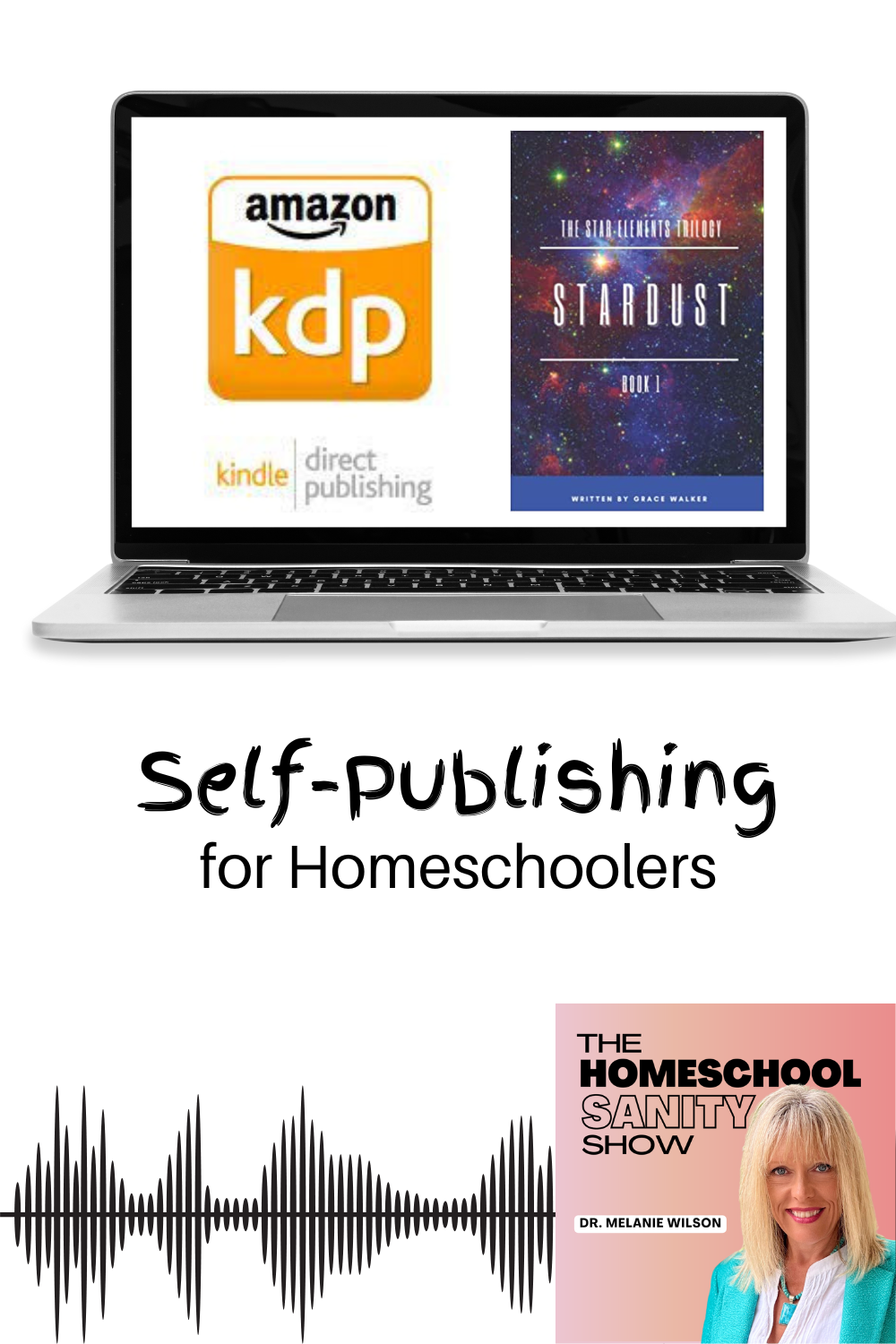
Special Replay: Self-Publishing For Homeschoolers
Feb 18, 2025
Show notes
At a recent Great Homeschool Convention, a mom asked me for the best way to have her son’s books published. This is the best time in history to become a published author. That’s because you no longer have to convince a publisher that receives thousands of manuscripts a year to choose your book. Neither do you have to pay thousands of dollars to publish the book yourself.
My guest today is Grace Walker, a homeschooled student who self-published her first book, Stardust, at just 14. You’re going to want to get your copy of this space-themed adventure novel that’s perfect for teens. But if you are interested in self-publishing for yourself or your student, you’ll want to listen to our conversation.
Sponsor
Hey, homeschoolers! Before we dive into the topic, I want to thank CTC Math for sponsoring this episode of The Homeschool Sanity Show.
Finding a math curriculum that works for your family can be a challenge! With CTCMath, all of your kids from K-12 can learn at their own pace with one family subscription. That’s right! With a CTCMath membership, you have access to all grades and lessons, which means your children can work at whatever level is best for them. Whether your kid needs to catch up, keep up, or move ahead, with CTCMath they can finally understand math and work at their own pace. CTCMath is offering listeners a half-price discount plus a bonus 6 months when you register for a 12-month membership. Yep. That means you have access to a complete online homeschool math curriculum for all your kids for 18 months!
Teen Rebellion: The Do’s and Don’ts Every Parent Needs
Feb 11, 2025
Show notes
Hey, homeschoolers! This weekend I met a fellow homeschooler who was down about her homeschooled child’s rebellion. She wondered if homeschooling had even been worth it because of what was happening. I did my best to encourage her because I have been there. Because I haven’t addressed this topic on the podcast before, I wanted to share what I told her and even more if I had had the time.
Before I start by sharing three key do’s and don’ts for teen rebellion, I want to say that I’m sorry if you’re experiencing this. Few things can be more demoralizing to a homeschool mama. I remember the day my normally compliant teen walked into homeschool gym class, eating a granola bar. I said, “You know we can’t eat in the gym. Go to the breakroom to finish that.” And right in front of my homeschool friends, he smirked and continued to eat it right where he was. Don’t worry if your teen’s behavior is far worse. That wasn’t the full extent of my teen’s rebellion, either.
Rebellion hurts our feelings for sure. Before this day, I had a great relationship with my child. But in addition to hurt feelings, we are also terrified about the potential consequences of serious rebellion like lying, stealing, drinking, using drugs, having sex, refusing to cooperate, being violent, or rejecting Christ. We’ve all heard the horror stories, so when our teen defiantly eats a granola bar in the gym for all the homeschool world to see, it can feel like we’re going to be someone else’s cautionary tale.
If and when your teen rebels, I believe God will guide you. I didn’t know the mom or her daughter, so the counsel I gave had to be generic. That is the case on this podcast too. If something I say feels right, wonderful. If it doesn’t, dismiss it. You won’t hurt my feelings. With that caveat, let’s dive in.
Don’t Blame Yourself
My first DON’T is don’t blame yourself. All loving mothers take too much responsibility for their teen’s choices, but homeschool moms take this to a whole new level. That first bite of granola bar after I sent my teen out of the gym was evidence of my failure as a mom. We only studied obedience as a separate unit study once. We should have done more! We should have memorized more Scripture! I hadn’t used enough consequences or the right ones. And on and on.
What is funny to me is that my strong-willed son takes after his father, yet I didn’t blame my husband. I blamed myself. I’m not suggesting that we pass the buck. But why (if we are co-parenting) do we tend to think it’s entirely our responsibility to raise godly kids?
That aside, the problem with blaming ourselves is we feel like failures. We can get depressed. We may want to quit homeschooling. We may surrender to the rebellion and fully expect the rest of our children to behave likewise. And they just might if we blame ourselves.
The worst problem with blaming ourselves, however, is that we take the burden of responsibility from our teen–where it belongs. Imagine if you stole something from a store and the store owner chased you down to say that it was all her fault for not making it clear that stealing wasn’t allowed or making it too easy for you to steal. You would be astonished! But that is the insanity we engage in when we take the blame for our teens’ poor choices. Now, I’m fully aware that parents are usually blamed in our culture for kids gone wrong. It hurts when that blame is misplaced. But our focus must be on helping our teen, not worrying what others think.
DO Give Your Teen Responsibility
The first DO is to make it clear to our teen that he or she is fully responsible for the choice they made. Despite anyone else’s behavior or the circumstances, they made the choice and they will own it. The mama I spoke to wanted to know how old a teen has to be to be fully responsible. While the Bible doesn’t give an age of accountability, 13 is the age of accountability by Jewish custom and 20 is the age of maturity given in Scripture. But some 12-year-olds are accountable whereas some 16-year-olds may not be depending on special needs. I will say that I would err on the side of saying your teen is responsible.
When a police officer on On Patrol Live (a new favorite show of mine) pulls a driver over, one of the first things they say is what they were doing wrong. You didn’t stop at the light. You were doing 40 mph in a 25. You were crossing the center line. That’s what we want to do with our teen. Calmly state what the misbehavior was. Unfortunately, many of the drivers on the show On Patrol Live will deny they did anything wrong, will make excuses, or will verbally attack the officer. If your teen behaves this way, stay calm and restate what they did wrong.
Many times parents panic when they see signs of rebellion. All privileges are revoked. No socializing is permitted. The teen is essentially in solitary confinement. This might be called for in cases of chronic rebellion, but not for a first offense. It is especially common for parents who have done little disciplining in the early years to respond this way to rebellion. But in this case, the approach could be called too much, too late. I didn’t go authoritarian on the granola-bar incident, but I did go authoritarian later on.
There are three problems with an authoritarian approach to teen rebellion. Teens are learning about life just as you are learning about parenting teens. If they test the boundaries and discover that they can create chaos with one misstep, they will want to do some more experimenting–not less. If our teen lacks attention, excitement, or a challenge, they’ve discovered a powerful new way of getting it. If you haven’t been paying as much attention to your teen, now your child can act out any time she wants to be the star of the show. If your child is bored, telling friends and even other family members about your draconian response to a minor infraction and seeing your reaction can be very entertaining. If you have a strong-willed child, adding new rules will be a challenge this child cannot resist. If you have an especially smart strong-willed child, you will be exhausted trying to block every exit from your solitary confinement.
DO Talk To Your Teen
Ask them what led them to the choice they made without the angry, hysterical tone. The officers with On Patrol Live generally ask calm questions like, “Where were you going? Why were you in a hurry?” Although they are often lied to, officers usally respond calmly with an accepting attitude. With teens, we can respond in kind with “Okay,” and a restatement of what they’ve said.
Stage two of the officers’ conversations with drivers is to say, “Honesty will go a long way. Am I going to find anything illegal in your car?” In the same way, we can encourage our teen to tell us the truth for a more lenient response. After getting a response and doing a search, the officers take some time to make a decision on consequences. Minor infractions are allowed to go after a stern warning. Moderate offenses earn a ticket. We want to respond likewise to our teen. Take some time to think, pray, and discuss potential responses. I prefer logical consequences. For more on this, check out the book Parenting Teens with Love and Logic.
DON’T Spy On Your Teen
The On Patrol Live officers let drivers who haven’t committed serious crimes go. They may follow them a little way, but they don’t follow them all the way back to their house or pull them over every time they see them out driving to give them a breathalizer test.
There may be situations where spying is warranted. But as a rule, this approach is destined to fail. Tailing your teen is exhausting. How long will you be your teen’s security detail? Will you continue when they’re in college or living in their own apartment? Your teen will sense your mistrust and may begin to internalize the idea that they aren’t trustworthy.
Spying also fosters more rebellion. Your teen will be motivated to be even more secretive and to break more rules. Your teen can also easily get friends and extended family on their side as they relay your intrusiveness.
The mom I talked with mentioned not wanting her teen to make the mistakes she and her husband made. Her husband had had us laughing with tales of his high school antics. This fear that our kids will rebel in the same way we did is a key driver of spying. However, we want to remember there are differences between how we were raised and the way we raised our kids. There are differences between our faith as kids and our teens’ faith. It isn’t fair for our teens to be suspects because of our poor choices.
DO Coach Your Teen
A coach uses influence and teaching to help people make better choices. A coach doesn’t spy on her clients. She expresses her belief that her clients can and will be successful. We want to do this too. What a coach does not do is take full responsibility for clients’ choices.
To coach a rebellious teen, we want to help them consider the consequences of various choices. Teens generally lack the maturity to consider how their actions may affect them in the future. Helping them acquire this skill protects them in every situation, where rules and consequences can only manage limited situations.
Let’s consider a teen who wants to attend a party. You may want to have the address and talk to parents to make sure there will be adult supervision before you say okay. But understanding that teens have a way of making poor choices despite supervision, you might ask your teen: “What will you do if you are offered alcohol?” Most likely your teen will parrot back the required response that they won’t drink it. You can warn your teens that they should only drink beverages that they have prepared and kept in their possession so drugs and alcohol cannot be added without their knowledge. Then you can say, “Let’s say you decide to have a couple of drinks. You feel the effects much more than you expected. What will you do?” You can lay out the options and potential consequences, while sharing what you are willing to do to help your teen. For example, you could say that if your teen ever asks you for a ride home, they will not be punished. It’s that important to you that they are safe. I am not saying you have to adopt these principles. I’m only using them as examples.
Coaches use stories to warn and inspire clients. Use them liberally with your teens. Tell your own story, the stories of people you know, and stories you have read. I have shared the story of a friend’s relative going to prison for killing someone after driving under the influence and the story of George Mueller, a rebellious teen who ended up caring for 10,000 orphans through faith alone.
As your coach, I encourage you to read the story of Samson in the book of Judges. Samson was a rebellious teen who gave his godly parents grief. While he experienced severe consequences for his foolish actions, he also led Israel for 20 years and was listed in Hebrews 11, the faith hall of fame.
My rebellious, granola-bar chomping teen was surprised when I said he wouldn’t be joining us at the trampoline park later that day. I made sure he knew what he had done, and I don’t think the consequence was draconian. Over the next couple of years, we did a lot of talking, and we did a lot of coaching. That teen is now a grown man and while imperfect like us, the positive impact of our homeschooling and our coaching on him is obvious.
The last thing I said to the mama with the rebellious teen was to pray and trust God. We are not in this alone. God is giving our teen the responsibility for choices, is talking with our teen (even if he or she isn’t always listening), and is coaching our teen through the Holy Spirit (even if they haven’t yet made a profession of faith). After all, her husband who was a rebellious teen himself, is now a committed Christian and a homeschool dad. There is hope.
Thanks again to NOW Programs for their support of the podcast. If you have a friend with a rebellious teen, please share this episode with them. You can find it and the books I mentioned at homeschoolsanity.com/rebellion.
When I heard she had a new book coming out, I jumped at the chance to have her back. I was especially intrigued because the book adds a faith-based perspective she hasn’t shared before.
How To Upgrade Your Homeschool Style
Jan 28, 2025
Show notes
Hey, homeschoolers! Are you happy with your homeschool style or approach to education, or could it use an upgrade? In this episode, I’m going to share why we should up our homeschool style and three simple ways to do it.
Although I’m not talking about your wardrobe, I will be using fashion as a metaphor. Homeschool style is the educational philosophy that guides the way you teach. Unit studies is the homeschool style I used at the beginning of our homeschooling journey with 5 in a Row and then Konos. Because subjects are related in the real world, I felt it made sense to study all aspects of a topic. We studied kings and queens with music, art, drama, literature, and even food. I’ll never forget eating a meal off a trencher or plate made from bread. We had a blast learning with unit studies.
But as my older kids started high school, the unit study style wasn’t working as well. I could have chosen from many popular styles to improve our homeschool: textbook, online, hybrid, Charlotte Mason, classical, unschooling, or eclectic.
You might wonder how important homeschool style is if you’re a newer homeschooler. That’s a fair question. Referring to the fashion metaphor, I’ve interviewed two fashion stylists for the podcast. Both women shared that while style isn’t the most important thing in life, it is important. When you are comfortable and confident in your clothing, you are happier. When you’re happier, your relationships improve, and you have more success.
Homeschool style is similar. If you are happy to start a day of school using the approach you’ve chosen, everything homeschool will be so much easier. Your kids will be happier; you’ll spend less money; and you’ll get more done.
If that sounds good to you, I have three steps that will help you up your homeschool style.
Sponsor
First, I want to thank NOW Programs for sponsoring the podcast.
3 Steps for Improving Your Homeschool Style
The first step in improving your homeschool style is an edit. Like a pair of pants with a snug waistband, your educational materials that don’t fit stay in the closet. Same with high heels when most of your time is spent at home or at kids’ sports practices.
If we were going to upgrade your wardrobe, we would have you look at the unworn pieces in your closet. We will do the same with your homeschool style. Make a list of curriculum you don’t or quit using or activities you skipped or dread. With a closet edit, I make a list on my phone of clothing I should not buy in the future: ribbed sweaters, colored boots. Some things that ended up on my don’t-buy list for homeschooling were: Latin, foreign language curricula, and lab-heavy curricula. When it came to these things, it didn’t matter if my friends or online influencers were loving them–like chunky boots they were going to gather dust in my closet.
Doing a homeschool style edit can save you time and money. You won’t buy books or sign up for extracurriculars you won’t use and enjoy.
When you’re decluttering clothes, you can choose to give them away or sell them. You have the same options when it comes to physical curriculum. There are local and online sales outlets to consider. Just a note that most digital curriculum is copyrighted and cannot be resold.
Sometimes you have to make the difficult decision to stop participating in activities. I’ve been there. This is really tough when other families are involved. You may have to stick things out for a semester or a year. But at least you’ll know a change is coming.
After doing an edit, the second step in upgrading your homeschool style is to choose guide words. A popular strategy for determining a personal style for fashion is to choose three words that characterize how you want to look. My current words are classy, chic, and striking. I get to define what those words mean for me. Some trends don’t feel chic to me, even if others think they are. My words help me eliminate outfits just like my edit list does. I tried on a pair of tall, chunky boots that are on trend and felt anything but classy. They were a no.
Looking back at my early homeschool years, I would say my guidewords were stories, fun, and faith. I wanted our learning to be grounded in good books; memorable, active activities; and a biblical worldview. Those guide words helped me make choices about curriculum, extracurriculars, and our schedule. Of course, you don’t have to limit yourself to three words, but three words are easier to remember. I think choosing guidewords can be a family focus. We can ask our kids what words best describe their ideal homeschool. I think my kids would have chosen the words I use as the tag line for Fun to Learn Books: fast, easy, fun.
When it comes to determining our fashion style, women are usually encouraged to make a vision board. Collecting photos or pinning them on Pinterest can help us identify the common features we are most drawn to. When I did this originally, I found myself frequently pinning outfits with camel-colored belts. Buying a camel belt was an easy way to improve my style.
With homeschooling, we can save photos of homeschool approaches we see online that we’re drawn to. We can save the tea-party pictures, the gardening pics, or the experiment videos because they look just like what we want in our homeschool. Save them and then go back later and ask yourself what commonalities you see. Are there lots of nature photos? You might want to incorporate more nature study into your approach. Are you inspired by kids starting their own businesses? You might want to incorporate more unschooling into your style. Do you have pictures of parents and kids learning together? You may be more motivated if you’re taking the writing class or the cake decorating class with your child. Make a list of what you’d like to incorporate into your homeschool approach going forward.
After you’ve edited and gotten clear on what you’d like to incorporate into your homeschool style, it’s time to do what guest Jennifer Mackey Mary says: try it on. There’s nothing like giving a wardrobe piece a trial run and taking pictures of yourself in it. I love high-necked or spaghetti-strap tanks on other women. On me, not so much. Actually, not at all. The spaghetti-strap tops are not only unflattering but they’re not comfortable because I have to wear a strapless bra and feel it sliding down my torso the whole time.
What does this have to do with your homeschooling style? In the same way that I had this idealistic vision of me wearing a spaghetti-strap top, we tend to do this with homeschool approaches. Let’s use full-time RV homeschooling as an example. In my mind, I blissfully travel from one incredible location to another where we hike and learn all about the flora and fauna of the whole United States. And so little cleaning to do. Low stress with minimal belongings. This is what I was thinking when I told my teen daughter that I knew someone who was going to RV full time as a homeschooler. I asked, “What would you think of that?” She said, “I think it would be horrible!” “Yeah. You’re right,” I said, laughing. Now I am not saying that it would be horrible for everyone, just like spaghetti-strap tops aren’t. But the day-to-day reality of full-time RV schooling is not what I want. Fortunately, I don’t have to try it to know that.
But sometimes we do have to try it. Ask your friend to take your family through a day of Charlotte Mason homeschooling. See if you can shadow at Classical Conversations. Borrow curriculum. Plan an unschooling week. When you find something that isn’t comfortable, ask yourself how you can tweak it. I have a camisole with a built-in bra that isn’t bad.
As homeschoolers, we get to modify approaches to customize them to us and our kids. What a blessing that is! An eclectic approach as my kids entered high school was perfect for us. We used aspects of many different styles.
Most wardrobe upgrades don’t involve replacing all of a woman’s clothes. Homeschool style upgrades can also occur with some small changes. Wardrobe upgrades are also not one and done. I upgrade my clothing style quarterly. I am a member of Jennifer Mackey Mary’s Style Circle. I upgraded my homeschool approach twice a year–in January and in the summer.
Trying on new-to-me styles typically has me excited and getting compliments. My matching scuba-knit athleisure sets from Amazon are getting me the most compliments lately. I felt the same way when I tried on a new homeschool style. I was refreshed when I moved from a unit-study approach to history to using The Mystery of History. I found my kids were newly motivated by new styles too. That doesn’t mean you have to change everything. Some materials were like closet basics for us that we didn’t change–like Apologia Science. Ask yourself what your homeschool basics are and what you new materials or activities you could add this season.
Conclusion
Improving your homeschool style starts with an edit. You admit what you’re not using or loving. Next you choose your style guide words. What words define your homeschool. I would love to hear what you choose. Let me know on your favorite social media platform. Begin using your guide words to make choices for curriculum or activities. Finally, try it on. Try some new things on a regular basis that complement the homeschool basics you love.
Thanks again to NOW Programs for sponsoring the podcast. Have a happy homeschool week!
How To Get Everything Done And Still Have Time To Play
Jan 21, 2025
Show notes
Hey, homeschoolers! I recently read Mark Forster’s book How to Get Everything Done and Still Have Time to Play and I absolutely loved it. It’s been another of his books that has been life-changing for me. In this episode, I want to share principles from the book that can help you accomplish your homeschool and other goals this year and have plenty of free time too.
How can we possibly get everything done? We can’t. Mr. Forster is very clear that by everything, he means everything we have decided we can and must do. Most of us are trying to do way too much–too many curricula, too many activities, even too many fun things. Until we limit the number of tasks and projects and commitments we take on, we will continue to struggle.
With that caveat out of the way, let’s talk about the struggle to get everything done. I would say that all my life I have had the same issue: I do a good job accomplishing a few top priorities, but everything else seems to get put on the back burner until it becomes a crisis. For example, when I create a task plan for the week, quarter, or year, writing curriculum like Training Aliens or preparing for a Great Homeschool Convention is the top priority. Publishing this podcast is the next highest priority. But what about social media? That gets pushed aside along with website changes and home projects and I don’t even want to talk about taxes! I have a feeling you can relate.
Approaches for Getting Everything Done
For you, maybe it’s math and English that are prioritized, meaning that science experiments, foreign language, or art get put off.
I’ve shared before about loop scheduling being a great option for this. You have a day or a time block that you assign two or more activities to. Then you loop or rotate through them in order. If last time you did a science experiment, then today you’d do foreign language.
Theme days are another way of dealing with these lower priorities. If you never get around to decluttering your art supplies, you might dedicate Saturdays to decluttering. Or you dedicate the last day of the month to deep cleaning.
These approaches have worked for me for a time. But when I missed enough of my looping or theme days, I would usually determine that I needed to give up the activity altogether and focus on my top priorities. The negative cycle would begin again.
Enter Mark’s book, which sets the stage with a fairy tale. Story-based inspiration? I’m here for it. This fairy tale has the hero, Hans, seeking wisdom for getting things done so he can focus on his top priority–winning the princess’s hand in marriage. I found myself relating to Hans as he tried many recommended approaches to getting things done. They worked for a while and then led to the same problem of lower priority tasks becoming a crisis. Poor Hans struggled to be successful AND win the princess.
The Get Everything Done Approach
Enter Mark Forster as our wise guide. He suggests an approach that reminds me of what I had recommended years ago in a blog post I called How to Homeschool in an Hour a Day.
The idea is that you make a list of the top projects or life areas that you want to give attention to. This should not exceed 10 areas or projects. Homeschoolers can include the subject areas you want to cover in your day. But you would also include a home category with things like organizing, and hobbies you want to make take time for. Those of you who want to start a business would list a project for it as well.
My initial list included Writing Training Aliens Curriculum, Podcast publishing, Business Administration, Other Work Projects, and Social Media. I had a home and family category and a personal one. Before beginning to use your list for the day, Mark recommends having a task or checklist that you want to accomplish for each project or area. I missed that recommendation when I began using the approach, however.
Once you have your list of areas or projects written, you will write the number 5 next to each. You will then set a timer for 5 minutes and dedicate that time to the first area on your list. Mark mentions that you may be using that first 5 minutes to clarify your plan for that project. I set a timer and looked over my notes for writing a Training Aliens lesson. When the timer goes off, you cross off the number 5 and write the number 10 next to it. You will then reset the timer and proceed to work for 5 minutes on the next area on your list.
When you have dedicated 5 minutes to each area on your list, you will go back to the top and will work for 10 minutes on each area. When you have finished what you want to do for that area, Mark recommends writing a 5 next to that area. If you still have work to accomplish, you will increase the time by 5 minutes for each pass you make until you hit 40 minutes. After working for 30 minutes total (and not after finishing a task), Mark tells us to stop what we’re doing and take a 5 minute break.
This may sound confusing, but the bottom line is that we do a short burst of work on multiple areas throughout the day, adding 5 minutes to the time we work on each pass through.
The advantages of this approach are:
Resistance is minimized because we only have to do 5 minutes on a project to start. This is especially powerful if we have been putting off working on something.
Every area of our homeschool and lives is given at least some attention during the day. The quick shifts to new activities keep our motivation high as opposed to having large time blocks on a schedule.
We take advantage of the End Effect. By stopping when the timer goes off and not when we have finished a task, we feel the natural pull to return to it. When we do return to it, our resistance is further minimized because we feel the advantage of having already started it, even if for only a few minutes.
This approach is effective when dealing with interruptions. If you’re interrupted for a long period, at least you’ve already accomplished something in multiple areas. If you’re interrupted for a short time, you simply return to the list where you left off.
One of the things that makes this approach so powerful is its adaptability. Mark gives many variations of the approach, using a smaller number of areas and different timing options. There isn’t a wrong way to do it.
Here is what I learned using this approach.
First, I needed to return to using a focused time block for writing curriculum. Curriculum writing is still a top priority and I don’t struggle to dedicate a couple of morning hours to it. I decided that I wouldn’t use the Get Everything Done approach until I had finished writing a lesson. There may be areas of your homeschool that you don’t want to change. I likely wouldn’t include our Bible time or our read aloud time in this process because motivation wasn’t an issue for these.
Second, I realized that my resistance to some other areas wasn’t so high that I needed a 5-minute burst to start. I had tried beginning the day by starting where I left off the previous day with 20-minute bursts. I didn’t like that, so I tried 10-20-30 minute daily bursts instead and I liked it a lot. I felt I was done with some areas after just two bursts and could limit the areas I was spending 30 minutes on. I recommend experimenting with different times for you and getting feedback from the kids.
Third, I realized that I wanted to put the areas in a different order based on my current routine and also giving me a break. I am doing physical therapy exercises for shoulder pain and realized that doing those after a couple of computer-based projects made sense. I positioned the Personal category such that it would be another break for me. I wouldn’t have to take separate breaks after every 30 minutes of work.
Fourth, I discovered by accident that I loved choosing the activity as I worked instead of preplanning them. Preplanning the activities could become a schedule that I might rebel against after a time. Instead, I have a separate list of potential tasks in my task manager for each area. For example, when the Podcast area is up, I might decide to invite someone who’s been on my wish list to be a guest. For the Home and Personal areas, I allow myself to work without a list. I ask myself what I feel like doing. It might be cleaning out my bathroom cabinet for Home and reading a book for Personal. I also counted interruptions as bursts in that area. Service calls were marked as a Home burst, even though it was out of order.
Finally, this approach has helped break through my procrastination and has me feeling on top of everything I want to do. That’s remarkable. I do have a stopping time in the evening. But in the future, I may try continuing to use bursts with a limited or different list. It could help me engage in more productive pursuits than screen time in the evenings.
As you consider trying this, think about using it for skill practice for you or your kids. Practice piano or foreign language for 5 minutes and then 10 minutes until you’ve met the daily goal. This approach would also work beautifully for exercise. I am not using it for that purpose because it’s already a scheduled habit for me. But it would be a relatively painless way of building the habit.
Conclusion
How to Get Everything Done & Still Have Time to Play is a quick and engaging read. I highly recommend it and giving it a try. It would be an engaging experiment for kids and teens, and may be especially useful for those with ADD. I wrote about many approaches like this in my book A Year of Living Productively. Thanks again to Now Programs for sponsoring the podcast.

 Our TOPPODCAST Picks
  Stay Connected


 Introduction: In this episode, I address the common concern of homeschooling parents trying to juggle too many tasks, curriculum, and activities in their homeschooling journey. I outline six telltale signs that indicate you might be taking on more than you can handle and provides valuable insights for finding a healthier balance.


 Have you ever wondered if it’s possible (or legal) for your high school student to homeschool themselves? This is The Homeschool Sanity Show — the episode where guest Karla Marie Williams answers our questions about self-directed homeschooling.
 Hey, homeschoolers! I think media literacy is a course we should consider including in our high school curriculum plan. When I learned that friend Nate Noorlander was teaching a class on it, I asked him to rejoin me on the podcast to discuss it. Nate gave me a new perspective that I hope blesses you as it did me.
 Hey, homeschoolers! I experienced a few types of math motivation problems with my kids: reluctance to learn math, reluctance to memorize math facts, and reluctance to prep for the math portion of college entrance exams. If you’re struggling with math motivation, I have a guest who can help. Dennis DeNoia is better known as Mr. D., the math teacher. Several of my kids had him as an instructor and adored him. I met him in person at a

 Hey, homeschoolers! This weekend I met a fellow homeschooler who was down about her homeschooled child’s rebellion. She wondered if homeschooling had even been worth it because of what was happening. I did my best to encourage her because I have been there. Because I haven’t addressed this topic on the podcast before, I wanted to share what I told her and even more if I had had the time.
 Hey, homeschoolers! I loved having Dana K. White of
 Hey, homeschoolers! Are you happy with your homeschool style or approach to education, or could it use an upgrade? In this episode, I’m going to share why we should up our homeschool style and three simple ways to do it.







