Your prescription for happier, healthier homeschooling. Christian psychologist, author, and homeschool mom of six Dr. Melanie Wilson shares research-backed, doable strategies for the things that steal your sanity — stress and burnout, time management, organization, motivation, and curriculum decisions — with plenty of encouragement along the way. For homeschooling parents who want calmer, more joyful days. Follow the show and homeschool with more sanity and grace.
Special Replay: Organizing Challenges for the New Year
Dec 17, 2024
Show notes
Organizing is a popular goal for the new year. If you’re a homeschooler wanting to get organized, it can be hard to know where to start. Consider the six areas I share in this podcast episode.
SPONSOR: NOW Programs
Have a child with learning challenges? NOW Programs offers help.
Special Replay: Redeeming Your Time: How To Make The Most Of Every Moment As A Homeschool Mom
Dec 10, 2024
Show notes
Hey, homeschoolers!
I’m a time management/productivity enthusiast, which you know if you have my book, A Year of Living Productively. That book is the result of my experiments with more than 80 different productivity approaches. I did the reading and the experimenting to make the process of creating your own productivity formula faster. What I’ve discovered about has enabled me to write, speak, run a business, homeschool, maintain relationships, keep a home, and enjoy hobbies. But I’m never done wanting to improve.
Sponsor: NOW Programs
If you have a special-needs learner, check out NOW Programs!
Introduction
Every season of our lives presents new challenges for using our time. I have just two high school students at home now and they both work. I’m done teaching public speaking at our local homeschool academy. Now I want to provide YouTube videos to help homeschooling parents. So it’s a good time for me to reevaluate how I’m doing things.
That reevaluation led me to read the book Redeeming Your Time by Jordan Raynor. Honestly, I was prepared to be disappointed. Most time management books are basic. You know: Your time is valuable. Have a morning routine. Plan your day. Christian books about time typically emphasize spending time in prayer about your priorities. These practices are so important, but they aren’t new to me after years of focus on productivity.
So I was surprised by Jordan’s book. I needed it. Maybe you do, too. So I’m going to share six lessons from Redeeming Your Time that will help you make the most of every moment as a homeschool mom.
#1 God will finish the work we leave unfinished
Too many time-management teachers imply that we can get it all done. Just say no to things, trim down your extracurricular activities, use practical curriculum and you’ll finish your homeschool plan early. Yeah, right!
This idea has left me feeling like a failure. Sometimes I give up. I quit putting effort into activities or I stop using the curriculum. Other times I try harder. I commit to getting up earlier, being firmer with my kids about meeting deadlines, or working faster through lessons. Because that’s a recipe for joy, right?
There are so many lessons and subjects I wanted to teach my kids before they went off to college but didn’t. I have honestly schemed about how I could talk them into doing the lessons when they’re home for college. “Hey, guys, let’s watch this amazing video together. Here’s a fantastic book that I’m going to read aloud to you.” Yeah, that won’t happen.
As a writer, I have so many ideas for books. I want to write them all! Truthfully, I’d like to write them all this year. But Jordan gently helped me see that I won’t write them all this year. I may not write them all in five years. I may not write them ever.
But it’s okay. God knows that we won’t get all the work done even if we’re still in denial about it. He will finish the work that He wants done. Our kids will learn the lessons they need to learn without us. Hard to believe, I know. They’ll hear a message in church, get it through experience, or will seek the knowledge themselves because we have taught them how to learn. I have seen this in my kids time and time again.
So, take a deep breath, and know that God will finish everything on your to-do list that He wants done, even if He uses someone else to do it.
#2 We aren’t obligated to be productive
Jordan didn’t put it quite this way. Instead, he said, “God loves us no matter how productive or unproductive we are in this life.” He isn’t sighing in disappointment when He sees me chatting with friends instead of teaching a lesson on research paper writing. He isn’t rolling His eyes when I’m looking at clothes on Pinterest instead of making a faith video to share on Instagram.
Jordan explains that no matter how much we accomplish, it isn’t possible for God to love us more. And no matter how much we mess up, it isn’t possible for God to love us less. He reminded me of a blog post I wrote years ago on obligation-based procrastination. We strong-types don’t like feeling like we have to do things. That’s why I never practiced piano when I had to practice for my teacher each week. As soon as my parents gave me permission to quit, I began playing an hour a day–simply because I wanted to.
What this means is that God doesn’t require us to check off a long list of tasks. We aren’t required to do them to earn His love. Suddenly, we are free to do them simply because we want to.
What tasks can you let go of that God isn’t requiring you to do? Let them go and rediscover what you’re passionate about.
#3 Take time to think
When I had severe shoulder pain, sitting in our hot tub was one of the few things that gave me relief. But that time had an added benefit. I had nothing to do but think. I already knew what a blessing thinking time was for me. I love driving long distance alone. I talk to God, work through emotions, and come up with my best ideas. I had the idea for Grammar Galaxy while driving.
But I needed the reminder to take this time even when I’m at home. The popular practice of meditation is not what I’m talking about here. Secular meditation is chasing thoughts away by focusing on the breath or repeating a phrase. I think that’s the opposite of what we need to do. We need to let the thoughts come so we can acknowledge them and learn from them.
Jordan makes the point that we have so little quiet time to think that the thoughts come in a rush when we step into the shower, are having a conversation, or try to go to sleep at night. We have blocked them by reading, listening, and watching constantly.
The first time I practiced this after reading Jordan’s book, the answer to a question I had about how to spend my time came to me so clearly that I was dumbfounded.
After having time to read God’s Word and praying, sit and think. Notice what comes to mind without trying to block the thoughts.
Jordan called me out on some of my reading habits. He writes, “We love being the first to know something…There is ego in trying to stay up on everything…in trying to appear the most informed person in the room.” Ugh. Then he quotes Jen Wilkin: “Our insatiable desire for information is a clear sign that we covet the divine omniscience.” In other words, she’s saying I’m trying to be God. If I were God, I would need to know all the things.
After reading the book, I moved some things out of my inbox. What’s funny is that my husband and friends are always repeating what I read anyway. But I apparently really like being in the know and I’ve started reading them again. Preparing this podcast is a good reminder to me that I don’t need to know.
Jordan says that we weren’t created to take in information like it’s coming out of a firehouse. I remember getting a 75-page homeschool newsletter in my early homeschooling days. The number of decisions I had to make about homeschool activities each month was so overwhelming that I stopped reading it. Instead, I told my friends to tell me about anything I shouldn’t miss.
If you’re drowning in information you don’t need, consider having your friends and family keep you posted about what the critical and letting the rest go.
#5 Choose goals for your priority roles
Jordan’s roles as husband, father, and entrepreneur guide his goals. I believe in the priority of marriage and talk about it. But I realized after reading Jordan’s marriage goals that I don’t have any goals related to my marriage. That’s in part because we have a healthy marriage. My business is also doing well. Yet I have many goals for it. There is clearly a mismatch between my marriage priority and my goals.
Jordan has date nights as a goal. I don’t need that. My husband and I both work from home, go out on dates regularly, and spend focused time together morning and evening. Then I recalled what Sandy had said about doing good to her husband all the days of her life. I shared this in a previous episode that I’ll link in the show notes. Now I had a goal. Each day I would look for a day to do my husband good.
The first day my husband was asking me what I would make for dinner and he suggested pork chops. I wrinkled my nose. Pork chops are just okay for me. Then I remembered the goal. Making pork chops would be the good I would do him. But that’s it. That’s all he gets. I’m kidding!
What are your three top roles in life? Choose a goal that matches each role.
#6 Manage interruptions in batches
Most people check their email and text messages many times a day. Jordan’s metaphor shows us how ridiculous this is. He writes, “I want you to imagine something. Instead of delivering mail to your home once a day, the mailman has started making deliveries one hundred times a day. And he no longer stays at the curb. With each delivery, he rings your doorbell and you get up from whatever you’re doing, open the door, take the piece of mail, and open it…That would be insane, right?”
Yep, insane. I realized that although I had my phone on silent while I was writing, I kept being interrupted by the tap of my Apple watch. A friend sent a news article for me to read. Even when I didn’t stop to read it, I was distracted. It took time for me to focus on my writing again.
You may not have a problem with email or messaging but with children interrupting you. You’re tutoring one child and two more come to you asking for help.
After reading the book, I started using the Focus setting on my phone. I couldn’t believe the difference it made to get no digital interruptions during my writing. My next step is to put a “recording” sign on my door so my family knows not to interrupt my podcast and YouTube sessions.
Consider set times for checking your email, messages, and your kids’ schoolwork. Take advantage of apps that will block non-emergency interruptions.
Conclusion
There is so much more to Redeeming Your Time. He is writing to a business audience primarily, but it’s a worthy read for a homeschool mom. Let me know what you think of it and your results with the tips I shared.
Join me next time as we discuss how to homeschool if your child won’t listen.
Special Replay: Say Goodbye To Emotional Eating With Barb Raveling
Dec 03, 2024
Show notes
Do you ever eat because you’re bored, anxious, or excited? The is the episode where we learn how to say goodbye to emotional eating so we can stay focused on homeschooling.
Hey, homeschoolers! The problem with emotional eating for homeschooling parents is two-fold. We hate the consequences for ourselves and we hate even more the example it sets for our kids. But how can we get past it?
My guest for this episode will help us! Barb Raveling has joined me on the show before. I’ll put links in the show notes. She is a retired homeschool mom, now a prolific Christian author you can learn more about at BarbRaveling.com. She has a soon-to-be-released book on this topic called Say Goodbye to Emotional Eating.
Barb and I discussed:
the definition of emotional eating and its effects
strategies for overcoming emotional eating
whether it’s possible to really break free from emotional eating or whether it’s something people will struggle with for the rest of their lives
Barb has shared on previous episodes you can listen to:
How To Homeschool Through The Holidays
Nov 12, 2024
Show notes
Hey, homeschoolers! How will you homeschool through the holiday season? There are many approaches that can work for you, but you’re most likely to feel good about the season when you’re intentional about it. I invited guest Katie Trent back to share with us some ideas for adjusting our homeschooling during the holidays. I also asked her about her new book that is a must-add-to-cart title.
Teaching Reading The Active Way
Nov 05, 2024
Show notes
Hey, homeschoolers! When I began homeschooling, I thought I would have to teach reading on the couch. That’s a lot more comfortable for kids than at desks, but I didn’t know that I could do better–especially for my boys. Before I introduce my guest, I want to share this message from our sponsor, NOW Programs.
Stefanie Hohl is an experienced educator specializing in early literacy and movement-based learning. She is passionate about finding innovative ways to save parents’ sanity while still engaging young learners. She developed a fun and effective program called ABC See, Hear, Do. This program is designed to help children develop essential reading skills through a multi-sensory approach that incorporates visual, auditory, and kinesthetic learning styles.
I really enjoyed hearing her ideas, and I know you will too.
Finding Homeschool Rest In The Gospel
Oct 29, 2024
Show notes
Hey, homeschoolers! When it comes to seeking a more relaxed homeschool, we can find numerous tips for adjusting our schedule and curriculum. But there is only one source for true rest. My guest today is going to share how we can find it.
The lessons are taught the traditional way, not to a “test”.
Each one of the video tutorials is taught by an internationally acclaimed teacher, Pat Murray, who is renowned for teaching math concepts in a simple, easy-to-understand way (and in only a few minutes at a time). Using a multi-sensory approach having the combination of effective graphics and animation synchronized with the voice of a friendly teacher together with practical assessment. This three-pronged attack makes learning so much easier and more effective. Even students who struggled with math are getting fantastic results! And ones who were doing OK before are now doing brilliantly.
My guest for this episode is Amy Sloan. Amy is the host of the long-running Humility and Doxology podcast, where she shares her passion for classical homeschooling, family discipleship, and joyful, restful learning. As a second-generation homeschooler, Amy brings years of experience not only as a student but now as a mother of five, navigating the ever-evolving journey of home education.
Today, Amy will be sharing her insights on how we can find true rest in the gospel, especially in the midst of our busy lives. I know you’ll enjoy getting to know her as I did.
Takeaways
Homeschooling can be a fulfilling yet challenging journey.
Understanding our identity in Christ is crucial for homeschool moms.
Our value is not based on our children’s accomplishments.
God’s love for us is unconditional and eternal.
We are called to respond to God’s love with obedience.
Homeschooling should not be viewed as a vending machine for perfect outcomes.
Family worship and devotions are foundational to a Christ-centered home.
Humility is essential in recognizing our need for God’s grace.
The Holy Spirit works in our children, not our efforts alone.
Community and resources are vital for encouragement in homeschooling.
What To Teach Kids About Heaven
Oct 22, 2024
Show notes
Hey, homeschoolers! I was so excited about heaven as a little girl that I wasn’t afraid to die. My mother was freaked out and realized she needed to change her approach. What are you teaching your kids about heaven? As believers, we want what we teach to be biblical, but which aspects of heaven should we emphasize?
I chatted about this topic with former guest Jordan Raynor, who has authored a new picture book for kids called The Royal in You. The YouTube version of our interview includes some beautiful artwork from the book. Before I share our discussion, I want to thank NOW Programs for sponsoring the podcast.
Many Christians dread the thought of heaven due to misconceptions. Cultural views of heaven often misrepresent biblical truths. The new earth will be filled with the best things from our current world. We will work and reign with Christ on the new earth. Understanding our future in the new earth gives us hope today. The Bible emphasizes a physical resurrection and renewed earth. Work in the new earth will be fulfilling and joyful. Parents can cultivate hope for eternity in their children. Scripture provides clarity on the nature of heaven and the new earth. Engaging activities can help children understand their faith better.
The 5 Biggest Homeschool Challenges (and How to Overcome Them)
Oct 15, 2024
Show notes
Hey, homeschoolers! As we are solidly into the school year, you may be experiencing some challenges. I want to share the top five struggles I dealt with in my 25+ years of homeschooling and how I dealt with them or would deal with them today. My hope is that you will feel normal if a psychologist and mother of six had the same issues that you do. My hope is also to encourage you that you can overcome these difficulties. You absolutely can!
My first struggle, as most of you know, was keeping my house in order while actually homeschooling. When I started I was accomplishing neither. I cared for my three kids, but it seemed like that was all I could handle.
I knew I couldn’t homeschool or have any more children the way it was going. That’s when FLYLady changed the way I thought about routines. I thought they were enslaving when they were really liberating. Doing the same things in the same order in the morning and evening in particular helped me feel on top of my house and my homeschool. I’ll put links to some episodes on this topic in the show notes.
But today I want to stress one aspect of our routine that helped me keep our home in order over the years: kids doing chores. I don’t have a specific chore system to recommend to you. I tried them all–chore boards, badges, apps and various approaches. And they all worked for a while. What I learned was that it wasn’t the specifcs of the chore plan that mattered as much as expecting and needing my kids to help. Without their help, our house would have been a disaster and I would have been stressed out. But with their help, everything else in our homeschooling went more smoothly. I reminded them constantly that I needed their contribution.
Did they do the chores perfectly or even well every time? No. Did they ever complain about their chore assignments for the day? For sure. But having the kids help carry the load allowed me to overcome this challenge in my homeschooling life. It had other benefits including preparing my kids for a job, living with a roommate, and running their own home in the future.
A routine and having my kids do chores enabled me to focus on teaching. For help with this, I recommend the Organized Homeschool Life. After getting my home in order, I ran into another challenge:
2. Fit it all in
Trying to fit it all in. I wanted to teach everything in part because I wanted to learn everything. Learning along with your kids was one of the unexpected blessings of homeschooling for me. I wanted to learn how to make new kinds of bread. I wanted to learn how to code. I wanted to revisit calligraphy. And I wanted to learn all of these things on top of the core subjects this year. But no matter how hard I tried, I couldn’t fit it all in. Can you relate?
At first, I thought we had to do school longer. That was a separate challenge I’ll discuss in a minute. Loop scheduling was a big help. I could do multiple subjects by not trying to do them all every day. I had a block of time devoted to three subjects. We would do the next subject in line, rotating through them.
But I needed more than that. I couldn’t loop schedule 20 subjects! I had to accept that I couldn’t do everything this year. One thing that helped was realizing that some subjects like science and history don’t have to be explicity taught every year. You’ll always be learning science and history along the way, but you may not have to have a formal curriculum if you have other priorities this year.
Hindsight allows me to see that we only accomplished a fraction of what I wanted to do, but it was enough. With God as our Guide, it will be enough books read, enough skills practiced, enough experiences had. I’m still accepting that I won’t be able to learn all the things, but as I grow in this area, I have more peace and joy.
One way to fit math in to your school day is using CTC Math, the sponsor of this podcast.
The lessons are taught the traditional way, not to a “test”.
Each one of the video tutorials is taught by an internationally acclaimed teacher, Pat Murray, who is renowned for teaching math concepts in a simple, easy-to-understand way (and in only a few minutes at a time). Using a multi-sensory approach having the combination of effective graphics and animation synchronized with the voice of a friendly teacher together with practical assessment. This three-pronged attack makes learning so much easier and more effective. Even students who struggled with math are getting fantastic results! And ones who were doing OK before are now doing brilliantly.
As I tried to fit more school and activities in, I tried extending our school hours. With more kids in our family and more commitments, we would just have to add more to our afternoon schedule, I thought. When I was homeschooling two kids with a little one who napped, I could fit a science experiment or a craft in the afternoon. But as our family grew, I found I was able to do less and less formal schooling after lunch.
On days we had outside classes in the mornings, I would be determined to get afternoon lessons in, and it just never happened. I would tell myself it was because I was pregnant or it had been a particularly busy morning or because I was lazy. I would surely fit afternoon school in the next time. But it rarely worked.
I finally realized that with young students in particular, we needed to get our critical work done in the morning. Our attention and energy didn’t support doing book work in the afternoons. What we could do in the afternoons was co-op. The social energy kept the kids motivated. We could also do field trips and educational videos.
When my kids became independent learners, they chose to do more work in the afternoons. Even with my own work today, I find that if I keep hitting resistance to working in the afternoon, I need to make a change. I now do my creative work in the mornings and leave easier tasks for afternoons.
Instead of berating yourself and trying harder, my advice is to experiment with different schedules. Be curious about how you and your children respond and you’ll achieve more with less stress. For help with this, I recommend A Year of Living Productively.
4. Deal with sibling squabbles
Getting chores and school done was often impeded by my children’s arguing over whose turn it was to have the easy chore or get the preferred blanket for school time. Precious time was taken discussing this, which in hindsight I see was probably my children’s attempt to delay work.
I not only struggled with the lost time but I found it demoralizing. I wanted an orderly home and educated kids, but even more than that, I wanted them to love one another. Their squabbles were evidence that I was failing in this most important goal.
I used practical approaches to deal with these issues and they were successful in large part. I either rotated sets of chores through all the kids or randomly assigned them to stop the “it’s not fair” grumbling. Of course, the kids would complain that one child wasn’t really doing their chore which I will discuss as a next challenge. The other thing I did was assign my kids a day of the week to have as their priority day. That meant they got to choose a seat, a blanket, and even a restaurant if we were going out. One of my favorite memories is of my daughter as a preschooler. When she woke up on Friday, she would gleefully announce, “It’s ma day.” If I were doing this again, choice of restaurant would not have been part of a child’s day. Too often we went out on the same day of the week.
Next, a child’s day was when I spent special time with them in an activity of their choice. We often played a game. One child loved having me play a racing video game with him because I was so bad at it. Another wanted me to play Typer shark because I’m a fast typist. He just enjoyed watching me win! Having time alone with me during which we could discuss how things were going with siblings was a big help to reducing sibling rivalry.
But the most important way I dealt with this particular challenge was to surrender to it. I wanted to get to our Bible time, our math, our history. But my children obviously needed social, emotional, and character training instead. We would discuss it, air grievances, and brainstorm possible solutions. And while I know I was not perfect in this area, I also don’t regret focusing our school time on these skills when the situation called for it. I do wish I had had a curriculum like Training Aliens as an organized approach to teaching them. But you can grab a free sibling rivalry sample of it at FunToLearnBooks.com/siblingrivalry.
5. Review kids’ work
Another challenge for me in homeschooling was my reluctance to review my kids’ work. I did not like going over their homework with the exception of their writing. To me it was boring busywork. So I put it off. You heard me describe in previous episodes how not checking resulted in my son not doing his math for months.
Homework wasn’t the only thing I didn’t review. I absolutely hated checking the kids’ chores. In this case it wasn’t just because I felt it was boring. The truth is I didn’t want to be unhappy when I saw that chores were skipped or not done well. If they were, I would have had to take more time to supervise my child and train him or her to do it correctly.
I tried using willpower to get myself to review their work and sometimes I was successful. Making it a part of my routine worked even better. But this is a challenge that I would handle differently if I could. Here’s how. I would have rewarded my kids for coming to me to have their work reviewed. I used an app on my phone to give kids a spin for a randomized reward. You can set this up too, using a randomizer app. That would have been very effective. It would have had two positive effects. First, the kids would have pestered me to check to get the reward, so I would have been prompted to do it. Second, they would not have asked me to check unless the work had been done and done well. I could have made this more rewarding for myself by giving myself points every time I checked a child’s work. What I wanted most at this time in my life was personal time to do what I enjoyed. The added advantage of this is my personal time would have been guilt-free because I knew I had checked my kids’ work.
Conclusion
Today I discussed five challenges I had in homeschooling: keeping the house in order, fitting it all in, school in the afternoons, sibling squabbles, and reviewing kids’ work. I shared with you how I dealt with those challenges or would deal with them now. What I didn’t share is that I’m thankful for these challenges. They taught me to be more organized and productive. They grew my character, my parenting skills, and my dependence on God. And they also allowed me how to serve homeschoolers like you. Do you have a challenge I didn’t mention? Screenshot this podcast episode and tag me at homeschoolsanity on social media. I’d love to chat about it.
To find the links to CTC Math and the resources I mentioned, visit the show notes page at homeschoolsanity.com/5challenges.
Is It Really A Motivation Problem?
Oct 01, 2024
Show notes
Hey, homeschoolers! September and all of its new-school-year excitement is behind us, leaving us to face a longer October. If you struggled to complete your plan (or to get your kids to complete the plan), you may be feeling a bit concerned. How will this month be better? Should you rely on push motivation? Do you need a new system? These are both issues I’ve discussed in recent episodes.
Today, though, I want to help you determine if you truly have a motivation problem. If not, the solution may be much, much simpler to implement.
The lessons are taught the traditional way, not to a “test”.
Each one of the video tutorials is taught by an internationally acclaimed teacher, Pat Murray, who is renowned for teaching math concepts in a simple, easy-to-understand way (and in only a few minutes at a time). Using a multi-sensory approach having the combination of effective graphics and animation synchronized with the voice of a friendly teacher together with practical assessment. This three-pronged attack makes learning so much easier and more effective. Even students who struggled with math are getting fantastic results! And ones who were doing OK before are now doing brilliantly.
If you didn’t get things done in your homeschool this month the way you hoped and planned, one of the first culprits to suspect is motivation. You’re just not motivated. Or your kids aren’t. You don’t wake up passionate to learn and create and clean. You’re not brimming with energy and enthusiasm and you can’t blame it on Seasonal Affective Disorder. And after you carefully chose curriculum and activities and a schedule, that’s just not acceptible. So…
You think you have a character problem. You need to study diligence in the Bible with the kids and memorize Scripture. And you need to actually read one of the many books you’ve purchased for yourself about self-discipline.
You may also suspect you chose the wrong activities or classes. They seemed great and the reviews were glowing, but they may not be a good fit for you and the kids after all. You have to go back to the drawing board and find new ones that will keep the motivation flying high beyond September at the least!
You probably also need to rework your schedule. You may need to start earlier since things tend to fall apart after lunch. Or you need to start with the least favorite subject. Or try loop scheduling. Maybe you should start school in the afternoon?
Or maybe you need to toss the curriculum and schedule and try Unschooling or Charlotte Mason or unit studies. You’ll want to watch some more YouTube videos on that to be sure.
It could also be that you or the kids have an undiagnosed condition or learning challenge that is the real culprit. You should have them take an online diagnostic quiz and talk to friends whose kids have learning issues so you aren’t missing anything. Maybe it’s ADD and you’re going to have to change everything about your homeschool to accommodate it.
My Experience
I’m not homeschooling right now, but I still went through this process. I am working on a reference book to go with Grammar Galaxy. Or should I say I wasn’t working on it. Obviously a motivation problem. I needed to listen to one of my books on self-discipline and meditate on related Bible verses.
But I also wondered if the book was the wrong project for me to work on right now. If it was the right one, I would be looking forward to it, wouldn’t I? I needed to look again at all the projects I could be working on and rate them all. I should ask my writer friends what they think.
Then again, maybe I wasn’t working on the reference book because I had it in my morning schedule when I’m working on Level 2 of Training Aliens. Perhaps I would get it done if I moved it to afternoon or evening.
I could also just wait until I felt inspired and passionate to work on it. Maybe the problem was that I was trying to force it. If I was inspired, I could get the project done quickly. I should wait for Pull Motivation like Mark Forster describes.
Then again, I am perimenopausal (yes, still at my age) and that is killing my motivation. Maybe it’s impossible to do this project until my hormones are in balance.
This is my real thought process. I am not trying to bore you to death, promise. I am trying to show you how focusing on motivation can lead us down many dead-end trails that don’t result in homeschool progress.
I am not saying that you don’t need to focus on any of these motivational issues. Perhaps you do. But before you do, allow me to share an alternative to motivation for your consideration.
I began planning the final quarter of the year, something you might want to do as well. You have three months to achieve your homeschool goals and that can give you a fresh start, even though you’re already a month or two into a new school year.
As I planned, I decided that I really did want to complete this reference book this quarter. Every quarterly planner will take a goal like that and ask you to break it down into smaller goals with deadlines. Uhhhhh. I had no idea what those smaller deadlined goals should be. I had to evaluate the project and get a rough estimate of what I had completed in the hours worked. I hadn’t worked many hours on it and the reference book is already organized into entries. I determined that I was completing ten entries per hour. That allowed me to estimate the number of days I would need to complete the entries. But that was based on a schedule with no missed days. I decided to add 20% more days than I needed to the deadline to account for the unexpected. I had to plan more than this to finish the project, but I came up with several intermediate milestones until the end of the quarter.
The day after creating the plan, I worked on the project in the morning as before. I wasn’t super inspired by the project. It is a reference book after all and not story-based like my curriculum. And my hormones have been as wonky as ever. But I accomplished three days’ work in one day. Now I should get the project done ahead of schedule, barring any major interruptions. How did that happen?
While I did not have motivation, I did achieve clarity. Unbeknownst to me, the project felt like a huge amorphous blob that would never be done. Anything I did accomplish felt like a drop in the bucket. When I thought about the project or even sat down to work on it, I wasn’t sure what I was supposed to do in that work session.
Clarity Instead of Motivation
When you or your kids lack clarity, you are likely to respond in the same way. If your child doesn’t know what “done” looks like or what a good school day looks like, they are unlikely to make progress. Imagine playing a video game that has no finish line and no indication of progress. Most people would quit playing that game very quickly. That’s why I had quit working on my project. I was spinning my wheels. I didn’t know when I would be done or how much, if any, progress I’d made.
Although you may have a motivation problem, I would argue that it isn’t fair to determine that until you’ve produced clarity. Do you know exactly what you have to accomplish today or this week in order to be on track? In order to finish your curriculum and activities by the end of the semester? If not, that is the first step.
Determine the number of school days you have this semester to achieve a particular goal. I recommend that you use 80% of this number to allow for unforeseen circumstances. Then divide the number of lessons or pages or minutes for the goal by that 80% number. To use a very clean example, say you have 100 potential school days left this semester. Using 80% of that means 80 days. If you have 80 pages of history to read together, that is one page to read per school day. Easy peasy. In fact, you’ll be done ahead of time if you happen to have an uneventful semester.
But let’s say it’s not easy peasy. Perhaps you have a very ambitious goal. When you do the math, you realize that your student has to read 100 pages of literature per day to get through all the books you’ve assigned. While you now have clarity about what has to be done, you don’t have confidence. Your student will likely feel overwhelmed. If I had struggled to complete ten entries an hour, I likely would have given up on the goal. The answer is to adjust the goal so it feels achievable. Adjusting can be disappointing. If I had to admit to myself that I couldn’t complete the project this semester, I wouldn’t like it. But I would get it done faster by moving my goal back three months than I would by expecting too much of myself.
Conclusion
Do you really have a motivation problem? If you’re unhappy with your progress, don’t automatically assign your kids and yourself diligence memory work. Don’t immediately research new curriculum, homeschool approaches, and WebMD. Instead, get clarity about what you want to accomplish this semester. Make sure you and your kids know exactly what they need to do to achieve the goal and that you and both feel confident you can do it.
If you use this approach, please screenshot this episode and tag me or email me at melanie at homeschoolsanity (dot) com. I would love to hear about it.
Thanks again to CTC Math for sponsoring the podcast.
Hey, homeschoolers! I love systems. When I started my series for A Year of Living Productively, I thought I would come up with the perfect productivity system for me and my readers. I have also looked for homeschooling systems, parenting systems, and cooking systems to make my life easier.
I know I’m not the only one who loves systems. They sell. If you search for system and its synonyms like approach and program, you will find thousands and thousands of options that promise to deliver a blissful life of ease.
But I recently read an article that changed my mind about systems. In this episode, I want to share why we search for systems, why they so often fail, and what we should do instead.
First, we want to change or improve. We want an easier way to homeschool. We want a meal-planning approach that takes less time. We want a step-by-step plan for getting into shape that guarantees success.
But what drives us to want to change or improve? The same thing that drove me to beg for an epidural for my first labor: We have some kind of pain that we want to do away with. We are struggling to motivate ourselves or our kids. We feel like we’re failing. We or our family members are unhappy. Or we feel that we lack in comparison. Our friend’s child got a college scholarship. Comparison may lead to fear of the future if we don’t change direction. If we don’t increase the rigor of our high schooler’s courses, study prep, or extracurricular activities, they not only won’t get a scholarship, they won’t be accepted, we fear.
So we seek out a system that promises to help us change or improve and alleviates the pain or our fear for the future.
But systems often fail—not always but often.
We think it’s the system’s fault. And sure, some systems aren’t realistic or sustainable. I’m thinking about the 75 Hard system that has you working out twice a day (once outside), eating clean, and drinking a gallon of water for 75 days in a row. Most systems we attempt, however, are not this obviously unrealistic. We’re pretty sure the system will work for us. But therein lies the problem.
As soon as we contemplate using a new, shiny system, we feel better. The pain decreases. That’s true even for my system—The Organized Homeschool Life. When you think about using the plan to get your homeschool and life in order (15 minutes at a time), your stress level goes down. You know what to do. And you can easily organize for an hour a week. Whew! You buy the book and that’s one more stressor you can cross off your list.
You don’t need to buy anything to make The Organize Homeschool Life system work for you. But many systems require products. You need the equipment, the apps, the books. When you purchase or acquire products, your anxiety goes down. You not only have a plan; you are putting it into action.
Sometimes when we choose a system, we feel we need to spend time planning how to implement it. We need to decide when and where to work out and with whom. We need to decide which area needs the most organizational help. We need to get the new curriculum lesson plans entered into our planner and our kids’ planners. We may spend time thinking about this and even working on it, with more stress relief as a result. Or we may wait for the perfect, uninterrupted time to work on our implementation time. I’ve had moms tell me they need to make time to read The Organized Homeschool Life at some time in the future.
The problem with this as with any system prep is that it isn’t meant to be read in one sitting. In our effort to eliminate pain by choosing a system and planning to use a system, we may find that we never actually use a system. Of course, no system works if we don’t use it. The bottom line is we decreased the stress of our situation without taking action.
Eventually though, the problem will reoccur and is likely to be worse. We look for a new system that will work this time and we begin the cycle all over again.
Before I share what we should do instead, I want to thank CTC Math for sponsoring this podcast.
The lessons are taught the traditional way, not to a “test”.
Each one of the video tutorials is taught by an internationally acclaimed teacher, Pat Murray, who is renowned for teaching math concepts in a simple, easy-to-understand way (and in only a few minutes at a time). Using a multi-sensory approach having the combination of effective graphics and animation synchronized with the voice of a friendly teacher together with practical assessment. This three-pronged attack makes learning so much easier and more effective. Even students who struggled with math are getting fantastic results! And ones who were doing OK before are now doing brilliantly.
I’ve shared why we look for systems and why they don’t tend to work. Now let’s talk about what we should do instead.
Let’s do that with some examples. If you want to get into shape, you can start researching fitness systems. That Couch to 5K one sounds interesting, you think. Off you go to the app store and to running shoe reviews. You can spend hours watching YouTube videos on the topic. OR you can go for a walk now. Today. As soon as possible. Perhaps you can only go 10 minutes. Maybe you won’t be able to fit it in tomorrow. But it sure felt good.
If you want to get organized, you can order The Organized Homeschool Life and look through the challenges to determine the very best place to start. You can look for the best bins to organize your school room and kitchen. OR you can look around you right now at something that could be decluttered and organized. Use Dana White’s approach and set a timer for 5-15 minutes. The gist is to throw away trash and put things away in our spaces as you pull them from the space. Don’t wait and make a mess. Maybe you’ll declutter again tomorrow or this weekend. But either way, you made an improvement.
If you want to prepare your child for college, you can sign up for a webinar on college prep to discover a system. Or you can have your student spend 15 minutes taking some test practice questions online or in a book you’ve likely already purchased. Maybe your student will practice again tomorrow or later this week. But either way, they are more prepared than they were before.
These examples bring up yet another reason we seek out systems that don’t work: perfectionism. We don’t think a 10-minute walk, a 5-minute declutter, or a 15-minute test practice session is enough. In order to succeed, we have to dedicate more, uninterrupted time. Of course, we have to wait to find the perfect system and the perfect time to do it. We wait, and we wait, and we wait and we have done nothing. Meanwhile the person who does 10 minutes here and 15 minutes there has run circles around us.
Conclusion
In conclusion, you don’t have to give up on your systems. You may have invested in one that will work for you if YOU work on it. Start today. Set a timer and spend just 5 minutes making an improvement in an area of your homeschool life that is causing you pain. If you do that, screenshot this podcast episode and tag @homeschoolsanity on social media. I would love to cheer you on.
Thanks again to CTC Math for sponsoring the podcast.

 Our TOPPODCAST Picks
  Stay Connected


 Organizing is a popular goal for the new year. If you’re a homeschooler wanting to get organized, it can be hard to know where to start. Consider the six areas I share in this podcast episode.
 Hey, homeschoolers!
 Do you ever eat because you’re bored, anxious, or excited? The is the episode where we learn how to say goodbye to emotional eating so we can stay focused on homeschooling.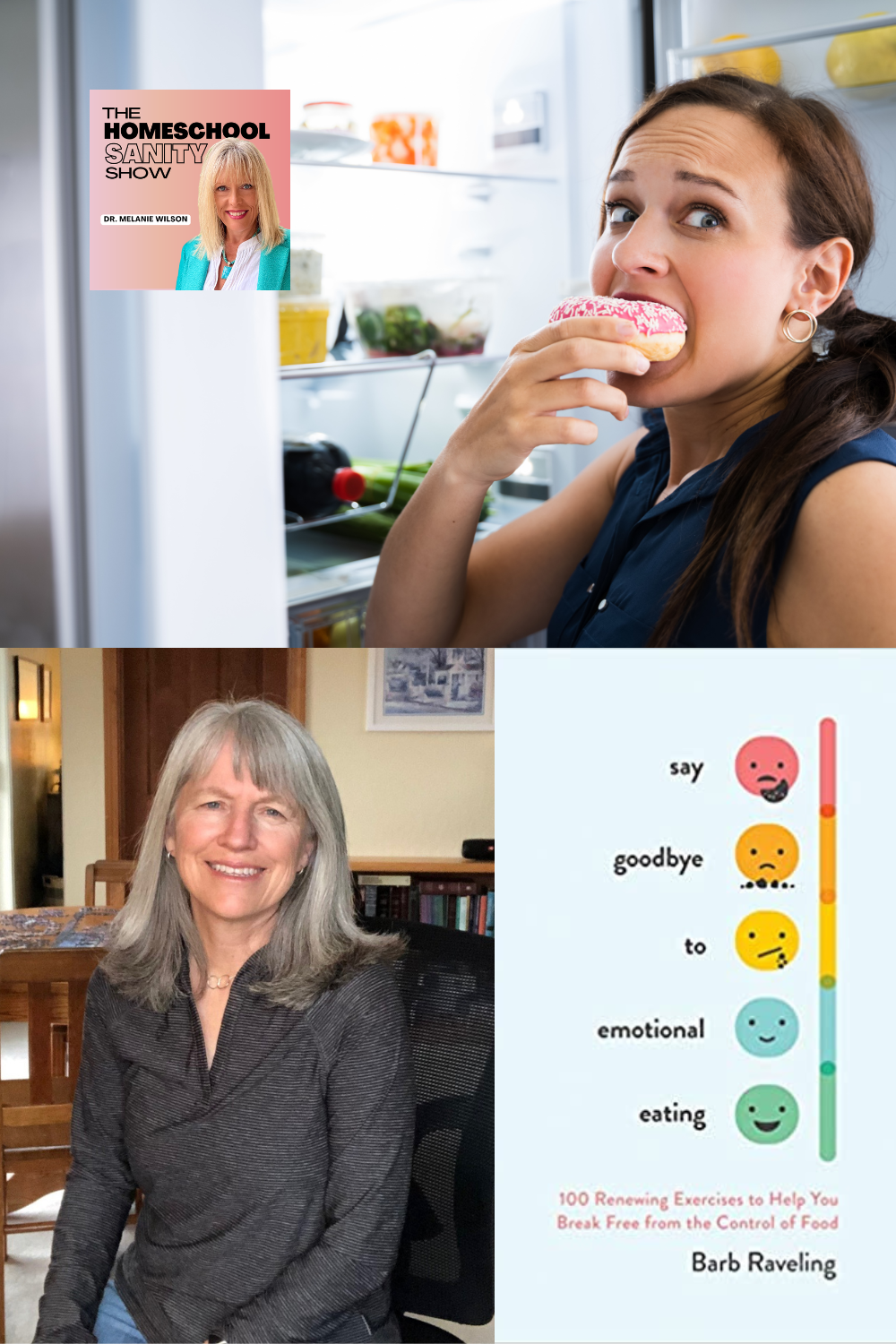
 Hey, homeschoolers! How will you homeschool through the holiday season? There are many approaches that can work for you, but you’re most likely to feel good about the season when you’re intentional about it. I invited guest Katie Trent back to share with us some ideas for adjusting our homeschooling during the holidays. I also asked her about her new book that is a must-add-to-cart title.


 Hey, homeschoolers! When it comes to seeking a more relaxed homeschool, we can find numerous tips for adjusting our schedule and curriculum. But there is only one source for true rest. My guest today is going to share how we can find it.


 Hey, homeschoolers! September and all of its new-school-year excitement is behind us, leaving us to face a longer October. If you struggled to complete your plan (or to get your kids to complete the plan), you may be feeling a bit concerned. How will this month be better?
 Hey, homeschoolers! I love systems. When I started my series for





