Your prescription for happier, healthier homeschooling. Christian psychologist, author, and homeschool mom of six Dr. Melanie Wilson shares research-backed, doable strategies for the things that steal your sanity — stress and burnout, time management, organization, motivation, and curriculum decisions — with plenty of encouragement along the way. For homeschooling parents who want calmer, more joyful days. Follow the show and homeschool with more sanity and grace.
Special Replay: How To Have A Better Homeschool Year
Aug 26, 2025
Show notes
📚 Part of our guide: Back to Homeschool
How to Have a Better Homeschool Year
Want a better homeschool year—but without buying a new curriculum, rebuilding your schedule, or starting over from scratch?
Sometimes the biggest homeschool changes don’t begin with a planner or a new routine. They begin with a mindset shift.
In this episode of the Homeschool Sanity Show, Melanie Wilson shares a simple but powerful strategy called “What’s Better” to help homeschool moms improve self-image, reset negative thinking, and move through challenges with more peace and perspective. If your homeschool year has felt heavy, frustrating, or just not quite what you hoped, this encouragement may be exactly
Listen to This Episode
Want encouragement you can listen to while you fold laundry, prep lunch, or reset your homeschool mindset?
Listen to How to Have a Better Homeschool Year from the Homeschool Sanity Show and discover how one simple question can shift the tone of your homeschool days.
It doesn’t take much for homeschool moms to start feeling like they’re falling behind.
A hard day can quickly turn into a hard week. A rough subject, a resistant child, or a plan that isn’t working can make it feel like the whole year is off track.
But what if a better homeschool year didn’t require a full reset?
What if one simple shift in perspective could help you move forward with more peace and confidence?
That’s exactly what Melanie Wilson shares in this encouraging episode.
What Is the “What’s Better” Strategy?
The “What’s Better” strategy is a simple mindset tool that helps you look for improvement instead of perfection.
Instead of asking:
Why is this still hard?
Why aren’t we farther along?
Why can’t I get this right?
You begin asking:
What’s better than it used to be?
What’s going better than last week?
What is working, even if it’s small?
That question changes everything.
It helps you notice growth, progress, and small wins that are easy to miss when you’re overwhelmed or discouraged.
How This Mindset Can Improve Your Year
A better homeschool year often begins with a better lens.
When homeschool moms focus only on what is lacking, it becomes easy to feel defeated. But when we begin noticing what’s improving, even slowly, we create room for hope.
This strategy can help improve:
your self-image as a homeschool parent
your mood and emotional resilience
your response to difficult days
your family’s overall homeschool atmosphere
And the best part? It doesn’t require adding anything new to your plate.
Examples of the “What’s Better” Strategy
Here are a few simple ways to use this mindset in real homeschool life:
Instead of:
“We’re always behind.”
Try: “We finished more this week than we did last week.”
Instead of:
“My child hates writing.”
Try: “She wrote two sentences today without tears. That’s better.”
Instead of:
“This year is a mess.”
Try: “We’ve found a rhythm in the mornings that is working better.”
Instead of:
“I’m not doing enough.”
Try: “I’m showing up, adjusting, and growing. That’s better.”
These small reframes can have a powerful effect over time.
How to Start Using This in Your Homeschool Today
You can begin using the “What’s Better” strategy today by creating a short list at the end of each homeschool day or week.
Ask yourself:
What went better today?
What is easier now than it used to be?
What has improved in my child?
What has improved in me?
You may be surprised by how much progress is happening—even in a season that feels messy.
A Better Homeschool Year Doesn’t Require a Perfect Plan
If you’ve been tempted to scrap everything and start over, this is your reminder:
You may not need a brand-new homeschool year. You may just need a better way to see the one you already have.
Growth doesn’t always look dramatic. Sometimes it looks like patience. Sometimes it looks like consistency. Sometimes it looks like noticing what’s better.
Homeschooling Preschool While Keeping Your Sanity
Aug 19, 2025
Show notes
Trying to homeschool with a toddler climbing your leg and a baby on your hip? Take heart — the early years are gloriously messy and gloriously short. You don’t need a perfect preschool to raise a curious, thriving little one. A few gentle rhythms, a basket of busy activities, and a whole lot of reading aloud go further than any boxed curriculum ever could. Below you’ll find one homeschool mom’s honest story of teaching preschool three different ways — and after it, favorite episodes from across our shows for homeschooling with babies, toddlers, and preschoolers underfoot. Hey, homeschoolers! Will you have a preschooler this year or next? Do you know someone who wonders how to homeschool a preschooler? If so, this episode is for you or your friend. I’ll be sharing how I started teaching preschool, how I changed my approach with experience, and what I would do if I were homeschooling my preschool grandchildren. Watch on YouTube Sponsor: CTC Math Are you looking for a new Math Curriculum? CTCMath specializes in providing online video tutorials that take a multi-sensory approach to learning. Favorably reviewed in Cathy Duffy’s 102 Top Picks and The Old Schoolhouse Crew Review, the lessons are short and concise to help your children break down concepts and appreciate math in a whole new way! The lessons are taught the traditional way, not to a “test”. Each one of the video tutorials is taught by an internationally acclaimed teacher, Pat Murray, who is renowned for teaching math concepts in a simple, easy-to-understand way (and in only a few minutes at a time). CTC Math uses a multi-sensory approach, having the combination of effective graphics and animation synchronized with the voice of a friendly teacher together with practical assessment. This three-pronged attack makes learning so much easier and more effective. Even students who struggled with math are getting fantastic results! And ones who were doing OK before are now doing brilliantly. Visit ctcmath.com today to start your free trial. __________________________________ How I Taught Preschool at First Homeschool preschool has a special place in my heart because that’s where I started. I thought it was a perfect testing ground for determining if homeschooling would work for me. The short answer to that question was a resounding no. It didn’t work for me! I thought I just wasn’t cut out for it, but the real problem was I had no routine. I went to bed at different times, got up at different times, and wasn’t getting any homeschooling done. That wasn’t because I had such a clean home or because I was working from home; I wasn’t. Instead, I had grand plans for teaching my preschooler that all fell flat. Granted, I had a baby and a toddler in addition to my preschooler. But all I was able to do at that point in my life was keep them alive. Let’s talk about my preschool plans at the beginning. I had a preschool curriculum book that focused on a letter at a time. So far, so good. I do think that teaching kids letters and numbers is a great foundation for later learning. I also bought a preschool craft book. Because of my all-or-nothing craving for complete preparation, I literally bought every craft supply needed to complete every craft in the book. You heard that right. I had enough craft supplies to supply a neighborhood of preschoolers with activities. That’s because you can’t buy a couple of tongue depressors—you have to get a box of 500. I was so excited to do the activities with my son, and this is where it gets silly. I don’t even really like doing crafts with kids. Kids are very messy with glue and especially with the the brainchild of Satan—glitter. When my child would begin using the watercolor paints I bought him and mixing colors without cleaning out his brush, my anxiety would build to the point that I needed a nap even if he didn’t. Because I had this all-or-nothing mentality, I felt like I had failed if I didn’t do our lesson from the book or make one of the crafts early in the day. So I would delay our studies “until the next day” when I could do them perfectly. With three boys three and under, the perfect day never arrived. It is true that I read to my preschooler constantly. But because I had been reading to him from birth, I didn’t give myself credit for actually homeschooling him. If you’re familiar with my story, you know that I felt like a failure at homeschooling and mothering. Neither my husband nor I thought that I could handle home educating our kids long-term or adding another child to the family. That’s when someone recommended FlyLady to me. I began building routines that allowed me to get up at the same time roughly and do the same tasks in the same order. The best part of that was waking up to a clean kitchen. I had run the dishwasher the night before and washed the larger dishes, so I didn’t feel like a failure at the beginning of the day. I added other habits like laying my clothes out the night before, and preparing things for the day ahead. Running my dishwasher the night before allowed me to have my preschooler unload the kid-friendly dishes. This became a chore routine that made my home and life feel manageable. It also taught my son an important life skill. If you’d like to build an organizing routine, check out my guide The Organized Homeschool Life. With the chore habit established, I was able to add preschool lessons to our routine. I was finally teaching! I also got the kids into preschool activities for homeschoolers and for the community. The boys went to playdates at the park, gymnastics, and swim lessons. And that leads me to how I taught preschool later on. How I Taught Preschool Later I continued to do chores at the beginning of the school day as we added more kids to the family. I would keep my youngest kids with me and help them do their chores while the older kids worked independently—or at least claimed to be working independently. Once I had elementary students, I had to decide when to work with my preschoolers. I took the advice to spend time with my preschoolers first, then allow them to play in an adjacent room. This was effective; however, I had a long day to fill. This is when I started using the Managers of Their Homes scheduling approach. The idea that was most valuable to me from this approach was to pair a younger child with an older one for a short session. Usually this involved reading to them or playing with them. I began to feel that I was shortchanging my preschoolers, however. I was focused on teaching more advanced skills to my older kids. That’s when I heard about creating preschool activity packs. The concept was that you would create multiple packs of a couple of different educational activities for preschoolers and would then exchange them with other moms who had made different activity packs. I thought this was brilliant! However—and you knew that “however” was coming, didn’t you?—I barely used the activity packs. I wondered why on earth I had invested the time and money into creating them when there are so many inexpensive preschool activities that I already owned or could purchase. Things like letter puzzles and games that I already had. I also heard Steve Demme’s excellent advice based on his notion that curriculum book time at back-to-school is a preschooler’s version of Christmas without me. I decided to purchase books for my preschoolers to spend time in while the older kids did their independent work. Most of them were activity books like Kumon books that help them learn to write. The best curriculum I found for homeschoolers around this time was from a company called Dakota Publishing. As a South Dakota native, I loved that the company was headquartered there, but I loved the approach of Little Hands to Heaven even more. The preschool curriculum was broken up into little—what I call—missions. Short teachable moments that could be completed before the other kids were fighting or the dog escaped the yard. Even though I never finished a complete lesson, I felt successful because I had completed parts of it. As my younger kids became preschoolers, though, I simply allowed them to participate in our reading and activities as their interest and ability allowed. To keep them engaged when I was working with the older kids, I tried rotating toys and books that were for school time only. But because the kids seemed to enjoy throwing small toys around the playroom more than using them as intended, I had limited success with this. That leads me to how I would homeschool preschool with my grandkids. How I Would Teach Preschool with My Grandkids I survived homeschooling preschool for all six of my kids. Not one of them is in a mental institution because I failed to teach them their letters, numbers, or shoe-tying at the optimal time. Given my experience and my 20/20 hindsight vision, here is how I would homeschool preschool now: First, I would continue reading to them. I would read picture books with them and take them to the library as I did with my kids, treating it like the gift and adventure that it is. I would also have them raid Grandpa’s bookshelves. My husband is a sales rep for school library books, so we have a literature-rich home. We would read picture books to address social and emotional skills as well as academic topics. I would relish telling them about their parents’ bad behavior when they were little. Just kidding. Kind of. Second, I would use a more by-the-way, unit study approach to teaching. For example, if there were a class or field trip that appealed to preschoolers, we would go and would then do reading and activities related to it. I would make ample use of the internet to find videos, recipes, experiments, and easy art projects that don’t involve glitter. The most important aspect for me would be not having an overly planned schedule that could make me feel behind. Third, for curriculum, I would use a children’s Bible, Little Hands to Heaven, Color Me Mozart and other easy, engaging resources to teach specific topics. We would start off with these resources before reading and pursuing other activities. Finally, I would use lots of board and active games to teach academics and social skills. I used the Phonics Game, Jr. to teach my kids to read and I would use it again. I would leave the computer games for the parents to use when they need down time. I would rely on lists of games that are easy to play and set up when I wanted to cover a particular subject like math or vocabulary or just to let the kids burn off steam. Conclusion In conclusion, I know I didn’t do a perfect job teaching preschool. But the good news is I didn’t have to. My kids enjoyed their early homeschool years and benefited from them. Yours will too. I hope my experience will help you create a realistic and enjoyable plan for educating your little learners. Have a happy homeschool week! 🎧 Featured episodeHomeschooling with Babies and Toddlers AroundFrom Making Biblical Family Life Practical — press play, then explore more episodes below. Little-ones episodes from across our shows Homeschooling with babies & toddlers underfootHomeschooling with Babies & Toddlers AroundHomeschooling Several Ages at Once (Natalie Burton)Homeschooling Multiple AgesTips for Traveling with Toddlers Teaching & keeping little hands busyTeaching Preschoolers & Kindergarteners to ReadHomeschool Art in the Early Years (Rachel Hirt)Chores for Ages 2-10: More Capable Than You ThinkCleaning with KidsWhy “No” and “Mine” Are Good Words for Toddlers Explore more guides in the Homeschool Help Hub → 🛒 Need curriculum or resources? Shop Christian homeschool books, science, and unit studies from Media Angels.Shop Media Angels → 🫘 Just starting out with your little ones? Get our free Christian Homeschool Starter Kit for a gentle, confident start, and find encouraging podcasts made for these busy years. Get the free Starter Kit → Explore our podcasts The post Homeschooling Preschool While Keeping Your Sanity appeared first on Ultimate Homeschool Podcast Network.
Special Replay: How To Handle Homeschool Detours
Aug 12, 2025
Show notes
Hey, homeschoolers! If you’re not where you expected to be in your homeschool, I’ve got you. In this episode, you’ll learn why we find ourselves on a detour, how we can get even more off track, and 5 tips for reaching our destination quickly.
Detours for our purposes can be taking the same route we planned, but it’s taking far longer than we thought. This was the most common detour for me. I experienced a version of it every one of my 25 years of homeschooling. We didn’t get through the curriculum as quickly as we thought we would. Or we didn’t even start it. That happened more times than I’d like to admit, too. The character issues that I thought my kids would master right away were still being learned in high school.
A classic detour, though, is taking a different route to the destination because the intended route wasn’t available or workable. Homeschool detours can be anything new that you weren’t planning: classes, schedule, approach, baby, job, home.
Why do we find ourselves on these detours?
One obvious reason that applies in the wake of Hurricane Helene is events out of our control. Illness, a facility closure, a job loss.
Other detours are more the result of a family member’s choice: your spouse needs you to work, your teen wants to go to school, your child wants to compete at an elite level.
Finally, there are detours that are the result of our choices. I do think detours can have all three characteristics at once. Something happens that’s out of your control. Your spouse wants to do something about that. And your choice solidifies your direction.
Years ago, I was driving my family home from the beach, a 12-hour drive with stops. I entered our home address into my phone’s GPS and was on my way. My husband was in the back of our van, watching movies with the kids. After the movie was over, he said, “I don’t recognize this town.” I waved him off, telling him that I was taking the route the GPS told me. But the truth was I didn’t recognize it either. I figured I just hadn’t paid attention on our last trip or the GPS was taking me on a better, faster route.
The first reason we find ourselves on a detour of our own making is because we aren’t paying attention. I wasn’t looking at the surroundings as I drove. I also didn’t check my son’s math homework for weeks, only to realize he hadn’t been doing it. I wasn’t checking my son’s laundry, so I didn’t realize he’d been putting his clean laundry in his dirty clothes hamper just so he wouldn’t have to put it away.
I was on a coming-home-from-vacation detour primarily because I wasn’t paying attention. But the second reason we find ourselves on a detour of our own making is because we trusted but didn’t verify. I trusted my GPS to navigate me home but I didn’t verify that it was giving me the fastest route. I trusted my kids to do the right thing and didn’t verify. But I also trusted homeschool and parenting experts that if I did everything they said to do that my kids would be giants of the faith with full-ride scholarships. You won’t be surprised to hear that I haven’t yet arrived at that destination.
The third reason we find ourselves on a detour of our own making is our pride. “I know what I’m doing!” I thought, as my husband expressed doubt in our direction. He didn’t know what was going on, I thought. He’s too busy watching a movie! When someone questions our homeschooling or parenting, we may dig our heels in and do even more rather than admit to our weakness.
A few more hours went by on our drive home and my husband piped up again. “I don’t recognize this town either. Are you sure we’re on the right route?” Actually, I think he was a lot more forceful than that, but I’m giving him grace in the retelling of it.
“Uhhh,” I stammered. I couldn’t study the map as I was driving and my husband didn’t know how to use my app. I kept driving.
How can we get even more off track?
The first way we can get even more off track on a detour is avoidance. I got on a detour home by not paying attention. I got even further astray by avoiding the issue. I didn’t look at the route GPS had mapped out for us. When something in our homeschool isn’t working, it can be frightening to think about. So we may choose to do anything else but think about it. Meanwhile we’ve gone even further off track. You might avoid discussing a child’s learning disability or what you’ll do if a potential layoff happens. Meanwhile the fear gets bigger and the potential consequences worse. You want to avoid dealing with the issue even more than before.
The second way we can get even more off track is blaming others. In my mind, the only problem with our route home was my husband complaining about not recognizing it. He didn’t understand GPS like I did. If he wanted to drive, then he could choose the route! When the doctor, the co-op teacher, or your child is to blame for your detour, you can continue avoiding it. It’s someone else’s problem to solve. But if that person doesn’t act to get you back on track, the problem will grow.
The third way we can get even more off track is guilt. I secretly felt guilty that I had not looked at the route my GPS chose before I took off. I hadn’t verified it and to make matters worse, I had ignored my husband’s concerns. I worried about what it would mean if I was responsible for making our long ride home even longer. And even though I blamed the boys for their dishonesty with math and chores, I felt responsible. If I had allowed my guilt about it to make me fearful and avoid the issue, the problem would have continued and gotten worse.
Homeschool moms often feel guilt about every aspect of their family’s lives because they feel overly responsible. In addition to more avoidance, guilt can also lead to rash course correction. Turning around and heading back to the beach so I could take a better route would have been crazy, but so would dropping our math curriculum that had been working well and choosing to put away all my kids’ laundry myself.
I’ll share what happened when I finally admitted I was on a detour after this message from our sponsor: CTC Math.
Before we dig in, I want to thank our sponsor: CTC Math.
The lessons are taught the traditional way, not to a “test”.
Each one of the video tutorials is taught by an internationally acclaimed teacher, Pat Murray, who is renowned for teaching math concepts in a simple, easy-to-understand way (and in only a few minutes at a time). Using a multi-sensory approach having the combination of effective graphics and animation synchronized with the voice of a friendly teacher together with practical assessment. This three-pronged attack makes learning so much easier and more effective. Even students who struggled with math are getting fantastic results! And ones who were doing OK before are now doing brilliantly.
I finally pulled over and studied the route GPS had me on. I couldn’t deny that I didn’t recognize the route any longer. The shocker was realizing that it had me go two hours out of our way on top of a 12-hour trip. I would love to say it was because of a road closure or an error in the app. But the truth was I wasn’t paying attention, blamed my husband out of pride, and avoided dealing with the issue out of guilt.
When you realize you’re on a homeschool detour, here’s what to do to get to your destination quicker.
Take stock of where you are. Sometimes it won’t be pretty. It certainly wasn’t for me. I had added two hours to an already long trip. But often it’s not as bad as you fear. You’ll never be able to course correct until you admit where you are. Get an assessment. Gather data. See how much has to be done to get up to speed. It can be painful but not as painful as continuing on the same path.
Determine the best way forward. Don’t look back. It was tempting for me to fantasize about going back in time to take a different route. Instead I looked at the map to see how we could get on the fastest route home. Given your current circumstances, what can you do to meet your goals in the quickest, most reasonable way?
Ask for help. The truth is I am directionally challenged. I can follow verbal directions from my app, but navigating from a map is much harder. I showed my husband the map and he gave me his advice for getting back on the best route. It’s humbling to ask for help, but it also builds the helper’s confidence. My husband doesn’t like not being tech savvy. He loved feeling smarter than the GPS. Talk to veteran homeschoolers, teachers with experience in a particular area, and homeschool-friendly professionals about the challenge. You’ll build them up and help yourself at the same time.
Trust God. God alone knows how natural disasters, other people’s choices, and our own weaknesses will interact to put us on a detour. What’s even more incredible is that He uses these circumstances to get us where He wants us. Was there a reason I ended up driving two hours out of our way? Maybe! But I know that He is my Guide and yours. He doesn’t want us to worry about our homeschool or our family. Trust in Him and follow His leading. Of course, we can and should ask Him for help in the first place. I did not pray for GPS guidance I’ll admit.
Finally, have a sense of humor. I was amazed that my husband and kids weren’t furious with me when I broke the news. I shouldn’t have been. Even at that time, I had a long history of them giving me grace and not thinking a thing of my failings that I imagine are so monumental. I apologized and took responsibility for it and it was over. Except we laugh about this detour often. I hope you can laugh at some of the minor detours you’ve taken in your homeschool journey, too.
Conclusion
We get on homeschool detours when we don’t pay attention, trust but don’t verify, and are prideful. We can get on an even longer detour when we avoid dealing with the issue, blame others, or feel guilty about it. The quickest way to get back on track after a detour is to take stock of where you are, determine the best way forward, ask for help, Trust God, and have a sense of humor.
I have a postscript to this. Last year I was driving four hours to visit a friend and then continuing on a couple hours to stay with my mom. I had driven more than three hours when my husband called. He asked me if I had seen the new bridge on the drive. “No,” I said. “You know I don’t pay attention to that stuff.” My ADD is in high gear when I’m driving. He asked me
I would love to hear about any funny detours you’ve taken. Screenshot this podcast and tag @homeschoolsanity on social media. Thanks again to CTC Math for their sponsorship. Have a happy homeschool week!
Special Replay: How To Have More Confidence As A Homeschool Mom This Year
Aug 05, 2025
Show notes
📚 Part of our guide: Back to Homeschool
Do you lack confidence as a homeschool mom? A number of moms on the Homeschool Sanity Facebook page have commented that they do. This is The Homeschool Sanity Show, the episode where we discuss how we can have more confidence as homeschool moms this year.
Hey, homeschoolers! Before we dive into the topic of mom confidence, I’d like to thank CTC Math for sponsoring this episode.
Sponsor
Finding a math curriculum that works for your family can be a challenge! With CTCMath, all of your kids from K-12 can learn at their own pace with one family subscription. That’s right! With a CTCMath membership, you have access to all grades and lessons, which means your children can work at whatever level is best for them. Whether your kid needs to catch up, keep up, or move ahead, with CTCMath they can finally understand math and work at their own pace. CTCMath is offering listeners a half-price discount plus a bonus 6 months when you register for a 12-month membership. Yep. That means you have access to a complete online homeschool math curriculum for all your kids for 18 months!
Why We Lack Confidence
Before we can talk about building confidence, let’s talk about why we lack it in our homeschooling.
The first reason is fairly obvious: we haven’t homeschooled before. Even classroom teachers can be intimidated by the prospect of teaching all subjects to multiple students–especially their own. It’s normal to lack confidence without experience.
The second reason we lack confidence is we are aware of our shortcomings. I was keenly aware of my lack of organization–something I’ve written and spoken about extensively, and which troubles many a would-be homeschool mom. And it wasn’t just messiness I was worried about. I’d been excited about a lot of projects in the past that I’d lost interest in. What if I did that with homeschooling?
Many homeschooling moms didn’t get good grades in general or in particular subjects, causing them to worry about their ability to teach their own children.
The third reason we lack confidence is because of messaging from other people. We may have family members or friends who disapprove of homeschooling and tell us about homeschool horror stories. From childhood, we may have heard about our shortcomings repeatedly. Or we were mistreated, causing us to wonder who we are to take on this important responsibility. Finally, other homeschoolers can make us feel less than confident by presenting an unattainable picture of homeschooling. Engineers in your support group who lead a championship robotics team. Homeschoolers who pay for expensive private tutoring and classes to ensure their child’s success. Mothers with supportive family who have lots of time to plan and implement an enriched education. You may feel like you’re not qualified.
How to Homeschool with New Confidence This Year
Inexperience, shortcomings, and others’ messaging can make us feel ill-equipped to homeschool successfully. But here is how we can overcome and take on homeschooling with a new confidence this year.
First, we can begin seeing ourselves as co-learners rather than professors. I learned more about child development and education by homeschooling my kids than I ever did in school or my work as a psychologist. We don’t want to fail in our homeschooling and parenting, but failing is the only way we learn. There are no homeschooling parents who haven’t made mistakes. There are also no classroom teachers who have been perfect.
The only way to grow in confidence as a homeschool mom is to do it. If we are so terrified of making mistakes with our kids that we never try homeschooling or quit at the first sign of challenge, that is the real failure. I’m not saying that everyone is called to homeschool. But if you feel called and you don’t take that call because of fear of messing up your kids, I think you will live to regret it.
These are the things I was afraid of when I began homeschooling: being too disorganized to follow through; having a child who couldn’t read; having an impulsive, immature child who would get hurt; choosing the wrong discipline strategy; having a child behave inappropriately online; having a child who couldn’t write well; having a child rebel; having a child embarrass me. I experienced ALL of these things. And praise God that I did. I’m not afraid of them anymore. The Lord got me through every single one of them.
The second way we can grow in confidence is to focus on our strengths. Organization wasn’t my forte’, but making learning fun and exciting was. As long as our homeschool was reasonably organized, my kids would focus on the fun unit studies, field trips, and co-op activities we did. And that’s what my kids remember.
I disliked gathering the supplies needed to do experiments only to discover that something didn’t work. What I loved doing was teaching literature, writing, and speaking. So my friend and I swapped those responsibilities based on our strengths. She was organized with the labs and I was organized with language arts. Teach your kids from your strengths and share responsibilities with a friend or co-op in your weaker areas.
We also focus on our strengths when we pursue our passions. Teaching world history wasn’t my strength because I had no background in it. But that’s why I was so excited about the topic. I would have read the lessons even without my kids. Even if you’ve struggled with a subject in the past, you can be an exceptional teacher because you’re passionate about learning and teaching it now.
The third way we can grow in confidence is to make the right comparisons. You’ve probably heard that when we feel we are falling short, it’s because we are comparing the inside of our homeschool (and what’s really going on) to the outside of someone else’s homeschool (where it’s carefully curated to present the best image).
But don’t get me wrong. There will be areas that another homeschool mom is further ahead than you are. She’s been doing it longer, has different abilities, has a supportive family, or kids with different strengths. Before you wish you were her, realize that she has made choices that you wouldn’t make. I used to feel inadequate with a mom who was constantly planning fun outings for the kids down to healthy snacks for them to enjoy afterward. But I couldn’t be her and didn’t want to be her. I placed a higher priority on academics and cleaning at home. Yet, what a blessing it was to enjoy her gift for planning activities that my kids enjoyed!
The Bible describes the kinds of comparisons we make as being as foolish as a foot comparing itself to an eye in importance. We are all part of the same body. We can all help one another as homeschoolers so we can achieve our unique goals.
When a friend or family member who doesn’t approve of homeschooling questions your ability to homeschool because of some shortcoming, you can say, “Oh, there are bigger issues than that to prevent me from doing a good job at homeschooling.” You’re likely to surprise a homeschool hater that way.
We can stop worrying about what another mom we know or what a social media influencer is doing because that’s not our role. But we can also stop the comparisons by comparing ourselves to Jesus. Are we as loving and faithful and just as He is? No? Then we should give up. Really. We can stop trying to be great homeschool moms and realize that we can’t do it. Instead, we need Jesus to take over. We need Him to use our unique combination of weaknesses and strengths to be the homeschool mom He planned all along.
Instead of worrying about whether we are going to ruin our kids for life, we can give the responsibility back to Jesus, trusting that He will work everything together for their good and ours. In that sense, we can be confident as homeschool moms because we are confident in Him. What a relief it is for me to know even now that I don’t have to worry about what I did or didn’t do. God had it under control and He still does. Philippians 1:6 is a verse we can hold on to: “Being confident of this, that he who began a good work in you will carry it on to completion until the day of Christ Jesus.”
Conclusion
We can grow in confidence this year as we continue to homeschool, focusing on our strengths, and making the right comparisons. Ultimately, we can be confident that we don’t have what it takes to homeschool our children successfully, but Jesus working through us does. Amen?
I pray this episode has been a blessing to you. Thanks again to CTC Math!
Meal Planning For Homeschoolers
Jul 15, 2025
Show notes
There are three words that can ruin your day: What’s for dinner?
We make a decision, shop for a meal, prepare it, and almost before the kitchen is cleaned, these family members of ours are back for more. For help with meal planning, you’ll want to listen to my discussion with guest Allison Schaaf.
Allison is the founder and CEO of Prep Dish, a meal-planning service that helps busy individuals and families save time while enjoying healthy, stress-free meals. As a registered dietitian and trained chef, Allison combines her expertise in nutrition and culinary arts to create practical, delicious meal plans designed for real life. With a passion for simplifying mealtime, she has helped thousands of subscribers reclaim their evenings and enjoy meal time. Allison and her husband have 4 kids and enjoy living in the Texas Hill Country with their chickens, goats, cats and bees.
We discuss meal planning with:
Special dietary needs
Batch cooking
Getting kids involved Ready to start meal planning for homeschool sanity? Listen, watch, or read now.
The lessons are taught the traditional way, not to a “test”.
Each one of the video tutorials is taught by an internationally acclaimed teacher, Pat Murray, who is renowned for teaching math concepts in a simple, easy-to-understand way (and in only a few minutes at a time). CTC Math uses a multi-sensory approach, having the combination of effective graphics and animation synchronized with the voice of a friendly teacher together with practical assessment. This three-pronged attack makes learning so much easier and more effective. Even students who struggled with math are getting fantastic results! And ones who were doing OK before are now doing brilliantly.
As a new homeschooling mom of three, I knew I would benefit from meal planning, but I found the process overwhelming. If you can relate, I encourage you to grab your copy of The Organized Homeschool Life. I break the challenge of meal planning up into four 15-minute missions that will get you started. In the Organized Homeschool Life Planner, you’ll find a weekly meal planning page and grocery list plus a space to remind yourself what you’re making on the daily page. You’ll have time to get your ingredients in the crock pot before you even start school. Best of all, you’ll have a ready answer for the dreaded question.
But we can also use the media we consume as a family to deepen relationships and teach our values. This week my guests are Nathan and D’Lytha Myers. Nathan is a set designer for The Chosen, and D’Lytha is a trained musical theater performer. Together they have created a God-honoring kids’ film that combats today’s culture of confusion, rebellion, and moral drift—not with lectures, but through story, music, and truth. Aria Appleton Shines has already won a prestigious award from International Christian Visual Media.
We discuss several topics I am passionate about, including:
The significance of family movie nights
Using storytelling to teach values and lessons
The need for open conversations about difficult topics Ready to use movies to grow closer to your kids? Listen or watch now!
The lessons are taught the traditional way, not to a “test”.
Each one of the video tutorials is taught by an internationally acclaimed teacher, Pat Murray, who is renowned for teaching math concepts in a simple, easy-to-understand way (and in only a few minutes at a time). CTC Math uses a multi-sensory approach, having the combination of effective graphics and animation synchronized with the voice of a friendly teacher together with practical assessment. This three-pronged attack makes learning so much easier and more effective. Even students who struggled with math are getting fantastic results! And ones who were doing OK before are now doing brilliantly.
How to Gamify Your Homeschool (Special Replay)
Jul 03, 2025
Show notes
A homeschool mom wrote to ask me where my episode on gamifying your homeschool was. The problem is I don’t have one! But I thought it was a fantastic idea. This is The Homeschool Sanity Show, the episode where we talk about making our homeschooling more like a fun, motivating game.
Sponsor
Finding a math curriculum that works for your family can be a challenge! With CTCMath, all of your kids from K-12 can learn at their own pace with one family subscription. That’s right! With a CTCMath membership, you have access to all grades and lessons, which means your children can work at whatever level is best for them. Whether your kid needs to catch up, keep up, or move ahead, with CTCMath they can finally understand math and work at their own pace. CTCMath is offering listeners a half-price discount plus a bonus 6 months when you register for a 12-month membership. Yep. That means you have access to a complete online homeschool math curriculum for all your kids for 18 months!
Gameschooling
You might have heard of gameschooling. There are some excellent online influencers who share games for teaching just about every topic. I’ve shared games for teaching language arts as well as holiday games. I’m a huge fan of games as a break from traditional teaching. Kids love them and depending on the games, we parents do too. Not only are games fun learning, but they can create family memories you will cherish.
I incorporate games into Grammar Galaxy as well. I particularly like active games because they’re a welcome break for active kids. The fun involved in a game releases dopamine in the brain which aids in retention of the material.
Gameschooling is great. But there is more to gamifying your homeschool than simply adding educational, fun games to your curriculum.
Gamifying Your Homeschool
Gamification means adding game principles to your homeschool life so that you and your family are more motivated.
Let me share an example to explain. Imagine that you were invited to play a card game. There are many rules: you must play certain cards for points but there are other cards that will cost you points. You begin trying to play to earn points. But you forget and play some cards that cost you points. There aren’t any written rules to refer to.
After some time goes by, you ask how you’re doing in the game. Are you ahead, behind, winning, or losing? You’re told to just keep playing the game and you’ll figure it out. New rules seem to be added to the game every turn that cost you points. When you make what you think is a play that will earn you lots of points, you’re told that you can’t make that play now.
My kids have had me play a card game just like this. I reminded them of this game over Thanksgiving and asked them for the name of it. They couldn’t remember. Maddening! I hated the game and never wanted to play it again.
Sometimes our homeschooling is just like this. Our kids do some schoolwork. They feel good about it. But they made some mistakes. They didn’t show their work. They didn’t put enough effort into it. And we let them know. We make them redo the work. We may even give them extra practice work if they didn’t understand a concept.
Or they did very well. They did the work so quickly that we worry we aren’t challenging them. So we ask them to do more advanced work. We ask them to read more or to move on to another subject. We might even add a curriculum to their workload.
The same process can happen with chores. Didn’t do them well enough? Do them again. Get extra chores added on. Do them well but fast? You can handle more chores.
Are you getting the picture? Our kids may feel like they’re playing a game where the rules aren’t clear but what is clear is that there’s no way to win. That isn’t motivating. For anyone.
So how can we fix this to properly gamify our homeschools?
First, the rules for winning at school and chores need to be limited, clear, and preferably posted. We aren’t motivated by a game that tells us to “play cards,” so our kids won’t be motivated to “do school.” They need to know exactly what must be done to earn credit.
If you’re worried that what I’m sharing contradicts with getting kids to take initiative, please don’t. When kids know exactly what is expected of them, they’ll be more likely to take initiative to learn or help more.
But for that to happen, the rules have to be limited and winning has to seem possible. If there are so many rules to remember that I don’t know who to do first, I’m going to want to quit the game before I even get started. If our students have so many assignments that they can’t remember them all, they will feel defeated before they begin.
In addition, winning has to seem achievable. I have started to play video games where the high scorers are listed as motivation for us to compete. I just have to play once and get a paltry score to realize that I will never reach that level, nor would I want to spend the time necessary.
When we have students who are underperforming, our tendency is to want to fill up their lesson plan with work to help them catch up. What happens instead is they feel hopeless and don’t want to even try. Instead, we want to help our kids see that they are winners in school and life. We want to do what we are good at–even if that thing requires time and effort.
In my How to Motivate Any Student class, I share that the first time I played on a part-3 golf course, I hit a flag with my ball on the drive. I was convinced I was a great golfer, and I wanted to keep playing. That was true even though golf is a time-consuming game. We see people spending consider time and effort developing skills in all sorts of areas of life, most likely because they initially believed they had some talent or ability in it.
We can give our kids that initial confidence by making the work easy enough and quick to complete. We know this when it comes to habits and life changes for ourselves. We know we can’t run a 5K without first walking and jogging short distances. We won’t be motivated to organize if it’s going to require weeks and hours of effort. That’s why we work in short, timed bursts.
To use that gamification strategy of making winning possible for our kids, we may have to do some experimenting. Keep cutting down the workload or reducing the level until your child is agreeable. Grammar Galaxy‘s mission steps take just 10-15 minutes each to complete. Some homeschool parents are concerned that this just isn’t enough time. But what happens when you require just 5 minutes of reading a day or 10-15 minutes of language arts a day is kids think it’s doable, so they’ll start. They’ll keep reading because they enoy it. They’ll want to do a second and even a third step in their mission because it was easier than they thought.
Third, a gamified homeschool requires visible progress. Imagine playing a board game where you can’t see how close you are to winning. You have no idea where your marker is. Sometimes our homeschooling is like that. We’re just “doing school” and not even a calendar date indicates the end of the work because Mom feels we need to continue into the summer. I am not suggesting there is a problem with schooling year-round. I AM saying that kids need a finish line to be motivated. I’ve mentioned before how my kids became super motivated to finish their work at the end of the school year when they had a list of everything needed to do before having a long break.
Have a chart posted in a visible spot (like on the refrigerator) that shows progress in books read, math lessons completed, or chores done. Research shows that without any rewards (even without praise), public progress charts improve performance.
Kids also need to know that their work is meaningful and can’t be minimized in an effort to get them to do more. Here’s what I mean. The games of Sorry and Candyland can be so frustrating to play specifically because all your forward progress can be wiped out in one turn. Homeschooling shouldn’t feel like that for our kids. To that end, we should avoid having them redo a whole curriculum. Instead, we might consider switching to a new curriculum or adding supplementary work to shore up the learning. The only reason I would ignore this advice is if your student is on board with redoing the curriculum. We also don’t want to add chores for a student who finishes work quickly and thoroughly.
The final thing a gamified homeschool requires that I’ll discuss today is the unexpected. If you knew you would never win or would win at Solitaire every time, you would not want to play. Variety is the spice of life and it’s what makes games fun. I’m a big believer in routine. We do our best work and are likely to be well rested with a predictable schedule.
But we all need some spontaneity too. Instead of having a regular game day, you could announce that you’re going to spend the afternoon playing board games. Cut your student’s workload in half after assigning it. Go on a surprise field trip. Watch educational movies instead of doing the scheduled lessons. Do fun science experiments. Invite friends over to play. Do your school routine backwards. Even have kids put their clothes on backwards if you like. Put one of your students in charge for the day. Use shopping and cooking as school. Turn your chore list into a randomized game. Roll the dice and do the chore with that number. List some topics your kids are interested. Roll the dice and study the subject that comes up for the day. Have slips of paper with surprise activities or breaks in a jar and let your child choose one when the mood strikes. You can also use a randomizer app on your phone for this purpose.
As long as these surprises don’t become routine, kids will feel like they are playing a game in being homeschooled. Of course, learning is its own reward. But some of our habits can minimize the natural motivation of homeschooling.
Conclusion
When we make the rules for winning clear; when winning seems achievable; when kids see visible progress; and when they regularly experience the unexpected, we have gamified our homeschools and will likely have more homeschool sanity.
Thanks again to CTC Math for sponsoring the podcast.
Have a happy homeschool week and a very merry Christmas to those listening this third week of December.
Hey, homeschoolers! So often I learn about great ideas that I wish I’d had when I was still homeschooling. Today’s topic of starting or joining a parent-child book club is no exception. If you’re using Grammar Galaxy or would like to, starting a Grammar Galaxy book club is a fantastic idea. Make sure you’re subscribed to FunToLearnBooks.com so you’re notified of our Prime Days sale for significant savings on Grammar Galaxy, July 8th-11th.
Today, my guests will tell us the many benefits of parent-child book clubs and how to make them work with creative ideas for multiple ages. Stefanie Hohl has been a guest on this podcast before. Along with her sister Meghan Voss, she is the author of Mother-Daughter Book Club Guide. They both join me for this inspiring and practical conversation.
My Top 5 Homeschool Challenges
Jun 30, 2025
Show notes
Hey, homeschoolers! As we are solidly into the school year, you may be experiencing some challenges. I want to share the top five struggles I dealt with in my 25+ years of homeschooling and how I dealt with them or would deal with them today. My hope is that you will feel normal if a psychologist and mother of six had the same issues that you do. My hope is also to encourage you that you can overcome these difficulties. You absolutely can!
My first struggle, as most of you know, was keeping my house in order while actually homeschooling. When I started I was accomplishing neither. I cared for my three kids, but it seemed like that was all I could handle.
I knew I couldn’t homeschool or have any more children the way it was going. That’s when FLYLady changed the way I thought about routines. I thought they were enslaving when they were really liberating. Doing the same things in the same order in the morning and evening in particular helped me feel on top of my house and my homeschool. I’ll put links to some episodes on this topic in the show notes.
But today I want to stress one aspect of our routine that helped me keep our home in order over the years: kids doing chores. I don’t have a specific chore system to recommend to you. I tried them all–chore boards, badges, apps and various approaches. And they all worked for a while. What I learned was that it wasn’t the specifcs of the chore plan that mattered as much as expecting and needing my kids to help. Without their help, our house would have been a disaster and I would have been stressed out. But with their help, everything else in our homeschooling went more smoothly. I reminded them constantly that I needed their contribution.
Did they do the chores perfectly or even well every time? No. Did they ever complain about their chore assignments for the day? For sure. But having the kids help carry the load allowed me to overcome this challenge in my homeschooling life. It had other benefits including preparing my kids for a job, living with a roommate, and running their own home in the future.
A routine and having my kids do chores enabled me to focus on teaching. For help with this, I recommend the Organized Homeschool Life. After getting my home in order, I ran into another challenge:
2. Fit it all in
Trying to fit it all in. I wanted to teach everything in part because I wanted to learn everything. Learning along with your kids was one of the unexpected blessings of homeschooling for me. I wanted to learn how to make new kinds of bread. I wanted to learn how to code. I wanted to revisit calligraphy. And I wanted to learn all of these things on top of the core subjects this year. But no matter how hard I tried, I couldn’t fit it all in. Can you relate?
At first, I thought we had to do school longer. That was a separate challenge I’ll discuss in a minute. Loop scheduling was a big help. I could do multiple subjects by not trying to do them all every day. I had a block of time devoted to three subjects. We would do the next subject in line, rotating through them.
But I needed more than that. I couldn’t loop schedule 20 subjects! I had to accept that I couldn’t do everything this year. One thing that helped was realizing that some subjects like science and history don’t have to be explicity taught every year. You’ll always be learning science and history along the way, but you may not have to have a formal curriculum if you have other priorities this year.
Hindsight allows me to see that we only accomplished a fraction of what I wanted to do, but it was enough. With God as our Guide, it will be enough books read, enough skills practiced, enough experiences had. I’m still accepting that I won’t be able to learn all the things, but as I grow in this area, I have more peace and joy.
One way to fit math in to your school day is using CTC Math, the sponsor of this podcast.
The lessons are taught the traditional way, not to a “test”.
Each one of the video tutorials is taught by an internationally acclaimed teacher, Pat Murray, who is renowned for teaching math concepts in a simple, easy-to-understand way (and in only a few minutes at a time). Using a multi-sensory approach having the combination of effective graphics and animation synchronized with the voice of a friendly teacher together with practical assessment. This three-pronged attack makes learning so much easier and more effective. Even students who struggled with math are getting fantastic results! And ones who were doing OK before are now doing brilliantly.
As I tried to fit more school and activities in, I tried extending our school hours. With more kids in our family and more commitments, we would just have to add more to our afternoon schedule, I thought. When I was homeschooling two kids with a little one who napped, I could fit a science experiment or a craft in the afternoon. But as our family grew, I found I was able to do less and less formal schooling after lunch.
On days we had outside classes in the mornings, I would be determined to get afternoon lessons in, and it just never happened. I would tell myself it was because I was pregnant or it had been a particularly busy morning or because I was lazy. I would surely fit afternoon school in the next time. But it rarely worked.
I finally realized that with young students in particular, we needed to get our critical work done in the morning. Our attention and energy didn’t support doing book work in the afternoons. What we could do in the afternoons was co-op. The social energy kept the kids motivated. We could also do field trips and educational videos.
When my kids became independent learners, they chose to do more work in the afternoons. Even with my own work today, I find that if I keep hitting resistance to working in the afternoon, I need to make a change. I now do my creative work in the mornings and leave easier tasks for afternoons.
Instead of berating yourself and trying harder, my advice is to experiment with different schedules. Be curious about how you and your children respond and you’ll achieve more with less stress. For help with this, I recommend A Year of Living Productively.
4. Deal with sibling squabbles
Getting chores and school done was often impeded by my children’s arguing over whose turn it was to have the easy chore or get the preferred blanket for school time. Precious time was taken discussing this, which in hindsight I see was probably my children’s attempt to delay work.
I not only struggled with the lost time but I found it demoralizing. I wanted an orderly home and educated kids, but even more than that, I wanted them to love one another. Their squabbles were evidence that I was failing in this most important goal.
I used practical approaches to deal with these issues and they were successful in large part. I either rotated sets of chores through all the kids or randomly assigned them to stop the “it’s not fair” grumbling. Of course, the kids would complain that one child wasn’t really doing their chore which I will discuss as a next challenge. The other thing I did was assign my kids a day of the week to have as their priority day. That meant they got to choose a seat, a blanket, and even a restaurant if we were going out. One of my favorite memories is of my daughter as a preschooler. When she woke up on Friday, she would gleefully announce, “It’s ma day.” If I were doing this again, choice of restaurant would not have been part of a child’s day. Too often we went out on the same day of the week.
Next, a child’s day was when I spent special time with them in an activity of their choice. We often played a game. One child loved having me play a racing video game with him because I was so bad at it. Another wanted me to play Typer shark because I’m a fast typist. He just enjoyed watching me win! Having time alone with me during which we could discuss how things were going with siblings was a big help to reducing sibling rivalry.
But the most important way I dealt with this particular challenge was to surrender to it. I wanted to get to our Bible time, our math, our history. But my children obviously needed social, emotional, and character training instead. We would discuss it, air grievances, and brainstorm possible solutions. And while I know I was not perfect in this area, I also don’t regret focusing our school time on these skills when the situation called for it. I do wish I had had a curriculum like Training Aliens as an organized approach to teaching them. But you can grab a free sibling rivalry sample of it at FunToLearnBooks.com/siblingrivalry.
5. Review kids’ work
Another challenge for me in homeschooling was my reluctance to review my kids’ work. I did not like going over their homework with the exception of their writing. To me it was boring busywork. So I put it off. You heard me describe in previous episodes how not checking resulted in my son not doing his math for months.
Homework wasn’t the only thing I didn’t review. I absolutely hated checking the kids’ chores. In this case it wasn’t just because I felt it was boring. The truth is I didn’t want to be unhappy when I saw that chores were skipped or not done well. If they were, I would have had to take more time to supervise my child and train him or her to do it correctly.
I tried using willpower to get myself to review their work and sometimes I was successful. Making it a part of my routine worked even better. But this is a challenge that I would handle differently if I could. Here’s how. I would have rewarded my kids for coming to me to have their work reviewed. I used an app on my phone to give kids a spin for a randomized reward. You can set this up too, using a randomizer app. That would have been very effective. It would have had two positive effects. First, the kids would have pestered me to check to get the reward, so I would have been prompted to do it. Second, they would not have asked me to check unless the work had been done and done well. I could have made this more rewarding for myself by giving myself points every time I checked a child’s work. What I wanted most at this time in my life was personal time to do what I enjoyed. The added advantage of this is my personal time would have been guilt-free because I knew I had checked my kids’ work.
Conclusion
Today I discussed five challenges I had in homeschooling: keeping the house in order, fitting it all in, school in the afternoons, sibling squabbles, and reviewing kids’ work. I shared with you how I dealt with those challenges or would deal with them now. What I didn’t share is that I’m thankful for these challenges. They taught me to be more organized and productive. They grew my character, my parenting skills, and my dependence on God. And they also allowed me how to serve homeschoolers like you. Do you have a challenge I didn’t mention? Screenshot this podcast episode and tag me at homeschoolsanity on social media. I’d love to chat about it.
To find the links to CTC Math and the resources I mentioned, visit the show notes page at homeschoolsanity.com/5challenges.
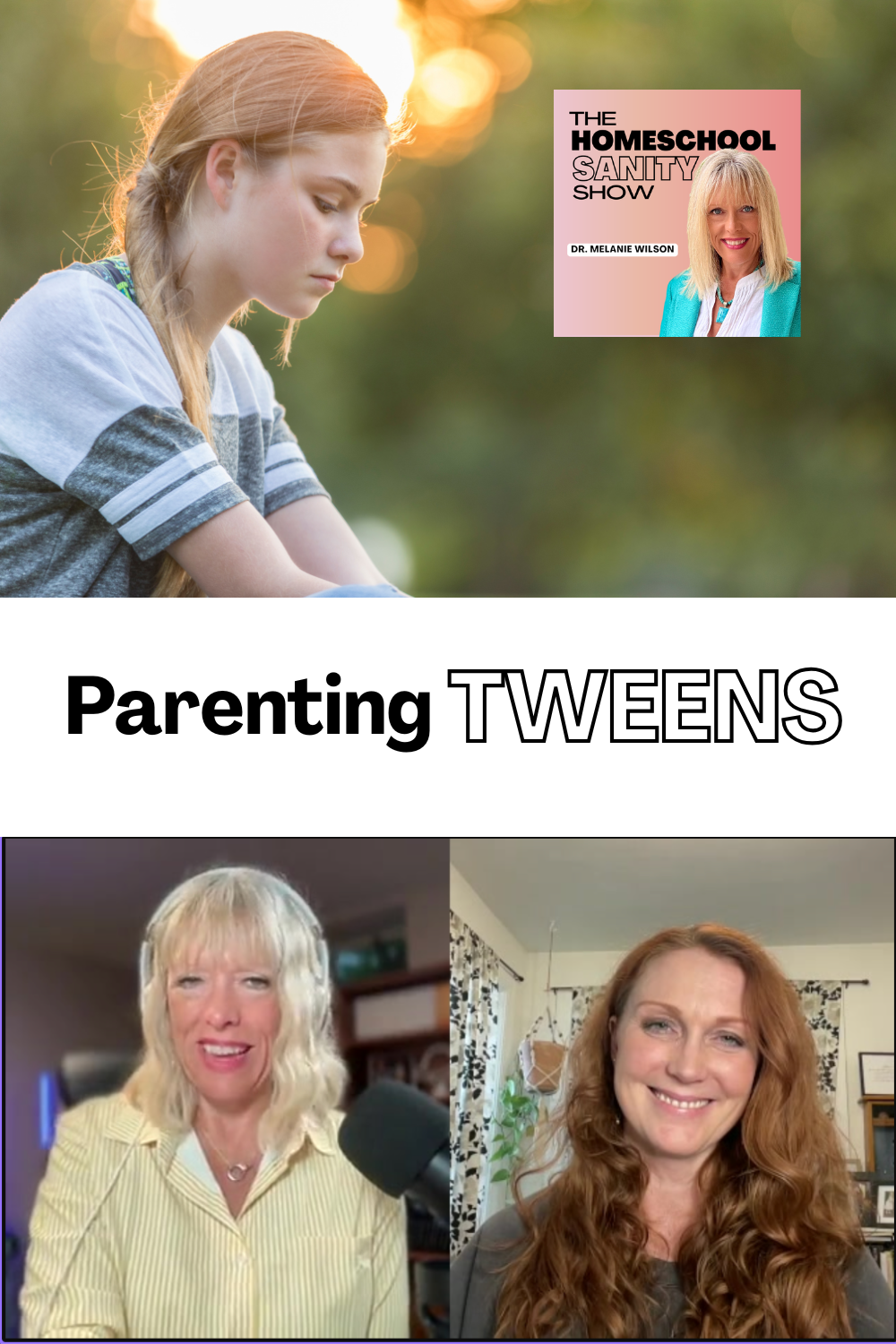
Christian Parenting Of Tweens: What You Need To Know
Jun 24, 2025
Show notes
Hey, homeschoolers! If you have a tween son or daughter, you may wonder what happened to your baby! I know I had that experience. If you need wisdom and encouragement for parenting tweens, there is no better place to turn after praying than my friend Tara Lee Felix. Lee is a champion of others, a certified conversion copywriter, and a hybrid homeschooling mom of five. As the founder of Created Social and Like Minded Musings, she blends nearly two decades of parenting with over a decade of experience in authentic marketing, writing, and relationship-building to help others lead with purpose, connect deeply, and communicate with clarity.
As a passionate youth group leader and curriculum writer/editor, she serves 400+ teens each week, infusing biblical truth and relational discipleship into everything she does. Through Like Minded Musings, she also empowers moms with Christ-centered encouragement and practical tools to navigate the beautiful, messy, meaningful work of imperfect parenting.
Lee and I discussed:
The critical mindset shift you need to make
The impact of technology and social media on your tween
Why hiding your parenting challenges isn’t a good idea
Sponsor: Harper Collins NIV Application Bible
Your next Bible is the Harper Collins NIV Application Bible. Learn more here.
Whether you’re growing a business or raising the next generation, Lee’s mission is simple: to help you build what truly lasts. Ready to create a life or business filled with purpose? Explore her free resources for clear steps, practical tools, and inspiring encouragement.

 Our TOPPODCAST Picks
  Stay Connected




 Do you lack confidence as a homeschool mom? A number of moms on the Homeschool Sanity Facebook page have commented that they do. This is The Homeschool Sanity Show, the episode where we discuss how we can have more confidence as homeschool moms this year.
 There are three words that can ruin your day: What’s for dinner?
 Special dietary needs
 Batch cooking
 Getting kids involved Ready to start meal planning for homeschool sanity? Listen, watch, or read now.
 Melanie Wilson
 Hey, homeschoolers! I recently chatted with
  The significance of family movie nights
 Using storytelling to teach values and lessons
 The need for open conversations about difficult topics Ready to use movies to grow closer to your kids? Listen or watch now!
 A homeschool mom wrote to ask me where my episode on gamifying your homeschool was. The problem is I don’t have one! But I thought it was a fantastic idea. This is The Homeschool Sanity Show, the episode where we talk about making our homeschooling more like a fun, motivating game.
 Thank you to the


 Hey, homeschoolers! If you have a tween son or daughter, you may wonder what happened to your baby! I know I had that experience. If you need wisdom and encouragement for parenting tweens, there is no better place to turn after praying than my friend Tara Lee Felix. Lee is a champion of others, a certified conversion copywriter, and a hybrid homeschooling mom of five. As the founder of
  The critical mindset shift you need to make
 The impact of technology and social media on your tween
 Why hiding your parenting challenges isn’t a good idea