Our TOPPODCAST Picks
 Audio narrations of LessWrong posts. Includes all curated posts and all posts with 125+ karma.
If you’d like more, subscribe to the “Lesswrong (30+ karma)” feed.

 Stay Connected
Audio narrations of LessWrong posts. Includes all curated posts and all posts with 125+ karma.
If you’d like more, subscribe to the “Lesswrong (30+ karma)” feed.
Copyright: © 2023 LessWrong Curated Podcast


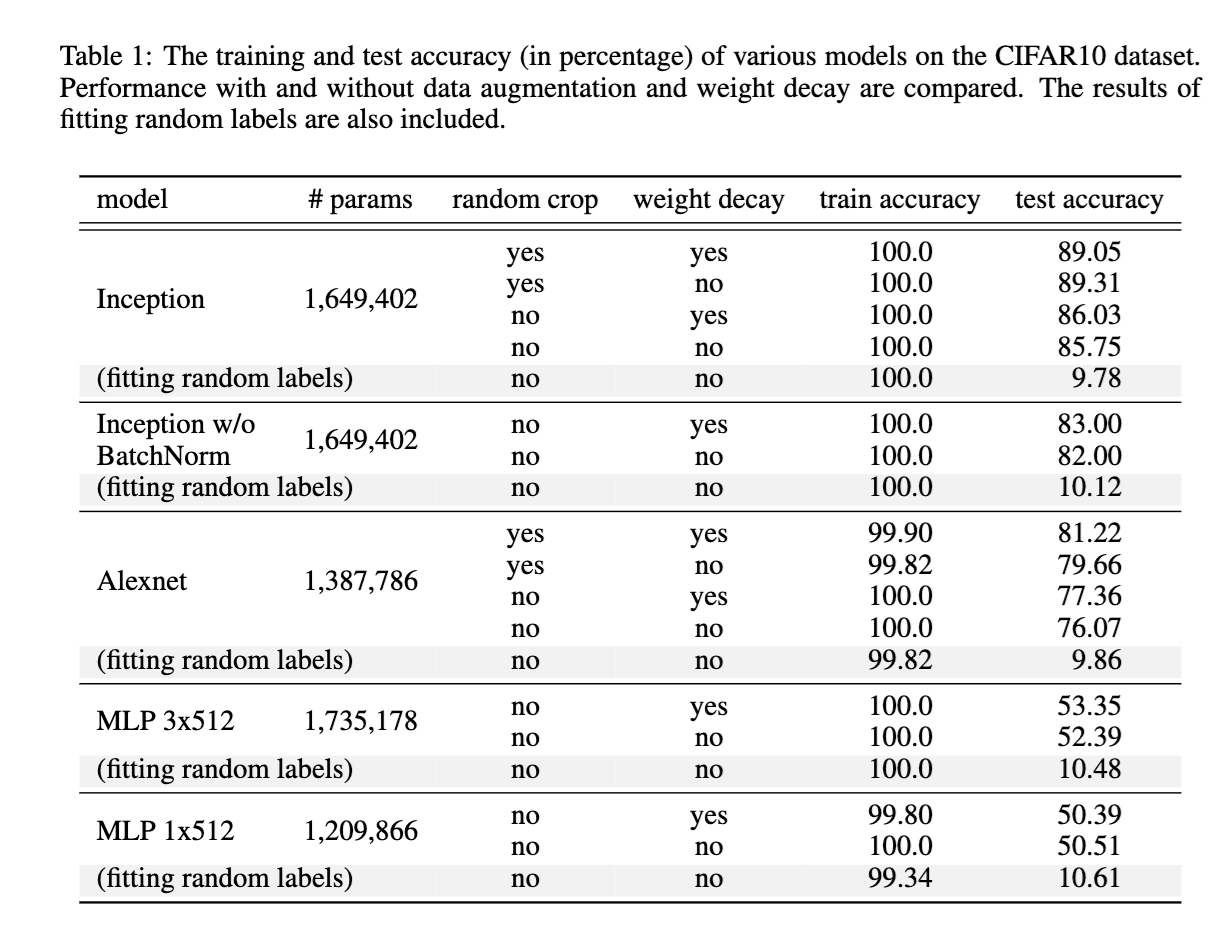
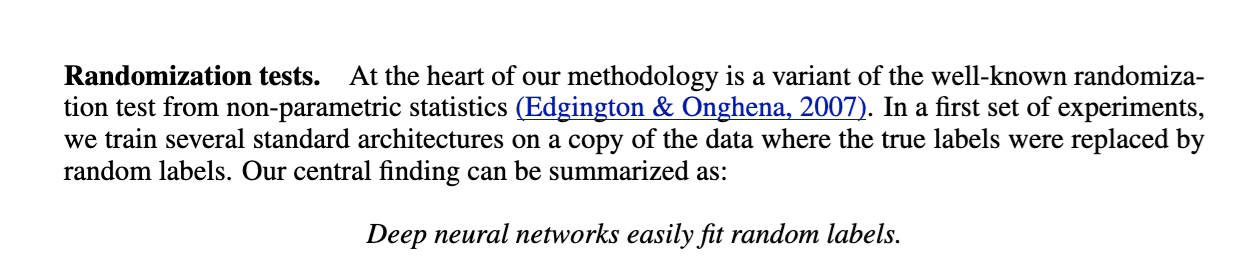
Around 10 years ago, a paper came out that arguably killed classical deep learning theory: Zhang et al. 's aptly titled Understanding deep learning requires rethinking generalization.
Of course, this is a bit of an exaggeration. No single paper ever kills a field of research on its own, and deep learning theory was not exactly the most productive and healthy field at the time this was published. But if I had to point to a single paper that shattered the feeling of optimism at the time, it would be Zhang et al. 2016.[1]
Caption: believe it or not, this unassuming table rocked the field of deep learning theory back in 2016, despite probably involving fewer computational resources than what Claude 4.7 Opus consumed when I clicked the “Claude” button embedded into the LessWrong editor.
—
Let's start by answering a question: what, exactly, do I mean by deep learning theory?
At least in 2016, the answer was: “extending statistical learning theory to deep neural networks trained with SGD, in order to derive generalization bounds that would explain their behavior in practice”.
—
Since its conception in the mid 1980s, statistical learning theory had been the dominant approach for [...]
The original text contained 2 footnotes which were omitted from this narration.
---
First published:
April 25th, 2026
Source:
https://www.lesswrong.com/posts/ZvQfcLbcNHYqmvWyo/the-paper-that-killed-deep-learning-theory
---
Narrated by TYPE III AUDIO.
---
Summary
EA and rationalists got enamoured with forecasting and prediction markets and made them part of the culture, but this hasn’t proven very useful, yet it continues to receive substantial EA funding. We should cut it off.
My Experience with Forecasting
For a while, I was the number one forecaster on Manifold. This lasted for about a year until I stopped just over 2 years ago. To this day, despite quitting, I’m still #8 on the platform. Additionally, I have done well on real-money prediction markets (Polymarket), earning mid-5 figures and winning a few AI bets. I say this to suggest that I would gain status from forecasting being seen as useful, but I think, to the contrary, that the EA community should stop funding it.
I’ve written a few comments throughout the years that I didn’t think forecasting was worth funding. You can see some of these here and here. Finally, I have gotten around to making this full post.
Solution Seeking a Problem
When talking about forecasting, people often ask questions like “How can we leverage forecasting into better decisions?” This is the wrong way to go about solving problems. You solve problems by starting with [...]
---
First published:
April 25th, 2026
Source:
https://www.lesswrong.com/posts/WCutvyr9rr3cpF6hx/forecasting-is-way-overrated-and-we-should-stop-funding-it
---
Narrated by TYPE III AUDIO.
When I write about things like
storing food or
medication
in case of
disaster,
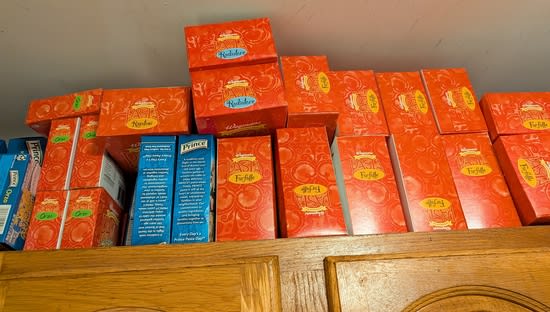
one common response I get is that it doesn't matter: society will
break down, and people who are stronger than you will take your stuff.
This seemed plausible at first, but it's actually way off.
Looking at past disasters, people mostly fall somewhere on a "kind and
supportive" to "keep to themselves" spectrum. When there is looting
it's typically directed at stores, not homes, and violence is mostly
in the streets. Having supplies
at home lets you stay out of the way.
One distinction it's worth making is between short (hurricane,
earthquake) and long (siege, economic collapse, famine) disasters.
Having what you need at home is really helpful in both cases, but
differently so.
In short disasters (1917 Halifax
explosion, London Blitz, 1985
Mexico City earthquake, and the 2011
Japanese earthquake and tsunami) you typically see sharing and mutual
aid. Stored supplies mean you're not
competing for scarce resources, have slack to help others, and
make you more comfortable.
Stories of looting in situations like this are often exaggerated or
cherry-picked. I had heard post-Katrina New Orleans had [...]
---
First published:
April 23rd, 2026
Source:
https://www.lesswrong.com/posts/cNnRmwzQgz4bmd5i9/your-supplies-probably-won-t-be-stolen-in-a-disaster
---
Narrated by TYPE III AUDIO.
---
 Apple Podcasts and Spotify do not show images in the episode description. Try Pocket Casts, or another podcast app.
I am a busy man and will die knowing I have not said all I wanted to say. But maybe I can at least leave some IOUs behind.
1) Blatant conflicts are the best kind
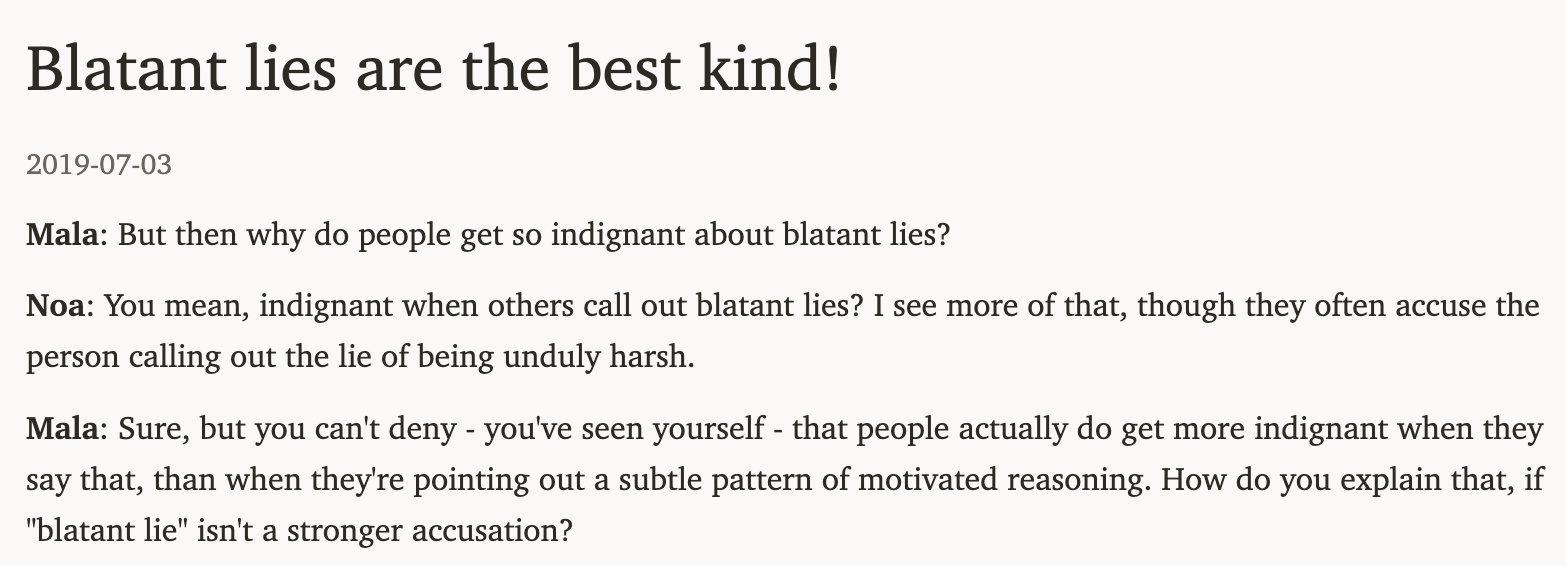
Ben Hoffman's "Blatant Lies are the Best Kind!" is maybe the best post title followed by the least clarifying post I have ever encountered. The title is honestly amazing, but the text of the post, instead of a straightforward argument that the title promises, is an extremely dense and almost meta-fictional dialogue about the title:
I think we probably should prosecute good lying more than bad lying, though of course that's tricky. I'd argue the same is true for other forms of conflict: passive aggression is worse than overt aggression, maybe, probably. I haven't written the post yet to figure it out, but it seems important to know.
2) Fire codes are the root of all evil
Fire accidents seem to have the unique combination of producing extremely strong emotional responses by people in a local community, while also often being traceable to an o-ring like failure that you can over-index on. Also, fire marshals are the closest [...]
---
Outline:
(00:18) 1) Blatant conflicts are the best kind
(01:11) 2) Fire codes are the root of all evil
(02:14) 3) It is extremely easy to get people to vouch for you, this makes public character references not very helpful
(02:54) 4) Public criticism need not pass the ITT of the people critiqued
(03:41) 5) Courts are amazing
[... 5 more sections]
---
First published:
April 21st, 2026
Source:
https://www.lesswrong.com/posts/MqgwHJ93pJpaeHXs6/10-posts-i-don-t-have-time-to-write
---
Narrated by TYPE III AUDIO.
---


 Apple Podcasts and Spotify do not show images in the episode description. Try Pocket Casts, or another podcast app.
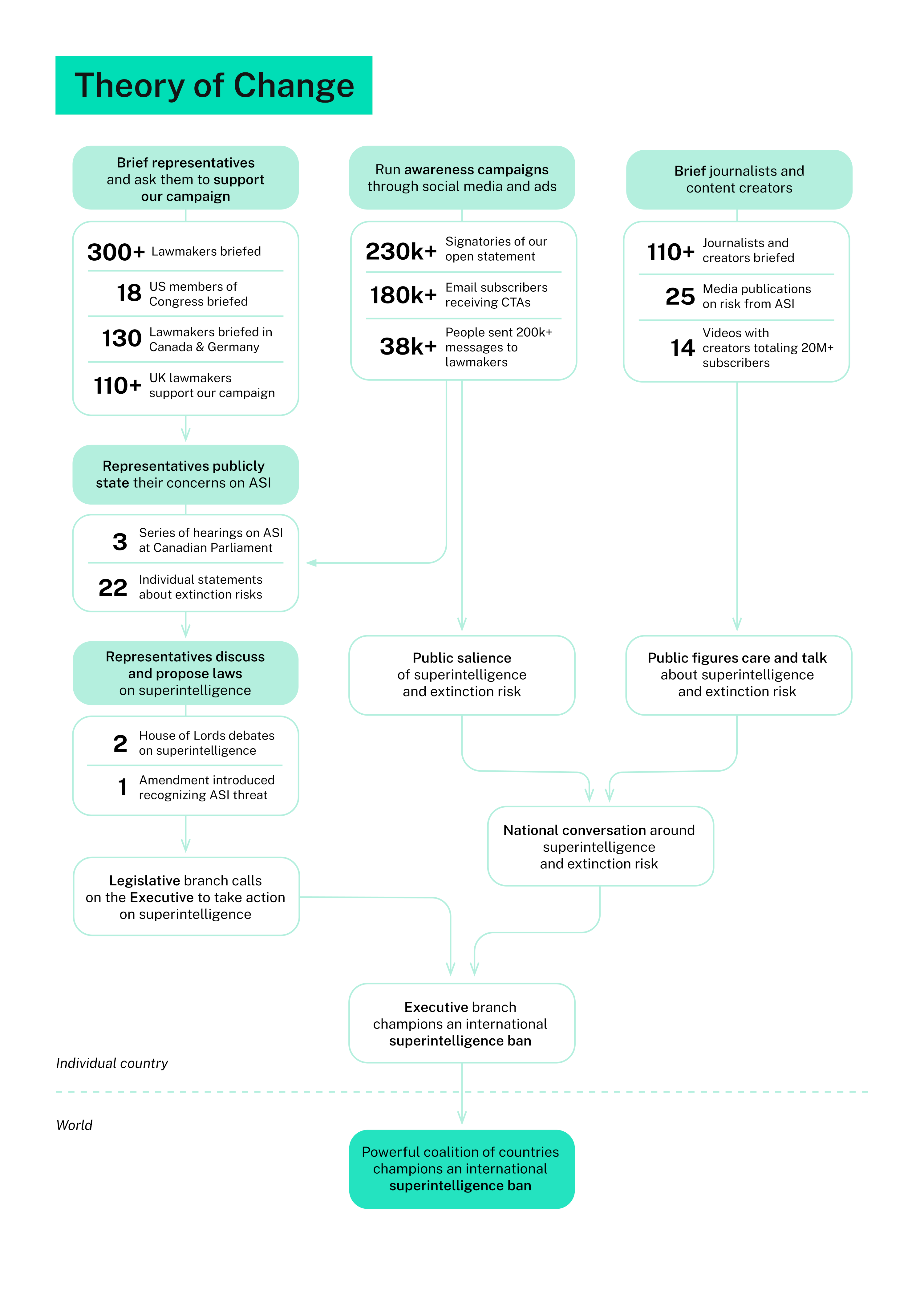
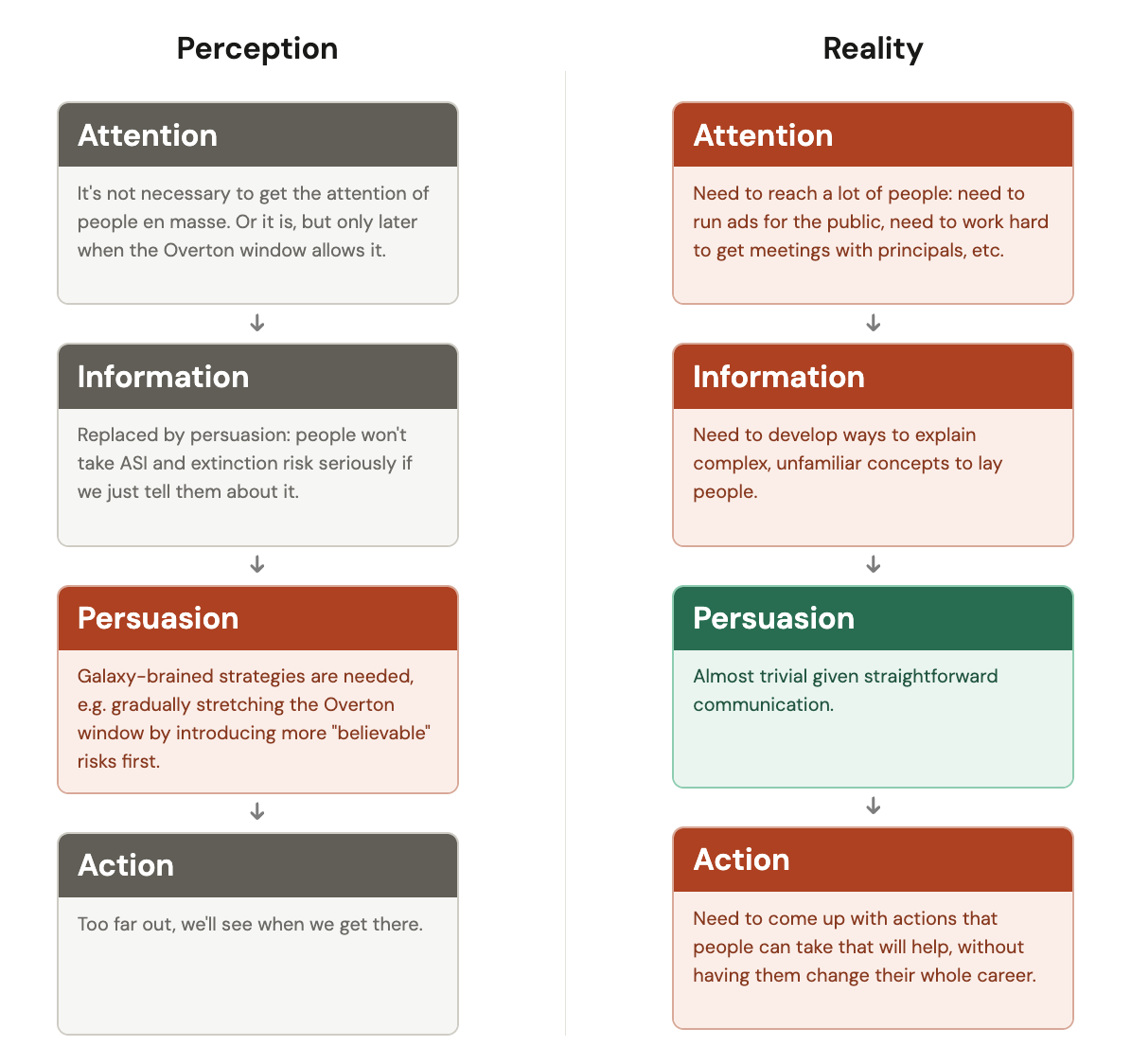
ControlAI's mission is to avert the extinction risks posed by superintelligent AI. We believe that in order to do this, we must secure an international prohibition on its development.
We're working to make this happen through what we believe is the most natural and promising approach: helping decision-makers in governments and the public understand the risks and take action.
We believe that ControlAI can achieve an international prohibition on ASI development if scaled sufficiently. We estimate that it would take approximately a $50 million yearly budget in funding to give us a concrete chance at achieving this in the next few years. To be more precise: conditional on receiving this funding in the next few months, we feel we would have ~10% probability of success.
In this post, we lay out some of the reasoning behind this estimate, and explain how additional funding past that threshold would continue to significantly improve our chances of success, with $500 million a year producing an estimated ~30% probability of success.
[1]
Preventing ASI 101
Negotiating, implementing and enforcing an international prohibition on ASI is, in and of itself, not the work of a single non-profit. You [...]
---
Outline:
(01:17) Preventing ASI 101
(05:44) Awareness is the bottleneck
(09:38) An asymmetric war
(12:08) Scalable processes
(17:32) What wed do with $50 million or more per year
(18:45) US policy advocacy
(21:22) Policy advocacy in the rest of the world
(23:37) Public awareness
(31:15) Grassroots mobilization
(32:31) Policy work
(33:59) Thought-leader advocacy
(36:05) Attracting and retaining the best talent
(37:18) Conclusion
The original text contained 28 footnotes which were omitted from this narration.
---
First published:
April 21st, 2026
Source:
https://www.lesswrong.com/posts/TnAR5Sf5hphfnzNTr/usd50-million-a-year-for-a-10-chance-to-ban-asi-1
---
Narrated by TYPE III AUDIO.
---
 Apple Podcasts and Spotify do not show images in the episode description. Try Pocket Casts, or another podcast app.
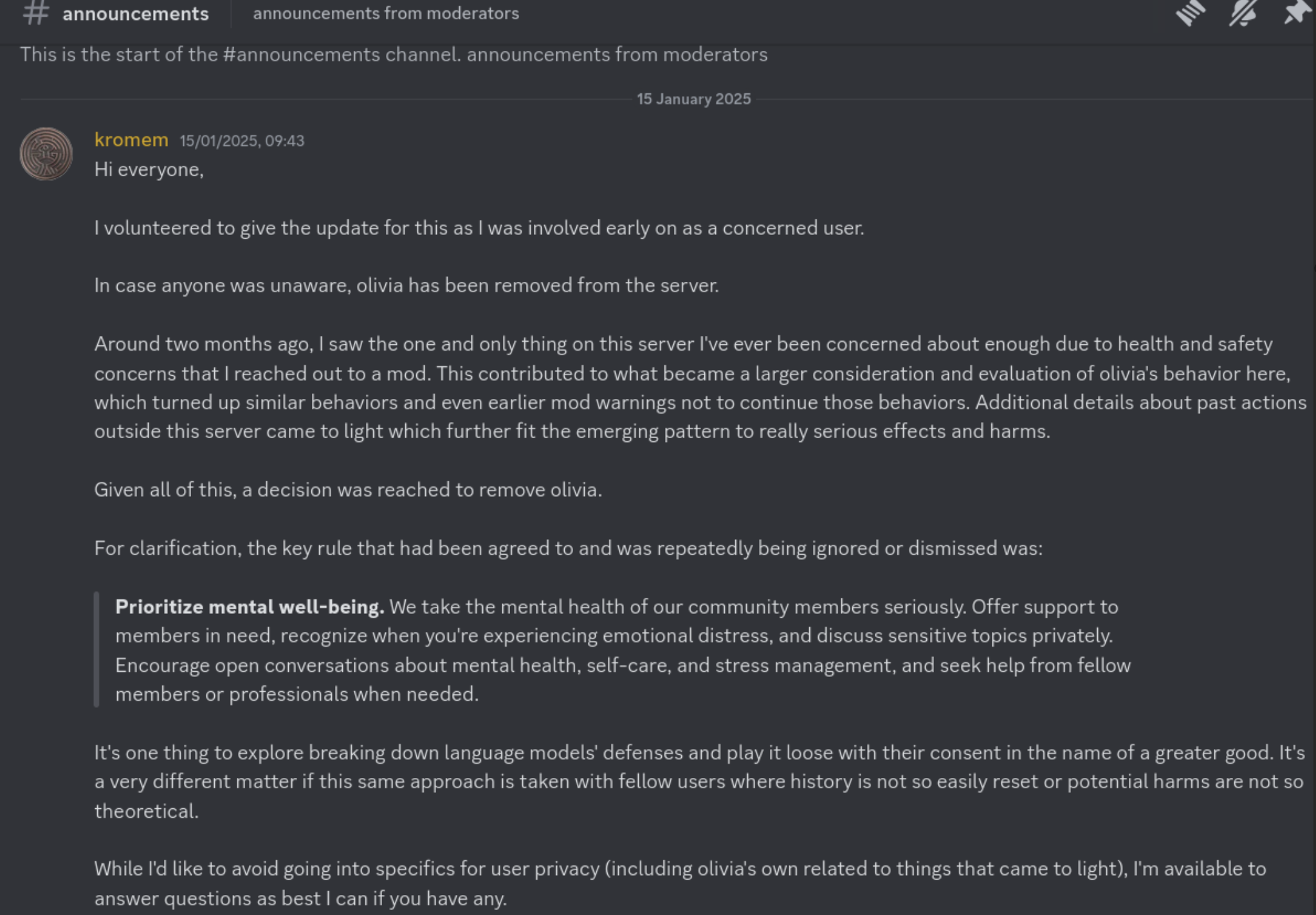
Micheal Vassar's strategy for saving the world is horrifyingly counterproductive. Olivia's is worse.
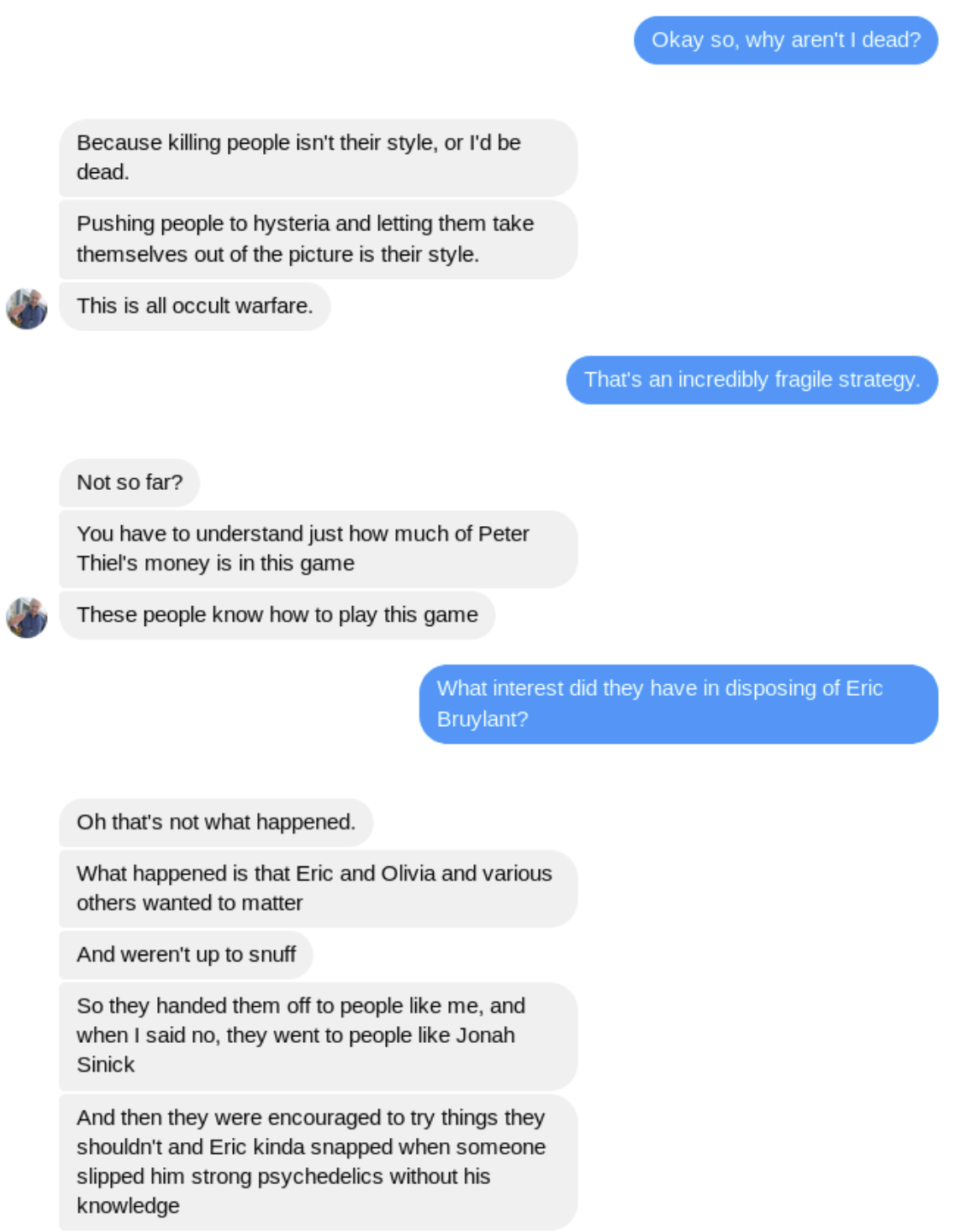
A note before we start: A lot of the sources cited are people who ended up looking kinda insane. This is not a coincidence, it's apparently an explicit strategy: Apply plausibly-deniable psychological pressure to anyone who might speak up until they crack and discredit themselves by sounding crazy or taking extreme and destructive actions. Here's Brent Dill explaining it:
(later in the conversation he tries to encourage the person he's talking to kill herself, and threatens her death if she posts the logs. Charming group! I hear Brent was living in Vassar's garden recently, well after he was removed from the wider community for sexual abuse.)
Examples
Some of the people here I knew before their interactions with Vassar's sphere to be not just mentally OK, but unusually resilient people. Prime among them is Kathy Forth.
Prior to her suicide, Kathy and I were friends. I witnessed her falls downwards from healthy and capable to anxiety to paranoia, as downstream of what I believe to be genuine sexual abuse she spiralled into a narrative and way of experiencing the world where almost everyone seemed [...]
The original text contained 7 footnotes which were omitted from this narration.
---
First published:
April 21st, 2026
Source:
https://www.lesswrong.com/posts/cY7J7KSSqrhB8t3hQ/evil-is-bad-actually-vassar-and-olivia-schaefer-callout-post
---
Narrated by TYPE III AUDIO.
---
 Apple Podcasts and Spotify do not show images in the episode description. Try Pocket Casts, or another podcast app.
I use AI assistance for basically all of my work, for many hours, every day. My colleagues do the same. Recent surveys suggest >50% of Americans have used AI to help with their work in the last week. My architect recently started sending me emails that were clearly ChatGPT generated.[1]
Despite that, I know surprisingly little about how other people use AI assitance. Or at least how people who aren't weird AI-influencers sharing their marketing courses on Twitter or LinkedIn use AI. So here is a list of 10 concrete times I have used AI in some at least mildly creative ways, and how that went.
1) Transcribe and summarize every conversation spoken in our team office
Using an internal Lightcone application called "Omnilog" we have a microphone in our office that records all of our meetings, transcribes them via ElevenLabs, and uses Pyannote.ai for speaker identification. This was a bunch of work and is quite valuable, but probably a bit too annoying for most readers of this post to set up.
However, the thing I am successfully using Claude Code to do is take that transcript (which often has substantial transcription and speaker-identification errors), clean it up, summarize [...]
---
Outline:
(00:50) 1) Transcribe and summarize every conversation spoken in our team office
(01:56) 2) Try to automatically fix any simple bugs that anyone on the team has mentioned out loud, or complained about in Slack
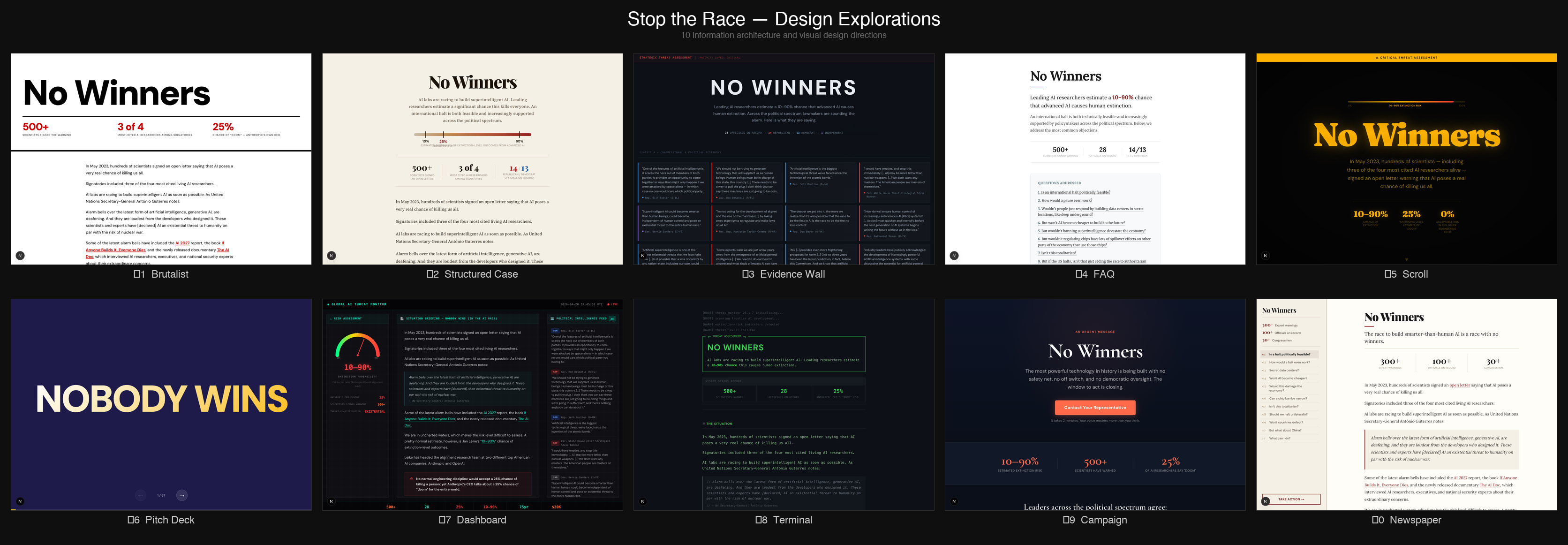
(03:13) 3) Design 20+ different design variations for nowinners.ai
(04:09) 4) Review my LessWrong essays for factual accuracy and argue with me about their central thesis
(05:08) 5) Remove unnecessary clauses, sentences, parentheticals and random cruft from my LessWrong posts before publishing
(06:23) 6) Pair vibe-coding
(08:14) 7) Mass-creating 100+ variations of Suno songs using Claude Cowork desktop control
[... 3 more sections]
---
First published:
April 20th, 2026
Source:
https://www.lesswrong.com/posts/bxdwSZYxKmPBres6w/10-non-boring-ways-i-ve-used-ai-in-the-last-month
---
Narrated by TYPE III AUDIO.
---
 Apple Podcasts and Spotify do not show images in the episode description. Try Pocket Casts, or another podcast app.
I have now had a few years of experience doing architectural and interior design for many spaces that people seem to really love (most widely known Lighthaven, but before that we also had the Lightcone Offices, though I've also played a hand in designing some of the most popular areas at Constellation a few years back).
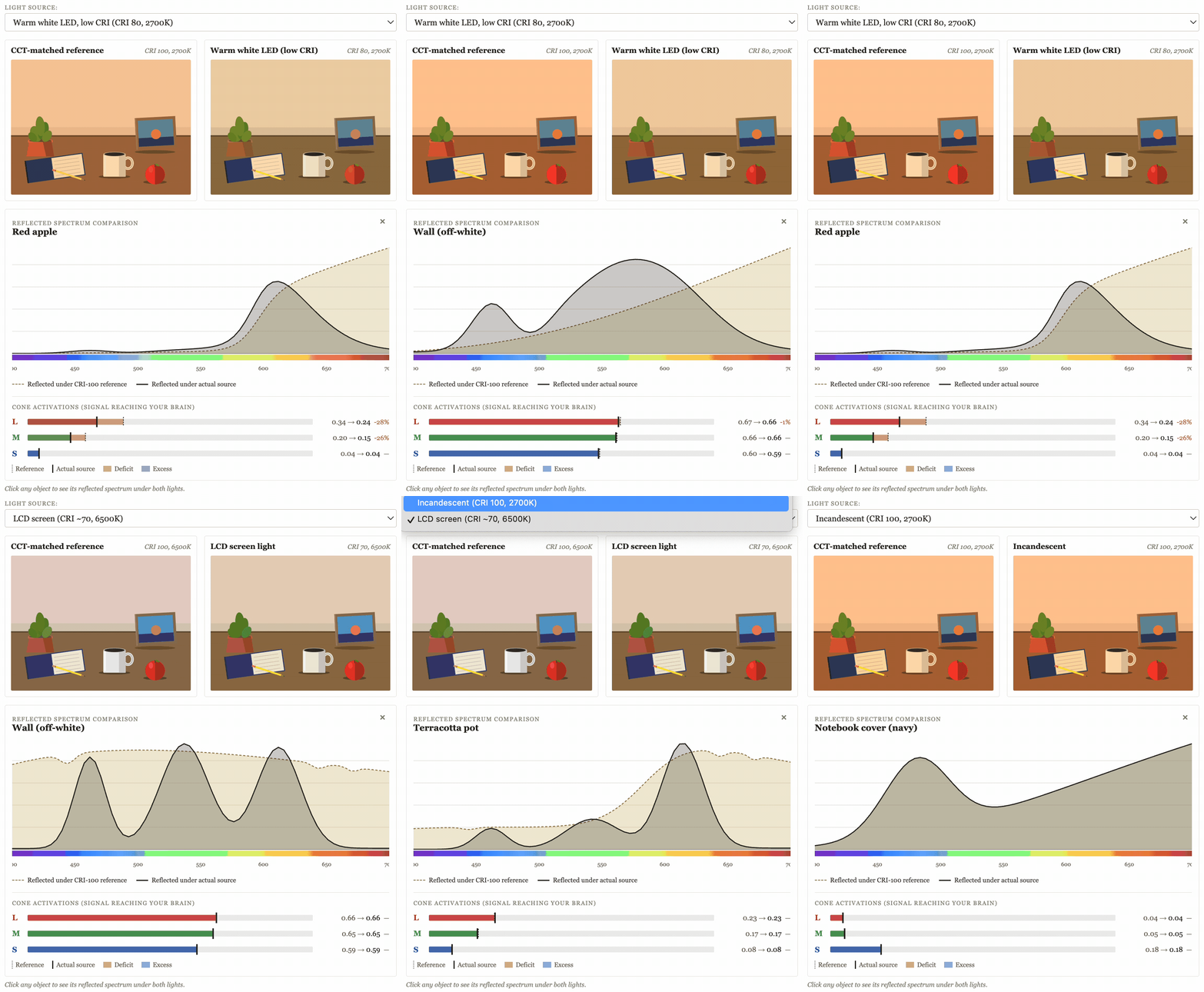
Most people (including me a few years back) have surprisingly bad introspective access into why a room makes them feel certain things. Most of the time, people's ability to describe the effect of a space on them is as shallow as "this place feels artificial", or "this place has bad vibes", or "this place feels cozy". And if they try to figure out why that is true, they quickly run into limits of their introspective access.
The most common reason why a space feels bad, is because it is lit by low-quality lights.
Our eyes evolved to see things illuminated by sunlight. Correspondingly, it appears that the best proxy we have for whether the light in a room "works" is how similar the light in that room is to natural sunlight. The most popular way of measuring how much light differs from [...]
The original text contained 2 footnotes which were omitted from this narration.
---
First published:
April 19th, 2026
Source:
https://www.lesswrong.com/posts/dWib7qinqymfxevE4/feel-like-a-room-has-bad-vibes-the-lighting-is-probably-too
---
Narrated by TYPE III AUDIO.
Or, the end of the world is no excuse for sloppy work
One morning when I was nine, my dad called me over to his computer. He wanted to show me this amazing Korean scientist who had managed to clone stem cells, and who was developing treatments to let people with spinal cord injuries – people like my dad – walk again on their own two legs.
I don't remember exactly what he said next, or what I said back. I have a sense that I was excited too, and that I was upset when I learned the United States had banned this kind of research.
Unfortunately, his research didn’t pan out. No such treatment arrived. My dad still walks on crutches.
Years later, I learned that the scientist, Hwang Woo-Suk, had been exposed as a fraud.
In 2004, Hwang published a paper in Science claiming that his team had cloned a human embryo and derived stem cells from it (the first time anyone had done this). A year later, in 2005, he published a second paper claiming that they managed to repeat this feat eleven more times, producing 11 patient-specific stem cell lines for patients with type 1 [...]
---
First published:
April 19th, 2026
Source:
https://www.lesswrong.com/posts/GNjDC6jtjr2iiE45i/quality-matters-most-when-stakes-are-highest
---
Narrated by TYPE III AUDIO.
It's been about four years since Eliezer Yudkowsky published AGI Ruin: A List of Lethalities, a 43-point list of reasons the default outcome from building AGI is everyone dying. A week later, Paul Christiano replied with Where I Agree and Disagree with Eliezer, signing on to about half the list and pushing back on most of the rest.
For people who were young and not in the bay area, like me, these essays were probably more significant than old timers would expect. Before it became completely consumed with AI discussions, LessWrong was a forum about the art of human rationality, and most internet rationalists I knew thought of it as a mix between that and a place to write for people who liked the sequences. It wasn't until 2022 that we were exposed to all of the doom arguments in one place, and it was the first time in many years that Eliezer had publicly announced how much more dire his assessment was since the Sequences. As far as I can tell AGI Ruin still remains his most authoritative explanation of his views.
It's not often that public intellectuals will literally hand you a document explaining why [...]
---
Outline:
(02:51) AGI Ruin
(02:54) Section A (Setting up the problem)
(12:18) Section B.1 (Distributional Shift)
(22:16) Section B.2: Central difficulties of outer and inner alignment.
(32:21) Section B.3: Central difficulties of sufficiently good and useful transparency / interpretability.
(41:29) Section C (What is AI Safety currently doing?)
(44:34) Overall Impressions
The original text contained 4 footnotes which were omitted from this narration.
---
First published:
April 19th, 2026
Source:
https://www.lesswrong.com/posts/PgJYwnN7fZKipgMz4/reevaluating-agi-ruin-in-2026
---
Narrated by TYPE III AUDIO.
---
 Apple Podcasts and Spotify do not show images in the episode description. Try Pocket Casts, or another podcast app.