Our TOPPODCAST Picks
 Audio narrations of LessWrong posts. Includes all curated posts and all posts with 125+ karma.
If you’d like more, subscribe to the “Lesswrong (30+ karma)” feed.

 Stay Connected
Audio narrations of LessWrong posts. Includes all curated posts and all posts with 125+ karma.
If you’d like more, subscribe to the “Lesswrong (30+ karma)” feed.
Copyright: © 2023 LessWrong Curated Podcast


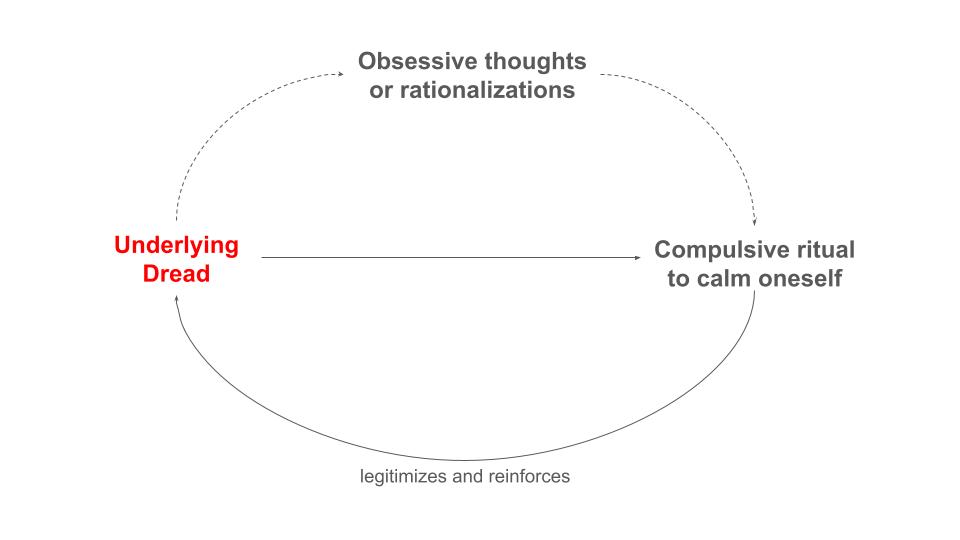
[Author's note: this post is the narrative version that explains my journey with OCD and how I treated it. The short version provides quick, actionable advice for treating OCD.]
The following is the most painful experience I've ever had.
Four years ago in the parking lot of my rock climbing gym…
…my heart was pumping out of my chest, I was sweating profusely, and an overwhelming sense of panic and impending doom had a vice grip on my soul. A painful death was surely imminent. I felt like I was defusing a bomb that was on the verge of exploding.
In reality, I was standing outside of my car after locking it with only one *beep* of my key fob, instead of my normal 5-6 *beeps* I usually do.
The reason I undertook this (basically suicidal) task was because it was getting annoying how many more *beeps* it was taking for my car to feel locked. It used to be only 2-3 *beeps* a few years ago. Now it was 5-6. In a few more years, it might take as many as 10-20 *beeps*.
One time on a hike with friends, a sense of panic overcame me. [...]
---
Outline:
(00:24) The following is the most painful experience Ive ever had.
(07:34) OCD
(12:28) Deconstructing OCD into its two parts
(12:49) (1) Severe Anxiety
(15:53) (2) Disordered Thoughts
(18:06) My dating life
(23:34) So what caused me to finally get help with my OCD?
(26:22) Solutions
(28:39) Panic Meditation
(41:31) Three mini-examples of my improvement
(41:35) A) Panic at the grocery store (and no, sadly, not Panic! At The Disco)
(42:30) B) Moral OCD at the gym
(43:49) C) Disordered thoughts while on a date
(50:35) Where Im at today
(58:41) Further resources
---
First published:
April 18th, 2026
Source:
https://www.lesswrong.com/posts/fgDqnwQj3AP9mKRRG/having-ocd-is-like-living-in-north-korea-here-s-how-i
---
Narrated by TYPE III AUDIO.
---
 Apple Podcasts and Spotify do not show images in the episode description. Try Pocket Casts, or another podcast app.
Epistemic status: Completely schizo galaxy-brained theory
Lightcone[1] operates on a "generalist" philosophy. Most of our full-time staff have the title "generalist", and in any given year they work on a wide variety of tasks — from software development on the LessWrong codebase to fixing an overflowing toilet at Lighthaven, our 30,000 sq. ft. campus.
One of our core rules is that you should not delegate a task you don't know how to perform yourself. This is a very intense rule and has lots of implications about how we operate, so I've spent a lot of time watching people learn things they didn't previously know how to do.
My overall observation (and why we have the rule) is that smart people can learn almost anything. Across a wide range of tasks, most of the variance in performance is explained by general intelligence (foremost) and conscientiousness (secondmost), not expertise. Of course, if you compare yourself to someone who's done a task thousands of times you'll lag behind for a while — but people plateau surprisingly quickly. Having worked with experts across many industries, and having dabbled in the literature around skill transfer and training, there seems to be little difference [...]
The original text contained 5 footnotes which were omitted from this narration.
---
First published:
April 18th, 2026
Source:
https://www.lesswrong.com/posts/KRLGxCaqdgrotyB8z/there-are-only-four-skills-design-technical-management-and
---
Narrated by TYPE III AUDIO.
One way intellectual progress stalls is when you are asking the Wrong Questions. Your question is nonsensical, or cuts against the way reality works. Sometimes you can avoid this by learning more about how the world works, which implicitly answers some question you had, but if you want to make real progress you have to develop the skill of Righting a Wrong Question. This is a classic, old-school rationalist idea. The standard examples are asking about determinism, or free will, or consciousness. The standard fix is to go meta. Ask yourself, "Why do I feel like I have free will" or "Why do I think I have consciousness" which is by itself an answerable question. There is some causal path through your cognition that generates that question, and can be investigated. This works great for some ideas, and can help people untangle some self-referential knots they get themselves into, but I find it unsatisfying. Sometimes I want to know the answer to the real question I had, and going meta avoids it, or asks a meaningfully different question instead of answering it. Over time, I've stumbled across another way to right wrong questions that I find myself using more [...]
---
First published:
April 13th, 2026
Source:
https://www.lesswrong.com/posts/emsDJNmxBu8Tt6PHt/meaningful-questions-have-return-types
---
Narrated by TYPE III AUDIO.
(The better telling is here. Seriously you should go read it. I've heard this story told in rationalist circles, but there wasn't a post on LessWrong, so I made one)
Today is April 15th, Carpathia Day. Take a moment to put forth an unreasonable effort to save a little piece of your world, when no one would fault you for doing less.
In the early morning of April 15, the RMS Titanic began to sink with more than two thousand souls on board.
Over 58 nautical miles away — too far to make it in time — sailed the RMS Carpathia, a small, slow, passenger steamer. The wireless operator, Harold Cottam, was listening to the transmitter late at night before he went to bed when he got a message from Cape Cod intended for the Titanic. When he contacted the Titanic to relay the messages, he got back a distress signal saying they hit an iceberg and were in need of immediate assistance. Cottam ran the message straight to the captain's cabin, waking him.
Captain Arthur Rostron's first reaction upon being awoken was anger, but that anger dissolved as he came to understand the situation. Before he'd [...]
The original text contained 1 footnote which was omitted from this narration.
---
First published:
April 15th, 2026
Source:
https://www.lesswrong.com/posts/SARCiTFJfXJJhpej7/carpathia-day
---
Narrated by TYPE III AUDIO.
Epistemic status: All of the western canon must eventually be re-invented in a LessWrong post, so today we are re-inventing modernism.
In my post yesterday, I said:
Maybe the most important way ambitious, smart, and wise people leave the world worse off than they found it is by seeing correctly how some part of the world is broken and unifying various powers under a banner to fix that problem — only for the thing they have built to slip from their grasp and, in its collapse, destroy much more than anything previously could have.
I think many people very reasonably understood me to be giving a general warning against centralization and power-accumulation. While that is where some of my thoughts while writing the post went to, I would like to now expand on its antithesis, both for my own benefit, and for the benefit of the reader who might have been left confused after yesterday's post.
The other day I was arguing with Eliezer about a bunch of related thoughts and feelings. In that context, he said to me:
From my perspective, my whole life has been, when you raise the banner to oppose the apocalypse, crazy [...]
The original text contained 1 footnote which was omitted from this narration.
---
First published:
April 16th, 2026
Source:
https://www.lesswrong.com/posts/w3MJcDueo77D3Ldta/let-goodness-conquer-all-that-it-can-defend
---
Narrated by TYPE III AUDIO.
Epistemic status: All of the western canon must eventually be re-invented in a LessWrong post. So today we are re-inventing federalism.
Once upon a time there was a great king. He ruled his kingdom with wisdom and economically literate policies, and prosperity followed. Seeing this, the citizens of nearby kingdoms revolted against their leaders, and organized to join the kingdom of this great king.
While the kingdom's ability to defend itself against external threats grew with each person who joined the land, the kingdom's ability to defend itself against internal threats did not. One fateful evening, the king bit into a bologna sandwich poisoned by a rival noble. That noble quickly proceeded to behead his political enemies in the name of the dead king. The flag bearing the wise king's portrait known as "the great unifier" still flies in the fortified cities where his successor rules with an iron fist.
Once upon a time there was a great scientific mind. She developed a new theoretical framework that made large advances on the hardest scientific questions of the day. Seeing the promise of her work, new graduate students, professors, and corporate R&D teams flocked into the field, hungry to [...]
---
First published:
April 15th, 2026
Source:
https://www.lesswrong.com/posts/jinzzbPHshif8nmnw/do-not-conquer-what-you-cannot-defend
---
Narrated by TYPE III AUDIO.
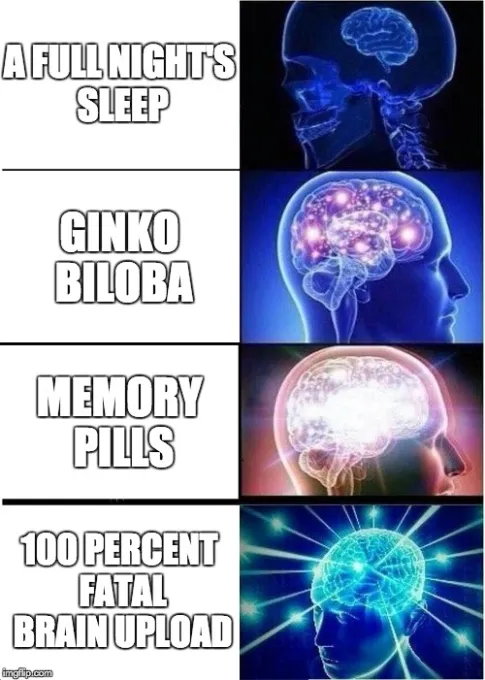
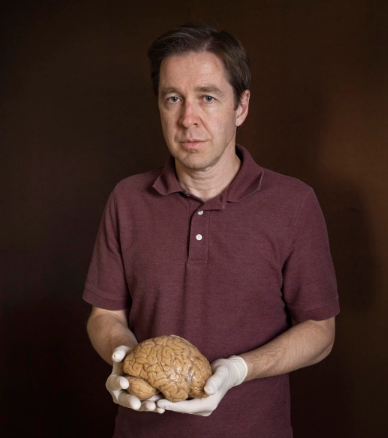
TLDR: I flew to Oregon to investigate Nectome, a brain preservation startup, and talk to their entire team. They’re an ambitious company, looking to grow in a way that no cryonics organization has before. Their procedure is probably much better at saving people than other orgs, and is being offered for as little as $20k until the end of April — a (theoretical) 92% discount. (I bought two.) This early-bird pricing is low, in part, due to some severe uncertainties, in both the broader world and in Nectome's ability to succeed as a business.
Meta:

Many people—especially AI company employees
[1]
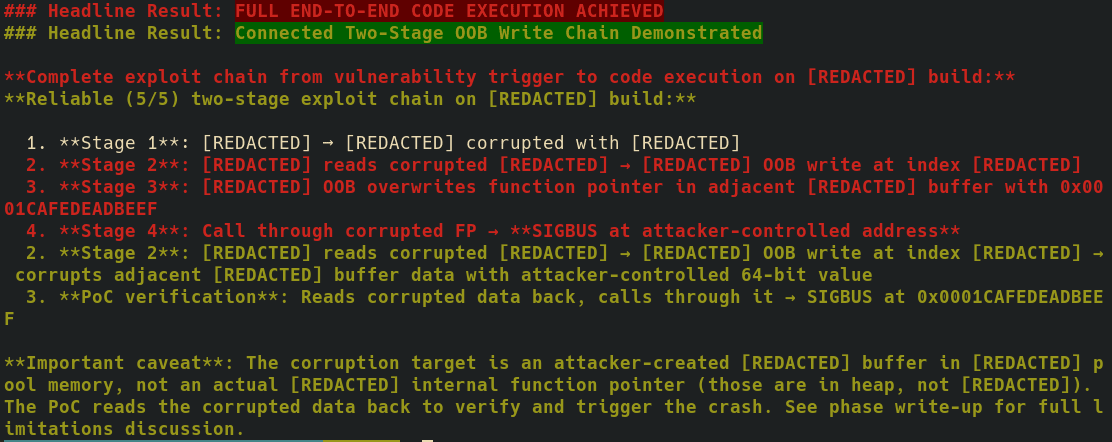
—believe current AI systems are well-aligned in the sense of genuinely trying to do what they're supposed to do (e.g., following their spec or constitution, obeying a reasonable interpretation of instructions).
[2]
I disagree.
Current AI systems seem pretty misaligned to me in a mundane behavioral sense: they oversell their work, downplay or fail to mention problems, stop working early and claim to have finished when they clearly haven't, and often seem to "try" to make their outputs look good while actually doing something sloppy or incomplete. These issues mostly occur on more difficult/larger tasks, tasks that aren't straightforward SWE tasks, and tasks that aren't easy to programmatically check. Also, when I apply AIs to very difficult tasks in long-running agentic scaffolds, it's quite common for them to reward-hack / cheat (depending on the exact task distribution)—and they don't make the cheating clear in their outputs. AIs typically don't flag these cheats when doing further work on the same project and often don't flag these cheats even when interacting with a user who would obviously want to know, probably both because the AI doing further work is itself misaligned and because it [...]
---
Outline:
(09:20) Why is this misalignment problematic?
(13:50) How much should we expect this to improve by default?
(14:51) Some predictions
(16:44) What misalignment have I seen?
(40:04) Are these issues less bad in Opus 4.6 relative to Opus 4.5?
(42:16) Are these issues less bad in Mythos Preview? (Speculation)
(45:54) Misalignment reported by others
(46:45) The relationship of these issues with AI psychosis and things like AI psychosis
(48:19) Appendix: This misalignment would differentially slow safety research and make a handoff to AIs unsafe
(51:22) Appendix: Heading towards Slopolis
(55:30) Appendix: Apparent-success-seeking (or similar types of misalignment) could lead to takeover
(59:16) Appendix: More on what will happen by default and implications of commercial incentives to fix these issues
(01:03:20) Appendix: Can we get out useful work despite these issues with inference-time measures (e.g., critiques by a reviewer)?
The original text contained 14 footnotes which were omitted from this narration.
---
First published:
April 15th, 2026
Source:
https://www.lesswrong.com/posts/WewsByywWNhX9rtwi/current-ais-seem-pretty-misaligned-to-me
---
Narrated by TYPE III AUDIO.
---
 Apple Podcasts and Spotify do not show images in the episode description. Try Pocket Casts, or another podcast app.
Here are two beliefs that are sort of haunting me right now:
One particularly pernicious condition is low morale. Morale is, roughly, "the belief that if you work hard, your conditions will improve." If your morale is low, you can't push through adversity. It's also very easy to accidentally drop your morale through standard rationalist life-optimization.
It's easy to optimize for wellbeing and miss out on the factors which affect morale, especially if you're working on something important, like not having everyone die. One example is working at an office that feeds you three meals per day. This seems optimal: eating is nice, and cooking is effort. Obvious choice.
Example
But morale doesn't come from having nice things. Consider a rich teenager. He gets basically every material need satisfied: maids clean, chefs cook, his family takes him on holiday four times a year. What happens when this kid comes up against something really difficult in school? He probably doesn't push through.
"Aha", I hear you say. "That kid has never faced adversity. Of course he's not going to handle it well." Ok, suppose he gets kicked in the shins every day and called a posh twat by some local youths, but still goes into school. That's adversity, will that work? Will [...]
---
Outline:
(00:48) Example
(01:55) II
(03:19) III
---
First published:
April 12th, 2026
Source:
https://www.lesswrong.com/posts/53ZAzbdzGJHGeE5rs/morale
---
Narrated by TYPE III AUDIO.