TopPodcast.com
Menu
  • Home
  • Top Charts
  • Top Networks
  • Top Apps
  • Top Independents
  • Top Podfluencers
  • Top Picks
    • Top Business Podcasts
    • Top True Crime Podcasts
    • Top Finance Podcasts
    • Top Comedy Podcasts
    • Top Music Podcasts
    • Top Womens Podcasts
    • Top Kids Podcasts
    • Top Sports Podcasts
    • Top News Podcasts
    • Top Tech Podcasts
    • Top Crypto Podcasts
    • Top Entrepreneurial Podcasts
    • Top Fantasy Sports Podcasts
    • Top Political Podcasts
    • Top Science Podcasts
    • Top Self Help Podcasts
    • Top Sports Betting Podcasts
    • Top Stocks Podcasts
  • Podcast News
  • About Us
  • Podcast Advertising
  • Contact
Not in our directory?
Add Show Here
Podcast Equipment
Center

toppodcastlogoOur TOPPODCAST Picks

  • Comedy
  • Crypto
  • Sports
  • News
  • Politics
  • True Crime
  • Business
  • Finance

Follow Us

toppodcastlogoStay Connected

    View Top 200 Chart
    Back to Rankings Page
    Government & Organizations

    Core EM – Emergency Medicine Podcast

    Core EM Emergency Medicine Podcast

    Advertise

    Copyright: © Core EM

    • Apple Podcasts
    • Google Play
    • Spotify

    Latest Episodes:
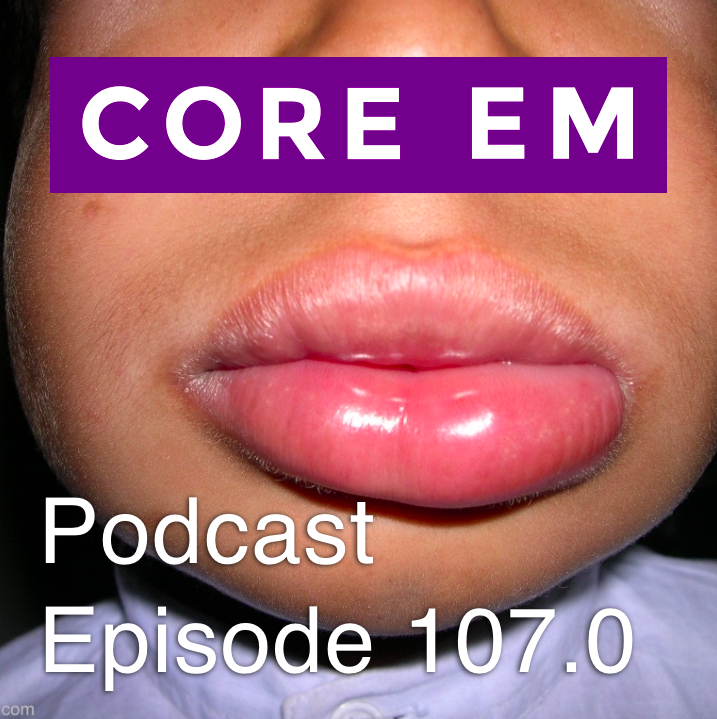
    Episode 107.0 – Angioedema Jul 24, 2017
    Show notes

    Prompted by the recent CAMEO trial publication on icatibant, we dive into angioedema with a focus on airway management.

    https://media.blubrry.com/coreem/content.blubrry.com/coreem/Episode_107_0_Final_Cut.m4a Download Leave a Comment Tags: ACE Inhibitors, Allergy/Immunology, Angioedema, Icatibant

    Show Notes

    Take Home Points

    1. Airway management is paramount, expect a challenging intubation and consider controlling the airway early
    2. When controlling the airway, consider an awake approach and fiberoptics if available. Always be prepared for the can’t intubate, can’t oxygenate scenario with a double set up.
    3. If the patient has urticaria and pruritus, the process is likely histamine mediated and will respond to typical anaphylaxis treatment
    4. Finally, observe the patient for progression of swelling and don’t forget to stop the inciting medication

    Read More

    Core EM: Angioedema

    EMCrit: Podcast 145 – Awake Intubation Lecture from SMACC

    ERCast: Angioedema

    REBEL EM: Icatibant Doesn’t Improve Outcomes in ACE-I Induced Angioedema

    The SGEM: Icatibant Bites the Dust – For ACE-I Induced Angioedema


    Read More

    Episode 106.0 – Procedural Sedation and Analgesia II Jul 17, 2017
    Show notes

    This week we drop into some of the nitty gritty on PSA including preparation and patient assessment as well as discuss some common pitfalls.

    https://media.blubrry.com/coreem/content.blubrry.com/coreem/Episode_106_0_Final_Cut.m4a Download Leave a Comment Tags: Pitfalls, Procedural Sedation, PSA

    Show Notes

    Take Home Points

    1. Always perform a full pre-PSA evaluation including an airway assessment. Time of last meal shouldn’t delay your sedation based on the best available evidence.
    2. Always do a complete setup including consideration of different agents, dosage calculations, preparation of airway equipment and reversal agents.
    3. PSA serious adverse events are rare but you still must be prepared for them. Careful agent selection and dosing can help prevent issues but, know your outs.
    4. If apnea develops, do some basic maneuvers before you reach for the BVM or laryngoscope. Remember OOPS as in “oops, my patient went apneic.” Oxygen on, pull the mandible forward and sit the patient up. This fixes most issues

    Show Notes

    Core EM: Procedural Sedation and Analgesia Resources

    EM Updates:Emergency Department Procedural Sedation Checklist v2

    REBEL EM: Complications of Procedural Sedation

    Bellolio MF et al. Incidence of adverse events in adults undergoing procedural sedation in the emergency department: a systematic review and meta-analysis. Acad Emerg Med 2016; 23: 119-34. PMID: 26801209


    Read More

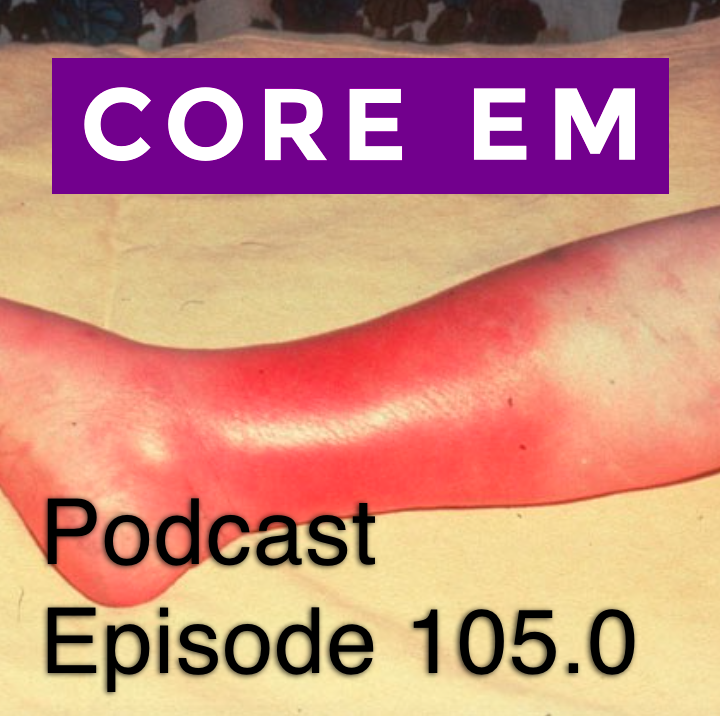
    Episode 105.0 – Initial Antibiotic Choice in Cellulitis Jul 10, 2017
    Show notes

    This week we dissect a JAMA article on the whether it's necessary to add TMP-SMX to cephalexin in the treatment of uncomplicated cellulitis

    https://media.blubrry.com/coreem/content.blubrry.com/coreem/Episode_105_0_Final_Cut.m4a Download Leave a Comment Tags: Cellulitis, IDSA, Infectious Diseases, MRSA

    Show Notes

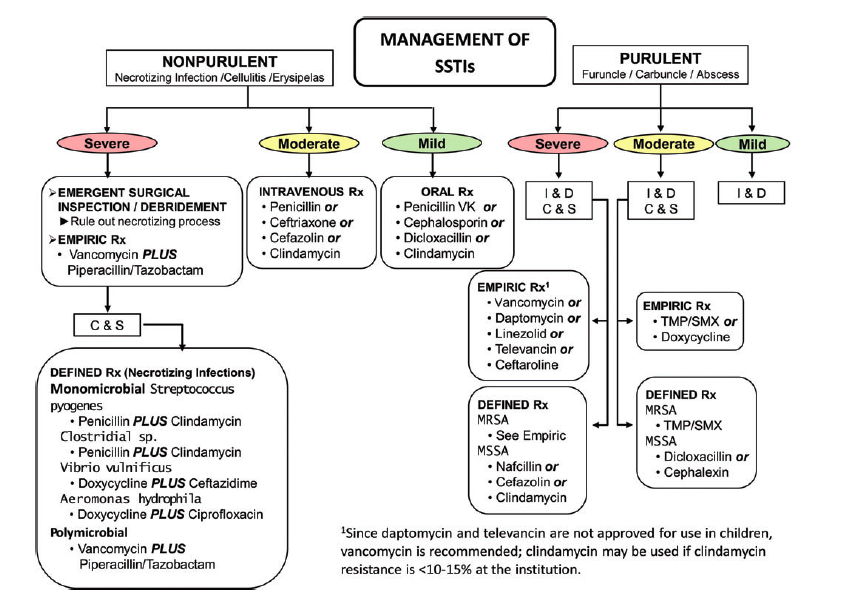
    SSTI Flow Diagram (Stevens 2014)

    EM Lit of Note: Double Coverage, Cellulitis Edition

    Pharm ER Tox Guy: Uncomplicated Cellulitis? Consider Strep-Only Coverage

    Core EM: Cellulitis

    Stevens DL et al. Practice guidelines for the diagnosis and management of skin and soft tissue infections: 2014 update by the infectious diseases society of America. Clin Infect Dis 2014; 59(2): e10-52. PMID: 24973422


    Read More

    Episode 104.0 – Procedural Sedation and Analgesia Jul 03, 2017
    Show notes

    This week we dive into the various common agents used in procedural sedation and analgesia in the ED.

    https://media.blubrry.com/coreem/content.blubrry.com/coreem/Episode_104_0_Final_Cut.m4a Download 2 Comments Tags: Anesthesia, Critical Care, Procedural Sedation, PSA

    Show Notes

    Show Notes

    Core EM : Parenteral Benzodiazepines

    Core EM: Procedural Sedation and Analgesia Resources

    EM Updates: Ketamine Brain Continuum

    First 10 EM: Managing laryngospasm in the emergency department


    Read More

    Episode 103.0 – Priapism Jun 26, 2017
    Show notes

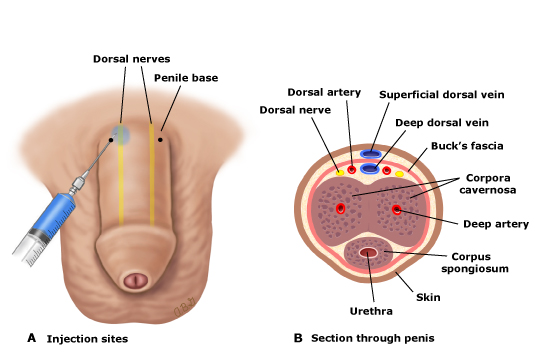
    This week we talk about priapism focusing on emergency department management.

    https://media.blubrry.com/coreem/content.blubrry.com/coreem/Episode_103_0_Final_Cut.m4a Download One Comment Tags: GU, Priapism, Urology

    Show Notes

    Read More

    Dr. Mutara Jubara: Ultrasound Guided Dorsal Penile Nerve Block

    McCollough M, Sharieff GQ: Genitourinary and Renal Tract Disorders; in Marx JA, Hockberger RS, Walls RM, et al (eds): Rosen’s Emergency Medicine: Concepts and Clinical Practice, ed 8. St. Louis, Mosby, Inc., 2014, (Ch) 174: p 2205-2223.

    Davis JE, Silverman MA. Urologic Procedures; in Roberts JR: Roberts and Hedges’ Clinical Procedures in Emergency Medicine, ed 6. 2014, (Ch) 55: p 1113-1154

    Govier FE et al. Oral terbutaline for the treatment of priapism. J Urol 1994;151: 878-9. PMID: 8126815

    Priyadarshi S. Oral terbutaline in the management of pharmacologically induced prolonged erection. Int J Impot Res. 2004;16:424-426. PMID: 14999218


    Read More

    Episode 102.0 – Valsalva Maneuver in SVT Jun 19, 2017
    Show notes

    This week we welcome Andy Little onto the show to discuss the modified Valsalva maneuver for breaking SVT.

    https://media.blubrry.com/coreem/content.blubrry.com/coreem/Episode_102_0-AVNRT_Final_Cut.m4a Download Leave a Comment Tags: Adenosine, AVNRT, Cardiology, SVT, Tachydysrhythmia

    Show Notes

    Read More

    Rebel EM: The REVERT Trial – A Modified Valsalva Maneuver to Convert SVT

    SGEM: This is a SVT and I’m Gonna Revert It Using a Modified Valsalva Manoeuvre

    Appelboam A et al. Postural Modification to the Standard Valsalva Manoeuvre for Emergency Treatment of Supraventricular Tachycardias (REVERT): A Randomised Controlled Trial. Lancet 2015. PMID: 26314489


    Read More

    Episode 101.0 – Major Burns Jun 12, 2017
    Show notes

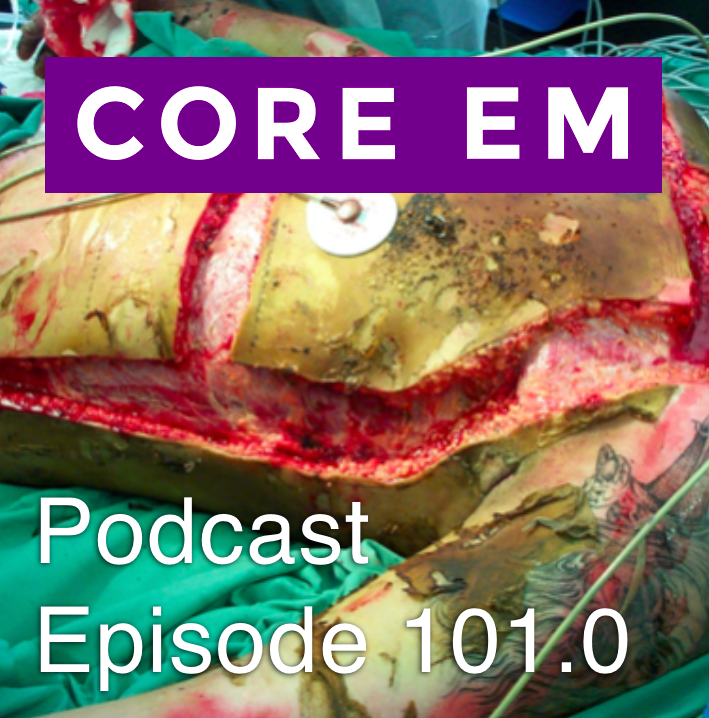
    This week we dive into some of the initial considerations in the resuscitation of major burn patients.

    https://media.blubrry.com/coreem/content.blubrry.com/coreem/Episode_101_0_Final_Cut.m4a Download Leave a Comment Tags: Carbon Monoxide, Cyanide, Major Burns, Trauma

    Show Notes

    Take Home Points

    • Be prepared to intubate early, the patency of the airway can decline quickly and without warning. If there is any concern for burns to face/neck or smoke inhalation, consider taking control of the airway early.
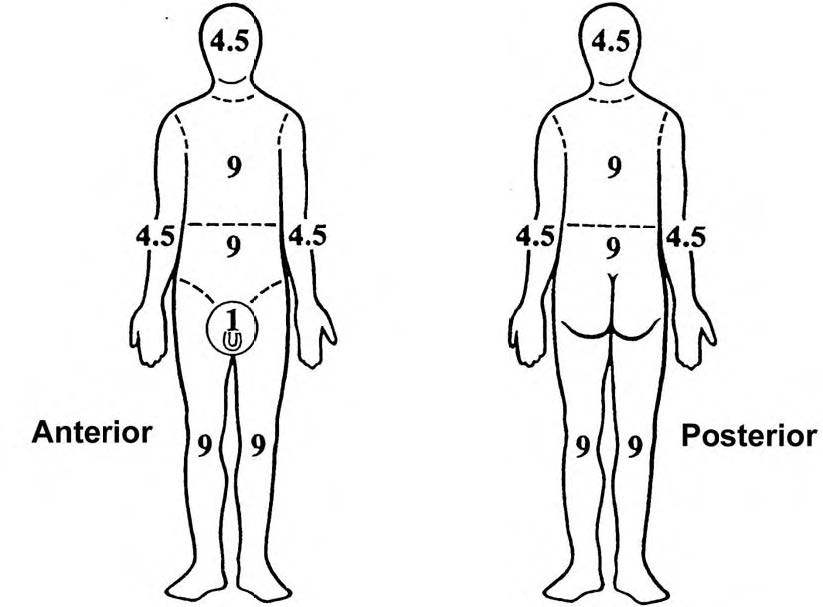
    • Review the rule of 9s and the parkland formula to direct your large volume fluid resus. Remember the parkland formula directs you to use 4 mL x %TBSA x weight (kg). Half in the first 8 hours and the second half over the next 16 hours. Given the large volume here it’s probably best to use LR or another balanced solution.
    • Do a thorough trauma eval to make sure you don’t miss any other injuries and be sure to watch for developing compartment syndrome
    • And last, consider the need to treat for CO and/or cyanide poisoning. Poor cardiac function, cardiac arrest or a high lactate can be clues to cyanide poisoning and just start 100% O2 while you wait for a co-ox, since CO tox is pretty likely.

    Rule of 9’s

    Read More

    MD Calc: Parkland Formula for Burns

    LITFL: Trauma! Major Burns

    LITFL: Releasing the Roman Breast Plate

    Parvizi D et al. The potential impact of wrong TBSA estimations on fluid resuscitation in patients suffering from burns: things to keep in mind. Burns 2014; 40: 241-5. PMID: 24050977

    Hettiaratchy S, Dziewulski P. ABC of Burns: Introduction. BMJ 2004; 328: 1366-8. PMID: 15178618

    Hettiaratchy S, Papini R. ABC of Burns: Initial Management of a Major Burn: I – Overview. BMJ 2004; 328: 1555-7. PMID: 15217876

    Hettiaratchy S, Papini R. ABC of Burns: Initial Management of a Major Burn II – Assessment and Resuscitation . BMJ 2004; 329: 101-3. PMID: 15242917


    Read More

    Episode 100.0 – Our 100th Episode! Jun 05, 2017
    Show notes

    It's been 2 years and 100 podcasts. Jenny and Swami take a minute to talk about the Core EM project and our future directions.

    https://media.blubrry.com/coreem/content.blubrry.com/coreem/Episode_100_0_Final_Cut.m4a Download One Comment
    Read More

    Episode 99.0 – Journal Update May 29, 2017
    Show notes

    This week we discuss 3 articles recently reviewed in our conference - LOV-ED study, Validation of Step-By-Step and Therapeutic Hypothermia.

    https://media.blubrry.com/coreem/content.blubrry.com/coreem/Episode_99_0_Final_Cut.m4a Download Leave a Comment Tags: ARDS, Cardiac Arrest, Lung Protective Ventilation, Mechanical Ventilation, OHCA, Step-By-Step Protocol, Therapeutic Hypothermia, TTM

    Show Notes

    Take Home Points

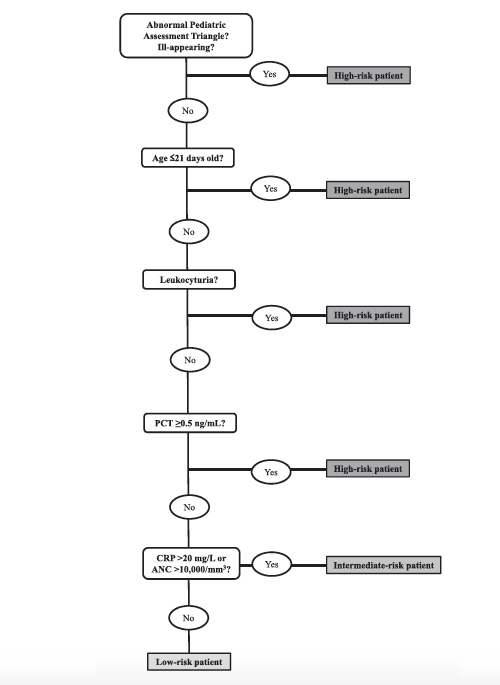
    1. The step-by-step approach to managing febrile infants is a reliable decision instrument to identify patients at low risk for invasive bacterial infections. Caution in the group of patients 22-28 days of age.
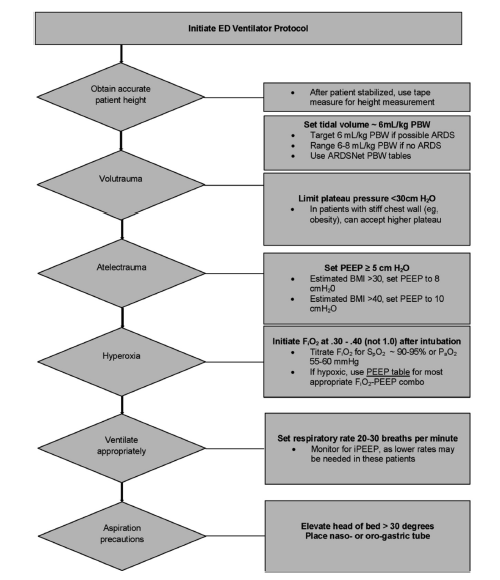
    2. The LOV-ED study shows an association between employing a lung-protective ventilation strategy in the ED and decreased complications from mechanical ventilation. Best available evidence says that we should embrace this approach in the ED.
    3. Cooling to 33 degrees is no better than cooling to 36 degrees. However, shooting 36 degrees is more difficult than we may have thought. We have to continue to be vigilant about maintaining patients in the target temperature range and avoiding fever.

    The Step-By-Step Algorithm

    Lung-Protective Ventilation Protocol (LOV-ED Study)

    Read More

    The SGEM: SGEM #171: Step-by-Step Approach to the Febrile Infant

    REBEL EM: The Benefit of Lung Protective Ventilation in the ED Should Be LOV-ED

    Taming the SRU: A Crack in the Ice? An In-Depth Breakdown of the TTM Trial

    References

    Gomez B et al. Validation of the Step-by-Step Approach in the Management of Young Febrile Infants. Pediatrics. 2016 Aug. PMID: 27382134

    Fuller BM et al. Lung-Protective Ventilation Initiated in the Emergency Department (LOV-ED): A Quasi-Experimental, Before-After Trial. Ann Emerg Med 2017. PMID: 28259481

    Bray JE et al. Changing target temperature from 33oC to 36oC in the ICU management of out-of-hospital cardiac arrest: a before and after study. Resuscitation 2017; 113: 39-43. PMID: 28159575


    Read More

    Episode 98.0 – Cardioversion in Recent Onset AF May 22, 2017
    Show notes

    This week we delve into the argument for cardioversion in recent-onset AF as well as the logistics of getting it done.

    https://media.blubrry.com/coreem/content.blubrry.com/coreem/Podcast_Episode_98_0_Final_Cut.m4a Download Leave a Comment Tags: Atrial Fibrillation, Atrial Flutter, Cardiology, Cardioversion

    Show Notes

    Read More

    Core EM: Podcast 64.0 – Rate Control in AF

    Core EM: Recent Onset Atrial Fibrillation

    Core EM: 30-Day Outcomes After Aggressive AF Management in the ED

    The SGEM: SGEM#88: Shock Through the Heart (Ottawa Aggressive Atrial Fibrillation Protocol

    References

    Nuito I et al. Time to cardioversion for acute atrial fibrillation and thromboembolic complications. JAMA 2014; 312(6): 647-9. PMID: 25117135

    Stiell IG et al. Association of the Ottawa aggressive protocol with rapid discharge of emergency department patients with recent-onset atrial fibrillation and flutter. Can J Emerg Med 2010; 12(3): 181-91. PMID: 20522282

    Stiell IG et al. Outcomes for Emergency Department Patients with Recent-Onset Atrial Fibrillation and Flutter Treated in Canadian Hospitals. Ann Emerg Med 2017. PMID: 28110987


    Read More

    Previous 1 11 12 13 14 15 24 Next

    Related Podcasts

    The Joe Rogan Experience

    1

    The Joe Rogan Experience Comedy
    More Perfect

    2

    More Perfect Government
    Casefile True Crime

    3

    Casefile True Crime Games & Hobbies
    Reply All

    4

    Reply All Games & Hobbies
    You Must Remember This

    5

    You Must Remember This Games & Hobbies
    Real Time with Bill Maher

    6

    Real Time with Bill Maher Games & Hobbies
    footer-logo

    Contact Us

    Toll Free: 844-670-7747

    Links

    • Home
    • Top Charts
    • Networks
    • Apps
    • Independents Podcasts
    • Podcast Advertising
    • Podcast News
    • Contact Us
    • About Us
    • Analytics & Insights

    Stay Connected

      Privacy, Terms of Use & Our Code of Ethics Protecting Content Creators Copyrights