How To Find Memory Palaces
Dec 13, 2014
Show notes
One of the most common questions I receive is… how do I find Memory Palaces? What if I don’t have a car? What if I live in the forest? What if I can’t get out much? Never fear. No matter who you are or where you live, you can use the Method of Loci. All you need to do is keep an open mind and experiment. And it’s with these principles in mind that I can tell you I especially admired this recent letter I received from a member of the Magnetic Memory Method Masterclass. What Do I Do If I Don’t Have Enough Memory Palaces? It’s a good question, and we’ll look at the nuances in depth on this page. And in this video, I will introduce you to the Infinite Memory Palace technique: https://www.youtube.com/watch?v=Wn05eskjIFg Here’s a variation on the question I often receive, followed by a number of suggestions: I’m going to apologize in advance, this email is going to be a bit long, and… I am very sorry for that. I would be, however, very grateful for your help. I have to say this… I watched a lot of your videos, listened to a lot of podcasts, and…I honestly am pumped to get started really seriously learning Japanese vocabulary. However… At the risk or sounding like I’m obfuscating things…I just have a few quick and simple questions, involving the “Art of Association” itself, so to speak. Should one prefer memory palaces, or images? If you have looked at Japanese before, you probably have noticed that its spelling is in no way similar to western languages, so I came up with two possible ways to memorize vocabulary, but, I’d rather do things the right way, the easier and more efficient way, right from the get-go. So, in idea one, I thought of treating each kana as a sentinel, to give each one a specific image that will be tied to vocabulary. I’d create 26 memory palaces, a-z, and store words based on their first letter when transliterated. Then tie the actual first kana image, to the rest of the word. That way I can have words like yasai and yokoshiro in the same palace, with distinct “sentinel” images attached to them, to give away the first kana itself. This idea uses less palaces, but more images. And is, as I think of it, “Palace-Conservative”. The second idea, (Don’t worry, there is only two), is “Image-Conservative”, and, the general idea, is to use a single palace for each kana. Now, there are variations to this, really, in variation 1, I only looked at the hiragana, (because katakana uses the same sounds but different symbols), and would store words based solely on the first kana in the word. (no transliteration). Including the Datuken, I would require 70 palaces. If I included “Combo-Hiragana”, I’d require 106. (Roughly). To blow this up even more, in variation 2, if I were to treat the katakana and hiragana separately, to remember the proper spelling of words (Like, which kana syllabary to use), I’d need roughly 212 palaces. I’m brand new to Memory Palaces, and the Magnetic Memory Method, and really, the “Palace Conservative” idea sounds more intuitive to me, but, haha, this is coming from a guy who thought rote learning and spaced repetition systems like Anki were the only way to go. And I really, really didn’t like them. Memory Palace Acquisition, a problem? For me, yes. Let me explain: I’m 21 years old. I live in a town of 5000 people. Nearest town has maybe 500 people. Nearest city, of 250,000, is 400km away. I have no car. I have no drivers license. I also have a night job, and sleep during the day. I have spent 13 years of my life here, about 8 years of my life in that small nearby town, and 4 months in Barrie. I don’t remember those 4 months very well, I was only 7, and…well, I was extremely depressed, and in short, that’s the reason I ended up back in this town to begin with. Anyways…during the Palace Recitation exercise I was only able to come up with about 60 palaces. And I really thought about this, with a lot of time and effort. Occasionally, 1 more might pop up, but…I believe I have pretty much maxed out now. And I really don’t want to sound pessimistic, I love this method thus far, and I can see myself using it forever, and ever…and ever. But, until I’m able to move out to a city, where I can actually just “go memory palace hunting” so to speak, I’m stumped about what to do. I don’t know if you ever lived in a small town before, but just going out and getting new friends and doing all that, is really…it’s very hard to do. For example I can’t just, you know, burst into the little high school we have and start socializing with a bunch of the kids there. It’d be…inappropriate, to say the least. I played one of my favourite video games, Ocarina of Time, as remade for the 3DS back in 2011, and spent about an hour, really visualizing and exploring one of the “Dungeons” in the game, both as a visualization exercise, and because I may use it as an imagined memory palace. I was thinking of using many, many more buildings I have found in video games as well, but…recalling these structures adds a layer of complexity on top of storing the images…so, I wanted to know how “practical” it would be, in general, to save up a bunch of imagined memory palaces? What about large imagined memory palaces? Okay, so, recalling large, real buildings, is fairly easy. Our brains are tuned for that. But what about…large, imaginary buildings? I know it sounds like a no-brainer, like, “it’s imagined and it’s large and so there’s more to try and remember about the layout, so of course it’ll be harder to remember!” But, I was wondering if it’d be more practical to memorize a large imaginary palace, (Take Ocarina of Time’s Shadow Temple or Spirit Temple for example), versus, trying to memorize the layouts of say, ten or fifteen small or medium sized imaginary buildings? I suppose it depends on the volume of related information I’d want to store in it, but…if I wanted to learn about multi-threaded programming, and store it all in imagined palaces, should I store all the info across several imagined palaces, or contain it in a single, large one? Not crossing your path, and long hallways… On the note of not crossing your own path in memory palaces. During my “Virtual tour” of the “Shadow Temple” in ocarina of time, I realized there are many hallways and, “leaf” rooms. Or, really, a hallway that leads to a room, and that room leads to 5 more connected rooms, but the only way to get back, is to go down that hallway again. Does that…count as crossing my path? Or does it only really count, if there are stations in that hallway? Okay I’m done bombarding you with questions for now! I hope you can answer, and…I hope they are good questions (Well, there’s no such thing as a bad question, really) but, I hope they are at least…entertaining questions or…something positive. I love you videos, your method, your website, (I also love that it is mobile-friendly), and your podcasts. I listen to them while I’m at work! Prose Version Of My Answer Thanks for your questions! Do you know of Giordano Bruno? Check out his book On the Composition of Images in particular. He had some great memory systems and I’ve been able to look at some archival documents and will be putting together something special over the coming year based on his work. He’s really important because he shares ideas for placing Memory Palaces inside of Memory Palaces. I would also suggest you check out these Memory Palace books. The long and short of the answer is this: Use The Alphabet A lot of people miss this step. But if you just sit down and complete one of the fist Magnetic Memory Method exercises, it should be easy to find an abundance of Memory Palaces. Start with the letter “A”. Think of people you know with that name. And stores that start with that letter. Just about everyone on the planet knows the location of at least one Apple store, for example. You might be rusty in the beginning, but that’s why this is an exercise. For more on the importance of the alphabet to your success in using the Memory Palace technique, see: https://www.youtube.com/watch?v=caCUFPy7j0I Don’t Make It A Numbers Game Many people write to me and say, “But I have to memorize thousands of words! I’ll never find enough places for that.” First of all, whether you’re a child or an adult, everyone learns one word or phrase at a time. It’s really important to relax and realize that everyone goes through this process. It’s simply part of how memory works. Next, people get worried about the volume they’ll need before they even know how to memorize ten words. Why are you worried about thousands of words before you can memorize a few dozen? Here’s the reality: As you use the Memory Palace technique, you can: Re-explore the alphabet and your past for more options Pay attention to the world around you and create more Memory Palaces I always go back through my past. Just the other day I remembered the time my dad picked me up at a bus station in British Columbia. I can now use that bus station as a “B” Memory Palace. Or I can use it for a “G” Memory Palace (it was a Greyhound station). Or I can use it for both. In sum, don’t slow yourself down by worrying about needs you don’t have yet. There’s plenty of time to come up with all kinds of Memory Palaces. If You Build The Skills, You Can Reuse A Memory Palace Another problem people face is that they give up before they have the skills fully developed. Reusing Memory Palaces isn’t always the best strategy, but in language learning, you have an exception. Here’s why: For every station you use in a Memory Palace for one word, you can later add a phrase that uses that word. This means that every single station can evolve from one word to fifteen or more, depending on the phrase or sentence. This is one way to “reuse” a Memory Palace and scale the technique. You can also reuse some Memory Palaces entirely. Let’s say you memorize a number of verbs in a Memory Palace and they’ve all entered your long term memory. You can then go in and use the same Memory Palace for nouns. But if you don’t have the foundational skills first, you can never do these things. So focus on developing the foundational skills. It makes so much more possible as your brain relearns the meaning of “location” and “space.” Regarding The Memory Palace For Language Learning It’s great to hear that you’re excited for learning Japanese. And I like what you’re thinking. The honest answer is that you should try both of your ideas. At first glance, I think your sentinel idea is going to work better, but I still think the only way to know is to at least give a percentage of the 212 Memory Palace version you are thinking of a try. Why? Because it might open the floodgates in your mind in a way that will never happen if you opt for just the one. I’m going through the same experimentation phase with Kanji and I simply have to do the extra steps of trying different approaches I come up with or risk never knowing what will a) Work bestb) Stimulate new ideas and results I could not anticipate without at least giving it a try There’s a third way, however, and one that I don’t think you should take because you’re obviously advanced enough not to need it. And that’s to either use Romanji or the principle of homophonic transliteration to create your own Romanji. Ultimately, this can create more problems than it solves and I only recommend it to people who need to get their foot in the door in order to at least have speech recognition and the ability to speak. But since you want to read, spell and have such a high order of thinking already working for you, go with these two options and settle on the one you like best. You’ll figure it out in short order. With respect to life north of Barrie, Ontario, I lived in Toronto for 10 years, so know your neck of the woods quite well. I’ve driven through at least 5 times throughout my life. I’ve also lived in places smaller than you, though admittedly Silver Creek is within 20 minutes of Salmon Arm by car. Of course, I had to hitchhike a lot to get there, but it was still not that big of a deal and I did wind up walking more than a few times too. In other words, I think I understand your situation and have to say that 60 is an impressive number given the circumstances. But I think you can probably stretch it out further. About using the school you mentioned, often schools have evening programs and public events. It’s Christmas time, so maybe you can go to the Christmas concert or take a one-day seminar. There’s probably a community events calendar available online that you can look into. Failing that, you could just go to the principal’s office during the day, tell him about the Magnetic Memory Method and say that you need a new Memory Palace. Tell him that you know it sounds creepy, but if you could make an appointment a 4 or 4:30 after you’ve woken up and all the students are gone home to have a guided tour, that would be great. If you’re upfront with people, they’re usually very helpful, no matter how strange your story may be. Again, Most People Give Up Too Soon! Have you tried the local hospital? You should be able to walk around in there without anybody even asking about your presence and get lots and lots of stations. I don’t know if you’re a religious person or not, but there are often tasty snacks after the Sunday service and churches make for great Memory Palaces. I have several. Have you covered the gas stations and restaurants? Admittedly, these aren’t the greatest, but a gas station with a restaurant can work wonders just by sitting for a cup of coffee. Finally, when I used to walk those long stretches, I encountered many barns and I can still remember them. Even without seeing the inside of them, I know that they all have four corners and have used these corners to memorize information. What If I Don’t Have A Car? I didn’t have a car myself for a long time. Then I had one, and now I am without a car again and have been since 1998. I walk or take the bus everywhere. If it’s safe for you to do so, it’s a perfectly fine way to find more Memory Palace options. You can also save up for a taxi, or take a city tour. Many cities have walking tours too and they are a great way to gather these powerful mnemonic devices. Using An Imaginary Memory Palace About virtual Memory Palaces, I really don’t find them practical for most things for the precise reason you’ve expressed: they add a layer of complexity. More than that, you have to rebuild them while you’re staging and decoding the associative-imagery. It makes no sense in most cases. However, that doesn’t mean you shouldn’t experiment with it. You most certainly should. I’ve had some interesting successes with them, especially with memorizing poetry and other verbatim texts. This is because the text itself serves as a kind of aid to memory because it’s a chain. So one thing you can do is practice Virtual Memory Palaces based on video games using poetry first and then adapt them for other purposes such as vocabulary. This represents an extra step, but I think you’ll find that it pays off in the long run. You get good with using Virtual Memory Palaces with something relatively trivial first and that lends itself to the practice and then switch the ability you’ve gained over to something more difficult. It’s kind of like how a baseball player practices swinging with 3 or 4 bats in hand so that they have more power and agility when they gear down to just one bat during the game. Peer vs. Enter About crossing your own path, the solution here is to not enter the rooms. Just glance into them. I call this at certain points in the Masterclass the “Peer vs. Enter” technique. And it literally is just that: peering in through the door and casting your mental eyes around either clockwise or counterclockwise depending on the nature of your journey and then moving on. It helps a lot of people a great deal. The other alternative is not to travel your Memory Palace at all. You don’t have to be a figure that moves along the jo…
I want to thank you kindly for visiting and look back to this page soon for a full discussion of the episode, the Method of Loci, mnemonics, creating a Memory Palace network and more topics related to memorizing math.
All that said, here is the correspondence I received as referred to in this episode of the podcast:
Hi Anthony,
I have a question I would like to ask. Using mnemonics what have you committed to memory?
I’m interested in using mnemonics to educate myself, to learn and be able to remember a vast sum of knowledge, that I find enjoyable, and I find it inspirational to hear, what others have achieved using such techniques.
Kind regards.
This is a great question, and answering it helps me describe just how versatile the Magnetic Memory Method – and mnemonics in general – happen to be.
Over the years I have memorized a wide variety of information types.
For me, the ultimate trick has always been to use locations (spatial memory). Some people toss their visual associations “into the void” of their minds without locating them some place.
And for some people, that’s just fine.
But I’m an advocate for localized organization.
Why? I’ve talked about this a lot before in other editions of the Magnetic Memory newsletter, the key idea being that we have an unconscious fear of losing things (objects, certainly, but especially losing our minds).
Thus, when we create a visual image to help us remember something and then stick it in a clearly visualized mental location based on a familiar location, we eliminate the fear and anxiety we naturally have a losing things and can focus on embedding that information instead.
Just a theory?
Perhaps.
But theory is irrelevant when it comes to real life applications of these techniques.
This stuff works.
And there’s science behind it too. And incredible teachers of memory like Barbara Oakley of Learning How to Learn who also stick to the science.
Anyone who knows me knows that I have very limited patience for anything that can’t be empirically demonstrated in front of a council of disinterested men and women in lab coats.
The reality is a Memory Palace is itself a collection of pegs. When people don’t realize this fact, they miss out on the power of both memory techniques.
Just so we’re on the same page, here’s a brief rundown of what a Peg System is and when you might want to use one:
The Peg System (sometimes called the pegword method) is just what it sounds like:
The exercise of “pegging” (or linking) one thing to another. It assumes that you know the first thing, so it’s just a matter of Magnetically connecting the next in your mind.
I’m going to be giving some examples of how this works, and I want you to follow along.
But here’s an important caveat:
Following my examples or the examples of any mnemonist is not the best way to learn memory techniques. As you read, treat these examples and demonstrations only. Immediately create your own images in your mind.
Only in this way will you be accomplishing two things:
1. Learning the link system 2. Exercising your imagination
How To Attach A Number-Rhyme Peg System To A Memory Palace
If you really think about it… wouldn’t it be easy to number each Magnetic Station in a Memory Palace and give it the rhyme peg you created?
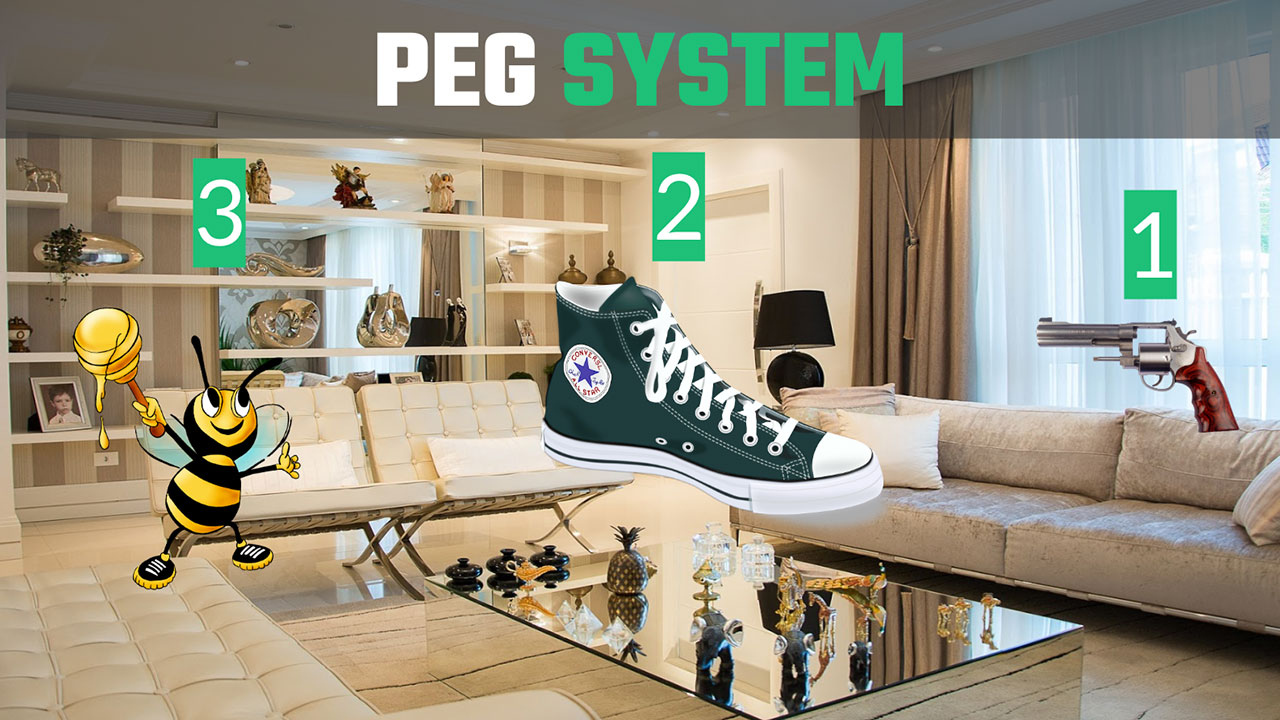
Illustration of the Peg System built into a Memory Palace
Notice in the image above how this works.
The couch serves as Magnetic Station #1 in the Memory Palace. The gun for the number rhyme is always there, always ready to be used for the purposes of elaborative encoding when you want to memorize something.
On Magnetic Station #2, you have the shoe and on Magnetic Station #3, a bee.
To make these associations clear to your brain, I recommend that you make your pegs concrete and specific.
For example, instead of a generic bee, think of the Jerry Seinfeld character in The Bee Movie. Instead of the idea of a shoe, think of your favorite shoes from high school and use those. Specificity makes everything in the world of mnemonics work better, even better than flashbulb memory.
What On Earth Is This Memory Technique Really All About?
To be clear:
This memory system is about mentally “hanging” one piece of information onto another. In this case, you are hanging a rhymed word onto something you already know and will probably never forget (the numbers 1-12). You’re associating them.
There are some problems with the rhymes I just gave you, however.
Here’s the major issue:
Although all of the items that rhyme with the numbers (something that is in and of itself part of creating memorability), not all of the words I’ve given you are directly visible.
For example, what does heaven look like? Clouds? Angel wings? Fields of grass as shown in Gladiator as Maximus makes his way to Elysium?
Who can say?
And that lack of specificity can be a problem.
But not usually if you know your system and always use it … religiously.
Here is why:
What we’re going to do with these rhymes is use them to memorize more information.
For example, let’s say that you’re going to an important business meeting and you’ll be meeting twelve new people.
The 11th person you meet is named Ralph.
How are you going to associate Ralph with 11? Well, you could see him floating on a cloud (heaven).
Or you could see him with angel wings bursting from his back (heaven).
Or you could see him on the roof of the Sistine Chapel flirting with God’s finger (heaven).
The important thing is to be consistent.
And include wild, exaggerated action in a visual way. It’s great if you can make it absurd too. So instead of seeing wings bursting from Ralph’s back, you could have them bursting from his chest, perhaps even poking through the “Ralph” name tag on this chest.
A Concrete Alternative
Personally, I never use “heaven” for 11 the rare times I use the Peg System. It’s too abstract and vague and there are too many possibilities. I use my friend “Evan.” I’ve known him for years and can see what he looks like in my mind (he’s almost always got a goofy smile).
And if I were to meet a guy named Ralph and wanted to memorize him as part of a list of names, I would have him interacting with this new dude Ralph in a weird and interesting way.
Or better yet, I might include some other Ralph I already know to “peg” Ralph even deeper into the connective tissue of my mind.
For example, Ralph Macchio from The Karate Kid might show up and do some fancy footwork in a fight between Evan and my new business associate Ralph. It would be large, bright, vivid and filled with zany action.
Go One Step Further
To make this process truly Magnetic, you can add a Memory Palace component to your pegs.
In fact, as I suggested in this episode of the podcast, pegs are perfect for use within Memory Palaces as much as possible.
Why?
Because having a location increases your chances of recall and reduces that anxiety we were talking about.
Not only that, but you also use and strengthen your spatial memory.
And the more you do this, the more you’ll become a Memory Palace fanatic and get the massive results that only Memory Palaces make possible.
More On How To “Link” The Peg System With A Memory Palace
Let me leave you with three fuller examples from the list above, but this time with examples of names and how they could be memorized.
Again, make sure to come up with your own examples so that you can learn this method by doing instead of just running the examples through your mind.
Don’t make the mistake of hoping that they’ll work for you next time if you’ve only just read this over.
That’s activity.
Go for accomplishment.
1 is a gun.
Memory Palace station: My bed.
Target name: Kirsten.
Associative-imagery: My gun shoots a gun made from pillows and the curtains where Kirsten is standing.
Notice the similarity between “Kirsten” and “curtains” in terms of sound. This is the Principle of Compounding. Use it as much as you can.
2 is a shoe.
Memory Palace station: My desk.
Target name: Amir.
Amir plays a drum kit made of mirrors using shoes instead of drum sticks.
Notice the “mirror” contains the “mir’ sound of Amir. It is the most striking part of the name, so the image is centered on capturing that for decoding later.
3 is a bee.
Memory Palace station: The wall where my guitar rests.
Target name: Phil.
I see my other friend Phil swatting at a bee with my old philosophy textbook while my new associate Phil puts a filter on his camera lens before shooting the action.
Notice that I am using a friend I already have named Phil, plus a book of philosophy.
I also have Phil putting a differently spelled but similar sounding filter on his camera.
To some people, this compounding procedure might sound like overkill.
However, I recommend that you practice getting good at it. It will make the difference between memorizing material effectively just some of the time and all of the time.
And since I assume that you’re into mnemonics for total memory mastery, then you’re going to want to get started with the principle of compounding right away. You can do this even faster by developing an alternative approach to pegs called the PAO System.
For more on the Memory Palace technique and advanced ways to use it:
Bruno Furst, who also taught a version of the peg system
The Original Email That Forms The Basis Of This Podcast Episode
Just in case you aren’t able to listen to the podcast, here is a copy of the original letter I received. If you’d like to write in and have a question addressed on the Magnetic Memory Method Podcast, please feel free to get in touch.
Associating in the void does work although I have to admit that your loci system for storing vocabulary may have two advantages:
Having a location might improve fluency
There is something very slightly superior seemingly to the loci system versus the peg system for example.
I would like to expand a little on number two. I had used the peg system for 30 years before I started using the loci system. Once I started using the loci system I began to notice that there are actually two separate associations one makes with the loci system as contrasted with peg system.
One is the interaction with the item stored there at the locus. The other is the visual image of seeing the word one is trying to remember at the locus with no real interaction except visually being there. With the peg system in contrast there is only the interaction between the word one is trying to store in memory and the peg word for the numeral.
So in conclusion I think that loci system involves an extra association with essentially two chances to recall the word or image whereas the peg system only involves the actual interaction between the peg and the word to be recalled.
Even so I would like to see the two systems compared experimentally. Keep in mind that the peg system could be used for language learning as well as simple list learning just as the loci system can.
Jonathan Levi Talks About Becoming A Superlearner
Oct 07, 2014
Show notes
In this episode of the Magnetic Memory Method Podcast, Jonathan Levi talks about how to become a SuperLearner using speed reading and memory techniques.
Tune in now and learn:
* Why speed reading is not snake oil and Jonathan’s amazing bucket, hose and water metaphor for understanding your memory.
* Why long term memory functionally has no limit and how to maximize what you can place inside your mind.
* The precise meaning of what a “superlearner” is and how to achieve this ability not just in your mind, but in your body too.
* Why you must change how you digest and interact with information in order to improve how you learn and memorize information.
* The bottleneck effect that comes from using Duolingo, Spreeder and other rote repetition programs and how to use your mind to gain an advantage over those who limit themselves to these tools.
* Why the memory tool “chunking” may not be good for learning every single topic and why you need to have multiple tools.
* The relationship between driving manual transmission in your car and using your memory.
* Why adults learn differently and how to make sure that you can fulfill this requirement throughout your life.
* Why Jonathan doesn’t use the word “mnemonics” and why it caused all kinds of suffering and even made him resent learning.
* The “kinesiology tape” phenomenon and how it relates to memory competitions and the culture of memory games discussed in Joshua Foer’s Moonwalking With Einstein.
* The Daniel Tammet issue and how it relates to psychics, mentalists and magicians (and why you should never fraudulently represent your advanced memory abilities once you’ve developed them).
* Jonathan’s amazing story of demonstrating exactly how someone who thought she had a bad memory easily memorized a phone number using memory techniques – without even realizing it!
* The two dominant ways to memorize huge strings of numbers and the kind Jonathan relies upon predominantly – including the reason why the Major Method is not his go-to method.
* How to use association to memorize pronunciation (using a fatty example from Russian).
* How Jonathan used Superlearning to solve his knee pain and restoring himself to health.
* SMART goals and why using them will help you become a Superlearner and maximize your time.
Jonathan Levi is an experienced entrepreneur and angel investor from Silicon Valley. After successfully selling his Inc 5,000 rated startup in April of 2011, Levi packed up for Israel, to gain experience at Rhodium, a Venture Capital Firm specializing in New Media and Mobile.
While in Israel, Levi enlisted the help of speed-reading expert and university professor Anna Goldentouch, who tutored him in speed-reading, advanced memorization, and more. Levi saw incredible results while earning his MBA from INSEAD, and was overwhelmed with the amount of interest his classmates expressed in acquiring the same skill set.
Since acquiring this superlearning skill, he has become a proficient lifehacker, optimizing and “hacking” such processes as travel, sleep, language learning, and fitness. He’s also managed to improve his ADD and has gone on to give a great TEDx Talk on memory.
Hindi Alphabet Memory Palace Secrets
Sep 24, 2014
Show notes
In this episode of the Magnetic Memory Method Podcast, MMM practitioner Rose goes into detail about how she memorized the Hindi alphabet using the most potent memorization tool known to humanity: The Memory Palace. Even if you don’t want to learn Hindi, you’ll learn a lot from this podcast, so be sure to tune-in. And in case you prefer to read, here’s the … Prose Version Of Rose’s Guest-Podcast! I did it! I did it! I am so excited to learn Hindi! And I’m having a blast doing it! You’re right Anthony! You can learn an unknown and many-charactered alphabet in an hour and a half using the Magnetic Memory Method! For me it was actually an hour and 40 minutes for 48 distinct characters of the Hindi alphabet (There’s actually 60+ but I’ll get into that in a moment). My name is Rose and I am on the edge of my seat, so to speak, with so much enthusiasm and ‘can’t wait to do more’ kind of energy. I am recording my initial experiences for you in case it is of some benefit to another person who’s thinking about learning this outrageous method. I hope any background noises from a roaring monsoon filled river and many singing birds outside my window here in the foothills of the Himalayas won’t interfere with hearing this. To be clear I am able to start anywhere in the alphabet, go forward or backward, jump around, etc. I recognize and remember the symbols and stories and locations of where I ‘planted’ them; I can retrieve them quickly and it’s all vivid and hilarious. That is astounding! Yet even more amazing, which to me is nothing short of a miracle, I thought I’d see how well I’d do at writing the symbols. I figured that would require more sessions of practicing, practicing, practicing. To my astonishment I was able to easily draw them all correctly just by remembering the image/ picture/story I had given it, and I did that in less than 5 minutes! I am truly blown away by this! Recognizing something visually and then taking pen to paper to draw it are two very different mindset applications. I can understand why you would love to see more and more people using this astounding method!!! And I see what you mean when you say building Memory Palaces does a lot more than help memorize vocabulary, poetry, names, concepts or whatever. Once I started coming up with images it became easier, just as you say. It was as if the rusty cogs in the brain machine were getting oiled. But even better, I was having a blast coming up with more and more outrageous images and stories. Feeling more creative? Trusting my imagination and what it brings forth? Laughing out loud while memorizing a foreign language? Are you kidding? Wow! I’m 62 and I now know I can learn Hindi and have fun doing it. This should be taught in all schools!! Can you imagine kids being excited about learning? So let me back up to how I arrived at this – The preparation required to even begin the actual memorizing part was enormous, but what a fantastic learning experience. You recommend to just get started. Just do it and see how it unfolds. I figured if I waited to read everything you’ve written or listen to all the podcasts before actually doing anything, I’d never get around to doing anything. So I took your advice and your course and just dove in…. and nearly drowned….but your Excel spreadsheet idea was my life preserver. Here’s why. The first thing was determining how many letters there are in the Hindi (Devanagari script) language. That was an adventure unto itself and my first challenge. Depending on which source I looked at there are 11-13 vowels and 33-40 consonants (I won’t get into all the whys and wherefores of this). So anywhere from 44- 53 distinct symbols. Add to this the fact that 10 of the 11 vowels have two forms, two distinctly different symbols depending on what positions it holds in a word. So you have to learn 10 more distinct symbols. Then there are many conjuncts but 6 have unique symbols that don’t look anything like their individual parts along with making a new sound. So those must be learned. Now we’re up to what number? I’ve lost count. I’m saying all this just to point out how important it is to know where to begin, what you’re dealing with. I began with pencil and paper. I thought I knew how many stations I’d need, etc. Then I’d check one of my resources and there’d be another variation. Okay. Cross that out, start over. New piece of paper…..this happened several times. This is when I thought I was going to drown, going a little crazy, saying well, what the heck is the alphabet then? I just want to build a darn memory palace!! Using your Excel spreadsheet idea (another learning curve for me) I was able to make changes and adjustments more easily. I also went out and purchased a 1,000 page Hindi to English dictionary (no English to Hindi in it!). This was a great investment. I figured the Oxford version should be reliable. It was actually a great exercise and very enjoyable (I can’t believe I’m saying that) to just flip through the pages and learn about the history of the script, how Oxford went about setting up the dictionary, how the letters are ordered and organized, and very importantly which letters had a lot of pages or just a few which would help me know what size memory palaces to build for each letter when it comes time for me to start memorizing actual words. All of this preparation took several hours just to get to a complete ‘alphabet’ and how I was going to set up the memory palace. I may have belabored it more than I needed to, but it just wasn’t a straightforward alphabet. It was the best thing to do though. It helped me understand how the script is put together, what some of the nuances and exceptions are and I have a much better foundation to build upon. Now I see why your video on ‘Preparation and Predetermination’ is so valuable. About memory palaces in general. I didn’t see how I would ever be able to come up with so many memory palaces as I’m a rather reclusive kind of person. But your suggestions of homes you’ve lived in, neighbors’ and relatives’ homes, neighborhoods, parks, schools, doctor’s offices, stores, streets, and on and on, got my mind rolling. So I just put the course on pause and took a long walk down memory lane starting from my childhood, thinking of all the places I had been. It was actually an interesting journey to see who and what popped up along the way, but I easily came up with over 100 potential memory palaces just from that one 15 minute effort. So I now know I can easily build on these. And you’re right, you do start paying attention to your surroundings and ventures out into the world more! Just last night I went to a local restaurant and looked at it from the perspective of using it as a memory palace. I just have to laugh. I now understand why you are so specific in your guidelines such as beginning your first memory palace with one word or letter per room,. Well I didn’t do that because with an alphabet of 60+ distinct symbols I couldn’t grasp (at the time) how to do that with multiple memory palaces. I surely didn’t have a place I could recall well enough that had close to that many rooms. I also wanted to keep the alphabet in my current home, which is on the small side. By the time I really understood why you said that I had gotten too far into the process to make such a drastic overhaul. But I got to learn from experience that my first memory palace had too many substations in each room (8 in each) and it required more thinking and remembering on my part, just as you say. In fact, each room had a different number in the beginning. I realized soon on that would be too much remembering. Does the guest bedroom have 4 substations or 6? How many substations do I have on the balcony? By putting the same number in each room I didn’t have to use my mind to remember how many for that room. Thanks to the flexibility of the spreadsheet I adjusted and made each room consistent. Yes, I found consistency is important. You talk about setting certain rules or guidelines for yourself to minimize extra memorization. I found that helpful too. For example there are some symbols that have a 2nd version with a dot underneath. I made a rule that anytime the dot was part of a symbol there was a certain ‘thing’ it represented to the overall symbol. Or a rule that if I used a door as a substation it would only be the side when exiting the room, then I wouldn’t have to remember did I use the door in that room for a substation? Both the inside and outside? Or deciding not to use doors at all. Another example is in the bathroom- there are 4 different faucets. At first I designated them as substations before assigning images and stories. When I came to that location on my journey I realized I was getting too confused keeping the images and stories memorized correctly. I experienced the extra effort required to memorize using all 4 faucets. So I chose to use only one. It worked so much better. Yes, Minimize the extra stuff. Now I see why you devote one of your course talks on the “Perils of Perfectionism”. I witnessed the tendency in me to want it ‘right’. But like you say there isn’t a ‘right’ way, it’s what works for the individual. As I’ve shared I made many changes along the way…a change to an image, a change in a story, a change to a station. I found as I went along certain things made more sense to my mind than what I may have originally come up with. And each step along the way more and more understanding and flow comes (just like you say!!) And so much fun!! Oh, and now I don’t live alone. My house is full of strange animals, funny people, and weird objects doing bizarre things. By the way, Now I see why you say we must actually set aside the time to do memorization and recall because before you know it you’ll find your head on your pillow realizing the day somehow slipped by yet again without doing any vocabulary memorization. So setting a specific time, whatever that may be, is really vital. This brings me to your recent survey asking people whether they would see benefit in having you provide images for students to use to help them memorize instead of coming up with their own associative-imagery. I SAY A RESOUNDING NO! Had I not taken the course and jumped in to do it I may have said yes, that sounds like a good idea. But the ‘yes’ most likely comes from the uncertainty people feel about starting. Because it’s such an ‘out of the box’ approach to learning/memorizing we ask ourselves if we’re really creative, if we have a good enough imagination, or an imagination at all, or doubt that we know enough places to designate as potential memory places. What if I don’t get it right? On and on… Now that I’ve actually ‘done it’ (by making lots of blunders) I fully agree with you that the images coming from one’s own imagination will be the strongest and easiest to remember. The imagery you presented in the survey was surely interesting. But what if I don’t know who Ezra Pound is? Or I am not familiar with the Christian symbol for fish? Or the eels don’t look like eels to me? Then I’ll have to memorize even more than the alphabet letter these images are meant to represent. I agree with you, it’s more work. It’s adding another layer that isn’t necessary. Our cultural and educational backgrounds, our life experiences, our emotional nature….all of these will contribute to our understanding or lack thereof of someone else’s images. I would say because of your unique background, extensive education and expansive life experiences you can draw on a vast number of images that I wouldn’t have a clue about or any connection with. You give examples of your images and stories in the course which I feel are enough to spark one’s own imagination. Maybe giving a few (just a few J) more graphic examples would be helpful just to let people see how far out there one can take it. I say just start. Trust yourself. Trust the process. It may go slow in the beginning, but very quickly a door opens up into a whole new world and perhaps a whole new relationship with your mind. It’s like giving yourself permission to be inventive, creative, a little crazy. And who knows where that will lead! I wouldn’t give up the fun I’ve been having making up images and wild stories! I’m also glad I didn’t listen to all the podcasts or read too much before building my first memory palace. There’s more than enough in your course already. All the other tips and suggestions from you and other experts in the field would only put too many ideas in my head and then I would be overwhelmed as to where to begin. I can always pursue those at a later time. For me, the course stands on its own. It is so finely crafted, inclusive, easily paced with short enough segments. I never felt I had to stop in the middle of a section because it was too long. Taking notes was helpful along with the titles you used for each segment. I was able to go to that particular section or review my notes as it was really useful for me to revisit certain ideas as I was creating my first memory palace. I found your presentation style engaging yet simply straightforward and accessible. Your course(s) and newsletters reveal your enormous generosity with your time, knowledge and experience, a genuine commitment to helping each person with their questions, and an uncommon generosity to network people and support other experts in the field. I appreciate your passion for learning and experimenting with life and the brain’s infinite capacity. Quite a package you are Anthony! A rare bird indeed. You’re an inspiration and I send oceans of gratitude, and blessings to you for your gifts to reach out to an ever-widening circle of people. Next for me is choosing the vocabulary to memorize. I have decided to devote approximately 10 memory palaces to themes such as food, time, colors , numbers, grammar, etc. as I get the feeling this will be helpful to have for quick reference, as well as for words I can use right away in everyday activities. Then I’ll have memory palaces for each letter as well. Okay Monsieur Metivier. All for now. I hope this hasn’t been to long, but if any of this can be of benefit to another you are welcome to share. I’m just so glad I found you, and I know if I get stuck or overwhelmed that I can email you my questions and you will respond. That’s a gift in itself. One more thing… P.S. Before I finish here I thought you may want to know how I found you.. I stay connected with my mom by playing an online scrabble type game. I ‘accidentally’ saw a video of yours that popped up on a site I came across when doing a search for two-letter words. I got drawn into the site… I found myself clicking on memorization techniques (primarily because I never remember the two-letter words, or much else for that matter!) a video of a 6 year old who had memorized the U.S. presidents using different rooms in her house, and another video about Ron White, who apparently is a champion memorizer (I’m new to this). But somehow, without my conscious intention or choice, a podcast of yours came up ( I can’t even find it again on this website!?!) and I listened to it…I really was drawn to the sound of your voice, what you were saying, even though I had never seriously thought about improving my memory, and next thing I knew I went to your website, Then I signed up for your newsletter (I am typically loathe to do that! I’m a chronic unsubscriber!), read several and enjoyed every one, found myself getting excited about improving my memory and learning Hindi (I’ve been living in India for way too long not to know it!), then I signed up for your online course. Here’s the part you can laugh at if you’d like. It’s embarrassingly funny (to me). You offer your online course on Udemy. For some reason I thought Udemy was only offered on IOS devices. This was because I use an Ipad for most all my internet stuff. When I clicked through to your course from the website I had to download an app for Udemy. Well…
Mnemonics, Language Learning And Virtual Memory Palaces In Discussion With Timothy Moser
Aug 31, 2014
Show notes
In this episode of the Magnetic Memory Method Podcast, Timothy Moser of Master of Memory, Accelerated Spanish and Ace Productivity joins us for the second time. If you haven’t heard that first interview, check it out. Timothy’s ideas will make you more productive, especially when it comes to using memory skills.
In this episode, we open the discussion further by talking more specifically about mnemonics and language learning. From there, we move into speculative areas about virtual Memory Palaces and the realities of teaching mnemonics to others. You’ll also learn about:
* Timothy’s emphasis on stressing syllables in order to gain recall boosts when studying foreign languages … and even your own mother tongue.
* Why mnemonics are almost always fun (and the main reason they sometimes aren’t).
* The specific way Timothy uses location-based memory strategies from a “functional standpoint”
* Timothy’s patterned Recall Rehearsal and how he reduces revision over time. He’s all about getting the most out of the minimum and he tells you exactly why so you can model the approach.
* How to arrange words for the concept of time in Spanish using a single, theme-based Memory Palace.
* How talking about mnemonics with other people will improve your understanding and use of the techniques.
* The dangers and benefits involved in sharing associative-imagery with others. I’ve written about why mnemonic examples rarely work before, but Timothy has a fresh take on this.
* Why professional mnemonists are opposed to giving examples – and why they are both right and wrong about their resistance in this area.
* Ideas about music mnemonics and different approaches to using them. This is an area where people interested in mnemonics can definitely experiment more and stretch the limits.
* The truth about “virtual” Memory Palaces and how to experiment with them in an informed way. There may not be a right or wrong way when it comes to success with imaginary places to store information in your mind, but certainly some ways are more realistic than others.
* Why real locations are almost always better than invented Memory Palaces and why you should never discount the power of the places you know.
* Why none of us will ever run out of Memory Palaces in our lifetimes and how to overcome Memory Palace “scarcity” (it’s easy).
* The relationship between sex, death, memory skills and video games.
* The right and the wrong way to use rote repetition and the truth about spaced-repetition.
* Why you need to be open to new ideas if you want to succeed with mnemonics.
* Why those who learn about learning leverage the greatest results.
* Why you shouldn’t treat your education as entertainment and why you need to take action in order to get results (we tell you what you should do and it’s probably the only way).
* Own struggles and current projects with memorizing large amounts of information.
* … and much, much more.
This episode of the Magnetic Memory Method Podcast gives you a fascinating look behind the scenes as two thinkers and action-takers in the world of memory skills show you exactly what it takes to get started, keep going and get amazing results. You’ll hear from people actually in the trenches of memory who not only get great results for themselves, but for thousands of other people too.
Further Resources
Timothy has a number of memory courses you can study for free. These include lessons on memorizing a book of the Bible and using mnemonics to help you learn Spanish.
I have several posts on memorizing music. This one was mentioned during the podcast. It’s called Memorize Bach On Bass.
Click play above and read the article below for more nuance.
Program Notes
This episode is a response to emails that I often receive like this one:
I am new to memorization as detailed as you propose and am trying to justify learning it. I have bought and read two of your books, the one about Memory Palaces and am currently reading Magnetic Memory Mondays. I am 76 years old and have set a goal to reteach myself Classical Latin and from their progress to other Roman languages. I want to use your Memory Palace idea but am not a very visual person and thinking of a preposterous image for each vocabulary word seems over-whelming. I like the idea of using current and past homes or places but want the right one to begin with. Any suggestions? Can you send me a list of your other books on this topic?
Listen, it was hard for me in the beginning too.
If you look through all of the newsletters starting with Volume 1, you’ll encounter dozens of ideas in addition to those in the book. It basically boils down to getting relaxed and getting started. Surrendering to the feeling of overwhelm is very dangerous, but taking action is always a benefit.
Also, you can experiment with not actually seeing the images but just thinking about them. I’ve done this for years until I started to develop my imagination by drawing, looking at lots of art, paying attention to the visual aspects of movies I was watching and doing creative memory exercises like looking at an apple and then trying to “rebuild” it in my mind.
One of my most difficult challenges right now as a primarily non-visual person is the Hiragana for Japanese. If you’re not familiar with the Hiragana , they are these crazy little images that indicate sounds. You need to use your visual memory a lot to learn and read them.
As I teach in the Magnetic Memory Method Masterclass, to ease the “cognitive load,” I use “Bridging Figures,” characters that go along the journey. Because they can be used for more than one word or letter or piece of information at a time, that’s one less aspect of the crazy image that I’ve got to come up with (or that you’ve got to come up with).
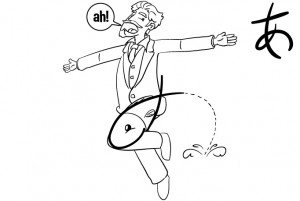
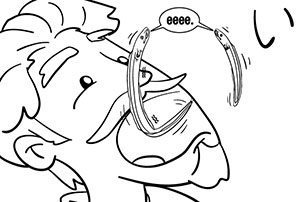
Here’s just three images with Ezra Pound as my bridging figure that I’ve created to help me both “see” and “hear” what the following hiragana mean:
あ (a) Ezra Pound standing in Jesus Christ pose with a Christian fish symbol attacking his legs. He shouts Ah!
い (i) Pound with two eels in his mouth, squirming, one long like an upside down seven, one short. They are squealing eee eee eee.
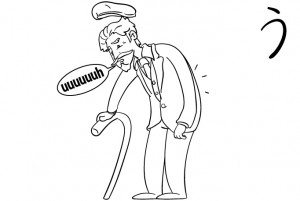
う (u) Pound leaning on a stick with a beret cooing ooh as the weight is relieved by the stick.
This process works great thanks to a fuller understanding of mental imagery. Simply by “leaning” on Ezra Pound throughout the journey as a highly dynamic Bridging Figure, I was able to memorize fifteen hiragana in fifteen minutes. I’ll soon be making more time from Japanese and expect that I can do between 40-60 characters in 1.5 hours with reliable recall.
Plus, I keep a positive mindset when it comes to the work involved. As I talk about in the book, there will need to be corrections along the way and I will need to rehearse the material using proper spaced repetition.
But hey: it beats fussing around with index cards when you can turn the stations of your Memory Palace into amazing and vibrant indexes for silly little images to remind you of the sound and meaning of words, or in the case of the example I just gave you, the sound of certain typographical images and how they look.
I really wish you the best with the experience and want you to know that I’m here to help as best I can, affording that I get lots of questions so can take up to a week to answer.
But that’s why the Magnetic Memory Newsletters are available from Kindle. I’m 100% confident that after writing 1000+ pages answering questions just like these that you’ll find all the answers you need. My Amazon page is easy to find.
I’ve also got some video courses if you like to learn by that medium.
But really I think in this email you have all that you need, which in sum is:
1) Mindset. Toss worry aside and get started. Fear is the mindkiller.
2) Create a bridging figure when ever possible to reduce the cognitive load. If it’s someone that you care about, all the better. I’m deeply fascinated by Ezra Pound and he also had a connection to Chinese and Japanese, so he works really well in this connection.
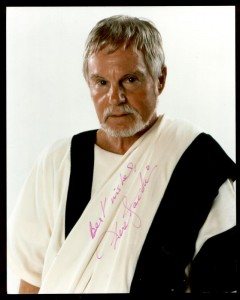
In Latin, you could use Derek Jacobi or some actor you like who you’ve seen prancing around in a toga to keep things interesting. (Or an actor you’ve never seen in a toga, for that matter, to keep things extra memorable).
The point is that it shouldn’t be too difficult to come up with zany images if you take familiar things and put them in unfamiliar situations.
3) Make sure to rehearse the work that you do in order to ease the material into long term memory .
So I hope the discussion on this place helps you understand that there are great ways to combine vibrant images in Memory Palaces and have the target information stick. Successfully memorizing foreign language vocabulary depends on it.
Hanging Out With My Magnetic Memory
Aug 10, 2014
Show notes
Dear Memorizers, Richard Gilzean, long time friend of the Magnetic Memory Method and the man behind the delightful blog peeleye, recently shared with me some great writing he has done to chronicle his adventures in using memory techniques and related skills like juggling. How are memory techniques and juggling related? Read on to find out. And a Magnetic thanks to Richard for not only sending this to me and allowing me to post it on the site. I’m proud to make it the first Magnetic Memory Method Guest Post ever and know that you’re going to love reading these reports from a memorizer making great strides with the techniques. Richard is an inspiration to us all. Hanging Out With My Magnetic Memory By Richard Gilzean 28 July 2014: Where to start with this recollection on what I have learnt about myself over the past 12 months? The idea came to me this morning on the train as I was commuting in to work. While passing over the Sydney Harbour Bridge and looking out over the harbour, I was listening to the podcast interview between Anthony and Kerstin Hammes. Just after Anthony had explained what a “John Henry” was to Kerstin, she suggested that language learners can benefit from keeping a journal of their efforts in order to better see and appreciate where they have come from in their respective journeys. What a cool idea, I thought. I’ve been on my own personal development journey for almost a year and it is as good a milestone as any to take stock and recount what has happened. (Although in reality it is a process I have been undertaking with varying degrees of application for many years). In my case a whole bunch of factors came into play, not one particular flash of inspiration. I had wanted to get back into studying German language, but in a way that was different from my past efforts of going to classes, studying stacks of flash cards and reopening the German text books which had taken over a shelf in my study. There had to be another way. It was around this time that I came across Anthony’s book How to Learn and Memorize German Vocabulary: … Using a Memory Palace Specifically Designed for the German Language (and adaptable to many other languages too) on Amazon. 29 July 2014 In embarking on this quest for self-improvement, mastery, getting-my-act-together, call it what you will, I found myself quickly inundated with information and opportunities to explore this open-ended field of inquiry. I browsed the websites and purchased a bunch of e-books on memory improvement/training. Last October I watched the television documentary series Redesign my Brain on the ABC (Australian Broadcasting Corporation). From within the topics explored, including visualization, mnemonics, magic and memory training, I became interested in the art of juggling. After a few weeks of tossing and catching and dropping I became a reasonable 3 ball juggler. But more importantly I was reminded of the values of concentration, regular practice, focus, relaxation and keeping it simple. More recently, in one of his newsletters, Anthony disparaged that hoary notion “If something is worth doing it is worth doing well”; rightly noting that it is a load of old cobblers. Juggling tells me that something worth doing is invariably preceded by failure and persistence. Embrace failure people, because failure gets you closer to what you’re good at. 30 July 2014 Slow Hand. Did I want to memorize a couple of packs of playing cards in under two minutes like those described in Joshua Foer’s Moonwalking with Einstein? Not really. But I did like the idea of impressing family and friends by being able to shuffle a pack of cards and casually rattle them off one by one. So I followed the tried and true mnemonic system of associating each card in a deck to an image, rehearsed it a couple of times and now I have all 52 cards locked in – plus the joker for good measure. I’m still pretty slow at it after almost a year and so I still need to keep up the rehearsal – keeping my hand in, so to speak. I find using a deck of cards a great way to remember places that I have visited and spent some time in and which I want to use as Memory Palaces. The other day I went to the local Austrian Club – Community Cultural centre for a birthday lunch with a bunch of friends and their kids. While tucking into my Schnitzel and Weissbier and with an acoustic backdrop of yodeling music on a stereo loop, I made a mental note of the large hall which included a “Herzlich Willkommen” reception, Stammtisch, dance floor with band stage, drinks bar, maps and flags of the Austrian regions, air rifle trophies, several mounted animal heads and a painting of people sitting at a table that looked like it had been knocked out by one of the locals after one too many ales. With my pack of cards I have spent an enjoyable half hour recreating such Memory Palaces, as well as holiday houses, places from my childhood, museums, cafes and the local art gallery. 31 July 2014 Geography, poetry and the in-laws. One of main goals for wanting to improve my memory has been to increase my overall ability to communicate in German. One of the first exercises I undertook after reading Anthony’s book on how to memorise German was to memorise the 16 Bundesländer together with the names of each capital city. I chose the house of my partner’s long deceased Tante Annie in Munich. I never met Annie, but I did get to spend a couple of excellent summer holidays there a few years back. Her house has also become my Memory Palace for all of my German vocab words starting with the letter ‘a’. Even though Annie’s old house has now been knocked down and replaced with a bunch of townhouses, I will always have a strong imprint of all the rooms and apple trees in her house and garden. I have also memorized poems both in English and German. Not a huge repertoire to date, it includes Shelley’s Ozymandias, the German children’s poem Der bitterböse Friederich from the Struwwelpeter book of poems and Heinrich Heine’s Die Lorelei – about a guy in boat with an unhealthy obsession for a girl. Armed with this new knowledge, I have tested my partner’s knowledge of the German states (she didn’t pass) and entertained my mother-in-law with a recital of Die Lorelei (she was very impressed with her son-in-law). 1 August 2014 The Memory Wars. 6am. I slide out of bed, shuffle downstairs and crack open the smart phone. There, in my inbox, sits my Magnetic Memory Newsletter; as regular as the ravens, kookaburras and lorikeets making a racket outside my window. This morning’s post is not Anthony’s usual considered replies to someone’s magnetic memory question, but a spirited defence of the daily newsletter against the detractors and critics who have ‘issues’ with his approach. Personally I don’t have a problem with the format of the newsletter. On some mornings I will quickly scan the text, satisfy myself that I’m across the main point and hit delete. But usually the points raised are of interest and I’ll read a bit more closely and save the post for future reference. I recently read an article which argues that we live in an age of warring internet tribes. Whether it’s climate change, immigration, religious belief or the kind of pet you have, people are going to have entrenched positions and whose opinions cannot be changed. I guess memory training and approaches to learning are not immune to blog wars and forum stalking. It’s not just that we differ, but our sense of self is developed in our disagreements. Conflict is inevitable, but disagreement can still be productive. Which, in my mind at least, is what I took away from this morning’s post. Personally I’ll stick with Anthony’s daily newsletter. His commitment to the cause confirms for me that he practices what he preaches. 2 August 2014 By now I have come up with more that enough memory palaces to serve as staging posts for all the things I want to be able to remember and use. I’ve already mentioned Tante Annie’s house, but there is also the house I live in here in Sydney, my parent’s apartment block, my son’s local scout hall, the swimming pool, the places of my youth and journeys around my neighbourhood. Cafes are handy, as are cinemas and my daily commute from home to office. They are all listed on a spreadsheet and some are used more than others. I have a very large cork board sitting over my office desk (measures about 1m x 1.5m) and around the edge I have pinned a collection of business cards, postcards and photos, 35 in total. I’ve been training myself to employ this notice board for capturing the key points of podcasts that I listen to every now and again. 5 August 2014 Flash celebrities over at the school. Another website that I subscribe to is German Flashcards run by Antosch-and-Lin.com. The site turns out a daily newsletter containing a word and phrase of the day and is designed for the spaced-repetition brigade. I wrote a blogpost for their site a few months ago about my experiences and struggles with learning foreign languages over the past 24 years. You’re welcome to have a look at Wrestling the Bear, Part 1 of what plan to be a three part series. Armed with the daily phrases that I consider to be useful and which add to my vocabulary, I have compiled a hefty list. But how best to memorize them? My solution has been to create an A-Z spreadsheet of famous names and people I know and assign a phrase to each of them. (I’m not sure where AM – Anthony Metivier fits in – famous or people I know – but you’re in the mix). Each name / phrase is then placed on a route that runs from my front door and heads out towards my son’s local public school, a Memory Palace I am very familiar with. So far I have gone from Andre Agassi to Conchita Wurst. With the exception of Q – X – Y (too hard), I have most of the spreadsheet filled with names. However, if someone can suggest a name with initials IO I’d be grateful. 6 August 2014 Meet Bob the Builder Roman Soldier. Of all the positive benefits I have achieved over the past couple of months, without doubt the most personally rewarding has been being able to impart my learnings onto my nine-year-old son. Math is not one of his strengths, and my wife and I have invested a lot of time and energy in helping him to stay on top of the topics covered in the class. Towards this end, and in part inspired by Anthony’s interview with the young girl who memorized all of Shakespeare’s play and sonnets, I have had some wins in using the Magnetic Memory Method to help with times tables, shapes and volumes. My son is now getting the hang of creating his own memorable characters, including Bob the Roman soldier, who walks through his mapped-out classroom and nominating stations for the Roman numerals I V X L C D & M and figuring out how the sequence of Roman numerals operates. The next big hurdle is the decimal system. After cogitating long and hard about how to introduce something that is active, vivid and magnetic, we came up with the idea of using one of his favourite cartoon characters “Ben TEN”. It was while I was rummaging through his bookshelf that I came across one of his picture books: Animalia by the illustrator Graeme Base. After about 15 minutes of working through his amazing illustrations I was able to lock down a quick Z to A memory recital sequence. I wish I had been shown how to use my mind to memorize all the stuff that they threw at me during my school years. I wish I had been show how to study properly, period. I am determined to make sure that my child will be able to realize his potential and dreams without the stress and pressure that hangs over the education system like a heavy cloud. So I lend my wholehearted support towards the idea that mnemonics – and the Magnetic Memory Method in particular – have a worthwhile and important place in the education toolbox, regardless of whether you are 9 or 59 years old. So that just about sums up what I have achieved in a relatively short period of time. My German vocab excel spreadsheet continues to grow and I still find the whole process mostly fun, even on those days when it seems like some word is not sticking despite repeated attempts to recall. Just remember that it is not a race and to relax. As for the future, well I have a desire to memorize all sorts of things including music, Japanese, Italian, chess patterns and especially my command of my mother tongue. About the author: Richard has a background in fiction writing, ESL teaching and mnemonics. He has a love of all things German, believes that more men should wear proper hats, and would never be want to be called a ‘polyglot‘ because it sounds like a pathological condition. Check out his post on memorizing German phrases for an updated tutorial on his progress with learning, memorizing and recalling German en masse.
Olly Richards Talks About Language Tech And Real Communication
Jul 26, 2014
Show notes
In this very candid interview with polyglotOlly Richards, we’re getting a look behind the scenes into the workings of one of the hardest working, most effective and interesting language learners on the scene.
He’s the creator of the Teach Yourself short story books amongst many other accomplishments. These books have helped many language learners find intermediate and advanced reading material in a variety of languages that had been previously difficult to find.
Tune in now and you’ll learn:
* The difference between the desire to communicate and the desire to learn a language and how bringing these two distinct quests together can give your study efforts a boost.
* Why consuming a lot of information will not enable you to suddenly speak the language.
* Why even self-directed learners will need to use some of the same techniques used in traditional language-learning classrooms.
* How to escape the prison of blaming grammar for your language learning troubles and what to focus on instead.
* Why “context is king” in language learning.
* Why perfectionism is your worst enemy and how to overcome it.
* The relationships between learning languages and learning music.
* Why studying jazz enabled him to be able to hear the auditory elements of the languages he has learned at a deeper level and react quickly in his mind even at the early stages in order to create greater conversational flow (improvisational jazz, as my virtual bass teacher Scott Devine has described, is the art of correcting yourself as you go).
* How to know if the particular language aspects you’re studying have a “high surrender value” so that you’re spending your time in the right areas that will serve you the most over the short and long term.
* Exactly when (and why) Olly resorts to mnemonic devices instead of relying on spaced-repetition alone.
* The importance of knowing when to stop forcing a learning step and how to come back to it later with a more receptive mind.
* What Olly does to break the monotony of flash cards and get started using the new language he’s studying (this technique may surprise you!)
* The amazing benefits of incorporating Excel files into your language learning. Check out Olly’s amazing video about this below.
* An in-depth analysis of what the term “language hack” means and how best to use this concept to approach your language learning efforts.
* How to focus on your methods in order to focus better on the content of the language.
* The “language mediation” phenomenon in which people in your target language will make it easier for you to converse with them instead of launching into idioms and expressions that won’t make any sense (just one of many reasons why you should never fear just getting out there and speaking).
* Olly’s fascinating definition of “fluency” (one of the most powerful we’ve ever heard on the Magnetic Memory Method Podcast in addition to what we’ve heard from Luca Lampariello and David Mansaray).
* Olly’s personal feelings about losing a particular level of fluency in a language, but why there is never any reason you can never go back and achieve even greater heights if you treat learning multiple languages as a revolving door.
Olly’s video on using Excel as part of your language learning:
https://youtu.be/wkddc5gubf4
Kerstin Hammes Talks About The Real Meanings Of Fluency And Memory
Jul 21, 2014
Show notes
In today’s episode of the Magnetic Memory Method Podcast, Kerstin Hammes talks about the real meanings of fluency and memory. Kerstin provides us with a number of fresh perspectives on what is really involved in learning a language and is a very inspiring figure in the language learning world. Tune in now to learn:
* Exactly what it feels like to know multiple languages.
* How learning a language can be just like putting up a little shelf to place books on.
* Kerstin’s thoughts on the one-upmanship in the polyglot community and why it is often more destructive than it is useful.
* Why language learning is sometimes like entering an discouraging gym ad how to overcome some of the more prominent challenges.
* Why “fluency” is a funny word and not something one should really aim for because it is a mostly “meaningless” goal – and what you should be shooting for instead.
* Exactly where the title of Benny Lewis’ title “Fluent In 3 Months” come from and why it isn’t sales pitch flim flam.
* The various personality aspects that can create barriers to your language learning experience and how to overcome them.
* Why spaced repetition learning software most likely cannot teach you a language.
* “Vocabulary curation” and how to maximize your efforts in gathering the most useful and important words quickly.
* How to play “Sherlock Holmes” while learning a language and use other people to effectively speed up your learning process.
* Why most of the problems people face with language learning really have nothing to do with the languages themselves.
* The relationship between time signatures and culture and how the way we learn our culture effects our ability to understand others at a deep level.
* Why language learners need a structure to follow and usually do not benefit from “random acts of learning” like watching foreign language films from time to time.
* Why Kerstin finds mnemonics helpful and why they are one of the best ways to experience contextualized learning (as opposed to decontextualized learning and semi-contextualized learning).
* Why leaving stickers around the house to the label your furniture with what these items are called in your target language is a kind of Memory Palace and how Kerstin uses the physical layout of the objects in her home to “see” words she wants to recall in her mind.
* Why Bon Jovi might be the best way to learn English in context because they are a “piece of reality.”
* The specific benefits of blogging about your language learning experiences.
* The relationship between memorizing names and foreign language vocabulary and how the stems and origins of words can help you draw connections between your mother tongue and the target language.
* Why grammar is more like a map, rather than a set of rules.
* The four skills you need to achieve language competency and how they will build your confidence and move towards greater fluency.

 Our TOPPODCAST Picks
  Stay Connected


 Personally, I never use “heaven” for 11 the rare times I use the Peg System. It’s too abstract and vague and there are too many possibilities. I use my friend “Evan.” I’ve known him for years and can see what he looks like in my mind (he’s almost always got a goofy smile).

 In this episode of the Magnetic Memory Method Podcast, Timothy Moser of Master of Memory, Accelerated Spanish and Ace Productivity joins us for the second time. If you haven’t heard that first interview, check it out. Timothy’s ideas will make you more productive, especially when it comes to using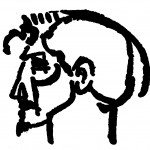
 e better. I’m deeply fascinated by Ezra Pound and he also had a connection to Chinese and Japanese, so he works really well in this connection.
 greater conversational flow (improvisational jazz, as my virtual bass teacher