Animals Today December 19, 2020: Hot end of the year news. BLM to try sterilization surgery instead of medicine on wild horses – good idea?
Dec 31, 2020
Show notes
We kick off this show with some end of the year animal news stories from around the world including dogs being trained to detect COVID, the continued decline of the fur industry in Europe, hunting of black bears (including cubs) to resume in Missouri, UK moves toward banning the export of live animals to the continent for slaughter (thanks to Brexit), a giant pouched rat wins award for detecting land mines in Cambodia, and more!
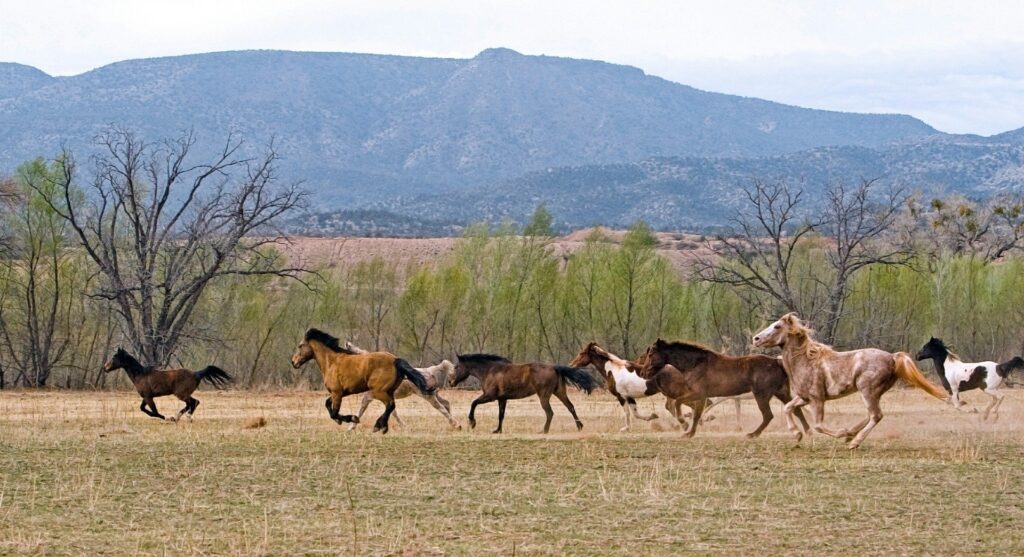
Then Peter welcomes Stephanie Boyles Griffin, Senior Scientist Wildlife Protection Department, Humane Society of the United States. The Bureau of Land Management (BLM) recently announced it will begin implementing sterilization surgery on wild horses (removal of ovaries), as a means of controlling the population in one managed herd. The BLM oversees and controls the populations of wild horses in 177 herd management areas (HMAs) in the 10 states where the protected horses live. Boyles Griffin disagrees with this plan because research to support such surgeries in the field has not been conducted, and that the currently used immunocontraceptive vaccines are safe and effective. The 1971 Wild Horses and Burros Protection Act empowered the BLM to manage the populations, since they have no natural predators. and there are many parties interested in how they operate. To voice your opposition to performing invasive surgeries on wild horses, contact the BLM and your representatives, and visit the HSUS website to learn more.
Animals Today Dec 12, 2020. New rules to limit Emotional Support Animals on planes. Hot news. Solving challenging cat behaviors.
Dec 26, 2020
Show notes
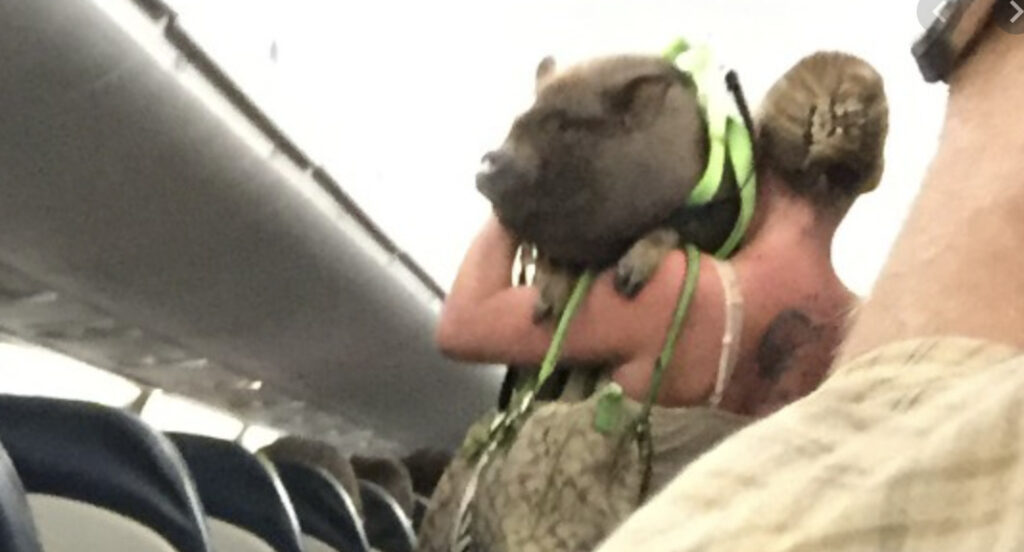
This show begins with news about the Department of Transportation’s decision to ban emotional support animals from airliners. Also new is that for registered service animals, only dogs will be permitted to fly. Service animals are specifically trained to assist people with disabilities such as visual impairment, mobility limitations or a propensity to have seizures. Emotional support animals provide companionship, alleviate anxiety, etc., but do not have special training to assist their owners with specific disabilities.
Many fliers and industry officials have voiced opposition to the growing numbers of emotional service animals of various species that have been permitted to fly, which can impinge upon the rights of other passengers. Biting incidents and untimely elimination requiring clean-ups happen too often. And, false claims of pets as emotional service animals seem to be common.
Lori also raises concerns about a likely consequence of this change, increased numbers of people having their animals fly with cargo, and she gives examples to show how this is very risky to the health and well-being of the animals. Also, in 2018, Delta banned pit bull type dogs from their flights, even if registered service animals, and gives no indication of changing this policy. Lori explains the many problems with breed discrimination.
We continue with Peta’s Ingrid Newkirk publicly criticizing Alexandria Ocasio-Cortez for apparently purchasing a French Bulldog instead of adopting. We also learn about some politicians who have adopted including President elect Joe Biden (2 adopted rescued German shepherds) Pete Buttigieg, John Hickenlooper and Vice President Pence.
Then, Lori welcomes cat behaviorist, and multi cat expert, Rita Reimers to discuss common and challenging behavior problems with our felines.
One situation most cat families have to navigate is introducing a new cat to the home. Reimers explains that the cat may show aggression due to fear, especially if he or she has been in and out of rescues already. It takes time, sometimes months, for the cats’ fear to subside. When other cats are in the home already, they may become aggressive, as it is their instinct to protect their food and shelter. Once again, be patient, be consistent (such as with food) and show lots of love to permit everyone to gradually adapt.
Another topic Lori and Rita discuss are the myriad problems following “declawing”, which listeners know is not anything like nail clipping but is akin to amputating a person’s fingers at the first joint. Gratefully, this practice is much less common than it used to be but still is never a solution for unwanted scratching or other unwanted cat behaviors. Reimer shares many more insights from her years of working out cat behavior problems. Find her at ritareimers.com and on Pet Life Radio with her show, 19 Cats and Counting.
Animals Today November 21, 2020. Helping birds around the home. Wolfdogs. Animal abuse registries. Pet loss and kids. Cheetahs! Tropical reef fish.
Nov 30, 2020
Show notes
This show begins with Lori and Peter discussing some nifty things you can do around your home to help animals such as hummingbirds and other birds. Then Darlene Kobobel, President of the Colorado Wolf and Wildlife Center returns to discuss the many problems related to wolf-dog hybrids, properly called wolfdogs. You will want to think twice before buying one!
Next, Lori welcomes Bob Ferber, former Los Angeles animal cruelty prosecutor. They discuss registries for those convicted of animal abuse, which Ferber generally thinks is a good idea, especially in preventing abusers from obtaining more animals.
The show continues with a helpful talk with bereavement counselor, Sandra Grossman, Ph.D, with a focus on helping children deal with the loss of their pets. Her organization is Pet Loss Partners.
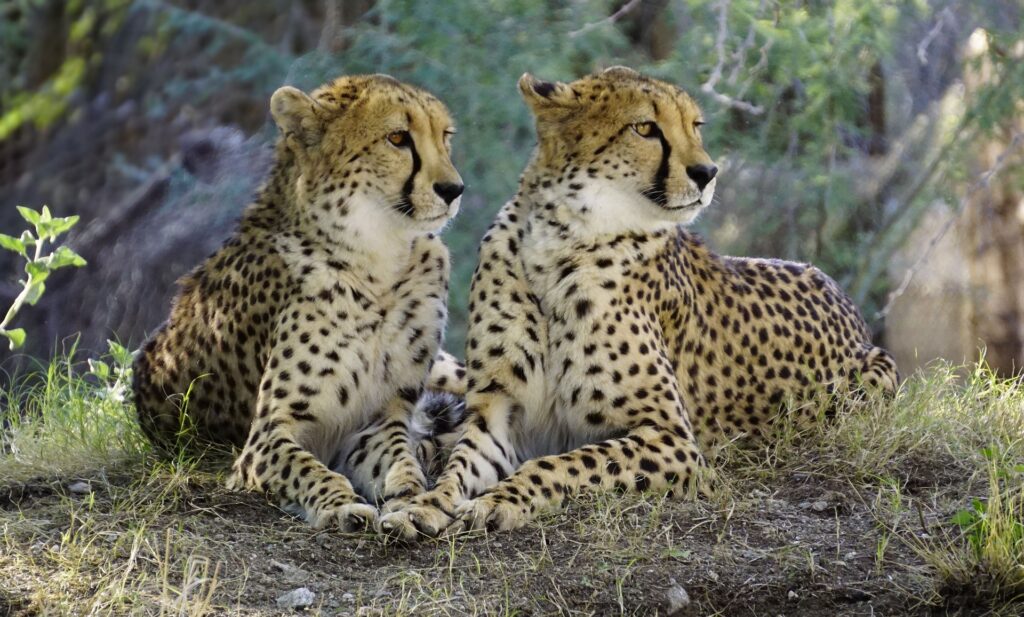
Then, in recognition of International Cheetah Day, Lori tells us all about these majestic and athletic big cats. As expected, their numbers in the wild in Africa are shrinking, from about 100,000 individuals in 1900 to 9,000 – 12,000 now. To conclude, Peter welcomes Tam Warner Minton, Author of All Fish Faces: Photos and Fun Facts about Tropical Reef Fish (Ocean Friends). She is an avid diver who loves to document the ocean world with her captivating up close photos.
Animals Today Nov 1, 2020. Trump’s historical endorsement of the PACT Act.
Nov 02, 2020
Show notes
Lori begins by reflecting on the most important animal news story of 2019, the passage of the PACT Act (Preventing Animal Cruelty and Torture Act) into law. Its passage reflects the growing understanding that for some types of animal related crimes, federal laws are needed to effectively address them. The roots of the PACT Act lie in the 2010 passage of the Animal Crush Video Prohibition Act, which was passed to prohibit the creation or distribution of videos depicting animal cruelty and torture. Crush videos, showing actual killing of small animals, often by women in high heeled shoes (and providing bizarre sexual gratification for some viewers) were a prime target for this legislation.
But the animal crush and torture law had a big deficiency; it did not prohibit the actual act of abuse. It only was concerned with possession and distribution of the videos.
It was hard to bring action under state law because it was often not possible to determine where the cruelty and killings were committed. Apropos to the discussion was the Michael Vick dog fighting story (which itself was instrumental in raising public awareness about animal cruelty around us). As it turned out, Vick did not go to prison for actual animal cruelty. Rather, he plead to federal charges of conspiracy to travel in interstate commerce in aid of unlawful activities and sponsoring a dog in an animal fighting venture. Had the PACT Act been in place, instead of serving a mere 18 months in prison, Michael Vick probably would have been sentenced to seven years.
The PACT ACT was strongly endorsed by HSUS head, Kitty Block, and when President Trump signed the bill into law, on November 25, 2019, he noted that it was long overdue. The full text of the law is here:
Then, in recognition of World Rabies Day, Dr. Robert Reed joins Lori to explain rabies, the nature of the virus and the disease it causes, and the current risks to people, dogs and cats in the US. Fortunately, thanks to the widespread use of vaccines, rabies cases are rare.
Note: Rabies is a viral infection that affects the nervous system of mammals. It invariably causes swelling of the brain and death after a relatively short illness.
Peter then welcomes back to the show Professor Clive Wynne of the Arizona State University Canine Science Collaboratory to speak about the stress dogs have while in shelters. His group is working on developing ways to reduce the stress of dogs there.
Finally, enjoy another famous quiz, this one about popular song titles with animals.
Animals Today September 19, 2020. Farm animal protection. Operation Baghdad Pups. Know your koalas.
Sep 28, 2020
Show notes
Factory farming
To begin, Peter welcomes Josh Balk, VP of Farm Animal Protection at the Humane Society of the United States (HSUS). Josh reports the HSUS is waging a strong campaign against factory farming on a number of fronts. One effort involves legislative campaigns to ban the confinement of egg laying hens, mother pigs and baby veal calves in cages. They have had significant success in many states so far. They also work with the world’s largest food manufacturers, such as McDonalds, Costco and Walmart to adopt cage-free policies.
The HSUS also works with the food service industry companies to get more plant-based options on menus, and they actively use the ballot initiative process to pass legislation supporting the welfare of animals.
Josh got his official start in animal advocacy interning with Compassion Over Killing (now Animal Outlook). He would drive around Washington, DC in a vehicle equipped with a large TV which displayed footage of cruel factory farming practices, and would provide leaflets. Later, he worked undercover at a chicken slaughterhouse. To those seeking to obtain employment as an advocate for animals, Josh recommends volunteering or interning on a specific campaign as the best way to demonstrate one’s talents and commitment. To conclude, Josh shares his admiration of civil rights hero John Lewis, as a model of bravery in pursuit of big goals.
World’s largest birds
Lori then tells us about 3 of the largest birds in the world: the ostrich, the wandering albatross and the Emperor penguin.
Operation Baghdad Pups
Next up is Meredith Ayan, Executive Director of Society for Prevention of Cruelty to Animals International (SPCA International). This organization supports shelters around the globe, aids disaster and relief efforts with grants, makes grants to help shelters when they take in large numbers of animals, provides veterinary supplies, and more
The main discussion between Lori and Meredith centered on Operation Baghdad Pups, a worldwide campaign to help active duty soldiers in war zones who have befriended animals, to get the dogs and cats back home to the US. Operating since 2008, almost 1100 animals have been rescued and brought home. As you might expect, the logistics are complicated and the expenses are high! But a highlight came recently when (along with partner Puppy Rescue Mission), 47 animals were flown out of war zones to New York’s JFK International Airport for new lives in safety. Bravo! Visit SPCAI.org.
Kool koala kwiz
We conclude with a little pop quiz about koalas. These marsupial mammals subsist exclusively on eucalyptus leaves, and their newborns, called joeys, are less than one inch long as they enter mom’s pouch for the next stage of development.
Animals Today September 12, 2020. Movement toward stronger animal cruelty laws. Animal abuse in medical training. Changing times in pet industries. Trivia challenge.
Sep 18, 2020
Show notes
To begin this show, Lori shares news out of Mississippi, where important anti-animal cruelty legislation was recently signed into law by Governor Tate Reeves. The new law fixes deficiencies statewide, where the old law did not allow for multiple charges when multiple animals were harmed, and where it did not take into account repeat offenders. Now, animal abusers will be charged with a felony offense for their first act of aggravated animal cruelty, and a charge can be made for each animal abused. Plus, penalties for second time offenders allow for a fine of $10,000 and/or up to 10 years in prison.
The Animal Legal Defense Fund (ALDF) has been issuing their Animal Protection Law Report for 14 consecutive years. They rank each state on multiple measures for legal protections for animals, and thereby can demonstrate to states areas they can work to improve on. Overall, Illinois has held the top ranking for best animal protection laws on the books for more than a decade. In 2018, Oregon, Maine, Colorado and Massachusetts rounded out the top five states. Kentucky had been in last place for more than 10 years until 2019, when Mississippi took the bottom spot. So, did this auspicious award spark the state’s tougher stand on abusers? We have not specifically determined that, but maybe in 2020, Mississippi will earn its way out of ALDF’s cellar. We will let you know!
I am not a dog!
Lori then shares some fun facts about prairie dogs, the highly social, and in our view, very cute rodents. These creatures live in huge underground burrows called “towns”, reach lengths of 12” to 17” and weights of 2-3 lbs.
Greyhounds and news from Mayo Clinic
Peter and Lori continue with animal news. First, an investigative report in Ireland revealed huge numbers of unwanted and underperforming greyhounds get killed routinely, and that performance enhancing drugs and erythropoetin are widely used. And second, no doubt due to pressure from PCRM, the Mayo Clinic will stop using live animals in its emergency medical training.
Animal related business services
Next up is Mark Cushing, founder and Managing Partner of Animal Policy Group. This organization provides services related to animals in areas including industry relations and strategy, accreditation counsel and services for veterinary schools, and public affairs.
Mark joins Peter to discuss the rapidly changing environment for remote veterinary care, addressing the shortage of veterinarians, how the relationship millennials have with their pets differs from that in older generations, and much more. Mark truly has an insider’s view on animal industries and pets in our culture. Mark’s brand new book is titled, Pet Nation – The Love Affair That Changed America.
Pop quiz
To conclude, gaps in Peter’s knowledge about animals (real and animated) are ruthlessly revealed in the latest installment of Lori’s trivia quiz. Can you beat his performance? Warm up on these: What breed is Scooby Do? What’s the main food of blue whales? Who was Jim Davis’ famous cat? What bears live in Jellystone Park?
Answers: Great Dane, krill, Garfield, Yogi and BooBoo.
Animals Today September 5, 2020. Mosquitoes, malaria and DDT. Protecting dogs from bee and wasp stings.
Sep 12, 2020
Show notes
Mosquitoes are disease vectors
Lori begins the show speaking about those pesky and sometimes dangerous mosquitoes, because August 20th was World Mosquito Day! Mosquitoes carry malaria, yellow fever, West Nile Virus, Zika virus, and others. World Mosquito Day is intended to raise awareness about mosquitoes transmitting malaria and other diseases.
The breakthrough in understanding malaria
In 1897, the link between mosquitoes and Malaria was discovered by Sir Ronald Ross, who was awarded the Nobel Prize in 1902 for his work. He figured out the life cycle of the disease-causing Plasmodium parasite, which lives in the insect. In 2019 malaria afflicted more than 228 million people, and killed an estimated 405 thousand people in 2018, most in sub-Saharan Africa. Pregnant women and children are most vulnerable. Malaria transmission was eradicated from the US in 1951, but cases still occur in travelers returning to the US from Africa.
The controversy of DDT
DDT came into wide use during WW2 as it was found to be effective against malaria and typhus. Paul Herman Muller received a Nobel Prize in 1948 “for his discovery of the high efficiency of DDT as a contact poison against several arthropods.” The pivotal book, Silent Spring. By Rachel Carson, sounded the alarm about the possible risks of aerial spraying of DDT to the environment. The book was extremely controversial, with strong opposition from industry. Ultimately, the fallout was the growth of the modern environmental movement, and from that, the Environmental Protection Agency (EPA) was established. Banning DDT was one of its first actions.
The topic remains controversial to this day, and makes for interesting reading. Dr. Jane Orient, Executive Director of the Association of American Physicians and Surgeons contends that DDT was the most effective public health weapon of all time. She believes the 1972 ban was caused by environmental hysteria, triggered by events like Carson’s book, which she criticizes.
Super hot animal news
Then we have new research on what contributes to happy cohabitation of cats and dogs and the risks of raw meat diets for pets (and their people) due to pathogens.
Wasps, bees and our dogs
Lori then welcomes Dr. Robert Reed, Medical Director at VCA Veterinary Hospital in Rancho Mirage, California, to learn about the risks of stings from wasps and bees, especially to our dogs. The most likely outcome of a sting is local swelling, pain and redness at the site of the sting. This may extend somewhat to the local area.
However, if the dog is allergic, systemic reactions may occur like vomiting, diarrhea, trembling, hives, swelling around the face, even anaphylaxis. Anytime you know or suspect a bee or wasp sting, its best to get it checked out with your veterinarian right away because you don’t know what course it will take.
Only honeybees will lose a stinger, and if it is present in the skin, remove it by scraping it away with something like a credit card, taking care not to squeeze more venom into the animal. And be alert for beehives and hornet nests around your home and have them removed by professionals when then are noticed. Dr. Reed also provides many tips about recognizing situations where and when stings are more likely to occur.
Animal behaviors we don’t like.
We conclude discussing some of the things our dogs and cats do that annoy us. Of course we love our pets, but could they just stop doing that?
Animals Today August 29, 2020. The rise and fall of Joe Exotic. Federal legislation to end big cat ownership. The dogs of WW II. We love sharks.
Sep 02, 2020
Show notes
Lori begins the show discussing the many problems with private ownership of big cats, with guests Tracie Letterman, Vice President of Federal Affairs at Humane Society Legislative fund and Lisa Wathne Senior Strategist, Captive Wildlife, Humane Society of the United States.
The Rise of Joe Exotic
Netflix hosted a popular show called Tiger King, which featured the exploits of Joe Exotic, AKA Joseph Allen Maldonado. For two decades, Joe had operated an Oklahoma roadside zoo, where he made a living breeding and handling big cats, mostly tigers. He charged the visiting public to hold, pet, and be photographed with tiger cubs. Later, Joe Exotic began traveling the country with his juvenile tigers, going to fairs and roadside zoos.
Unquestioned cruelty
The practice of “cub petting,” as it is called, is simply cruel. The babies are taken from their mothers at birth and then live in confinement to be exposed to a constant stream of people. HSUS investigations at three locations documented severe abuse and neglect of big cats at each facility.
Cub petting is sometimes justified as being beneficial to the animals, because it increases public awareness and supports conservation. Of course, these ideas are simply untrue. It actually leads people to believe the animals are not endangered in the wild, and encountering these animals in roadside zoos and fairs tends to inspire people to obtain wild animals themselves to keep as pets.
The fall of Joe Exotic
After appropriating the name of a legitimate rescue, Big Cat Rescue, Joe lost a lawsuit and was ordered to pay nearly one million dollars in damages. This led Joe to hire a hit man (really) to kill the sanctuary’s founder. Unfortunately for Joe, he was speaking with an undercover FBI agent, and on April 2019, he was convicted on 17 federal wildlife crime counts and two counts of murder for hire. He now resides in federal prison.
What you can do
Joe Exotic’s spectacular ride is only a very visible example of a huge problem. In the US, approximately 5000 to 7000 tigers live in captivity, versus 2800 in the wild worldwide. A few states have public contact bans. But since 1990 there have been over 400 dangerous incidents with big cats, including serious injury and death. Federal legislation is long overdue, and the Big Cat Public Safety Act has been introduced in both the house and senate. It would prohibit individuals from having big cats as pets and prohibit public contact with big cats. Please contact your representatives and ask them to support this legislation.
Dogs employed in World War II
Peter then welcomes Trevor Jones, Director and CEO of History Nebraska.
In the Second World War, the US conducted a novel program called Dogs for Defense to get dogs into military service for various roles. Americans were asked to volunteer their pet dogs to the military, and indeed, thousands did so. Jones also wrote a very nice children’s book, Major – A Soldier Dog, based on one family’s real experiences in allowing their dog to enter service for the war effort.
Finally, what is the largest shark? If you know that it is the whale shark, you are on your way to besting Peter’s effort on this week’s quiz about sharks. Whale sharks can reach 60 feet in length!
Training for war. Fort Robinson, Nebraska.Kennels for dogs undergoing training at Fort Robinson, Nebraska.Training for war at Fort Robinson, Nebraska.
Animals Today August 15, 2020. Updating an ancient Jewish holiday that will benefit animals and the environment. Challenges abound in managing animal hoarding.
Aug 18, 2020
Show notes
To begin, Lori Welcomes back to the show, Richard Schwartz, President emeritus of Jewish Veg, formerly Jewish Vegetarians of North America (JVNA). A coalition of Jewish organizations is urging that the ancient, largely forgotten Jewish holiday of Rosh Hashanah L’Maaser Biheima (New Year’s Day for Tithing Animals) be renewed into a modern New Year for Animals, a day devoted to increasing awareness of Jewish teachings on compassion to animals and how far current realities for animals are from these teachings.
Spearheaded by the US-based organization Jewish Veg, the UK Jewish Vegetarian Society, and the Israeli Jewish Vegetarian Society, Zoom events in the US, UK, and Israel have been scheduled. They will all take place at 8 PM local times, on August 20, Rosh Chodesh Elul, the date that the ancient holiday occurred. At each event, rabbis, vegan activists, environmentalists, and doctors will speak on issues related to the renewed/transformed holiday.
Reviving and transforming the New Year for Animals is especially important in today’s world, because a shift away from animal-based diets, in addition to lessening the mistreatment of animals, would reduce the prospects for future pandemics, diet-related diseases that are afflicting the Jewish and other communities, and reduce climate change and other environmental threats to humanity.
Transforming the holiday would also::
show that Judaism is applying its eternal teachings to today’s important issues;
improve the image of Judaism in the eyes of people concerned about animals, vegetarianism, the environment, and related issues, by stressing a compassionate side of Judaism;
bring back some young, idealistic Jews who are currently alienated to some extent from Judaism, especially those who are concerned about animal welfare;
strengthen the Jewish commitment of vegetarian and vegan Jews, who are already involved in Jewish life, but feeling somewhat alienated, as they are often among a very small minority in their congregations, by creating/reclaiming a holiday that they can more closely relate to and find relevant, meaningful, and appealing;
challenge Jews to creatively make the holiday meaningful, thereby helping to revitalize Judaism.
Peter then welcomes Courtney Lee, Professor at McGeorge School of Law to speak about animal hoarding. Her recently published article is titled, Never enough: Animal hoarding law.
Lee describes to us her main findings, including the differences between object hoarding and animal hoarding, and the extreme difficulty in treating those who hoard animals.
Animal hoarding occurs when an individual is housing more animals than he or she can adequately care for. It is a complex issue that encompasses mental health, animal welfare and public safety concerns. Animal hoarding is defined by an inability to provide even minimal standards of nutrition, sanitation, shelter and veterinary care—often resulting in animal starvation, illness and death. In the majority of cases, animal hoarders believe they are helping their animals and deny this inability to provide minimum care.
Animals Today August 8, 2020. International Orangutan Day is August 19. How to help orangutans. The evils of palm oil. Vervet monkey conservation. Some pet owners really annoy us: Here’s why.
Aug 12, 2020
Show notes
In recognition of International Orangutan Day, August 19, 2020, Lori and Peter kick off discussing some of the fascinating facts about these great apes. These gentle creatures are the largest tree-dwelling animals on earth. Indeed they even sleep in the trees, fashioning leafy nests each evening for that purpose. Orangutans are native to only 2 island on earth, Borneo and Sumatra, and their diets consist mostly of fruit (preferring durians), along with flowers, leaves, honey and insects. Males, whose arm spans can reach eight feet and who can weigh 200 lbs., are much larger than females.
Orangutan populations are in crisis due to the world’s seemingly insatiable appetite for palm oil. Native orangutan forests are being destroyed to plant palm oil fields, displacing the apes, who truly have no other alternatives to live.
Consumers around the world can help orangutans in the wild by supporting organizations that shield the forests from devastation, protect wild populations, and rescue orphaned and injured animals. Additionally, we all should curtail our consumption of palm oil to help dry up demand. However, palm oil has become almost ubiquitous in a variety of products like food, lipstick, shampoo, and detergent products. Making it even more challenging, palm oil and its derivatives go by alternative names including palmitate, palm sterine, and sodium laureth sulfate (the full list is at the end of this post).
Lori then continues discussing the health risks of consuming saturated fats which include heart disease, stroke and cancer. Palm oil (as well as meat and cheese) is high in saturated fats.
Due to the established health risks of trans fatty acids in the diet, a requirement to indicate the amount of trans fats in packaged foods went into effect more than a decade ago. Consequently, its use in packaged foods and restaurants gradually declined, and a full trans fat ban in the US went into effect in 2018. However, unfortunately, palm oil gradually has taken its place. Lori explains how this switch occurred and makes recommendations for healthier and more environmentally conscious eating.
Then, Peter welcomes Josie Du Toit, Director at Vervet Monkey Foundation, which is based in South Africa. The Foundation operates a lively rescue and rehabilitation center with the aid of volunteers from around the world. Their wonderful video projects go by the name of The Vervet Forest.
These small primates weigh about 7.5 to 10 lbs, range from central Africa to the southern tip of the continent, consume fruits, berries, leaves, seeds insects and bird eggs,. Their agility and adaptability permits them to thrive in urban areas, often leading to conflict with people. Among its many activities, the Vervet Monkey Foundation teaches how to humanely deter the monkeys from developed areas.
The Vervet Monkey Foundation rehabilitates and provides sanctuary to over 500 primates, orphaned, injured, abused, ex-laboratory or unwanted pets.
We conclude with a discussion about some of the things pet owners and guardians do to and with their animals that really bug us including being breeders (especially those who say they love their breed, or who also claim to do rescue work), walking dogs when the ground is obviously too hot for their paws, buying trendy dogs, like many did after the Obamas got their Portuguese Water Dog, and many, many others!
Ok, below is the complete list from Treehugger of terms that may mean palm oil on products ingredient lists.

 Our TOPPODCAST Picks
  Stay Connected