TopPodcast.com
Menu
  • Home
  • Top Charts
  • Top Networks
  • Top Apps
  • Top Independents
  • Top Podfluencers
  • Top Picks
    • Top Business Podcasts
    • Top True Crime Podcasts
    • Top Finance Podcasts
    • Top Comedy Podcasts
    • Top Music Podcasts
    • Top Womens Podcasts
    • Top Kids Podcasts
    • Top Sports Podcasts
    • Top News Podcasts
    • Top Tech Podcasts
    • Top Crypto Podcasts
    • Top Entrepreneurial Podcasts
    • Top Fantasy Sports Podcasts
    • Top Political Podcasts
    • Top Science Podcasts
    • Top Self Help Podcasts
    • Top Sports Betting Podcasts
    • Top Stocks Podcasts
  • Podcast News
  • About Us
  • Podcast Advertising
  • Contact
Not in our directory?
Add Show Here
Podcast Equipment
Center

toppodcastlogoOur TOPPODCAST Picks

  • Comedy
  • Crypto
  • Sports
  • News
  • Politics
  • True Crime
  • Business
  • Finance

Follow Us

toppodcastlogoStay Connected

    View Top 200 Chart
    Back to Rankings Page
    Kids & Family

    Your Parenting Mojo – Respectful, research-based parenting ideas to help kids thrive

    Parenting is hard…but does it have to be this hard?

    Wouldn’t it be better if your kids would stop pressing your buttons quite as often, and if there was a little more of you to go around (with maybe even some left over for yourself)?

    On the Your Parenting Mojo podcast, Jen Lumanlan M.S., M.Ed explores academic research on parenting and child development. But she doesn’t just tell you the results of the latest study – she interviews researchers at the top of their fields, and puts current information in the context of the decades of work that have come before it. An average episode reviews ~30 peer-reviewed sources, and analyzes how the research fits into our culture and values – she does all the work, so you don’t have to!

    Jen is the author of Parenting Beyond Power: How to Use Connection & Collaboration to Transform Your Family – and the World (Sasquatch/Penguin Random House). The podcast draws on the ideas from the book to give you practical, realistic strategies to get beyond today’s whack-a-mole of issues. Your Parenting Mojo also offers workshops and memberships to give you more support in implementing the ideas you hear on the show.

    The single idea that underlies all of the episodes is that our behavior is our best attempt to meet our needs. Your Parenting Mojo will help you to see through the confusing messages your child’s behavior is sending so you can parent with confidence: You’ll go from: “I don’t want to yell at you!” to “I’ve got a plan.”

    New episodes are released every other week – there’s content for parents who have a baby on the way through kids of middle school age. Start listening now by exploring the rich library of episodes on meltdowns, sibling conflicts, parental burnout, screen time, eating vegetables, communication with your child – and your partner… and much much more!

    Advertise

    Copyright: © Jen Lumanlan - M.S. Psychology focused on Child Development

    • Apple Podcasts
    • Google Play
    • Spotify

    Latest Episodes:
    122: Self-Compassion for Parents Oct 18, 2020
    Show notes

    In this episode, Dr. Susan Pollak helps us to apply mindfulness skills to our relationships with our children so we can parent in line with our values, rather than just reacting when our children push our buttons. You'll learn: What's the point of mindfulness, and does it matter if we bring our full attention and presence to diaper changes? Why we're so hard on ourselves, even when we always try to be kind to others Some concrete tools to use when you interact with your children TODAY in those moments when it seems like everything is falling apart. Dr. Pollak is a psychologist in private practice in Cambridge, Massachusetts. She is a long-time student of meditation and yoga who has been integrating the practices of meditation into psychotherapy since the 1980s. Dr. Pollak is cofounder and teacher at the Center for mindfulness and Compassion at Harvard Medical School and the Cambridge Health Alliance, and has just stepped down as President of the Institute for Meditation and Psychotherapy, a position which she held since 2010. She also writes regularly for Psychology today on the topic of integrating mindfulness into daily life. Book mentioned in the episode: Self-Compassion for Parents: Nurture Your Child by Caring for Yourself (Affiliate link). Other episodes related to this topic: Parental Burn-Out No Self, No Problem Helping children to develop compassion Patriarchy is perpetuated through parenting Mindfulness tools with Mindful Mama Hunter Clarke-Fields Some key points from the interview: (04:08) Many of us, present company included, we're not raised to be kind to ourselves. (10:47) Mindful self-compassion acknowledges that we need to start with mindfulness. (I've been teaching this course for over a decade, and I've seen that) a lot of people just can't start with compassion because it's foreign for most of us to treat ourselves kindly. (53:59) Allow yourself to rest for a moment feeling that you have distance from the storm, some space from the turbulence to recognize that you are not the storm. (paraphrased) (59:03) It's such a common misconception about mindfulness that you have to sit still and not think about anything. And, you know, people are relieved to know that [mindfulness] is not about stopping our thoughts. It's really about finding a different relationship with our thoughts. [accordion] [accordion-item title="Click here to read the full transcript"] Jen 00:03 Hi, I'm Jen and I host the Your Parenting Mojo Podcast. We all want our children to lead fulfilling lives, but it can be so hard to keep up with the latest scientific research on child development and figure out whether and how to incorporate it into our own approach to parenting. Here at Your Parenting Mojo, I do the work for you by critically examining strategies and tools related to parenting and child development that are grounded in scientific research and principles of respectful parenting. If you'd like to be notified when new episodes are released and get a FREE Guide to 7 Parenting Myths That We Can Safely Leave Behind, seven fewer things to worry about, subscribe to the show at YourParentingMojo.com. You can also continue the conversation about the show with other listeners in the Your Parenting Mojo Facebook group. I do hope you'll join us. Jen 01:00 Hello, and welcome to the Your Parenting Mojo Podcast. In this episode, we're going to draw threads together from across a number of recent episodes. Most obviously it picks up on our interview with Dr. Moira Mikolajczak where we discuss parental burnout. After that episode concluded Dr. Mikolajczak and I emailed a bit about tools that could potentially help parents, and the primary one that she found useful was the idea of self-compassion. And that's what we're going to discuss today. This topic also picks up on our conversation with Dr. Chris Niebauer about the stories that our left brain tells us by giving us some concrete strategies on how to do that. And it builds on a conversation we had about three years ago with Dr. Brendan Ozawa-de Silva on the topic of compassion. We also touch on issues related to patriarchy and go deeper into some of the mindfulness tools that Hunter Clark-Fields shared with us recently. Jen 01:50 And here to do all of this with us is Dr. Susan Pollak, who is a psychologist in private practice in Cambridge, Massachusetts. She is a longtime student of meditation and yoga and has been integrating the practices of meditation into psychotherapy since the 1980s. Dr. Pollack is cofounder and teacher at the Center for Mindfulness and Compassion at Harvard Medical School and Cambridge Health Alliance, and has just stepped down as President of the Institute for Meditation and Psychotherapy, a position that she held since 2010. She also writes regularly for Psychology Today on the topic of integrating mindfulness into daily life. Welcome, Dr. Pollack. Dr. Pollak 02:24 Thanks, Jen. It's a pleasure to be with you. Jen 02:28 So, we're going to talk a lot about your book. Because it's on the topic of Self-Compassion for Parents. And one thing that I really liked as I was reading through your book, is the idea that it isn't a manual for self-compassion. It doesn't teach you step by step what self-compassion is, and then how to apply it. I loved what Dr. Chris Germer said in your foreword and he said, I'm going to quote, "The book connects with the direct experience of parenting through detailed examples, personal anecdotes, and elegant exercises to transform parenting struggles through the tools of mindfulness and self-compassion." So that said, we're definitely going to be digging into some more of those things for as we go today, but I'm wondering if we could start by having you help us to understand what is compassion. And from there, what is self-compassion, and also this idea of mindful self-compassion that I know is really important to your work? Dr. Pollak 03:21 Okay, and let me first just respond to your kind words, because my feeling is, there's no recipe for parenting. And I know you're a parent. I am a parent of two kids. And as of just a week ago, a grandmother, Jen 03:39 Congratulations! Dr. Pollak 03:40 Thanks! So, I think it's really important for your listeners to, to realize that one size doesn't fit all. Jen 03:49 Yeah. Dr. Pollak 03:50 You know, I'm not going to be able to give you a recipe for how to be the perfect, compassionate, mindful parent, you know, you have to figure out what works for you, and what works for your kids. Jen 04:07 Yeah. [caption id="attachment_6394" align="aligncenter" width="1024"] Many of us, present company included, we're not raised to be kind to ourselves.[/caption] Dr. Pollak 04:08 So that said, let me jump into just some really workable definitions. And let me tell you, I really don't like psychological jargon. So, let me speak in English. So, one way to understand compassion is to really look at the root of the word, which is Latin, and it means to suffer with. Okay, so that's kind of theoretical, what it means in real life, is to really see somebody and to connect with their pain, or the difficulty they're having. So self-compassion, and this is a pretty radical concept, is learning to be kind to yourself. Again, it's that simple. So many of us, present company included, we're not raised to be kind to ourselves. So, it can feel weird, awkward, foreign, like "What? Be kind to myself? No, no, I have to push myself. I have to drive myself. What are you talking about?" So, for me, that concept of being kind to myself felt foreign. And, again, an easy way to think about it is, when you're having a hard time, think about what you say to yourself. And I don't know if your inner language is like my inner language, but to be very self-disclosing. I used to say, "Oh, Susan, that was stupid." Or "Oh, Susan, you're an idiot." or "Oh, how could you have said that?" You know, "You've really blew that." So, it was this constant soundtrack of criticizing myself. Dr. Pollak 05:56 But think also, what you might say, if a friend told you that for someone you really cared about that she had done, or he had done something similar to what you did. And you probably wouldn't say to your friend, "Oh, John, that was so stupid. I can't imagine you said that. How could you have done that? What were you thinking? What is wrong with you? You are such a loser?" Well, I mean if you said that to a friend, you probably wouldn't have many friends. Okay, so we, we do know how to respond kindly. You would probably say, "Look, John, you know, you're human, we all screw up, you know, everyone is a parent..." Let me just kind of stick to the topic of parenting here. Everyone is a parent has really bad days, you know, that book that I've loved Alexander and that No Good, Terrible, Awful Day. I mean, we as parents have those terrible, no good awful days. But you know how nice it would be. If you could say to yourself, "Jen, that was just a really rough day, we all have it, it happens. You know, don't beat yourself up, that's not going to solve the problem. Let's move on here." Or even better with the child, okay, let's make a repair. You know, let's say sorry, gee, mommy really lost it. Or, you know, I used to say, with my kids, when I was having a hard time, "Oops, mommy hit the roof there." You know, let's take a time out or a time in to repair. Okay, so that's our definition of compassion. Jen 07:47 And actually, if I could pause just there for a second, as you were saying, I wasn't raised with this way of thinking. It made me realize none of us were. And it seems to me is it though it's, I mean, it's coming from this Protestant work ethic, right that if you work hard enough, you will be able to achieve and if you're not working hard enough, that's probably why you're not achieving. And so, the only thing to do is self-flagellate and work harder. Dr. Pollak 08:11 Exactly. And supposedly, I know, you're also interested in culture and cross culture, real issues, supposedly, in other countries. There isn't as much self-loathing and self-flagellation because I remember hearing the story, where the Dalai Lama's translator was asking, translating questions like, Okay, so what are we supposed to do if we hate ourselves? And he'd say, "What?" Jen 08:40 "What do you mean?" Dr. Pollak 08:41 What do you mean, if we hate ourselves, and the translator and the Dalai Lama went back and forth, back and forth. This is how the story is recounted, and he had the hardest time understanding why people would hate themselves, why there was such loathing. But I am with you both in terms of the Protestant work ethic and also patriarchy, like, yes, you know, you have to drive yourself, okay, you can't be lazy, you can't slack off. And I think that's where those, that inner critic comes from, like, Oh, you screwed up, you idiot. What is wrong with you? So anyway, just to touch on the importance with those three definitions. The other thing I want to draw on in terms of compassion, and this, I know you're a research geek as well. So, this will probably interest you. One of the pieces of research when they're looking at in fMRI brain scan of what happens with the brain on compassion is it seems to activate the motor neurons. So, compassion is tied to action. And I remember when I was writing the book, I tried to use this headline saying compassion is a verb, because it's active. And of course, the editor being an editor said, No, it's not. So anyway, so I'd let that go. But if we can think of compassion is active, you know, basically, how can you respond? How can you tune in to what that person might need or what that child might need? Or what you might need in the moment? That is really the essence of what a compassionate and self-compassionate response is. Jen 10:38 Okay. Dr. Pollak 10:39 Now do you still want a definition of mindfulness. Jen 10:42 That would be awesome. Yeah. And is, specifically the mindful self-compassion. Yeah. [caption id="attachment_6393" align="aligncenter" width="1024"] A lot of people just can't start with compassion. It's foreign, for most of us to treat ourselves kindly.[/caption] Dr. Pollak 10:47 Okay. So, what happened in terms of the mindful self-compassion, and I love to give credit where credit is due. Kristin Neff was really the first researcher to do research on compassion, in 2003, had begun to write a number of essays and articles, framing this new construct that she called self-compassion. My friend and colleague, Chris Grimmer, who wrote the foreword of the book. thought, "Whoa, this is really important." And also, I need this. And, you know, so many, we know, Neil. And they connected and put together this program. And I know you will have references to their books, and the eight-week course and their books on self-compassion. So mindful self-compassion, acknowledges that we need to start with mindfulness. And I've been teaching this course for over a decade, a lot of people just can't start with compassion, again, going back to what I was saying, in that it's foreign, for most of us to treat ourselves kindly. But it seems that if we start with the foundation of mindfulness, then people can be more open to compassion. And in fact, again, some of the research is now saying that one of the secret sauce of mindfulness seems to be this element of accepting, without judgement, warmly kindly accepting. So now let me segue into a definition I like, and this is very hands on. Okay, so again, I don't want it to be abstract. So, the easiest thing to do is just with me, raise your hand, if you like, and just wiggle your fingers. Okay, so mindfulness, very simply, is, knowing what you're doing at the moment. It's nothing, Woo Woo, it's nothing, you know, fanciful, it's nothing weird. It's just present moment awareness, with kindness without judgement. So, you're feeling your hand, you're not saying, "Oh, Jen, You're such an idiot." for you know, wiggling your fingers. Just say, "Okay, I'm sitting here, moving my hand, feeling my hand again, being present in the body." And we'll talk about that as well. without judgement. Jen 13:33 Yeah, so I'm not looking at my hands. And my hands are really big in the picture. Dr. Pollak 13:38 Oh, I don't have a manicure. Either. Something absurd. Jen 13:41 Never had that. But yeah, I've heard Joseph Goldstein explain, you know, what is mindfulness, this big topic, and he says, "Sit and know you're sitting." Dr. Pollak 13:52 Exactly. Exactly. It's that simple. Jen 13:55 Yeah. And and I think I saw in your book, actually a quote from Sharon Salzberg, that I really liked. It said, mindfulness doesn't depend on what is happening, but is about how we are related to what is happening. Dr. Pollak 14:06 Exactly, exactly. Jen 14:08 Yeah. Dr. Pollak 14:08 And I think that really says it all. And a lot of people keep coming back to the fact that it's not the external circumstances. It's really the inner experience of how we are dealing with what's happening to us. And as Joseph, let me just make a link between those two teachers, as Joseph Goldstein would say, what is the attitude in the mind? You know, is there resistance? Is there a version, you know, are you saying, Oh, poor me, or are you saying, Okay, this is what…

    Full show notes at the publisher

    121: How To Support Your Perfectionist Child Oct 05, 2020
    Show notes

    Parents often reach out to me to ask how they can support their perfectionist children, who can't seem to cope with failure. I've been on the lookout for someone to talk with us for a while, but just as with our episode on anxiety, it took quite some searching to find an expert who doesn't take a behaviorist-based approach - meaning that if the behavior is fixed, the problem is fixed too. I was really glad to find today's guest, Dr. Paul Hewitt, who is a Professor in the Department of Psychology at the University of British Columbia. Dr. Hewitt has spent decades researching perfectionism and recently received the Donald O. Hebb award for his distinguished contributions to psychology as a science by the Canadian Psychological Association. He is currently doing research on the treatment of perfectionism, and trains clinicians in the treatments of perfectionistic behavior. In this interview, he tells us what we know about perfectionism, what we still don't know, and how to help our children who have perfectionist tendencies. Books mentioned in the episode:

    Perfectionism: A Relational Approach to Conceptualization, Assessment, and Treatment

    Perfectionism in Childhood and Adolescence: A Developmental Approach (Affiliate links).

    Jump to highlights 02:58 Introduction to the episode and guest Dr. Paul Hewitt 03:15 Why perfectionism is harder to define than it seems 04:49 Three ways people need to be perfect: self, other, and socially prescribed 10:20 The intrapersonal side: the internal dialogue we have with ourselves 16:20 Is there such a thing as "positive perfectionism"? 20:25 How perfectionism shows up in children as young as seven or eight 22:53 Where perfectionism comes from: attachment and the need to feel safe 33:58 Why treating only symptoms misses the real problem 46:18 What to do when a child gives up rather than risk getting something wrong 49:10 Perfectionism, competitiveness, and learning to struggle through failure References Affrunti, N.W., & Woodruff-Borden, J. (2015). Negative affect and child internalizing symptoms: The mediating role of perfectionism. Child Psychiatry & Human Development 47, 358-368. Affrunti, N.W., & Woodruff-Borden, J. (2015b). Parental perfectionism and overcontrol: Examining mechanisms in the development of child anxiety. Journal of Abnormal Child Psychology 43, 517-529. Affrunti, N.W., & Woodruff-Borden, J. (2017). Emotional control mediates the association between dimensions of perfectionism and worry in children. Child Psychiatry & Human Development 48, 73-81. Affrunti, N.W., & Woodruff-Borden, J. (2017b). The roles of anxious rearing, negative affect, and effortful control in a model of risk for child perfectionism. Journal of Child and Family Studies 26, 2547-2555. Ardakani, T., Akbari, B., Khanzede, A.A.H., & Haghighi, M.M. (2019). Comparing the effects of Cognitive-Behavioral Therapy and Acceptance and Commitment Therapy on the perfectionism of patients with obsessive-compulsive disorder. The Horizon of Medical Sciences 26(1), 24-37. Blasberg, J. S., Hewitt, P. L., Flett, G. L., Sherry, S. B., & Chen, Chang. (2016). The Importance of Item Wording: The Distinction Between Measuring High Standards Versus Measuring Perfectionism and Why It Matters. Journal of Psycho-educational Assessment, 34(7), 702-717. Cheek, J., Kealy, D., Hewitt, P.L., Mikail, S.F., Flett, G.L., Ko, A., & Jia, M. (2018). Addressing the complexity of perfectionism in clinical practice. Psychodynamic Psychiatry 46(4), 457-490 Egan, S.J., & Shafran, R. (2018). Cognitive-Behavioral treatment for perfectionism. In J. Stoeber (Ed.), The Psychology of Perfectionism: Theory, Research, Applications (pp.284-305). Abingdon, Oxon: Routledge. Gaudreau, P. Franche, V., Klajic, K., & Martinelli, G. (2018). The 2X2 model of perfectionism. In J. Stoeber (Ed.), The Psychology of Perfectionism: Theory, Research, Applications (pp.44-67). Abingdon, Oxon: Routledge. Hewitt, P.L. (2020). Perfecting, belonging, and repairing: A dynamic-relational approach to perfectionism. Canadian Psychology 61(2), 101-110. Hewitt, P. L., Smith, M. M., Deng, X., Chen, C., Ko, A., Flett, G. L., & Paterson, R. J. (2020). The perniciousness of perfectionism in group therapy for depression: A test of the perfectionism social disconnection model. Psychotherapy 57(2), 206-218. Hewitt, P.L., Mikail, S.F., Flett, G.L., & Dang, S.S. (2018). Specific formulation feedback in dynamic-relational group psychotherapy of perfectionism. Psychotherapy 55(2), 179-185. Lozano, L.M., Valor-Segura, I., Garcia-Cueto, E. & Pedrosa, I., Llanos, A, & Lozano, L. (2019). Relationship between child perfectionism and psychological disorders. Frontiers in Psychology 10, 1855. Molnar, D.S., Sirois, F.M., Flett, G.L., Janssen, W.F., & Hewitt, P.L. (2018). Perfectionism and health: The roles of health behaviors and stress-related processes. In J. Stoeber (Ed.), The Psychology of Perfectionism: Theory, Research, Applications (pp.200-221). Abingdon, Oxon: Routledge. Ong, C.,W., Lee, E.B., Krafft, J., Terry, C.L., Barrett, T.S., Levin, M.E., & Twohig, M.P. (2019). A randomized controlled trial of Acceptance and Commitment Therapy for clinical perfectionism. Journal of Obsessive-compulsive and related disorders 22, 100044. Rasmussen, K.E., & Troilo, J. (2016). “It has to be perfect!”: The development of perfectionism and the family system. Journal of Family Theory & Review 8, 154-172. Slade, P.D., & Owens, R.G. (1988). A dual process model of perfectionism based on reinforcement theory. Behavior Modification 22(3), 372-390.

    120: How to Raise a Child Who Uses Their Uniqueness to Create Happiness (RE-RELEASE) Sep 20, 2020
    Show notes

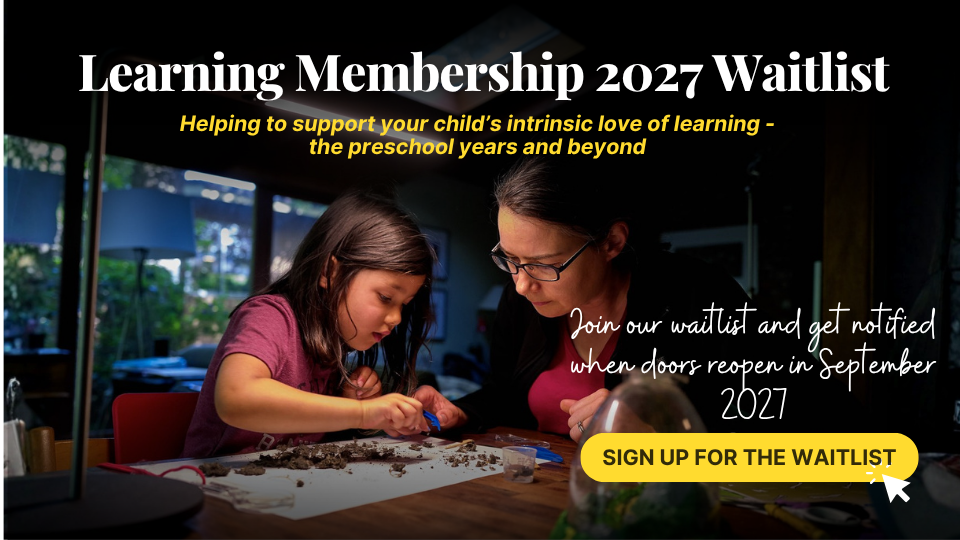
    I've heard from listeners that what they call "The Dark Horse Episode," the interview with Dr. Todd Rose, that this is one of their favorite conversations on the podcast, and for this reason I'm doing something I've never done before: reissuing that episode. Dr. Rose and I discussed ways to personalize children's learning to help them truly discover and live their full potential - both academically and personally (and even getting rid of that distinction entirely...). Check out what listeners who subsequently joined the Learning Membership said in our private community before the membership had even officially started: Click the banner to learn more! Jump to highlights 00:27 Introduction to the episode and guest Dr. Todd Rose 11:45 What is a "dark horse"? 13:30 Pursuing personal fulfillment over standardized success 14:58 What actually makes for good learning: engagement, relevance, autonomy 18:44 Pervasive individuality: why the "average" learner doesn't exist 21:37 A personalized nutrition example that reveals the flaw in group averages 23:35 Three different pathways children take to learn to read 30:03 Todd's story: how his dad's advice got him through the GRE 36:14 What standardization means for children of non-dominant cultures 38:10 The hidden trade-off schools make: sameness over self-knowledge 44:48 Micro motives: the small, specific things that truly drive us 53:56 Two common dark horse paths, and a third one we could choose instead 01:04:49 Why children need real agency, not just small choices 01:07:41 Rethinking meritocracy: equal chance versus equal fit 01:11:00 Why change should start with the most marginalized communities References Cantor, P., Osher, D., Berg, J., Steyer, L., & Rose, T. (2019). Malleability, plasticity, and individuality: How children learn and develop in context. Applied Developmental Science 23(4), 307-337.

    Mischel, W. (2004). Toward an integrative science of the person. Annual Review of Psychology 55, 1-22. Osher, D., Cantor, P., Berg, J., Steyer, L., & Rose, T. (2018). Drivers of human development: How relationships and context shape learning and development. Applied Developmental Science, 1-31. Osher, D., Cantor, P., Berg, J., Steyer, L., & Rose, T. (January 2017). Science of learning and development: A synthesis. American Institutes for Research. Downloaded from: https://www.air.org/sites/default/files/downloads/report/Science-of-Learning-and-Development-Synthesis-Osher-January-2017.pdf Rose, T., & Ogas, O. (2018). Dark Horse: Achieving success through the pursuit of fulfillment. New York, NY: HarperCollins. Rose, T., McMahon, G.T., Saxberg, B., & Christensen, U.J. (2018). Learning in the 21st Century: Concepts and tools. Clinical Chemistry 64(10), 1423-1429. Rose, T. (2015). The end of average: How we succeed in a world that values sameness. New York, NY: HarperCollins. Rose, L.T., Rouhani, P., & Fischer, K.W. (2013). The science of the individual. Mind, Brain, and Education 7(3), 152-158.

    119: Aligning Your Parenting With Your Values Sep 07, 2020
    Show notes

    Ever have a vague sense that your interactions with your child aren't quite aligned with your values...but aren't quite sure what to do about it? Have you been to a protest and shouted "Black Lives Matter! Fight the Power!"...and then gone home and forced your child to brush their teeth? Have you chastised Grandma for 'stealing' kisses from your child because it disrespects their body autonomy...and then pinned them down for a haircut? You're not alone. We're in this weird place where we know we want to do things differently than the way we were raised. But cultural norms are still telling us: we need to be in charge. (Because if we aren't in charge, who is?) A conversation with the hosts of Upbringing My guests today, Hannah and Kelty of the Upbringing podcast, see this dissonance more clearly than almost anyone I've met. In their podcast they explore how we live one way as people (who believe in freedom! respect! consent! empathy!) and another way as parents (timeouts, shame, control, consequences), and how we're unwittingly undermining the very skills and values we hope to promote. But blaming and shaming helps nobody (not us...and certainly not our children). By instead approaching the topic with compassion and optimism, we can get out of an us vs. them relationship with our children, and take back our parenting practices from our cultural conditioning, and parent in relationship with our children in a way that's deeply aligned with our values. Hannah and Kelty describe their RESIST approach (Respect, Empathy, Sync up, Innovate, Summarize, Trust) and also have a new guide to navigating sibling conflict (use discount code MOJO at checkout for 15% off!) on their beautiful website. If our conversation strikes a chord, I'd definitely encourage you to check out their podcast and weekly Q&As on Instagram.

    Parenting Membership

    If parenting feels really hard, and it seems like you’ve read all the books and you’ve asked for advice in free communities and you’re tired of having to weed through all the stuff that isn’t aligned with your values to get to the few good nuggets, then the Parenting Membership will help you out. The Parenting Membership is now open for immediate enrollment. Sign up now! Jump to highlights 08:22 Introduction to the episode and guests Hannah and Kelty 11:01 Becoming feminists through parenting 14:12 The moment Hannah realized she was "the man" at home 15:56 The Freedoms Model: ten realms of resistance worth paying attention to 18:48 Asking "why" before enforcing a rule 21:29 The Resist Approach: Respect, Empathize, Sync up, Innovate, Summarize, Trust 24:14 Walking through the Resist Approach with a toothbrushing struggle 30:40 Circling back to a conversation later, instead of forcing it in the moment 32:19 Parenting as a form of social change 36:05 How everyday power dynamics at home connect to power in the world 39:34 Learning to trust your own intuition alongside your child's 42:42 The Sibling Survival Guide and why fighting isn't a sign of failure 45:49 Redefining the goal for siblings: connection instead of harmony

    SYPM 007: Parenting Across Cultural Divides Aug 23, 2020
    Show notes

    In this episode we hear from Denise, who claims to have listened to every Your Parenting Mojo episode... Denise is a Filipina living in Madrid, and the intentional, respectful parenting style she's chosen to use is somewhat out of place in both cultures. She wanted to chat about what to do when her daughter is having some big feelings out in public, and a well-meaning senior citizen approaches and says directly to her daughter: "You shouldn't cry, because you look ugly when you cry." We talk through the immediate issue, as well as all the layers underneath that question, on this episode. And Denise's children make a surprise guest appearance at the end! You can find Denise on Facebook at facebook.com/DeniseSuarezConCarino Jump to highlights 01:09 Introduction to the episode and guest Denise 05:47 What Denise learned about feelings in her own childhood 08:50 Wondering whether feelings being welcome at home changes teen years 12:18 How Denise responds to strangers' comments in the moment 13:16 Making family values explicit, and preparing kids for outside messages 17:36 Where to find Denise and the families she works with


    118: Are You Raising Materialistic Kids? Aug 11, 2020
    Show notes

    This episode on the topic of materialism concludes our series on the intersection of parenting and money. Here we talk with Dr. Susanna Opree of Erasmus University Rotterdam, who studies the effect of advertising and commercial media on use, materialism, and well-being. We discuss how children's understanding of materialism shifts as they age, the extent to which advertising contributes to materialism, and the specific role that parents play in passing on this value. Other episodes in this series: This episode is the second in a series on the intersection of parenting and money. You can find other episodes in this series: 038: The Opposite of Spoiled 105: How to pass on mental wealth to your child 107: The impact of consumerism on children 112: How to Set up a Play Room 115: Reducing the Impact of Advertising to Children Jump to highlights 03:01 Introduction to the episode and guest Dr. Suzanna Opree 03:15 Defining materialism: three components 09:32 How materialism links to well-being and life satisfaction 11:53 Life events, divorce, and children turning to possessions 18:32 How children's understanding of brands develops with age 22:32 Why parents remain the biggest influence on a child's materialism 25:06 Conditional rewards and punishments tied to material goods 28:22 Letting children have a say in family purchase decisions 31:07 How peer pressure shapes materialism, informational and normative 42:45 Why materialism peaks in adolescence, and the role of transitions 53:27 Ways to actually reduce materialism, from gratitude to connection References: Batinga, G.L., de Rezende Pinto, M., Resende, S.P. (2017). Christmas, consumption, and materialism: Discourse analysis of children’s Christmas letters. Revista Brasileira de Gestão de Negócios-RBGN 19(66), 557-573.

    Burroughs, J.E., Chaplin, L.N., Pandelaere, M., Norton, M.K., Ordabayeva, N., Gunz, A., & Dinauer, L. (2013). Using motivation theory to develop a transformative consumer research agenda for reducing materialism in society. Journal of Public Policy & Marketing 32(1), 18-31. Chaplin, L.N., & John, D.R. (2007). Growing up in a material world: Age differences in materialism in children and adolescents. Journal of Consumer Research 34(4), 480-493. Chaplin, L.N., & John, D.R. (2010). Interpersonal influences on adolescent materialism: A new look at the role of parents and peers. Journal of Consumer Psychology 20, 176-184. Chaplin, L.N., Hill, R.P., & John, D.R. (2014). Poverty and materialism: A look at impoverished versus affluent children. Journal of Public Policy & Marketing 33(1), 78-92. Chaplin, L.N., John, D.R., Rindfleisch, A., & Froh, J.J. (2018). The impact of gratitude on adolescent materialism and generosity. The Journal of Positive Psychology 14(4), 502-511. Gentina, E., Shrum, L.J., Lowrey, T.M., Vitell, S.J., & Rose, G.M. (2018). An integrative model of the influence of parental and peer support on consumer ethical beliefs: The mediating role of self-esteem, power, and materialism. Journal of Business Ethics 150, 1173-1186. Goldberg, M.E., Gorn, G.J., Peracchio, L.A., & Barmossy, G. (2003). Understanding materialism among youth. Journal of Consumer Psychology 13, 278-288. John, D.R. (1999). Consumer socialization of children: A retrospective look at twenty-five years of research. Journal of Consumer Research 26(3), 183-213. Kassert, T. (2018). Materialism and living well. In E. Diener, S. Oishi, & L. Tay (Eds.), Handbook of Well-being. Salt Lake City, UT: DEF Publishers Kasser, T. (2002). The high price of materialism. Cambridge, MA: MIT Press. Kasser, T., Ryan, R.M., Zax, M., & Sameroff, A.J. (1995). The relations of maternal and social environments to late adolescents’ materialistic and prosocial values. Developmental Psychology 31(6), 907-914. King, R.B. (2018). Materialism is detrimental to academic engagement: Evidence from self-report surveys and linguistic analysis. Current Psychology 1-8. Lyonski, S., Durvasala, S., & Rayner, R. (2017). The processing of advertising: Does a consumer’s level of materialism make a difference? Innovative Marketing 13(1), 11-23. Opree, S.J., Buijzen, M., & van Reijmersdal, E.A. (2016). The impact of advertising on children’s psychological wellbeing and life satisfaction. European Journal of Marketing 50(11), 1975-1992. Opree, S.J., Buijzen, M., van Reijmersdal, E.A., & Valkenburg, P.M. (2013). Children’s advertising exposure, advertised product desire, and materialism: A longitudinal study. Communication Research 41(5) (2014): 717-735. Opree, S.J., Buijzen, M., & Valkenburg, P.M. (2012). Lower life satisfaction related to materialism in children frequently exposed to advertising. Pediatrics 130(3), e486-e491. Richins, M.L., & Chaplin, L.N. (2015). Material parenting: How the use of goods in parenting fosters materialism in the net generation. Journal of Consumer Research 41, 1333-1357. Richins, M.L. (2017). Materialism pathways: The processes that create and perpetuate materialism. Journal of Consumer Psychology 27(4), 480-499. Roberts, J.A., & Clement, A. (2007). Materialism and satisfaction with over-all quality of life and eight life domains. Social Indicators Research 82, 79-92. Robinson, S. (2018). Authenticity Guaranteed: Masculinity and the rhetoric of anti-consumerism in American culture. Boston, MA: University of Massachusetts Press. Saunders, S., & Munro, D. (2000). The construction and validation of a consumer orientation questionnaire (SCOI) designed to measure Fromm’s (1955) “marketing character” in Australia. Social Behavior and Personality 28, 219-240. van der Goot, M.J., Rozendaal, E., Opree, S.J. Ketelaar, P.E., & Smit, E.G. (2018). Media generations and their advertising attitudes and avoidance: A six-country comparison. International Journal of Advertising 37(2), 289-308. van der Meulen, H., Kuhne, R., & Opree, S.J. (2017). Validating the material values scale for children (MVS-c) for use in early childhood. Child Indicators Research 11(4), 1201-1216. Vanderpyl, T. (2019). “I want to have the American Dream”: Messages of materialism as a driving force in juvenile recidivism. Criminal Justice and Behavior 46(5), 718-731.

    SYPM 006: Mindful Mama Jul 26, 2020
    Show notes

    We're delving a little deeper into the topic of mindfulness with none other than the Mindful Mama, Hunter Clarke-Fields! We discuss Hunter's journey from being triggered just as often as the rest of us, to using mindfulness techniques to center herself so she can parent more effectively. She even walks me through an impromptu mini-meditation! You can buy Hunter's book, Raising good humans: A mindful guide to breaking the cycle of reactive parenting and raising kind, confident kids on Amazon or at your local bookstore. Jump to highlights 00:02 Introduction to Hunter Clarke-Fields, author of Raising Good Human 04:51 What equanimity means and why it matters for parents 06:43 The difference between mindfulness and meditation 08:38 What the research shows: mindfulness lowers reactivity and changes the brain 13:15 Moving from "fix my child's behavior" to shifting our own reaction 14:19 Where a total beginner should start with mindfulness 22:54 "Noble failure" - why a wandering mind is part of the practice 26:44 Self-compassion for the hard parenting moments, and why it helps us try again 29:38 Wrap up and where to find Hunter's podcast and book


    117: Socialization and Pandemic Pods Jul 26, 2020
    Show notes

    One of the questions I see asked most often in parenting forums these days is some variation on: "I’m worried about my child’s socialization now that it looks like daycares, preschools and schools have been closed for several months and will likely remain closed for several more months. Can someone please tell me if I really do need to worry about what the complete lack of socialization with other children will do to my [only] child?” So we'll take a look at that, and then we'll go on to take a look at the other kinds of socialization that happen in school that you may not have even realized happens until we dig into the research on it. I also let you know about a new Pandemic Pods 'in a box' course. A lot of parents are thinking of forming what are being called Pandemic Pods - a small group of children who are working together either in some kind of parent care exchange or with a hired teacher/tutor. As I'm sure you can imagine, there are a host of ways to set up these pods in a way that exacerbate existing inequalities that pervade the public school system. And there are also ways to set them up that might actually help us to begin to overcome some of these issues. Listen in to learn how! Click here to learn more about the Pandemic Pods 'in a box' course Jump to highlights 00:03 Introduction: the question of socialization during school closures 03:30 What a "pandemic pod" is, and the social justice questions it raises 09:38 Three types of stress, and why missing school isn't automatically harmful 12:46 What do we actually mean by "socialization"? 15:52 How White cultural norms around time and schedules show up in preschool 23:03 Show and tell, and the assumptions baked into it 30:08 Privileging written knowledge over oral storytelling, and the Tulsa Race Massacre 32:52 How achievement gaps get framed as a deficit in families 36:00 A reading rewards program that reinforced segregation and shame 39:10 Where classroom management practices actually came from 49:15 Dr. James Banks's five kinds of knowledge, and which ones shape schools 54:19 Whose definition of "parent involvement" schools use References Banks, J.A. (1993). The canon debate: Knowledge construction, and multicultural education. Educational Researcher 22(5), 4-14.

    Banks, J.A. (2002). Race, knowledge construction, and education in the USA: Lessons from history. Race Ethnicity and Education 5(1), 7-27. Blum, S.D. (2017). Unseen WEIRD assumptions: The so-called language cap discourse and ideologies of language, childhood, and learning. International Multilingual Reearch Journal 11(1), 23-38. Brown, S., Souto-Manning, M., & Laman, T.T. (2010). Seeing the strange in the familiar: Unpacking racialized practices in early childhood settings. Race Ethnicity and Education 13(4), 513-532. Casey, Z.A., Lozenski, B.D., & McManimon, S.K. (2013). From neoliberal policy to neoliberal pedagogy: Racializing and historicizing classroom management. Journal of Pedagogy 4(1), 36-58. Engel, S. (2011). Children’s need to know: Curiosity in schools. Harvard Educational Review 81(4), 625-645. Hollingworth, L. (2009). Complicated conversations: Exploring race and ideology in an elementary classroom. Urban Education 44(1), 30-58. Hoover-Dempsey, K.V., Bassler, O.C., & Brissie, J.S. (1992). Explorations in parent-school relations. The Journal of Educational Research 85(5), 287-294. Illinois Early Learning Project (2018). Strategies for developmentally appropriate ‘show and tell’ in early childhood classrooms. Author. Retrieved from https://illinoisearlylearning.org/blogs/growing/showtell/ Leggo, C. (1998). Living un/grammatically in a grammatical world: The pedagogic world of teachers and students. Interchange 29(2), 169-184. Pretti-Frontczak, K. (2020). A lesson in humility: Diving into anti-racist early education practices and policies (Episode 43). Pre-K Teach & Play. Retrieved from: https://prekteachandplay.com/podcast43/ Saavedra, C.M. (2011). De-academizing early childhood research: Wanderings of a Chicana/Latina feminist researcher. Journal of Latinos and Education 10(4), 286-298. Sensoy, O., & DiAngelo, R. (2017). “We are all for diversity, but…”: How faculty hiring committees reproduce Whiteness and practical suggestions for how they can change. Harvard Educational Review 87(4), 557-580 Tulsa Historical Society and Museum (2020). 1921 Tulsa Race Massacre. Author. Retrieved from: https://www.tulsahistory.org/exhibit/1921-tulsa-race-massacre/ Viruru, R. (2001). Colonized through language: The case of early childhood education. Contemporary Issues in Early Childhood 2(1), 31-47. Wladich, A. (2014, January 6). The importance of ‘show and tell.’ Scholastic, Inc. Retrieved from https://edublog.scholastic.com/post/importance-show-and-tell#:~:text=Show%20and%20tell%20sets%20the,an%20adult%20in%20my%20job.

    116: Turn Work-Family Conflict Into Work-Family Balance Jul 16, 2020
    Show notes

    Work-family conflict can seem unavoidable - especially in the era of COVID when we're either working from home with children underfoot all day, or we're an essential worker who has to leave the house and can't find childcare. In this conversation with licensed psychologist Dr. Yael Schonbrun, Assistant Professor of Psychology at Brown University, and co-host of the Psychologists Off The Clock podcast, we acknowledge that we must enact policies that provide more of a safety net for families. But even in the absence of these policies, we can make choices that allow us to live in greater alignment with our values, and also find a sense of peace. If you enjoyed episode 113 on Dr. Chris Niebauer's book No Self, No Problem, then you'll find that the tools we discuss in this episode flow directly from that one. Here's a link to the Choice Point tool that we discuss. Here are some Psychologists Off The Clock episodes that discuss Acceptance and Commitment Therapy in greater depth: https://www.offtheclockpsych.com/podcast/acceptance-commitment-therapy https://www.offtheclockpsych.com/podcast/the-heart-of-act https://www.offtheclockpsych.com/podcast/take-committed-action Jump to highlights 00:02 Introduction to Dr. Yael Schonbrun, clinical psychologist and co-host of Psychologists Off the Clock 04:07 Two directions of the problem: outside-in factors versus inside-out factors 11:58 Self-compassion's three parts - mindfulness, self-kindness, and common humanity 15:22 Work-to-family and family-to-work conflict, and how skills can flow both ways 20:49 The evolutionary reasons we're wired to chase comfort 22:31 Introduction to Acceptance and Commitment Therapy (ACT) 32:23 The "choice point" - how we're always making a choice, even by doing nothing 38:45 What to do when your choice affects someone else's wellbeing too 41:00 The Rubik's Cube metaphor for shifting between values as things change 46:03 Individual choice versus systemic pressure - the Viktor Frankl quote and its limits 50:43 Wrap up and where to find Dr. Schonbrun's work References Brickman, P., Coates, D., & Janoff-Bulman, R. (1978). Lottery winners and accident victims: Is happiness relative? Journal of Personality and Social Psychology 36(8), 917-927.

    Chang, Y.E. (2013). The relation between mothers’ attitudes toward maternal employment and social competence of 36-month-olds: The roles of maternal psychological well-being and sensitivity. Journal of Child and Family Studies 22, 987-999. Cohn, M.A., Fredrickson, B.L., Brown, S.L., Mikels, J.A., & Conway, A.M. (2009). Happiness unpacked: Positive emotions increase life satisfaction by building resilience. Emotion 9(3), 361-368. Gallate, J., Wong, C., Ellwood, S., Roring, R.W., & Snyder, A. (2012). Creative people use nonconscious processes to their advantage. Creativity Research Journal 24(2-3), 146-151. Gareis, K.C., Barnett, R.C., Ertel, K.A., & Berkman, L.F. (2009). Work-family enrichment and conflict: Additive effects, buffering, or balance? Journal of Marriage and Family 71, 696-707. Greenhaus, J.H. (2006). When work and family are allies: A theory of work-family enrichment. Academy of Management Review 31(1), 72-92. Harris, R. (2019). ACT made simple: An easy-to-read primer on Acceptance and Commitment Therapy (2nd Ed.). Oakland, CA: New Harbinger. Schonbrun, Y.C. (2014, July 30). A mother’s ambitions. The New York Times. Retrieved from https://opinionator.blogs.nytimes.com/2014/07/30/a-mothers-ambitions/?_r=0 Schonbrun, Y.C. (2017, June 30). Are you “successful”? Saying “yes” may mean thinking outside the box. Kveller. Retrieved from https://www.kveller.com/are-you-successful-saying-yes-may-mean-thinking-outside-the-box/ Schonbrun, Y.C. (n.d.). The Tao of work and family balance. Off the Clock Psychologists. Retrieved from https://www.offtheclockpsych.com/podcast/tao-of-work-family-balance Truss, E. (2012, March 30). How can Britain encourage women into work? The Guardian. Retrieved from https://www.theguardian.com/commentisfree/2012/mar/30/britain-encourage-women-into-work

    115: Reducing the Impact of Advertising to Children Jul 05, 2020
    Show notes

    We're almost (but not quite!) at the end of our lengthy series on the intersection of money and parenting. Most recently, we talked with Dr. Allison Pugh to try to understand the answer to the question "Given that advertising is happening, how do parents and children respond?" In this episode we take a step back by asking "what about that advertising?" with Dr. Esther Rozendaal of Radboud University in the Netherlands whose research focuses on children's understanding of advertising messages. Can children understand that advertising is different from regular TV programming? At what age do they realize an advertisement is an attempt to sell them something? And what should parents do to reduce the impact of advertising on children? It's all here in this episode. Other episodes in this series This episode is the first in a series on the intersection of parenting and money. You can find other episodes in this series: 038: The Opposite of Spoiled 105: How to pass on mental wealth to your child 107: The impact of consumerism on children 112: How to Set up a Play Room 118: Are You Raising Materialistic Kids? Jump to highlights 00:03 Introduction to Dr. Esther Rozendaal, expert on children's advertising literacy 02:57 How advertising works: awareness, liking, then the request to buy 08:17 Integrated advertising and how it slips past our defenses without us noticing 14:51 How advertising recognition develops with age, starting around age five 19:19 Why preschoolers can't really grasp the concept of advertising yet 26:06 Why schools default to teaching knowledge instead of self-control 29:40 Early work using mindfulness techniques to help kids notice their own reactions 33:15 Are children helpless targets or savvy consumers? The research says both, depending on context 41:38 The surprising downside of ad warning labels - they can boost brand liking instead 50:16 The difference between telling kids what to think and helping them find their own answer References: Brown, C.L., Matherne, C.E., Bulik, C.M., Howard, J.B., Ravanbakht, S.B., Skinner, A.C., Wood, C.T., Bardone-Cone, A.M., Brown, J.D., Perrin, A.J., Levine, C., Steiner, M.J., & Perrin, E.M. (2017). Influence of product placement in children’s movies on children’s snack choices. Appetite 114, 118-124.

    De Jans, S., Hudders, L., & Cauberghe, V. (2017). Advertising literacy training: The immediate versus delayed effects on children’s responses to product placement. European Journal of Marketing 51(11-12), 2156-2174. De Jans, S., van de Sompel, D., Hudders, L., & Cauberghe, V. (2019). Advertising targeting young children: An overview of 10 years of research (2006-2016). International Journal of Advertising 38(2), 173-206. DePauw, P. (2018). A multiperspective inquiry into children’s abilities to critically process contemporary advertising. Unpublished doctoral dissertation, Ghent University, Belgium. Retrieved from https://biblio.ugent.be/publication/8571901/file/8571904.pdf Nairn, A., & Spotswood, F. (2013). “Obviously in the cool group they wear designer things:” A social practice theory perspective on children’s consumption. European Journal of Marketing 49(9/10), 1460-1483. Ritson, M., & Elliott, R. (1999). The social uses of advertising: An ethnographic study of adolescent advertising audiences. Journal of Consumer Research 26(3), 260-277. Rozendaal, E., Buijs, L., & van Reijmersdal, E.A. (2016). Strengthening children’s advertising defenses: the effects of forewarning of commercial and manipulative intent. Frontiers in Psychology 7, 1186. Rozendaal, E., Buijzen, M., & Valkenburg, P.M. (2012). Think-aloud process superior to thought-listing in increasing children’s critical processing of advertising. Human Communication Research 38, 199-221. Rozendaal, E., Buijzen, M., & Valkenburg, P. (2011). Children’s understanding of advertisers’ persuasive tactics. International Journal of Advertising 30(2), 329-350. Rozendaal, E., Lapierre, M.A., van Reijmersdal, E.A., & Buijzen, M. (2011). Reconsidering advertising literacy as a defense against advertising effects. Media Psychology 14, 333-354. Rozendaal, E., Buijzen, M., & Valkenburg, P. (2009). Do children’s cognitive advertising defenses reduce their desire for advertised products? Communications 34, 287-303. Shrum, L.J., Lowrey, T.M., Pandelaere, M., Ruvio, A.A., Gentinka, E., Furcheim, P., Herbert, M., Hudders, L., Lens, I., Mandel, N., Nairn, A., Samper, A. Soscia, I., & Steinfeld, L. (2014). Materialism: The good, the bad, and the ugly. Journal of Marketing Management 39(17-18), 1858-1881. Spotswood, F., & Nairn, A. (2016). Children as vulnerable consumers: A first conceptualization. Journal of Marketing Management 32(3-4), 211-229. Vanwesenbeeck, I., Ponnet, K., & Walrave, M. (2016). Go with the flow: How children’s persuasion knowledge is associated with their state of flow and emotions during advergame play. Journal of Consumer Behavior 15(1), 38-47. Verdoodt, V., Clifford, D., & Lievens, E. (2016). Toying with children’s emotions, the new game in town? The legality of advergames in the EU. Computer Law & Security Review 32(4), 599-614.

    Previous 1 18 19 20 21 22 33 Next

    Related Podcasts

    Tumble Science Podcast for Kids

    1

    Tumble Science Podcast for Kids Education for Kids
    The Longest Shortest Time: A Women’s Health Show for Everyone

    2

    The Longest Shortest Time: A Women’s Health Show for Everyone Government & Organizations
    Dream Big Podcast for Kids

    3

    Dream Big Podcast for Kids Education for Kids
    Brains On! Science podcast for kids

    4

    Brains On! Science podcast for kids Education for Kids
    The Purrrcast

    5

    The Purrrcast Kids & Family
    The Dog Trainer’s Quick and Dirty Tips for Teaching and Caring for Your Pet

    6

    The Dog Trainer’s Quick and Dirty Tips for Teaching and Caring for Your Pet Education
    footer-logo

    Contact Us

    Toll Free: 844-670-7747

    Links

    • Home
    • Top Charts
    • Networks
    • Apps
    • Independents Podcasts
    • Podcast Advertising
    • Podcast News
    • Contact Us
    • About Us
    • Analytics & Insights

    Stay Connected

      Privacy, Terms of Use & Our Code of Ethics Protecting Content Creators Copyrights