From books to barbecue, and current events to Colonial history, historian and author Walter Edgar delves into the arts, culture, and history of South Carolina and the American South. Produced by South Carolina Public Radio.
The Home Place: Memoirs of a Colored Man's Love Affair with Nature
Jan 25, 2021
Show notes(Clemson University)
“In me, there is the red of miry clay, the brown of spring floods, the gold of ripening tobacco. I am, in the deepest sense, colored.” From these fertile soils—of love, land, identity, family, and race—emerges The Home Place: Memoirs of a Colored Man's Love Affair with Nature (2016, Milkweed Editions) a big-hearted, unforgettable memoir by ornithologist J. Drew Lanham.
Dating back to slavery, Edgefield County, South Carolina has been home to generations of Lanhams. In The Home Place, readers meet these extraordinary people, including Drew himself, who over the course of the 1970s falls in love with the natural world around him. As his passion takes flight, however, he begins to ask what it means to be “the rare bird, the oddity”—to find joy and freedom in the same land his ancestors were tied to by forced labor, and then to be a black man in a profoundly white field.
By turns angry, funny, elegiac, and heartbreaking, The Home Place is a meditation on nature and belonging, as well as an exploration of the contradictions of black identity in the rural South—and in America today. Drew Lanham joins Walter Edgar to tell about his journey and his love affair with nature.
- Originally broadcast 04/28/17 -
News and Music Stations: Fri, Jan 29, 12 pm; Sat, Jan 30, 7 am News & Talk Stations: Fri, Jan 29, 12 pm; Sun, Jan 31, 4 pm
Newspaper Wars: Civil Rights and White Resistance in South Carolina, 1935-1965
Jan 18, 2021
Show notes(USC/Thomas Cooper Library)
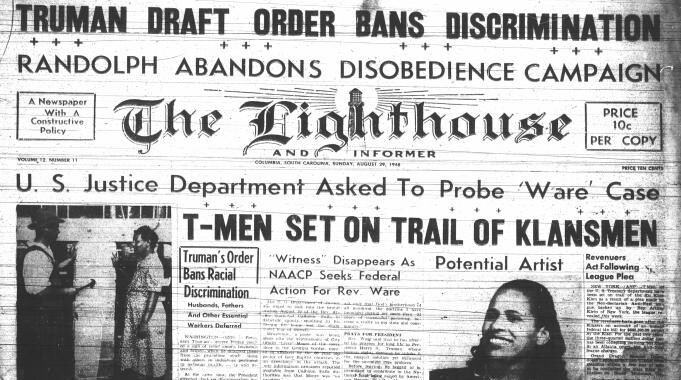
In spite of a growing movement for journalistic neutrality in reporting the news of the 20th century, journalists enlisted on both sides of the mid-century struggle for civil rights. Indeed, against all odds, the seeds of social change found purchase in South Carolina with newspaperman John McCray and his allies at the Lighthouse and Informer, who challenged readers to "rebel and fight"--to reject the "slavery of thought and action" and become "progressive fighters" for equality.
In Newspaper Wars: Civil Rights and White Resistance in South Carolina, 1935-1965 (University of Illinois Press, 2017), Sid Bedingfield, a University of Minnesota Professor of Journalism and Mass Communications, traces the role journalism played in the fight for civil rights in South Carolina from the 1930s through the 1960s. Bedingfield tells the stories of African American progress which sparked a battle to shape South Carolina's civic life, with civil rights activists arrayed against white journalists determined to preserve segregation through massive resistance.
News and Music Stations: Fri, Jan 22, 12 pm; Sat, Jan 23, 7 am News & Talk Stations: Fri, Jan 22, 12 pm; Sun, Jan 24, 4 pm
Uncompromising Activist: Richard Greener, First Black Professor at USC
Jan 13, 2021
Show notes(The Colored American, February 24, 1900 / Library of Congress/Chronicling America)
Richard Theodore Greener (1844–1922) was a renowned black activist and scholar. The first black graduate of Harvard College, he became the first black faculty member at the University of South Carolina, during Reconstruction. He was even the first black US diplomat to a predominately-white country, serving in Vladivostok, Russia. A notable speaker and writer for racial equality, he also served as a dean of the Howard University School of Law and as the administrative head of the Ulysses S. Grant Monument Association. Yet he died in obscurity, his name barely remembered.
Richard Greener’s story demonstrates the human realities of racial politics throughout the fight for abolition, the struggle for equal rights, and the backslide into legal segregation. With Uncompromising Activist: Richard Greener, First Black Graduate of Harvard College (2017, Johns Hopkins University Press)
Katherine Reynolds Chaddock, distinguished professor emerita of education at the University of South Carolina, has written a long overdue narrative biography about a man, fascinating in his own right, who also exemplified America’s discomfiting perspectives on race and skin color.
- Originally broadcast 06/01/18 -
All Stations: Fri, Jan 15 , 12 pm; News & Music Stations: Sat, Jan 16, 7 am News & Talk Stations: Fri, Jan 15 , 12 pm; Sun, Nov 17, 4 pm
Charleston Patriots in Exile During the Revolution
Nov 16, 2020
Show notes(N.Y. Public Library (public domain); Artist: Chapin, John Reuben (1823-1894))
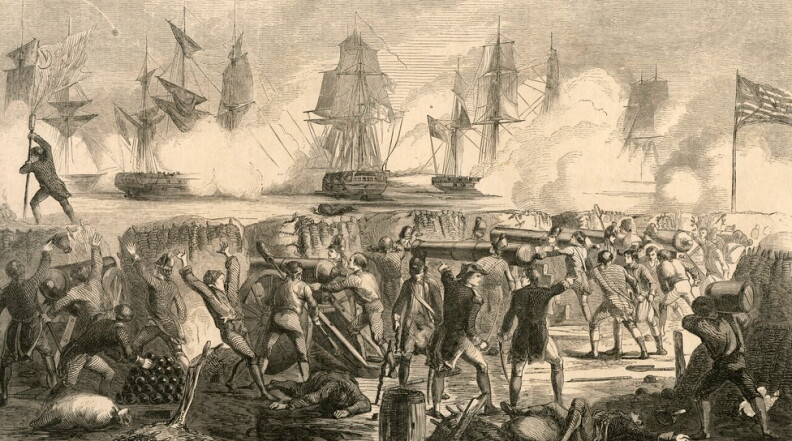
In the months following the May 1780 capture of Charleston, South Carolina, by combined British and loyalist forces, British soldiers arrested sixty-three paroled American prisoners and transported them to the borderland town of St. Augustine, East Florida—territory under British control since the French and Indian War.
In their new book, Patriots in Exile: Charleston Rebels in St. Augustine during The American Revolution (2020, USC Press), James Waring McCrady and C. L. Bragg chronicle the banishment of these elite southerners, the hardships endured by their families, and the plight of the enslaved men and women who accompanied them, as well as the motives of their British captors.
News and Music Stations: Fri, Nov 20, 12 pm; Sat, Nov 21, 7 am News & Talk Stations: Fri, Nov 20, 12 pm; Sun, Nov 22, 4 pm
Stories of Struggle: The Clash over Civil Rights in South Carolina
Nov 09, 2020
Show notes
In her new book, Stories of Struggle: The Clash over Civil Rights in South Carolina (2020, USC Press), journalist Claudia Smith Brinson details the lynchings, beatings, cross burnings, and venomous hatred that black South Carolinians endured—as well as the astonishing courage, dignity, and compassion of those who risked their lives for equality.
Through extensive research and interviews with more than 150 civil rights activists, Brinson chronicles twenty pivotal years of petitioning, picketing, boycotting, marching, and holding sit-ins.
These intimate stories of courage, both heartbreaking and inspiring, shine a light on the progress achieved by nonviolent civil rights activists while also revealing white South Carolinians’ often violent resistance to change. Although significant racial disparities remain, the sacrifices of everyday folk that produced real progress—and hope for the future.
Brinson joins Walter Edgar and Dr. Valinda Littlefield to talk about the stories of these brave and tenacious men and women.
News and Music Stations: Fri, Nov 13, 12 pm; Sat, Nov 14, 7 am News & Talk Stations: Fri, Nov 13, 12 pm; Sun, Nov 15, 4 pm
Lowcountry at High Tide
Oct 19, 2020
Show notes
For centuries residents of Charleston, SC, have made many attempts, both public and private, to manipulate the landscape of the low-lying peninsula on which Charleston sits, surrounded by wetlands, to maximize drainage, and thus buildable land and to facilitate sanitation. In her book, Lowcountry at High Tide: A History of Flooding, Drainage, and Reclamation in Charleston, South Carolina (2020, USC Press), Christina Rae Butler uses three hundred years of archival records to show not only the alterations to the landscape past and present, but also the impact those efforts have had on the residents at various socio-economic levels throughout its history.
Butler explores the ways in which Charleston has created land with Dr. Edgar, and they talk about challenges facing the city in the face of rising sea levels.
News and Music Stations: Fri, Oct 23, 12 pm; Sat, Oct 24, 7 am | News & Talk Stations: Fri, Oct 23, 12 pm; Sun, Oct 25, 4 pm
The Carolina-Barbados Connection That Shaped South Carolina
Oct 12, 2020
Show notes(Pontificalibus [CC BY-SA 3.0] via Wikimedia Commons)
It is hard to imagine what South Carolina would be today if not for the then-British colony of Barbados. From the settlement of this West Indian island in 1627 to the time of Carolina's settlement in 1670, Barbados changed from an uninhabited island to a Colony where land owners created small plantations using indentured laborers in the quest to find the most profitable cash crop and then to a mostly-clear-cut land that was planted with sugar cane, almost to the ocean's edge.
Sugar, with the introduction of enslaved African laborers, made landowners wealthy, wrecked the island's ecology, and created an economic system that would be copied in Carolina. Another thing shared by émigrés to both colonies: the desire to get rich.
Walter Edgar talks with Dr. Russell Fielding, Assistant Professor of Interdisciplinary Studies in the HTC Honors College at Coastal Carolina University, about the history of the Carolina-Barbados connection, and it's lasting influences on both places.
News and Music Stations: Fri, Oct 16, 12 pm; Sat, Oct 17, 7 am | News & Talk Stations: Fri, Oct 16, 12 pm; Sun, Oct 18, 4 pm
Country Music
Oct 05, 2020
Show notes(Courtesy of Jared Ames)
Since its first publication in 1968, Bill C. Malone’s Country Music USA has won universal acclaim as the definitive history of American country music. Starting with the music’s folk roots in the rural South, it traces country music from the early days of radio into the twenty-first century. In the 2019, fiftieth-anniversary edition, Malone, the featured historian in Ken Burns’ 2019 documentary on country music, revised every chapter to offer new information and fresh insights.
Coauthor Tracey Laird tracks developments in country music in the new millennium, exploring the relationship between the current music scene and the traditions from which it emerged.
Dr. Edgar talks with Bill Malone about Country Music’s origins and impact on popular and about his involvement in Ken Burn’s documentary series Country Music, available to PBS Passport subscribers.
- Originally broadcast 09/06/99 -
News and Music Stations: Fri, Oct 09, 12 pm; Sat, Oct 10, 7 am | News & Talk Stations: Fri, Oct 09, 12 pm; Sun, Oct 11, 4 pm
Central to Their Lives: Southern Women Artists in the Johnson Collection
Sep 28, 2020
Show notes(The Johnson Collection)
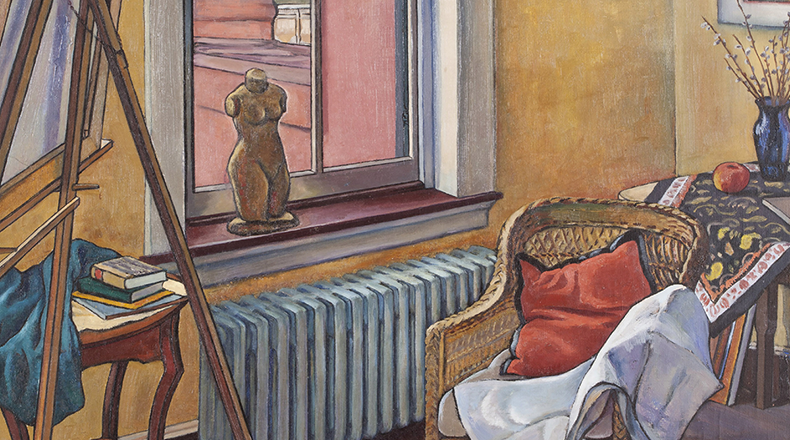
Spanning the decades between the late 1890s and early 1960s, The Johnson Collection’s new exhibition and its companion book, Central to Their Lives: Southern Women Artists in the Johnson Collection, examine the particularly complex challenges Southern women artists confronted in a traditionally conservative region during a period in which women’s social, cultural, and political roles were being redefined and reinterpreted. How did the variables of historical gender norms, educational barriers, race, regionalism, sisterhood, suffrage, and modernism mitigate and motivate women seeking expression on canvas or in clay? Whether in personal or professional arenas? Working from studio space in spare rooms at home or on the world stage, the artists considered made remarkable contributions by fostering future generations of artists through instruction, incorporating new aesthetics into the fine arts, and challenging the status quo.
To discuss the book and exhibition, Dr. Edgar is joined by Lynne Blackman, Director of Communications for the Johnson Collection, curatorial advisor Susanna Johnson Shannon, and curator and essayist Martha Severens.
Central to Their Lives: Southern Women Artists in the Johnson Collection is currently on display at Wofford College in Spartanburg, its last South Carolina stop on a three-year tour, through December 18th at. The tour ends with a residency at Taubman Museum of Art, Roanoke, Virginia, February 6–June 13, 2021.
- Originally broadcast 11/09/18 -
News & Music Stations: Fri, Oct 02, 12 pm; Sat, Oct 03, 7 am | News & Talk Stations: Fri, Oct 02, 12 pm; Sun, Oct 04, 4 pm
Ups and Downs: South Carolina’s Economy During World War I
Aug 07, 2020
Show notes(Library of Congress/Hine, Lewis Wickes)
South Carolina in 1918 was still struggling with the changes to its economic and social systems brought about by the Civil War and Reconstruction. The United States’ entry into World War I affected the daily work life of South Carolinians and the state’s economy in a way that was unique to our state.
This week, guest host, Dr. Mark Smith of the University of South Carolina, talks with Dr. James C. Cobb, B. Phinizy Spalding Professor of History Emeritus of the University of Georgia, about South Carolina’s Economy during World War I. This conversation was recorded at the University of South Carolina’s Capstone Conference Center, in Columbia, on February 13, 2018. It was part of the series “Conversations on South Carolina History,” presented in January and February, 2018, and sponsored by the USC College of Arts and Sciences.
- Originally broadcast 03/09/18 -
All Stations: Fri, Aug 07, 12 pm | News & Talk Stations: Sun, Aug 09, 4 pm

 Our TOPPODCAST Picks
  Stay Connected