TopPodcast.com
Menu
  • Home
  • Top Charts
  • Top Networks
  • Top Apps
  • Top Independents
  • Top Podfluencers
  • Top Picks
    • Top Business Podcasts
    • Top True Crime Podcasts
    • Top Finance Podcasts
    • Top Comedy Podcasts
    • Top Music Podcasts
    • Top Womens Podcasts
    • Top Kids Podcasts
    • Top Sports Podcasts
    • Top News Podcasts
    • Top Tech Podcasts
    • Top Crypto Podcasts
    • Top Entrepreneurial Podcasts
    • Top Fantasy Sports Podcasts
    • Top Political Podcasts
    • Top Science Podcasts
    • Top Self Help Podcasts
    • Top Sports Betting Podcasts
    • Top Stocks Podcasts
  • Podcast News
  • About Us
  • Podcast Advertising
  • Contact
Not in our directory?
Add Show Here
Podcast Equipment
Center

toppodcastlogoOur TOPPODCAST Picks

  • Comedy
  • Crypto
  • Sports
  • News
  • Politics
  • True Crime
  • Business
  • Finance

Follow Us

toppodcastlogoStay Connected

    View Top 200 Chart
    Back to Rankings Page
    Technology

    StorageReview.com

    StorageReview.com is a leading provider of news and reviews throughout the entire IT stack – from the datacenter to the edge, and all points in between.

    Advertise
    • Apple Podcasts
    • Google Play
    • Spotify

    Latest Episodes:
    ABB Infinitus Brings a Source-to-Rack 800 VDC Portfolio to AI Data Centers, Targeting 1 MW Racks and 5% Efficiency Gains Sep 21, 2026
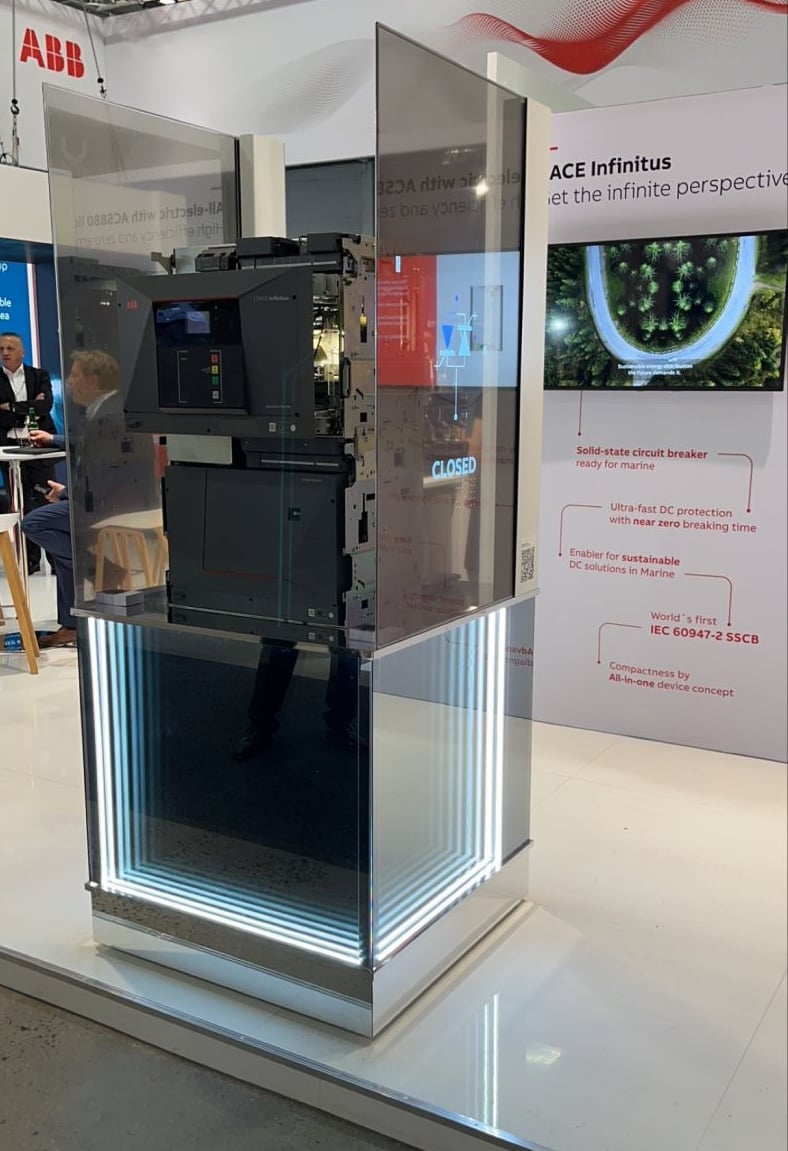
    Show notes ABB SACE Infinitus solid-state circuit breaker displayed in a lit glass case at an ABB trade show booth, with signage citing the IEC 60947-2 certification and near-zero breaking time ABB SACE Infinitus solid-state circuit breaker displayed in a lit glass case at an ABB trade show booth, with signage citing the IEC 60947-2 certification and near-zero breaking time

    ABB has introduced Infinitus, a portfolio of direct current power technologies for AI data centers built around 800 VDC distribution and rack power demands the company expects to reach 1 MW and beyond. ABB says today’s AI racks draw close to 200 kW, and the next chip generations will need an electrical architecture that strips out conversion stages and the heat losses that come with them. ABB calls Infinitus the industry’s first integrated source-to-rack DC portfolio, and it extends the 800 VDC collaboration with NVIDIA that ABB joined at the OCP Global Summit last October.

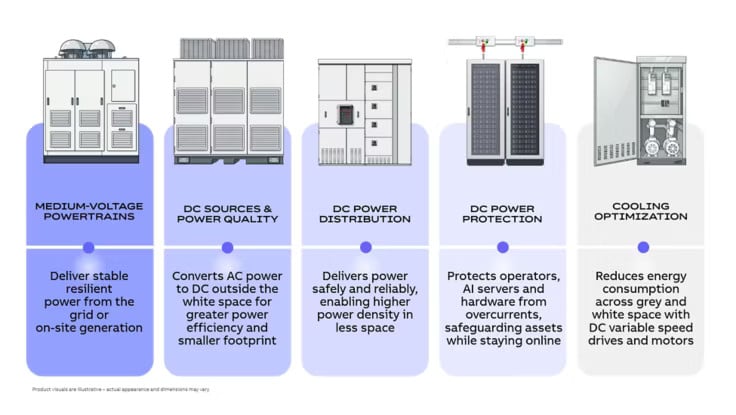
    ABB Infinitus infographic showing the five DC building blocks from left to right: medium-voltage powertrains, DC sources and power quality, DC power distribution, DC power protection, and cooling optimization, ABB graphic

    800 VDC Architecture Targets Higher AI Rack Density

    ABB says 800 VDC distribution shrinks the power infrastructure footprint, eliminates redundant AC-to-DC conversion steps, and increases the share of facility power that reaches IT loads. Citing the International Energy Agency’s projection that global data center electricity demand will more than double by 2030, ABB estimates that roughly 25% to 40% of new data center capacity installed that year could use DC distribution. NVIDIA’s own 800 VDC reference design, which we covered when it moved from concept toward production in August, is the demand side of the same shift.

    A BCG and ABB report cited by the company found that DC distribution can deliver energy-efficiency gains of more than 5% while freeing space for compute racks, similar math we looked at with Micron’s 245TB SSD. ABB works that number through a 500 MW data center: a 5% efficiency improvement would make 25 MW available for revenue-generating IT loads, which the company estimates at more than $300 million in additional annual revenue. ABB adds that the same 5% gain on a 500 MW campus saves enough energy in a year to power Washington, D.C. for almost a week.

    Infinitus Combines Five DC Power Building Blocks

    The portfolio centers on ABB’s Infinitus solid-state transformer technology, which the company says lets sites operate with a smaller footprint and higher efficiency, and spans five building blocks intended for both DC-native and hybrid AC/DC designs. Medium-voltage powertrains deliver power from the grid or on-site generation. DC sources and power quality equipment convert AC to DC outside the white space. DC power distribution carries it to the racks at higher density in less space. DC power protection guards operators, AI servers, and hardware against DC overcurrents. Cooling optimization uses DC-connected variable speed drives and motors to cut energy consumption across grey and white space.

    ABB SACE Infinitus solid-state circuit breaker displayed in a lit glass case at an ABB trade show booth, with signage citing the IEC 60947-2 certification and near-zero breaking time

    According to ABB, they are the only major electrification supplier with both the world’s first fully IEC-certified solid-state circuit breaker and an industry-first static medium-voltage UPS in production. The company positions the portfolio as configurable around a facility’s power demand, layout, and energy mix, complementing existing AC systems where operators aren’t ready to go DC-native. At the rack, the shift ABB is describing is the one we saw from the other end in our Eaton HDXL rack PDU review, where a single zero-U unit already has to carry 81 kW.

    “ABB has pioneered DC technology for more than 25 years across several segments. We are working closely with chipmakers, hyperscale customers, supply partners and industry bodies to set the standards and the pace for the rollout of high-efficiency DC architectures,” said Giampiero Frisio, President of ABB’s Electrification business area. “Infinitus is the first portfolio providing the building blocks for any data center architecture, either DC native or hybrid AC / DC, to power next-generation AI chips efficiently. This technology will bring similar energy efficiency gains to other energy-intensive industries such as large-scale manufacturing, renewables and marine operations.”

    Components Are Moving Toward DC-Native Deployment

    Several Infinitus components are slated for production over the next 12 months, and ABB expects the first DC-native facilities running the complete portfolio to be installed and operational within two to three years. This announcement covers an architecture on its way to deployment, and the end-to-end platform isn’t available today.

    ABB says it brings more than 25 years of DC experience and more than 700 patents spanning renewables, power generation, energy storage, motors, and drives to the effort, and it expects the same DC transition to reach industrial buildings, manufacturing, renewables, and marine operations.

    ABB Data Center Solutions Page

    The post ABB Infinitus Brings a Source-to-Rack 800 VDC Portfolio to AI Data Centers, Targeting 1 MW Racks and 5% Efficiency Gains appeared first on StorageReview.com.


    FCIA’s FC-SP-3: A Standard Ready for the Quantum-Computing World Sep 21, 2026
    Show notes

    In enterprise IT, most security upgrades typically occur in response to breaches or other significant incidents. The recently developed INCITS FC-SP-3 standard, however, represents a proactive response to regulatory and cryptographic deadlines that are already influencing infrastructure planning. The NSA’s CNSA 2.0 guidance presents National Security Systems with a complex migration path, while the European Union’s NIS2 and DORA frameworks have incorporated cryptography and encryption policies into active compliance programs. The quantum computing timeline intensifies this pressure, not due to a predictable arrival of a cryptanalytically relevant quantum computer, but because “harvest now, decrypt later” attacks render long-lived data vulnerable in advance. The FCIA (Fibre Channel Industry Association) roadmap contextualizes these challenges around 2030 compliance, NIS2 and DORA encryption policies, and the standard three-to-five-year replacement cycle for servers and storage. The timing is critical because Fibre Channel transports data that enterprises can least afford to lose. It continues to serve as the primary infrastructure for mission-critical storage in sectors such as finance, healthcare, government, utilities, and other regulated industries. Fibre Channel is both physically and logically isolated from Ethernet, is not routable from Ethernet networks, and is further secured through fabric zoning and storage-device masking. FCIA market data indicates that over 160 million Fibre Channel ports have been shipped, with more than 35 million still operational. This substantial installed base underscores the significance of FC-SP-3, which does not require enterprises to replace their SANs but instead provides a standards-based approach to securing existing Fibre Channel environments. FC-SP-3 delivers several updates that improve security posture and simplify deployment. It removes obsolete cryptography that earlier versions still carried, including 3DES, MD5, SHA-1, RSA-SHA-1, older DH-CHAP groups, RADIUS usage, CT authentication, and smaller AES key lengths for AES-GCM and AES-CBC. In their place come CNSA 2.0-aligned additions, including ML-KEM-1024 for key establishment and ML-DSA-87 for digital signatures, along with stronger SHA-2 PRFs and the required use of AES-GCM for security association management. The other major change is structural: FC-SP-3 moves away from FC-SP-2’s compliance elements and toward interoperability profiles, so implementations can align around current security requirements without dragging forward obsolete-but-compliant requirements. As part of that cleanup, the specification was reduced by nearly half, from 288 pages to 152. It is important to note that FC-SP-3 alone does not eliminate exposure risk; it serves as a toolset rather than an automatic deployment. The standard is significant because it provides the industry with a practical pathway toward authenticated, encrypted, and integrity-protected SAN traffic, integrated into the regular server, HBA, and storage refresh cycles. For enterprises managing long-lived data and regulated infrastructure, the critical deadline is not limited to Q-Day or 2030, but rather the next refresh decision. The following sections examine the regulations driving these changes, the cryptographic updates introduced by FC-SP-3, and the practical model for implementing end-to-end encryption on an operational Fibre Channel fabric. Key Takeaways The standard beat the deadlines: FC-SP-3, completed by INCITS T11 in 2026, modernizes Fibre Channel security to meet CNSA 2.0, NIS2, and DORA requirements years ahead of the 2030 and 2031 compliance dates. Subtraction first, then quantum resistance: Legacy cryptography such as 3DES, MD5, SHA-1, and sub-2048-bit DH groups is removed, while the NIST post-quantum algorithms ML-KEM-1024 and ML-DSA-87 are added, cutting the specification from 288 pages to 152 and making it easier to implement correctly. Encryption without the infrastructure tax: Autonomous in-flight encryption generates keys inside the HBA and runs at line rate, with no external key server, no SAN switch changes, and no added host CPU load. The array keeps its superpowers: Encrypting at the transport layer preserves the compression, deduplication, and ransomware detection that application-level encryption defeats. Compliance rides the refresh cycle: A rolling deployment on the normal three-to-five-year hardware refresh delivers a fully encrypted, quantum-resistant SAN by 2030 as a byproduct of routine procurement. Encryption Is on a Deadline The development of FC-SP-3 is primarily motivated by the increasing need for advanced security measures throughout the datacenter technology stack. Traditional architectures often rely on implicit trust within storage networks; however, sophisticated attacks at this layer can compromise significant volumes of data. Supply chain attacks, exemplified by the 2019-2021 SolarWinds malware campaign, have demonstrated that insider threats exploiting compromised infrastructure components are becoming more prevalent. In a direct response, US President Joseph Biden issued Executive Order 14028 on May 12, 2021. This order established a multitude of new security requirements and operating procedures for systems used by the federal government (also known as National Security Systems). By requiring encryption for data at rest and in transit, it effectively forced federal agencies to adopt the principles of the original Commercial National Security Algorithm (CNSA) Suite, which outlined cryptographic algorithms approved for protecting federal data. Although the CNSA Suite (often referred to as CNSA 1.0) did not address or anticipate future capabilities, it established a baseline of acceptable algorithms for data protection, key establishment, hashing, and digital signing. CNSA 2.0 advances the goals of the suite by preparing the federal government’s information security standards for the advent of quantum computing. It retires algorithms theorized to be easily broken by quantum computers and introduces quantum-resistant ones. The NSA has designed the policy to be implemented in stages, with the first phase of enforcement beginning after December 31, 2025. By January 1, 2027, new installations of National Security Systems will be required to be fully CNSA 2.0 compliant, and decommissioning of non-compliant systems must be completed by December 31, 2030. Finally, all National Security Systems will be required to use CNSA 2.0 algorithms exclusively by December 31, 2031. The deadlines are tight for such a massive network, but the threat of a quantum-computing-enabled breach makes it necessary in the eyes of the United States federal government. The USA is not the only country that requires stronger security measures for critical IT systems. The Digital Operational Resilience Act (DORA), which applies to financial institutions in the European Union, requires strict reporting, risk management, and security testing procedures to better prepare those services for future cyberattacks. Similarly, the Network and Information Security 2 (NIS2) directive encourages the sharing of cybersecurity threat information among EU members. It requires each country to develop and adopt strategies to combat supply chain attacks and vulnerability exploitation. Since many of these regulations require strong in-flight and at-rest data encryption, FC-SP-3 furthers their shared goal of making core infrastructure resilient to attacks at every layer. Q-Day and Harvest Now, Decrypt Later While CNSA 2.0 appears to be a tall order, it is not without reason. “Harvest now, decrypt later” (HNDL) is a strategy currently employed by malicious actors that relies on the future capabilities of quantum computers to decrypt mountains of intercepted communications and stolen data. While many of today’s standard cryptographic algorithms and protocols are highly resistant to brute-force attacks and other key-cracking methods on conventional hardware, the creation of a “Cryptanalytically Relevant Quantum Computer” (CRQC) could break public-key encryption methods that rely on RSA and ECC (Elliptic Curve Cryptography). In an effort to reduce the effectiveness of a potential Q-Day attack, the NSA has mandated that all cryptographic-related components of the USA’s National Security System must be CNSA 2.0 compliant by December 31, 2031, ahead of industry projections that put Q-Day as early as 2033. The cryptographic algorithms mandated in CNSA 2.0 are “Post-Quantum Computing” ready, meaning they are designed with mathematical problems that are computationally intractable, such as lattice problems and one-way number-theoretic problems. By using larger key sizes on traditional algorithms and implementing sophisticated PQC-ready algorithms, the NSA intends to prevent HNDL attacks that could compromise national security. Two Decades of Fibre Channel Security Fibre Channel security did not begin with FC-SP-3. The standard is the third generation of work that has been underway at INCITS (InterNational Committee for Information Technology Standards) for more than twenty years, under the Fibre Channel Technical Committee known as T11. The original FC-SP project was approved in 2002 and published in 2007, establishing authorization and segmentation controls that gave storage administrators formal tools to determine which devices could see one another across a fabric. FC-SP-2 was adopted in 2012, extending the framework to authentication and encryption, and it has continued to evolve through two amendments, AM1 in 2015 and AM2 in 2023. FC-SP-3 was approved as a project in 2022 and completed in 2026, updating the framework for the regulatory and post-quantum requirements now bearing down on storage networks. That lineage matters because it frames what FC-SP-3 is and is not. This is not a reinvention of Fibre Channel security or a bolt-on response to a single threat. It is the scheduled modernization of a mature framework, done openly by the people who build this equipment. The FC-SP-3 expert group was chaired by Roger Hathorn of IBM and edited by David Peterson and James Smart of Broadcom, with contributors from Broadcom, Cisco, Dell, HPE, IBM, Marvell, NetApp, and Viavi. That breadth is worth noting in a security standard: the companies that compete for every SAN socket agreed on how encryption across those sockets should work. Nor does the work stop here. T11 has already begun development on the next revision, so the framework will keep pace as requirements continue to evolve. What FC-SP-3 Changes The headline change in FC-SP-3 is subtraction. Following the same direction TLS 1.3 took for the web, the standard removes the legacy cryptography that FC-SP-2 still carried: the FC-PAP and FC-EAP authentication protocols, 3DES and AES-CTR encryption, RSA-SHA-1 signatures, MD5 and SHA-1 in nearly every role, DH-CHAP groups below 2048 bits, AES key lengths under 256 bits for GCM and CBC modes, RADIUS usage, and CT authentication. Removing obsolete material and reorganizing the document cut the specification from 288 pages to 152. A shorter standard is not just easier to read; it is easier to implement correctly, and it leaves fewer weak options for an implementation to fall back on. In their place come the CNSA 2.0-aligned additions: ML-KEM-1024 for key establishment and ML-DSA-87 for digital signatures, the NIST-standardized post-quantum algorithms, alongside ECDSA at 384 and 512 bits, SHA-2-based PRFs, and a requirement that AES-GCM protect the security association management protocol itself. Hiding the encryption method used to protect the payload provides a layer of obscurity, forcing potential attackers to account for a large range of algorithms (which could be quite computationally expensive). Quantum-safe key encapsulation algorithms like ML-KEM effectively counter interception attacks, ensuring that only authenticated and authorized devices can read data sent by an HBA using the latest security protocols. The structural change is just as consequential. FC-SP-2 defined tiered compliance elements, and the lowest common tier, Auth-A, required implementations to support MD5 and a 2048-bit DH group. As those algorithms aged, vendors ended up in the strange position of implementing insecure cryptography they never intended to use, purely to remain compliant with the standard. FC-SP-3 abandons that model in favor of interoperability profiles, defined in Annex A. A compliant implementation supports one or more profiles that match the security requirements of its target environment, and judgments about which requirements apply are left where they belong, with bodies like NIST and the NSA rather than the transport standard itself. Backward compatibility with FC-SP-2 deployments is addressed in Annex D, so mixed fabrics have a documented path rather than a cliff. Audit Mode facilitates the transition to the updated cryptographic standard by enabling security protocol negotiation across existing fabrics without causing data access disruption. The standard’s authors recognize that many SANs will not achieve full compliance immediately, but will incrementally adopt the standard as newer hardware is introduced and legacy equipment is retired. In Audit Mode, compatibility is maintained through an availability-first approach, allowing the most stringent security measures to be implemented only when both endpoints in a connection are fully capable. That is, access to mission-critical data is preserved while the migration to stronger security takes place. Putting FC-SP-3 on a Live SAN A standard only matters once it reaches production hardware, and FC-SP-3 was written with deployment in mind. The specification defines the cryptographic tools and the negotiation behavior; how those tools get applied on a running fabric comes down to two broadly available models. Both are vendor-neutral and compliant with the same standard. The first is the key server model, long familiar to mainframe and high-compliance environments. An external key manager provisions and rotates the shared secrets or certificates used to establish secure sessions, communicating with hosts and storage over the network through the Key Management Interoperability Protocol (KMIP) and a security key exchange. This approach centralizes policy and auditing, which is exactly what some regulated shops want. It also introduces infrastructure to stand up and maintain: a key management server, network paths to it, and the operational discipline to keep it available. For organizations that already run KMIP infrastructure, FC-SP-3 slots into an established workflow rather than replacing it. The second model is autonomous in-flight encryption handled inside the host bus adapter, and it is the one that makes a fabric-wide rollout realistic. Random session keys are generated within the HBA itself, eliminating the need for an external key generation and management server. Endpoints are enabled by default and negotiate encryption automatically, falling back when a peer does not yet support it so that the fabric can be secured without a flag day. Because encryption happens at the Fibre Channel transport layer inside the adapter, no changes are required to SAN switches, and the switch fabric neither sees nor manages keys. Performance is the objective this model is meant to address. Encryption runs in dedicated silicon at full line rate, so there is no measurable throughput penalty and no additional load placed on host CPUs. Just as important for storage teams, encrypting in flight rather than at the application layer preserves the array services enterprises depend on. Data reaching the storage array can still be compressed, deduplicated, and scanned for compression-ratio anomalies that flag a ransomware event, none of which is possible once the application has encrypted the data before it leaves the host. In-flight encryption is not meant to s…

    Full show notes at the publisher

    IDC External Storage Tracker: $10.3 Billion in Q2 2026 as Server Market Tops $166 Billion on AI Demand Sep 21, 2026
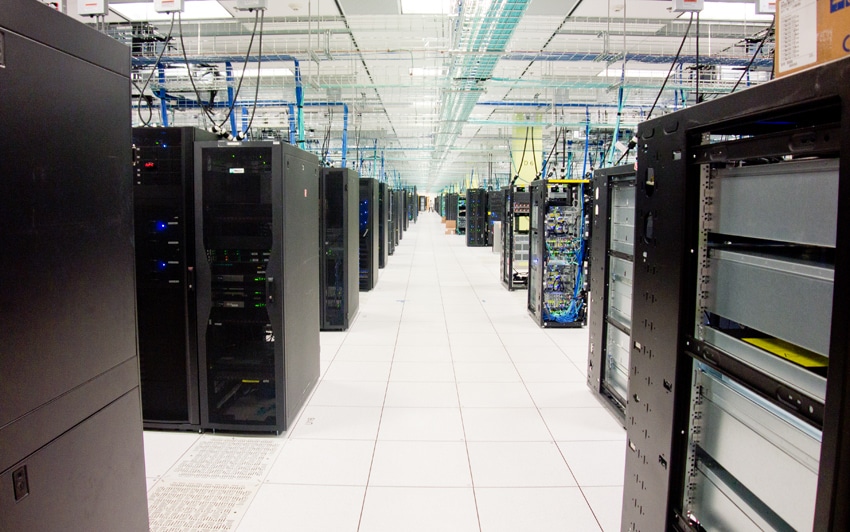
    Show notes Long aisle of enterprise storage and server racks on a raised floor in an EMC data center in Durham, North Carolina, photographed by StorageReview Long aisle of enterprise storage and server racks on a raised floor in an EMC data center in Durham, North Carolina, photographed by StorageReview

    IDC’s Worldwide Quarterly Enterprise Storage Systems Tracker shows the external OEM enterprise storage systems (ESS) market reached $10.3 billion in vendor revenue during the second quarter of 2026, up 33.6% year over year. It’s the second-highest quarterly total in the tracker’s history, trailing only Q4 2025, and the highest revenue ever recorded outside a fourth-quarter period. Growth accelerated from the 28.7% rate posted in Q1 2026, marking a second consecutive quarter of acceleration after full-year 2025 growth came in at just 3.9%. IDC’s server tracker for the same quarter tells a bigger version of the same story: a record $166.3 billion in server revenue, up 52.0%, with Dell Technologies on top of both lists.

    Long aisle of enterprise storage and server racks on a raised floor in an EMC data center in Durham, North Carolina, photographed by StorageReview

    What’s Driving the Storage Surge

    IDC points to three reinforcing dynamics. Buyers appear to be pulling storage purchases forward to lock in budgets and configurations ahead of anticipated component price increases. Component price increases have hit all segments, including all-flash, hybrid, and HDD-only systems, pushing system prices up and leaving customers buying less capacity for more money. On top of that, the multi-year infrastructure refresh cycle that got deferred while server and AI compute spending took priority in 2024 and 2025 is now flowing through in force, especially at the high end.

    The root cause, per IDC, is a component supply shortage: NAND and DRAM production capacity keeps getting prioritized for higher-margin memory products, which hits SSD pricing hard. IDC doesn’t expect meaningful relief before 2028.

    Q2 2026 Storage Tracker Highlights

    All-flash arrays (AFA) extended their lead, generating $5.4 billion (+42.9% YoY) for 52.1% of total ESS revenue. Hybrid flash arrays (HFA) grew 25.5% YoY to $3.9 billion (37.5% share), while all-HDD arrays grew 22.6% to $1.1 billion (10.4% share). High-end systems priced above $250K ASP surged 90.6% YoY to $2.7 billion, now 26.2% of the market, driven by large-scale AI infrastructure storage deployments, and accelerating from 60.7% growth in Q1. Midrange systems ($25K to $250K) grew 28.2% to $6.7 billion (64.8% share), while entry systems under $25K declined 14.6% to $0.9 billion. First-half 2026 revenue reached $29.6 billion, up 28.2% YoY, eight times the 3.9% growth rate recorded for all of 2025.

    Canada (+77.2% YoY), APeJC (+73.1%), and Central & Eastern Europe (+54.1%) posted the fastest regional growth, while the US remained the largest market at $3.6 billion (+26.8% YoY, 35.3% share). Western Europe was second at $1.9 billion (+42.8%), followed by PRC at $2.2 billion (+20.7%). All nine tracked regions grew, with Japan the slowest at +12.9% YoY.

    Storage Vendor Standings

    Dell Technologies held the top spot with a 23.8% share and 42.5% YoY growth, extending the share gains it posted in Q1 2026, which we covered in our prior quarterly storage tracker analysis; IDC credits Dell’s broad portfolio and its AI storage attach strategy, the same lineup we looked at in our PowerStore Gen 3 coverage. Huawei moved into second with an 11.3% share, up 29.4% YoY. NetApp held third at a 9.6% share and 35.7% growth, backed by its expanding all-flash business. Everpure placed fourth with an 8.1% share but posted the fastest growth among the top five at +50.0% YoY, which IDC attributes to continued adoption of its subscription model and AI-optimized platforms. Hewlett Packard Enterprise rounded out the top five with a 6.8% share and 31.9% growth.

    Company 2Q26 Revenue 2Q26 Share 2Q25 Revenue 2Q25 Share YoY Growth
    1. Dell Technologies $2,458.7M 23.8% $1,724.8M 22.3% +42.5%
    2. Huawei $1,168.9M 11.3% $903.5M 11.7% +29.4%
    3. NetApp $988.4M 9.6% $728.5M 9.4% +35.7%
    4. Everpure $837.7M 8.1% $558.4M 7.2% +50.0%
    5. Hewlett Packard Enterprise $700.2M 6.8% $530.9M 6.9% +31.9%
    Rest of Market $4,187.5M 40.5% $3,291.6M 42.5% +27.2%
    Total $10,341.5M 100.0% $7,737.9M 100.0% +33.6%

    Source: IDC Worldwide Quarterly Enterprise Storage Systems Tracker, September 10, 2026. Vendor revenue in US$ millions.

    “Over the past two years, storage has taken a back seat to compute. Enterprises poured their budgets into accelerated server infrastructure to get AI training off the ground, and storage spending grew at a fraction of that pace. That balance is shifting,” said Natalya Yezhkova, vice president, Storage and Data Management, Enterprise Infrastructure, IDC. “As AI moves from training to inferencing, the bottleneck isn’t just computing resources anymore, it’s how quickly and broadly organizations can put their data estates to work. At the same time, storage systems are getting more expensive, and few customers have the luxury of waiting out the price cycle: the data must be accessible now.” Yezhkova added that IDC expects component costs to stay elevated well into 2027, keeping pricing-driven growth in place alongside underlying demand from unstructured data growth, inferencing workloads, and the deferred refresh cycle.

    Server Market Sets a Record

    IDC’s Worldwide Quarterly Server Tracker shows the worldwide server market reached $166.3 billion in vendor revenue in Q2 2026, the highest quarterly total in the tracker’s history, surpassing the previous record of $125.3 billion set in Q4 2025. That’s a 52.0% YoY increase and a 35.7% sequential gain. AI infrastructure investment remained the dominant driver, with this quarter’s gain reflecting both a resumption of unit-shipment growth and continued ASP increases across accelerated and non-accelerated systems. It follows the Q3 2025 record we reported last December and the Q4 2025 high that replaced it.

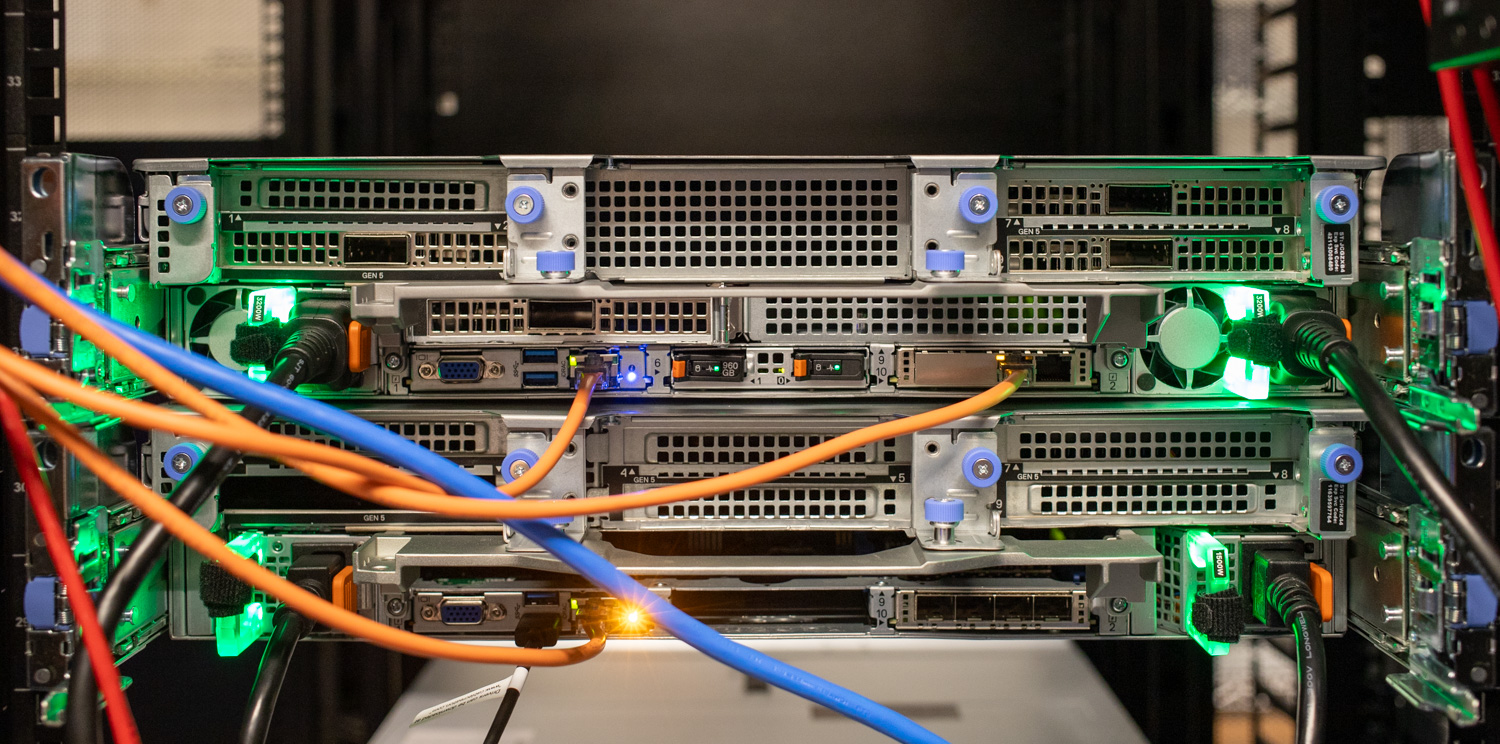
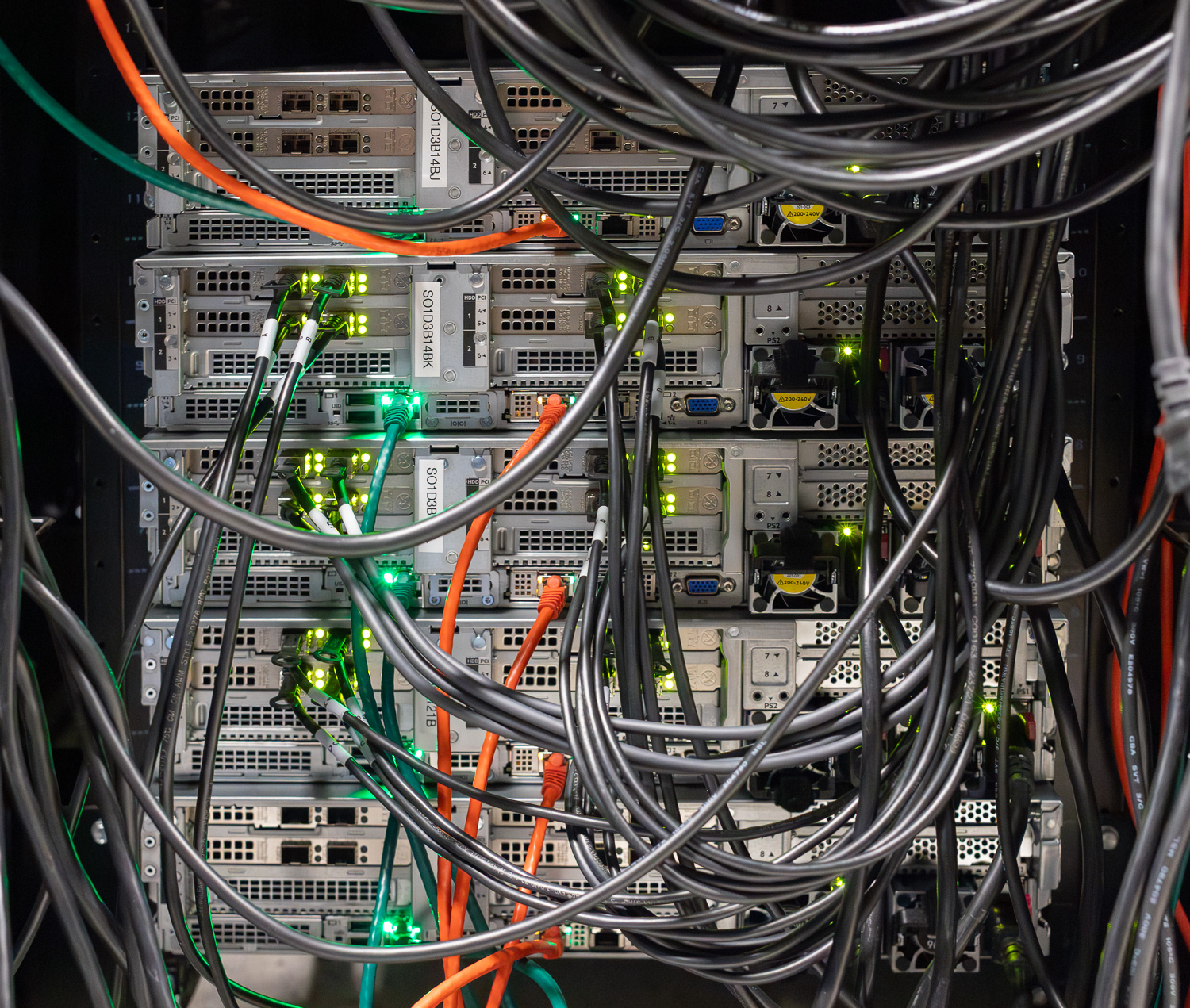
    Rear of a Dell PowerEdge R7725xd racked in the StorageReview lab with orange and blue network cabling and green status LEDs, one of the AMD EPYC servers behind the x86 side of IDC's tracker

    Non-x86 servers reached $74.4 billion, up 146.0% YoY, now 44.8% of total market revenue and closing in on x86’s share. x86 server revenue reached $91.9 billion, up 16.1% YoY. GPU-accelerated servers generated $87.4 billion (+28.1% YoY), 52.6% of total market revenue, while “Other Accelerated” servers surged 237.6% YoY to $27.5 billion. Worldwide unit shipments grew 15.4% YoY alongside 52.0% revenue growth, which IDC says confirms that this quarter’s growth came from both a resumption of shipment volume and continued ASP increases.

    Pricing is where IDC spends the most ink. Average selling prices for GPU-accelerated servers rose from roughly $118,600 to nearly $170,200, up 43.6% YoY, even as GPU server unit shipments fell 10.8% year over year. Non-accelerated servers climbed from roughly $9,800 to nearly $13,000 (+33.5% YoY) alongside a 16.7% increase in units, so that segment is growing on both price and volume.

    ODM Direct revenue share compressed from 60.6% in Q2 2025 to 53.9% in Q2 2026 as branded OEM vendors captured a larger share of AI infrastructure deployments, even as ODM Direct revenue grew 35.2% YoY. Vendors continue to cite DRAM and NAND flash pricing, along with component allocation, as the primary drivers of ASP increases. IDC says buyers are securing components and finished systems further in advance to guard against price inflation and allocation risk, and notes that deployment pace is increasingly gated by power availability, cooling, and facility readiness in addition to chip and memory supply.

    Server Regional and Vendor Standings

    The US remained the dominant server market, at $112.2 billion (+54.9% YoY), accounting for 67.4% of global revenue. PRC reached $26.4 billion (+43.4% YoY), reaccelerating from recent quarters. APeJC grew 31.5% to $10.9 billion, Western Europe grew 62.7% to $9.1 billion, and Central & Eastern Europe grew 98.3% to $0.7 billion off a small base. Canada was again the fastest-growing region worldwide at +202.6% YoY, followed by the Middle East & Africa (+68.8%) and Latin America (+32.8%). Japan grew 11.1% YoY.

    Dell Technologies retained the top vendor position with a 13.4% revenue share and 165.4% YoY growth, the fastest among the top five, which IDC attributes to continued record AI server orders. Supermicro held second with a 6.1% share, up 97.2% YoY. Lenovo retained third with a 5.1% share and 99.6% growth. Hewlett Packard Enterprise ranked fourth with a 3.5% share (+46.0% YoY), and IEIT Systems rounded out the top five with a 2.4% share (-8.1% YoY). ODM Direct held its dominant absolute position at $89.7 billion, up 35.2% YoY, though its share continued to compress as branded OEM vendors grew faster.

    Company 2Q26 Revenue 2Q26 Share 2Q25 Revenue 2Q25 Share YoY Growth
    1. Dell Technologies $22,240.6M 13.4% $8,381.2M 7.7% +165.4%
    2. Supermicro $10,177.0M 6.1% $5,159.9M 4.7% +97.2%
    3. Lenovo $8,411.3M 5.1% $4,214.3M 3.9% +99.6%
    4. Hewlett Packard Enterprise $5,868.4M 3.5% $4,018.4M 3.7% +46.0%
    5. IEIT Systems $4,001.5M 2.4% $4,356.0M 4.0% -8.1%
    ODM Direct $89,660.3M 53.9% $66,328.4M 60.6% +35.2%
    Rest of Market $25,960.1M 15.6% $16,928.7M 15.5% +53.4%
    Total $166,319.2M 100.0% $109,386.8M 100.0% +52.0%

    Source: IDC Worldwide Quarterly Server Tracker, September 10, 2026. Vendor revenue in US$ millions.

    “The notable shift in the server market this quarter is in who is now buying,” said Kuba Stolarski, research vice president, IDC’s Computing Platforms and Service Provider Infrastructure. “Demand is broadening beyond the largest hyperscalers toward specialized cloud providers (or neoclouds) scaling quickly, sovereign AI programs backed by public capital, and enterprises beginning to adopt agentic and inferencing workloads. Each affects the market differently: neoclouds add scale, sovereign programs add spending that is less exposed to commercial budget cycles, and enterprise adoption adds longer-run upside as inference and agentic workloads move into production. With demand increasingly committed well in advance, what will separate vendors is who can convert that demand into sales, as power and facility readiness become as binding as component supply.”

    IDC Enterprise Storage Systems Market Insights

    The post IDC External Storage Tracker: $10.3 Billion in Q2 2026 as Server Market Tops $166 Billion on AI Demand appeared first on StorageReview.com.


    ASUS Ascent QN10 Review: 80 TOPS and 18 Oryon Cores in a 0.7-Liter Mini PC Sep 18, 2026
    Show notes

    Mini PCs have become one of the more important segments of the client computing market. They anchor fleets of clutter-free office desks, drive digital signage and kiosks, and increasingly sit at the edge running inference close to cameras and sensors where cloud round-trips are too slow or too expensive. What the category has lacked until now is a highly compelling Arm option, and the ASUS Ascent QN10 supplies one as the first mini PC built on Qualcomm’s Snapdragon X2 Elite, a machine ASUS bills as the world’s first mini PC with an 80 TOPS NPU. The story of the QN10 starts with its silicon, because the X2E-88-100 pairs 18 third-generation Oryon cores at up to 4.7GHz with the Adreno X2-90 GPU and the 80 TOPS Hexagon NPU, all in a chassis that measures under 0.7 liters, displacing about as much desk space as a stack of granola bars. Despite the size, ASUS fits a vapor chamber, a dedicated fan for the PCIe Gen5 SSD slot, seven USB ports including three USB4, HDMI 2.1, 2.5GbE, and Wi-Fi 7, with support for four simultaneous 4K displays. For enterprise buyers, fTPM 2.0 and Qualcomm’s SPU with Microsoft Pluton support cover security, and the platform’s performance-per-watt is the pitch behind the 180W adapter: this is a Copilot+ desktop that sips power at idle and spins its fan to zero RPM. ASUS positions the QN10 at AI developers, prosumers, and edge deployments: local inference for signage and kiosks, computer vision for industrial and retail settings, and always-on assistant workloads, backed by ready-to-run models through the Qualcomm AI Hub. The 16GB/512GB configuration sells for $1,349.99 at Best Buy at this writing; we tested the 32GB build. Benchmarking a Windows-on-Arm desktop still means navigating what actually runs natively, so our suite here is the Arm-compatible subset, and the comparison set reflects the category’s awkward moment: no other Snapdragon X2 desktop exists yet. ASUS Ascent QN10 Specifications Specification ASUS Ascent QN10 Model ASUS Ascent QN10 Processor Qualcomm Snapdragon X2 Elite (X2E-88-100), 3rd Gen Oryon CPU, 18 cores / 18 threads, up to 4.7GHz Graphics Qualcomm Adreno X2-90 (integrated) NPU Qualcomm Hexagon NPU, 80 TOPS (INT8) Memory 32GB LPDDR5x, 8533 MT/s, onboard (16GB and 32GB configs; 32GB is the ceiling) Storage 512GB SanDisk PC SN5100S as tested; 1x M.2 2280 PCIe Gen5 + 1x M.2 2280 PCIe Gen4 slots, up to 4TB total Networking Wi-Fi 7, Bluetooth 6.0, Realtek 2.5GbE LAN Ports (front) 2x USB4 Type-C (DP1.4/PD, 40Gbps)1x USB-A 3.21x USB-A 2.01x 3.5mm audio jack Ports (rear) 1x USB4 Type-C (DP1.4/PD, 40Gbps)2x USB-A 3.21x HDMI 2.1 FRL1x RJ45 2.5GbE Display Support Up to 4 displays (HDMI + 3x USB-C) Security fTPM 2.0, Qualcomm SPU with Microsoft Pluton support, Snapdragon Guardian Cooling CPU fan with vapor chamber, dedicated Gen5 SSD fan; max 53 dBA at full speed, 0 RPM at idle Power 180W DC adapter Operating System Windows 11 Pro, Copilot+ PC Dimensions / Weight 130 x 130 x 40mm (43.5mm with feet), under 0.7L / 620g Durability MIL-STD 810H tested (shock, vibration, humidity, temperature, port stress) Price $1,349.99 (16GB/512GB, Best Buy at this writing); the 32GB/512GB configuration as tested is listed at Newegg but out of stock with no price shown Where the QN10 Fits in ASUS’s Mini PC Lineup ASUS took over Intel’s NUC business in 2023 and has kept the x86 line on a steady cadence since: the Meteor Lake NUC 14 Pro we reviewed, the current Arrow Lake NUC 15 Pro, and performance tiers above them that pair Arrow Lake with discrete RTX graphics for gaming and creator work. That NUC Pro line is the category default for a reason: barebones kits with socketed memory and storage, the full weight of x86 Windows compatibility, and a price floor that a self-configured build keeps under $850 today. Ascent is the newer, AI-first branch of the family, and the QN10 is its second effort. The first was the Ascent GX10, which put NVIDIA’s Grace Blackwell GB10 in a desk-side box for CUDA developers working against datacenter toolchains. The QN10 takes the other lane: Qualcomm silicon, a Windows Copilot+ stack, and an NPU-first design aimed at inference that runs all day at low power rather than model development. Where the GX10 is a small workstation for building AI, the QN10 is closer to a mini appliance for running it. The Arm against x86 in this lineup follows that split: the NUC Pro remains the pick when configurability, upgrade paths, or unconditional application compatibility decide the purchase; the QN10’s case is performance-per-watt, the 80 TOPS NPU, and sealed, deploy-and-forget roles like signage, kiosks, and edge inference, with enough CPU behind it, as the results below show, that the efficiency story no longer requires a performance apology. Build and Design The QN10 is a 130mm square, 40mm tall, and 620 grams, displacing under 0.7 liters. The chassis is a plain silver metal body with an ASUS wordmark on the front, which suits the deployment scenarios this machine is built for. It’s built to disappear behind a monitor or into a kiosk enclosure, which is exactly where ASUS expects it to live. The front panel carries the day-to-day connections: two of the three USB4 Type-C ports (DP1.4 and Power Delivery, 40Gbps), a USB-A 3.2 port alongside a USB-A 2.0 port, a 3.5mm audio jack, and the power button. Putting two full USB4 ports on the front is a small deployment kindness; docks, capture hardware, and external NVMe all connect without reaching around the back. The rear holds the third USB4 Type-C, two more USB-A 3.2 ports, HDMI 2.1 with FRL, the RJ45 for the Realtek 2.5GbE controller, and the DC input for the external 180W adapter. Between HDMI and the three USB4 ports, the QN10 drives up to four displays, and with seven USB ports total, it gets through a full desk or signage installation without a hub. The right side of the chassis is a ventilation inlet, feeding a cooling system that is genuinely overbuilt for the class: a CPU fan over a vapor chamber, plus a second, dedicated fan for the PCIe Gen5 SSD bay. ASUS rates the box at a maximum of 53 dBA at full fan speed, and at idle the fans stop entirely at 0 RPM. Opening the chassis shows where the thermal budget goes and what a buyer can and cannot change, since the shell carries copper thermal pads that mate against the M.2 drives, one PCIe Gen5 slot (labeled G5, empty on our unit), and one Gen4 slot holding the SanDisk drive, expandable to 4TB total (though the user should be able to load higher capacity if they choose), while the mainboard packs the Snapdragon package under the vapor chamber with the 32GB of LPDDR5x soldered alongside. Storage is the only field-serviceable component; memory is fixed at purchase, and 32GB is the max. With the fan lifted off, the vapor chamber spans the SoC and feeds a single heat pipe loop, a laptop-grade solution in a desktop where sustained load, not battery, is the constraint. The benchmarks that follow suggest it works, and anecdotally so do our ears: from idle through sustained heavy load, the QN10 stays whisper quiet, with the fans barely audible from three feet away. The only time they made themselves heard in our testing was under extreme system stress, such as a BIOS update. ASUS Ascent QN10 Performance Our review unit runs the Snapdragon X2 Elite X2E-88-100 with 32GB of LPDDR5x and a 512GB SSD on Windows 11 Pro, with all benchmarks run on the High performance power plan. Windows on Arm constrains the benchmark table: everything below ran natively on ARM64 where a native build exists, and the AI workloads note which inference engine and compute device each run used, because engine choice changes these numbers as much as silicon does. PCMark 10 is absent because its main productivity benchmark has no Arm build; only its storage and battery tests run natively, and neither tells this desktop’s story. Comparables are straightforward but imperfect, because nothing else in the lab matches this machine’s architecture and class at once. The ASUS NUC 14 Pro (Core Ultra 7 165H) is the x86 mini PC yardstick because it is the one we have: ASUS has since moved the line on to the Arrow Lake NUC 15 Pro, which we have not tested, so the Meteor Lake NUC 14 is standing in for x86 a generation back. It acquits itself better than its age suggests in the results below, and pricing keeps the comparison interesting in a way the release calendar does not. Our NUC 14 configuration, the Core Ultra 7 165H with 16GB and 512GB, listed at $1,522.61 at Best Buy, has now aged out of new-condition retail, while the QN10’s equivalent 16GB/512GB build sells for $1,349.99, so configured-for-configured the Arm box enters below where this class of x86 mini PC actually sold. The counterpoint is the do-it-yourself floor: a current NUC 15 Pro barebones kit runs about $700 at this writing and lands under $850 with memory and storage added, a path the sealed, soldered QN10 cannot match. The NUC’s 16GB memory ceiling limits the largest y-cruncher runs, and a few tests that failed or were skipped on that platform are noted where they occur. The Lenovo ThinkCentre Neo 50q QC is the closest Arm relative we have tested, built on the previous-generation Snapdragon X; that unit has left the lab, so its comparisons are limited to the benchmarks we published at the time, and we re-ran several older tests on the QN10 specifically to line up against it. Newer tests like Geekbench 7 have no Lenovo column for that reason and are presented for context. Geekbench 7 Geekbench 7 joins the suite alongside Geekbench 6 as comparison data builds. Its CPU scores are calibrated against a baseline of 2,500, set by the AMD Ryzen 7700, while GPU scores are calibrated against a baseline of 100,000, set by the NVIDIA GeForce RTX 4060. Higher scores are better, and double the score indicates double the performance. Because Geekbench 7 uses new workloads and new baselines, its scores are not comparable to Geekbench 6 results. It shipped after the Neo 50q left the lab, so the Lenovo column stays empty and these comparisons run against the freshly re-benched NUC 14 Pro. The QN10 ran the native AArch64 build. Geekbench 7 (higher is better) ASUS Ascent QN10 ASUS NUC 14 Pro (Core Ultra 7 165H) Lenovo ThinkCentre Neo 50q QC CPU Single-Core 3,272 2,291 N/A CPU Multi-Core 24,049 13,911 N/A GPU OpenCL 30,982 27,790 N/A GPU Vulkan 40,042 25,088 N/A The headline numbers: 3,272 single-core and 24,049 multi-core, 43% and 73% ahead of the NUC 14 Pro’s Core Ultra 7 165H on the same suite. For scale against our laptop stack, that multi-core figure also clears every Panther Lake system we have tested this year, machines that cost three to four times as much. The Adreno X2-90 lands at 40,042 in Vulkan, 60% past the NUC’s Arc, and 30,982 in OpenCL, in the range of 12 Xe-core Arc B390 laptops rather than basic integrated graphics. Geekbench 6 Geekbench 6 measures processor performance using a mix of common tasks, with separate scores for single-core and multi-core workloads, plus GPU compute scores through OpenCL and Vulkan. Higher scores are better. It is a generation older than Geekbench 7, which is exactly why it is here: it is the suite we published for both comparison systems, and we re-ran it on the QN10 through the native Arm build to line up against them. Geekbench 6 (higher is better) ASUS Ascent QN10 ASUS NUC 14 Pro (Core Ultra 7 165H) Lenovo ThinkCentre Neo 50q QC CPU Single-Core 3,667 2,517 2,148 CPU Multi-Core 19,884 12,477 8,565 GPU OpenCL 39,761 35,449 9,634 GPU Vulkan 43,942 36,089 N/A Against the previous-generation Snapdragon X in the Neo 50q, the QN10 posts 3,667 single-core against 2,148 and 19,884 multi-core against 8,565, a 2.3x multi-core jump in one Arm generation. The x86 comparison is just as lopsided: the NUC 14 Pro’s Core Ultra 7 165H manages 12,477 multi-core on its re-run, 63% of the QN10’s score. GPU compute tells the same story, with the Adreno at 39,761 in OpenCL against the Neo 50q’s 9,634 and ahead of the NUC’s Arc at 35,449. Cinebench 2026 Cinebench 2026 is the current release in the Cinebench line and the only version we report. It tests CPU and GPU performance using Maxon’s Redshift render engine, built on the latest Cinema 4D 2026 code, and is designed to show whether a machine is stable under high CPU load, whether its cooling can sustain longer render tasks, and how it handles demanding real-world 3D work. Because code and compiler changes accelerated scene rendering, Cinebench 2026 scores use an adjusted range and should not be compared to scores from previous Cinebench versions. The benchmark ships a native ARM64 build, which the QN10 ran; its GPU test does not support the Adreno or the NUC’s Intel integrated graphics, so only the CPU results appear here. Cinebench 2026 (higher is better) ASUS Ascent QN10 ASUS NUC 14 Pro (Core Ultra 7 165H) Lenovo ThinkCentre Neo 50q QC CPU Single Thread 639 444 N/A CPU Multiple Threads 6,476 3,684 N/A MP Ratio 10.13x 8.29x N/A At 639 single-thread, the QN10 posts the highest Cinebench 2026 single-thread score we have recorded on any system in this class; Maxon’s own reference chart places it between the Apple M4 Max and Intel’s desktop Core Ultra 9 285K. Multi-thread lands at 6,476 with a 10.13x MP ratio against the NUC 14 Pro’s 3,684 at 8.29x, a 76% lead, and the 639-to-444 single-thread gap holds the same shape, which makes both results remarkable for a 0.7-liter box. 3DMark CPU Profile The 3DMark CPU Profile benchmark measures CPU performance at fixed thread counts, from a single thread up to the maximum available, showing how performance scales as more cores are engaged. Higher scores are better. It is one of the tests we published for the Neo 50q, so we re-ran it on the QN10 to keep that comparison live. 3DMark CPU Profile (higher is better) ASUS Ascent QN10 ASUS NUC 14 Pro (Core Ultra 7 165H) Lenovo ThinkCentre Neo 50q QC Max Threads 9,544 7,680 3,370 16 Threads 9,118 6,899 3,360 8 Threads 5,327 5,617 3,497 4 Threads 3,209 3,582 2,152 2 Threads 1,702 1,914 1,422 1 Thread 857 1,002 712 The generational gap is stark at every point on the curve: 9,544 max threads against the Neo 50q’s 3,370, and 857 single-thread against 712. The 8-thread crossover is worth noting: 5,327 against 3,497, since most desktop workloads live in that range. The curve also flattens noticeably between 16 threads and max on the QN10, the expected shape for an 18-core part without SMT. Against the NUC 14, the picture is more nuanced than the Geekbench results suggest: the QN10 wins the top of the curve, 9,544 to 7,680, but the 165H takes the single-thread point, 1,002 to 857, and holds a slight edge through 8 threads. This workload rewards burst clocks in ways the Oryon design does not chase, which is worth remembering for lightly threaded desktop work. 3DMark Graphics The 3DMark graphics suite covers a spread of rendering workloads: Solar Bay and Wild Life are cross-platform tests built for integrated and mobile-class graphics, Steel Nomad and Time Spy are heavier DirectX 12 rasterization tests, Fire Strike is the DirectX 11 benchmark, and Port Royal and Speed Way exercise DirectX Raytracing. Higher scores are better throughout. Solar Bay, Steel Nomad, and Wild Life overlap with our published Neo 50q data; the rest establish the QN10’s baseline against the re-benched NUC 14 Pro, including the first DXR ray-tracing runs we have completed on a Windows-on-Arm box. 3DMark Graphics (higher is better) ASUS Ascent QN10 ASUS NUC 14 Pro (Core Ultra 7 165H) Lenovo ThinkCentre Neo 50q QC Solar Bay 21,561 11,630 5,971 Steel Nomad 1,042 611 235 Wild Life 19,996 N/A 11,224 Time Spy 4,014 3,643 N/A Fire Strike 9,949 6,591 N/A Port Royal 1,520 1,429 N/A Speed Way 324 335 N/A Solar Bay at 21,561 is 3.6x the Neo 50q and 1.9x the NUC 14, and Steel Nomad at 1,042 is 4.4x the previous Arm generation and 70% past the Arc. Time Spy at 4,014 and Fire Strike at 9,949 put the QN10 in entry-discrete territory rather than the bottom of the…

    Full show notes at the publisher

    QNAP TS-h966TX Combines Thunderbolt 4, 10GbE, and U.2 NVMe in a Compact 9-Bay NAS Sep 18, 2026
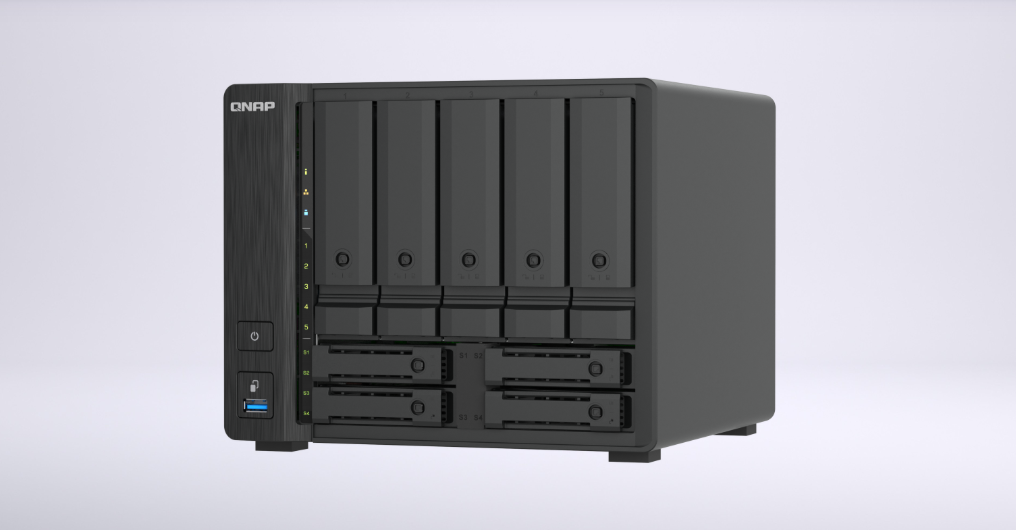
    Show notes QNAP TS-h966TX angled front view of the black tower chassis showing the nine drive bays and brushed side panel, QNAP product render QNAP TS-h966TX angled front view of the black tower chassis showing the nine drive bays and brushed side panel, QNAP product render

    QNAP has introduced the TS-h966TX, a compact 9-bay NAS that pairs five 3.5-inch SATA bays with four 2.5-inch U.2 NVMe bays and puts dual Thunderbolt 4 ports, 10GbE, and 2.5GbE on the back of a tower that QNAP says is 36% smaller than its previous HDD-based 6-bay Thunderbolt 4 NAS models. It runs a 6-core Intel Core i3 and QNAP’s ZFS-based QuTS hero, and it’s aimed at video production and other high-bandwidth media workflows where a workstation connects directly over Thunderbolt 4 while the rest of the team hits the same storage over 10GbE. The four U.2 bays are what set it apart from QNAP’s earlier Thunderbolt NAS designs, which were HDD-only, and they follow the U.2 push QNAP made on the desktop with the TVS-hx77AX earlier this month.

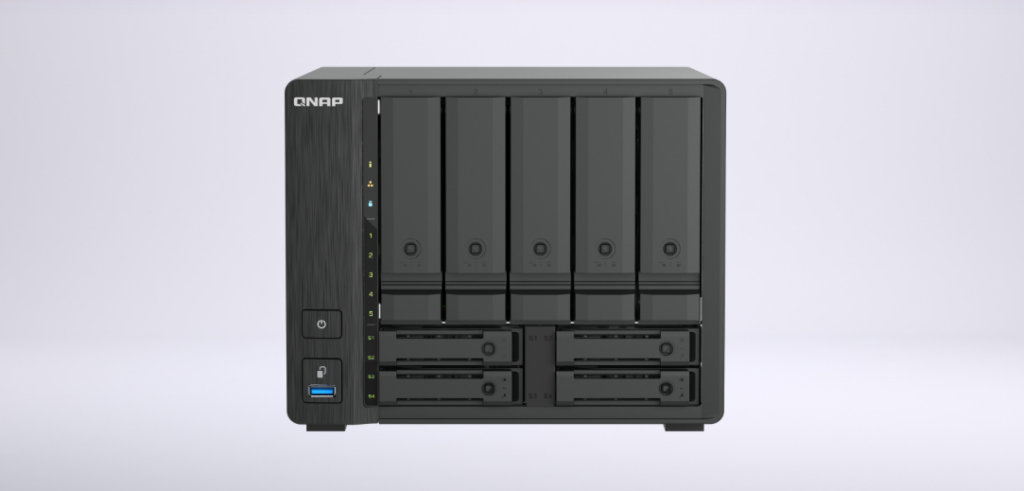
    QNAP TS-h966TX front view showing five 3.5-inch SATA bays above four 2.5-inch U.2 NVMe bays, with the power button, USB copy button, and front USB-A port on the left, QNAP product render

    Hybrid 5+4 Bays With U.2 NVMe

    The 5+4 layout keeps bulk HDD capacity in the five SATA 6Gb/s bays, which also take 2.5-inch SATA SSDs, and gives the four U.2 PCIe NVMe bays their own job as either an SSD storage pool or an SSD cache, with no capacity lost from the SATA side. M.2 NVMe SSDs fit the U.2 bays through QNAP’s QDA-UMP4A adapters. All nine bays are hot-swappable.

    QNAP’s own performance figures cover both access paths. With four Samsung PM9A3 1.96TB U.2 SSDs in RAID 5 on a thick volume, QNAP measured 1,182MB/s write and 1,181MB/s read for 1M sequential transfers over 10GbE SMB, and a directly connected Thunderbolt 4 client reached 2,252MB/s write and 2,004MB/s read using AJA.

    Intel Core i3, DDR5, and Thunderbolt 4 on the Back

    The processor is a 6-core Intel Core i3 running up to 4.4GHz with Intel UHD Graphics and hardware-accelerated transcoding. The TS-h966TX-8G ships with 8GB of DDR5 in one of two SODIMM slots and tops out at 64GB with two 32GB modules.

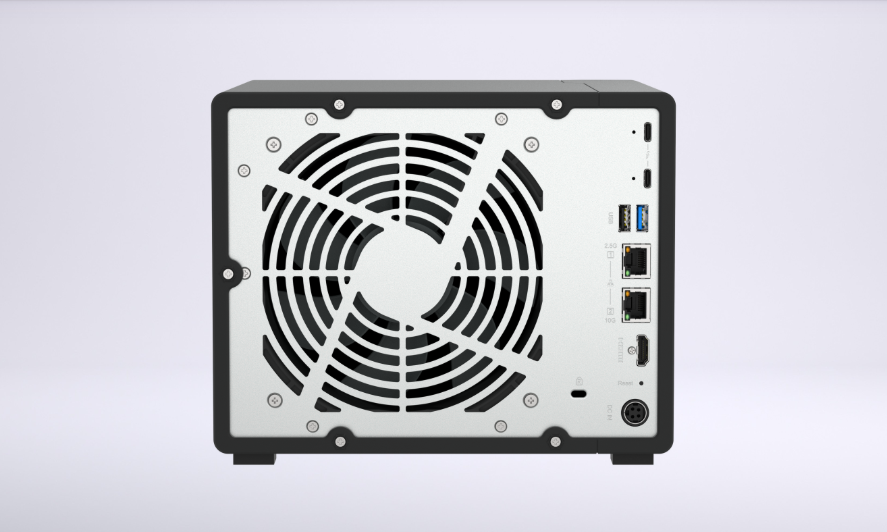
    QNAP TS-h966TX rear view with a 140mm fan grille and, on the right, two Thunderbolt 4 USB-C ports, a USB-A port, 2.5GbE and 10GbE RJ45 ports, HDMI, and the DC power input, QNAP product render

    Both Thunderbolt 4 ports sit on the rear panel alongside a USB 3.2 Gen 2 Type-A port, the 10GBASE-T port (10G/5G/2.5G/1G/100M), the 2.5GbE port (2.5G/1G/100M/10M), a USB 2.0 Type-A port, and an HDMI output that drives up to 4K60. The front carries the power and USB copy buttons and a second USB 3.2 Gen 2 Type-A port. The Thunderbolt 4 ports connect compatible Mac and Windows systems directly for 4K editing, media ingest, and project transfers; QNAP notes that connected PCs need Thunderbolt 4, Thunderbolt 5, or USB4 for its supported backup workflows. Capacity can grow past the nine internal bays over USB4 with QNAP’s TL-D810TC4 JBOD enclosure.

    QuTS hero and ZFS

    The TS-h966TX runs QuTS hero, QNAP’s ZFS-based operating system, which brings WORM and immutable storage, self-healing against silent data corruption, inline deduplication, real-time compression, and ZIL protection for in-flight writes during a power failure. QNAP’s QSAL technology monitors SSD lifespan at the RAID level to reduce the chance of several SSDs in a group wearing out at once.

    QNAP TS-h966TX angled front view of the black tower chassis showing the nine drive bays and brushed side panel, QNAP product render

    Mac and Windows backup are supported, myQNAPcloud One handles cloud storage and remote data protection, and Qsirch covers file search, including semantic image search and RAG-based search. The system also supports AES-NI encryption, Secure Boot, Wake-on-LAN, jumbo frames, and up to 2,000 concurrent CIFS connections at the maximum memory configuration. Cooling is a single 140mm fan, and power comes from a 150W external adapter; QNAP rates typical operating power at 55.186W with all bays populated and 38.619W in disk standby.

    “With dual Thunderbolt 4 ports, built-in 10GbE and 2.5GbE connectivity, and the reliable data protection of ZFS, the TS-h966TX provides a secure, high-performance storage foundation for video production environments,” said Eddie Chuang, product manager at QNAP.

    QNAP TS-h966TX Specifications

    Specification QNAP TS-h966TX-8G
    CPU Intel Core i3 6-core processor, up to 4.4GHz
    CPU Architecture 64-bit x86
    Graphics Intel UHD Graphics
    Encryption Engine AES-NI
    Secure Boot Yes
    Hardware-accelerated Transcoding Yes
    System Memory 8GB SODIMM DDR5
    Maximum Memory 64GB (2 × 32GB)
    Memory Slots 2 × SODIMM DDR5
    Flash Memory 4GB (Dual boot OS protection)
    Drive Bays 5 × 3.5-inch SATA 6Gb/s + 4 × 2.5-inch U.2 PCIe NVMe slots
    Drive Compatibility 3.5-inch bays:
    3.5-inch SATA HDDs
    2.5-inch SATA SSDs2.5-inch bays:
    2.5-inch U.2 PCIe NVMe SSDs
    Hot-swappable Yes
    SSD Cache Acceleration Yes
    10GbE 1 × 10GBASE-T (10G/5G/2.5G/1G/100M)
    2.5GbE 1 × 2.5GbE (2.5G/1G/100M/10M)
    Wake on LAN Yes
    Jumbo Frame Yes
    Thunderbolt 2 × Thunderbolt 4
    USB 3.2 Gen 2 2 × Type-A (10Gbps)
    USB 2.0 1 × Type-A
    HDMI Output 1 × HDMI (up to 4K@60Hz)
    Form Factor Tower
    LED Indicators 3.5-inch HDD, 2.5-inch U.2 SSD, Status, LAN, USB port status
    Buttons Power, Reset, USB Copy
    Dimensions (H × W × D) 182.7 × 224.6 × 223.6mm
    Net Weight 3.57kg
    Gross Weight 5.08kg
    Operating Temperature 0–40°C (32–104°F)
    Storage Temperature -20–70°C (-4–158°F)
    Relative Humidity 5–95% RH non-condensing, wet bulb: 27°C (80.6°F)
    Power Supply 150W adapter, AC 100–240V
    Disk Standby Power 38.619W
    Typical Operating Power 55.186W (tested with drives fully populated)
    Fan 1 × 140mm, 12VDC
    System Warning Buzzer
    Kensington Security Slot Yes
    Standard Warranty 3 years
    Maximum Concurrent CIFS Connections 2,000 with maximum memory

    QNAP TS-h966TX Availability

    The TS-h966TX-8G is available for pre-order now at $1,299 from the QNAP store in the US, with delivery estimated at two to four weeks. It carries a three-year standard warranty, and QNAP offers a five-year extension.

    QNAP TS-h966TX Product Page

    The post QNAP TS-h966TX Combines Thunderbolt 4, 10GbE, and U.2 NVMe in a Compact 9-Bay NAS appeared first on StorageReview.com.


    HPE Alletra Storage MP X10000 Release 4 Is GA, Doubling to 16 Nodes and 23PB Raw and Adding Native NFS Beside Object Sep 18, 2026
    Show notes

    HPE Alletra Storage MP X10000 Release 4 is now generally available, and it delivers the scale-out HPE previewed at its GreenLake update in May: a single cluster now runs up to 16 nodes and 16 JBOFs, roughly twice the performance and twice the capacity of the prior release, and scales to approximately 23PB of raw capacity in one system. Native-namespace NFS lands alongside the platform’s object storage in the same release, so file and object run as first-class protocols on one system with no translation layer and no second silo. The platform also carries the 100% data availability guarantee for file and object deployments that HPE introduced in May, on both CapEx and Flex purchases.

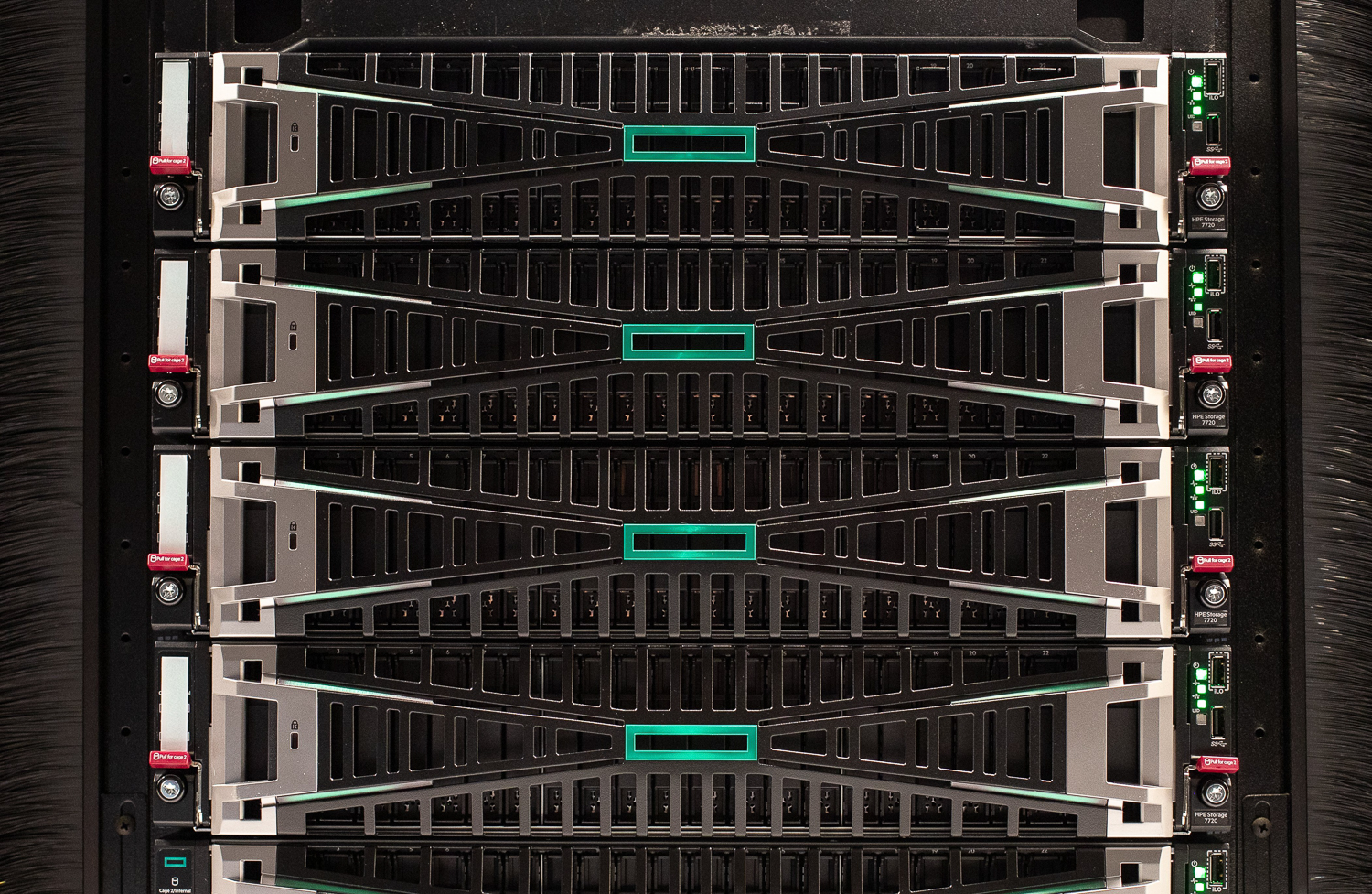
    Rear of an HPE Alletra Storage MP X10000 rack with stacked nodes, lit network ports, and dense power and data cabling

    File and Object at Twice the Scale

    The 16-node, 16-JBOF ceiling matters most for consolidation. The X10000’s disaggregated design scales compute nodes and JBOF capacity independently, so an organization can add nodes for concurrency or shelves for a larger data lake without a migration, and HPE’s pitch for Release 4 is that AI training, inference, analytics, and large unstructured repositories can now sit on one platform at that size. The NFS addition is what makes that workable for mixed estates. With NFS and S3 sharing a data foundation, the file-based pipelines that most enterprises still run don’t need a separate filer next to the object store.

    RDMA for File, GPUDirect Storage, and In-Place Data Intelligence

    Release 4 extends the platform’s RDMA acceleration from object to file, adds NVIDIA GPUDirect Storage enablement, and HPE says the release readies the platform for NVIDIA AI Enterprise certifications. The X10000 was the first object storage platform to earn NVIDIA-Certified Storage validation, and HPE cites independent testing of the RDMA-accelerated X10000 for KV cache offload that showed up to 20x faster time to first token and up to 17x higher effective inference throughput.

    The Data Intelligence platform that prepares data for AI inside the array also picks up NVIDIA NIM-based multimodal AI capabilities, multi-node data intelligence deployments, and support for customer-developed AI functions, so a customer’s own enrichment or classification logic can run in place against the repository without a separate data preparation stack.

    KMIP, TLS 1.3, and Lighter Day-2 Operations

    On the security side, Release 4 adds Key Management Interoperability Protocol (KMIP) external key management, TLS 1.3 enhancements, and what HPE describes as additional compliance and security improvements, with expanded support for disconnected and air-gapped deployments. HPE frames these as the door-openers for government and regulated industries that require key custody outside the storage system and operational isolation. Day-2 management includes software update orchestration, automated firmware management, and enhanced supportability and serviceability, and HPE is adding SaaS subscription terms of one, six, and seven years alongside the existing options.

    Paired with HPE Data Fabric Software, the X10000 serves as the system of record for data at rest while the fabric handles a federated global namespace, lineage, geofencing, and sovereignty controls across edge, core, and cloud. HPE calls the combination its Unified AI Data Foundation. HPE Alletra Storage MP X10000 Release 4 is available now.

    HPE Alletra Storage MP X10000 Product Page

    The post HPE Alletra Storage MP X10000 Release 4 Is GA, Doubling to 16 Nodes and 23PB Raw and Adding Native NFS Beside Object appeared first on StorageReview.com.


    CTERA Data Archiving Solution Pairs InsightAI With CTERA Archive to Move Inactive Files Off Primary Storage With an Audit Trail Sep 17, 2026
    Show notes CTERA InsightAI graphic with a query box reading Ask CTERA InsightAI, what team is consuming the most storage, above folders scattered across a world map, CTERA marketing art CTERA InsightAI graphic with a query box reading Ask CTERA InsightAI, what team is consuming the most storage, above folders scattered across a world map, CTERA marketing art

    CTERA has launched the CTERA Data Archiving Solution, which pairs its InsightAI data service with CTERA Archive so the platform can recommend which files to move off primary storage and then execute the move under retention policy and an audit trail. It’s the product follow-through to the Cold Data Storage Report CTERA published a day earlier: across 856 file-share discovery scans covering more than 16PB of live production data, 4.4% of stored capacity was data users and applications regularly access, 88.3% of files hadn’t been accessed in more than a year, and less than 10% of capacity had been touched in the prior 90 days. The solution is part of the CTERA Intelligent Data Platform.

    CTERA InsightAI graphic with a query box reading Ask CTERA InsightAI, what team is consuming the most storage, above folders scattered across a world map, CTERA marketing art

    InsightAI Picks the Archive Candidates

    The identification step is where CTERA is putting the AI. InsightAI agents infer what a file contains from its metadata, meaning the filename, path, extension, and directory context, and assess its value to the business, then combine that with age, type, size, and usage patterns to surface archive candidates. CTERA’s argument is that age alone is a poor archiving signal; a five-year-old contract and a five-year-old build log have the same timestamp and very different retention value. InsightAI launched earlier this year as a natural-language interface for querying the platform’s file metadata, and CTERA has been steadily pointing the platform at AI workloads through its n8n integration and Fusion Direct.

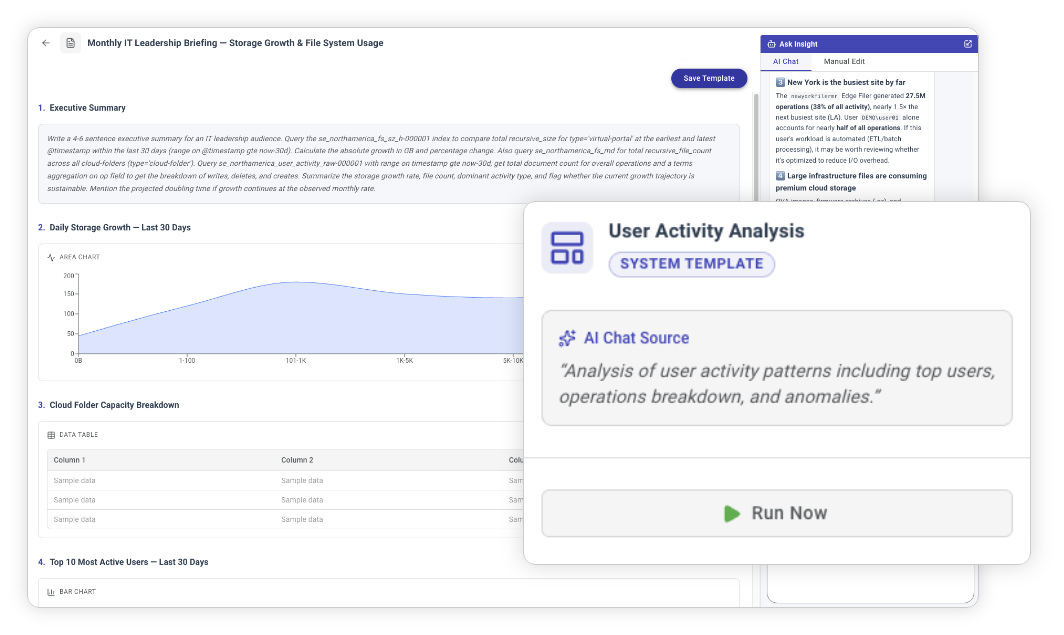
    CTERA InsightAI report builder showing a monthly IT leadership briefing on storage growth and file system usage, a User Activity Analysis system template card, and an Ask Insight chat panel, CTERA product screenshot

    CTERA Archive Moves and Governs the Data

    Once InsightAI has flagged the files, CTERA Archive moves them to a dedicated, isolated archival tier inside the same CTERA environment, and the target can be lower-cost on-premises hardware or cloud object storage; CTERA’s product page lists Amazon S3 Glacier Instant Retrieval and other S3 storage classes along with Azure Blob Cool and Cold tiers. Because the archived files stay inside the Intelligent Data Platform, CTERA says they remain governed and reachable by AI and analytics tools with no separate retrieval or rehydration step, so cold data leaves primary storage without leaving reach.

    On the governance side, CTERA Archive carries configurable retention policies, with two retention modes per the product page, and logs every archive and restore operation with the operator, source, destination, reason, file count, size, and timestamp; the logs are exportable for compliance reporting and legal discovery. CTERA also frames archiving as a security control, since moving inactive data out of SMB and NFS shares shrinks the volume of sensitive information exposed in the file system, and CTERA Vault can add WORM protection to the archived set.

    “Enterprise data volumes are going to continue to grow, but not all data needs to remain on primary storage or be immediately accessible. The challenge has always been knowing what data can safely move and then providing a practical path to execute that migration,” said Oded Nagel, CEO of CTERA. “By pairing CTERA InsightAI, which understands what data means to the business and not just how old it is, with the governance and controls of CTERA Archive, the CTERA Data Archiving Solution gives IT teams a much simpler, AI-guided way to bring discipline to the enterprise data lifecycle without sacrificing access. Archived data stays usable for AI and analytics rather than locked away.”

    CTERA didn’t state availability for the Data Archiving Solution in its announcement.

    CTERA Data Archiving Product Page

    The post CTERA Data Archiving Solution Pairs InsightAI With CTERA Archive to Move Inactive Files Off Primary Storage With an Audit Trail appeared first on StorageReview.com.


    Lenovo ThinkAgile VX850 V4 Takes On In-Memory Virtualization With New Deploy Tiers and Four-Hypervisor Express Bundles Sep 17, 2026
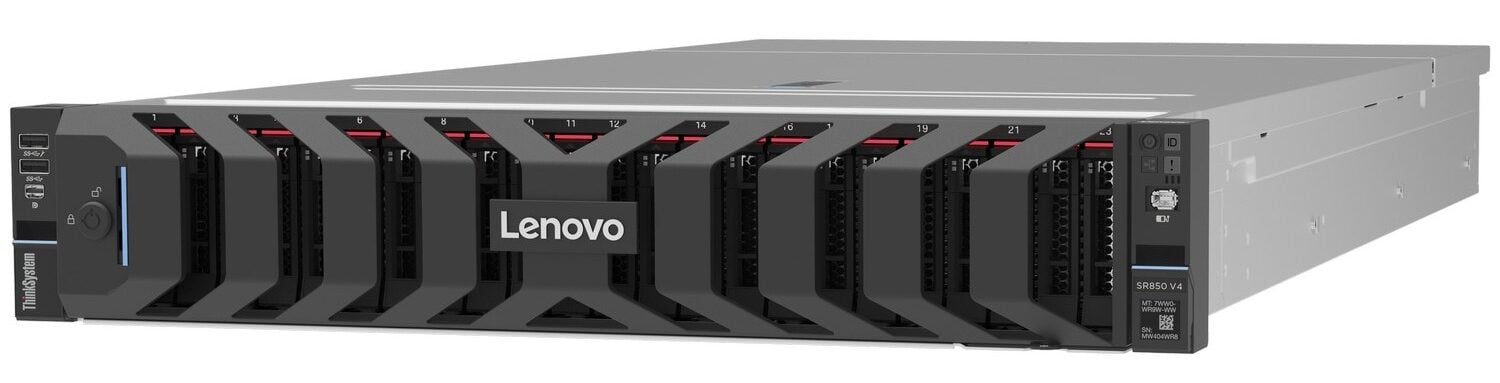
    Show notes Lenovo ThinkSystem SR850 V4 2U four-socket server front view with the security bezel and 24 hot-swap drive bays, Lenovo product image Lenovo ThinkSystem SR850 V4 2U four-socket server front view with the security bezel and 24 hot-swap drive bays, Lenovo product image

    Lenovo has added the ThinkAgile VX850 V4 to its virtualization lineup, a four-socket node it describes as purpose-built for highly virtualized and demanding in-memory workloads, and paired the launch with a three-tier deployment service framework and a set of pre-validated Top Choice Express bundles spanning Microsoft, Red Hat, SUSE, and Nutanix. The announcement follows Lenovo’s December expansion of the ThinkSystem and ThinkAgile portfolio and keeps the same pitch: modernize the virtualization estate in place, keep the hypervisor choice open, and leave capacity for AI work on the same infrastructure.

    Lenovo ThinkSystem SR850 V4 2U four-socket server front view with the security bezel and 24 hot-swap drive bays, Lenovo product image

    ThinkAgile VX850 V4 for In-Memory Virtualization

    Lenovo’s release positions the VX850 V4 for structured and unstructured data pools where a customer wants to consolidate critical applications and hold headroom for AI integration on the same hardware. Lenovo hasn’t published a product guide or spec sheet for the V4 yet. The VX850 V3 it replaces was a certified node built on the ThinkSystem SR850 V3, and the current four-socket ThinkSystem platform, the SR850 V4, is a 2U system with two or four Intel Xeon 6700-series processors at up to 86 cores each, 64 DIMM slots for up to 16TB of memory, up to 24 2.5-inch or 32 E3.S NVMe bays, nine PCIe 5.0 slots, and support for up to four single-wide GPUs. That is the memory and socket profile the in-memory positioning points at, and we’ll fill in the VX850 V4’s own configuration once Lenovo posts it.

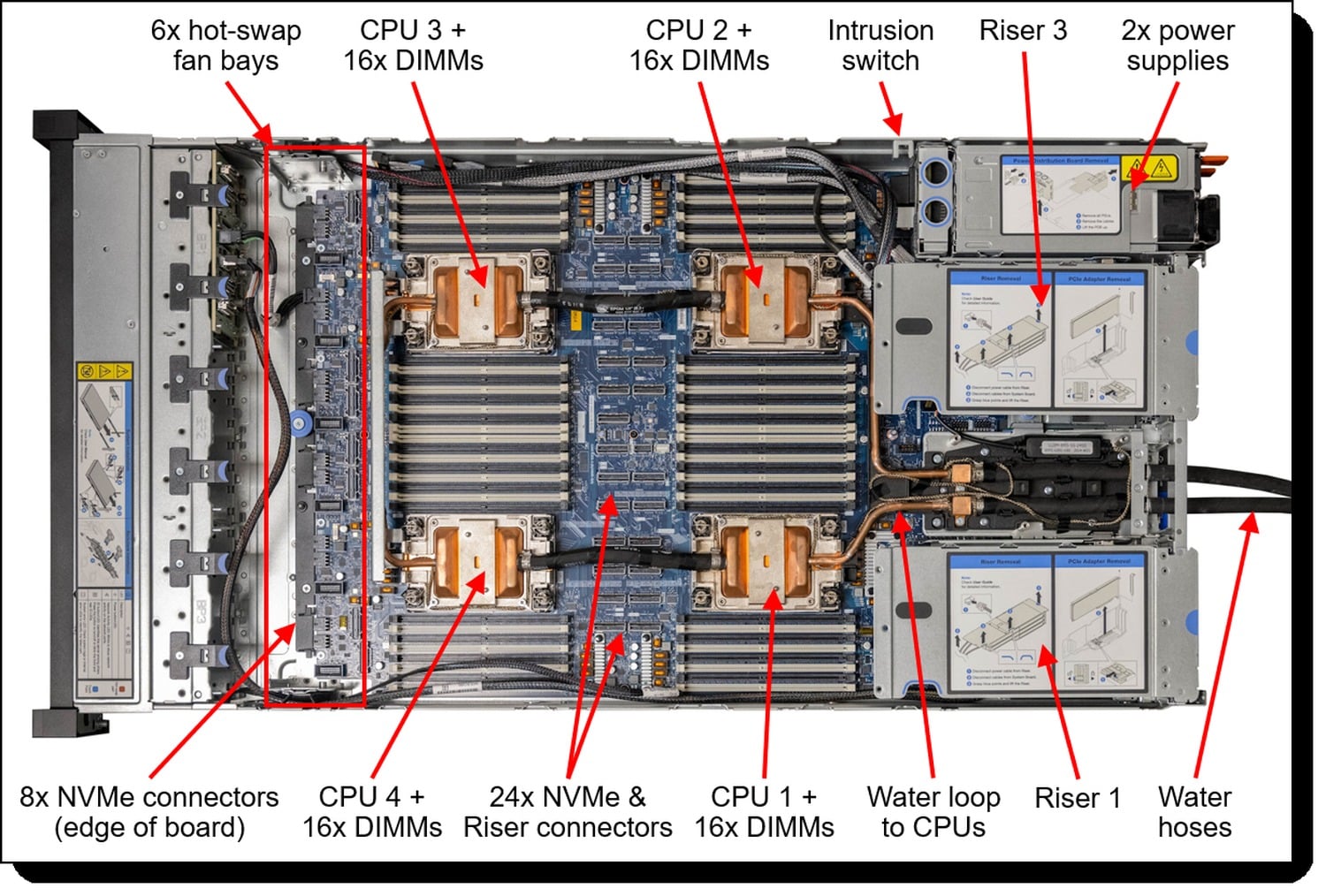
    Lenovo ThinkSystem SR850 V4 internal view with callouts for the four CPUs and their 16 DIMMs each, six hot-swap fans, NVMe and riser connectors, water loop, and power supplies, Lenovo product image

    Three Deployment Tiers

    Lenovo Infrastructure Deployment Services now come in three packaged tiers. Standard Deploy covers a structured readiness assessment and hardware installation. Premier Deploy adds implementation and an operational handoff so the environment is production-ready when Lenovo leaves. Premier Deploy Plus extends post-deployment assistance and adds a one-year infrastructure health assessment, with one stated exclusion: the DE Storage Array family isn’t covered by that assessment.

    Top Choice Express Bundles Across Four Hypervisors

    The Top Choice Express additions are pre-tested reference configurations for the platforms customers are moving to. On the Microsoft side, that means Hyper-V Ready Solutions on Windows Server and Azure Local on ThinkAgile MX V4 nodes for hybrid deployments managed through Azure. Red Hat OpenShift Virtualization Solutions cover KVM-based virtual machines alongside containers on one control plane, and SUSE Virtualization runs on ThinkSystem V4 hardware for the same VM-plus-container model. For shops that want compute and storage to scale independently, Lenovo pairs ThinkSystem servers with Nutanix Compute Cluster nodes under the Nutanix Cloud Platform.

    “Organizations are focused on modernizing virtualized infrastructure to improve efficiency and resilience while maintaining flexibility in an increasingly complex IT landscape,” said Scott Patti, vice president of Lenovo’s Infrastructure Solutions Group. Lenovo also cites IDC’s Matt Eastwood, senior vice president of the Enterprise Infrastructure and Datacenter Group, on the same theme: “Modernization is an in-place initiative; it does not require starting over.”

    Disaggregated Storage and Fleet Management

    Under the bundles, ThinkSystem Storage arrays paired with ThinkAgile HCI nodes give Lenovo a disaggregated option with integrated data protection, and the management layer is the updated XClarity Controller 3 BMC firmware plus XClarity One, both exposing standards-based APIs for visibility across hybrid environments. Lenovo didn’t state availability dates for the VX850 V4 or the new service tiers in the release.

    Lenovo ThinkAgile VX Series Product Page

    The post Lenovo ThinkAgile VX850 V4 Takes On In-Memory Virtualization With New Deploy Tiers and Four-Hypervisor Express Bundles appeared first on StorageReview.com.


    TrueNAS Proxmox Plugin Turns Every VM Disk Request Into an Automated zvol Over iSCSI or NVMe/TCP Sep 17, 2026
    Show notes TrueNAS and Proxmox logos on the TrueNAS Proxmox Plugin announcement graphic with the line Plugin Now Available on GitHub TrueNAS and Proxmox logos on the TrueNAS Proxmox Plugin announcement graphic with the line Plugin Now Available on GitHub

    TrueNAS has released a native Proxmox VE storage plugin that lets Proxmox provision and manage VM disks directly on TrueNAS systems. A disk requested in Proxmox becomes an OpenZFS zvol on TrueNAS 25.10 or later, published as an iSCSI LUN or an NVMe/TCP namespace, and the plugin handles creation, snapshots, resizing, migration, and deletion from the Proxmox side with no per-volume setup in the TrueNAS UI. The release is designated for Early Adopters, with TrueNAS Community Edition users getting it first and Enterprise support in validation.

    TrueNAS and Proxmox logos on the TrueNAS Proxmox Plugin announcement graphic with the line Plugin Now Available on GitHub

    What the TrueNAS Proxmox Plugin Replaces

    Most Proxmox-on-TrueNAS deployments run today on NFS or hand-built iSCSI LUNs. On NFS, Proxmox handles VM snapshots through QEMU copy-on-write files, and Proxmox’s own storage documentation says snapshots of large disks can take several minutes and, in extreme cases, hours. Manually configured iSCSI avoids that but had no native snapshot support before Proxmox VE 9, and every new disk means a new zvol, a new iSCSI extent, and a new LUN mapping on the array. Proxmox’s legacy ZFS-over-iSCSI plugin type narrowed the gap for ZFS-backed arrays, and TrueNAS now ships a purpose-built plugin in its place.

    With the plugin installed, storage operations stay inside the Proxmox interface. Administrators create VM disks, take OpenZFS snapshots, resize, migrate, and delete volumes, and TrueNAS provisions the underlying block devices as thin, sparse zvols on demand. Snapshots run natively on OpenZFS and include live VM snapshots that capture RAM state. Clones, moves, backups, and imports still run on the Proxmox host, and TrueNAS’s native NFS and SMB shares remain the path for file-based content such as ISO images and backup directories, served from the same pool.

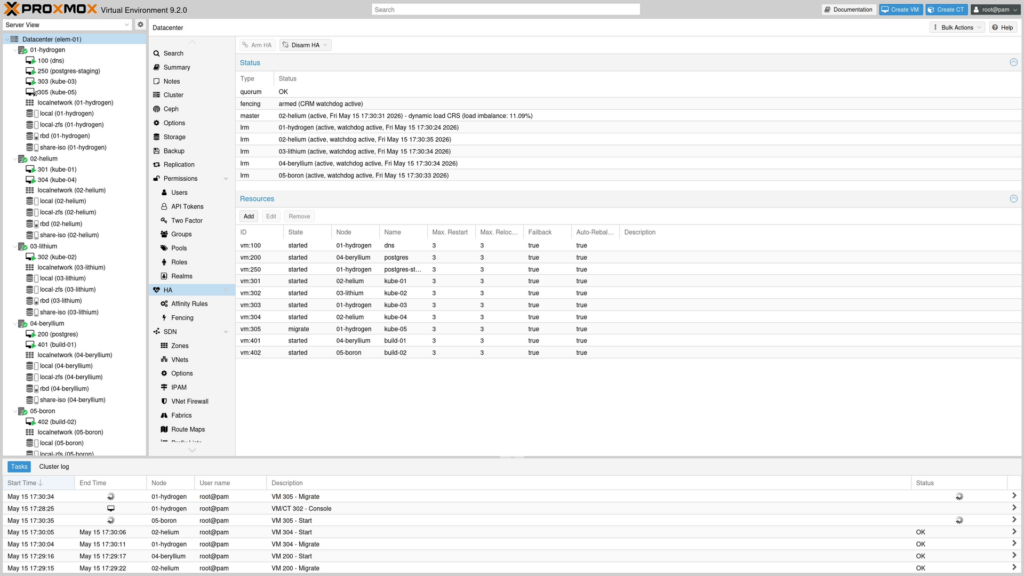
    Proxmox VE 9.2 HA Balancing Migration

    iSCSI and NVMe/TCP Support

    Transport is chosen per Proxmox storage entry. iSCSI works on Proxmox VE 8.x and later; NVMe/TCP requires Proxmox VE 9.x with the nvme-cli initiator installed on each node, and TrueNAS positions it as the option when latency matters most. Authentication uses a TrueNAS API key in place of the root SSH access some ZFS-over-iSCSI workflows require.

    For environments running several Proxmox clusters against one TrueNAS system, the plugin enforces one dataset and one iSCSI target or NVMe subsystem per cluster, which keeps extent names from colliding and separates each cluster’s storage. TrueNAS frames the design as separated compute and storage, with Proxmox on the compute side and TrueNAS as the data platform underneath, and TrueNAS is clear that it isn’t a substitute for a hyperconverged Ceph deployment.

    Installation and TrueNAS Support

    The plugin ships through a signed APT repository, with Bookworm packages for Proxmox VE 8 and Trixie packages for Proxmox VE 9. The installer detects the Proxmox version, runs cluster-aware with health checks and rollback, and a standalone .deb covers air-gapped nodes. TrueNAS-side setup steps are in the TrueNAS Proxmox VE Storage Plugin documentation.

    TrueNAS 25.10 or later is required on the storage side. The plugin runs on TrueNAS Community Edition and on Enterprise appliances including the H-Series and V-Series, which add high availability; Enterprise support is in active validation, and TrueNAS says it is orderable now through account teams, with a design review recommended before anything touches production. TrueNAS also says it will work with Proxmox partners on complete systems integration.

    TrueNAS Proxmox Plugin Availability

    The TrueNAS Proxmox Plugin is available now from the project’s GitHub releases page. TrueNAS recommends installing the Early Adopter release on a non-production Proxmox cluster first and verifying it against your workloads before moving production VMs onto it. TrueNAS’s announcement post covers the design rationale in more depth.

    TrueNAS Proxmox Plugin Releases Page

    The post TrueNAS Proxmox Plugin Turns Every VM Disk Request Into an Automated zvol Over iSCSI or NVMe/TCP appeared first on StorageReview.com.


    CoreWeave Deploys Multi-Rack Vera Rubin NVL72 Cluster: Hundreds of Rubin GPUs, 1.6 Tb/s Per GPU, and a No-Fee Archive Tier Sep 17, 2026
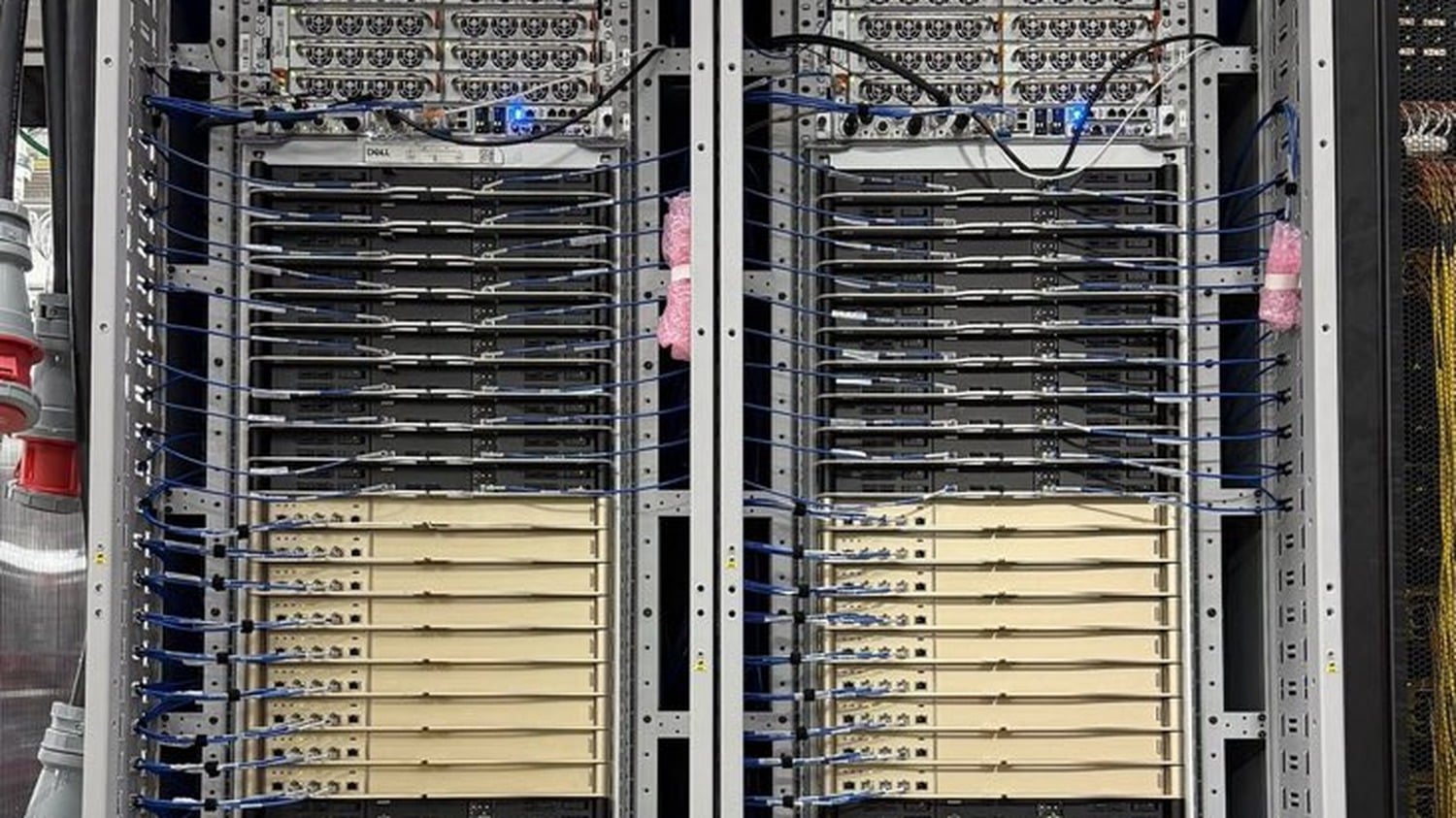
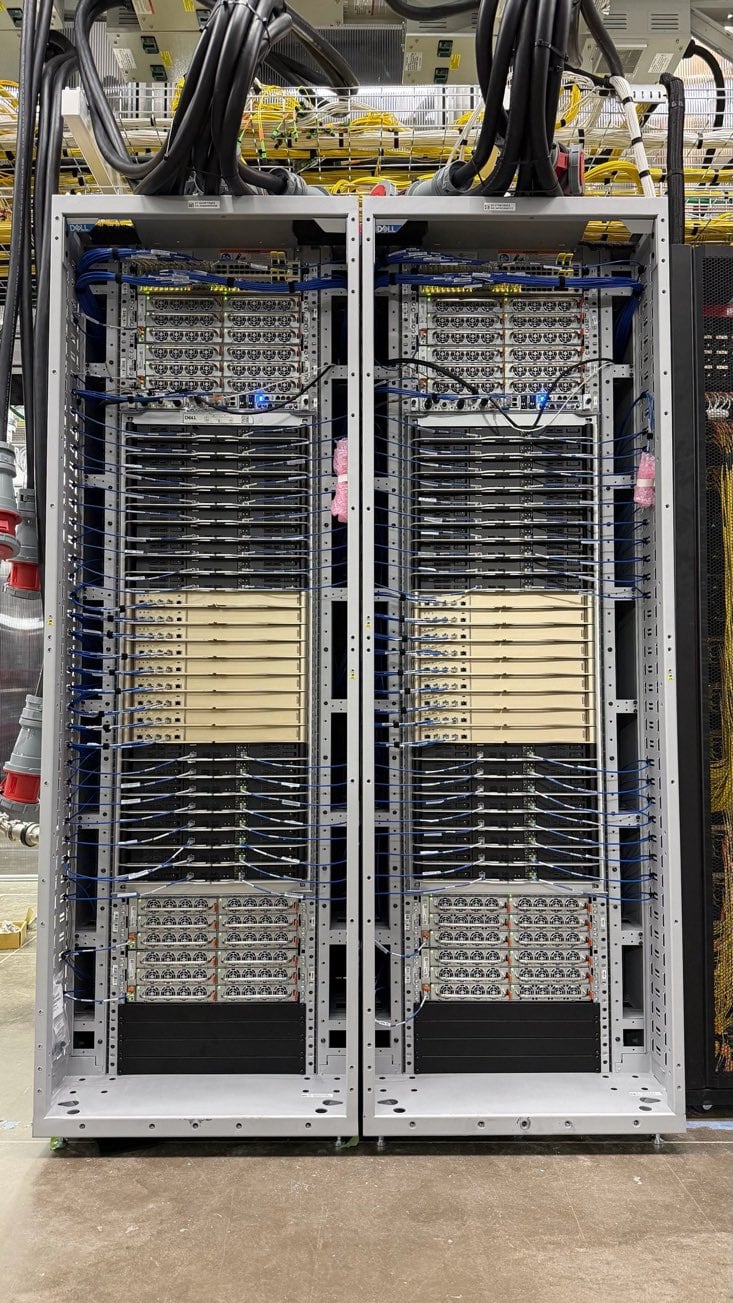
    Show notes Two Dell-built NVIDIA Vera Rubin NVL72 racks in a CoreWeave data center, cropped to the compute and NVLink switch trays, photo courtesy of CoreWeave Two Dell-built NVIDIA Vera Rubin NVL72 racks in a CoreWeave data center, cropped to the compute and NVLink switch trays, photo courtesy of CoreWeave

    CoreWeave has deployed a multi-rack NVIDIA Vera Rubin NVL72 cluster on CoreWeave Cloud, connecting hundreds of Rubin GPUs into a single scale-out environment aimed at agentic AI workloads. Each Dell-built rack carries 72 Rubin GPUs, 36 Vera CPUs, NVLink 6 as the scale-up fabric, BlueField-4 DPUs, and two ConnectX-9 SuperNICs per GPU, and the racks connect over NVIDIA Spectrum-X Ethernet in a two-tier, non-blocking fabric that CoreWeave says scales to roughly 128,000 GPUs. CoreWeave is the first cloud provider to validate and bring up a single Vera Rubin NVL72 and the first to publish measured performance from one; the platform’s first peer-reviewed numbers arrived in MLPerf Inference v6.1 last week, where CoreWeave’s own submission ran on GB300 NVL72. Alongside the compute, CoreWeave AI Object Storage picks up cross-region write acceleration and a new Archive tier.

    Two Dell-built NVIDIA Vera Rubin NVL72 racks cabled and powered in a CoreWeave data center, with the switch tier at top, compute trays in the middle, and power shelves at the bottom, photo courtesy of CoreWeave

    Multi-Rack NVIDIA Vera Rubin NVL72 Architecture

    The multi-rack build targets agentic execution paths, where serial reasoning loops and external tool calls compound data-access latency across distributed infrastructure. The two ConnectX-9 SuperNICs on each Rubin GPU provide up to 1.6 Tb/s of backend network connectivity per GPU across multi-rail, multi-plane paths, and CoreWeave describes the fabric as modular, so additional NVL72 racks join the same non-blocking topology as capacity grows. The racks run on 45°C liquid cooling.

    CoreWeave ties the racks together through its Mission Control software. A Rack LifeCycle Controller handles provisioning and lifecycle for each rack, hardware detection through firmware flashing, validation, power, and thermal loops; a rack-management layer called Racky controls power and infrastructure; and a programmable cooling controller called Valvey gives software-defined visibility and control over the liquid-cooling loops and environmental sensors.

    Racks reach production only after a staged validation pass. At the node level, that means hours of repeated GPU diagnostics, CPU-to-GPU transfer checks, interconnect and thermal validation under load, and realistic training runs. At the rack level, synchronized jobs across all 72 GPUs verify NVLink GPU-to-GPU performance, and any system landing below the expected range goes to troubleshooting. Across racks, CoreWeave runs distributed workloads, deliberately disables the NVLink paths to force traffic over the backend network, and watches the physical fabric for flaky links, rising error rates, overheating hardware, and uneven traffic, with load patterns that mimic agentic applications: sudden demand spikes, shifting concurrency, and bursts of communication. CoreWeave’s write-up on the multi-rack bring-up walks through each stage and makes an interesting read.

    AI Object Storage Updates: Cross-Region Writes and Archive Tier

    The storage side builds on CoreWeave AI Object Storage and its Local Object Transport Accelerator (LOTA), a caching proxy that runs on every GPU and CPU node in CoreWeave Kubernetes Service and holds objects on node-local NVMe. CoreWeave reports cached reads at up to 7 GB/s per GPU with p99 read latency more than 8x lower than reading from the bucket, and cites one frontier model provider running LOTA across more than 15,000 GPUs and 20PB of cache at a 99.7 percent hit rate. LOTA carries no additional charge.

    Cross-region write acceleration lets an application write to a bucket in a remote region at local latency without API or SDK changes. The application issues a standard S3 write to the LOTA endpoint; the object data lands durably in the local region while the metadata commits to the remote one; the object is immediately readable, including by the job that wrote it; and the data migrates to the remote region in the background. Applications see a single bucket namespace across regions with uniform IAM policies, lifecycle rules, and access controls, which removes the per-region forks and replication pipelines that checkpoint distribution across sites usually requires.

    “Our datasets span multiple regions, and we can’t afford to have our training schedule dictated by cross-region retrieval delays,” said Cécile Robert-Michon, director of internal infrastructure at Cohere. “CoreWeave AI Object Storage gives us a unified dataset footprint across regions with reads cached locally, so nothing waits on the network.”

    The Archive tier is a fourth storage class alongside Hot, Warm, and Cold, built for data that is written once and read rarely, such as older training checkpoints and raw datasets. It carries lower base-capacity pricing and drops retrieval, cache, per-request, early-deletion, tiering, and egress fees. CoreWeave’s suggested pattern keeps recent checkpoints in the faster tiers for immediate restarts and auto-tiers them to Archive after 60 days without a read. Both cross-region writes and the Archive tier are available now; CoreWeave’s storage post has the configuration details.

    CoreWeave GPU Compute Product Page

    CoreWeave AI Object Storage Product Page

    The post CoreWeave Deploys Multi-Rack Vera Rubin NVL72 Cluster: Hundreds of Rubin GPUs, 1.6 Tb/s Per GPU, and a No-Fee Archive Tier appeared first on StorageReview.com.


    Previous 1 12 13 14 15 Next

    Related Podcasts

    Reply All

    1

    Reply All Games & Hobbies
    Inside VR & AR

    2

    Inside VR & AR Gadgets
    Note to Self

    3

    Note to Self News
    BrainStuff

    4

    BrainStuff Natural Sciences
    This Week in Tech (Audio)

    5

    This Week in Tech (Audio) News
    Hands-On Tech (Audio)

    6

    Hands-On Tech (Audio) Technology
    footer-logo

    Contact Us

    Toll Free: 844-670-7747

    Links

    • Home
    • Top Charts
    • Networks
    • Apps
    • Independents Podcasts
    • Podcast Advertising
    • Podcast News
    • Contact Us
    • About Us
    • Analytics & Insights

    Stay Connected

      Privacy, Terms of Use & Our Code of Ethics Protecting Content Creators Copyrights